🧙 Devils, Water Sprites, and a Stone That Won't Stop Walking
Czech folklore runs deep and specific — every region has its own devils, water spirits, and cursed stones, usually anchored to one exact rock or riverbank. This page collects three of the best, plus four more chateaux and castles that didn't fit neatly anywhere else on this site.
😈 The Devil Heads — the Czech Mount Rushmore
In a pine forest above the village of Želízy on the Kokořínsko, two colossal devil faces stare out from the sandstone — nine meters tall, carved directly into the rock between 1841 and 1846. They're the second-largest carved heads anywhere in the world, after Mount Rushmore, and the story of who made them is nearly as good as the heads themselves: sculptor Václav Levý started out as a cook at the nearby Liběchov chateau before becoming one of the most significant Czech sculptors of the 19th century, later contributing work to St. Vitus Cathedral in Prague. A private landowner cleared the surrounding pines in 2011, so the heads are now visible from the main road — no hike required, though the walk in through the forest is worth doing anyway. Nearby, in the same stretch of woods, Levý carved several more works: a man-made cave called Klácelka filled with allegorical animal-headed figures, plus separate reliefs nicknamed the Harpist and the Snake.
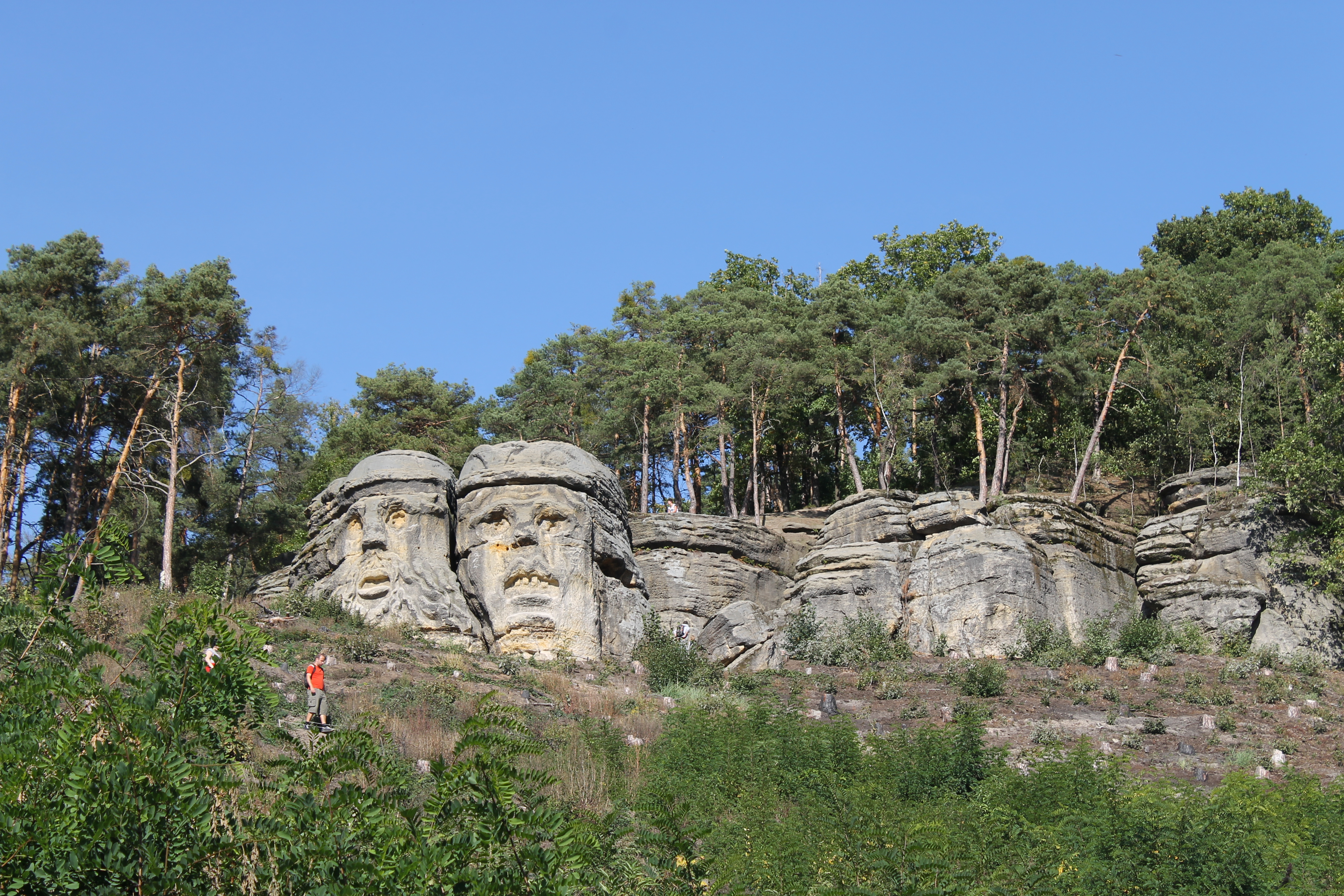
Čertovy hlavy
Nine-meter devil heads carved by a cook-turned-sculptor — second largest carved heads on Earth after Mount Rushmore
🍺 Kabourek — Prague's Beer-Loving Water Sprite
Prague is said to be home to forty vodníci (water sprites) living in the Vltava and its channels, nine of them in the Čertovka — the narrow mill-race that loops around Kampa Island beside Charles Bridge. The most beloved by far is Kabourek: a small green man, dripping constantly, with a glowing wick tucked into his cap that he uses as a lantern when he dives into the river's dark depths. According to the legend, he keeps the souls of the drowned in small lidded clay jars in his underwater home — each soul its own jar, each lid sealed tight, because an open lid lets the soul escape.
Kabourek was famously good-natured: he used to visit the pubs on Kampa, trade fishermen tips on where the fish were running for a beer, and pay generous tabs in fresh pike. Publicans kept a low stool and a bucket of water by the fire just for him, so his feet would stay wet. The story goes that he stopped coming around once televisions and radios replaced pub chatter — he found the noise unbearable and drifted back to the stream, rarely seen since. A bronze statue of Kabourek, sculpted by Josef Nálepa in 2010, now sits on the water wheel of the Grand Priory Mill on the Čertovka, a popular stop for anyone walking from the John Lennon Wall toward Charles Bridge.
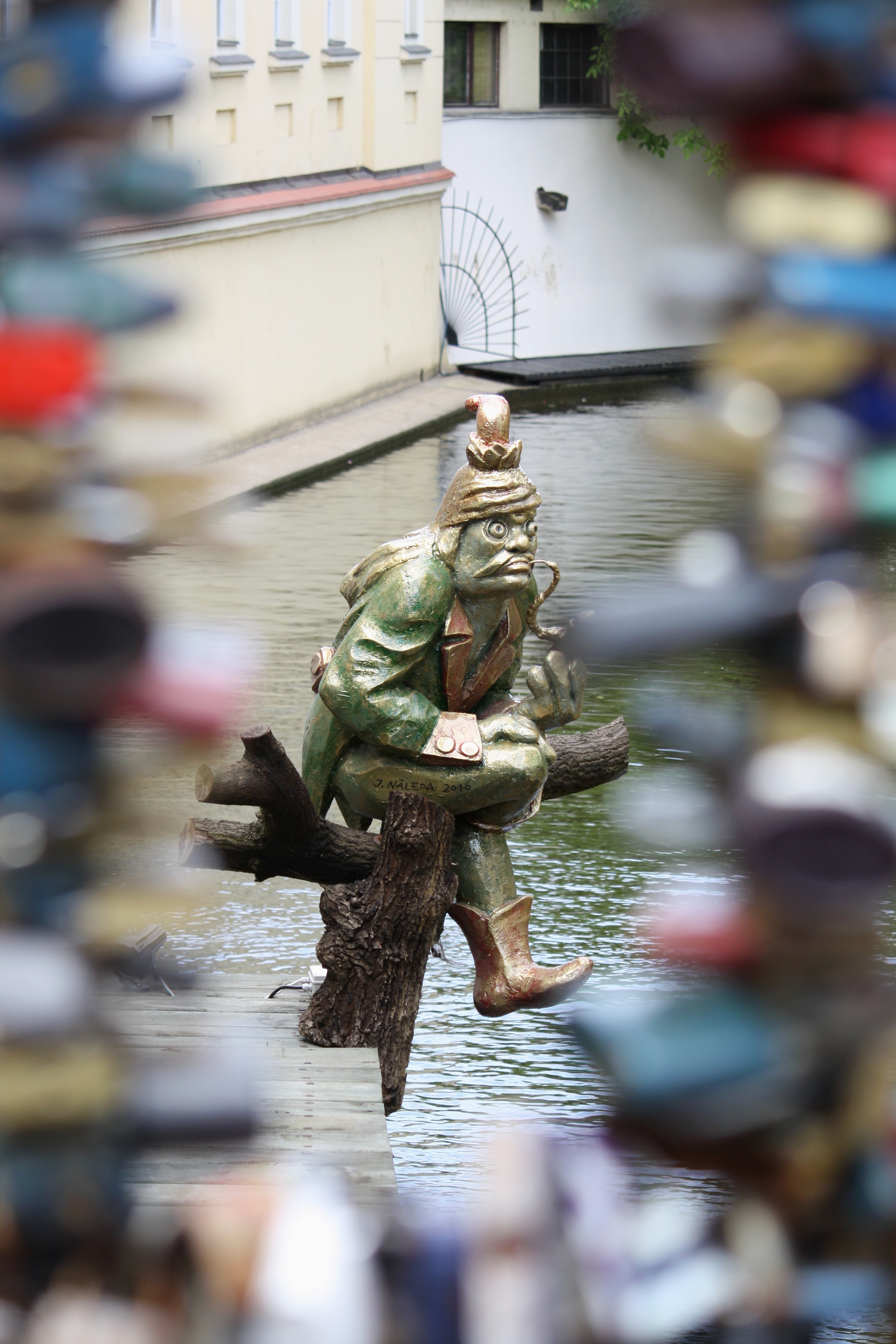
Kabourek
Prague's most beloved water sprite, sculpted in 2010, still watching the Čertovka
🗿 The Stone Shepherd — a Menhir That's Still Walking
Standing alone in a field near the village of Klobuky in Central Bohemia is the tallest confirmed menhir in the Czech Republic — a rough, unworked column of iron-rich sandstone, 3.4 meters tall and weighing roughly five tons, known as Kamenný pastýř (the Stone Shepherd) or, in the older telling, the Petrified Herdsman. Local tradition says a shepherd lost his flock, stood searching so long that he turned to stone, and the smaller stones once scattered around him (plowed away for farmland generations ago) were his petrified sheep. Archaeological testing in 1898 confirmed the stone was artificially raised rather than a natural rock formation, though its exact age and purpose remain genuinely unknown — it may be Celtic, or considerably older, from the same Bronze Age megalith-building tradition found across Western Europe.
The best-known legend holds that with every peal of the bell in Klobuky's church, the Shepherd advances one grain-of-sand's width toward the village — and that when he finally reaches the church door, it will be the end of the world. Fortunately for everyone, the story goes, he must take a matching step backward whenever the bells ring in the neighboring village of Kokovice, so he never quite arrives. A genuine curiosity for the scientifically minded: independent measurements in 1994 recorded a real magnetic anomaly at the stone's location, its polarity reversed relative to Earth's own field — a finding that's been repeated since, though mainstream geologists attribute it to the iron content of the sandstone itself rather than anything more exotic.
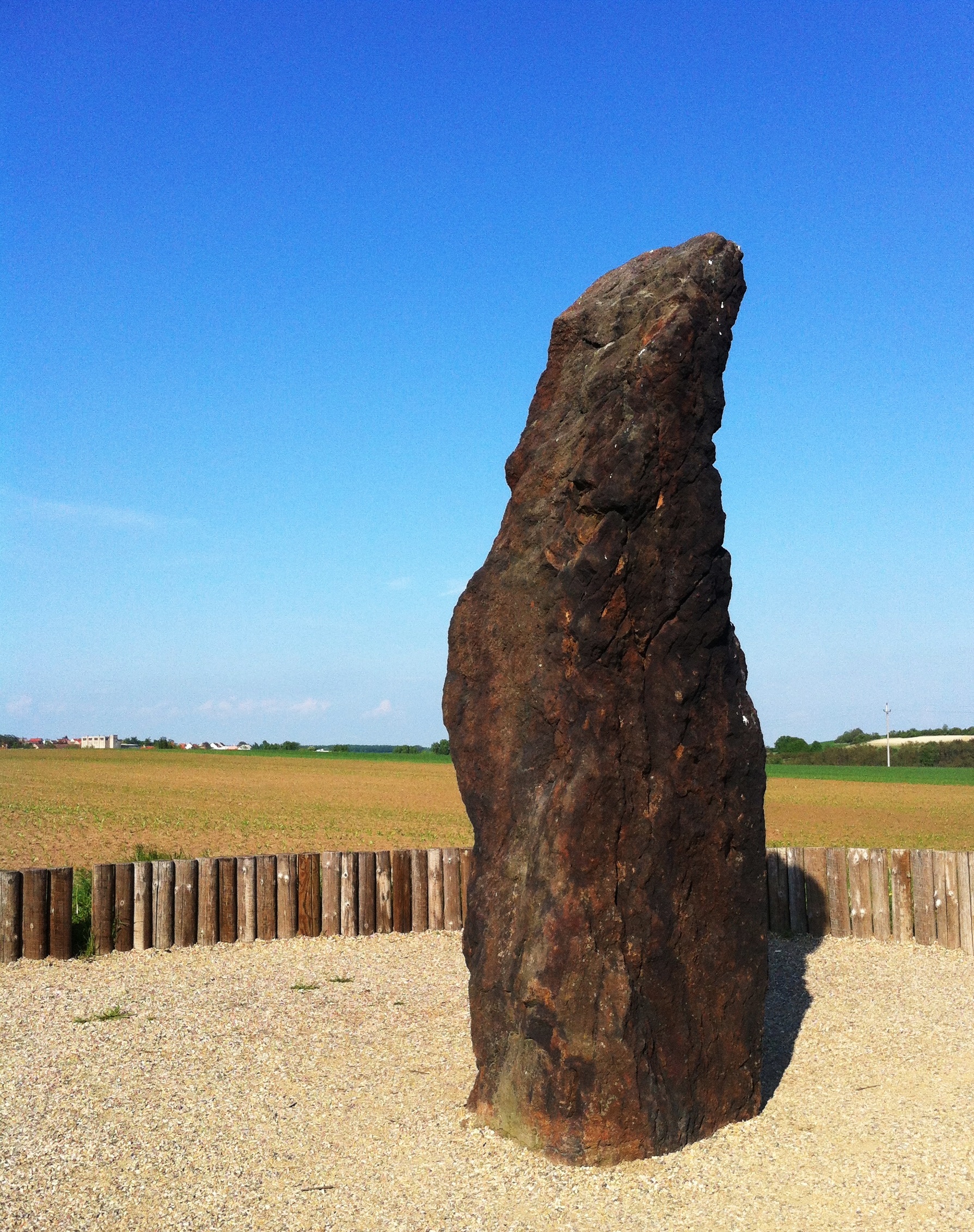
Kamenný pastýř
The tallest confirmed menhir in the country — 3.4 meters, roughly 5 tons
🏖️ Babylon — Not the One You're Thinking Of
Eight kilometers southwest of Domažlice, right at the edge of the Český les (Bohemian Forest — a separate, quieter range from the better-known Šumava, running along the German border), sits a village genuinely named Babylon. It has nothing to do with the biblical city: the name comes from the nearby Babí hora ("Old Woman's Hill"), where a stone quarry once operated, and the settlement — first recorded in 1587 — began life as a logging village serving the surrounding forest.
Its transformation into a resort started around 1900, when the Stadion family, who owned the local ponds and forests, built a lakeside inn and changing huts on the shore of what's now the Babylon pond — a sandy-bottomed, 8-hectare lake whose water carries a genuinely notable amount of radon, historically valued for treating musculoskeletal conditions. Just south of the village stands the area's other quirk: Čertův kámen (the Devil's Stone), a rocking boulder with the standard regional legend attached — the devil, carrying it somewhere overnight, ran out of time before dawn and dropped it in the forest. It's a genuine viklan (a naturally balanced rocking stone), though Italian laborers building a nearby railway line once shifted it enough that it stopped rocking; that motion wasn't restored until 2010. An 11-kilometer trail, fittingly named the Čertova naučná stezka (Devil's Educational Trail), loops through the surrounding forest connecting Babylon to the stone and several other local landmarks.
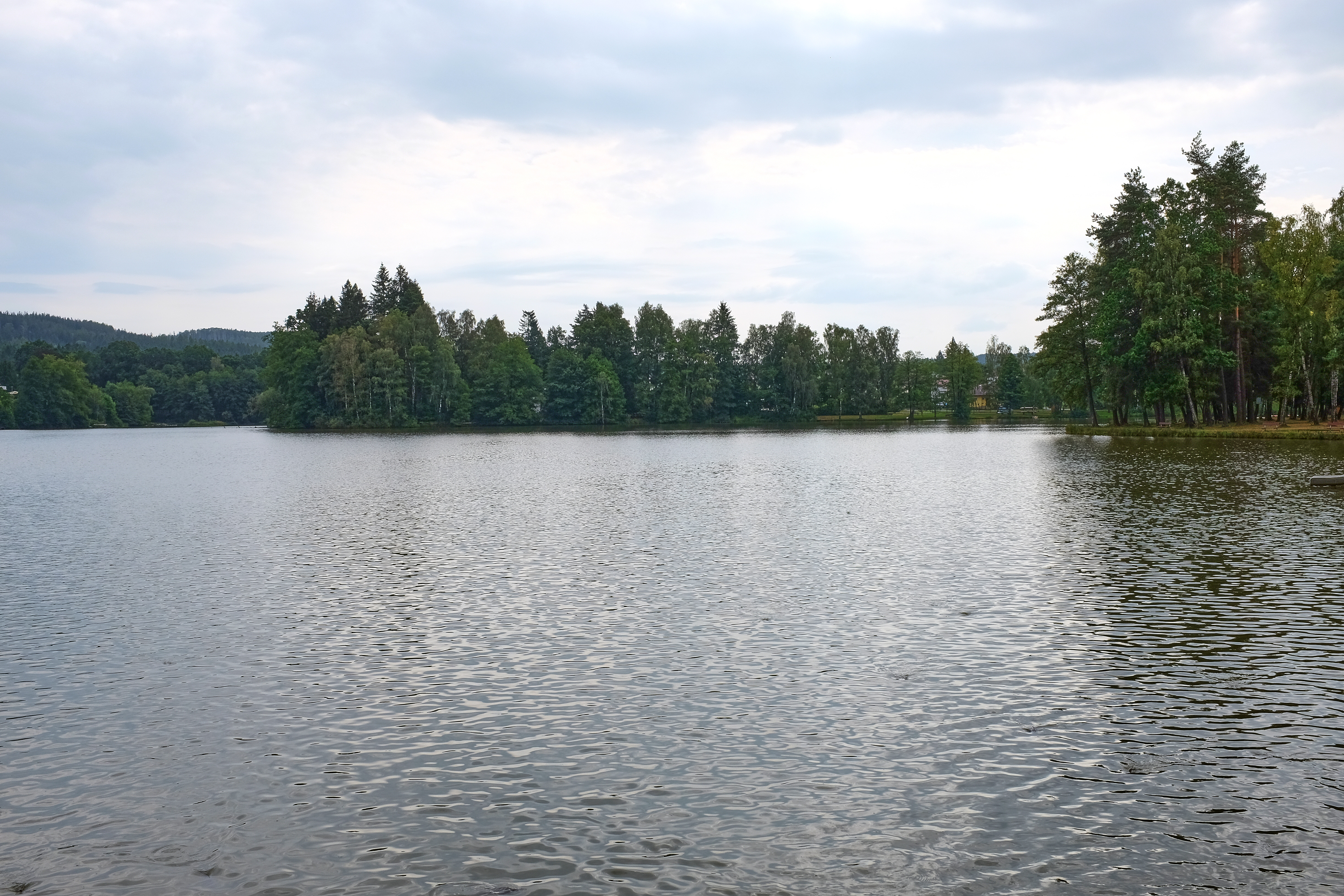
Babylon
Named after nearby Babí hora — nothing to do with the biblical city
🏛️ Ploskovice — An Emperor's Retirement Grottoes
This elegant Baroque chateau near Litoměřice, built 1720–30 for Anna Maria Franziska of Tuscany, later became the retirement home of Ferdinand I — the last crowned King of Bohemia, who abdicated the Austrian throne in 1848 and spent his remaining years here in comfortable exile. Beneath the south wing sits the chateau's most unusual feature: an extensive artificial Baroque grotto, a genuine underground "water cave" complex built purely for aristocratic amusement, decorated with shell-work and rocaille in the same tradition as garden grottoes at Versailles. The surrounding English-style park, laid out in the mid-19th century, remains freely open to the public.
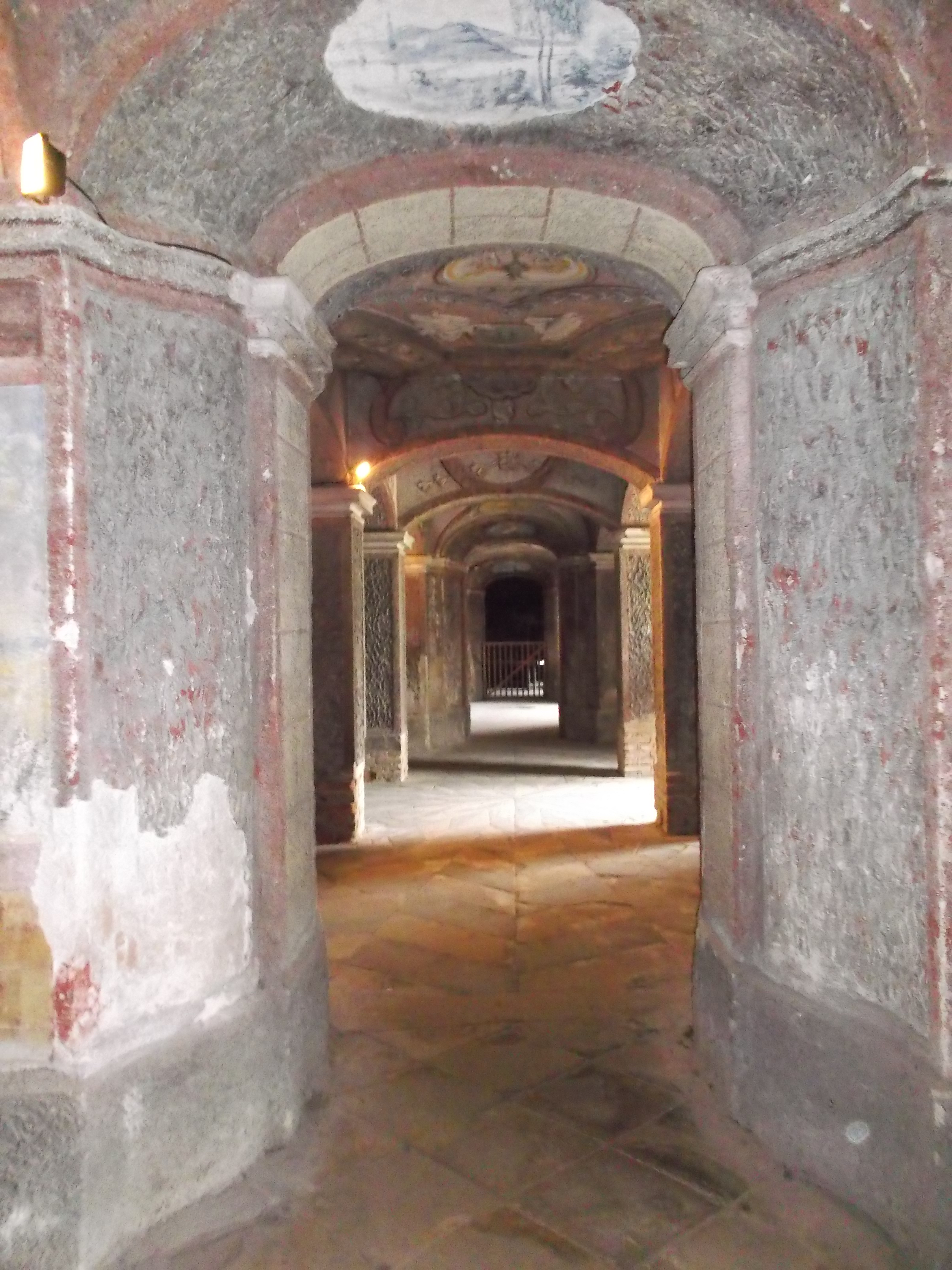
Ploskovice's grottoes
An underground Baroque "water cave" complex beneath the chateau's south wing
🦚 Jemniště — a White Peacock and a Living Sternberg
Built 1717–1725 to a design by the noted Czech Baroque architect František Maxmilián Kaňka, Jemniště passed to the noble Sternberg family in 1868 and, unusually for a Czech chateau, is still genuinely lived-in: current owner Jiří Sternberg occupies one wing with his family while the rest remains open for tours. The chapel of St. Joseph holds a rare set of sculptures by Matthias Bernard Braun, one of the greatest Baroque sculptors to work in Bohemia, and the surrounding English landscape park is home to an actual white peacock that wanders the grounds freely alongside more conventional wildlife. The family's collection of Thirty Years' War-era prints, displayed throughout the tour route, is reportedly the largest of its kind in Europe.
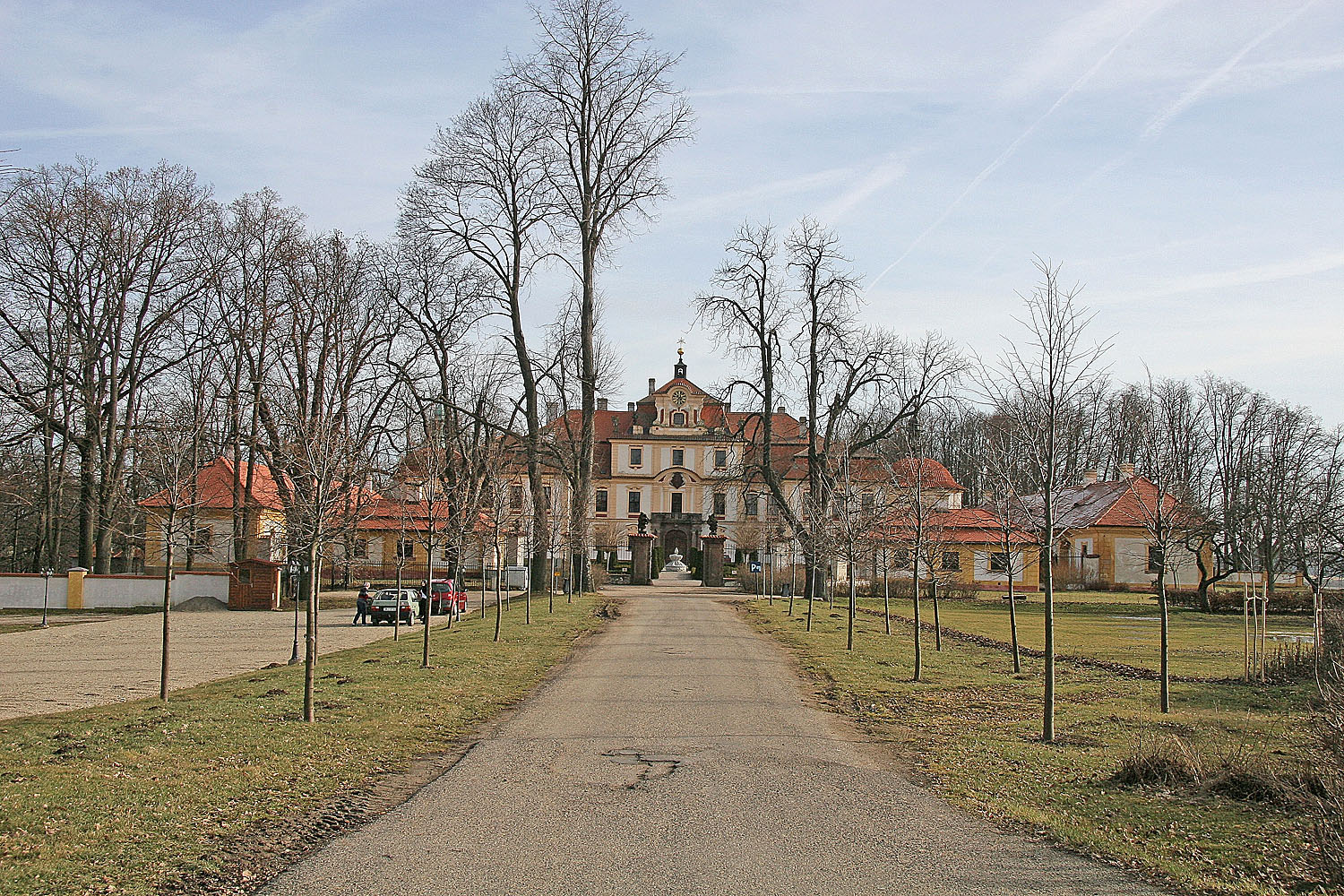
Jemniště
Still home to a living Sternberg — and a white peacock that roams the grounds
👻 Valdek — Mácha's Favorite Ruin, Reopened After Decades Behind a Fence
Deep in the Brdy hills, Valdek is a 13th-century Gothic castle ruin that spent much of the 20th century essentially inaccessible: swallowed up inside the Brdy military training area established in 1926, off-limits to the public for decades until the training area finally closed and reopened for hiking. Valdek was besieged exactly once in its working history, in 1346, and fell after just three days — but its real cultural legacy is romantic rather than military. The great Czech Romantic poet Karel Hynek Mácha loved this ruin specifically and is said to have drawn inspiration from it for his writing; a White Lady ghost, said to guard a buried treasure that includes a golden table with twelve golden chairs, is the castle's other enduring legend.
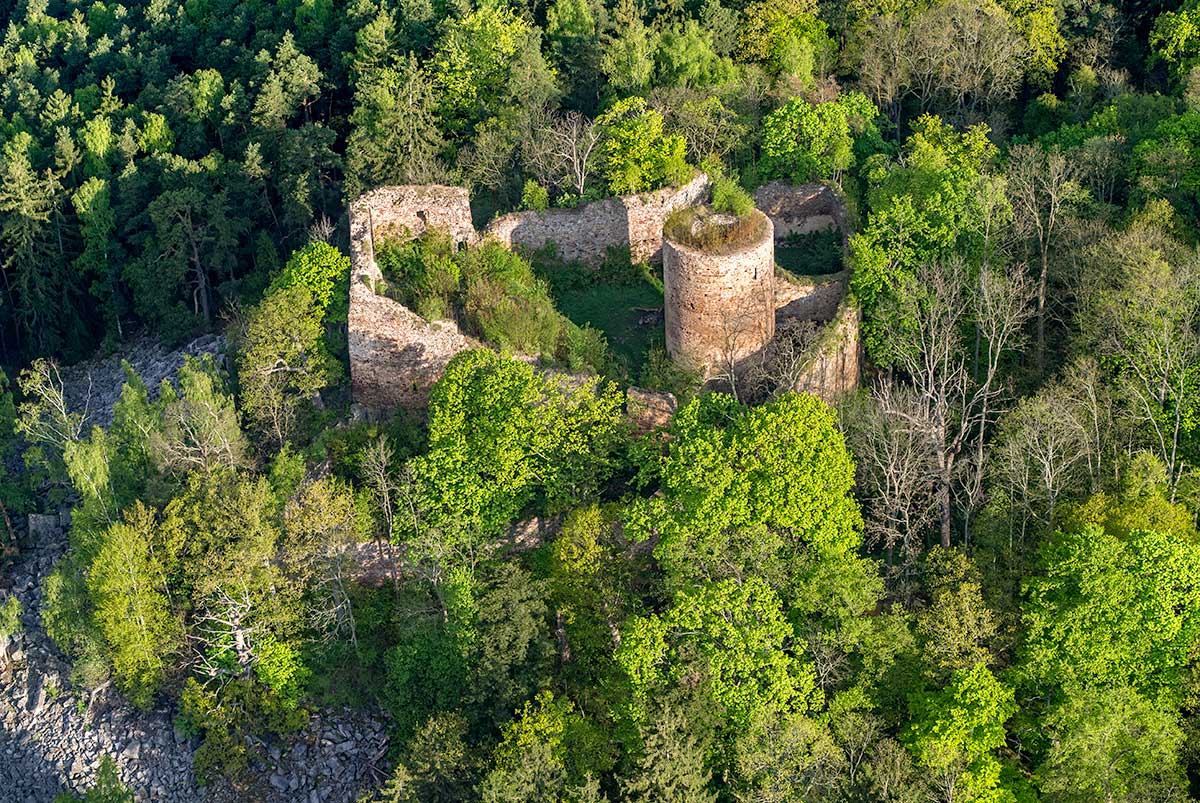
Valdek
Hidden inside a former military zone for decades — Mácha's favorite ruin
🦌 Tři Trubky — A Hunting Lodge With a Dark Wartime Footnote
At the confluence of two streams deep in the Brdy forest, this romantic-style hunting lodge was built in the late 1880s for Jeroným Colloredo-Mansfeld, designed by Vienna-based Italian architect Camillo Sita. Czechoslovak President T. G. Masaryk stayed here in the 1930s — a point of local pride — but the site's more sobering historical footnote is that during the Nazi occupation, German Field Marshal Walther von Brauchitsch, commander-in-chief of the German Army during the invasions of Poland and France, used the lodge as a residence. Most of the original hunting-trophy collection was later relocated to Dobříš chateau. The lodge sits within what's now a former military zone reopened for hiking, with the wild, little-visited valley of the Klabava stream running past its front door.
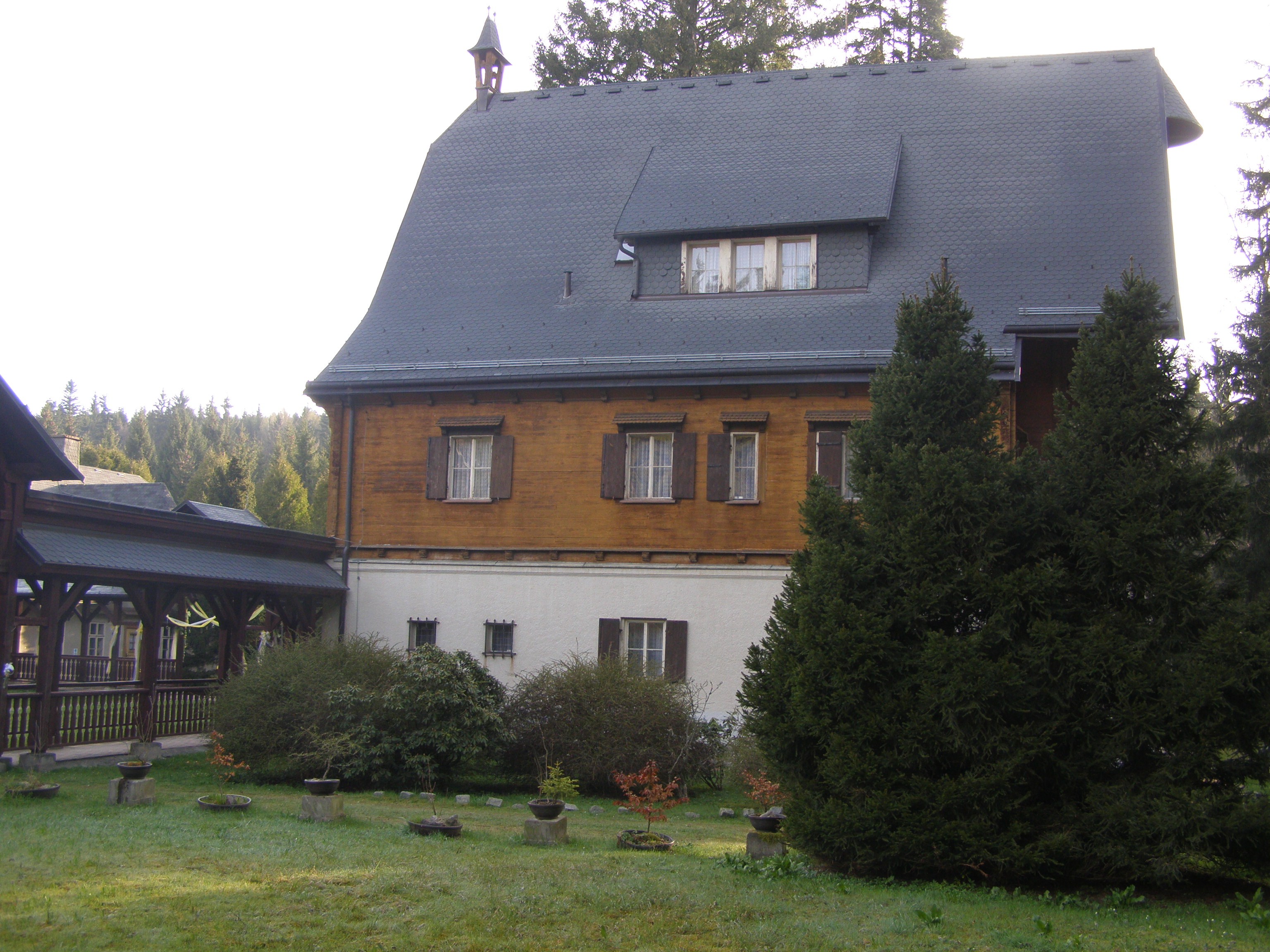
Tři Trubky
A romantic hunting lodge deep in the Brdy forest, once home to a German field marshal in exile
📝 More to Come
Still being researched properly: Naučná stezka Čertova strouha, the Lavender Valley near Beroun, and Perštejn Castle in the Ore Mountains.
