🍽️ Beyond Svíčková and Beer
Czech food is built on soup, dumplings, and slow-cooked sauces perfected over centuries of Central European winters — hearty rather than delicate, and genuinely satisfying rather than photogenic. This page goes deeper than the essentials: the soup course locals actually start every meal with, the one cheese that's genuinely Czech, the beer categories worth knowing, and one very popular "Old Bohemian" treat that — worth knowing before you order it — isn't actually Bohemian at all.
🥣 The Soup Course Isn't Optional
Traditional Czech meals open with soup, treated as essential to proper digestion rather than a starter to skip. Kulajda, originally from South Bohemia, is the one worth ordering first if you only try one: a creamy potato-and-mushroom soup finished with dill, a splash of vinegar for tang, and a poached egg floating on top. Bramboračka is a heartier potato soup built on mushrooms, caraway, and marjoram, often served in a hollowed-out bread bowl. Česnečka (garlic soup) is the acknowledged national hangover cure — broth, potato, and garlic, topped with croutons, cheese, and sometimes a raw egg. Zelňačka, a sauerkraut soup with smoked meat, and dršťková, a paprika-heavy tripe soup, round out the classics you'll see on nearly every pub menu.
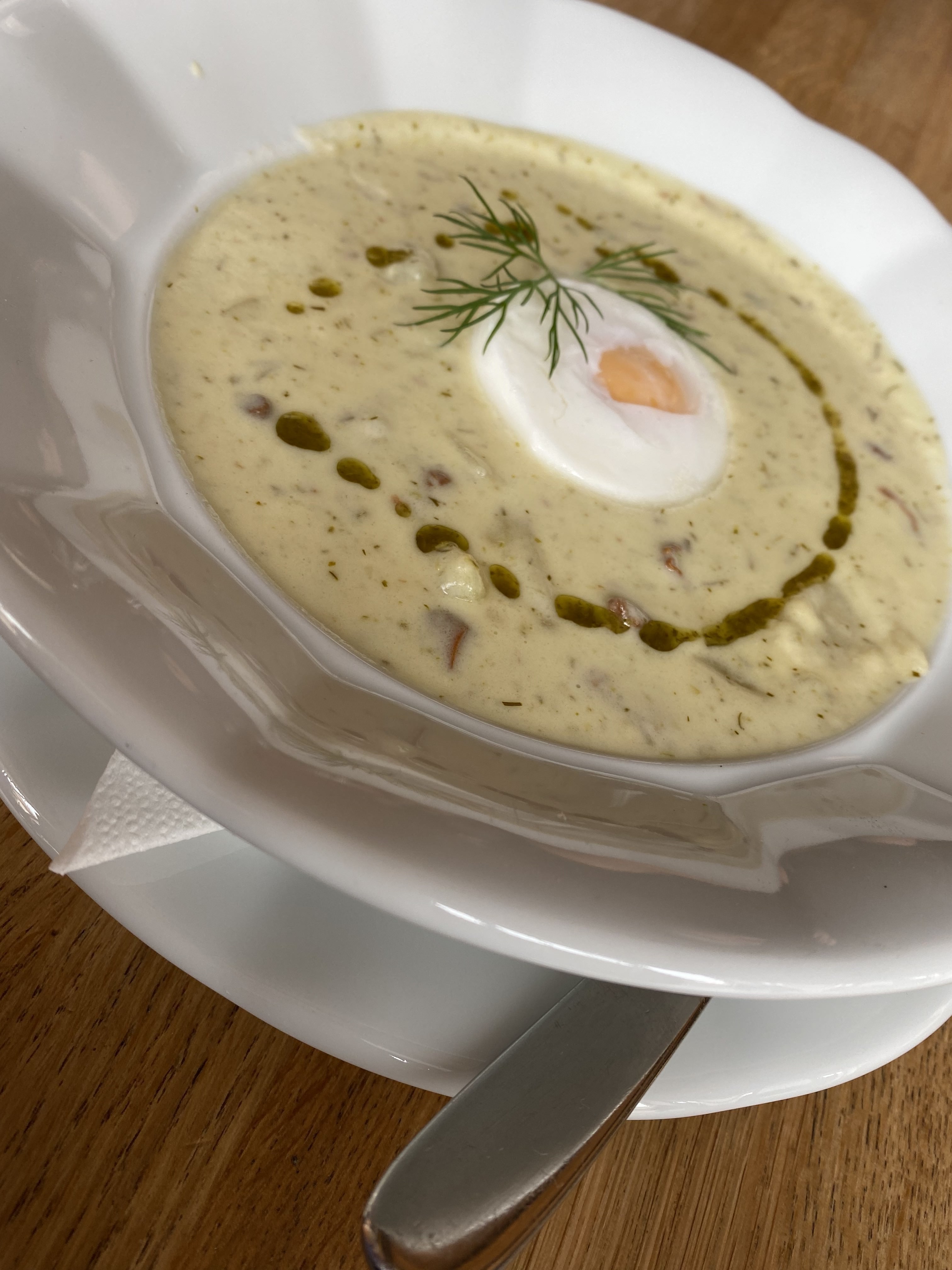
Kulajda
Creamy potato-and-mushroom soup finished with dill and a poached egg — order this first
🍖 The Dumpling Trinity and What They Carry
Czech knedlíky (dumplings) come in three genuinely distinct forms, and knowing which goes where matters: houskové (bread dumplings, made from stale rolls, sliced into rounds) are the classic partner for svíčková and roast pork; bramborové (potato dumplings) are denser and pair with heavier stews; tvarohové (quark-based) show up sweet, filled with fruit and dusted with sugar and butter, as a dessert or even a light main course. Svíčková na smetaně — the beef sirloin dish already covered on the main page — is worth one more detail: the name literally means "candle-shaped," referring to the cut of meat rather than anything about the sauce, and the root vegetable purée it's built on (carrot, parsley root, celeriac) is a genuinely old preservation technique, designed to use up the root cellar's contents through a long winter. Guláš, despite the shared name, diverges sharply from its Hungarian cousin — Czech versions are thicker, less paprika-forward, and served with dumplings rather than over noodles or with bread alone, evidence of centuries of a dish crossing a border and quietly becoming its own thing.
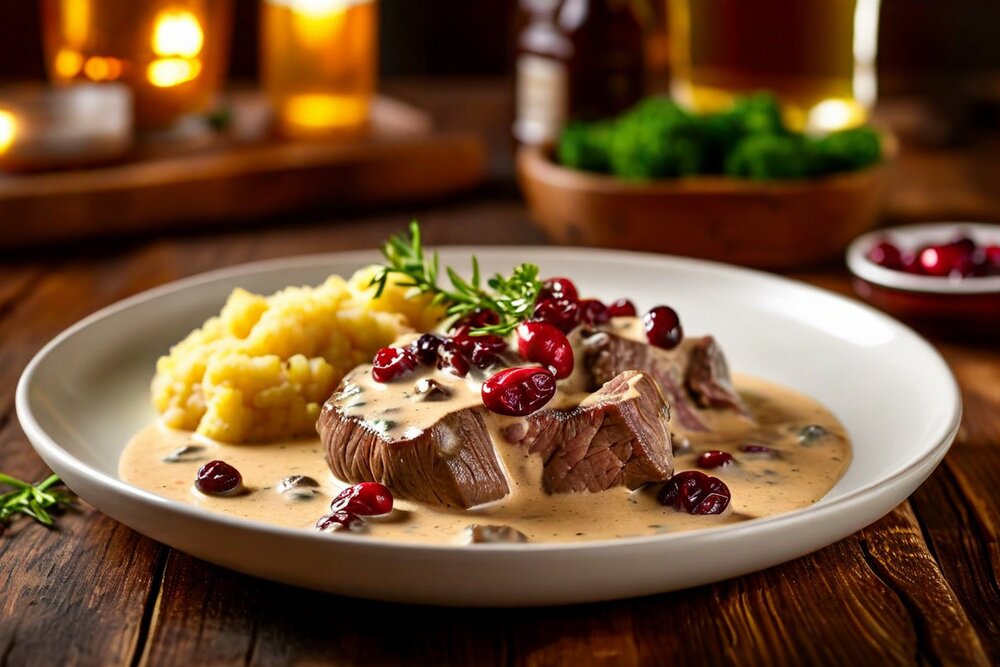
Svíčková na smetaně
Beef sirloin in a creamy root-vegetable purée, finished with cranberries — the dish this whole section builds toward
🧀 Olomoucké Tvarůžky — the One Genuinely Czech Cheese
The Czech Republic isn't a cheese country in the way France or Switzerland is — but it has exactly one cheese that's entirely its own, and it announces itself before you see it. Olomoucké tvarůžky, first documented in written records from 1452 (the name itself first appears in 1583), is a ripened, nearly fat-free curd cheese from the Haná region around Olomouc, historically a way for farmers to preserve surplus milk through the year. It won an award at the 1873 Vienna World's Fair, and the sole surviving traditional producer — the A.W. company in the town of Loštice, making tvarůžky since 1876 — somehow kept the tradition alive straight through the communist era, when most small regional food producers were absorbed or shut down. Since 2010 it's held EU Protected Geographical Indication status, meaning genuine Olomoucké tvarůžky can legally only come from that region. Opinion is genuinely split even among Czechs — the smell is significantly stronger than the actual flavor, sharp and salty rather than unpleasant once you push past the aroma, and it's traditionally eaten on dark bread with raw onion, paired with a cold pilsner.
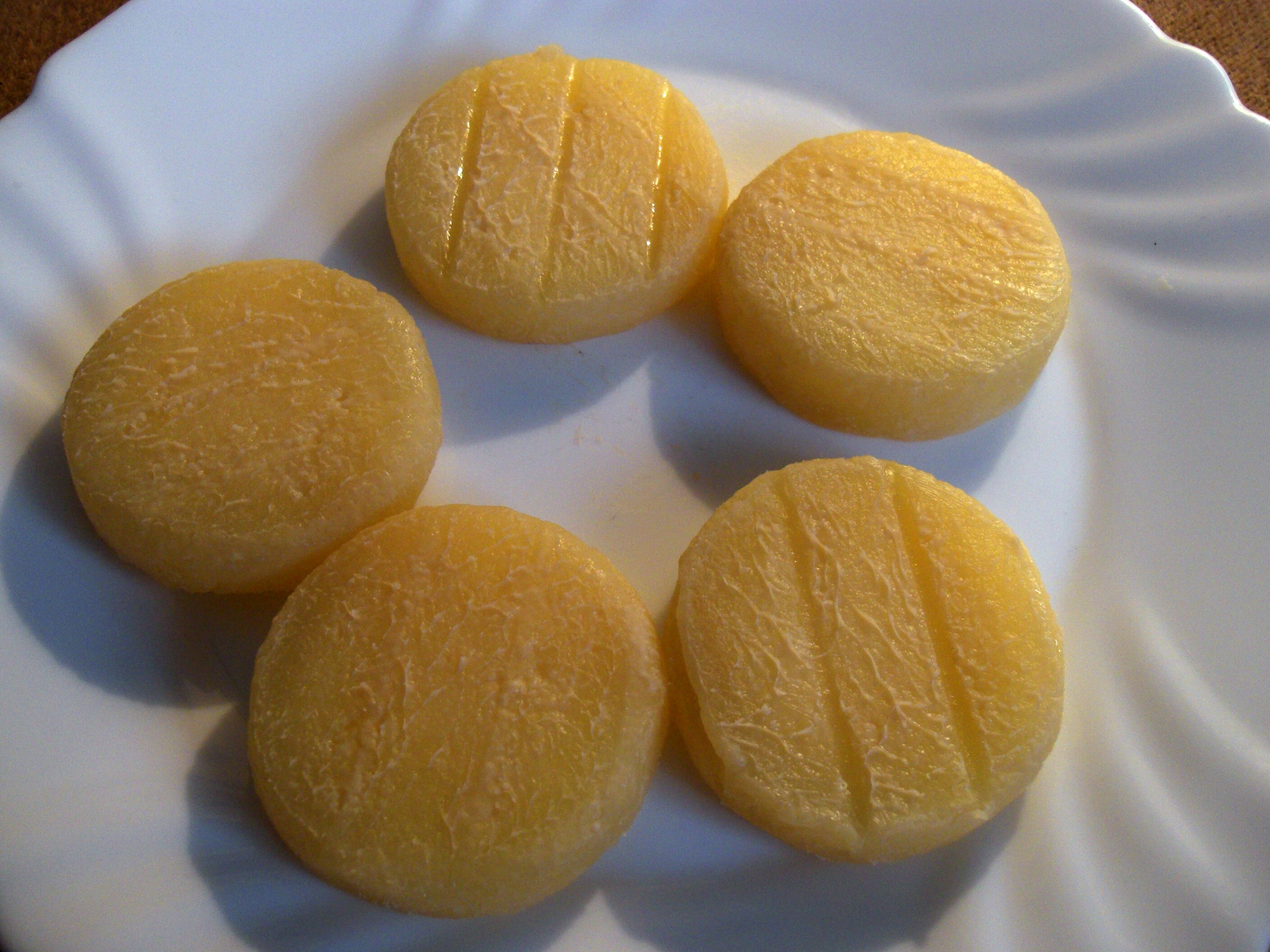
Olomoucké tvarůžky
The country's one genuinely native cheese — the smell is stronger than the taste
🔥 The Trdelník Truth
Worth knowing before you queue for one on Charles Bridge: trdelník — the sugar-dusted, spit-roasted pastry cone sold at seemingly every stall in Prague's Old Town, often billed as an "Old Bohemian Specialty" — genuinely isn't a traditional Czech food. The dessert traces to the historically Hungarian-speaking parts of Transylvania, spread through Slovakia (where "Skalický trdelník" now holds its own EU-protected status), and was known in 19th-century Moravia — but it had essentially vanished from daily life by the mid-20th century. The first trdelník stand in the modern Czech Republic opened around 2000; by the 2010s the treat had exploded across Prague's tourist center, often filled with ice cream — a genuine Prague-era invention not found in the pastry's original regions. The confusion runs deep enough that it made international news in 2023, when the newly arrived U.S. Ambassador posted a photo holding one and was gently roasted in the Czech press as "TrdelníkGate." None of which makes it bad — it's a legitimately tasty street snack — but ordering one at a genuinely "Old Bohemian" price expecting genuine old Bohemian history is the actual local joke.
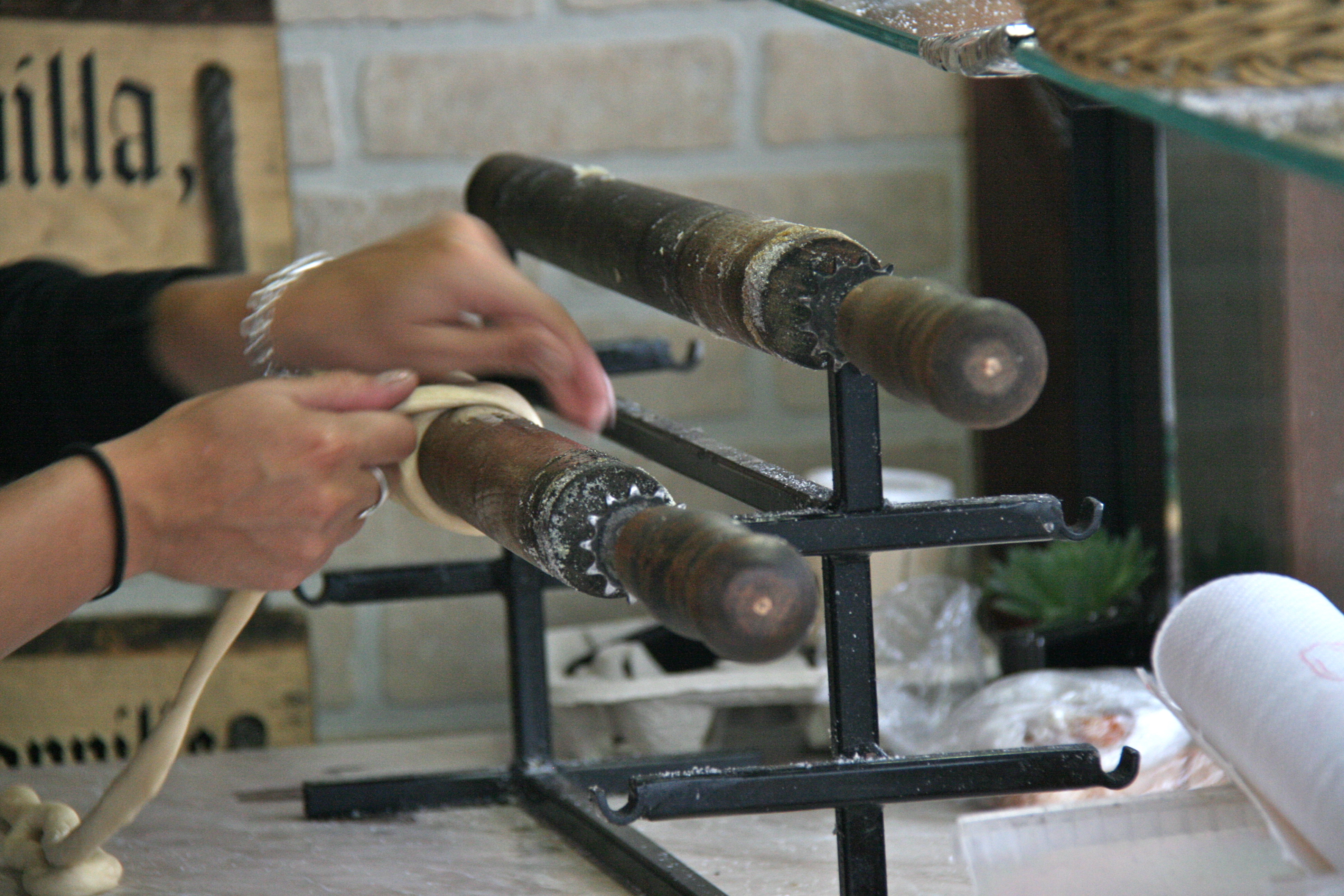
Making trdelník
Dough wound around a wooden trdlo before roasting — the treat that gave the pastry its name
🍺 Reading a Czech Beer Menu Properly
The main page covers Pilsner's headline story; here's the detail that actually helps at a pub. Czech beers are labeled by stupně ("degrees," on the Balling/Plato scale) — a measure of the sugar content in the wort before fermentation, not alcohol content directly, though the two roughly correlate. Výčepní (under 10°) is a light session beer; ležák (11–12°) is the standard lager strength, where Pilsner Urquell's classic 12° sits; speciál (13°+) is stronger and more full-bodied. Ask for řezané pivo ("cut beer") and you'll get a genuinely good pub trick: a half-and-half pour of dark and light beer, layered rather than mixed, that most tourists never think to order. The founding story is worth the extra sentence too: Plzeň's beer had gotten so inconsistent by 1839 that townspeople dumped 36 barrels of a bad batch out in the town square in protest; the city responded by hiring Bavarian brewer Josef Groll, who combined new pale-malting technique with Plzeň's unusually soft local water and bottom-fermenting yeast to produce, in 1842, the world's first golden lager — the style that would eventually be copied worldwide as "pilsner."
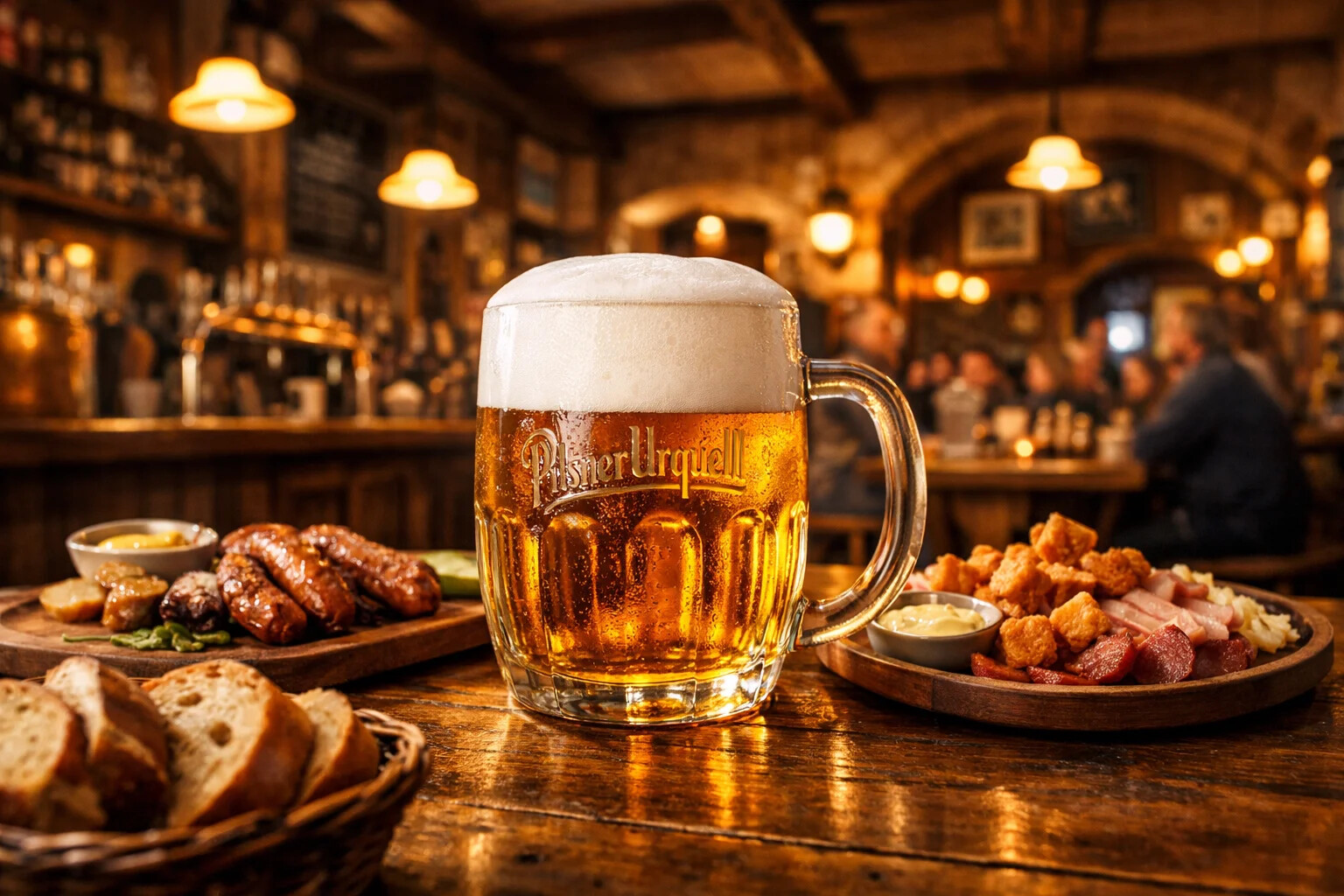
A proper 12°
Standard ležák strength, exactly where Pilsner Urquell sits on the scale
