🕳️ Nearly 4,000 Caves, 14 You Can Actually Walk Into
The Czech Republic has almost 4,000 documented caves, and the state cave authority (Správa jeskyní ČR) keeps exactly 14 of them open to the public — everything from a boat ride through an underground river to the oldest continuously-open show cave in Central Europe. This page covers all ten worth genuinely planning a trip around, grouped by region.
🏔️ Moravian Karst — Macocha Abyss & Punkva Caves
Twenty kilometers north of Brno sits the single most dramatic hole in the ground in Central Europe: the Macocha Abyss, 138.5 meters deep, 174 meters long, 76 meters wide — the largest "light hole" abyss of its kind on the continent. It formed when the ceiling of a colossal underground chamber, carved over millions of years by the Punkva River, finally collapsed. The name means "stepmother," from a local legend about a widow who threw her stepson into the pit; he survived, tangled in the branches on the way down, and she supposedly leapt in herself once the truth came out. The first documented human descent was in 1723, by a monk named Lazarus Schoppe; systematic exploration didn't really begin until Professor Karel Absolon's expeditions in the early 1900s.
The Punkva Caves are how most visitors actually experience it: a roughly hour-long tour through stalactite-hung chambers that ends with a genuinely memorable boat ride along the underground Punkva River, passing through the Masaryk Dome — widely considered the most beautiful chamber in the entire Moravian Karst — before the boat glides out directly beneath the Macocha abyss floor. The Punkva system connects to the Amatérská Cave, at nearly 40 kilometers the longest cave system in the country. A cable car — the steepest in the Czech Republic — carries visitors from the cave entrance up to the abyss rim; book Punkva Cave tickets well ahead, since summer slots routinely sell out weeks in advance.
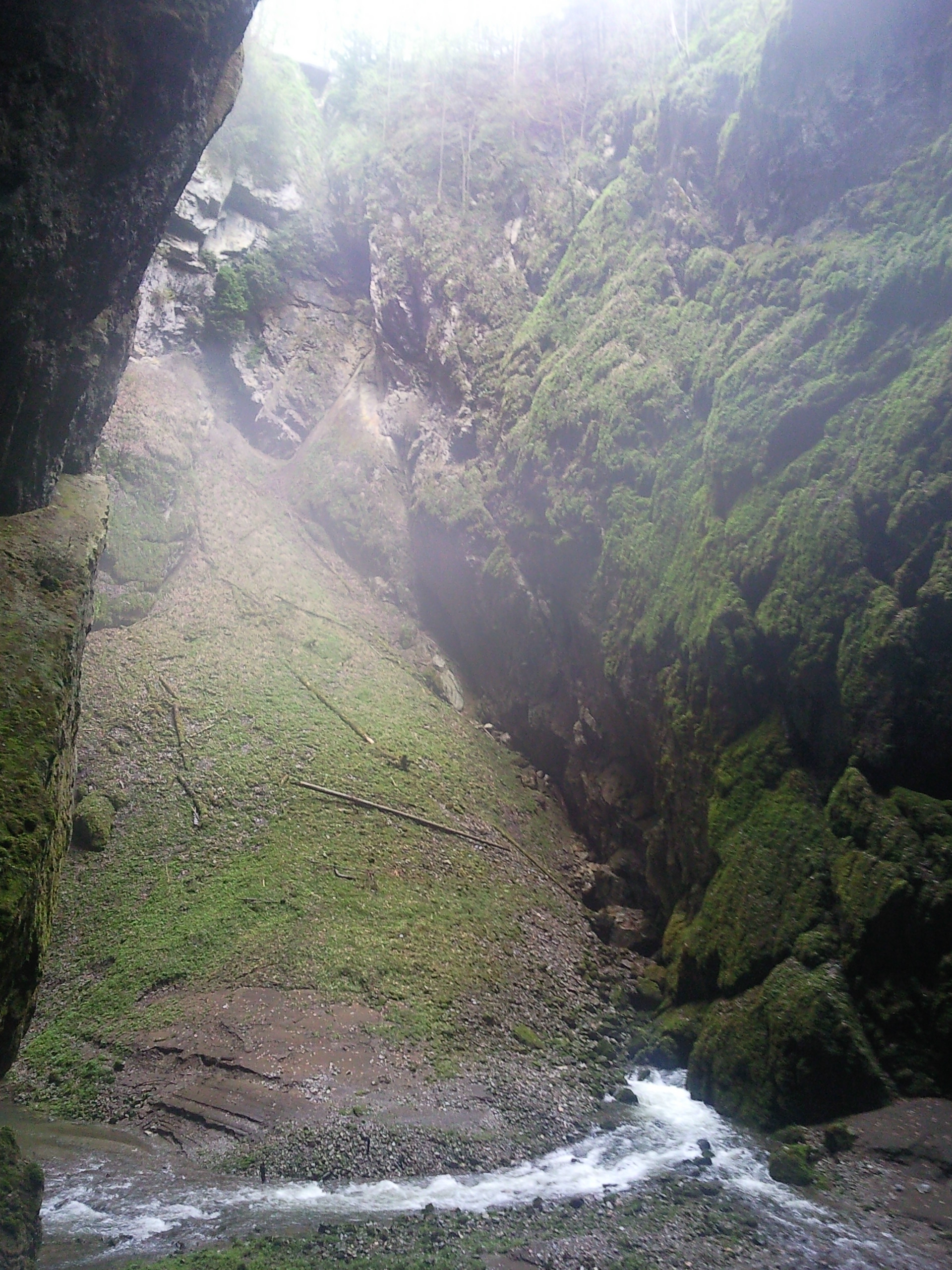
The Macocha Abyss
Looking up through the 138.5-meter gorge from the bottom — the largest light-hole abyss in Central Europe
🦴 Mladeč Caves — Europe's Oldest Modern-Human Site
Near Litovel in Moravia, the Mladeč Caves hold something genuinely extraordinary: the oldest substantial collection of Homo sapiens remains in Europe, dated to more than 31,000 years ago, making this the northernmost known settlement of modern humans on the continent at that time. Discovered during limestone quarrying in the 1820s, the site was excavated from 1881 by Josef Szombathy, curator of the Vienna Natural History Museum, who found dozens of human skeletal fragments alongside distinctive bone spear points now known internationally as "Mladeč points," a hallmark of the Aurignacian culture. Most of the finds went to Vienna and remain there today. In 2024, researchers used a preserved skull — that of a roughly 17-year-old woman — to create a digital facial reconstruction; the public voted to name her "Mlada."
The tour itself passes through a genuinely atmospheric labyrinth of fissure passages under Mount Třesín, past a two-meter stalagmite nicknamed "The Mummy," ending at the Dóm mrtvých ("Chamber of the Dead") — the actual excavation site — now fitted with a reconstructed prehistoric ritual scene and, appropriately, ochre hand-markings still visible on the original cave walls.
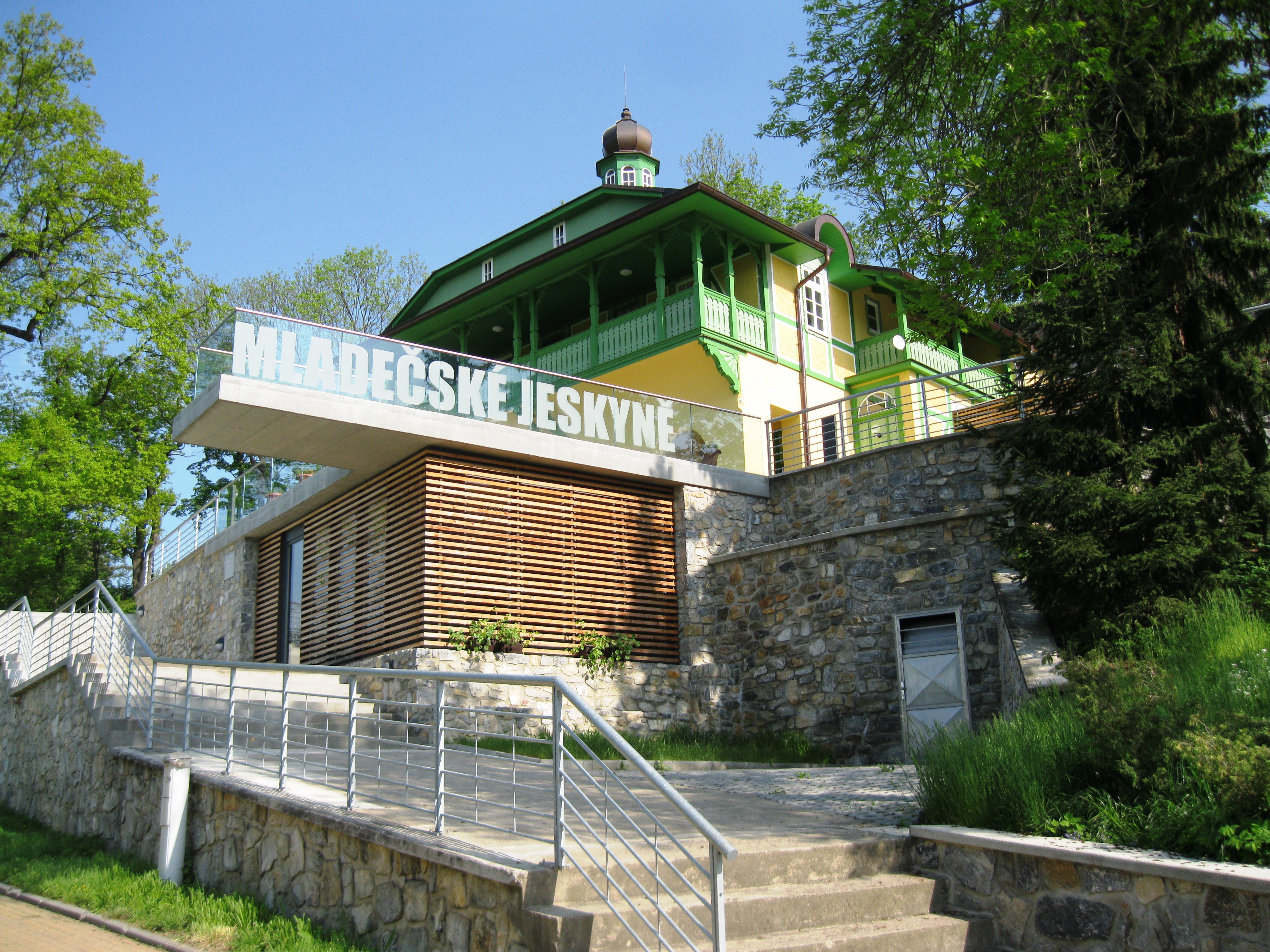
Mladeč Caves
The entrance pavilion above the labyrinth where Europe's oldest modern-human remains were found
🌋 Zbrašov Aragonite Caves — The Warmest Underground in Bohemia
Near the spa town of Teplice nad Bečvou, these are the only hydrothermal caves open to the public anywhere in the Czech Republic — formed not by ordinary groundwater but by warm, carbon-dioxide-rich mineral springs rising from deep underground, the same springs that feed the adjacent spa. The result is genuinely unlike any other cave in the country: "geyser stalagmites," ball-shaped sinter crusts that look uncannily like doughnuts, and a constant year-round temperature of 14°C — the warmest cave environment in Bohemia. The lowest passages are permanently filled with carbon dioxide gas, forming small "gas lakes" that guides steer well clear of. Two quarry workers discovered the caves by accident in the winter of 1912–13, when a column of steam suddenly burst from a crack in the rock face; the caves opened to the public in 1926. A short forest trail from the caves leads to the nearby Hranice Abyss — at over 470 meters (and still not fully measured), the deepest flooded cave shaft on Earth.
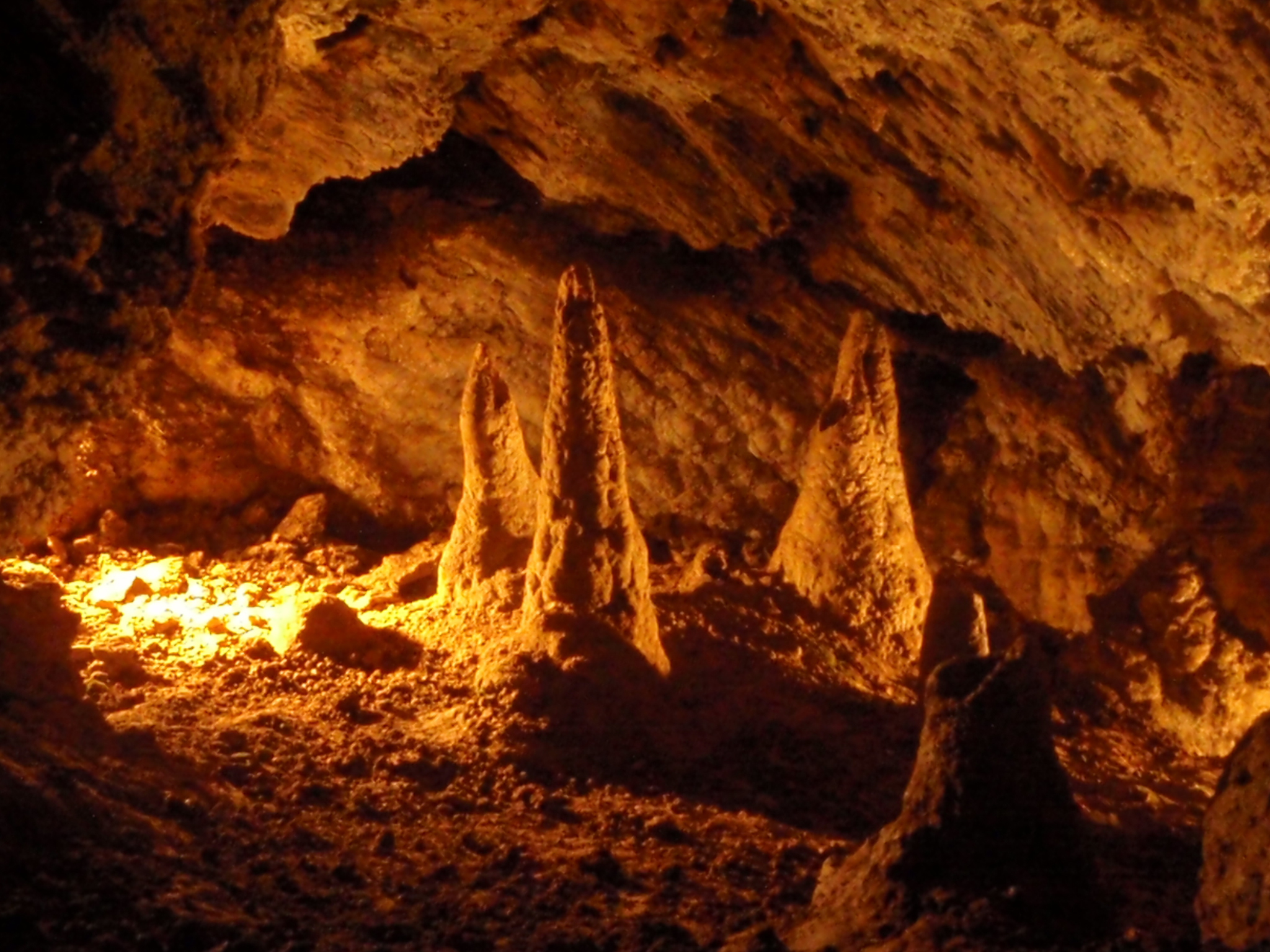
Zbrašov's "geyser stalagmites"
A hydrothermal formation found nowhere else in the country
⛰️ Na Pomezí & Na Špičáku — Marble Caves of the Jeseníky
These two caves, both carved into Devonian marble in the Jeseníky mountains, couldn't be more different in character. Na Pomezí is the largest marble-dissolution cave system in the country — richly decorated with cascading flowstone, delicate straw stalactites, and rimstone pools, plus a famous heart-shaped stalagmite that, according to local legend, grants a wish to anyone who touches it while thinking of someone they love. Note: as of 2026, Na Pomezí is closed for extensive electrical and infrastructure reconstruction following 2024 flood damage, with reopening expected around November 2026 — check current status before planning a visit.
Na Špičáku, roughly 10km away, is the oldest documented cave in Central Europe with a written record — first mentioned in 1430 — and its passages were later carved into their unusual heart-shaped and egg-shaped profiles by meltwater from a retreating Ice Age glacier, a genuinely different origin story from ordinary limestone dissolution. Used for centuries as a hideout — local tradition holds that persecuted Czech Brethren worshipped here after the 1620 Battle of White Mountain — the cave walls preserve roughly 4,000 historic inscriptions and carvings, the largest such collection in the country, including a restored Renaissance "Adoration of the Cross" painting from the 16th century.
💧 Bozkov Dolomite Caves — Bohemia's Largest Underground Lake
The only show cave open to the public anywhere in northern Bohemia, and the only dolomite caves (rather than limestone) in the entire country. Discovered by accident during a 1947 quarry blast, the Bozkov caves are decorated with distinctive quartz ledges and ribs rather than classic stalactites, though genuine dripstone formations appear too — visitors have nicknamed individual formations "The Angel," "The Little Doll," and "Bethlehem." The tour's finale is the Jezerní dóm (Lake Chamber), home to the largest underground lake in Bohemia — a genuinely striking 320-square-meter sheet of clear, blue-green water.
🪙 Koněprusy Caves — A Medieval Counterfeiters' Workshop
The longest cave system in Bohemia proper, discovered entirely by chance in a 1950 quarry blast near Beroun and opened to the public just nine years later. Three levels span over two kilometers, decorated with distinctive opal-bearing "Koněprusy roses" alongside more conventional flowstone. The genuine standout, though, is historical rather than geological: in the upper level, archaeologists found the remains of a secret 15th-century counterfeiters' workshop, complete with hearth remains and a reconstructed hidden entrance, where forgers once minted fake coins undetected in the depths of the hill. Paleontological finds run even deeper — animal bones dating back 600,000 years, and human remains from Homo sapiens estimated at roughly 45,000 years old, among the oldest confirmed modern-human fossils anywhere in Eurasia.
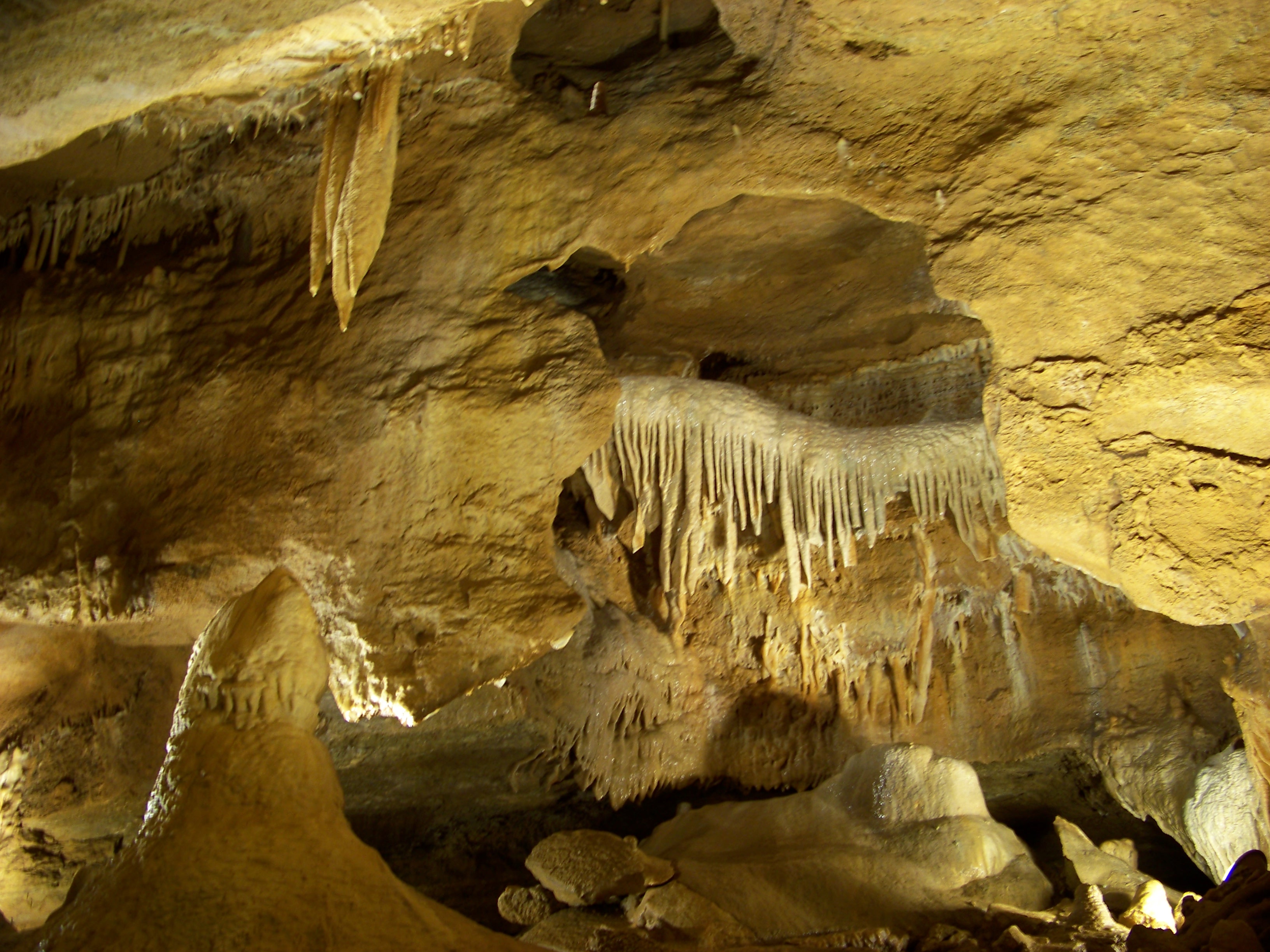
Koněprusy Caves
Deep within these passages, 15th-century forgers once minted counterfeit coins undetected
🎨 Chýnov Cave — The First Show Cave in the Country
Discovered in 1863 during quarry work and opened to visitors in 1868, Chýnov holds a genuine claim to history: it was the very first cave in the Czech lands ever developed for public tourism, and the original stone staircases from that era are still in use today. Unlike most Czech show caves, Chýnov has almost no stalactite decoration at all — its real appeal is color. Carved through alternating bands of white, yellow, and brown marble and dark amphibolite, the passage walls display strange, swirling natural patterns unlike anything else underground in the country, including distinctive circular "oko" (eye) formations where the two rock types meet. Occasional concerts are still held inside, taking advantage of the acoustics.
🦇 Na Turoldu — Coral-Reef Caves Under a Wine Region
At the northern edge of Mikulov, in the heart of South Moravia's Pálava wine country, Na Turoldu is the only cave in the Czech Republic developed in Jurassic-era limestone — and the only show cave in the country carved by groundwater rather than the more usual mix of processes. Instead of stalactites, its bleached-white passages are covered in bizarre corrosion formations that genuinely resemble coral reefs and sea foam, a decorative style locals simply call "turoldská" because nothing else in the country looks quite like it. The cave is also the single most important winter roosting site in South Moravia for the endangered lesser horseshoe bat — a small lake inside floods and recedes with the water table, so a visit's exact route can vary by season.
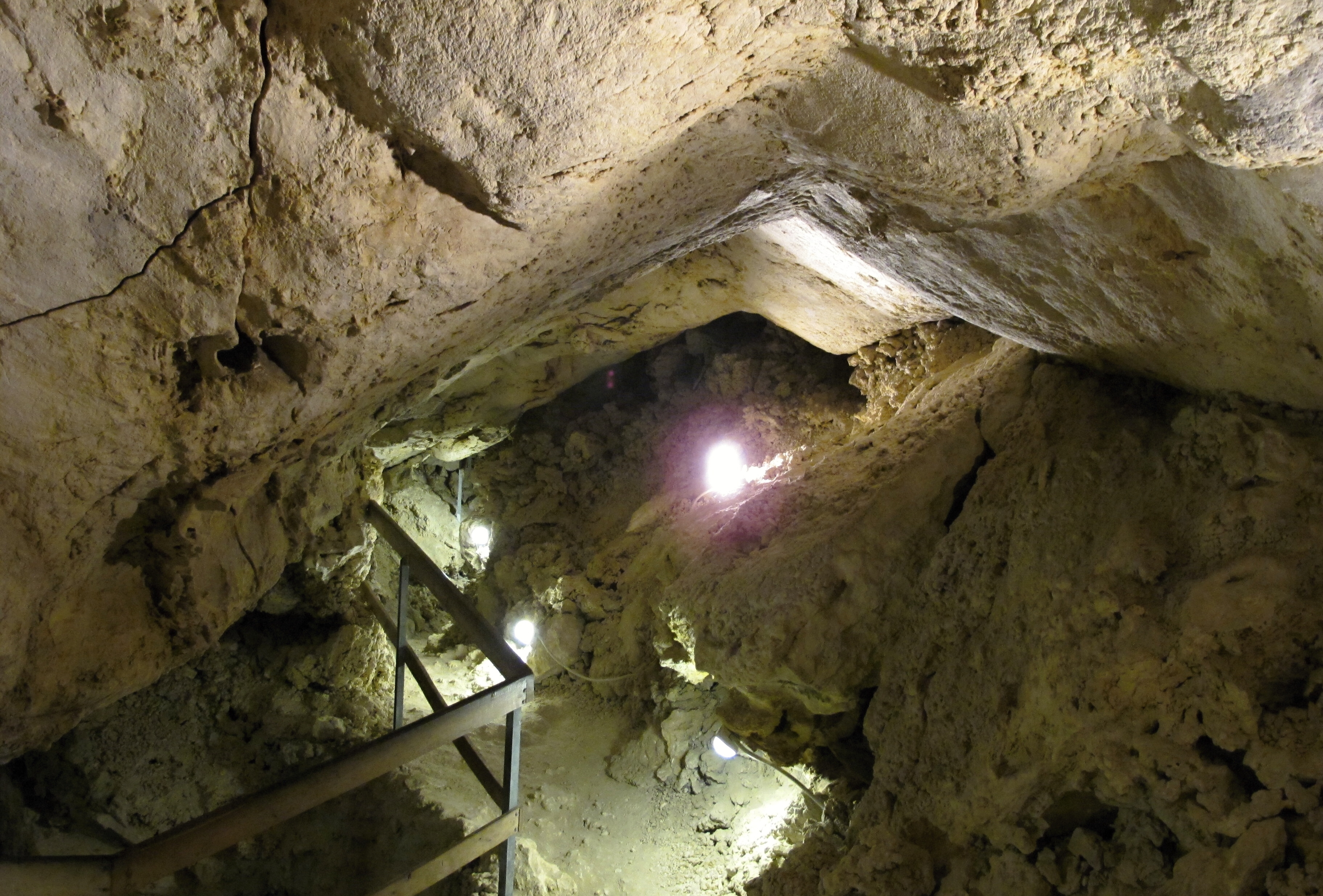
Na Turoldu
The bleached-white "turoldská" decoration genuinely resembles a coral reef
🗺️ Planning a Cave Trip
All 14 publicly accessible Czech caves are guided-tour only, run seasonally (most close or reduce hours November through March), and several — especially Punkva Caves in high summer — sell out days or weeks ahead. Reserve online through the Správa jeskyní ČR (caves.cz) rather than showing up and hoping. Cave temperatures hover a cool 5–9°C year-round regardless of the season outside, so bring a layer even in August. If you can only manage one, make it Punkva/Macocha for sheer scale and the boat ride; for something genuinely different from every other cave you've seen, Zbrašov's hydrothermal geysers or Chýnov's colored marble are the two best bets.
