✝️ Sacred Rooms Inside Secular Fortresses
Every major medieval Czech castle had a chapel, but a handful became something far more ambitious: gilded reliquaries in their own right, built to hold relics, crown jewels, or both, and decorated on a scale that has almost nothing to do with the rough stone walls surrounding them. This page covers the five most extraordinary — four castle chapels and one freestanding treasure that, together, represent the finest surviving medieval and Romanesque goldsmithing and panel painting anywhere in the country.
👑 Karlštejn — The Chapel of the Holy Cross
Founded in 1348 by Charles IV, King of Bohemia and Holy Roman Emperor, Karlštejn was purpose-built as a fortress for holy relics and royal treasure, and its Chapel of the Holy Cross — on the second floor of the Great Tower — is arguably the single most extraordinary room surviving from medieval Central Europe. Every wall is faced in roughly 4,000 polished semi-precious stone plates, each about a centimeter thick, set into gilded stucco; the vaulted ceiling is gilded and studded with Venetian glass fashioned into stars, a sun, and a moon, recreating the heavens overhead. Charles IV himself entered the inner sanctuary barefoot, out of humility, whenever he came to pray.
Mounted on the walls is a set of 129 surviving Gothic panel paintings (one of the original 130 has been lost), painted in the 1360s by Master Theodoric — the first artist in Czech history whose name we can definitively attach to a surviving work, thanks to a 1367 charter in which Charles IV personally praised his "faithful and beloved master and servant" for the chapel's decoration. It's the largest, best-preserved collection of Gothic panel painting by a single artist anywhere in the world, and many of the panels doubled as reliquaries themselves, with small relics embedded behind the paint. As payment, Theodoric received a tax-exempt estate at nearby Mořina — on the condition that he supply 30 pounds of beeswax every year for the chapel's candles. The chapel held the Imperial Crown Jewels and, from the start of the Hussite Wars, the Bohemian crown jewels as well, for nearly two centuries. Visits today are capped at 15 people per hour and must be booked at least three days ahead.
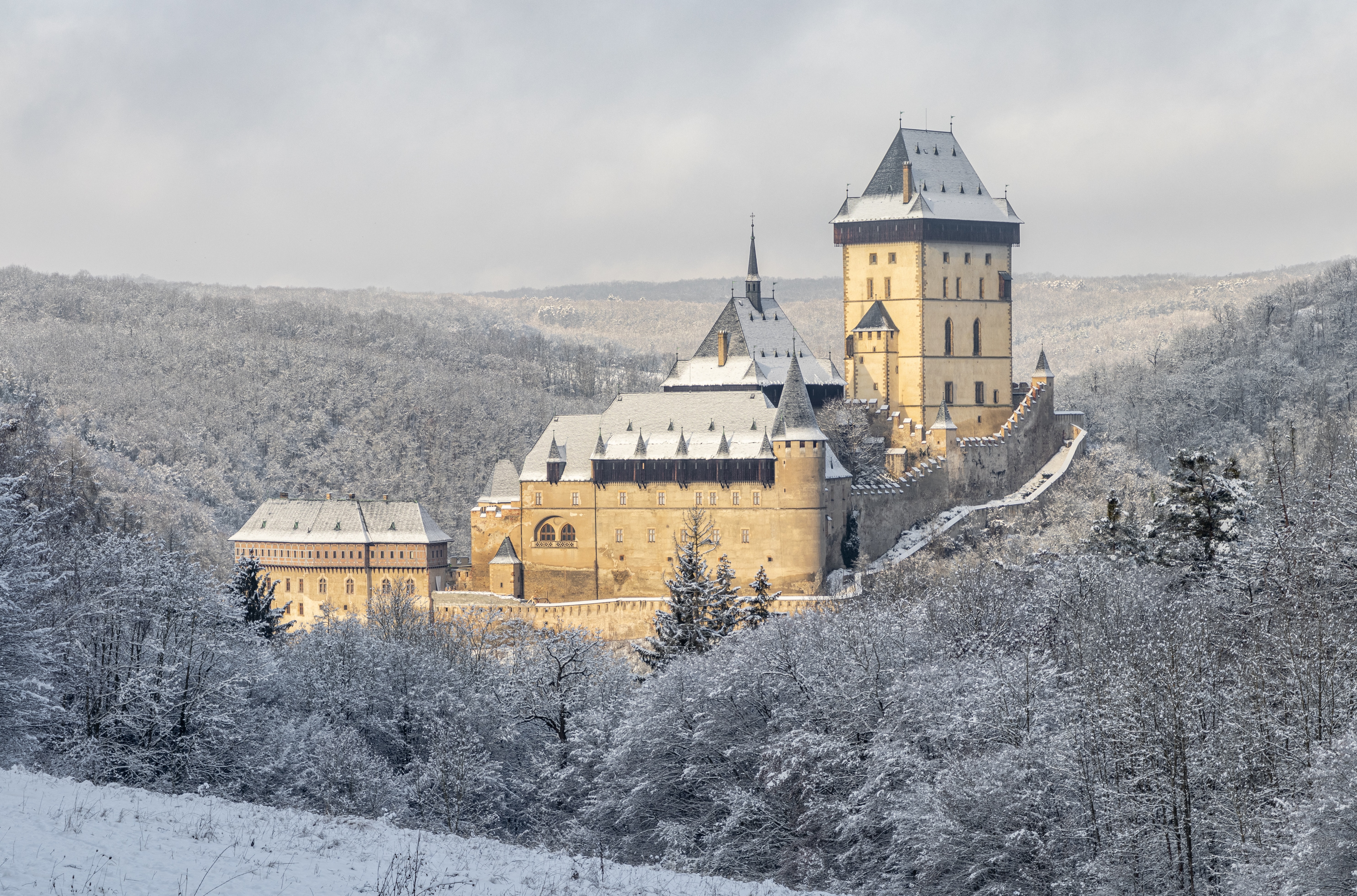
Karlštejn Castle
Built by Charles IV to safeguard the holiest relics and richest treasures of his empire
🏺 The Reliquary of St. Maurus — Buried, Forgotten, Found
The second most valuable historical artifact in the Czech Republic, after the crown jewels themselves, has a backstory that genuinely reads like an adventure film. Made in the early 13th century for a Belgian Benedictine abbey to house relics of St. John the Baptist and St. Maurus, this house-shaped Romanesque casket — gilded silver over an oak core, decorated with 12 relief scenes, 14 gilded figures, engraved antique gems, filigree, and enamels — was bought by the noble Beaufort family in 1838 and eventually moved to their castle at Bečov nad Teplou in western Bohemia.
In 1945, facing expulsion from Czechoslovakia for wartime collaboration with the Nazis, the family hid the reliquary in the rubble beneath the floor of the castle's own chapel — and then said nothing, to anyone, for forty years. In 1984, an American treasure hunter contacted Czechoslovak officials offering to legally purchase an unspecified historical object he claimed was buried somewhere in western Bohemia. Undercover investigators, working to identify what he was actually after, eventually connected the clues to Bečov; on November 5, 1985, digging beneath the chapel floor (alongside, as it turned out, a cache of the family's hidden wine and cognac), they found the reliquary — badly damaged after four decades underground. Restoration took eleven years, ending in 2002, and the reliquary has been on public display at Bečov ever since. It is one of only three Romanesque "house reliquaries" of this type surviving anywhere in the world.
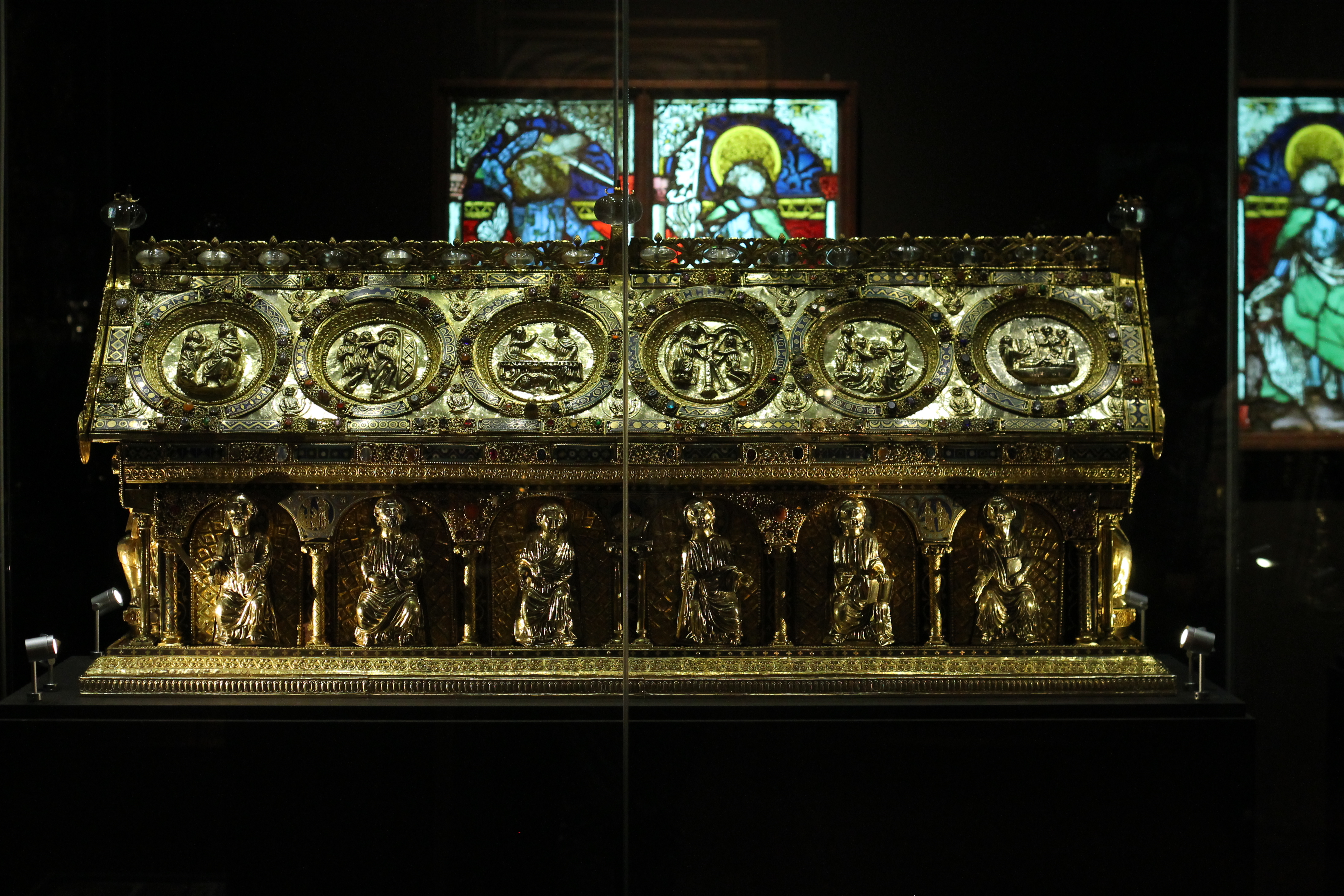
The Reliquary of St. Maurus
Buried by a fleeing noble family in 1945, rediscovered by police in 1985
🏰 Bezděz — A Chapel Built From Childhood Trauma
Bezděz, one of the most important Gothic royal castles in the Czech lands until its destruction in the Thirty Years' War, holds a genuinely moving story behind its early Gothic chapel. King Ottokar II began building the castle before 1264; a year after his death, his widow Queen Kunhuta and her young son — the future King Wenceslaus II, then just six or seven years old — were imprisoned there under harsh conditions by his regent guardian. His mother eventually escaped under a pretext, leaving the boy alone at Bezděz, an experience historians believe marked him for life.
As an adult and reigning monarch, Wenceslaus II returned to Bezděz — not to raze it, but to commission its chapel, accessible via a gallery from the royal palace and now considered one of the finest surviving examples of early Gothic sacred architecture in the country. Whatever his reasons, transforming the site of his own childhood imprisonment into something sacred is hard to read as coincidence.
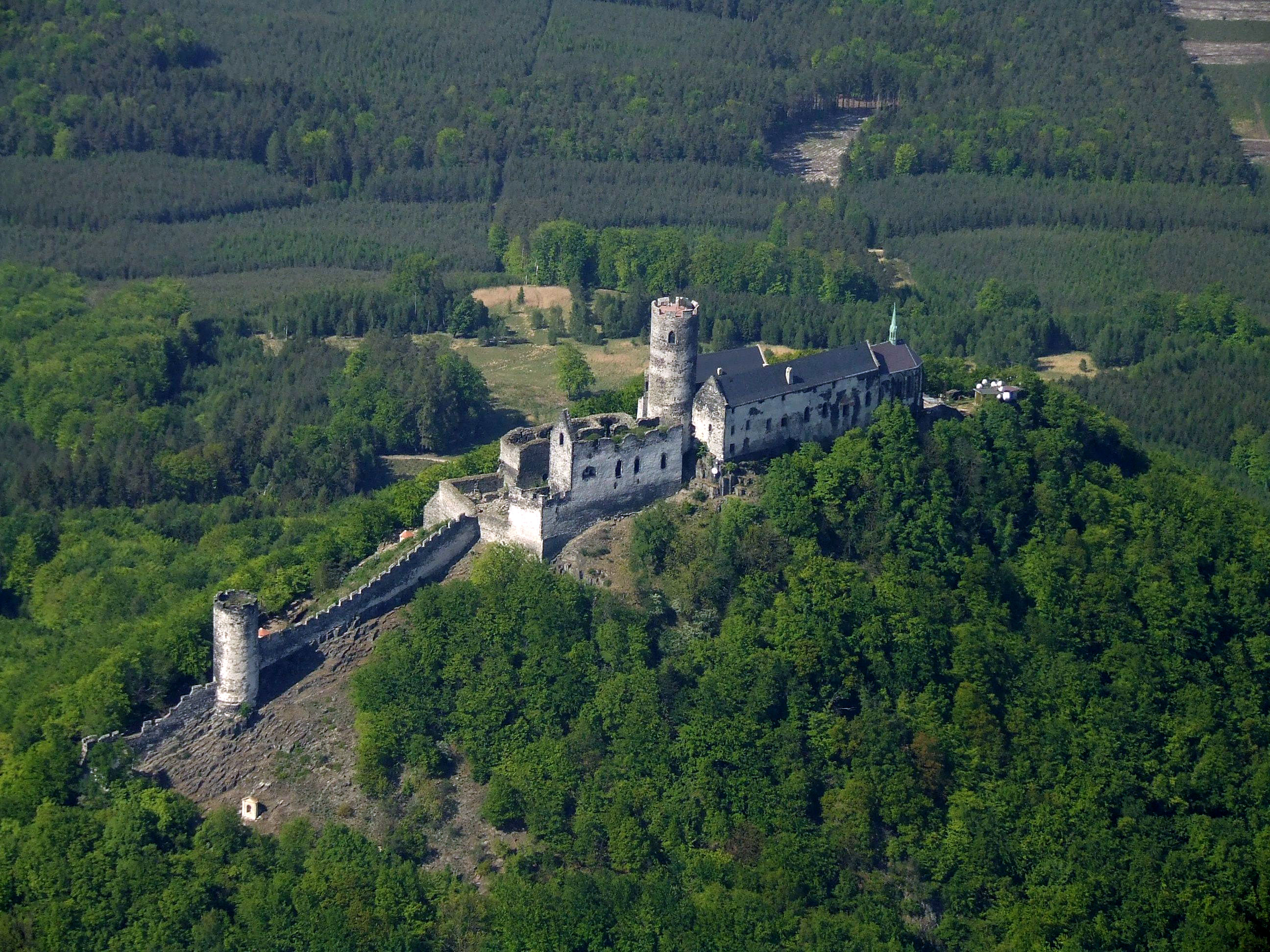
Bezděz
The castle where a future king was imprisoned as a child — and later returned to build a chapel
⚔️ Zvíkov — Chapel of the "King of Czech Castles"
Zvíkov, built before 1234 at the confluence of the Vltava and Otava rivers, earned its nickname "the king of Czech castles" the hard way: its fortifications were strong enough that a four-month Hussite siege in 1429 failed to take it, and in 1618, at the very start of the Thirty Years' War, a garrison of just 140 men successfully held it against 4,000 Habsburg troops. Its early Gothic Holy Chapel, set into the castle's grand residential floor and fitted with its own gallery walkway, survives as one of the purest examples of 13th-century sacred architecture attached to a secular Czech residence — a rare case of a castle chapel built for genuine daily royal use rather than as a treasury.
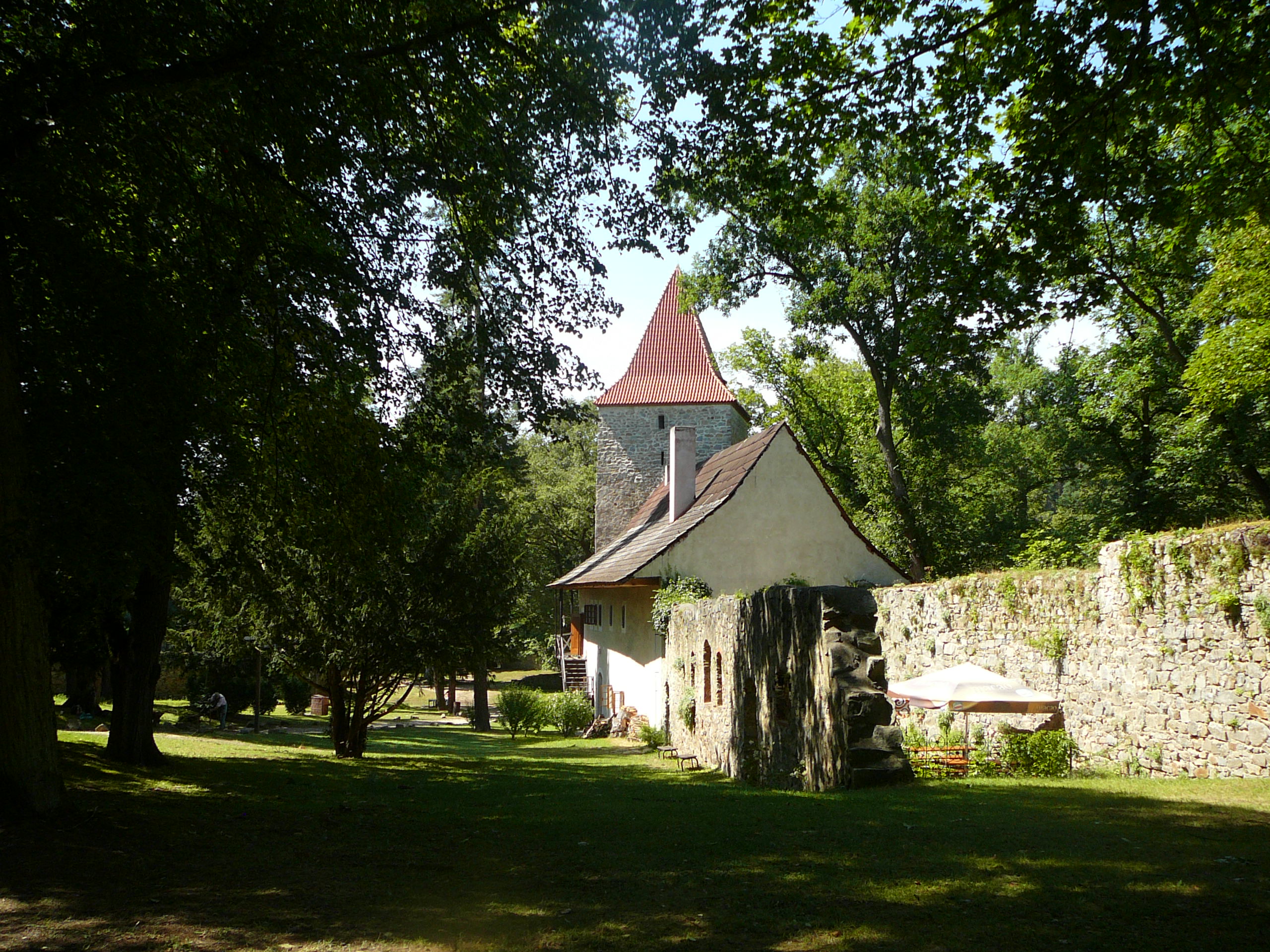
Zvíkov
"The king of Czech castles" — never taken in a four-month Hussite siege
👸 Křivoklát — The Chapel of the Coronation of the Virgin Mary
Křivoklát's royal chapel — first documented in the 13th century under Přemysl Otakar II as a simple early Gothic chapel dedicated to St. Wenceslas — was rebuilt on a far grander late-Gothic scale under King Vladislav II Jagiellon, with work continuing under his son Louis, and consecrated in 1522 as the Chapel of the Coronation of the Virgin Mary. It survived fires that damaged the rest of the castle in 1597 and 1643 essentially unaltered, and remains the central sacred space of one of Bohemia's oldest continuously significant royal seats — first mentioned by the chronicler Cosmas as early as 1110.
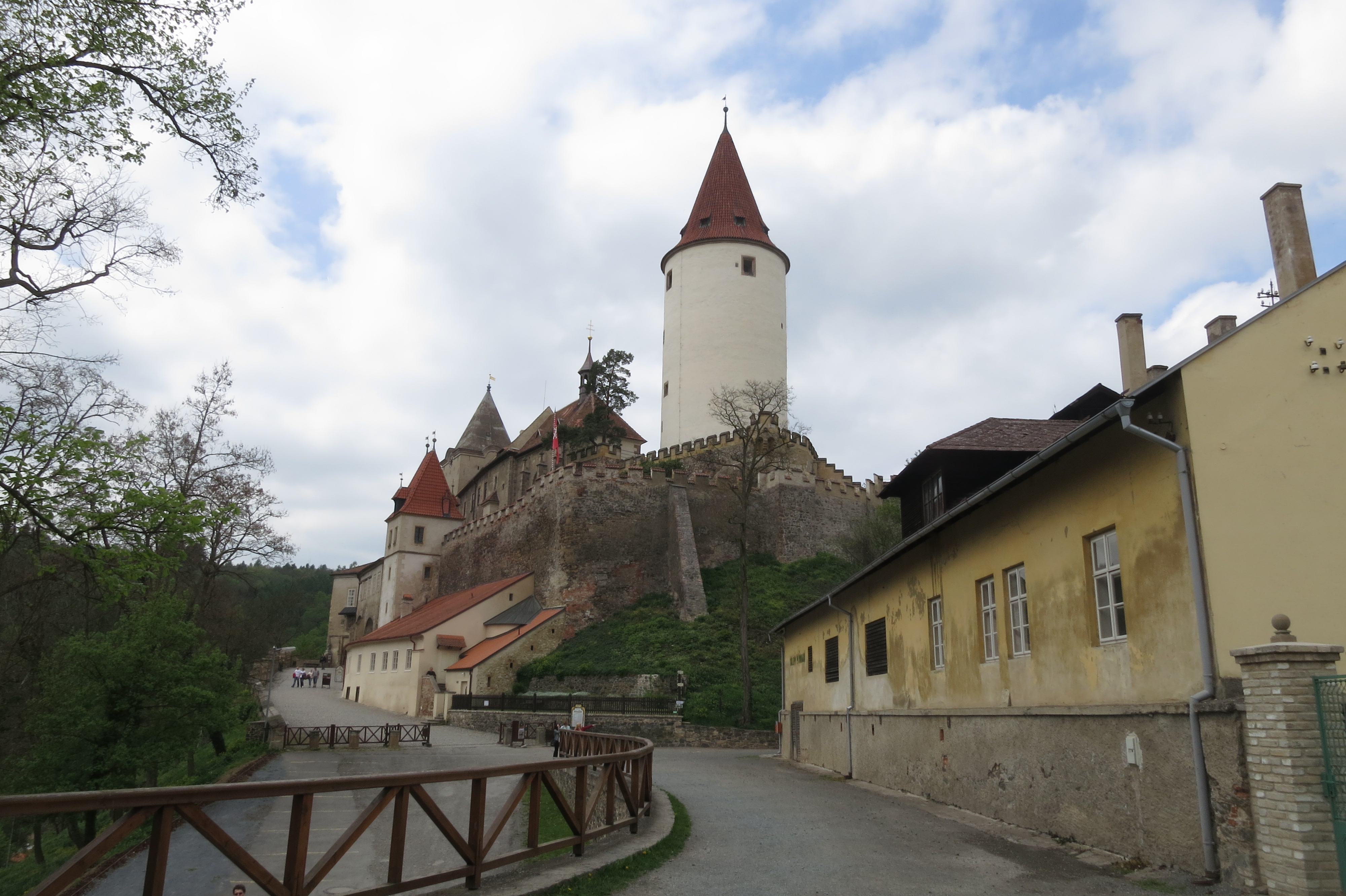
Křivoklát
One of Bohemia's oldest continuously significant royal seats
📝 More to Come
A few more remarkable chapels are still being properly researched, including the genuinely unusual bishop's castle chapel at Horšovský Týn — worth the wait rather than a rushed, thin entry.
