🎭 Divadlo Járy Cimrmana
No single institution explains Czech humor better than the Jára Cimrman Theatre. Founded in Prague and first staged on 4 October 1967 by Zdeněk Svěrák, Ladislav Smoljak, Jiří Šebánek, and Miloň Čepelka, it's built around one elaborate, deadpan fiction: Jára Cimrman, a supposed universal genius born sometime between 1853 and 1884, whose lost papers were "rediscovered" in the fictional village of Liptákov. In the bit, Cimrman advised Eiffel on his tower, nearly invented the light bulb before Edison, and coached Dreyfus's defense — always brilliant, always one step behind recognition.
Every performance opens with a mock-academic "seminar," in which the cast, playing scholars, solemnly debate freshly "discovered" details of his biography, before staging one of the fifteen original plays he supposedly wrote. It's absurdism delivered with total, straight-faced sincerity — the same format since that first production, Akt, opened in 1967.
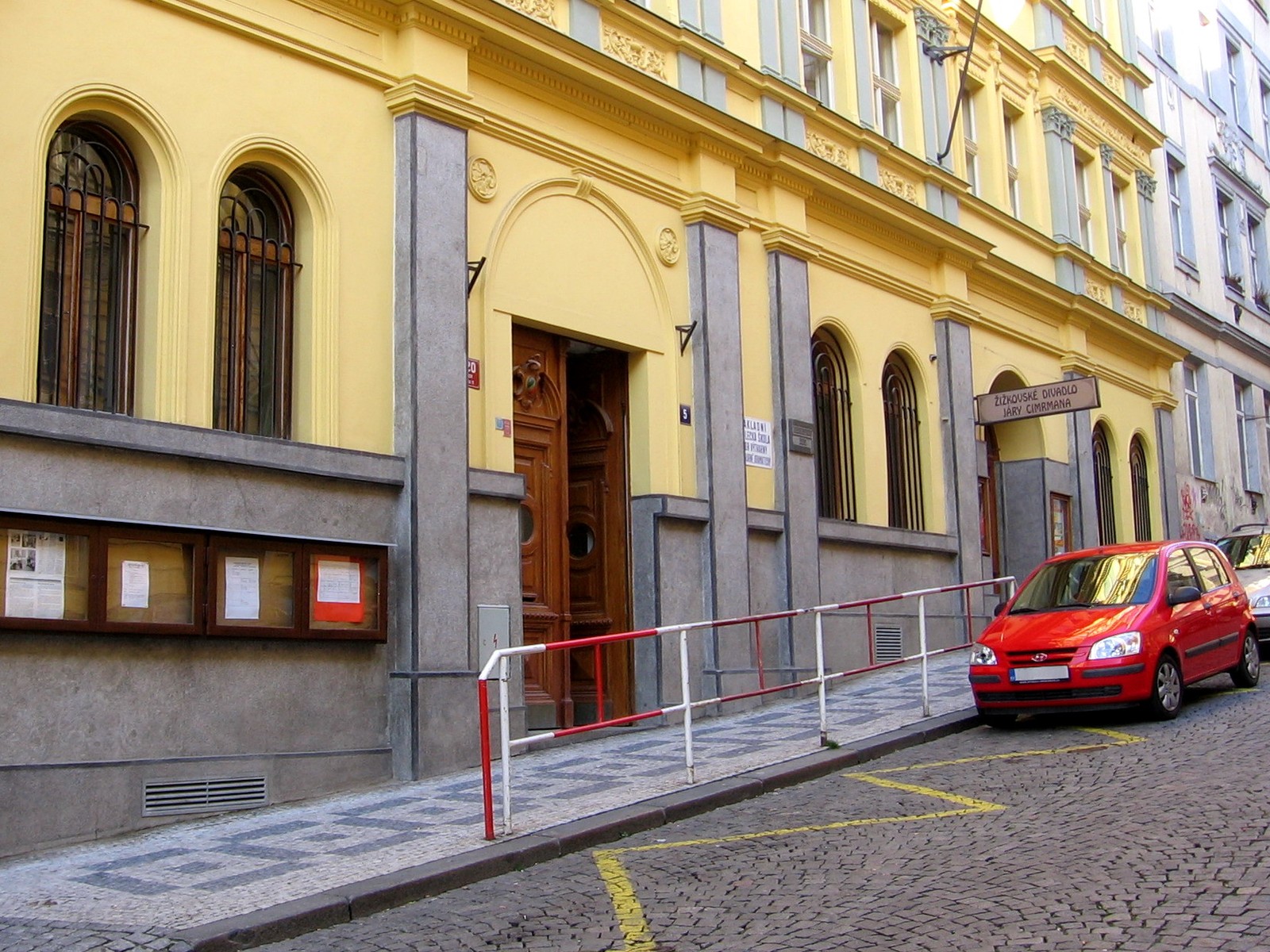
Žižkovské divadlo Járy Cimrmana
The theatre's home in Prague's Žižkov district — tickets are still some of the hardest to get in the city
The theatre's cultural weight is hard to overstate. In a 2005 national television poll to find "The Greatest Czech," Cimrman won the popular vote outright — and was disqualified from the final ranking for the technicality of not existing. Some titles have passed a thousand performances. Shows run in Czech, but Cimrman English Theatre occasionally stages subtitled or translated productions for visitors curious what the fuss is about.
📖 The Good Soldier Švejk
If Cimrman is Czech humor as institution, Josef Švejk is Czech humor as archetype. Jaroslav Hašek's unfinished satirical novel The Good Soldier Švejk — written between 1921 and 1923, cut short by Hašek's death partway through a planned fourth of six volumes — follows a Czech soldier drafted into the Austro-Hungarian army at the start of World War I, whose cheerful, exaggerated obedience to every order makes him either the empire's most useless recruit or its most effective saboteur. The novel never quite settles which, and that ambiguity is the entire joke: Švejk survives the war's absurdity by out-absurding it.
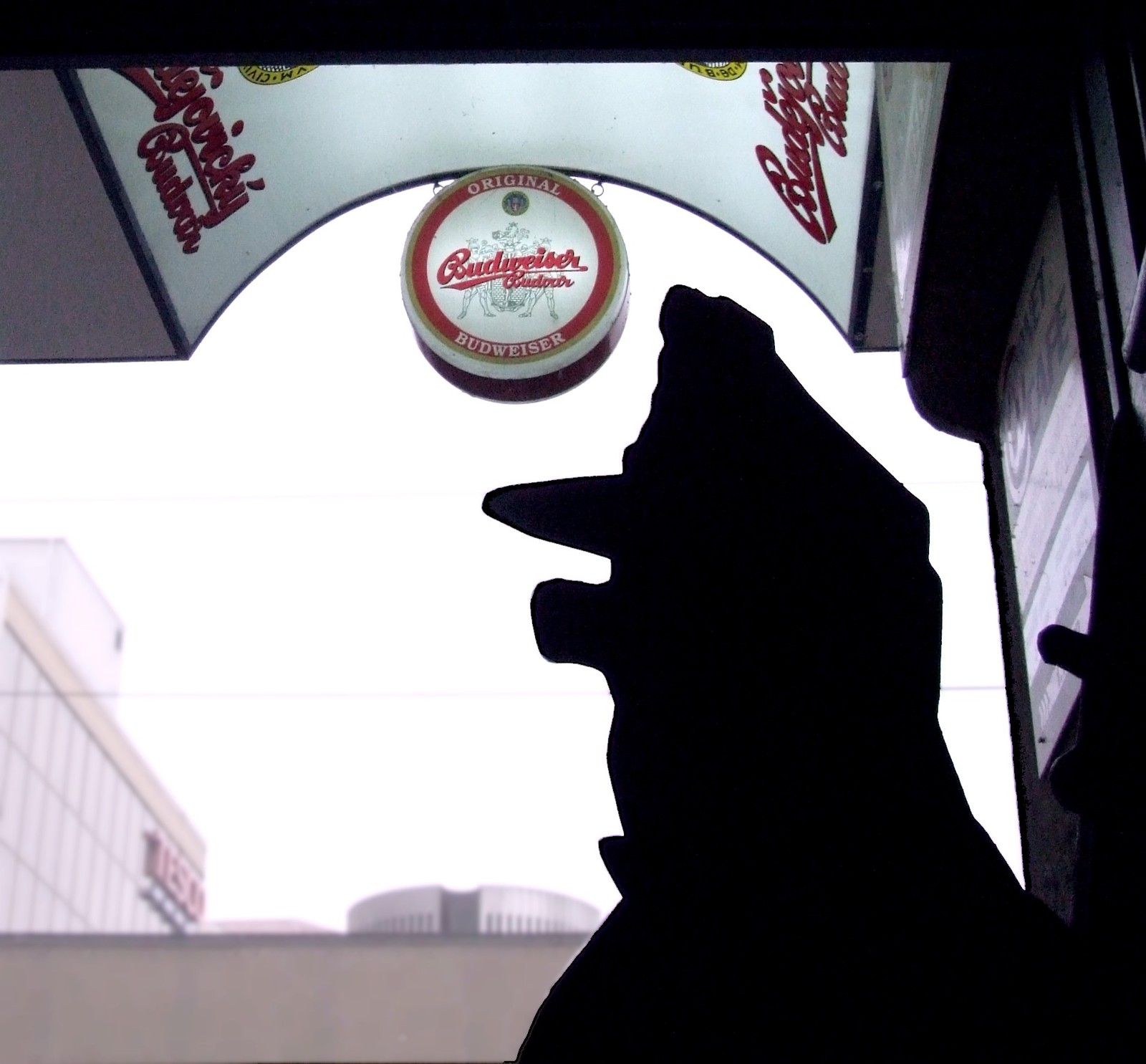
Švejk, everywhere in Prague
His silhouette marks pubs, restaurants, and shopfronts across the city — a character Czechs still measure themselves against
Illustrated from the start by Josef Lada — the same illustrator behind the Babylon art gallery exhibitions mentioned above, and whose round-faced Švejk is still the character most Czechs picture — the novel has been translated into roughly sixty languages, more than any other work of Czech literature. It gave the language a verb, švejkovat: to resist authority not by refusing it, but by obeying it so literally and so enthusiastically that the system chokes on its own instructions. It's a strategy every Czech recognizes, and one that still shows up constantly in how the country handles bureaucracy and inconvenient rules today.
📱 Modern Czech Comedy
The same instincts — deadpan delivery, mock-seriousness, quiet subversion — show up just as clearly in Czech internet comedy today. TV Jamrtál's sketch series Maringotka is a good, very online example: low-budget, self-aware, and built on the same absurdist logic that's powered Czech comedy since Cimrman. Same sensibility, different medium — proof the tradition hasn't gone anywhere, it's just moved onto Facebook.
