💼 Central Europe's Industrial Engine
The Czech Republic runs one of the most industrialized economies in the European Union — manufacturing alone accounts for roughly a quarter of GDP, among the highest shares anywhere in Europe. GDP per capita reached about $39,800 in 2026, unemployment has sat consistently under 3% (routinely the lowest or second-lowest in the EU), and the country has the EU's lowest Gini coefficient — meaning it's also the bloc's most economically equal society, a legacy of both its communist-era income compression and a transition to markets that avoided the extreme oligarch-driven inequality seen further east.
🚗 The Automotive Backbone
Cars are the single largest fact about the Czech economy. The automotive sector directly accounts for roughly 10% of GDP, 26% of manufacturing output, and 23% of total exports, employing over 180,000 people across manufacturers and parts suppliers — the Czech Republic produces more cars per capita than almost any country on Earth. Škoda Auto, headquartered in Mladá Boleslav an hour from Prague, anchors the industry: one of only four automakers worldwide with an unbroken corporate history back to 1895 (it started as a bicycle company — its first product was a bike named "Slavia"), state-owned from 1948 until privatization began after the 1989 Velvet Revolution, and a wholly owned Volkswagen Group subsidiary since 2000. In 2024 alone Škoda produced over 822,000 vehicles and posted €25.5 billion in revenue. Hyundai and Toyota also run major Czech production plants, alongside a dense web of component suppliers.
The honest complication: this dependence is also the country's biggest structural risk. The shift to electric vehicles threatens the deep supplier ecosystem built around internal combustion engines, and the Czech economy is unusually tied to Germany's performance — Germany remains the top export destination by a wide margin, so German industrial slowdowns translate almost directly into Czech ones.
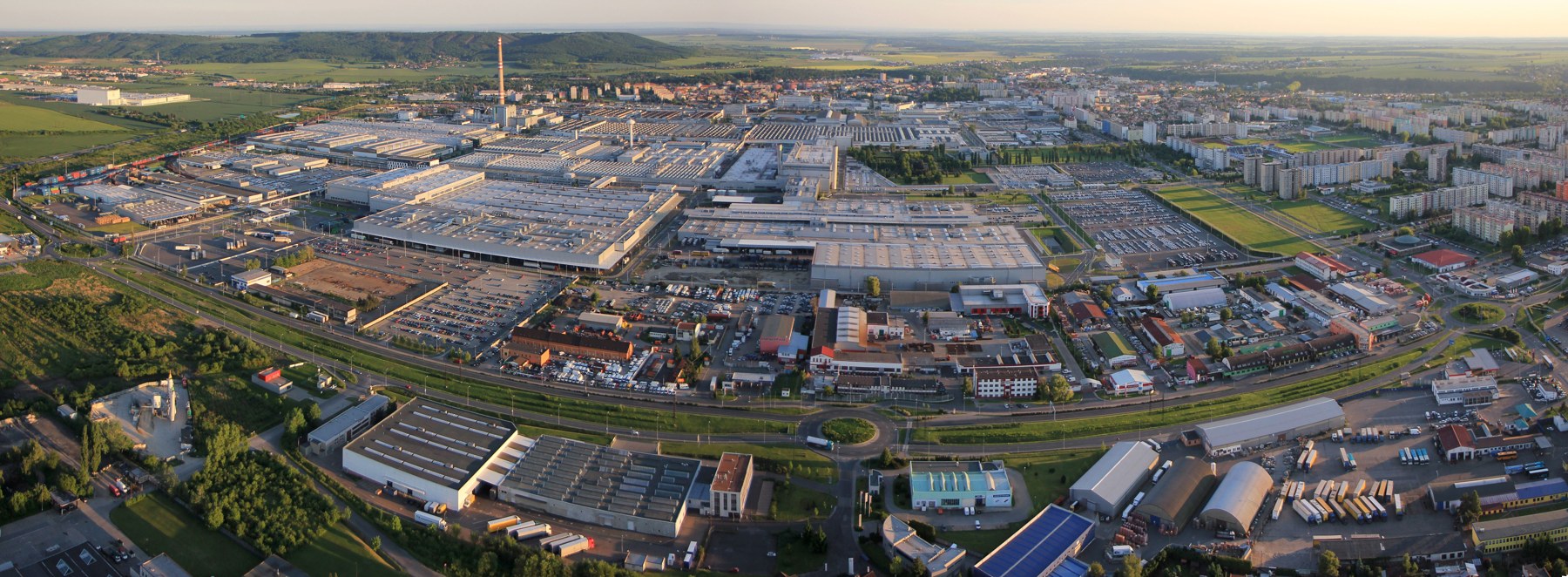
Škoda Auto, Mladá Boleslav
One of only four automakers worldwide with continuous history since 1895 — now producing over 800,000 cars a year
⚙️ Beyond the Assembly Line
Electronics and electrical engineering form the country's second-largest manufacturing sector — over 17,000 companies employing more than 180,000 people, contributing over 14% of total manufacturing output. Traditional strengths in metallurgy, machinery, glassmaking, and chemicals persist alongside newer growth in biotechnology, precision engineering, nanotechnology, and specialized software. Services now dominate overall GDP composition at roughly 60%, with Prague establishing itself as a genuine Central European tech hub — a growing base of startups, established software firms, and multinational shared-services centers drawn by the educated, comparatively affordable workforce and central location.
📊 The Macro Picture
The Czech Republic has never adopted the euro, keeping its own currency (the koruna, CZK) and independent monetary policy — a deliberate choice that gives the central bank room to maneuver but also means currency risk for foreign businesses. GDP growth ran at 2.6% in 2025, moderating to a projected 1.8–1.9% in 2026 amid elevated energy prices and softer external demand, before an expected pickup in 2027. Inflation, which spiked brutally to 15.1% in 2022 following the energy shock from Russia's invasion of Ukraine, has since settled back near the central bank's 2% target. In 2025 the country fully eliminated its remaining dependence on Russian oil after six decades of reliance — a genuine milestone, achieved alongside broader EU diversification efforts.
In February 2026, the government approved a new economic strategy — "Czechia: Country for the Future 2.0" — explicitly aimed at shifting the economy away from its historic low-cost, labor-intensive manufacturing model toward higher-value, innovation-driven growth, developed over two years with input from business and academia and containing roughly 160 specific measures. Structural challenges the strategy is trying to address are real and openly acknowledged by Czech policymakers themselves: productivity growth has stalled since the 2008 financial crisis, skill shortages and labor mismatches persist despite low headline unemployment, and an aging population is beginning to strain the labor supply.
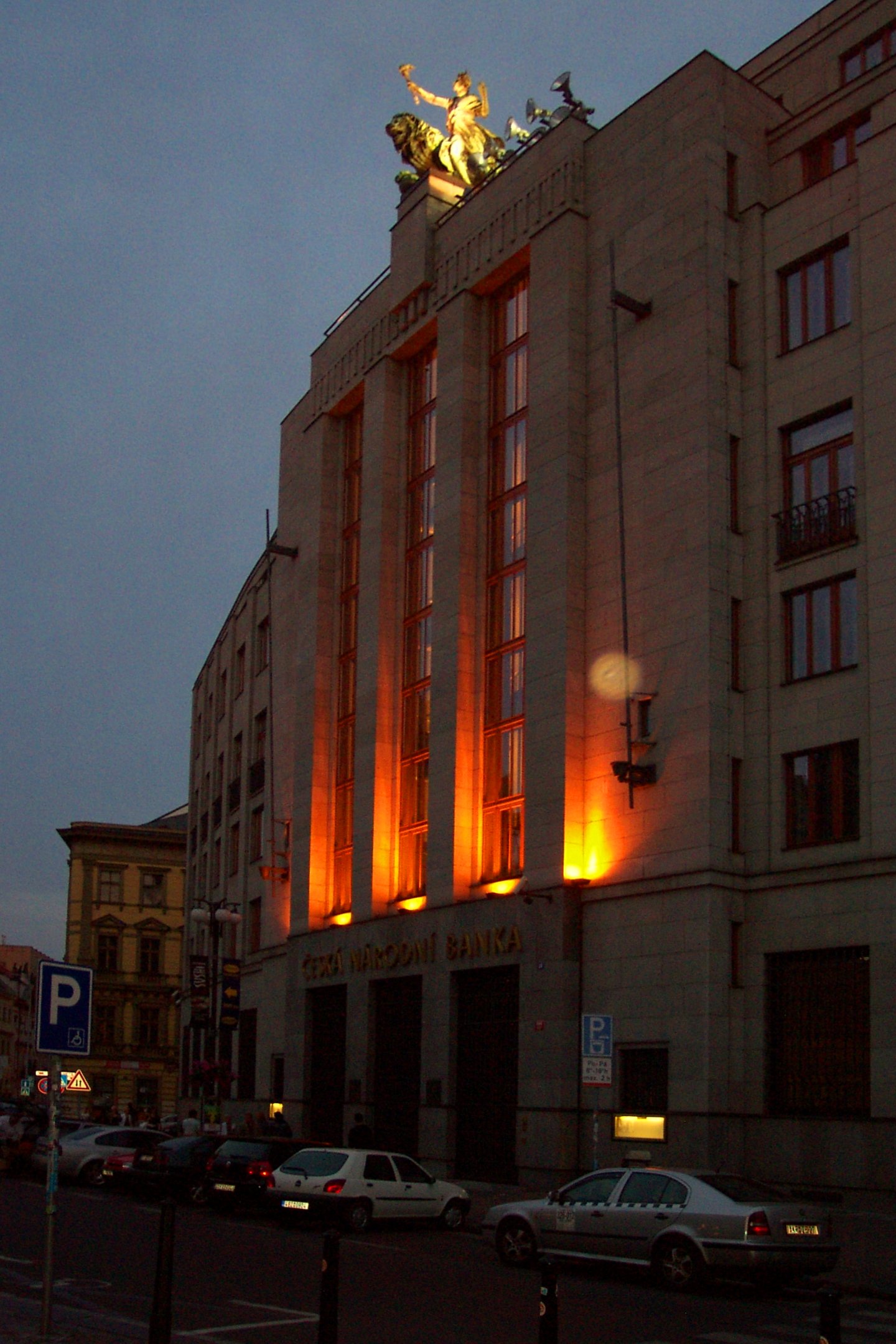
Česká národní banka
The independent central bank behind the koruna — no euro adoption in sight
🏢 Doing Business Here
Foreign direct investment remains welcome and largely unrestricted — EU and non-EU entities alike can establish companies, own property, and repatriate profits with few structural barriers, and organizations like the EBRD have resumed active investment in Czech small and medium enterprises after a post-2008 pause. The corporate tax rate sits in the middle of the European range, and the country's EU and Schengen membership means goods, services, and workers move freely across most of the continent from a Czech base. The trade-offs worth knowing before committing: the total tax burden on commercial profits (including social contributions) runs meaningfully higher than in many competing jurisdictions, bureaucratic processes can move slowly by Western European standards, and — as in most of Central Europe — finding skilled labor in a genuinely tight market is now a bigger constraint on growth than finding capital.
