🌍 Brunei at a Glance
🌏 Overview
Brunei Darussalam – the "Abode of Peace" – is one of the world's smallest and wealthiest nations, a tiny sultanate on the northern coast of Borneo that has maintained its independence and Islamic monarchy while surrounded by the vast Malaysian states of Sarawak and Sabah. Oil and natural gas have made this nation extraordinarily prosperous, with no income tax for citizens, free education and healthcare, and generous subsidies that make it one of the most comfortable places on Earth to live.
For travelers, Brunei offers a fascinating contrast to its Southeast Asian neighbors. While Bali throbs with nightlife and Bangkok buzzes with street food vendors, Brunei is serenely alcohol-free and quietly conservative, a place where magnificent mosques gleam with gold leaf and the world's largest water village has existed for over a thousand years.
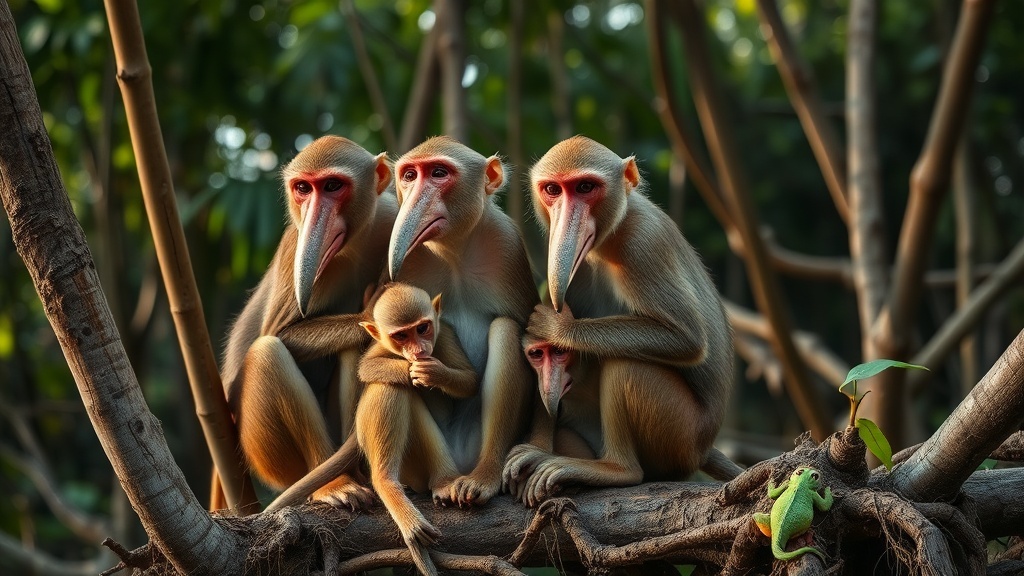
The country's wealth is on full display in the capital, Bandar Seri Begawan, where the Sultan Omar Ali Saifuddien Mosque stands as one of the most beautiful in Asia and the Istana Nurul Iman palace (the world's largest residential palace) occasionally opens for public visits during Hari Raya celebrations. Yet just outside the city limits, pristine rainforest extends across most of the country, home to proboscis monkeys, hornbills, and rich biodiversity.
🏷️ Name & Identity
The official name is Negara Brunei Darussalam — negara (state) from Sanskrit, Darussalam from the Arabic dār as-salām, "abode of peace", an epithet attached to the sultanate's name in the 15th century, by tradition under Sultan Sharif Ali. The origin of "Brunei" itself is disputed: the court legend has the first ruler, Awang Alak Betatar, landing at the mouth of the Brunei River and exclaiming "Baru nah!" ("that's it!"); linguists prefer a Sanskrit root, varuṇ ("seafarers"), or a link with the Bornean people recorded in Chinese annals as Po-ni from the 10th century. The name of the whole island — Borneo — is simply the Portuguese and Spanish 16th-century rendering of "Brunei", a reminder that the sultanate once claimed most of it.
Bruneians write the name in both Roman script and Jawi (Arabic-script Malay), which appears alongside Latin lettering on every road sign and government building. The flag — yellow for the Sultan, crossed by white and black diagonals for his two chief ministers — carries the red national crest with the Arabic motto "Always in service with God's guidance"; the anthem is Allah Peliharakan Sultan ("God Bless the Sultan"). The demonym is Bruneian; the ISO code is BN, the internet domain .bn, and the country dials +673.
🗺️ Geography & Climate
Brunei is divided into four districts, with the country itself split into two non-contiguous sections by a wedge of Malaysian Sarawak territory. Brunei-Muara District contains the capital and most development. Tutong District is largely agricultural. Belait District is the center of oil and gas industry. Temburong District is the eastern exclave, 90% pristine primary rainforest.
Brunei has a typical equatorial climate – hot, humid, and wet year-round. Temperature stays between 24-32°C (75-90°F) throughout the year, with humidity averaging 79%. Rainfall reaches 2,500-3,000mm annually, wettest November-January. The driest period is February-April, most comfortable for outdoor activities.
A new bridge (opened 2020) now connects Temburong directly to the main part of Brunei, making the pristine rainforest of Ulu Temburong National Park much more accessible for eco-tourism.
🗺️ Map of Brunei
Key destinations are marked — Bandar Seri Begawan and its two great mosques, Kampong Ayer, the Istana, the Empire at Jerudong, Tasek Merimbun, the oil town of Seria, and the Temburong exclave with its national park. Scroll-zoom is off; use the +/− buttons.
📜 History
Brunei's recorded history stretches back more than 1,500 years. By the 14th century, the Sultanate of Brunei controlled a vast maritime empire that stretched across most of Borneo and into the modern Philippines. Its golden age came under the fifth sultan, Bolkiah (r. 1485–1524), whose fleet held sway from western Borneo to the Sulu archipelago and whose court welcomed Antonio Pigafetta — Magellan's chronicler — in 1521. Pigafetta's description of the opulent royal audience in Brunei town, complete with chinaware, elephants in brocade trappings and cannons of brass, is the first European eyewitness account of a Southeast Asian sultanate.
The arrival of European powers, internal succession disputes, and the Brooke family's "White Rajahs" of Sarawak whittled Brunei down territory by territory through the 19th century. In 1888 Brunei became a British protectorate, and the discovery of oil at Seria in 1929 transformed the sultanate's fortunes. After Japanese occupation during WWII (1941–1945), oil royalties rebuilt the country. In December 1962 the armed wing of the Brunei People's Party (TNKU) rose against the planned merger with Malaysia; British Gurkhas and Royal Marines crushed the Brunei Revolt within days, the Sultan declared the state of emergency that is still renewed every two years, and Brunei chose not to join the Federation of Malaysia in 1963. It achieved full independence from Britain on 1 January 1984 under Sultan Hassanal Bolkiah, who remains on the throne and is one of the world's longest-reigning monarchs.
🏛️ Government & Politics
Brunei is an absolute monarchy — one of the last on earth. Sultan Haji Hassanal Bolkiah Mu'izzaddin Waddaulah, the 29th Sultan and Yang Di-Pertuan, acceded on 5 October 1967 and turned 80 in July 2026, making him the world's longest-reigning living monarch. He is simultaneously head of state, Prime Minister, Minister of Defence and Minister of Finance. The 1959 Constitution remains in force, but a state of emergency declared in 1962 has been renewed every two years since, allowing the Sultan to rule by decree. The Legislative Council (Majlis Mesyuarat Negara) is appointed, not elected, and is advisory; there has been no national election since 1962.
On 4 June 2026 the Sultan announced his first cabinet reshuffle since 2022, and the succession subtext was hard to miss. Crown Prince Al-Muhtadee Billah became Senior Minister at the Prime Minister's Office and Deputy Chairman of the Wawasan 2035 Supreme Council; Prince Abdul Malik was made Minister at the PMO; and Prince 'Abdul Mateen — the one with 3 million Instagram followers and the 2024 royal wedding — was appointed Minister of Foreign Affairs. Three new coordinating-minister posts were created, the Ministry of Primary Resources and Tourism was restructured into the Ministry of Economy, Trade and Industry, and the cabinet took in its highest-ever number of women, including the Minister of Education and three deputy ministers. All appointments run four-year terms from 4 June 2026.
The Sharia Penal Code Order was introduced in phases from 2014 and came fully into force on 3 April 2019, drawing international criticism; the Sultan announced a moratorium on capital punishment under the code the following month. The governing philosophy is Melayu Islam Beraja (Malay Islamic Monarchy), and the long-term economic plan — diversification away from oil and gas, which still fund roughly nine-tenths of government revenue — is branded Wawasan 2035. With a population of about 459,000 (DEPS 2025 estimate) and nominal GDP near US$17 billion, Brunei levies no personal income tax and provides free schooling and healthcare.
The 2026 Iran war — which began on 28 February 2026 and closed the Strait of Hormuz — turned Brunei's modest output into strategic supply. On 15 April 2026 Australian Prime Minister Anthony Albanese flew to Bandar Seri Begawan and secured extra diesel and fertiliser-grade urea (Brunei supplies roughly 9% of Australia's diesel imports and 11% of its urea), with a guarantee of no export restrictions and a joint statement of "deep concern" over the Gulf conflict. For visitors the war's only visible trace is the fuller order book at the Seria oil town and Hengyi's Pulau Muara Besar refinery.
👥 People & Culture
Brunei's roughly 459,000 residents (2025 estimate) are about 66% Malay, 10% Chinese, and the remainder a mix of indigenous groups (Iban, Dusun, Kedayan, Murut), Indians, and expatriates working in the oil and construction sectors. The state philosophy is Melayu Islam Beraja — Malay Islamic Monarchy — officially adopted in 1984. Islam (Sunni, Shafi'i school) is the state religion and shapes daily rhythms: the call to prayer echoes from gilded minarets, Friday is the weekly holy day (the weekend runs Friday–Sunday), and shops close mid-afternoon for prayer.
Despite the conservative framework, visitors find Bruneians remarkably welcoming. English is widely spoken, literacy is near-universal, and the absence of the hustle that defines much of Southeast Asia gives the country a calm, well-ordered feel closer to a small Gulf state than to neighbouring Malaysia. Traditional arts flourish in silver and brass-work (Kampong Ayer's craft village), in the weaving of Jong Sarat silk cloth with gold thread, and in the Gulingtangan gong-chime ensembles that accompany weddings.
🏛️ Bandar Seri Begawan
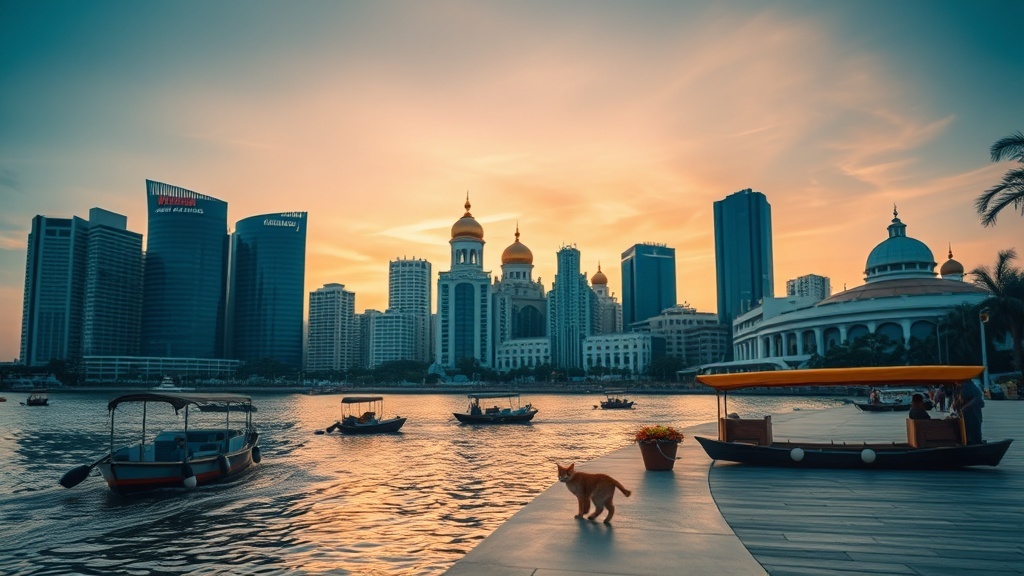
The capital — locals simply call it BSB — is a compact riverside city of about 100,000 people, the only urban centre of any real size in Brunei. Its skyline is dominated by two mosques: the older, smaller Sultan Omar Ali Saifuddien in the heart of downtown, and the larger, newer Jame' Asr Hassanil Bolkiah mosque with its 29 golden domes commemorating the 29th sultan. Between them lies the Royal Regalia Museum, a free cavernous hall that showcases gifts received by the Sultan from world leaders — from gold ceremonial armour to crystal clocks and jewelled krises — and the extraordinary silver chariot used at the 1968 coronation.
🕌 Sultan Omar Ali Saifuddien Mosque
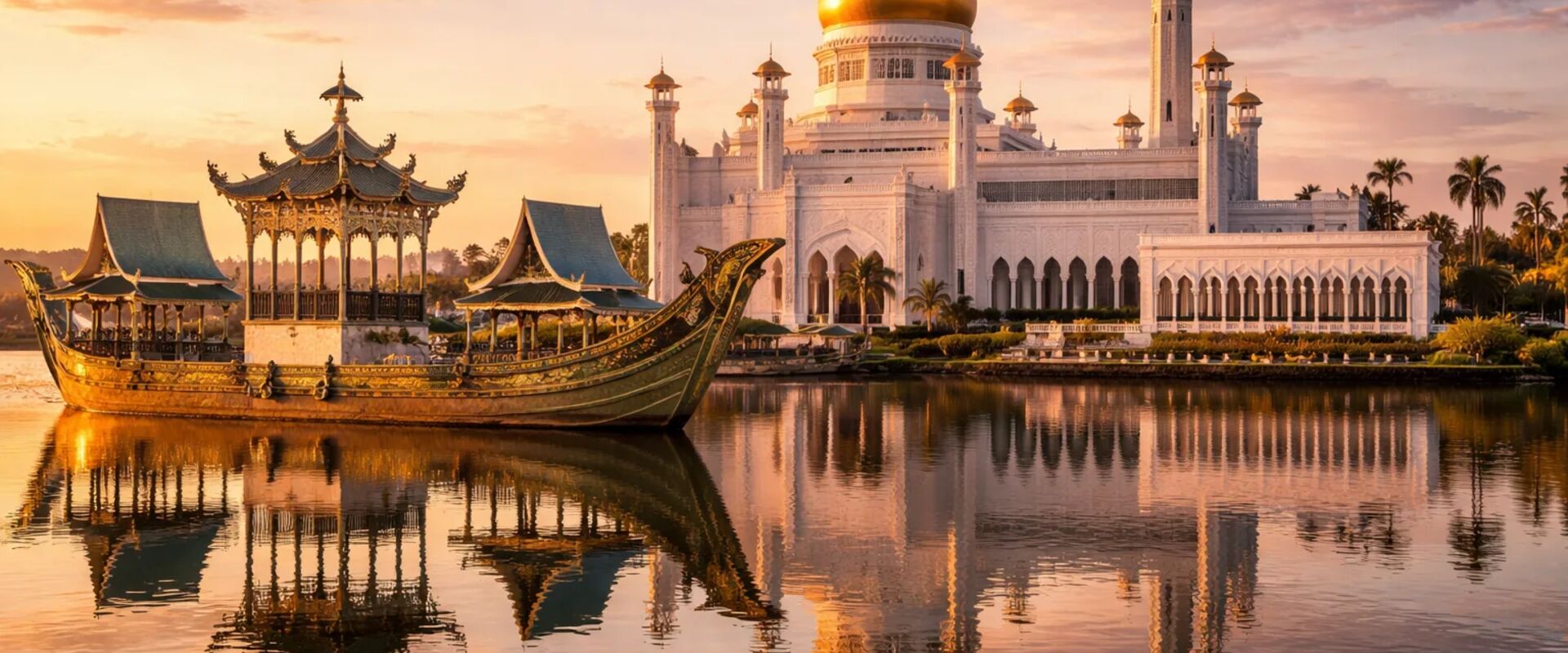
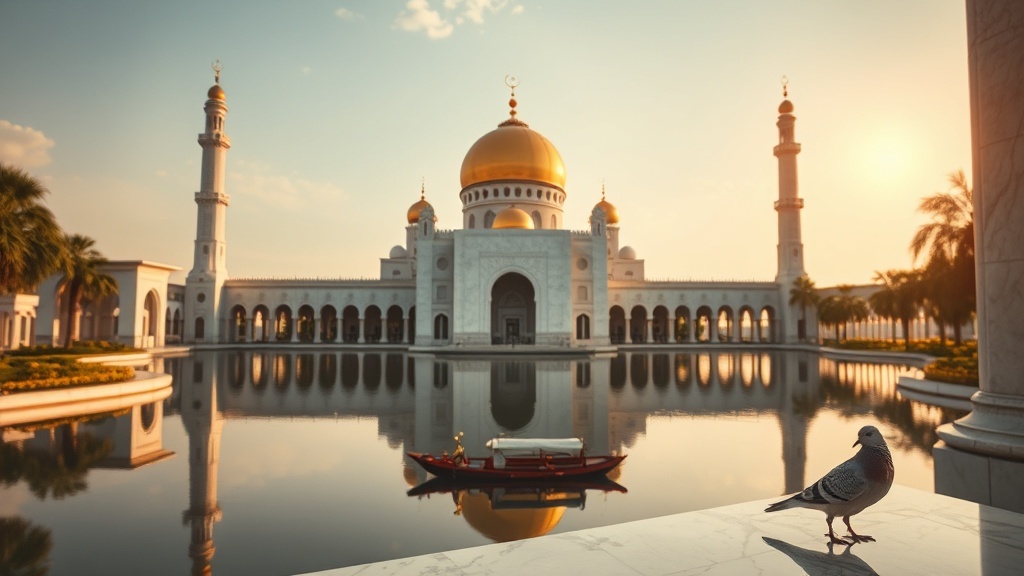
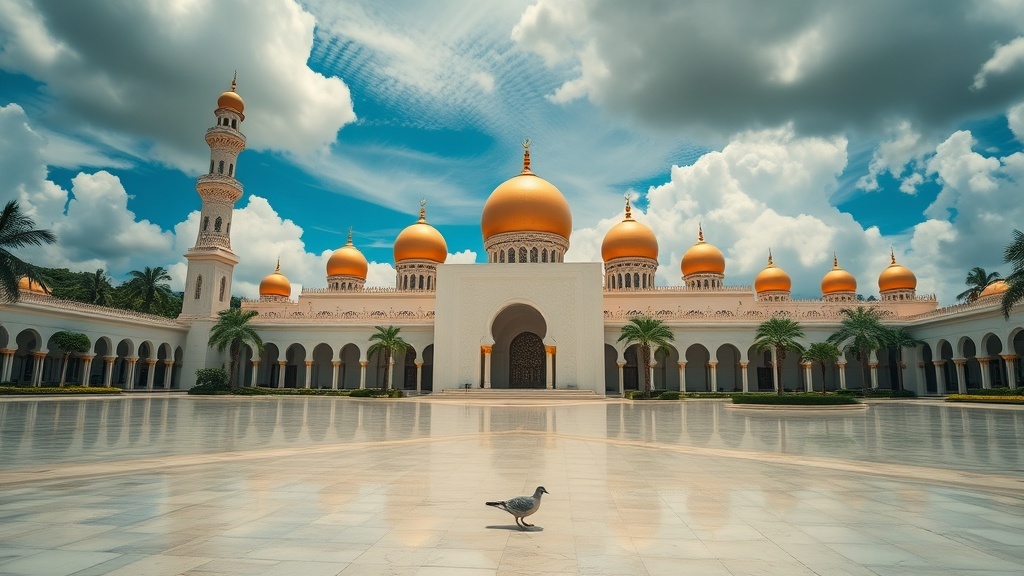
Completed in 1958 and named for the 28th Sultan, this is Brunei's architectural calling card and one of the most photographed buildings in Southeast Asia. Italian marble, granite from Shanghai, Venetian glass mosaics, and a 24-carat gold leaf dome rise from an artificial lagoon in which floats a ceremonial replica of a 16th-century mahligai royal barge — built for the 1967 Koran-reading competition and permanently moored as a visual counterpoint to the mosque. Non-Muslim visitors are welcome outside prayer times (typically mornings Saturday–Wednesday and Sunday afternoons) and are lent a black robe at the door. The interior, open only briefly, is a hush of blue carpet and marble columns. Photograph at sunset, when the dome catches the last gold light and doubles in the lagoon.
🏘️ Kampong Ayer — The Water Village
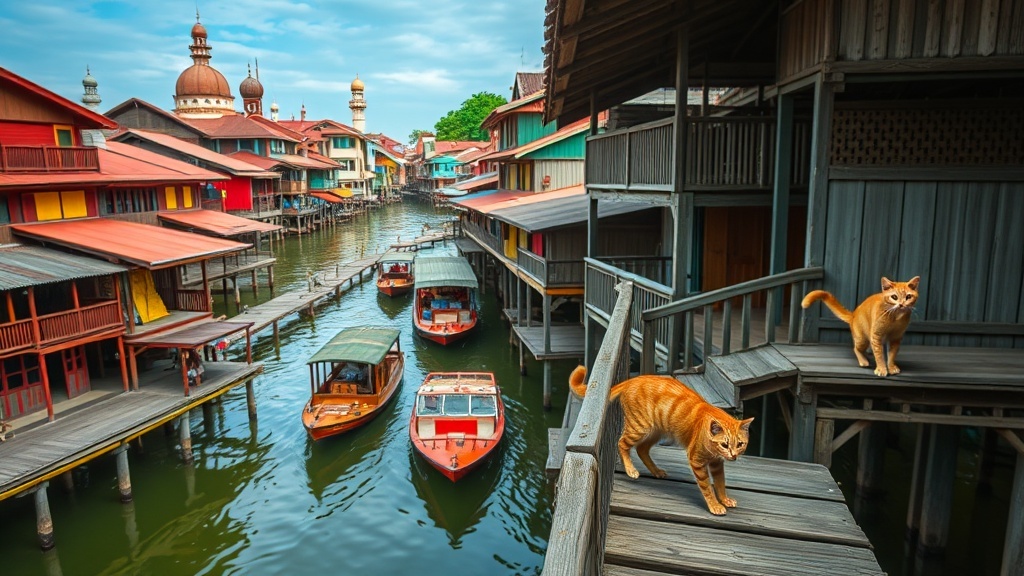
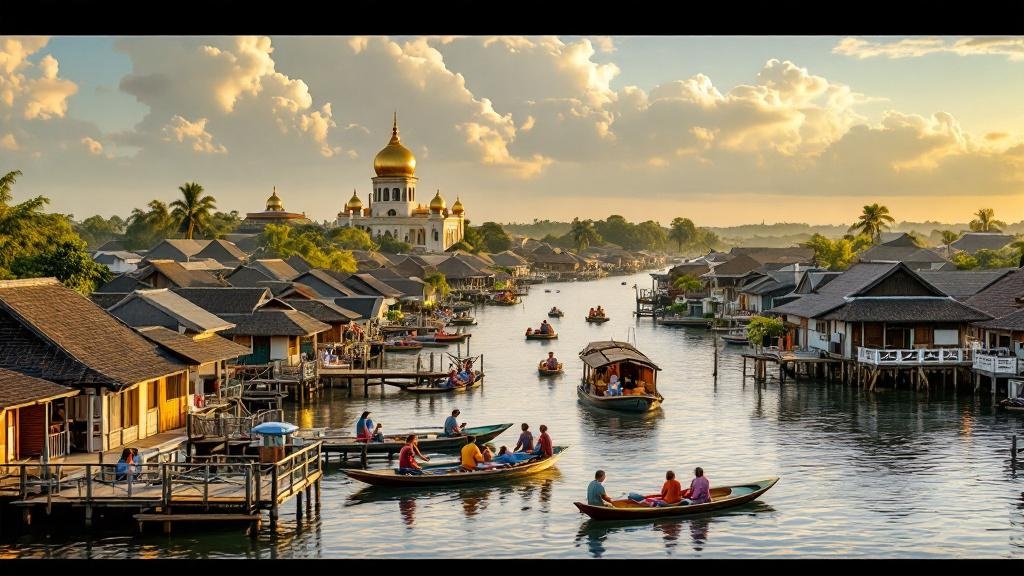
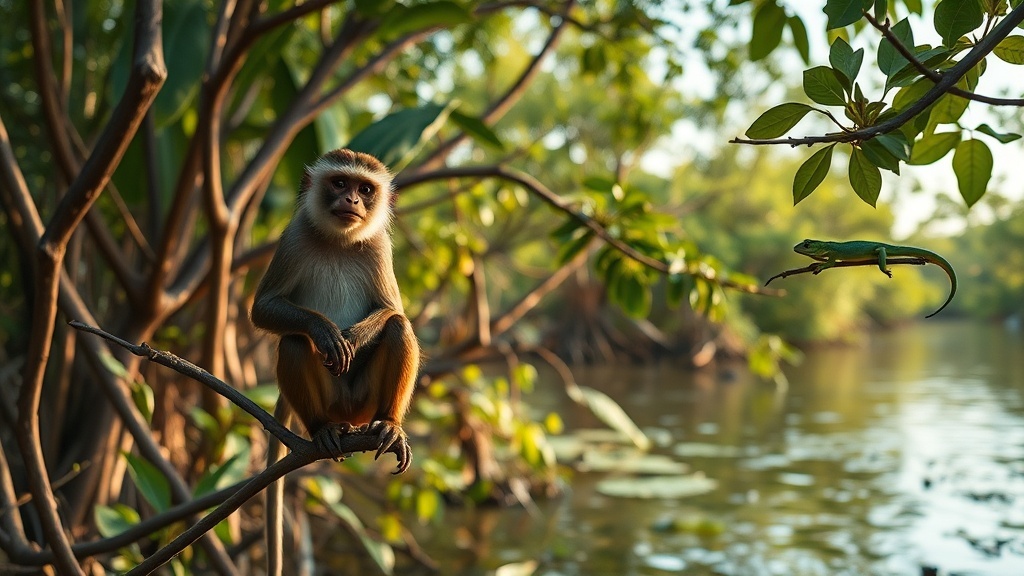
Antonio Pigafetta called it the "Venice of the East" in 1521 and Kampong Ayer has been continuously inhabited for more than a thousand years. Today roughly 13,000 people — down from about 28,000 in the 1980s as families move to dry-land housing — live across 42 villages of stilt houses that sprawl for kilometres along the Brunei River — schools, mosques, clinics, fire stations, and a pleasant Cultural and Tourism Gallery all on piles above the tide. Hop on a water taxi (BND 1–2 for a short hop, BND 20–30 for a one-hour tour) at the waterfront, then walk the creaking wooden boardwalks while village kids fly kites and grandmothers fry prawn crackers on doorstep burners. Ask the boatman to detour into the mangroves at low tide to spot the endemic proboscis monkeys and saltwater crocodiles.
🌳 Ulu Temburong National Park
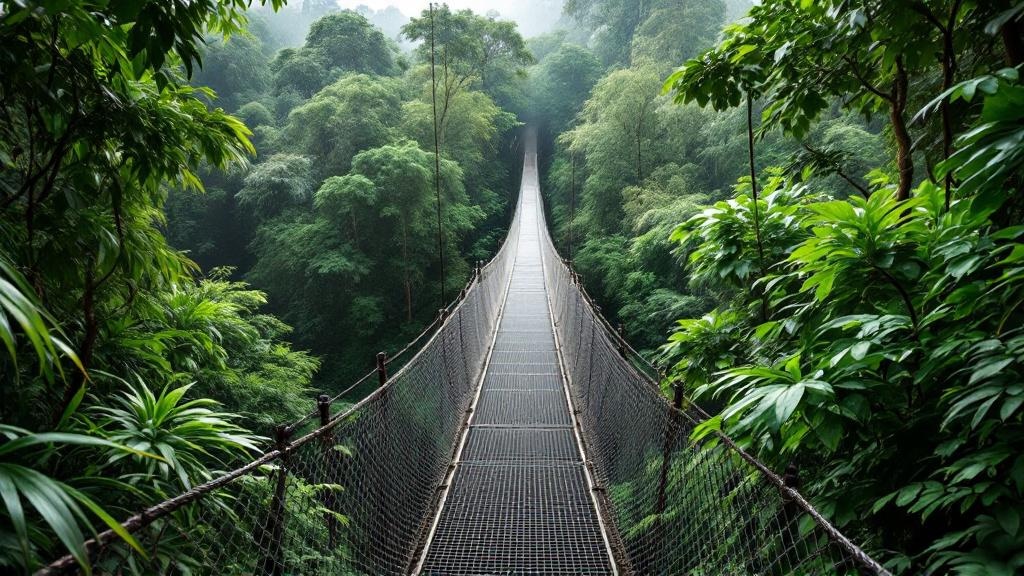
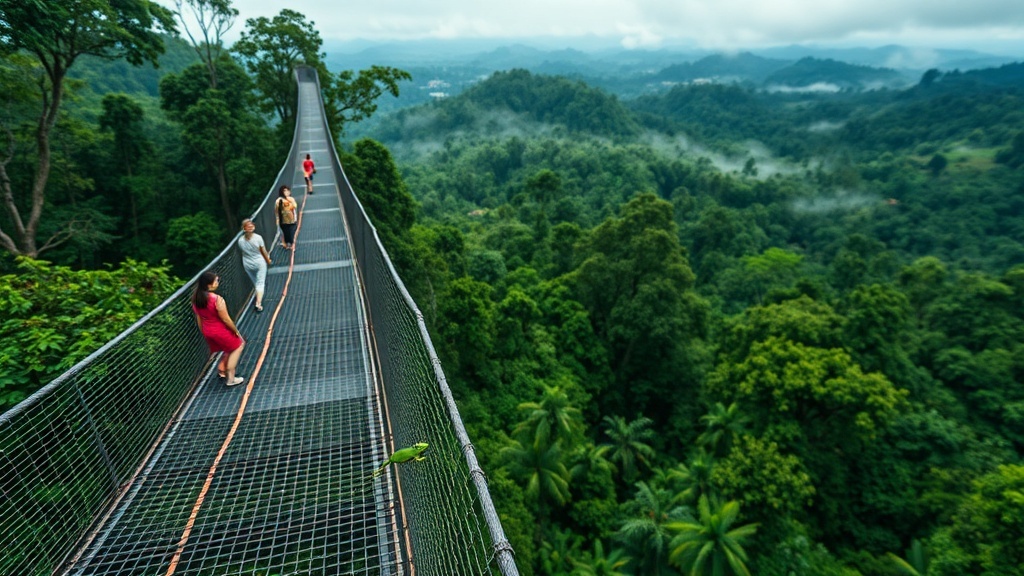
Brunei's untouched quarter — 500 km² of primary rainforest in the eastern Temburong district, accessible since 2020 via the Temburong Bridge (30 km, one of Asia's longest). From Bangar, a longboat ride up the Temburong River through a series of shallow rapids brings you to the park's ranger station and the famous canopy walkway: an aluminium tower climbing 43 metres through the layered jungle and emerging above the tree-tops, where hornbills, gibbons and — if you're very lucky — orangutans can be spotted at dawn. Most visitors go on organised day tours (BND 150–250) from BSB that combine the bridge drive, longboat, jungle trek, canopy walk and a lunch of ambuyat at a riverside Iban longhouse.
👑 Istana Nurul Iman
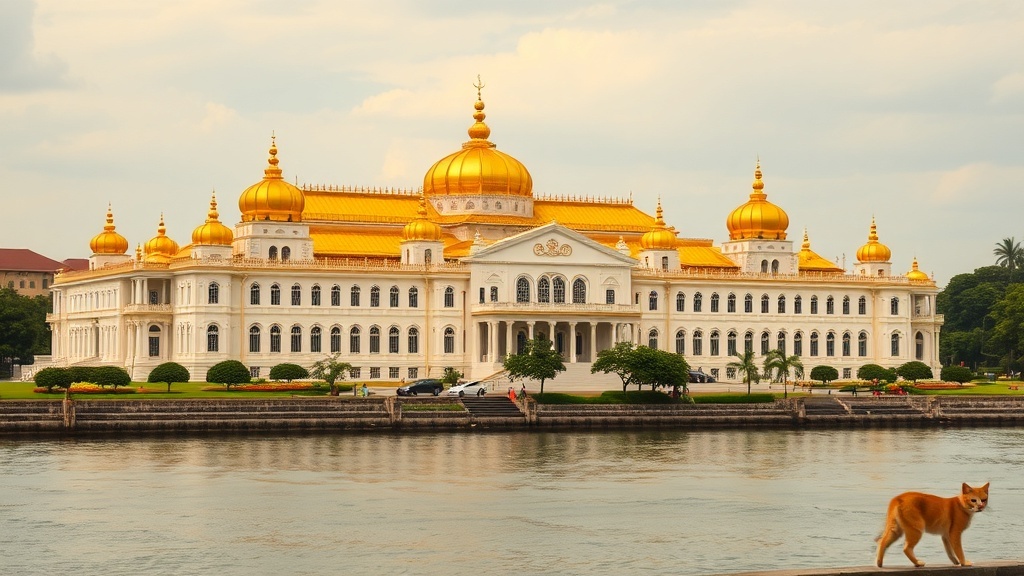
With 1,788 rooms, 257 bathrooms, 110 garages, five swimming pools and a banquet hall seating 5,000, the Istana Nurul Iman is the largest residential palace on Earth — bigger than Versailles or the Vatican. Designed by Filipino architect Leandro Locsin, it combines Islamic and Malay motifs with a 22-carat gold leaf dome. The palace is closed to the public year-round except for three days after Hari Raya Aidilfitri (the end of Ramadan), when by tradition the Sultan himself greets up to 150,000 visitors, shakes hands with every male, and serves a royal banquet. If your trip aligns with Hari Raya, this is one of the most extraordinary free experiences in Asia.
🍜 Cuisine
Bruneian cooking sits at the crossroads of Malay, Indonesian, Chinese and Indian traditions, but has a handful of dishes that are unmistakeably its own. The national dish is ambuyat, a translucent starch made from the interior pith of the sago palm — eaten with bamboo chopsticks called chandas by twirling a gluey strand and dipping it into tangy sauces. The most beloved street food is nasi katok, literally "knock rice" — a paper-wrapped parcel of steamed rice, crispy fried chicken and sambal that costs BND 1 and whose name comes from having to knock on the vendor's door to wake them up. Weekend morning markets like Tamu Kianggeh showcase the full spread: kueh me'lomes (glutinous rice sweets), pulut panggang (grilled stuffed sticky rice), and an entire wall of ikan bilis (dried anchovies).
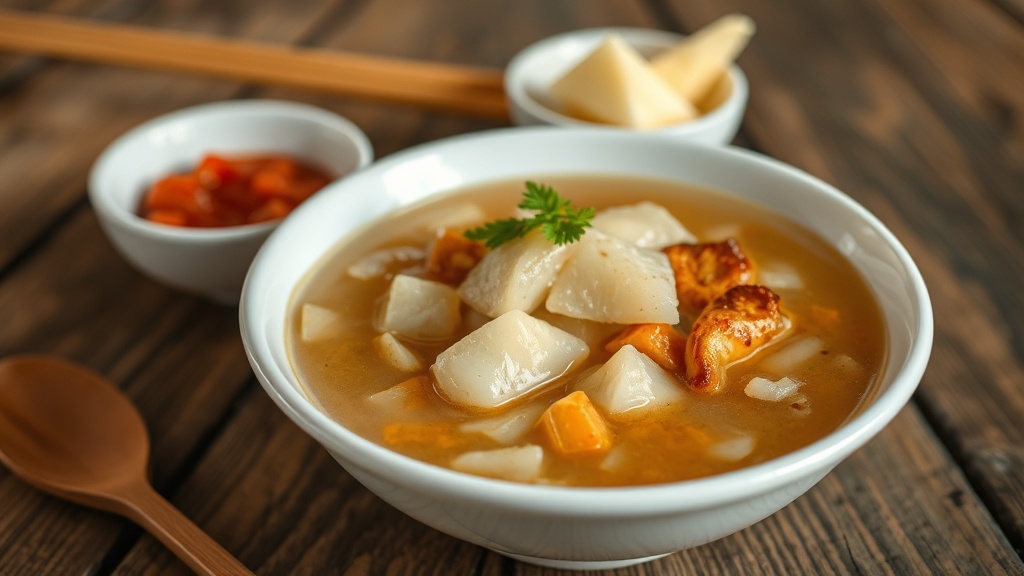
🥣 Ambuyat (Sago Porridge) — Recipe
Serves 4 · 15 min
Ingredients: 250 g sago starch flour (ambulung), 750 ml boiling water, dipping sauce of tamarind pulp, bird's-eye chilli, belacan and lime.
Method: Place sago flour in a heatproof bowl. Pour boiling water in a thin stream while stirring vigorously with a wooden spoon until the starch turns translucent, sticky and elastic (2–3 minutes). Transfer to a communal bowl. Eat with chandas: spin a small ball, dip in cacah sauce, swallow without chewing (traditional!). Pairs with grilled fish and fern-tip salad.
🍗 Nasi Katok — Recipe
Serves 2 · 25 min
Ingredients: 2 chicken thighs, 2 tbsp turmeric, salt, 2 cups jasmine rice, pandan leaf; sambal: 6 dried chillies, 4 shallots, 2 garlic, 1 tsp belacan, 1 tbsp palm sugar, 1 tbsp tamarind.
Method: Marinate chicken in turmeric and salt 15 min, then deep-fry in hot oil until mahogany-crisp. Cook rice with a knotted pandan leaf. Pound sambal ingredients into a paste and fry in 2 tbsp oil until the oil splits and turns glossy red. Wrap rice, chicken and a generous spoon of sambal in brown paper — eat with hands.
🍷 Wine, Spirits & Drinking Culture
Brunei is one of the world's few completely dry countries — the sale and public consumption of alcohol has been banned since 1991 under Sharia law, with penalties significantly tightened in 2014. Non-Muslims may import up to two bottles of spirits and 12 cans of beer per entry for personal consumption in private residences, but there are no bars, no pubs, no clubs serving alcohol, and no licensed restaurants. Brunei is the quietest, most sober country in Southeast Asia.
☕ Teh Tarik & Coffee Culture
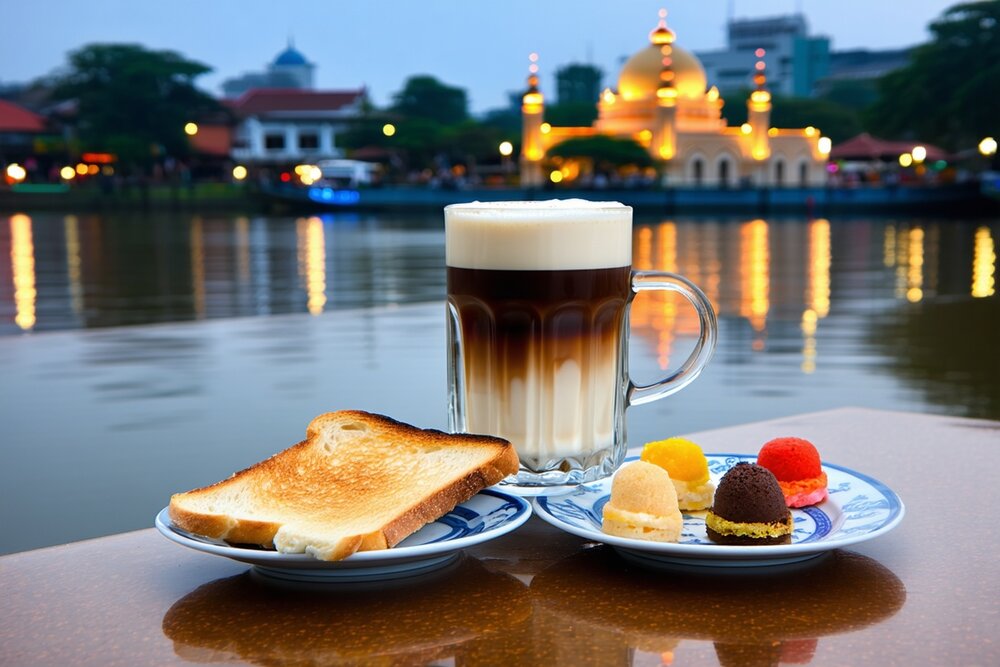
What Brunei lacks in alcohol it compensates in teh tarik ("pulled tea") — strong tea with condensed milk "pulled" between two cups from a height, creating a thick foam and a theatrically satisfying pour. The gerai (open-air food stalls) and tamu (open-air markets) are where Bruneians socialise over teh tarik and kopi (coffee) with kaya toast and kuih (traditional sweets). The social function that pubs serve in other countries is fulfilled entirely by these food stalls — open late, welcoming, and serving $1 drinks that fuel conversation as effectively as any cocktail.
🥤 Beverages & Mocktails
Brunei is a dry country (see Section 🍷 above). There is no wine industry, no beer production, and no licensed bars. Instead, the sultanate has developed one of the most inventive mocktail scenes in Asia, driven by the same five-star hotels (Empire, Radisson, The Brunei Hotel) that in other countries would be pouring champagne. Below are three that travellers repeatedly praise.
🥥 Abode Breeze
60 ml young coconut water, 30 ml fresh lime, 20 ml pandan syrup, 1 pinch sea salt, top with soda. Shake first three with ice, strain into a highball over crushed ice, top with soda, garnish with a pandan knot.
🌺 Sultan's Rose
50 ml rose syrup, 30 ml lime juice, 40 ml evaporated milk, 10 ml grenadine. Shake hard with ice, double-strain into a coupe, float a fresh rose petal. The drink of choice at the Empire Hotel atrium.
🍋 Temburong Jungle
40 ml fresh calamansi, 20 ml ginger syrup, 10 ml honey, 6 kaffir-lime leaves, top with tonic. Muddle leaves with calamansi and ginger, add ice, build in a rocks glass, top with tonic, garnish with lemongrass stalk.
✈️ Getting There & Around
By air: Brunei International Airport (BWN) is 8 km from BSB. Royal Brunei Airlines connects daily to Singapore, Kuala Lumpur, Jakarta, Manila, Bangkok, Hong Kong, Dubai, London and Melbourne. Singapore Airlines, AirAsia, Malaysia Airlines, Cebu Pacific and Philippine Airlines also serve the route.
By land: Daily buses from Miri (Sarawak), about 4 hours with a single border crossing at Sungai Tujoh; from Kota Kinabalu (Sabah), 8–9 hours by road via Limbang and Temburong with several Malaysia–Brunei crossings (keep the passport handy), or the sea route by ferry from Labuan to Muara. The Temburong Bridge now makes the eastern exclave a 30-minute drive from BSB.
Getting around: Buses are cheap (BND 1) but infrequent. There are no street-hail taxis — download the Dart ride-hail app (Brunei's Uber equivalent) or pre-book through your hotel. Petrol is BND 0.53/litre so car rental (~BND 60/day) is the easiest way to see everything.
📋 Practical Information
Visas: Brunei is visa-free for most Western travellers. US and UK passport holders receive 90 days; most EU nationals also get 90 days, though some nationalities are capped at 30 or 14 — check imm.gov.bn against your own passport. Six months of passport validity is required.
E-Arrival Card (mandatory): Every foreign national entering or leaving Brunei by air, land or sea must submit a free E-Arrival Card online at imm.gov.bn, no earlier than 72 hours before arrival. There is no paper alternative at the counter — register before you fly, keep the reference number, and expect to be asked for it at the Sungai Tujoh and Kuala Lurah land crossings from Sarawak.
Currency: Brunei Dollar (BND), at parity with Singapore Dollar (SGD). Both currencies accepted everywhere. Cards widely accepted.
Language: Malay (official), English widely spoken.
⚠️ Important Considerations
- Alcohol: Sale prohibited. Import 2L + 12 cans for private consumption only
- Dress code: Conservative dress expected, especially at mosques
- Ramadan: No public eating/drinking during daylight hours
- Sharia Law: Implemented 2019 – respect local laws and customs
⚠️ Travel Advisory
🟢 U.S. State Department: Level 1 — Exercise Normal Precautions
Reissued 14 May 2026 with no change to the advisory level or risk indicators. Brunei sits in the safest tier alongside Japan and Switzerland — violent crime is rare, petty theft is uncommon, and the practical risks for visitors are legal and cultural rather than criminal.
What the low number does not tell you is how unforgiving the law can be. Drug trafficking carries a mandatory death sentence under the Misuse of Drugs Act — Brunei has not carried out an execution since 1957, but long custodial sentences and caning are routinely imposed. The Sharia Penal Code applies to non-Muslims for certain offences, including khalwat (close proximity between unmarried people where one party is Muslim) and eating, drinking or smoking in public during daylight hours in Ramadan. Same-sex sexual activity is criminalised; the 2019 code provides for death by stoning, subject to the moratorium the Sultan announced in May 2019. LGBTQ+ travellers should be discreet.
Alcohol cannot be bought anywhere in the country. Non-Muslim visitors over 17 may import two litres of spirits or wine and twelve cans of beer per entry, declared at customs, for consumption in private only. Dress modestly — covered shoulders and knees for both sexes, and a headscarf plus the provided robe inside mosques. Photographing the Sultan's residences, military sites and airport security areas is unwise. Tap water is treated and generally safe in Bandar Seri Begawan; dengue is present year-round, so pack repellent for Temburong.
Emergency numbers: Ambulance 991 · Police 993 · Fire & Rescue 995 · Search & Rescue 998. There is no single catch-all 112/911 line. The U.S. Embassy is in Bandar Seri Begawan (Simpang 336-52-16-9, Jalan Kebangsaan).
📅 When to Visit
February-April: Driest period, best for outdoor activities and rainforest treks. National Day celebrations (February 23).
Hari Raya Aidilfitri (Eid): Moves about 11 days earlier each year — 20 March 2026, around 9 March 2027 — when the palace opens to the public. Extraordinary experience of royal hospitality.
May-October: Moderate rain but still good visiting conditions. Humidity peaks August-October.
November-January: Wettest months with heavy afternoon showers. Some flooding possible. Can affect Temburong access.
💡 Essential Tips
Cover shoulders and knees, especially at mosques
Bring duty-free, drink only in private
No taxi street hails – use Dart app or phone
BND 0.53/liter – heavily subsidized
Many businesses close by 6-7 PM
Reserve rainforest tours in advance
✨ Essential Experiences
Sultan Omar Ali Saifuddien Mosque at Sunset
Watch the golden dome catch the last light, reflected in the surrounding lagoon.
Water Taxi Through Kampong Ayer
Explore the world's largest water village, inhabited for over 1,000 years.
Ulu Temburong Canopy Walk
Climb 43 meters into pristine rainforest canopy for bird's-eye jungle views.
Hari Raya Palace Visit
Shake hands with the Sultan and feast in the world's largest residential palace.
Gadong Night Market
Sample authentic Bruneian street food – satay, nasi katok, and sweet treats.
📊 Tourism Statistics (2024-2025)
Key Trends: Tourism has recovered dramatically from pandemic lows, with air arrivals more than doubling between 2023 and 2024. Cultural tourism is growing rapidly (+70%). Malaysia remains the top source market via land crossings. China became the second-largest air source market by 2025 on the strength of direct flights, and the tourism road-map under Wawasan 2035 treats visitor growth as one leg of diversification away from oil dependency.
📋 Quick Reference
🏨 Accommodation
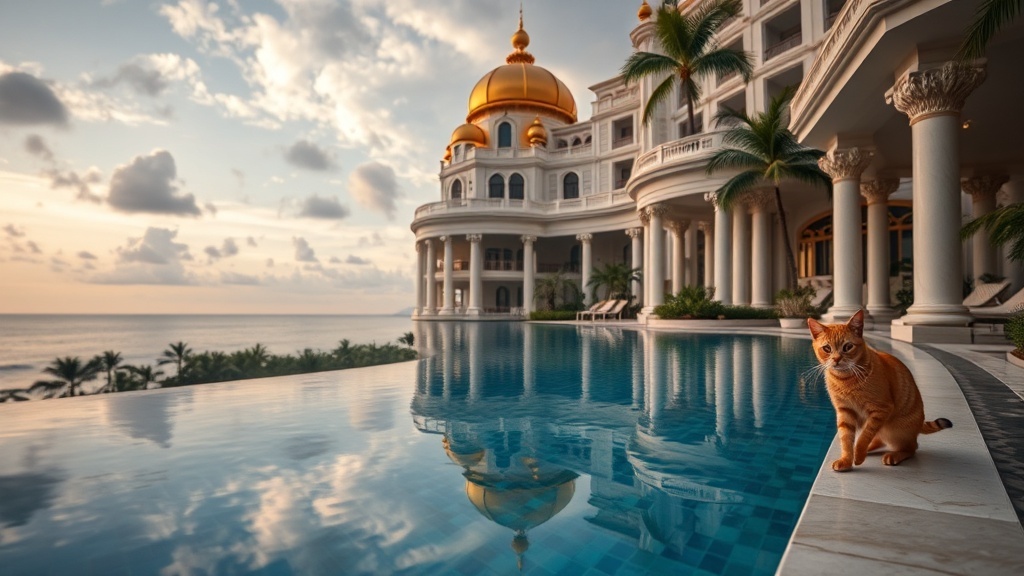
Luxury: The Empire Brunei (formerly The Empire Hotel & Country Club, built as royal guest accommodation) remains one of Asia's most opulent resorts — marble lobbies, a Jack Nicklaus golf course, private beach and a rate card that starts around BND 350. Also worth considering is the Radisson Hotel Brunei Darussalam in BSB (BND 180).
Mid-range: The Brunei Hotel (BND 130), Times Hotel Gadong (BND 120). Budget: KH Soon Resthouse (BND 60), Pusat Belia Youth Hostel (BND 15 dorm) — the cheapest bed in town.
💵 Cost of Living
Brunei is cheaper than Singapore (same currency!) but pricier than Malaysian Borneo. Budget traveller: BND 60/day (hostel, nasi katok, bus). Mid-range: BND 150/day (hotel, taxis, proper restaurants, one tour). Luxury: BND 400+/day (Empire, car rental, Temburong tour). Tipping is not expected — a 10% service charge is added at hotels and upscale restaurants.
🎉 Festivals & Events
National Day (23 February) — mass gymnastics, parades and fireworks at Taman Haji Sir Muda Omar 'Ali Saifuddien stadium. Sultan's Birthday (15 July) — two weeks of military tattoos, regatta on the Brunei River and a royal garden party; the 2026 edition marked His Majesty's 80th birthday with a grand ceremonial parade through Bandar Seri Begawan. Hari Raya Aidilfitri (end of Ramadan) — three days of palace open house, the most unmissable event on the calendar. Israk Mikraj, Maulidur Rasul, and Hari Raya Aidiladha are also public holidays with mosque gatherings.
🏛️ UNESCO Heritage
Brunei Darussalam has zero inscribed UNESCO World Heritage Sites — and, unusually, no Tentative List either. It ratified the World Heritage Convention on 12 August 2011 but has never formally submitted a property, so no Bruneian site is currently in the nomination pipeline. Domestic candidates are discussed often — Kampong Ayer, the Kota Batu archaeological park (seat of the 15th-century sultanate), and the transboundary Heart of Borneo rainforest shared with Malaysia and Indonesia — but none has been lodged with Paris. The pipeline did finally open in February 2026, when the tourism ministry named Ulu Temburong National Park as Brunei's priority candidate and began nomination groundwork with UNESCO's Jakarta office and the ASEAN-Korea Centre — a Tentative List entry would be the first formal step.
Brunei has had real success on the Intangible Cultural Heritage lists instead. Kebaya — the knowledge, skills, traditions and practices surrounding the garment — was inscribed in 2024 in a joint nomination with Indonesia, Malaysia, Singapore and Thailand, and Pantun, the Malay oral poetic form, followed on 11 December 2025 (20th ICH Committee, New Delhi), as an extension of the earlier Indonesia–Malaysia inscription. A third file, Ambulong to Ambuyat: processing techniques and associated culinary practices in Brunei Darussalam — the sago-starch dish that is the national plate — is under evaluation in the 2026 cycle, with the decision due at the December 2026 Committee session.
💼 Business & Economy
Brunei’s economy is dominated by oil and natural gas, while government policy increasingly emphasizes diversification into downstream energy, halal industries, tourism, logistics and services. For visitors, Bandar Seri Begawan remains the commercial center; the Brunei dollar is interchangeable at par with the Singapore dollar, and cards are common in larger businesses while cash remains useful in markets and smaller establishments.
🎒 Packing Tips
Lightweight, loose, modest clothing that covers shoulders and knees — linen shirts and long trousers for men, long skirts or trousers and a light shawl for women (useful for mosque visits). Sturdy shoes for the canopy walk and boardwalks. Strong insect repellent (the Temburong rainforest is alive with sand-flies). Quick-dry towel. Umbrella — equatorial downpours arrive without warning. A British-type three-pin plug adapter. Bring duty-free alcohol if you want it: non-Muslims may import 2 bottles of spirits and 12 cans of beer per entry, to be declared at customs.
📚 Resources & Recommended Reading
Books: By God's Will: A Portrait of the Sultan of Brunei by Lord Chalfont; Brunei — History, Islam, Society and Contemporary Issues ed. Ooi Keat Gin (Routledge, 2016); Brunei 1839–1983: The Problems of Political Survival by D.S. Ranjit Singh (Oxford University Press, 1984); Pigafetta's Magellan's Voyage (1524, first European account of Brunei).
Official: bruneitourism.com · imm.gov.bn (visas & E-Arrival Card) · tourism.gov.bn (Tourism Development Department, statistics) · mfa.gov.bn (Ministry of Foreign Affairs).
YouTube Videos: search "Brunei walking tour 4K", "Ulu Temburong rainforest", "Kampong Ayer drone", "Empire Hotel Brunei", "nasi katok taste test".
🤯 Fascinating Facts
• Brunei citizens pay no income tax; education and healthcare are free at every level, including overseas study grants.
• The Sultan owns an estimated 7,000 cars, including the world's largest private collection of Rolls-Royces (≈600) and Bentleys.
• Brunei's flag is one of only a handful of national flags to carry writing — the Arabic motto "Always in service with God's guidance".
• Roughly 72% of Brunei is still forested — proportionally the largest tract of intact lowland rainforest left on Borneo, which is why Ulu Temburong is the country's World Heritage candidate.
• Sultan Hassanal Bolkiah's 1996 50th birthday party cost an estimated USD 27 million and included a private Michael Jackson concert for which he was reportedly paid USD 17 million.
• Brunei has the second-highest Human Development Index in Southeast Asia after Singapore.
• Petrol costs BND 0.53/litre — less than bottled water.
👑 Notable People
Sultan Hassanal Bolkiah (b. 1946) — 29th Sultan and Yang di-Pertuan of Brunei since 1967, among the world's longest-reigning and wealthiest monarchs. Sultan Bolkiah (r. 1485–1524) — the fifth sultan, whose fleet controlled maritime Borneo at the empire's height. Prince Al-Muhtadee Billah (b. 1974) — Crown Prince and Senior Minister. Prince Jefri Bolkiah — the Sultan's younger brother, once the world's biggest-spending playboy (Jerudong Park, USD 14.8 billion lawsuit). Wu Chun (b. 1979) — Taiwanese-Bruneian pop star and actor, a member of boy band Fahrenheit, born and raised in BSB. Datin Seri Setia Dr Hajah Romaizah Mohd Salleh — Minister of Education since 7 June 2022, Brunei's first female cabinet minister. Prince 'Abdul Mateen (b. 1991) — Sandhurst-trained pilot, polo player and, since 4 June 2026, Minister of Foreign Affairs. Mohammad Adi Salihin — wushu exponent who won Brunei's only gold at the 2025 SEA Games.
⚽ Sports
Football is the runaway favourite; the national league is small and DPMM FC — owned by the Crown Prince — plays in the Singapore Premier League, which it has won twice. Traditional sports include silat (Malay martial arts), sepak takraw (kick volleyball), and the Royal Brunei regatta held on the Sultan's birthday. The annual Brunei International Marathon and the BIBD Masters (international badminton) attract regional stars. Brunei has never won an Olympic medal and sent just three athletes to Paris 2024 (swimmers Zeke Chan and Hayley Wong, sprinter Noor Firdaus Ar-Rasyd). At the 33rd SEA Games in Thailand (December 2025) the team took 1 gold, 3 silver and 5 bronze — the gold from wushu exponent Mohammad Adi Salihin — for 9th place. Brunei has also become a modest host: the ASEAN School Games 2025 were staged in Bandar Seri Begawan, and the city hosted the ASEAN Club Championship (Shopee Cup) 2026/27 play-offs from 4 September 2026.
📰 Media & Press Freedom
Brunei's press environment is one of the most tightly controlled in Southeast Asia. Reporters Without Borders ranked Brunei 96th out of 180 countries in its 2026 World Press Freedom Index (score 52.58, up from 97th in 2025) — a mid-table position that reflects the near-total absence of physical danger to journalists (23rd on the security indicator) rather than any freedom to criticise (140th on the legal indicator). RSF cites the Sedition Act, the Local Newspapers Order (annual licence renewal) and the broader Sharia Penal Code. The main English paper is the Borneo Bulletin; Media Permata is the leading Malay-language daily. Radio Television Brunei (RTB) runs the national broadcaster. Criticism of the Sultan or Islam is effectively forbidden, and most journalists practise strong self-censorship.
📸 Photo Gallery
✍️ Author's Note Radim Kaufmann
I arrived in Brunei expecting the Gulf emirate of Southeast Asia — oil money, gilded mosques, conservative silences — and I did find all of that. What I did not expect was the profound stillness. You land at BWN mid-afternoon, the tarmac shimmering, and by the time you reach the Sultan Omar Ali Saifuddien Mosque the call to prayer has cleared the streets. I stood on the causeway alone, the mahligai barge floating soundlessly in the lagoon, the gold dome holding the last minutes of sun, and I could not hear a car. In Bangkok, the same moment would cost you an hour of honking. Here it was a gift.
My happiest hour in the country was on a wooden jetty in Kampong Ayer with a BND 1 teh tarik, watching a schoolgirl in a crisp white tudung push a scooter along a boardwalk older than most European nations. That, and the morning I spent on the Temburong canopy walk at 43 metres up, swaying slightly, listening to hornbills — three of them, black and enormous — hack across the understorey. Brunei rewards patience. Do not come here to party; come to read, to walk, to think. You'll leave with the strange, clarifying sense that quiet is a luxury the rest of Southeast Asia forgot to sell.
—Radim Kaufmann, 2026
Support This Project 🌍
This World Travel Factbook is a labor of love – free to use for all travelers.
