Guide contents
Italy at a Glance
🌍 Overview
Italy is a country of about 302,073 km² and 58.9 million people, shaped like a boot, running 1,200 km from the Alps to the Mediterranean, with two large islands and a mountain range down its spine. It contains two independent states inside its borders — Vatican City and San Marino — and it has existed as a single country for less time than the United States.
Italy is the only country that completely surrounds two other independent states: Vatican City within Rome and San Marino near the Adriatic coast. Together with Lesotho, surrounded by South Africa, they form the world’s three sovereign states whose entire territory is an enclave within one other country. Vatican City and San Marino have their own laws, flags and institutions. Both use the euro and issue euro coins with their own national designs under monetary agreements; these are not separate currencies. Enclave geography · FAO: Lesotho · ECB: euro coins.
That last fact explains more than anything else on this page. Italy was unified in 1861. Before then it was kingdoms, duchies, republics, papal territory and Habsburg provinces, some of which had been separate for a thousand years. The food, the wine, the architecture, the accents, the coffee habits, the local pride and the political fault lines all still run along those old borders. There is no single Italian cuisine, no single Italian landscape, and no single Italian temperament. There are twenty regions that happen to share a passport.
The state
A parliamentary republic since a referendum on 2 June 1946 narrowly abolished the monarchy. Parliament is bicameral — a 400-seat Chamber of Deputies and a 200-seat Senate, both elected by a mixed system — and the President is a largely ceremonial head of state elected by parliament for seven years. Italy has averaged roughly one government a year since 1946, a statistic that says more about coalition arithmetic than about instability: the civil service and the regions carry on regardless.
The people
About 58.9 million and falling: Italy has one of the world's lowest fertility rates, around 1.2 children per woman, and the second-oldest population on Earth after Japan. Roughly 8.9% of residents are foreign nationals — Romanians, Albanians, Moroccans, Chinese and Ukrainians the largest groups. Internal migration from south to north has been running for seventy years and has not stopped.
The economy
The eighth-largest economy in the world and the third-largest in the eurozone, built on manufacturing rather than the tourism the country is famous for: machine tools, luxury goods, pharmaceuticals, food processing, shipbuilding, and thousands of small family engineering firms clustered in industrial districts. Public debt is among the highest in the developed world at roughly 135% of GDP, and productivity has been broadly flat since the late 1990s.
What visiting is like
Overwhelming in the good sense and, increasingly, in the bad one. Italy took 185 million arrivals at accommodation in 2025 — an all-time record, up 7.1% — and the pressure is concentrated on maybe fifteen places. Go to those fifteen and you queue; go forty minutes away and you have a Romanesque cathedral and a trattoria to yourself. The last section of this page is about that choice.
🗺️ Geography — Alps to Africa
Italy spans nearly ten degrees of latitude. Bolzano in the far north is closer to Munich than to Rome and gets ski season snow; Lampedusa, an Italian island in the Pelagie group, is 113 km from Tunisia and closer to Africa than to Sicily. Between them the country runs the full range from glaciers to semi-desert.
Two mountain systems
The Alps form the northern border in a 1,200 km arc, containing the highest point in the EU — Monte Bianco at 4,809 m, shared with France. The Apennines run the whole length of the peninsula, 1,200 km from Liguria to Calabria, topping out at Corno Grande (2,912 m) in Abruzzo. Roughly 35% of Italy is mountain and 42% hill; only about a fifth is flat.
The Po Valley
That flat fifth is mostly one place: the Pianura Padana, the basin of the River Po, running from Piedmont to the Adriatic. It is Italy's agricultural and industrial heartland, it holds a quarter of the population, and it is also — because it is a bowl ringed by mountains — one of the most air-polluted regions in Europe, with winter inversions that trap particulates for weeks.
Volcanoes
Italy has the only active volcanoes on the European mainland. Vesuvius looms over three million people in the Naples conurbation and last erupted in 1944. Etna in Sicily is Europe's largest active volcano at around 3,350 m — the exact height changes with each eruption — and erupts most years. Stromboli has been in near-continuous mild eruption for some 2,000 years, which is why sailors called it the lighthouse of the Mediterranean.
Earthquakes
The African and Eurasian plates are colliding beneath Italy, and the Apennines are the result. Destructive earthquakes are a permanent feature of Italian life: Messina 1908 (over 75,000 dead, the deadliest in European history), Irpinia 1980, L'Aquila 2009, Amatrice and Norcia 2016. Many hill towns you will visit are rebuilt, sometimes more than once, and some are still braced with scaffolding.
Coast and islands
About 7,900 km of coastline and more than 450 islands. Sicily (25,700 km²) and Sardinia (24,000 km²) are the two largest islands in the Mediterranean. Four seas surround the peninsula and Italians name them separately: the Ligurian, Tyrrhenian, Ionian and Adriatic.
Rivers and lakes
The Po (652 km) is the longest river and has been running dangerously low in recent drought summers, with saltwater intruding kilometres up its delta. The Tiber runs through Rome, the Arno through Florence and Pisa. The great northern lakes — Garda (the largest, 370 km²), Maggiore, Como — are glacial troughs at the foot of the Alps, and their microclimates grow lemons and olives at a latitude that should not permit either.
🏷️ The Name, and the Twenty Regions Behind It
Italia originally meant only the toe of the boot — the Greeks used it for the part of Calabria they had colonised, possibly from an Oscan word víteliú, "land of young cattle". The name crept northwards over centuries until Augustus applied it to the whole peninsula up to the Alps. For the eighteen hundred years after Rome fell it was, in Metternich's famous dismissal of 1847, "a geographical expression".
Modern Italy has twenty regions, of which five are autonomous with special statutes — Sicily, Sardinia, Trentino-Alto Adige/Südtirol, Friuli-Venezia Giulia and the Valle d'Aosta — for reasons ranging from island separatism to a German-speaking majority to a French-speaking one. Knowing roughly which region you are in tells you what you will eat, what you will drink and what the buildings will look like.
The north-west
Piedmont (Turin, Barolo, truffles, the first capital of united Italy), Lombardy (Milan, the lakes, a fifth of Italian GDP), Liguria (Genoa, the Cinque Terre, pesto and focaccia) and the tiny bilingual Valle d'Aosta. Butter and rice country rather than olive oil and pasta country.
The north-east
Veneto (Venice, Verona, Prosecco, and Italy's most-visited region), Trentino-Alto Adige/Südtirol (the Dolomites; the northern half is majority German-speaking and was Austrian until 1919), Friuli-Venezia Giulia (Trieste, Slovene and Friulian minorities, some of Italy's best white wine) and Emilia-Romagna (Bologna, Parma, Modena — arguably the best food in the country, and that is a high bar).
The centre
Tuscany (Florence, Siena, Chianti, the landscape everyone has already seen), Umbria (Assisi, Perugia, the green heart, quieter and cheaper), Marche (the Adriatic side, deeply underrated), Lazio (Rome and the Vatican) and Abruzzo (bears, wolves, the largest protected area in Europe outside Scandinavia).
The south and islands
Campania (Naples, Pompeii, the Amalfi Coast), Puglia (the heel — trulli, olive groves, the fashionable choice of the last decade), Basilicata (Matera), Calabria (the toe, the least visited mainland region), Molise (so small Italians joke it does not exist), Sicily and Sardinia. Collectively the Mezzogiorno, with roughly half the GDP per head of the north.
🏛️ Rome: Kingdom, Republic, Empire
Roman tradition dated the founding of the city to 753 BC and archaeology broadly agrees that there were villages on the Palatine by the eighth century BC. Seven kings ruled until the last, Tarquin the Proud, was expelled in 509 BC and the Romans replaced monarchy with a res publica — "the public thing", the origin of the word republic and of a governing idea that Europe then spent two thousand years arguing about.
The Republic (509–27 BC)
Government by annually elected magistrates, a Senate of ex-magistrates, and popular assemblies — with an explicit system of checks: two consuls who could veto each other, tribunes who could veto almost anything on behalf of the plebeians. It conquered Italy, then destroyed Carthage in three Punic Wars (264–146 BC), then took the Greek east. It fell apart because the constitution of a city-state could not govern an empire: a century of civil war ran from the Gracchi through Marius and Sulla to Caesar, whose assassination on 15 March 44 BC settled nothing.
The Empire (27 BC – AD 476)
Caesar's heir Octavian won, took the name Augustus in 27 BC, and kept every republican form while holding all real power — the model for a great many later regimes. The Pax Romana that followed gave the Mediterranean world two centuries of relative peace. The empire peaked under Trajan (AD 117) at around 5 million km² and perhaps 60–70 million people, roughly a fifth of humanity.
What Rome actually left
Concrete — opus caementicium with volcanic pozzolana, which sets underwater and which the Pantheon's unreinforced dome (still the largest in the world at 43.3 m, closed by a 9 m open oculus) has held up since about AD 126. Roads: some 80,000 km of them, built so well that stretches of the Via Appia can still be walked. Aqueducts, sewers, the arch, the vault, apartment blocks. And Roman law, codified under Justinian in the 530s, which is the direct ancestor of the civil law used across continental Europe — Czech law included.
The fall, and the argument about it
The western empire ended conventionally in AD 476, when the Germanic commander Odoacer deposed the teenage Romulus Augustulus and did not bother replacing him. Historians have argued for three centuries about why — Gibbon blamed Christianity, others plague, currency debasement, climate, the Huns, or nothing much at all beyond a slow administrative transformation. The eastern half continued from Constantinople for another thousand years, called itself Roman throughout, and fell only in 1453.
⚔️ After Rome: Communes, Maritime Republics and Popes
The thousand years between Rome and the Renaissance are the part of Italian history that visitors skip and that explains most of what they are looking at. Nearly every walled hill town, every striped cathedral, every family tower and every civic square dates from it.
The invasions
Ostrogoths under Theodoric (whose Ravenna mausoleum and mosaics survive), then a devastating twenty-year reconquest by Justinian's generals, then the Lombards from 568, who gave Lombardy its name and split the peninsula for two centuries. In 800 the Pope crowned Charlemagne emperor in Rome, creating a claim over Italy that German emperors pressed, disastrously, for the next 700 years.
The communes
From the eleventh century northern and central Italian cities bought, extorted or simply took self-government from their bishops and emperors, and became independent city-republics — the only substantial republican governments in Europe. They fought each other constantly. The rivalry of Guelphs (pro-Pope) and Ghibellines (pro-Emperor) ran through every one of them, exiled Dante from Florence in 1302, and is why San Gimignano has towers: they were fortified family houses in a permanent civil war.
The maritime republics
Venice, Genoa, Pisa and Amalfi built trading empires across the Mediterranean and Black Sea. Venice ran an overseas state from Dalmatia to Crete and Cyprus for centuries; Genoa had colonies on the Crimea. Between them they financed the Crusades, invented double-entry bookkeeping, marine insurance and the joint-stock voyage, and made the fortunes that paid for the Renaissance.
The Papal States
From the eighth century until 1870 the Pope was also a territorial monarch ruling a belt across central Italy from Rome to Ravenna. This is the single biggest reason Italy was not unified earlier: a foreign-backed sovereign state sat in the middle of it, and the papacy consistently opposed any Italian power strong enough to threaten it. Machiavelli said so bluntly in 1513 and was put on the Index for it.
The Black Death
Plague reached Italy through Genoese ships at Messina in October 1347 and killed perhaps a third to a half of the population within four years. Florence lost more than half. Boccaccio's Decameron, written immediately afterwards, is set among ten young people who have fled the city. The demographic shock reordered wages, land ownership and the church's authority, and is part of the background to everything that followed.
The signori
Most communes lost their republics to strongmen — signori — who took power as hired generals or party bosses and became dynasties: Visconti then Sforza in Milan, Este in Ferrara, Gonzaga in Mantua, Medici in Florence in all but name. By 1454 the Peace of Lodi had reduced Italy to five powers — Milan, Venice, Florence, the Papal States and Naples — in a balance that held for forty years and then collapsed when France invaded in 1494.
🎨 The Renaissance
The word is a nineteenth-century French coinage, and historians have spent a hundred years qualifying it. What is not in dispute is that between roughly 1400 and 1600, in a peninsula with fewer people than modern Lombardy, a set of small competitive cities produced an amount of first-rank art, architecture and thought that has no parallel before or since.
Why Florence
Money, rivalry and a specific institution. Florentine banking — the Medici bank had branches from London to Rome — generated capital, and the guilds and confraternities spent it competitively on public art. The city ran open competitions: the 1401 contest for the Baptistery doors, which Ghiberti won over Brunelleschi, is conventionally taken as the starting gun. Losing that competition sent Brunelleschi to Rome to study ruins, and he came back with the dome.
The dome
Brunelleschi's cupola on Santa Maria del Fiore, built 1420–1436, spans 45.5 m and was raised without centering — no timber scaffold from below — using a double shell, a herringbone brick pattern that made each course self-supporting, and machinery he designed himself. It remains the largest masonry dome ever built. Nobody at the time knew it would work; the commission awarded it partly because nobody had a better idea.
Perspective and anatomy
Two technical revolutions underlie the look of the period: linear perspective, demonstrated by Brunelleschi around 1413 and codified by Alberti in 1435, which let painters construct measurable space; and systematic dissection, which gave Leonardo, Michelangelo and their contemporaries an understanding of the body no medieval artist had. Art historians argue about how much this was rediscovery of antiquity and how much invention. It was both.
The names
Leonardo (1452–1519), painter, engineer, anatomist, who finished almost nothing; Michelangelo (1475–1564), who considered himself a sculptor and spent four years on the Sistine ceiling resenting it; Raphael (1483–1520), dead at 37 with the Vatican Stanze behind him; Botticelli, Donatello, Titian and Tintoretto in Venice, Bramante and Palladio in architecture. Then Caravaggio (1571–1610), who ended the Renaissance by pointing a light at it, and whose paintings are still in the Roman churches he painted them for, free to see.
Not only art
Machiavelli's Il Principe (1513), the founding text of political realism, written by an unemployed civil servant hoping for a job. Galileo (1564–1642), who turned a telescope on Jupiter in 1610, found four moons, and was condemned by the Inquisition in 1633 for the conclusions. Luca Pacioli, who published double-entry bookkeeping in 1494. Vesalius published his anatomy in Padua. The University of Bologna, founded 1088, is the oldest in continuous operation in the world.
And then it moved on
Italy's decline was not artistic but economic and political. The Atlantic trade routes opened after 1492 and the Mediterranean became a backwater; the Italian Wars (1494–1559) turned the peninsula into a battlefield for France and Spain, ending with the Sack of Rome in 1527 and Spanish domination for the next 150 years. The art kept coming — the Baroque is largely Italian — but the initiative had gone north.
🇮🇹 Risorgimento: Making Italy, 1815–1871
In 1815 the Congress of Vienna divided Italy into eight states, most of them controlled by or allied to Austria. Fifty-six years later there was one. The process — the Risorgimento, the "resurgence" — was driven by a small educated minority, resisted by the papacy and much of the peasantry, and completed largely through the diplomacy of one man and the improvisation of another.
The three figures
Giuseppe Mazzini (1805–1872), the republican propagandist whose Young Italy movement supplied the ideology and a string of failed insurrections. Camillo Benso, Count of Cavour (1810–1861), prime minister of Piedmont-Sardinia, who supplied the strategy: modernise Piedmont, get France to fight Austria for you, and annex the results. Giuseppe Garibaldi (1807–1882), the guerrilla general who supplied the improvisation and most of the myth.
1848 and 1859
The revolutions of 1848 produced a short-lived Roman Republic defended by Garibaldi and crushed by French troops, and a Piedmontese defeat by Austria. Cavour drew the lesson and allied with Napoleon III; the war of 1859 won Lombardy, and plebiscites through 1859–60 brought in Tuscany, Emilia and the Romagna. Piedmont paid France with Nice and Savoy — which is why Garibaldi, born in Nice, spent the rest of his life furious with Cavour.
The Thousand
In May 1860 Garibaldi sailed from Genoa with about a thousand volunteers in red shirts, landed at Marsala in Sicily, and in five months conquered the whole Kingdom of the Two Sicilies — a state of nine million people with a real army. He then handed it to the King of Piedmont rather than declaring a republic. The Kingdom of Italy was proclaimed on 17 March 1861 with Turin as capital and Victor Emmanuel II as king.
Finishing it
Venetia came in 1866 as a by-product of Prussia's war with Austria. Rome held out under French protection until the Franco-Prussian War pulled the garrison home; Italian troops breached the walls at Porta Pia on 20 September 1870. The Pope declared himself a prisoner in the Vatican and forbade Catholics to participate in Italian politics — a rupture unresolved until the Lateran Pacts of 1929. Rome became the capital in 1871.
"Now we must make Italians"
The line is attributed to Massimo d'Azeglio and captures the problem: at unification perhaps 2.5% of the population spoke Italian in daily life; the rest spoke regional languages mutually unintelligible from one province to the next. Literacy was around 25%, and under 10% in parts of the south. Standard Italian spread through conscription, schooling, migration and — decisively — television from 1954.
The southern question
Unification was experienced in much of the south as annexation. A guerrilla war conventionally called brigantaggio ran from 1861 to about 1865 and cost more lives than all the wars of the Risorgimento combined; it was suppressed by martial law and mass deportation. Piedmontese tariffs and taxes damaged southern industry, and emigration followed: between 1880 and 1915 roughly 13 million people left Italy, most of them from the south. The questione meridionale has been on the political agenda ever since.
📜 Fascism, War and the Republic
The Great War
Italy was in the Triple Alliance with Germany and Austria-Hungary but stayed out in 1914, then joined the Entente in 1915 after being promised Austrian territory in the secret Treaty of London. The result was three years of attritional fighting on the Isonzo and in the Alps, the catastrophic rout at Caporetto in October 1917, and eventual victory at Vittorio Veneto. About 650,000 Italian soldiers died. The peace delivered less than promised, and nationalists called it the vittoria mutilata — the mutilated victory.
Mussolini
Benito Mussolini, a former socialist newspaper editor, founded the Fasci di Combattimento in 1919 and built a paramilitary movement on postwar unemployment, fear of communism and the mutilated-victory grievance. The March on Rome in October 1922 was a bluff that worked: the King appointed him prime minister rather than declare martial law. Dictatorship followed by stages — the murder of the socialist deputy Giacomo Matteotti in 1924, then the abolition of opposition parties in 1926.
The regime
Twenty-one years of one-party rule, a corporatist economy, an enormous propaganda apparatus and monumental architecture that is still all over Italy — the EUR district in Rome, Milan's Stazione Centrale, whole planned towns in the reclaimed Pontine marshes. Also: the invasion of Ethiopia in 1935 using poison gas, intervention in Spain, the alliance with Hitler, and the racial laws of 1938, which stripped Italian Jews of citizenship, employment and schooling.
War, and civil war
Italy entered the war in June 1940 and did badly in Greece, North Africa and Russia. The Allies landed in Sicily in July 1943; the Grand Council deposed Mussolini on 25 July, and the armistice of 8 September 1943 left the army leaderless while the Germans occupied the north. What followed was simultaneously an Allied campaign up the peninsula and an Italian civil war between the German-backed Republic of Salò and the Resistenza. Some 45,000 partisans died; German reprisals massacred civilians at Marzabotto, Sant'Anna di Stazzema and the Ardeatine Caves. Around 8,000 Italian Jews were deported; most did not return.
The Republic and the miracle
A referendum on 2 June 1946 abolished the monarchy by 54% to 46% — the north voting republic, the south voting monarchy — and the constitution took effect on 1 January 1948. Then came the miracolo economico: between 1958 and 1963 the economy grew at around 6–8% a year, Italy went from agrarian to industrial in a generation, and millions moved from the south to Turin and Milan. Fiat, Olivetti, Pirelli, the Vespa and the Autostrada del Sole date from this period.
Lead and clean hands
The anni di piombo, the "years of lead", ran from the Piazza Fontana bombing of 1969 through the Red Brigades' kidnapping and murder of former prime minister Aldo Moro in 1978 to the Bologna station bombing of 1980 that killed 85 — left-wing and neo-fascist terrorism, with state complicity in parts of the latter established in later trials. Then the Mani Pulite corruption investigations from 1992 destroyed the entire postwar party system within two years, and the anti-mafia judges Falcone and Borsellino were murdered by Cosa Nostra within eight weeks of each other that same year.
🏛️ Politics and the State Today
📅 Checked 6 September 2026. This section dates faster than the rest of the page. Italian politics moves, and the next general election is due by 2027.
The government
Giorgia Meloni has been prime minister since 22 October 2022, leading a right-wing coalition of her own Fratelli d'Italia with Matteo Salvini's Lega and Antonio Tajani's Forza Italia. It is the first Italian government led by a woman, and — at nearly four years — one of the longest-lived of the republic, which by Italian standards is the notable fact.
The March 2026 referendum
The government's flagship constitutional reform of the judiciary — the Nordio reform, which would have separated the career paths of judges and prosecutors, split the governing council of the magistracy in two and chosen its members by lot — was rejected in a confirmatory referendum on 22–23 March 2026, by roughly 54% to 46% on a turnout near 56%. No quorum applies to constitutional referendums, so the result stands. It was the government's first national defeat.
What is on the agenda
Public debt around 135% of GDP and the servicing cost of it; the spending of Italy's share of the EU recovery fund, the largest of any member state; demographic decline and the labour shortage behind it — the government approved close to 500,000 non-EU work permits for 2026–2028, an unusual move for a coalition elected partly on immigration; and migration across the central Mediterranean, where Italy is the main arrival country and the policy is contested at home and in the courts.
Organised crime
Four distinct organisations, not one: Cosa Nostra in Sicily, the 'Ndrangheta in Calabria — now generally reckoned the most powerful, through its grip on European cocaine importing — the Camorra around Naples and the Sacra Corona Unita in Puglia. They are a real feature of Italian public life and essentially never a feature of a tourist's. Violence is directed inward. What a visitor might notice is indirect: unfinished public works, oddly empty new buildings, and the Addiopizzo stickers in Palermo shop windows declaring that the owner does not pay protection money.
The regions and the bureaucracy
Italy devolves a great deal — health, transport and much else are regional — which is why an Italian's experience of the state depends heavily on where they live. Public administration is genuinely slow, and the running joke about needing three stamps and a marca da bollo is not really a joke. For a visitor this surfaces mainly as museum booking systems and the occasional strike; scioperi in transport are announced in advance and legally required to leave guaranteed service windows.
Italy and Europe
A founding member of the European Communities — the Treaty of Rome was signed on the Capitoline Hill in 1957 — a founder of the euro, and a country whose public opinion has swung from among the most pro-European in the EU to markedly more sceptical and part-way back. In practice Italy is a central player in EU migration, fiscal and energy policy and has no meaningful exit constituency.
💶 The Economy: Three Italies
The standard framework, and a useful one for a traveller trying to make sense of what they see: economists distinguish a north-western industrial triangle (Turin–Milan–Genoa) of large firms; a "Third Italy" across the north-east and centre of small specialised family firms clustered in districts; and the Mezzogiorno, with roughly half the GDP per head of the north and persistently higher unemployment.
The industrial districts
Whole towns that make one thing, at world scale, through networks of small firms: eyewear in Belluno (Luxottica, which makes a large share of the world's branded frames), taps and valves around Lake Orta, ceramic tiles in Sassuolo, packaging machinery in Bologna, shoes in the Marche, silk in Como, gold in Vicenza. It is a genuinely distinctive model — capitalismo molecolare — and it is why Italy remains the EU's second-largest manufacturer after Germany.
The famous names
Ferrari, Lamborghini, Ducati and Maserati along the "Motor Valley" around Modena and Bologna; Prada, Armani, Versace, Gucci and Bottega Veneta in fashion; Barilla, Ferrero and Lavazza in food; Eni and Enel in energy; Leonardo in aerospace and defence; Fincantieri, which builds a large share of the world's cruise ships. Fiat is now part of Stellantis and Italian car production is a fraction of what it was.
The weak points
Productivity has barely grown since the late 1990s. Firms stay small because growing past certain thresholds triggers heavier regulation. Youth unemployment, though at a record low of around 15% in mid-2026, is still high by northern European standards, and the graduate emigration known as the fuga dei cervelli continues. The shadow economy is estimated at roughly a tenth of GDP, which is where the cash-only trattoria fits in.
Tourism's real share
Tourism and its supply chain account for something on the order of 10% of GDP and a similar share of employment — large, but well behind manufacturing. That matters politically: Venice and Florence live on visitors, while Brescia and Vicenza live on machine tools, and the two halves of the country argue about overtourism from completely different positions.
🏙️ Rome
Nearly 2.8 million people in the city and 4.3 million in the metropolitan area, and the only capital in the world with a foreign sovereign state inside it. Rome is not a museum city: it is a working, chaotic, badly governed, extremely beautiful capital where a fourth-century basilica sits next to a bus depot.
Ancient Rome
The Colosseum, Roman Forum and Palatine share one ticket, valid 24 hours, and are best done early or last thing. The Pantheon — a working church, and the best-preserved building of antiquity anywhere — now charges a small entry fee. Less crowded and more rewarding than either: the Baths of Caracalla, the Ostia Antica excavations at the end of a suburban railway line, and the Case Romane del Celio. Book the Colosseum through the official site; every other seller is a reseller.
Baroque Rome
The Rome most people actually photograph is seventeenth-century, and it is essentially the work of two rivals: Bernini — the colonnade of St Peter's, the Four Rivers fountain in Piazza Navona, the Ecstasy of St Teresa — and Borromini, whose San Carlo alle Quattro Fontane fits an entire church into the footprint of one of St Peter's piers. The Trevi Fountain and the Spanish Steps belong to the same century and are now managed with barriers and, at Trevi, a timed queue.
Free Caravaggios
Three churches hold major Caravaggios in the chapels they were painted for, free, with a coin-operated light: San Luigi dei Francesi (the Matthew cycle), Santa Maria del Popolo (the Conversion of Saul, the Crucifixion of Peter) and Sant'Agostino (the Madonna of Loreto). Bring €1 coins. This is the single best-value hour in the city.
Neighbourhoods
Trastevere across the river, medieval and now heavily touristed but still good after 22:00; Monti, between the Forum and Termini, the best compromise of central and liveable; Testaccio, built on a hill of ancient amphora shards, the traditional home of Roman offal cooking and the city's best food market; Garbatella, a 1920s garden-city experiment reachable on Metro B; EUR, Mussolini's unbuilt world's fair, worth an hour for the architecture.
Getting around
Three metro lines that between them cover surprisingly little, because you cannot dig in Rome without hitting archaeology — construction of Line C has been running for two decades and has produced an entire museum's worth of finds. Buses and trams fill the gaps, unreliably. The historic centre is walkable end to end in about 45 minutes, and walking is usually faster. The ZTL — restricted traffic zone — is camera-enforced and fines arrive at rental companies months later.
Eating in Rome
Roman cooking is cucina povera with four canonical pastas: carbonara, cacio e pepe, amatriciana and gricia. Then saltimbocca, coda alla vaccinara, artichokes two ways — alla romana braised and alla giudia deep-fried in the old Jewish Ghetto — and supplì, the fried rice ball, from any decent pizza al taglio counter. Avoid anything with a photo menu within 300 m of a major sight.
⛪ Vatican City and the Holy See
0.44 km² and roughly 800 residents — the smallest sovereign state in the world by both measures, created by the Lateran Pacts of 11 February 1929 between Mussolini's government and Pius XI, which finally settled the "Roman Question" left open since 1870. Technically two entities: the Vatican City State, the territory, and the Holy See, the government of the Catholic Church, which is what holds diplomatic relations and UN observer status.
St Peter's Basilica
Built 1506–1626 over the earlier Constantinian basilica and the presumed tomb of Peter, by a sequence of architects including Bramante, Raphael, Michelangelo (who designed the dome) and Bernini (the piazza and the baldachin). Entry is free, with a long security queue and an enforced dress code — knees and shoulders covered, both sexes. The dome climb is a separate ticket: 551 steps, or 320 after a lift, through a passage that curves with the shell.
The Vatican Museums
About 7 km of galleries ending at the Sistine Chapel, and one of the most oversubscribed attractions on Earth — well over six million visitors a year. Book a timed slot on the official museivaticani.va site weeks ahead. Everything funnels one way towards the Sistine, so the Raphael Rooms and the Pinacoteca get walked past by people in a hurry; they should not be.
The Sistine ceiling
Michelangelo painted it between 1508 and 1512, standing on a scaffold of his own design, not lying down — the myth comes from a 1965 film. The Last Judgment on the altar wall came 25 years later, 1536–41, and had loincloths added to it by a later painter nicknamed il Braghettone, "the breeches-maker". The 1980s–90s cleaning revealed colours so much brighter than expected that it started a genuine art-historical row.
Practical oddities
The Vatican has its own post office (widely held to be faster than the Italian one), its own euro coins, a railway station with about 300 m of track, no airport, and the Swiss Guard — around 135 men, Swiss Catholic citizens, whose Renaissance-looking uniform was in fact designed in 1914. There is no passport control on the border, which runs across St Peter's Square.
🎨 Florence and Tuscany
Florence has about 360,000 residents and takes some sixteen million visitors a year, and the arithmetic of that is visible on every street in the centre. It is still worth it, provided you book everything and get up early.
The unmissable three
The Uffizi — Botticelli's Birth of Venus and Primavera, Leonardo, Michelangelo's Doni Tondo, two Caravaggios — book a timed entry. The Accademia, essentially for Michelangelo's David (1501–04, 5.17 m, carved from a block two other sculptors had abandoned) and the unfinished Prisoners, which are arguably more interesting. And the Duomo complex: Brunelleschi's dome, Giotto's campanile, the Baptistery, and the Opera del Duomo museum that holds the original doors and Michelangelo's late Pietà.
What most people miss
The Bargello, with Donatello's bronze David and the two 1401 competition panels side by side. The Brancacci Chapel, where Masaccio effectively invented Renaissance painting in the 1420s and where Michelangelo came to copy. San Marco, a Dominican convent with a Fra Angelico fresco in every monk's cell. The Oltrarno across the river, where the workshops still are.
Siena
A better-preserved medieval city than Florence and its historic enemy, built on three ridges around the shell-shaped Piazza del Campo. The Palio — a bareback horse race round the square on 2 July and 16 August, contested by the city's contrade — is a genuine civic ritual rather than a show, and is correspondingly hard to attend comfortably. The cathedral's inlaid marble floor is uncovered only for a few weeks a year.
The rest of Tuscany
Pisa — the tower leans 3.99° after stabilisation works, and the whole Campo dei Miracoli deserves more than the photograph. Lucca, walled, flat and cyclable on top of the ramparts. San Gimignano, fourteen surviving towers of an original seventy-odd. Arezzo for Piero della Francesca's fresco cycle. The Val d'Orcia south of Siena is the cypress-and-farmhouse landscape of every calendar, and is a UNESCO site as a designed landscape.
Getting around
Trains link Florence, Pisa, Lucca, Arezzo and Siena adequately. Everything else — the wine country, the Val d'Orcia, the hill towns — needs a car, and every historic centre has a ZTL you must not drive into. Park outside the walls and walk in. Agriturismi are the characteristic accommodation and are often better value than a Florence hotel plus a day trip in reverse.
The Tuscan table
Deliberately plain and salt-shy on bread — a habit traced to a medieval salt tax. Ribollita and pappa al pomodoro, both built on stale bread; pici, a hand-rolled fat spaghetti; bistecca alla fiorentina, a T-bone from Chianina cattle, cut at least three fingers thick, served rare and sold by weight, which is why the bill surprises people. Cantucci with vin santo to finish.
🚤 Venice and the Veneto
A city built on millions of alder piles driven into the mud of a lagoon, which ran an independent republic for 1,100 years — from the traditional date of 697 to Napoleon's abolition of it in 1797, the longest-lasting republic in history. It now has under 50,000 residents in the historic centre, down from about 175,000 in 1951, and takes upwards of twenty million visitors a year.
The essentials
St Mark's Basilica, Byzantine in plan and covered inside with 8,000 m² of gold-ground mosaic; pay the small extra for the Pala d'Oro and the loggia with the original bronze horses, looted from Constantinople in 1204. The Doge's Palace, with the Secret Itineraries tour if you can get it. The Accademia for Venetian painting, and the Peggy Guggenheim Collection for the twentieth century. Santa Maria Gloriosa dei Frari for Titian's Assumption, still on its own altar.
Getting it right
Stay overnight — Venice empties after the day-trippers and the cruise passengers leave, and the difference is total. Walk: every route is a maze and the yellow signs to Rialto and San Marco are the only navigation you need. Use the vaporetto line 1 down the Grand Canal as the cheapest sightseeing in Italy, and a traghetto — a standing gondola ferry across the canal, about €2 — instead of the €90 gondola ride if you only want the experience of being in one.
The lagoon islands
Murano for glass, where the furnaces were moved in 1291 to keep fire out of the city; Burano for lace and the painted houses; Torcello, the settlement that came first and was abandoned to malaria, where an eleventh-century cathedral holds a terrifying Last Judgment mosaic and there is almost nobody. Half an hour further, and worth the day.
Acqua alta and MOSE
Venice floods. The MOSE barrier system — 78 mobile gates at the three lagoon inlets, decades late, hugely over budget and mired in a corruption scandal that jailed a mayor — finally became operational and has since prevented dozens of floodings, including tides that would have put water across St Mark's Square. It is not a permanent answer: it cannot be raised for every tide without choking the lagoon, and the sea keeps rising.
The access fee
Venice trialled a contributo di accesso for day visitors — €5 booked more than four days ahead, €10 close in, applied on 60 selected days between 3 April and 26 July 2026, 08:30–16:00, with overnight guests, under-14s, residents and commuters exempt. The 2026 trial ended on 27 July and the fee is not currently in force. Whether it returns in 2027 is a live political question in the city. Check cda.ve.it before you travel.
The rest of the Veneto
Verona — a Roman arena that still stages a summer opera season, and a balcony with no connection whatsoever to a girl who never existed. Padua, for Giotto's Scrovegni Chapel (1305, timed entry in small groups through a dehumidifying airlock, and one of the two or three greatest things to see in Italy) and the oldest botanical garden in the world. Vicenza, essentially a Palladio open-air museum. And the Prosecco hills of Conegliano-Valdobbiadene, UNESCO-listed since 2019.
🏙️ Milan, the Lakes and the North-West
Milan is Italy's financial and fashion capital, its most European city, and the one visitors most often write off after half a day. That is a mistake, but an understandable one: Milan does not perform for you the way Florence does. It was also bombed heavily in 1943 and rebuilt in a hurry.
Milan
The Duomo — 135 spires, 3,400 statues, six centuries of construction — with a roof terrace you can walk among the pinnacles. Leonardo's Last Supper in the refectory of Santa Maria delle Grazie: 15-minute slots, groups of about 25, booked months in advance, and non-negotiable. The Pinacoteca di Brera, Castello Sforzesco with Michelangelo's unfinished Rondanini Pietà, and La Scala, whose season opens on 7 December, the feast of St Ambrose.
Milan's other life
The Navigli canals — partly designed by Leonardo — for the evening aperitivo, which is a Milanese institution: a drink around €10–12 that comes with enough food to constitute dinner. The Fondazione Prada and Pirelli HangarBicocca for contemporary art in industrial buildings. Design Week in April takes over the entire city and doubles hotel prices.
The lakes
Como, deep and steep-sided, with Bellagio at the fork of its two arms and villa gardens — Carlotta, Balbianello, Melzi — that are the actual reason to come. Maggiore, with the Borromean islands and their baroque palace. Garda, the largest and the most family-oriented, with Sirmione's Roman villa on a peninsula and reliable afternoon winds that make the north end a windsurfing centre. All three are busy from May to September and lovely in October.
Turin and Piedmont
Turin was the first capital of united Italy and looks it: eighteen kilometres of arcaded streets, baroque palaces, and the best Egyptian museum outside Cairo. It is also the birthplace of Fiat, of Italian cinema, of vermouth and of gianduia chocolate. South of it are the Langhe and Roero hills — Barolo, Barbaresco, white truffles from Alba in autumn — UNESCO-listed as a wine landscape in 2014.
Genoa and Liguria
Genoa has the largest intact medieval centre in Europe, a warren of caruggi so narrow the sun never reaches the bottom, plus the Rolli palaces that are a UNESCO site. Along the coast: Portofino for the money, and the five villages of the Cinque Terre — Monterosso, Vernazza, Corniglia, Manarola, Riomaggiore — linked by train and by cliff paths that require a Cinque Terre Card and are frequently closed by landslides. Check path status before planning a walk.
Emilia-Romagna, briefly
Not the north-west, but this is where to say it: Bologna — 38 km of porticoes, UNESCO-listed, and the oldest university in the world — is the food capital of Italy by fairly broad consent. Within an hour: Parma (prosciutto, Parmigiano), Modena (balsamic aged 12–25 years in a loft, Ferrari, Massimo Bottura), and Ravenna, whose fifth- and sixth-century mosaics are the finest Byzantine work outside Istanbul and are astonishingly uncrowded.
⛰️ The Dolomites and the Alps
A UNESCO World Heritage site since 2009, and geologically unlike anything else in the Alps: pale Triassic reefs of dolomite rock, laid down as coral atolls in a tropical sea about 250 million years ago, then lifted vertically. At sunset they turn pink and orange in a phenomenon locals call the enrosadira. It is not a trick of photography.
The classic places
The Tre Cime di Lavaredo, three vertical towers with a circular hut-to-hut walk of about 10 km round them — the most-photographed skyline in the Alps and correspondingly busy. Alpe di Siusi (Seiser Alm), the largest high alpine meadow in Europe. The Sella massif, ringed by four passes that make up the Sellaronda ski circuit in winter and a punishing cycling loop in summer. Lago di Braies, so heavily Instagrammed that access is now restricted in season.
Via ferrata
The Dolomites are the home of the via ferrata — protected climbing routes with fixed steel cable, ladders and pegs — most of which originated as First World War military engineering. The Italian and Austro-Hungarian fronts ran straight through these mountains from 1915 to 1917, and tunnels, trenches and galleries are still there; some routes go through them. You need a harness, a specific energy-absorbing lanyard and a helmet, and if you have never done one, take a guide.
Two languages, three
South Tyrol was Austrian until 1919 and is roughly 62% German-speaking; everything is officially bilingual and often trilingual, because a few valleys still speak Ladin, a Rhaeto-Romance language related to Romansh, with around 30,000 speakers. The autonomy statute is generous and has kept a once-explosive dispute quiet since the 1970s. The practical effect for a visitor is that lunch may be Knödel and speck rather than pasta, and that both place names on the sign are real.
Milano Cortina 2026
The Winter Olympics were held in Italy from 6 to 22 February 2026, on a deliberately dispersed model across 15 venues and roughly 22,000 km² — Milan, Cortina d'Ampezzo, Valtellina, Val di Fiemme and Anterselva — with more than 3,500 athletes from 93 nations, and the Olympic debut of ski mountaineering. The legacy for a traveller is practical: upgraded lifts, a rebuilt bobsleigh track at Cortina, improved rail and road links into the valleys, and a good deal more accommodation than there used to be.
Rifugi
The mountain hut network is the reason to walk here rather than elsewhere. Hundreds of rifugi, most serving proper meals and wine, let you cross the range for a week carrying almost nothing. The numbered Alte Vie are the classic long routes; Alta Via 1 runs roughly 120 km from Lago di Braies to Belluno in 8–12 days and needs no technical skill. Book huts ahead for July and August — half-board is standard and cash is often still preferred.
The rest of the Italian Alps
West of the Dolomites: the Gran Paradiso, Italy's first national park, created in 1922 from a royal hunting reserve and the reason the Alpine ibex is not extinct; the Italian side of Monte Bianco at Courmayeur, with the Skyway cable car to 3,466 m; the Matterhorn above Cervinia; and the Stelvio Pass, 48 hairpins to 2,757 m, one of the great drives in Europe and shut by snow much of the year.
🌋 Naples, Campania and the Amalfi Coast
Naples is the third-largest city in Italy, the densest, the loudest and — by a wide margin — the one people argue about most. It has a reputation for petty crime and disorder that is partly earned and heavily exaggerated, and it has the best pizza, the best coffee and one of the two or three best archaeological museums in the world.
Naples itself
The Museo Archeologico Nazionale holds almost everything portable that was dug out of Pompeii and Herculaneum — the mosaics, the bronzes, the Farnese collection — and seeing it before the sites makes the sites make sense. Napoli Sotterranea goes down into Greek quarries reused as aqueducts and then as wartime shelters. The Cappella Sansevero holds Sanmartino's Veiled Christ (1753), a marble figure under a marble shroud that people do not believe is one block until they walk round it. Book it.
Pompeii and Herculaneum
Vesuvius erupted in AD 79 — traditionally 24 August, though a charcoal inscription found in 2018 argues for October — burying Pompeii in pumice and ash and Herculaneum in pyroclastic flow. Pompeii is vast, mostly unshaded and takes a full day. Herculaneum is a quarter the size, far better preserved — carbonised wooden beams, doors, furniture, upper floors — and takes two hours. If you can only do one and you want to understand a Roman town, do Herculaneum. Both are on the Circumvesuviana line from Naples.
The Amalfi Coast
Fifty kilometres of cliff between Sorrento and Salerno, with Positano, Amalfi and Ravello strung along it, UNESCO-listed as a cultural landscape. The SS163 corniche road is spectacular and, in July and August, close to gridlocked, with an alternating-plate restriction on some days. Travel by ferry — Salerno, Amalfi, Positano, Sorrento and Capri are all connected — or by SITA bus, and stay put rather than day-tripping. Ravello, high above the coast, is the calmest of the three and has the best gardens.
Capri, Ischia, Procida
Capri is genuinely beautiful and genuinely overrun; go early, take the chairlift to Monte Solaro, and note that the Blue Grotto needs calm sea, a queue and a transfer into a rowing boat, and is closed more often than the brochures suggest. Ischia is larger, greener, thermal-spa country and much less crowded. Procida, the smallest, was Italian Capital of Culture in 2022 and remains the one where people actually live.
Paestum and the Cilento
An hour and a half south of Naples: three Greek Doric temples from the sixth and fifth centuries BC, better preserved than almost anything in Greece, standing in a field with a fraction of Pompeii's crowds. Beyond it the Cilento national park, buffalo-mozzarella country, and the coast that Italians go to when they want to avoid Amalfi.
Neapolitan food
Pizza was invented here and the Neapolitan version is protected as a Specialità Tradizionale Garantita: a soft, wet, folded base with a puffed leopard-spotted rim, 60–90 seconds in a wood oven at around 450 °C. Then ragù napoletano simmered for hours, friarielli with sausage, sfogliatella and babà in the pastry shops, and coffee served short, sweet by default and drunk standing at the bar for around €1.20.
🍋 Sicily
The largest island in the Mediterranean, an autonomous region with its own parliament, and the place where every civilisation that ever crossed this sea left a layer. Greek, Carthaginian, Roman, Byzantine, Arab, Norman, Swabian, Angevin, Aragonese, Bourbon — you can see four of them in a single Palermo street.
Greek Sicily
The Valley of the Temples at Agrigento — seven Doric temples along a ridge, the Temple of Concordia intact because it became a church. The theatre at Taormina, Greek then Roman, with Etna framed in the gap behind the stage. Segesta, a temple standing alone in empty hills, never finished. Siracusa, which Thucydides describes at length and which was the largest city in the Greek world; its Ortigia island is now the most liveable historic centre on the island.
Arab-Norman Palermo
A UNESCO site since 2015 covering a distinct hybrid style produced under Norman kings who kept their Arab administrators, Greek craftsmen and Muslim subjects: the Cappella Palatina, with a muqarnas wooden ceiling over Byzantine mosaics under a Latin king; the cathedrals of Monreale and Cefalù. Palermo also has the Ballarò and Vucciria street markets, which are North African in atmosphere and where the street food is.
Etna
About 3,350 m — the number changes with each eruption — Europe's largest active volcano, a UNESCO natural site, and in near-permanent activity. Cable car and 4×4 to around 2,900 m, above which you need a guide, and access is closed on short notice when it erupts. The lower slopes are dense with vineyards, chestnut and pistachio; volcanic soil and altitude give Etna Rosso and Etna Bianco a mineral, high-acid character quite unlike the rest of southern Italy.
Getting around
Trains on Sicily are slow and skirt the coast; the interior effectively requires a car, and driving in Palermo and Catania is not for the tentative. Distances look small and take much longer than the map suggests. A workable two-week route is Palermo → Cefalù → Taormina/Etna → Siracusa → Noto and the Val di Noto baroque towns (rebuilt in a single style after the 1693 earthquake, UNESCO-listed) → Agrigento → Trapani and Erice.
Sicilian food
The most distinct regional cooking in Italy, and the most Arab-influenced: sweet-and-sour caponata, couscous in the Trapani area, saffron, raisins and pine nuts with sardines in pasta con le sarde, and citrus everywhere. Street food in Palermo: arancine (feminine and round in Palermo, masculine and conical in Catania, and people are serious about this), panelle, and pani ca' meusa, a spleen sandwich, which is exactly what it sounds like. Cannoli filled to order, never in advance. Granita with a brioche for breakfast, which is the correct way to start a Sicilian summer day.
🏖️ Sardinia
The second-largest Mediterranean island and much the strangest. Sardinia was settled for millennia by a culture that built nothing like anything else in Europe, speaks a Romance language that is not a dialect of Italian, and has an interior almost nobody visits.
The nuraghi
Around 7,000 stone towers survive from the Nuragic civilisation of roughly 1800–500 BC — conical dry-stone structures with corbelled chambers, some in complexes with outlying villages. Su Nuraxi di Barumini is the UNESCO-listed example and the one to visit. Nobody is certain what they were for: fortresses, temples, chieftains' houses, all three. The associated bronze figurines in the Cagliari museum are extraordinary and almost unknown outside Italy.
The coast
Some of the clearest water in the Mediterranean. The Costa Smeralda in the north-east was developed from nothing by the Aga Khan's consortium from 1962 and is priced accordingly. Better value and just as beautiful: the Golfo di Orosei on the east coast, whose beaches — Cala Goloritzé, Cala Mariolu — are reachable only by boat or on foot; the Sinis peninsula in the west with its quartz-grain beaches; and La Maddalena archipelago in the north.
The interior
The Barbagia, the mountainous centre the Romans never fully controlled — the name comes from barbaria — is shepherd country, with a strong tradition of masked winter carnival figures at Mamoiada and Ottana that predate anything Christian. Sardinia is also one of the world's five "Blue Zones" of exceptional longevity, with an unusually high number of male centenarians in these villages.
Language and food
Sardo is a separate Romance language, officially recognised, in several dialects, and it preserves Latin features Italian lost. On the table: porceddu, suckling pig roasted on myrtle; pane carasau, a paper-thin flatbread baked twice for shepherds; culurgiones, pleated potato-and-mint dumplings; bottarga of grey mullet, grated over pasta; pecorino sardo; and Cannonau red, the local name for Grenache, which the longevity literature has made rather too much of.
🫒 Puglia, Basilicata and the Deep South
The heel and the arch of the boot were, until about fifteen years ago, places Italians went and foreigners did not. That has changed fast — Puglia is now the fashionable Italian destination — but the deep south beyond it, Calabria in particular, is still close to empty.
Puglia
Lecce, whose soft local limestone let baroque architects carve façades to a degree that is almost hallucinatory. Alberobello, a UNESCO town of trulli — conical dry-stone houses, allegedly built without mortar so they could be dismantled when the tax inspector came — which is very touristed; the surrounding Valle d'Itria has thousands more with nobody looking at them. Matera-facing Gravina, Ostuni the white town, Polignano a Mare on its cliff, and the Gargano promontory in the north, which is the spur of the boot and has forest and cliffs rather than olive groves.
The olive blight
Something visitors notice and should understand: whole landscapes of dead grey olive trees across the Salento. The bacterium Xylella fastidiosa, identified in 2013, has killed millions of trees, some of them more than a thousand years old, and reshaped both the economy and the look of the region. Replanting with resistant cultivars is under way but the ancient groves are not coming back.
Matera
In Basilicata, and one of the most remarkable places in Europe. The Sassi are two districts of cave dwellings carved into a ravine, continuously inhabited for perhaps 9,000 years — among the longest of any settlement on Earth. In 1952 the Italian state forcibly evacuated them as a national disgrace, after Carlo Levi's book publicised malaria, infant mortality and families living with their animals. They were repopulated from the 1980s, made a UNESCO site in 1993, and Matera was European Capital of Culture in 2019.
Calabria and Molise
Calabria has the Bronzi di Riace in Reggio — two Greek bronze warriors of about 460–450 BC, among the finest surviving Greek sculptures anywhere, found by a diver in 1972 — plus the Sila and Aspromonte national parks and a coastline at Tropea that Italians rate highly. It is the poorest region in Italy and the least visited on the mainland. Molise is the second-smallest region and the butt of a national joke (il Molise non esiste); it has Roman Saepinum, an intact small town with nobody in it.
Southern food
Poorer, sharper and more vegetable-driven than the north. Orecchiette con cime di rapa is the Pugliese dish, and the ear-shaped pasta is still made by hand in the street in Bari's old town. Burrata comes from Andria — mozzarella wrapped round cream and shreds of curd, invented in the 1950s to use up scraps. Peperoncino and 'nduja, a spreadable spiced salami, in Calabria; lampascioni, a bitter wild bulb; and some of the best tomatoes in the world.
🏛️ UNESCO World Heritage
Italy has more World Heritage sites than any other country — around sixty. Press counts vary by several, because the number changes at each annual session and because some listings are transnational or serial; UNESCO's own list is the only figure worth quoting. What follows is a selection by what they are, not a catalogue.
Whole cities
The historic centres of Rome (inscribed 1980, jointly with the Holy See's extraterritorial properties), Florence, Venice and its lagoon, Siena, Naples, Urbino, Pienza, Ferrara, San Gimignano, Verona and Vicenza with the Palladian villas. Italy is unusual in having so many entire urban ensembles listed rather than single monuments.
Archaeology
Pompeii, Herculaneum and Torre Annunziata; the Valley of the Temples at Agrigento; the Villa Romana del Casale at Piazza Armerina with 3,500 m² of Roman floor mosaic; Syracuse and the necropolis of Pantalica; Paestum and Velia; Su Nuraxi di Barumini; and the rock drawings of Val Camonica, Italy's very first inscription in 1979.
Single buildings and works
The Last Supper with Santa Maria delle Grazie in Milan; the Cathedral, Torre Civica and Piazza Grande at Modena; the Piazza del Duomo at Pisa; Castel del Monte, Frederick II's octagonal puzzle in Puglia; the Early Christian monuments of Ravenna; and Giotto's Scrovegni Chapel within the 2021 "Padua Urbs Picta" listing.
Landscapes
The Dolomites (natural, 2009); the Amalfi Coast; Portovenere, Cinque Terre and the islands; the Val d'Orcia; the vineyard landscape of Langhe-Roero and Monferrato (2014); the Prosecco hills of Conegliano and Valdobbiadene (2019); Mount Etna; and the Aeolian Islands.
The unexpected ones
The porticoes of Bologna (2021) — 38 km of covered arcade, listed as a distinctive urban form. The Sacri Monti of Piedmont and Lombardy, devotional hillside chapel complexes. Ivrea, the twentieth-century industrial city Olivetti built for its workers. The prehistoric pile dwellings around the Alps and the ancient beech forests, both shared with a dozen other countries.
Intangible heritage
Separately from the World Heritage list, UNESCO recognises the art of the Neapolitan pizzaiuolo (2017), violin craftsmanship in Cremona, opera singing, Sicilian puppet theatre, the truffle hunting tradition and the practice of transhumance. Italy leads that list too.
🍝 Food: There Is No Such Thing as Italian Cuisine
There are twenty regional cuisines, and below them provincial and municipal ones, and Italians are entirely serious about the differences. What a Roman and a Milanese cook have in common is less than what either has in common with a neighbouring foreigner. The idea of a single national cuisine largely arrives with unification, with Pellegrino Artusi's 1891 cookbook, and — much more — with emigration, which exported a compressed southern-Italian version of it to the world.
North versus south, roughly
The north cooks with butter, rice, polenta and fresh egg pasta; the south with olive oil, dried durum pasta, tomatoes and chilli. Risotto is northern. Tomato sauce is barely three centuries old anywhere — the tomato arrived from the Americas in the sixteenth century and was treated as ornamental for two hundred years. Pasta with tomato first appears in a printed recipe in Naples in 1837.
The structure of a meal
Antipasto, primo (pasta, rice or soup), secondo (meat or fish) with a separate contorno (vegetable), then dolce, coffee, and possibly an amaro. You are not obliged to eat all of it, and nobody minds if you order a primo and a contorno. What is genuinely odd to an Italian is ordering pasta as a side dish with meat on the same plate.
Bills and covers
The coperto is a per-person cover charge of typically €2–4 and is legal and normal; in Lazio it is formally abolished and reappears as a bread charge. Service is usually included; rounding up is enough and 10% is generous. Water is bottled and ordered naturale or frizzante. A menu turistico at a fixed price near a monument is a warning sign; a handwritten menu with four options and no English is a good one.
Terms worth knowing
DOP and IGP are EU protected-origin marks — Parmigiano Reggiano, Prosciutto di Parma, Mozzarella di Bufala Campana, Aceto Balsamico Tradizionale. Osteria, trattoria and ristorante once meant ascending formality and now mean whatever the owner wants. Alimentari is a grocer who will make you a sandwich. Al taglio is pizza by weight from a tray, and is how Romans actually eat pizza at lunch.
Things that are not Italian
Spaghetti bolognese does not exist in Bologna; the ragù there is served with tagliatelle, and the city has formally registered the recipe. Fettuccine Alfredo was a Rome restaurant dish that became famous in America and vanished at home. Caesar salad is Mexican. Garlic bread, chicken on pasta and cream in carbonara are all foreign inventions. None of this makes them bad; it makes them not Italian, and saying so in Italy will start a conversation.
Regional headline dishes
Piedmont: agnolotti del plin, vitello tonnato, bagna càuda. Lombardy: risotto alla milanese with saffron, ossobuco, cotoletta. Liguria: pesto genovese, focaccia, trofie. Emilia: tortellini in brodo, tagliatelle al ragù, lasagne verdi. Veneto: bigoli, baccalà mantecato, risi e bisi. Rome: the four pastas. Naples: pizza, ragù. Sicily: pasta alla Norma, caponata, cannoli.
👨🍳 Three Recipes
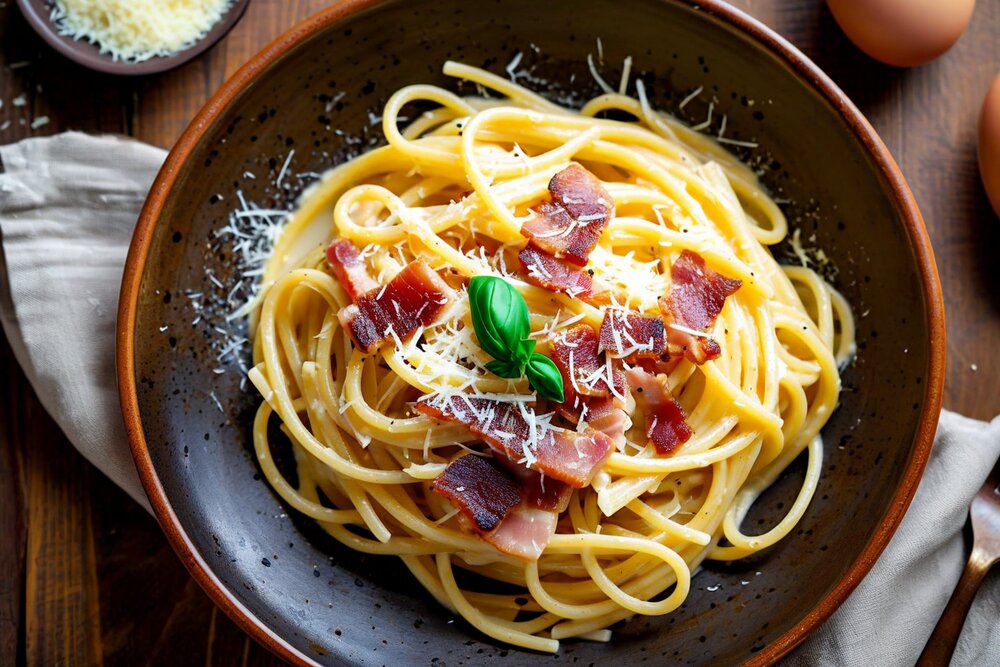
Spaghetti alla Carbonara
Rome · 4 people · 20 minutes · the whole dish is technique, not ingredients
Ingredients: 400 g spaghetti or rigatoni · 150 g guanciale in 1 cm batons (pancetta if you must; bacon changes the dish) · 4 egg yolks plus 1 whole egg · 100 g Pecorino Romano, finely grated · a great deal of coarsely ground black pepper · salt for the pasta water. No cream, no onion, no garlic, no parsley.
Method: Render the guanciale in a cold dry pan over medium heat until the fat is liquid and the meat is crisp at the edges, 8–10 minutes; take it off the heat. Beat the yolks and egg with the pecorino and a lot of pepper into a thick paste, then loosen it with a couple of spoons of the guanciale fat. Cook the pasta in well-salted water until al dente, reserving a mugful of the water. Drain, tip the pasta into the pan with the guanciale off the heat, wait thirty seconds for it to stop sizzling, then add the egg mixture and toss hard, adding pasta water a spoonful at a time until it turns glossy and coats every strand.
💡 The one thing that ruins it is heat: if the pan is hot enough to cook the egg you get scrambled egg on pasta. Roman cooks toss it in a bowl rather than a pan for exactly that reason. Serve immediately — carbonara does not wait.
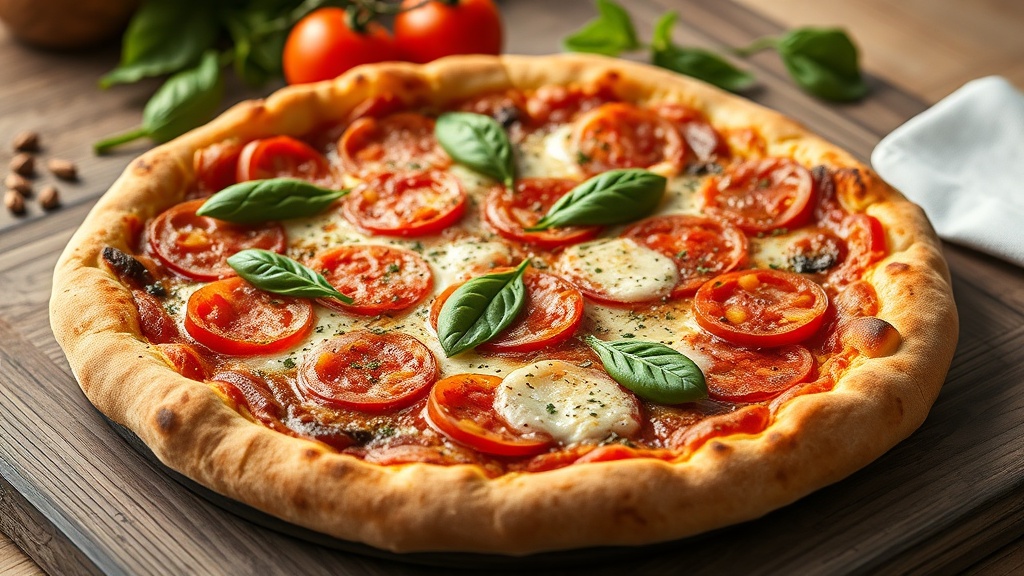
Pizza Margherita
Naples · 4 pizzas · dough 8–24 hours ahead · a domestic oven at full heat
Ingredients: Dough: 500 g strong flour (type 00 if you can get it) · 325 ml water · 10 g salt · 2 g fresh yeast (yes, that little). Topping: 400 g tinned San Marzano tomatoes, crushed by hand, salted, not cooked · 250 g fior di latte or mozzarella di bufala, torn and drained an hour beforehand · fresh basil · extra-virgin olive oil.
Method: Dissolve the yeast in the water, add the flour, then the salt, and knead 10 minutes until smooth. Rest 2 hours at room temperature, divide into 4 balls of about 210 g, then prove 6–20 hours — in the fridge if the kitchen is warm. Heat the oven as high as it goes with a steel or stone in it for a full hour. Open each ball by hand from the centre outwards, pushing the air into the rim; never use a rolling pin. Top with tomato, a little oil and the torn cheese, and bake until the rim is puffed and spotted — 4–6 minutes domestically.
💡 The rim is the point. Push all the gas out to the edge, leave the last two centimetres untouched, and drain the mozzarella properly or the middle floods. Basil goes on under the cheese or the moment it comes out, never on top in the oven.
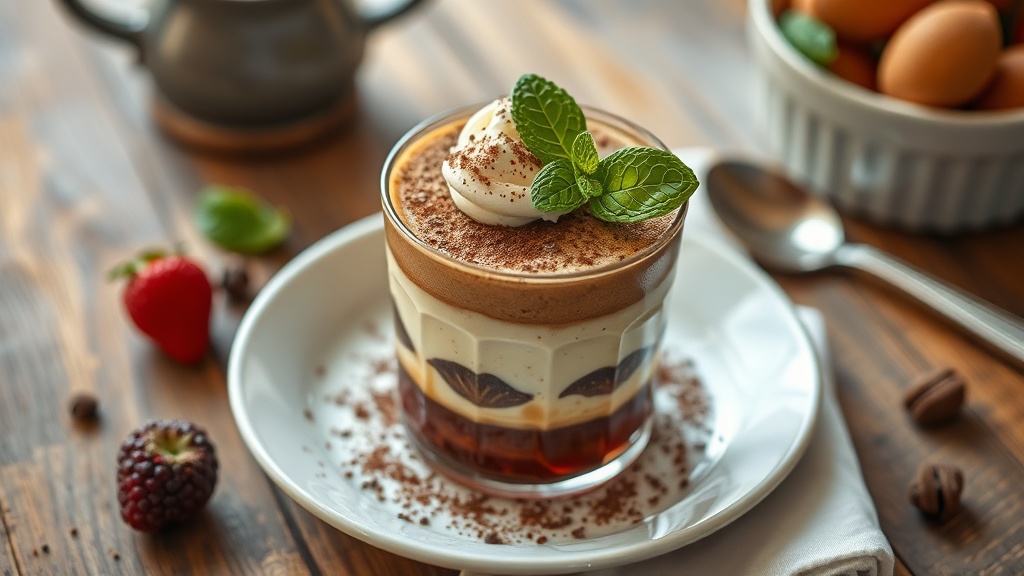
Tiramisù
Veneto or Friuli, disputed · 6–8 people · 30 minutes plus 6 hours in the fridge
Ingredients: 300 g savoiardi (dry Italian ladyfingers, not soft sponge) · 500 g mascarpone at room temperature · 4 eggs, separated · 100 g caster sugar · 300 ml strong espresso, cooled · 2 tbsp Marsala or dark rum (optional; omitted in the traditional Treviso version) · unsweetened cocoa.
Method: Beat the yolks with the sugar until pale and thick, then fold in the mascarpone a spoonful at a time so it does not split. Whisk the whites to soft peaks and fold them through in three additions. Mix the coffee with the alcohol in a shallow dish. Dip each savoiardo for one second a side — no longer — and line a dish with them. Half the cream, another layer of biscuits, the rest of the cream. Cover and refrigerate at least 6 hours, overnight is better. Dust thickly with cocoa immediately before serving.
💡 Two things: dip fast, and dust late. A savoiardo left in the coffee for three seconds collapses, and cocoa dusted hours ahead turns to damp paste. If raw egg is a problem, cook the yolks and sugar over a bain-marie to 70 °C first — the texture is nearly identical.
🍷 Wine
Italy and France trade the title of the world's largest wine producer year to year, but Italy has something France does not: roughly 500 native grape varieties in commercial use, against a global industry built on about a dozen. Every region makes wine — there is no Italian region that does not — and most of what is grown in one is not grown in the next.
Reading a label
DOCG is the top tier (around 75 wines), DOC below it, IGT a broader geographic category — and the last of these is not a lesser wine: the Super Tuscans were deliberately declassified to IGT because they broke the rules. Riserva means longer ageing, defined per appellation. Classico means the historic core zone of a region. Superiore usually means more alcohol and lower yields. The producer's name matters more than any of it.
The great reds
Barolo and Barbaresco from Nebbiolo in Piedmont — pale, tannic, high acid, and long-lived. Brunello di Montalcino from a Sangiovese clone in Tuscany, minimum five years' ageing. Amarone della Valpolicella in the Veneto, made from grapes dried on racks for months. Chianti Classico, the black rooster, at last taken seriously again. Aglianico del Vulture and Taurasi in the south, from a grape the Greeks probably brought.
The whites, sparkling and sweet
Italy's whites were long dismissed and should not be: Friulian Friulano and Ribolla Gialla, Alto Adige Kerner and Gewürztraminer, Campania's Fiano and Greco di Tufo, Sicily's Carricante on Etna. Franciacorta is bottle-fermented like Champagne; Prosecco is tank-fermented, which is why it is cheaper and fruitier, and why the two are not comparable. Sweet: Vin Santo, Passito di Pantelleria, Moscato d'Asti.
Drinking it there
Wine is food, not an event. House wine — vino della casa, ordered by the quarter, half or full litre — is often perfectly good and costs a fraction of the bottle list. In a wine bar the enoteca pour is generous and cheap. Almost nobody drinks wine without eating, and almost nobody gets visibly drunk in public; Italy's alcohol consumption per head is well below the Czech figure and public drunkenness is read as a serious loss of face.
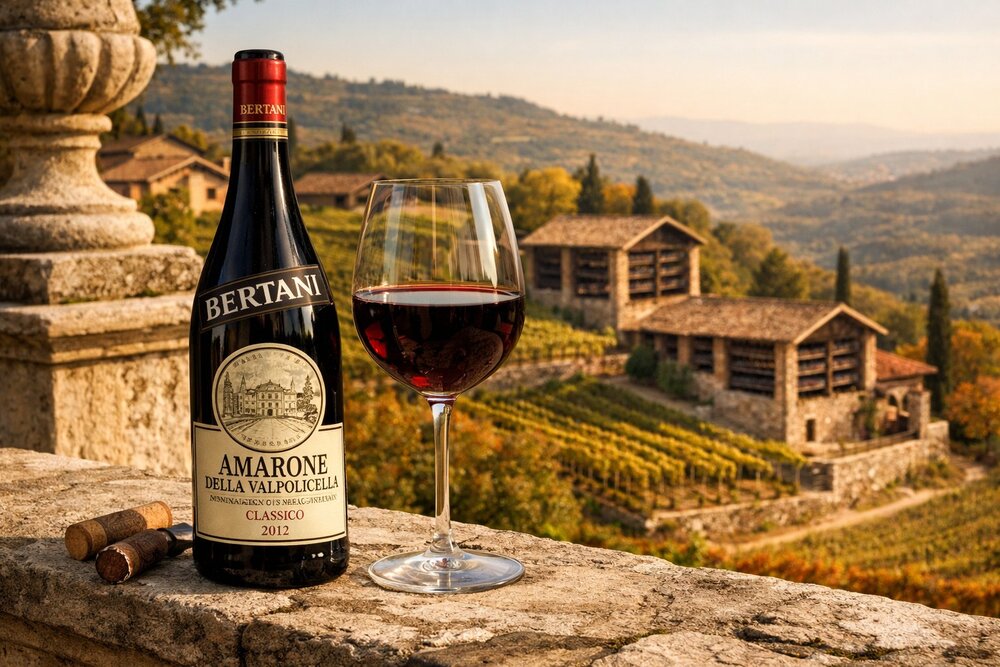
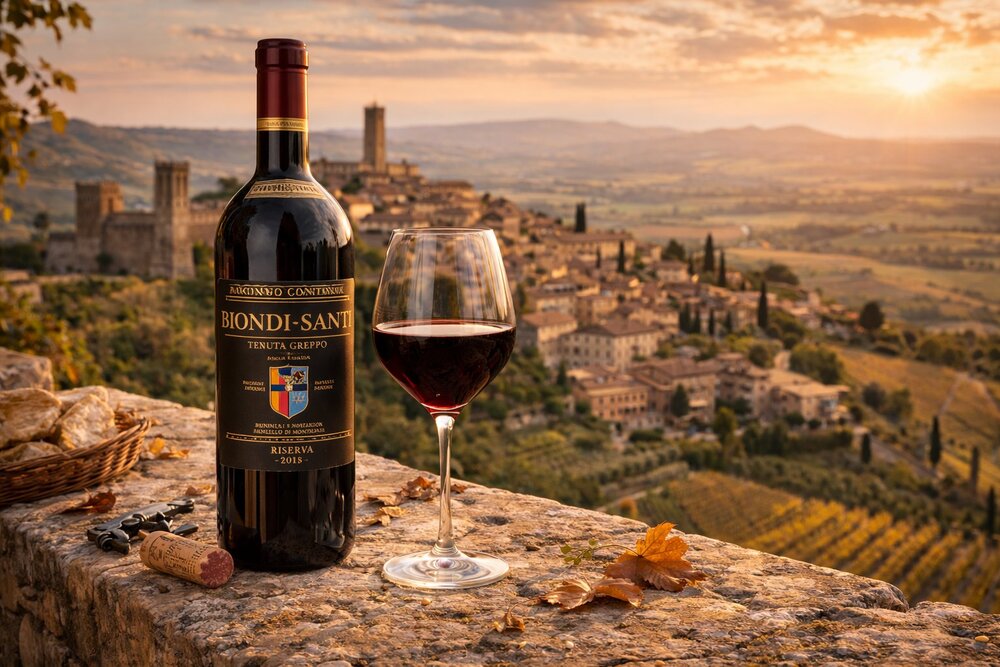
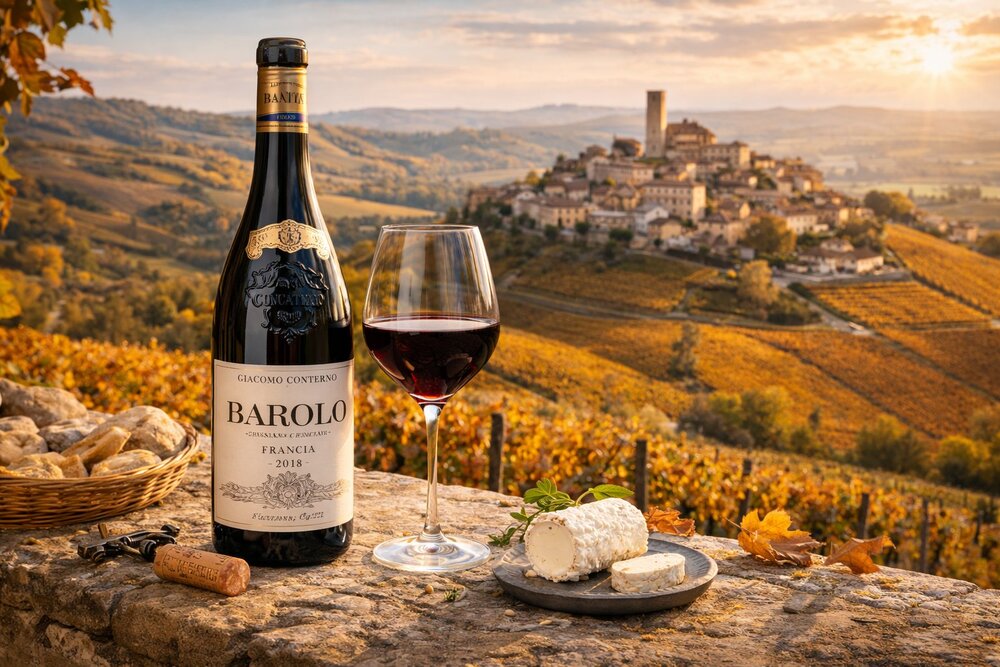
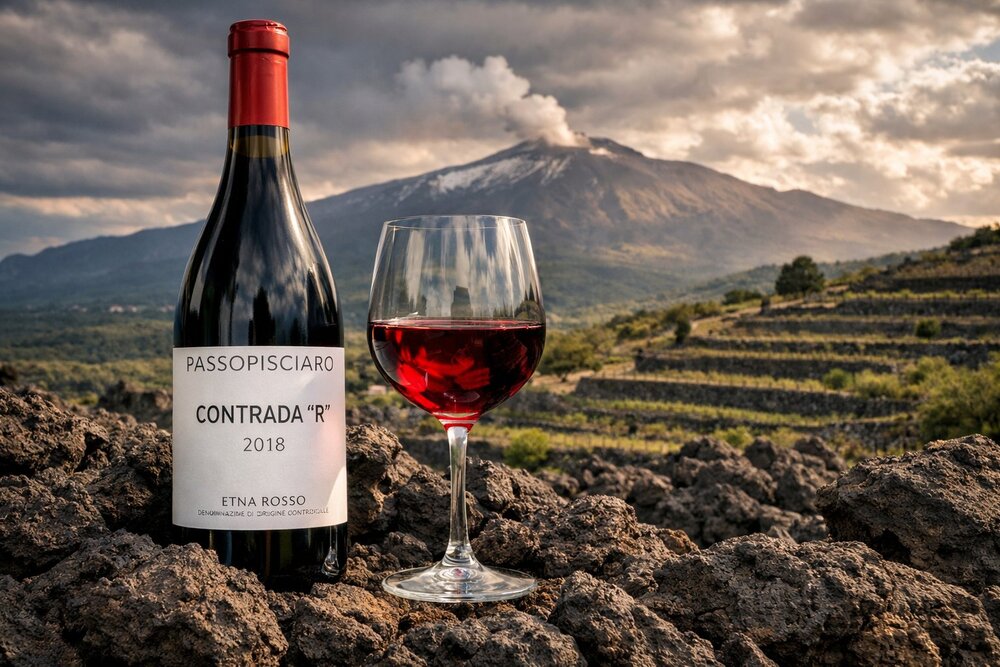
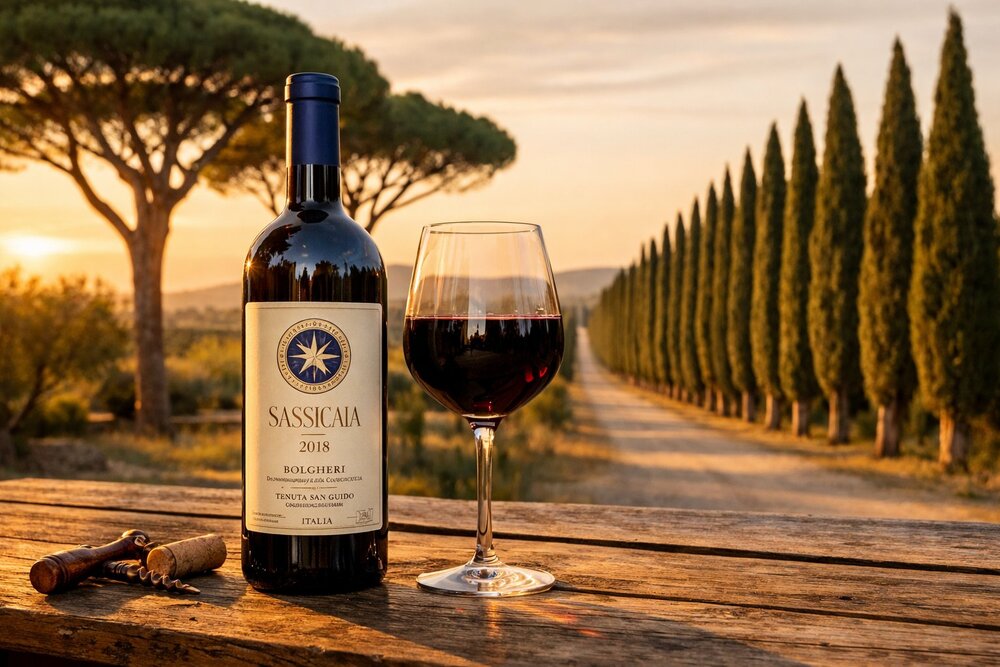
A note on these five images: they are staged product photographs and some of the small print on the labels is illegible or garbled. They illustrate the wines; they are not reproductions of the labels.
☕ Coffee, Aperitivo and the Unwritten Rules
Coffee in Italy is a set of habits with strong internal logic, and getting them right costs nothing and changes how you are treated. None of it is snobbery — most of it is about how the drink is made and when the body wants it.
How coffee works
Un caffè means an espresso; nobody says espresso. Drink it standing at the bar in about ninety seconds for roughly €1.20–1.50; sitting at a table can cost three or four times as much, which is legal and posted. Pay first at the till in busy bars, then take the receipt to the counter. Macchiato is an espresso marked with a little milk; lungo is pulled longer; ristretto shorter; corretto has grappa in it; marocchino has cocoa and milk foam.
The milk rule
Cappuccino is a breakfast drink and Italians stop around 11:00, because a cup of hot milk after a full meal is held to sit badly. Nobody will refuse to serve you one at 15:00; they will simply register that you are a foreigner. After lunch or dinner the answer is an espresso, and if you want it softened, a macchiato. In summer, caffè shakerato — espresso shaken with ice and sugar — and in Sicily, granita.
Aperitivo
Between roughly 18:00 and 21:00, a drink that comes with food. The drink is usually a spritz — prosecco, soda and either Aperol (sweeter, orange, lower alcohol) or Campari (bitter, red, stronger) — or a Negroni, or a glass of wine. In Milan and Turin the food can amount to a buffet dinner for the price of the drink, an institution called apericena. Elsewhere it is olives, crisps and a few crostini. Prices run €7–12.
Amari and digestivi
Bitter herbal liqueurs drunk after dinner and taken seriously: Amaro Averna, Montenegro, Fernet-Branca, the fierce Braulio from the Alps, Cynar made from artichokes. Limoncello is southern and should be served from the freezer. Grappa is distilled from pomace and ranges from rough to very fine. A digestivo is often offered free at the end of a meal in a family restaurant; accepting is polite.
Water, ice and the rest
Tap water is safe everywhere and Rome has around 2,500 public nasoni fountains running continuously — fill your bottle from them, that is what they are for. Restaurants will bring bottled water; asking for tap water is unusual but not offensive. Ice is used sparingly. Milk in tea is not a thing and asking will produce hot milk in a jug, or confusion, or both.
📸 The Pictures on This Page — and What Is Missing
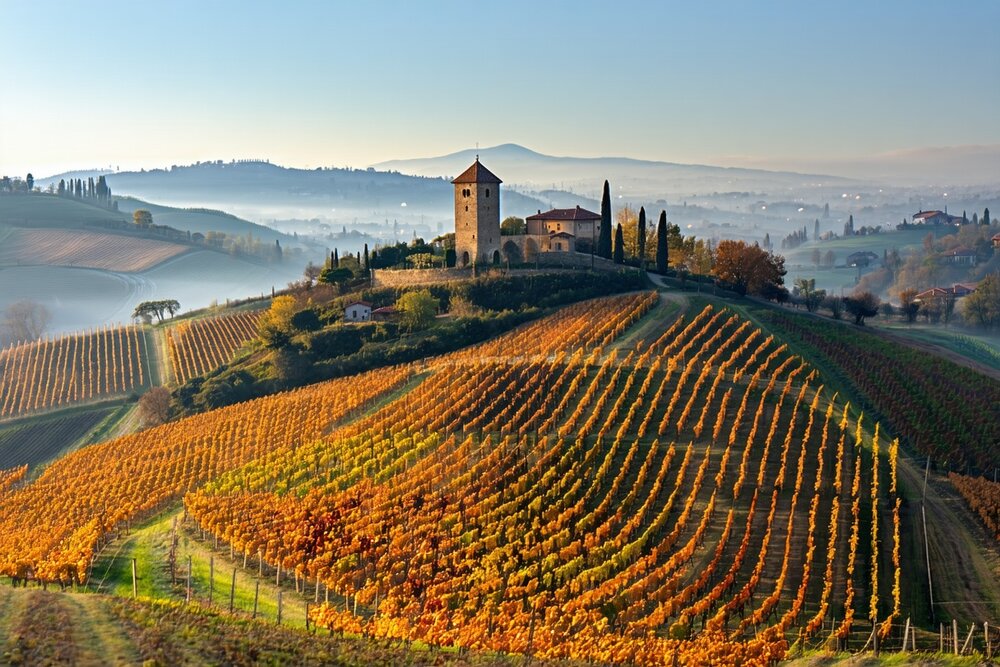
A note in the interest of honesty. This site keeps its own image archive, and the folder for Italy currently holds seven photographs: the Colosseum interior at the top of this page, one vineyard landscape in the Langhe, and five staged wine-bottle photographs, all five of which appear in the wine section above. Three further images — carbonara, pizza and tiramisù — sit in the shared recipe folder and are shown with the recipes.
That is a striking gap for the country with more World Heritage sites than any other. There is no picture here of Venice, Florence, the Dolomites, Pompeii, Matera, the Amalfi Coast, Sicily or Sardinia, and the page does not pretend otherwise by borrowing generic stock. Where the images that do exist diverge from reality — a Tuscan cypress in a Piedmontese vineyard, a bacon carbonara, an under-baked margherita — the caption says so rather than letting the picture stand as the record.
What is in the archive
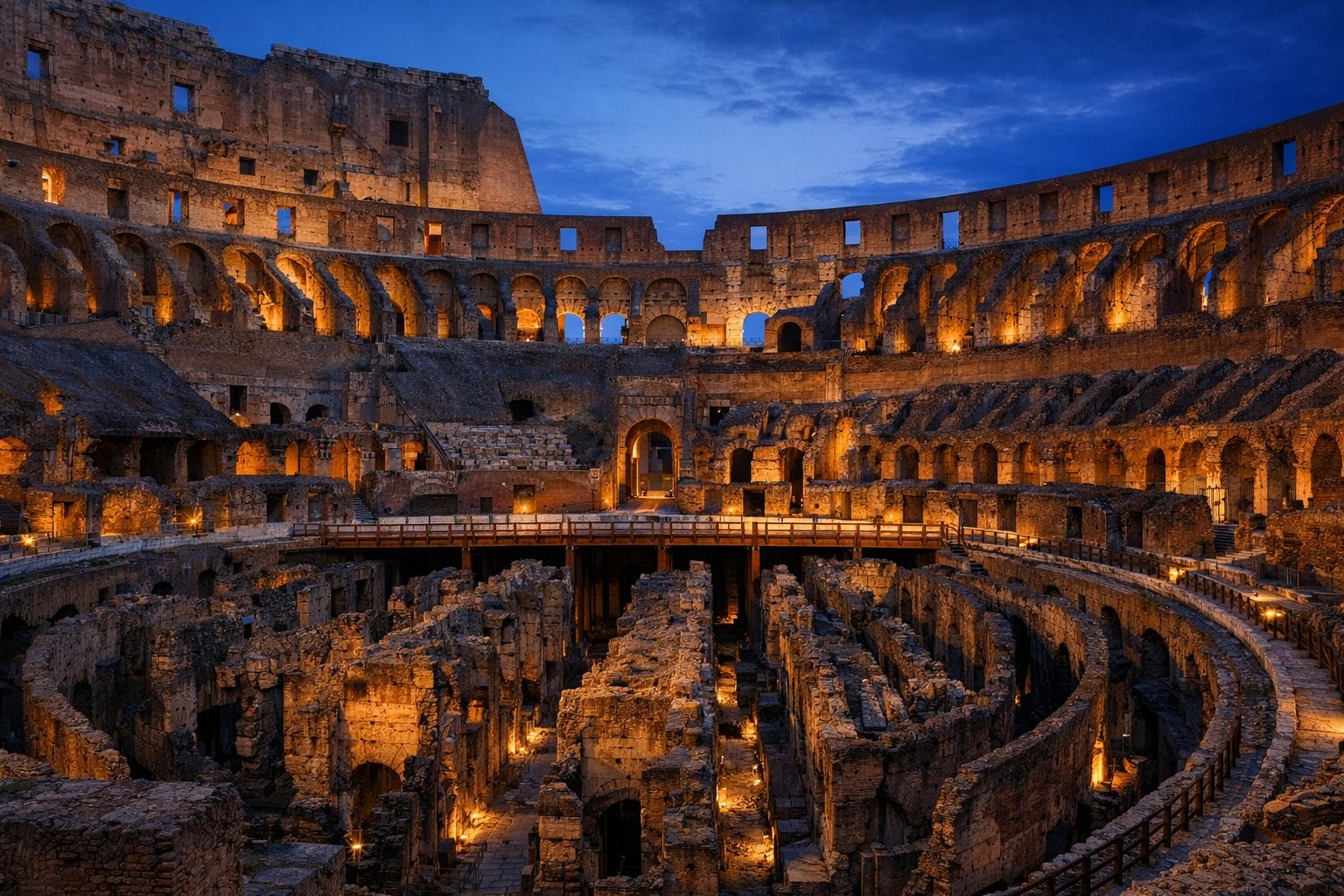
01-colosseum-blue-hour.jpg — the hero, and an accurate one: the exposed hypogeum and the partial timber deck are both correct. barolo-langhe.jpg — autumn in the Langhe. bertani-amarone.jpg, biondi-santi-brunello.jpg, conterno-barolo.jpg, passopisciaro-etna.jpg, sassicaia-bolgheri.jpg — five bottles, five appellations.
What ought to be added
In rough order of how badly it is missed: Venice from the water, Florence's dome from Piazzale Michelangelo, the Tre Cime, a Pompeii street with Vesuvius behind it, the Sassi of Matera, a Neapolitan pizzeria oven, the Valley of the Temples, and a Sardinian nuraghe. Eight photographs would carry this page.
Why it is worth saying
Every travel page on the internet fills gaps with stock images of somewhere else, and a surprising number of them are wrong — the wrong building, the wrong island, the wrong dish under the right name. This project's rule is that a picture is either checked and captioned honestly or not used. An empty space is more informative than a confident lie.
🗣️ Language, and the Languages Underneath It
Standard Italian is essentially the Florentine of the fourteenth century — the language Dante, Petrarch and Boccaccio wrote in — adopted as a literary standard centuries before it was anyone's everyday speech. At unification in 1861 only a small minority used it in daily life. What everyone else spoke were not accents of Italian but separate Romance languages, as far from it as Spanish is from Portuguese.
The "dialects"
Italians call them dialetti, linguists mostly do not. Neapolitan and Sicilian have their own literatures and millions of speakers; Venetian, Piedmontese, Lombard and Ligurian are separate developments from Latin, not corruptions of Tuscan. A Bergamasque farmer and a Sicilian fisherman speaking their home languages would not understand each other. Use is declining fast among the young, and regional governments are now funding revival programmes.
Recognised minority languages
Twelve, by a 1999 law: German and Ladin in South Tyrol, French and Franco-Provençal in the Aosta Valley, Slovene and Friulian in the north-east, Sardinian, Catalan in Alghero (a legacy of Aragonese settlement), Albanian in the Arbëreshë villages of the south, Greek in two pockets of Calabria and Puglia, plus Croatian and Occitan. Some of these communities have been in place for 500 years.
Getting by
English is common in hotels, in the north and among under-forties, and thin in the rural south and among older people. Italian pronunciation is regular and very close to Czech in its vowels — the main traps are c and g (soft before e and i, hard elsewhere), gli as in Czech lj, gn as ň, and sc before e/i as š. Stress is usually the second-to-last syllable. Try, badly; effort is received extremely well.
Twelve useful words
Buongiorno / buonasera — good day / good evening, used from about 16:00. Per favore, grazie, prego (you're welcome, and also "go ahead", and also "what would you like?"). Scusi to a stranger, scusa to a friend. Il conto, per favore — the bill. Vorrei… — I would like. Quanto costa? Dov'è…? Un caffè. Permesso when squeezing past. Salve is the neutral all-purpose greeting when you cannot judge the register.
💡 Culture and Etiquette
La bella figura
The organising social concept: presenting yourself well, in dress, manner and conduct. It is not vanity so much as a form of respect for the people looking at you. Practically, it means Italians dress a step up from what northern Europeans wear for the same occasion, and that shorts, flip-flops and sportswear in a city read as sloppiness rather than as holiday clothes. Nothing bad happens; you are simply visible.
Church dress codes
Enforced, not advisory, at St Peter's, St Mark's, the Duomo in Florence and Milan and many smaller churches: shoulders and knees covered, for everyone. Guards turn people away daily. A light scarf in a bag solves it. Hats off inside, phones silent, no photography where a sign says so, and no walking around during a service.
Greetings and volume
A handshake on first meeting; two cheek kisses, left first, between friends. Address strangers and anyone older as Lei rather than tu, and use signore/signora. Italians speak loudly, interrupt as a sign of engagement rather than rudeness, and gesture constantly — there really is a documented repertoire of a few hundred gestures. Loud disagreement in a café is usually not a quarrel.
Time and meals
Lunch runs roughly 12:30–14:30 and dinner from 19:30 or 20:00, later the further south you go; a kitchen that opens at 18:00 is aimed at tourists. Many shops still close for a few hours in the early afternoon, especially in the south, and Sunday closing is widespread outside city centres. "Ten minutes" is elastic. Trains, on the other hand, mostly run to time.
Money and practicalities
Card acceptance is now near-universal and merchants are legally required to accept cards, though small bars will grumble under €5 and some family trattorie remain cash-preferring. Tipping is not expected: round up, or leave a couple of euros for good service. Never sit on monument steps in Rome or Florence — it is fined — and eating a takeaway meal on the steps of a church or fountain is prohibited in several cities.
Football, and other religions
Serie A matters enormously and local loyalty is inherited rather than chosen. Derbies — Milan–Inter, Roma–Lazio, Juventus–Torino — divide families. Cycling's Giro d'Italia in May and the Formula 1 Italian Grand Prix at Monza in September are national events. Opera is not an elite pursuit here: Verdi is popular music with a long history, and the summer arena seasons in Verona and Macerata are worth planning a trip around.
📅 When to Visit
April–May
The best window for the cities and the centre. Wildflowers, temperatures in the high teens to mid-twenties, long light and everything open. It is no longer a secret, so Rome, Florence and Venice are busy — but they are busy in comfortable weather rather than in 38 °C. Easter fills Rome completely; check the date before booking.
June
Still good in the north and the mountains, already hot in the south. Sea temperatures become reasonable from about mid-month. The last manageable month on the Amalfi Coast and in Puglia before the crush.
July–August
Hot, crowded and expensive, and increasingly a genuine health question: recent summers have brought sustained 40 °C-plus in Rome, Florence and the south, with heat warnings and reduced hours at some sites. Ferragosto on 15 August is the national holiday; Italians go to the coast en masse and cities empty of residents while filling with visitors, and many family businesses close for two or three weeks. If you must come, go to the Alps or the Dolomites.
September–October
Arguably the best time of all. Warm sea into early October, harvest and truffle season, the light turning golden, and the crowds thinning after the first week of September. Late October brings rain to the north and the risk of acqua alta in Venice, which is now much better managed than it was.
November–March
Cold and wet in the north, mild in Sicily, and by far the cheapest. Museums are empty — you can stand alone in front of things you would queue an hour for in June. Venice in winter fog is extraordinary. Carnevale in February brings Venice and Viareggio alive; Christmas markets in South Tyrol are among Europe's best; and the ski season in the Dolomites and Aosta runs December to April.
Regional caveats
The mountains have two seasons and a gap: the lifts and huts largely close in late April–early June and again in November, and a Dolomites trip in those windows finds much of the infrastructure shut. Coastal resorts in Puglia, Calabria and Sardinia are seasonal in the same way — many hotels and restaurants simply do not open before June.
📋 Practical Information
Entry
Italy is in the EU and the Schengen area. Czech and other EU citizens travel on an ID card or passport with no further formality and no limit on stay. Non-EU visitors from visa-free countries get 90 days in any 180 across the whole Schengen area. The EU's Entry/Exit System is being phased in at external borders for non-EU travellers, and ETIAS is not yet in operation — as of September 2026 no launch date has been announced and a 2027 start is the realistic expectation. There is nothing to apply for and nobody to pay; any site selling you an ETIAS today is a scam.
Health
The European Health Insurance Card is valid and gives access to the public system on the same terms as Italians, which for a Czech visitor means the state pays. It does not cover repatriation, mountain rescue or private clinics, so commercial travel insurance on top is sensible — and if you are going into the Alps or the Dolomites, check that your policy covers helicopter rescue, which is charged. Pharmacies (farmacia, green cross) are excellent and a pharmacist will handle minor problems without a doctor. Emergency number: 112.
Trains
The best way to move around Italy. Trenitalia runs Frecciarossa high-speed services and the whole regional network; Italo is a private competitor on the main high-speed line, often cheaper. Rome–Milan takes under 3 hours, Rome–Florence 1½, Rome–Naples 1¼. High-speed tickets are yield-priced — book ahead. Regional tickets are a flat fare and must be validated before boarding at the green machines, or in the app; inspectors fine unvalidated tickets and do not care that you did not know.
Driving
You need a car for Tuscany, Umbria, Sicily, Sardinia and the mountains, and you do not want one in any city. The ZTL (zona a traffico limitato) covers the historic centre of essentially every Italian town, is camera-enforced, and generates fines that reach you through the rental company months later with an administration charge. Check where your hotel is before driving to it. Motorways are tolled, fuel is expensive by Czech standards, and an EU licence is fine. Petrol stations often have a cheaper fai da te self-service lane.
Safety and scams
Italy is a safe country by any measure; violent crime against visitors is rare. Pickpocketing is the real risk, concentrated on Rome's bus 64 and Metro A, Naples' Circumvesuviana, Milan's Duomo area and around every major station. Standard scams: the friendship bracelet at the Spanish Steps, the fake petition, the "free" rose, the taxi without a meter, the restaurant near a monument with no prices. Use licensed white taxis or an app, agree fares in advance where there is no meter, and keep bags in front of you on transit.
Booking and money
Book these specifically and early: the Last Supper in Milan (months), the Vatican Museums, the Uffizi and Accademia, the Colosseum, the Scrovegni Chapel in Padua, the Borghese Gallery in Rome (two-hour slots, strictly limited) and the Cappella Sansevero in Naples — all through their official sites, never a reseller. Many state museums are free on the first Sunday of the month, which means they are also unbearable. Cards work almost everywhere; carry €50 in cash for markets, small bars and rural petrol.
🇨🇿 Getting There, and Notes for Czech Travellers
Flights from Prague
Italy is among the best-served destinations from Václav Havel Airport. Direct routes run year-round to Rome Fiumicino, Milan Malpensa and Bergamo, Venice Marco Polo and Treviso, Naples, Bologna and Bari, with seasonal services to Catania, Palermo, Olbia and Cagliari. Flying time is 1 h 40 m to Milan and about 2 h to Rome. Schedules change every season — check the airport's own route list rather than trusting a guide.
Overland
Prague to Venice is roughly 950 km by road through Austria, about ten hours' driving with breaks, and needs an Austrian Vignette plus the Brenner toll and Italian motorway tolls. By rail: a EuroCity to Vienna or Munich and a connection south, or a Nightjet sleeper from Vienna to Rome, Milan or Venice. Long-distance coaches run from Prague to the main Italian cities and are the cheapest option by a wide margin.
Money
Italy uses the euro, so budget accordingly — at recent rates around 24.50–25 Kč to €1, but check before you go. Rough costs: espresso at the bar €1.20–1.50 (about 30 Kč), a spritz €7–10, a pizza in Naples €6–9, a decent trattoria dinner with house wine €25–35 a head, a Rome–Florence high-speed ticket €25–60 depending on when you book, a three-star central hotel €90–160 in shoulder season. Northern cities are markedly more expensive than the south.
MZV ČR, DROZD and consular help
Register your trip in DROZD, the foreign ministry's voluntary registration system, particularly for the mountains and the islands. The Czech Embassy is in Rome (Via dei Gracchi 322), with a Consulate General in Milan and honorary consulates in several other cities. Check mzv.gov.cz for current advice before travelling. The EHIC is valid, which makes Italy one of the simpler European destinations for a Czech traveller.
Czech traces in Italy
More than you would expect. Bohemian and Moravian nobility did the Grand Tour here for three centuries and brought back the architects who built half of Baroque Prague — the Lurago, Caratti, Orsi and Broggio families all came from northern Italy, mostly from around Lake Lugano and Como. Jan Hus was condemned by a council convened by an emperor with Italian backing; Comenius is on the Index. Some 5,000 Czechoslovak legionaries fought on the Italian front in 1918 and there are memorials to them at Doss Alto and in Rome. And the Czech College in Rome, the Nepomucenum, has trained Czech priests since 1884.
What surprises Czechs most
Three things, consistently. That the coffee is drunk standing up and costs a third of a Prague flat white. That beer is fine but not the point — Italy has a good craft scene now, but ordering wine with lunch is the local default and nobody drinks a half-litre with it. And that Italians eat dinner at 20:30 and think 18:00 is the middle of the afternoon, which turns the first evening of any Czech family's trip into a small crisis.
⚖️ Overtourism, and How to Travel Around It
Italy recorded 185 million arrivals at accommodation establishments in 2025, up 7.1% on the previous year — 104 million of them foreign guests, up 8.7%, with the fastest growth in short-term rentals, agriturismi and campsites rather than hotels. Those are records, and they are not evenly distributed: a handful of places carry most of it.
What it actually looks like
Venice's historic centre has lost around two-thirds of its residents since 1951 and now has more tourist beds than resident inhabitants; the debate there is about whether the city survives as a city. Florence's centre has been substantially converted to short-lets. Cinque Terre villages of a few hundred people take millions of visitors a year on cliff paths built for fishermen. Rome and Milan absorb it better because they are large functioning cities that happen to contain monuments.
The measures so far
Venice's access fee for day visitors, trialled again in 2026 and lapsed on 27 July; a cap on tour-group size and a ban on loudspeakers; large cruise ships excluded from the Giudecca canal since 2021. Cinque Terre path cards and one-way walking systems in peak periods. Timed entry at Lago di Braies and on the road to the Tre Cime. Restrictions on new short-term-let registrations in several city centres. None of it has reduced the totals; most of it redistributes the pressure.
Go at the right time
This is the single most effective thing a visitor can do, and it costs nothing. The same city in late October, February or early May is a different and better experience than in July — shorter queues, lower prices, working restaurants serving locals, and staff who have time to talk to you. Weekdays over weekends. Early morning over midday: the Colosseum at 08:30 and at 13:00 are not the same building.
Go forty minutes away
For every saturated place there is an unvisited equivalent nearby. Instead of the Cinque Terre, the Gulf of Poets around Lerici and Tellaro. Instead of Amalfi, the Cilento. Instead of San Gimignano, Volterra or Montepulciano. Instead of Pompeii, Herculaneum or Ostia Antica. Instead of Tuscany, Umbria or the Marche. Instead of Lake Como, Lake Orta or Iseo. Ravenna, Mantua, Bergamo Alta, Trieste, Ascoli Piceno, Lecce and Genoa are all first-rank and all comparatively empty.
Stay, and spend locally
A day-tripper costs a place more than they leave in it — which is the entire argument behind Venice's access fee. Staying at least one night changes the arithmetic. So does eating where the menu is not translated into six languages, buying from producers rather than souvenir shops, and using the train instead of a coach that parks outside the walls for ninety minutes. Sleeping in the smaller town and commuting into the famous one is usually cheaper too.
And go anyway
None of this is an argument for staying home. Italy has more to look at per square kilometre than anywhere else in Europe, most of it is not in the fifteen crowded places, and the country would like you to come — tourism is around a tenth of the economy and a lot of small towns depend on it entirely. The ask is only that you spread out, come outside August, and treat the places you visit as somewhere people live.
Support This Project 🌍
This World Travel Factbook is a labor of love – free to use for all travelers. If you find it helpful, consider supporting its continued development.