⚡ Key Facts
🗣️
EN, 中文, Melayu, தமிழ்
Languages
🌡️
Tropical · 25–32°C
Climate
There is a moment, stepping out of Changi Airport into the humid embrace of a tropical night, when the scale of Singapore's ambition becomes immediately apparent. A 40-metre indoor waterfall cascades through a geodesic glass dome; a driverless Skytrain glides overhead; orchids bloom along the walkway; and beyond it all, a city-state built on swampland in barely two generations has reshaped what a small island can become. This is Singapore — 733 square kilometres of concentrated ambition where Chinese temples sit across the street from Hindu gopurams, hawker stalls earn Michelin stars, and a rainforest reserve ten minutes from downtown contains more tree species than all of North America.
Singaporeans call their island the Lion City, from the Malay Singapura — a name given by a 14th-century prince who allegedly glimpsed a lion (more likely a tiger) on the shore. The lion imagery feels earned today for different reasons: the fierce pragmatism, the refusal to accept limitations of geography or size, the roar of ambition that built a gleaming metropolis from a malaria-ridden trading post in a single lifetime. Marina Bay Sands rises above the waterfront like three giant pillars supporting a ship in the sky. Gardens by the Bay answers with 50-metre Supertrees that burst into light and music twice nightly, free for anyone who shows up. And beneath it all runs the MRT — one of the world's cleanest, fastest, most reliable metro systems, delivering you anywhere on the island for under three dollars.
What makes Singapore extraordinary is neither its skyline nor its orderliness but the texture beneath them. Walk from Raffles Place through Chinatown's shophouse alleys, past the golden dome of Sultan Mosque in Kampong Glam, through Little India's garland sellers and spice markets, and into a hawker centre where a third-generation char kway teow master fires his wok for $4 a plate — and you have traversed four civilisations in forty minutes. This is the Singapore that rewards the patient traveller: not the manicured surface but the multicultural, multilingual, multi-faith bedrock that makes the surface possible. A Peranakan grandmother in Joo Chiat, a Tamil florist in Tekka, a Hokkien uncle at the kopi tiam, a Cantonese auntie selling wanton mee at 6 a.m. — together they constitute one of humanity's more successful experiments in pluralism.
✈️ Essential Travel Info
Visa: Visa-free entry for 90 days for citizens of the EU, UK, US, Canada, Australia, and most developed nations. E-arrival card (SG Arrival Card) must be submitted online within three days of arrival — free of charge at ica.gov.sg.
Currency: Singapore Dollar (SGD). 1 SGD ≈ 0.75 USD / 0.70 EUR. ATMs everywhere, contactless payment near-universal including at hawker stalls. US dollars not accepted.
Getting in: Changi Airport (SIN) connects to 400+ destinations. MRT to city centre 27 minutes, $2.50. Woodlands and Tuas Causeways connect to Johor Bahru, Malaysia.
2026 updates: New Tuas Mega Port operational. Johor–Singapore RTS rail link opened December 2026, connecting Woodlands to JB Sentral in 6 minutes. Changi Terminal 5 construction ongoing, opening mid-2030s.
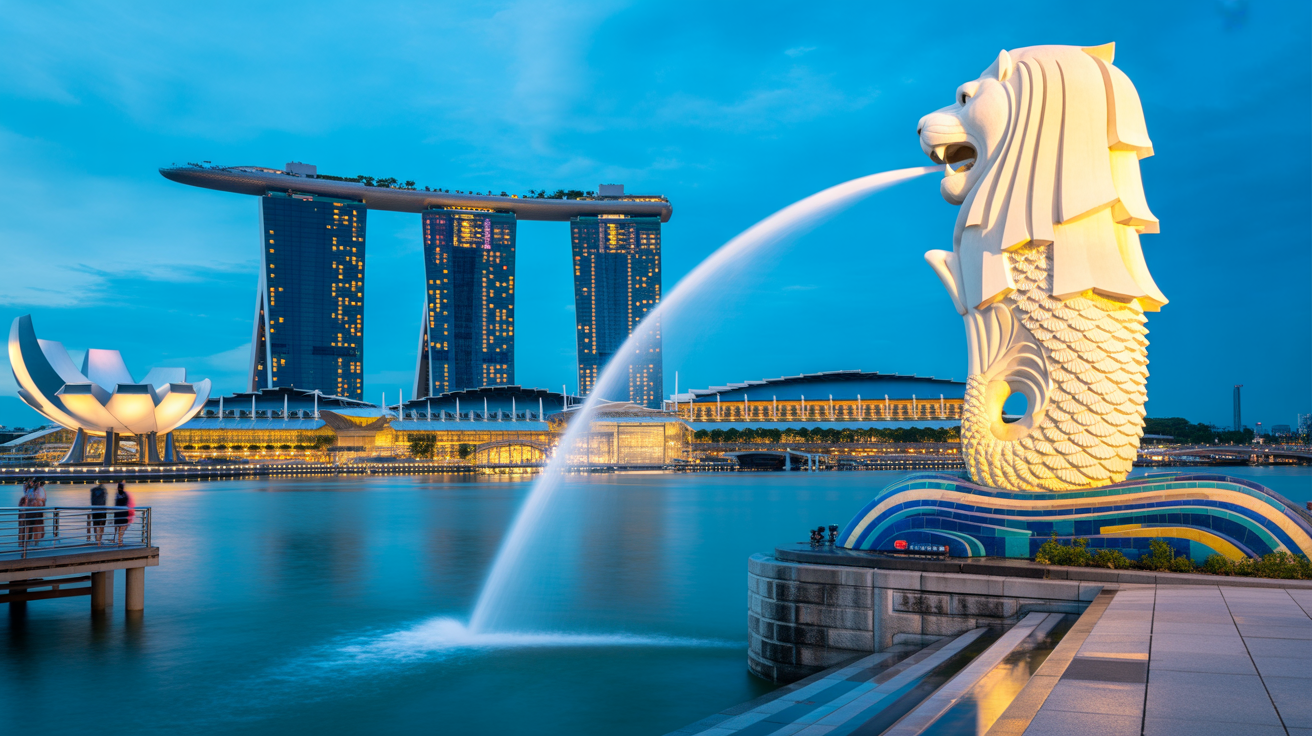
The Merlion — Singapore's National Symbol
Half lion, half fish, spouting water into Marina Bay — the 8.6m statue at Merlion Park has welcomed visitors since 1972
The name Singapore comes from the Malay Singapura, a compound of Sanskrit siṃha (lion) and pura (city). According to the Malay Annals, it was bestowed in the late 13th or early 14th century by Sang Nila Utama, a Srivijayan prince from Palembang, who landed on the island during a storm and glimpsed a strange beast he took for a lion. Since no lions have ever been native to Southeast Asia, the creature was almost certainly a Malayan tiger — but the name stuck, and the Lion City was born.
Before Singapura, the island bore other names: the Greek geographer Ptolemy called it Sabana in the 2nd century CE; early Chinese seafarers knew it as Puluozhong (the Malay Pulau Ujong, "island at the end" of the peninsula); and Javanese chronicles called it Tumasik or Temasek, meaning "Sea Town." Temasek remains in use today for ceremonial and business purposes — the sovereign wealth fund Temasek Holdings is named after it.
National identity was forged, painfully, in the separation from Malaysia on 9 August 1965 — an event Prime Minister Lee Kuan Yew announced in tears on live television, describing it as "a moment of anguish." Expelled rather than chosen, Singapore had no hinterland, no natural resources, no unified language, and a population of 1.9 million made up of Chinese immigrants, Malay villagers, Tamil labourers, and Peranakan descendants. The answer to that existential crisis was a fierce, pragmatic, sometimes authoritarian nation-building project that turned apparent weaknesses into strengths: no resources meant focus on human capital; no unified language meant four official languages (English, Mandarin, Malay, Tamil) with English as the working lingua franca; no hinterland meant becoming the world's most connected port, airport, and financial hub.
The result is an identity that is both proudly Singaporean and self-consciously multicultural — a sense that belonging to the nation does not require giving up Chinese, Malay, Indian, or Eurasian roots. The national pledge, recited every morning in schools, captures it: "We, the citizens of Singapore, pledge ourselves as one united people, regardless of race, language or religion…"
Singapore is both a country and a city, a 733-square-kilometre island (roughly the size of Lake Tahoe, or 1.2× the area of New York City's five boroughs) sitting 137 kilometres north of the equator at the southern tip of the Malay Peninsula. It is separated from Malaysia to the north by the Straits of Johor and from Indonesia's Riau Islands to the south by the wider Singapore Strait. Two causeways connect it to Malaysia; no bridge yet connects it to Indonesia. More than 60 offshore islands — Sentosa, Pulau Ubin, St John's, Kusu, the Sisters' Islands and others — form part of the territory.
The island is mostly flat: the highest point is Bukit Timah Hill at just 163 metres. Yet this modest elevation encompasses one of the planet's densest biodiversities — the Bukit Timah Nature Reserve is reputed to contain more tree species than all of North America combined. Mangrove swamps survive at Sungei Buloh; primary rainforest persists in the Central Catchment. Astonishingly, and despite being the third most densely populated country on Earth, nearly half of Singapore's land area is covered in greenery. This is no accident: the government's evolving doctrine has run from "Garden City" (Lee Kuan Yew, 1967) to "City in a Garden" (1990s) to today's "City in Nature," with targets for every household to live within a ten-minute walk of a park.
Administratively, the country is divided into five regions and 55 planning subzones, but travellers navigate by far more evocative mental maps. The Central Region contains the iconic skyline — Marina Bay, the Colonial District, Orchard Road, and the historic ethnic enclaves of Chinatown, Little India, and Kampong Glam. The East runs along Changi Beach toward the airport, passing through Peranakan Joo Chiat and the East Coast hawker heartland. The West holds the NUS campus, Science Centre, and Jurong Lake Gardens. The North is residential and industrial, ending at the Causeway. The South is the islands: Sentosa, the Southern Islands, and the cruise and container ports that quietly make Singapore the world's second-busiest maritime hub.
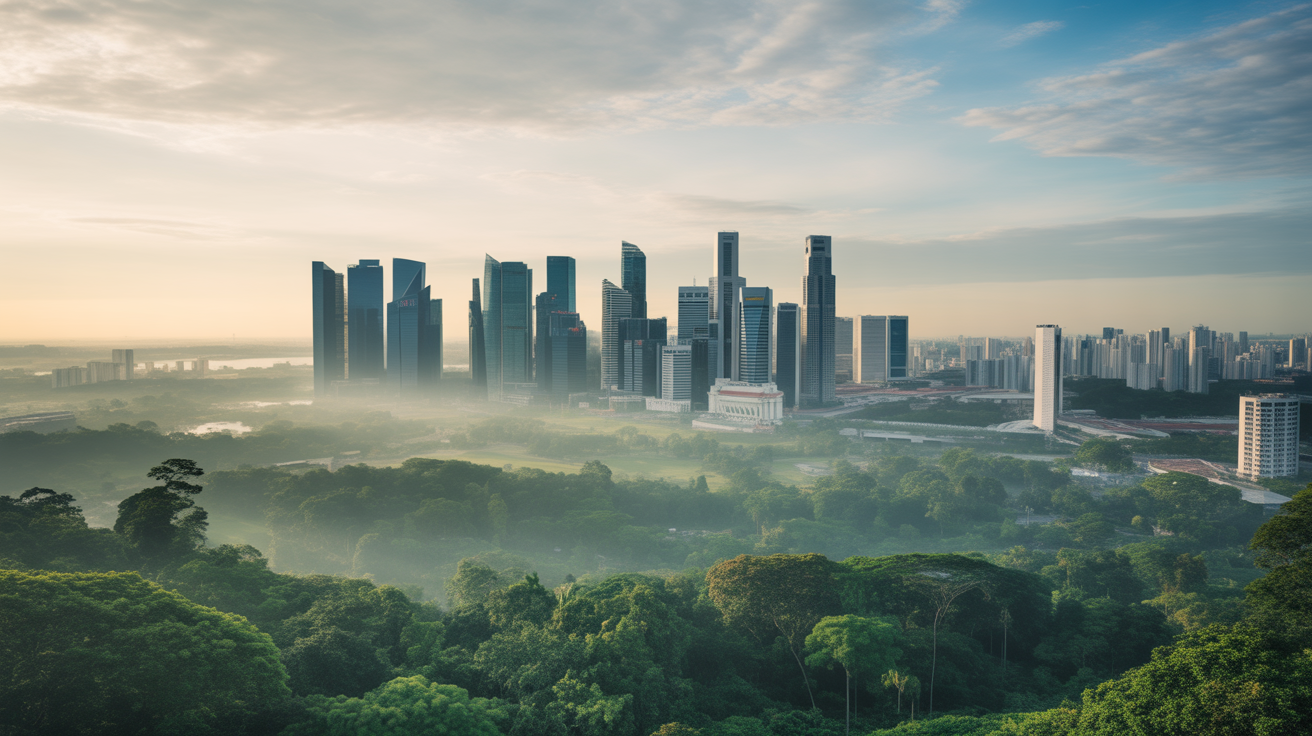
The City in a Garden
Singapore's skyline viewed from primary rainforest at Bukit Timah — 50% of the island remains green despite being one of the world's most densely populated countries
Singapore's human history stretches back at least 1,800 years — archaeological digs at Fort Canning Hill have uncovered 14th-century gold ornaments, Chinese ceramics, and evidence of a thriving Malay port-kingdom. But modern Singapore begins unambiguously on 29 January 1819, when Sir Thomas Stamford Raffles, a Lieutenant-Governor of the British East India Company with a gift for languages and an obsession with Southeast Asia, stepped ashore at the mouth of the Singapore River and signed a treaty with the local Temenggong and Sultan Hussein Shah of Johor, establishing a British trading post.
Raffles saw what others had missed: Singapore's position commanded the strategic chokepoint of the Malacca Strait, through which trade between India and China inevitably flowed. He declared the port duty-free, outlawed slavery, and laid down a town plan dividing the settlement into ethnic enclaves — the foundations of modern Chinatown, Kampong Glam, and the Colonial District still trace his 1822 map. Within six years, Singapore had 10,000 residents and was outstripping the Dutch trading posts of the region. By 1867, it was a Crown Colony. By 1900, it was one of the wealthiest cities in Asia.
The trauma came in February 1942. Japanese forces under General Tomoyuki Yamashita, advancing down the Malay Peninsula on bicycles, shattered the "impregnable fortress" in seven days. The surrender of 80,000 British, Australian, and Indian troops on 15 February 1942 remains the largest capitulation in British military history — Churchill called it "the worst disaster" of the war. The three-and-a-half-year Japanese Occupation that followed was brutal: the Sook Ching massacres targeted ethnic Chinese men; food and medicine ran desperately short; Singapore was renamed Shōnan-tō ("Light of the South Island"). Liberation came on 12 September 1945.
Post-war politics moved quickly. Self-government in 1959 brought the People's Action Party (PAP) and Lee Kuan Yew to power. A brief, turbulent merger with Malaysia (1963–1965) ended in expulsion. Independence began with 1.9 million anxious people, no natural resources, riots between Chinese and Malay communities still fresh in memory, and a per-capita income lower than Jamaica's. Over the next three decades — under Lee Kuan Yew (1959–1990), then Goh Chok Tong (1990–2004), then Lee Hsien Loong (2004–2024), and now Lawrence Wong (since 2024) — Singapore became one of the richest countries on earth, with a per-capita GDP exceeding that of Germany, Japan, or the UK, and a life expectancy topping 84 years.
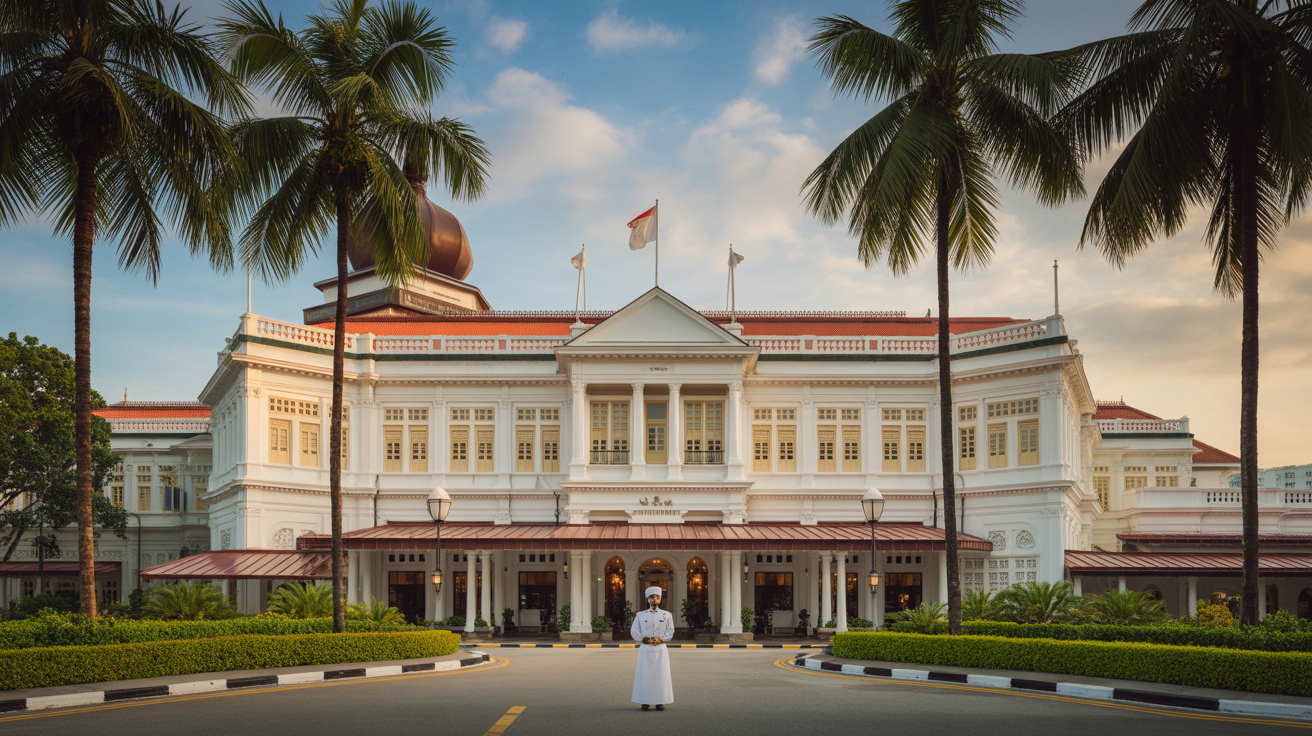
Raffles Hotel — 138 Years of Colonial Elegance
Opened 1887 by the Armenian Sarkies brothers, Raffles Hotel hosted Kipling, Conrad, Maugham, and Chaplin; today its Long Bar still serves the Singapore Sling invented here in 1915
Singapore is, by design, one of the most successful plural societies on earth. The resident population of roughly 5.9 million breaks down, by the government's own "CMIO" framework (Chinese, Malay, Indian, Others), into 74% Chinese, 14% Malay, 9% Indian, and 3% Eurasian, Peranakan, and others. English is the lingua franca and the language of school, business, and government; Mandarin, Malay, and Tamil are also official, and Malay is the national language (it appears on the crest and in the anthem "Majulah Singapura"). Most Singaporeans move between at least two languages daily.
Singlish — the beloved, informal Creole peppered with Hokkien, Malay, Tamil, and Cantonese particles — is the real connective tissue. Lah softens a sentence; can lah! means "sure, no problem"; shiok means something deeply satisfying; kiasu is the national anxiety of losing out. Government campaigns occasionally discourage Singlish in favour of "standard" English, and every new generation happily ignores them.
Religion maps onto ethnicity but cuts across it: Buddhism (31%), Christianity (19%), Islam (16%), Taoism (9%), Hinduism (5%), and nearly 20% professing no religion. Singapore is one of the few places where an Indian Hindu temple, a Chinese Buddhist monastery, a Malay Muslim mosque, and a European Christian cathedral can all be found within a ten-minute walk — and where each religion's major festivals are public holidays enjoyed by everyone. Chinese New Year, Hari Raya Aidilfitri, Deepavali, Vesak Day, Good Friday, and Christmas all light up the public calendar.
Laws and norms. Singapore is famously orderly: fines for littering, jaywalking, smoking in prohibited zones, or bringing durian onto the MRT are real and enforced. The import and retail sale of chewing gum has been restricted since 1992 (therapeutic gum is available by prescription). Vandalism draws caning. Drug trafficking carries the death penalty. Critics call it authoritarian; Singaporeans, with broad approval in election after election, point to the cleanest streets in Asia, one of the world's lowest crime rates, and a society where women and elderly can walk alone at night without concern.
🗣️ A Singlish Mini-Primer
Lah — emphasis particle. "Is okay lah." (emphatic reassurance)
Can / Cannot — yes / no. "Can I bring my bag? / Can."
Shiok — awesome, delicious, deeply satisfying. "Wah the chilli crab damn shiok!"
Kiasu — afraid to lose out; compulsive over-preparation. "He queue 2 hours for bubble tea — so kiasu."
Chope — to reserve a seat, usually with a packet of tissues. "I chope already lah."
Makan — to eat (from Malay). "Let's go makan."
Uncle / Auntie — respectful address for any older stranger. Universal.
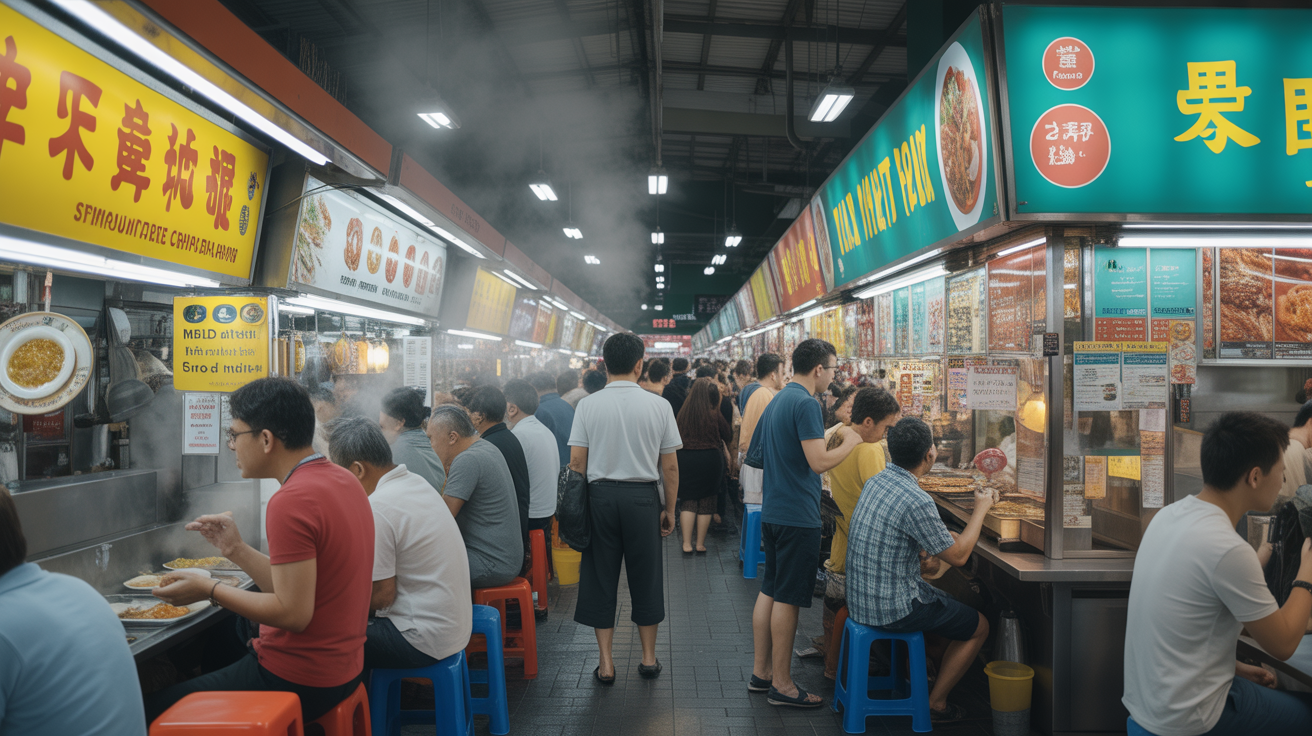
The Hawker Centre — Singapore's Living Room
Where Chinese, Malay, Indian, and Eurasian Singaporeans eat shoulder to shoulder at communal tables — UNESCO-listed Intangible Cultural Heritage since 2020
Marina Bay did not exist forty years ago. The water you see today is entirely man-made: a freshwater reservoir created in 2008 when the Marina Barrage sealed off the mouth of the Singapore River, converting what had been a saltwater bay into a strategic water supply, flood-control system, and leisure precinct rolled into one. The skyline around it is equally new. Marina Bay Sands (opened 2010), the ArtScience Museum (2011), Gardens by the Bay (2012), and the Merlion Park redesign (2013) form a choreographed ensemble that announced Singapore's arrival as a 21st-century global city.
Marina Bay Sands is the defining image. Three 57-storey towers, designed by Israeli-Canadian architect Moshe Safdie, support a 340-metre SkyPark hovering above them like a vast surfboard. The Infinity Pool on the SkyPark, reserved for hotel guests only, is the most photographed swimming pool on earth. The property also contains a casino, convention centre, theatre, luxury mall (Shoppes at Marina Bay Sands, featuring a Sampan ride on an indoor canal), and the Rain Oculus — a 22-metre acrylic bowl where water plunges from the ceiling twice hourly.
The ArtScience Museum, shaped like a lotus or an open hand, hosts world-class rotating exhibitions spanning technology, design, and immersive art — the teamLab "Future World" installation has been a permanent resident since 2016. The Helix Bridge, a stainless-steel double helix inspired by DNA, connects the Marina Centre to the Bay South promenade. And every evening at 8 p.m. and 9 p.m., the free Spectra water and light show transforms the bay into a shimmering fountain spectacle.
Best times to visit: blue hour (45 minutes around sunset) for photography, when the sky is still luminous and the buildings are lit. The Merlion Park viewpoint directly across the water is free and offers the classic postcard angle. For drinks with the view, skip the overpriced Ce La Vi at the SkyPark and head instead to LAVO or Lantern Bar at the Fullerton Bay Hotel.
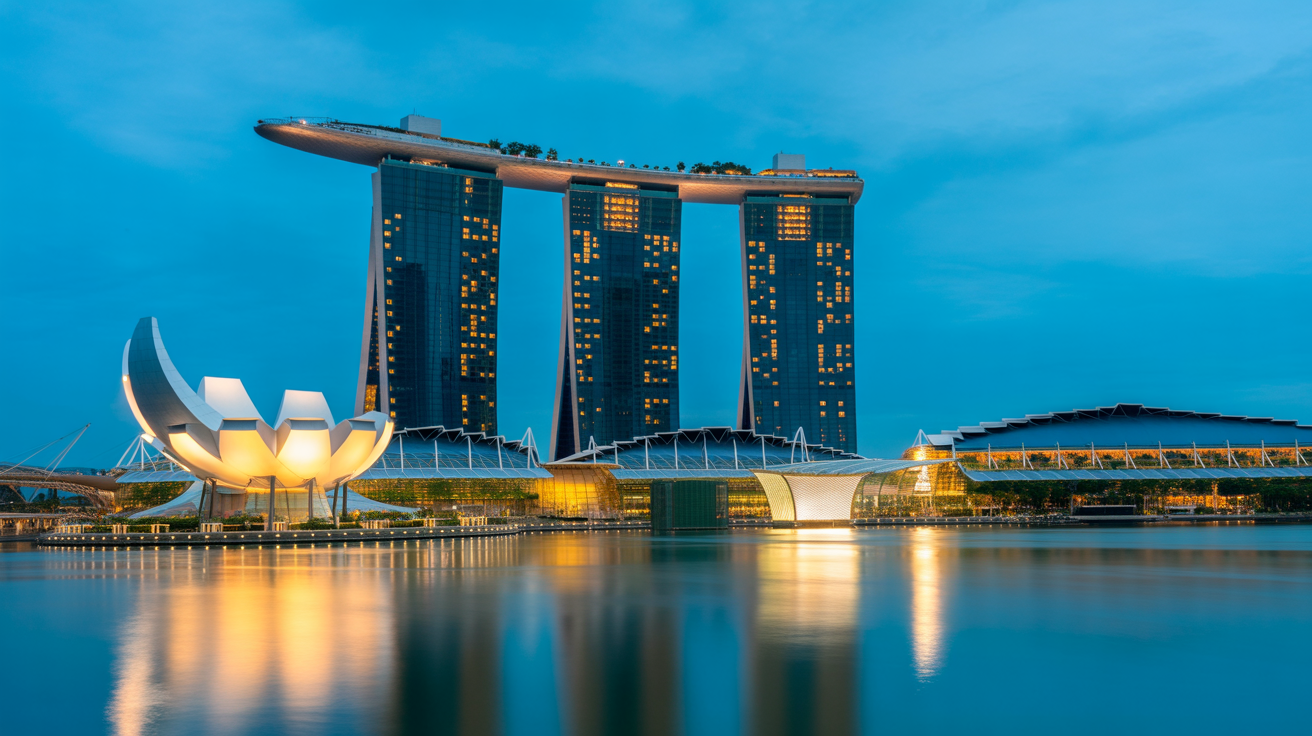
Marina Bay Sands — The SkyPark
Moshe Safdie's three 57-storey towers supporting a 340m SkyPark — the most recognisable silhouette in Southeast Asia since 2010
If Marina Bay Sands is Singapore's declaration of economic ambition, Gardens by the Bay is its declaration of ecological imagination. Opened in 2012 on 101 hectares of reclaimed land, this masterwork by British landscape architects Grant Associates and Gustafson Porter has redefined what a botanic garden can be in the 21st century. The three gardens — Bay South (the largest, with the Supertrees and domes), Bay East, and Bay Central — form a connected arc along the reservoir's eastern flank.
The Supertrees are the signature. Eighteen of these 25- to 50-metre tree-like structures rise from the main promenade, their vertical "trunks" clad in living gardens of ferns, orchids, bromeliads, and climbers. Photovoltaic cells on the canopies power the Garden Rhapsody light-and-music show that unfolds twice nightly at 7:45 p.m. and 8:45 p.m. — completely free, the sort of public generosity that defines Singapore at its best. Two of the taller Supertrees are connected by the OCBC Skyway, a 128-metre aerial walkway (S$12 admission) offering elevated views across the bay.
The Cloud Forest Dome (S$32 combo with Flower Dome) houses the world's tallest indoor waterfall at 35 metres, descending from a mist-shrouded "Cloud Mountain" encrusted with orchids, pitcher plants, and ferns drawn from tropical highlands. You ascend by lift and descend via a spiral ramp, passing through cool humid clouds that feel supernatural in equatorial Singapore. The Flower Dome next door recreates Mediterranean and semi-arid climates, with themed floral displays that rotate with the seasons — tulips for spring, sakura for March, orchids for the year-round Orchid Extravaganza.
Practical tips: The outdoor gardens, Supertree Grove, and Garden Rhapsody show are all free. Only the two climate-controlled domes and the OCBC Skyway require tickets. Come at 5 p.m. to explore the free outdoor gardens in daylight, then stay for the 7:45 p.m. light show. MRT: Bayfront (Downtown or Circle Line). Allow 3–4 hours for a proper visit.
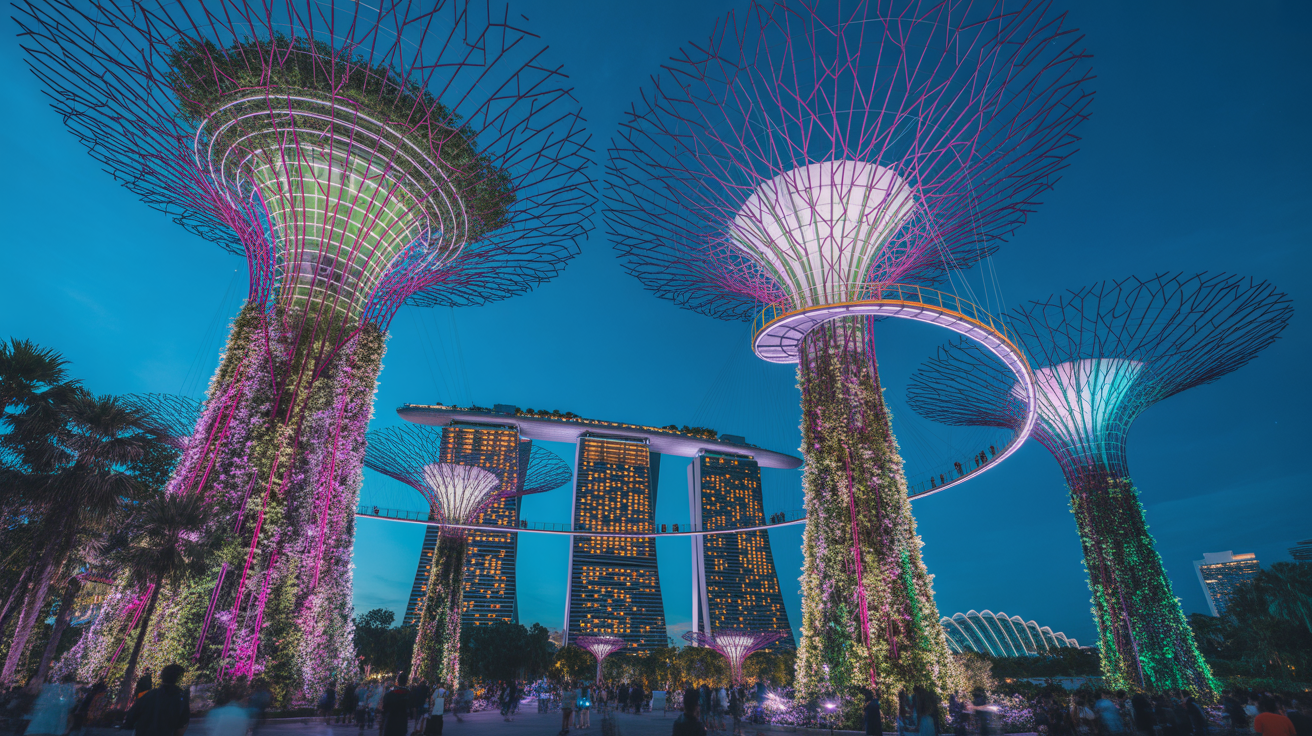
Supertree Grove at Garden Rhapsody
Eighteen vertical gardens up to 50m tall burst into light and music twice nightly at 7:45pm and 8:45pm — one of the world's great free urban spectacles
Chinatown is older than modern Singapore itself. Raffles' 1822 Town Plan formally designated this area for Chinese settlement, but Hokkien, Teochew, Cantonese, and Hakka traders had been calling at the Singapore River for decades before. The neighbourhood that emerged — known to Chinese Singaporeans as Niu Che Shui ("Bullock Cart Water," from the cart-drawn water deliveries that once supplied it) — became the densest and most vibrant Chinese community in Southeast Asia. Today it survives as a designated Historic District, its two- and three-storey shophouses painted in pastels, festooned with red lanterns, and filled with a mix of heritage shops, hipster cafés, jewellery dealers, and hawker centres.
The Buddha Tooth Relic Temple and Museum on South Bridge Road is the centrepiece. Completed in 2007 in the opulent Tang Dynasty style, its five-storey complex houses what the temple claims is a tooth of the historical Buddha, displayed inside a 3,500-kilogram solid-gold stupa on the fourth floor. The rooftop orchid garden and tea pavilion offer a serene escape; the basement vegetarian canteen serves some of the best and cheapest monk-style food in the city.
Sri Mariamman Temple — Singapore's oldest Hindu temple, founded 1827 — sits just one block from the Buddhist temple, its gaudy gopuram tower covered in polychrome deities. The juxtaposition is pure Singapore: a Hindu temple serving mostly Tamil devotees in the heart of the Chinese quarter, operating continuously for nearly two centuries. The Chinatown Heritage Centre (three restored shophouses at 48 Pagoda Street) is the best place in Singapore to understand immigrant life — reconstructed 1950s tenements show how ten people once shared a single partitioned room.
For food, Maxwell Food Centre on Kadayanallur Street is essential. The legendary Tian Tian Hainanese Chicken Rice earned Anthony Bourdain's highest praise and is still worth the queue. Across the hall, Hong Kong Soya Sauce Chicken Rice & Noodle was the first hawker stall in the world to receive a Michelin star (2016). For cocktails, the speakeasies and Peranakan-style bars of Keong Saik Road and Ann Siang Hill reward an evening's wandering.
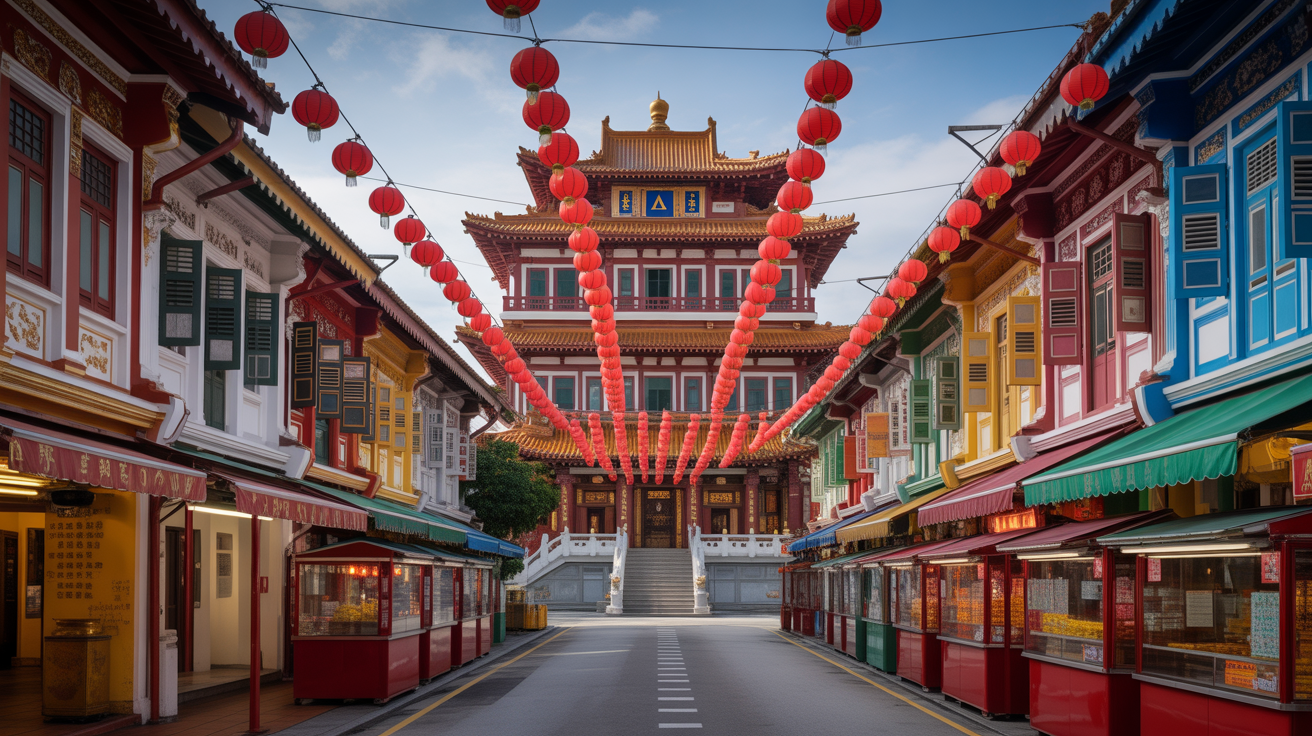
Buddha Tooth Relic Temple
Five storeys of Tang Dynasty opulence house a 3,500kg solid-gold stupa — Chinatown's modern spiritual centrepiece, completed 2007
Little India is the sensory antipode to Singapore's orderly downtown — the one place in the city where the Singaporean compulsion for perfect geometry gives way to glorious, aromatic, chaotic abundance. Centred on Serangoon Road and flowing into the side streets of Campbell Lane, Dunlop Street, and Buffalo Road, this is where Singapore's Tamil community (the largest in Southeast Asia outside Tamil Nadu and Jaffna) has worshipped, traded, and celebrated since the 1820s. The neighbourhood smells of jasmine garlands, cardamom, frangipani, ghee, and sandalwood incense all at once, and it is essential.
Sri Veeramakaliamman Temple (1855) on Serangoon Road is Singapore's most vividly decorated Hindu temple, dedicated to Kali the destroyer of evil. Its gopuram tower bursts with polychrome sculptures of gods, goddesses, and mythological scenes — repainted every few years in defiance of the tropical sun's bleaching ambition. Remove your shoes; photography is generally permitted outside the inner sanctum. A few blocks north, Sri Srinivasa Perumal Temple (1855, gopuram added 1966) is dedicated to Vishnu and hosts the annual Thaipusam procession in January, when devotees carrying elaborate kavadis walk 4 km in a trance-induced piercing ritual.
Tekka Centre is the neighbourhood's beating heart — a 1980s wet-market-and-hawker-centre complex where the ground floor sells fresh fish, goat, halal mutton, spices, and tropical produce you will not find at NTUC FairPrice; and the first floor serves some of the city's best South Indian thali meals, Mamak stall curries, and biryani. Do not miss the fish-head curry, invented in Singapore by a Kerala chef in the 1950s for Chinese customers — a cross-cultural dish that exists nowhere else.
Tan Teng Niah's House on Kerbau Road is the neighbourhood's most photographed building — an eight-colour Chinese villa built in 1900 by a Hokkien confectionery magnate, now restored as a gallery. Its rainbow facade is a reminder that Little India was never exclusively Indian. And Mustafa Centre on Syed Alwi Road is the weirdest, most wonderful 24-hour department store in Asia — four floors of everything from gold jewellery to electronics to spices to shoe polish, at prices that undercut the malls.
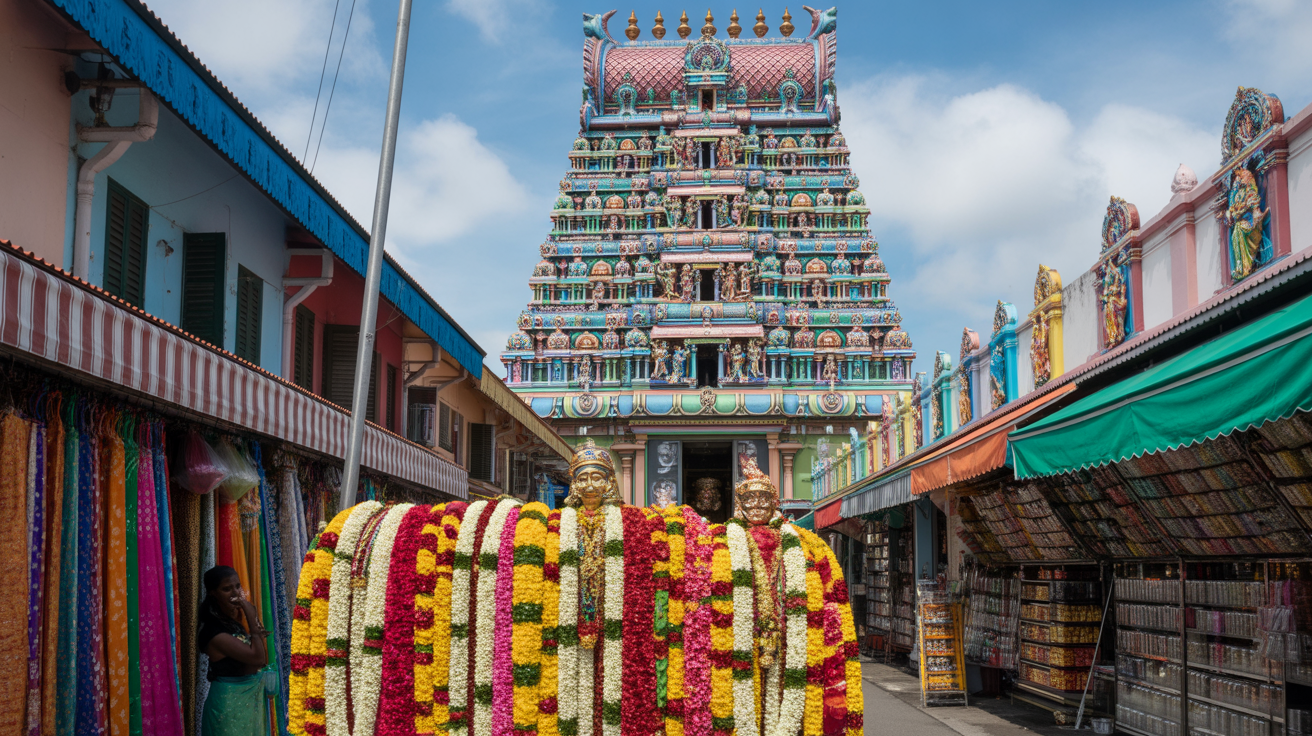
Sri Veeramakaliamman Temple
A riot of Dravidian polychrome — Singapore's oldest Hindu temple dedicated to Kali, founded 1855 by Tamil indentured labourers
Kampong Glam is the quietest of Singapore's three heritage enclaves, and the most elegant. Before the British arrived, this was the royal compound of the Sultans of Johor, established here in 1820 under the terms of Raffles' treaty. The name comes from the gelam tree (Melaleuca cajuputi), once abundant along the shore, from which Malay boat-builders extracted oil. Today the neighbourhood still centres on the Sultan Mosque, its massive golden dome visible from Victoria Street, with Arab merchants, Malay tailors, and Bugis traders replaced (mostly) by boutique hotels, artisan cafés, and the best Middle Eastern food in Southeast Asia.
The Sultan Mosque (Masjid Sultan) in its current form dates to 1932, replacing an 1824 original. The 25-metre golden dome sits on a base of glass-bottle ends donated by the poorest Muslim community members so that everyone could claim a share in the building. Non-Muslims are welcome to visit outside prayer times; robes are provided for modesty. Friday prayers draw crowds that spill onto Muscat Street. Hajjah Fatimah Mosque (1846), named after a Malaccan-Malay businesswoman who funded it, leans visibly (about 6°) — Singapore's miniature Pisa.
Haji Lane is the boutique street — a narrow pedestrian alley between Arab Street and Beach Road, lined with shophouses painted in electric colours and covered in street art. Independent designers, vintage shops, and cocktail bars have taken over from the wholesale textile merchants who once ruled. Arab Street next door remains the place for Persian carpets, cashmere, and rattan furniture; Bussorah Street, tree-lined and aimed straight at the mosque, is the perfect place for Turkish coffee, shisha, and Lebanese mezze at sunset.
Food highlights: Zam Zam Restaurant (since 1908, opposite the mosque) serves the city's most famous murtabak, a stuffed Indian-Muslim flatbread; Warong Nasi Pariaman (Queen Street) is a Padang-style Indonesian institution; Alaturka on Bussorah Street is the go-to for Turkish lamb shish and köfte.
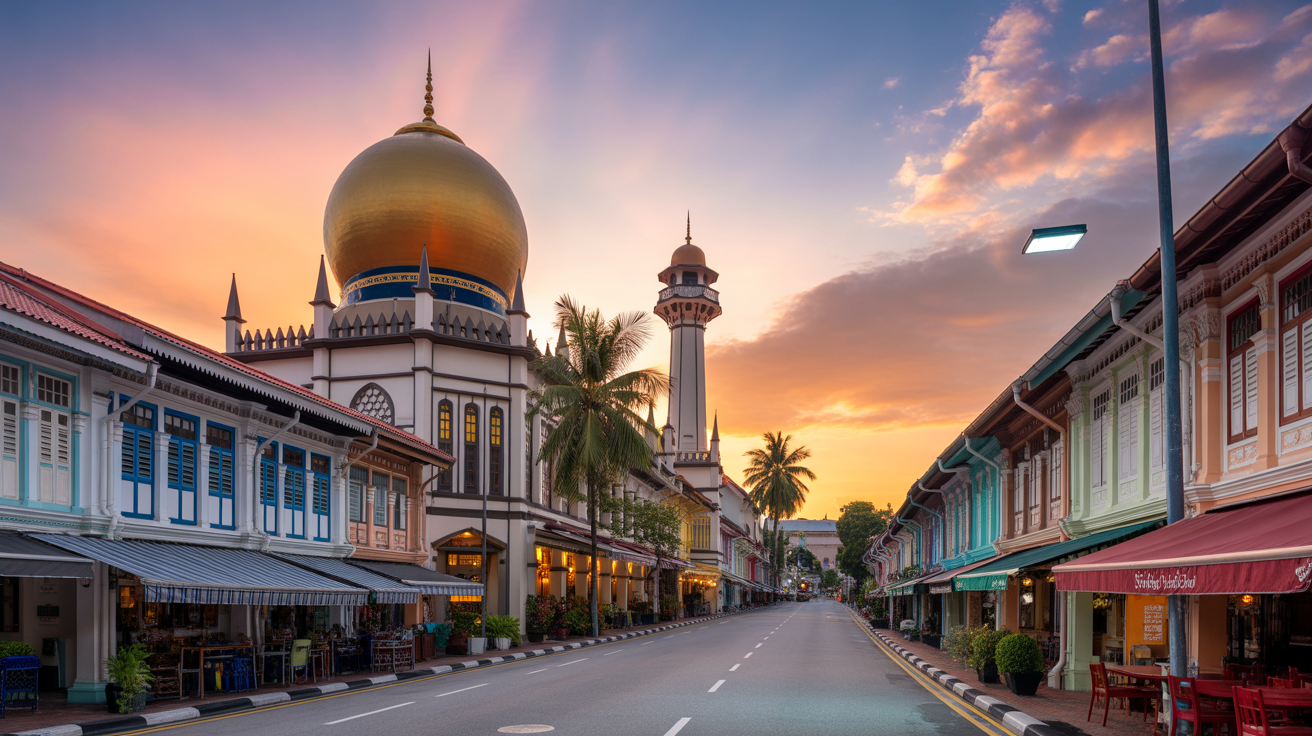
Sultan Mosque — Kampong Glam's Golden Dome
The 25m golden dome rests on a base of glass-bottle ends contributed by the poorest community members so everyone could own a piece of the building
Sentosa — Malay for "peace and tranquillity," chosen in a 1972 public poll to replace the darker original name Pulau Belakang Mati ("Island of Death from Behind") — is Singapore's purpose-built resort island, a 500-hectare playground connected to the mainland by a causeway, a cable car, and a pedestrian boardwalk. What was once a British military base and Japanese prisoner-of-war camp during WWII has been transformed into the city's concentrated leisure zone: beaches, theme parks, luxury hotels, an aquarium, and — most memorably — the site of the historic 2018 Trump–Kim summit at the Capella.
Universal Studios Singapore (2010) is the island's biggest draw for families — seven themed zones including Ancient Egypt, The Lost World, and Sci-Fi City, with the Battlestar Galactica dual roller-coaster as its signature ride. S.E.A. Aquarium holds the Guinness record for the world's largest acrylic viewing panel (36m wide, 8.3m tall), and houses over 100,000 marine animals across 50 habitats — the manta rays and hammerhead sharks are hypnotic. Adventure Cove Waterpark next door lets you snorkel with 20,000 reef fish in a constructed tropical lagoon.
Siloso, Palawan, and Tanjong are Sentosa's three beaches, running west to east along the south shore. None are natural — all are reclaimed and furnished with imported sand from Malaysia and Indonesia — but they are clean, palm-fringed, and offer proper swimming in the warm Singapore Strait. Palawan has the suspension bridge to the "southernmost point of continental Asia" (a geographical stretch: you walk to a tiny connected islet). Siloso has the bars and water sports. Tanjong is the quietest and most residential.
Getting there: Sentosa Express monorail from VivoCity (Harbourfront MRT), S$4 return including island entry. Or walk the free Sentosa Boardwalk, which is pleasant and tree-shaded. Or take the more expensive but spectacular Singapore Cable Car (S$35 return) from Mount Faber.
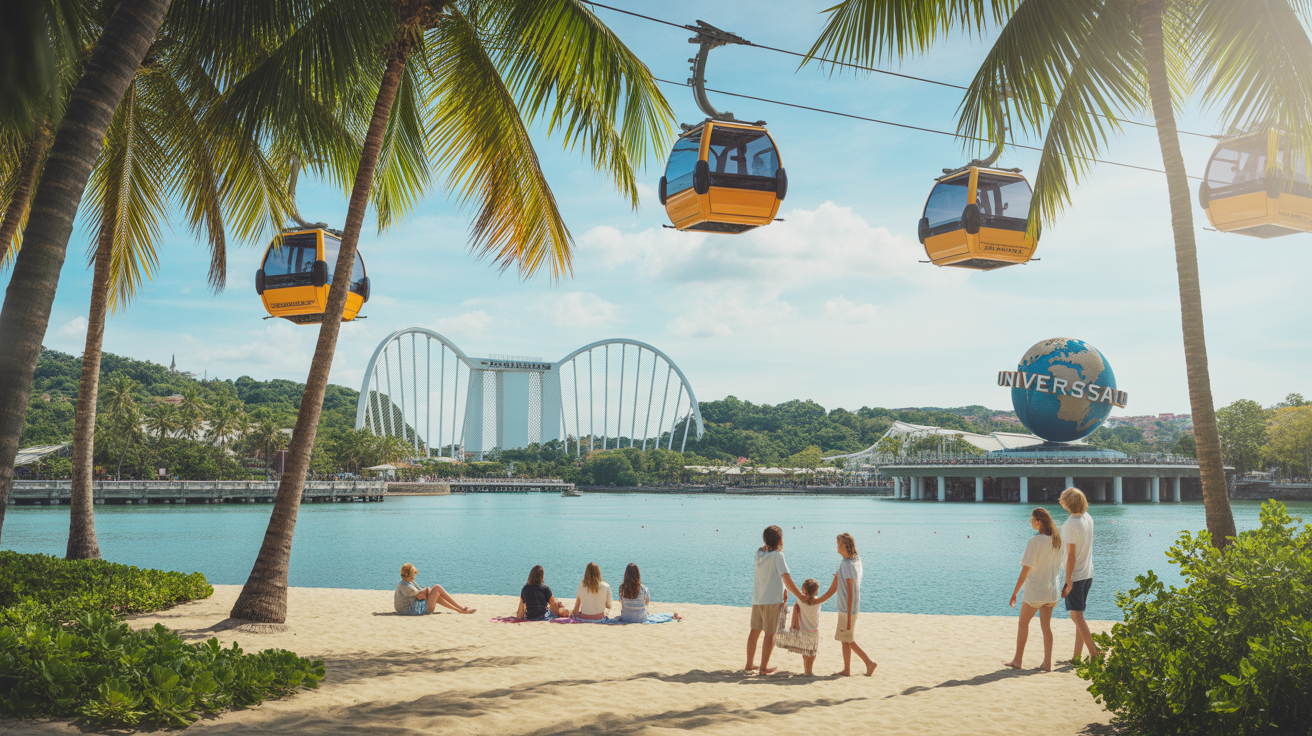
Sentosa — Peace & Tranquility Island
Siloso Beach with cable cars overhead — 500 hectares of theme parks, aquariums, beaches, and luxury resorts connected by monorail to VivoCity
Founded in 1973 on 28 hectares of secondary rainforest in the Mandai reserve, Singapore Zoo pioneered the "open concept" — substituting moats, glass barriers, and naturalistic habitats for cages. For two generations it has been rated among the world's best zoos, and its four attached wildlife parks (Zoo, Night Safari, River Wonders, and the new Bird Paradise) together form Mandai Wildlife Reserve, Singapore's premier natural-history destination.
Singapore Zoo itself is most famous for its free-ranging orangutans — a multi-generational family that moves along a high canopy walkway directly above visitors in the "Fragile Forest" zone. The legendary matriarch Ah Meng (1960–2008) was a national celebrity, greeting breakfast guests daily for three decades. The Breakfast in the Wild programme continues with her descendants — book months ahead. The zoo is also home to over 2,800 animals from 300 species, including a cheetah enclosure, white tigers, and one of the world's largest captive populations of proboscis monkeys.
Night Safari (1994), located next door, was the world's first nocturnal zoo — an inspired idea to show the 60% of animals that are naturally nocturnal in conditions that mimic moonlight. You ride an electric tram through eight geographic zones (Himalayan foothills, Equatorial Africa, Southeast Asian rainforest…), with highlights including prowling striped hyenas, fishing cats, Asian elephants bathing, and Malayan tigers. Then you walk the trails past smaller habitats including flying squirrels and giant flying foxes. The whole experience runs from 7:15 p.m. to midnight — book timed entry online.
River Wonders (formerly River Safari) showcases freshwater ecosystems from eight great rivers of the world — the Amazon, Congo, Nile, Mekong, Yangtze, Mississippi, Murray, and Ganges. The giant pandas Le Le and Jia Jia were the star attractions until the birth of Le Le Jr in 2021. And Bird Paradise (2023), which replaced the beloved Jurong Bird Park, is a 17-hectare complex with eight walk-through aviaries including a 35-metre-tall African rainforest and a Southeast Asian crimson sunset forest.
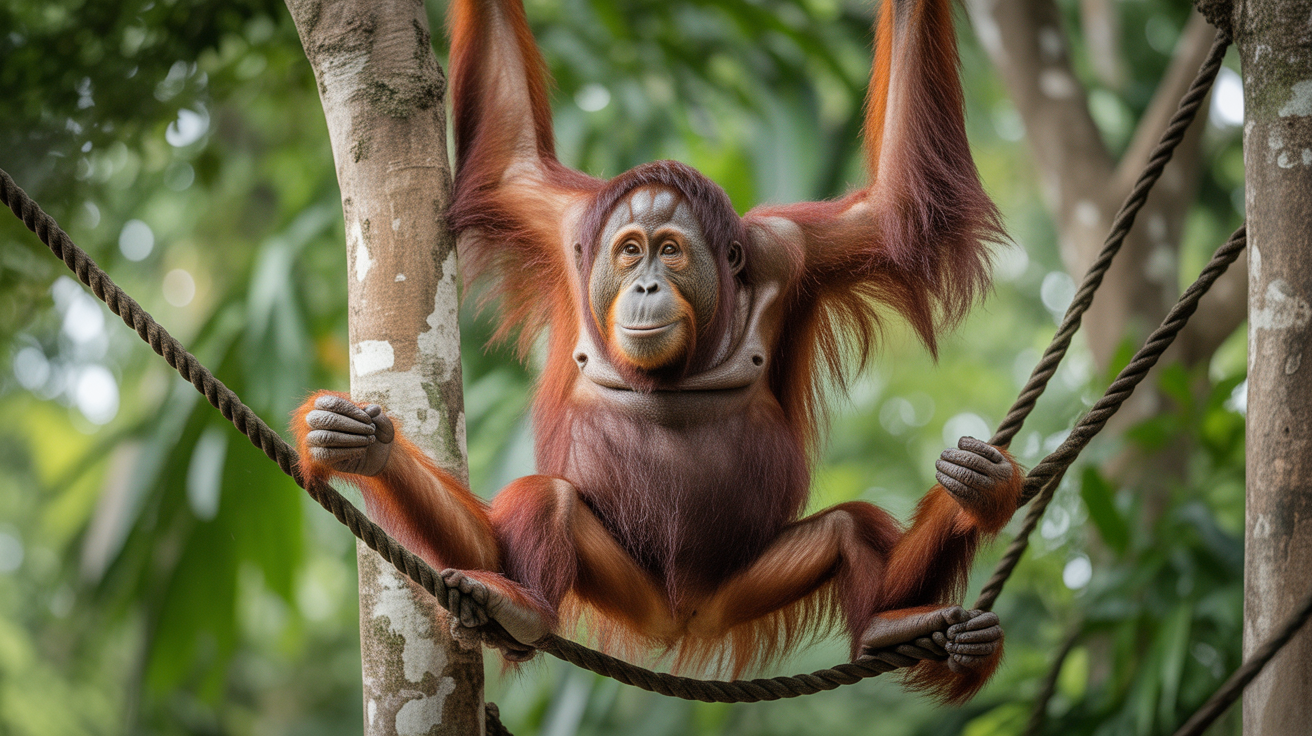
Free-Ranging Orangutans
Ah Meng's descendants roam the canopy of Fragile Forest — the open-concept design that made Singapore Zoo a global template since 1973
Changi Airport is that rarest of things — a piece of infrastructure that has become a tourist destination in its own right. Since opening in 1981 on land reclaimed from the sea at the island's eastern tip, it has been voted World's Best Airport by Skytrax more than a dozen times. Four terminals handle 69 million passengers a year, connected by free inter-terminal Skytrain, 24-hour shuttle buses, and walking links through themed gardens. Terminal 5 (under construction, opening late 2030s) will alone handle 50 million.
Jewel Changi, a 10-storey glass doughnut designed by Moshe Safdie and completed in 2019, sits between Terminals 1, 2, and 3 and has been the airport's crown since opening. At its centre tumbles the HSBC Rain Vortex — a 40-metre indoor waterfall, the tallest in the world, fed by recycled rainwater and illuminated each evening in choreographed light shows. Around it climbs the Shiseido Forest Valley, a terraced indoor rainforest with 3,000 trees and palms drawn from Brazil, China, Malaysia, Spain, Thailand, Australia, and the USA. The Canopy Park on the fifth floor adds a bouncing net, a foggy mirror maze, topiary walks, and suspended sky nets. Entry to Jewel itself is free — only Canopy Park attractions charge admission.
Terminal highlights: T1 Arrival has the Kinetic Rain sculpture — 1,216 bronze raindrops choreographed into flowing patterns. T2 has a sunflower garden (on the roof, behind security) and a slide that doubles as installation art. T3 has a butterfly garden with 1,000 live butterflies. T4 is the quietest, cleanest, and has the best food-court rojak at the Heritage Zone.
Layover hacks: With 5½+ hours of transit, you qualify for the Free Singapore Tour — a two-and-a-half-hour bus tour of the city led by Singapore Tourism Board guides, completely free, booked at T2 or T3 transit areas. Showers, free cinema, swimming pool on T1 rooftop (S$20), and nap rooms make Changi by far the most pleasant airport to be stuck in on the planet.
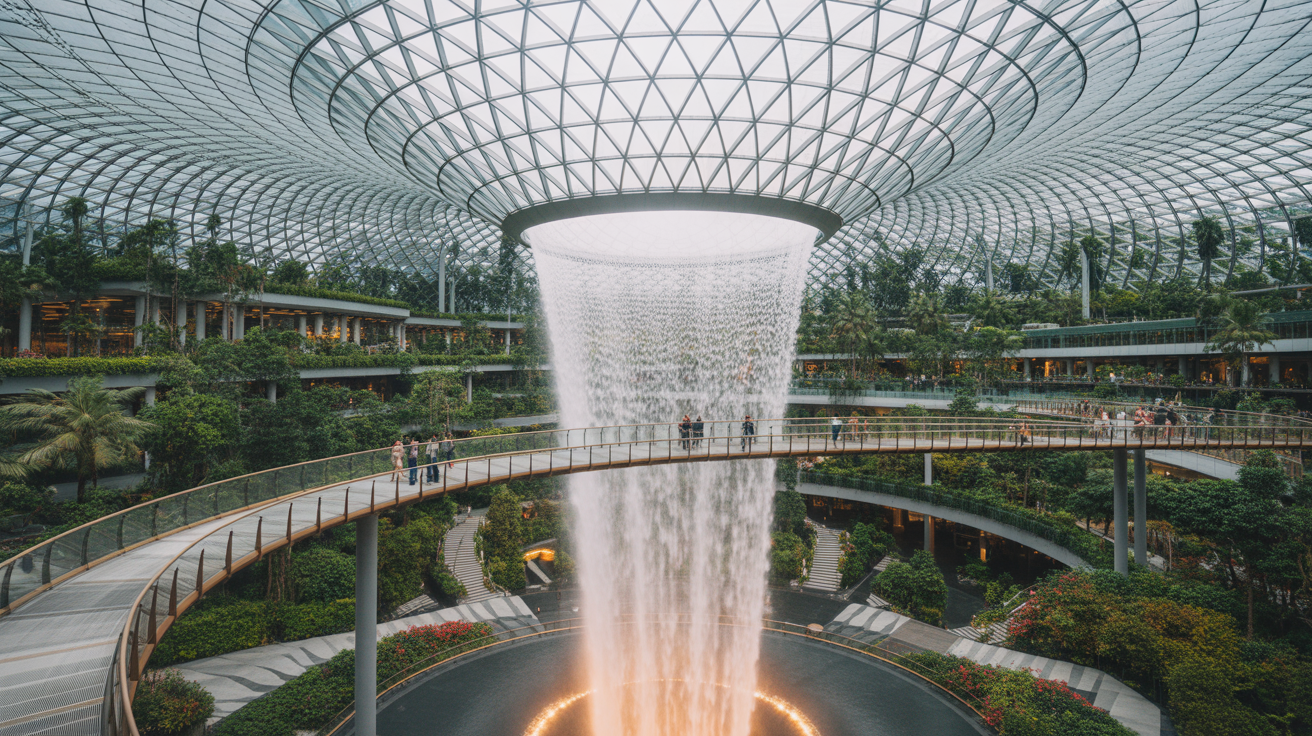
HSBC Rain Vortex at Jewel Changi
At 40m, the world's tallest indoor waterfall descends through a glass geodesic dome surrounded by 3,000 trees — Moshe Safdie's 2019 masterpiece
Singaporean cuisine is the direct edible product of four hundred years of migration. Hokkien wok-masters, Teochew fishmongers, Hainanese cooks, Cantonese roast-meat butchers, Malay spice-traders, Tamil Mamak chefs, Peranakan home-cooks, and Eurasian colonists all contributed techniques, ingredients, and dishes that have merged and cross-pollinated until the question "is this a Chinese, Malay, or Indian dish?" often has no meaningful answer. The food is hybrid by birth, and all the better for it.
The hawker centre — a covered open-air food court where independent stalls cook to order for $4–8 per plate — is the central institution. There are 121 of them across the island, housing roughly 6,000 cooked-food stalls subject to strict hygiene grading (A to D posted on every stall). In December 2020, UNESCO inscribed Singapore's hawker culture on the Representative List of the Intangible Cultural Heritage of Humanity — the first street-food tradition anywhere to receive the honour. For the traveller on any budget, hawker centres are where the real food of Singapore lives. Michelin-starred food courts? Also these. Two hawker stalls have held Michelin stars: Hong Kong Soya Sauce Chicken Rice & Noodle at Chinatown Complex, and Hill Street Tai Hwa Pork Noodle at Crawford Lane.
Signature dishes you should not leave without trying: Hainanese chicken rice (the unofficial national dish); laksa (Peranakan coconut-curry noodle soup); chilli crab (the gastronomic symbol of Singapore); char kway teow (wok-fried flat noodles); Hokkien mee (prawn-stock fried noodles); nasi lemak (Malay coconut-rice breakfast); roti prata (Indian-Muslim flaky flatbread); bak kut teh (peppery pork rib tea); satay (skewered grilled meat with peanut sauce); and for dessert, chendol, ice kacang, and the infamous durian (if you dare).
Where to eat: Maxwell Food Centre (Chinatown) for Tian Tian chicken rice. Lau Pa Sat (CBD) for grilled satay at the Boon Tat Street closure after 7 p.m. Tiong Bahru Market for chwee kueh and the original Loo's Hainanese Curry Rice. Old Airport Road Food Centre for Lao Fu Zi fried kway teow and Hainanese Delicacy's chicken rice. Newton Food Centre for chilli crab (yes, that one from Crazy Rich Asians). Zion Riverside Food Centre for No. 18 Hokkien mee.
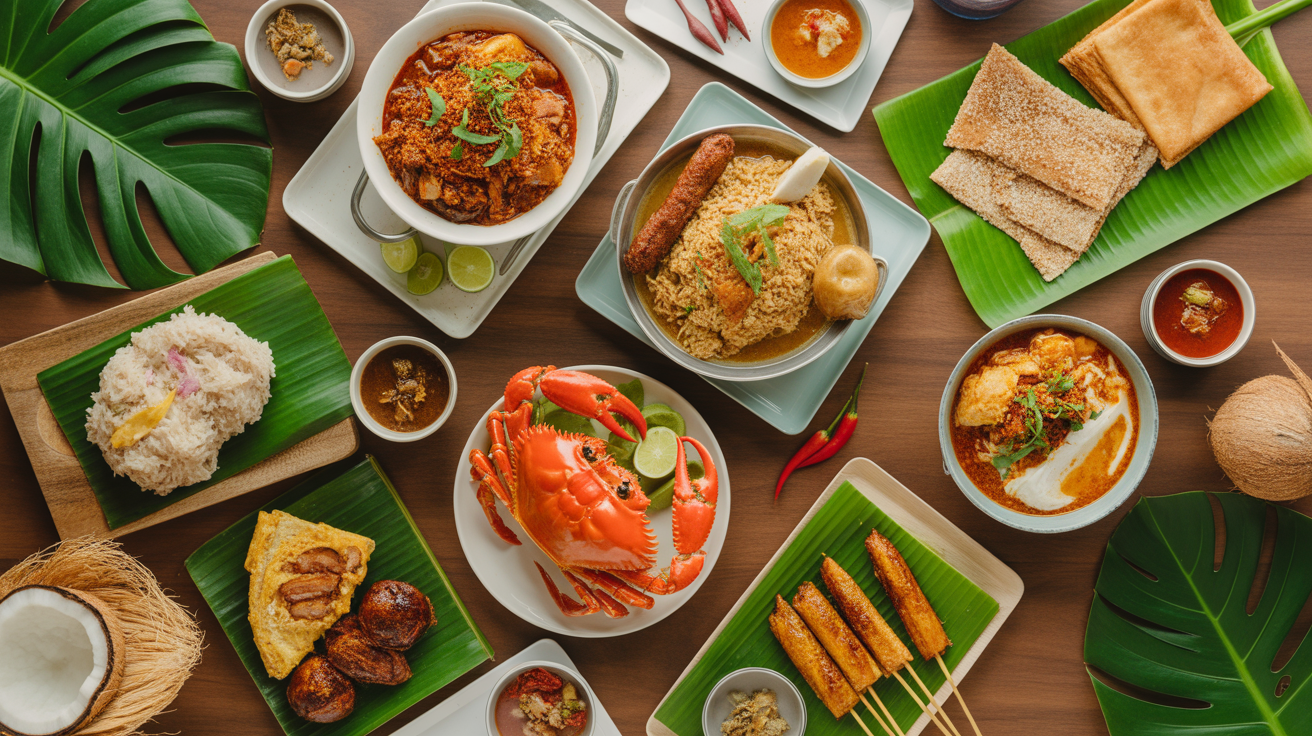
The Singapore Table
Chilli crab, laksa, chicken rice, satay, roti prata — a cross-section of four centuries of migration in a single meal
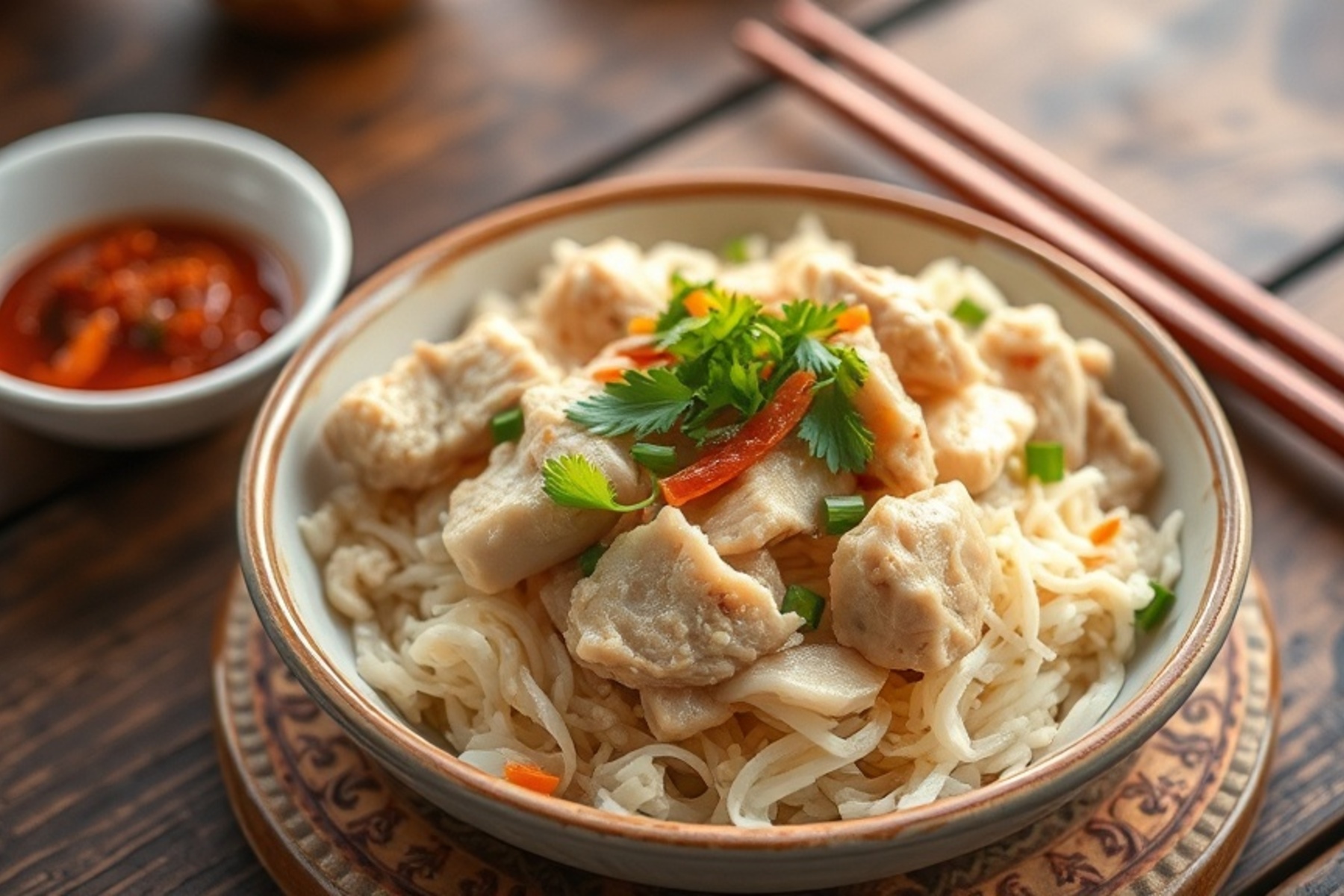
🍗 Hainanese Chicken Rice — The National Dish
Ingredients: 1 whole chicken (1.5 kg), 3 cm ginger (bruised), 4 spring onions, 500g long-grain jasmine rice, 50g chicken fat, 4 cloves garlic, 2 pandan leaves, 1.2L chicken stock, salt. For sauces: red chillies, lime, ginger paste, dark soy sauce.
Preparation: Poach the whole chicken in simmering water with ginger and spring onion for 40 minutes off the heat (gentle poaching keeps the meat silky). Transfer immediately to an ice bath — this tightens the skin into the characteristic jelly layer. Render the chicken fat in a pan, fry garlic until fragrant, add rinsed rice and toast 2 minutes, then cook rice in the reserved chicken stock with pandan leaves. Serve chicken cold or room-temperature, sliced, with the aromatic rice, a bowl of clear broth, and three sauces: fresh chilli-garlic, grated ginger with hot oil, and sweet dark soy. The trinity of sauces is the entire point — skip any, and you have failed.
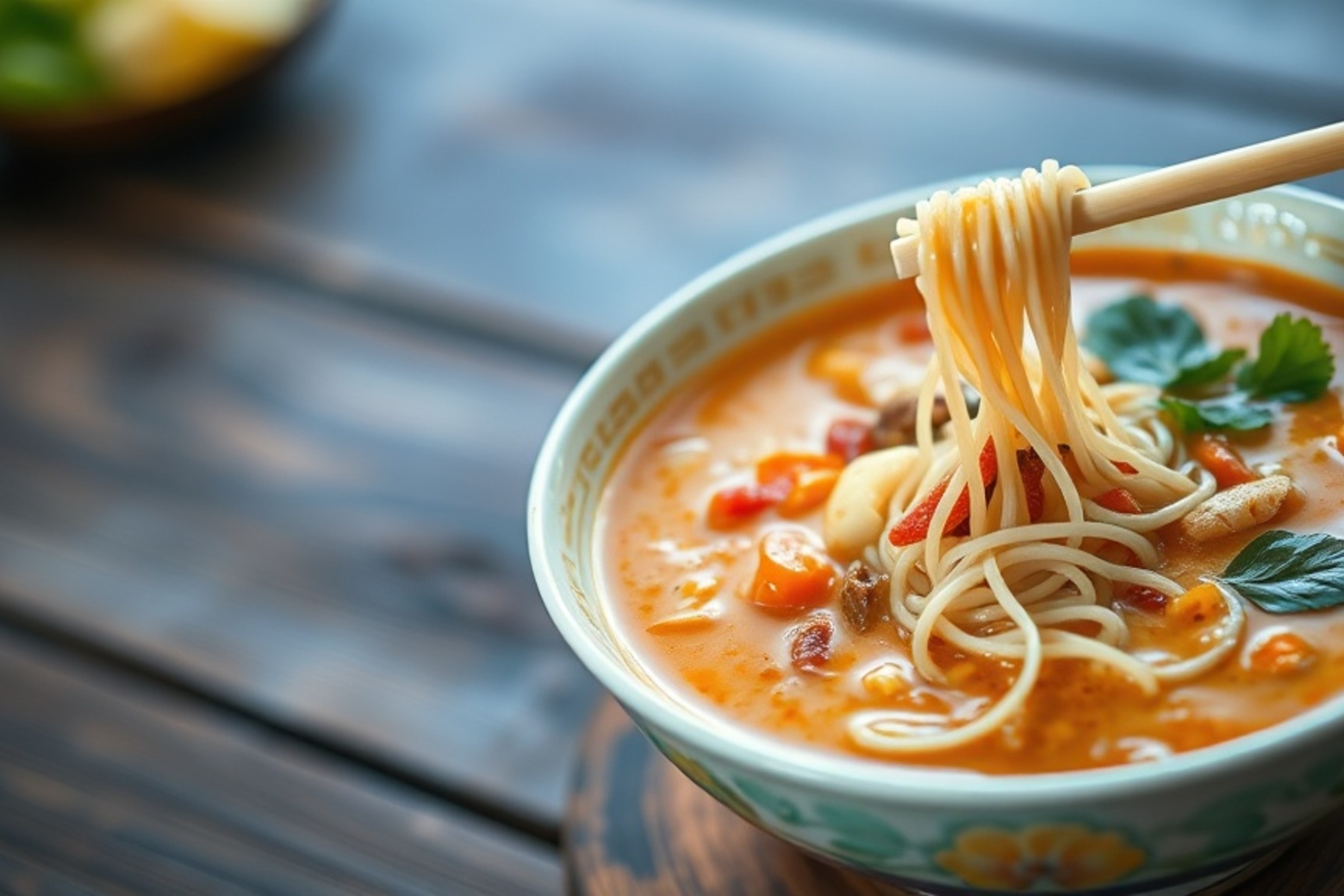
🌶️ Katong Laksa — Peranakan Coconut Noodle Soup
Ingredients (rempah paste): 15 dried chillies (soaked), 8 shallots, 4 garlic cloves, 30g galangal, 2 stalks lemongrass, 15g belacan (shrimp paste), 30g dried shrimp, 10g turmeric. Soup: 800ml coconut milk, 600ml prawn stock, 1 tsp salt, 2 tbsp sugar. Toppings: thick rice vermicelli, prawns, fish cake, cockles, bean sprouts, laksa leaves (daun kesum), chopped chilli.
Preparation: Blend the rempah paste into a fine slurry. Fry in oil over medium heat for 8–10 minutes until the oil separates and the aroma deepens — this is the critical moment, and hawker aunties can tell by smell alone. Add prawn stock, simmer 10 minutes, then stir in coconut milk without letting it boil. Blanch vermicelli, prawns, and bean sprouts; assemble in deep bowls with fish cake and cockles. Ladle over the ruby-orange soup, top with chopped laksa leaves and extra chilli. Singapore laksa is eaten with a spoon alone — the noodles are cut short. Cockles are essential; leave them out at your peril.
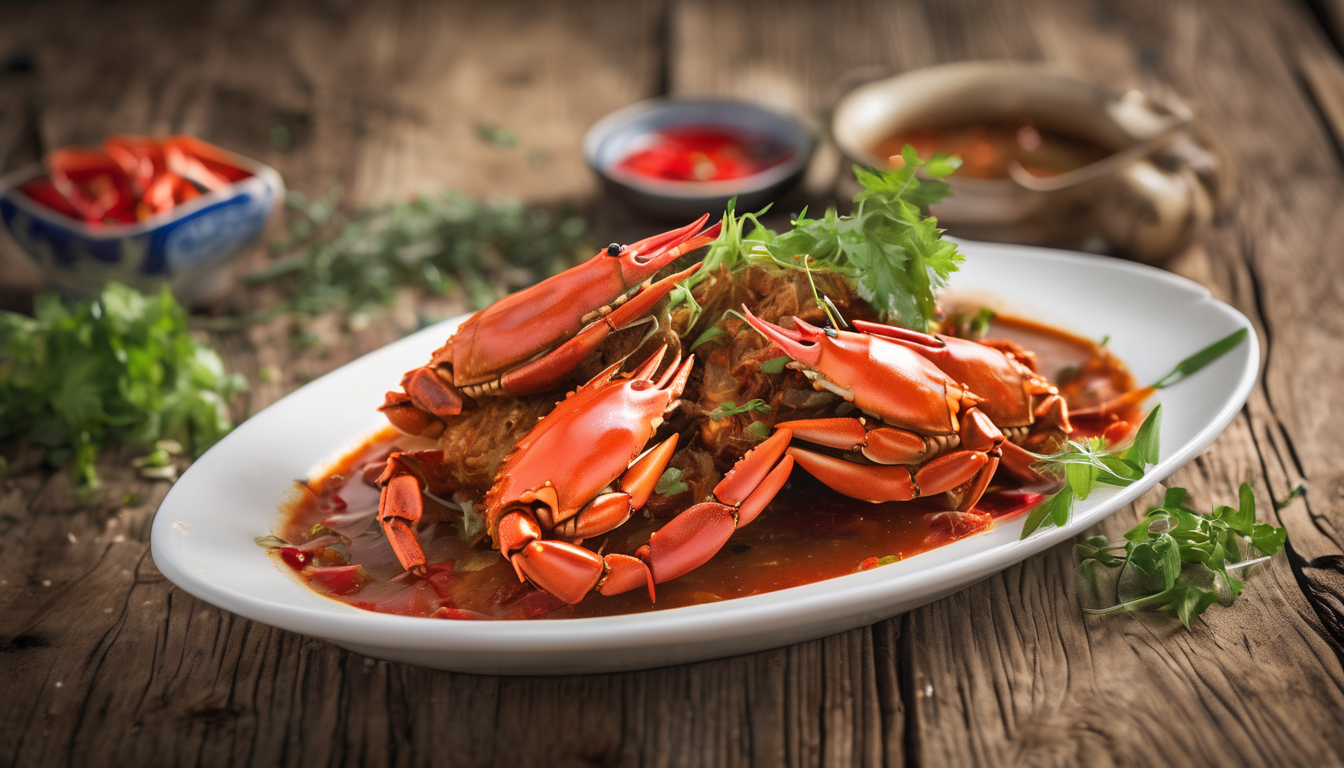
🦀 Chilli Crab — The Gastronomic National Symbol
Ingredients: 2 live mud crabs (600g each), 6 tbsp tomato ketchup, 4 tbsp sambal oelek, 3 tbsp chilli sauce, 2 tbsp fermented soy bean paste (tau cheo), 60ml rice vinegar, 60g palm sugar, 400ml chicken stock, 4 cloves garlic, 3cm ginger, 1 egg beaten, cornflour slurry, spring onions, coriander. Mantou buns on the side.
Preparation: Clean crabs; split each in half and crack claws with the back of a cleaver. Make sauce base: sauté minced garlic and ginger in oil, add sambal + ketchup + chilli sauce + tau cheo, fry until fragrant. Add stock, vinegar, sugar. Add crabs, cover, and braise 8–10 minutes until shells are vermilion red. Thicken with cornflour slurry, then whisk in beaten egg in ribbons at the end. Garnish with spring onion and coriander. Eat with hands, mopping up sauce with deep-fried mantou buns — plates are optional, bibs recommended, forks forbidden.
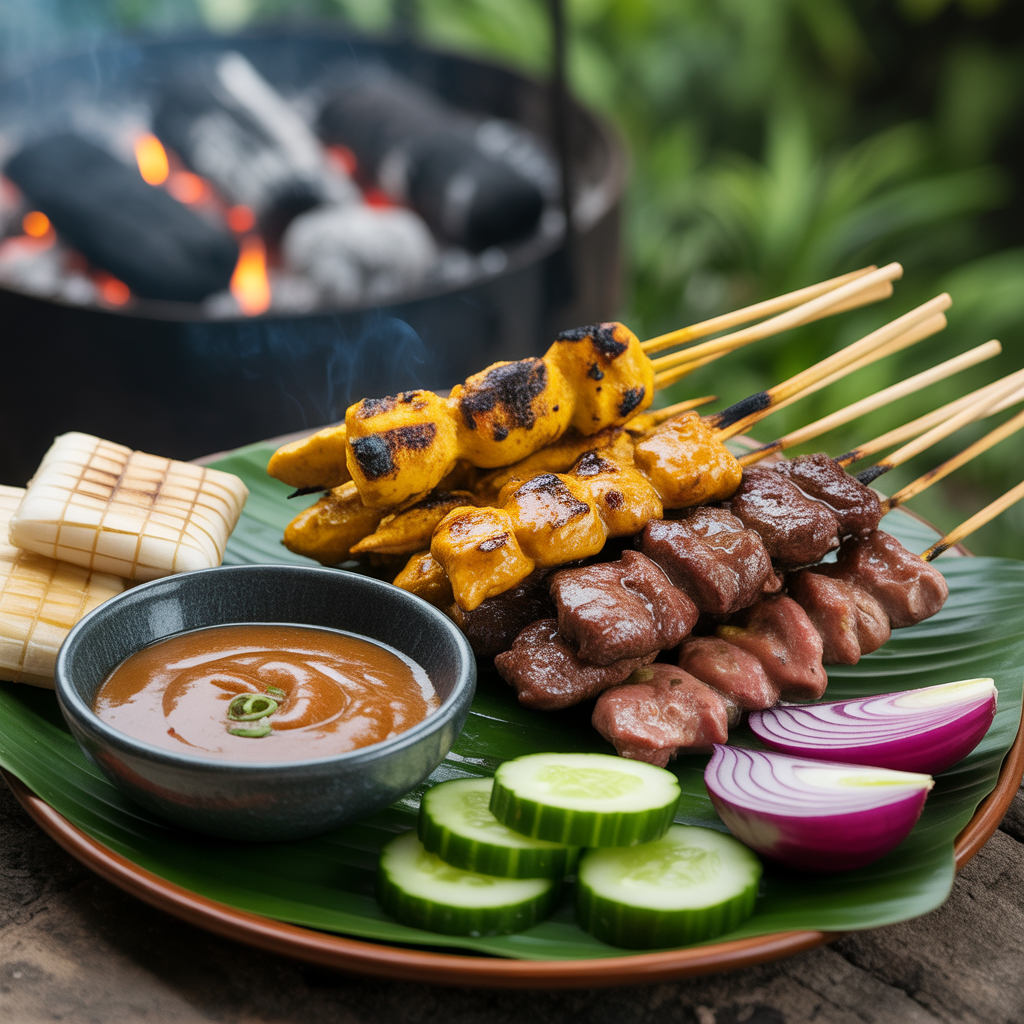
🍢 Satay — Skewered Grilled Meat
Ingredients: 500g chicken thigh or beef, cut into 2cm cubes. Marinade: 3 shallots, 2 lemongrass stalks, 2 tsp turmeric, 2 tsp coriander seeds, 2 tsp cumin, 30ml palm sugar, 30ml soy sauce, salt. Peanut sauce: 200g roasted peanuts, 2 tbsp tamarind paste, 3 tbsp sambal oelek, 1 tbsp palm sugar, 200ml coconut milk. Bamboo skewers (soaked 30 min), cucumber, red onion, ketupat rice cakes.
Preparation: Blend marinade to a paste, coat meat, refrigerate 4+ hours (overnight is better). Thread 4–5 cubes per skewer. Grill over charcoal — never gas — basting with oil to prevent drying, about 3 minutes per side until the edges char. For peanut sauce, pound peanuts coarsely, combine with other ingredients, simmer 10 minutes until thick and glossy. Serve with cucumber chunks, raw onion, and compressed rice cakes (ketupat). The charcoal smoke is 50% of the flavour.
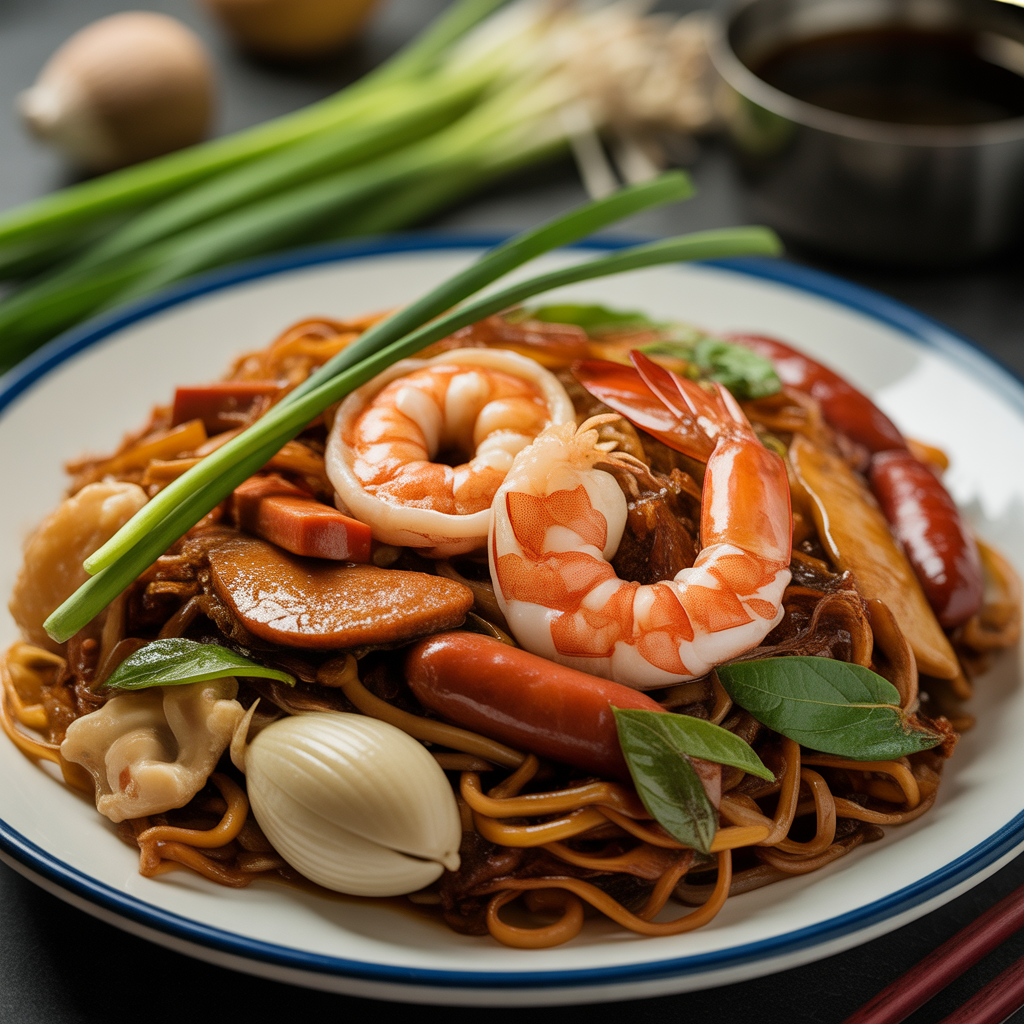
🍳 Char Kway Teow — Wok-Hei Noodles
Ingredients (per plate): 200g fresh flat rice noodles (kway teow), 2 Chinese sausages (lap cheong) sliced, 6 prawns peeled, handful cockles, 2 cloves garlic, 60g bean sprouts, 4 chives cut to 2cm, 1 egg, 1 tbsp dark soy, 1 tsp light soy, 1 tsp sweet soy (kecap manis), 1 tsp chilli paste, 2 tbsp lard, pinch salt.
Preparation: Heat a well-seasoned wok until smoking. Add lard, garlic, sausages, fry 30 seconds. Add prawns, cook 20 seconds. Push to the side, crack in the egg, scramble. Add noodles, cockles, and all soy sauces. Toss violently for 60 seconds using the wok's heat to caramelise the noodles against the metal — this is wok hei, the "breath of the wok," the unmistakable smoky perfume that defines great char kway teow. Add bean sprouts and chives last, toss 10 seconds, plate immediately. Anything longer than 2 minutes per portion and you have failed. Hawker masters cook one plate at a time for this reason.
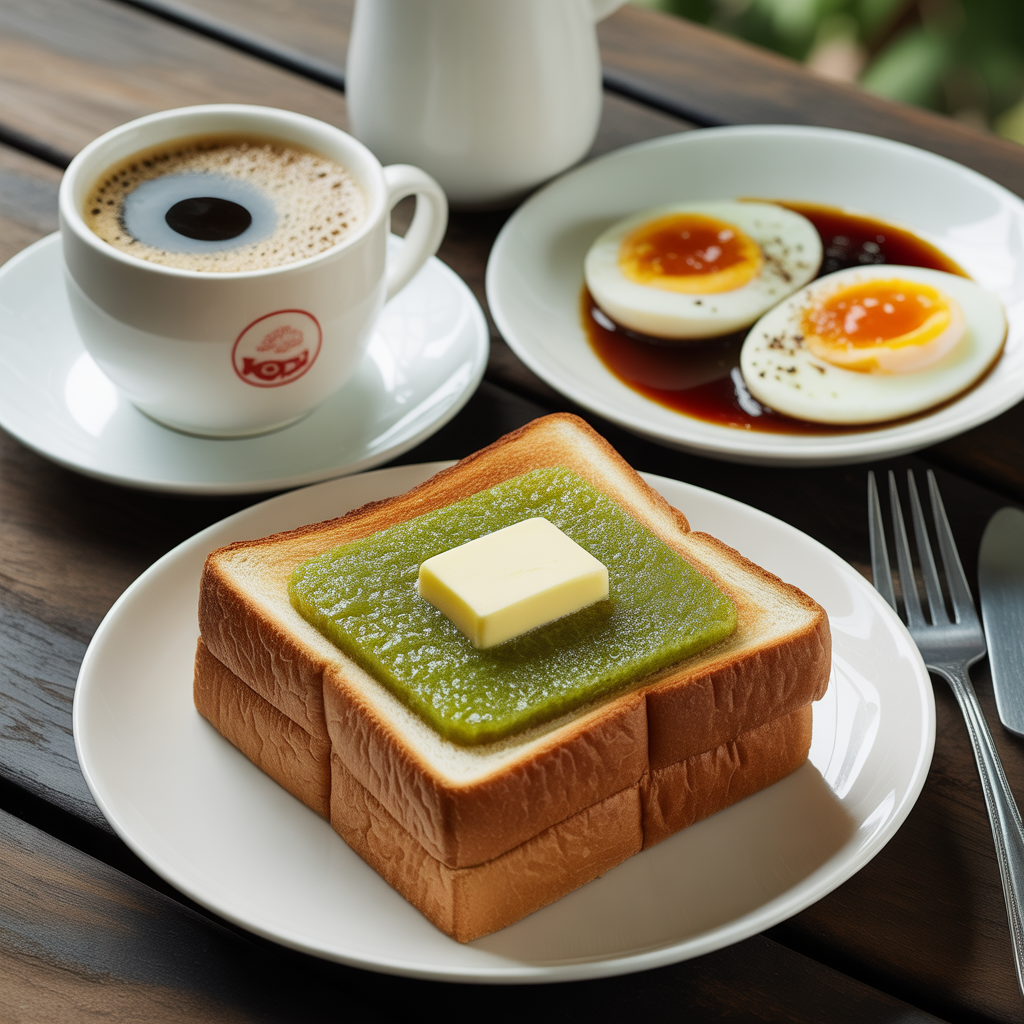
🍞 Kaya Toast — The Kopitiam Breakfast
Kaya (coconut jam): 400ml coconut milk, 6 egg yolks + 2 whole eggs, 200g palm sugar (gula melaka), 4 pandan leaves knotted, pinch salt. To serve: thick white bread or milk bread, cold butter, soft-boiled eggs, dark soy sauce, white pepper, kopi coffee.
Preparation: For kaya, whisk eggs with palm sugar until dissolved. Add coconut milk and pandan leaves. Cook over a double boiler, stirring constantly, for 40–60 minutes — patience is non-negotiable. The jam thickens gradually from pale yellow to deep jade green (from the pandan). Slice bread and grill until just crisp. Spread generously with kaya, top with a cold slice of butter — the contrast of hot-jam and cold-butter is the entire joy of the dish. Serve with two soft-boiled eggs (boiled 5–6 minutes, cracked into a saucer with dark soy and white pepper, stirred and sipped), and a cup of kopi. Breakfast of kings, for $3.50 at any Ya Kun or Killiney Kopitiam.
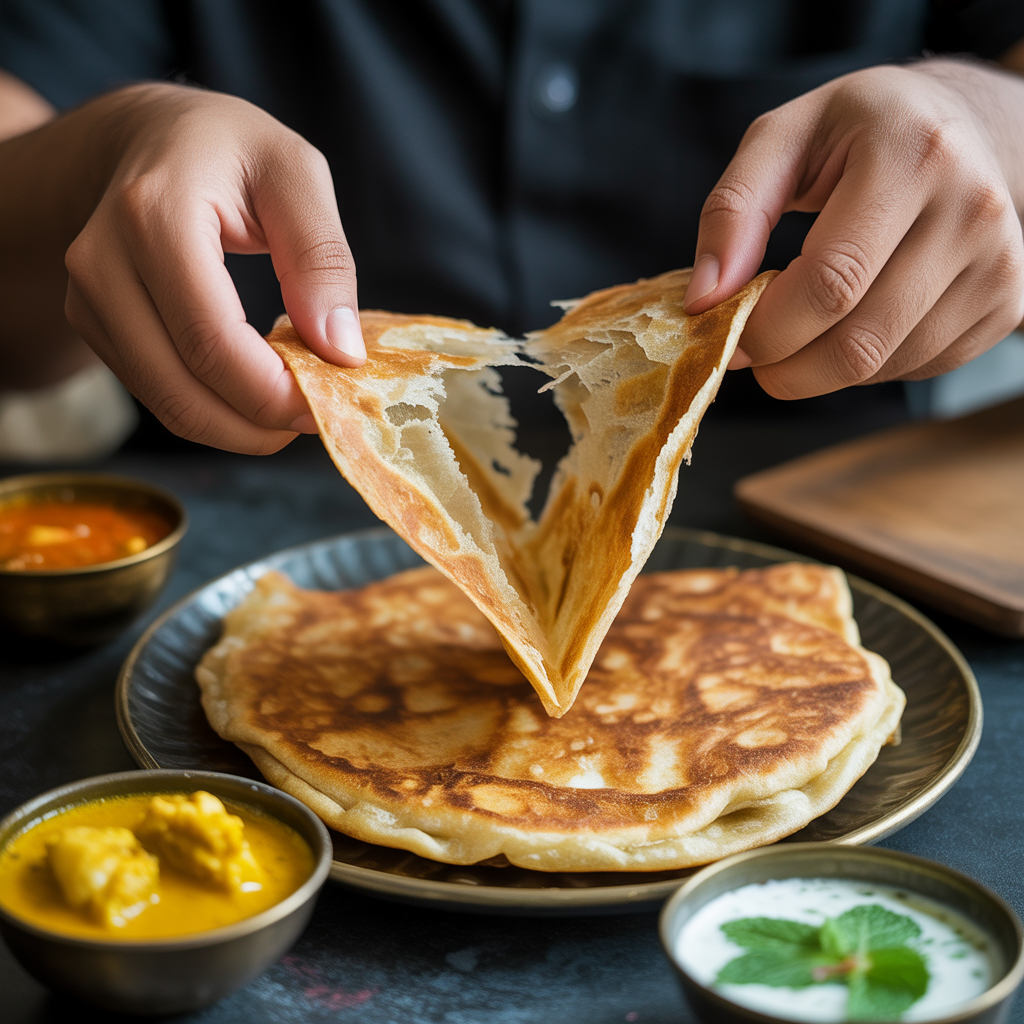
🫓 Roti Prata — Flaky Indian-Muslim Flatbread
Ingredients: 500g plain flour, 1 egg, 250ml water, 3 tbsp condensed milk, 1 tsp salt, 100g ghee or oil for layering. To serve: fish curry, dhal curry, mutton curry, sugar or condensed milk.
Preparation: Mix flour, egg, water, condensed milk, and salt into a very soft, slightly wet dough. Knead 10 minutes, then rest 2 hours under oil-coated cling film. Divide into 80g balls and soak in oil for another 2 hours — the oil bath is what enables the later dramatic stretching. For each prata: slap and stretch the dough on a lightly oiled marble surface until paper-thin and translucent (this is the mamak's party trick — watch a master at Jalan Kayu, it is mesmerising). Fold into a square or coil, flatten, griddle on a hot flat-top with ghee until crisp and golden on both sides. Serve immediately with curries for dipping — tear with hands, never cut with a knife.
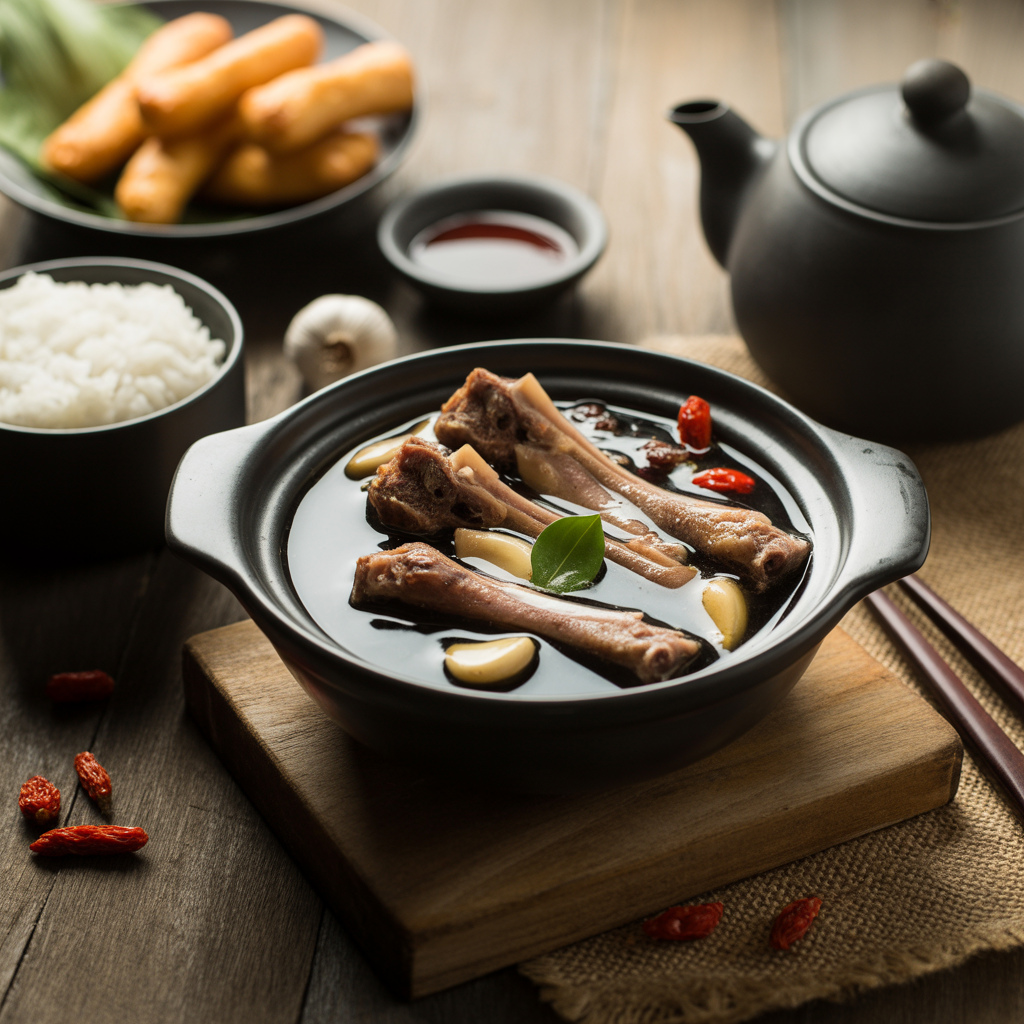
🥣 Bak Kut Teh — Peppery Pork Rib Tea
Ingredients (Teochew clear style): 1 kg pork ribs, 2 whole garlic bulbs, 2 tbsp white peppercorns cracked, 2 tsp black peppercorns, 2 star anise, 1 cinnamon stick, 3L water, 60ml light soy, 30ml fish sauce, 20g rock sugar, salt. Sides: steamed jasmine rice, youtiao (Chinese dough fritters) cut into chunks, soy sauce with sliced chilli, Chinese tea (oolong or tieguanyin).
Preparation: Blanch pork ribs in boiling water for 5 minutes to remove impurities, rinse under cold water. Tie peppercorns and spices in a muslin bag. Combine ribs, spice bag, unpeeled whole garlic bulbs, and fresh water in a heavy pot. Bring to boil, skim thoroughly, then simmer partially covered for 2–2½ hours until ribs are fork-tender but still attached to the bone. Season with soy, fish sauce, rock sugar and salt in the final 15 minutes. Serve in small bowls with rice, dunk youtiao into the broth to soak up the peppery stock. Drink Chinese tea between mouthfuls — the tea cuts the richness. Singapore's Teochew-style bak kut teh is the peppery clear version; the Malaysian Hokkien version uses dark herbal broth. Both are legitimate; Singaporeans fight about it anyway.
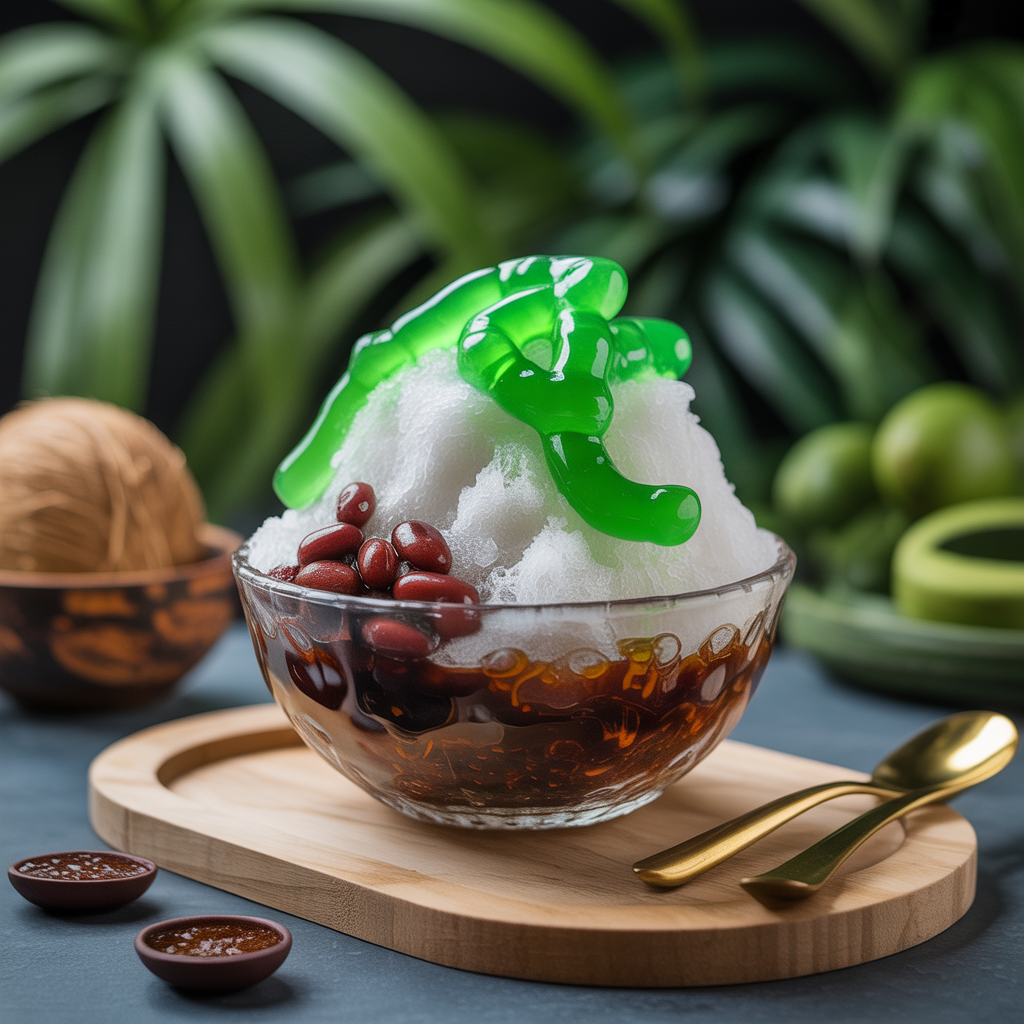
🍧 Chendol — Shaved Ice with Palm Sugar
Ingredients (per bowl): 100g green pandan jelly worms (chendol), 60g cooked red kidney beans, 100g shaved ice, 80ml coconut milk (thick), 30ml gula melaka syrup. Gula melaka syrup: 150g palm sugar, 30ml water, 2 pandan leaves knotted, pinch salt.
Preparation: Make the syrup first: melt palm sugar with water, pandan leaves, and a pinch of salt over low heat for 10 minutes until thick, dark, and glossy. Cool. For chendol jelly (if making from scratch): blend pandan leaves with water, strain, mix with rice flour and a pinch of alkaline water, cook into a thick paste, then push through a colander into iced water to form short worms — store-bought is acceptable. To assemble: layer kidney beans and chendol at the bottom of a bowl, pile on finely shaved ice (not cubed — shaved, so it melts into silk), drizzle thickly with gula melaka syrup, then pour cold coconut milk over. Eat immediately with a spoon, stirring as you go. In tropical Singapore after a spicy meal, this is transcendent.
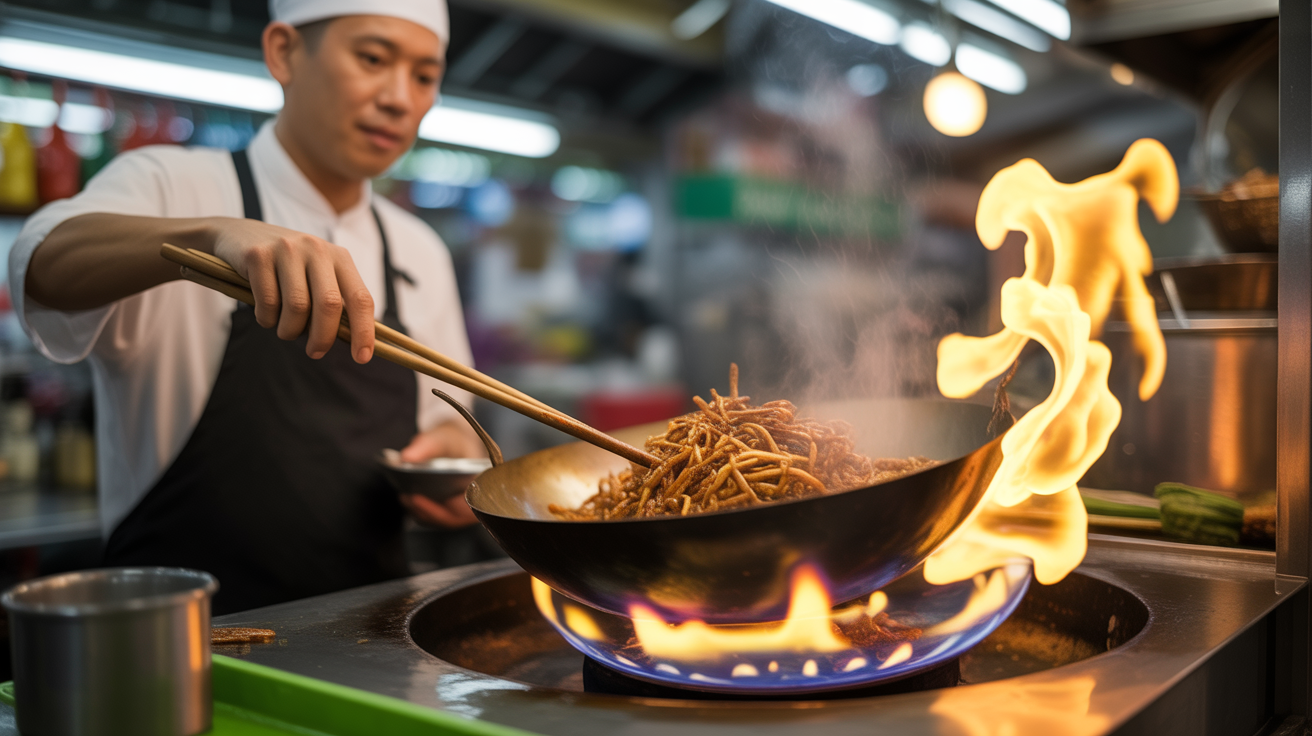
Wok Hei — The Breath of the Wok
A char kway teow master conjures the elusive smoky aroma that only extreme heat and decades of experience can produce — one plate at a time
Singapore's drinking culture runs on two parallel rails: the everyday kopitiam (coffee shop) tradition, and the world-class cocktail scene that has placed multiple Singapore bars on Asia's 50 Best Bars list every year of the past decade. Both are essential. And sitting above them both, at Raffles Hotel, is the Singapore Sling — the pink gin cocktail that was once served to colonial women who could not publicly drink alcohol, and which has been the country's most exported drink since 1915.
Kopi and teh vocabulary. Kopitiam orders follow a precise code that rewards memorisation. Kopi = coffee with condensed milk. Kopi-O = black with sugar. Kopi-C = with evaporated milk and sugar. Kopi-O kosong = black, no sugar. Add siu dai (less sweet) or gah dai (more sweet). Same logic for teh (tea). Teh tarik = pulled milk tea, aerated between two cups for the distinctive foam. Master these and you will eat as a Singaporean.
Craft cocktail bars: Singapore punches far above its weight. Jigger & Pony (Amara Hotel), perennially top-10 in Asia. Native (Amoy Street), built entirely around Southeast Asian ingredients including banyan ant. Atlas (Parkview Square) for Art Deco grandeur and one of the world's largest gin collections (1,300+ bottles). 28 HongKong Street for the speakeasy founding father of Singapore's scene. Tippling Club for scent-based experimental drinks. Operation Dagger for molecular pyrotechnics. Drinks run S$22–28; most bars serve small plates and stay open until 2 a.m.
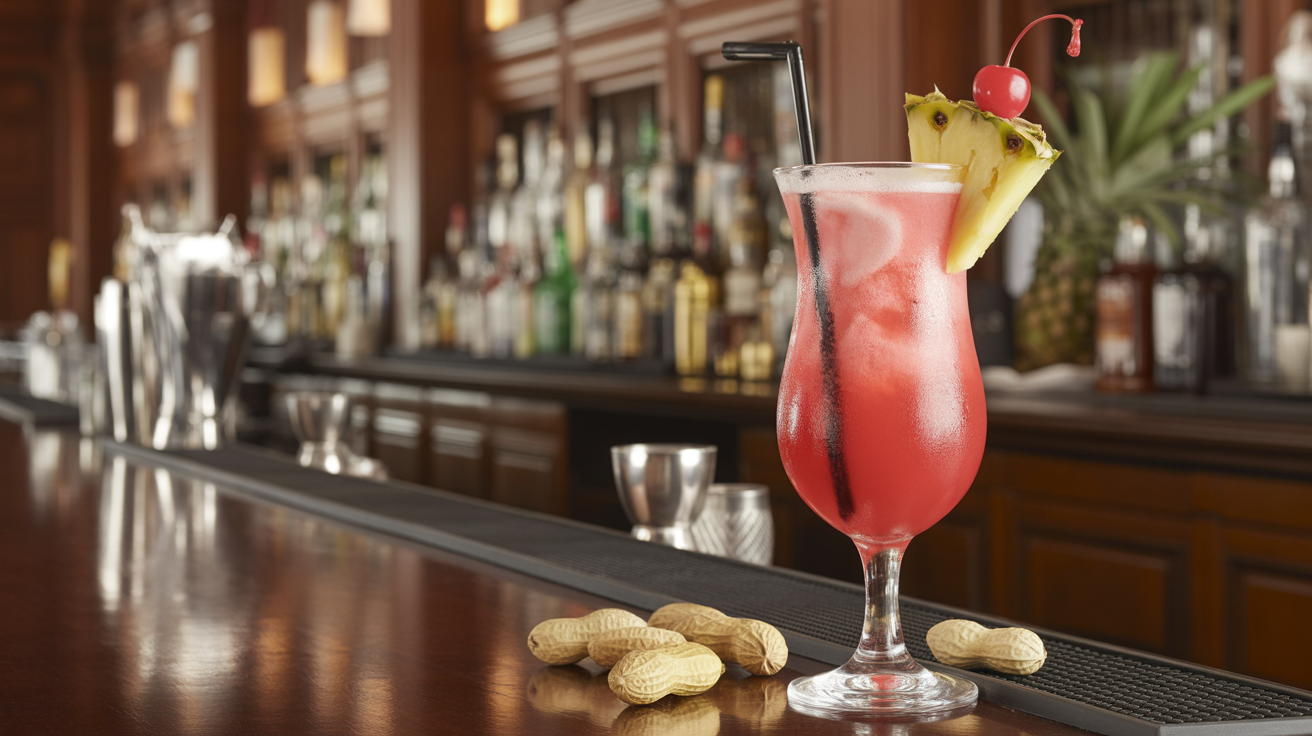
The Singapore Sling — Raffles Long Bar
Invented in 1915 by bartender Ngiam Tong Boon so that colonial women could drink cocktails that appeared to be fruit juice — still served in hundreds daily, with peanuts on the floor
🏷️ Iconic Singapore Drinks
🍹 Singapore Sling
Gin, cherry brandy, Bénédictine, Cointreau, grenadine, pineapple, lime, bitters
Invented 1915 by bartender Ngiam Tong Boon at Raffles Long Bar. Created so colonial women could socially drink cocktails that appeared to be innocent fruit juice. Still served at the Long Bar amid peanut shells scattered on the floor — the only sanctioned littering in Singapore.
☕ Kopi
Robusta coffee roasted with sugar, margarine and butter; brewed through a cotton sock; served with condensed milk
Singapore's daily caffeine ritual since the Hainanese cooks of the 1920s. The sock-filtered brew is stronger than Italian espresso and sweeter than Vietnamese drip. S$1.50 at any kopitiam, and a masterclass in ordering vocabulary.
🫖 Teh Tarik
Ceylon black tea with condensed milk, "pulled" between two metal cups
The signature drink of Indian-Muslim mamak stalls — the uncle pours the tea from height between two cups repeatedly, aerating it into a foamy cap. Street theatre and beverage in one. Best at Zam Zam, or any 24-hour prata joint.
🌴 Tiger Beer
Local lager brewed since 1932 by Malayan Breweries
Singapore's national beer, created in 1932 to compete with European imports. Light, crisp, undemanding — the perfect foil to chilli crab or hawker satay. "Tiger Crystal" (lighter) and "Tiger Radler" (shandy) are newer variants. Available everywhere from hawker centres to Marina Bay Sands.
🥥 Fresh Coconut
Young green coconut, chilled, served with a straw and spoon
The tropical antidote to a 32°C afternoon. Available at hawker centres, markets, and roadside stands for S$2–3. The flesh afterwards is edible — ask for a spoon. Thai and Malaysian imports dominate; Singapore's own coconut groves disappeared decades ago.
🍸 Sake & Craft Gin
Brass Lion Distillery (Pulau Damar Laut)
Singapore's first craft gin distillery, launched 2018 at a historic Sentosa bungalow, uses Peranakan botanicals including torch ginger, lemongrass, buah keluak, and chrysanthemum. The Singapore Dry, Butterfly Pea Gin (colour-changing), and Pahit gin are widely served at cocktail bars.
Singapore sits at 1° 22′ N — just 137 kilometres above the equator — which produces one of the most stable climates on earth. Temperatures fluctuate within a narrow band of 25–32°C (77–90°F) year-round. There are no meaningful seasons in the temperate sense, only subtle variations in rainfall, humidity, and wind direction driven by the monsoon regimes of the South China Sea. Humidity sits stubbornly at 80–90% every single day. Air-conditioning is how the country lives.
The Northeast Monsoon (December–March) is the wettest period. December is the rainiest single month, with near-daily heavy downpours — though usually in the afternoon, leaving mornings dry and evenings cooler. Surf gets choppy on the east coast.
The Inter-Monsoon (April–May) is hot, humid, and prone to dramatic thunderstorms — the afternoon Sumatra squalls roll in from the west, with spectacular lightning over Marina Bay and intense but short-lived rain. Haze can be an issue during peat-fire season in Indonesia (variable, but August–October is the usual window).
The Southwest Monsoon (June–September) is the driest and least humid period, with longer sunny spells. This is also peak tourist season — book hotels and F1 race weekend (September) months ahead.
Best overall months: February–April offer a good balance of decent weather and cultural events (Chinese New Year, Chingay Parade, Thaipusam). February is the coolest month. July–August are the clearest but also the most crowded. Avoid December if you want reliable sunshine. There is no "bad" time to visit — just pack a light rain jacket and accept that a 20-minute downpour is part of every day.
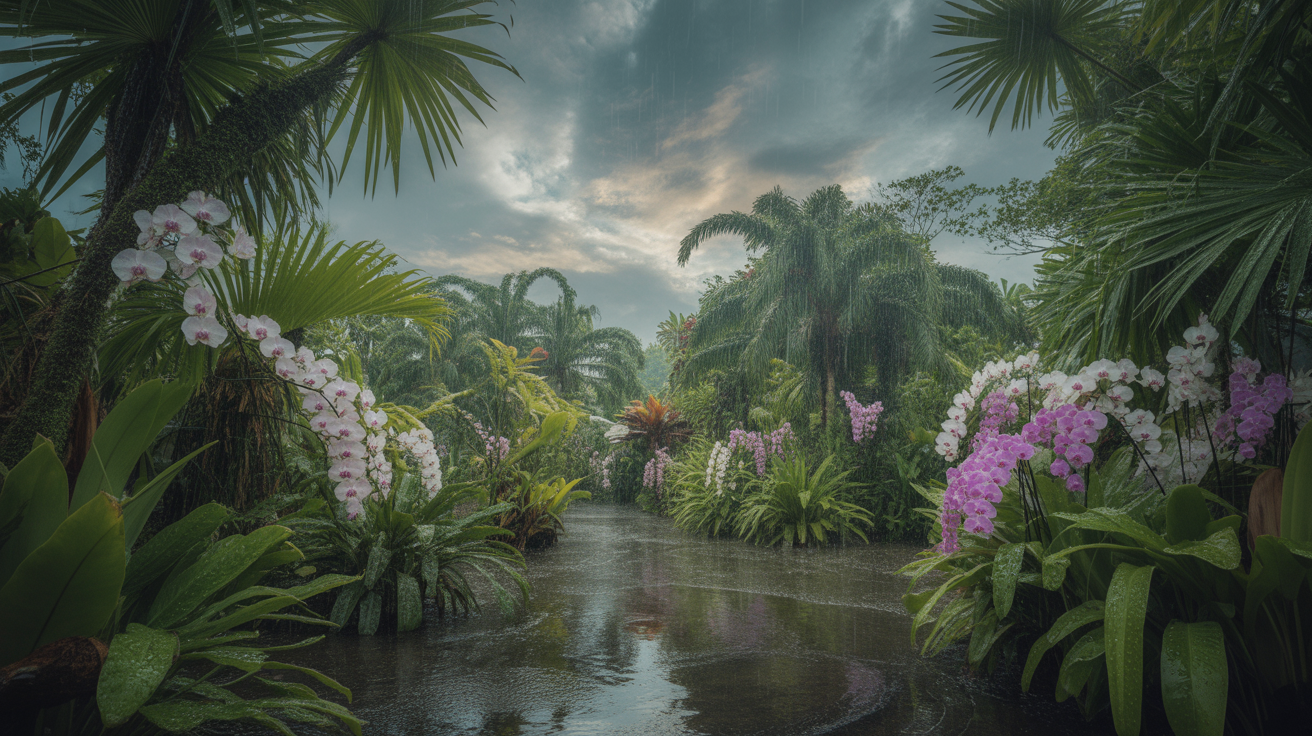
The Monsoon Afternoon
Singapore's signature 20-minute downpour — lush, sudden, and reliable enough to plan around. The orchids thank it daily
By air: Changi Airport (SIN) is the primary gateway and among the world's most connected — over 400 cities across six continents, served by more than 100 airlines. Singapore Airlines flies non-stop from 8 US cities, most European capitals, Australia, New Zealand, and across Asia. Scoot, its low-cost subsidiary, handles regional budget routes. Seletar Airport handles private aviation and some Firefly ATR turboprops to Malaysia.
By land from Malaysia: Two causeways connect Singapore to Johor — the Woodlands Causeway (built 1923, the original) and the Tuas Second Link (1998). Johor Bahru is 30–60 minutes by car from central Singapore, though border queues on Friday/Sunday evenings are infamous. The new Johor–Singapore Rapid Transit System (RTS), opening late 2026, will link Woodlands North MRT to JB Sentral in 6 minutes with direct cross-border customs. Long-distance trains from Kuala Lumpur (ETS) arrive at JB Sentral, requiring a causeway transfer to Singapore.
By sea: Ferries run from Singapore's Tanah Merah and Harbourfront terminals to Indonesia's Batam (45 minutes) and Bintan (55 minutes) — popular weekend getaways with visa-free entry for most nationalities. Cruise ships dock at Marina Bay Cruise Centre.
Getting around Singapore:
MRT (Mass Rapid Transit) is the backbone — six lines, 143 stations, covering the entire island. Fares S$0.99–2.50 based on distance. Running 5:30 a.m. to midnight. Trains are air-conditioned, prompt, and clean enough that eating or drinking onboard carries a S$500 fine (enforced). Tap contactless credit cards directly, or buy an EZ-Link card (S$12 including S$7 credit).
Buses fill the gaps — 350+ routes, S$1–2.50, same payment methods as MRT. Bus 36 from Changi to Orchard Road (S$2.50) is the cheapest scenic airport transfer.
Grab (rideshare, dominant locally) replaces Uber. Fares from Changi to downtown S$20–28. Use Grab's in-app wallet (GrabPay) for slight discounts. Street taxis (ComfortDelGro, Premier, TransCab) are also reliable and metered.
Cycling: Singapore has 550km of Park Connector Network bike paths, and bike-share schemes (Anywheel, HelloRide) with hourly rates under S$2. East Coast Park to Changi Beach (20km) is the classic ride.
💡 Essential Facts
Time zone: SGT (UTC+8), no DST. Same as Beijing, Perth, KL.
Plug: Type G (UK-style, three square pins), 230V/50Hz. Universal adaptors easy to find at 7-Eleven for S$5.
Water: Tap water is safe to drink, regulated to WHO standards. Most Singaporeans drink it directly. Bottled water is widely available for those who prefer.
SIM cards: Singtel, StarHub, M1 tourist SIMs from S$12 for 7 days with 100GB+ data. Available at Changi Airport arrivals and 7-Elevens. eSIM widely supported — Airalo, Nomad.
Tipping: Not customary. A 10% service charge and 9% GST are typically already included in restaurant bills ("++" on menus). Rounding up taxi fares is polite but not expected.
Emergency: 999 (police), 995 (ambulance/fire), 993 (civil defence). Response times in central areas typically under 5 minutes.
Tourist info: Singapore Tourism Board visitor centres at Orchard Road (333A), Changi Airport (all terminals), Chinatown, Kampong Glam.
Dress code: Casual and tropical. Shorts and t-shirts fine nearly everywhere. Smart-casual for fine dining and nightclubs. Cover shoulders and knees for mosques and temples. Trainers/flip-flops not allowed in some clubs and casinos.
LGBTQ+: Section 377A (criminalising male same-sex acts) was repealed in 2022. Attitudes are generally private-tolerant but public demonstrations remain sensitive. Pink Dot annual rally (June) at Hong Lim Park draws large crowds.
Singapore is routinely ranked among the world's most expensive cities for expats (Mercer and EIU surveys), but the distribution is uneven. Housing and cars are astronomical; food and public transport are very affordable. A sensible traveller can visit Singapore surprisingly cheaply if willing to eat where Singaporeans eat and ride the MRT where Singaporeans ride.
🎒 Budget — S$70–120 / day
- Hostel dorm: S$25–40
- Hawker meals × 3: S$15
- MRT day pass: S$10
- Free attractions (Gardens, Merlion)
- Tiger beer at 7-Eleven: S$5
🏨 Mid-range — S$200–400 / day
- 3–4★ hotel: S$150–280
- Mix hawker + restaurants: S$50–80
- Grab rides: S$30
- One paid attraction (Gardens domes): S$32
- Craft cocktail: S$25
💎 Luxury — S$600+ / day
- 5★ Marina Bay Sands: S$500–1500
- Fine dining (Odette, Burnt Ends): S$300+
- Private Grab / taxi: S$60+
- F1 Grand Prix paddock: S$5,000+
- Sling at Long Bar: S$39
Sample prices (2026): Hawker plate S$4–8 · coffee/kopi S$1.50 at kopitiam, S$6 at café · beer S$4 at 7-Eleven, S$15 at bar · MRT single trip S$0.99–2.50 · Grab 5km S$10–15 · museum S$15–25 · Universal Studios S$85 · SG Night Safari S$55.
Singapore's hotel scene runs from the iconic to the functional, with genuine boutique character in the heritage shophouse districts and increasingly compact capsule rooms for price-conscious travellers. Book ahead — occupancy rates rarely fall below 85%, and F1 race weekend (September), Art Week (January), and Chinese New Year all see prices double.
Icons: Marina Bay Sands (the Infinity Pool, of course — S$450–1,500/night). Raffles Hotel (the 1887 colonial legend, fully restored 2019 — suites only, from S$700). The Fullerton Hotel (former General Post Office, neoclassical grandeur on the river, from S$380). Capella Sentosa (2018 Trump–Kim summit venue, from S$900).
Boutique mid-range: The Vagabond Club (Little India, quirky Jacques Garcia design, from S$250). The Sultan (Kampong Glam, restored shophouses, from S$200). Hotel Clover 33 (Jalan Sultan, Peranakan style, from S$180). The Scarlet Singapore (Chinatown, gothic boudoir rooms, from S$220).
Affordable: ibis Styles Singapore on Macpherson (S$90–140). Hotel Mi Bencoolen near Orchard (S$120–160). Hotel 81 chain (S$80–110, reliable if basic).
Capsule & hostels: The Pod Capsule Hotel (Beach Road, S$50–80). Adler Hostel (Chinatown, S$60–90). Wink Capsule Hostel (Chinatown, S$45–70). The Great Madras (Little India, S$35–60 dorms).
Location strategy: Marina Bay for the view and the wow factor. Orchard Road for shopping convenience. Chinatown or Kampong Glam for character and food. Clarke Quay for nightlife. East Coast/Katong for local flavour at cheaper rates. Avoid Geylang after dark unless you know what you are doing.
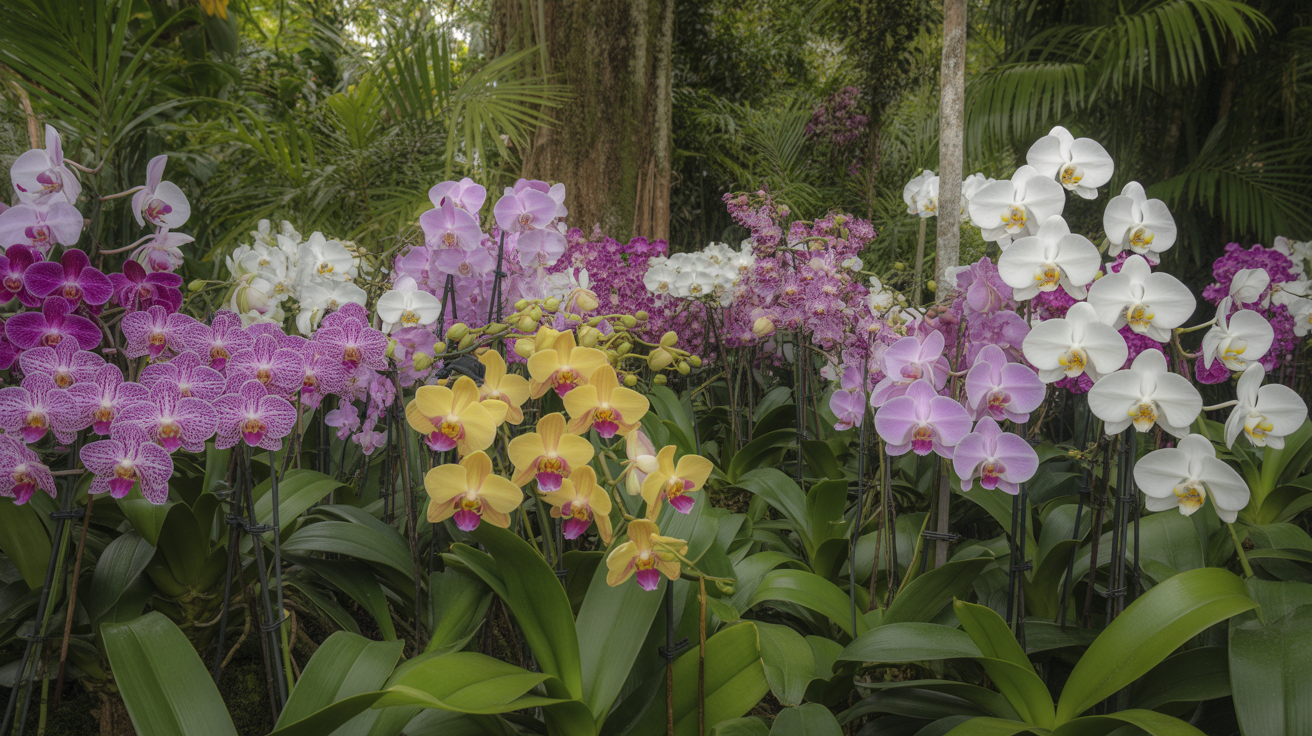
Singapore Botanic Gardens — UNESCO World Heritage
The National Orchid Garden holds the world's largest orchid display with over 1,000 species — Singapore's first and only UNESCO site, inscribed 2015
Singapore's public calendar reflects its plurality — major festivals of every resident community are national public holidays, and each major ethnic enclave turns into a street-festival stage at the appropriate time of year. The annual rhythm gives the nation its texture.
Chinese New Year (January/February, 15 days): The biggest festival. Chinatown Light-Up begins a month before, with street lanterns and bazaars. Chingay Parade (the Saturday after CNY Day 1) is Asia's largest float-and-performer spectacle. River Hongbao on the Esplanade lights up Marina Bay. Families give red envelopes (hongbao) containing lucky sums, and everyone eats yusheng — the raw-fish "prosperity" salad tossed high in the air for luck.
Thaipusam (late January): Hindu festival honouring Lord Murugan. At dawn, devotees pierce their bodies with spears and hooks and carry ornate kavadi altars 4km from Sri Srinivasa Perumal Temple in Little India to Sri Thendayuthapani Temple on Tank Road. One of the most extraordinary spectacles in Southeast Asia, entirely open to public observation.
Hari Raya Aidilfitri (end of Ramadan, variable): Muslim celebration marking the end of fasting. Kampong Glam glitters with a month of pasar malam (night markets) before. Open houses traditional — friends and colleagues of all races visit Muslim families for lemang, rendang, and kueh.
Deepavali (October/November): Hindu festival of lights. Little India turns into a month-long carnival of oil lamps, marigolds, and rangoli chalk art on sidewalks. Serangoon Road shop displays are dazzling.
National Day (9 August): Singapore's founding anniversary is celebrated with a mass-participation parade, aerobatic display, and the most spectacular fireworks show of the year over Marina Bay. The dress rehearsals two weekends before are free and less crowded.
Singapore Grand Prix (September): The world's first night F1 race, since 2008, through the streets around Marina Bay. Three-day festival ticket includes headliner concerts (past acts: Queen, Green Day, Robbie Williams, Blackpink). Entire country turns out.
Mid-Autumn Festival (September/October): Chinese lantern festival. Gardens by the Bay lanterns, mooncake sales everywhere, tea-drinking by moonlight. Chinese Garden in Jurong is the traditional venue.
ZoukOut (December): Asia's largest beachside dance music festival on Sentosa, running since 2000. 40,000+ attendees, dawn-to-dusk DJ sets.
Singapore holds two UNESCO listings — one for a physical site, one for an intangible tradition — both acquired within the past decade and both absolutely defining of the country today.
Singapore Botanic Gardens (2015) — Singapore's first and, so far, only UNESCO World Heritage Site. The 82-hectare gardens, founded in 1859 on the former Ladies' Lawn Tennis Club, are the oldest botanic gardens in Southeast Asia and the most significant tropical botanic institution of the colonial era. Their most famous contribution to history: Henry Ridley's successful experimental cultivation of Hevea brasiliensis — the Amazonian rubber tree — which transformed the economies of British Malaya, Indonesia, and Sri Lanka, and supplied the tyres for the entire 20th-century automotive revolution. Today the gardens house the National Orchid Garden (over 1,000 species, the world's largest), primary rainforest remnants, and free entry daily 5 a.m. to midnight. MRT: Botanic Gardens (Downtown or Circle Line).
Hawker Culture (2020) — inscribed on UNESCO's Representative List of the Intangible Cultural Heritage of Humanity. Singapore's communal eating and cooking tradition at hawker centres became the first street-food culture anywhere to receive the honour. The inscription recognised not just the food but the social infrastructure — the way hawker centres function as "community dining rooms" where Singaporeans of every ethnicity and income share tables, how dishes have evolved through cross-cultural borrowing, and the apprentice-based transmission of craft across generations. The listing arrived at a time when hawker culture was under genuine threat — ageing hawkers, declining succession, rising rents — and has meaningfully changed government policy around hawker stall subsidies and training.
Beyond the well-trodden Marina Bay–Sentosa–Orchard triangle, Singapore rewards curious travellers with neighbourhoods and experiences that almost no first-time visitor sees.
Pulau Ubin — the last kampong (village) in Singapore. Take the S$4 bumboat from Changi Point Ferry Terminal to this 10 km² granite island where 38 residents still live in wooden stilt houses with zinc roofs, chickens in the yard, and no air-conditioning. Rent a bicycle (S$8/day) and explore the Chek Jawa Wetlands, a tidal intertidal ecosystem of mangrove, seagrass, and coral rubble flats. This is Singapore as it was in 1965. Go on a weekday; Saturdays get crowded.
Tiong Bahru — Singapore's oldest public housing estate, built 1936 in art deco "Streamline Moderne" style and now the hipster capital. Browse independent bookshops (BooksActually was the pioneer; its successors live on), drink flat whites at Curious Palette, and have breakfast at the century-old Tiong Bahru Market — Loo's Hainanese Curry Rice has been serving Peranakan-style curry chicken since 1944.
Haw Par Villa — Singapore's weirdest attraction. Free, open-air theme park built 1937 by the Burmese-Chinese Aw brothers (inventors of Tiger Balm), containing 1,000+ painted concrete statues depicting Chinese mythology, Confucian moral tales, and — most memorably — the Ten Courts of Hell: graphic scenes of sinners being sawn in half, dismembered, and boiled. Traumatised generations of Singaporean schoolchildren. Still worth seeing.
Joo Chiat & Katong — the Peranakan heart. The street of rainbow-coloured shophouses on Koon Seng Road (Instagram-famous). The Peranakan Museum (reopened 2023 after major renovation). And Katong 328 on East Coast Road for the best Katong laksa in Singapore — the original Katong laksa — which you must eat with a spoon only, since the noodles are cut short.
MacRitchie TreeTop Walk — a 250-metre suspension bridge through the rainforest canopy in the Central Catchment Nature Reserve, home to native long-tailed macaques, colugos (flying lemurs), and sugar gliders. The full loop is 11 km, the shortened variants much less. Free entry.
Kranji & Singapore farms — north of the Causeway, Singapore has a surviving farming district with frog farms, koi farms, goat-milk dairies, and hydroponic vegetable farms. Hay Dairies offers tastings. D'Kranji Farm Resort has farm-stay chalets. Most farms open only Saturday/Sunday.
The Southern Ridges — a 10 km forested walking trail linking Mount Faber, Telok Blangah Hill, and HortPark via the architecturally stunning Henderson Waves bridge (36 m above ground, undulating wooden deck). Sunset views over the harbour are spectacular.
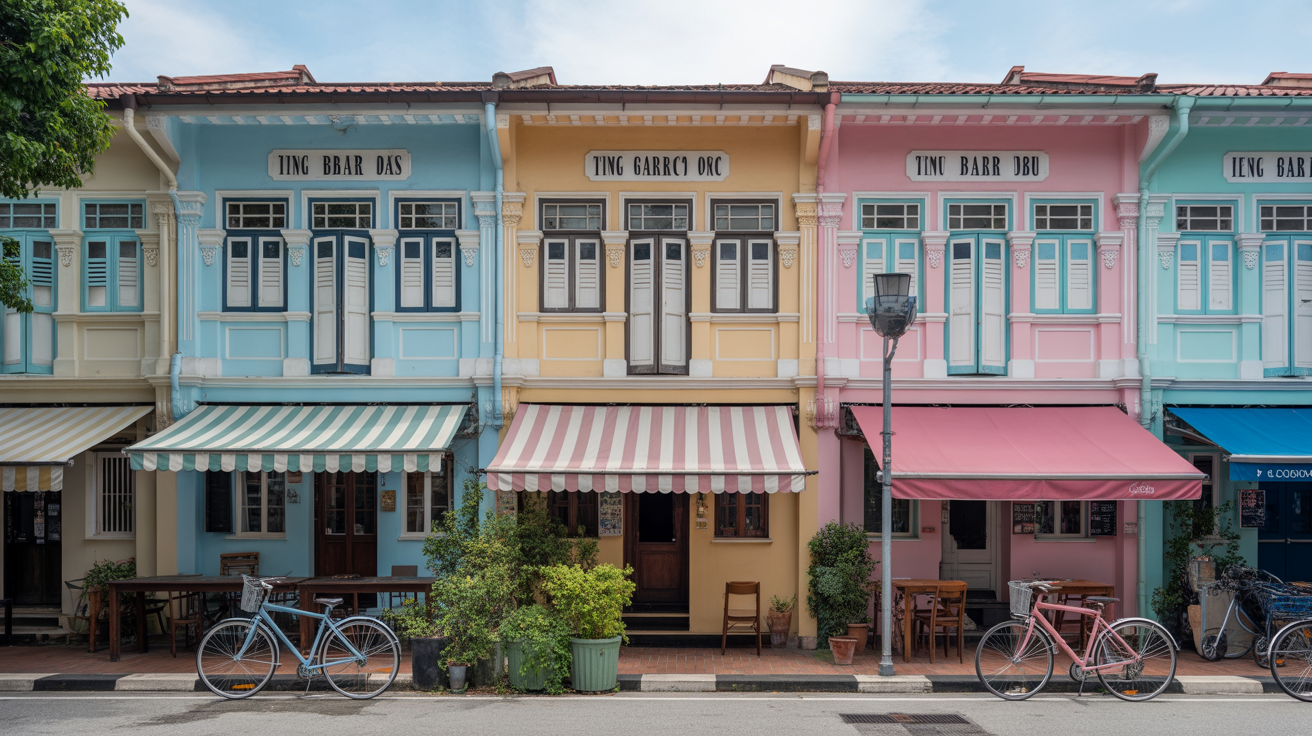
Tiong Bahru — 1930s Streamline Moderne
Singapore's oldest public housing estate, now a hipster enclave where art deco lines meet third-wave coffee and independent bookshops
Essential: Passport valid 6+ months beyond arrival, e-card visa confirmation (if required — most Western passports get 90 days visa-free), SG Arrival Card (mandatory, free, submit online within 3 days before arrival at eservices.ica.gov.sg), travel insurance, contactless Visa/Mastercard (accepted virtually everywhere), small amount of SGD cash for smaller hawkers, universal Type G (UK three-pin) adapter.
Clothing: It is hot and humid all year — pack lightweight, breathable fabrics (linen, cotton, quick-dry technical wear). One light rain shell for tropical downpours. A light long-sleeve cardigan or wrap for viciously over-air-conditioned malls, MRT carriages, and restaurants. Modest clothing (covered shoulders and knees) for temples and mosques — Sultan Mosque lends robes at the door. Swimwear for hotel pools and Sentosa beaches. Comfortable walking sandals or sneakers — you will cover a lot of ground.
Health & protection: SPF 50+ sunscreen (the equatorial sun is brutal), insect repellent with DEET (dengue is endemic — cases spike in rainy season), a refillable water bottle (tap water is safe and drinkable), sunglasses, a small hand towel or handkerchief for the heat, any prescription medications in original packaging with copies of prescriptions.
What NOT to bring: Chewing gum (banned since 1992 — therapeutic gum requires a prescription); vapes and e-cigarettes (completely banned, possession is a S$2,000 fine, sale is S$10,000); controlled drugs of any kind (Singapore has mandatory death penalty for trafficking — this is not theoretical, executions still occur); shisha, kretek, and smokeless tobacco; fresh fruit, meat, or plant material (biosecurity). Also leave behind expectations of messy chaos — this is the world's most orderly city.
Official: visitsingapore.com — the Singapore Tourism Board's comprehensive visitor portal. ica.gov.sg — Immigration & Checkpoints Authority (SG Arrival Card, visa info). lta.gov.sg and the MyTransport.SG app — live MRT, bus, and taxi information. Emergency: Police 999, Ambulance & Fire 995, Non-emergency police 1800-255-0000, Anti-scam 1800-722-6688.
Apps to download before arrival: Grab (rideshare + food delivery + payments — the Southeast Asian super-app, essential); SimplyGo (MRT/bus fare payment by contactless card, no more EZ-Link needed); Google Maps (transit directions here are excellent); ChopeDeals and Burpple Beyond (restaurant reservations and discounts); Singpass (only if you have a local stay); NEA myENV (air quality / PSI haze alerts during the Indonesian burning season).
Connectivity: Buy a tourist SIM at Changi Airport — Singtel hi!Tourist SIM (S$15 for 100GB/14 days), Starhub, or M1. Or use an eSIM from Airalo / Holafly. Free public Wi-Fi (Wireless@SGx) is everywhere — hawker centres, libraries, MRT stations. Online communities: r/singapore (honest local Reddit), HungryGoWhere and LadyIronChef for food reviews, TimeOut Singapore for current events.
History & politics: "From Third World to First: The Singapore Story" by Lee Kuan Yew — the founding prime minister's first-person account of building a nation. Essential if you want to understand why Singapore works. "A History of Modern Singapore 1819–2005" by C.M. Turnbull — the scholarly standard, comprehensive and readable. "Singapore: A Biography" by Mark Frost and Yu-Mei Balasingamchow — lively, story-driven popular history.
Fiction: "Crazy Rich Asians" by Kevin Kwan — yes, really; it is sharper and more knowing about Singaporean class than most sociology. "Ministry of Moral Panic" by Amanda Lee Koe — brilliant short stories that X-ray modern Singaporean anxieties. "Ponti" and "Small Worlds" by Sharlene Teo and Caleb Azumah Nelson. The Peranakan classic "The Shrimp People" by Rex Shelley captures the island's vanishing Eurasian world.
Food & culture: "The End of Char Kway Teow and Other Hawker Mysteries" by Leslie Tay — an ode and an elegy to the hawker tradition. "Chop Suey Nation" by Ann Hui touches on the Chinese diaspora food story. Magazines: The Straits Times (the paper of record), Today, and the consistently excellent RICE Media long-form journalism online.
A handful of hand-picked video searches to help you plan — and dream. From hawker deep-dives to Marina Bay drone flights, these searches surface the best travel films, documentaries, and street-food guides on YouTube.
The Rain Arrives on Schedule
An afternoon monsoon rolls across the Singapore Strait — Singapore averages 2,300 mm of rainfall a year, more than London gets in three
🍜 Hawker Culture — The World's First UNESCO Street Food
In December 2020, UNESCO inscribed Singapore's hawker culture on the Representative List of the Intangible Cultural Heritage of Humanity — the first country ever to receive the honour for street food. The nomination was not about any single dish but about the centres themselves: the architecture, the economics, the rituals, and above all the way Singaporeans of every ethnicity and income eat shoulder-to-shoulder at communal tables.
Today, 114 government-licensed hawker centres house roughly 6,000 stalls. Two stalls — Hawker Chan (Hong Kong soya sauce chicken rice) and Liao Fan Hawker Chan — famously held Michelin stars for S$2.50 plates, the cheapest Michelin-starred meal in the world. Hawker licences are transferable between family members but heavily controlled, which is why the government launched the Hawkers Development Programme in 2018 to attract young cooks and keep the tradition alive.
The unwritten rules are worth knowing: place a packet of tissues on a seat to "chope" (reserve) it; return your tray to the racks (since 2022, mandatory with a fine); order by pointing and saying "one" — and whatever you do, don't expect a Michelin-starred meal to take longer than three minutes to cook.
S$2.50
Cheapest Michelin Meal
🌿 Half the Island Is Green
Despite being one of the world's most densely populated countries, 47 % of Singapore's land area is covered in greenery. The government's stated ambition has evolved from "Garden City" (1967) to "City in a Garden" to today's "City in Nature". Every apartment is by policy within 10 minutes' walk of a park.
🚫 The Chewing Gum Ban
Singapore has banned the import and sale of chewing gum since 1992 after vandals jammed MRT door sensors with it. Personal possession for your own use is legal. Therapeutic nicotine gum has been permitted since 2004 but only with a prescription from a doctor or dentist.
✈️ The Best Airport on Earth
Changi has been named World's Best Airport by Skytrax 13 times, more than any other. Terminal 5, breaking ground in 2025 and opening in the mid-2030s, will be a single building larger than Terminals 1–4 combined, and will lift Changi's capacity to 140 million passengers a year.
🗣️ Four Official Languages
Singapore has four official languages — English, Mandarin, Malay, Tamil — with Malay designated the national language (the national anthem is sung in Malay). English is the language of administration and instruction; most Singaporeans speak at least two languages; and Singlish, the informal patois, absorbs all four plus Hokkien.
🏝️ The Island Is Growing
Through aggressive land reclamation, Singapore has grown from 581 km² in 1960 to 733 km² today — a 26 % increase. Marina Bay, Changi Airport, Tuas Port, and half the Jurong industrial district all sit on reclaimed land. Current plans target 800 km² by 2030, though regional disputes over sand imports have complicated matters.
🦁 The Name Is a Myth
"Singapura" means Lion City in Sanskrit — from a 13th-century legend in which a Srivijayan prince saw what he took to be a lion on the island. There have never been lions here. What he saw was almost certainly a Malayan tiger, which did roam the island until the last was shot in 1930 under a pool table at Raffles Hotel.
💸 The World's Priciest Licence Plate
To own a car in Singapore, you must first win an auction for a Certificate of Entitlement (COE), valid for 10 years. Peak 2023 prices hit S$150,000 — for the paperwork alone, before you buy the car. The policy is the world's most aggressive road-pricing system and is why only 11 % of Singaporean households own a vehicle.
🧬 NEWater & Water Independence
Singapore imports part of its water from Malaysia under a 1962 treaty expiring in 2061 — a geopolitical sword hanging over the nation. The response: NEWater, a programme of ultra-purified recycled sewage that now meets 40 % of national demand, rising to 55 % by 2060. Visitors can drink a bottle at the NEWater visitor centre. It tastes like water.
Lee Kuan Yew (1923–2015) — founding Prime Minister and architect of modern Singapore. Ruled from 1959 to 1990, transforming a swampy colonial port into a global financial centre. Revered and controversial in roughly equal measure; his "Asian values" doctrine and pragmatic authoritarianism remain touchstones of political argument across the region. His son Lee Hsien Loong served as PM 2004–2024; current PM Lawrence Wong took office May 2024, the first leader from outside the Lee family dynasty.
Arts & entertainment: Tan Swie Hian — Singapore's most celebrated living artist, master of Chinese ink painting and poetry. Kevin Kwan — novelist, Crazy Rich Asians. Jon M. Chu (Singapore-raised) — director of the same film's global adaptation. Stefanie Sun (Sun Yanzi) — Mandopop superstar with 33 million albums sold across Asia. JJ Lin — singer-songwriter, one of the biggest Mandopop artists of the 2000s–2020s.
Science & business: Sim Wong Hoo (1955–2023) — founder of Creative Technology, pioneered PC sound cards with the Sound Blaster. Forrest Li — founder and CEO of Sea Limited (Shopee, Garena), Singapore's largest listed tech firm. Min-Liang Tan — co-founder and CEO of gaming-hardware giant Razer.
Sport: Joseph Schooling — 100 m butterfly Olympic gold medallist, Rio 2016, defeating Michael Phelps by 0.75 s for Singapore's first and (so far) only Olympic gold. Feng Tianwei — three-time Olympic table-tennis medallist. Fandi Ahmad — football icon, first Singaporean to play in Europe (FC Groningen, 1983).
Formula 1 Singapore Grand Prix — the showpiece sporting event of Singapore, held annually around the Marina Bay Street Circuit. Inaugurated in 2008, it was the first-ever F1 night race, run under 1,500 LED projectors illuminating the circuit to daylight levels. The race contract has been extended through 2028. Three-day weekend concert line-ups (past headliners: Robbie Williams, Coldplay, Guns N' Roses, Kendrick Lamar, Post Malone) make it as much a festival as a race.
Football: The Singapore Premier League is modest — nine teams, small crowds — but the Lions national side has four ASEAN (AFF) Championship titles (1998, 2004, 2007, 2012), record holders together with Thailand. National Stadium at Sports Hub (55,000 seats, retractable roof) is one of Asia's finest venues, hosting rugby, football, and mega-concerts.
Swimming, sailing, and badminton form the backbone of Singapore's Olympic programme. Beyond Joseph Schooling's Rio gold, sailors have produced several Olympic medallists. Badminton powerhouse Loh Kean Yew became world champion in 2021. Esports: Singapore hosts the region's largest esports events; Team Flash and RRQ Hoshi compete at the top level of Mobile Legends and Valorant.
Singapore's media landscape is dominated by two government-linked giants: SPH Media Trust (publisher of The Straits Times, The Business Times, Lianhe Zaobao, Berita Harian, Tamil Murasu) and Mediacorp (state broadcaster, owner of Channel NewsAsia, Channel 5, Channel 8, and the national radio networks). Both are considered reliable and professional but politically cautious on domestic matters.
Press freedom is more constrained than Singapore's modernity might suggest. Reporters Without Borders ranks Singapore around 126th / 180 in its World Press Freedom Index — below Hungary and Bulgaria, above much of mainland Southeast Asia. Defamation suits, the Protection from Online Falsehoods and Manipulation Act (POFMA, 2019), and the Foreign Interference (Countermeasures) Act (FICA, 2021) give authorities significant leverage over domestic and foreign coverage. Self-censorship on political, royal-family-adjacent, and religious matters is pervasive.
Independent voices: RICE Media and The Kopi do excellent long-form cultural journalism. Mothership is the dominant digital news portal. The banned-in-most-things The Online Citizen operates from Taiwan after its Singapore licence was revoked in 2021. Foreign outlets — Reuters, BBC, Bloomberg, the Financial Times, The Wall Street Journal — all have major regional bureaux in Singapore and report broadly without hindrance on matters outside the country.
Share your Singapore photos! Send to photos@kaufmann.wtf to be featured.
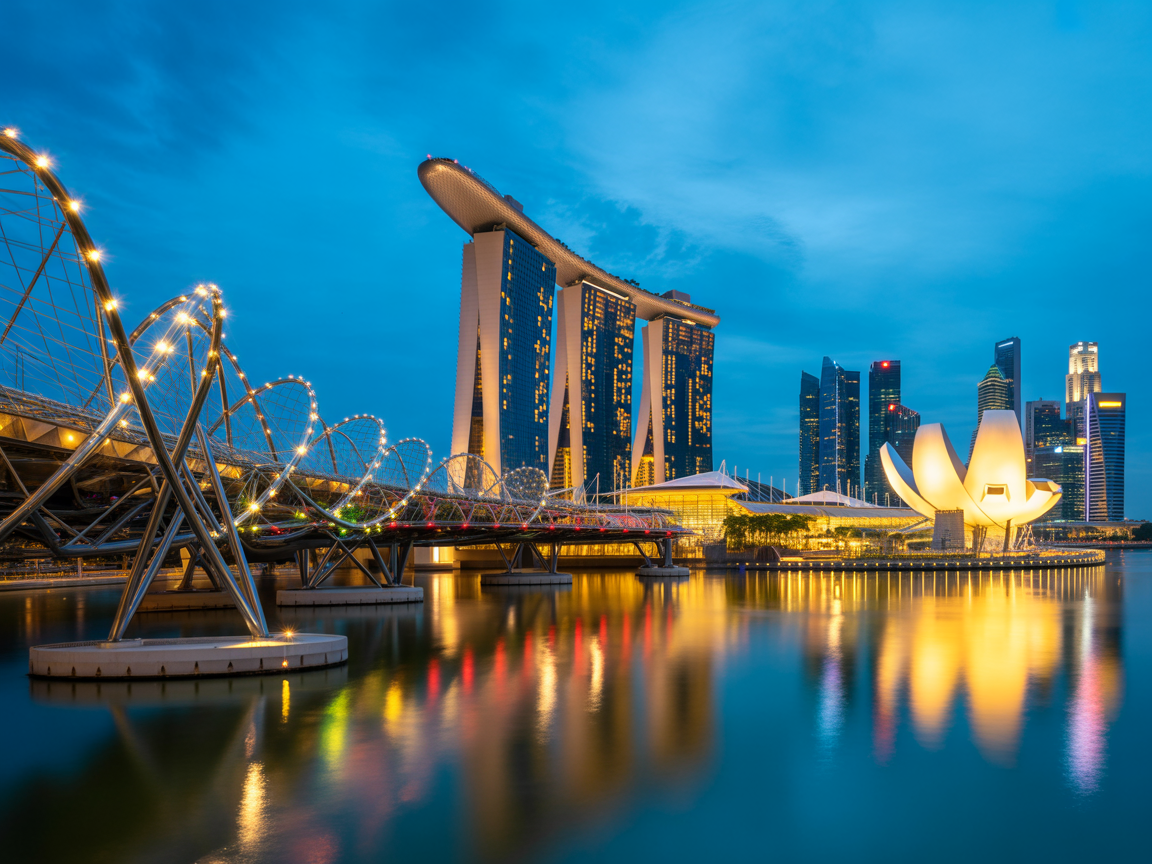
Marina Bay After Dark
Marina Bay Sands, Helix Bridge, and the CBD reflected in the bay
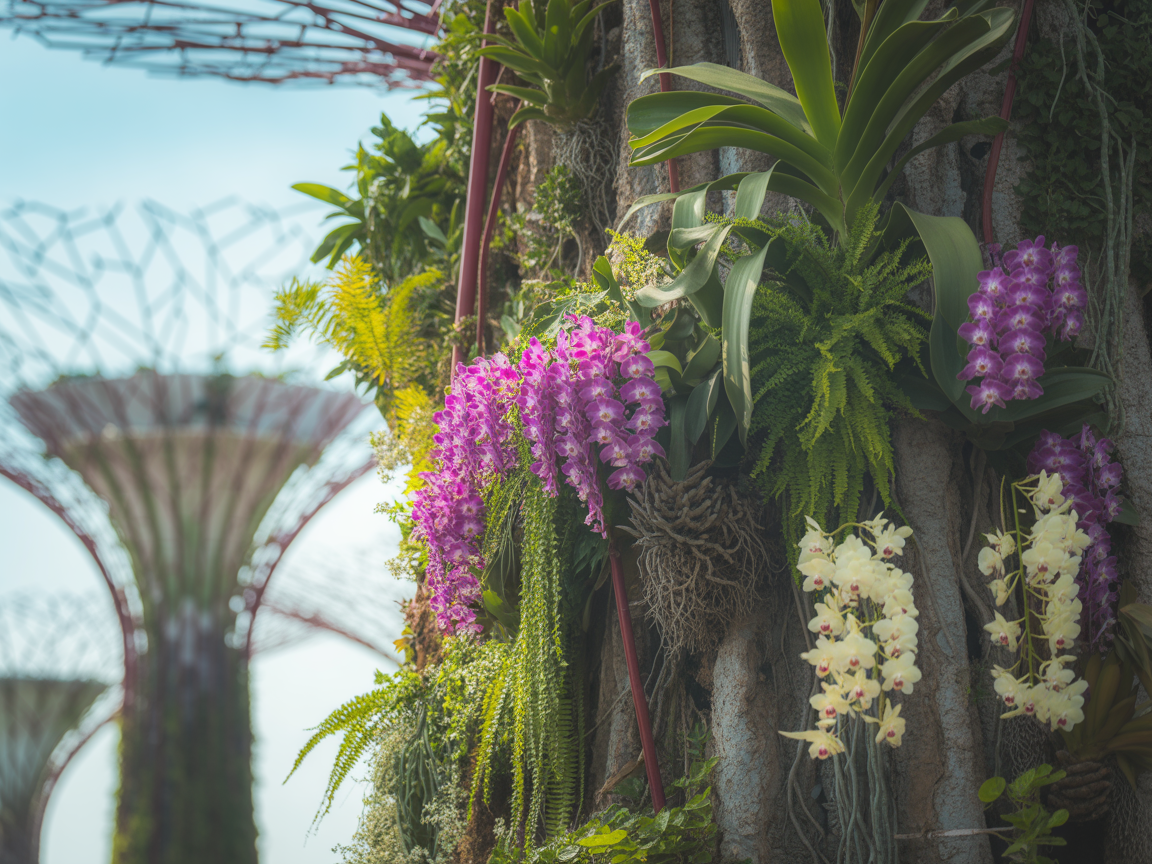
Supertree Grove
Vertical gardens glow during the free nightly Garden Rhapsody
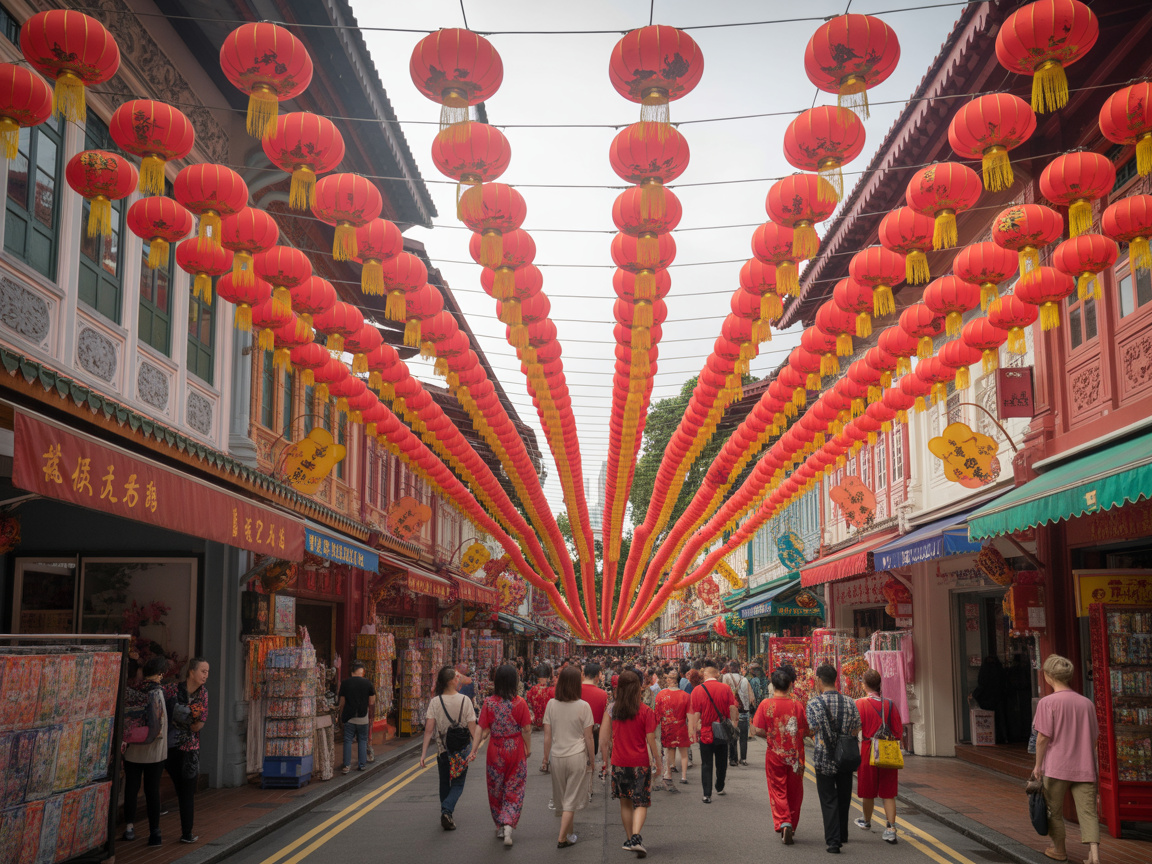
Chinatown at Lunar New Year
A sea of red lanterns over Pagoda Street during Chun Jie
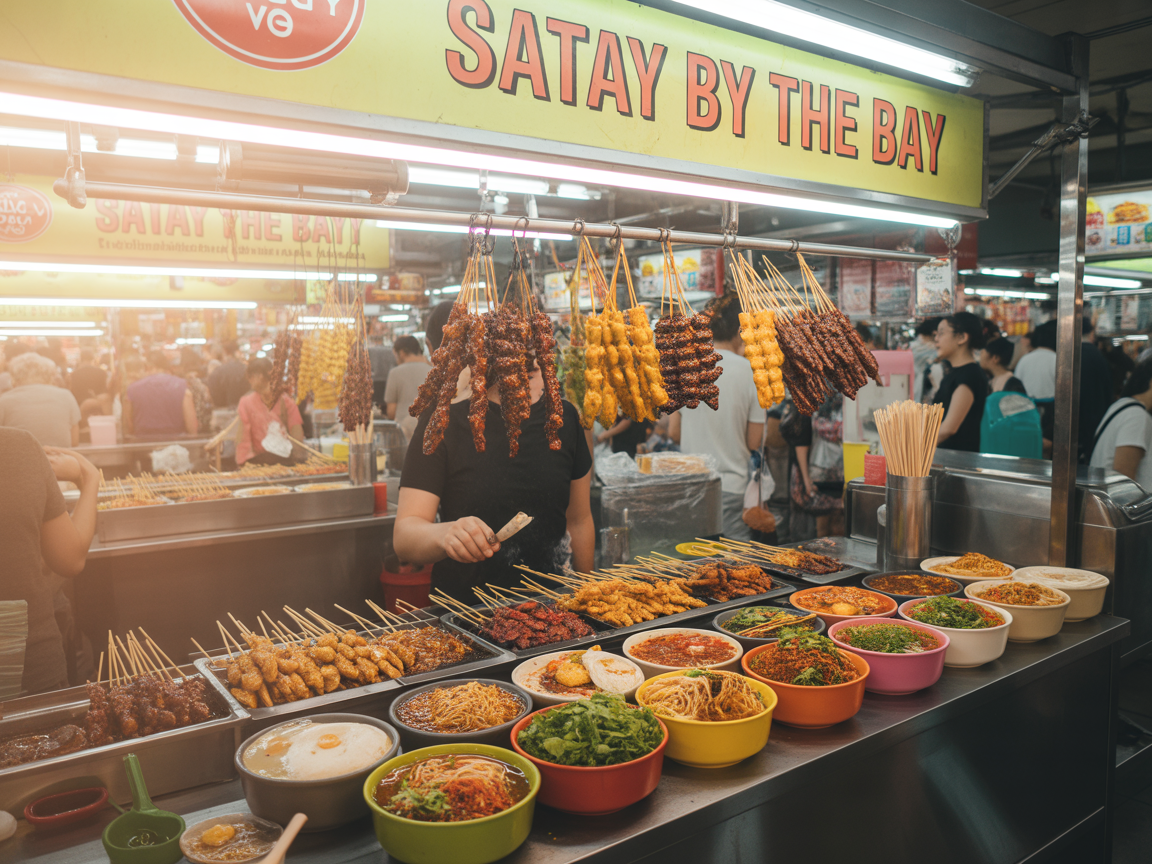
Hawker Laksa
Coconut curry, prawns, cockles — the UNESCO-listed bowl
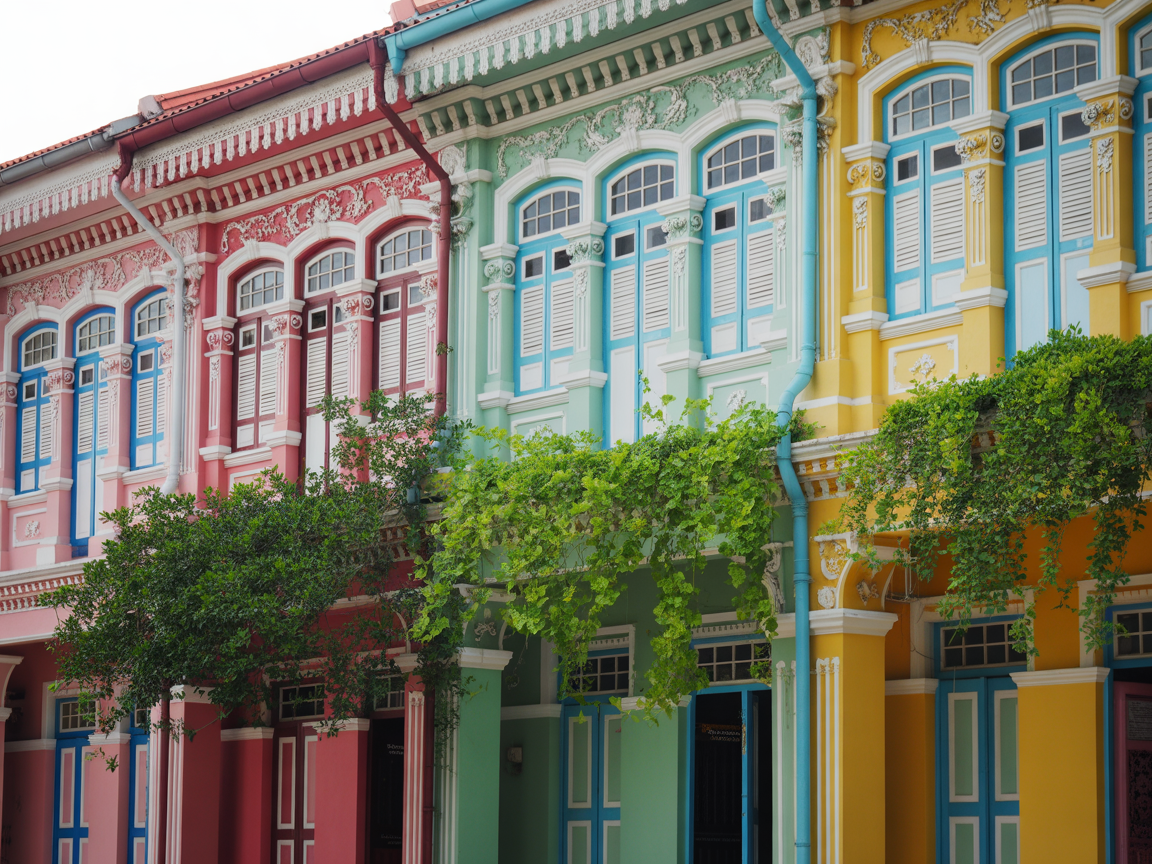
Koon Seng Road
The rainbow Peranakan shophouses of Joo Chiat
Singapore is an argument with itself, and that is what makes it endlessly interesting. It is the city that proves a state can be spotless without being sterile, disciplined without being joyless, affluent without losing its hawker centres. It is also the city that reminds you — walking past the gleaming Marina Bay skyline on one side and a century-old Hindu temple's gopuram rising from a side street on the other — that modernity does not have to mean forgetting.
Come for the food (everyone does). Stay for the surprising gentleness of a place that should, by every cliché, feel robotic — and instead hums with the quiet dignity of a nation that decided, within one generation, to be something new. Two full weeks is not too long. And three nights is enough to be converted.
"Majulah Singapura" — Onward, Singapore
—Radim Kaufmann, 2026
Support This Project 🌍
This World Travel Factbook is a labor of love – free to use for all travelers. If you find it helpful, consider supporting its continued development.
📬 Stay Updated
