
⚡ Malaysia — Southeast Asia’s Best-Kept Secret at a Glance
🌟 Overview
Malaysia is Southeast Asia at its most concentrated: multiple civilizations, three world-class cuisines, ancient rainforest and gleaming glass towers, the world’s largest cave passages and the world’s second-tallest towers (until 2004, when the Burj Khalifa overtook Petronas) — all compressed into a country of 33 million people that spans the Malay Peninsula and the northern third of Borneo. It is one of the world’s most underrated travel destinations: easier, cheaper, and more English-speaking than most Southeast Asian neighbors, with more variety per square kilometer than almost anywhere on Earth.
The diversity is genuine rather than performed. Malaysia’s population is approximately 62% Malay and Bumiputera (indigenous peoples), 21% Chinese, 6% Indian, and 11% other — reflecting three civilizations that arrived in waves over the last 2,000 years and have coexisted (not always easily, and the tensions are real) in a multi-ethnic society that produces the most distinctive cuisine in the region. At a Penang hawker center, Malay, Chinese, Indian, and Nyonya vendors compete for the same table’s custom; this particular competitive coexistence has produced the finest street food culture on Earth. Every serious food traveler must eventually come here.
For American travelers, Malaysia offers the practical combination that most Southeast Asian destinations lack: English is spoken everywhere (it was the language of British colonial administration and remains an official language and the medium of business education), the infrastructure is first-world in the cities, the safety is excellent (US State Dept Level 1), and the value is exceptional — a full day of eating extraordinary food at hawker stalls can cost $10. The country is Muslim-majority but religiously moderate and largely secular in its governance; alcohol is freely available in KL and the major tourist cities. And visa-free entry for 90 days means zero pre-departure bureaucracy.
📚 History
The strategic position of the Malay Peninsula — controlling the Strait of Malacca, the shipping lane between the Indian Ocean and the South China Sea — has made it one of history’s most contested and cosmopolitan spaces. Indian traders arrived in the first centuries CE, bringing Hinduism and Buddhism that defined the region for over a millennium. The great Srivijaya Empire (7th–13th centuries), based in Sumatra but controlling the peninsula, was the dominant maritime power of its era, facilitating trade and transmitting culture across the archipelago.
The Sultanate of Malacca (1400–1511) is the pivotal chapter: a Muslim trading city-state at the tip of the peninsula that controlled the spice trade between East and West and converted the surrounding region to Islam in the process. When Vasco da Gama rounded Africa in 1498 and opened the sea route to Asia, the Portuguese followed directly to Malacca, capturing it in 1511 in one of history’s most strategically significant military actions. Four centuries of European colonial competition followed: Portuguese (1511), then Dutch (1641), then British (from 1786 and comprehensively from 1824).
British Malaya developed into one of the empire’s most economically significant possessions: rubber and tin made it the world’s largest producer of both commodities. To work the plantations and tin mines, the British brought Chinese and Indian laborers, creating the multi-ethnic population that defines Malaysia today. Independence came on August 31, 1957; the Federation of Malaysia (including Sabah and Sarawak) was formed in 1963; Singapore was expelled in 1965. The May 13, 1969 racial riots — violence between Malay and Chinese communities following a contested election — led to the New Economic Policy (NEP) that restructured Malaysian society and has remained the central political fact ever since.
🗺️ Geography
Malaysia consists of two separate landmasses: Peninsular Malaysia (West Malaysia), attached to Thailand in the north and connected to Singapore by a causeway in the south; and East Malaysia, comprising the states of Sabah and Sarawak on the northern third of the island of Borneo. The South China Sea separates the two, and the experiences they offer are profoundly different — West Malaysia is developed, urban, and culturally Chinese-Malay; East Malaysia is frontier, forested, and ethnically dominated by the Iban, Kadazan-Dusun, and dozens of other indigenous groups.
The terrain ranges from the flat agricultural lowlands of Kedah to the jungled mountain spine of the Titiwangsa Range (reaching 2,183m at Gunung Tahan), from the limestone karst landscapes of Perlis and Sarawak to the ancient volcanic granite of the Cameron Highlands. In Sabah, Mount Kinabalu (4,095m) — the highest peak between the Himalayas and New Guinea — dominates the skyline. Sarawak’s rivers (the Rajang, the Sarawak) are the arteries connecting a state where road transport is still secondary to boat travel in much of the interior.
🗺️ Map
👥 People & Culture
Malaysia’s ethnic mosaic — Malays, Chinese, Indians, and dozens of indigenous groups — has produced a culture of extraordinary complexity and richness. The federal constitution designates Islam as the official religion and guarantees special privileges for Malays and Bumiputera (indigenous peoples of Sabah and Sarawak); it simultaneously protects the right of non-Muslims to practice their own faiths. This constitutional settlement, born from the trauma of 1969, defines Malaysian politics: the tension between Malay political dominance and the economic weight of the Chinese community runs through every election and every significant policy debate.
In daily life, however, the coexistence is genuine. The Malaysian Chinese community — Cantonese, Hokkien, Hakka, Teochew, and other dialect groups who arrived in the 19th and early 20th centuries — maintains a vibrant culture in which traditional clan associations, Chinese-language schools, and Buddhist/Taoist temples coexist with Malaysian citizenship and, increasingly, with a genuine Malaysian identity. The Tamil Indian community (brought by the British to work rubber plantations) maintains Hindu temples, Tamil-language schools, and Thaipusam celebrations of astonishing intensity. The Peranakan (Baba-Nyonya) culture — the descendants of Chinese men who married local Malay women from the 15th century onward — produced a unique fusion culture of extraordinary aesthetic richness, most visible today in Penang and Melaka.
🏛️ Kuala Lumpur — The Aspiring Metropolis
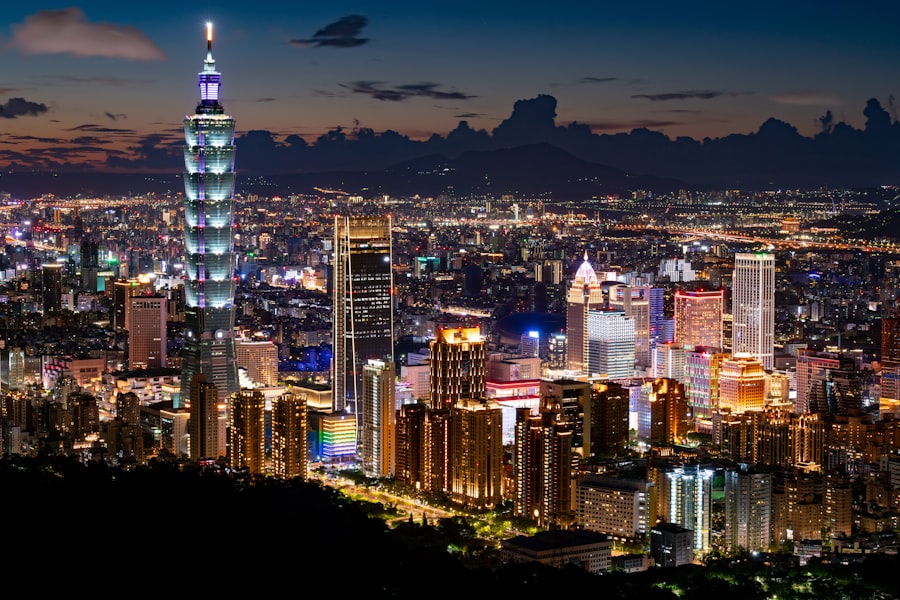
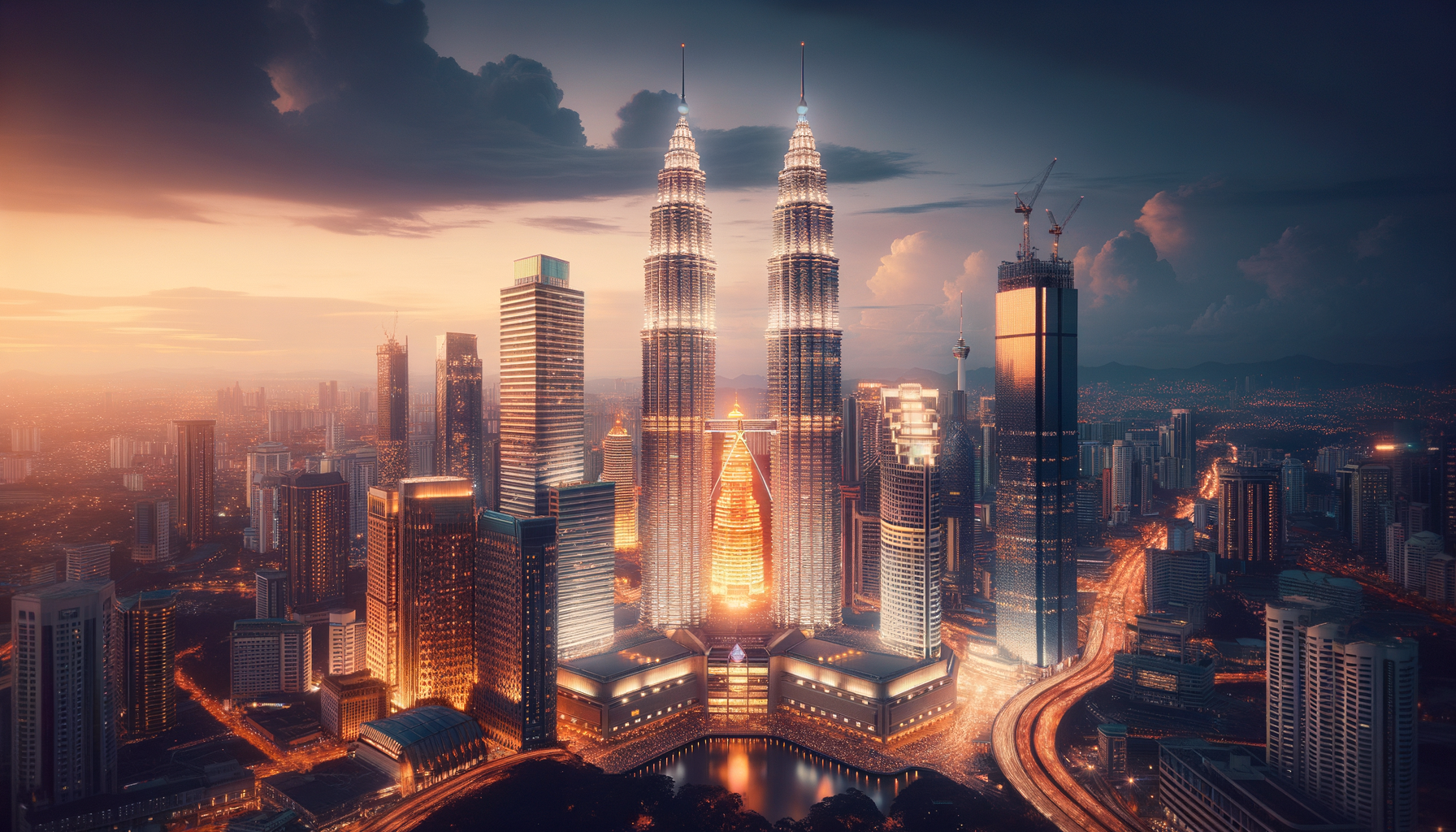
Kuala Lumpur is a city that has been trying to announce itself to the world since the Petronas Twin Towers were completed in 1998 and briefly made it the home of the tallest buildings on Earth. It is a city of ambition, construction, and genuine energy — growing at a pace that means guidebook information goes stale within months — and also a city of radical contrasts: glass towers and colonial arcades, luxury malls and street food stalls that haven’t changed in 50 years, Islamic call to prayer and Cantonese opera, all within walking distance of each other.
The Petronas Twin Towers at KLCC (Kuala Lumpur City Centre) are the essential first stop: at 452 meters, they were the world’s tallest buildings from 1998 to 2004, and remain among the most beautiful. The observation deck on the 86th floor and the sky bridge between the towers (41st floor) are bookable online and sell out — book ahead. Below, the KLCC park and lake are one of the city’s few genuinely pleasant public spaces.
The Batu Caves, 13 kilometers north of the center, are a Hindu temple complex inside a massive limestone cave — 272 rainbow-painted steps lead to the main cave, presided over by a 43-meter golden statue of the deity Murugan (one of the tallest in the world). The caves are most spectacular during Thaipusam (January–February), when hundreds of thousands of devotees carry kavadi (elaborate metal frames pierced through the skin) up the steps in an act of devotion that is one of the most striking religious spectacles in Asia.
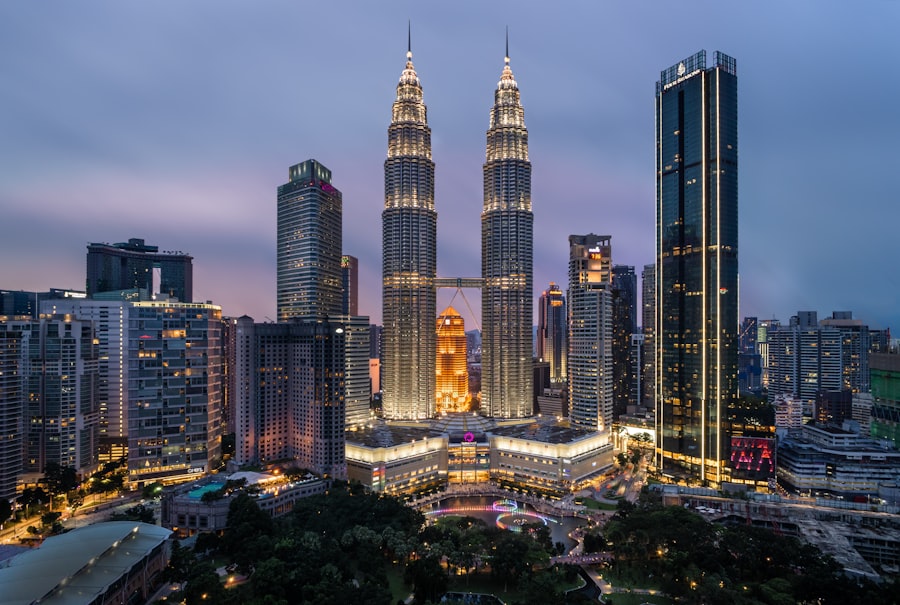
Petronas Twin Towers — 452 Meters of Aspiration
World’s tallest buildings 1998–2004. Book the sky bridge (41F) and observation deck online — they sell out. The KLCC park below is KL’s most pleasant public space. The towers are best photographed from Jalan Ampang at dusk.
🏘️ Penang — The Food Capital of Asia
The claim is made about many cities but in Penang’s case it is defensible: the island state of Penang, and specifically its UNESCO-listed capital George Town, hosts the most complex and rewarding street food culture in Southeast Asia — possibly in the world. The hawker centers (kopitiam open-air food courts), the gurney drive night market, the stalls along Chew Jetty and around the Esplanade — each serves dishes that have been refined by individual families over decades or generations, each cooked by a single specialist who makes one or two things and makes them extraordinarily well.
The George Town food geography: char kway teow (flat rice noodles stir-fried with cockles, Chinese sausage, bean sprouts, egg, dark soy sauce, and lard in a screaming-hot wok — the best version in the world is at Jalan Siam, made by a woman who has been doing this for 60 years), assam laksa (tamarind-sour fish soup with noodles — Penang’s most distinctive dish, ranked by CNN Travel as the 7th best food in the world), hokkien mee (thick noodles in rich prawn broth), nasi kandar (the Penang Indian Muslim tradition of rice piled with curries — Line Clear on Penang Road is the institution). The food tourism alone justifies a trip to Malaysia.
George Town, Penang — UNESCO Heritage & Hawker Heaven
Malaysia’s most photogenic and most edible city. The UNESCO-listed colonial core is layered with clan houses, Hindu temples, mosques, and Methodist churches. The street art (Ernest Zacharevic’s murals) has made it Instagram-famous.
⛰️ Cameron Highlands — The British Hill Station
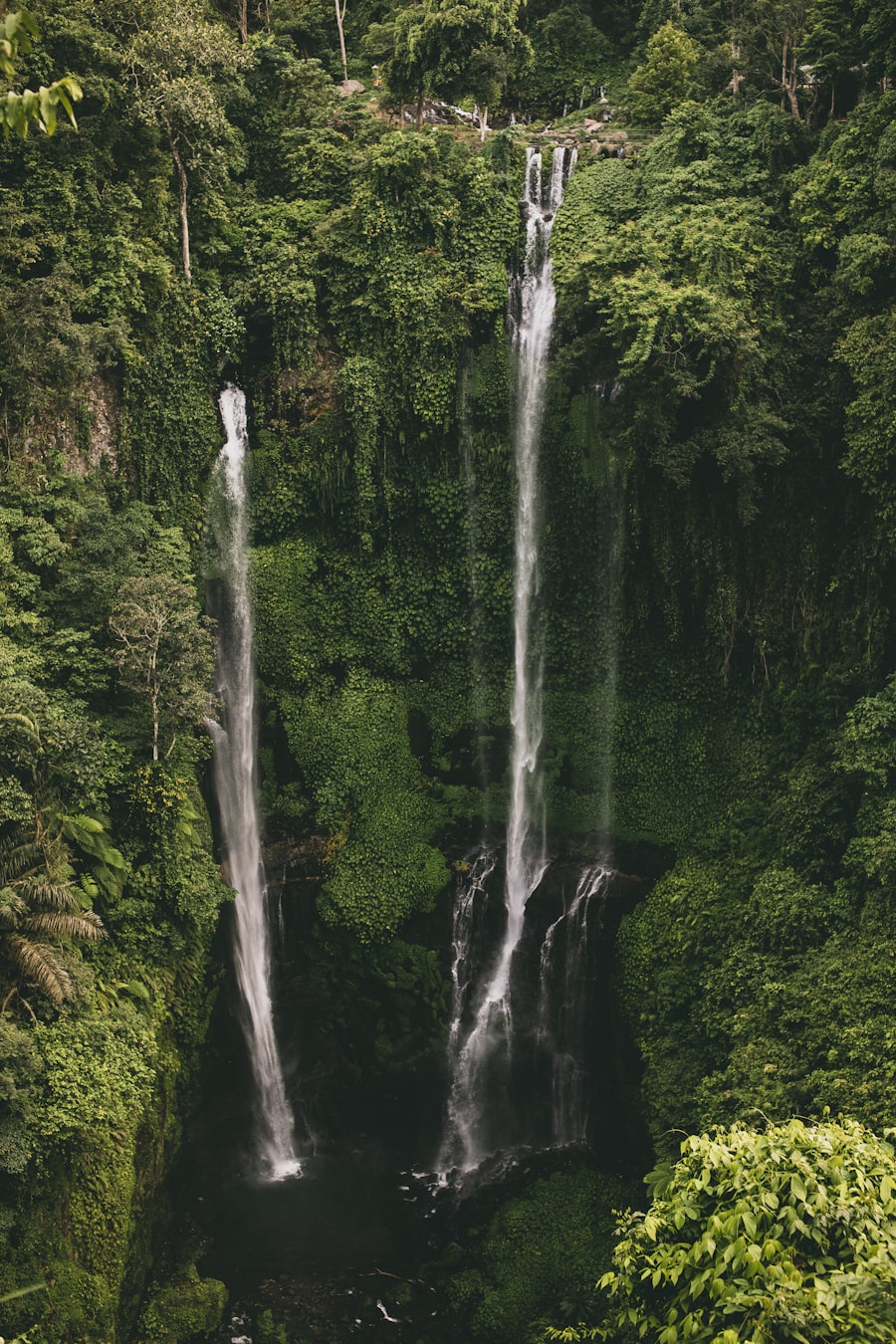
At 1,400–1,800 meters in the Titiwangsa Range, the Cameron Highlands were developed by the British colonial administration from the 1920s as a cool-climate retreat from the tropical lowland heat — and they still feel, in their best moments, like a piece of England dropped into the middle of a tropical forest. Strawberry farms, rose gardens, mock-Tudor guesthouses, and afternoon tea in the colonial hotels sit improbably alongside vast plantations of BOH Sungei Palas tea, one of the world’s great highland teas.
The BOH tea plantation factory tour and cafe — where glass-floored platforms hang over the tea valley — is one of Malaysia’s finest views. The cool air, the walking trails through the jungle (note: serious trails, real jungle — guide recommended), and the concentration of good budget accommodation make Cameron Highlands one of the best value stops in the country.
Cameron Highlands — Tea and Cool Air
BOH Sungei Palas tea plantation, 1,500m above sea level. The glass-floored cafe over the valley is one of Malaysia’s finest views. Afternoon tea in a highland mist — very specifically Malaysian, very good.
🏖️ Langkawi — The Duty-Free Island
Langkawi is an archipelago of 99 islands off the northwest coast of the peninsula — designated a UNESCO Global Geopark in 2007 for its ancient rock formations and geological diversity (the oldest rocks in Southeast Asia at 550 million years). It is also Malaysia’s most developed beach resort destination: duty-free status (alcohol, electronics, and chocolates significantly cheaper than mainland Malaysia) and a modern tourism infrastructure make it the go-to for Malaysian domestic tourism and an increasingly important international destination.
The main island is large enough to reward a rental car: the cable car at Gunung Mat Cincang (the highest peak) delivers the finest views in peninsular Malaysia — on clear mornings you can see Thailand. The mangrove tours through the Kilim Karst Geoforest Park (on a boat, through limestone formations rising from the sea) are unexpectedly beautiful. The best beaches: Pantai Cenang (busiest, most facilities), Pantai Tengah (quieter), and the northern beaches accessible only by boat (genuinely deserted).
Langkawi — Duty-Free, Ancient Rock, and Empty Northern Beaches
99 islands, 550-million-year-old geology, duty-free alcohol prices, and the cable car from Gunung Mat Cincang with views to Thailand on clear days. The northern beaches require a boat and deliver complete solitude.
🌻 Borneo — Malaysia’s Wild East
East Malaysia — the states of Sabah and Sarawak on the north coast of Borneo — is a fundamentally different country from the peninsular cities and beaches. This is frontier Southeast Asia: indigenous cultures still living in traditional longhouses along rivers navigated by boat, some of the oldest rainforest on Earth (Danum Valley in Sabah, the Maliau Basin, Sarawak’s Mulu), and wildlife that will make naturalists weep.
Sabah: Mount Kinabalu (4,095m, UNESCO) is the most accessible high-altitude climb in Southeast Asia — a two-day guided ascent with summit at 3:30 AM for the sunrise. Danum Valley Conservation Area is the finest place in the world to see Bornean orangutans in primary rainforest; also pygmy elephants and clouded leopards. Sipadan Island — accessible from Semporna — is consistently ranked among the world’s top five dive sites: hammerhead and white-tip shark schools, green and hawksbill turtles, barracuda tornadoes, walls dropping to 600m.
Sarawak: Gunung Mulu National Park (UNESCO) contains the world’s largest cave passages, the Pinnacles rock formation, and the nightly bat exodus from Deer Cave (three million bats spiraling into the sky at dusk). Kuching — the capital — is one of Southeast Asia’s most pleasant cities: the Sarawak Museum (some consider it the best natural history museum in Asia) and the waterfront food stalls are the essential starting points. The Iban longhouses along the Batang Ai river system offer one of the few remaining genuine indigenous homestay experiences in the region.
🌿 Taman Negara — The Ancient Forest
Taman Negara (“National Park” in Malay) is one of the world’s oldest rainforests — estimated at 130 million years old, predating the dinosaurs, having survived multiple ice ages that transformed the rest of the planet. Located in the central peninsula, it covers 4,343 km² of primary lowland rainforest and montane forest. The biodiversity is extraordinary: over 200 mammal species (including Malayan tiger, Asian elephant, gaur, Malayan tapir, sun bear), 350 bird species, and an estimated 14,500 plant species.
The most popular activities: the canopy walkway (470 meters long, suspended up to 45 meters above the forest floor — one of the longest in the world), river boat trips from the base camp at Kuala Tahan, jungle trekking with guides, and night walks when the nocturnal forest comes alive. Access is by boat or 4WD from Kuala Lipis; the journey is part of the experience. Wildlife sightings are less reliable than in a curated safari park — but the sheer age and density of the forest is a wilderness experience unavailable in most of the world.
🍜 Cuisine
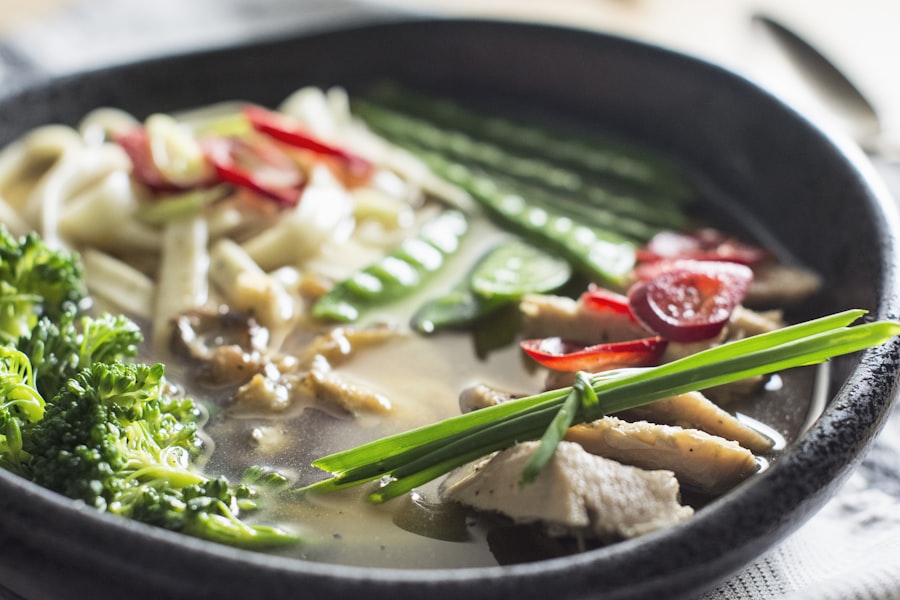
Penang char kway teow (ranked among the world’s greatest dishes), nasi lemak (the national breakfast), roti canai at every mamak stall, assam laksa with its sour fish broth, and the Peranakan Nyonya cuisine that is the most sophisticated culinary fusion tradition in Southeast Asia. Malaysia has the best street food culture on Earth. The full guide covers every dish, every state’s specialty, and where to eat in KL and Penang.
🍺 Drinks
Malaysia is Muslim-majority and officially dry in some states — but alcohol is freely available in KL, Penang, and most tourist areas. Tiger beer, Carlsberg Malaysia, and Guinness Foreign Extra Stout are the lagers that define Malaysian bar culture. The real national drink is teh tarik — pulled tea — and the full guide covers the kopitiam coffee culture, traditional drinks like cendol and bandung, and indigenous rice wine from Borneo.
🏛️ UNESCO
Malaysia has three UNESCO World Heritage Sites: Kinabalu Park (2000, natural — Mount Kinabalu and extraordinary botanical diversity); Gunung Mulu National Park (2000, natural — world’s largest cave passages and the Pinnacles); and the Historic Cities of the Straits of Malacca — Melaka and George Town (2008, cultural). The full guide covers all three sites and practical visiting information.
🌡️ Climate & Best Time
Malaysia has a tropical climate — hot and humid year-round, with regional monsoon seasons affecting different parts of the country at different times. There is no universally “bad” time to visit Malaysia; there is always a dry coast somewhere.
✈️ Getting There from the US
Kuala Lumpur International Airport (KUL, at Sepang — 50 km from the city center) is the main international gateway. Malaysia Airlines, AirAsia X, and numerous carriers connect KL to the world. From the US:
- Malaysia Airlines via KUL: Malaysia Airlines operates MH code-share flights on partner carriers from the US — typically via codeshare connections from LAX, SFO, JFK. The airline’s own metal serves KL from multiple Asian hub connections.
- Qatar Airways via Doha (DOH): Consistently excellent service; connects from all major US gateways. DOH–KUL approximately 8 hours.
- Emirates via Dubai (DXB): Multiple daily KUL flights; broad US gateway connections via DXB.
- Singapore Airlines via Singapore (SIN): Premium option; SIN–KUL is 45 minutes (or take the train from Singapore to KL — a pleasant 5-hour journey by KTM Intercity).
- Cathay Pacific via Hong Kong (HKG): Good for West Coast US travelers. HKG–KUL 3.5 hours.
- AirAsia X: Budget long-haul with connections from NRT (Tokyo Narita) and other Asian hubs at very low fares for flexible travelers.
Total journey time from East Coast US: 20–26 hours. Round-trip economy: $900–$1,800. Book 8–10 weeks ahead for the best fares. The Express Rail Link (ERL) connects KUL airport to KL Sentral in 28 minutes — the fastest and most reliable airport transfer in Southeast Asia.
📋 Practical Information
Visa-free for 90 days — no advance application needed. Show US passport at immigration, and you are in. This is one of the most generous visa-free allowances in Southeast Asia. Extensions possible via Immigration Department in KL. Malaysia is also part of the ASEAN Multiple Journey Visa program allowing multiple entries within the 90-day period.
Currency: Malaysian Ringgit (MYR). 1 USD ≈ 4.7 MYR (2025). ATMs everywhere (Maybank, CIMB, Public Bank). Credit cards widely accepted in KL, Penang, and major cities — less so in rural areas and at hawker stalls. Tipping: not standard Malaysian practice; appreciated but not expected. E-wallets (Touch ‘n Go, GrabPay) dominate Malaysian digital payments — foreigners can link Visa/Mastercard.
US State Dept Level 1: Exercise Normal Precautions. Very safe country. No vaccinations required beyond standard travel (Hepatitis A, Typhoid recommended). Malaria prophylaxis for deep jungle/Borneo interior — not for KL or Penang. Dengue fever present year-round — use repellent. Medical facilities: excellent in KL and Penang (Gleneagles, Pantai, Prince Court hospitals are internationally accredited and much cheaper than US equivalents for medical tourism). Tap water: safe in KL and major cities; use bottled elsewhere.
US Embassy Kuala Lumpur: 376 Jalan Tun Razak, Kuala Lumpur. Emergency: +60-3-2168-5000. US Consular Agent in Penang (limited services; contact KL for most assistance). Register at step.state.gov before departure.
Excellent mobile coverage (Maxis, Celcom, Digi, U Mobile). Buy a SIM at airport (tourist SIMs with 50–100GB data for $5–$15). Malaysia has some of the most affordable and fastest mobile data in Southeast Asia. Wi-Fi ubiquitous in hotels and malls. E-hailing: Grab is the dominant rideshare app — download before arrival; works everywhere in Malaysia and is cheaper and more reliable than street taxis.
Within KL: LRT, MRT, Monorail, and Rapid KL buses form a comprehensive (if confusing) public transport network. KL Sentral is the hub. Between Penang and KL: frequent buses ($8–$15, 4.5 hours) or flights (30 min, $30–$80). To East Malaysia: fly (Malaysian Airlines or AirAsia from KUL). The KTM train from Singapore to KL is scenic and reliable.
🏷️ Name & Identity
“Malaysia” is a portmanteau of “Malays” + the Latin/Greek suffix -ia (meaning “land of”), coined by British colonial administrators and formalized in 1963 when the Federation of Malaysia was created. The term “Malay” itself is ancient: it appears in Tamil inscriptions from the 7th century CE as malaiur (“mountain people”) and in Chinese dynastic records as Mǎláiyū. The modern Malay identity encompasses both an ethnic group and a constitutional category: under the Malaysian constitution, a “Malay” is defined as a Muslim who habitually speaks Malay and practices Malay customs — a legally novel definition that has profound implications for political entitlement and social policy.
💰 Costs
Malaysia is excellent value — one of the best value-for-money destinations in Asia for mid-range travelers. Hawker food can be extraordinary and cost $2–$4 per dish; hotel quality at $50–$100/night exceeds what that budget delivers in most of Southeast Asia.
🏠 Accommodation
KL’s accommodation is competitive and high quality at every price point. The Mandarin Oriental KLCC (overlooking the Petronas Towers, five-star landmark) and Four Seasons KL represent the top tier; the EQ Kuala Lumpur and Canopy by Hilton KL are excellent mid-luxury options. Budget travelers are extremely well served: a cluster of good hostels in Bukit Bintang (KL’s shopping and entertainment district) and Chow Kit offers dorms from $8–$15 and private rooms from $25–$40.
In Penang, the Eastern & Oriental Hotel (the colonial grande dame on the Esplanade, 1885) is the romantic choice; the Cheong Fatt Tze Mansion (Blue Mansion) — a restored Peranakan heritage house — is unique. In Langkawi, The Datai is consistently one of Asia’s finest resort hotels. In Borneo, Sukau Rainforest Lodge (Kinabatangan River, Sabah) delivers the most concentrated wildlife viewing in Malaysia.
🎭 Festivals & Events
Thaipusam (January–February): The most spectacular Hindu festival in Malaysia — hundreds of thousands of Tamil devotees carrying kavadi frames through their skin up the 272 steps to Batu Caves. One of the most extraordinary spectacles of devotion in Asia. Chinese New Year (January–February): Celebrated across Malaysia with intensity — Penang’s George Town New Year procession is one of the most atmospheric in the world. Hari Raya Aidilfitri (end of Ramadan): The Muslim celebration of breaking fast; the entire country transforms, with open houses across racial communities. Pesta Kaamatan (May/June, Sabah): Harvest festival of the Kadazan-Dusun people, featuring rice wine, traditional music, and the beauty pageant of the Unduk Ngadau (Harvest Queen). Formula 1 Malaysian Grand Prix: Was held at Sepang until 2017; may return to the calendar as the Sepang circuit is maintained.
💼 Business
Malaysia is Southeast Asia’s second most competitive business environment (after Singapore). Bursa Malaysia is one of ASEAN’s most liquid stock exchanges; Petronas is the 7th largest oil company globally by revenue; Labuan IBFC offers offshore financial services at 3% corporate tax. Company formation is straightforward for foreigners. The full guide covers all this and the key companies defining the Malaysian economy.
🎠 Packing Tips
- Light, breathable clothing: Tropical heat and humidity demand synthetic or linen fabrics. Avoid heavy cotton — it soaks through in minutes.
- Long sleeves and sarong for temples and mosques: Shoulders and knees must be covered at religious sites. A packable sarong doubles as a beach cover and temple entry pass.
- Rain jacket: Afternoon thunderstorms can be intense. A packable waterproof shell is essential.
- Good walking shoes: KL’s walkability is limited by heat and irregular pavements; Penang and Melaka reward serious walking.
- Insect repellent: DEET-based for jungle areas; dengue prevention in cities.
- Grab app: Download before arrival. Essential for transport throughout Malaysia.
- Ringgit cash for hawker stalls: E-wallets and credit cards work at restaurants; hawker stalls are cash-only.
- Power adapter (UK Type G): Malaysia uses British-style three-pin plugs, same as Singapore and Hong Kong.
- Stomach constitution: You will eat a lot of extraordinary food. Pace yourself.
🌐 Resources
- US Embassy KL: my.usembassy.gov — Emergency: +60-3-2168-5000
- STEP enrollment: step.state.gov
- Tourism Malaysia: tourism.gov.my
- Grab (rideshare/food delivery): Download at grab.com
- ERL (airport train): kliaekspres.com
- CDC Malaysia: wwwnc.cdc.gov
📚 Reading
The World of Suzie Wong — Richard Mason (1957): Set in Hong Kong but deeply relevant — the novel that opened the West’s eyes to Southeast Asian social complexity in the postwar era. Better background reading than many Malaysia-specific accounts.
The Malay Dilemma — Mahathir Mohamad (1970): Written by Malaysia’s future prime minister while he was banned from politics after the 1969 riots, this book argued for Malay economic advancement policies. Simultaneously one of the most important and most controversial books in Malaysian political history. Essential for understanding the NEP and Malaysian identity politics.
Malaysian Food Folio — Lee Sook Ching (various editions): The definitive English-language Malaysian cookbook, covering all ethnic traditions. Buy in KL; read before eating your way through Penang.
🎥 Videos
Search YouTube for: “Mark Wiens Malaysia Penang food” — the most watched food channel in English covering Malaysian hawker culture; “Mulu Caves National Geographic” for the UNESCO cave system; “Mount Kinabalu summit climb” — multiple first-person summit videos showing the 3:30 AM darkness climb; “Sarawak Iban longhouse visit” for indigenous cultural content; “Danum Valley orangutan Borneo” for the wildlife.
🔬 Fascinating Facts
- Malaysia’s Petronas Twin Towers were the world’s tallest buildings from 1998 to 2004 and remain the world’s tallest twin towers. Their structural system was designed so that each tower was built by a different contractor — one Japanese, one Korean — who competed to build faster.
- Penang’s assam laksa was ranked 7th best food in the world by CNN Travel — an assessment most Penangites consider modest.
- Malaysia is the world’s second-largest producer of palm oil (after Indonesia), accounting for approximately 30% of global production. The industry feeds the world’s processed food supply but has been a major driver of Borneo deforestation and the decline of orangutan habitat.
- The Bornean orangutan is one of humanity’s closest relatives (97% shared DNA) and is critically endangered — the population has declined by more than 50% in the past 60 years due to deforestation. Sabah is one of the last places where wild orangutan sightings are relatively reliable.
- Sipadan Island, off Sabah, was declared by Jacques Cousteau to be “an untouched piece of art.” It rises from 600 meters of sea floor and is one of the world’s top dive sites. Malaysia has capped the number of daily dive permits to protect it.
- The word “amok” — as in running amok — enters English from the Malay word amuk, referring to a frenzied, uncontrolled attack. It was used by early European traders to describe a specific form of sudden violent episode documented in Malay communities.
⭐ Notable People
Mahathir Mohamad (b. 1925): Malaysia’s fourth and seventh Prime Minister — in office 1981–2003 and again 2018–2020, making him the world’s oldest elected head of government at 92 when he took his second term. The architect of Malaysia’s industrialization, the Petronas Towers, the MSC technology corridor, and the “Malaysia Boleh” (Malaysia Can) national confidence project.
Anwar Ibrahim (b. 1947): Mahathir’s deputy in the 1990s who was imprisoned on sodomy charges widely regarded as politically motivated, released, imprisoned again, pardoned, and finally elected Prime Minister in November 2022 — completing one of the most extraordinary political journeys in Asian democratic history.
Lee Chong Wei (b. 1982): Malaysia’s greatest badminton player — three-time Olympic silver medalist (2008, 2012, 2016), world number one for 349 weeks, and national hero in the country where badminton is the closest thing to a state religion.
⚽️ Sports
Badminton: The national obsession. Malaysia has produced more All England Champions and world-class players than any country except China, and international matches — particularly against Indonesia — stop the nation. Football: The Super League is fiercely followed; the national team (Harimau Malaya — Malaysian Tigers) has qualified for the Asian Cup and is competitive at the regional level. Formula 1: The Sepang International Circuit hosted the Malaysian Grand Prix from 1999 to 2017 and remains one of Asia’s premier motorsport facilities. Sepak takraw: The traditional acrobatic ball game — played with a rattan ball using feet, knees, and head over a net — is a Southeast Asian tradition kept alive in Malaysia as both sport and cultural art.
📰 Media & Press Freedom
Malaysia’s media environment is constrained. The RSF Press Freedom Index 2025 ranks Malaysia 73rd of 180 — an improvement under the Anwar Ibrahim government but still reflecting significant limitations. The main newspapers (The Star, New Straits Times, Utusan Malaysia) have historically had ownership connections to the ruling parties. The Sedition Act and the Communications and Multimedia Act have been used to prosecute journalists and social media users. Independent online news outlets — Malaysiakini (Malaysian English-language news, subject to repeated harassment and a court conviction for contempt) — provide the most critical coverage. Social media is widely used and generally unrestricted, though viral content has led to arrests under the CMA.
📷 Gallery
World’s tallest 1998–2004
UNESCO & the world’s best food
Duty-free island paradise
British hill station & BOH tea
Where the world’s best street food lives

Aspiring metropolis
The national breakfast
Southeast Asia’s hidden gem
✍️ Author’s Note
I have been to Penang three times and I am not done with it. The char kway teow at Jalan Siam, made by a woman who has been doing it for 60 years and who will retire and take the recipe with her: I want to eat it again before that happens. I want to sit at a plastic table in the 3 AM heat and eat a bowl of assam laksa and not quite believe that something this sour and this complex is being made at this hour in this place. I want the teh tarik pulled high from one container to another and drunk standing at the mamak stall, because that is how you drink it, because Malaysia is a place you stand at and eat and drink and talk and go back tomorrow.
The food is the reason to go. Everything else — the towers, the forest, the caves, the diving — is the reason to stay longer than you planned.
