

⚡ Key Facts
🌏 Overview
Spain is a Mediterranean nation of 47 million on the Iberian Peninsula, sharing borders with Portugal, France, Andorra and Gibraltar. It's the world's second most-visited country after France (94 million international visitors in 2024) and holds more UNESCO World Heritage Sites than almost any other nation on Earth — 50 in total. Behind the postcards of paella and flamenco lies extraordinary regional diversity: Barcelona's Modernista architecture and Catalan identity, Madrid's imperial confidence, Andalusia's Moorish soul, the Basque coast, Galicia's Atlantic Celtic edge, and volcanic Canary Islands 1,000 km south in the Atlantic.
Spain runs on late hours (dinner at 22:00 is normal), afternoon rhythm (many small shops close 14:00–17:00), and regional pride that occasionally shades into separatist politics — Catalonia and the Basque Country in particular. As of 2026 the country is grappling openly with overtourism: anti-tourism protests hit Barcelona, Palma and the Canary Islands in 2024–2025, and short-term-rental crackdowns are reshaping the housing market in major cities.
📖 Quick Facts
| **Capital** | Madrid |
|---|---|
| Population | 48 million |
| Area | 505,990 km² |
| Currency | Euro (€) |
| Languages | Spanish, Catalan, Basque, Galician |
| Time Zone | CET (UTC+1) |
| Driving Side | Right |
| Calling Code | +34 |
| Visitors 2024 | 94 million (record) |
| Tourism spending 2024 | €126 billion |
📊 ️ Overtourism Alert 2025
Spain faces significant backlash against mass tourism:
Protests & Measures
Barcelona: Locals protesting with water guns, hotel exit blockades. City banning new short-term rentals by 2028, reduced cruise ship arrivals (10 to 7 daily).
Canary Islands: Housing crisis—over 1,000 residents living in cars due to tourist rental prices. Hotel prices +25% vs 2019.
Mallorca/Balearics: Stricter alcohol regulations, party boat bans.
Madrid, Barcelona, Málaga, Seville, Valencia: Officially declared "at capacity" under Sustainable Tourism Strategy 2030.
Government Response
- 53,000 tourist flats removed from rental registries - Tourist Housing Observatory activated December 2025 - Tourist taxes in Balearics and Catalonia - Atlas of Tourist Intensity tracking neighborhood saturation
Traveler Tips
- Book well in advance for popular cities - Consider off-season travel - Use local businesses, not chains - Respect noise regulations - Avoid Airbnbs in saturated areas
📖 ️ Barcelona: Gaudí's Canvas
Catalan capital balancing Gothic quarters with modernist experiments.
Must-See
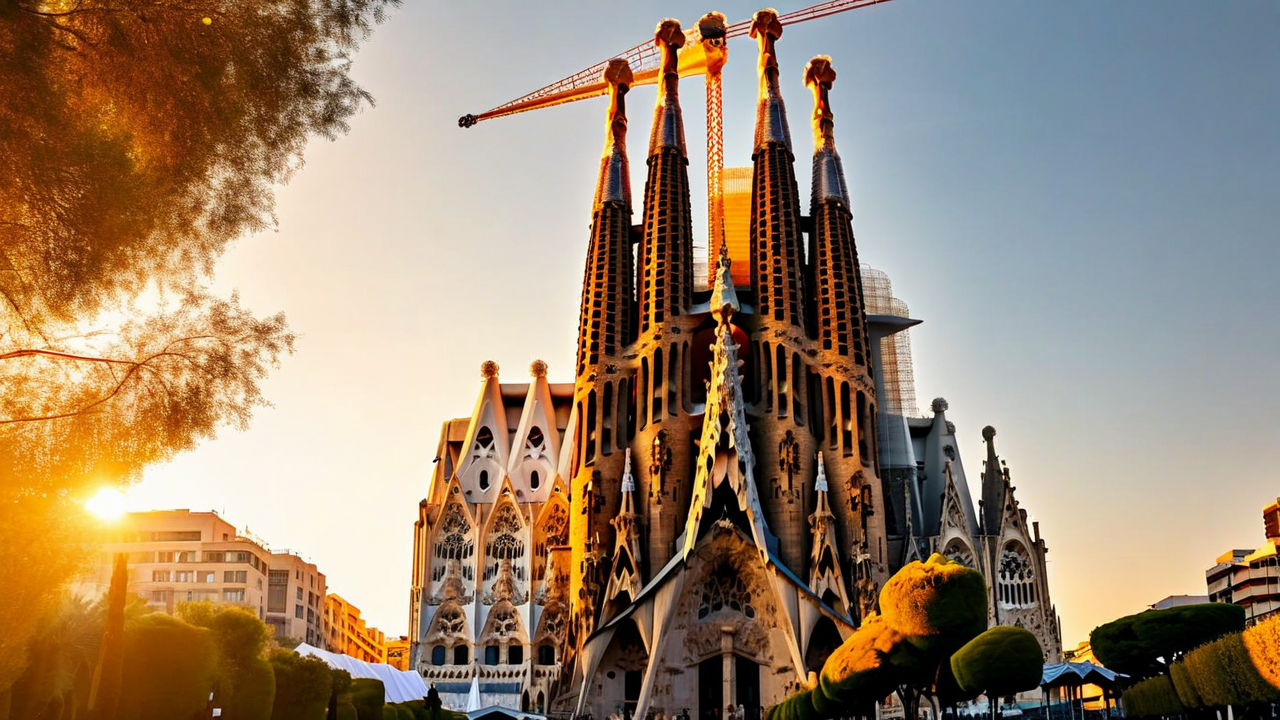
La Sagrada Familia: Gaudí's masterpiece begun 1882, projected completion ~2026. Book tickets well in advance—most visited attraction.
Park Güell: Landscape genius—undulating benches, mosaic dragons. Timed tickets required.
Gothic Quarter (Barri Gòtic): Pre-Columbus streets, Roman walls, medieval churches.
La Rambla & La Boqueria: Famous promenade and Europe's finest food market.
Barceloneta: Beach neighborhood minutes from center.
📖 ️ Madrid: The Capital's Quiet Confidence
World-class museums, elegant plazas, social scene peaking at midnight.
Art Triangle
Prado Museum: Velázquez's Las Meninas, Goya's dark paintings.
Reina Sofía: Picasso's Guernica, modern/contemporary collections.
Thyssen-Bornemisza: Medieval to pop art survey.
Highlights
Plaza Mayor: 17th-century monumental square.
Retiro Park: Green heart with glass palace, rowboats.
Palacio Real: One of Europe's largest royal palaces.
📖 Andalusia: Soul of Spain
Southern Spain shaped global images: flamenco, Moorish palaces, white villages.
The Alhambra (Granada)
Islamic architecture's European pinnacle. Book weeks/months in advance—tickets strictly limited.
Seville
Cathedral: World's largest Gothic church with Giralda minaret-tower.
Alcázar: Moorish-Christian royal palace.
Plaza de España: 1929 Exposition masterpiece.
Córdoba
Mezquita: 8th-century mosque with 16th-century cathedral inserted—profound juxtaposition.
Ronda
Dramatic gorge, Puente Nuevo bridge, archetypal pueblo blanco.
📖 Basque Country & North
Green, rainy, culturally distinct:
San Sebastián: Possibly world's highest Michelin star concentration. Pintxos bars, La Concha beach.
Bilbao: Guggenheim Museum transformed the city. Casco Viejo pintxos scene.
Santiago de Compostela: Camino pilgrimage endpoint, intact medieval city.
📖 Entry Requirements
US Citizens: Visa-free 90 days within 180-day Schengen period.
ETIAS (2026): Required online registration (~€7).
📖 ️ Getting There & Around
Airports
Madrid-Barajas (MAD): Main international hub.
Barcelona-El Prat (BCN): Multiple direct US flights.
Transport
AVE high-speed trains: Madrid-Barcelona 2.5 hrs, Madrid-Seville 2.5 hrs.
Budget airlines: Vueling, Ryanair for cheap European connections.
Car rental: Excellent for rural Andalusia, white villages.
📖 Costs
Currency: Euro. Spain offers excellent value for Western Europe.
| Item | Cost |
|---|---|
| Budget hostel | €25-40/night |
| Mid-range hotel | €80-150/night |
| Luxury hotel | €200-500+/night |
| Tapas & drinks | €15-25/person |
| Restaurant meal | €25-50 |
| Fine dining | €80-200+ |
| AVE train | €30-100 |
| Museum entry | €10-20 |
Week-long trip: €1,500-2,500 mid-range.
🍽️ Cuisine
Spain lives at the table — tapas ritual, jamón ibérico from acorn-fed pigs, paella (the Valencian original is rabbit and chicken, not seafood), Basque pintxos, Andalusian gazpacho. Read the full Food & Drink guide, with recipes →
🍷 Wine, Spirits & Drinking Culture
The world's largest vineyard area (950,000 ha), third-largest producer, 600+ native grapes, 69 DOs — from Rioja and Ribera del Duero to Priorat, Sherry, Cava and Albariño. See the full Wine & Spirits guide →
📖 ️ Best Time to Visit
| Season | Conditions |
|---|---|
| Apr-Jun | Ideal—warm, fewer crowds |
| Sep-Oct | Perfect—post-summer, pleasant |
| Jul-Aug | Hot, crowded, Spanish tourists at coasts |
| Winter | Cultural tourism, south pleasant |
📊 Tourism Statistics 2024-2025
| Metric | Data |
|---|---|
| Visitors 2024 | 94 million (record) |
| Growth vs 2023 | +10% |
| Spending 2024 | €126 billion (+16%) |
| Tourism GDP | 13% |
| H1 2025 visitors | 44.5 million (+14%) |
| H1 2025 spending | €59 billion |
| Summer 2025 | 22.3 million (Jul-Aug record) |
| Jan-Aug 2025 | 66.8 million (+3.9%) |
| World ranking | #2 (after France) |
📖 Festivals
San Fermín (Pamplona): Running of the bulls, July.
Las Fallas (Valencia): Burning effigies, March.
Feria de Abril (Seville): April fair.
Carnaval (Cádiz): February carnival.
🏛️ Castells — Human Towers of Catalonia
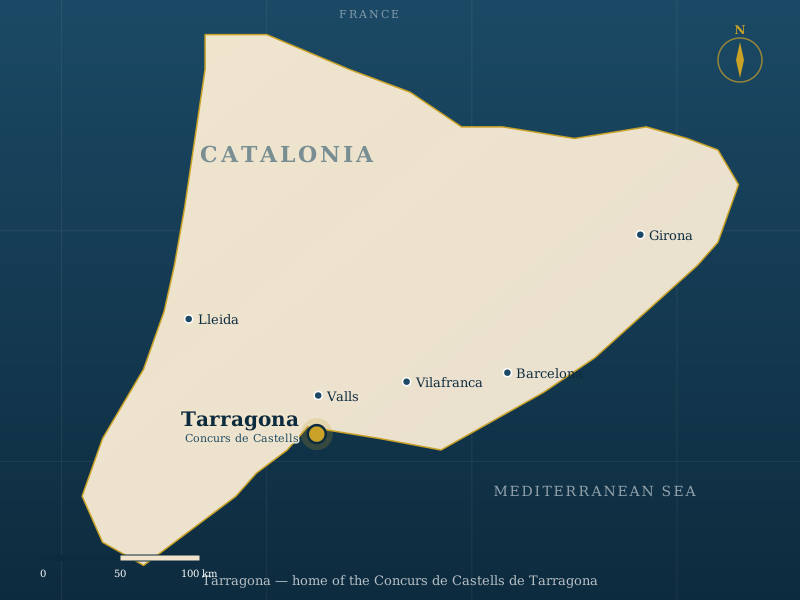
In Catalonia, in the northeast of Spain, teams of castellers in matching uniforms climb on each other's shoulders to build the tallest, most stable human tower they can. The Spanish call them castells. The biggest competitions are held in Tarragona, where thousands of spectators gather under the open sky, drums beating, to watch one of Europe's most spectacular living traditions — a moment of choreographed teamwork that has to be seen to be believed.
The base of every castell is the pinya — four men braced shoulder-to-shoulder, forming what is known as the "drum." Layer by layer, more castellers climb their backs, building progressively higher floors. At the very top, by tradition, sits a child, ideally younger than ten years old. The child's only job — and the goal of the entire so-called "Babylonian" tower — is not to fall. When the child reaches the summit, they wave to the crowd and ideally lower the Catalan flag from the peak. The tallest castell ever built reached 13 metres.
Skill, training and discipline
Building a castell is a feat of engineering as much as athletics — and the teams (colles castelleres) train year-round to perfect it. Much of that training focuses on the most technically demanding moment: the controlled descent, dismantling the tower layer by layer once it has stood. Children climbing the upper floors wear protective helmets, a safety standard adopted across all colles, and every team includes experienced spotters at the base. The discipline, mutual trust, and split-second coordination required are precisely what make watching a successful castell so unforgettable.
Origins and UNESCO recognition
The tradition dates back to the 18th century and originally evolved from the historical street dances of the Muixeranga — acrobatic performances staged by troupes in the former Kingdom of Valencia. From those folk roots, castells grew into a defining symbol of Catalan identity. In 2010, UNESCO inscribed castells on the Representative List of the Intangible Cultural Heritage of Humanity, recognising both the cultural depth of the practice and the trust, balance, and collective discipline it demands.
Women in the tower
For most of its history, casteller teams were exclusively male. That changed in the 1980s, when women were finally allowed to compete. Their lower body weight turned out to be a structural advantage — teams that integrated women could build towers with even more storeys than before. Today, mixed teams (colles castelleres) are the norm, and the tradition is more popular than at any point in its history.
Where to see them
The biennial Concurs de Castells de Tarragona, held at the Tarraco Arena Plaça in early October of even-numbered years, is the world championship of the discipline — the most ambitious and visually staggering competition on the calendar. Smaller exhibitions take place throughout the year across Catalan towns, especially during the Festes de la Mercè in Barcelona (September) and the patron saint festivals of villages such as Vilafranca del Penedès and Valls.
The image of dozens of red-shirted castellers climbing across one another's backs in the heart of Tarragona is one of the most arresting sights in European traditional culture — a living, breathing monument to trust, balance, and Catalan community spirit, and a UNESCO-recognised tradition every traveller should witness at least once.
✨ Essential Tips
1. Book Alhambra/Sagrada Familia months ahead 2. Adjust to Spanish meal times (or bring snacks) 3. Consider off-season to avoid overtourism pressure 4. Respect local communities—housing crisis is real 5. Use local businesses over chains 6. Learn basic Spanish—appreciated outside tourist areas 7. Siesta hours (2-5 PM) mean closed shops in smaller cities 8. ETIAS required from 2026
🏛️ UNESCO World Heritage
Spain holds 50 UNESCO World Heritage Sites — one of the highest counts on Earth, behind only Italy and China. From the Alhambra to Altamira cave paintings, Sagrada Família to the entire Camino de Santiago route. Explore all 50 sites and plan a heritage circuit →
🚗 Automotive
Spain is Europe's second-largest car producer (~1.9 million passenger cars/year). SEAT and CUPRA are the only fully Spanish brands; the new CUPRA Raval is the first EV built at Martorell. Meet SEAT, CUPRA, Ebro and the €10 billion EV pivot →
💼 Business & Economy
The EU's fourth-largest economy, home to Zara/Inditex, Santander, Telefónica, Iberdrola. Since 2022 you can form a Sociedad Limitada with €1 of capital. Read the full Business guide — SL formation, IBEX 35, top companies →
✍️ ️ Final Reflection
Spain's record 94 million visitors in 2024 and €126 billion spending confirm the country's magnetic appeal—but also highlight growing tensions. The Sustainable Tourism Strategy 2030, neighborhood saturation monitoring, and Barcelona's rental ban represent serious attempts to balance economic benefits with community welfare.
For travelers, Spain still offers perhaps Europe's best value proposition: world-class cities, stunning beaches, extraordinary food and wine, rich history. But respectful tourism matters more than ever. Consider off-season visits, support local businesses, and recognize that behind the beautiful plazas are real communities grappling with the consequences of success.
Spain has mastered tourism without quite losing its soul. Helping it stay that way is now every visitor's responsibility.
📋 Quick Reference
| Category | Information |
|---|---|
| Best Time | April-June, September-October |
| Visa (US) | Not required (90 days) |
| ETIAS | Required from 2026 |
| Currency | Euro |
| Language | Spanish (regional languages vary) |
| Power | 230V, Type C/F |
| Emergency | 112 |
| Main Airports | Madrid (MAD), Barcelona (BCN) |
