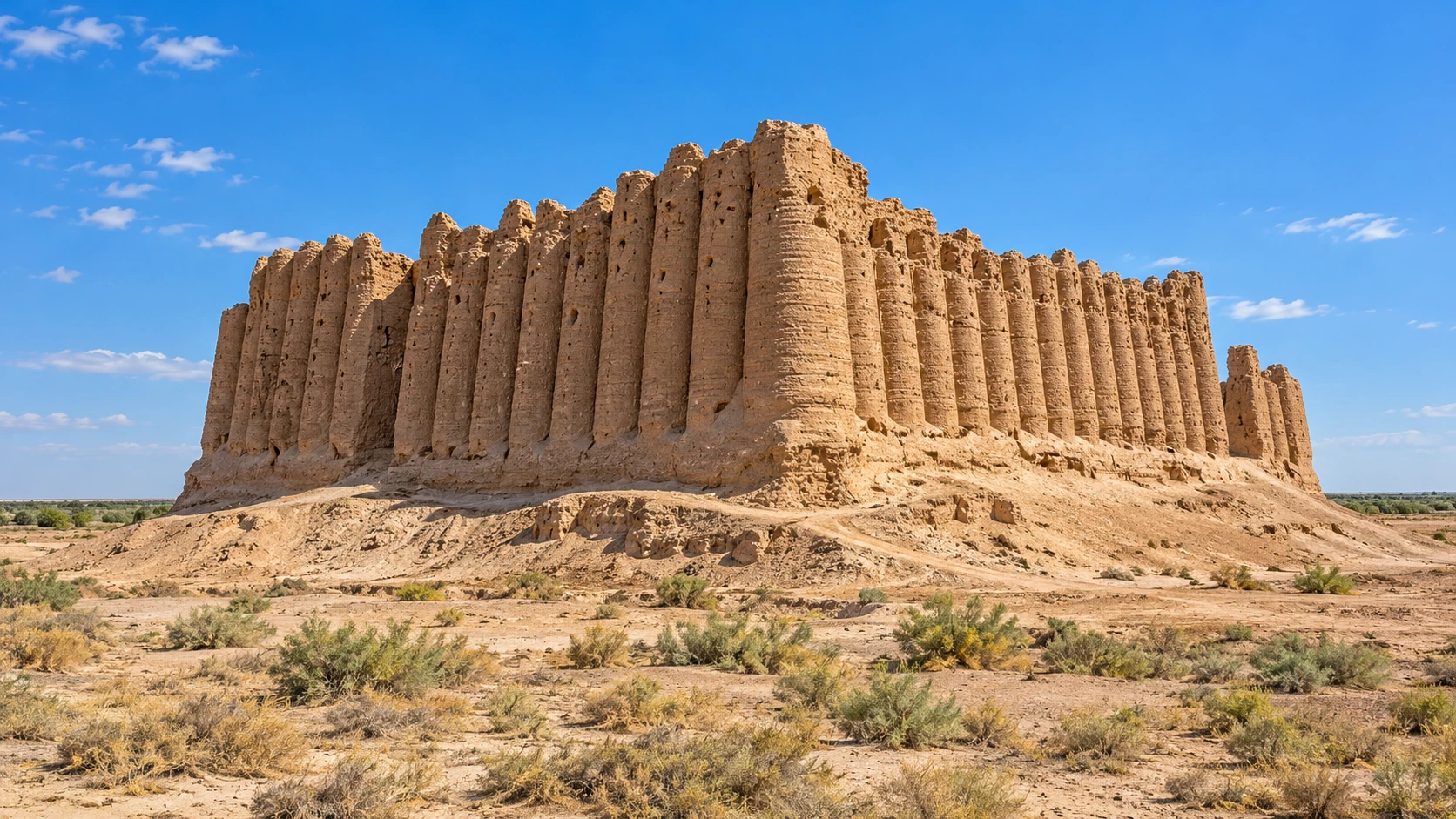
Turkmenistan brings together the Karakum Desert, the mountain foothills of the Kopet-Dag, the Caspian shore and the irrigated oases that once sustained Silk Road cities.
Internet and mobile access can be limited, and familiar messaging or social platforms may not work. Download necessary information before travel and agree an alternative way to communicate with your operator. Political reporting needs source awareness: official media and independent reporting describe the country from different positions.
Photography of sensitive buildings is restricted, and residents should not be filmed without consent. A travel film should identify its date, creator and purpose, rather than be presented as a live report of current conditions. Avoid invented documentary titles and treat dramatic footage as a source to examine, not a complete account of the country.
The two-stringed dutar belongs to a wider world of craftsmanship, performance and singing. Its significance is not exhausted by describing the instrument's shape: repertoire, technique, teaching and the relationship between performer and audience all matter.
A live performance, when properly arranged, can reveal the role of music within social occasions and memory. Ask whether recording is welcome and credit performers rather than treating music as an unowned soundtrack. UNESCO's recognition of the practice helps explain its heritage value, while local musicians remain the people who give that heritage its living form.
Use UNESCO's country inventory to distinguish inscribed properties from tentative nominations. Turkmenistan has five World Heritage properties: Ancient Merv, Kunya-Urgench, the Parthian Fortresses of Nisa, the transnational Zarafshan-Karakum Corridor and the Cold Winter Deserts of Turan.
For travel, read current consular advice and confirm requirements with the relevant embassy and sponsor. Historical guidebooks remain useful for context but cannot establish today's entry rules, prices or opening hours. Further reading should have verifiable titles and authors, while the date of a source should remain visible whenever its practical relevance depends on time.