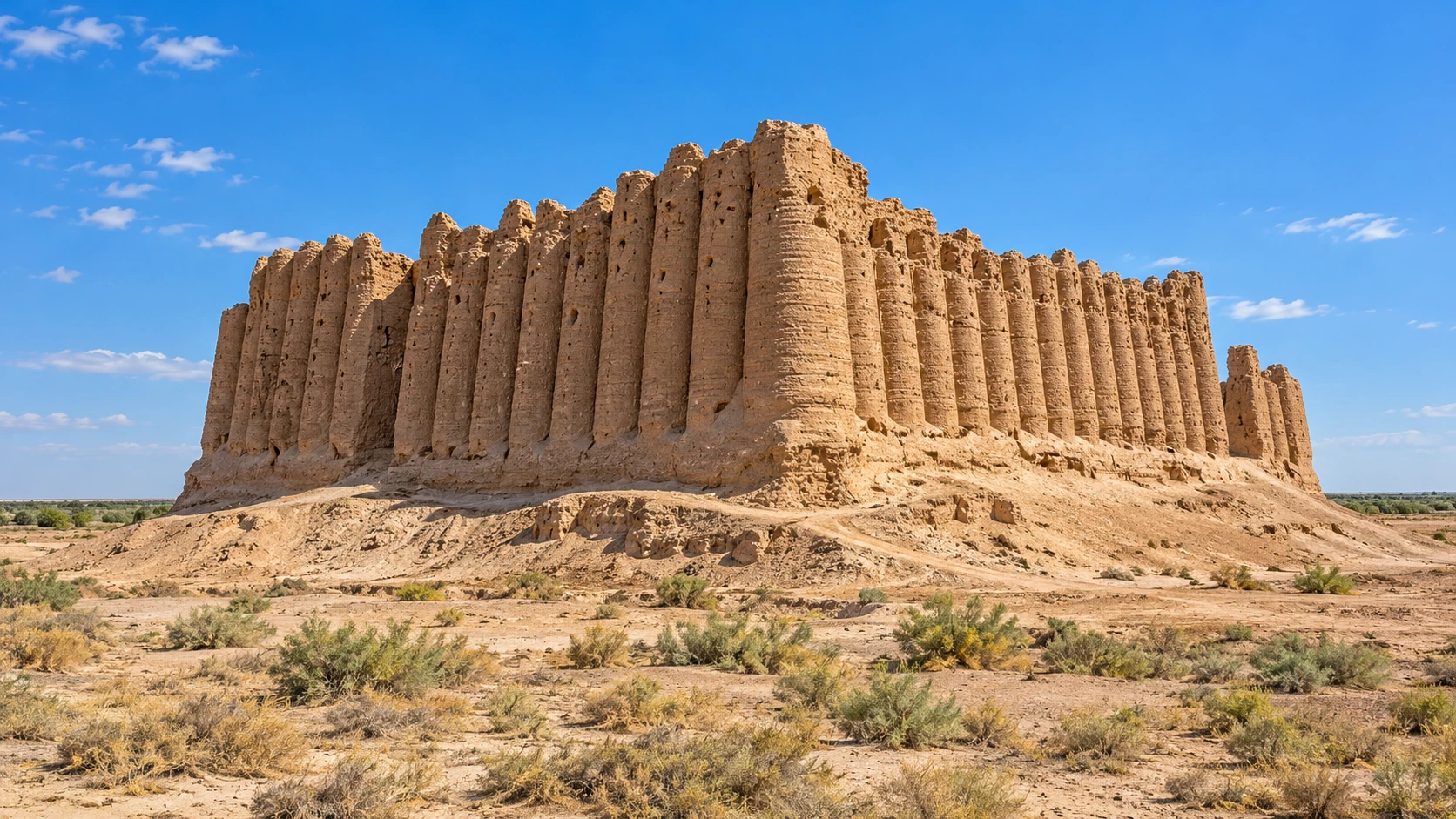
Turkmenistan brings together the Karakum Desert, the mountain foothills of the Kopet-Dag, the Caspian shore and the irrigated oases that once sustained Silk Road cities.
Natural gas is central to Turkmenistan's economic geography, alongside agriculture, transport and state-directed construction. Pipelines and export relationships connect the country to wider regional markets, while the Caspian port adds a logistical dimension. An introductory travel page cannot replace commercial due diligence.
A business visit requires the correct visa purpose, verified counterparties and a clear understanding of payment, currency and contractual arrangements. Avoid assuming that an invitation to a meeting establishes a partner's authority or the security of an investment. Economic interpretation should distinguish official announcements from completed infrastructure and independently documented activity.
02
Independence and neutrality
Turkmenistan became independent in 1991 as the Soviet Union dissolved. Its subsequent state-building emphasized permanent neutrality, national symbols and monumental public architecture. The United Nations recognized its permanent neutrality in 1995.
Understanding this framework helps explain diplomatic language and commemorative spaces, but neutrality should not be mistaken for unrestricted access or freedom from political risk. The modern country is also shaped by centralized government and the economic importance of natural gas. Visitors should approach political discussion carefully and distinguish official presentation from independent reporting and the experiences of ordinary residents.
Domestic flights, railways and road journeys serve different needs, but availability and booking conditions must be confirmed for the actual dates. A long drive across the interior is not comparable to a short urban taxi trip. Use authorized transport, agree the route and payment clearly, and plan a margin for delays.
Night driving outside cities adds risk because of road conditions and limited visibility. For remote journeys, establish fuel, water, vehicle recovery and communication arrangements in advance. Your itinerary should state which transfers are included and who is responsible if a service is canceled.
A useful budget begins with a dated operator quotation, not a table converted using an unofficial exchange rate. Separate accommodation, transport, guiding, entry fees, meals and administrative charges, and ask what must be paid in cash. The manat is the local currency; banking and card access should not be assumed to work as they do at home.
Use lawful exchange channels and keep an emergency reserve. A very cheap local meal does not describe the total cost of an organized visit. Confirm cancellation terms and the treatment of itinerary changes before paying a deposit.
Share your photo
Own a photograph of Turkmenistan? Send it with the place, date and your preferred credit.