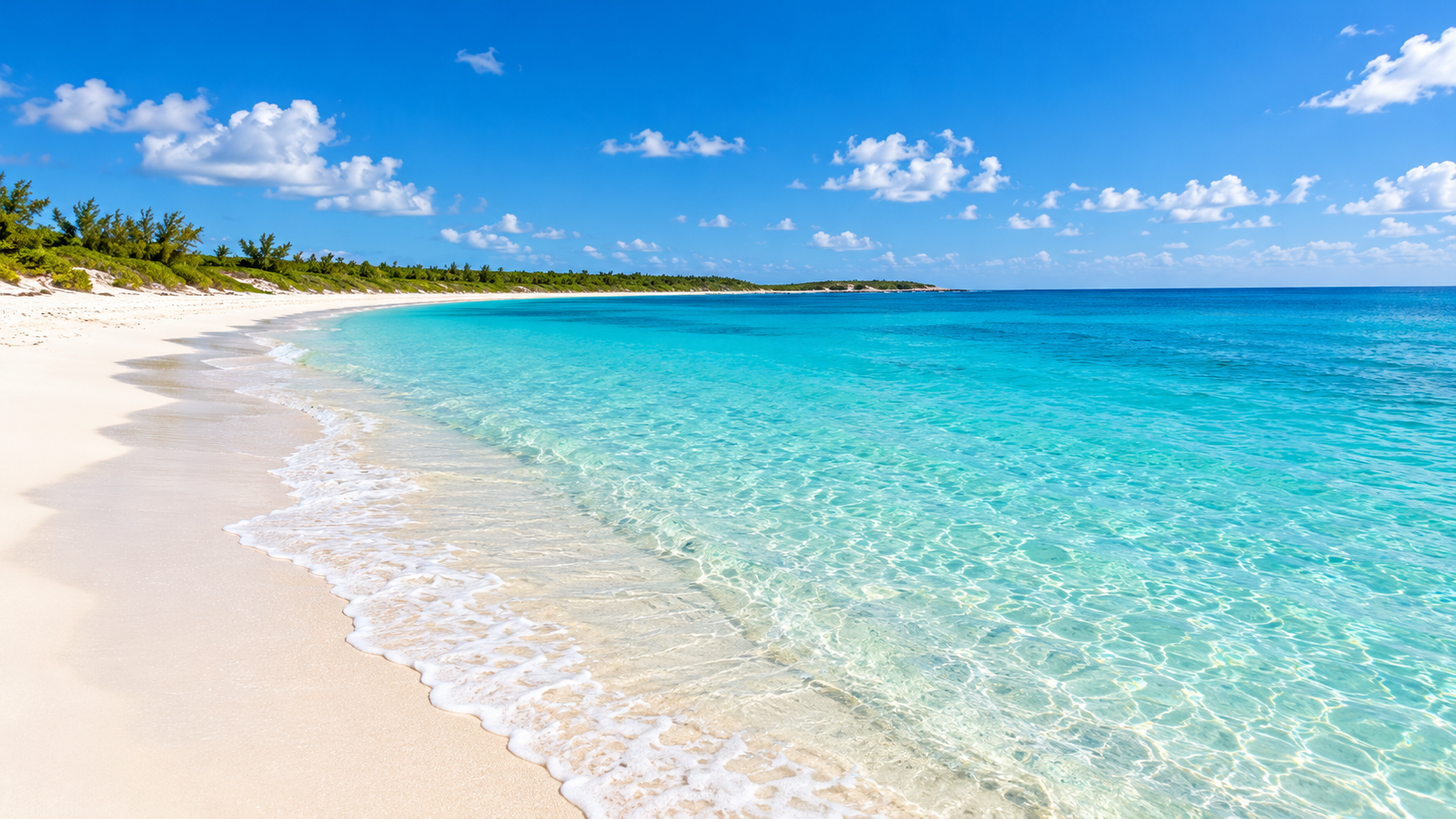
The Turks and Caicos Islands are often introduced through a single image: white sand, shallow turquoise water and a horizon without interruption. Yet Grace Bay is only the entrance to a much larger story. This British Overseas Territory lies in the Atlantic at the southeastern end of the Bahamian island chain, while its culture and tourism belong firmly to the Caribbean world.
Providenciales is the principal international gateway; Cockburn Town on Grand Turk is the capital. Between them lie fishing communities, former saltworks, mangrove channels and limestone landscapes. A rewarding journey combines beach time with at least one other island, allowing the archipelago to emerge as a place where people live and work rather than a collection of interchangeable resort views.
The name Turks is traditionally linked to the native Turks head cactus; Caicos is commonly explained through the Lucayan expression caya hico, translated as a string of islands. These names preserve a natural and Indigenous connection that predates today’s resort vocabulary. The territory’s flag combines the British Union Flag with a shield featuring conch, lobster and the cactus.
Constitutional ties to Britain coexist with a distinct island identity. Salt raking, African ancestry, Bermudian maritime connections and migration from neighboring islands all shaped it. English is the official and main public language; distinctive island expressions and rhythms of speech reflect the territory’s Caribbean connections.
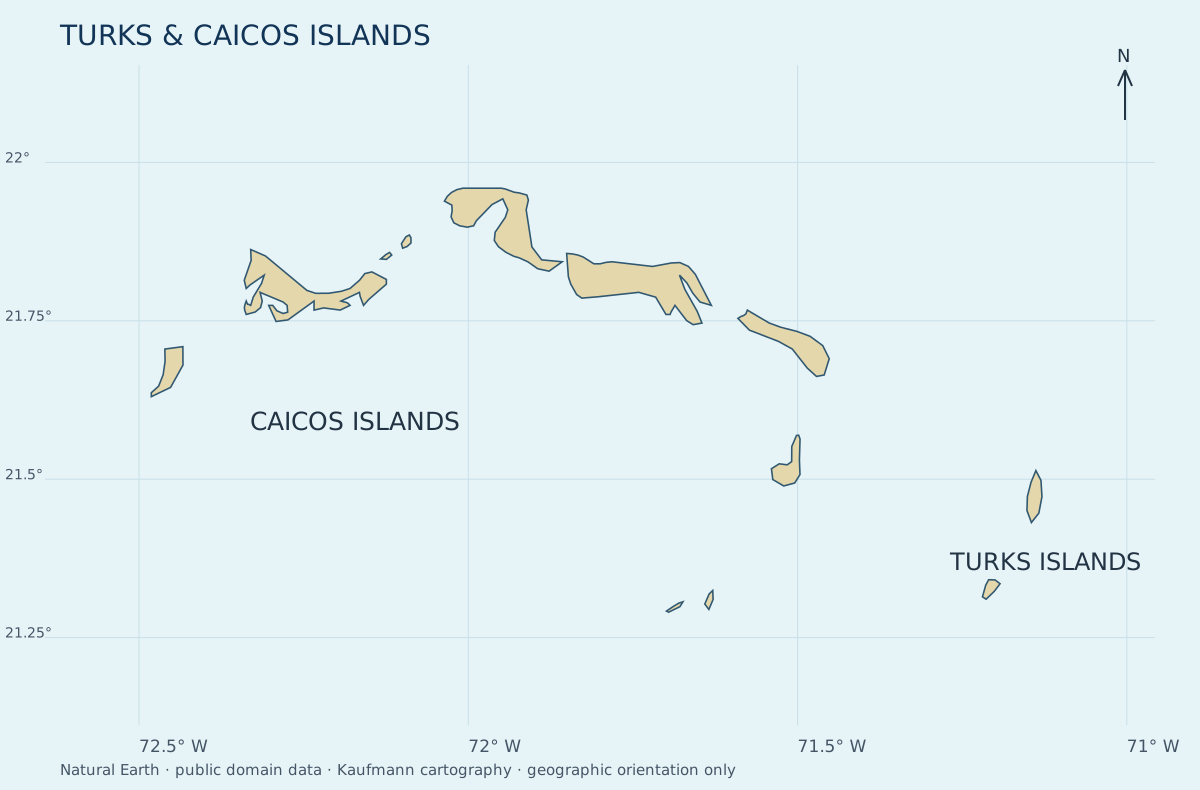
The deep Turks Island Passage separates the eastern Turks Islands, including Grand Turk and Salt Cay, from the Caicos group to the west. Much of the spectacular color comes from shallow water over pale carbonate banks. Beyond their edges, the seabed drops toward deep ocean: a geographic contrast that explains why snorkeling, wall diving and navigation require very different kinds of planning.
The principal inhabited islands are Providenciales, Grand Turk, North Caicos, Middle Caicos, South Caicos and Salt Cay; smaller private cays add another layer of settlement. North and Middle Caicos are linked by a causeway. Other island combinations involve sea or air travel. Distances that look short on a map can still consume a large part of a day.
Turks groupGrand Turk and Salt Cay
Caicos groupProvidenciales, North, Middle and South Caicos
Use the map to distinguish the two island groups before planning accommodation or excursions. Providenciales anchors most first visits, North and Middle Caicos form a paired land itinerary, and Grand Turk and Salt Cay belong to the eastern group. South Caicos offers a separate fishing-island perspective rather than a neighborhood of Provo.
The map is for geographic orientation, not marine navigation. It does not establish a ferry service, public landing permission or the safety of a crossing. Check individual operators, weather and access arrangements before treating a line between islands as a practical route; reserve enough flexibility to return to the airport island before an international departure.
Geographic orientation map · Natural Earth · public domain · Kaufmann cartography · Source and rights
The islands’ history runs from Lucayan settlement through European expansion, slavery and the salt economy to modern tourism. It cannot be understood solely as a succession of visiting explorers. Archaeological remains, plantation ruins and working harbors reveal how inhabitants used limited soils and abundant marine resources to sustain island communities.
Administrative connections with the Bahamas and Jamaica changed over time; the territory retained its British connection when Jamaica became independent in 1962. Tourism eventually shifted the economic center toward Providenciales. Grand Turk’s older streets and the quieter Caicos settlements help explain what preceded that transformation and what continues alongside it.
The Lucayans were part of the wider Taíno world and inhabited these islands before European colonization. Their maritime connections linked settlements across the Bahamian archipelago and neighboring Caribbean islands. Ceramics, tools and ceremonial objects replace the misleading idea that the landscape was empty until outsiders named it.
The National Museum interprets this history through archaeology, including the duho, a ceremonial seat associated with a chief. European slave raids and exploitation devastated Indigenous communities in the early colonial period. Their disappearance from the islands was a human catastrophe, not a convenient blank interval between discovery and settlement.
Long before visitors came for the beaches, salt connected the islands to Atlantic commerce. Shallow salinas allowed seawater to evaporate and leave crystals that could be collected and shipped. Bermudian traders and workers helped expand an industry whose markets included places where salt preserved food for long journeys and winters.
Grand Turk, Salt Cay and South Caicos retain the landscape of this economy: ponds, walls, channels and buildings whose purposes are clearer with local interpretation. The beauty of an abandoned salina should not hide the strenuous labor behind it. Walking these sites adds an industrial and social dimension to a destination usually presented through leisure.
Enslaved Africans worked in the salt industry and on plantations established in the Caicos Islands. The remains of estates such as Wade’s Green are therefore evidence of coercion as well as architecture. Interpreting them only as romantic ruins removes the people whose labor made the enterprises possible.
Emancipation began in the British Empire in 1834, but apprenticeship arrangements complicated the transition to freedom. Later communities built livelihoods from fishing, small-scale agriculture and maritime work. Museum accounts of resistance and escape help restore agency to people who are too often reduced to anonymous labor in tourism summaries.
Labor settingsSalt ponds and plantations
1834Emancipation begins in the British Empire
InterpretationInclude resistance and lived experience
Island society combines long-established Turks and Caicos families with residents who arrived from elsewhere in the Caribbean and beyond. Its cultural geography includes churches, schools, fishing docks and family gatherings as much as resort beaches. Different islands have different rhythms, shaped by their industries and by the scale of settlement.
Visitors can broaden their experience by choosing locally run tours, crafts and restaurants and by listening before assuming that every island has the same story. Ask permission before photographing individuals or ceremonies. A friendly greeting and ordinary respect for a working neighborhood matter more than a carefully rehearsed version of a local accent.
Ripsaw, also called rake and scrape, turns an ordinary carpenter’s saw into a percussion instrument. Scraping and bending the metal produces the characteristic rasping, wavering sound, joined by instruments such as accordion, drums and guitar. The music is a reminder that cultural creativity often begins with materials already at hand.
Listen for it at community events and performances rather than assuming that all hotel entertainment represents the territory’s traditions. Contemporary island listening also crosses Caribbean genres. A live performance, with its dancers and shared social setting, communicates more than a brief sound clip separated from the people making it.
Known locally as Provo, Providenciales concentrates much of the territory’s accommodation, dining and visitor infrastructure. Grace Bay explains its international appeal, but the island is also home to working settlements and shorelines with very different personalities. Blue Hills, the Bight and the areas around the marinas offer ways to look beyond the resort frontage.
Plan distances realistically: the island is not one continuously walkable beachfront town. Combining a beach morning with a local meal and a heritage or coastal stop can be more rewarding than racing through a checklist. Some older attractions mentioned in legacy guides may be closed or changed, so confirm availability directly rather than relying on a historic conch-farm listing.
Grace Bay’s attraction lies in the combination of pale sand, broad views and luminous water. Its reputation needs no unverifiable claim to a permanent world ranking: awards change, while the beach remains the principal reference point for many visitors. A walk along the shore reveals variations in activity, access and atmosphere.
Calm-looking water is still the sea, and conditions can change with wind and swell. Learn where snorkeling areas, boat channels and swimming zones lie before entering. Keep belongings secure and avoid allowing a beautiful photograph to substitute for local advice about the day’s conditions.
Chalk Sound presents another version of the Provo landscape: shallow blue water punctuated by small limestone islands. Nearby southern bays offer a different coastal setting from Grace Bay. The contrast is worth exploring slowly, with time to notice the low vegetation and the way changing light reshapes the color of the water.
Protected-area status means that recreation must follow site rules. Arrange any paddling with a responsible operator and confirm permitted routes. Viewpoints and shoreline access may cross private property; a location appearing on a map does not create a right to enter someone’s land.
Grand Turk combines the administrative role of the capital island with salt-era streetscapes and renowned offshore diving. Cockburn Town’s older buildings make a striking contrast with the purpose-built cruise facilities farther south. The island’s scale encourages attention to streets, shorelines and surviving details rather than only organized excursions.
Cruise arrivals influence how busy particular places feel, so a longer stay offers a different experience from a few port hours. Include the museum, the historic waterfront and the lighthouse area when conditions and opening arrangements allow. Offshore, the famous wall is a dive environment, not a depth that recreational visitors should attempt to reach.
The Turks and Caicos National Museum places the islands in a wider historical world. The Molasses Reef wreck collection illuminates an early European ship and the maritime dangers surrounding the banks. Lucayan objects, salt-industry evidence and lighthouse technology bring together histories that a beach holiday can otherwise leave disconnected.
John Glenn’s 1962 orbital mission also touched the islands: after splashdown in the region, he was brought to Grand Turk. This episode links a small Atlantic territory with the global space race. Check the museum’s current arrangements before visiting, as opening schedules can reflect cruise calls and staffing.
Lucayan historyCeremonial and archaeological objects
North Caicos offers a greener, more agricultural setting than the best-known resort island. Bottle Creek, Kew, Whitby and other settlements reveal everyday life at a different pace. Wetlands and ponds add birdwatching possibilities, while the coastline provides space to appreciate the landscape without treating quietness as an absence of culture.
A common approach is to travel from Providenciales by ferry and arrange a vehicle or guide on arrival. Wade’s Green plantation gives the journey historical depth, provided its enslaved laborers remain central to the interpretation. Confirm ferry schedules and the final return service before planning a day trip that also continues onto Middle Caicos.
Middle Caicos is the largest island in the territory and a compelling counterpoint to Provo. Mudjin Harbour brings together limestone cliffs, surf and the distinctive Dragon Cay rock formation. Its dramatic coast asks for a different kind of attention from a sheltered resort beach: walking and photography may be more appropriate than swimming in rough conditions.
The causeway from North Caicos makes a combined road journey possible. Keep room in the day for villages and local craft traditions as well as the headline viewpoints. Services are more dispersed than on Providenciales, so confirm food, fuel and return transport before setting out.
Conch Bar Caves reveal the interior of the island’s limestone landscape. Chambers and formations developed through the interaction of rock and water over long periods; the caves also form part of the territory’s natural and cultural heritage. A guided visit explains features that otherwise become little more than dimly lit shapes.
Arrange access with the National Trust or an authorized guide and check current opening conditions. Wear suitable closed footwear and follow instructions about delicate formations and wildlife. Do not treat the caves as an independent expedition or remove anything from the site: what looks like a small souvenir can be part of a much larger record.
SiteConch Bar Caves
AccessArrange an authorized guided visit
ProtectionDo not remove objects or touch formations
South Caicos, often called the Big South, is closely associated with fishing and marine livelihoods. Cockburn Harbour and the surrounding landscape preserve a perspective in which the sea is a workplace as well as a view. The island also has resort development, making it important to look at how older and newer economies meet.
Diving and coastal exploration can be combined with time in the settlement and attention to local seafood culture. Transport options have developed, including advertised international access, but airline routes and operating days need direct confirmation. Build an itinerary around actual bookings rather than assuming every island is reached through Provo.
Salt Cay’s small scale gives unusual prominence to the remains of the salt economy. Salinas and historic buildings tell a story of commerce and labor that shaped far more than this little island. Its quieter visitor infrastructure favors a measured stay and conversations about the landscape rather than the pace of a resort checklist.
Seasonal whale watching and diving add a marine dimension, but access and excursions depend on conditions and available operators. Arrange accommodation and transport before arrival and leave a margin for disruption. Supporting local services helps a small community retain the ability to welcome visitors on its own terms.
Parrot Cay, Pine Cay and other smaller islands broaden the archipelago beyond its principal settlements. Some have managed resort access; others are valued for natural habitats. The appeal of an apparently empty shore should be balanced with knowledge of who manages the land and what wildlife depends on it.
Book access through the relevant property or responsible boat operator. Do not assume that every cay permits landing, walking or overnight use. A boat trip can be worthwhile without stepping ashore, especially where distance protects nesting birds, sensitive vegetation or other island habitats.
ExamplesParrot Cay and Pine Cay
AccessPermission and managed arrangements
Sensitive sitesObserve without unnecessary landings
The islands offer reef shallows and dramatic underwater drop-offs, two environments that should never be confused. Shore-access snorkeling around Providenciales can introduce fish and coral communities; boat diving reaches other settings around the banks and islands. The value of these places lies in their living habitats rather than an unverified global size ranking.
Choose an operator whose qualifications and safety procedures are clear, and match the excursion to your ability. Maintain buoyancy, never stand on coral and keep away from boats and channels. Photographs should record an encounter rather than justify touching animals, collecting shells or disturbing the reef.
Shallow reefSnorkeling where permitted and suitable
Humpback whales migrate through regional waters in the winter and early spring, making Grand Turk and Salt Cay important departure points for seasonal observation. Sightings remain wildlife encounters, never an appointment guaranteed by a brochure. Wind, sea state and the animals’ movements all influence what a trip can responsibly offer.
A good excursion prioritizes distance, patient observation and the operator’s conservation practices. The same principle applies to turtles, rays and dolphins: do not chase, feed or handle them. A quiet encounter that leaves an animal undisturbed is a stronger memory than a close photograph obtained at its expense.
AnimalHumpback whale
Seasonal contextWinter and early spring
ObservationKeep distance; sightings not guaranteed
Mangroves and wetlands are essential parts of the islands’ natural system, not leftover spaces behind the beach. They shelter marine life, support birds and connect the land with shallow coastal waters. On the quieter islands, watching changing water levels and birds can reveal an entirely different rhythm from a beach afternoon.
Take a guided paddle or nature walk where access is permitted, and stay on designated routes. Keep noise and disturbance low near wildlife. Island habitats can be fragile because animals and plants have few alternative places to move when development, invasive species or careless recreation changes their surroundings.
National parks and other protected areas safeguard habitats on which both island biodiversity and the visitor economy depend. Rules vary by location and activity; a marine park is not simply a scenic label. Fisheries controls, protected species and export restrictions matter even when a shell or seafood item is offered casually.
Ask operators how they manage waste, anchoring and wildlife encounters. Use established paths, carry litter back and avoid taking natural souvenirs. Responsible travel also means supporting businesses that respect local workers and communities, recognizing that environmental protection and the quality of life of residents are connected.
Conch appears in fritters, chowders, stews and other preparations, while fish and lobster connect dining with the territory’s marine economy. Peas and rice, hominy and johnnycake add the everyday context that a luxury seafood menu can overlook. Island food tells a history of practical ingredients, family habits and Caribbean connections.
Try a locally run restaurant as well as resort dining, and ask what is fresh and legally in season. Fisheries protections should guide consumption; availability on a menu is not proof of sustainability. Food allergies and personal dietary needs should be discussed directly with the kitchen, especially when shellfish is central to a dish.
Rum punch belongs to the islands’ Caribbean drinking culture, while hotel and restaurant wine lists largely rely on imports. French, Italian, American and other wines arrive through the same maritime supply networks that provision much of island life. Read the producer, region and vintage on the list: the pleasure of drinking a wine beside the sea is different from visiting the vineyard where it was grown.
Choose a drink to accompany the meal rather than expecting one national flavor to describe every island. Ask the bar about the rum used in a punch, the ingredients in a house cocktail or available nonalcoholic alternatives. Imported bottles can add substantially to a restaurant bill, so compare serving sizes and the full price. Keep drinking separate from driving, swimming and boating.
Warm weather supports travel throughout the year, but wind, rainfall and sea conditions shape what each day allows. The cooler winter period attracts visitors seeking beach weather and seasonal marine excursions. Summer brings a different combination of warmth, humidity and travel demand; personal priorities matter more than a single claim about the perfect month.
The Atlantic hurricane season normally runs from June through November. A seasonal date is not a forecast for a particular trip, so consult current weather and disaster-management information. Flexible bookings and insurance appropriate to the journey help when storms disrupt flights, ferries or excursions.
Providenciales International Airport, code PLS, is the principal international arrival point. The tourism authority lists connections with North American, British and regional markets, while South Caicos has also gained advertised international service. Routes, frequencies and seasonal operations must be checked with the airline for the actual travel dates.
Build island transfers around confirmed schedules rather than the shortest-looking distance. Visitors arriving on a cruise have a different planning problem from those staying overnight, and private vessels must use appropriate clearance procedures. Leave time between separate tickets, especially where a domestic flight or ferry feeds an international departure.
Main gatewayProvidenciales International Airport (PLS)
Other accessVerify current South Caicos routes
ConnectionsAllow a margin between separate bookings
Road travel is on the left, although many rental vehicles have the steering wheel on the left as well. Taxis, arranged transfers and rental cars serve different needs; confirm licensing, insurance and the final fare before a journey. North and Middle Caicos are linked by road, but most other island combinations need a boat or flight.
Allow for limited lighting and animals on roads, particularly away from the busiest areas. Confirm driver-license requirements with the rental provider, as nationality-specific advice may not apply to everyone. Ferry timetables and luggage arrangements should be checked directly, and weather can alter an otherwise straightforward plan.
TCI Border Force lists US and Czech citizens among visa-exempt visitors. Its nationality-specific guidance says US, UK and Canadian passport holders need a passport valid for their stay; its general rule for other international visitors is at least six months of validity. A visa exemption does not guarantee admission: border officers decide entry and may ask about onward travel and the purpose of the visit. Check the current rules with the authorities and your carrier before departure.
Check the TCI authorities and your carrier before paying for a trip; permission to visit does not authorize work. Customs rules require particular care with restricted goods. Inspect luggage for prohibited items, including stray ammunition, and obtain current official advice rather than assuming that airline acceptance permits importation.
US passportVisa-exempt; validity for the stay under nationality-specific Border Force guidance.
Czech passportVisa-exempt; general six-month passport rule applies. Verify before travel.
AdmissionBorder officers decide entry; visitor permission is not a work permit.
The UK travel advice consulted on October 10, 2026 reports serious crime on Providenciales and Grand Turk, including armed and gang-related incidents. A resort setting does not remove the need for local awareness. Use licensed transport, protect valuables and avoid isolated places after dark; consult current official advice before departure.
Water safety is a separate question from crime. Choose excursions appropriate to your ability, tell someone your plans and check conditions with the operator. Travel insurance should cover the activities you actually intend to undertake, including any diving, rather than simply the destination printed on the policy.
English is the main public language and the US dollar is the currency in everyday use. Payment arrangements differ between a large resort and a small island business, so check card acceptance and keep an appropriate reserve of cash. Download essential booking details and maps before moving between islands.
Confirm mobile roaming costs, connectivity and accommodation facilities rather than assuming every location offers the same services. Carry suitable adapters for North American-style electrical outlets and verify the voltage accepted by your equipment. Keep document copies separate from originals, and share a realistic itinerary with someone at home.
An island holiday should be budgeted as a complete journey, not a headline room price. Add airport transfers, inter-island travel, meals, excursions and any taxes or service charges shown in the booking terms. Compare like with like: a villa with self-catering facilities and a full-service resort solve different travel needs.
There is no single reliable daily price for the territory. Season, party size, island and cancellation conditions all influence the total. Ask for written quotations, check whether taxi fares apply per person and keep a contingency for altered transport. A cheaper-looking remote stay may become costly when its access is added.
Providenciales provides the broadest concentration of resorts, villas and visitor services, while the other inhabited islands offer different combinations of small properties and newer developments. Choose the island according to the experience you want before selecting a room. A beachfront address alone says little about access to villages, dining or a suitable swimming area.
Confirm the property’s location, licensing, transfer arrangements and cancellation terms directly. Travelers with mobility requirements should request specific information about steps, surfaces, bathrooms and transfers. A promise of accessibility without details may not answer the practical questions of an island journey.
Food gatherings, music, regattas and public celebrations offer a way to experience the islands as a shared social space. The Island Fish Fry is promoted as an introduction to local food and entertainment. Community events can complement beach time, especially when visitors approach them as guests rather than staged performances arranged solely for tourism.
Dates, venues and formats can change, so consult the current official calendar and organizers. Do not book an international journey around a recurring event without verifying that year’s edition. Ask before photographing participants, and support vendors and performers through ordinary purchases and respectful attention.
The islands’ heritage includes Lucayan archaeology, saltworks, plantation remains, vernacular houses and marine habitats. These places do not need an international award to justify careful interpretation. The National Museum and National Trust provide a starting point for understanding both physical remains and the people connected with them.
National protection, a UNESCO tentative-list proposal and inscription on the World Heritage List are different statuses. This guide does not label Salt Cay or the territory’s other attractions as an inscribed UNESCO World Heritage site. Check UNESCO’s official records before repeating claims from older tourism copy, and read local protection rules independently of international branding.
National protectionLocal legal status
Tentative listProposal status, not inscription
World Heritage ListVerify in official UNESCO records
Spend the first three days on Providenciales, combining Grace Bay with a responsible reef excursion, a local meal and time beyond the hotel strip. Use the next two days for North and Middle Caicos if transport allows, including a guided heritage or cave visit and the Mudjin Harbour landscape. An overnight stay can relieve the pressure of the final ferry.
For the remaining days, choose Grand Turk for the museum and salt-era capital or South Caicos for a fishing-island perspective. Do not try to include every island in one week. This is an editorial route suggestion, not a guaranteed transport package; confirm connections and keep the final airport transfer comfortably ahead of departure.
A quieter island journey need not rely on secret places. A village street, salt pond, small museum or local craft conversation can deepen a visit more than another isolated beach photograph. North and Middle Caicos are especially useful reminders that the territory’s landscape contains agriculture, family histories and working communities.
Ask a local guide which sites can be visited responsibly and which need advance permission. Avoid publishing fragile places as discoveries simply because they seem uncrowded. The best less-visited experience often comes from spending more time at an established site and understanding why it matters.
Pack for strong sun, time outdoors and activities rather than only hotel interiors. A hat, suitable sun protection, drinking-water bottle and comfortable footwear serve most days; closed shoes are important for a planned cave visit. Take only the equipment that matches confirmed excursions, and keep sensitive electronics protected during transfers.
Bring prescriptions and medication in their original packaging, plus copies of important documents. Check luggage allowances on small aircraft and boats before packing large bags. Inspect every compartment for prohibited items, and allow space to carry waste back when visiting places without bins.
Start with the TCI Government for official policy and the tourism authority for island orientation, accommodation directories and visitor planning. Consult the Department of Environment and Coastal Resources for protected-area and environmental matters. These sources answer different questions and should not be treated as interchangeable advertising.
For travel risks and nationality-specific guidance, consult your own foreign ministry and the relevant entry authorities. The UK FCDO pages provide a useful independent risk reference, but their passport advice is written for British travelers. Verify departure-day transport and conditions with the actual carrier or operator.
Read the National Museum’s thematic pages on Lucayans, slavery, salt and the Molasses Reef wreck before visiting. They give individual objects and landscapes a narrative that general destination summaries rarely provide. The museum timeline also helps separate long historical processes from memorable but brief episodes such as the space-age connection.
Treat older guidebooks as historical snapshots, particularly for prices, attractions and transport. When a tourism page makes a sweeping claim about discovery, reef rankings or heritage status, look for the primary evidence. Different interpretations should be identified openly rather than flattened into a confident sentence.
Official tourism videos are useful for recognizing the appearance of different islands and planning the balance between coast, settlement and excursions. Museum material provides a complementary visual account of objects and history. Viewing both avoids allowing resort imagery to stand for the entire territory.
A video does not prove that an attraction remains open or that an activity is safe on your travel dates. Check its publication date and the identity of the producer. Underwater and wildlife footage is best used to understand habitats, not to expect a guaranteed close encounter or reproduce irresponsible behavior.
Tourism is central to the modern island economy, shaping accommodation, construction, transport and many service businesses. Fisheries remain important to livelihoods and identity, while the older salt industry survives mainly through heritage. The distribution of activity differs sharply between Providenciales and smaller islands.
Visitor growth creates opportunity but also pressure on housing, infrastructure and natural resources. A travel page should not turn a simplified tax claim into investment advice. Anyone considering work, property or business needs current information from the appropriate authorities and qualified local advisers, including immigration and licensing requirements.
A carpenter’s saw can carry the rhythm of a national musical tradition; salt ponds can explain a colonial town; a small museum can connect Lucayan history with the space race. These contrasts are more revealing than a list of superlatives. John Glenn’s Grand Turk connection in 1962 is a documented example of an island story reaching the world stage.
Claims about Columbus’s first landfall require care because competing interpretations exist. Likewise, an often-repeated beach ranking is an award from a particular organization and year, not a permanent geographic fact. The islands are fascinating enough without turning uncertain claims into certainties.
James Alexander George Smith McCartney, known as JAGS McCartney, became the territory’s first Chief Minister and occupies a central place in its public memory. His story helps explain the development of local political leadership and ambitions for better social and economic conditions. Memorials and official accounts offer a starting point beyond lists of celebrity visitors.
A people-centered view also includes the fishers, craftspeople, musicians and historians who sustain daily culture. International fame should not determine whose contribution deserves attention. Learning the names and work of local guides and cultural practitioners makes the territory more legible than collecting distant connections to visiting stars.
Water-based activities dominate many visitor itineraries, from sailing and paddling to diving and kiteboarding. They are different disciplines with different requirements; a broad menu does not mean that every activity suits a beginner or every weather condition. Instruction and appropriate equipment make the experience both more rewarding and safer.
Community sport extends beyond the sea and can be encountered through local fixtures and public events. Confirm schedules with organizers rather than relying on a fixed annual assumption. When planning a sporting holiday, compare the operator’s credentials, environmental practice and insurance conditions alongside the appeal of the location.
Local reporting adds the everyday perspective that international travel coverage often misses: public services, development debates, community events and changing conditions. Government releases provide official statements, but they are not a substitute for independent reporting. Reading more than one type of source helps distinguish an announced plan from something already operating.
For emergencies, transport and entry rules, use the relevant official notice and confirm directly with the organization responsible. Social posts can alert you to a change without establishing its accuracy. This guide does not assign a press-freedom ranking without a territorial assessment and a clearly identified methodology.
The images on this page move between the Grace Bay shoreline, Grand Turk’s waterfront, Middle Caicos and the mangrove landscape. The salt-pond panorama at the end of the overview adds a different rhythm to the familiar beach view. Each illustration opens a geographical theme that can be explored in the surrounding chapters.
These are clearly labeled AI illustrations. Your documentary photographs can broaden the view of the islands: send an image you own, the place where it was taken and the name you want credited to radimkaufmann@gmail.com. Respect the privacy of people in the picture and the sensitivity of natural sites.
The editorial purpose of this page is to make a beautiful destination understandable. Turks and Caicos deserves attention not only for the color of its water but for the histories of labor, migration and community that shaped its shores. Beach enjoyment and historical curiosity can strengthen each other rather than compete.
The islands reward a slower kind of attention: a conversation about fishing, a walk beside an old salt pond, or a museum object whose journey connects this small territory with the wider Atlantic. Those encounters place the resort landscape in context. They remind us that a destination is also a home, with memories and choices that deserve to be understood on their own terms.