Turkmenistan brings together the Karakum Desert, the mountain foothills of the Kopet-Dag, the Caspian shore and the irrigated oases that once sustained Silk Road cities.
Turkmenistan brings together the Karakum Desert, the mountain foothills of the Kopet-Dag, the Caspian shore and the irrigated oases that once sustained Silk Road cities. Its most rewarding story is the relationship between those landscapes and the people who made a home within them.
Ashgabat's white marble is one chapter; the earthen walls of Merv, the rhythms of a dutar and the geometry of a handwoven carpet reveal others. Travel requires careful preparation and respect for local rules, rather than the assumption that every road is open to an independent visitor.
02
Name and identity
The name Turkmenistan means the land of the Turkmens. The country's official language is Turkmen, a Turkic language written in a Latin alphabet.
Five carpet motifs on the national flag express the importance of textile traditions, while the crescent and stars belong to its wider symbolic vocabulary. National identity also draws on poetry, equestrian culture and the concept of permanent neutrality. These symbols should be read alongside living regional traditions: a national emblem is a useful introduction, but cannot substitute for the diversity of individual households, communities and experiences.
03
Geography and regions
Turkmenistan lies between the Caspian Sea and the Amu Darya, with Kazakhstan and Uzbekistan to the north and northeast, Afghanistan to the southeast and Iran to the south. Desert occupies much of the interior, but mountain foothills, river valleys and coastal environments make the country more varied than a single expanse of sand.
Settlement follows water, and the contrast between irrigated land and arid terrain helps explain routes, agriculture and the location of historic towns. Distances matter: journeys should allow for road conditions, checkpoints and the practical limits of desert travel.
04
Map and orientation
Begin with Ashgabat in the south, Mary and Ancient Merv farther east, Dashoguz and Kunya-Urgench in the north, and Turkmenbashi on the Caspian coast. These places provide the broad framework for an itinerary, while the Karakum separates many of the principal destinations.
An online map is useful for orientation, not proof that a crossing or road is currently permitted. Confirm the actual route with your sponsor, keep an offline copy of the itinerary and distinguish straight-line distances from the time needed to travel on approved roads.
The territory of modern Turkmenistan belongs to several overlapping histories: early farming societies, Iranian empires, Parthian power, Islamic scholarship, Turkic migrations and the trading networks conventionally called the Silk Roads. No single dynasty or ethnic label explains the whole sequence.
Archaeological sites preserve successive settlements rather than one uninterrupted city, and the destruction of a political center did not erase every community around it. Reading the landscape through these layers gives greater depth than a list of rulers, battles or spectacular claims about the size of ancient populations.
06
Parthia and the ancient frontier
Parthian history connects the Kopet-Dag foothills to an empire that stood between Rome and the kingdoms farther east. Nisa helps make that relationship tangible: its architecture and excavated objects belong to a courtly world shaped by Iranian traditions and Hellenistic influences.
It is misleading to treat the site simply as a remote outpost of Mediterranean civilization. Its interest lies in adaptation and exchange, and in the way a regional center participated in wider imperial life. A visit becomes richer when surviving earthworks are read together with museum collections and archaeological interpretation.
07
The Silk Roads: movement and exchange
The Silk Roads were a changing network rather than one paved highway. Routes followed water, political security, markets and the seasonal limits of travel; merchants, pilgrims, diplomats and craftspeople carried ideas as well as goods.
Turkmenistan's oasis cities and caravan remains belong within this connected geography. The UNESCO-listed Zarafshan-Karakum Corridor adds a transnational perspective to the better-known monuments of Merv. The visitor's task is to connect individual ruins with wells, agriculture and settlements around them, recognizing that the practical infrastructure of travel was as important as monumental architecture.
Russian imperial expansion into the region transformed political authority and culminated in violent campaigns, including Geok Tepe in 1881. Soviet rule subsequently reorganized administration, education, agriculture and urban life.
Cotton production and large irrigation works altered both livelihoods and the environment, while settled institutions changed the relationship between pastoral traditions and the state. This history should not be reduced either to modernization alone or to a catalogue of repression: both material transformation and coercion mattered. Memorials, archives and personal histories offer different perspectives on a period whose consequences remain visible in the landscape.
09
Independence and neutrality
Turkmenistan became independent in 1991 as the Soviet Union dissolved. Its subsequent state-building emphasized permanent neutrality, national symbols and monumental public architecture. The United Nations recognized its permanent neutrality in 1995.
Understanding this framework helps explain diplomatic language and commemorative spaces, but neutrality should not be mistaken for unrestricted access or freedom from political risk. The modern country is also shaped by centralized government and the economic importance of natural gas. Visitors should approach political discussion carefully and distinguish official presentation from independent reporting and the experiences of ordinary residents.
Turkmen communities share a language and many cultural traditions, while regional differences, family histories and minority communities enrich the country's social life. Hospitality is often expressed through tea, bread and the attention given to a guest.
A respectful visitor does not turn that welcome into an entitlement to photograph or interrogate. Ask before entering a private space, follow a host's cues at the table and avoid putting residents in uncomfortable political conversations. The most useful cultural preparation is an awareness that daily life cannot be inferred from monumental buildings or a handful of national symbols.
11
Turkmen: words for a respectful visit
Turkmen belongs to the Turkic language family and shares historical connections with languages such as Turkish and Azerbaijani. Its Latin script includes letters unfamiliar to English readers, including ä, ç, ş, ý and ž. Preserve those letters in place names where possible rather than treating them as decorative accents.
Simple greetings and thanks can make an encounter more considerate, but pronunciation and context matter. Russian may be useful in some situations; English should not be assumed. Arrange an interpreter when discussing permissions, contractual arrangements or detailed travel requirements.
12
Faith and sacred places
Islam is central to much of Turkmenistan's religious heritage, alongside local practices and the presence of other religious communities. Mosques, mausoleums and pilgrimage sites need to be approached as places with living meaning, not merely as architectural backdrops.
Dress modestly, ask whether entry is permitted and follow instructions concerning shoes, photography and prayer areas. An absence of worshippers at a particular moment does not remove these expectations. At historical sites, distinguish an archaeological interpretation from a local devotional tradition; both may matter, while answering different kinds of questions.
13
Ashgabat: marble and memory
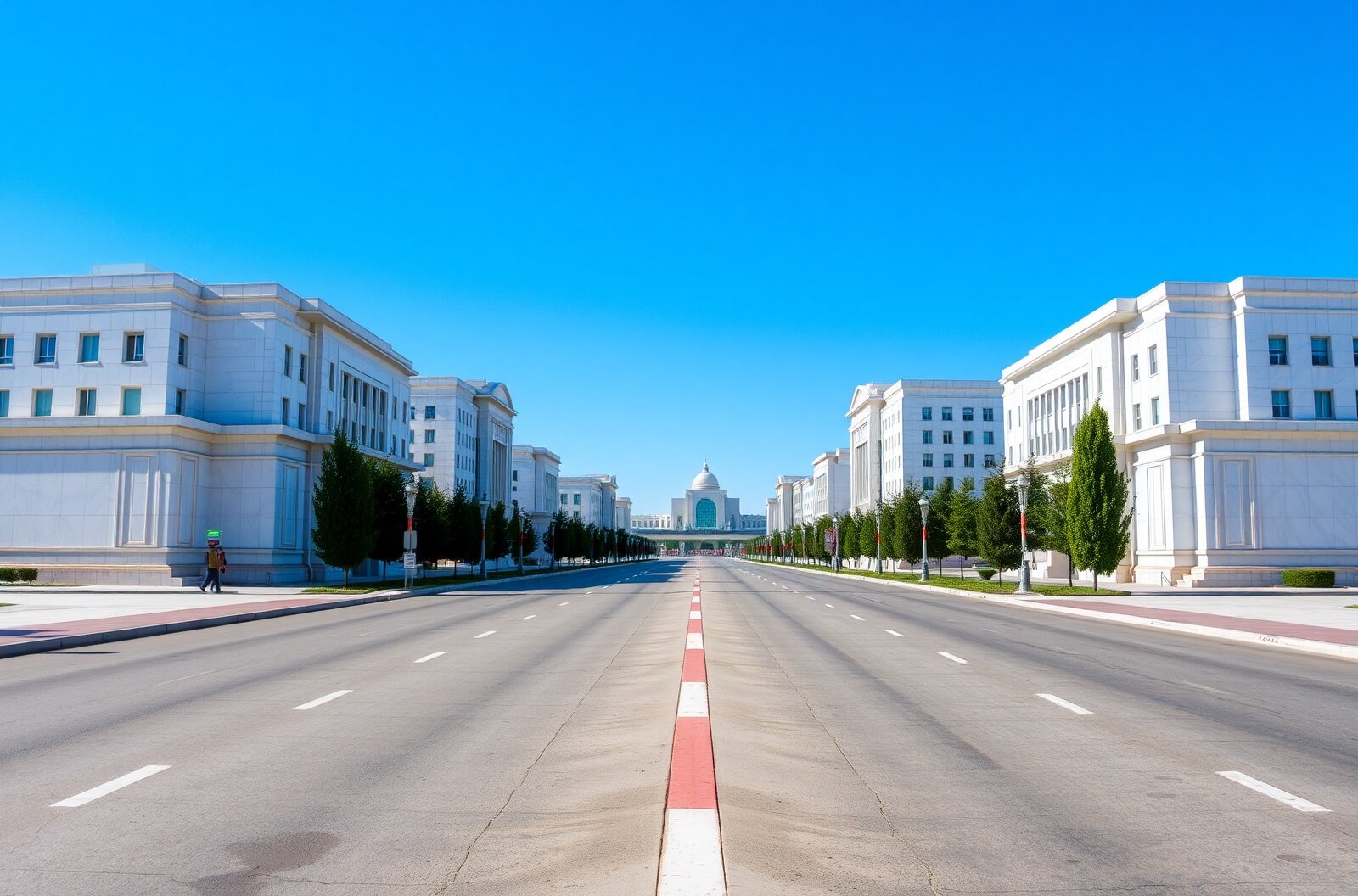
Ashgabat's contemporary avenues, pale façades and monumental public spaces create a deliberately composed capital. The city is also a place of everyday work, neighborhoods, markets and historical memory.
The devastating earthquake of 1948 is essential to understanding its rebuilding; casualty estimates should be treated carefully rather than repeated as a single uncontested number. Museums can provide context for the region's archaeology and crafts. Plan visits around actual opening hours, ask before photographing prominent public buildings and leave room for the less spectacular details through which a functioning city becomes visible.
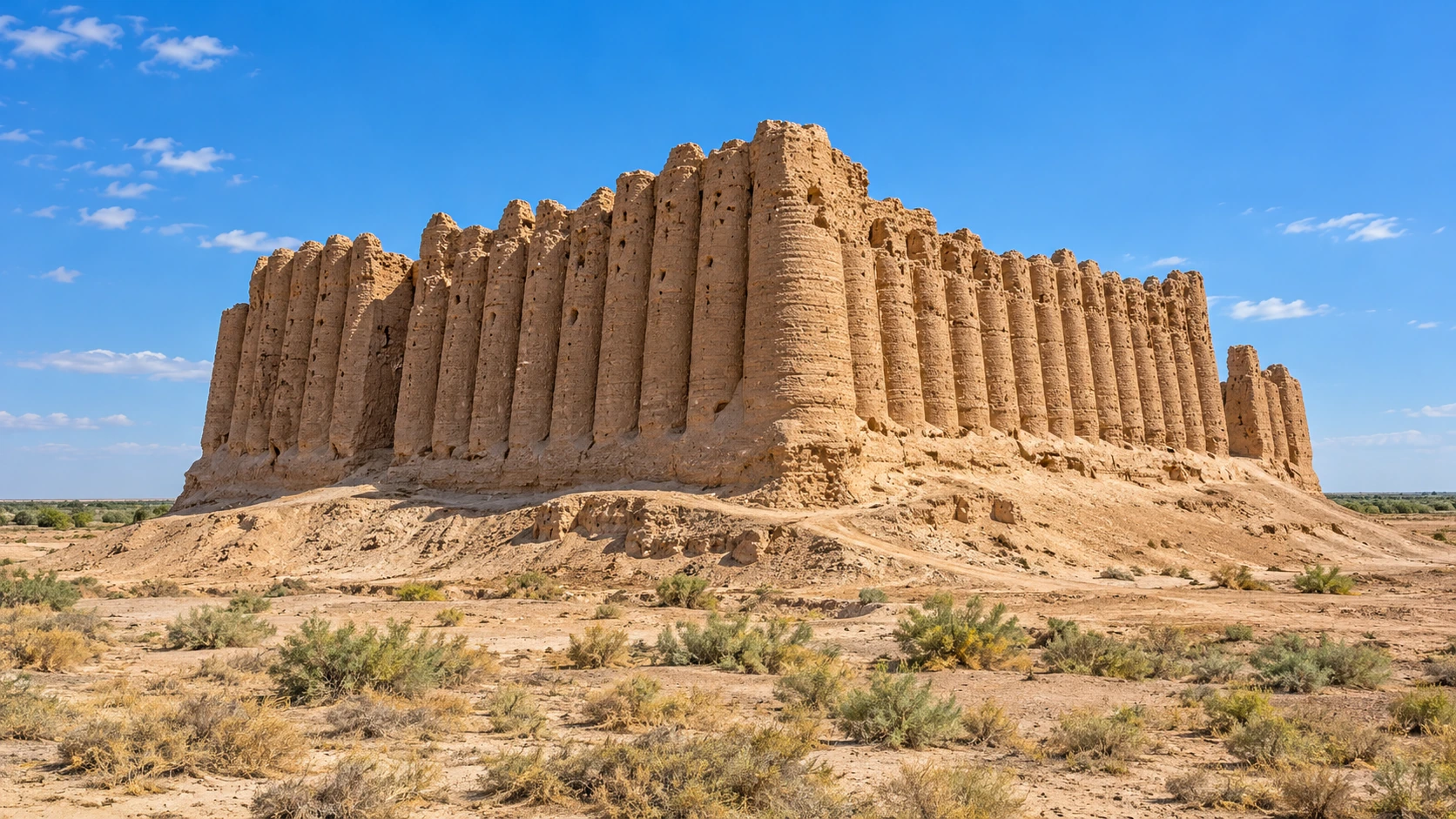
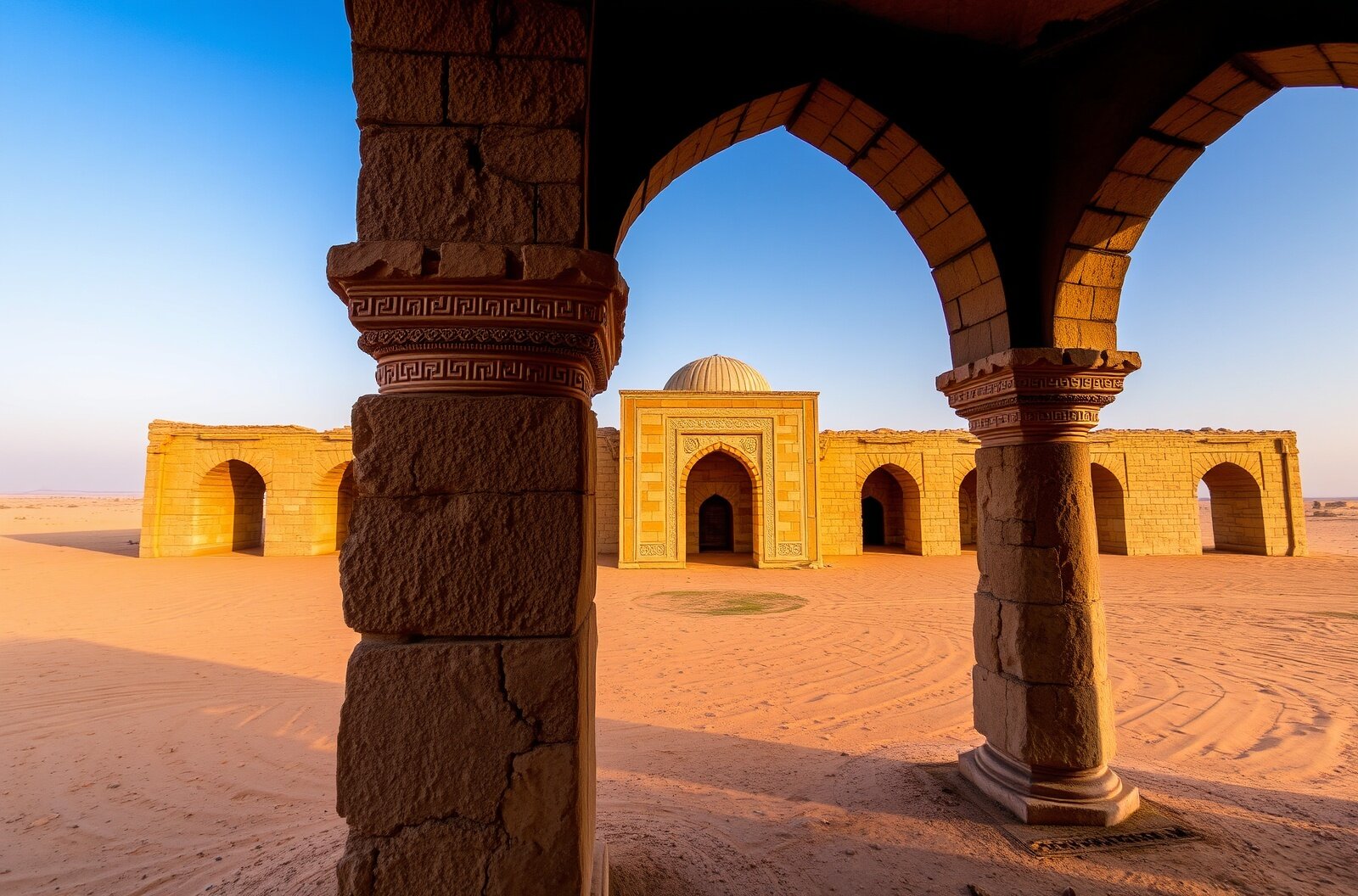
Ancient Merv is a broad archaeological landscape near Mary, with successive urban areas that reveal changing forms of settlement and political power. Its surviving structures are not one compact old town, so a visit needs time, shade planning and a guide able to explain the spaces between monuments.
The corrugated earthen walls of the Great Kyz Kala and the monumental mausoleum of Sultan Sanjar offer different architectural experiences. Move carefully around fragile remains, avoid climbing walls and let the scale of the landscape explain why water and connectivity mattered to the city's history.
The Parthian fortresses of Nisa stand close enough to Ashgabat to form a natural archaeological counterpoint to the modern capital. Earthen architecture requires imagination, but not invention: plans, excavated finds and surviving walls allow a guide to explain the royal complex without pretending that everything visible is complete or original.
Ask which elements have been conserved or reconstructed. The site's importance lies partly in the interaction of cultural traditions across a powerful empire, making it a useful place to question the simple division of ancient history into an eastern and a western world.
Kunya-Urgench connects northern Turkmenistan to the history of Khorezm. Minarets, mausoleums and surviving architectural fragments evoke a medieval urban center whose importance reached far beyond the present national border.
The monuments deserve attention to brickwork, proportion and their relationship to religious practice, rather than only a quick photograph of the skyline. Use a local guide to distinguish buildings, dates and traditions, and allow for the heat and distances between sites. Its UNESCO status recognizes heritage value; it does not make every structure freely accessible or remove the need for respectful conduct.
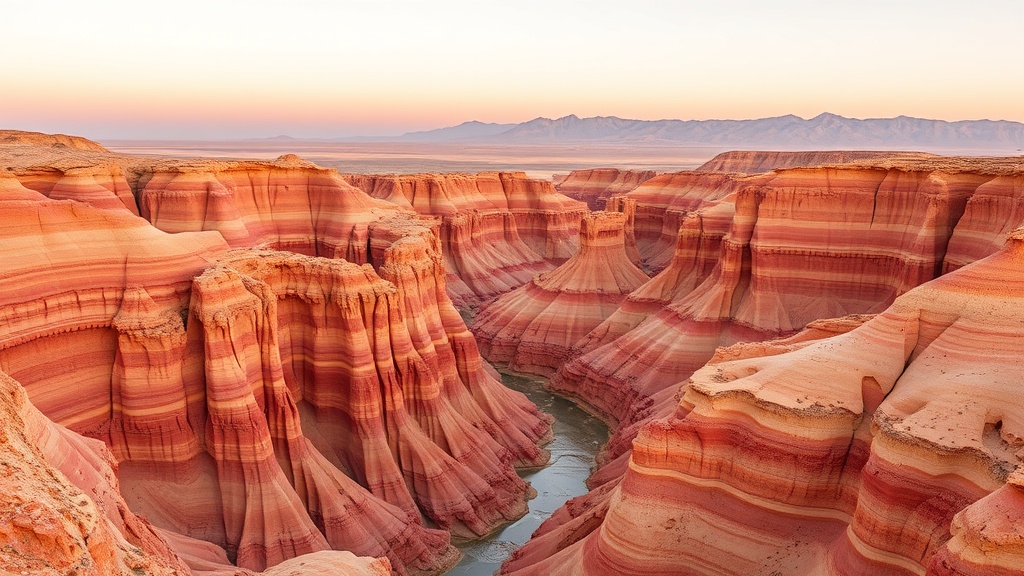
Yangykala's pale, pink and reddish cliffs introduce a different visual world from the dunes of the interior. Their attraction is geological form: exposed layers, eroded surfaces and changing light across an open landscape. Remoteness should not be advertised as a promise of effortless solitude.
Vehicle reliability, water, a permitted route and a driver familiar with conditions matter more than a dramatic social-media viewpoint. Keep away from unstable edges, avoid disturbing the terrain and plan the return journey in daylight where possible. Weather and practical access can change the experience considerably.
The Karakum is not an empty interval between cities. Its vegetation, wildlife, grazing practices and settlements reflect adaptations to limited water and extreme seasonal conditions. A journey through it should explain those adaptations rather than present sand as a blank backdrop.
Protected areas have their own rules and may require advance permission. Stay on approved routes, take waste away and avoid approaching wildlife. A planned desert excursion needs reliable transport, communication arrangements, water and a clear understanding of what happens if the vehicle fails; improvisation is not a substitute for preparation.
19
Darvaza: an attraction with an uncertain present
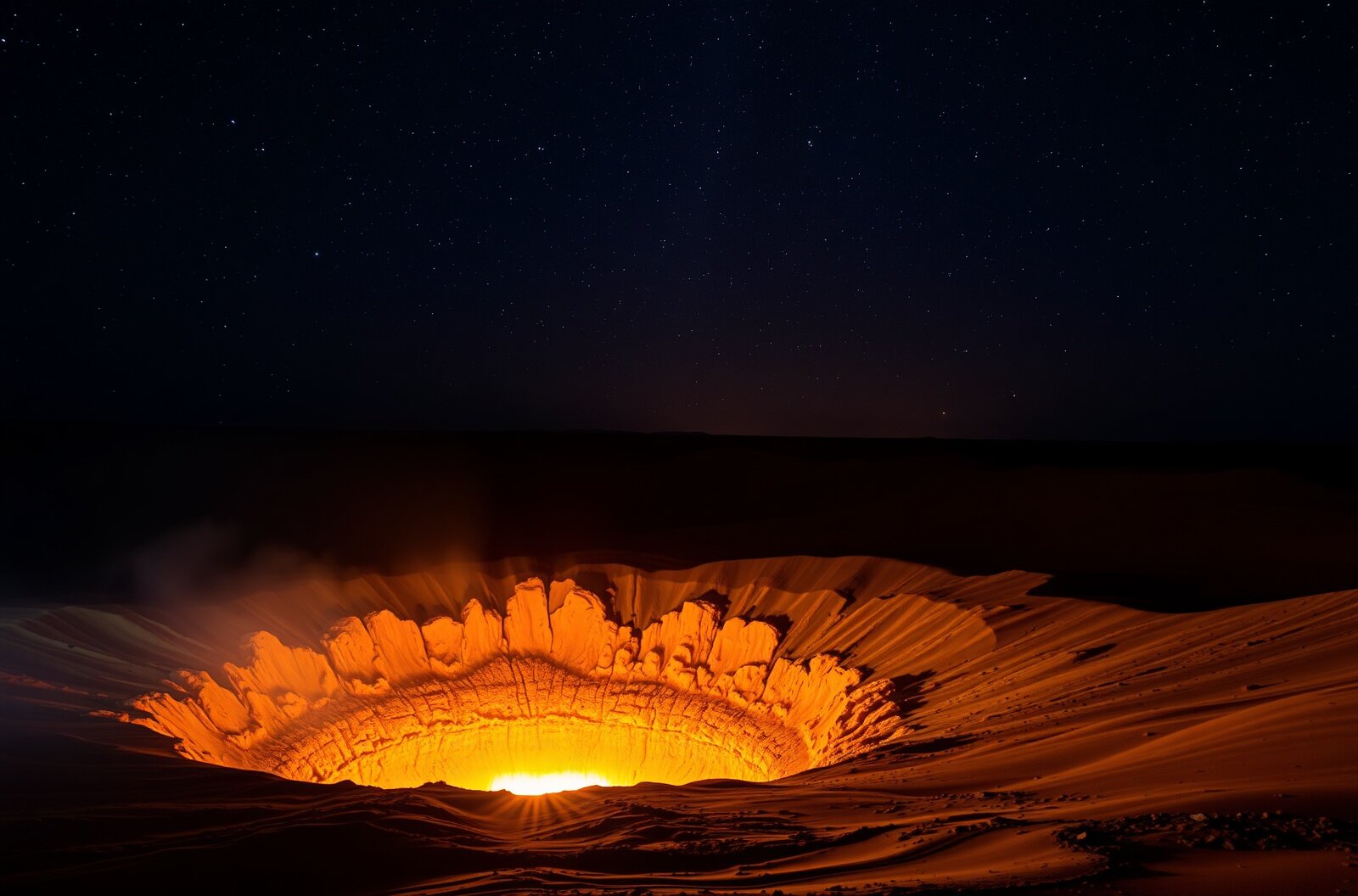
Darvaza is widely associated with a burning gas crater, but the familiar account of its exact origin and ignition date is not consistently documented. Nor should an old photograph be treated as evidence of the intensity of today's flames.
Work intended to reduce gas escape, changing conditions and local access decisions can alter what a visitor sees. Obtain a dated confirmation from an authorized operator before including the site in a route. Keep well away from the edge, follow safety instructions and do not turn an industrial and environmental hazard into an invitation for unsupervised exploration.
The Caspian shore connects Turkmenistan to a different regional geography of ports, shipping and coastal development. Turkmenbashi is important as a transport center, while the nearby resort landscape offers a contrast to inland oases.
A sea crossing is not an ordinary scheduled city transfer: departure times, passenger arrangements, visas and border procedures all need confirmation. Do not build an itinerary around an assumed ferry connection. Coastal visits also require attention to local rules, environmental conditions and the difference between a resort's advertised facilities and services actually available during your dates.
21
Kopet-Dag and the southeastern mountains
Mountain landscapes complicate the common image of Turkmenistan as unbroken desert. The Kopet-Dag foothills frame the southern capital region, while the southeast introduces other upland environments and geological interest.
A scenic location is not necessarily an open hiking destination: proximity to international borders and protected areas may bring restrictions. Obtain permission before arranging an excursion, use a guide familiar with the specific route and carry appropriate supplies. Avoid treating caves, unstable slopes or remote tracks as casual additions to a city tour, and separate geological interpretation from unverified legends about individual formations.
22
Akhal-Teke horses: skill and care
The Akhal-Teke horse is one of Turkmenistan's strongest cultural symbols, valued for its distinctive appearance and the knowledge surrounding breeding, training and decoration. Its heritage concerns people and practices as much as the animal itself.
A responsible visit to a stable should prioritize welfare, consent and the handler's instructions rather than a photograph of a metallic coat. Ask how horses are cared for and which activities are appropriate for visitors. Avoid unsupported claims that one breed is the oldest or most beautiful in the world; its cultural importance does not need a superlative to be understood.
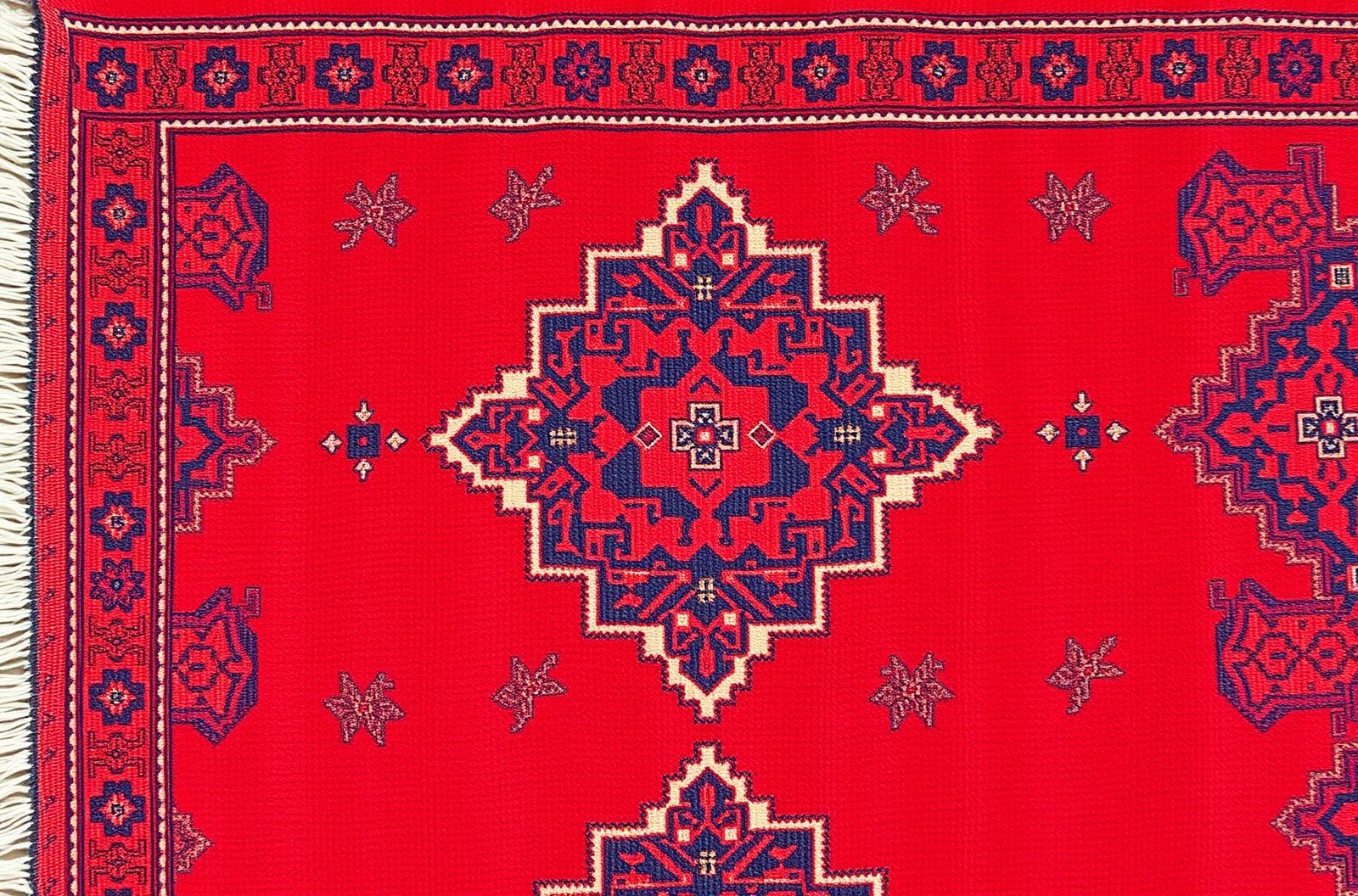
Turkmen carpets combine wool, color, repeated motifs and considerable skilled labor. Their patterns are often discussed through regional or community associations, but an individual piece also has a maker, a purpose and a history of use. A museum can explain technique and changing forms; a permitted workshop visit can make the pace of production visible.
Ask before photographing artisans and avoid reducing their work to an anonymous national souvenir. Before buying, confirm provenance, the final price and any export documentation required, especially for older pieces. Keep a receipt and obtain the relevant advice before departure.
The two-stringed dutar belongs to a wider world of craftsmanship, performance and singing. Its significance is not exhausted by describing the instrument's shape: repertoire, technique, teaching and the relationship between performer and audience all matter.
A live performance, when properly arranged, can reveal the role of music within social occasions and memory. Ask whether recording is welcome and credit performers rather than treating music as an unowned soundtrack. UNESCO's recognition of the practice helps explain its heritage value, while local musicians remain the people who give that heritage its living form.
Turkmen cooking belongs to the agricultural and pastoral worlds of Central Asia. Rice dishes, lamb, breads, dumplings, soups and seasonal produce form overlapping family and regional traditions rather than a single fixed national menu.
Pilaf, manty and grilled meat are familiar across neighboring cuisines, while dograma gives bread and broth a distinctive ceremonial importance. Ask what a dish contains instead of assuming that a familiar name guarantees the same preparation. Allergies, dietary requirements and food hygiene should be discussed in advance, especially when a meal is arranged in a private home or remote setting.
For a home-style lamb kebab, combine cubed lamb with grated onion, cumin, coriander, salt and pepper, keep it refrigerated while marinating, then grill until thoroughly cooked. Serve with bread and fresh onion.
For a dograma-inspired dish, simmer lamb to tenderness, tear flatbread into small pieces, add thinly sliced onion and moisten with hot broth before topping with shredded meat. These are practical adaptations, not claims to one definitive household recipe. Preserve the distinction between a family tradition and an editorial interpretation, and adjust quantities to the number of diners rather than treating a ceremonial serving as a universal standard.
27
Tea, melons and fermented milk
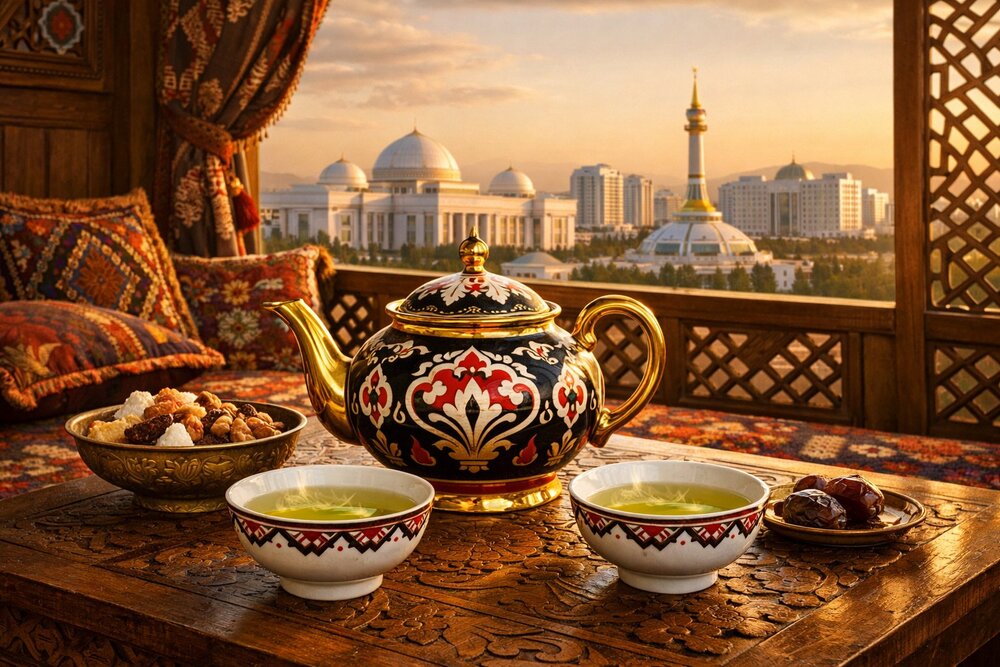
Tea offers an accessible introduction to hospitality and the pace of a shared table. Green tea, bread, fruit and sweets may accompany conversation, with local practice varying by household and occasion. Melons and other seasonal produce connect food culture to irrigated agriculture.
Chal, a fermented camel-milk drink, belongs to another part of the pastoral food tradition; do not assume that every version has identical composition or storage conditions. Ask before accepting an unfamiliar drink if ingredients or hygiene matter to you. A tasting is more informative when its preparation and social setting are explained.
Grape growing and wine production belong to parts of the country's agricultural history, but a visitor should not infer current availability from Soviet-era descriptions or an old brand list. Tea and other nonalcoholic drinks offer an equally important view of local hospitality.
Alcohol laws require particular attention: public drinking is restricted, and a hotel's service does not establish what is lawful elsewhere. This page does not assign invented tasting scores or claim that the author sampled particular bottles. A future tasting record should identify the producer, vintage, conditions and whether the assessment comes from the author or another named taster.
Turkmenistan's continental conditions bring hot summers, cold winter episodes and substantial variation between coast, desert and mountains. Spring and autumn often offer more manageable sightseeing temperatures, but no season removes the need to check local forecasts. Desert nights can be much cooler than afternoons, while exposed archaeological sites provide limited shade.
Plan strenuous activity for appropriate hours, carry water and allow flexibility when weather changes. An itinerary that combines mountain foothills and the interior needs more than one clothing strategy. Treat broad climate descriptions as background, not a forecast for a particular day.
30
Festivals and the cultural calendar
Nowruz, equestrian celebrations and events connected to crafts and national commemoration form part of Turkmenistan's public calendar. Official ceremonies and local family occasions are different experiences, and neither should be promised without arrangements.
Independence Day is observed on September 27; older travel pages that give October 27 repeat an outdated date. Confirm the program for the relevant year, whether foreigners can attend and what security or photography rules apply. A holiday may also change transport, opening hours and booking availability, so it belongs in practical planning as well as in the cultural story.
Entry arrangements need to be checked for your nationality and the exact route, not copied from another traveler's experience. The current UK guidance describes visa and invitation requirements, while the Turkmen authorities make the final decision. A sponsor can help establish the approved itinerary and administrative steps.
Confirm passport validity, border eligibility, flight details and any arrival health procedure with the issuing embassy and your operator. A transit visa is not a shortcut to an unrestricted tourist stay. Do not purchase nonrefundable transport on the assumption that an invitation, application or announced policy guarantees admission.
Confirm who handles migration registration and keep the resulting documentation with your travel papers. Current UK guidance states that stays longer than three working days require registration within three days of arrival; verify how this applies to your circumstances. Border areas and some destinations may need additional permission.
Keep your passport available for identity checks and a separate copy stored safely. Follow restrictions on photography, smoking and public drinking. Administrative uncertainty should be resolved through the sponsor or relevant authority before departure, rather than by assuming that a hotel booking automatically covers every requirement.
Domestic flights, railways and road journeys serve different needs, but availability and booking conditions must be confirmed for the actual dates. A long drive across the interior is not comparable to a short urban taxi trip. Use authorized transport, agree the route and payment clearly, and plan a margin for delays.
Night driving outside cities adds risk because of road conditions and limited visibility. For remote journeys, establish fuel, water, vehicle recovery and communication arrangements in advance. Your itinerary should state which transfers are included and who is responsible if a service is canceled.
A useful budget begins with a dated operator quotation, not a table converted using an unofficial exchange rate. Separate accommodation, transport, guiding, entry fees, meals and administrative charges, and ask what must be paid in cash. The manat is the local currency; banking and card access should not be assumed to work as they do at home.
Use lawful exchange channels and keep an emergency reserve. A very cheap local meal does not describe the total cost of an organized visit. Confirm cancellation terms and the treatment of itinerary changes before paying a deposit.
35
Accommodation: confirm the actual service
Accommodation should be chosen as part of the approved route and registration arrangements. A hotel's name or star category is not enough: confirm the room, dates, meals, transfers, payment method and the handling of migration paperwork. Conditions outside the capital can differ from those in larger urban hotels.
If an itinerary includes camping, ask about equipment, sanitation, water, weather contingencies and whether the location is currently permitted. Avoid treating old price lists as guaranteed rates. Written confirmation and clear cancellation terms are more useful than promises of a particular atmosphere or a generic luxury label.
36
Packing for heat, dust and paperwork
Pack breathable modest clothing, layers for cooler evenings, sturdy shoes and protection from sun and dust. An archaeological itinerary often involves exposed ground and uneven surfaces rather than shaded city pavements. Keep passport, visa, invitation and insurance documents organized, with copies stored separately.
Take offline route information and the contact details needed when internet access fails. Confirm medication and customs requirements before travel instead of assuming that every familiar item is permitted. The best packing list comes from the actual route, accommodation and season; a desert camp and an urban museum visit have different practical needs.
37
Business and the resource economy
Natural gas is central to Turkmenistan's economic geography, alongside agriculture, transport and state-directed construction. Pipelines and export relationships connect the country to wider regional markets, while the Caspian port adds a logistical dimension. An introductory travel page cannot replace commercial due diligence.
A business visit requires the correct visa purpose, verified counterparties and a clear understanding of payment, currency and contractual arrangements. Avoid assuming that an invitation to a meeting establishes a partner's authority or the security of an investment. Economic interpretation should distinguish official announcements from completed infrastructure and independently documented activity.
Magtymguly Pyragy occupies a central place in Turkmen literary memory, with poetry that continues to shape language, ethical reflection and national identity. Reading a reliable translation alongside its historical context is more useful than repeating an unsupported quotation attributed online.
Cultural history also belongs to unnamed and named musicians, carpet makers, teachers and other practitioners whose work sustains traditions. Do not fill a list of notable people with horse breeds or generic occupational groups. Biographical information should identify an actual person and distinguish documented life events from later commemorative interpretation.
39
Media, internet and filming
Internet and mobile access can be limited, and familiar messaging or social platforms may not work. Download necessary information before travel and agree an alternative way to communicate with your operator. Political reporting needs source awareness: official media and independent reporting describe the country from different positions.
Photography of sensitive buildings is restricted, and residents should not be filmed without consent. A travel film should identify its date, creator and purpose, rather than be presented as a live report of current conditions. Avoid invented documentary titles and treat dramatic footage as a source to examine, not a complete account of the country.
A country cannot be reduced to a burning crater or one monumental skyline. Useful images show the relationship between architecture, land, work and everyday life, with captions that identify what is actually represented.
AI illustrations on this page are labeled as such and are not documentary evidence of a visit, a present-day condition or an exact architectural survey. Historical photographs require dates and source information. The gallery should help the reader understand the surrounding chapters rather than repeat the same scene in several crops or imply that a generated traveler portrait proves a real journey.
Use UNESCO's country inventory to distinguish inscribed properties from tentative nominations. Turkmenistan has five World Heritage properties: Ancient Merv, Kunya-Urgench, the Parthian Fortresses of Nisa, the transnational Zarafshan-Karakum Corridor and the Cold Winter Deserts of Turan.
For travel, read current consular advice and confirm requirements with the relevant embassy and sponsor. Historical guidebooks remain useful for context but cannot establish today's entry rules, prices or opening hours. Further reading should have verifiable titles and authors, while the date of a source should remain visible whenever its practical relevance depends on time.
Turkmenistan deserves an account that allows its landscapes, art and historical depth to remain visible without turning political restriction into exotic entertainment. The fascination of Merv or a carefully made carpet does not depend on calling the country bizarre, nor does appreciating its heritage require ignoring the circumstances of contemporary life.
This is an editorial introduction grounded in sources, not a claim that every scene described was personally witnessed. Its purpose is to connect places, people and historical questions, while leaving readers able to distinguish knowledge, interpretation and the practical uncertainties that require fresh verification.
— Radim Kaufmann, 2026
Share your photo
Own a photograph of Turkmenistan? Send it with the place, date and your preferred credit.