

🍷 Wine, Spirits & Drinking Culture
Colombia is not a wine country in any serious sense — the latitude and altitude combination that makes brilliant coffee makes difficult grapes, and there is no dry season long enough to ripen them predictably. But it is a wine-producing country, and the handful of estates are worth a detour. Viñedo Ain Karim, at 2,010 m outside Villa de Leyva in Boyacá, has made the Marqués de Villa de Leyva label since the 1980s — Cabernet Sauvignon, Merlot, Chardonnay and a Sauvignon Blanc from about ten hectares, some 50,000 bottles a year, with tastings on the estate. Its young neighbour Umaña Dajud sells a Crianza red and rosés from the cellar door. In the Cauca valley, Casa Grajales at La Unión (founded 1977) is the country's largest producer, making table wines and the Samaria sparkling from tropical-climate grapes that crop twice a year. None of it will trouble Mendoza; all of it is a good afternoon. What Colombia has instead is one of the most sociable drinking cultures in the Americas.
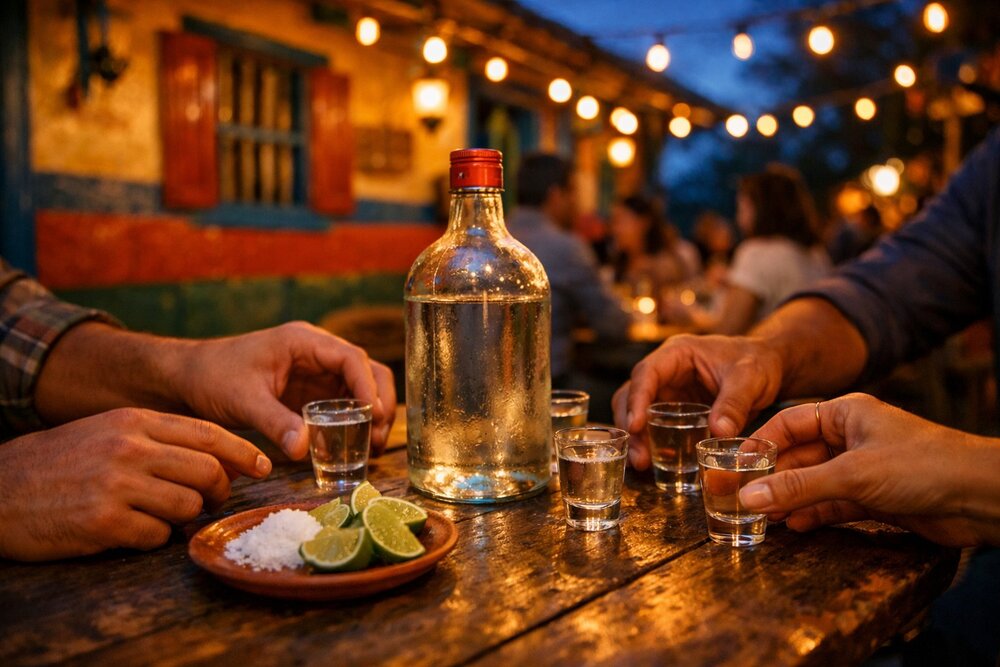
Aguardiente — "fire water" — is the national spirit: sugarcane-based, anise-flavoured, clear, typically 24–29% ABV, and fiercely regional. Each department runs its own distillery as a state monopoly whose revenue funds health and education, and loyalty to your department's brand is close to a football allegiance: Antioqueño from Medellín, Néctar from Cundinamarca, Cristal from Caldas, Blanco del Valle from Cali. It is served ice-cold in small shot glasses, poured for everyone at the table including people you have just met, and the sugar-free (sin azúcar, green label) versions are now the more popular.
Ron Viejo de Caldas and Ron Medellín are the well-regarded aged rums from the coffee region. Club Colombia and Águila are the mainstream beers, with a real craft scene in Bogotá and Medellín. Refajo — beer mixed with the red cream soda Colombiana — is the standard party drink, and canelazo, hot aguardiente with cinnamon and panela, is what the high Andes drink when it is cold.
Drinking here is emphatically communal: a bottle arrives for the table, one glass circulates, and refusing a round takes more social skill than accepting it. The one non-alcoholic ritual to know is chocolate santafereño — hot chocolate served with a slab of fresh cheese that you drop in and eat with a spoon once it melts.
🏆 Kaufmann Wine Score — Colombia
Rated on four criteria: Aroma (/25), Taste (/30), Finish (/20), Value (/25) — Total /100
| Wine | 🔴 Aroma | 🟡 Taste | 🟢 Finish | 🔵 Value | Total |
|---|---|---|---|---|---|
| 🥂 Marqués de Villa de Leyva Sauvignon Blanc (Ain Karim, Boyacá, 2,010 m) | 20 | 23 | 14 | 22 | 79 |
| 🍷 Marqués de Villa de Leyva Cabernet Sauvignon Reserva (Ain Karim) | 19 | 22 | 14 | 20 | 75 |
| 🍷 Umaña Dajud Crianza (Villa de Leyva) | 18 | 22 | 14 | 21 | 75 |
| 🍾 Casa Grajales Samaria Brut (La Unión, Valle del Cauca) | 17 | 20 | 13 | 23 | 73 |
95–100 Legendary · 90–94 Outstanding · 85–89 Very Good · 80–84 Good · 75–79 Average · <75 Below Average
