

🇨🇴 Colombia at a Glance
🌏 Overview — Why Visit Colombia
Colombia is the only country in South America with coastlines on both the Caribbean Sea and the Pacific Ocean, and that single geographic fact explains most of what makes it extraordinary. Three separate branches of the Andes — the Cordillera Occidental, Central and Oriental — fan north out of Ecuador and split the country into valleys and plateaus, each with its own climate, accent, cuisine and music. Between and beyond them lie Caribbean beaches, Pacific rainforest, the eastern Llanos grasslands and roughly a third of the national territory given over to Amazon jungle. Colombia is the second-most biodiverse country on Earth after Brazil, in a landmass roughly seven and a half times smaller (1.14 million km² against Brazil's 8.5 million).
For a generation, Colombia was the country travellers skipped. That era is genuinely over, though it ended gradually rather than overnight: the 2016 peace accord with the FARC guerrilla, two decades of steady investment in Medellín and Bogotá, and the arrival of direct flights from a dozen North American and European cities have turned a place people avoided into one they return to. Cartagena hosts literary festivals and celebrity weddings. Medellín has become one of the hemisphere's busiest remote-work hubs. The Coffee Cultural Landscape carries a UNESCO listing.
What visitors talk about afterwards is rarely the sights. It is the alegría — a determined, almost defiant cheerfulness that is easier to understand once you know the history behind it. Colombians will start a conversation with you on a bus, invite you into a round of aguardiente shots, and correct your salsa footwork within an hour of meeting. It is a country that has spent thirty years being described by other people and is visibly delighted to describe itself.
Practically, Colombia is also one of the best-value destinations in the Americas: short flights from Miami and New York, a strong dollar and euro against the peso, world-class coffee for pocket change, and a domestic aviation network that lets you swap a Caribbean beach for a cloud forest in ninety minutes.
📛 Name & Identity
The country is named after Christopher Columbus — Colombia, from the Latinised Columbus — though Columbus himself never set foot on its mainland. The name was popularised by the Venezuelan revolutionary Francisco de Miranda in the late 18th century as a name for the whole of Spanish America, and Simón Bolívar adopted it in 1819 for the republic he founded, the union of today's Colombia, Venezuela, Ecuador and Panama that historians call Gran Colombia.
That union dissolved by 1831, and the surviving rump changed names repeatedly — the Republic of New Granada, the Granadine Confederation, the United States of Colombia — before settling on the Republic of Colombia in 1886. Panama's separation in 1903, backed by the United States and its canal ambitions, remains the most consequential subtraction.
The single most common error abroad is the spelling: it is Colombia, never "Columbia". Colombians notice, and there is a long-running national campaign about it. The demonym is colombiano/colombiana. Regional identities run at least as deep as the national one — paisa (Antioquia and the coffee region), costeño (Caribbean coast), rolo or cachaco (Bogotá), vallecaucano (Cali and the Cauca valley), santandereano, llanero — and these labels carry real cultural weight, not just postcodes.
The flag's yellow, blue and red descend directly from Miranda's Gran Colombia banner and are shared with Venezuela and Ecuador. The yellow band, twice the width of the others, is usually read as the country's gold and its land; blue as the two oceans; red as the blood of independence.
🗺️ Geography & Regions
Colombia covers 1,141,748 km² — roughly twice the size of France — and is conventionally divided into six natural regions, which is the framework Colombians themselves use.
The Andean region holds three quarters of the population and almost every major city. The Andes arrive from Ecuador as a single mass and split into three cordilleras separated by two great river valleys, the Cauca and the Magdalena. Altitude, not latitude, sets the climate: Colombians speak of tierra caliente (below 1,000 m), tierra templada, tierra fría and the treeless páramo above roughly 3,000 m — a high-altitude wetland ecosystem that Colombia has more of than any other country, and that supplies most of the drinking water for Bogotá.
The Caribbean region runs from the Gulf of Urabá to the Venezuelan border: Cartagena, Barranquilla, Santa Marta, the arid Guajira peninsula, and the astonishing Sierra Nevada de Santa Marta — the highest coastal mountain range on Earth, rising from the beach to 5,775 m at Pico Cristóbal Colón in about 42 kilometres.
The Pacific region (Chocó) is one of the wettest places on the planet, with over 8 metres of rain a year in places, dense rainforest, a largely Afro-Colombian population, and humpback whales calving offshore between July and October. The Orinoquía or Llanos are vast eastern cattle plains shared with Venezuela. The Amazon region covers the southeastern third of the country and holds barely 1% of its people. Finally the insular region — San Andrés, Providencia and Santa Catalina — sits 700 km northwest in the Caribbean, far closer to Nicaragua than to Colombia, with an English-Creole-speaking Raizal population.
🗺️ Map of Colombia
Colombia borders Panama to the northwest, Venezuela to the east, Brazil to the southeast, and Peru and Ecuador to the south — five land neighbours, plus maritime boundaries with Nicaragua, Honduras, Jamaica, Haiti, the Dominican Republic and Costa Rica.
Key destinations marked: Bogotá, Medellín, Cali, Cartagena, Santa Marta and Tayrona, Salento and the Coffee Triangle, Leticia on the Amazon, Caño Cristales, San Andrés and Providencia.
Distances are deceptive. Bogotá to Cartagena looks like a morning's drive on a map and is a 1,000 km, 18-hour bus ride through three mountain ranges — which is why Colombians fly domestically far more than their neighbours do.
📜 History
Before the Spanish
The high savanna around Bogotá belonged to the Muisca, a Chibcha-speaking confederation of skilled goldsmiths and salt traders. Their ritual at Lake Guatavita — a new ruler covered in gold dust, rowed to the centre of the lake, offerings of gold and emeralds thrown into the water — became the legend of El Dorado that drew and destroyed generations of European expeditions. In the southern uplands, the people of San Agustín carved several hundred monumental stone figures between roughly 100 BCE and 800 CE; further north, the Tairona built the stone terraces and staircases of the settlement now called Ciudad Perdida, around 800 CE, six centuries before Machu Picchu.
Conquest and colony (1499–1810)
Alonso de Ojeda reached the Guajira coast in 1499. Santa Marta (1525) and Cartagena (1533) became the first permanent Spanish cities, and Gonzalo Jiménez de Quesada founded Santafé de Bogotá in 1538 after a brutal march up the Magdalena. Cartagena grew into the empire's fortified treasure port and one of its largest slave markets — the origin of Colombia's Afro-descendant population, today concentrated on both coasts. The city's walls and the fortress of San Felipe de Barajas were built over two centuries and successfully repelled a British armada of 186 ships in 1741.
Independence and the long 19th century
The independence movement began with the Grito de Independencia in Bogotá on 20 July 1810 — still the national day — and was decided at the Battle of Boyacá on 7 August 1819, when Bolívar's army crossed the Andes through the páramo and broke the royalist force in two hours. Gran Colombia followed, then fractured. The rest of the century was a sequence of civil wars between centralists and federalists, Conservatives and Liberals, ending in the War of a Thousand Days (1899–1902) and, a year later, the loss of Panama.
La Violencia, the conflict, and after
The assassination of the Liberal leader Jorge Eliécer Gaitán in Bogotá on 9 April 1948 triggered the Bogotazo riot and a decade of partisan slaughter known as La Violencia, which killed perhaps 200,000 people. Out of its aftermath came the guerrilla movements — the FARC and ELN, both founded in 1964 — and, from the 1970s, the cocaine economy that funded every side of the war, the Medellín and Cali cartels, the paramilitary blocs, and a conflict that displaced more than eight million Colombians — the largest internally displaced population in the world for most of the 2010s.
The 2016 peace accord between the government of Juan Manuel Santos and the FARC ended the largest of those wars and won Santos the Nobel Peace Prize, though implementation has been uneven and the ELN and dissident factions remain active in specific rural corridors. The transformation of the cities has nonetheless been genuine and measurable: Medellín's homicide rate fell by more than 95% from its 1991 peak.
Colombia since 2016
Iván Duque (2018–22) slowed implementation of the accord; in 2022 Gustavo Petro, a former M-19 guerrilla and ex-mayor of Bogotá, became the first left-wing president in Colombian history, with Francia Márquez as the first Afro-Colombian vice-president. His Paz Total policy of negotiating with every armed group at once delivered little: in January 2025 an ELN offensive in the Catatumbo region of Norte de Santander killed dozens and displaced tens of thousands within days, and Petro suspended the talks and declared a state of internal commotion. On 7 June 2025 the opposition senator and presidential hopeful Miguel Uribe Turbay was shot at a rally in Bogotá; he died on 11 August 2025, the first killing of a presidential contender since the cartel era of 1989–90.
The 2026 election was fought in that shadow. On 21 June 2026 the right-wing lawyer Abelardo de la Espriella beat Petro's ally Iván Cepeda by 49.66% to 48.70% — 250,830 votes, the narrowest runoff in the country's history — and on 7 August 2026 he was sworn in as president in Cali, the first inauguration ever held outside Bogotá, with José Manuel Restrepo as vice-president. He gave the armed groups 100 days to surrender, announced that Colombia would join the US-led "Shield of the Americas" security bloc, and on 11 September 2026 formally dismantled the last of Petro's negotiating tables; ELN attacks on security forces in Catatumbo and army airstrikes in reply have continued since. For visitors the practical picture is unchanged: the cities are calm, and the departments named in the advisory in the Safety section are not.
👥 People & Culture
Colombia's roughly 53 million people (DANE projects 53.1 million for 2025) are overwhelmingly of mixed Indigenous, European and African descent, with substantial Afro-Colombian populations on both coasts, some 115 recognised Indigenous peoples speaking around 65 surviving languages, and a Roma minority. Around 80% live in cities, and the country is unusual in Latin America for not having a single dominant metropolis: Bogotá, Medellín, Cali and Barranquilla are all genuine regional capitals with their own economies and identities.
The regional characters are real enough that Colombians joke about them constantly. Costeños on the Caribbean coast are loud, quick and musical, and speak a fast Spanish that swallows final consonants. Paisas from Antioquia and the coffee region have a reputation for entrepreneurship, formality and an unmistakable sing-song accent. Rolos in Bogotá are more reserved, more bureaucratic, and speak what many consider the clearest Spanish in the Americas. Vallecaucanos in Cali dance better than everyone else and will demonstrate.
Family remains the organising unit of life, extending well past the nuclear household. Catholicism is the majority faith and still shapes the calendar, though evangelical churches have grown fast. Football is a national obsession; so is cycling, where Colombian climbers — Nairo Quintana, Egan Bernal, the first Latin American to win the Tour de France — have made the country a genuine world power.
The hospitality is not a tourism-board slogan. Expect to be offered coffee within minutes of entering anyone's home or office, to be asked directly where you are from and what you think of Colombia, and to be corrected — warmly but firmly — if your answer involves anything you saw in a Netflix series.
🗣️ Language & Useful Phrases
Spanish is the official language, and Bogotá Spanish is often held up as among the clearest and most neutral in the Americas — slow, fully pronounced, generous with the formal usted, which Colombians use even with close friends and family in a way that surprises other Latin Americans. Coastal Spanish is a different animal entirely: fast, consonant-dropping, and closer to Caribbean Cuban or Dominican speech. English is limited outside tourist districts, though improving quickly in Medellín, Cartagena and Bogotá's business areas. On San Andrés and Providencia, an English-based Creole is the community language.
Spanish worth knowing
Buenos días / Buenas tardes — Good morning / good afternoon
¿Qué más? — literally "what else?", the standard Colombian "how's it going?"
¡Qué chévere! — how cool / how great
Un tinto, por favor — a small black coffee, please (not a glass of red wine)
¿Me regala…? — literally "would you gift me", the polite Colombian way to order anything
Dar papaya — to "give papaya": to make yourself an easy target. No des papaya is the national safety proverb
Parcero / parce — mate, buddy (paisa slang, now nationwide)
¡Salud! — cheers
One warning worth taking seriously: tinto means a small black coffee in Colombia, not red wine, and ahorita can mean anything from "right now" to "at some point today".
🏙️ Bogotá — The Capital on the Savanna
Bogotá sits at 2,640 metres on a flat Andean plateau, which makes it the third-highest capital city in the world and considerably colder than most visitors expect — average daytime temperature around 14–19 °C, rain a genuine possibility on any day of the year, and a first afternoon that can leave you mildly breathless. Bring a jacket. The metropolitan area holds about 11 million people.
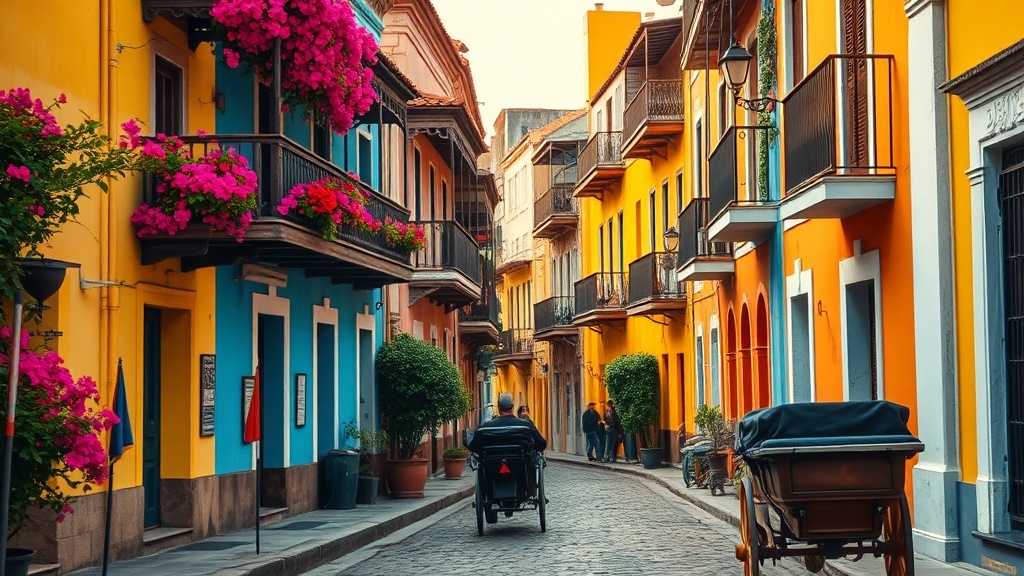
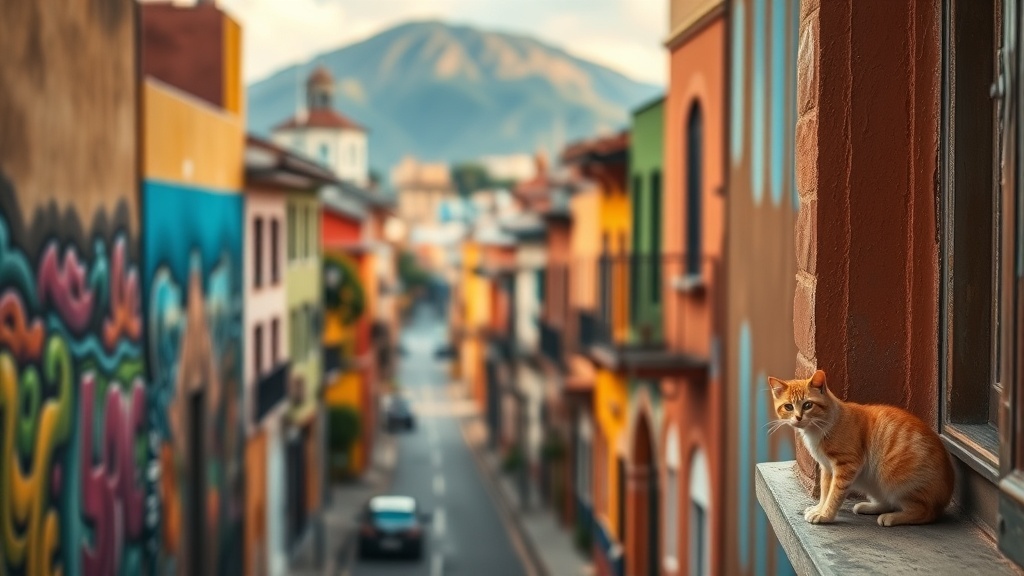
La Candelaria, the colonial core, is where almost everyone starts: steep cobbled streets, ochre and indigo façades, university students, and some of the best street art in the Americas — Bogotá's graffiti scene is quasi-legal, professionalised, and worth a guided walk. The Museo del Oro holds the world's largest collection of pre-Hispanic goldwork, more than 34,000 pieces, and the small Muisca raft that inspired the El Dorado legend is genuinely worth the trip on its own. The Botero Museum, donated by the artist and free to enter, pairs his own inflated figures with a personal collection running from Picasso to Bacon.
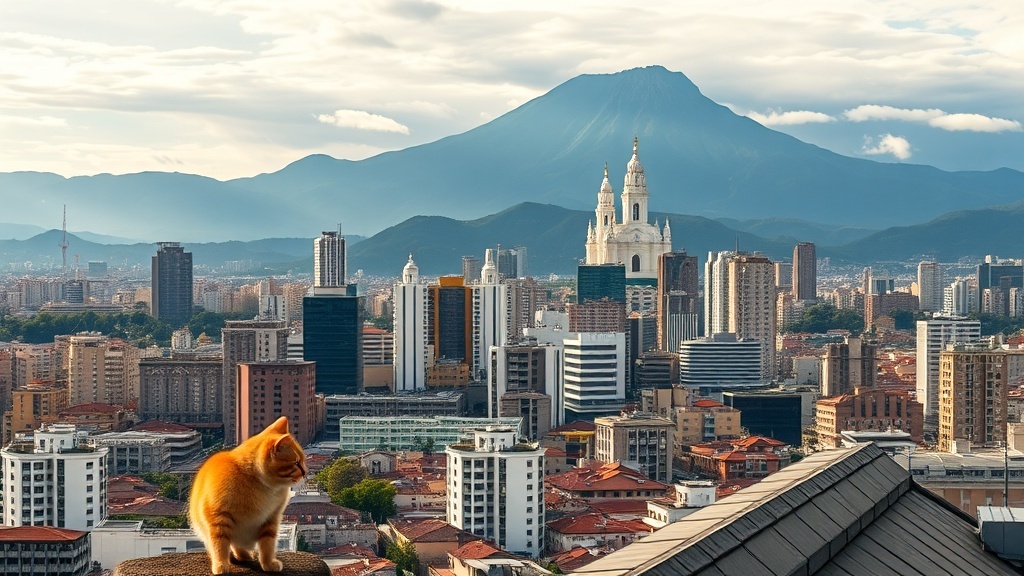
Monserrate, the pilgrimage church on the ridge at 3,152 m, is reached by funicular or cable car and gives the clearest sense of the city's scale. Modern Bogotá means the restaurants of Zona G and the nightlife of Zona Rosa, the Sunday antiques market in Usaquén, and the Ciclovía — 120 km of main roads closed to cars every Sunday and public holiday morning since 1974, used by well over a million cyclists, runners and skaters, and copied by cities worldwide.
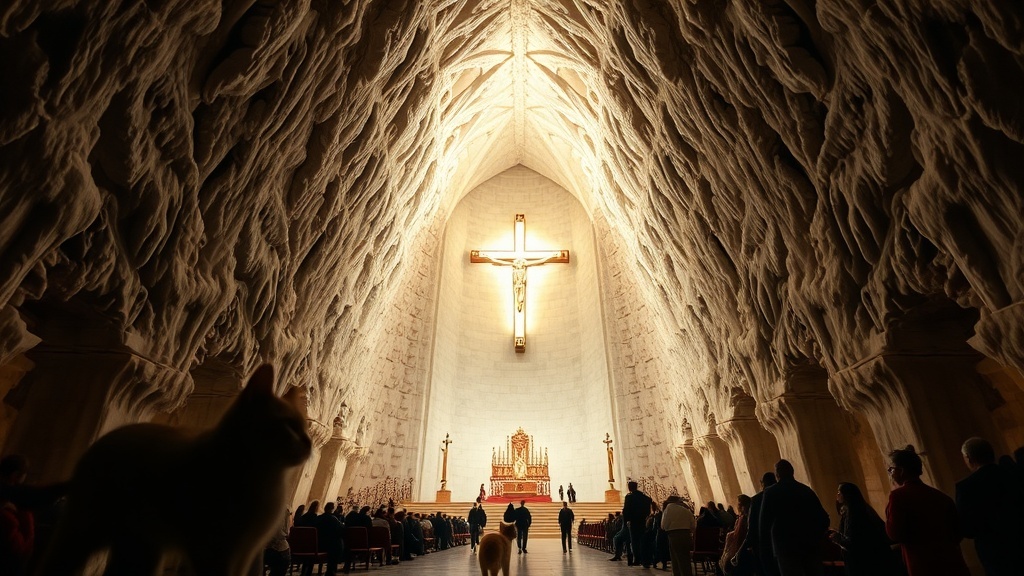
Day trips: the Salt Cathedral of Zipaquirá, a working church carved 180 m inside a salt mine; Lake Guatavita, the El Dorado lake itself; and the colonial town of Villa de Leyva, three hours north, with the largest cobbled plaza in South America.
🏰 Cartagena de Indias
Cartagena is the most photographed city in Colombia and deserves it. The Ciudad Amurallada — 11 kilometres of 16th- and 17th-century walls enclosing a grid of balconied houses, churches and plazas — is a UNESCO World Heritage Site and one of the most complete colonial ensembles in the Americas. It was built to defend the wealth of an empire: gold and emeralds from the interior were assembled here before the annual convoy to Seville, which made the city a permanent target for privateers, including Francis Drake, who sacked it in 1586.
Castillo San Felipe de Barajas, the largest Spanish fortress in the New World, and its network of tunnels is the other essential sight. Inside the walls, the rhythm is simple: escape the heat until late afternoon, then walk the ramparts at sunset, eat in Plaza de San Diego, and end on the wall at Café del Mar. Getsemaní, immediately outside the walls, has gone in fifteen years from a district visitors were warned about to the most enjoyable part of town — street art, umbrella-strung alleys, and evening dancing in Plaza de la Trinidad.
Cartagena is also the base for the Rosario Islands, a coral archipelago an hour offshore, and for Playa Blanca on the Barú peninsula. Be clear-eyed about two things: the city is unrelentingly hot and humid, and it is the one place in Colombia with an entrenched tourist-pricing culture. Agree prices before accepting anything, particularly from beach vendors and the famous fruit-selling palenqueras in their striped dresses, who charge for photographs.
An hour south lies San Basilio de Palenque, founded around 1600 by escaped enslaved Africans and recognised as the first free town in the Americas. Its Palenquero language, a Spanish-Kikongo creole, is the only one of its kind still spoken and carries UNESCO intangible-heritage status.
🌆 Medellín — The City of Eternal Spring
Medellín sits in a narrow valley at 1,500 m, which gives it a year-round 22–28 °C and the nickname that appears on every souvenir. In 1991 it recorded 6,349 homicides and was, by rate, the most dangerous city on Earth. Today that figure is down by more than 95%, and the city is a standard case study in urban planning schools — a transformation Colombians call urbanismo social.
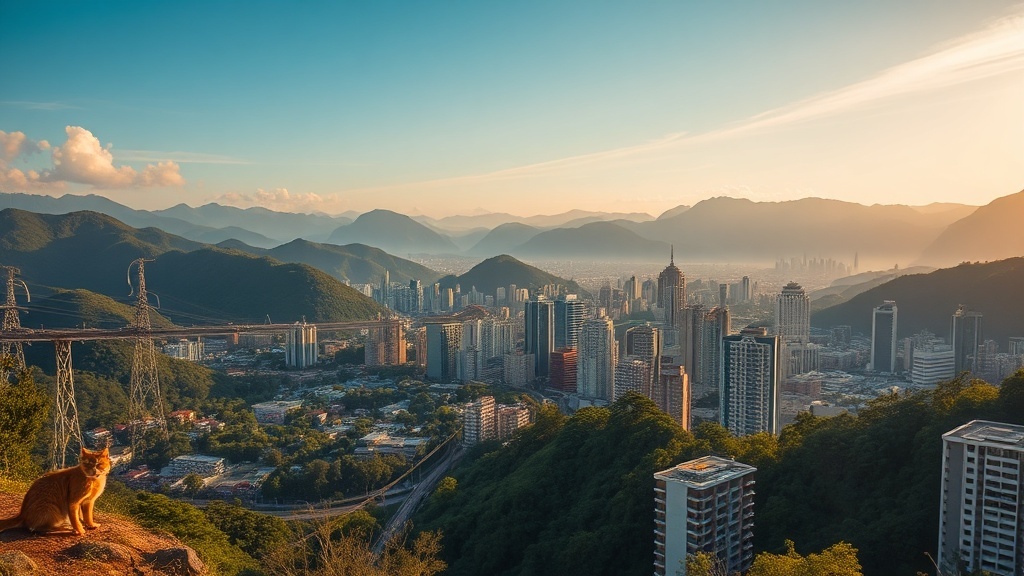
The mechanism is visible from the air. The Metro, opened in 1995 and still the only metro system in Colombia, is treated with a civic reverence that visitors notice immediately — no eating, no litter, no graffiti — and it is fed by Metrocable gondolas that climb to the hillside comunas that were once effectively cut off from the city's economy. Comuna 13, the site of a notorious 2002 military operation, is now reached by six outdoor escalators and covered in commissioned murals; go with a local guide who lived through it, and treat it as a neighbourhood rather than a photo backdrop.
El Poblado is the upscale district where most visitors and nearly all remote workers stay, centred on Parque Lleras; Laureles is quieter, flatter and increasingly preferred. Parque Arví, cloud forest reachable by cable car from Santo Domingo, is a genuine escape thirty minutes from downtown. Botero donated 23 monumental bronzes to Plaza Botero in the centre, next to the Museo de Antioquia.
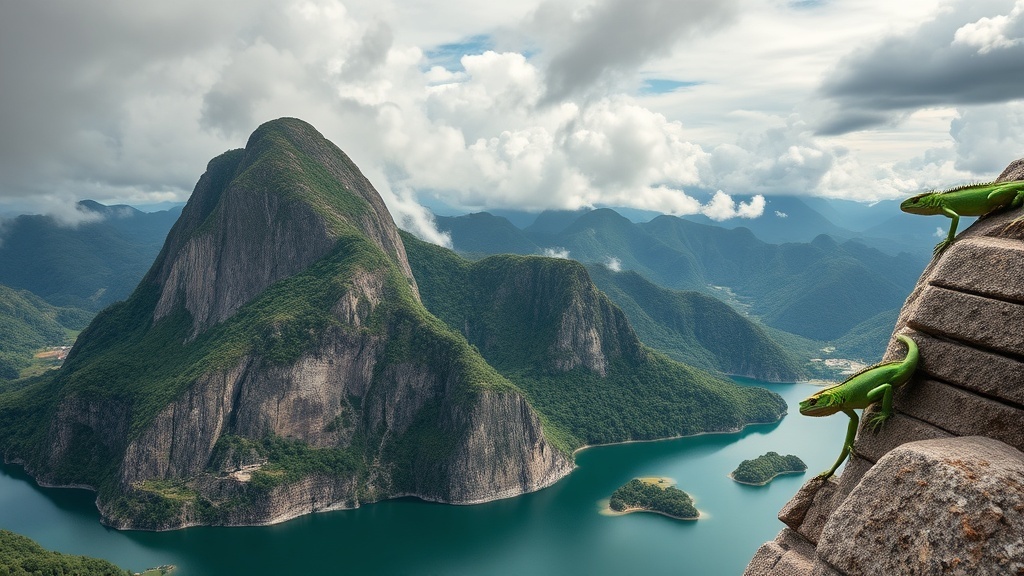
Two hours east, Guatapé and its neighbouring lake district make the standard day trip: the 220-metre granite monolith of El Peñón with 740 steps to the top, and a town whose houses carry brightly painted zócalos — decorated skirting panels — on every façade.
💃 Cali & the Pacific
Cali calls itself the world capital of salsa and has a reasonable claim: the city didn't invent the music, but it absorbed Cuban and Puerto Rican records through the port of Buenaventura in the 1960s and 70s and developed a distinct, fast, footwork-heavy style that now dominates world championships. The salsatecas of Juanchito and the Barrio Obrero are the real thing; the Delirio show and the Feria de Cali in late December are the spectacles. Schools will teach a beginner enough to survive an evening in a couple of hours. On 7 August 2026 Cali also hosted the first presidential inauguration ever held outside Bogotá, when Abelardo de la Espriella took the oath at the Universidad Santiago de Cali.
West of Cali the road drops through cloud forest to the Pacific coast — the Chocó — which is a different Colombia altogether: Afro-Colombian, extremely wet, very poorly connected, and biologically extraordinary. Nuquí and Bahía Solano are reached by small aircraft and offer black-sand beaches, thermal springs, surf and jungle. Between July and October, humpback whales arrive from Antarctic feeding grounds to calve in these warm waters, and the whale-watching here is among the best on the continent.
Isla Gorgona, a former prison island now a national park, and the remote Malpelo sanctuary — a UNESCO site 500 km offshore, one of the world's great shark-diving destinations, with schools of hammerheads and silkies — complete the Pacific picture. Both require permits and planning. Security in parts of the Chocó remains genuinely variable; travel to the coastal lodges by air and follow local advice rather than improvising overland.
☕ The Coffee Triangle
The Eje Cafetero — the departments of Caldas, Risaralda and Quindío, plus part of Valle del Cauca — is where most of Colombia's arabica grows, on steep volcanic slopes between roughly 1,200 and 1,800 m. UNESCO inscribed it in 2011 as the Coffee Cultural Landscape, a listing that covers not just the farms but the whole way of life: the smallholding finca, the bahareque architecture, the willys jeeps that still serve as rural transport.
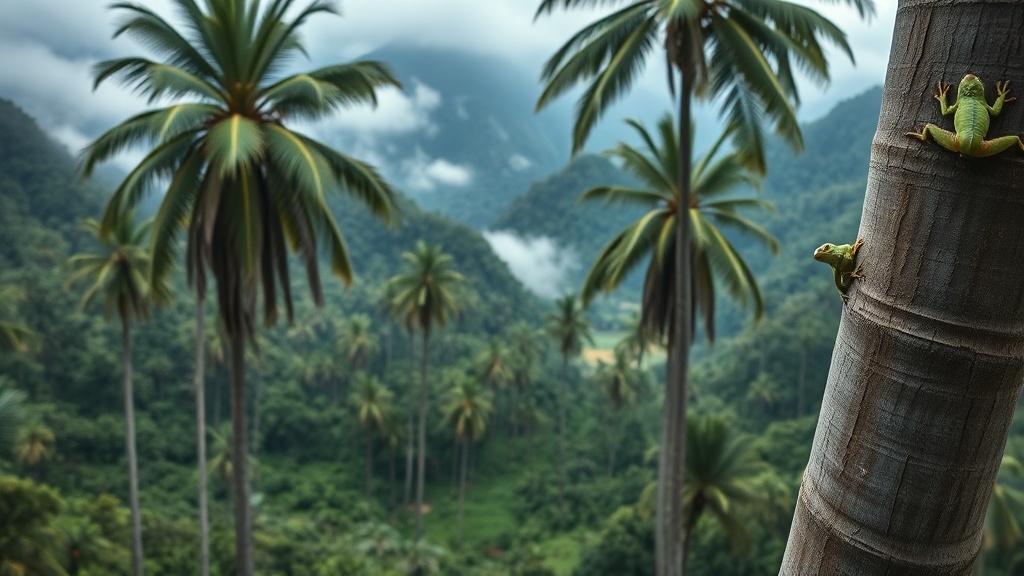
Salento is the postcard town — brightly painted balconies, a main street of craft shops, and jeeps leaving each morning for the Valle de Cocora, where Ceroxylon quindiuense, the Quindío wax palm, grows to 60 metres, making it the tallest palm species in the world and Colombia's national tree. The classic Cocora loop is a five- to six-hour walk through cloud forest and river crossings; the short version reaches the famous palm-studded meadow in about an hour.
Filandia and Jardín (technically in Antioquia) are quieter alternatives that locals often prefer. Almost any working finca will run a half-day tour covering picking, depulping, fermentation, drying and roasting, ending in a cupping session — and the good ones are frank about the economics: Colombia exports its best beans, and the tinto most Colombians drink at home has historically been made from what didn't make the export grade. That is changing fast, and the specialty cafés of Salento, Manizales and Medellín now sell single-origin lots that never leave the country.
🏝️ The Caribbean Coast
Santa Marta, founded in 1525, is the oldest surviving Spanish city in Colombia and the gateway to the coast's best hinterland. The city itself is workmanlike; the reasons to be there lie around it.
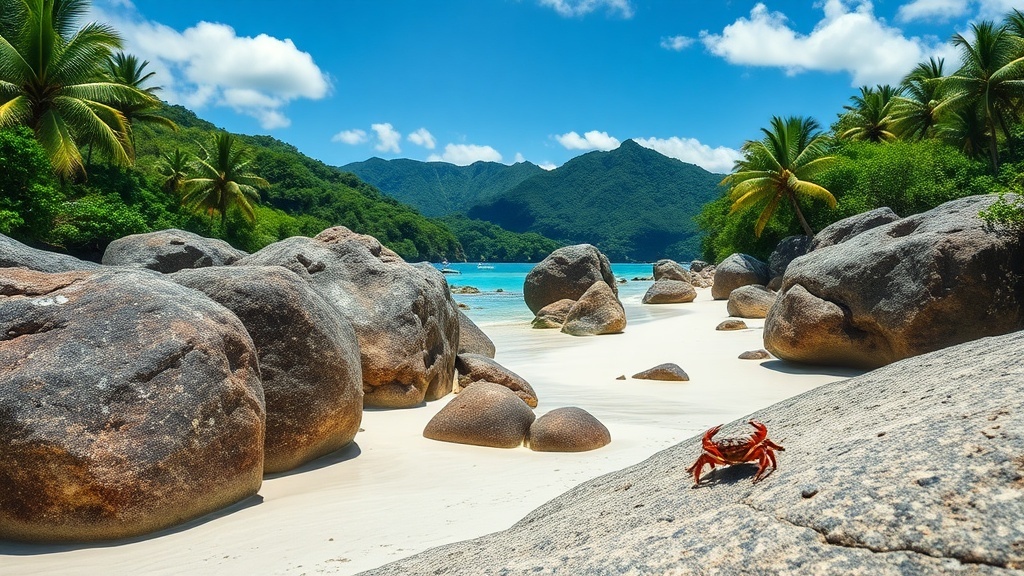
Parque Nacional Natural Tayrona is the headline: granite boulders, palm-backed bays and rainforest running down from the Sierra Nevada. Swimming is only permitted at a few beaches — Cabo San Juan, La Piscina — because the currents elsewhere are lethal, and the park closes for several weeks each year at the request of the Indigenous communities who consider the territory sacred. Go early, carry cash, and expect a 45-minute walk in from the entrance.
The Ciudad Perdida trek — four to six days through the Sierra Nevada to the Tairona terraced city of Teyuna, founded around 800 CE — is the country's signature multi-day hike, run by a small number of licensed operators with Indigenous participation. It is hot, muddy and genuinely demanding, and it is the closest thing in South America to arriving at a ruin the way its excavators did.
Minca, 600 m up in the foothills, is a cooler base for birdwatching, coffee and cacao farms and waterfalls. Palomino has become the coast's backpacker beach. Further east, La Guajira is desert: the Wayuu Indigenous nation, salt flats at Manaure, flamingos, and the cliffs at Punta Gallinas, the northernmost point of the South American mainland. Guajira travel means 4×4s, local guides and no infrastructure — arrange it in Riohacha or Cabo de la Vela, not online.
Offshore, San Andrés and especially Providencia sit in the third-largest barrier reef system in the world, the Seaflower Biosphere Reserve. Providencia was flattened by Hurricane Iota in November 2020 and has been substantially rebuilt; it remains the quieter and more beautiful of the two.
🌳 The Amazon & the Llanos
Leticia, on the Amazon river at the point where Colombia, Brazil and Peru meet, has no road connection to the rest of the country — you fly in from Bogotá, and you can walk across the street into Tabatinga, Brazil, without a border formality. It is the base for jungle lodges upriver, pink river dolphin trips, night walks, and visits to Tikuna and Yagua communities. Amacayacu National Park and the river island of Puerto Nariño, a town with no cars, are the standard three- to five-day circuit.
Colombia's Amazon sees a fraction of the visitors of Peru's or Brazil's, which is both its appeal and the reason logistics take longer. A yellow fever vaccination is required in practice, and should be given at least ten days before arrival.
Northeast of the Andes lie the Llanos — flat, seasonally flooded cattle plains shared with Venezuela, home of the llanero cowboy culture, harp-driven joropo music, capybaras, anacondas and some of the best open-country birdwatching in South America. Villavicencio, three hours from Bogotá, is the gateway.
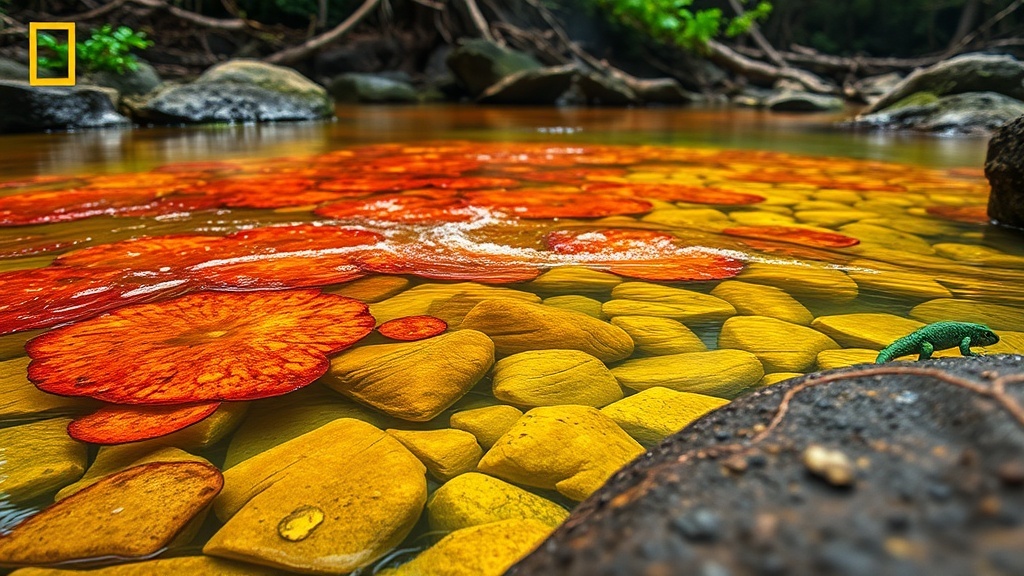
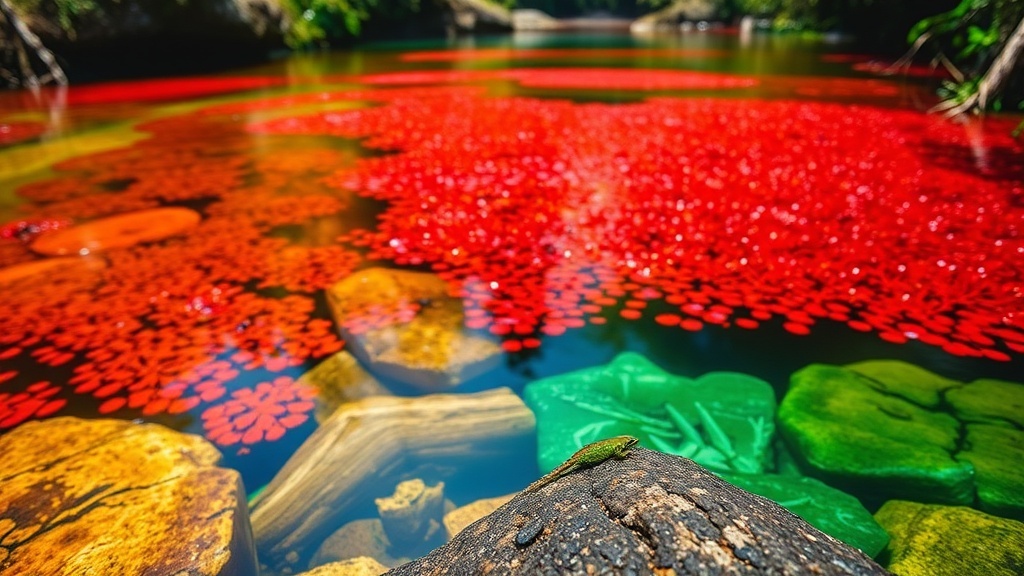
Between the two, in Meta department, is Caño Cristales — the "river of five colours". For a few weeks between roughly June and November, an endemic aquatic plant called Macarenia clavigera turns brilliant red beneath clear water, against yellow sand, green algae, blue water and black rock. It is reached by air to La Macarena and only with a licensed guide, in strictly limited daily numbers; it was inaccessible for decades because of the conflict, which is precisely why it survived.
🏛️ UNESCO World Heritage Sites
Colombia has nine UNESCO World Heritage properties — six cultural, two natural, one mixed — plus a substantial list of intangible heritage entries.
Port, Fortresses & Monuments of Cartagena (1984)
The most extensive military architecture of the Spanish Americas: 11 km of walls, San Felipe de Barajas and the bay forts.
Los Katíos National Park (1994)
Chocó rainforest and wetlands on the Panamanian border. Danger-listed at Colombia's own request in 2009 (illegal logging, poaching, overfishing), and removed from the List of World Heritage in Danger on 30 June 2015 once park authorities regained control.
Historic Centre of Santa Cruz de Mompox (1995)
A near-untouched colonial river town on the Magdalena, reached by a long road across the marshes.
San Agustín Archaeological Park (1995)
Several hundred monumental stone figures and tombs carved between roughly 100 BCE and 800 CE.
Tierradentro (1995)
Underground hypogea — painted funerary chambers cut into hillsides, unique in the Americas.
Malpelo Fauna & Flora Sanctuary (2006)
A no-fishing marine reserve 500 km offshore; hammerhead and silky shark aggregations.
Coffee Cultural Landscape (2011)
Six farming landscapes and eighteen urban centres in Caldas, Risaralda, Quindío and Valle del Cauca.
Qhapaq Ñan — Andean Road System (2014)
Colombia's share of the Inca road network, listed jointly with five other Andean states.
Chiribiquete National Park (2018)
Mixed listing: 4.3 million hectares of Amazon tepuis with tens of thousands of rock paintings and uncontacted peoples. Closed to visitors.
On the intangible list: the Barranquilla Carnival, the cultural space of Palenque de San Basilio, vallenato music, the Blacks and Whites' Carnival of Pasto, the Wayuu normative system, and traditional Amazonian knowledge of the jaguar shamans of Yuruparí.
🥘 Cuisine
Colombian food is regional to a degree that frustrates anyone looking for a single national cuisine. The unifying elements are corn, in the form of the arepa; the plantain, fried green as patacón or sweet and ripe as maduro; and an astonishing range of tropical fruit that most visitors have never encountered.
Bandeja paisa is the closest thing to a national dish and comes from Antioquia: red beans, white rice, ground beef, chicharrón, chorizo, a fried egg, black pudding, plantain, avocado and an arepa, on one platter, historically a farmworker's daily ration. Ajiaco is Bogotá's soup — chicken with three distinct potato varieties, one of which dissolves to thicken it, corn on the cob, cream, capers, and the herb guascas, for which there is genuinely no substitute. On the coast, expect coconut rice, fried whole fish, ceviche and arroz de lisa; in Santander, the celebrated and divisive hormigas culonas, roasted big-bottomed ants eaten in season since pre-Hispanic times.
Arepa
Griddled corn cake, eaten at any meal. Antioquia's are plain and thin; coastal arepa de huevo is deep-fried with an egg inside.
Lechona
Whole pig stuffed with rice, peas and its own meat, roasted for ten hours. Tolima's festival dish.
Sancocho
Big-bones-and-tubers soup, made differently in every region and eaten on Sundays everywhere.
Empanadas
Deep-fried corn pastries with beef and potato, sold from every street cart, always with ají.
Changua
Bogotá's breakfast soup of milk, water, spring onion and a poached egg. Divisive.
Obleas & arequipe
Thin wafers sandwiching caramel; the national sweet snack.
The fruit is the real revelation: lulo, guanábana (soursop), maracuyá, curuba, zapote, feijoa, uchuva (physalis, a major export), borojó, corozo, níspero, mangostino and the granadilla, the passionfruit's sweeter cousin. Order any of them as jugo en agua or en leche. A juice bar is a better introduction to Colombian biodiversity than any museum.
Two recipes worth cooking at home
Ajiaco santafereño (serves 6)
Ingredients: 1 kg chicken breasts on the bone · 500 g papa criolla (small yellow potatoes) · 500 g papa pastusa (floury) · 500 g papa sabanera (waxy red; substitute a waxy potato) · 3 corn cobs, halved · 1 bunch spring onions · 3 garlic cloves · 2 tbsp dried guascas · 2.5 l water · salt. To serve: double cream, capers, sliced avocado, white rice.
Preparation: 1. Simmer the chicken with the spring onions, garlic and salt in the water for 30 minutes; lift out the chicken, shred it and discard bones and onion. 2. Add the floury potatoes and corn to the broth and cook 20 minutes, then the waxy potatoes for 15 more; the floury ones should start to collapse and thicken the soup. 3. Add the criollas whole and the guascas and simmer 10–15 minutes until the criollas are tender but intact. 4. Return the chicken, check the salt, and serve with cream, capers and avocado passed at the table, rice on the side. Guascas cannot be replaced; Colombian shops and online sellers stock it dried.
Arepas de queso (makes 8)
Ingredients: 2 cups pre-cooked white cornmeal (masarepa, P.A.N. or Goya brand) · 2½ cups warm water · 1 tsp salt · 1 tbsp butter, melted · 1 cup grated mozzarella or queso costeño · butter for the pan.
Preparation: 1. Dissolve the salt in the warm water, stir in the cornmeal and melted butter and knead for 3 minutes into a soft dough that does not crack; rest 5 minutes. 2. Work in the cheese. 3. Divide into 8 balls and flatten to discs about 10 cm across and 1 cm thick, smoothing the edges with wet fingers. 4. Cook on a buttered griddle or heavy pan over medium heat, 5–6 minutes a side, until golden and crisp outside and steaming inside. Split and butter them, or top with more cheese, hogao (tomato-and-onion sauce) or a fried egg for a Bogotá breakfast.
☕ Coffee — the National Drink
Colombia is the world's third-largest coffee producer after Brazil and Vietnam, and the largest producer of washed arabica. Almost all of it is grown by smallholders — the average farm is under two hectares — organised through the Federación Nacional de Cafeteros, whose fictional grower Juan Valdez and his mule Conchita became one of the most successful agricultural marketing campaigns in history from 1959 onwards.
The tinto — small, black, usually pre-sweetened, poured from a thermos by a street vendor for a coin — is the everyday reality, and for decades it was made from beans that failed export grade. That has genuinely changed since the mid-2010s: specialty roasters in Bogotá, Medellín, Manizales and Salento now compete for the best microlots, and the country's varietal range (Caturra, Castillo, Colombia, increasingly Geisha and Pink Bourbon) is taken seriously on the international circuit.
If you take one thing home, make it whole beans with a roast date, bought from a specialty roaster rather than the airport. And if you visit a finca, ask about la broca (coffee borer beetle), leaf rust, and the price the farmer actually received this harvest — the answers are more interesting than the tour script.
🍷 Wine, Spirits & Drinking Culture
Colombia is not a wine country in any serious sense — the latitude and altitude combination that makes brilliant coffee makes difficult grapes, and there is no dry season long enough to ripen them predictably. But it is a wine-producing country, and the handful of estates are worth a detour. Viñedo Ain Karim, at 2,010 m outside Villa de Leyva in Boyacá, has made the Marqués de Villa de Leyva label since the 1980s — Cabernet Sauvignon, Merlot, Chardonnay and a Sauvignon Blanc from about ten hectares, some 50,000 bottles a year, with tastings on the estate. Its young neighbour Umaña Dajud sells a Crianza red and rosés from the cellar door. In the Cauca valley, Casa Grajales at La Unión (founded 1977) is the country's largest producer, making table wines and the Samaria sparkling from tropical-climate grapes that crop twice a year. None of it will trouble Mendoza; all of it is a good afternoon. What Colombia has instead is one of the most sociable drinking cultures in the Americas.
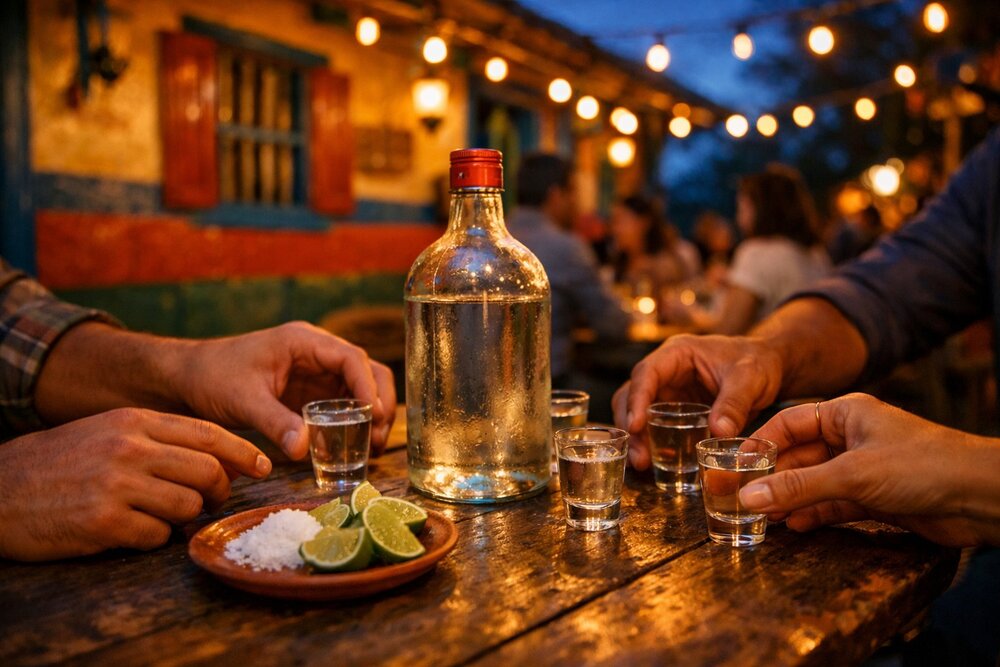
Aguardiente — "fire water" — is the national spirit: sugarcane-based, anise-flavoured, clear, typically 24–29% ABV, and fiercely regional. Each department runs its own distillery as a state monopoly whose revenue funds health and education, and loyalty to your department's brand is close to a football allegiance: Antioqueño from Medellín, Néctar from Cundinamarca, Cristal from Caldas, Blanco del Valle from Cali. It is served ice-cold in small shot glasses, poured for everyone at the table including people you have just met, and the sugar-free (sin azúcar, green label) versions are now the more popular.
Ron Viejo de Caldas and Ron Medellín are the well-regarded aged rums from the coffee region. Club Colombia and Águila are the mainstream beers, with a real craft scene in Bogotá and Medellín. Refajo — beer mixed with the red cream soda Colombiana — is the standard party drink, and canelazo, hot aguardiente with cinnamon and panela, is what the high Andes drink when it is cold.
Drinking here is emphatically communal: a bottle arrives for the table, one glass circulates, and refusing a round takes more social skill than accepting it. The one non-alcoholic ritual to know is chocolate santafereño — hot chocolate served with a slab of fresh cheese that you drop in and eat with a spoon once it melts.
🏆 Kaufmann Wine Score — Colombia
Rated on four criteria: Aroma (/25), Taste (/30), Finish (/20), Value (/25) — Total /100
| Wine | 🔴 Aroma | 🟡 Taste | 🟢 Finish | 🔵 Value | Total |
|---|---|---|---|---|---|
| 🥂 Marqués de Villa de Leyva Sauvignon Blanc (Ain Karim, Boyacá, 2,010 m) | 20 | 23 | 14 | 22 | 79 |
| 🍷 Marqués de Villa de Leyva Cabernet Sauvignon Reserva (Ain Karim) | 19 | 22 | 14 | 20 | 75 |
| 🍷 Umaña Dajud Crianza (Villa de Leyva) | 18 | 22 | 14 | 21 | 75 |
| 🍾 Casa Grajales Samaria Brut (La Unión, Valle del Cauca) | 17 | 20 | 13 | 23 | 73 |
95–100 Legendary · 90–94 Outstanding · 85–89 Very Good · 80–84 Good · 75–79 Average · <75 Below Average
🍹 Cocktails & Mixed Drinks
Colombia's mixed drinks are simple, communal and built on three things: aguardiente, panela (unrefined cane sugar) and the fruit bowl. Nobody here measures in millilitres; these are the versions you will actually be handed.
Canelazo (Bogotá & the Andes)
For 4: 1 litre water · 150 g panela, grated · 3 cinnamon sticks · 4 cloves · juice of 1 lime · 200 ml aguardiente. Method: simmer water, panela, cinnamon and cloves 10 minutes until the panela dissolves; off the heat add lime and aguardiente; serve steaming in small cups. Cold nights at Monserrate are the natural habitat; leave out the spirit for the children's version, agua de panela.
Refajo (everywhere there is a party)
For 1 jug: 2 cold Colombian lagers (Águila or Club Colombia) · 1 litre chilled Colombiana cream soda · ice · lime wedges. Method: pour the beer into the jug first, then the Colombiana, so it does not foam over; add ice and lime. About 2–3% alcohol — a barbecue drink, not a cocktail, and the only correct way to drink beer at a fiesta de pueblo.
Aguardiente Sour
For 1: 60 ml aguardiente sin azúcar · 30 ml fresh lime juice · 20 ml panela syrup (1:1) · 1 egg white (optional) · dash of Angostura. Method: dry-shake with the egg white, then shake hard with ice; strain into a chilled coupe; a drop of bitters on the foam. The anise softens into something close to a pisco sour; Bogotá's Zona G bars serve versions with lulo or maracuyá instead of lime.
Lulada (Cali, no alcohol — or add it)
For 2: 4 ripe lulos · juice of 2 limes · 3 tbsp sugar · 1 cup crushed ice · water to taste. Method: scoop the lulo pulp into a bowl and crush it with a fork — never blend, the texture is the point; stir in lime and sugar; pour over ice and top with water. Cali's street-corner cooler; in the salsatecas a shot of vodka or aguardiente goes in.
One rule for all of them: aguardiente is poured for the table and drunk as a shot, ice-cold, with the toast ¡Salud! — refusing outright is harder than accepting, but "un solo" (just one) is a perfectly respectable answer.
🎵 Music & Dance
Colombia is a musical superpower well out of proportion to its size. Cumbia, born on the Caribbean coast from the meeting of Indigenous flutes, African drums and Spanish melody, became the single most influential rhythm in Latin America — Mexican, Peruvian and Argentine cumbia are all descendants. Vallenato, accordion-led storytelling from the Valledupar region, is a UNESCO-listed tradition and the soundtrack of any coastal bus journey. Salsa is Cali's; champeta is Cartagena's Afro-descendant street sound; bambuco and joropo belong to the Andes and the plains.
The modern export record is remarkable: Shakira, Juanes, Carlos Vives, J Balvin, Maluma, Karol G and Feid have between them made Medellín one of the world's most productive centres for popular music. Reggaetón's current global sound is, to a considerable degree, a Medellín product.
For visitors, the important point is participatory rather than spectator: dancing is a basic social skill in Colombia, not a performance, and nobody minds a beginner who tries. Two hours in a salsa school in Cali or Medellín will change the rest of your trip. The Barranquilla Carnival in February — the second largest in the world after Rio, and UNESCO-listed — is the single best place to see all of it at once.
🦜 Wildlife & Biodiversity
Colombia records more bird species than any other country on Earth — roughly 1,950, about a fifth of the world total, of which some 80 are endemic — and it leads the world in orchids and is second only to Brazil in amphibians. It is second overall in total biodiversity behind Brazil, in a country roughly a seventh of the size, because the three cordilleras and the two coasts create an unusual density of isolated ecological niches.
For birders the classic circuits are the Sierra Nevada de Santa Marta (the world's most endemic-rich mountain range for birds), the Chocó slope around Otún Quimbaya and Montezuma in Tatamá, the Central Andes around Río Blanco near Manizales for antpittas, and the eastern Llanos for open-country species. Fifty-plus species days are routine and hundred-species days are achievable.
Beyond birds: Andean bear and mountain tapir in the páramos, jaguar and giant otter in the Amazon and Llanos, pink river dolphins at Leticia, humpback whales on the Pacific between July and October, and the páramo frailejón — a slow-growing rosette plant that stores and releases the water supplying Colombia's cities. The country protects around 15% of its territory in 60-odd national parks, and the end of the armed conflict has been double-edged for them: safer for scientists and visitors, but also newly accessible to deforestation, which accelerated sharply after 2016.
🌡️ Climate & Best Time to Visit
Colombia sits on the equator and therefore has no seasons in the temperate sense. Temperature is set by altitude and barely varies through the year; what changes is rainfall, in two wet and two dry periods driven by the Intertropical Convergence Zone passing overhead twice.
Bogotá · 2,640 m
12–19 °C year round, rain possible any day, wettest April–May and October–November. Bring layers and a waterproof.
Medellín · 1,495 m
17–28 °C, the "eternal spring". Afternoon showers common April–May and September–November.
Cartagena & the coast · sea level
28–33 °C and humid all year. Driest and breeziest December–April; wettest September–October.
Coffee Triangle · 1,200–1,900 m
16–27 °C, pleasant year round. Two harvests keep something happening in every month.
Amazon & Leticia
Hot and humid, 24–32 °C. High water December–May, low water June–November (better wildlife, more beaches).
Pacific / Chocó
Among the wettest places on Earth. Whales July–October, which is also when it rains hardest.
Best overall windows: December to early March is the main dry season and the busiest, most expensive time — book far ahead around Christmas, New Year and the Feria de Cali. July and August form a second, shorter dry spell, which is also whale season on the Pacific and high season for Colombian domestic travel. Caño Cristales is only worth visiting roughly June to November, when the aquatic plants colour. Easter week (Semana Santa) empties the cities and fills the coast; Popayán's processions are UNESCO-listed and worth planning around.
✈️ Getting There & Getting Around
El Dorado (BOG) in Bogotá is the busiest airport in South America by passenger numbers and the main long-haul gateway, with direct flights to most large US cities, Madrid, Paris, Frankfurt, Istanbul and London. Cartagena (CTG), Medellín (MDE), Cali (CLO) and Barranquilla (BAQ) all have useful international service, and flying straight to the coast rather than transiting Bogotá often saves a day.
Visas: citizens of the EU, the UK, the US, Canada, Australia and most of Latin America receive a stamp on arrival for up to 90 days, extendable to 180 days per calendar year through Migración Colombia. Onward-ticket checks do happen at check-in. Yellow fever vaccination is not required for entry from most countries but is required in practice for the Amazon and for onward travel to Brazil.
Domestic flights are the way Colombians cross their own country: Avianca, LATAM Colombia, Wingo and the low-cost Clic and Satena serve dozens of airports, and fares booked a few weeks out are often cheaper than the equivalent bus. Some destinations — Leticia, La Macarena, Nuquí, Providencia — have no road access at all.
Buses are comfortable and cheap on the main corridors, but the mountains make them slow; overnight services on major routes are generally fine, and daytime travel is preferable on secondary roads. In cities, use Uber, DiDi, InDrive or Cabify rather than hailing on the street. Bogotá has the TransMilenio bus rapid transit and its first metro line — elevated, 24 km, 16 stations — under construction and about 80% built by mid-2026, with test trains already running; the city has set 15 March 2028 as opening day; Medellín's metro and Metrocable are excellent and the cleanest way to see the city.
💰 Costs & Money
The currency is the Colombian peso (COP), which traded around 3,900–4,400 to the US dollar through 2023–24 and then strengthened sharply: by September 2026 it was around 3,100 to the dollar, its strongest in years, which makes Colombia noticeably less cheap for dollar and euro visitors than it was. Check the rate before you travel, because it moves. Prices are quoted in thousands and Colombians drop the zeros in speech: "veinte" for a 20,000-peso item.
Budget · from ~US$35/day
Hostel dorm or simple hotel, menú del día lunches at 15,000–25,000 COP, city buses, occasional long-distance bus.
Mid-range · ~US$70–120/day
Good three-star or boutique hotel, restaurant dinners, ride-hailing, one domestic flight a week, paid tours.
Comfortable · US$200+/day
Design hotels in Cartagena and El Poblado, tasting menus, private guides, internal flights as standard.
Everyday prices
Tinto from a street cart 1,000–2,000 COP · specialty flat white 9,000–14,000 · menú del día 15,000–25,000 · local beer 4,000–8,000 · 20-minute Uber 12,000–20,000.
Cards are accepted in cities and tourist areas; cash is essential in small towns, national parks, La Guajira and for street food. ATMs are widespread — use ones inside banks or shopping centres, take larger withdrawals to limit fees, and be aware that Bancolombia and Davivienda machines usually offer the best limits. Tell your bank you are travelling; card blocks are the single most common traveller complaint.
Tipping: restaurants add a voluntary 10% propina and will ask "¿desea incluir el servicio?" — saying no is entirely normal and not rude. Taxis are not tipped; guides and porters are. Tourist VAT refunds exist on some goods but the process is slow. Foreigners staying in registered hotels are exempt from the 19% IVA on accommodation if they entered on a tourist stamp — make sure the hotel applies it.
🏨 Accommodation
Colombia's range runs from 30,000-peso hostel dorms to some of the most expensive hotels in Latin America, and the gap between them is unusually wide in Cartagena.
In Cartagena, staying inside the walls or in Getsemaní is worth the premium for evenings; Bocagrande is a high-rise beach strip that feels like a different city. In Medellín, El Poblado is the default and Laureles the local favourite; both are safe and walkable. In Bogotá, choose La Candelaria for the museums and colonial streets, Chapinero or Zona G for restaurants, and Usaquén for a quieter, more residential base. In the Coffee Triangle, staying on a working finca rather than in town is the point of the region.
Booking platforms cover the cities well. For national parks, ecolodges on the Pacific and the Guajira, and Amazon lodges, book direct or through a local operator — many are not listed online at all, and Tayrona's in-park accommodation (hammocks and cabins at Cabo San Juan) sells out weeks ahead in high season. Camping is possible in designated park sites only.
🎭 Festivals & Events
Carnaval de Barranquilla · Feb/Mar
Four days, UNESCO-listed, the second-largest carnival on Earth. Cumbia, garabato, marimonda masks.
Carnaval de Negros y Blancos · 2–7 Jan
Pasto, in the far south. UNESCO-listed; the whole city painted black one day and white the next.
Semana Santa in Popayán · Mar/Apr
Night processions unbroken since 1556, also UNESCO-listed.
Feria de las Flores · August
Medellín's flower fair; the silleteros parade carries huge floral displays on their backs.
Festival Vallenato · late April
Valledupar. Accordion duels for the title of Rey Vallenato.
Feria de Cali · 25–30 Dec
Six days of salsa orchestras, parades and dancing to close the year.
Rock al Parque · Bogotá, mid-year
The largest free open-air rock festival in Latin America.
Hay Festival Cartagena · late January
Literature, in the walled city, with a strong Latin American programme.
Colombia has around 18 public holidays a year, most of them moved to the following Monday under the Ley Emiliani to create long weekends — puentes. These fill domestic flights and coastal hotels, so check the calendar before booking.
📋 Practical Information
Electricity
110 V, 60 Hz, US-style flat two-pin (types A and B). US devices work directly; European ones need an adapter and often a converter.
SIM & data
Claro has the best rural coverage, then Movistar and Tigo. Prepaid SIMs are cheap and sold with a passport at any store; eSIM is widely supported.
Water
Tap water is safe in Bogotá, Medellín and most large cities and genuinely good in Bogotá. Filter or buy on the coast, in small towns and in the Amazon.
Altitude
Bogotá at 2,640 m affects some visitors. Take the first day slowly, skip alcohol, drink water; the local remedy is coca or chamomile tea.
Health
Yellow fever vaccination for the Amazon, Llanos and some Pacific areas — at least 10 days before. Dengue is present at low altitude; use repellent.
Emergency
123 for everything (police, fire, ambulance). Private clinics in the big cities are excellent; travel insurance covering evacuation is strongly advised.
Time & plugs
UTC−5 year round, no daylight saving. Business hours 8:00–17:00 with a long lunch; many museums close Mondays.
Language help
Google Translate offline Spanish is worth downloading; outside tourist zones English is genuinely limited.
Getting the paperwork right: keep the entry stamp — Colombia stopped issuing paper tourist cards and the stamp is your permission to be there. Migración Colombia's online prórroga extends a stay to the 180-day annual maximum and must be requested before the stamp expires; overstaying carries a fine calculated per day.
🛡️ Safety — an Honest Account
Colombia is far safer than its reputation and not as safe as its tourism industry sometimes suggests, and both halves of that sentence matter. Homicide has fallen dramatically since the 1990s but remains high by European standards, and it is overwhelmingly concentrated in specific neighbourhoods and specific rural corridors that no visitor has a reason to enter.
The realistic risk to travellers is opportunistic theft: phone snatching in the street, bag theft in restaurants, and occasional armed robbery in badly chosen areas after dark. The Colombian proverb no dar papaya — don't hand someone the opportunity — is the whole safety briefing. Keep your phone out of sight on the street, use ride-hailing apps rather than hailing taxis, carry a day's cash and leave the rest in the hotel, and don't walk unfamiliar neighbourhoods at night.
Two specific hazards deserve naming. Scopolamine ("burundanga") is used in drink-spiking and dating-app robberies, particularly in Medellín and Cartagena; never leave a drink unattended and be cautious with people met online. Illegal drugs fund exactly the violence that damaged this country, penalties are serious, and this is one of the places where the ethical argument is not abstract.
Government travel advice for Colombia is issued region by region rather than nationally: departments such as Arauca, Cauca, Nariño, Norte de Santander (Catatumbo), Chocó's interior, Guaviare and the Venezuelan border zone carry "do not travel" or "reconsider" ratings from most foreign ministries, while Bogotá, Medellín, Cartagena, the Coffee Triangle, Santa Marta and San Andrés carry ordinary precautions. Check your own government's current regional advisory before booking, and take it seriously where it is specific.
⚠️ Travel Advisory — Level 3: Reconsider Travel
US State Department, updated 31 March 2026, for crime, terrorism, civil unrest, kidnapping and — newly added in this update — natural disasters. Do not travel to Arauca, Cauca (except Popayán), Norte de Santander and Valle del Cauca (except Cali) departments, or within 10 km of the Venezuelan border. Bogotá, Medellín, Cartagena, the Caribbean coast, the Coffee Triangle and San Andrés are not on the exclusion list. The advisory is national in headline but regional in substance — read the department-level detail at travel.state.gov; the UK FCDO map draws its red zones slightly differently and also covers parts of Chocó, Guaviare and Nariño.
⭐ Notable Colombians
Gabriel García Márquez (1927–2014)
Nobel laureate 1982; One Hundred Years of Solitude and Love in the Time of Cholera. Born in Aracataca, the model for Macondo.
Fernando Botero (1932–2023)
Painter and sculptor of inflated volumes; donated major collections to Bogotá and Medellín, both free to visit.
Shakira (b. 1977)
Barranquilla-born, the best-selling Latin American female artist of all time.
Egan Bernal (b. 1997)
Won the 2019 Tour de France at 22 — the first Latin American and the first Colombian to do so.
Nairo Quintana (b. 1990)
Giro and Vuelta champion; with Rigoberto Urán and Sergio Higuita, part of the generation that made Colombia a cycling power.
Sofía Vergara (b. 1972)
Barranquilla-born actor and producer, for years the highest-paid woman on US television.
Juan Manuel Santos (b. 1951)
President 2010–2018; Nobel Peace Prize 2016 for the FARC accord.
Carlos Vives (b. 1961)
Took vallenato from the coast to the world and, with it, an entire regional tradition.
Mariana Pajón (b. 1991)
Medellín-born BMX rider; Olympic champion at London 2012 and Rio 2016, silver at Tokyo — the most decorated Colombian Olympian.
Abelardo de la Espriella (b. 1977)
Barranquilla-born lawyer, elected president in June 2026 by the narrowest margin in Colombian history and sworn in at Cali on 7 August 2026.
⚽ Sports
Football is the national obsession and Los Cafeteros have had a strong two years without a trophy to show for it. They reached the Copa América 2024 final in Miami and lost 0–1 to Argentina after extra time on 14 July 2024; at the 2026 World Cup they topped Group K — wins over Uzbekistan and DR Congo, a 0–0 draw with Portugal — then went out in the round of 16 in early July 2026, beaten 3–4 on penalties by Switzerland after a goalless 120 minutes. Luis Díaz, who joined Bayern Munich in July 2025, and the veteran James Rodríguez are the reference points; the domestic league is led by Atlético Nacional and Millonarios, and a Nacional–Medellín or Millonarios–Santa Fe derby is worth building a weekend around.
Colombia has become a serious tournament host, and a cautionary tale about it. It staged the FIFA U-20 Women's World Cup (31 August–22 September 2024) in Bogotá, Medellín and Cali — the first FIFA women's tournament held in the country, won by North Korea. But in January 2024 Panam Sports stripped Barranquilla of the 2027 Pan American Games for missed contractual payments and awarded them to Lima instead — a national embarrassment that the Caribbean city, which had hosted the 2018 Central American and Caribbean Games well, is still arguing about.
Olympics: at Paris 2024 Colombia won four medals, all in individual sports and none gold — Ángel Barajas, aged 17, took silver on the horizontal bar, the country's first Olympic gymnastics medal ever; weightlifters Yeison López (89 kg) and Mari Leivis Sánchez (71 kg) won silvers; and wrestler Tatiana Rentería bronze at 76 kg. The country's Olympic golds all belong to weightlifting, BMX and athletics: María Isabel Urrutia (Sydney 2000, the first ever), Mariana Pajón's BMX double (London 2012, Rio 2016), Óscar Figueroa and Caterine Ibargüen's triple jump in Rio.
Cycling is the other national religion. Egan Bernal won the 2019 Tour de France and the 2021 Giro; Nairo Quintana the 2014 Giro and 2016 Vuelta; Rigoberto Urán retired at the end of 2024 after a Tour de France podium (2017) and two at the Giro. Watching a Grand Tour mountain stage in a Boyacá café is a cultural experience in itself. Tejo — throwing a metal disc at gunpowder-filled targets over beer — is the legally designated national sport (2000) and the best evening a visitor can have in a small town; baseball rules the Caribbean coast (Edgar Rentería, Cartagena-born, drove in the winning run of the 1997 World Series), and boxing has produced a long line of world champions from Cartagena and Barranquilla.
📰 Media & Press Freedom
Colombia ranks 102nd of 180 in the 2026 RSF World Press Freedom Index — one of the few countries in the Americas that RSF recorded as improving in a year when the region as a whole fell, though still in the lower half of the table. The pattern has been the same for decades: a free, professional and outspoken press in the cities, and a dangerous one in the rural corridors where armed groups and illegal economies decide what may be reported. The Bogotá-based FLIP (Fundación para la Libertad de Prensa) logs threats and killings of journalists year by year and is the best single source on the subject.
The main outlets are El Tiempo (Bogotá, owned by the Sarmiento Angulo banking group), El Espectador (1887, the paper that stood up to Pablo Escobar and buried its editor Guillermo Cano for it in 1986), the weekly Semana (sharply to the right since its 2020 change of ownership), and the two private television networks Caracol and RCN, which also run the biggest radio chains. The Petro years (2022–26) were marked by a combative relationship between the president and the mainstream press, conducted largely on X; the de la Espriella government has so far been no gentler in tone. For a traveller the practical media are The Bogotá Post and The City Paper Bogotá in English, and Caracol Radio for anything happening right now.
🔬 Fascinating Facts
More birds than anywhere
About 1,950 recorded species — roughly one in five of all bird species on Earth, in 0.7% of its land area.
The tallest palms in the world
Quindío wax palms reach 60 m in the Valle de Cocora and can live 100–200 years.
Emerald superpower
Colombia produces the majority of the world's fine emeralds; Muzo stones set the global colour standard.
A river of five colours
Caño Cristales turns red for a few months a year because of an aquatic plant, not minerals or algae.
The highest coastal range
The Sierra Nevada de Santa Marta rises 5,775 m within 42 km of the Caribbean.
Sunday belongs to cyclists
Bogotá's Ciclovía closes 120 km of roads to cars every Sunday and has run since 1974.
Two oceans, five neighbours
The only South American country with both Caribbean and Pacific coasts.
Yellow underwear at New Year
Along with eating twelve grapes and running a suitcase around the block — Colombian New Year superstitions taken semi-seriously.
📸 Photo Gallery
Share your Colombia photos! Send them to photos@kaufmann.wtf to be featured.
🌐 Useful Resources
Migración Colombia
Entry stamps, visa extensions (prórroga) and the Check-Mig online form: migracioncolombia.gov.co
Parques Nacionales
Park opening status, permits and the Tayrona closure calendar: parquesnacionales.gov.co
ProColombia
The official tourism board, with regional itineraries: colombia.travel
Your foreign ministry
Colombian advisories are issued department by department — read the regional detail, not the headline.
📚 Recommended Reading & Watching
One Hundred Years of Solitude · García Márquez
The novel that gave the world magical realism and Colombia its literary identity. Start here.
Love in the Time of Cholera · García Márquez
Cartagena and the Magdalena river, barely fictionalised.
The Sound of Things Falling · Juan Gabriel Vásquez
The best novel about what the cartel years did to ordinary Bogotá lives.
Delirium · Laura Restrepo
Bogotá in the 1980s, told through a woman's breakdown.
More Terrible Than Death · Robin Kirk
Clear-eyed non-fiction on the conflict, by a human-rights researcher who lived it.
Encanto (2021)
Disney's Colombia — the architecture, the fruit, the family and the accordion are all researched and recognisable.
Embrace of the Serpent (2015)
Ciro Guerra's Oscar-nominated film shot in the Colombian Amazon. The antidote to cartel television.
Birds of Colombia · McMullan & Donegan
The field guide birders actually carry.
✍️ Author's Note
"Colombia undid every expectation I brought to it, and I brought the usual ones. What I found instead was a country that has spent thirty years being narrated by other people and is now, visibly and impatiently, narrating itself."
"In Medellín I rode the Metrocable up to Santo Domingo with grandmothers who remembered when the cable car was a promise nobody believed, and with teenagers who have only ever known the city it made possible. In the Valle de Cocora the mist came down between wax palms sixty metres tall and turned an ordinary walk into something closer to a cathedral. In Cartagena, at dusk, the heat finally breaks and the whole walled city moves outdoors at once."
"What stays with me is the tinto — a small black coffee, twenty-five cents, poured from a thermos by a man who has worked the same corner for forty years — and the fact that he wanted to know what I thought of his country before he would take my coin. Colombia es pasión. It is also, and this matters more, a place that decided what it wanted to be."
— Radim Kaufmann, September 2026
Support This Project 🌍
This World Travel Factbook is a labor of love – free to use for all travelers. If you find it helpful, consider supporting its continued development.
