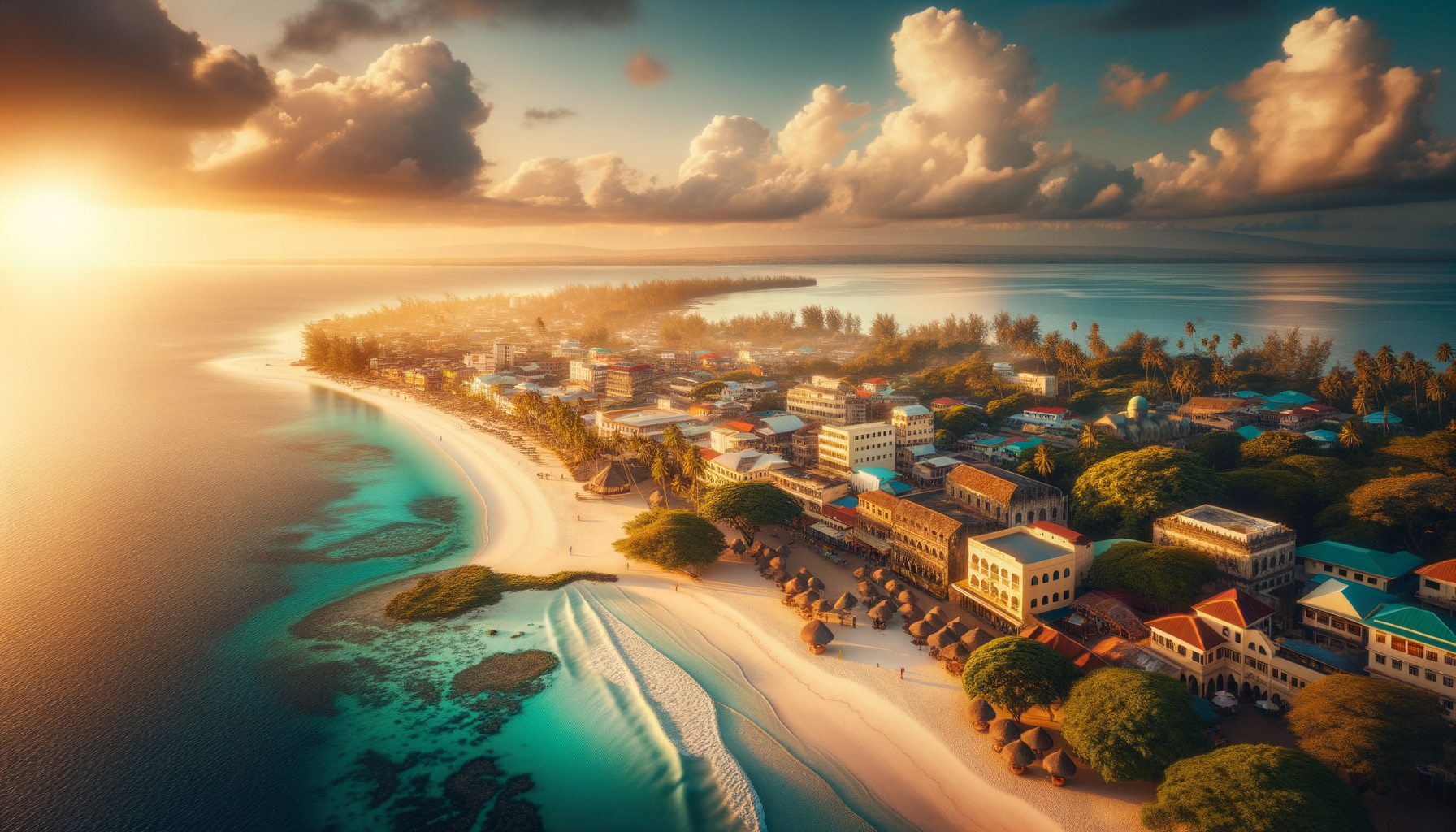
Zanzibar CityCapital
1,889,773Population · 2022 census
TZSCurrency
KiswahiliPrincipal language
Contents
01
An archipelago with its own rhythm
Zanzibar is a semi-autonomous part of Tanzania made up of two large islands—Unguja and Pemba—and many smaller ones. Most visitors use “Zanzibar” for Unguja, but the name also covers the wider archipelago. Coral limestone, shallow lagoons and monsoon winds have shaped the landscape and its settlements. Tourism now supports a large share of the economy, yet the islands are more than a beach destination: their identity grew from centuries of exchange between the African interior, Arabia, Persia, India and Europe.
02
History written by the monsoon
Bantu-speaking communities established the foundation of Swahili culture. Seasonal winds then brought merchants across the Indian Ocean, while Portuguese and later Omani rule connected the islands to competing empires. Sultan Said moved his capital from Muscat to Zanzibar in 1840, making the city a centre of the clove trade and the East African slave trade. Britain established a protectorate in 1890. Independence in December 1963 was followed by revolution in January 1964 and union with Tanganyika in April; the united state became Tanzania.
03
Stone Town
The historic centre of Zanzibar City is a dense urban fabric of narrow lanes, coral-rag houses, shaded courtyards, mosques, markets and carved doors. The seafront holds the Old Fort, House of Wonders and Forodhani Gardens; deeper inside, the city is understood on foot. UNESCO inscribed Stone Town in 2000 for its exceptional Swahili trading-town culture and the meeting of African, Arab, Indian and European traditions. Dress modestly, ask before photographing people and leave time to look beyond the principal monuments.
04
Kiswahili, faith and music
Kiswahili is the language of daily life and a central part of Zanzibar's contribution to East African culture. The population is overwhelmingly Muslim, and Friday prayer, Ramadan and religious festivals shape public rhythms. Taarab music joins Swahili poetry with instruments and traditions that travelled around the Indian Ocean; Siti binti Saad brought the form to a mass audience in the early twentieth century. A few respectful Kiswahili phrases—jambo, asante and tafadhali—open conversations, but listening matters more than collecting greetings.
05
Beaches, tides and the living coast
The north around Nungwi and Kendwa usually offers swimming through most states of the tide. On the east coast, the sea may retreat hundreds of metres across the reef flat, so swimming follows a timetable. Jambiani and Paje combine long beaches with villages, seaweed farming and a growing water-sports economy. Reef trips should use responsible operators: never stand on coral, touch marine animals or buy shells taken from living ecosystems. The coast is workplace, habitat and home before it is a resort view.
06
Jozani, Pemba and the smaller islands
Jozani–Chwaka Bay protects groundwater forest, mangroves and the endemic Zanzibar red colobus. Keep distance from the monkeys and follow local guides rather than feeding or surrounding them. Pemba, greener and far less visited than Unguja, has clove farms, deep channels and strong diving, but requires a separate flight or long ferry journey. Changuu, Mnemba and other small islands each have different access and conservation pressures; verify what an excursion actually includes before booking.
07
Food, spices and everyday tables
Zanzibari cooking combines rice, coconut, cassava, seafood and fragrant spices. Pilau and biryani reveal Indian Ocean connections; urojo mixes fritters, potatoes, chutney and broth; octopus in coconut sauce belongs to the coast. A spice-farm visit is useful when it explains cultivation and labour rather than staging a sales performance. In Stone Town, Forodhani's evening market is atmospheric, but choose busy stalls, agree prices first and look for food cooked fresh in front of you.
08
Arrival, movement and timing
International and domestic flights arrive at Abeid Amani Karume International Airport; fast ferries link Zanzibar City with Dar es Salaam. Tanzania's entry rules apply, while Zanzibar may also require its own visitor insurance—check official requirements before travel. The driest periods are generally June to October and January to February. Roads are busiest around Zanzibar City; taxis and arranged transfers are the simplest option for many visitors. Use licensed services, confirm the fare before departure and allow generous time for ferries and flights.
09
Travel with proportion
Tourism brings income but also raises land prices, strains water supplies and widens the distance between resort consumption and village life. Choose accommodation that treats staff fairly, limit water and plastic use, buy directly from local makers and do not photograph people without consent. Conservative dress away from resort beaches is a matter of respect. Zanzibar's history also includes slavery, revolution and displacement; visit the memorials with the same attention you give the palaces and beaches.
10
Map of Zanzibar
Unguja lies about 35 kilometres off mainland Tanzania, with Pemba farther north across a deep channel. Distances look short on a map, but ferries, traffic and tides make realistic travel times longer.
11
Unguja — the main island
Unguja contains Zanzibar City, Stone Town, the busiest resorts and most visitor infrastructure. Its west coast faces the sheltered channel, while the reef-fringed east coast opens to the Indian Ocean.
12
Pemba — the green island
Pemba is hillier, quieter and more agricultural than Unguja. Clove groves dominate its interior, while steep underwater walls attract experienced divers; it should be planned as a separate destination.
13
Coral geology and tides
The islands are built largely from raised coral limestone rather than volcanic rock. Porous ground limits fresh water, and the east-coast tidal range can expose broad reef flats twice each day.
14
The monsoon world
The kaskazi and kusi winds once determined when dhows could cross between East Africa, Arabia and India. Those seasonal routes shaped Zanzibar's language, food, architecture and commercial life.
15
The slave trade and its memory
Nineteenth-century Zanzibar was a principal market in the East African slave trade. The Anglican cathedral and nearby memorial stand on the former market site; visit them as places of remembrance, not as a quick attraction.
16
The 1964 Revolution
The revolution of January 1964 overthrew the sultan and was followed by killings, expulsions and lasting demographic change. Estimates remain disputed, and the subject still requires care in local conversation.
17
Union with Tanganyika
Zanzibar united with Tanganyika on 26 April 1964, creating the state later named Tanzania. The arrangement preserved Zanzibar's own president, legislature and authority over non-union matters.
18
Government and public life
Zanzibar has a semi-autonomous government and a House of Representatives. Politics is competitive and historically tense; visitors should avoid demonstrations and verify current conditions through reliable sources.
19
Population and communities
The 2022 census recorded 1,889,773 residents across Zanzibar. African Shirazi identities, Arab and South Asian heritage, mainland migration and a young population all contribute to contemporary island life.
20
Kiswahili born on the coast
The Kiunguja dialect associated with Zanzibar helped shape standard Kiswahili. Arabic loanwords reveal centuries of exchange, but the language's grammar and structure are firmly Bantu.
21
Islam and everyday etiquette
Islam sets much of the weekly and annual rhythm. Dress modestly away from resort beaches, lower noise near prayer times and observe Ramadan etiquette in public spaces.
22
Coral-stone architecture
Stone Town houses combine coral-rag walls, lime plaster, inner courtyards and shaded passages suited to the tropical climate. Restoration is difficult because salt, humidity and unsuitable cement damage historic fabric.
23
The carved doors of Stone Town
Carved wooden doors display status, craft and connections across the Indian Ocean. Their floral, geometric and chain motifs should be read carefully rather than reduced to simple “Arab” or “Indian” labels.
24
Dhows and maritime knowledge
Traditional sailing craft remain visible in fishing, transport and sunset excursions. Choose operators with safety equipment and fair working practices; a dhow is working maritime technology, not merely a decorative silhouette.
25
Taarab and sung poetry
Taarab joins Kiswahili verse with violins, oud, qanun, accordion and percussion. Live performances reveal its social wit and emotional precision far better than hotel background music.
26
Festivals and public events
The Zanzibar International Film Festival and Sauti za Busara bring cinema and music into Stone Town. Dates and venues change, so consult official programs before building a trip around an event.
27
Nungwi and Kendwa
The north coast has deeper water and generally easier swimming through the tidal cycle. It is also the most developed beach zone, with nightlife, traffic and persistent beach selling.
28
Paje, Jambiani and the east coast
The east coast offers long reef lagoons, steady winds and village life alongside fast-growing tourism. Paje is the water-sports centre; Jambiani stretches farther and often feels less concentrated.
29
Seaweed farming
Seaweed farming is highly visible on the east coast and is carried largely by women. Respect working plots, avoid treating farmers as props and support cooperatives that explain the economics behind the industry.
30
Cloves and spice farms
Cloves once underpinned Zanzibar's global importance, especially on Pemba. A good farm visit explains cultivation, harvesting and prices; a poor one is only a sequence of staged smells and sales.
31
Jozani–Chwaka Bay
The protected area contains groundwater forest, mangroves and the endemic Zanzibar red colobus. Follow marked routes and guides, keep distance from animals and never feed them.
32
Reefs, dolphins and marine life
Zanzibar's reefs support coral, turtles and diverse fish, but face warming, anchoring and visitor pressure. Avoid wildlife-chasing tours and select boats that keep distance from dolphins.
33
Diving and snorkelling
Mnemba Atoll, Pemba's channels and several reef sites offer strong diving and snorkelling. Conditions vary by season and tide; confirm certification, group size and emergency equipment before departure.
34
Changuu and giant tortoises
Changuu, often called Prison Island, is known for Aldabra giant tortoises and colonial-era buildings. The popular half-day trip deserves scrutiny of animal welfare, crowding and what the entry fee supports.
35
Climate and the best time to visit
June to October is usually cooler and drier; January and February are hotter and relatively dry. The long rains commonly peak from March to May, while short rains are more likely around November.
36
Flights and ferries
Abeid Amani Karume International Airport receives regional and long-haul services. Fast ferries connect Zanzibar City with Dar es Salaam; seas can be rough, so keep valuables secure and follow crew instructions.
37
Getting around
Taxis and pre-arranged transfers are simplest for longer journeys. Dala-dala minibuses are inexpensive and culturally revealing but crowded; rental driving requires confidence, valid documents and attention to local rules.
38
Entry rules and visitor insurance
Tanzanian visa and passport rules apply, while Zanzibar may impose separate mandatory visitor insurance. Requirements change: verify them on official government channels immediately before travel.
39
Safety, health and the sun
Use ordinary precautions against theft, protect yourself from intense sun and mosquitoes, and drink safe water. Medical capacity is limited outside Zanzibar City; comprehensive travel insurance remains essential.
40
Costs and payments
Accommodation ranges from guesthouses to high-end resorts, but transfers and organised excursions raise daily costs quickly. Carry some Tanzanian shillings for small purchases; confirm card fees and exchange rates.
41
Choosing accommodation
Choose a base according to tides, transport and desired atmosphere rather than photographs alone. Ask about water use, staff conditions, noise, beach access and whether the quoted price includes taxes.
42
UNESCO World Heritage
Stone Town of Zanzibar is the archipelago's World Heritage property. Its value lies in the complete urban landscape and living Swahili culture, not only in a handful of restored monuments.
43
Quieter places and slower travel
Mtoni Palace ruins, Kidichi baths, village lanes and Pemba's small towns reward unhurried visits. The best “hidden gem” is often time spent with a knowledgeable local guide rather than an unmarked location.
44
Zanzibar in photographs
The gallery follows Zanzibar from Stone Town and carved doors to spice farms, reef lagoons, wildlife and the open Indian Ocean.
45
Author’s Note
Zanzibar is often sold as a simple paradise, but its real force lies in the layers that refuse to stay separate: Africa and Arabia, trade and coercion, faith and performance, coral city and resort coast. The island becomes more memorable when the beach is allowed to be only one chapter. Walk slowly through Stone Town, listen to Kiswahili around you, and notice how the tide reorganises an entire coast twice each day.
— Radim Kaufmann
Share Your Photo
Been to Zanzibar? Send photographs you own, with the location and the name you would like credited.
Keep exploring
Read another country, send a correction or follow the project.
Back to top ↑