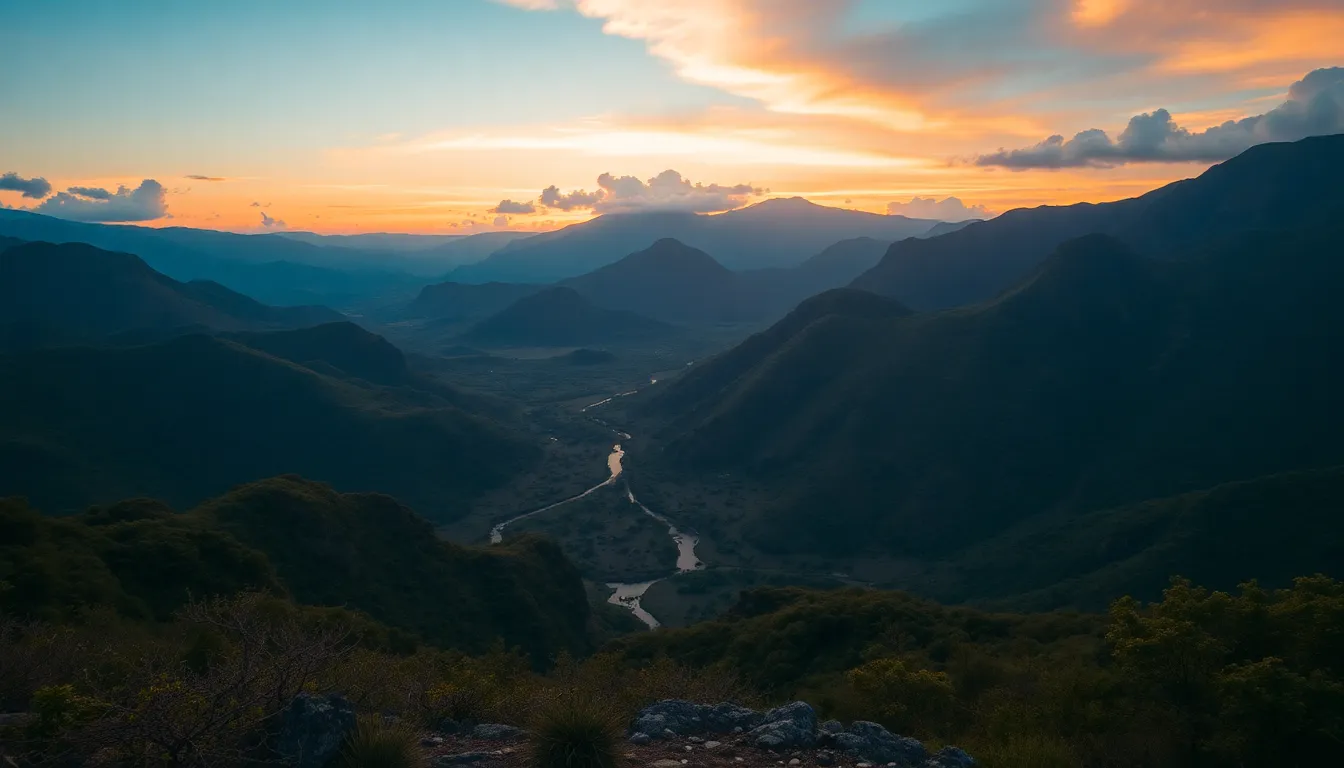
Venezuela holds some of South America's most spectacular natural landscapes — the world's tallest waterfall, table-top mountains older than most of the continents' exposed rock, Caribbean beaches, Andean summits and the vast Orinoco Delta. Angel Falls drops 979 metres from the rim of Auyán-tepui in Canaima National Park, a landscape otherworldly enough to have shaped the look of Pixar's Up . Within a single day's travel the country runs from Amazon rainforest to paramo above 4,000 metres.
That beauty sits alongside a political and economic emergency now in its second decade. Once South America's wealthiest state on the strength of the world's largest proven oil reserves, Venezuela's GDP shrank by roughly 80% between 2012 and 2025 (IMF), and some 7.9 million Venezuelans now live abroad (R4V, November 2025) — one of the largest displacement crises on earth. On top of that came the earthquake doublet of 24 June 2026 , the deadliest earthquake in Venezuela's modern history. Venezuela remains a destination for prepared, risk-aware travellers rather than casual tourists — though as of 2026 the door is measurably more open than it was two years ago.
Angel Falls — 979 m from rim to base, of which 807 m is a single uninterrupted plunge.
02
🏷️ Name & Identity
"Venezuela" — "little Venice" — is traditionally credited to the 1499 Ojeda–Vespucci expedition, whose members saw indigenous stilt houses over the water of Lake Maracaibo and were reminded of the lagoon city. A competing account, from the chronicler Martín Fernández de Enciso, derives it from a local place-name, Veneciuela . Both readings have survived five centuries; the Venetian story is the one Venezuelans tell.
National identity is bound to Simón Bolívar , born in Caracas in 1783, whose campaigns freed six modern countries and whose name the state itself carries: the Bolivarian Republic of Venezuela, adopted under the 1999 constitution. Ethnically the country is a mestizo blend of indigenous, Spanish, African, Italian, Portuguese and Levantine ancestry — the mid-century oil boom made Venezuela a country of immigrants long before it became a country of emigrants. Venezuelans are known for warmth, volubility and humour, qualities the crisis has tested without extinguishing.
03
🗺️ Geography
Venezuela's 916,445 km² carry four distinct worlds. The Andes enter from Colombia and terminate in the Sierra Nevada de Mérida, topped by Pico Bolívar at 4,978 m — a figure revised down from the long-quoted 5,007 m by a 2019 GPS survey, and the reason no Venezuelan summit reaches 5,000 metres. The Caribbean coast runs some 2,800 km past islands, headlands and the cloud forests of Henri Pittier. The Llanos , seasonally flooded plains, hold capybara, caiman, anaconda and the world's densest concentration of wading birds. The Guiana Highlands in the south-east carry the tepuis.
The Orinoco , about 2,140 km long and among South America's greatest rivers by discharge, drains four-fifths of the country; its delta is the homeland of the Warao, whose stilt villages gave the country its name. Lake Maracaibo — strictly a brackish tidal inlet rather than a closed lake — is the largest body of its kind in South America at roughly 13,200 km², and sits over the oilfield that built modern Venezuela.
Above the Catatumbo river mouth at the lake's southern end sits the Relámpago del Catatumbo , the most reliable lightning on earth. Warm Caribbean air is trapped by three mountain ranges and forced up against cool Andean downdraughts, generating storms on as many as 300 nights a year, up to nine hours at a stretch, at rates reaching 28 flashes per minute . Lake Maracaibo holds the Guinness World Record for the highest concentration of lightning on the planet — about 250 flashes per square kilometre per year — awarded in 2014. Sailors used the glow as a landfall beacon for centuries.
Venezuela has no glaciers left. In May 2024 scientists reclassified La Corona , on Pico Humboldt (4,925 m), from glacier to ice field — it had shrunk from about 450 hectares in 2002 to roughly 2 hectares. Pico Bolívar's ice had already vanished by early 2020, and El León, La Concha and El Toro before that. Venezuela is generally identified as the first country of the modern era to lose all of its glaciers. Descriptions of "snow-capped" Venezuelan peaks are now a historical statement.
04
🧭 Map of Venezuela
05
🪶 Indigenous Nations
Long before European arrival, the territory was home to numerous Indigenous societies connected by rivers, coastlines and exchange routes. Cariban-speaking communities were influential across the north and east, while Arawakan and other peoples lived through the Orinoco basin, Guiana Highlands and western regions. Their histories are not a vanished preface: Warao, Pemón, Wayuu, Yanomami, Ye’kwana and many other nations remain part of Venezuela today.
Indigenous communities protect languages, ecological knowledge and forms of collective organization while facing mining, disease, land pressure and weak public services. In the south, illegal gold extraction has brought mercury pollution and violence. Responsible travel requires consent, locally led visits and respect for territories that are homes rather than exotic backdrops.
06
📜 History
Before contact the territory held Timoto-Cuica farmers terracing the Andes, Carib and Arawak speakers along the coast, and dozens of river peoples in the Orinoco basin. Spain planted Cumaná in 1515 — the oldest continuously settled European foundation on the South American mainland — and Caracas in 1567, but the province stayed a backwater valued for pearls, cacao and later coffee rather than silver.
Independence was declared on 5 July 1811 and secured at the Battle of Carabobo on 24 June 1821 ; Bolívar went on to liberate Colombia, Ecuador, Peru and Bolivia before dying, disillusioned, in 1830. Oil rewrote the twentieth century: the Maracaibo strikes made Venezuela the wealthiest country in South America by the 1950s and a magnet for European migration. Civilian democracy arrived in 1958 with the Punto Fijo pact, but the 1989 Caracazo riots exposed how little of the oil money reached the barrios.
Hugo Chávez , elected in 1998 after a failed 1992 coup, launched the Bolivarian Revolution — social spending funded by record oil prices, alongside the steady capture of courts, media and the electoral authority. He died of cancer in 2013, having named Nicolás Maduro his successor. Under Maduro the oil cushion collapsed, the central bank was ordered to print, inflation passed 65,000% in 2018, and millions left. In the presidential election of 28 July 2024 the Carter Center — the only independent observer admitted — concluded the vote could not be considered legitimate; opposition tallies from 81% of ballot boxes gave Edmundo González Urrutia about 67%. Maduro was nonetheless sworn in for a third term on 10 January 2025.
That chapter closed abruptly. On 3 January 2026 Maduro and his wife Cilia Flores were seized by United States forces and flown to New York, where they pleaded not guilty to narcotics-trafficking charges on 5 January. Delcy Rodríguez , previously vice-president, has served as acting president since 5 January 2026. The transition is contested and far from settled: as of late 2026 no return to elected civilian rule has been scheduled, and the opposition's position remains unresolved. Any traveller should treat the political situation as live and check current reporting before booking.
07
⚔️ Bolívar and Independence
Venezuela declared independence in 1811, but the struggle against Spanish rule became a long civil and continental war. Simón Bolívar, born into a wealthy Caracas family, emerged as the central military and political figure. Campaigns crossing the flooded Llanos and the Andes helped create the Republic of Colombia, usually called Gran Colombia, linking present-day Venezuela, Colombia, Ecuador and Panama.
Independence did not resolve slavery, inequality or regional rivalry. Venezuela separated from Gran Colombia in 1830, the year Bolívar died. His image has since been claimed by governments of almost every ideology, turning the historical liberator into a continuing language of political legitimacy.
08
🛢️ Oil and the Modern State
Commercial oil transformed Venezuela during the twentieth century. Lake Maracaibo fields attracted foreign companies, financed roads and cities and shifted power toward a centralized state. By the 1950s petroleum wealth supported spectacular modern architecture and one of Latin America’s most urban societies, but agriculture declined and public finances became dangerously dependent on oil prices.
The industry was nationalized in 1976 through Petróleos de Venezuela, PDVSA. Oil revenue expanded education, health care and infrastructure, yet repeated booms encouraged imports, debt and patronage. The contradiction remains fundamental: immense reserves coexist with fragile production, environmental damage and shortages at home.
09
🗳️ Punto Fijo Democracy
After the fall of the Pérez Jiménez dictatorship in 1958, major parties signed the Punto Fijo Pact and built a durable electoral system. For four decades, power largely alternated between Democratic Action and COPEI. The period expanded the middle class and public institutions, while oil income softened political conflict.
By the 1980s and 1990s, falling revenues, corruption and inequality weakened trust. The 1989 Caracazo protests and their violent repression exposed the distance between formal democracy and daily hardship. Two attempted coups in 1992 introduced Lieutenant Colonel Hugo Chávez to the national public.
10
🔴 Chávez and the Bolivarian Revolution
Hugo Chávez won the 1998 election promising to replace the discredited political order. A new constitution in 1999 renamed the country the Bolivarian Republic of Venezuela and expanded mechanisms of participation. During the oil boom, social missions improved access to health, education and subsidized food for many poorer communities.
The same era concentrated executive power, polarized institutions and made the economy still more dependent on petroleum. A failed coup in 2002, an oil strike, repeated elections and conflict with private media hardened both government and opposition. Chávez died in 2013, leaving a movement with deep popular roots and an increasingly centralized state.
11
🏛️ The Maduro Era
Nicolás Maduro succeeded Chávez in 2013 after a narrow election victory. Falling oil prices, declining production, exchange controls, sanctions, mismanagement and political confrontation contributed to a severe national collapse. The government retained power through the military, state institutions and loyal social networks while the opposition repeatedly divided over elections, protest and negotiation.
The political record includes disputed elections, restrictions on parties and media, detention of opponents and allegations of serious human-rights abuses. Conditions and rules can change quickly. Visitors should distinguish between Venezuelan people and political institutions, and avoid treating everyday hardship as spectacle.
12
📉 Economic and Humanitarian Crisis
Hyperinflation erased savings and wages, public utilities deteriorated and shortages affected food and medicine. Informal dollarization later stabilized parts of urban commerce, creating islands of consumption beside widespread poverty. Conditions vary sharply by region and household: a restaurant bill priced in dollars can coexist with salaries that cannot cover basic needs.
Power cuts, fuel scarcity, limited hospital supplies and unreliable water remain practical realities outside wealthier districts. Humanitarian organizations work under difficult conditions. Travelers should bring adequate insurance, essential medication and flexible reserves without diverting scarce local supplies.
13
🧳 Migration and Diaspora
More than seven million Venezuelans have left the country during the prolonged crisis, forming one of the largest displacement movements in the world. Colombia, Peru, Ecuador, Chile, Brazil, the United States and Spain host major communities. Families are now connected through remittances, messaging apps and journeys that reshape both Venezuela and its neighbors.
The diaspora includes professionals, students, entrepreneurs and people walking across borders with few resources. Its cultural impact is visible in new arepa shops, music scenes and community organizations across the Americas. Migration is a human story, not merely a statistic or political argument.
14
👥 People & Culture
How many Venezuelans there are is a genuinely open question, and worth stating plainly rather than papering over. The UN Economic Commission for Latin America (CEPAL) projects about 28.6 million residents for 2026; Venezuela's own National Statistics Institute (INE) projected 34.1 million for mid-2024. The roughly five-million gap is the emigration the domestic series does not fully net out. Most international sources use the lower figure; this page quotes both.
The diaspora itself now numbers about 7.9 million (R4V, November 2025), roughly 85% of them elsewhere in Latin America and the Caribbean — some 2.88 million in Colombia and 1.54 million in Peru alone. Nearly every family on the ground has someone abroad, and remittances are a structural part of household income.
Culturally the country is loud in the best sense. Joropo , the national dance, is driven by harp, cuatro and maracas at a tempo that exhausts spectators. Salsa, merengue, gaita and reggaeton fill the streets by season. El Sistema , the state youth-orchestra programme founded by José Antonio Abreu in 1975, has trained hundreds of thousands of children and been copied in more than 70 countries. Baseball, not football, is the national obsession. And the hallaca at Christmas — a maize parcel whose making occupies a whole family for a day — survives as the country's most durable ritual, reproduced faithfully in Bogotá, Madrid and Miami.
Mount Roraima — the tepui that gave Conan Doyle his Lost World.
15
🗣️ Languages of Venezuela
Spanish is the dominant national language, with distinctive Venezuelan vocabulary and regional accents. The constitution also recognizes Indigenous languages for their peoples. Warao, Wayuunaiki, Pemón, Yanomami languages, Ye’kwana and many others carry knowledge tied to particular rivers, forests, kinship systems and oral traditions.
Language vitality differs widely. Some communities maintain strong intergenerational use; others face pressure from migration, schooling and extractive industries. Place names such as Caracas, Maracaibo, Orinoco and Canaima preserve Indigenous histories even where daily speech is now overwhelmingly Spanish.
16
🎵 Music and Joropo
Joropo is Venezuela’s emblematic musical and dance tradition, especially associated with the Llanos. Harp, cuatro, maracas and agile singing drive forms that can be festive, competitive and poetic. Regional styles differ, and the word embraces more than a single standardized national performance.
The country also produced influential salsa, merengue, calypso from El Callao, Afro-Venezuelan drumming, classical ensembles and contemporary rock and urban music. The state-funded El Sistema became internationally famous for orchestral education, even as debate continues over institutions and politics.
17
💧 Angel Falls & Canaima
Angel Falls — Salto Ángel , or Kerepakupai Merú to the Pemón — is the tallest waterfall on earth at 979 metres total. The number worth knowing is the second one: of that height, 807 metres is a single uninterrupted plunge , the rest a cascade over the talus below. It is that 807 m free-fall, not the 979 m, that makes the water atomise into drifting mist before it lands, so that in the dry months the base can be wet without a river arriving at all.
The falls are named for the American bush pilot Jimmie Angel , who overflew them in 1933 and in October 1937 landed his Flamingo monoplane on the boggy summit of Auyán-tepui, where it stuck fast; he and three companions walked out over eleven days. The aircraft sat on the mountain until 1970 and now stands at Ciudad Bolívar airport.
Canaima National Park , inscribed by UNESCO in 1994, covers about 30,000 km² — larger than Belgium — and holds well over 100 tepuis. Reaching the falls means a flight into Canaima village, then three to five hours upriver by curiara along the Carrao and Churún, and a final walk to the Mirador Laime. Boats run reliably only in the wet season, roughly June to November ; in the dry months the rivers are too low and the falls too thin.
The Chúrun valley approach — the classic first sighting from the water.
18
⛰️ Mount Roraima & the Gran Sabana
The tepuis are the eroded remnant of the Roraima Supergroup , quartz sandstones laid down roughly 1.7 to 1.8 billion years ago on a still older Guiana Shield basement. They are among the oldest exposed sedimentary surfaces anywhere — but they are not, as is often claimed, the oldest rock on Earth; that title belongs to gneisses in northern Canada and Greenland dated at close to four billion years. What the tepuis genuinely are is ecological islands: cut off for tens of millions of years, their summits carry endemism rates above 30%, including carnivorous plants found on one mountain and nowhere else.
Roraima (2,810 m) is the highest and the only one a walker can reach without technical climbing, via the natural ramp known as La Rampa on the Venezuelan side. The standard trek from Paraitepui runs six days round trip across open savannah, two river fords and a steep final day; the summit is a wind-scoured moonscape of black sandstone, quartz beds and pools. Its triple border point marks Venezuela, Brazil and Guyana. The surrounding Gran Sabana — rolling grassland punctuated by tepuis and the waterfalls of Kamá and Apón-wao — is Pemón country, reached on the road south to Santa Elena de Uairén.
Tepui and savannah — the Gran Sabana on the road to Santa Elena.
19
🌊 The Orinoco and Its Delta
The Orinoco is one of South America’s great rivers, draining a basin that links the Llanos, Guiana Highlands and Atlantic. Seasonal flooding shapes transport, fisheries, wildlife and settlement. The river’s Casiquiare channel forms a rare natural connection between the Orinoco and Amazon systems.
Near the coast, the river divides into a vast delta of mangroves and waterways. Warao communities have long adapted homes, canoes and livelihoods to this aquatic landscape. Visits demand experienced local operators, mosquito protection and careful respect for community decisions.
20
🐊 Los Llanos
Los Llanos spread across central Venezuela into Colombia as an immense seasonally flooded savanna. Wet-season water transforms roads and grasslands; dry months concentrate capybaras, caimans, anacondas, giant anteaters and extraordinary birdlife around shrinking pools. Working hatos combine cattle culture with wildlife habitat.
The llanero tradition shaped national music, horsemanship and heroic stories of independence. A wildlife stay can be remarkable, but distances are long and standards vary. Choose conservation-minded ranches and never pressure guides to handle wild animals for photographs.
21
🏝️ Los Roques Archipelago
Los Roques is an atoll-like archipelago of roughly 350 islands, cays and sandbars around a shallow turquoise lagoon, about 160 km north of the mainland. Declared a national park in 1972 , it has no resorts, no cruise berths and no high-rise anything — accommodation is family-run posadas on Gran Roque , the single inhabited island, and the day is structured around a boat drop to an empty beach and a pickup at four.
Water clarity is exceptional and the flats behind the cays make Los Roques one of the world's serious bonefishing destinations, alongside first-rate kitesurfing and snorkelling on the barrier reef. Cayo de Agua , with its double sandbar, and the Francisquí group are the beaches people fly for. Access is by light aircraft from Caracas, about 40 minutes, and the descent over the lagoon is the best thing about the flight. Practically, the archipelago runs on its own logic: bring cash, expect intermittent power, and accept that flight schedules are indicative.
Los Roques — a national park since 1972, and still without a single resort.
22
🏔️ Mérida & the Andes
Mérida , founded 1558 at 1,600 m, is Venezuela's university town and the base for everything Andean. It is also, by general agreement among travellers, the easiest city in the country to spend time in — walkable, cool, cheap, and with a student population that keeps the cafes and the politics lively.
The Mukumbarí cable car is the reason most people come: the highest and longest cable-car system in the world, four stages climbing from 1,640 m in the city to 4,765 m at Pico Espejo , on the shoulder of Pico Bolívar. It reopened in 2016 after a long rebuild and runs intermittently — confirm operation before travelling for it specifically. From the top the Sierra Nevada spreads out; what is no longer there is the ice, gone from Bolívar by 2020 and from Humboldt by 2024.
Beyond the city the páramo begins — high moorland of frailejón , the woolly rosette plant that grows a centimetre a year and stores the water the region drinks. The villages of the Sierra Nevada and the Trans-Andean road to Apartaderos and the Laguna Mucubají make the best two or three days of overland travel Venezuela offers.
Páramo above Mérida — frailejón country, and the source of the region's water.
23
🏙️ Caracas — The Capital
Caracas lies in a narrow east–west valley at about 900 m, hemmed by the wall of El Ávila (Waraira Repano) to the north and by barrios climbing every slope to the south. It is a city of hard contrasts: glass towers in Altamira and Las Mercedes, informal settlements running up the hillsides, excellent restaurants a few blocks from streets no local would walk after dark.
What is worth the risk management: the Ciudad Universitaria , Carlos Raúl Villanueva's 1940s–50s campus and a UNESCO World Heritage Site since 2000, where Léger, Arp, Calder and Vasarely were commissioned into the fabric of the buildings — Calder's "Clouds" in the Aula Magna are an acoustic device as much as a sculpture. The Museo de Arte Contemporáneo holds a serious Latin American collection. The Warairarepano cable car lifts you out of the smog to 2,100 m in fifteen minutes. The Panteón Nacional holds Bolívar.
The 24 June 2026 earthquakes were felt hard in Caracas and damaged buildings across the valley, though the epicentres lay some 160 km west; recovery works were still under way through 2026. For most visitors the capital is a transit point handled with a trusted driver, daylight movement and no visible valuables.
24
⚡ Maracaibo & the Lake
Maracaibo is Venezuela's second city, its hottest (routinely 34–38°C), and the capital of an oil region that financed the twentieth century. Zulia state has its own accent, its own music — gaita , the December genre that is to Venezuela what carols are elsewhere — and a strongly held sense of separateness. The General Rafael Urdaneta Bridge , 8.7 km across the lake's neck and completed in 1962, was the longest prestressed-concrete bridge in the world when it opened.
The old quarter around the Basilica de Nuestra Señora de Chiquinquirá and the painted houses of Calle Carabobo are the visual draw; the Feria de la Chinita in November is the biggest religious festival in the country. South across the water the stilt villages of the Lagunillas shore are the direct descendants of the houses that gave Venezuela its name. Practically: heat, fuel scarcity and border-adjacent security concerns make Zulia harder travel than the Andes or the islands, and the Colombian frontier zone is under a Do Not Travel designation.
25
🏖️ Margarita Island
Isla de Margarita lies off the Caribbean coast with beaches, dry hills, fishing towns and the urban centers of Porlamar and Pampatar. Its free-port status encouraged shopping and resort development, while colonial forts and the Basilica of Our Lady of El Valle anchor local history and pilgrimage.
Tourism infrastructure is more extensive than in many mainland destinations, but water, electricity, transport and security conditions still fluctuate. Neighboring Cubagua and Coche add archaeological, fishing and beach landscapes that deserve more than a rushed excursion.
26
🌿 Henri Pittier National Park
Venezuela’s oldest national park rises from the Caribbean coast into the cloud forests of the Cordillera de la Costa. Rapid changes in elevation create exceptional bird diversity, and the mountain road connects Maracay with coastal villages such as Choroní and Chuao. Rain, landslides and sharp bends make the route part of the experience and a practical risk.
The park protects watersheds as well as wildlife. Trails and coastal access should be arranged with current local advice, especially during heavy rain. Chuao is also celebrated for cacao, but its reputation rests on community labor rather than a luxury label alone.
27
🦜 Biodiversity and Conservation
Venezuela is considered one of the world’s megadiverse countries. Caribbean reefs, mangroves, Andean páramo, Llanos wetlands, Amazonian forest and isolated tepui summits create habitats for jaguar, giant otter, scarlet ibis, harpy eagle and thousands of plant species. Many tepui organisms evolved in isolation.
Protected areas cover spectacular territory but enforcement is uneven. Mining, deforestation, fires, trafficking and poorly managed tourism threaten ecosystems. The best visits minimize waste, keep distance from wildlife, avoid illegal animal encounters and support guides whose livelihoods depend on intact landscapes.
28
🍳 Cuisine
Venezuelan cooking is maize cooking. The arepa — a griddled patty of precooked maize flour, split and filled — is eaten at every meal and in every social class, and the industrial harina P.A.N. that makes it possible is one of the country's genuine cultural exports. Fillings run from carne mechada (shredded beef) and caraotas negras (black beans) to the beloved reina pepiada , chicken and avocado, invented in 1955 and named for a Miss World.
The national dish is pabellón criollo : shredded beef, black beans, white rice and fried sweet plantain on one plate, the four elements often read as the four peoples of the country. Hallacas at Christmas, cachapas (sweet fresh-corn pancakes folded round soft queso de mano ), tequeños and empanadas fill out the repertoire. And Venezuelan cacao is world-class: the criollo beans of Chuao and the Porcelana of Sur del Lago are bought by name by European chocolatiers, and Hacienda Chuao has sat on Venezuela's UNESCO Tentative List since 2002.
Arepas Reina Pepiada Makes 6 · 35 minutes Dough: 2 cups precooked white maize flour (harina P.A.N.), 2.5 cups warm water, 1 tsp salt. Filling: 2 cups poached shredded chicken, 2 ripe avocados, 3 tbsp mayonnaise, juice of 1 lime, 2 tbsp chopped coriander, salt. Dissolve the salt in the water, rain in the flour while stirring, then knead 3 minutes to a smooth dough with no cracks — rest 5 minutes. Divide into six, pat into discs 1.5 cm thick, and cook on a dry griddle over medium heat 6–7 minutes a side until a crust forms and the arepa sounds hollow. Finish 10 minutes in a 200°C oven. Meanwhile mash the avocado with lime, fold through the chicken, mayonnaise and coriander. Split each arepa most of the way through and fill generously. Pabellón Criollo Serves 4 · 3 hours Beef: 800 g flank steak, 1 onion, 1 red pepper, 4 cloves garlic, 2 tbsp tomato purée, 1 tsp cumin, bay leaf. Beans: 400 g black beans soaked overnight, onion, pepper, garlic, 1 tsp brown sugar. Also: 2 cups long-grain rice, 2 very ripe plantains, oil for frying. Simmer the flank whole with bay leaf until it shreds, about 2 hours; keep the broth. Cool, shred along the grain. Soften onion, pepper and garlic, add cumin and tomato purée, return the beef with a ladle of broth and reduce 20 minutes. Cook the beans separately with their own sofrito and the sugar until creamy. Fry the plantain slices until dark and caramelised. Plate the four elements side by side and do not mix them. Chicha Andina Serves 6 · 40 minutes plus chilling 1 cup long-grain rice, 1 L water, 1 cinnamon stick, 1 L whole milk, 1 tin (397 g) condensed milk, 1 tsp vanilla, pinch of salt; ground cinnamon to finish. Boil the rice hard with the water and cinnamon stick until it collapses, about 25 minutes — you want it overcooked. Discard the cinnamon, blend the rice with its water until completely smooth, then blend in the milk, condensed milk, vanilla and salt. Pass through a sieve, chill thoroughly, and serve thick and very cold under a heavy dusting of cinnamon. Venezuelan chicha is a rice-and-milk drink and is not alcoholic — distinct from the fermented maize chicha of Peru and Bolivia that shares its name.
The arepa — breakfast, lunch, dinner and the national common denominator.
29
🥃 Wine, Spirits & Drinking Culture
Venezuela is a small but real wine producer, and the story is a genuinely unusual one. Bodegas Pomar , founded in 1985 at Carora in Lara state as a joint venture between the French house Martell and Venezuela's Empresas Polar, is the country's only commercial winery. Its vineyards sit in the semi-arid corridor between El Tocuyo and Carora at around 10° north — latitudes at which vines do not naturally go dormant. Pomar induces dormancy by pruning and controlled water stress, and the consequence is the defining fact of Venezuelan viticulture: two harvests every year , in roughly February–March and August–September, rather than one. The house makes reds, whites, rosés and a traditional-method sparkling wine.
Rum is the more serious claim. Ron Diplomático from Lara, particularly the Reserva Exclusiva, is regularly placed among the world's best aged rums, and Venezuela's rums carry a denominación de origen controlada requiring a minimum two years of ageing. The country's most distinctive spirit, though, is cocuy , distilled from the cooked hearts of Agave cocui in Falcón and Lara — a pre-Hispanic drink that was illegal for much of the twentieth century and won its own denomination of origin, Cocuy Pecayero , in 2001.
Everyday drinking, however, means beer . Polar's Pilsen is so central that the 2016 shutdown of its breweries for want of hard currency to buy malt was front-page news worldwide. Alongside it: papelón con limón (unrefined cane sugar and lime, the national soft drink), and fruit juices — parchita , guanábana, mango, níspero — of a quality that makes the effort of getting to Venezuela briefly seem reasonable.
30
🏆 Kaufmann Wine Score
🏆 Kaufmann Wine Score — Venezuela Rated on four criteria: Aroma (/25), Taste (/30), Finish (/20), Value (/25) — Total /100 Wine 🔴 Aroma 🟡 Taste 🟢 Finish 🔵 Value Total Viña Altagracia Tinto (Petit Verdot / Syrah) 21 25 16 20 82 Pomar Brut Nature (méthode traditionnelle) 20 24 16 22 82 Pomar Reserva Tinto 19 23 15 21 78 Pomar Blanco Semi-Seco 17 21 13 20 71 Pomar Rosé 17 20 13 21 71 95–100 Legendary · 90–94 Outstanding · 85–89 Very Good · 80–84 Good · 75–79 Average · <75 Below Average
Scored against international peers rather than tropical ones. No Venezuelan wine reaches the 85-point band, and it would be flattery to pretend otherwise — but the sparkling wine in particular is a good deal more than a curiosity, and the two-harvest system means there is essentially no vintage variation to chase.
31
🍸 Cocktails
Guarapita The beach-and-party drink of the Venezuelan coast. Shake 60 ml white rum with 150 ml fresh passion-fruit ( parchita ) juice and 2 tsp sugar over ice; serve straight from a plastic bottle, which is the traditional vessel and not a joke. Orange or tamarind juice work equally well. Ponche Crema The Christmas drink, commercial since 1900. Beat 4 egg yolks with 1 tin condensed milk until pale, add 250 ml evaporated milk, 150 ml añejo rum, 1 tsp vanilla and a grating of nutmeg and lime zest. Chill 24 hours; it thickens. Serve small and very cold. Cocuy Sour A modern Caracas bar drink built on the country's oldest spirit. Shake 50 ml cocuy pecayero, 25 ml lime, 20 ml papelón syrup and an egg white hard without ice, then again with ice; strain and drop three dashes of Angostura across the foam. Papelón con Limón Non-alcoholic and ubiquitous. Dissolve 100 g grated papelón (unrefined cane sugar) in 1 L water, add the juice of 4 limes, chill hard and serve over ice. Add 40 ml white rum per glass for the adult version.
Angostura bitters, it is worth noting, are not Venezuelan today: invented in 1824 at Angostura — now Ciudad Bolívar — by the German surgeon Johann Siegert, the house relocated to Trinidad in 1875 and has been made there ever since. The name is the Venezuelan part.
32
🌤️ Climate
Venezuela sits wholly within the tropics, so the variable is altitude, not season. Venezuelans use the old tierra scale: tierra caliente below 800 m (coast, Llanos, Maracaibo; 26–38°C year round), tierra templada 800–2,000 m (Caracas at 900 m, a steady 19–27°C; Mérida cooler), tierra fría 2,000–3,000 m, and páramo above that, where nights drop below freezing.
The rhythm is dry season ( verano ) December to April and wet season ( invierno ) May to November . For general travel, cities and the Andes, the dry season is easier. For Angel Falls the calculus inverts : the boats need water, so June to November is the right window, accepting more cancelled flights. Venezuela lies south of the main Atlantic hurricane track and is rarely hit directly, but the rainy season delivers hard afternoon storms and landslide risk on the coastal range — the 1999 Vargas debris flows, whose death toll has been estimated anywhere from 10,000 to 30,000, remain the reference disaster for the coastal range.
33
✈️ Getting There
Air access is in active flux — verify before booking. Simón Bolívar International (CCS) at Maiquetía was closed by the June 2026 earthquakes and resumed commercial operations only on 1 September 2026 , initially handling seven domestic and four international rotations a day from a temporary terminal erected in the car park while the main building is repaired.
The carriers returning as of September 2026 are Copa (Panama City), Air Europa (Madrid), Avianca and Plus Ultra , with Iberia phasing back in, American Airlines starting a double-daily Miami service on 3 September, LATAM resuming from Bogotá on 4 September and GOL from São Paulo on 15 September. This is a substantially wider network than Venezuela had in 2024–25, when most European and Latin American carriers withdrew and had their operating concessions revoked. Frequencies are still building and schedules change week to week.
Domestic: Conviasa, Laser, Avior, Estelar and Turpial link Caracas to Canaima (for Angel Falls), Los Roques, Mérida, Maracaibo, Porlamar and Puerto Ordaz. Small-aircraft charter is the norm for Canaima and Los Roques and is usually arranged as part of a tour package rather than booked separately. Overland: crossings exist from Colombia at Cúcuta–San Antonio del Táchira and from Brazil at Pacaraima–Santa Elena de Uairén; the Colombian frontier zone carries a Do Not Travel designation and the Brazilian route, while quieter, is long and remote.
34
📋 Practical Info
Visas. Citizens of most EU states, the UK, Canada and much of Latin America may enter visa-free for 90 days; US citizens require a visa , and since US consular services in Venezuela remain suspended these are handled through third countries. Passports must have six months' validity. Rules have changed repeatedly since 2019 — confirm with a Venezuelan consulate rather than a travel blog.
Money. The economy is dollarised in practice. Carry clean, undamaged small-denomination USD ($1, $5, $10, $20); torn or marked notes are refused. ATMs are effectively unusable for foreign cards and card acceptance is patchy outside upmarket hotels. Zelle and Binance transfers are widely used domestically. See Cost of Living for the exchange-rate picture.
Health. The public health system is in severe crisis, with shortages of medicines, staff and reliable power outside the main cities. Bring a comprehensive personal medical kit and any prescription drugs in original packaging. The CDC recommends malaria prophylaxis ; dengue, chikungunya, Zika, oropouche and yellow fever all circulate, and a yellow-fever certificate is required for onward travel to some neighbours. Drink only treated or bottled water. Travel insurance with air-evacuation cover is not optional here.
Safety. Risk is strongly regional. Canaima, Los Roques, Mérida and the Gran Sabana are materially safer than Caracas, Maracaibo or the border states. Move by day, use pre-arranged drivers rather than street taxis (the airport road is a known risk point), keep valuables invisible, avoid demonstrations entirely, and travel with an established local operator who knows current conditions. Connectivity is intermittent outside cities; buy a local SIM and do not rely on it.
Seismic note. Venezuela straddles the Caribbean–South American plate boundary. After the June 2026 doublet, aftershocks continued for months across Falcón, Yaracuy, Lara and Carabobo, and building stock in the affected zone should be assumed compromised until certified. Know the drill and check the structure you sleep in.
35
💰 Cost of Living
Venezuela is inexpensive in dollar terms for a visitor spending dollars, but it is no longer the near-free destination of the 2018–20 collapse: dollarisation has pushed restaurant and hotel prices in Caracas towards regional norms while wages have not followed. The bolívar itself continues to lose ground — the official rate opened 2026 at about 301 VES to the dollar against 52 a year earlier, a depreciation near 480%, with twelve-month inflation running at roughly 576% in July 2026 . More than two-thirds of foreign-exchange transactions happen outside the official window, so a parallel-market gap persists. Price anything that matters in dollars.
Item Typical cost (USD) 🍳 Arepa from a street arepería $1–3 🍽️ Restaurant main course $6–25 🛌️ Budget posada, per night $15–35 🏨 Mid-range hotel, Caracas $50–120 ✈️ Caracas–Canaima return flight $250–450 🚕 Pre-arranged driver, half day $25–50 🍺 Bottle of Polar Pilsen $1–2 🌴 Angel Falls package, 3 days all-in $400–800
Daily budget: $30–50 backpacking · $70–140 mid-range · excursions to Canaima and Los Roques are the line items that dominate any Venezuelan trip budget.
36
🏨 Accommodation
The posada — a family-run guesthouse, often the best-run business in town — is the characteristic Venezuelan lodging and the right default nearly everywhere outside the capital. In Caracas a handful of international-standard hotels operate in the eastern districts, chosen for security as much as comfort. Canaima offers camps by the lagoon, most of them hammock-and-mosquito-net rather than hotel, and nearly always sold as part of a package rather than a room booking. Los Roques is posadas only, on Gran Roque, generally full-board because there is nowhere else to eat. Mérida has the country's best hostel scene and mountain lodges in the surrounding villages.
International booking platforms cover Venezuela thinly and payment often fails; most travellers reserve directly with the posada or through a Venezuelan operator, paying a deposit and the balance in cash on arrival. In the earthquake-affected states of Falcón, Yaracuy, Lara and Carabobo, confirm that a property is open and structurally cleared before travelling to it.
37
🎭 Festivals & Events
💀 Diablos Danzantes de Corpus Christi Masked devil brotherhoods dance backwards before the Blessed Sacrament, then submit — good over evil, staged annually since the 18th century in eleven coastal communities. Inscribed on UNESCO's Intangible Cultural Heritage list in 2012. San Francisco de Yare is the best known. Movable, May–June 🎭 Carnival of El Callao Afro-Antillean carnival brought by 19th-century Trinidadian and Antillean gold miners: calypso in English patois, madamas in Victorian dress, mediopintos and devils. UNESCO Intangible Cultural Heritage, 2016. February–March 🎵 Feria de la Chinita Maracaibo's fortnight for the Virgin of Chiquinquirá, and the annual high point of gaita — the furro-and-cuatro genre that Zulia exports to the whole country every December. Mid-November, culminating 18 November 🥁 Los Locos de la Divina Pastora The 14 January procession in Barquisimeto is one of the largest Marian pilgrimages in the Americas, drawing crowds counted in the millions along a 7 km route from Santa Rosa into the city. 14 January
38
🏛️ UNESCO World Heritage
Venezuela accepted the World Heritage Convention on 30 October 1990 and has three inscribed properties — two cultural, one natural — plus three sites on its Tentative List.
Coro and its Port — 1993 · Cultural The only surviving earthen-architecture colonial town in the Caribbean, blending Spanish mudejar with Dutch and indigenous technique across some 600 historic buildings, with its port at La Vela. On the List of World Heritage in Danger since 2005 , after torrential rains in 2004–05 damaged the adobe fabric; UNESCO's continuing concerns are the absence of an adequate drainage system and of a management and disaster-risk plan. Twenty-eight state-of-conservation reports have been filed on Venezuela's properties, the great majority of them on Coro. Canaima National Park — 1994 · Natural About 30,000 km² of the Guiana Shield, inscribed for the tepui landscape and its cliffs and waterfalls, Angel Falls among them. Not on the Danger List, though the World Heritage Centre has repeatedly received third-party reports of expanding illegal gold mining pressure on and around the property, most recently reviewed in 2025. Ciudad Universitaria de Caracas — 2000 · Cultural Carlos Raúl Villanueva's campus for the Central University of Venezuela, built 1940–60 and inscribed as a masterpiece of modern city planning and of the "synthesis of the arts" — painting, sculpture and architecture commissioned as one work, with pieces by Alexander Calder, Fernand Léger, Jean Arp, Victor Vasarely and Henri Laurens integrated into the buildings.
Tentative List: the City of La Guaira (1999), Hacienda Chuao (2002) and Ciudad Bolívar on the narrows of the Orinoco (2003).
A distinction worth keeping straight: the Diablos Danzantes (2012) and the Carnival of El Callao (2016) are inscribed on UNESCO's Intangible Cultural Heritage lists. That is a separate convention and a separate register — they are not World Heritage Sites and do not raise Venezuela's count of three.
39
💎 Hidden Gems
🍗 Chuao A cacao village on the Aragua coast reachable only by boat from Choroní, where the beans are still dried on the church forecourt as they have been since the 1660s. Chuao criollo is bought by name by European chocolatiers, and the plantation has been on Venezuela's UNESCO Tentative List since 2002. 🦅 Henri Pittier National Park Venezuela's first national park, declared 13 February 1937 , running from cloud forest at 2,400 m down to Caribbean fishing villages. Around 580 bird species — roughly six per cent of the world's total in 1,000 km² — and the Rancho Grande biological station on the pass. ⚡ Catatumbo Lightning Storms on up to 300 nights a year over the Catatumbo river mouth, at rates reaching 28 flashes a minute and displays lasting nine hours. Watched from a stilt village such as Congo Mirador or Ologa, by boat from Puerto Concha. Guinness-recognised as the highest concentration of lightning on Earth. 🌴 Los Médanos de Coro A field of live sand dunes up to 40 m high on the isthmus to the Paraguaná peninsula, minutes from the World Heritage town of Coro — a genuine desert at 11° north, walkable at dawn before the sand becomes unbearable. 🐊 Los Llanos in the dry season Between January and April the floodwater retreats and the wildlife concentrates on shrinking lagoons: capybara, spectacled caiman, anaconda, giant anteater, scarlet ibis and jabiru in densities that rival the Pantanal, watched from the working hatos of Apure and Barinas. ⛪️ Choroní & Puerto Colombia Reached by a spectacular, terrible road over the Henri Pittier pass, a colonial cacao village on a palm-backed bay where drumming at the June San Juan festival runs for three days without meaningful interruption.
40
🎒 Packing Tips
Cash first. Bring every dollar you expect to spend, plus a reserve, in clean small-denomination notes — there is no reliable way to obtain more once you are inside the country. Split it across bags and body.
Clothing: light and quick-drying for coast, Llanos and jungle; genuine warm layers and a windproof shell for Mérida and any páramo (Pico Espejo is below freezing); long sleeves and trousers for dusk anywhere with mosquitoes. Broken-in boots for Roraima, plus a change of dry socks per day — the trek involves river fords.
Kit: DEET or picaridin repellent, a comprehensive medical kit with antimalarials and oral rehydration salts, water purification, a headtorch and spare batteries (power cuts are routine), dry bags for the Canaima boats, a power bank, universal adapter (Venezuela uses US-style Type A/B plugs at 120 V), and photocopies of your passport for daily carry with the original locked away. A local SIM helps; do not depend on it.
41
🔗 Resources
US State Department — Venezuela Travel Advisory: travel.state.gov · the authoritative level and the state-by-state exceptions. UK FCDO and your own foreign ministry — positions differ from the US and from each other; read the one your insurance is written against. UNESCO World Heritage Centre — Venezuela: whc.unesco.org/en/statesparties/ve R4V — Inter-Agency Platform for Refugees and Migrants from Venezuela: r4v.info · the standard source for diaspora figures. Operators: Akanan Travel and Cacao Travel are long-established for Canaima, Roraima and Los Roques; Mérida's Andean operators handle the páramo and the Llanos. Reading the country: Caracas Chronicles and Efecto Cocuyo for reporting from inside; Venezuelanalysis for the government-sympathetic reading. Triangulate.
42
📚 Recommended Reading
Doña Bárbara — Rómulo Gallegos (1929). The novel of the Llanos, by a man who later became president; still the country's defining literary text. The Lost World — Arthur Conan Doyle (1912). Roraima, filed off and fictionalised; worth reading on the mountain itself. Personal Narrative of a Journey to the Equinoctial Regions of the New Continent — Alexander von Humboldt. The 1799–1800 Orinoco journey, and the reason Venezuela's second peak carries his name. The Silence and the Scorpion — Brian Nelson (2009). Forensic account of the April 2002 coup attempt against Chávez. Comandante — Rory Carroll (2013). The Guardian correspondent's portrait of Chávez's Venezuela from the inside. It Is Blood, It Is Ash and the reportage of Alberto Barrera Tyszka — for the texture of the collapse as lived rather than measured.
43
🎥 Watch Before You Go
Search for these rather than trusting any single link, since travel channels come and go:
"Angel Falls Canaima boat trip" — to understand why the wet season is non-negotiable and what three days in a curiara actually involves. "Roraima trek Paraitepui" — the six-day route, the river fords and the summit terrain. "Catatumbo lightning Congo Mirador" — long-exposure footage from the stilt villages; also the setting of the documentary Once Upon a Time in Venezuela (2020). Gustavo Dudamel and the Simón Bolívar Symphony Orchestra — any El Sistema performance of Arturo Márquez's Danzón No. 2 , which is as close as an orchestra gets to a national anthem.
44
✨ Fascinating Facts
Venezuela holds the world's largest proven oil reserves — roughly 303 billion barrels, ahead of Saudi Arabia — most of it extra-heavy crude in the Orinoco Belt that is expensive to lift and upgrade. It is generally identified as the first country of the modern era to lose all its glaciers , with the reclassification of La Corona in 2024. The Mukumbarí cable car at Mérida is the world's highest and longest, climbing to 4,765 m at Pico Espejo. Lake Maracaibo holds the Guinness record for the highest concentration of lightning on Earth , about 250 flashes per km² per year. Cumaná , founded 1515, is the oldest continuously settled European foundation on the South American mainland. Venezuela has won seven Miss Universe crowns and six Miss World — a remarkable haul for a country of its size, though the United States leads the Miss Universe tally outright. Both of Venezuela's Nobel laureates are relatively recent: Baruj Benacerraf, born in Caracas in 1920, shared the 1980 prize in Physiology or Medicine; María Corina Machado won the 2025 Peace Prize. In 2006 the flag gained an eighth star — honouring Bolívar's 1817 decree for Guayana province — and the white horse on the coat of arms was turned to gallop leftwards; Chávez said his daughter had pointed out that the animal appeared to be looking backwards. The country had been renamed the Bolivarian Republic seven years earlier, under the 1999 constitution. Venezuela claims the Essequibo , some two-thirds of neighbouring Guyana. See Updates below.
45
⭐ Notable People
⚔️ Simón Bolívar 1783–1830 The Liberator. Born in Caracas, he led the campaigns that freed six modern nations and died at 47 in Santa Marta, convinced he had "ploughed the sea". 🎖 María Corina Machado b. 1967 Industrial engineer turned opposition leader, barred from the 2024 ballot and forced into hiding. Awarded the 2025 Nobel Peace Prize on 10 October 2025 for her work for democratic rights and a peaceful transition — the first Venezuelan to win it. 🎼 Gustavo Dudamel b. 1981 El Sistema's most famous graduate. Music director of the Los Angeles Philharmonic from 2009 to 2026, and since September 2026 Music & Artistic Director of the New York Philharmonic — its 27th, and the first Latino to hold the post since the orchestra's founding in 1842. Also music director of the Paris Opera and of the Simón Bolívar Symphony Orchestra. 🏃♀️ Yulimar Rojas b. 1995 Triple jump. Olympic champion at Tokyo 2020 and holder of the world record at 15.74 m , set in Belgrade in March 2022. A torn Achilles in April 2024 kept her out of the Paris Games, where she carried Venezuela's flag at the opening ceremony instead. ⚾ Miguel Cabrera b. 1983 From Maracay. In 2012 he became the first player in 45 years to win baseball's Triple Crown, and finished a 21-season career in 2023 with more than 3,000 hits and 500 home runs — one of only seven men to do both. 🧬 Baruj Benacerraf 1920–2011 Born in Caracas to a Sephardic Moroccan-Venezuelan family. Shared the 1980 Nobel Prize in Physiology or Medicine for discovering the genes that regulate immune response — the foundation of modern transplant immunology. 🎨 Carlos Cruz-Diez 1923–2019 With Jesús Soto and Alejandro Otero, one of the founders of kinetic and op art. His colour-shifting floor at Maiquetía airport is the first and last thing most visitors see of Venezuela. 📚 Rómulo Gallegos 1884–1969 Novelist of Doña Bárbara and, in 1948, the first Venezuelan president elected by direct universal suffrage — deposed by the army nine months later. Latin America's major novel prize carries his name.
46
⚾ Sports
Baseball is the national sport, an inheritance of the oil camps rather than of Spain. The Liga Venezolana de Béisbol Profesional plays a winter season built around the Caracas–Magallanes rivalry, and Venezuela is one of the largest suppliers of talent to Major League Baseball after the United States and the Dominican Republic — Luis Aparicio (the country's only Hall of Famer, elected 1984), Miguel Cabrera, Johan Santana, Salvador Pérez, José Altuve, Ronald Acuña Jr.
Football is the story of a near miss. La Vinotinto is the only CONMEBOL member never to have reached a World Cup, and the 2026 cycle was the closest it has come: needing only a draw on the final matchday to take South America's intercontinental play-off place, Venezuela lost 6–3 to Colombia in Maturín while Bolivia beat Brazil, and finished eighth. The team's high-water mark remains fourth place at the 2011 Copa América.
Olympic sport has been thin but sharp. Francisco "Morochito" Rodríguez took Venezuela's first gold in the light-flyweight boxing at Mexico City in 1968; Arnoldo Devonísh had won the country's first medal of any colour, a triple-jump bronze, in 1952. The best Games was Tokyo 2020 : Yulimar Rojas's world-record gold plus three silvers — Julio Mayora and Keydomar Vallenilla in weightlifting and Daniel Dhers in BMX freestyle , the first Olympic medal in that discipline's debut. Beyond that: a men's basketball side that won the 2015 FIBA AmeriCup, and a horse-racing legacy in Cañonero II, the Venezuelan-raised colt that took the 1971 Kentucky Derby and Preakness.
47
📰 Media & Press Freedom
Venezuela's press environment is among the most constrained in the Americas and sits near the bottom of Reporters Without Borders' World Press Freedom Index — consistently in the 150s out of 180 states through the 2020s. The mechanism has been attrition rather than a single ban: the broadcaster RCTV lost its licence in 2007; newsprint import controls forced dozens of regional papers to close or go online after 2013; El Nacional , the paper of record, ended its print edition in December 2018 and lost its Caracas headquarters to a court-ordered seizure in 2023.
What survives does so online and often from exile: Efecto Cocuyo , Armando.info , Runrun.es and El Pitazo for investigative work, Caracas Chronicles in English, Venezuelanalysis for the government-aligned view. Site blocking by the state ISP is routine, so a VPN is standard equipment for residents and visitors alike. Whether the 2026 transition changes any of this was, at the time of writing, an open question.
48
⚠️ Updates & Travel Advisory
⚠️ US State Department: Level 3 — Reconsider Travel Reconsider travel to Venezuela due to crime, kidnapping, terrorism, poor health infrastructure and natural disaster . Lowered from Level 4 (Do Not Travel) on 19 March 2026 — the first time since 2019 that Venezuela has not carried the maximum designation — and reissued at Level 3 on 27 June 2026. Level 4 — Do Not Travel still applies to: the Venezuela–Colombia border region within 20 miles of the frontier; Amazonas and Apure states (terrorism); Aragua outside Maracay, rural Bolívar , Guárico and Táchira (crime and kidnapping). The US Embassy in Caracas resumed operations in March 2026 after seven years, but provides emergency American Citizens Services only; visa services remain suspended and are handled from Bogotá. Other governments' advice differs — check your own before relying on this.
🌌 The June 2026 earthquakes At 6:04 and 6:05 pm on 24 June 2026 , two shocks of magnitude 7.2 and 7.5 struck 39 seconds apart about 160 km west of Caracas — the strongest earthquakes to hit Venezuela since 1900. More than 250 structures collapsed across the north-west. Casualty figures rose steeply as access improved: 188 dead in the first reports, 1,719 confirmed by 29 June, and more than 6,500 dead with around 226,700 injured by August 2026 . Recovery is ongoing across Falcón, Yaracuy, Lara and Carabobo, and aftershocks have continued. ✈️ Maiquetía reopened 1 September 2026 Simón Bolívar International resumed commercial flights on 1 September 2026 after roughly ten weeks closed, working from a temporary terminal in the car park. Copa, Air Europa, Avianca and Plus Ultra were first back, with Iberia phasing in, American Airlines' double-daily Miami service from 3 September, LATAM from Bogotá on 4 September and GOL from São Paulo on 15 September. Reconfirm any Venezuelan flight within 48 hours of departure. 🏛️ Political transition Nicolás Maduro was seized by US forces on 3 January 2026 and pleaded not guilty to narcotics-trafficking charges in a New York federal court two days later. Delcy Rodríguez has served as acting president since 5 January 2026. The transition remains contested, with no timetable announced for elections and the opposition's position unresolved. Treat all political reporting as provisional and avoid demonstrations entirely. ⚖️ The Essequibo case at the ICJ Venezuela claims the Essequibo , about two-thirds of Guyana's territory and the onshore flank of a major oil province. Guyana took the matter to the International Court of Justice in March 2019, seeking confirmation of the 1899 arbitral award; the Court upheld its jurisdiction in December 2020 and rejected Venezuela's admissibility objection in April 2023. Public hearings on the merits ran from 4 to 11 May 2026 and judgment is pending. Venezuela has said it will not be bound by the outcome. The border region is not a travel destination. 💵 Money in 2026 The official rate opened 2026 at roughly 301 VES to the US dollar , against 52 a year earlier — a depreciation of nearly 480% — with twelve-month inflation near 576% in July 2026 and more than two-thirds of foreign exchange transacted outside the official window. Bring clean small USD notes and price everything in dollars.
49
📸 Photo Gallery
Angel Falls, Canaima National Park
Kaufmann WTF image archive · see license record
Angel Falls from the Churún valley
Kaufmann WTF image archive · see license record
Mount Roraima
Kaufmann WTF image archive · see license record
Tepui above Gran Sabana
Kaufmann WTF image archive · see license record
Los Roques lagoon
Kaufmann WTF image archive · see license record
Los Roques sandbar
Kaufmann WTF image archive · see license record
Andean páramo near Mérida
Kaufmann WTF image archive · see license record
Orinoco River
Kaufmann WTF image archive · see license record
Catatumbo lightning
Kaufmann WTF image archive · see license record
Arepas on a griddle
Kaufmann WTF image archive · see license record
50
✍️ Author's Note
RADIM KAUFMANN
The first sight of Angel Falls does not arrive the way you expect. You have been three hours in a curiara with your back against a fuel drum, watching the same wall of jungle, and then the boatman cuts the engine and points, and the thing is simply there — a white thread coming off a cliff so high that the bottom third of it has stopped being water and become weather. Nobody in the boat says anything useful. It ruins the scale of every waterfall you will see afterwards.
What stays with me longer, though, is the Pemón boatman who took us up, who had worked that river for eighteen years and whose two brothers were by then in Lima and Santiago. He talked about them without drama, the way you talk about weather. That is the thing this page can only gesture at: nearly eight million people gone, which means almost nobody you meet is not missing someone. Venezuelans carry that with a lightness that is not the same as being untroubled.
I have hesitated over this page more than most, because a travel guide to a country in an emergency risks two opposite failures — pretending things are fine, or reducing an entire nation to its crisis. Venezuela is a place where the tallest waterfall on earth and the largest oil reserves on earth and one of the largest displacements on earth are all true at once, and June 2026 added six and a half thousand dead to that ledger. Go if you go carefully, with a good operator, insured for evacuation, and with your eyes open. And when it does come right — it will, eventually — be one of the people who knew it was worth it beforehand.
—Radim Kaufmann, 2026
— Radim Kaufmann, 2026
Support This Project 🌍
This World Travel Factbook is free to use. Support its continued research, translation and photography.
Share Your Photo
Send only photographs you own and include the location and preferred credit.