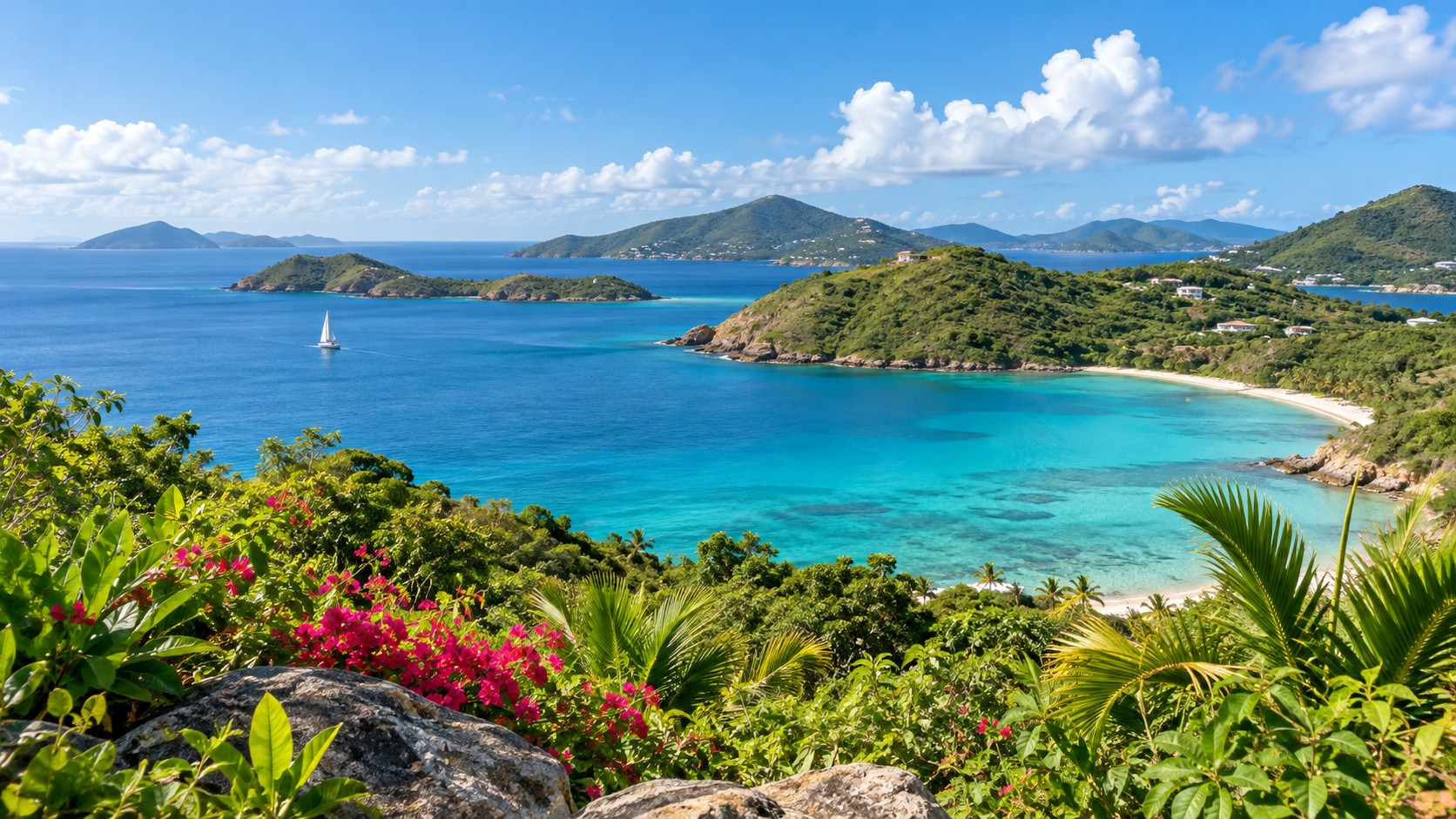
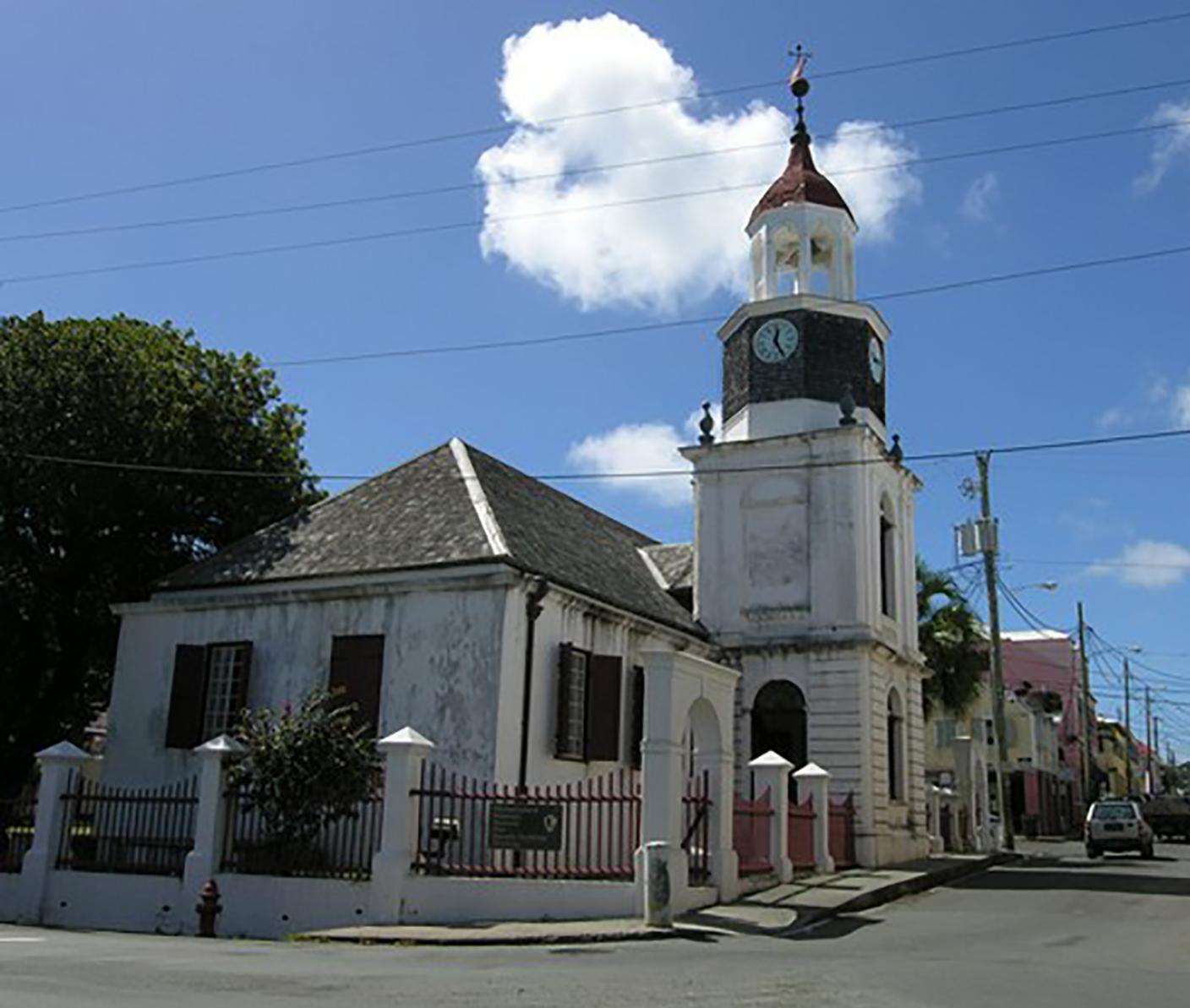
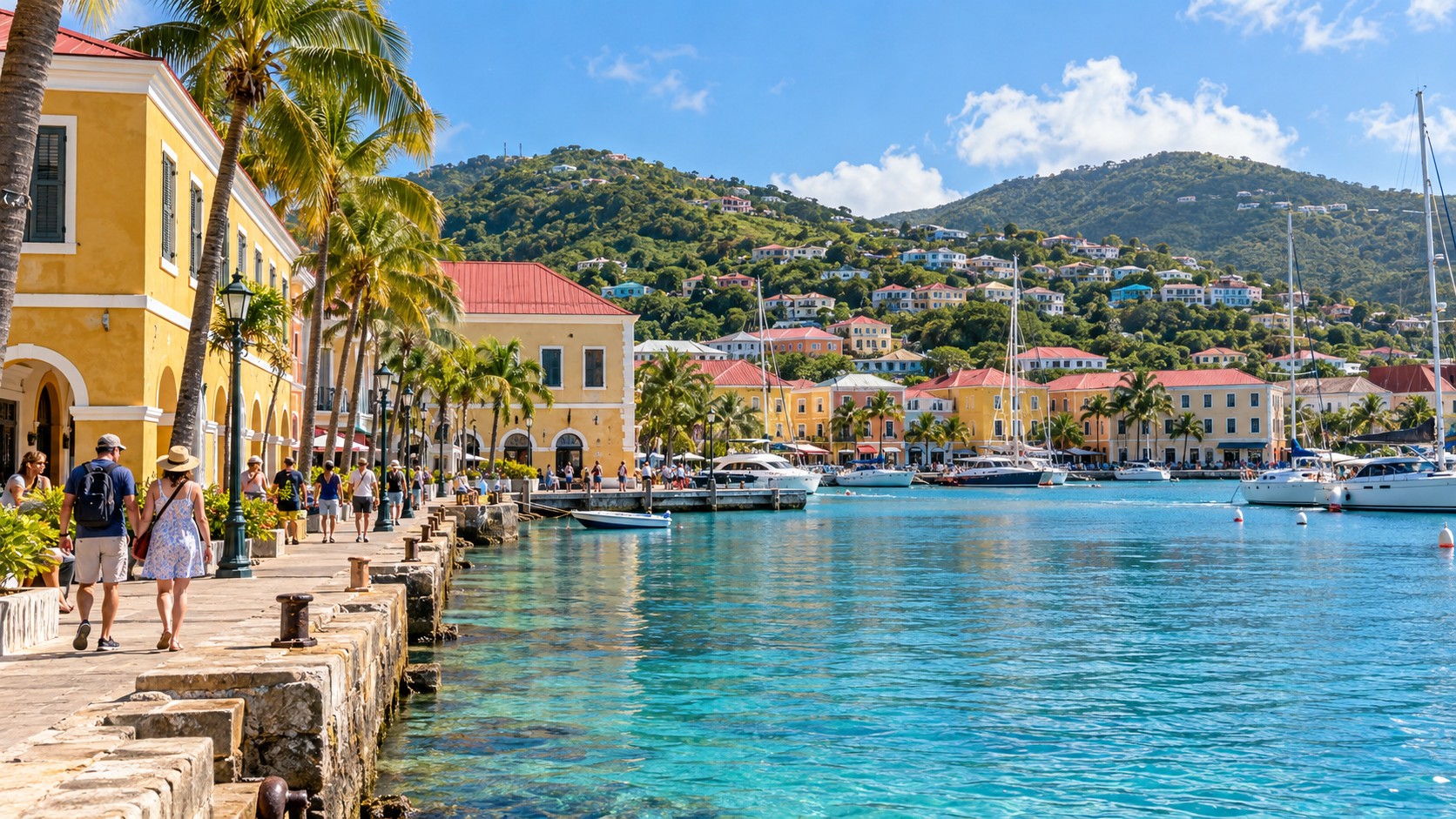
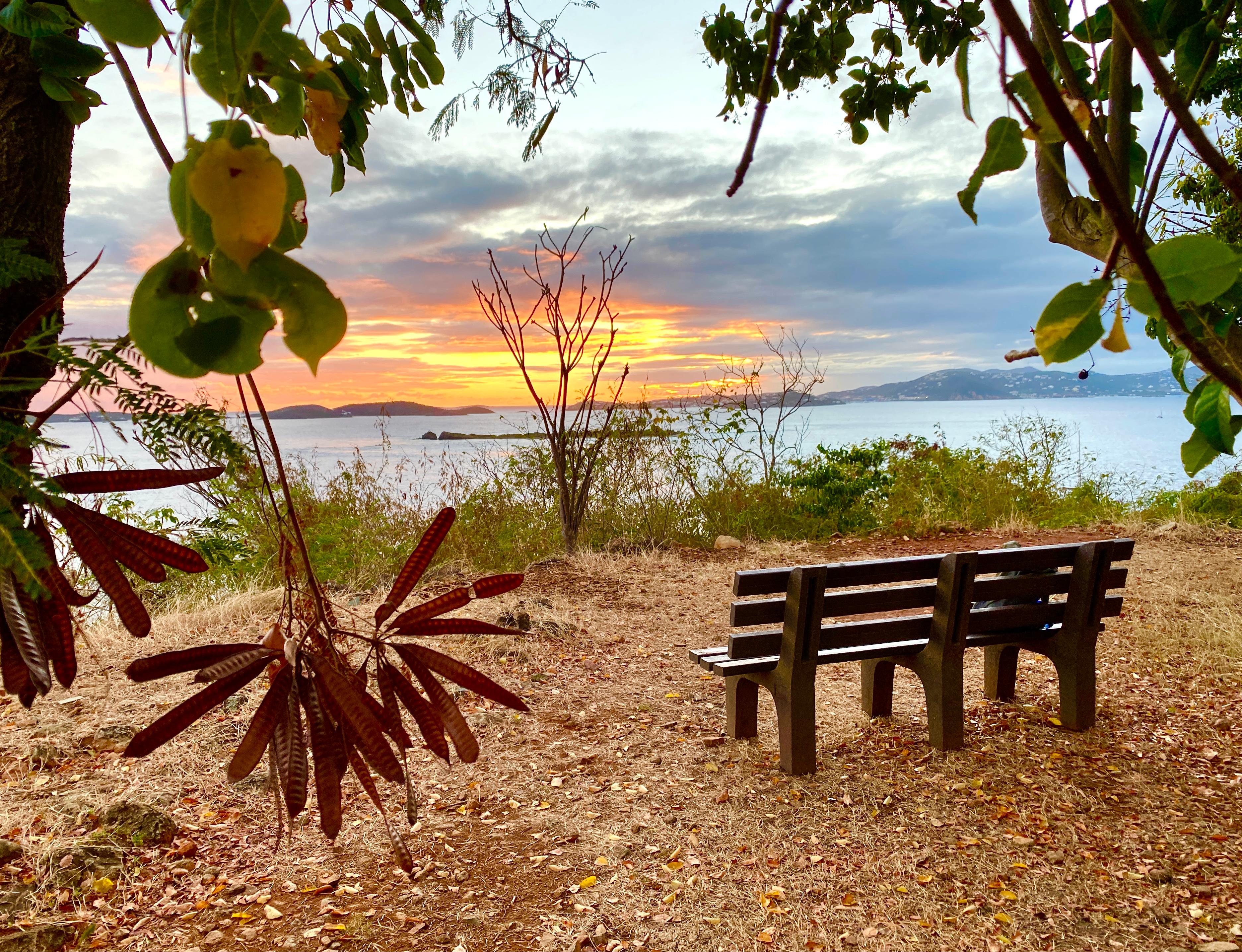
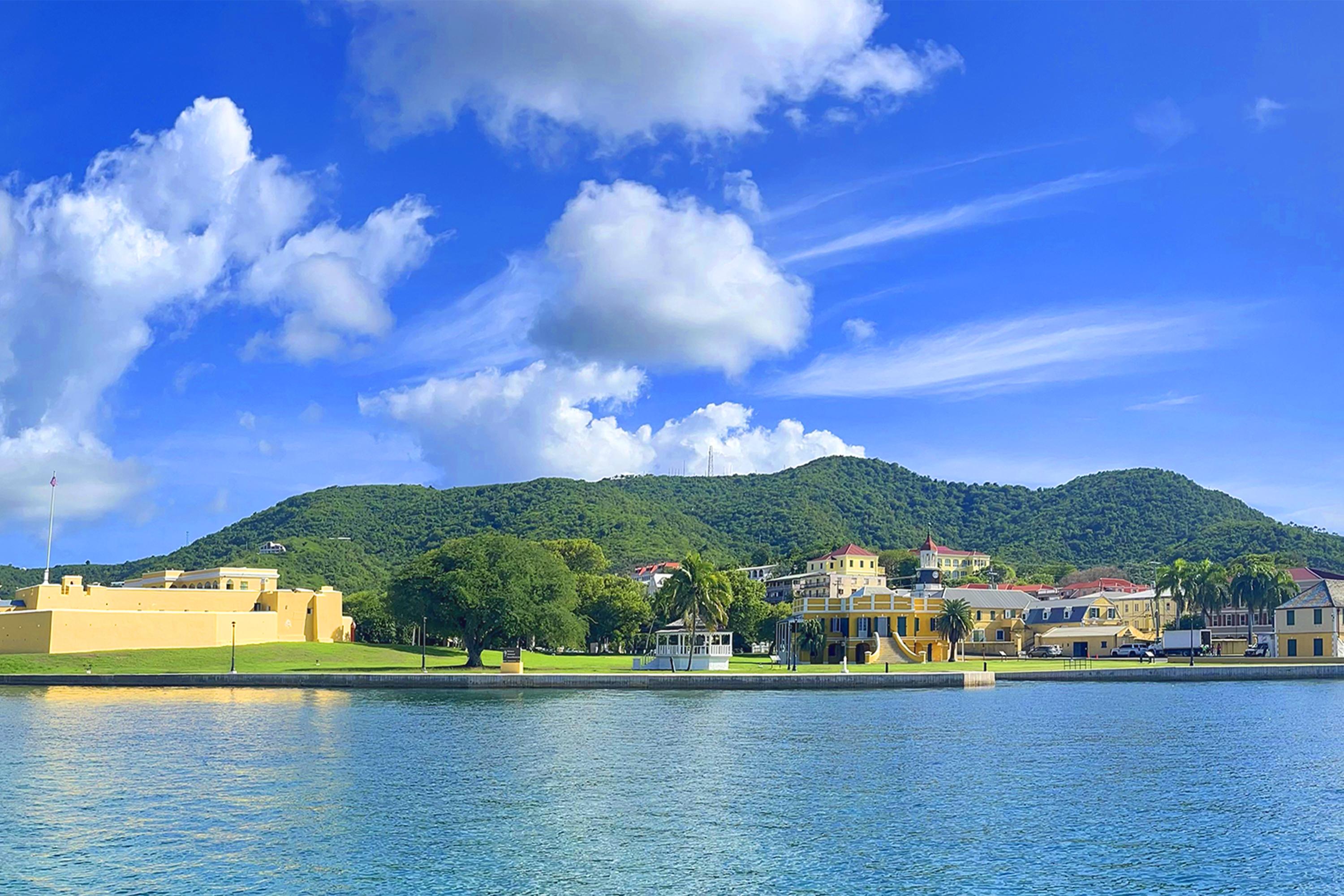
St. Thomas and St. John form a natural pair. St. Croix deserves time of its own. Check the route, documents, and current conditions before booking.
01
Overview
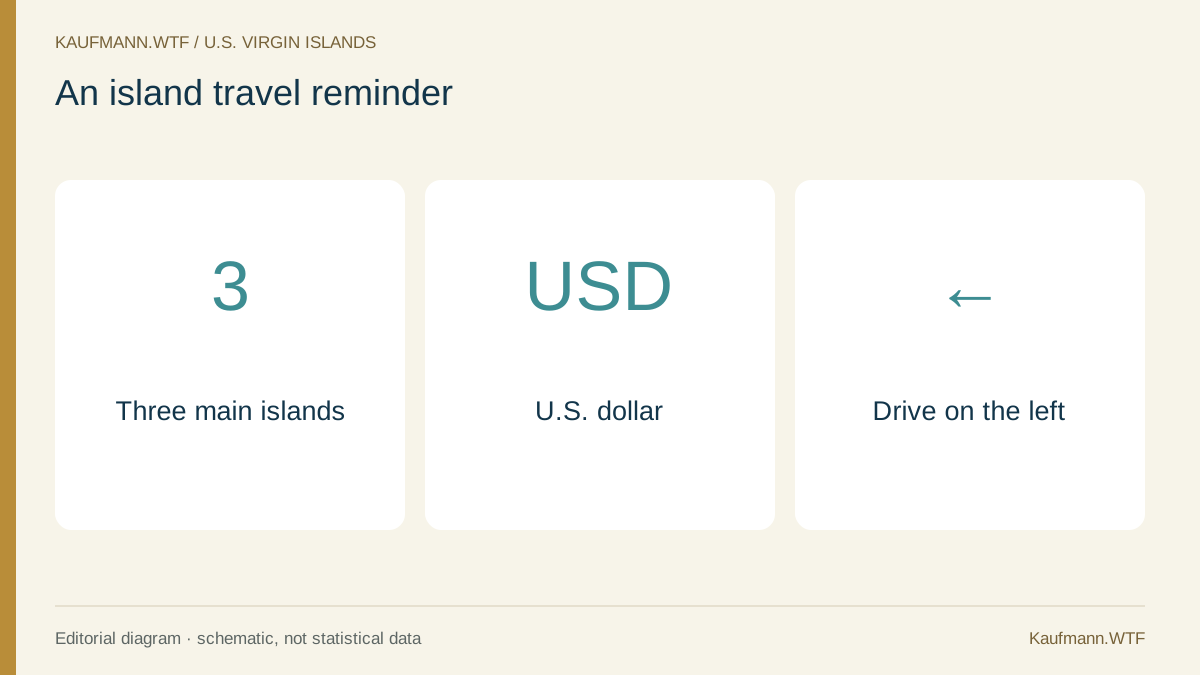
The United States Virgin Islands are an unincorporated, organized territory of the United States in the Lesser Antilles, roughly 65 km east of Puerto Rico. Three main islands — Saint Thomas, Saint John and Saint Croix — sit alongside some fifty smaller islands and cays across about 346 km² of land. The 2020 census counted 87,146 residents, down from 106,405 in 2010. These are census counts, not an estimate of the population in 2026; migration, storm recovery, and the cost of living remain important parts of the demographic story.
The islands were Danish for two and a half centuries before the United States bought them on 31 March 1917 for $25 million in gold coin — a wartime purchase driven less by sugar than by the fear that Imperial Germany might seize the harbor at Charlotte Amalie for U-boats. Virgin Islanders have been US citizens since 1927. They elect their own governor and legislature, send a non-voting delegate to Congress, and cannot vote for president while resident in the territory.
For U.S. citizens traveling directly from the U.S. mainland or Puerto Rico, a passport is not required for the USVI ; customs formalities still apply. The territory sits outside the US customs zone, and that is precisely what makes it interesting: eligible returning U.S. residents may claim a $1,600 duty-free exemption, double the $800 allowed from most of the world, with a special allowance for up to five liters of alcohol for eligible travelers aged 21 or older, subject to purchase, origin, and other CBP conditions. This is not an automatic allowance for every traveler or every itinerary. The duty-free shops lining Main Street in Charlotte Amalie exist because of that rule, not in spite of it.
Columbus, passing through in November 1493, named the archipelago Santa Úrsula y las Once Mil Vírgenes after the legend of Saint Ursula and her eleven thousand companions — there were simply so many islets that a crowd of saints seemed the right unit of measure. The name survived every change of flag. Under Denmark the group was the Danish West Indies; on transfer in 1917 it became the Virgin Islands of the United States, which is still the formal name.
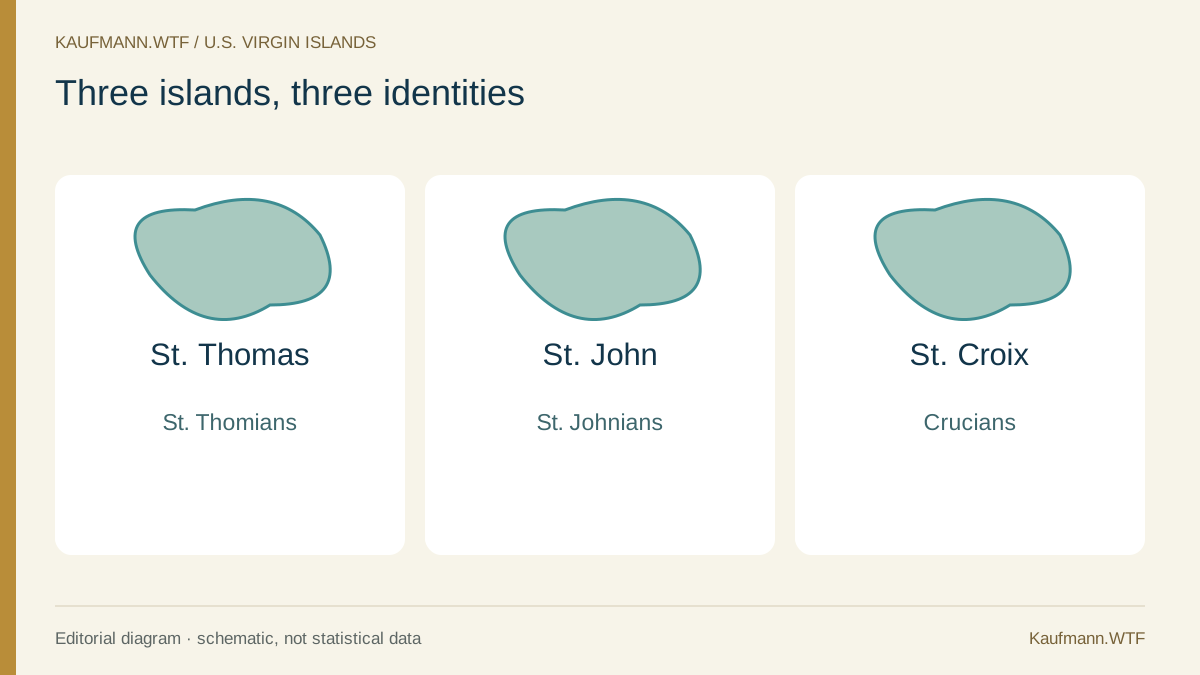
Locally the identity is finer-grained than the flag suggests. People from St. Croix are Crucians and say so first; St. Thomians and St. Johnians hold their own corners. The everyday language beside English is Virgin Islands Creole English, and the territorial flag — a simplified US eagle flanked by the letters V and I — dates from 1921. Residents are citizens by birth, carry US passports, serve in the US military at high rates, and are represented in Congress by a delegate who may vote in committee but not on the floor.
Three islands, three identitiesEditorial diagram · Kaufmann.WTF · Schematic explanation of this chapter · Image credits↑ Back to top
03
Geography
The territory is really two geographies. St. Thomas and St. John sit on the shallow Puerto Rico–Virgin Islands bank, close enough to each other that the ferry is a commute and close enough to the British Virgin Islands that you can read their hillsides. Both are steep, volcanic and green; Crown Mountain on St. Thomas reaches 474 m and the roads switchback accordingly.
St. Croix is the outlier — about 64 km south, on its own bank, separated from the others by the Virgin Islands Trough, water thousands of meters deep. It is also the biggest island by a wide margin and the flattest, with a genuine coastal plain that made it sugar country. Published island areas vary between sources; the commonly cited figures are roughly 215 km² for St. Croix, 83 km² for St. Thomas and 51 km² for St. John, against a territorial land area usually given as 346 km² — the individual figures and the total come from different surveys and do not reconcile neatly, so treat any one of them as approximate.
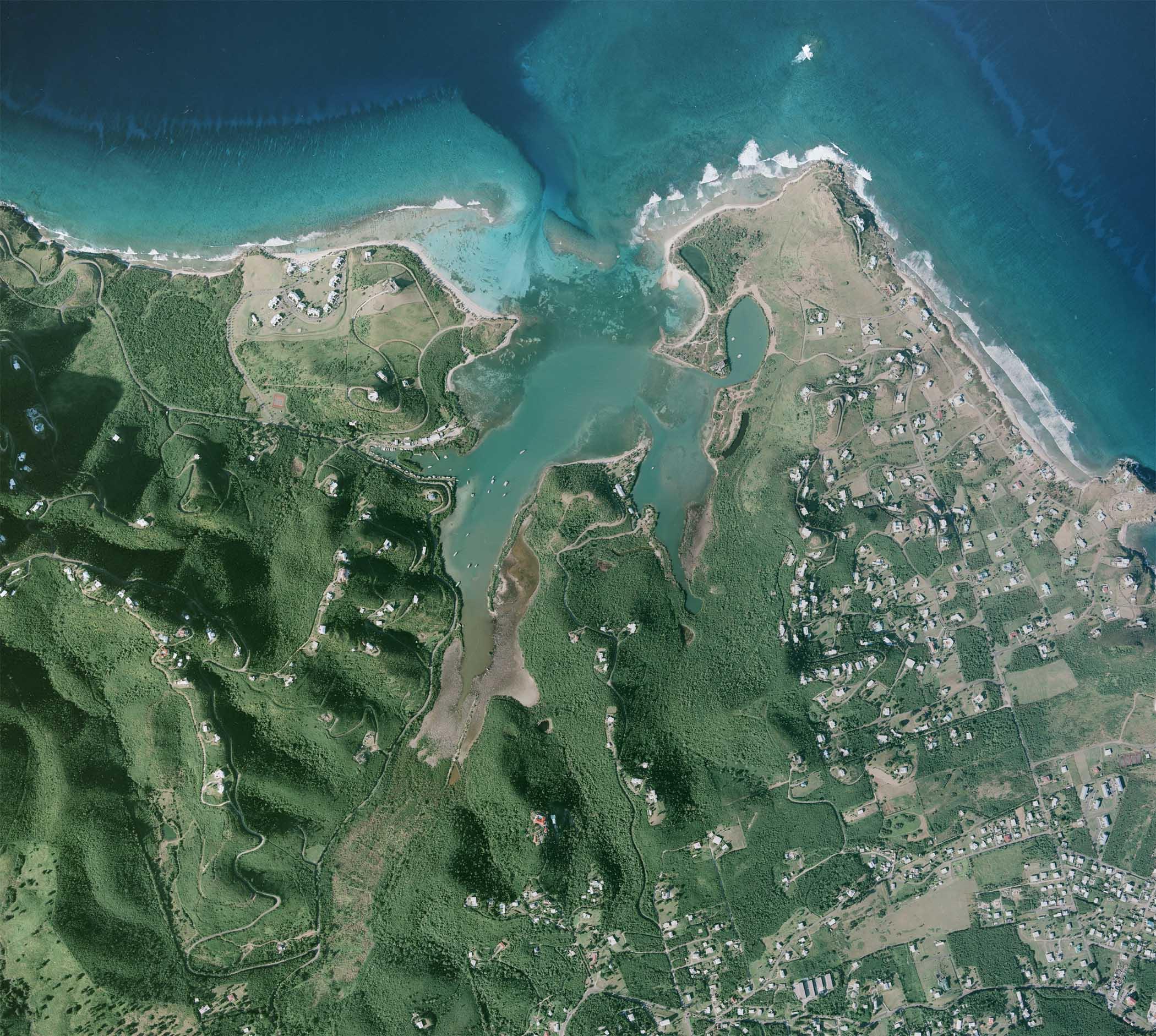
At the far eastern tip of St. Croix, Point Udall carries a Millennium Monument associated with the first sunrise of the year 2000 in this part of U.S. territory. It is billed as the easternmost point in the country, meaning the easternmost point of U.S. territory in the Western Hemisphere. By pure longitude the title belongs elsewhere: Pochnoi Point on Semisopochnoi Island in Alaska's Aleutians sits at about 179°46′ east, across the 180th meridian. Point Udall is named for Stewart Udall, Interior Secretary 1961–69; his brother Mo is commemorated at the Point Udall on Guam, commonly described as the westernmost point of U.S. territory by direction of travel.
St. Thomas and St. John are neighbors in the northern island group; St. Croix lies farther south across deep water. The map separates the three main islands and marks Water Island, Charlotte Amalie, Cruz Bay, Christiansted, Frederiksted, Trunk Bay, and Point Udall. Select a marker for a chapter link.
Straight-line distance is a poor measure of a day’s journey here. Allow for winding roads, ferry departures, vehicle check-in, and the weather. A line on a map is not a scheduled ferry service; use the Port Authority and the operating company to confirm a route before booking.
If the map is unavailable, open OpenStreetMap or use the coordinate table. OpenStreetMap ↗
Ceramic-age Igneri and later Taíno peoples settled the islands long before Europeans; Kalinago groups were present at contact. On his second voyage, in November 1493, Columbus put men ashore at Salt River Bay on St. Croix — a documented landing site of the 1493 expedition in what is now U.S. territory, and the site of a violent first encounter with the islanders. The bay is now a National Historical Park and Ecological Preserve, established 24 February 1992.
Spain, England, the Netherlands, France and the Knights of Malta all held pieces of the archipelago before Denmark consolidated it: the Danish West India Company settled St. Thomas in 1672, took St. John in 1718, and bought St. Croix from France in 1733. Sugar and enslaved labor built everything that followed. The St. John insurrection of 1733 was among the earliest and longest sustained slave revolts in the Americas, holding much of the island for months.
Slavery in the Danish West Indies ended on 3 July 1848, when Governor-General Peter von Scholten — facing a mass rising on St. Croix led by the man remembered as General Buddhoe — declared emancipation on his own authority, and lost his career for it. Emancipation did not end coercion: the Fireburn labor revolt of October 1878 burned much of Frederiksted and the surrounding estates, and the women remembered as the Queens of the Fireburn remain national figures.
The United States bought the islands in 1917, granted citizenship in 1927, and organized civil government under the Organic Act of 1936 and the Revised Organic Act of 1954. Virgin Islanders have elected their own governor since 1970. The modern era is punctuated by storms — Hugo in 1989, Marilyn in 1995, and the back-to-back catastrophe of September 2017 described below.
The overwhelming majority of Virgin Islanders are of African descent, with a large and long-established Puerto Rican community on St. Croix, a Dominican and wider Caribbean population, continental American arrivals, and a long-established Arab-Palestinian community with a presence in commerce. English is official; Virgin Islands Creole English is widely used in everyday life, and Spanish is also commonly spoken.
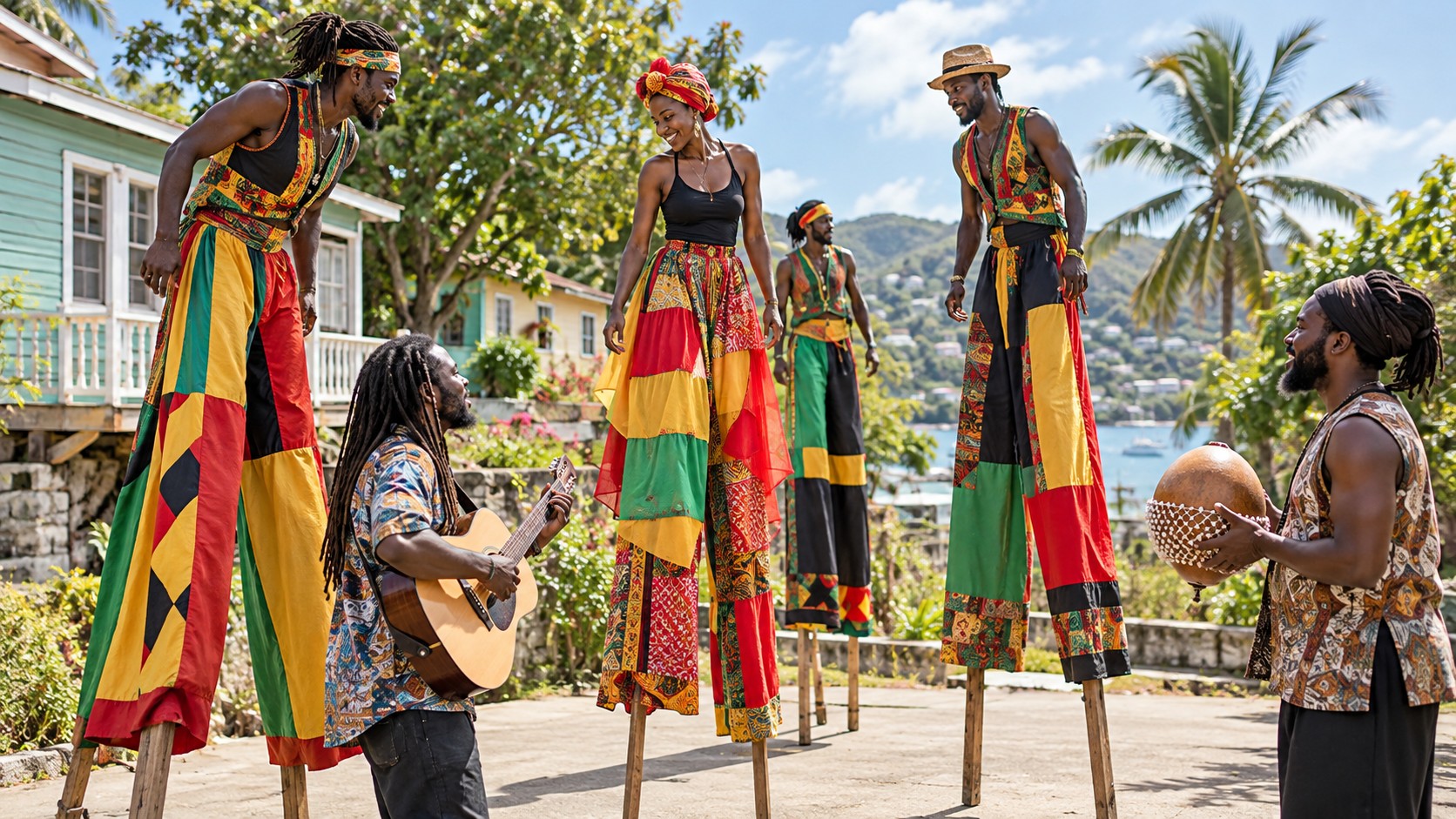
The territorial music is quelbe — scratch-band or "fungi band" music built on guitar, banjo, ukulele, a gourd scraper and a tailpipe used as a wind instrument, with lyrics that carry gossip and political commentary in equal measure. At carnival the moko jumbies come out: stilt dancers in bright costume whose West African ancestors were protective spirits tall enough to see trouble coming. The quadrille, inherited from European ballrooms and thoroughly re-made, is still danced competitively.
Saint Thomas is the busiest and most developed of the three. Charlotte Amalie, the territorial capital, curls around a deep natural harbor and is one of the Caribbean's dominant cruise ports; the Danish warehouses along Main Street and Back Street now hold the duty-free trade in jewelry, watches, electronics and liquor that the $1,600 exemption makes worthwhile.
Beyond shopping: Magens Bay, a long crescent on the north shore that turns up on every best-beaches list; Blackbeard's Castle, properly Skytsborg, a Danish watchtower of 1679 whose pirate association is affectionate rather than documented, a historic landmark whose visitor access should be confirmed before planning a stop; and the Skyride up to Paradise Point for the harbor view. The St. Thomas Synagogue above Main Street is the quieter landmark — a congregation founded in 1796, the present building of 1833, sand still on the floor in the Sephardic tradition, and one of the oldest synagogues in continuous use in the Western Hemisphere. Camille Pissarro's birth was registered there.
Saint John is the quiet one, and the reason is federal: about 60% of the island is Virgin Islands National Park, established in 1956 after Laurance Rockefeller assembled and donated the land. The park runs to roughly 14,700 acres including more than 5,500 acres of surrounding water, and it also takes in nearly all of Hassel Island in the Charlotte Amalie harbor, which is why the capital's own skyline stays green.
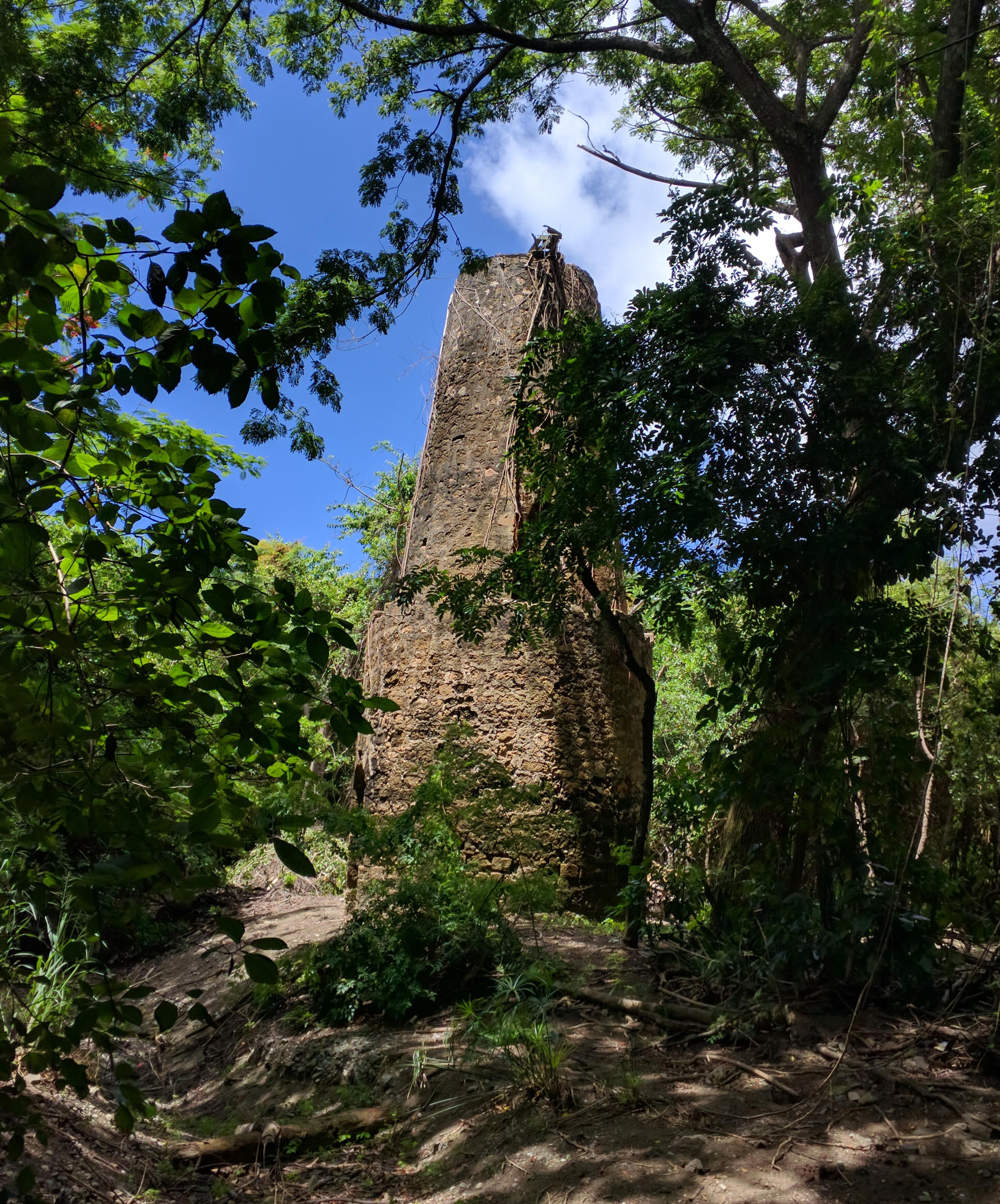
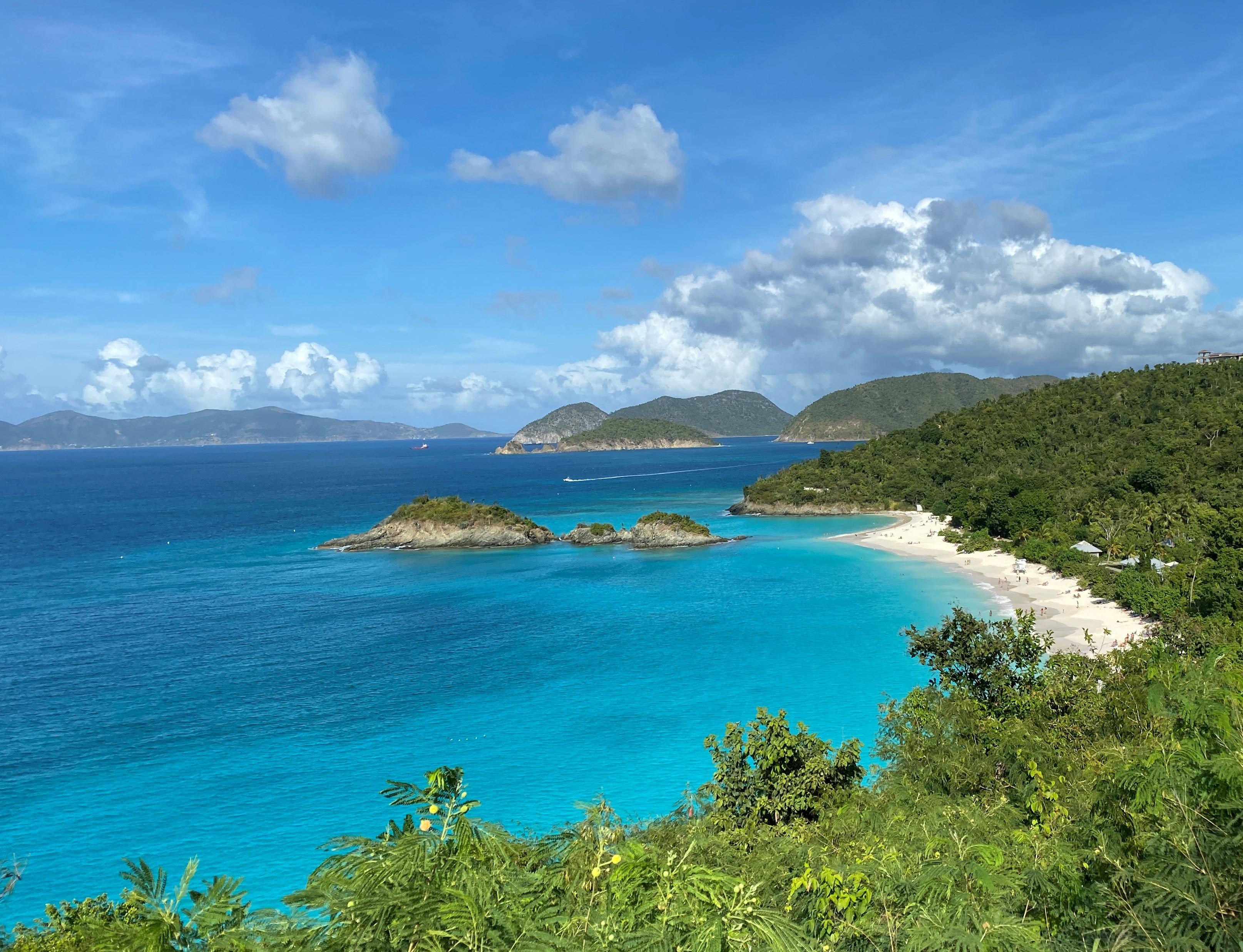
Trunk Bay and its marked underwater snorkeling trail is the famous stop; Cinnamon Bay, Maho Bay and Salt Pond are other well-known options with different access, parking, and sea conditions. The Reef Bay Trail drops through dry forest past the Petroglyph Pool — carvings usually attributed to the Taíno — to a sugar-mill ruin on the shore, and the Annaberg plantation ruins on the north coast are a substantial surviving sugar-estate complex. Cruz Bay, the main ferry town, is twenty minutes by ferry from Red Hook on St. Thomas.
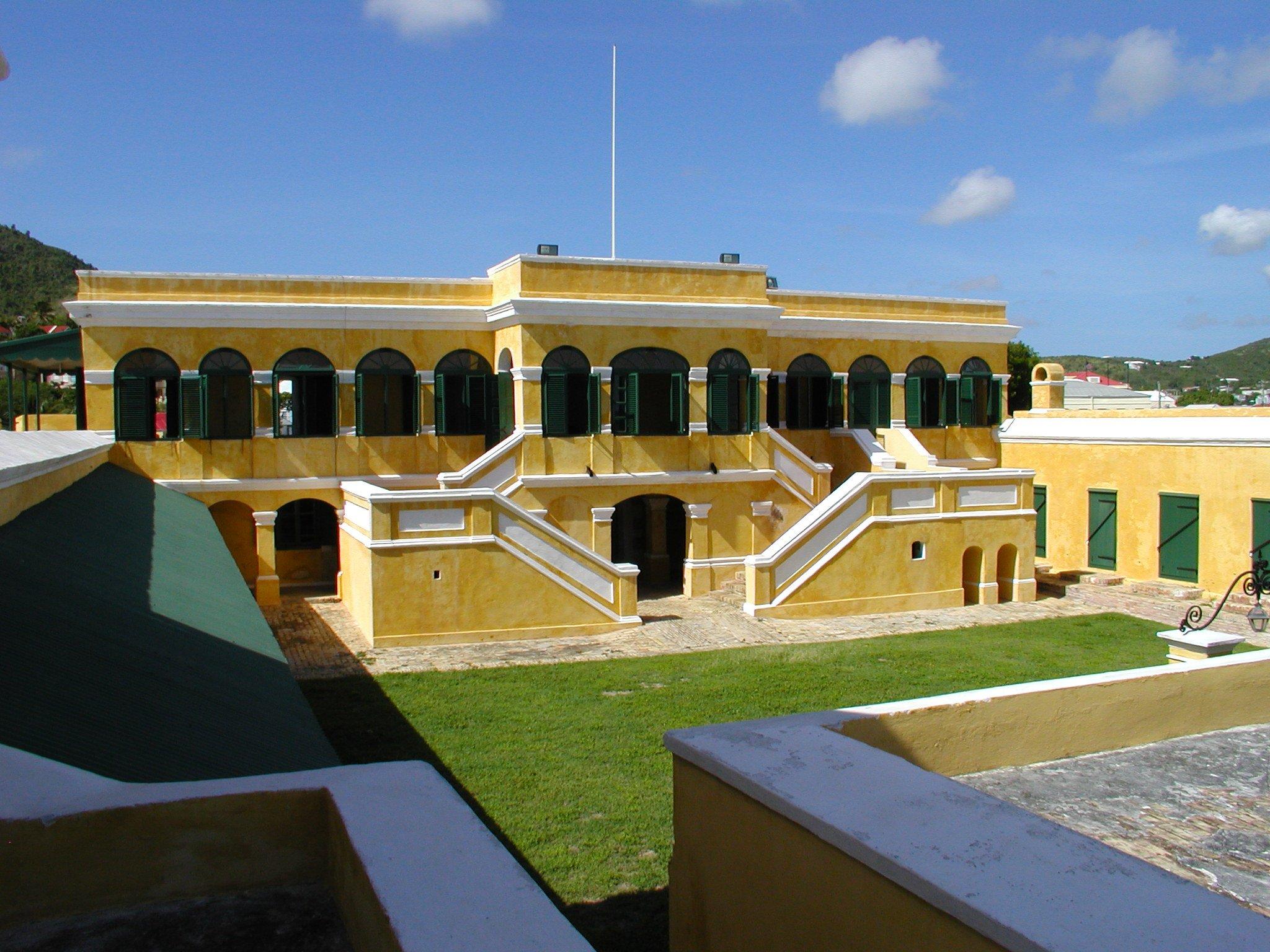
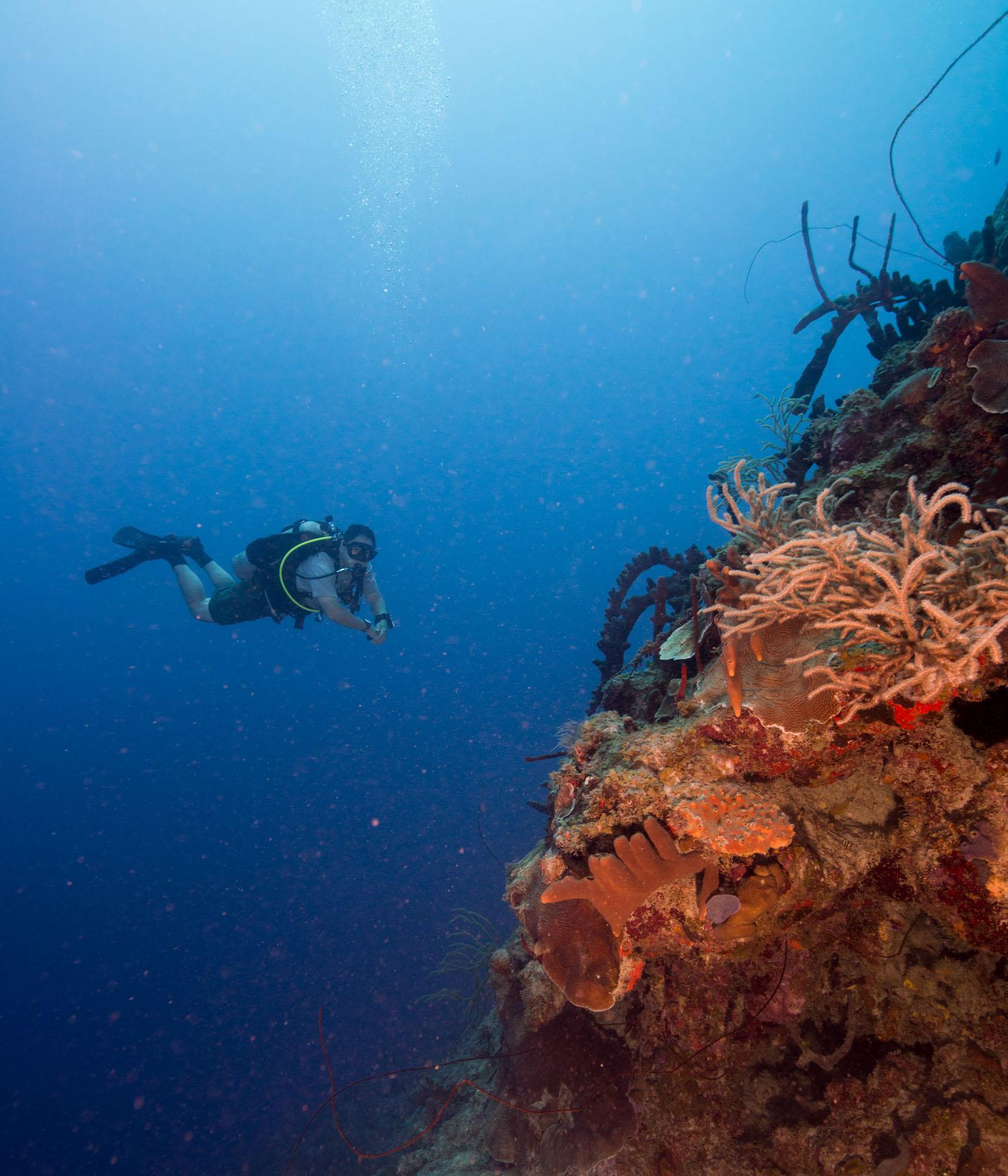
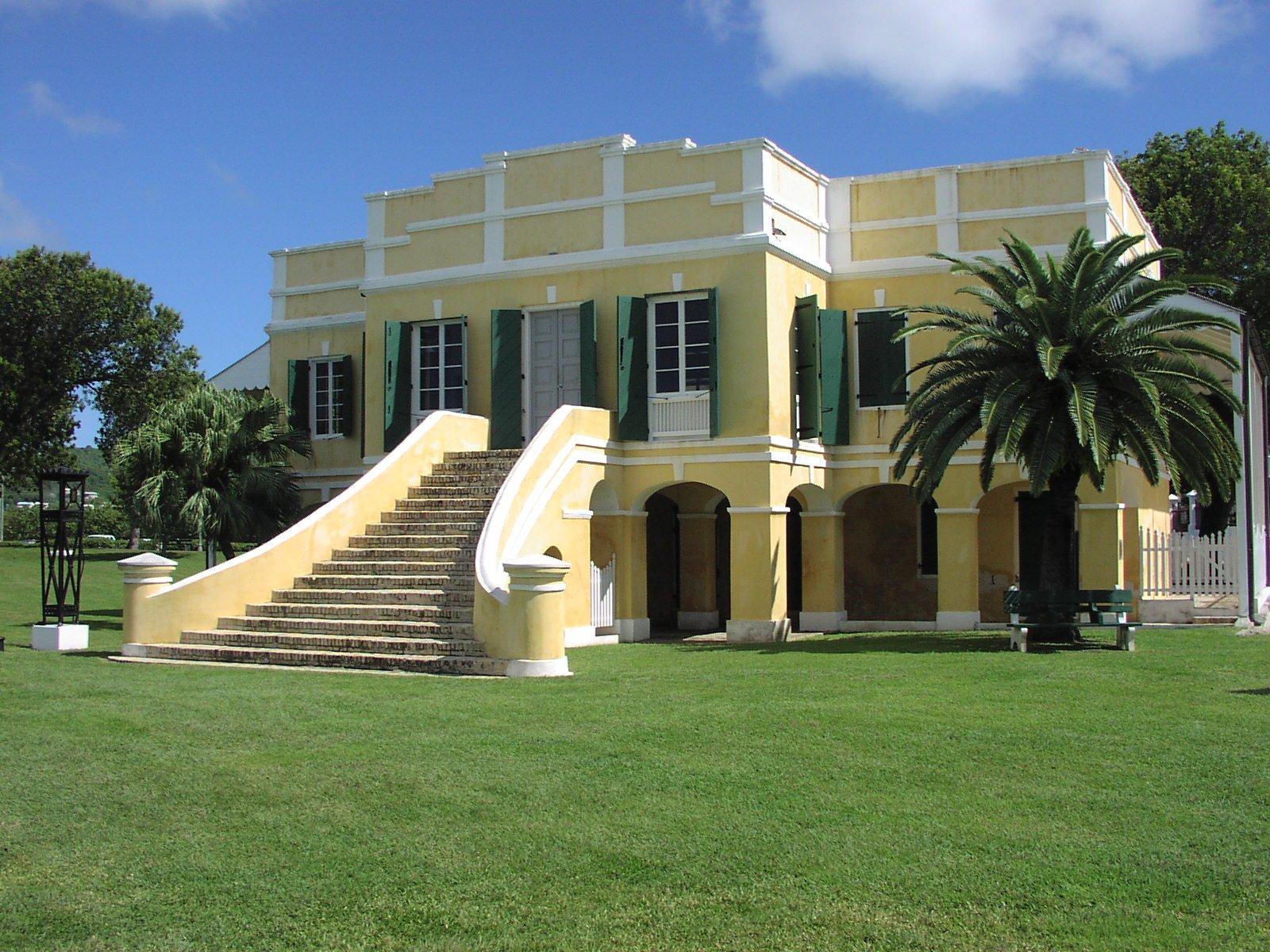
Saint Croix is the largest island, the flattest, more spread out, with a distinctive Crucian identity and a different rhythm from the cruise-port economy of St. Thomas. Christiansted on the north shore is among the best-preserved Danish colonial towns anywhere, its yellow fort Christiansværn (completed 1749) now a National Historic Site. Frederiksted on the west coast is quieter, with its own fort and a pier that is one of the Caribbean's great shore dives: seahorses, frogfish and octopus under the pilings, best at night.
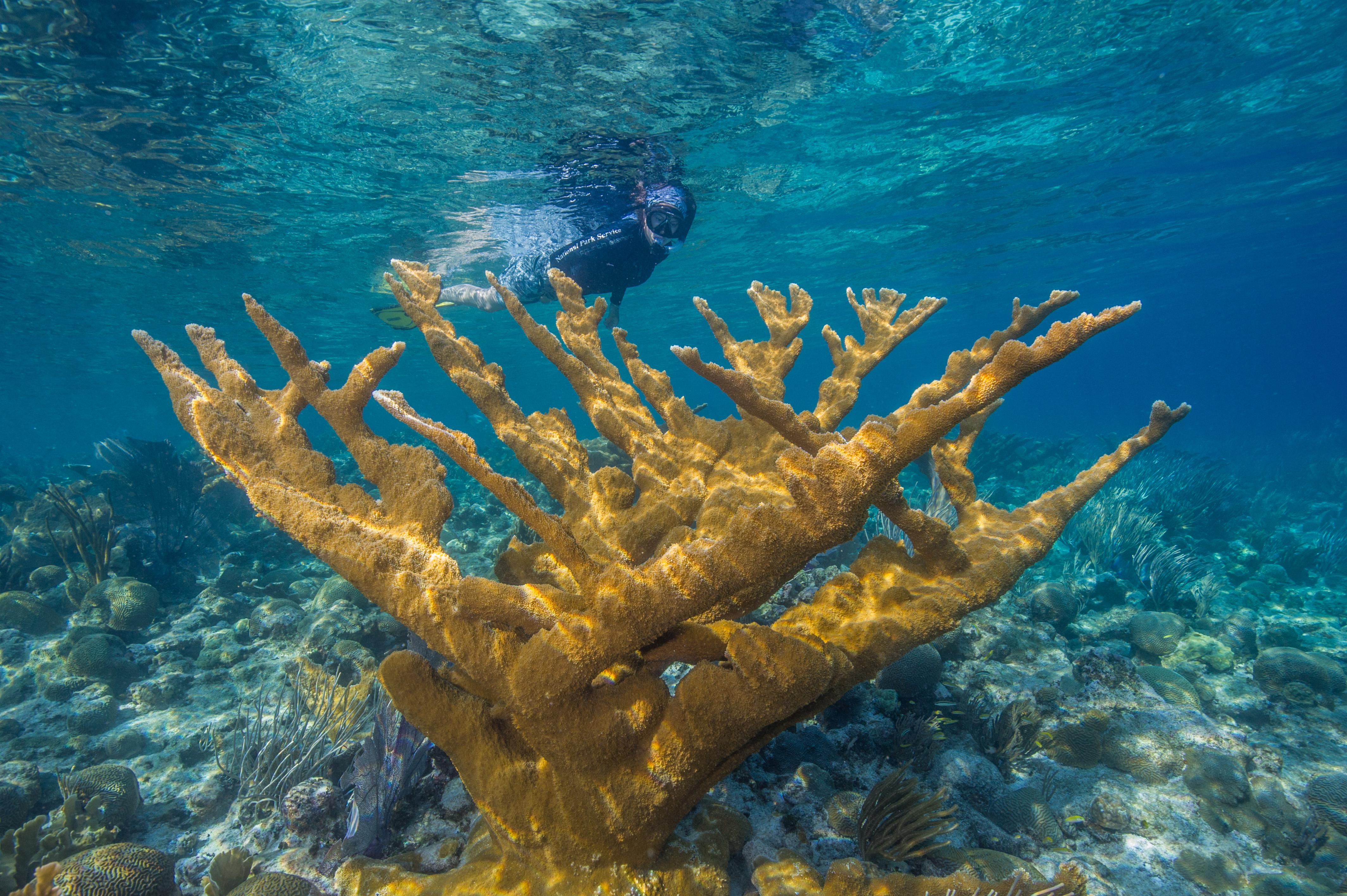
Offshore, Buck Island Reef National Monument protects an elkhorn barrier reef with a marked underwater trail. Inland are the Cruzan rum distillery, the Estate Whim plantation museum, and the Point Udall monument at the eastern tip. Alexander Hamilton spent his formative years here — during his youth before leaving the Caribbean in 1772, working in the island’s mercantile economy — and the town still trades on it, with good reason.
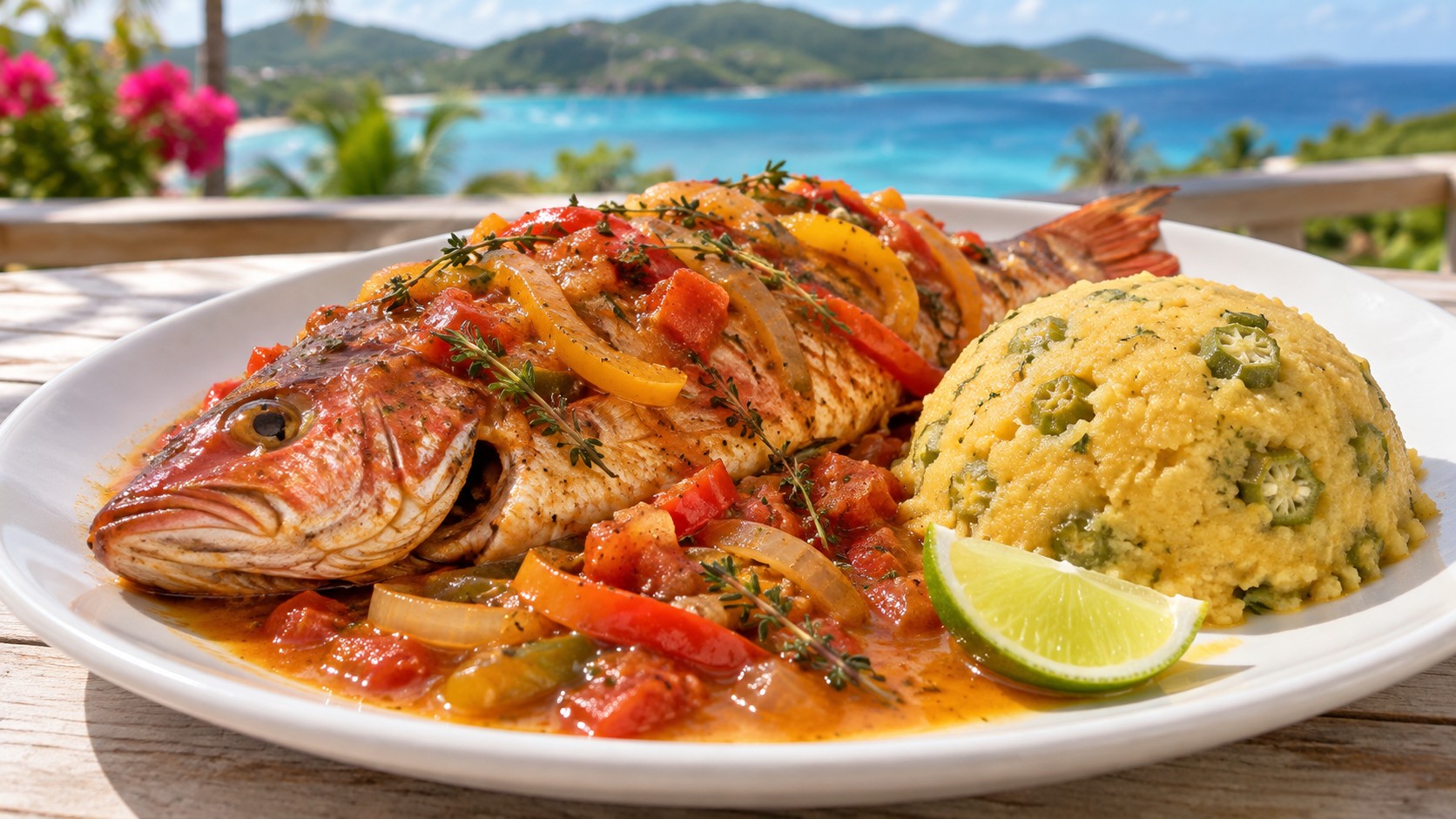
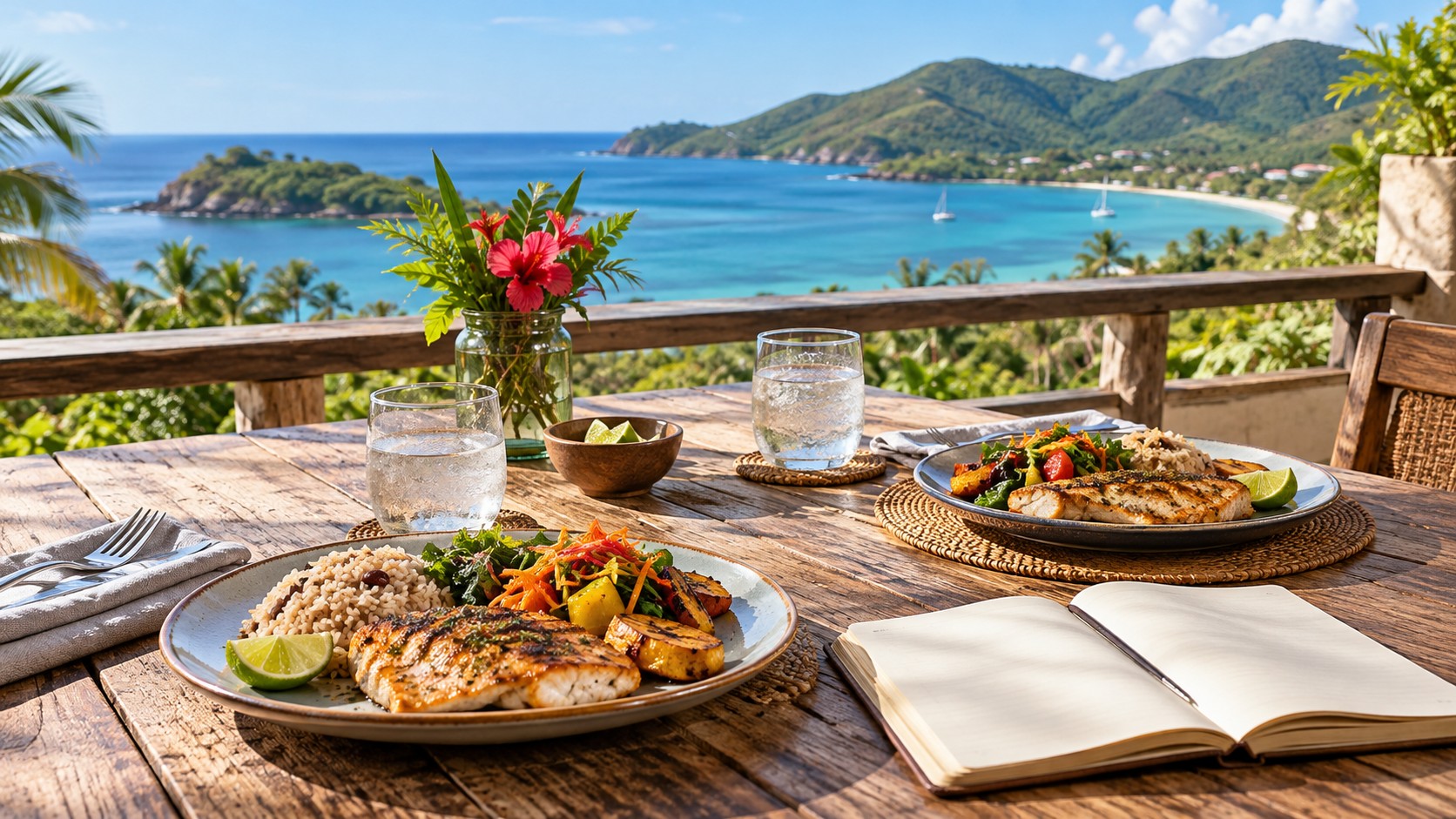
Virgin Islands cooking is West African technique carried through Danish colonial pantries and finished with Caribbean produce. The territorial dish is fish and fungi — pronounced "foon-ghee", nothing to do with mushrooms — a cornmeal-and-okra polenta served with a whole boiled fish in a sharp creole gravy. Alongside it sit kallaloo, johnnycakes, pâté (a fried turnover, the standard street snack), and maubi, a fermented bark drink that is an acquired taste and a point of pride.
Method. 1. Simmer the okra in the water with the salt for 8–10 minutes until soft and slightly slippery. 2. Take the pot off the boil to a bare simmer and rain in the cornmeal with one hand while stirring hard with the other — this is the step that decides whether you get fungi or lumps. 3. Stir for 10–12 minutes until it pulls away from the sides; beat in the butter. 4. Pack into a wetted cup or bowl and turn out as a smooth dome. 5. For the fish, season with lime, salt and thyme and rest 15 minutes. 6. Fry the onion, garlic and sweet pepper in the oil until soft, add tomato, paste and a cup of water, drop in the whole seasoning pepper, and simmer 10 minutes. 7. Slide the fish in, cover, and poach until fully cooked, spooning gravy over; thin fillets may take around 8–10 minutes, while whole fish and thicker pieces need longer. Remove the pepper whole before serving unless you mean it.
Serves 6 · about 1 hour 15 · traditionally eaten on Old Year's Night
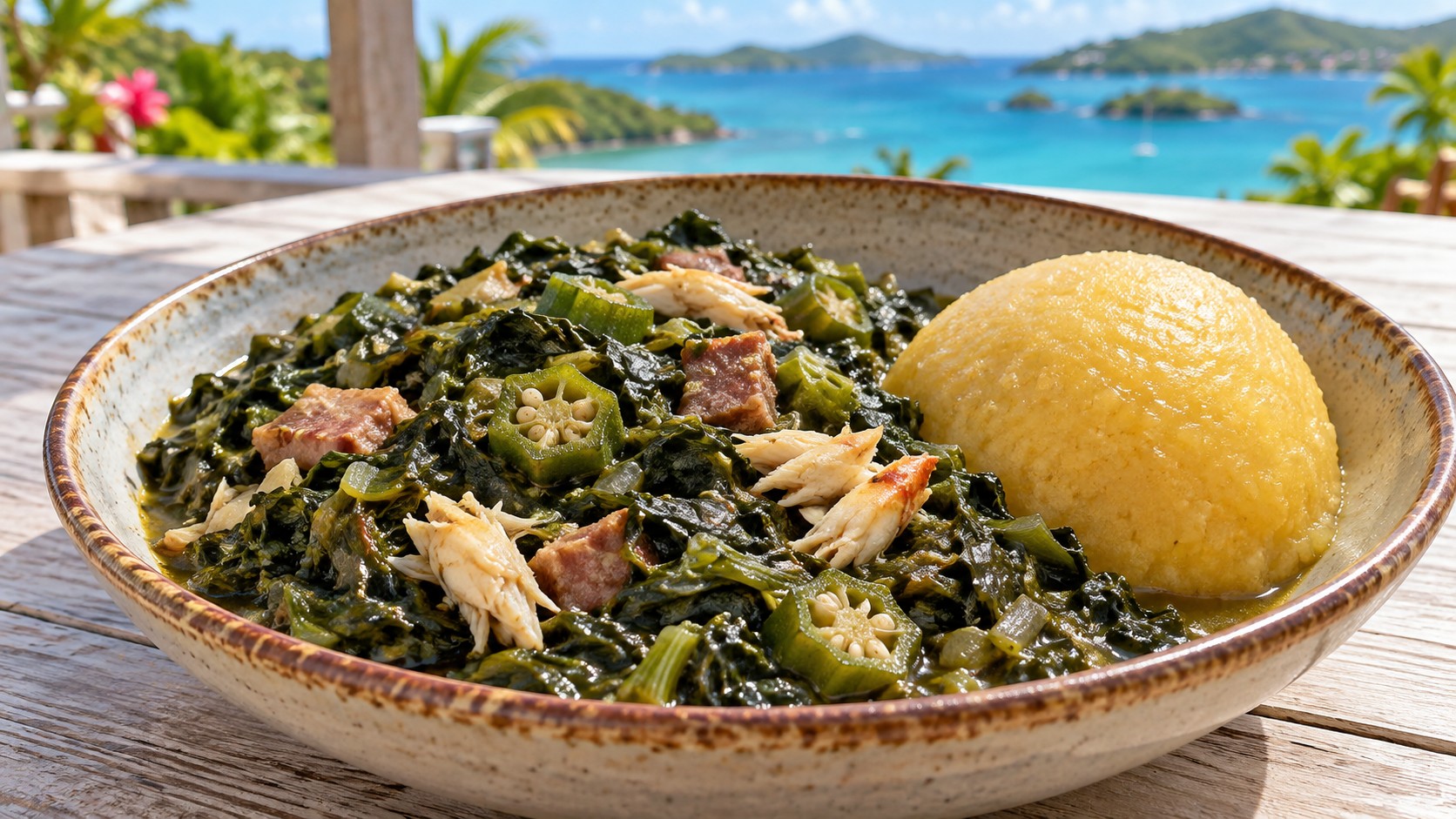
1 large bunch dasheen or callaloo leaves (spinach at a pinch) · 250 g salt beef or salt pork, soaked overnight · 250 g smoked ham hock · 200 g fresh fish or crab · 10 okra, sliced · 1 onion · 3 cloves garlic · 1 seasoning pepper · fresh thyme · 1 tbsp butter
Method. 1. Boil the soaked salt meat and the hock in fresh water 40 minutes; keep the liquor. 2. Add the washed, roughly chopped greens, okra, onion, garlic, thyme and the whole pepper. 3. Simmer 25 minutes until everything collapses into a dark green stew. 4. Add the fish or crab near the end and cook thoroughly; dasheen leaves also require thorough cooking. 5. Fish out the pepper, stir in the butter, and serve with fungi. Every household argues about whether conch belongs in it.
Makes about 12 · allow for mixing, 15 minutes of resting, and frying
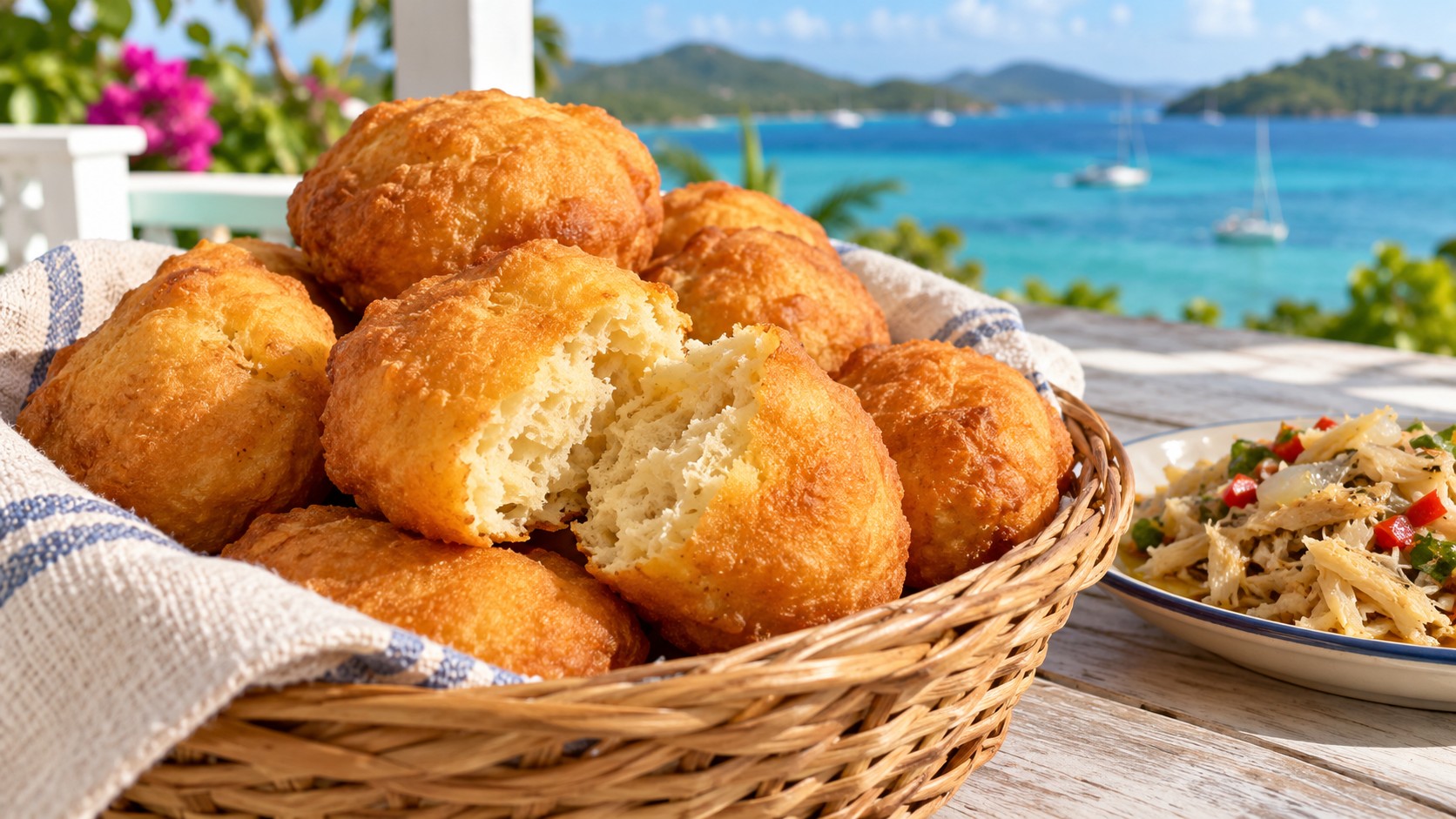
3 cups flour · 1 tbsp baking powder · 1 tsp salt · 1 tbsp sugar · 3 tbsp butter or shortening · about 1 cup water · oil for frying
Method. 1. Rub the fat into the dry ingredients to a coarse crumb. 2. Add water gradually to a soft, non-sticky dough; rest 15 minutes under a cloth. 3. Pinch into golf balls and flatten to about 1 cm. 4. Fry in 2 cm of oil at moderate heat, 2–3 minutes a side, until puffed and deep gold. 5. Drain and eat hot, split, with saltfish or cheese. Too hot an oil browns them before the middle cooks — this is the only thing that goes wrong.
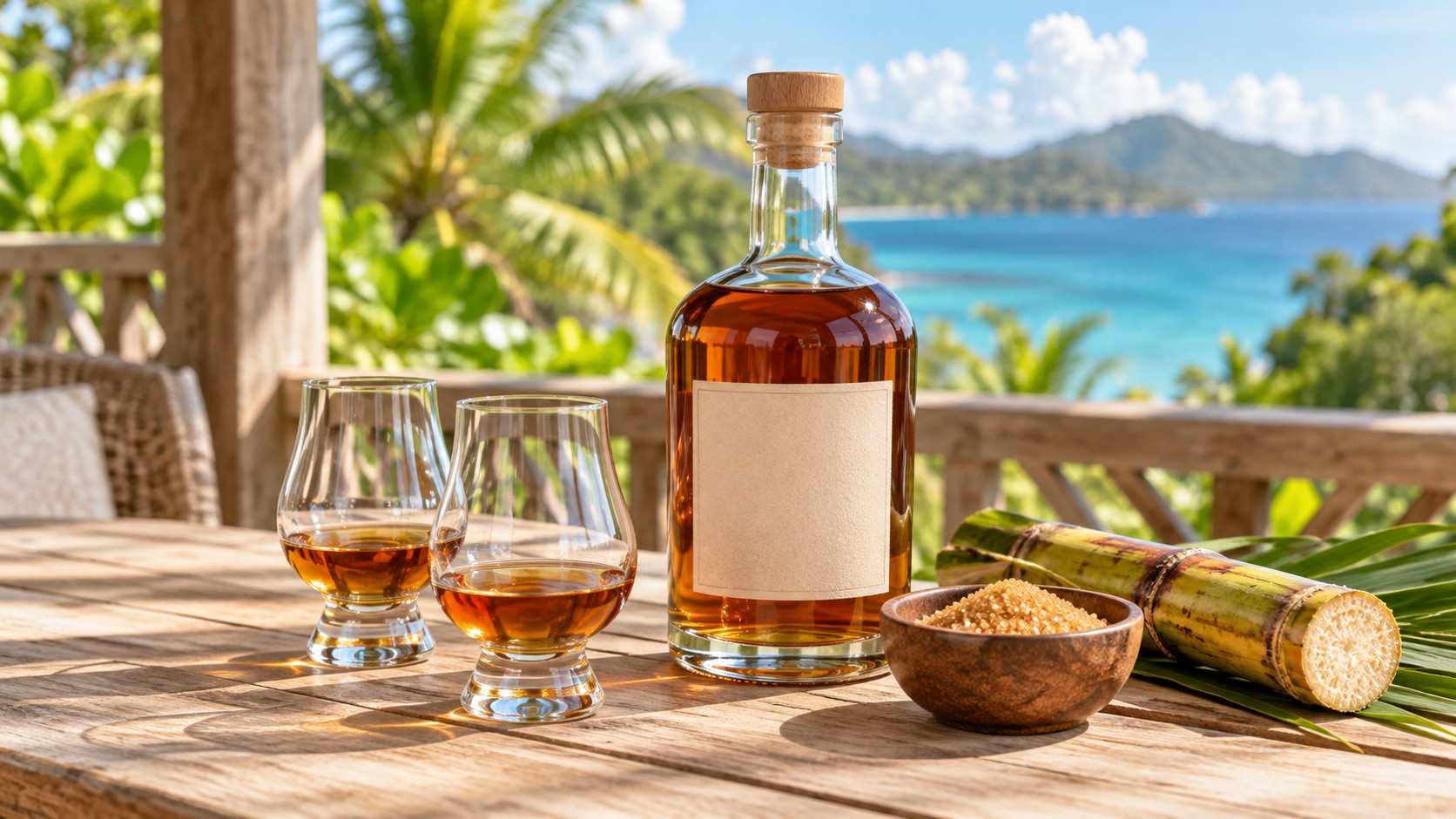
Rum belongs to the islands’ agricultural and industrial history as well as their bars. Sugar production depended on enslaved labor, and a distillery visit is more rewarding when the estate landscape and its social history remain in view. Wine is available in restaurants, but rum, local beer, and household fruit infusions provide a more distinctive introduction to the territory.
Cruzan Rum at Estate Diamond on St. Croix traces its roots to 1760. The distillery’s current booking page lists visitor experiences; reserve directly and check the operating day instead of relying on old weekday schedules. The historical date should not be read as proof that the same company or family has operated continuously for the entire period.
The large Captain Morgan operation on St. Croix belongs to a more recent industrial chapter. Federal rum excise-tax transfers, often called the cover-over, have an important place in the territorial economy. A tasting room and a factory are different experiences: confirm which parts of a site are accessible, whether a tour is operating, and how you will get home.
Local beverage culture also includes Mutiny spirits, Leatherback Brewing, and guavaberry preparations associated with Christmas. Availability differs by island and outlet. Do not treat a brand’s presence on the islands as proof that every ingredient was grown locally. Ask producers about raw materials, production, and the style in the glass.
Choose a driver or taxi before a tasting, and keep the day’s swimming or boating plans separate from drinking. Travelers taking bottles to the U.S. mainland should read the current CBP exemption rules; age, quantities, purchase location, product origin, and airline packing rules all matter.
A note on provenance, because the two are constantly confused: the Painkiller is a British Virgin Islands drink, from the Soggy Dollar Bar on Jost Van Dyke, and it is not from these islands however often it is poured here. The USVI's own contribution is the Bushwacker.
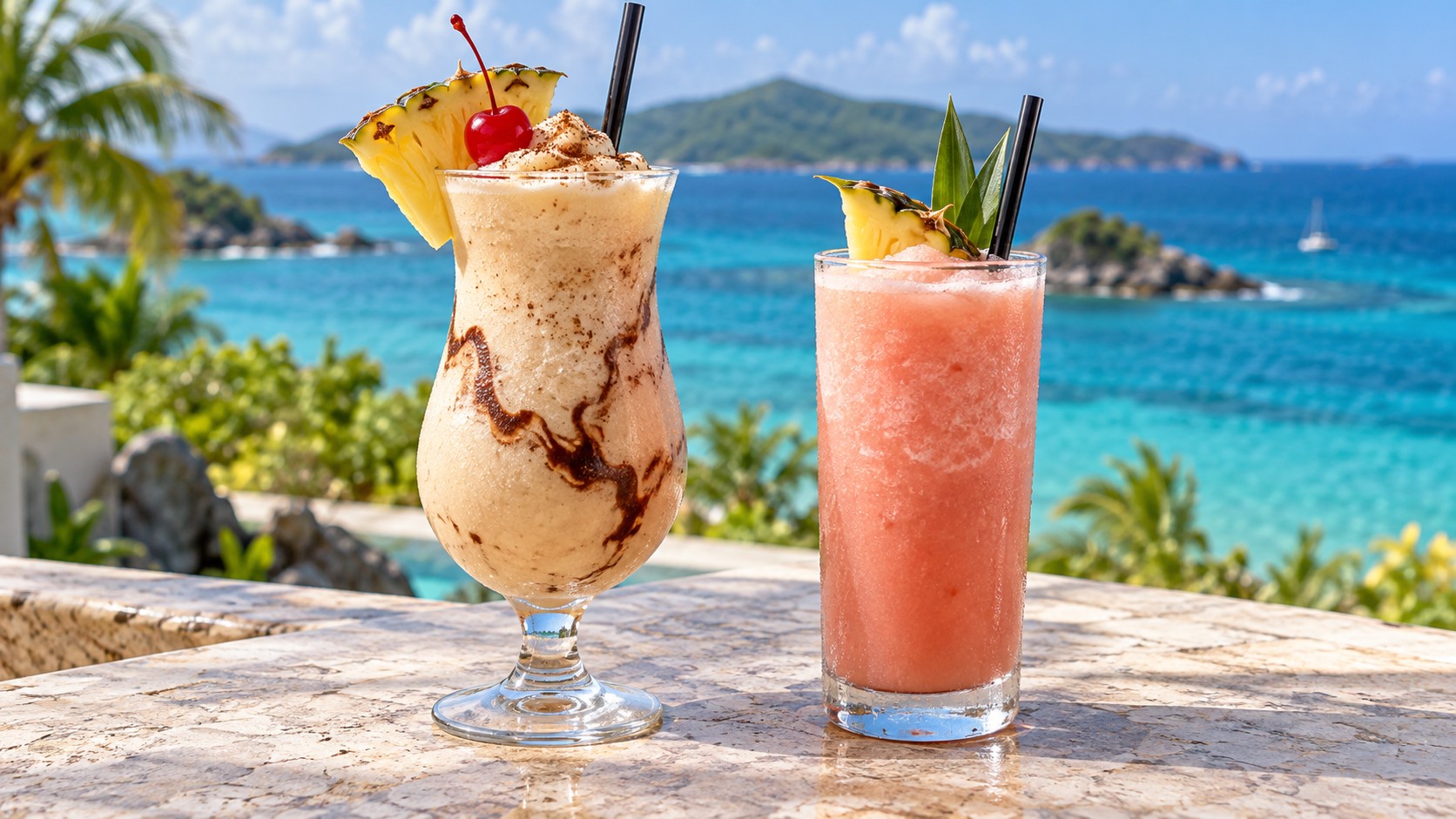
🥥 Bushwacker
Generally credited to the Ship's Store bar at Sapphire Beach, St. Thomas, in the mid-1970s. 45 ml dark rum · 30 ml coffee liqueur · 30 ml crème de cacao · 30 ml Baileys · 60 ml cream of coconut · 60 ml milk · a cup of ice. Blend until it is a milkshake, float 15 ml overproof rum, grate nutmeg. It tastes like dessert; the alcohol content is substantial. The overproof float is optional.
🍒 Guavaberry Colada
45 ml Cruzan light rum · 30 ml guavaberry liqueur · 60 ml pineapple juice · 45 ml cream of coconut · ice. Blend, pour tall, garnish with pineapple. The guavaberry is not a guava — it is Myrciaria floribunda, a small tart berry from the dry hillsides, and the liqueur is the taste of Christmas here.
🌿 Maubi
A traditional bark drink whose alcohol content can vary when fermented. This quick, chilled version is not fermented. Simmer 20 g mauby bark with a cinnamon stick, a strip of orange peel, 3 cloves and a slice of ginger in 1 liter of water for 20 minutes. Strain, sweeten to taste, cool promptly and refrigerate; serve chilled without a fermentation step. Bitter, aromatic, and utterly unlike anything a resort will hand you.
The islands have a tropical climate, moderated by trade winds, with warm days and sea temperatures throughout the year. The drier winter and early spring period usually coincides with stronger visitor demand. Late summer and autumn are generally more humid, with heavier rain possible; short tropical showers do not mean every day is lost to weather.
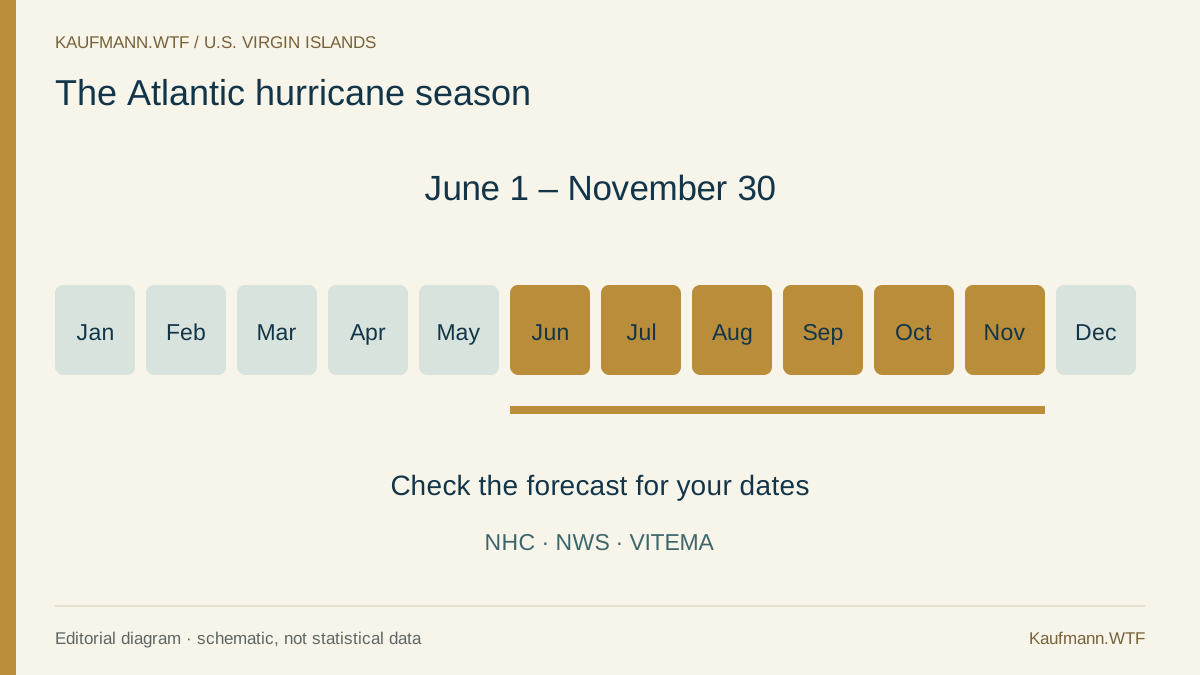
The Atlantic hurricane season runs from June 1 through November 30. Activity often concentrates in late summer and early autumn, but a travel date alone cannot predict the conditions of a particular week. Use the National Hurricane Center, National Weather Service San Juan, and the territorial emergency agency VITEMA for current information.
In September 2017, Hurricane Irma devastated St. Thomas and St. John; Hurricane Maria then severely affected St. Croix and the wider territory. Damage to homes, utilities, roads, and visitor facilities was uneven, and rebuilding has continued for years. Statements that an entire island is either “fully recovered” or “still closed” hide those differences.
For a trip in storm season, read cancellation and interruption terms before paying, keep some flexibility in inter-island connections, and know the accommodation’s plan for power and water disruptions. A sunny forecast on land does not guarantee safe snorkeling, a calm channel crossing, or an open trail. Sea-state and local closure notices deserve their own check.
The Atlantic hurricane seasonEditorial diagram · Kaufmann.WTF · Schematic explanation of this chapter · Image credits↑ Back to top
14
Getting there & around
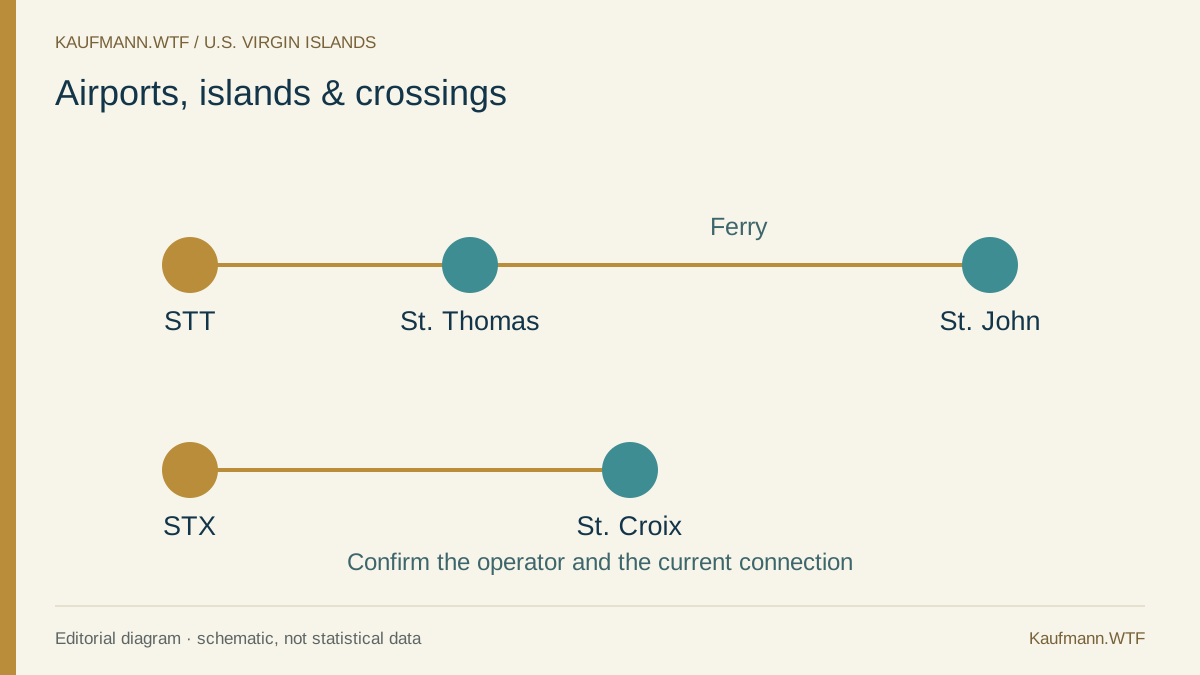
Cyril E. King Airport (STT) serves St. Thomas, while Henry E. Rohlsen Airport (STX) serves St. Croix. Flights connect the islands with mainland U.S. gateways and Puerto Rico; the exact cities, frequencies, and seasonal services change. Confirm the operating airline and arrival airport before arranging a hotel or island transfer. Cruise passengers should also distinguish a St. Thomas call from a St. Croix call.
St. John has no commercial airport. Most visitors arrive by ferry from St. Thomas. Red Hook–Cruz Bay is the familiar short crossing, commonly around 20 minutes underway; downtown Charlotte Amalie services take longer and may run less often. Travel time is only part of the calculation: airport traffic, baggage, the walk to the terminal, ticketing, and check-in all add time.
A passenger ferry ticket does not carry a rental vehicle. Car barges have their own schedules, queues, charges, and rules; check that the rental contract allows the crossing and confirm the return arrangement. Water Island has a separate short ferry link from St. Thomas. Between St. Thomas and St. Croix, compare current air, seaplane, and ferry options with the weather and your tolerance for an open-water passage.
Ferries and excursions to the British Virgin Islands cross an international border. Carry the documents required for both departure and re-entry, and confirm the operator’s check-in requirements. A domestic U.S.–USVI itinerary and a trip that includes the BVI are not interchangeable.
On land, drive on the left. Many vehicles have left-hand steering, and roads can be narrow, steep, and sharply curved. Take the first drive slowly, especially after a long flight. Published taxi fares are often charged per person and by zone; confirm the total, luggage charges, and return pickup before departure. Public buses and shared safari vehicles can be useful, but routes and operating patterns should be checked locally rather than assumed from a map.
Airports, islands & crossingsEditorial diagram · Kaufmann.WTF · Schematic explanation of this chapter · Image credits↑ Back to top
15
Practical information
Entry and identification. U.S. citizens traveling directly from the U.S. mainland or Puerto Rico do not need a passport for that domestic journey. Adults flying must carry identification accepted by TSA, including a REAL ID-compliant state document or another accepted form. Be ready to document citizenship when departing the islands. Non-U.S. citizens must meet the U.S. entry and immigration rules applicable to their nationality and status. A BVI side trip changes the document requirements.
Customs. The USVI lies outside the U.S. customs territory. Eligible returning U.S. residents may use the special $1,600 exemption subject to CBP conditions; it is not a promise that every purchase is duty-free for everyone. Keep receipts and declare purchases. The special alcohol allowance has age, quantity, purchase, and origin requirements. Check current CBP guidance before buying bottles or high-value goods.
Money, power, and connectivity. The currency is the U.S. dollar. U.S.-style sockets and nominal 120 V, 60 Hz power are standard. Carry a charger and a small backup battery, and confirm whether your mobile plan includes the islands. Near the BVI, a phone can connect to a foreign network: check the displayed carrier and roaming settings. Card acceptance is widespread, but keep a sensible cash reserve for transport and outages.
Water and services. Ask your accommodation about its drinking-water supply and current advisories; a cistern, utility connection, and bottled supply are not the same thing. In 2026 the territorial government has continued responding to St. Croix water-service problems. Supply and treatment can vary between properties, so do not rely on a blanket claim that every tap is safe.
Health and safety. St. Thomas and St. Croix have hospitals, but some specialist care requires transfer off-island. Check your insurance, including evacuation where appropriate, and carry prescriptions in their labeled containers. For emergencies call 911. Follow local advice about neighborhoods, roads, beaches, and conditions; leave valuables out of sight and arrange dependable transport after dark. National-park status and clear water do not remove currents, heat, or difficult terrain.
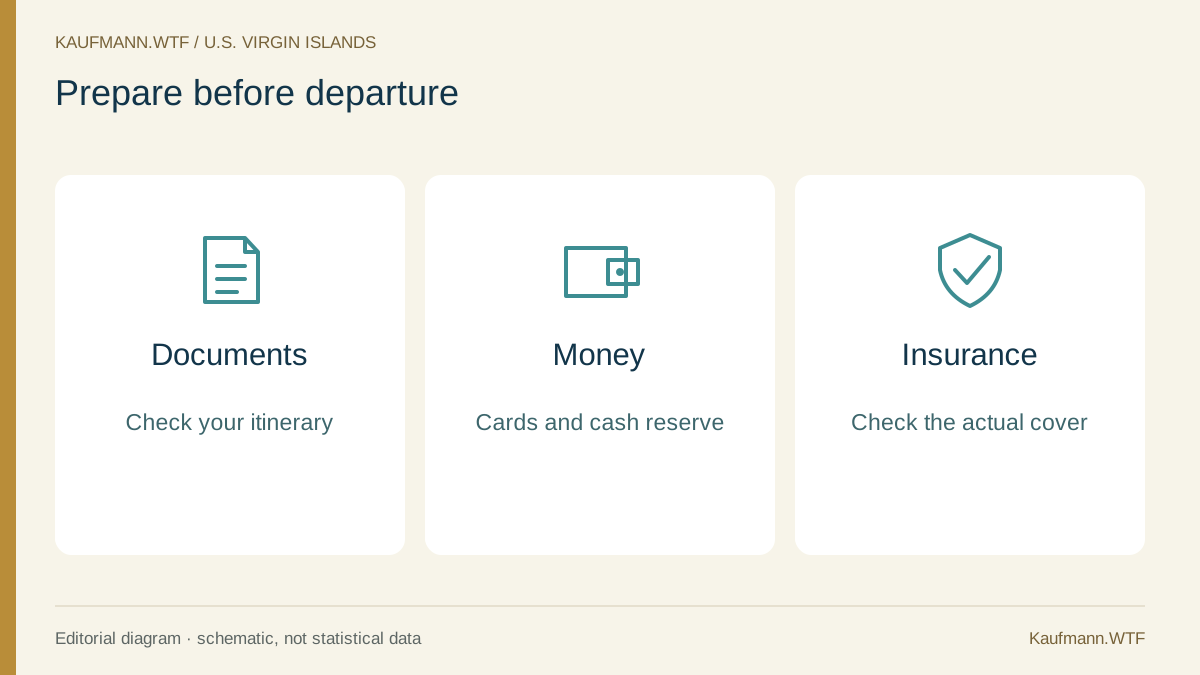
Prepare before departureEditorial diagram · Kaufmann.WTF · Schematic explanation of this chapter · Image credits↑ Back to top
16
Cost of living & travel
The USVI can be expensive because transport, imported goods, energy, and a small market shape everyday costs. A beach day can cost little, while accommodation, a rental vehicle, restaurant meals, and boat trips quickly change the total. Build a budget by island and by season; a room advertised in St. Croix is not a substitute for a St. John reservation if daily transfers consume the saving.
Compare the total stay cost, not just a nightly headline. Ask about accommodation taxes, cleaning fees, resort charges, parking, extra-driver insurance, and deposits. Check the cancellation deadline and whether a late ferry or flight affects check-in. For villas, verify the exact road, access gradient, power and water backup, and who can help after hours.
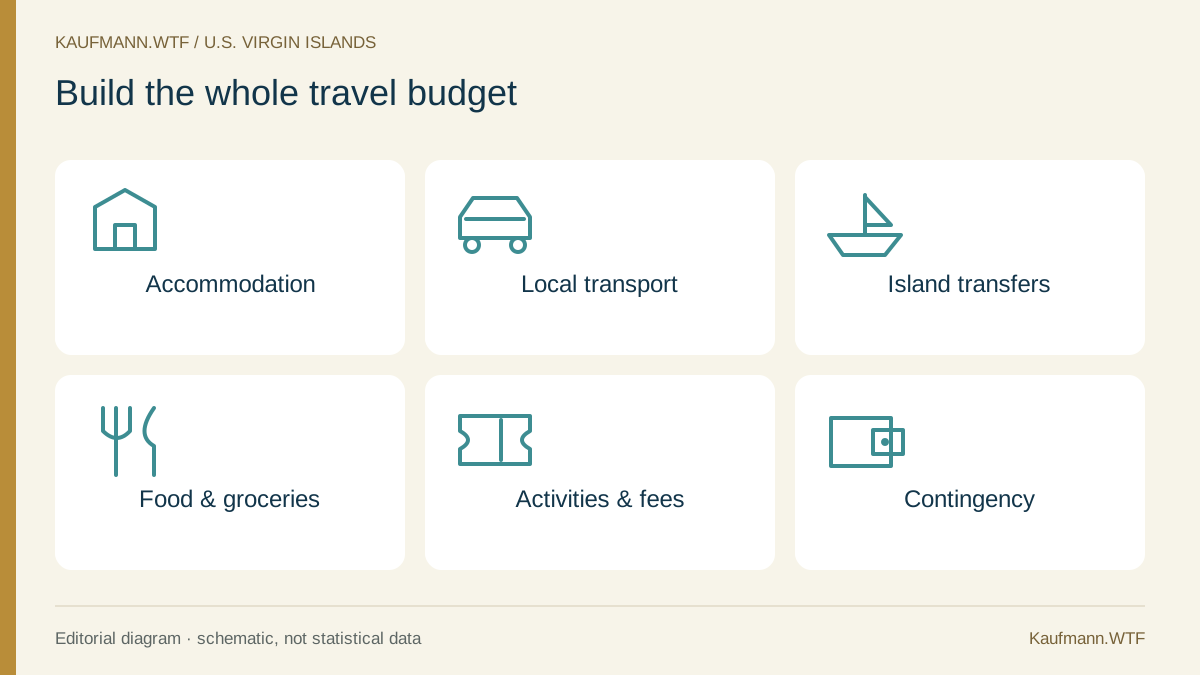
A useful budget has separate lines for lodging, airport transfer, inter-island travel, local transport, groceries, meals, park or beach fees, tours, and a contingency. Self-catering can help, although groceries are imported too. Share a car only if your plans and insurance allow it. A duty-free label does not establish that a purchase is cheaper than at home after allowances, taxes, and baggage are considered.
Beaches and shoreline access have specific rules. Do not assume every access road, parking lot, amenity, or guided trip is free, or that a public shoreline gives permission to cross any private parcel. Trunk Bay has an amenity fee. Check the official fee page and the current rules of the individual beach, park, or refuge before setting out.
Build the whole travel budgetEditorial diagram · Kaufmann.WTF · Schematic explanation of this chapter · Image credits↑ Back to top
17
Where to stay
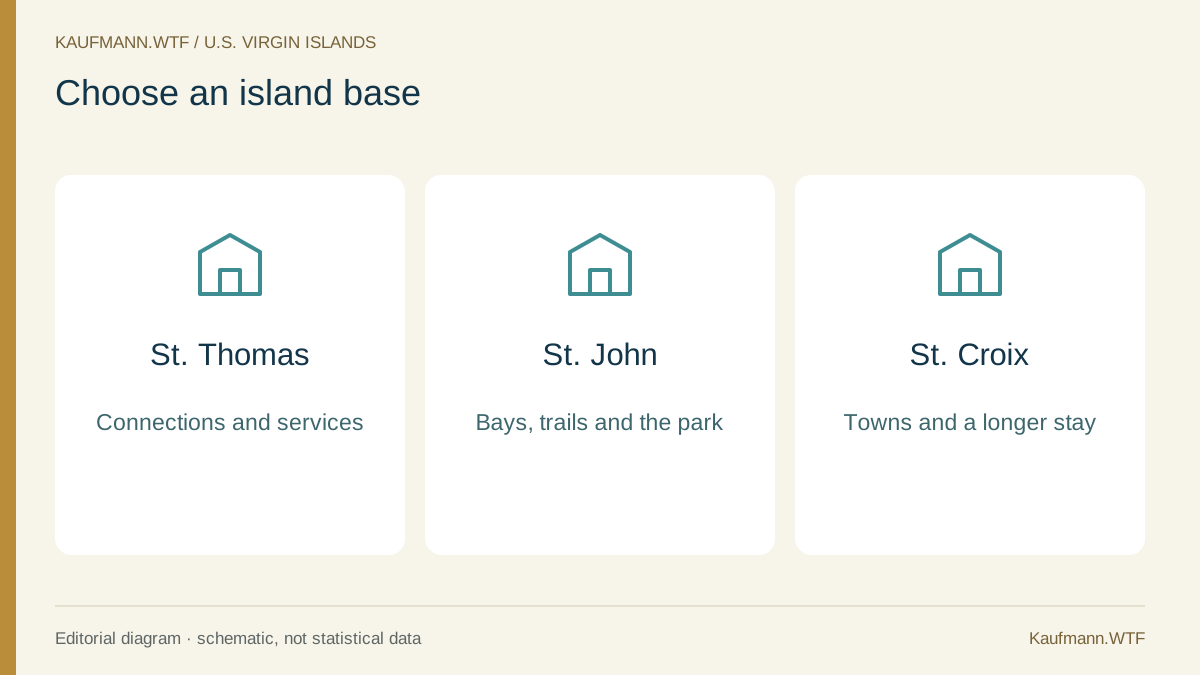
St. Thomas suits travelers who want the broadest mix of airport connections, restaurants, cruise-port activity, and access to St. John. The Ritz-Carlton, the Westin Beach Resort & Spa at Frenchman’s Reef, and Morningstar Buoy Haus are established resort names to compare with smaller hotels, guesthouses, and apartments. Location matters: a beautiful hillside view can mean a steep drive and limited walkability. Confirm current availability and the full price directly.
St. Croix rewards a longer stay. Christiansted offers a walkable historic core; Frederiksted has a different west-coast atmosphere; east-end properties can be far from both. The Buccaneer and Divi Carina Bay are recognizable examples, alongside independent guesthouses. Check the distance to the airport, restaurants, and the activities you actually plan, rather than choosing from a beach photograph alone.
St. John has camp accommodation at Cinnamon Bay, small properties including Estate Lindholm, and a substantial villa market. Cruz Bay is convenient for the main passenger ferry; Coral Bay and the east end offer a different base with longer drives. Check road access, car requirements, grocery arrangements, and the accommodation’s provisions for utility interruptions.
Caneel Bay needs a separate check. The resort was devastated in 2017. NPS has pursued cleanup, phased public access, and redevelopment; a new request for redevelopment proposals was issued in 2026. Access to part of the shoreline is not evidence that the former resort has resumed ordinary hotel operations. Use the NPS Caneel Bay page for the current situation and do not book on the basis of an old guidebook entry.
For any island, ask specific accessibility questions before reserving: steps from parking, gradient, doorway widths, shower arrangement, and transport access. “Ocean view” and “near the beach” say little about whether a stay will work for someone with limited mobility. Obtain the details for the actual room or villa, not a generic property description.
Choose an island baseEditorial diagram · Kaufmann.WTF · Schematic explanation of this chapter · Image credits↑ Back to top
18
Festivals & Events
Each island keeps its own carnival, and they are deliberately spread across the calendar so that troupes, bands and moko jumbies can work all three.
St. Thomas Carnival is the biggest, running through late April into early May with calypso and quelbe competitions, J'ouvert before dawn and an Adults' Parade that fills Charlotte Amalie. The St. John Festival runs late June into 4 July, folding Emancipation and Independence Day together. The Crucian Christmas Festival on St. Croix opens in early December and closes with the Three Kings Day parade in early January — so the "January festival" people describe is the tail of a season that started the month before. Add Agrifest, the St. Croix agricultural fair each February; Transfer Day on 31 March, marking the 1917 handover; and Emancipation Day on 3 July, the territory's most significant civic date.
The USVI has no inscribed UNESCO World Heritage property. National-park status, a historic-site designation, and UNESCO recognition are different systems and should not be used interchangeably.
Virgin Islands was designated a UNESCO biosphere reserve in 1976, but it was withdrawn from the World Network of Biosphere Reserves in 2017. The former designation is part of the park’s history, not a current credential. Withdrawal from that international network did not abolish the national park or its U.S. protections.
The National Park Service manages five units in the territory: Virgin Islands National Park and Virgin Islands Coral Reef National Monument around St. John, plus Buck Island Reef National Monument, Christiansted National Historic Site, and Salt River Bay National Historical Park and Ecological Preserve around St. Croix. Each has different access, facilities, and rules.
The U.S. Fish and Wildlife Service manages Sandy Point, Green Cay, and Buck Island National Wildlife Refuges. Buck Island refuge near St. Thomas is a different place from the NPS reef monument off St. Croix. The shared name is an easy source of booking and map errors. Seasonal wildlife closures are part of the protection, not a suggestion to find an unofficial entrance.
Hassel Island — in plain sight from every cruise deck in Charlotte Amalie harbor, almost entirely National Park, and almost never visited: British military ruins, a marine railway, and no crowds at all.
Salt River Bay's bioluminescent bay, St. Croix — a night kayak through mangroves where the water lights up around the paddle. Best on a moonless night, and the same water where Columbus's men came ashore in 1493.
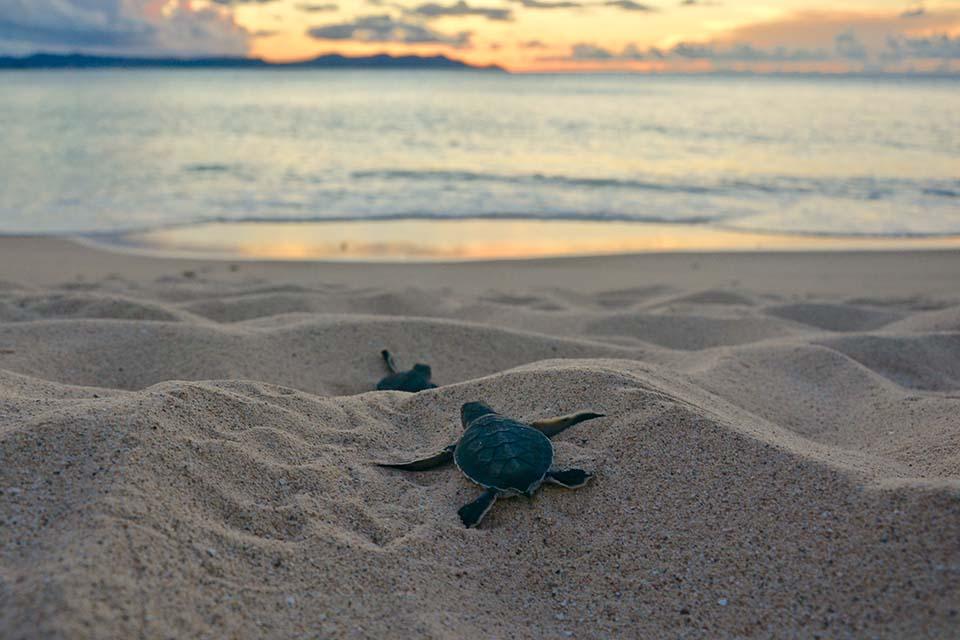
Sandy Point National Wildlife Refuge, St. Croix — an important leatherback turtle nesting beach, and closed to the public April to August precisely because of it. Check the refuge’s current opening days and seasonal closure dates; any nesting-watch program requires the refuge’s arrangements.
The Frederiksted pier after dark — seahorses, frogfish and octopus in eight meters of water under the pilings; consistently rated among the best shore dives in the Caribbean.
Annaberg Sugar Plantation, St. John — a substantial surviving sugar-estate complex, with windmill, boiling bench and slave-quarter foundations, and an interpretation that does not soften what happened there.
Estate Whim Museum, St. Croix — a restored great house with a mill and a cane press, and the best single explanation on the islands of how the sugar economy actually worked.
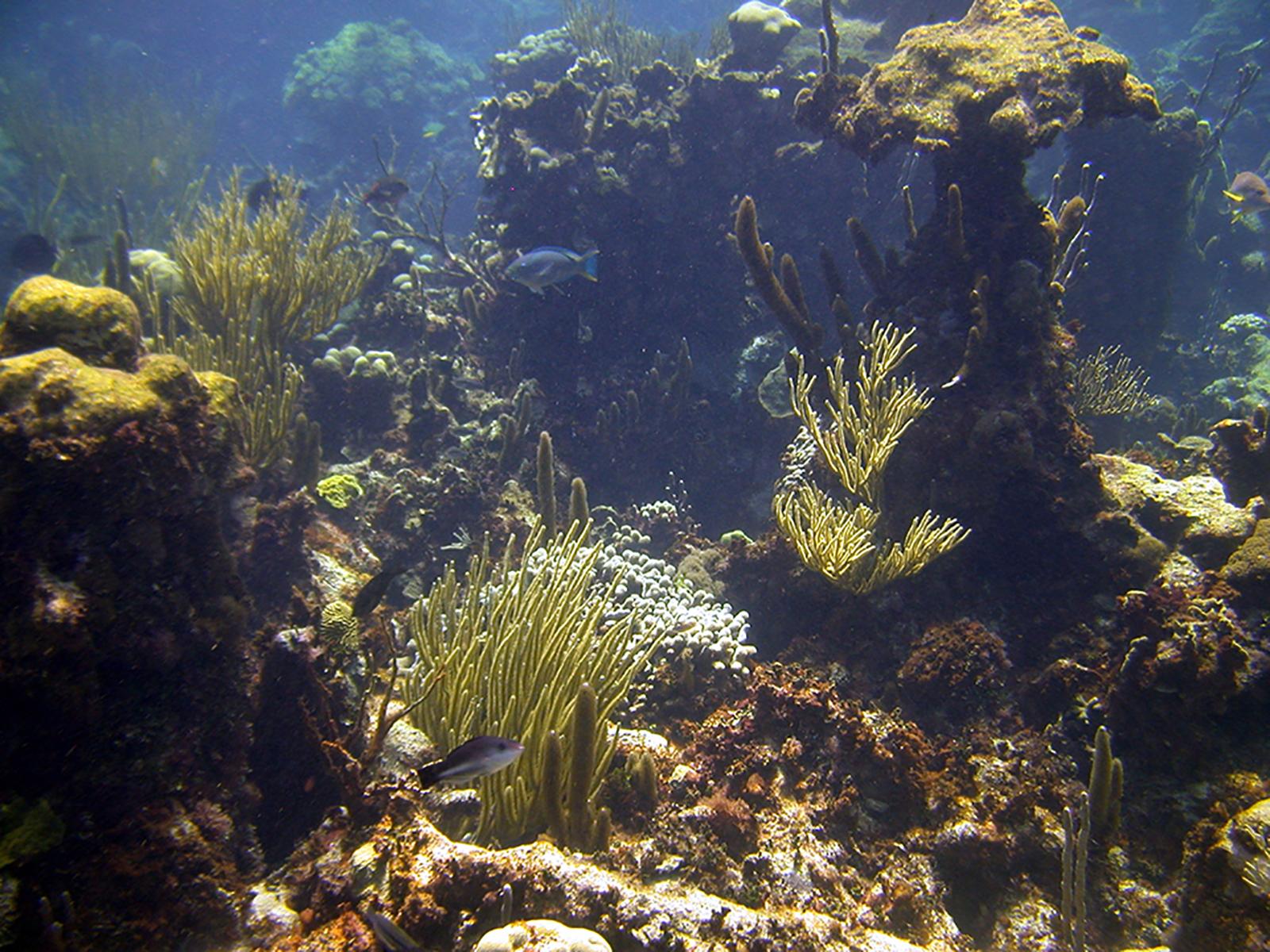
The islands’ underwater scenery is living habitat. Keep fins, hands, and equipment clear of coral, control buoyancy, and avoid stirring sediment in shallow water. Give turtles room to surface and feed; do not chase, touch, or block them for a photograph. A guide can help you select an entry and route suited to the day’s conditions and your ability.
Use authorized moorings and follow the rules of the particular protected area. A reef monument, a national park, and a wildlife refuge can have different limits. On nesting beaches, respect closed areas and lighting restrictions. At Sandy Point, seasonal closure protects leatherbacks and their nests; a beautiful empty beach is not necessarily open for recreation.
Waste is a practical island issue. Refill a bottle from a safe source, secure loose items on boats, and carry litter back to an appropriate bin. Support local businesses and guides, ask before photographing people, and treat ruins and petroglyphs as cultural places rather than climbing equipment. Responsible access begins with listening to the people and agencies who care for the site.
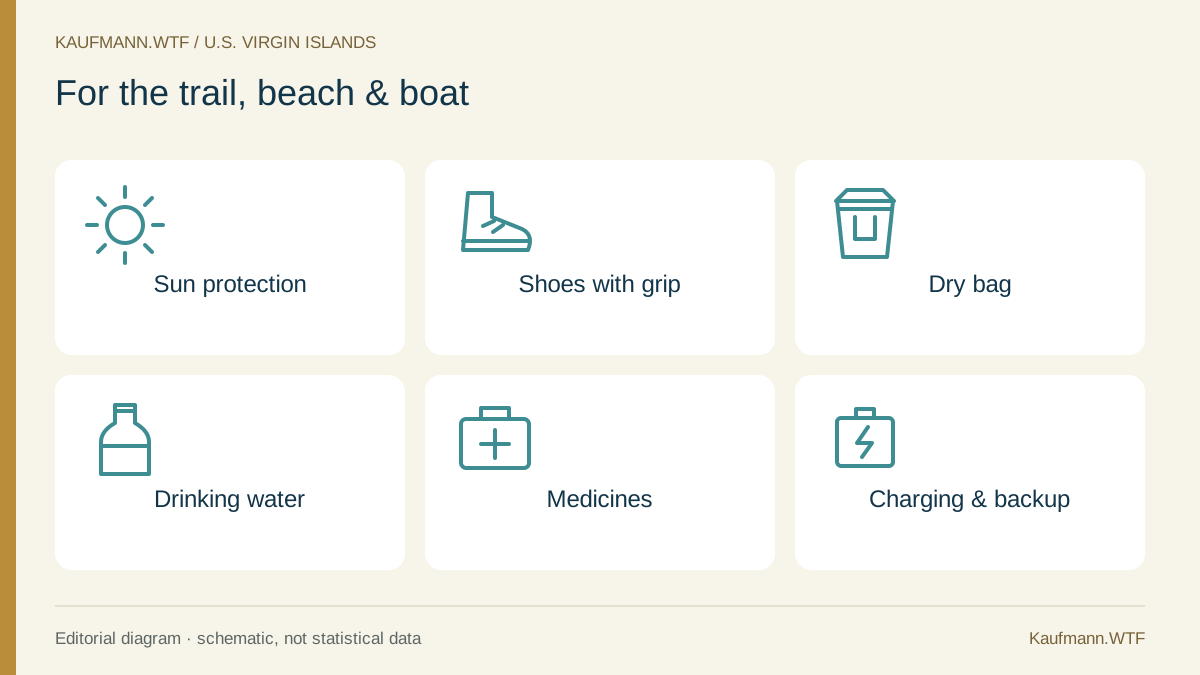
Pack sun-protective clothing, a broad-brimmed hat, sunglasses, and compliant mineral sunscreen. The territory prohibits oxybenzone, octinoxate, and octocrylene; “reef-safe” marketing alone is not an ingredient list. Keep sunscreen as one part of a plan that includes shade and clothing, and follow current local guidance.
For the water, take a dry bag, a mask that fits, and suitable footwear for the actual entry. Do not stand on coral or disturb sea urchins. Rental equipment varies; inspect it and ask for a flotation aid or guide when needed. A boat day also calls for drinking water and a way to protect essential documents from spray.
For land, bring shoes with grip, a light rain shell, insect repellent, and a refillable bottle filled with a confirmed safe supply. Historic streets can be steep and uneven, and Reef Bay is a real hike. Carry medications in original packaging, a copy of important prescriptions, a power adapter if needed, and a small backup battery.
Drone restrictions need advance research. NPS rules generally prohibit launching, landing, or operating unmanned aircraft from park lands or waters without authorization. That is different from making a blanket statement about all airspace over St. John. Check the park rules and the applicable aviation requirements before bringing equipment.
For the trail, beach & boatEditorial diagram · Kaufmann.WTF · Schematic explanation of this chapter · Image credits↑ Back to top
23
Planning time across three islands
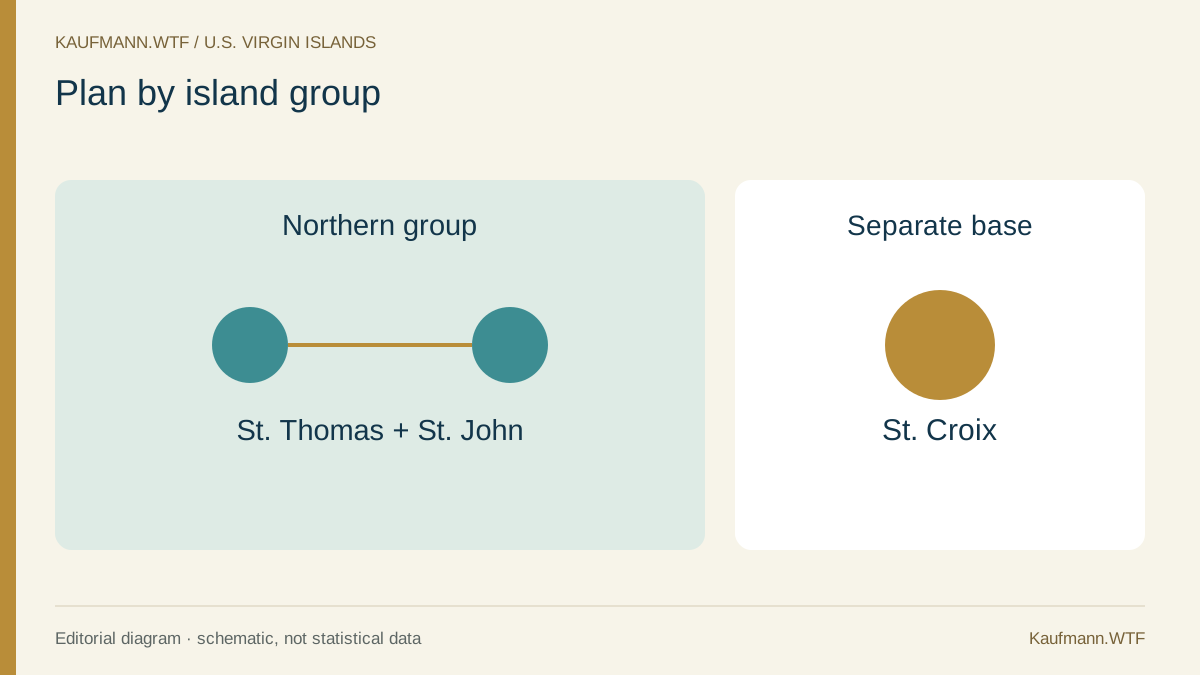
For a first visit, start by choosing a base that fits your arrival airport and priorities. St. Thomas and St. John combine naturally for a trip focused on the northern group. St. Croix deserves its own stay rather than being treated as an effortless extra stop. An extra ferry or flight introduces cost, weather exposure, and time spent checking in and out.
A flexible northern-island plan can pair a historical walk in Charlotte Amalie with a separate beach or boat day, then allow several days for St. John’s bays and trails. On St. Croix, divide time between Christiansted, Frederiksted, the east end, and a protected marine or mangrove excursion. These are planning patterns, not a promised timetable or a package for sale.
Keep the arrival day light and leave a margin before the flight home. Check the actual ferry departure, road journey, and operator’s check-in cutoff rather than using the crossing time alone. Match a snorkeling or hiking day to conditions, not to a rigid spreadsheet. If mobility, dietary needs, or a child’s routine shape the trip, ask specific questions before committing to remote accommodation or a long excursion.
Plan by island groupEditorial diagram · Kaufmann.WTF · Schematic explanation of this chapter · Image credits↑ Back to top
24
Useful sources & official links
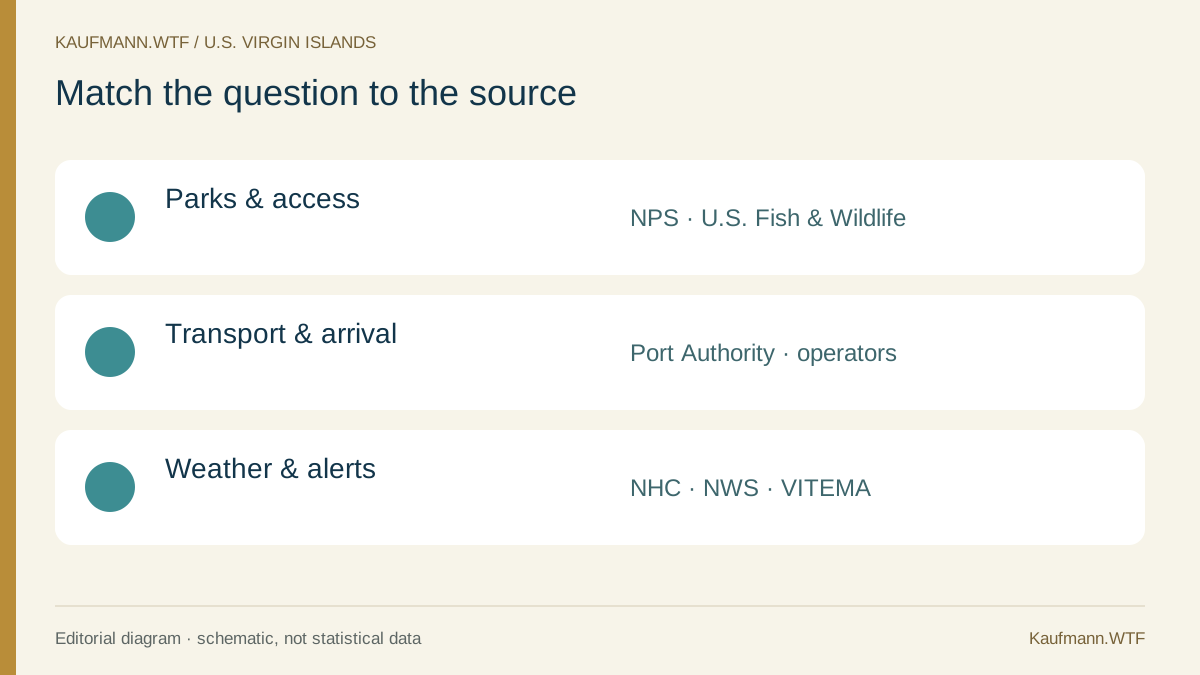
Use the official tourism department for island introductions and visitor guidance; the territorial government and emergency agencies for current notices; and the relevant park or refuge for conditions at protected sites. Dates and operating details can change after an editorial review.
Transport information should be confirmed with the operating airline, ferry, or rental company as well as the Port Authority. VINOW is a useful independent planning reference, but a copied timetable is not a reservation. VITRAN provides public-transport information; taxi rates and departure points should be confirmed locally.
For breaking weather, go directly to the National Hurricane Center, National Weather Service San Juan, and VITEMA. For citizenship, entry, customs, and airport identification, use CBP and TSA. The source list below keeps these routes available without requiring you to trust an undated summary.
Match the question to the sourceEditorial diagram · Kaufmann.WTF · Schematic explanation of this chapter · Image credits↑ Back to top
25
Recommended reading
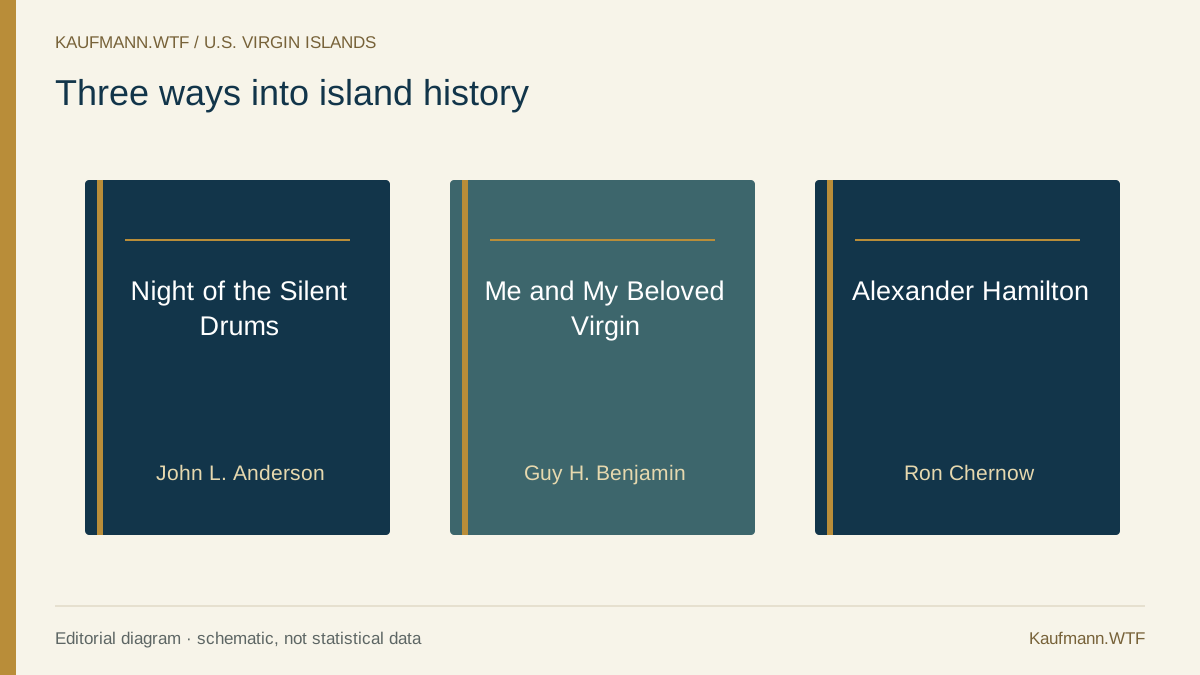
Night of the Silent Drums, by John L. Anderson, is a narrative reconstruction of the 1733 St. John uprising. Read it alongside historical interpretation from the National Park Service, paying attention to the distinction between reconstruction and documentary evidence.
Me and My Beloved Virgin, by Guy H. Benjamin, offers a St. Johnian perspective on island life. Benjamin was an educator and storyteller; a local account provides a useful counterweight to travel writing that treats the islands only as a visitor destination.
Alexander Hamilton, by Ron Chernow, provides wider context for Hamilton’s Caribbean youth and his subsequent political life. The St. Croix chapters are especially relevant to a walk through Christiansted, but the book is not a local walking guide.
For Camille Pissarro, seek museum exhibition catalogs and scholarship that include his St. Thomas upbringing and Caribbean drawings. Compare reproductions with the town’s geography, and avoid assuming that a modern waterfront is unchanged from the nineteenth century. Use a library catalog to verify the edition and author before buying a title.
Three ways into island historyEditorial diagram · Kaufmann.WTF · Schematic explanation of this chapter · Image credits↑ Back to top
26
YouTube Videos
Search terms that reliably return good material rather than resort promos: "Virgin Islands National Park Reef Bay Trail" for the petroglyph hike · "quelbe scratch band St. Croix" for the territorial music played properly · "Frederiksted pier night dive" for the seahorses · "Crucian Christmas Festival parade" for carnival · "USVI Hurricane Irma 2017" for footage of the storms and their aftermath. Check the creator, location, and recording date: old footage does not establish current hotel, trail, or port access.
Watch with contextEditorial diagram · Kaufmann.WTF · Schematic explanation of this chapter · Image credits↑ Back to top
27
Fascinating Facts
🚗 The USVI drives on the left — a Danish inheritance kept after 1917 — while importing left-hand-drive American cars, so the driver sits on the curb side.
🎨 Camille Pissarro, the oldest of the French Impressionists and the only one to exhibit in all eight Impressionist exhibitions, was born in Charlotte Amalie on 10 July 1830 and did not leave the Caribbean for good until his twenties.
⛵ Point Udall is where the United States sees an early sunrise in the Western Hemisphere, commemorated by a millennium monument.
🏀 Tim Duncan was a competitive swimmer aiming at the 1992 Olympics until Hurricane Hugo destroyed St. Croix's only Olympic-sized pool in 1989. He took up basketball at fourteen. Two of the most consequential decades in NBA history began with a storm.
🕍 The St. Thomas Synagogue keeps sand on its floor — a Sephardic practice recalling both the desert and the muffled footsteps of worship under the Inquisition. The congregation dates to 1796.
💰 The 1917 purchase price of $25 million in gold coin works out to roughly $72,000 per square kilometer ; comparisons depend on the area definition and the transaction being compared.
An island travel reminderEditorial diagram · Kaufmann.WTF · Schematic explanation of this chapter · Image credits↑ Back to top
28
Notable People
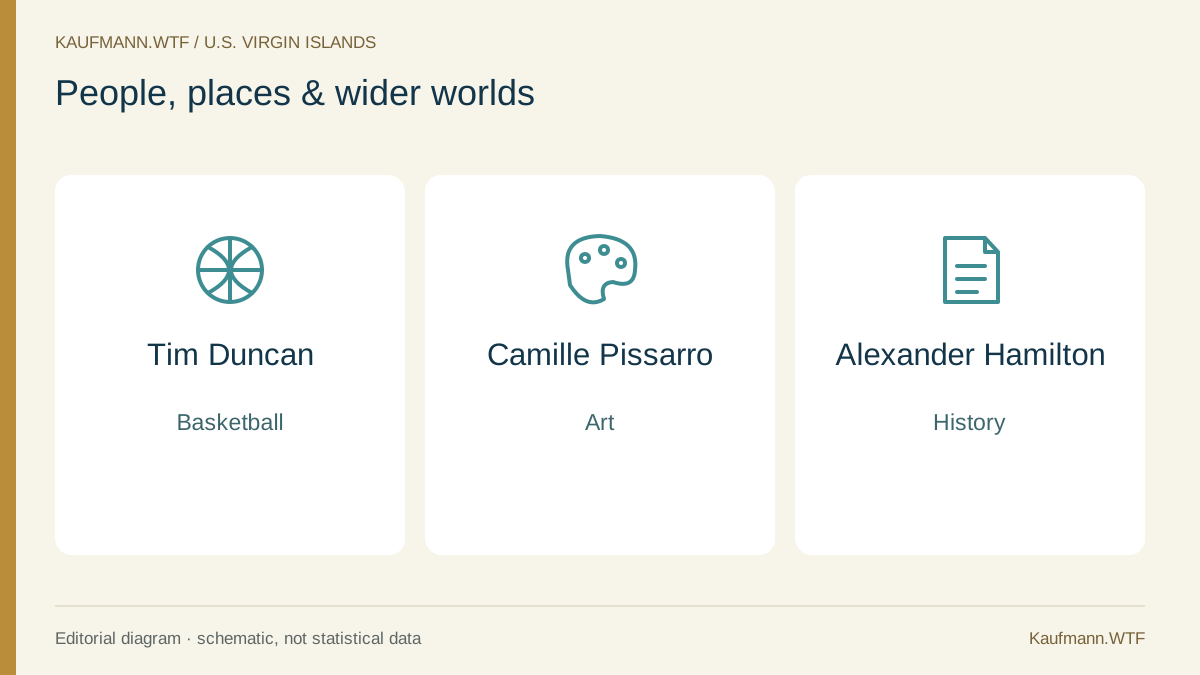
Tim Duncan (b. 1976, Christiansted) — nineteen seasons with the San Antonio Spurs, five NBA championships, Basketball Hall of Fame. His sporting legacy remains central to St. Croix’s modern identity.
Camille Pissarro (1830–1903, born Charlotte Amalie) — the pivotal figure of Impressionism, teacher to Cézanne and Gauguin, born and raised on St. Thomas.
Alexander Hamilton (c. 1755–1804) — not born here, but formed here: Christiansted during his youth, working in commerce, until a hurricane essay he wrote in 1772 persuaded local subscribers to send him to New York.
Stacey Plaskett (b. 1966) — the territory's Delegate to the US House of Representatives since 2015.
Peter Holmberg (b. 1960) — won silver in the Finn class at the 1988 Seoul Olympics, the only Olympic medal the US Virgin Islands has ever taken, and later an America's Cup helmsman.
Kelsey Grammer (b. 1955) — spent part of his childhood on St. Thomas and St. Croix; his father was murdered there in 1968.
People, places & wider worldsEditorial diagram · Kaufmann.WTF · Schematic explanation of this chapter · Image credits↑ Back to top
29
Sports
The US Virgin Islands competes separately from the United States at the Olympics, with its own National Olympic Committee, and has done since 1968 — giving Virgin Islanders different sporting pathways, subject to each sport’s nationality and qualification rules. The territory's sole Olympic medal remains Peter Holmberg's sailing silver from Seoul 1988.
Basketball is the popular game, for reasons that trace directly back to Tim Duncan, and the territory fields teams in FIBA Americas competition. Baseball has a long St. Croix tradition and has sent players into the US minor and major leagues. Sailing is the sport the islands are actually built for: the St. Thomas International Regatta each spring is a fixture of the Caribbean circuit, and the deep, reliable trade-wind conditions between the islands are the reason a small island territory has produced world-class helmsmen.
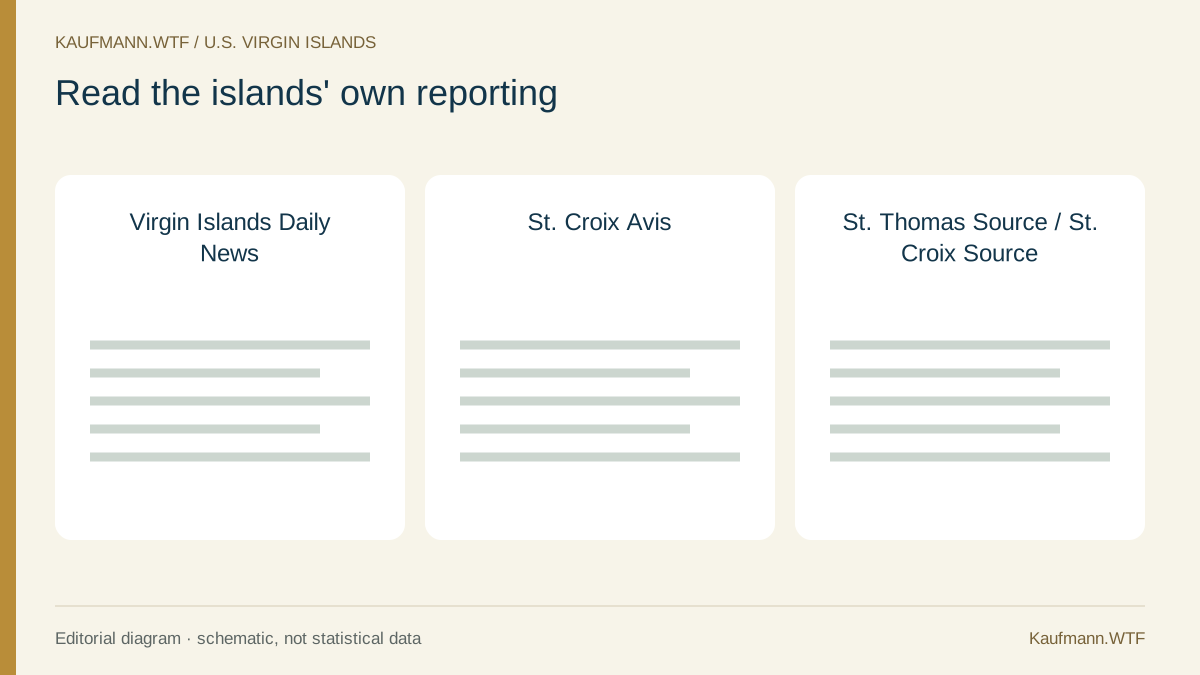
The territorial press has a strong tradition of public-interest reporting and scrutiny of government. The Virgin Islands Daily News of St. Thomas won the 1995 Pulitzer Prize for Public Service — the reporting largely the work of Melvin Claxton — for exposing the links between the territory's crime rate and corruption inside its own criminal justice system. The award is a notable example of the reach of local investigative journalism.
The St. Croix Avis is among the oldest continuously published newspapers in the Caribbean, and the online St. Thomas Source and St. Croix Source carry most of the day-to-day territorial reporting. For a jurisdiction of this size the scrutiny of local government is unusually sustained.
Read the islands' own reportingEditorial diagram · Kaufmann.WTF · Schematic explanation of this chapter · Image credits↑ Back to top
31
Government & representation
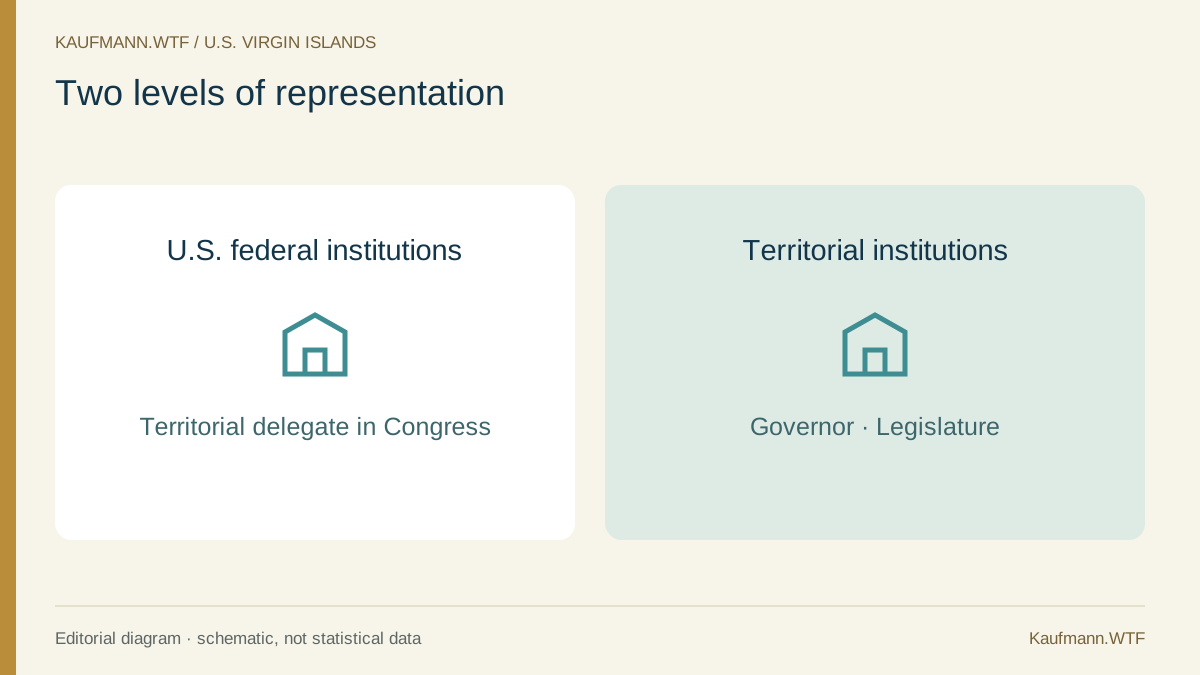
The USVI is an organized, unincorporated territory of the United States. It elects a governor and a unicameral legislature of fifteen senators, while federal authority and territorial law interact under the Revised Organic Act and other statutes. The President of the United States is the federal executive; the governor leads the territorial government.
As of this editorial review on October 9, 2026, Albert Bryan Jr. is governor and Stacey Plaskett is the territory’s delegate to the U.S. House of Representatives. The territorial election authority lists the general election for November 3, 2026. Check the official government, congressional, and election pages for subsequent changes.
The House delegate does not have a final floor vote on ordinary House legislation, although delegates have roles in committees under House rules. U.S. citizenship and territorial residence do not produce the same presidential voting rights as residence in a state: residents of the USVI cannot cast a general-election vote for president from the territory.
These arrangements are debated locally and are part of the islands’ daily political life. A visitor can recognize that complexity without reducing people to a constitutional curiosity. The elected institutions, local reporting, and community organizations are useful places to start understanding the questions residents themselves consider important.
Two levels of representationEditorial diagram · Kaufmann.WTF · Schematic explanation of this chapter · Image credits↑ Back to top
32
Photo gallery
Documentary photographs retain their National Park Service credits. The six new chapter scenes, the three recipe images, and the guide cover are separately identified as AI illustrations. The explanatory diagrams are original editorial graphics. Generated scenes are illustrative, not evidence of a real visit, exact location, or event.
Have a photograph from your own visit? Send the original file, exact location, preferred credit, and confirmation that you own the rights and permit publication. A social-media repost or an uncredited search result is not enough to establish permission.
A visit that ends at a cruise terminal gives only a narrow reading of the USVI. Charlotte Amalie’s warehouses and hillside streets carry the history of commerce, empire, and migration beneath the present shopping economy. The ferry to St. John opens another view: protected bays, steep trails, plantation ruins, and communities whose daily life continues beyond a visitor’s beach itinerary.
St. Croix asks for time of its own. Christiansted and Frederiksted, the agricultural landscape, the rum industry, the east end, and the mangroves cannot be compressed into a substitute for an afternoon on St. Thomas. Their histories include slavery and resistance, but also music, family, trade, and the practical work of building a contemporary island economy.
The most useful travel habit here is to ask what a place is now. A resort name may survive long after its buildings close. A photograph may predate a storm. A famous beach may be seasonally restricted for wildlife. A census figure describes a particular year. Paying attention to dates is part of respecting the territory, not simply a way to avoid an inconvenient holiday.
Leave room for an unhurried meal, a locally led historical walk, and a conversation that begins with a greeting rather than a demand. Protect the reefs that support the postcard view, and read the island’s own writers and newsrooms. The beaches matter, but the people, their history, and their future make the journey worth remembering.
 ‹›
‹›