MontevideoCapital
≈3.5 millionResidents · estimate
UYU · $UCurrency
SpanishOfficial language
Contents
01
Overview
01
Overview
Uruguay is South America's progressive gem — a small, stable, secular country wedged between the giants of Brazil and Argentina that consistently ranks as the continent's most democratic, least corrupt, and most socially progressive nation. First to legalize cannabis, first to provide every schoolchild a laptop, with universal healthcare, strong environmental protections, and a tradition of tolerance that has earned it the nickname "the Switzerland of South America."
For travelers, Uruguay offers Montevideo's bohemian charm, Punta del Este's glamorous beaches, Colonia del Sacramento's Portuguese-colonial perfection, and the gaucho culture of the interior estancias. The coastline stretches 660 km from the Río de la Plata to the Brazilian border, with uncrowded beaches, dune-backed surf breaks, and the laid-back atmosphere of José Ignacio — South America's answer to the Hamptons. Uruguay does nothing loudly, but everything well. The President of Uruguay is Yamandú Orsi of the left-wing Frente Amplio, who took office on 1 March 2025 for a five-year term, with Carolina Cosse as Vice President.
02
Name & Identity
02
Name & Identity
The name "Uruguay" derives from the Guaraní language, with several interpretations including "river of painted birds" and "river of the snails." The Río Uruguay forms the western border with Argentina. Uruguayans call themselves "orientales" (easterners, from the Banda Oriental — the eastern bank of the Uruguay River) and take fierce pride in their progressive social model, their two World Cup victories (1930, 1950), and their mate-drinking tradition — the shared gourd is practically a national appendage.
03
Geography & Regions
03
Geography
Uruguay is South America's second-smallest country — gently rolling grasslands (pampas) covering most of the interior, with low hills (cuchillas) rarely exceeding 500m. The highest point, Cerro Catedral, is just 514m. The Río de la Plata estuary dominates the southern coast, while the Atlantic coast stretches northeast with beautiful sandy beaches. The interior is predominantly agricultural — cattle outnumber people roughly 4:1, and estancias (ranches) define the landscape. Wetlands along the Brazilian border support rich birdlife.
04
Map of Uruguay
03b
Map
Uruguay lies between 30°S and 35°S on the Atlantic coast of South America, bordered by Brazil to the north and east and Argentina across the Río Uruguay and the Río de la Plata to the west and south.
05
History
04
History
The indigenous Charrúa people resisted European colonization fiercely before being virtually exterminated in the early 19th century. Fought over by Spain, Portugal, Brazil, and Argentina, Uruguay finally gained independence in 1828 as a buffer state. José Batlle y Ordóñez (president 1903-1907, 1911-1915) transformed Uruguay into Latin America's first welfare state — introducing eight-hour workdays, pensions, women's suffrage, and separation of church and state decades before most European countries.
A military dictatorship (1973-1985) was a dark chapter, but democracy was restored and strengthened. President José "Pepe" Mujica (2010-2015) — a former guerrilla who donated 90% of his presidential salary and drove a 1987 VW Beetle — became an international symbol of humble leadership. Under his tenure, Uruguay legalized cannabis, same-sex marriage, and abortion, cementing its reputation as South America's most progressive nation.
06
Indigenous History & Memory
Charrúa and other Indigenous peoples formed part of the region long before colonisation. Their violent dispossession and the survival of Indigenous ancestry remain important subjects of historical debate.
07
José Gervasio Artigas & Federalism
Artigas is remembered as a national hero and advocate of a federal regional order. His political legacy reaches beyond monuments into continuing arguments about sovereignty and social justice.
08
Democracy, Dictatorship & Memory
Uruguay's strong democratic reputation includes the unresolved legacy of the 1973–1985 civic-military dictatorship. Museums, memorials and public debate keep questions of imprisonment, exile and disappearance visible.
09
People & Culture
05
People & Culture
Uruguay's 3.4 million people are predominantly of European descent (Spanish and Italian), with small Afro-Uruguayan and mestizo minorities. The culture is defined by mate (the shared herbal tea drunk from a gourd through a metal straw — carried everywhere, literally), tango and candombe music, football passion, and a relaxed attitude toward life that Uruguayans call "tranqui." Candombe — African-Uruguayan drum music performed in llamadas (street parades) — is a UNESCO-recognized cultural treasure. The murga carnival tradition combines satirical theater with choral singing.
10
Uruguayan Spanish
Uruguayan Spanish belongs largely to the Río de la Plata family, using vos and a distinctive melodic pronunciation. Border areas also reveal long contact with Portuguese.
11
Montevideo — The Capital
06
Montevideo
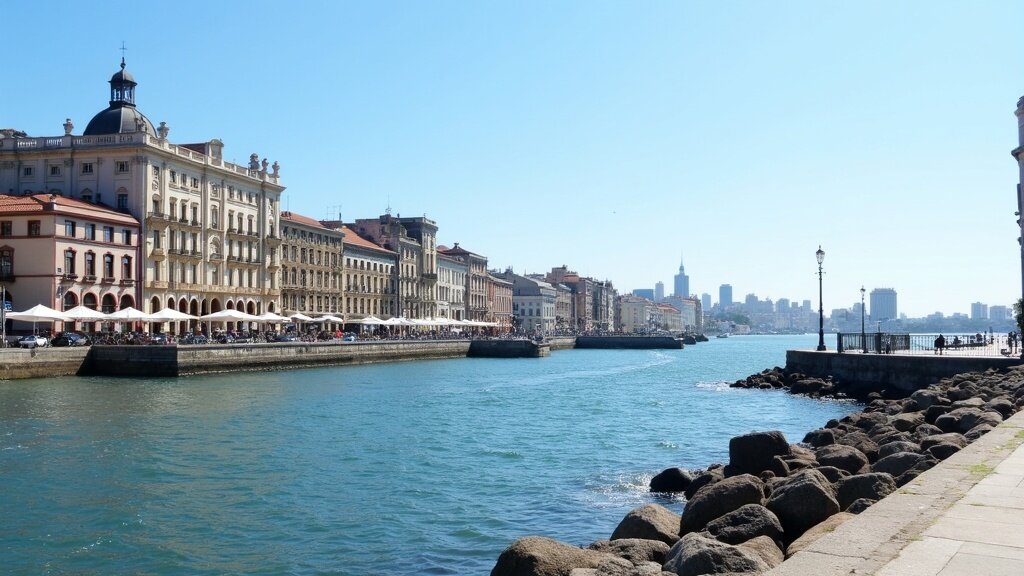
Montevideo is South America's most underrated capital — a laid-back city of 1.4 million where art deco towers meet crumbling colonial façades along the Rambla, a 22-km waterfront promenade that's the city's social spine. Ciudad Vieja (Old Town) has transformed from neglected historic quarter into a buzzing hub of galleries, restaurants, and tango bars, while the Sunday Tristán Narvaja flea market sprawls across 30 blocks of antiques, books, and street food.
The Mercado del Puerto is the iconic lunchtime destination — a grand iron-framed market hall where parrillas (grills) sizzle with asado cuts and wine flows freely. The Teatro Solís, MAPI (Pre-Columbian Art Museum), and the monumental Palacio Legislativo reward exploration. But Montevideo's true charm lies in its neighbourhoods: bohemian Parque Rodó, the beach culture of Pocitos and Carrasco, and the gritty authenticity of Barrio Sur, cradle of Uruguayan candombe drumming.
The Museo Torres García honours Joaquín Torres García, Uruguay's most influential artist, while Palacio Salvo — completed in 1928 and briefly the tallest building in Latin America — still anchors Plaza Independencia. The city proper counts about 1.3 million residents; the wider metropolitan area holds roughly 1.8 million, close to half of everyone in Uruguay.
12
Ciudad Vieja & the Port
The old city preserves colonial traces, offices, galleries, markets and port infrastructure. It changes character between weekday business hours, cultural events and quieter evenings.
13
La Rambla — Montevideo's Waterfront
The continuous waterfront is used for walking, cycling, fishing, exercise, sunset gatherings and mate. Different stretches connect beaches, parks, memorials and residential neighbourhoods.
14
Candombe & Afro-Uruguayan Culture
Candombe grew from Afro-Uruguayan communities and remains a living musical, social and neighbourhood tradition. Drumming groups and llamadas carry history that should not be reduced to carnival spectacle.
15
Tango on Both Shores
Montevideo shares tango's Río de la Plata origins with Buenos Aires. Songs, orchestras, dance halls and neighbourhood memory reveal a tradition developed across both shores.
16
Punta del Este
07
Punta del Este
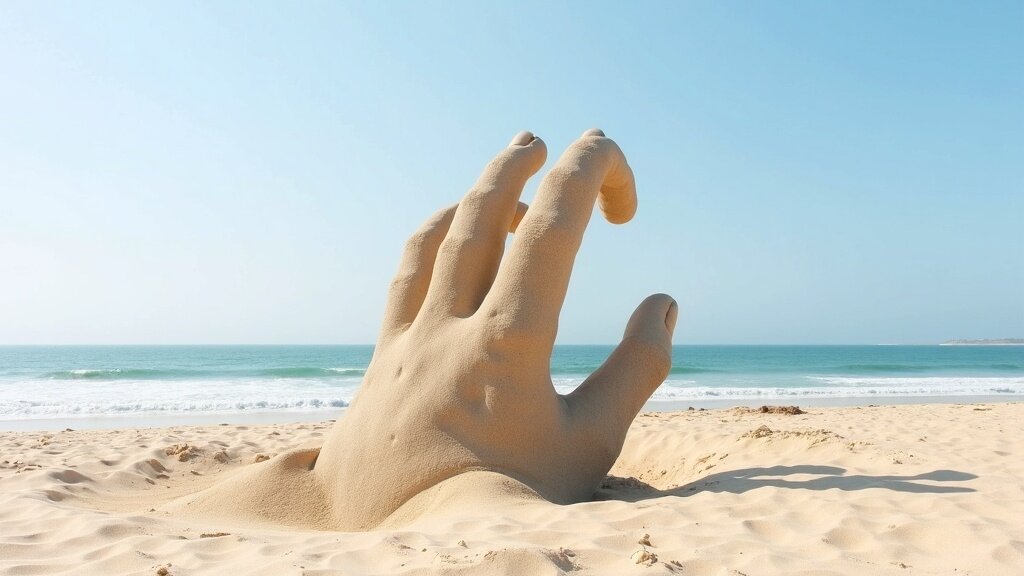
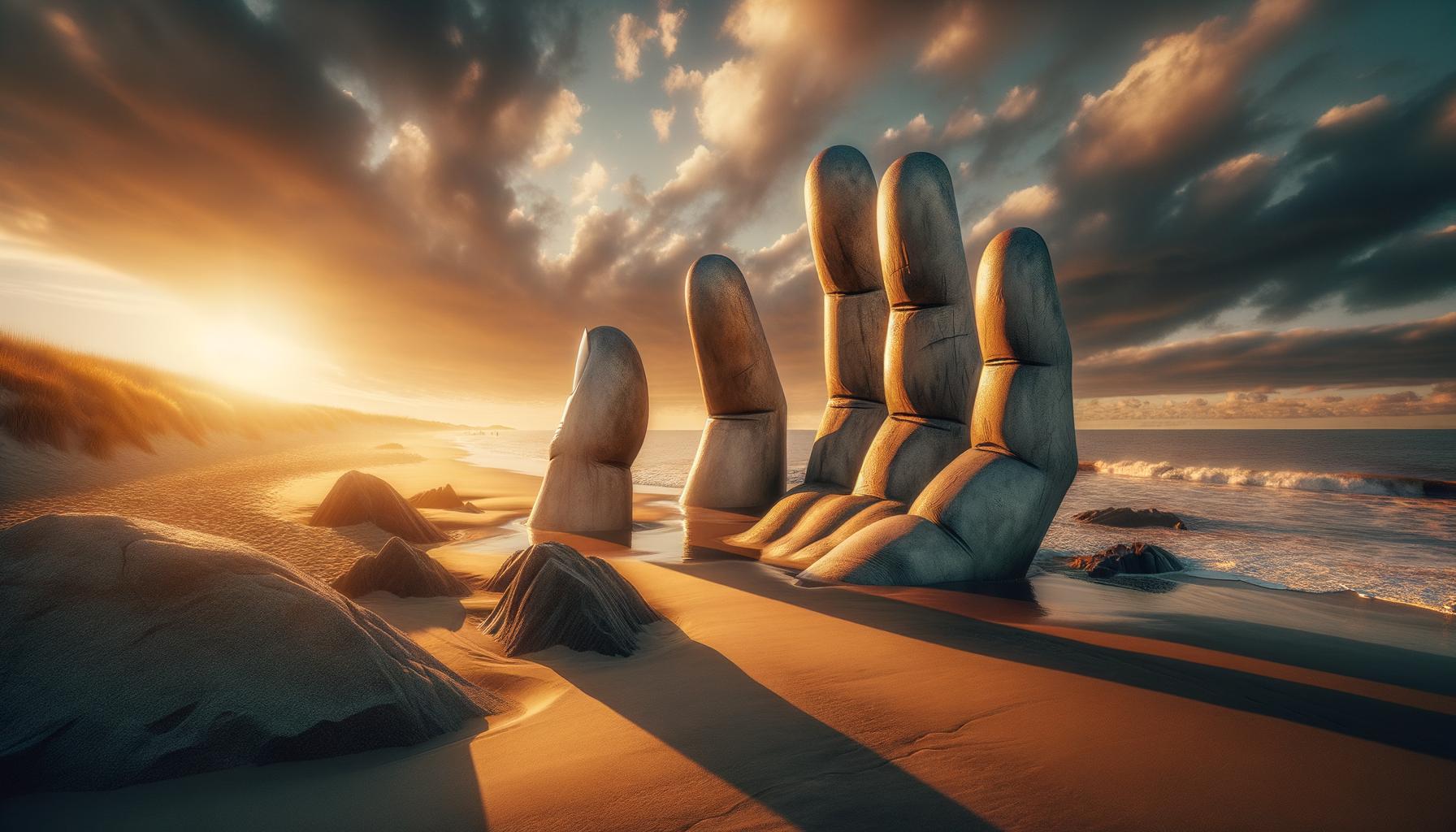
Punta del Este is South America's most glamorous beach resort — the "Monaco of the South" where Argentine millionaires, Brazilian celebrities, and international jet-setters converge each January. The iconic La Mano sculpture (giant fingers emerging from Brava beach sand) is one of the continent's most photographed landmarks. The town sits on a narrow peninsula dividing the calm Río de la Plata from the Atlantic surf.
Beyond the beach scene, Punta del Este offers Casapueblo (artist Carlos Páez Vilaró's whitewashed cliff-top creation), world-class restaurants, and the Francis Mallmann-influenced open-fire cooking culture. Offshore, Isla de Lobos hosts the world's largest South American fur seal colony. The nearby José Ignacio fishing village has become an ultra-exclusive destination in its own right, with the legendary Parador La Huella beach restaurant.
Playa Mansa on the Río de la Plata side is calm and shallow; Playa Brava faces the open Atlantic and takes the surf — and the La Mano sculpture. José Ignacio adds the understated-chic counterpoint, with its 1877 lighthouse and the architecture of Playa Vik.
17
Casapueblo & Punta Ballena
Carlos Páez Vilaró's white sculptural complex overlooks the sea from Punta Ballena. Architecture, studio, museum and sunset ritual combine in a place that is both artwork and tourism icon.
18
Colonia del Sacramento
08
Colonia del Sacramento
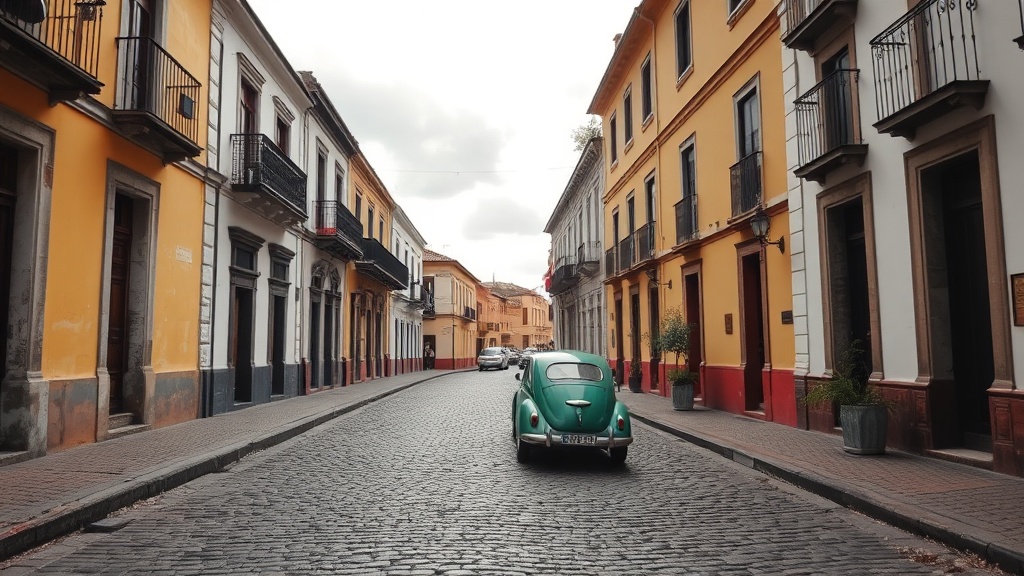
Colonia del Sacramento's Barrio Histórico is a UNESCO World Heritage Site — a pocket-sized colonial gem on the Río de la Plata directly opposite Buenos Aires. Portuguese-founded in 1680, the old quarter's cobblestone streets, flowering courtyards, and pastel-coloured buildings create one of South America's most photogenic settings. The iconic Calle de los Suspiros (Street of Sighs) is lined with colonial-era houses.
A 1-hour ferry from Buenos Aires makes Colonia an easy day trip, but staying overnight reveals the town's true magic — golden-hour light on the lighthouse, quiet riverfront dinners, and the sense of stepping back centuries. The town retains both Portuguese and Spanish colonial architecture from its contested history. Vintage cars dot the streets as permanent fixtures, adding to the time-capsule atmosphere.
19
The Rocha Coast
East of the major resorts, Rocha offers dunes, lagoons, surf beaches, fishing settlements and protected landscapes. Roads and services become more seasonal toward the Brazilian border.
20
Cabo Polonio
This dune-bound settlement is reached by authorised vehicles across protected terrain. Limited infrastructure, dark skies, sea lions and strong coastal weather define the experience.
21
Punta del Diablo
A fishing village evolved into a popular beach and surf destination while retaining a distinctive low-rise form. Peak summer transforms its population, traffic and accommodation pressure.
22
Wetlands, Lagoons & Birdlife
Eastern wetlands and coastal lagoons support rich birdlife and connect freshwater, grassland and marine systems. Responsible visits depend on water levels, access rules and quiet observation.
23
The Interior & Estancias
Pastoral landscapes, livestock production and small departmental capitals define much of inland Uruguay. Rural stays differ widely, from working farms to properties designed mainly for visitors.
24
Cuisine
09
Cuisine
Uruguayan cuisine revolves around beef — the asado (barbecue) is a sacred weekend ritual involving hours of slow-grilling various cuts over wood embers. The chivito — a monster steak sandwich piled with ham, cheese, egg, lettuce, tomato, and mayonnaise — is the national fast food. The Mercado del Puerto in Montevideo is the temple of parrilla (grill) culture. Mate is consumed constantly — Uruguayans walk the streets with thermos tucked under one arm and gourd in hand. Dulce de leche, alfajores, and torta fritas (fried dough) satisfy the sweet tooth.
25
Chivito & Everyday Favourites
The chivito is an abundant steak sandwich with many variations, while milanesas, empanadas and tortas fritas appear across everyday menus. Portions are often generous and meals unhurried.
26
Wine & Tannat
10
🍷 Wine & Spirits
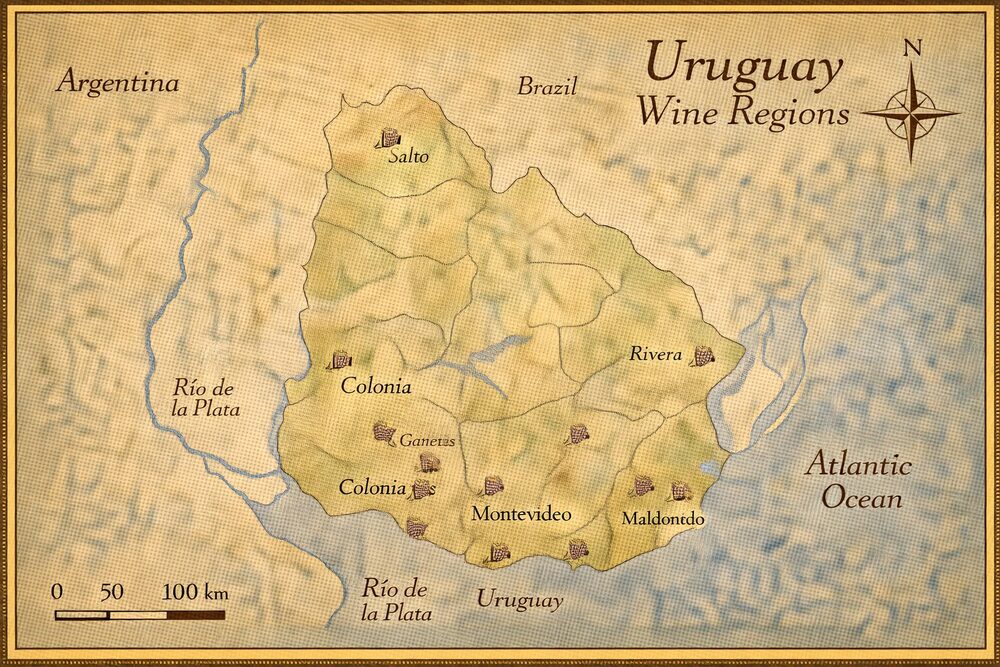
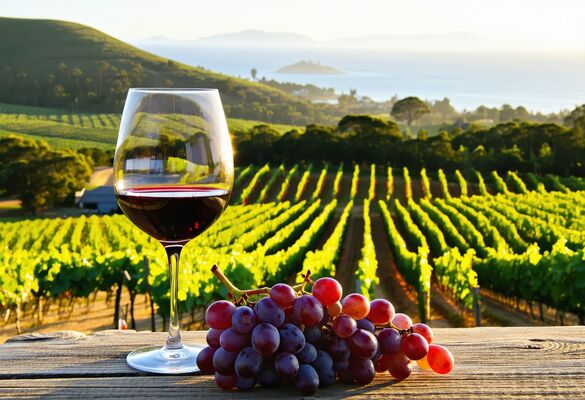
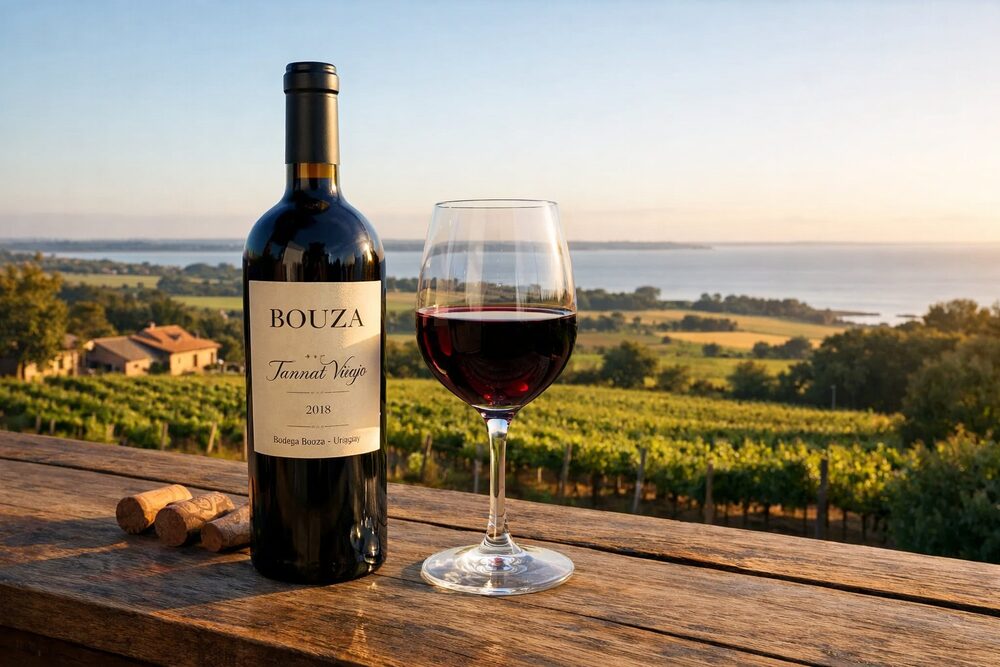
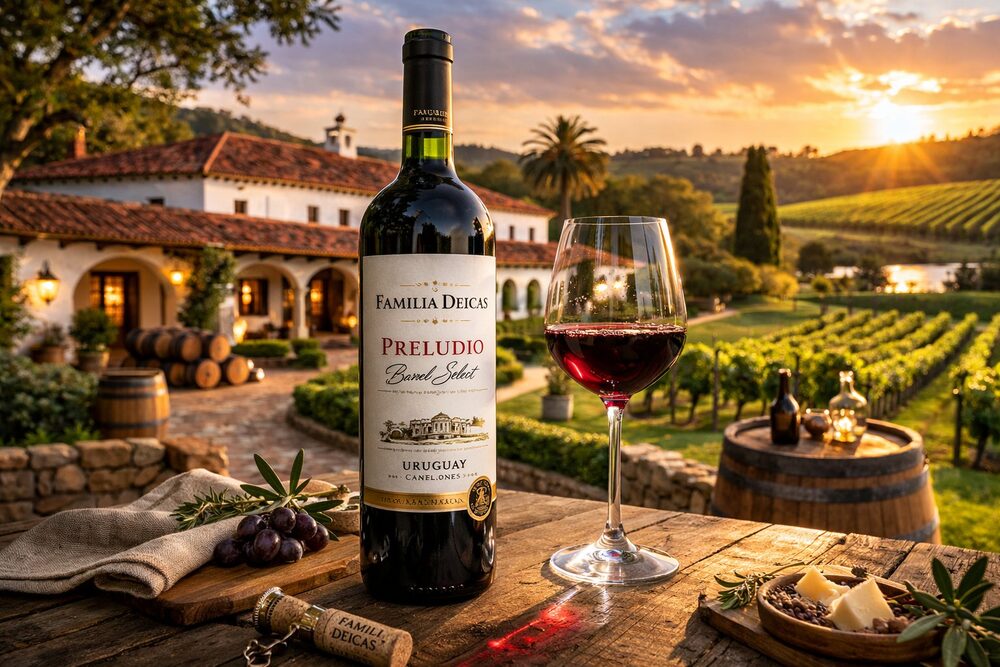
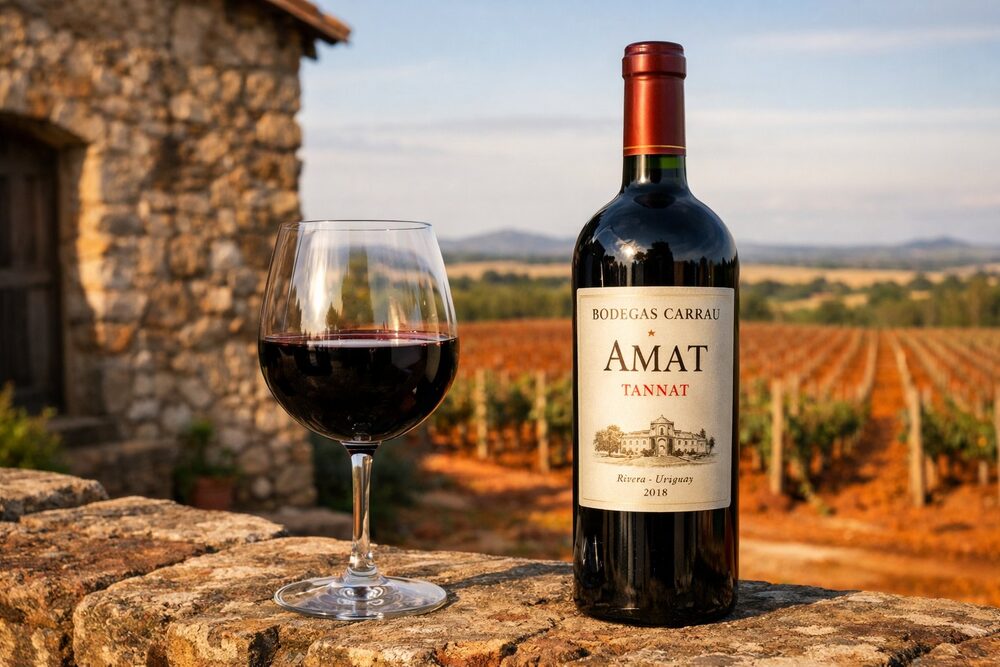
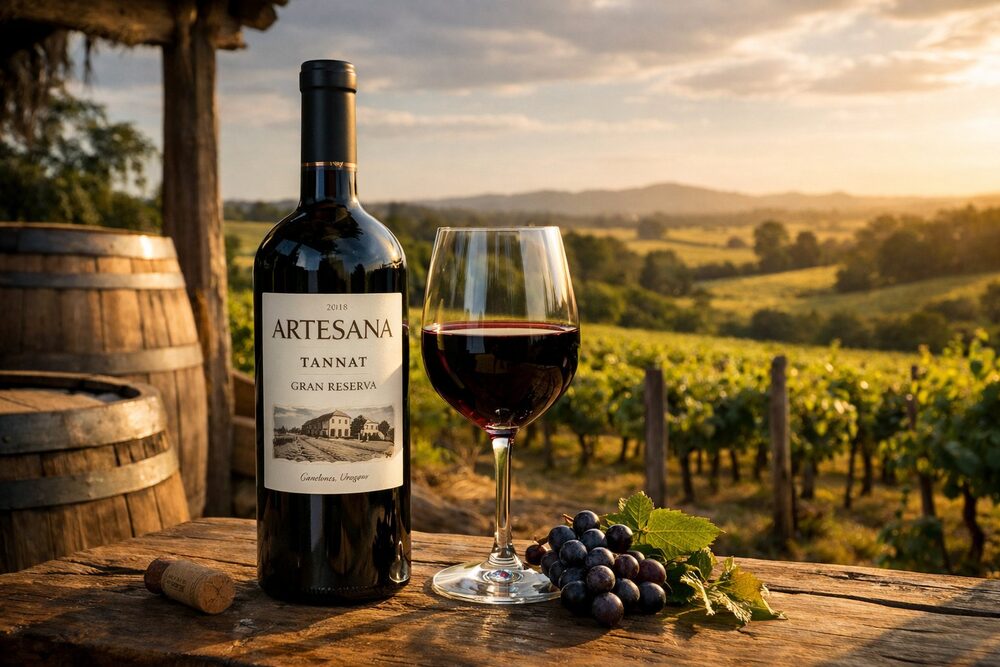
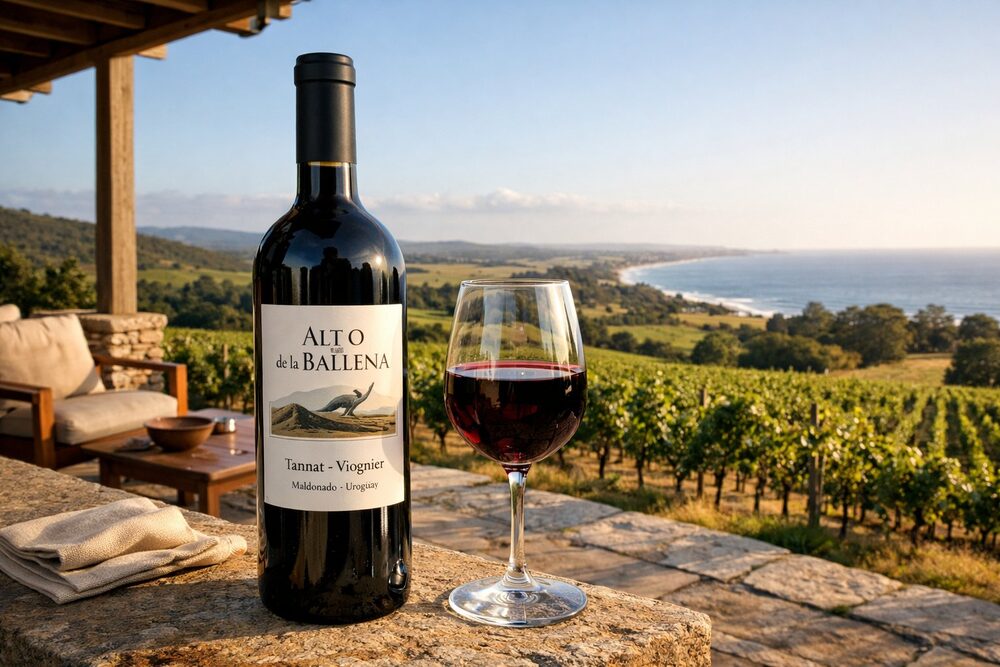
Tannat is Uruguay's calling card. The grape arrived from Madiran in south-west France with Basque settlers in the 1870s — Pascual Harriague is credited with the first successful plantings — and it found in Uruguay's maritime clay-and-limestone soils a gentler expression than its brooding French homeland: still firmly tannic and dark-fruited, but rounder, and increasingly blended with Merlot, Cabernet Franc or a splash of Viognier. Uruguay now has more Tannat under vine than France does.
Roughly 90% of the vineyards sit in the south, in Canelones and Montevideo departments, within easy reach of the capital — Bouza, Pizzorno, Artesana and Juanicó all run cellar-door visits. Maldonado, behind Punta del Este, is the cool-climate upstart making finer-boned Tannat and good Albariño; Carmelo on the Río de la Plata pairs wine with lodges; and Rivera, on the Brazilian border, works sandstone soils in the country's warmest zone. Beyond wine, Uruguay drinks grappamiel — grappa softened with honey — and, above all, mate, which is not alcoholic and not optional.
27
Mate — Daily Companion
Uruguayans often carry a thermos and mate through streets, parks and workplaces. The ritual is personal and social at once, with etiquette learned through participation.
28
Climate & Best Time to Visit
12
Climate
Uruguay has a pleasant temperate climate with four distinct seasons. Summers (December-February) are warm, 25-32°C, ideal for beach towns. Winters (June-August) are cool, 8-15°C, with occasional frost. Rainfall is distributed evenly year-round. Spring (September-November) and autumn (March-May) offer comfortable temperatures with fewer tourists. Punta del Este is packed in January; visit March for warm weather without crowds.
29
How to Get There
13
Getting There
Carrasco International Airport (MVD) in Montevideo receives flights from Buenos Aires, São Paulo, Santiago, Madrid, and Panama City. The Buquebus ferry from Buenos Aires (1-3 hours to Colonia del Sacramento or Montevideo) is the most scenic arrival. Overland entry from Brazil (Rivera/Santana do Livramento, Chuy/Chuí) and Argentina is straightforward.
30
Getting Around
Intercity buses are the backbone of domestic public transport, and Montevideo has an extensive urban bus network. A car becomes most useful for smaller beaches, wineries and rural stays.
31
Practical Information
14
Practical Info
⚠️ Travel Advisory — Level 2: Exercise Increased Caution
The U.S. Department of State renewed its Uruguay advisory on 28 July 2026 at Level 2 (Exercise Increased Caution) because of crime. Violent crime — homicide, armed robbery, carjacking and theft — occurs nationwide and is most common in the departments of Montevideo, Canelones, Maldonado and Rivera. Robbers frequently work in pairs from motorcycles and target pedestrians, restaurants and small businesses. Level 2 is the second of four tiers and is shared with France, Italy, Spain and the United Kingdom; Uruguay remains among the safest countries in South America, but it is no longer the outlier it was a decade ago.
Most Western nationalities receive 90-day visa-free entry. The Uruguayan Peso (UYU) is the currency; USD is widely accepted in tourist areas. Uruguay is relatively expensive by South American standards — budget $70-120/day. Spanish is the official language; English is limited outside tourism zones. Uruguay still has one of the lowest homicide rates in South America and is comfortable to travel in, but petty and violent street crime in Montevideo has risen enough to warrant a Level 2 advisory — keep phones out of sight on the Rambla and in Ciudad Vieja after dark. Cannabis is legal for residents; tourists cannot legally purchase it. Tap water is safe to drink.
32
Cost of Living
15
💰 Cost of Living
Uruguay is South America's most expensive country after Brazil's tourist zones. The Uruguayan Peso (UYU) trades at roughly 40:1 to USD (September 2026). Credit cards are widely accepted. ATMs work reliably with international cards. Punta del Este prices in January rival European resort towns.
| Item | UYU | USD |
|---|
| 🥩 Asado restaurant | 600-1200 | $15-30 |
| 🍽️ Mid-range dinner | 800-1800 | $20-45 |
| 🛏️ Hostel dorm | 500-800 | $12-20 |
| 🏨 Mid-range hotel | 2000-5000 | $50-125 |
| 🚌 City bus (Montevideo, 1h) | 52 STM card / 64 cash | $1.30 / $1.60 |
| ☕ Coffee + medialunas | 200-350 | $5-9 |
| 🧉 Yerba mate (1kg) | 150-300 | $4-7 |
| 📱 SIM + data | 500-800 | $12-20 |
💡 Daily Budget: Backpackers: $40-60/day • Mid-range: $80-150/day • Punta del Este peak: $200+/day
33
Safety & Health
Most journeys are uncomplicated, though theft and phone snatching require normal urban awareness. Sun, heat, beach conditions, road safety and travel insurance deserve practical attention.
34
Accommodation
16
🏨 Accommodation
Uruguay's accommodation ranges from budget hostels in Montevideo to ultra-luxury estancias in the countryside. Booking ahead is essential December-February, particularly in Punta del Este.
🏙️ Montevideo
- 🏨 Sofitel Montevideo — $150-300, casino tower
- 🏠 Hotel Dazzler — $80-140, Ciudad Vieja
- 🛏️ Che Lagarto Hostel — $15-30, social
🏖️ Punta del Este
- 🏨 The Grand Hotel — $200-500, beachfront
- 🏠 Enjoy Punta del Este — $250-600, casino resort (the former Conrad; Hilton's brand left in 2018)
- 🛏️ Hostels — $25-50 (book 3+ months ahead)
🐴 Countryside
- 🏠 Estancia tourism — $100-250/night, gaucho life
- 🌿 Carmelo wine lodges — $120-280
- 🛏️ Colonia B&Bs — $40-90
35
UNESCO World Heritage
17
🏛️ UNESCO World Heritage
Uruguay accepted the World Heritage Convention on 9 March 1989 and has three inscribed properties, all of them cultural. They are unusually varied for such a small country: a contested colonial town, a meat-packing factory, and a single small church.
Historic Quarter of Colonia del Sacramento
Inscribed 1995 · Cultural
Founded by Portugal in 1680 and fought over with Spain for more than a century. The irregular Portuguese street plan collides with the Spanish grid — the town's layout is itself the evidence of the dispute.
Fray Bentos Industrial Landscape
Inscribed 2015 · Cultural
The Anglo meat-packing plant on the Río Uruguay, which industrialised beef for the world and gave the OXO cube and corned beef their supply chain. The site preserves the whole production line plus the company town.
The work of engineer Eladio Dieste: Church of Atlántida
Inscribed 2021 · Cultural
The Church of Cristo Obrero, 45 km from Montevideo, built 1958–60 from bare reinforced brick in undulating walls of Dieste's own invention — structural elegance achieved with the cheapest material available.
Uruguay additionally keeps six sites on its Tentative List, including Montevideo's Rambla and the Peñarol railway quarter. Candombe drumming, mentioned above, is inscribed separately on UNESCO's Intangible Cultural Heritage list — it is not a World Heritage Site.
36
Eladio Dieste & Reinforced Brick
Dieste transformed brick into thin, economical and expressive structures using reinforced ceramic construction. Churches, warehouses and terminals reveal a modernism rooted in local material and engineering intelligence.
37
Festivals & Events
19
🎭 Festivals & Events
Uruguay's cultural calendar.
🥁 Carnival (January-March)
The world's longest carnival — 40+ days of parades, murga (satirical musical theatre), and candombe drumming that shakes Montevideo's streets. Less famous than Rio but arguably more authentic, with deep African-Uruguayan cultural roots.
📍 Montevideo
🐴 Semana Criolla (Easter Week)
Uruguay's biggest gaucho festival at Parque Roosevelt. Rodeo, horse-breaking, folk music, traditional crafts, and asado competitions. 150,000+ visitors celebrate rural Uruguayan identity.
📍 Montevideo, Parque Roosevelt
🍷 Tannat Wine Harvest (March)
Celebration of Uruguay's signature grape variety across the Canelones and Maldonado wine regions. Open cellar doors, grape-stomping, and the discovery that Uruguayan Tannat rivals the best of southern France.
📍 Canelones & Maldonado regions
38
Hidden Gems
20
💎 Hidden Gems
Beyond the well-known attractions lie Uruguay's true treasures.
🐴 Estancia Life
Stay at a working cattle ranch, ride with gauchos, eat asado under the stars. Estancias near Tacuarembó and San José offer the most authentic experience.
🏖️ Cabo Polonio
A car-free village on wild Atlantic dunes, accessible only by 4WD across sand. No electricity grid, sea lion colonies on the rocks, and a bohemian atmosphere unlike anywhere else in Uruguay.
🌳 Quebrada de los Cuervos
Uruguay's first protected landscape — a dramatic gorge cutting through the otherwise flat terrain near Treinta y Tres. Hiking, waterfalls, and surprisingly lush subtropical forest.
🧉 Tacuarembó
The heartland of gaucho culture and birthplace of Carlos Gardel (disputed). The annual Fiesta de la Patria Gaucha draws thousands for rodeo, folk music, and authentic rural hospitality.
39
Fascinating Facts
18
Fascinating Facts
Uruguay hosted and won the first FIFA World Cup in 1930. It was the first country to fully legalize recreational cannabis (2013). Cattle outnumber people by roughly 3.4 to 1 — about 11.7 million head against 3.4 million people, the highest cattle-per-capita ratio of any country on Earth. Uruguay generates nearly 98% of its electricity from renewable sources. The country has no official religion and Christmas is officially called "Family Day." José Mujica donated 90% of his presidential salary and drove a 1987 VW Beetle. Uruguay has three UNESCO World Heritage Sites: Colonia del Sacramento, the Fray Bentos meat-packing landscape, and Eladio Dieste's Church of Atlántida. Uruguayans consume more mate per capita than any other nation.
40
Notable People
21
⭐ Notable People
Uruguay has produced remarkable figures across many fields.
⚽
Luis Suárez
b. 1987
One of football's greatest strikers. Uruguay's all-time leading scorer with 69 goals in 143 caps; he retired from international football in September 2024. Controversial but brilliant — a folk hero in Salto and across the country.
📚
Eduardo Galeano
1940-2015
Author of "Open Veins of Latin America" and "Football in Sun and Shadow." Uruguay's most celebrated writer, whose works on Latin American history became required reading for a generation.
🎵
Jorge Drexler
b. 1964
Singer-songwriter who won Uruguay's only Academy Award (Best Song, "Al Otro Lado del Río" from The Motorcycle Diaries, 2005). Also a qualified otolaryngologist.
👔
José Mujica
1935–2025
The "world's poorest president" (2010–2015) who donated 90% of his salary, drove a 1987 VW Beetle, and legalised cannabis, abortion and same-sex marriage. He died at his farm outside Montevideo on 13 May 2025, aged 89; tens of thousands filed past his coffin at the Palacio Legislativo.
41
Sports
22
⚽ Sports
No country of 3.4 million has a football record like Uruguay's. La Celeste hosted and won the first FIFA World Cup in 1930, beating Argentina 4–2 at the purpose-built Estadio Centenario in Montevideo, then won again in 1950 in the Maracanã — the Maracanazo, still the most quietly devastating result in Brazilian sporting memory. Uruguay have also won the Copa América 15 times, more than any other nation, and took Olympic gold in 1924 and 1928.
At the 2026 World Cup in Canada, Mexico and the United States, Uruguay went out in the group stage: third in Group H with two draws and a 0–1 defeat to Spain on 27 June 2026, finishing on two points. It was a subdued end to the first tournament of the post-Suárez era — Luis Suárez, Uruguay's all-time leading scorer with 69 goals in 143 appearances, played his last international in September 2024. Domestically the game belongs to the Montevideo clásico between Peñarol and Nacional, two of the oldest and most decorated clubs in South America.
Beyond football, Uruguay's other genuine passion is basketball — the national league fills small, deafening neighbourhood gyms — and rugby, where Los Teros have become regular World Cup participants.
42
Packing Tips
24
🎒 Packing Tips
What to bring for Uruguay.
👔 Clothing
- Layers — weather changes quickly
- Warm jacket for winter (June-August)
- Beach wear for coast
- Smart casual for Montevideo restaurants
- Rain jacket year-round
📦 Essentials
- Mate gourd and bombilla (or buy there)
- Sunscreen SPF 50+ for beach
- Adapter (type C, L, and I used)
- Cash and cards both useful
- Comfortable walking shoes
43
Media & Press Freedom
25
📰 Media & Press
Uruguay has Latin America's strongest press freedom tradition. El País and El Observador are the main dailies. Public broadcaster TNU and private channels Canal 4, Canal 10, and Canal 12 provide TV news. La Diaria offers progressive journalism. Uruguay's small size creates an intimate media environment where journalists and politicians interact directly. Internet penetration is among the highest in Latin America, with ANTEL providing excellent connectivity.
44
Films & Videos
26
🎬 Videos
Explore Uruguay through documentaries and travel films.
⚽ Uruguay: The Story of the First World Cup
Documentary about the 1930 World Cup held in Montevideo — the tournament that started it all.
🧉 Mate: The Soul of Uruguay
Short film exploring how yerba mate is more than a drink — it's the social glue of Uruguayan society.
🐴 Gauchos of Uruguay
Documentary on the working cowboys of the interior and their enduring way of life.
45
Recommended Reading
27
📚 Recommended Reading
Essential reads for understanding Uruguay.
📕
Open Veins of Latin America
Eduardo Galeano, 1971
The seminal work on Latin American exploitation. Passionate, poetic, and essential context for understanding the continent.
📗
The Truce
Mario Benedetti, 1960
Uruguayan classic about a widower finding unexpected love. Benedetti captures the melancholy beauty of Montevideo life.
📘
Football in Sun and Shadow
Eduardo Galeano, 1995
A poetic history of the beautiful game by its most eloquent chronicler. Uruguay's World Cup glories shine through every page.
46
2026 Updates
28
🔴 2026 Updates
🌿 Cannabis Tourism
Uruguay legalized recreational cannabis in 2013 but sales remain restricted to registered residents. Tourists cannot legally purchase cannabis from pharmacies. Consumption is legal but procurement exists in a grey area.
✈️ Connections
Carrasco International Airport serves Montevideo with connections to Buenos Aires, São Paulo, Santiago, Madrid, and Panama City. The Buquebus ferry from Buenos Aires to Colonia (1 hour) or Montevideo (2.5 hours) is a popular and scenic alternative.
⚽ Football Season
Attending a Peñarol vs. Nacional clásico at the Centenario (the 1930 World Cup stadium) is a bucket-list experience. Tickets available at the stadium on match day. Choose a side — neutrality is not an option.
47
Useful Resources
29
Resources
🔗 Uruguay Natural — Official tourism portal
🔗 Wikipedia: Uruguay — Comprehensive reference
48
Photo Gallery
The gallery moves from Montevideo and Colonia to Punta del Este, wine country, gaucho landscapes and the Atlantic coast. Open each image for a larger view and its licence.
49
Author's Note
30 Author's Note Uruguay grows on you slowly, like the mate that seeps through a bombilla. In Montevideo's Mercado del Puerto, watching a parrillero tend his flames with the concentration of a conductor, the smoke rising through iron rafters into afternoon light — you understand why Uruguayans refuse to rush. At Colonia, walking cobblestones laid by Portuguese settlers while the Río de la Plata turns gold at sunset, or watching gauchos work cattle on an estancia with skills unchanged for two centuries — Uruguay reveals itself as a country that has figured out something essential about living well without living loudly. —Radim Kaufmann, 2026
— Radim Kaufmann, 2026
Support This Project 🌍
This World Travel Factbook is a labor of love — free to use for all travelers. If you find it helpful, consider supporting its continued development.
Share Your Photo
Share your own photograph of Uruguay. Attach it to your email and include the location and your preferred credit. Send only photographs you own.
Back to top ↑

 Bouza Tannat Viejo
 Familia Deicas Preludio Barrel Select
 Pisano RPF Tannat
 Bodegas Carrau Amat Tannat
 Artesana Tannat Gran Reserva
 Alto de la Ballena Tannat-Viognier