The United Arab Emirates is a federation of seven emirates on the south-eastern corner of the Arabian Peninsula, facing the Arabian Gulf to the north and the Gulf of Oman to the east. It covers roughly 83,600 km² — about the size of Austria — and is home to some 11.3 million people , of whom close to nine in ten are foreign nationals. Abu Dhabi is the capital and by far the largest emirate, accounting for around 87% of the federal landmass; Dubai is the commercial engine and the city most of the world pictures when it hears the country's name.
The federation is young. It was declared on 2 December 1971 , when six emirates — Abu Dhabi, Dubai, Sharjah, Ajman, Umm Al Quwain and Fujairah — united as the British withdrew from the Trucial Coast. Ras Al Khaimah joined on 10 February 1972 , completing the seven. Within a single lifetime the country moved from pearl diving, date farming and coastal trade to a hydrocarbon-funded economy that now builds museums, launches Mars probes and runs one of the world's busiest international airports.
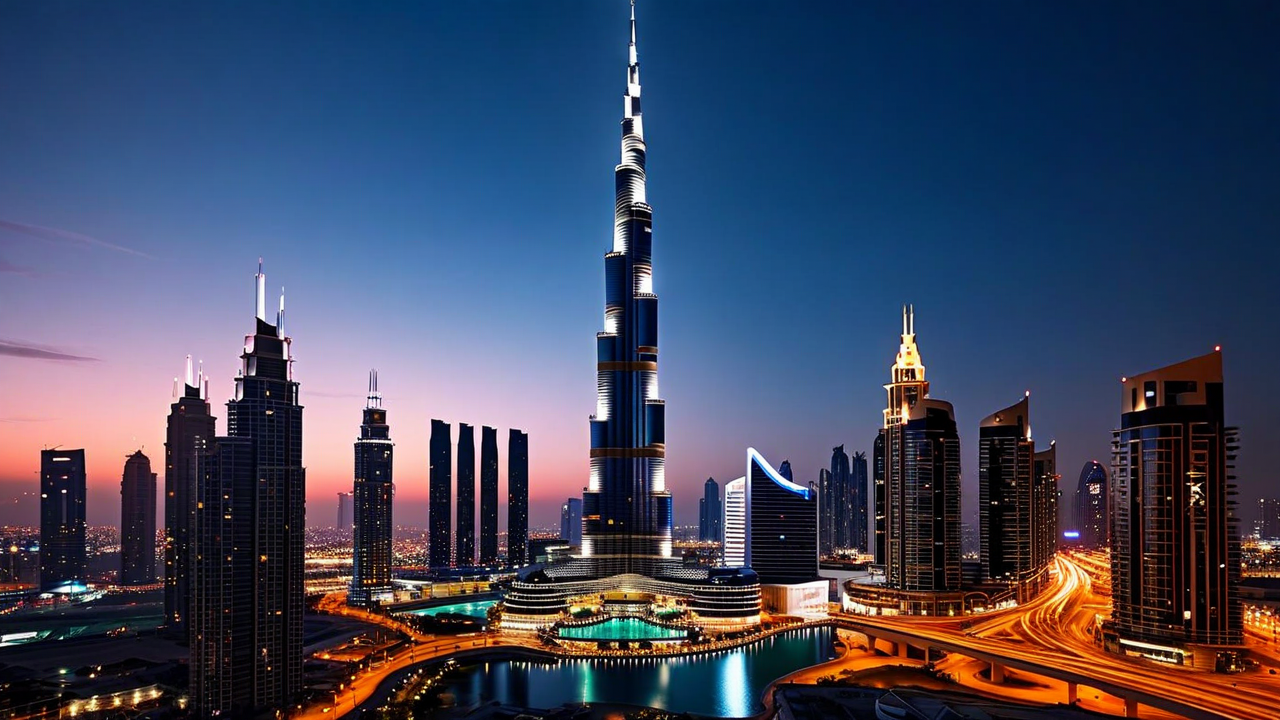
What makes the UAE genuinely interesting to a traveller is not the record-breaking architecture but the compression — the way a 5,000-year-old tomb field at Jebel Hafeet, a coral-and-gypsum wind-tower house in Sharjah, and a 828-metre tower finished in 2010 all sit within a two-hour drive of one another. The country is easy to enter, easy to move around, and much stranger and older than its skyline suggests.
02
🏷️ Name & Identity
In Arabic the country is الإمارات العربية المتحدة ( al-Imārāt al-‘Arabīya al-Muttaḥida ) — the United Arab Emirates. An imarah is the territory of an amir , a prince or commander; the plural gives the country its name. Locally it is simply al-Imarat , and colloquially in English "the Emirates" — a usage now hopelessly entangled with the Dubai airline of the same name.
Before 1971 the coast was known to the British as the Trucial States or Trucial Oman, from the maritime truces signed with Britain from 1820 onward. To European mariners of the eighteenth and early nineteenth centuries it was the "Pirate Coast" — a label applied by the power whose shipping was being raided, and one Emiratis understandably reject.
The flag — red, green, white and black — uses the Pan-Arab colours and was adopted on 2 December 1971. It was designed by Abdullah Mohammed Al Maainah , then 19 years old, whose entry was chosen from more than a thousand submissions. Emirati national identity leans heavily on the pre-oil past: the falcon, the dhow, the date palm, the majlis and the gahwa pot appear on everything from banknotes to airport signage.
03
🗺️ Geography
The UAE occupies about 83,600 km² , sharing land borders with Saudi Arabia to the south and west and Oman to the east and north-east, plus a maritime frontier with Iran and Qatar. The coastline runs roughly 1,300 km along the Arabian Gulf, with a second, quite different shore on the Gulf of Oman at Fujairah and Khor Fakkan.
Three landscapes dominate. The coastal plain is a belt of salt flats — sabkha — barely above sea level, fringed with mangrove creeks at Abu Dhabi, Umm Al Quwain and Khor Kalba. Inland, the Rub‘ al Khali (Empty Quarter), the largest continuous sand desert on Earth, pushes north into the Liwa Oasis in a chain of dunes that top 250 m. In the east the Hajar Mountains rise abruptly out of the gravel plain; the highest UAE summit is Jebel Jais in Ras Al Khaimah at 1,934 m . (Jebel Hafeet, the far more famous mountain above Al Ain, is 1,249 m — high, but not the highest.)
There are no permanent rivers. Water comes from fossil aquifers, from the ancient falaj irrigation channels of Al Ain, and — overwhelmingly today — from desalination: the UAE is one of the most desalination-dependent countries in the world. The Gulf coast has around 200 offshore islands, from the wildlife reserve of Sir Bani Yas to the artificial archipelagos off Dubai.
04
🧭 Map
05
🪶 History
Human occupation here is far older than the federation. Excavations at Faya in central Sharjah have produced one of the longest continuous records of early human presence in an arid environment anywhere — more than 200,000 years of episodic settlement — and in 2025 it became the first desert Palaeolithic site inscribed on the UNESCO World Heritage List. By the third millennium BCE the Umm an-Nar culture was smelting copper in the Hajar foothills and trading it into Mesopotamia, which knew this coast as Magan . The beehive tombs on Jebel Hafeet above Al Ain date from roughly 3200–2700 BCE.
Islam arrived in the seventh century CE. The medieval and early-modern coast lived on pearling, fishing, date cultivation and the dhow trade to India and East Africa; Julfar , near modern Ras Al Khaimah, was a major regional port. Portuguese fleets raided the coast in the sixteenth century; the Qawasim of Sharjah and Ras Al Khaimah built a formidable maritime power in the eighteenth, which brought them into collision with the British East India Company and produced the punitive campaigns of 1809 and 1819.
The General Maritime Treaty of 1820 and the perpetual truce of 1853 gave the region its colonial name. The pearl trade — the economic backbone — collapsed in the 1930s under the twin blows of Japanese cultured pearls and the Great Depression, and the following two decades were among the poorest in the region's history. Oil was found offshore Abu Dhabi at Umm Shaif in 1958 and exported from 1962; Dubai's Fateh field followed in 1966.
Britain announced its withdrawal from east of Suez in 1968. Sheikh Zayed bin Sultan Al Nahyan of Abu Dhabi and Sheikh Rashid bin Saeed Al Maktoum of Dubai negotiated the union that was declared on 2 December 1971, with Zayed as the first President — a post he held until his death in 2004. Since then: the Jebel Ali free zone (1985), the founding of Emirates airline (1985), the Burj Khalifa (2010), the Hope Probe's arrival at Mars (9 February 2021), Expo 2020 Dubai (held October 2021–March 2022 after a pandemic delay), the Barakah nuclear plant reaching full four-unit operation, and COP28 in Dubai (2023). Sheikh Mohamed bin Zayed Al Nahyan has been President since 14 May 2022; Sheikh Mohammed bin Rashid Al Maktoum , Ruler of Dubai, is Vice-President and Prime Minister.
06
📜 Formation of the Federation
The Trucial States developed under treaties with Britain during the nineteenth and twentieth centuries. When Britain announced its withdrawal from the region, local rulers negotiated a federation. Six emirates formed the United Arab Emirates on December 2, 1971; Ras Al Khaimah joined in February 1972.
Sheikh Zayed bin Sultan Al Nahyan of Abu Dhabi became the first president and remains central to national memory. Federation balanced local dynastic authority with federal institutions, using oil wealth to build infrastructure, education and health services at extraordinary speed.
07
⚔️ The Seven Emirates
The federation joins Abu Dhabi, Dubai, Sharjah, Ajman, Umm Al Quwain, Ras Al Khaimah and Fujairah. Each emirate retains its own ruler, institutions and economic character while participating in the federal state. Abu Dhabi is the capital and largest emirate; Dubai is the main commercial and aviation hub.
The smaller emirates are not merely suburbs of the two global cities. Sharjah has built a strong cultural identity, Ajman is densely urban, Umm Al Quwain preserves quieter coastal landscapes, Ras Al Khaimah reaches into the Hajar Mountains and Fujairah faces the Gulf of Oman.
08
🛢️ Pearls, Ports and Tribal Networks
Before oil, coastal livelihoods depended on pearling, fishing, boatbuilding and trade. Diving fleets left for the season under demanding conditions, linking merchants, captains, divers and crews through systems of debt and patronage. Natural Gulf pearls connected these ports to India, Europe and wider markets.
The collapse of the pearl economy in the early twentieth century brought severe hardship. Heritage villages and museums preserve tools and stories, but responsible interpretation must acknowledge the danger, inequality and labor behind the romantic image of the dhow.
09
🗳️ Oil and Transformation
Commercial oil exports from Abu Dhabi began in 1962 and transformed the scale of public investment. Roads, ports, airports, housing, schools and hospitals appeared within a generation. Dubai, with smaller reserves, accelerated diversification through trade, logistics, finance, property and tourism.
Hydrocarbons remain central, particularly in Abu Dhabi, but the national economy is broader than the familiar oil stereotype. Sovereign wealth funds, aviation, manufacturing, renewable energy, technology and global investment now shape the federation’s influence.
10
🔴 Government and Public Life
The UAE is a federation of hereditary monarchies. The rulers form the Federal Supreme Council, which elects the president and vice president from among its members; in practice these offices are associated with Abu Dhabi and Dubai. The appointed cabinet and advisory Federal National Council operate within a system without competitive national party politics.
Public life combines federal law, emirate-level authority, Islamic principles and rapidly evolving regulation. Visitors should not assume that practices accepted elsewhere are legal or socially appropriate in the Emirates.
11
🏛️ People & Culture
The UAE's demography is unlike almost anywhere else. Of roughly 11.3 million residents, Emirati citizens make up only about 11–12% . The largest expatriate communities are Indian, Pakistani and Bangladeshi, followed by Filipino, Egyptian, Nepali, Sri Lankan and a long tail of every other nationality; the remainder of the population — the part not accounted for by any single named group — is simply the sum of more than 190 further nationalities, not a hidden minority. The sex ratio skews heavily male because of the migrant labour force.
Arabic is the official language and the language of government, courts and signage, but English is the de facto lingua franca of daily commerce; Hindi, Urdu, Malayalam, Tagalog and Bengali are all heard constantly. Islam is the state religion and the great majority faith; churches, gurdwaras, mandirs and a synagogue operate openly, and the Abrahamic Family House on Saadiyat Island in Abu Dhabi — a mosque, a church and a synagogue on one campus — opened in 2023.
Emirati social life turns on the majlis , the reception room where guests are received, coffee is poured and matters are settled. Hospitality is codified: gahwa (cardamom coffee) is poured from a dallah into a small handleless finjan , refilled until you shake the cup; dates are always alongside. Men wear the white kandura with a ghutra headcloth and black agal ; women the black abaya and shayla . Falconry, camel racing and al-ayyala stick dancing are all on UNESCO's Intangible Cultural Heritage lists.
Practically: the working week is Monday to Friday (federal offices close at midday Friday for prayers) with a Saturday–Sunday weekend, a change made on 1 January 2022; Sharjah runs a four-day week. Dress modestly in public — shoulders and knees covered — and expect stricter enforcement in Sharjah than in Dubai Marina.
12
📉 Islam and Religious Life
Islam is the official religion and mosques structure the rhythm of daily life. The call to prayer, Friday worship, Ramadan fasting and Eid celebrations are visible across the country. Emirati religious practice belongs to wider Sunni Islam while retaining local Gulf traditions.
Large expatriate communities include Christians, Hindus, Buddhists, Sikhs and others, with licensed places of worship in several emirates. Respectful dress and conduct are especially important in mosques and during Ramadan; rules and access should always be checked locally.
13
🧳 An Expatriate-Majority Society
Citizens form a minority of the UAE’s residents. Most people living in the federation come from South Asia, the wider Arab world, Southeast Asia, Africa, Europe and elsewhere. This demographic reality shapes languages, food, schools, neighborhoods and the service economy.
The benefits and legal status attached to citizenship differ sharply from temporary labor and professional residency. Describing the UAE honestly means seeing both Emirati national culture and the millions of migrants whose work built and operates its cities.
14
👥 Work, Migration and Labour Rights
Migrant workers have constructed towers, staffed homes, driven taxis and sustained hospitality, retail and logistics. Reforms have changed contracts, wage protection and some sponsorship practices, but concerns remain about recruitment debt, passport retention, heat exposure, domestic work and access to remedy.
Visitors participate in this economy. Fair tipping, respectful conduct and choosing transparent businesses cannot solve structural problems, but they are preferable to treating workers as invisible parts of a luxury landscape.
15
🗣️ Architecture and Urban Ambition
The UAE’s skyline became a laboratory for global architecture: supertall towers, artificial islands, vast malls, museums and transport systems compress decades of urban change into a single view. Burj Khalifa and Sheikh Zayed Grand Mosque are international icons, while Louvre Abu Dhabi and newer cultural projects reshape the region’s museum landscape.
Spectacle is only one layer. Wind towers, shaded courtyards, coral-stone houses, souqs and restored forts reveal older climate intelligence. The strongest reading of Emirati architecture compares these traditions rather than treating the country as a catalogue of records.
16
🎵 Abu Dhabi
The capital sits on a low island connected to the mainland by bridges, and it is a calmer, more deliberate city than Dubai. The Sheikh Zayed Grand Mosque , completed in 2007, is the set piece — 82 domes, a courtyard floored in floral marble inlay, and the world's largest hand-knotted carpet in the main prayer hall. It is open to non-Muslim visitors outside prayer times; abayas are lent at the entrance, and the free guided tours are worth the wait.
On Saadiyat Island , the Louvre Abu Dhabi (Jean Nouvel, opened November 2017) sits under a 180-metre perforated dome that drops a "rain of light" onto the galleries below; the collection is arranged chronologically across cultures rather than by nation, which is the whole argument of the building. The Abrahamic Family House (2023) is a short walk away. Yas Island holds Ferrari World, Warner Bros. World, Yas Waterworld and the Yas Marina Circuit, which has closed the Formula One season since 2009.
Don't skip the Corniche at dusk, the Qasr Al Hosn fort — the oldest stone building in the city, begun as a watchtower in the 1760s — or the Mangrove National Park , best seen from a kayak at high tide.
17
💧 Dubai
The Burj Khalifa opened on 4 January 2010 at 828 m and remains the tallest building in the world; the At the Top observation decks are on levels 124/125 and 148. Below it, Dubai Mall and the fountain show do a brisk trade in astonishment. The Museum of the Future (February 2022), a steel torus inscribed with Arabic calligraphy and no visible columns, is the more interesting building of the two.
Old Dubai repays more time than new Dubai. Cross Dubai Creek on an abra for one dirham, walk the coral-and-gypsum lanes of Al Fahidi (Bastakiya) with its Persian wind towers, and work through the gold, spice and textile souks on the Deira side. Alserkal Avenue in Al Quoz is where the contemporary gallery scene actually lives.
Further out: the Palm Jumeirah and Atlantis; Jumeirah Beach with the Burj Al Arab offshore; the desert conservation reserve inland for dune drives and camel breakfasts; and Hatta , a Dubai exclave in the Hajar Mountains with a dam, kayaks and genuinely cool winter air.
18
⛰️ Sharjah
Sharjah was named UNESCO's Arab Capital of Culture in 1998 and has behaved like one ever since. The Sharjah Museum of Islamic Civilization , in a converted 1970s souk, is the best museum of its kind in the country; the Sharjah Art Foundation runs a biennial with genuine international weight; and the restored Heart of Sharjah quarter is a careful piece of urban archaeology rather than a theme park.
Sharjah is dry — alcohol is not served or sold anywhere in the emirate, and possession is an offence. Dress codes are enforced more firmly than elsewhere. Inland, Mleiha offers Bronze Age and pre-Islamic archaeology with a good interpretive centre, dune drives and stargazing; the Faya palaeolandscape, inscribed by UNESCO in 2025, lies in the same central region.
19
🌊 Al Ain
Inland on the Omani border, Al Ain is the "Garden City" and the birthplace of Sheikh Zayed. Its Cultural Sites of Al Ain — Hafit, Hili, Bidaa Bint Saud and the oases — were the UAE's first UNESCO World Heritage inscription, in 2011 . Walk the shaded Al Ain Oasis , where 147,000 date palms are still watered by falaj channels engineered three millennia ago, and the fee is nothing at all.
Jebel Hafeet rises 1,249 m at the city's edge; the switchback road to the summit is one of the great drives in the Gulf, and the tomb field at its foot dates to roughly 3200–2700 BCE. Al Jahili Fort holds a permanent exhibition on the explorer Wilfred Thesiger, whose crossings of the Empty Quarter in 1946–48 produced Arabian Sands .
20
🐊 Fujairah & the East Coast
The only emirate entirely on the Gulf of Oman, Fujairah is the country's other face: mountains straight down to a rockier, cooler sea, and the best diving and snorkelling in the UAE around Snoopy Island and Dibba. Al Bidya Mosque , north of Fujairah city, is the oldest known mosque in the country — a small four-domed mud-and-stone structure usually dated to around 1446 CE, and still in use.
In 2026 the emirate gained the UAE's first natural World Heritage Site : Wadi Wurayah National Park , 220 km² of Hajar wadi and mountain that became the country's first national park in 2013 and shelters the Arabian tahr, the caracal and endemic invertebrates found nowhere else. Access is regulated — check current permit rules with Fujairah authorities before setting out. Khor Fakkan , a Sharjah exclave on the same coast, has a corniche, an amphitheatre and a waterfall that is, admittedly, pumped.
21
🏝️ Ras Al Khaimah
The northernmost emirate, and the last to join the federation, in February 1972. Jebel Jais is the highest mountain in the UAE at 1,934 m , reached by a superbly engineered road; the Jais Flight zipline running off it is about 2.83 km long and among the longest in the world. Winter nights up here can drop close to freezing — a genuine surprise on this coast.
On the plain below, Jazirat Al Hamra is a wholly abandoned pearling town of coral-block houses, left largely intact when its inhabitants moved out in the 1960s and now on the UNESCO Tentative List; it is the most atmospheric place in the country and costs nothing to walk through. Dhayah Fort , on its hilltop, was the last position to fall in the British campaign of 1819. The site of medieval Julfar lies just north of the modern city.
22
🏔️ Desert Landscapes and Oases
Sand deserts cover much of the country, but they are not empty. Dunes, gravel plains, salt flats and oases support adapted plants, reptiles, gazelles and human routes. Liwa forms a great arc of settlements along the edge of the Rub al Khali, with some of the region’s largest dunes.
Desert excursions vary from conservation-focused walks to high-impact dune driving. Choose responsible operators, avoid disturbing wildlife and archaeological sites, carry water and never enter remote terrain without communications and recovery equipment.
23
🏙️ Mangroves and Coastal Ecology
Mangrove forests line sheltered coastal waters around Abu Dhabi and other emirates. They protect shorelines, store carbon and provide nurseries for fish and birds. Kayaking can reveal a quieter UAE far removed from highways and towers.
Coastal development, dredging, heat and pollution place these systems under pressure. Visitors should use designated routes, keep distance from nesting birds and avoid landing on fragile islands or shallow root zones.
24
⚡ Falconry, Camels and Living Heritage
Falconry remains a powerful symbol of Emirati identity and is recognized by UNESCO as part of humanity’s intangible cultural heritage. Its traditions connect desert knowledge, training, hospitality and poetry. Camel breeding and racing likewise combine older pastoral life with modern technology.
Animal encounters require judgment. Prefer institutions and operators that demonstrate high welfare standards, avoid performances built around stress or handling, and understand that living heritage is more than a photo opportunity.
25
🏖️ Art, Museums and Cultural Districts
Sharjah’s museums, biennial and heritage work established a cultural role distinct from Dubai’s commercial energy. Abu Dhabi’s Saadiyat Island brings together Louvre Abu Dhabi and major planned institutions, while galleries and foundations across Dubai connect artists from the Middle East, South Asia and Africa.
Museum visits are most rewarding when they include local archaeology, pearling, manuscripts and contemporary regional voices alongside global headline architecture.
26
🌿 Aviation, Ports and Global Connections
Emirates and Etihad turned Dubai and Abu Dhabi into major long-haul hubs, while Air Arabia built a broad low-cost network from Sharjah. Jebel Ali developed into one of the world’s largest container ports, connecting free zones, logistics and manufacturing.
These networks explain why the country feels globally connected despite its modest population. They also make airport transfers, entry rules and transit policies important practical subjects that can change quickly.
27
🦜 Business, Free Zones and Finance
The UAE attracts regional headquarters, entrepreneurs and investors through infrastructure, free zones and international connectivity. Dubai International Financial Centre and Abu Dhabi Global Market operate distinct legal and regulatory frameworks, while specialized zones serve media, aviation, commodities and technology.
Marketing promises should be separated from legal reality. Company formation, tax residency, employment and property ownership depend on current rules and professional advice; a tourist guide should never substitute for verified legal or financial guidance.
28
🍳 Sustainability and the Post-Oil Future
The federation is investing in solar power, nuclear energy, green hydrogen, public transport and lower-carbon urban systems while remaining a major hydrocarbon producer. Masdar City became an early symbol of this ambition, and the Barakah nuclear plant changed the national electricity mix.
The central challenge is scale: air-conditioning, desalination, aviation, construction and high consumption carry large environmental costs. Sustainability claims deserve measured assessment based on outcomes, not futuristic imagery alone.
29
🥃 Cuisine
Emirati cooking is a coastal-desert cuisine built on rice, dates, fish, camel and goat, and a spice vocabulary borrowed from the Indian Ocean trade: baharat , turmeric, cinnamon, saffron, and above all loomi — whole limes boiled in brine and sun-dried until black, which give Gulf food its distinctive sour-smoky note. Bread is khameer or regag , the latter a paper-thin griddle bread often filled with cheese and date syrup.
Finding genuine Emirati food takes a little effort, because the restaurant scene is overwhelmingly Indian, Levantine, Filipino and Iranian. Look for Al Fanar, Aseelah, Milas, or the Sheikh Mohammed Centre for Cultural Understanding in Al Fahidi, which serves a communal Emirati breakfast with an open question-and-answer session — the single most useful two hours a first-time visitor can spend in Dubai.
Al Machboos Spiced Rice with Meat The UAE's national dish — fragrant rice cooked in the meat broth, sharpened with dried lime. Ingredients: 500 g basmati rice (soaked 30 min), 800 g lamb shoulder or bone-in chicken, 2 onions (1 diced, 1 sliced and fried crisp), 3 cloves garlic, 1 tbsp grated ginger, 2 tomatoes, 2–3 loomi (dried limes), 2 tsp baharat, 1 tsp turmeric, 1 cinnamon stick, 4 cardamom pods, 1 tsp rose water, 50 g almonds, 50 g raisins, salt. Preparation: Brown the meat in ghee with the diced onion, garlic and ginger. Add tomatoes, baharat, turmeric, cinnamon and cardamom and cook until the fat separates. Pierce the loomi, add with 1.2 litres water and simmer 60–90 minutes until the meat is tender. Lift out the meat, measure the broth to twice the volume of drained rice, return to the boil, add the rice and cook covered on the lowest heat for 18 minutes. Fold the meat back through, sprinkle with rose water, and top with the fried onion, almonds and raisins. 💡 Pierce each loomi two or three times before it goes in — whole and unpierced it gives up almost nothing.
Balaleet Sweet Vermicelli with Omelette The classic Emirati breakfast, and the country's great sweet-savoury argument: sugared saffron noodles under a plain omelette. Ingredients: 250 g fine vermicelli, 60 g sugar, generous pinch saffron soaked in 2 tbsp warm water, 4 cardamom pods (ground), 1 tsp rose water, 40 g ghee, 4 eggs, splash of milk, salt, pistachios to finish. Preparation: Break the vermicelli into short lengths and toast in ghee until nut-brown. Cover with boiling salted water and simmer 4–5 minutes until just tender, then drain. Return to the pan with sugar, saffron water, cardamom and rose water and toss over low heat until glossy. Beat the eggs with a little milk and salt, cook as a thin flat omelette, and lay it whole over the noodles. Scatter pistachios. 💡 Toast the vermicelli properly — pale noodles make a flat, one-note dish.
Luqaimat Sweet Dumplings in Date Syrup Crisp outside, hollow and soft inside, drenched in date syrup — the Ramadan sweet, sold from carts all year. Ingredients: 250 g plain flour, 2 tbsp cornflour, 7 g dried yeast, 1 tsp sugar, 1/2 tsp ground cardamom, pinch saffron, 300 ml warm water, oil for frying, date syrup ( dibs ) and sesame seeds to finish. Preparation: Whisk flour, cornflour, yeast, sugar, cardamom and saffron with the warm water into a thick batter. Cover and leave in a warm place for about an hour, until doubled and bubbling. Heat oil to 170 °C and drop in walnut-sized spoonfuls, stirring the oil so they turn and colour evenly; fry 3–4 minutes to deep gold. Drain, then drench in date syrup and scatter with sesame while still hot. 💡 The batter should fall thickly from the spoon — too thin and they collapse, too stiff and they fry solid.
Karak Chai Strong Spiced Milk Tea The unofficial national drink, sold for a couple of dirhams from cafeteria windows at every hour of the night. Ingredients: 500 ml water, 3 tbsp strong black tea (a Ceylon dust grade is traditional), 4 cardamom pods lightly crushed, 200 ml evaporated milk (unsweetened — not condensed), 2–3 tbsp sugar, saffron optional. Preparation: Boil the water with the cardamom for two minutes. Add the tea and boil hard for three to four minutes until very dark. Add the evaporated milk and sugar and bring back to a rolling boil, letting it climb the pan and pulling it off the heat two or three times. Strain into small glasses and serve scaldingly hot. 💡 Use evaporated milk, not sweetened condensed — evaporated milk carries the body without the cloying sweetness, and lets the sugar be dialled to taste.
30
🏆 Wine, Spirits & Drinking Culture
The UAE has no wine production — the climate and the legal framework both preclude viticulture, and there is no Kaufmann Wine Score for this country because there is nothing domestic to score. What the Emirates have instead is the most developed alcohol market in the Middle East. By value the UAE is the region's largest wine market, accounting for roughly a third of Middle East revenue, with the highest per-capita consumption in the Gulf — a function of tourism, an expatriate majority and a hospitality sector that imports at scale.
The rules are federal in outline and emirate-by-emirate in practice. Alcohol is served to non-Muslims aged 21 and over in licensed hotels, restaurants and bars, and no personal licence is needed to drink in a licensed venue. To buy from a shop or keep alcohol at home in Dubai you still need a personal licence tied to your Emirates ID — free of charge since January 2023 , but still required. Dubai's 30% municipality tax on alcohol was suspended at the start of 2023 and reinstated on 1 January 2025 , so the brief window of cheap drinks has closed. The two retail chains are MMI (Maritime & Mercantile International) and African + Eastern . Sharjah is entirely dry. Public intoxication and drink-driving carry a zero-tolerance response, and the legal blood-alcohol limit for driving is zero.
The hotel wine lists in DIFC, on Palm Jumeirah and along the Abu Dhabi Corniche are genuinely serious — Grand Cru Burgundy, back-vintage Champagne, Bordeaux verticals — and priced accordingly. Traditional Emirati drinking, though, is entirely non-alcoholic and centres on gahwa , the pale, cardamom-heavy Arabic coffee poured from a dallah and served with dates; on karak chai , sweet spiced tea made with evaporated milk; and on laban , fresh juices and camel milk. Jallab — grape molasses and date syrup with rose water, poured over crushed ice and finished with pine nuts and raisins — is a Levantine drink rather than an Emirati one, but it is on menus across the country and is the best thing to order at 45 °C.
31
🍸 Cocktails & Mixed Drinks
There is no indigenous Emirati cocktail tradition — the mixed-drink culture here is imported, expert and expensive, and the genuinely local canon is non-alcoholic. Three recipes worth taking home, all of them things you will actually be handed in the UAE:
Jallab Grape molasses, dates and rose water — Levantine by origin, ubiquitous in the Emirates Method: Stir 3 tbsp grape molasses ( dibs enab ) and 1 tbsp date syrup into 250 ml cold water until fully dissolved. Add 1 tsp rose water. Fill a tall glass with crushed ice, pour over, and float a spoonful of pine nuts and golden raisins on top. Do not stir again — the layered colour is the point.
Lemon Mint The default order in every Emirati café Method: Blend the juice of 3 lemons, a large handful of mint leaves, 2 tbsp sugar, 300 ml cold water and a full glass of ice until it turns pale green and frothy. Strain only if you object to the texture — most places don't. Serve immediately; it separates within minutes.
Vimto Iftar Punch A British cordial that became a Ramadan institution across the Gulf Method: Dilute Vimto cordial 1:5 with cold water. Add sliced oranges, quartered fresh dates, a handful of pomegranate seeds and plenty of ice, and let it sit 20 minutes before the call to maghrib . Gulf supermarkets stack pallets of Vimto to the ceiling in the fortnight before Ramadan; nobody in the region finds this odd.
32
🌤️ Climate
Hot desert climate (Köppen BWh ), with two seasons that matter: bearable and not. November to March is the travel season — daytime highs of 24–30 °C, nights in the mid-teens, and cold enough on Jebel Jais to want a jacket. June to September brings highs of 42–48 °C with coastal humidity that can push the heat index past 55 °C; outdoor work is legally suspended during the middle of the day in summer, and you should treat the same hours the same way.
Rainfall averages under 100 mm a year and arrives in short winter bursts, but when it arrives it can be violent: wadis flash-flood and city drainage is quickly overwhelmed — the April 2024 storm dropped more rain on parts of the UAE in a day than usually falls in a year. Summer brings shamal dust winds off the desert that cut visibility and ground light aircraft. The east coast at Fujairah is a few degrees cooler and noticeably less humid than the Gulf side.
33
✈️ Getting There & Around
Dubai International (DXB) is one of the world's busiest airports for international passengers and the hub of Emirates ; Zayed International (AUH) in Abu Dhabi is the base of Etihad . Low-cost options are flydubai from DXB and Air Arabia from Sharjah (SHJ); Ras Al Khaimah (RKT) has a small international operation. See the advisory at the top of this page: European carriers have suspended a number of Dubai and Abu Dhabi services into autumn 2026, and schedules are being adjusted at short notice — reconfirm with the operating airline, not with a booking site.
On the ground, the Dubai Metro (opened 2009) is clean, driverless and covers the tourist spine from the airport through Downtown to the Marina; a Nol card works on metro, tram and bus. Abu Dhabi runs buses and, since 2020, a Hafilat card. Intercity coaches between Dubai, Abu Dhabi, Sharjah and the northern emirates are cheap and frequent. Etihad Rail completed its roughly 900 km national freight line in 2023; the passenger network has been announced and is under construction, so check current status rather than planning around it.
Taxis are metered and inexpensive; Careem and Uber both operate. Car hire is the only sensible way to reach Jebel Jais, Hatta, Mleiha or the east coast — roads are excellent, fuel is cheap, and speed cameras are ruthless and everywhere. An International Driving Permit alongside your national licence is the safe combination for most nationalities.
34
📋 Safety & Law
Regional security. The UAE is at Level 3 — Reconsider Travel (U.S. State Department, 29 August 2026) because of the ongoing United States–Iran hostilities that began on 28 February 2026. There is a standing threat of drone and missile attack, air defences have engaged targets over UAE waters as recently as 31 August 2026, and EASA has a conflict-zone warning in force over UAE airspace. Other governments' advice varies; read your own alongside this. Sign up for your embassy's alert service before you fly.
Ordinary crime is very low — violent crime against visitors is rare and the streets are safe at any hour. The risks that actually catch travellers out are legal and medical, not criminal.
The law is strict and enforced. Zero tolerance on narcotics: trace quantities, poppy seeds, CBD products and some prescription medicines (codeine, tramadol, certain ADHD and psychiatric drugs) can lead to arrest — carry a doctor's letter and check the Ministry of Health list before travelling. Public drunkenness is an offence even where drinking is legal. Photographing people, military sites, ports or government buildings without permission is an offence. Bounced cheques and unpaid debts can trigger a travel ban. Swearing or making rude gestures — including in a WhatsApp message or on social media — is prosecutable under the cybercrime law. Public displays of affection draw complaints; same-sex relationships are criminalised.
Some things have loosened: since November 2020 unmarried cohabitation and consensual sexual relations between unmarried adults are no longer criminal offences, and alcohol consumption by non-Muslims over 21 was decriminalised at federal level. Enforcement still varies sharply by emirate.
Heat and water. In summer, heatstroke is the realistic danger — not the desert, the car park. Drink far more than feels necessary, avoid 11:00–16:00 outdoors, and never walk a wadi when rain is forecast anywhere upstream. Emergency numbers: 999 police, 998 ambulance, 997 fire.
35
💰 Practical Information
Visas. Citizens of the other five GCC states enter freely. Around ninety nationalities — including the EU, UK, US, Canada, Australia, Japan and South Korea — receive a visa on arrival or visa-free entry, typically 30 or 90 days depending on nationality; EU nationals normally get 90 days within any 180. Everyone else needs a sponsored visa arranged in advance, usually through a hotel or airline. Passports must have six months' validity. Longer-stay routes include the ten-year Golden Visa (2019) and the five-year Green Visa (2022).
Money. The dirham (AED) has been pegged to the US dollar at 3.6725 since 1997, which makes budgeting unusually predictable. Cards are accepted almost universally; carry small notes for taxis, souks and karak windows. VAT is 5%. Hotel bills typically add municipality and service charges plus a per-night tourism fee. Tipping is not obligatory but 10–15% in restaurants is normal.
Connectivity. Etisalat (e&) and du sell tourist SIMs at the airport; coverage is excellent everywhere including the mountains. Note that VoIP calling over WhatsApp, FaceTime and Skype is restricted — text and voice notes work, voice and video calls generally do not without a licensed app such as Botim. Many travellers find their VPN unreliable; unauthorised VPN use for otherwise-illegal purposes is itself an offence.
Health. No vaccinations are required for entry from most countries. Medical care is excellent and expensive — comprehensive travel insurance is essential and is a visa condition for some nationalities. Tap water is desalinated and safe but almost universally filtered or bottled by preference. Pharmacies are plentiful, but many drugs sold freely elsewhere are controlled here.
Basics. Time UTC+4, no daylight saving. Electricity 230 V, 50 Hz, UK-style Type G plugs. Country code +971. Weekend Saturday–Sunday. During Ramadan , eating, drinking and smoking in public during daylight hours is prohibited for everyone, Muslim or not; hours shorten and the evenings are wonderful.
36
🏨 Cost of Living
The UAE's reputation for expense is half-earned. Accommodation, alcohol and anything on a beach club terrace are genuinely costly; transport, fuel, mobile data, taxis and everyday food are cheap. A traveller who eats in cafeterias and rides the metro spends less here than in most of Western Europe.
Karak chai from a window: AED 1–2 Shawarma or a cafeteria meal: AED 8–20 Mid-range restaurant, two courses: AED 80–150 Pint of beer in a licensed bar: AED 40–70 Dubai Metro single ride: AED 3–7.50 Taxi flagfall: AED 12, then roughly AED 2 per km Litre of petrol: around AED 2.5–3, revised monthly Burj Khalifa At the Top (levels 124/125): from about AED 179, more at sunset Hostel dorm: AED 70–140 · Mid-range hotel: AED 300–600 · Luxury: AED 1,200 and upward
Rough daily budgets excluding flights: backpacker AED 200–300, mid-range AED 500–900, comfortable AED 1,500+. Prices swing hard by season — a room that costs AED 350 in August costs AED 1,100 in January.
37
🎭 Accommodation
Dubai and Abu Dhabi have an enormous, highly seasonal hotel stock. The summer discount is the single biggest lever a traveller has: five-star beach resorts routinely sell in July and August for a third of their January rate, and if you can tolerate the heat between air-conditioned spaces, the value is extraordinary.
Deira and Bur Dubai hold the budget and mid-range hotels, and put you next to the creek, the souks and the metro — the best base for a first visit. Downtown and DIFC are the business and Burj Khalifa districts. Jumeirah, the Marina and the Palm are the beach-resort belt. In Abu Dhabi, the Corniche is central and Saadiyat and Yas are the resort islands. Sharjah is cheaper and dry; Ras Al Khaimah and Fujairah have good-value coastal resorts.
Beyond hotels: desert camps in the Dubai and Al Marmoom conservation reserves and at Mleiha in Sharjah, from communal Bedouin-style tents to serious luxury; Sir Bani Yas Island 's Anantara lodges, on a wildlife reserve of 13,000 free-roaming animals; and mountain lodging at Jebel Jais and Hatta. Holiday-home rentals are legal and widely used but must be registered — check the licence number before booking.
38
🏛️ Festivals & Events
Ramadan and the two Eids move through the Gregorian calendar by roughly eleven days a year and reshape everything — daytime restraint, then nightly iftar tents, majlis gatherings and a city that stays up until dawn. National Day on 2 December is the biggest secular celebration, with flags on every car and fireworks along both corniches.
Dubai Shopping Festival (December–January) — running since 1996; discounts, concerts, nightly fireworks. Abu Dhabi Grand Prix (Yas Marina Circuit, late in the year) — has closed the Formula One season since 2009, with headline concerts either side. Dubai World Cup (Meydan, late March) — among the richest days in horse racing, and the one day of the year Dubai dresses up for a hat. Al Dhafra Festival (Madinat Zayed, December) — camel beauty contests, saluki racing, date auctions; the least touristy major event in the country. Liwa Date Festival (July) — competitive date growing on the edge of the Empty Quarter. Sharjah Light Festival (February) and the Sharjah Biennial (odd-numbered years). Dubai International Film Festival’s successor events, Art Dubai (spring) and the Sharjah International Book Fair (November), anchor the cultural calendar. Camel racing season (October–April) at Al Marmoom and Al Wathba — robot jockeys, owners driving alongside the track, free to watch.
39
💎 UNESCO World Heritage
The UAE acceded to the World Heritage Convention on 11 May 2001 and now has three inscribed properties — two cultural, one natural — plus sixteen sites on its Tentative List. Two of the three were added in the last two years, so older guidebooks will tell you the country has one.
Cultural Sites of Al Ain (Hafit, Hili, Bidaa Bint Saud and Oases Areas) — inscribed 2011 , cultural. Beehive tombs of roughly 3200–2700 BCE on Jebel Hafeet, the Bronze Age settlement and Hili Grand Tomb, and the oases still irrigated by falaj channels. Evidence of continuous sedentary human occupation in a desert region from the Neolithic onward. Faya Palaeolandscape (central Sharjah) — inscribed 2025 , cultural. More than 200,000 years of episodic early human presence, and the first desert Palaeolithic site anywhere to enter the World Heritage List. Wadi Wurayah (Fujairah) — inscribed 2026 at the Committee's 48th session in Busan; natural, and the UAE's first natural World Heritage Site . 220 km² of Hajar wadi, waterfall and mountain, home to the Arabian tahr, the caracal and endemic invertebrates. It became the country's first national park in 2013.
The Tentative List runs to sixteen entries and is worth reading as a travel itinerary in its own right: Khor Dubai, Sir Bu Nair Island, the Umm an-Nar settlement and cemetery, Ed-Dur, Al Bidya Mosque, Mleiha, the pearling town of Jazirat Al-Hamra, Julfar, Shimal, the Dhayah cultural landscape, Hatta, the Sharjah rock art, Wadi Al Helo's Bronze Age copper workings, the Abu Dhabi sabkha, "Sharjah: the Gate to Trucial States", and — added in 2026 — the Coastal Fortified Network of South Eastern Arabia. Verified against the UNESCO States Parties record for the UAE, 2 September 2026.
40
🎒 Hidden Gems
Jazirat Al Hamra, Ras Al Khaimah — an entire pearling town of coral-block and gypsum houses, abandoned in the 1960s and never redeveloped. Go at low sun. Free. Mleiha, Sharjah — a pre-Islamic kingdom's capital with tombs, a fort and a first-class archaeological centre built into the rock, plus some of the darkest skies within reach of Dubai. Al Bidya Mosque, Fujairah — four small mud-brick domes on a single pillar, around 1446 CE, still in use. Ten minutes and no entry fee. Khor Kalba mangroves — the oldest mangrove forest in Arabia, on the east coast, home to the white-collared kingfisher. Kayak at high tide. Al Ain Oasis — 147,000 date palms, shaded walkways, running falaj water and almost nobody there. Free. Wadi Shawka and Wadi Showka pools — accessible hiking in the Hajar with real water, an hour from Dubai. Masafi Friday Market — open every day despite the name; carpets, pottery, fruit and honey on the road to the east coast. Sir Bani Yas Island — Sheikh Zayed's wildlife reserve, with Arabian oryx, giraffe and cheetah, and a sixth-century Christian monastery excavated on the same island. Dhayah Fort, RAK — 239 steps to a hilltop mudbrick fort with the best view in the northern emirates. Al Marmoom camel racing, Dubai — 6 a.m. on a winter Friday, robot jockeys, owners racing 4x4s along the inside track. Free, surreal, and entirely local.
41
🔗 Packing Tips
Modest, loose, light layers — linen and cotton covering shoulders and knees. Not for the heat alone: it is the entry requirement for mosques, souks and Sharjah generally. A scarf or shawl for women — mosque entry, and the ferocious indoor air conditioning. A warm layer if you are going to Jebel Jais or camping in the desert between December and February. Nights genuinely get cold. High-factor sunscreen, sunglasses, a brimmed hat and a refillable bottle. Dehydration arrives faster than you expect in dry heat. Closed shoes with grip for wadis and forts; sandals are not enough on Hajar scree. Type G (UK) plug adapter , 230 V. A doctor's letter and original packaging for any prescription medication, plus a check against the UAE Ministry of Health controlled list. Printed hotel booking and return ticket — occasionally requested at immigration. Leave behind: anything containing CBD or poppy seeds, drone equipment without a permit, and e-cigarettes if you are transiting onward to a country that bans them.
42
📚 Resources
u.ae — the official UAE government portal; visas, laws, public services. visitdubai.com and visitabudhabi.ae — the two main tourism boards. UNESCO States Parties: United Arab Emirates — the authoritative list of inscribed and tentative sites. U.S. State Department travel advisory and your own foreign ministry's equivalent. Dubai RTA — metro, tram, bus, Nol cards, taxi fares. UAE Ministry of Health and Prevention — the controlled-medicines list, which is worth ten minutes before you pack. The National , Gulf News , Khaleej Times — the English-language dailies. Read them knowing what section 31 says.
43
🎥 Recommended Reading
Wilfred Thesiger, Arabian Sands (1959) — the Empty Quarter crossings of 1946–48. Still the book, and unavoidable once you have seen the Al Jahili Fort exhibition. Frauke Heard-Bey, From Trucial States to United Arab Emirates (1982) — the standard scholarly history, by a historian who lived in Abu Dhabi from 1967. Jim Krane, City of Gold: Dubai and the Dream of Capitalism (2009) — the best single account of how Dubai was actually built. Christopher Davidson, Dubai: The Vulnerability of Success (2008) and Abu Dhabi: Oil and Beyond (2009) — the sceptical political-economy counterweight. Todd Reisz, Showpiece City (2020) — how architects and consultants invented modern Dubai in the 1950s and 60s. Deepak Unnikrishnan, Temporary People (2017) — fiction about the Gulf's migrant workers, and the most interesting literary book to come out of the country. Sultan bin Muhammad Al-Qasimi, The Myth of Arab Piracy in the Gulf (1986) — the Ruler of Sharjah's own scholarly demolition of the "Pirate Coast" label.
44
✨ Watch Before You Go
Rather than link videos that rot, search these on YouTube — each reliably returns good current material:
"Old Dubai Al Fahidi walking tour" — the wind-tower quarter and the creek, which is what most Dubai footage skips. "Wadi Wurayah National Park Fujairah" — the UAE's new natural World Heritage Site. "Emirati food Al Fanar / Emirati breakfast SMCCU" — for what machboos and balaleet actually look like. "Jebel Jais Ras Al Khaimah drive" — the road and the zipline. "Al Marmoom camel racing robot jockey" — genuinely has to be seen. "Jazirat Al Hamra abandoned village" — the ghost town in Ras Al Khaimah.
45
⭐ Fascinating Facts
The UAE is a federation of seven emirates, but the union began with six — Ras Al Khaimah held out until 10 February 1972. Abu Dhabi is about 87% of the country's land area; Ajman, the smallest emirate, is roughly 260 km². The Hope Probe ( Al Amal ) entered Mars orbit on 9 February 2021 , making the UAE the fifth entity ever to reach Mars and the first Arab nation to do so. Hazza Al Mansouri became the first Emirati in space in September 2019; Sultan Al Neyadi flew the first long-duration Arab mission and the first Arab spacewalk in 2023. Barakah is the first nuclear power plant in the Arab world; all four units are now in commercial operation. The dirham has been pegged to the US dollar at 3.6725 since 1997 — one of the world's longest-standing currency pegs. Camel races are run with robot jockeys , mandated after child jockeys were banned in 2002 and remotely operated by owners driving alongside the track. The UAE moved its official weekend to Saturday–Sunday on 1 January 2022 , the first Gulf state to align with the Western working week; Sharjah went further and adopted a four-day week. There is a Ministry of Tolerance , a Ministry of Possibilities , and a Minister of State for Artificial Intelligence — the last appointed in 2017, the first such post in the world. Roughly nine in ten residents are not citizens , one of the highest ratios of foreign-born population of any country.
46
⚾ Notable People
Sheikh Zayed bin Sultan Al Nahyan (1918–2004) — Ruler of Abu Dhabi from 1966, architect of the federation and first President of the UAE, 1971–2004. The founding figure in every sense; his face is on the currency and his name on the Grand Mosque. Sheikh Rashid bin Saeed Al Maktoum (1912–1990) — Ruler of Dubai, co-founder of the union, and the man who dredged the creek and built Port Rashid and Jebel Ali. Sheikh Mohamed bin Zayed Al Nahyan (b. 1961) — President of the UAE since 14 May 2022 and Ruler of Abu Dhabi. Sheikh Mohammed bin Rashid Al Maktoum (b. 1949) — Vice-President and Prime Minister, Ruler of Dubai, poet and thoroughbred owner. Sheikha Lubna Al Qasimi (b. 1962) — the first woman appointed to the UAE cabinet, in 2004; later Minister of Economy and of Tolerance. Hazza Al Mansouri (b. 1984) — fighter pilot and the first Emirati astronaut, ISS, September 2019. Sultan Al Neyadi (b. 1981) — flew a six-month ISS mission in 2023 and performed the first spacewalk by an Arab astronaut. Nora Al Matrooshi (b. 1993) — selected in 2021 as the first Arab woman astronaut candidate; graduated from NASA astronaut training in 2024. Ahmed bin Hasher Al Maktoum (b. 1963) — won the UAE's first Olympic medal, gold in double trap shooting at Athens 2004. Omar Abdulrahman (b. 1991) — the country's most gifted footballer, AFC Asian Player of the Year 2016. Sultan bin Muhammad Al-Qasimi (b. 1939) — Ruler of Sharjah since 1972, historian, playwright, and the driving force behind the emirate's museums. Ahlam Ali Al Shamsi (b. 1969) — among the best-known singers in the Arab world.
47
📰 Sports
Emirati athletes have won two Olympic medals in total , and it is worth naming both precisely, because they are frequently misreported. Ahmed bin Hasher Al Maktoum took gold in men's double trap shooting at Athens 2004 — the country's first Olympic medal of any colour. Sergiu Toma , a Moldovan-born judoka competing for the UAE, took bronze in the men's 81 kg half-middleweight at Rio 2016 . That is the complete list. Jiu-jitsu, in which the UAE is a genuine world power and which is taught in state schools, is not yet an Olympic sport — its medals come from the Asian Games and world championships, not the Olympics.
Football is the mass sport: the UAE Pro League, and a national team that reached the 1990 World Cup and finished third at the 2019 Asian Cup it hosted. Cricket is arguably played by more people, given the South Asian population; the ICC is headquartered in Dubai, and the UAE's stadiums at Sharjah, Dubai and Abu Dhabi have hosted the whole 2020 IPL season and much of the 2021 T20 World Cup as a neutral venue.
Then the specifically Emirati sports: camel racing with robot jockeys through the winter, falconry (on UNESCO's Intangible Cultural Heritage list), endurance horse riding , and dhow sailing regattas. Internationally, the country hosts the Abu Dhabi Grand Prix (season finale since 2009), the Dubai World Cup , the Dubai Tennis Championships , the DP World Tour Championship in golf, and the UFC's Abu Dhabi cards.
48
⚠️ Media & Press Freedom
The UAE ranks 157th of 180 countries in the 2026 RSF World Press Freedom Index, with a score of 30.86 — an improvement on 2025 in absolute score, but still firmly in the index's lowest band. Domestic media are state-owned or state-aligned; criticism of the rulers, the government, the judiciary, religion or the federation is not published, and self-censorship does the rest without anyone needing to intervene.
The 2021 cybercrime law and its successors criminalise a wide range of online speech, including material judged to insult the state, damage the country's reputation, or spread "rumours". This applies to visitors: people have been arrested over social-media posts, private WhatsApp messages and online reviews of businesses. Filming or photographing people without consent, and photographing government, military or port facilities, are separately prohibited.
Practically, this means the English-language dailies — The National , Gulf News , Khaleej Times — are useful for listings, weather and business news, and should be read alongside outside sources for anything political. Foreign news sites are generally accessible; VoIP calling on WhatsApp, FaceTime and Skype is not. As a visitor the practical rule is simple: do not post anything about the UAE, its rulers, or another person that you would not say to a police officer.
49
📸 Photo Gallery
United Arab Emirates
Kaufmann WTF image archive · see license record
Jallab in Dubai
Kaufmann WTF image archive · see license record
Al Machboos
Kaufmann WTF image archive · see license record
Balaleet
Kaufmann WTF image archive · see license record
Luqaimat
Kaufmann WTF image archive · see license record
Karak chai
Kaufmann WTF image archive · see license record
50
✍️ Author's Note
My first evening in Dubai I did the obvious thing and went up the Burj Khalifa, and the obvious thing was fine — the city laid out in orange grid lines to the horizon, the fountains going off silently a quarter of a mile below. What I actually remember from that trip happened three days later and a hundred and fifty kilometres north, in Jazirat Al Hamra, where a whole pearling town of coral-block houses stands empty in the sun. Doors open. Roof beams down. Nobody there but me and a cat. It was abandoned in the 1960s, which is to say roughly ten years before the country existed, and standing in it you understand what the skyline is measured against.
The Emirates are easy to be cynical about and the cynicism is mostly lazy. Yes, it is a place built at speed with imported labour on hydrocarbon money, and the people who built it mostly cannot stay. That is a real thing and this page has said so where it should. But it is also a place where a 5,000-year-old tomb field, a 1446 mosque still in use, and a national park that entered the World Heritage List this July sit an easy drive from the tower everybody photographs. I have had better conversations over gahwa in a majlis in Al Ain than in most capitals I can name.
If you go, go in January, hire a car, and give the northern emirates more days than you think they need. And find a cafeteria window at one in the morning and pay two dirhams for karak chai in a paper cup. That, more than anything with an observation deck, is the country.
—Radim Kaufmann, 2026
Support This Project 🌍
This World Travel Factbook is free to use. Support its continued research, translation and photography.
Share Your Photo
Send only photographs you own and include the location and preferred credit.