Ukraine is the largest country lying entirely within Europe — 603,550 km² of black-earth steppe, forest, Carpathian ridge and Black Sea coast. Its capital is Kyiv, a city older than most European states, and its currency the hryvnia (₴, UAH), reintroduced in 1996 and named after the silver ingots of Kyivan Rus.
When Russia launched its full-scale invasion in February 2022, expert assessments predicted that Kyiv could fall within three days. Those forecasts underestimated Ukrainian determination. Ukrainians proved them wrong. For more than four years, Ukrainians have defended their independence against immense military pressure. Their national pride is expressed in soldiers’ resolve, civilian volunteer networks and the determination to keep communities, institutions and culture alive. International support has mattered, but the will to defend their country has been their own. That endurance belongs at the center of any account of Ukraine, alongside the human cost of the war.
Independence was declared on 24 August 1991 and confirmed by referendum on 1 December 1991 with over 90% in favour. Since 24 February 2022 the country has been fighting a full-scale Russian invasion; martial law has been in continuous force ever since. Ukraine was granted EU candidate status in June 2022 and formally opened accession negotiations in June 2024.
Population figures remain unusually uncertain: the last national census was in 2001. Wartime displacement, emigration and occupation complicate every estimate. Any current figure must identify its date and territorial scope; the facts panel therefore avoids presenting an unverified number as a count.
The name Ukraïna is first attested in the Hypatian Codex under the year 1187. It has traditionally been glossed as "borderland" (from krai, edge), but Ukrainian scholarship also reads krai in its second sense — "country, land" — giving "the homeland". The article is gone: since 1991 correct English usage is Ukraine, never "the Ukraine".
Since the #KyivNotKiev campaign launched in 2018, English-language transliteration follows Ukrainian rather than Russian: Kyiv, Lviv, Odesa, Kharkiv, Chornobyl. The state symbols are the tryzub (trident) of the Rurikid princes, adopted as the coat of arms in 1992, and the blue-and-yellow bicolour — read since the nineteenth century as sky above ripe wheat.
Ukraine borders seven countries — Poland, Slovakia, Hungary, Romania and Moldova to the west and south-west, Belarus to the north, Russia to the north and east — and fronts the Black Sea and the Sea of Azov.
Most of the country is plain: rolling steppe and forest-steppe underlain by chernozem, the deep black soil that makes Ukraine one of the world's great grain and sunflower producers. The mountains are at the edges — the Ukrainian Carpathians in the west, topped by Hoverla at 2,061 m in the Chornohora range, and the Crimean Mountains in the south, under Russian occupation since 2014.
The Dnipro is the country's defining river: about 2,200 km in total from its source in Russia through Belarus, of which roughly 980 km lie within Ukraine. It splits Kyiv in two and, dammed into a chain of reservoirs in the Soviet era, still supplies much of the country's hydroelectricity. The destruction of the Kakhovka dam in June 2023 drained the lowest of those reservoirs and reshaped the lower Dnipro landscape.
04
🗺️ Map
05
📜 History
c. 5400–2750 BCE — Cucuteni–Trypillia culture builds some of Neolithic Europe's largest settlements; known for large prehistoric settlements.
7th c. BCE – 3rd c. CE — Scythian steppe kingdoms; Greek colonies at Chersonesus, Olbia and Tyras on the Black Sea.
882–1240 — Kyivan Rus. Volodymyr the Great accepts Christianity in 988; Yaroslav the Wise codifies the Ruska Pravda and builds Saint Sophia. Destroyed by the Mongol sack of Kyiv in 1240.
14th–17th c. — Lands divided between the Grand Duchy of Lithuania, the Polish Crown and the Ottoman-allied Crimean Khanate.
1648 — Bohdan Khmelnytsky's uprising founds the Cossack Hetmanate; the 1654 Pereiaslav agreement begins the long entanglement with Moscow.
1772–1918 — Galicia and Bukovina under Habsburg rule; the rest under the Russian Empire, where the Ems Ukaz of 1876 bans Ukrainian-language publishing.
1917–1921 — Ukrainian People's Republic; independence lost to Bolshevik forces.
1932–33 — the Holodomor, the Soviet-engineered famine that killed millions; recognised as genocide by a growing list of parliaments.
1941–44 — German occupation; Babyn Yar; roughly one in six Ukrainians dies in the Second World War.
26 April 1986 — the Chornobyl reactor-4 explosion.
24 August 1991 — independence declared; confirmed by referendum on 1 December with over 90% support.
1994 — Ukraine gives up the world's third-largest nuclear arsenal under the Budapest Memorandum.
2004 — the Orange Revolution overturns a rigged presidential election.
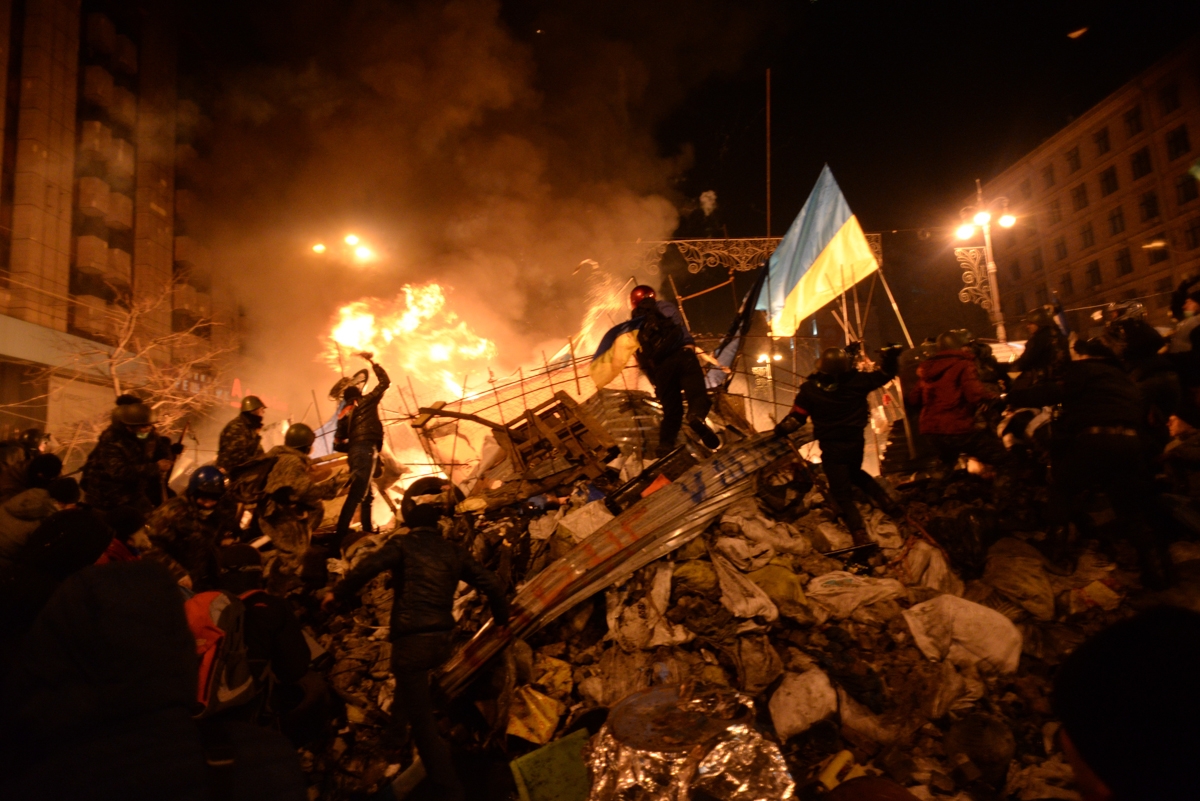
2013–14 — the Revolution of Dignity on Maidan Nezalezhnosti; Russia annexes Crimea and war begins in the Donbas.
24 February 2022 — Russia launches the full-scale invasion. EU candidate status follows in June 2022; accession negotiations formally open in June 2024.
06
👥 People & Culture
Ukrainian is the sole state language, an East Slavic language with its own long literary tradition; Russian remains widely understood, though its everyday use has fallen sharply since 2022. Religiously the country is predominantly Orthodox — the Orthodox Church of Ukraine received its tomos of autocephaly from Constantinople in January 2019 — alongside a strong Greek Catholic presence in Galicia and Jewish, Muslim (Crimean Tatar) and Protestant communities.
Ukrainian traditions represented on UNESCO’s intangible-heritage lists include Petrykivka decorative painting, Cossack songs of the Dnipropetrovsk region, Kosiv painted ceramics and the culture of Ukrainian borscht cooking. This is a selection, not the complete list: living heritage also encompasses local communities, transmission and the work of safeguarding traditions during displacement.
Look for the vyshyvanka, the embroidered shirt whose stitch patterns are regionally specific enough to place a wearer on a map; pysanky, wax-resist Easter eggs; and the bandura, the 60-plus-string lute-zither once played by blind itinerant kobzari.
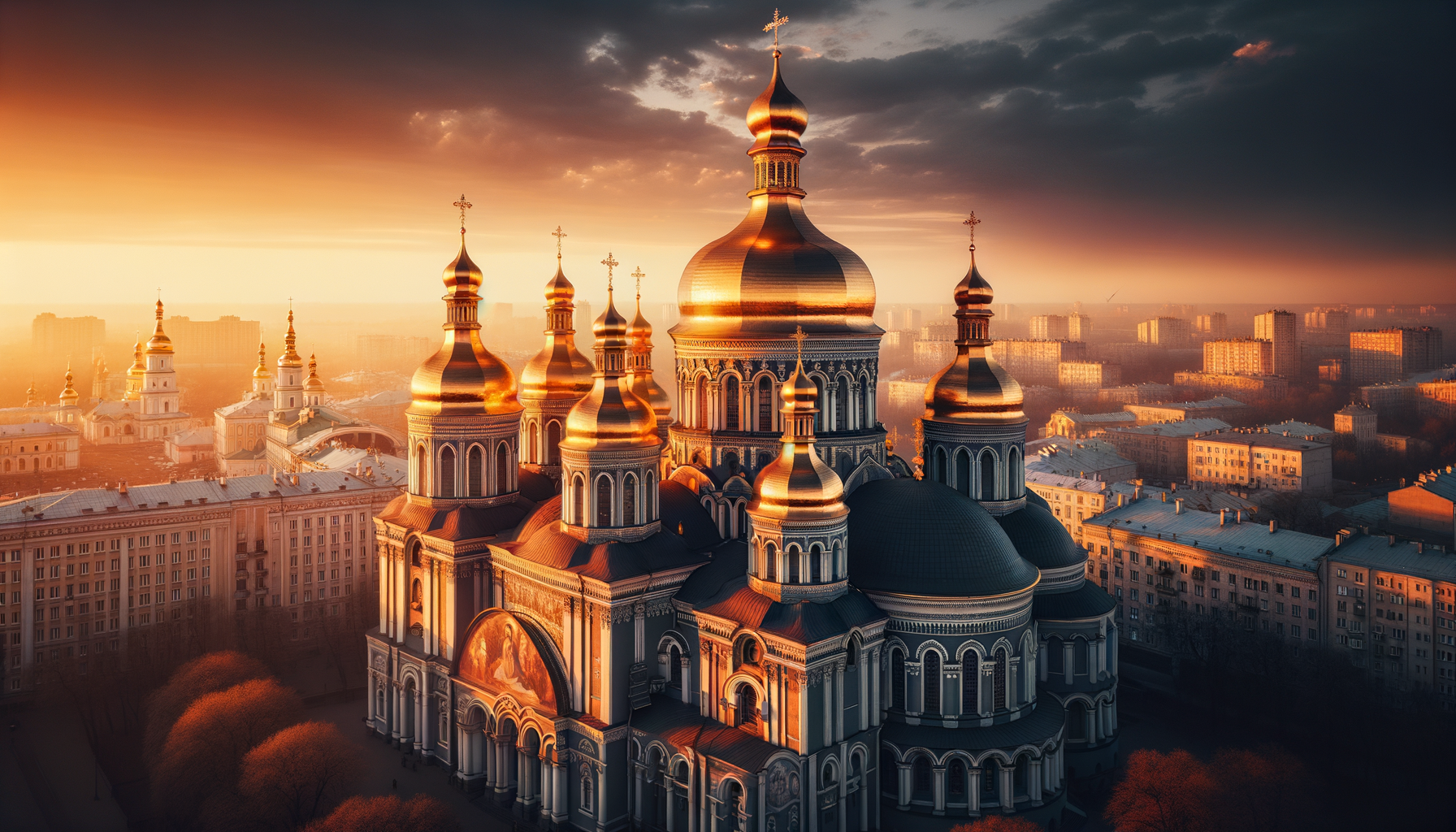
Kyiv is 1,500 years old by tradition and looks it — a city of ravines and river bluffs where eleventh-century mosaics sit ten minutes' walk from Soviet-modernist concrete and glass towers.
Saint Sophia Cathedral — begun in the eleventh century under Yaroslav the Wise; its mosaics and frescoes are original. UNESCO-listed in 1990 together with the Kyiv-Pechersk Lavra.
Kyiv-Pechersk Lavra (Monastery of the Caves) — founded 1051; the Near and Far Caves hold mummified monks in a labyrinth lit by hand-held candles.
Andriivskyi Descent — the cobbled lane below St Andrew's Church, with Bulgakov's house at No. 13.
Golden Gate — the reconstructed eleventh-century main gate of the walled city.
Maidan Nezalezhnosti — Independence Square, the stage of both 2004 and 2014.
Arsenalna metro station — at about 105.5 m below ground, one of the deepest metro stations in the world, and a working bomb shelter.
08
☕ Lviv
Lviv — Habsburg Lemberg, Polish Lwów — kept its street plan and most of its buildings through the twentieth century, which is why the Ensemble of the Historic Centre has been UNESCO-listed since 1998. It was added to the List of World Heritage in Danger in September 2023.
Rynok Square — forty-four merchant houses around the town hall, each façade a different century.
Latin Cathedral and the Boim Chapel, and the Armenian Cathedral of 1363 in its quiet courtyard.
Lychakiv Cemetery — a wooded necropolis of nineteenth-century sculpture.
Coffee — Lviv's defining civic ritual, with roasteries, cellar cafés and the theatrical Lvivska Kopalnya Kavy "coffee mine".
Lviv National Opera — 1900, neo-Renaissance, still performing.
09
⚓ Odesa
Odesa was founded by decree of Catherine II in 1794 on the site of the Ottoman fortress of Hacibey, and grew as a duty-free port into the most cosmopolitan city on the Black Sea. Its Historic Centre was inscribed on the World Heritage List in January 2023 under UNESCO's emergency procedure — and placed on the List of World Heritage in Danger at the same moment.
Potemkin Stairs — 192 steps, built 1837–41, designed so that from the top you see only landings and from the bottom only steps.
Odesa National Academic Theatre of Opera and Ballet — Vienna's Fellner & Helmer at their most extravagant.
Deribasivska Street and the City Garden — the promenade heart of the old town.
The catacombs — roughly 2,500 km of limestone quarry tunnels beneath the city and its suburbs, the longest such network anywhere.
Privoz market — the source of most Odesa humour.
10
⛰️ Carpathians & Chernivtsi
The Ukrainian Carpathians are gentle, forested and deeply inhabited — beech and spruce, wooden churches, and the Hutsul highlanders with their own dialect, dress and brass-heavy music.
Hoverla (2,061 m) — the country's highest point; a long day-hike, not a climb.
Bukovel — a major Ukrainian ski resort.
Lake Synevyr — a landslide-dammed lake at 989 m, with a bear rehabilitation centre nearby.
Ancient and Primeval Beech Forests — Ukraine's only natural World Heritage site, part of a transnational property shared with seventeen other countries.
Yaremche and the Prut valley — waterfalls, Hutsul markets and smoked bryndza cheese.
At the foot of the range, Chernivtsi holds the Residence of Bukovinian and Dalmatian Metropolitans (UNESCO 2011), built 1864–1882 to designs by the Czech architect Josef Hlávka — a polychrome-brick fantasy of Byzantine, Moorish and Gothic motifs, now the university.
11
☢️ Chornobyl Zone
Reactor 4 of the Chornobyl Nuclear Power Plant exploded during a botched safety test in the early hours of 26 April 1986. The city of Pripyat, built for the plant's workers, was evacuated 36 hours later and has stood empty since.
The New Safe Confinement — the 36,000-tonne arch that now covers the ruined reactor and its 1986 sarcophagus — was slid into place in November 2016 and formally handed over to Ukraine in July 2019. It is the largest movable land-based structure ever built.
Important, and often out of date elsewhere: organised tourism to the Exclusion Zone ended with the full-scale invasion. Russian forces occupied the zone from 24 February to 31 March 2022, digging positions in contaminated soil; the zone has remained closed to tourists ever since. Any tour operator currently selling a Chornobyl day trip from Kyiv is selling something they cannot deliver.
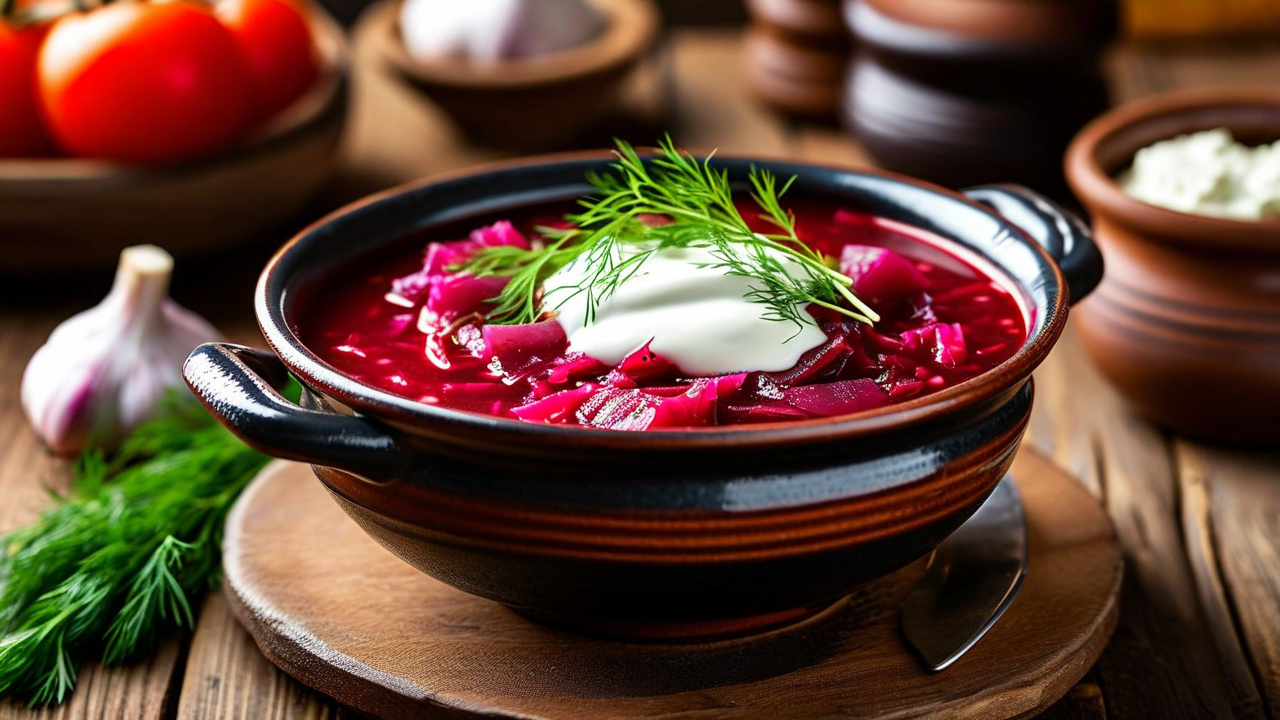
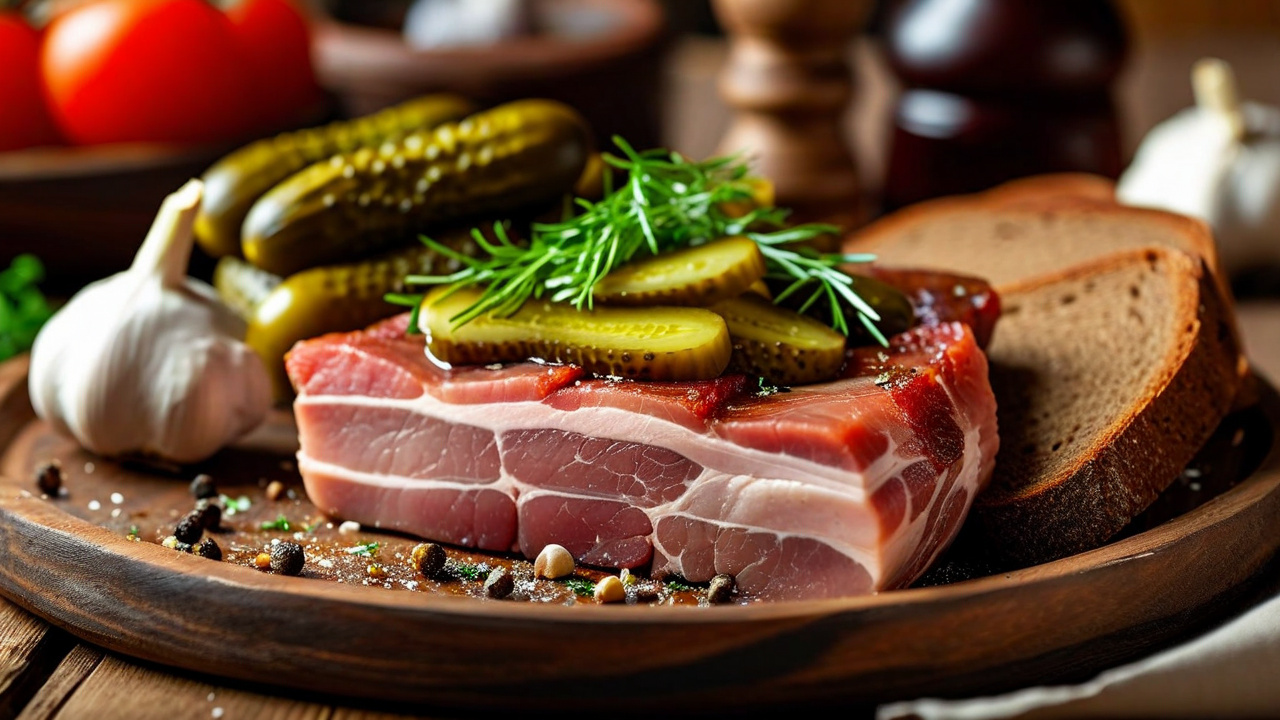
Ukrainian cuisine is hearty and nourishing — borscht, varenyky dumplings, and salo (cured pork fat) with dark bread. In July 2022 UNESCO inscribed the culture of Ukrainian borscht cooking on the List of Intangible Cultural Heritage in Need of Urgent Safeguarding; the emergency listing was itself a wartime act.
Borscht
Beet Soup
The iconic beet soup — Ukrainian soul food, served with sour cream and pampushky.
Ingredients: 400 g pork or beef, 3 beets (grated), 2 potatoes, cabbage, carrot, onion, tomato paste, dill, garlic, sour cream.
Preparation: Simmer the meat until tender. Sauté the beets with a splash of vinegar to hold the colour. Add to the broth with potatoes and cabbage. Make the zazharka — onion, carrot and tomato fried together — and stir it in. Serve with sour cream, crushed garlic and dill.
💡 Add the vinegar to the beets while they sauté; it is the only reliable way to keep the soup bright red.
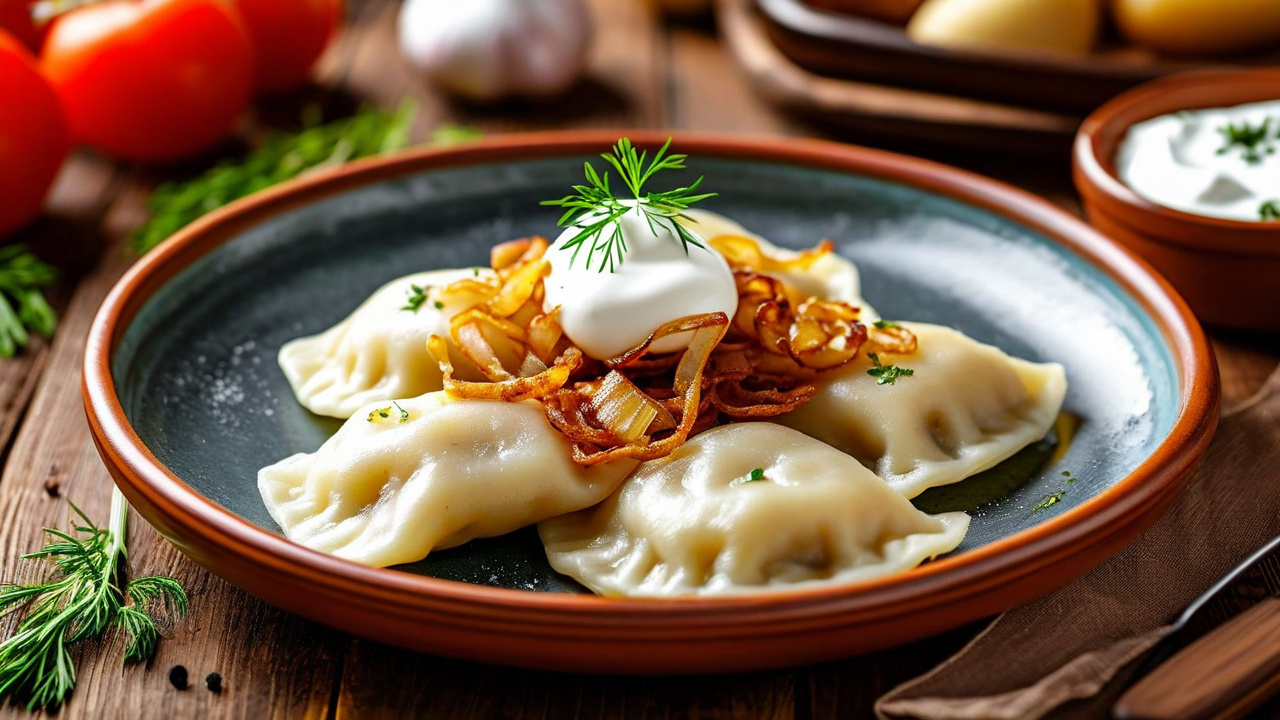
Varenyky
Ukrainian Dumplings
Boiled dumplings with many fillings — potato and cheese, sour cherry, cabbage.
Ingredients: Dough: 480 ml flour, 1 egg, water, pinch of salt. Filling: mashed potato with cheese, or sour cherries, or braised cabbage. To serve: sour cream, fried onions.
Preparation: Make a soft dough and let it rest 30 minutes. Roll thin and cut circles. Fill, then seal into half-moons, pinching firmly. Boil until they float, about three minutes. Serve with sour cream and fried onions.
💡 Sweet cherry varenyky are served with sugar and sour cream, never with onions.
Salo
Cured Pork Fat
Cured pork back fat — the Ukrainian delicacy, sliced paper-thin with garlic.
Ingredients: 1 kg pork back fat with skin, coarse salt, garlic, black pepper, bay leaves, rye bread.
Preparation: Score the fat in a diamond pattern. Rub with salt, garlic and pepper. Layer with bay leaves and cure in the fridge 5–7 days. Freeze briefly before slicing. Serve thin on rye with more garlic.
💡 Best eaten cold and thinly sliced, with a shot of horilka.
Also worth hunting down: deruny (potato pancakes with sour cream), holubtsi (cabbage rolls), banosh (Hutsul cornmeal with bryndza and cracklings), kyivskyi tort (hazelnut meringue cake) and pampushky — the garlic rolls that exist solely to be dipped in borscht.
For salo, use commercially prepared cured pork from a regulated supplier. Salting or brief freezing at home does not reliably eliminate foodborne pathogens. Use pasteurized egg white or aquafaba in drinks served without cooking.
13
🍷 Wine, Spirits & Drinking Culture
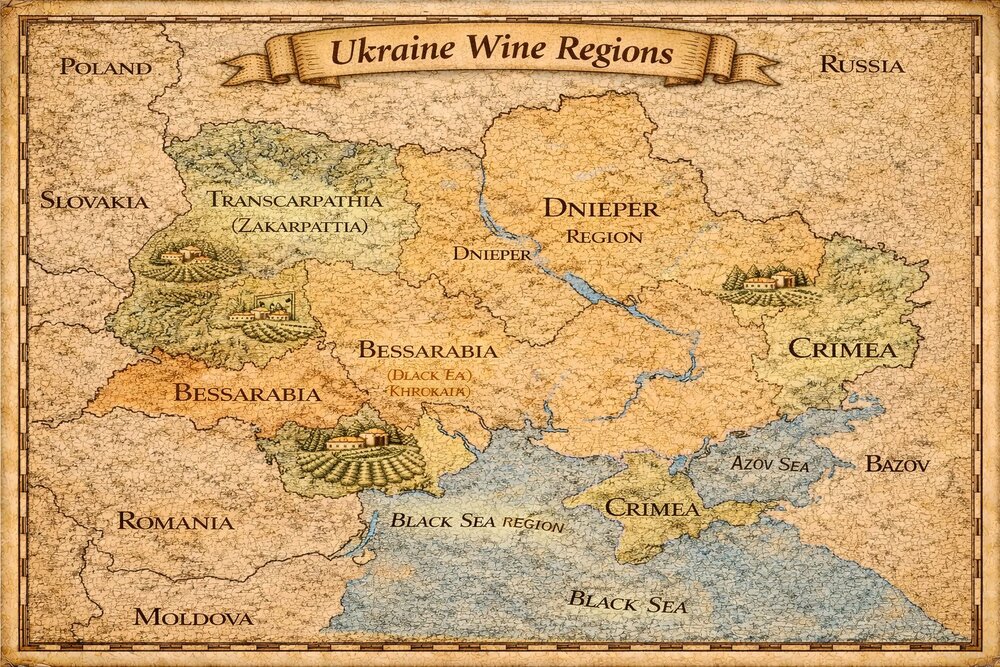
Ukraine has a wine tradition stretching back some 2,500 years, to the Greek colonies on the Black Sea coast at Chersonesus, Olbia and Tyras. Before 2014 the country had roughly 45,000 hectares under vine including Crimea. Today, on government-controlled territory, the figure is closer to 15,000 hectares — and yet a new generation of small producers has emerged during the war, not despite it.
The wine regions of Ukraine.
🗺️ Regions & Varieties
Crimea was historically the most famous region and remains under Russian occupation. Its Massandra winery was founded in 1894 by Prince Lev Golitsyn, on the imperial estate that Alexander III had bought in 1889; the cellars hold a collection of over a million bottles, with vintages reaching back to the eighteenth century. (Older versions of this page credited the founding to Alexander III himself — the estate was his, the winery was Golitsyn's.)
On the mainland, Odesa Oblast is the largest producing region. Shabo takes its name from a village settled by Swiss colonists in 1822, who brought the vines; the modern winery, however, was founded in 2003 by Vazha Iukuridze, a Georgian-born entrepreneur who bought the privatised estate, and now farms around 1,200 hectares. Ukraine's first PDO wines came from its Grande Reserve range in 2012.
Zakarpattia (Transcarpathia), against the Hungarian and Slovak borders, has centuries of Hungarian-influenced winemaking. Mykolaiv — home to the coastal Beykush estate near Ochakiv — and Kherson, with Prince Trubetskoi, were both hit hard after February 2022. Alongside international varieties, look for the indigenous Odesa Black, Telti-Kuruk and Sukholymanskyi Bilyi.
The national spirit is horilka, including the honey-and-chilli horilka z pertsem; medovukha (honey mead) and uzvar (smoked-fruit compote, non-alcoholic) both have deep roots. Ukrainian craft beer has grown fast — look for Varvar, Pravda and Mikki Bir.
🏆 Kaufmann Wine Score — Ukraine
Rated on four criteria: Aroma (/25), Taste (/30), Finish (/20), Value (/25) — Total /100
Wine
🔴 Aroma
🟡 Taste
🟢 Finish
🔵 Value
Total
Shabo Reserve Cabernet Sauvignon (Odesa)
19
23
14
23
79
Beykush Chardonnay (Mykolaiv)
18
22
14
23
77
Kolonist Merlot Reserve (Bessarabia)
20
24
15
23
82
Prince Trubetskoi Pinot Noir (Kherson)
18
22
14
22
76
Shabo Ice Wine Muscat (Odesa)
21
25
16
21
83
Beykush Saperavi (Mykolaiv)
20
24
15
22
81
95–100 Legendary · 90–94 Outstanding · 85–89 Very Good · 80–84 Good · 75–79 Average · <75 Below Average
The numerical scores below are retained from the earlier site edition. No dated tasting sheet, vintage or external review was supplied, so these are unverified legacy scores, not a newly conducted tasting.
Ukraine drinks its spirits neat far more often than mixed, but the bar scenes of Kyiv, Lviv and Odesa were among the most inventive in Europe before 2022, and much of that survives. Three house recipes built on Ukrainian ingredients:
Horilka z Pertsem
The pepper-and-honey shot, made at home
Ingredients: 500 ml horilka (or clean vodka), 1 tbsp honey, 1 small dried chilli, 4 black peppercorns, 1 strip of lemon zest.
Method: Warm the honey until it just runs and stir it into the horilka. Add chilli, peppercorns and zest. Seal and leave 3–5 days in the dark, tasting daily — pull the chilli as soon as the heat is where you want it. Strain, chill hard, serve in 30 ml shots with salo and rye.
💡 The honey is not sweetening — it rounds the burn. Do not skip it.
Kyiv Mule
Horilka, ginger, sour cherry
Ingredients: 50 ml horilka, 15 ml sour-cherry syrup, 15 ml fresh lime juice, 100 ml ginger beer, mint sprig, ice.
Method: Build over cubed ice in a mug or highball: horilka, cherry syrup, lime. Top with ginger beer and stir once. Garnish with mint.
💡 Sour cherry (vyshnia) is the defining Ukrainian fruit — use a real cherry syrup, not grenadine.
Medovukha Sour
Honey mead, lemon, egg white
Ingredients: 60 ml medovukha, 20 ml fresh lemon juice, 10 ml honey syrup (2:1), 1 egg white or 20 ml aquafaba, ice.
Method: Dry-shake everything hard without ice for 15 seconds, then shake again with ice. Double-strain into a chilled coupe. Three drops of aromatic bitters on the foam.
💡 Use a dry medovukha; a sweet one plus honey syrup collapses into candy.
15
🌡️ Climate
Ukraine is temperate continental, with a narrower Mediterranean-leaning strip along the southern Crimean coast. Winters are cold and dry, summers warm to hot, and the shoulder seasons are short and beautiful.
Kyiv — January averages around −3 °C, July around 25 °C by day. Snow cover from December to March, thinning in recent years.
Odesa and the Black Sea coast — milder winters, hot dry summers, sea swimmable roughly June to September.
The Carpathians — reliable snow December to March; summer thunderstorms build fast on the ridges.
The steppe — big temperature swings, strong winds, and the summer dry spells that make irrigation political.
Best months — May, June and September: chestnut and lilac in Kyiv in May, harvest and warm light in September.
16
✈️ Getting There
Ukrainian airspace has been closed to civil aviation since 24 February 2022. Every commercial airport — Boryspil, Zhuliany, Lviv, Odesa — is shut. There are no flights. Anyone entering does so overland.
By rail — Ukrzaliznytsia runs international sleepers from Przemyśl and Chełm (Poland), Budapest, Vienna, Bucharest and Chișinău. The Przemyśl–Kyiv service is the main artery; book on the Ukrzaliznytsia app, which sells out weeks ahead.
By road — the busiest crossings are Medyka and Krakovets (Poland), Vyšné Nemecké–Uzhhorod (Slovakia), Záhony–Chop (Hungary), Siret–Porubne (Romania) and Palanca (Moldova). Queues of several hours are normal; freight queues can run for days.
By bus — Flixbus and Ukrainian operators run to Lviv, Kyiv and Chernivtsi from Warsaw, Kraków, Prague, Berlin and Budapest.
Inside the country — rail is the backbone and runs remarkably punctually, including through blackouts. Long-distance trains are overnight and comfortable.
Martial law and general mobilisation have been in force continuously since 24 February 2022 and are extended by parliament in rolling periods.
Curfew — hours and exemptions are set locally and can change. Check the local administration’s current rules; do not assume that another city’s timetable applies.
Air-raid alerts sound by siren and by app (Air Alert / Повітряна тривога). Alerts are frequent and are not optional; go to a shelter, a metro station, or an interior room with two walls between you and the outside.
Visas — EU, UK, US, Canadian and many other nationals may enter visa-free for 90 days in any 180. Border controls are thorough.
Exit rules — wartime restrictions and exemptions for Ukrainian citizens change. Dual nationality may not remove those restrictions. Consult the State Border Guard Service for the rules applying to your age, status and documents.
Insurance — standard travel policies exclude war risk. Cover for Ukraine requires a specialist war-risk policy; read the exclusions before you rely on it.
Money — cards work widely and contactless is near-universal, but carry cash for blackouts. ATMs run dry during long outages.
Power — rolling blackouts are routine in winter. Cafés and hotels run generators and Starlink; carry a large power bank.
The following are illustrative ranges retained from the earlier guide, not verified October 2026 quotations. Exchange rates, rail fares and accommodation prices require a fresh check with the provider before any budget is used.
Coffee in a good café — ₴60–90
Lunch, casual restaurant — ₴250–400
Dinner for two with wine — ₴1,200–2,000
Kyiv metro ride — ₴8
Intercity train, Kyiv–Lviv, 2nd class — roughly ₴550–750
Mid-range hotel night — ₴1,500–2,800
Bottle of decent Ukrainian wine, retail — ₴300–600
19
🏨 Accommodation
Hotels are open and functioning across the west and centre. The practical questions are different from the usual ones.
Ask about the shelter — a proper basement shelter, not "the corridor". Good hotels state it plainly on their booking page.
Ask about the generator — and whether it powers the lifts and hot water or only the lobby.
Lviv, Uzhhorod, Chernivtsi and Ivano-Frankivsk are the busiest — much of the displaced population and most visiting delegations pass through them; book ahead.
Kyiv — compare the shelter, emergency power and flexible cancellation conditions rather than assuming that a low room rate indicates either safety or availability.
Sanatoriums and Carpathian guesthouses remain the most characterful option — wood-built, family-run, enormous breakfasts.
20
🎉 Festivals & Events
Many festivals are scaled back, moved or cancelled under martial law, and mass gatherings are restricted. Check before travelling — but the calendar itself tells you a great deal about the country.
Malanka (13–14 January) — the wildest surviving winter carnival in Europe, at its most extravagant in Vashkivtsi, Chernivtsi oblast: bears, goats, brass and mud.
Christmas — 25 December. In 2023 Ukraine moved the state holiday from 7 January, following the Orthodox Church of Ukraine's shift to the Revised Julian calendar. The change was as much geopolitical as liturgical.
Easter (Velykden) — pysanky, paska bread and baskets blessed at dawn.
Ivana Kupala (6–7 July) — midsummer fire-jumping and wreaths floated on rivers.
Day of Ukrainian Statehood (15 July) — established in 2021 and first marked as a public holiday in 2022, commemorating the baptism of Kyivan Rus.
Independence Day (24 August) — the national day; the military parade has been replaced since 2022 by commemorations.
Defenders Day (1 October) — moved from 14 October in 2023 along with the calendar reform.
Leopolis Jazz Fest and the Lviv Coffee Festival — Lviv's two signature events, running in modified form.
Ukraine ratified the World Heritage Convention on 12 October 1988 and has eight inscribed properties — seven cultural, one natural — plus seventeen sites on its Tentative List. Three of the eight are currently on the List of World Heritage in Danger.
Kyiv: Saint-Sophia Cathedral and Related Monastic Buildings, Kyiv-Pechersk Lavra (1990) — in Danger since September 2023
L'viv – the Ensemble of the Historic Centre (1998) — in Danger since September 2023
Struve Geodetic Arc (2005) — the transnational survey chain from Norway to the Black Sea
Ancient and Primeval Beech Forests of the Carpathians and Other Regions of Europe (2007, extended 2011, 2017, 2021) — Ukraine's only natural site
Residence of Bukovinian and Dalmatian Metropolitans, Chernivtsi (2011)
Ancient City of Tauric Chersonese and its Chora, Sevastopol (2013) — in occupied Crimea
Wooden Tserkvas of the Carpathian Region in Poland and Ukraine (2013) — sixteen churches, eight on each side of the border
The Historic Centre of Odesa (2023) — inscribed by emergency procedure and placed on the Danger List simultaneously
UNESCO’s country record provides the current conservation reports, international assistance decisions and monitoring documents for each property. These records distinguish the enduring value of the sites from the changing conditions of protection and access during the war.
Access to several of these depends entirely on the security situation; a few are in occupied territory and are listed because they matter, not because you can go.
The Tunnel of Love, Klevan (Rivne oblast) — a private freight line to a fibreboard plant whose train has pruned the trees into a three-kilometre green arch.
Sofiyivka Park, Uman — a 1796 romantic landscape garden built by Count Potocki as a gift to his wife, with grottoes, cascades and an underground river you can boat along.
Kamianets-Podilskyi — an old town on an island in a river canyon, ringed by its own gorge, with a Turkish minaret still standing beside the cathedral.
Khotyn Fortress — the great Dniester river castle, thirty kilometres from Kamianets and endlessly used as a film set.
Solotvyno salt lakes, Zakarpattia — buoyant, briny, faintly post-industrial, and locally regarded as medicinal.
Chernihiv — eleventh- and twelfth-century churches from before the Mongol sack, in a quiet northern town badly damaged in 2022.
Askania-Nova — a virgin-steppe biosphere reserve with free-ranging zebra and bison, founded in 1898. It has been under Russian occupation since 2022.
Bakota — a cave monastery above a reservoir that drowned the village below it.
23
🎒 Packing Tips
Power bank, 20,000 mAh or larger, plus a charging cable for everything. Blackouts are the defining daily inconvenience.
Headlamp or small torch — stairwells and metro passages go dark.
Plugs: Type C and F, 230 V, 50 Hz — the standard European two-pin.
Offline maps and a downloaded translation pack; connectivity is good but not guaranteed.
Cash in hryvnia, in small notes, for outage days.
Layers — buildings are either overheated or unheated, rarely in between.
A proper first-aid kit, including a tourniquet if you have training. Not paranoia; local practice.
Earplugs — sirens do not respect your sleep schedule.
Documents — passport plus a paper photocopy, and printed insurance details.
Arsenalna in Kyiv, at about 105.5 m, is one of the deepest metro stations in the world — deep enough to be a genuine shelter.
The Odesa catacombs run for roughly 2,500 km, the longest network of their kind anywhere; most of it is unmapped.
Ukraine holds a large share of the world's chernozem, the black soil that made it the grain supplier of empires — and of the UN World Food Programme.
"Carol of the Bells" began as Shchedryk, arranged by Mykola Leontovych and premiered in Kyiv in December 1916; it reached Carnegie Hall with the Ukrainian National Chorus in 1922.
In 1994 Ukraine surrendered the world's third-largest nuclear arsenal under the Budapest Memorandum, in exchange for security assurances from Russia, the US and the UK.
The Antonov An-225 Mriya, the largest aircraft ever built and a one-off, was destroyed at Hostomel airfield in February 2022.
Ukraine is consistently among the world's largest exporters of sunflower oil.
The tryzub on the coat of arms is the personal seal of Volodymyr the Great, in use over a thousand years ago.
Pysanky wax-resist eggs predate Christianity in the region; the oldest known ceramic examples are far older than the tradition's Easter framing.
28
🌟 Notable People
Volodymyr Zelenskyy — President of Ukraine since May 2019; actor and producer before that.
Serhii Koretskyi — Prime Minister since 16 July 2026, appointed by the Verkhovna Rada with 289 votes after leading Naftogaz from May 2025. He succeeded Yulia Svyrydenko.
Taras Shevchenko (1814–1861) — poet, painter, serf; the founding figure of modern Ukrainian identity.
Lesia Ukrainka (1871–1913) — poet and dramatist, and the face of the ₴200 note.
Ivan Franko (1856–1916) — writer, scholar and political thinker; Lviv's university carries his name.
Kazimir Malevich (1879–1935) — born in Kyiv to a Polish family; inventor of Suprematism.
Sergei Korolev (1907–1966) — born in Zhytomyr; the chief designer behind Sputnik and Gagarin's flight.
Mykola Leontovych (1877–1921) — composer of Shchedryk.
Sviatoslav Vakarchuk — frontman of Okean Elzy, the country's defining rock band.
Jamala — Crimean Tatar singer; won the Eurovision Song Contest for Ukraine in 2016 with "1944".
Ukraine competes as an independent nation since 1994 (Winter) and 1996 (Summer). At Paris 2024 the team won 12 medals — 3 gold, 5 silver and 4 bronze, its smallest Summer haul but a considerable one given that training bases, pools and gyms have been destroyed across the country.
Yaroslava Mahuchikh — Olympic high jump champion in Paris 2024, and holder of the world record at 2.10 m, set at the Paris Diamond League in July 2024. It broke Stefka Kostadinova's 1987 mark, which had stood for 37 years.
Oleksandr Usyk — Olympic boxing champion in London 2012 and a world champion in both cruiserweight and heavyweight boxing. His achievements have made him one of Ukraine’s best-known athletes.
Serhiy Bubka — pole vault; 35 world records, six consecutive world titles, Olympic gold in 1988.
Andriy Shevchenko — Ballon d'Or 2004, Milan and Dynamo Kyiv legend; president of the Ukrainian Association of Football since January 2024.
Vitali and Wladimir Klitschko — between them they held world heavyweight titles for most of two decades; Vitali has been mayor of Kyiv since 2014.
Football — the Ukrainian Premier League has continued through the war, played without spectators and with matches suspended mid-game for air-raid alerts. Ukraine exited Euro 2024 at the group stage.
30
📰 Media & Press Freedom
Ukraine ranks 55th of 180 in the 2026 RSF World Press Freedom Index — up seven places from 62nd in 2025, and roughly fifty places since 2022, in a year when the global index fell to a 25-year low. That improvement puts Ukraine ahead of several G7 countries, which says as much about the rest of the world as about Ukraine.
The dominant wartime structure is Yedyni Novyny ("United News"), the joint telethon that has pooled the major national channels since February 2022. It has been widely criticised — by Ukrainian journalists first — for flattening editorial diversity, and its audience share has fallen steadily.
The independent press is where the reporting is: Ukrainska Pravda, the Kyiv Independent, hromadske, Suspilne (the public broadcaster), Slidstvo.Info and the Bihus.Info investigative team, whose corruption reporting has repeatedly brought down officials during wartime. Dozens of media workers have been killed since 2022.
Ukraine is a unitary parliamentary-presidential republic. The president is head of state, while the government is led by the prime minister and accountable to the Verkhovna Rada. Since independence, democratic competition, civil society and repeated public mobilization have shaped national life; wartime martial law has necessarily changed elections, movement and public administration.
Ukrainian is the sole state language and belongs to the East Slavic family. It uses a distinctive Cyrillic alphabet and has rich regional vocabulary, literature and song traditions. Russian and minority languages are also spoken, but visitors should not assume language preference: beginning with a Ukrainian greeting is both courteous and culturally aware.
33
⛪ Religion & Sacred Heritage
Ukraine’s religious landscape includes Orthodox and Greek Catholic traditions, Roman Catholics, Protestants, Jews, Muslims and other communities. Kyiv’s monastic complexes, wooden Carpathian churches, Crimean Tatar mosques and historic synagogues reveal a plural past. Many sacred buildings are active places of worship, memorials and, during the war, centers of relief.
34
⚔️ Cossacks & the Hetmanate
The Zaporizhian Cossacks and the Cossack Hetmanate occupy a central place in Ukrainian historical memory. Their frontier communities, military institutions and struggles for autonomy influenced political culture, folklore and national symbolism. Sites connected with Chyhyryn, Baturyn and the lower Dnipro help explain a history more complex than the romantic image of the mounted warrior.
35
🌙 Crimea & the Crimean Tatars
Crimea is internationally recognized as part of Ukraine and has been under Russian occupation since 2014. The peninsula is the homeland of the Crimean Tatars, a Turkic Muslim people deported en masse by Stalin in 1944 and allowed to return only in the late Soviet period. Their language, cuisine, architecture and experience of displacement are essential to understanding modern Ukraine.
36
📖 Literature & Intellectual Life
Ukrainian literature reaches from baroque sermons and Cossack chronicles to Taras Shevchenko, Lesia Ukrainka, Ivan Franko and a powerful contemporary scene. Writers have repeatedly defended the right to use Ukrainian under imperial and Soviet repression. Today poetry, essays, diaries and documentary writing are also recording war, occupation, exile and everyday endurance.
37
🎶 Music, Film & Contemporary Culture
Ukraine’s cultural soundscape includes polyphonic village singing, bandura traditions, classical composers, jazz, rock, electronic music and globally successful pop. Ukrainian cinema has produced poetic modernism, documentary work and a new generation confronting history and war. Museums, theaters and independent cultural spaces continue working despite displacement and attacks.
38
🏘️ Architecture & Urban Heritage
Ukraine’s cities layer Kyivan Rus, Polish-Lithuanian, Ottoman, Habsburg, imperial Russian, Soviet and independent-era architecture. Baroque churches, wooden vernacular buildings, constructivist ensembles and modernist housing all belong to the story. Wartime destruction makes documentation and conservation urgent, while reconstruction raises difficult questions about authenticity and memory.
39
🌻 Nature, Steppe & Wetlands
Ukraine extends from Polissia forests and Carpathian ridges to fertile steppe, river deltas and Black Sea wetlands. The Danube Biosphere Reserve shelters pelicans and migratory birds, while the Carpathians support old-growth forests and large mammals. Mines, unexploded ordnance and military damage make many landscapes unsafe; current official access guidance must always override older travel information.
40
🚆 Railways & Internal Travel
Ukrzaliznytsia, the national railway, remains the backbone of long-distance travel and has played a historic humanitarian role during the full-scale invasion. Night trains connect major cities and international routes reach neighboring European countries. Wartime timetables, curfews, air alerts and station procedures can change rapidly, so journeys require flexible planning and verified information.
41
🛡️ Wartime Safety & Responsible Reading
Ukraine remains an active war zone. Air and missile attacks can occur far from the front, and occupied territories, border areas and contaminated land present extreme risks. This guide is cultural and educational, not a declaration that travel is safe: readers must follow Ukrainian authorities and their own government’s current advice, understand shelter procedures and never seek access to military sites.
The embroidered vyshyvanka carries regional patterns and meanings rather than serving as a single national costume. Petrykivka painting, Kosiv ceramics, pysanky eggs, weaving, woodcarving and contemporary graphic design show how traditional visual languages are continually renewed. Buy directly from identified makers when possible and ask about regional origin and technique.
43
🏗️ Recovery, Memory & the Future
Ukraine’s future will be shaped by defense, European integration, the return of displaced people, veteran care, demining and the rebuilding of homes, schools, energy systems and cultural monuments. Reconstruction is not only an engineering task: it concerns justice, local participation, environmental repair and how destroyed places will be remembered. Any responsible portrait of the country must leave space for Ukrainian agency rather than depicting Ukraine only through loss.
Ukraine deserves to be understood through more than the daily map of the war. Its cities, sacred buildings, literature, food and landscapes reveal a country whose history cannot be compressed into one conflict or one familiar image. Kyiv’s mosaics, Lviv’s streets and the wooden churches of the Carpathians belong to different artistic traditions, but together they show how communities have repeatedly made a home at the meeting point of wider European worlds.
That cultural richness does not diminish the reality of invasion, occupation and displacement. A responsible guide must keep both in view: attention to beauty without turning suffering into scenery, and attention to war without reducing Ukrainian people to victims. The works of Ukrainian historians, writers, artists and journalists help restore the range of voices that a short account can otherwise overlook.
The practical chapters therefore carry a clear boundary. Descriptions of monuments and routes are material for learning, not an assurance that visiting them is possible or safe today. Readers should follow current official advice and recognize that timetables, access, insurance and local restrictions can change quickly. Supporting identified cultural institutions and reading Ukrainian authors remain meaningful ways to engage from a distance.
When rebuilding becomes possible, conservation will involve choices about memory, authenticity and the needs of the people who live in those places. Ukraine’s future belongs to those people. This guide aims to offer a fuller understanding of their country while leaving room for its continuing story.
— Radim Kaufmann, 2026
Share Your Photo
Own a photograph of Ukraine? Email it with the location and the name you want credited.