Paraguay is South America's overlooked heartland — a bilingual nation where Guaraní, the indigenous language, holds equal status with Spanish, with a strong presence in everyday life. Landlocked between Argentina, Brazil, and Bolivia, Paraguay offers the vast wilderness of the Chaco, the ruins of Jesuit missions, and a warm, unpretentious culture that rewards curious travelers.
The country divides dramatically along the Paraguay River: to the east, rolling farmland, Atlantic Forest remnants, and most of the population; to the west, the Gran Chaco — a vast, sparsely populated wilderness of thorn forests, wetlands, and indigenous communities stretching to the Bolivian border. Asunción, the capital, retains a faded colonial charm along the riverfront while transforming into a modern South American city.
Paraguayans are famously welcoming and laid-back, their culture shaped by the Guaraní heritage that permeates daily life — from the tereré (cold yerba mate) shared on every street corner to the polka paraguaya music that fills celebrations. The legacy of the devastating Triple Alliance War (1864-1870), which caused devastating loss of life, remains central to national identity.
02
Geography
Paraguay's landscape splits between the Eastern Region (Región Oriental), home to 97% of the population with subtropical forests, red-earth farmland, and the Paraná Plateau, and the Western Region (Chaco), a vast semi-arid plain that constitutes 60% of the territory but holds barely 3% of inhabitants. The Paraguay River serves as the natural boundary and lifeblood, flowing south through Asunción to join the Paraná.
The Itaipu Dam on the Paraná River, shared with Brazil, is one of the world's largest hydroelectric facilities. The Pantanal wetlands extend into northeastern Paraguay, harboring jaguars, giant otters, and hundreds of bird species. Ñeembucú wetlands in the south create a Paraguayan Lake District of interconnected lagoons and marshes.
03
History
The Guaraní people inhabited Paraguay for millennia before Spanish colonization in the 16th century. The Jesuit Missions (reducciones) created remarkable self-governing indigenous communities from the 1600s until their expulsion in 1767 — their ruins at Trinidad and Jesús are UNESCO World Heritage Sites. Independence came in 1811.
The Triple Alliance War (1864-1870) against Argentina, Brazil, and Uruguay was catastrophic — Paraguay suffered catastrophic population losses and lost territory; estimates of the death toll remain disputed. The 20th century brought the Chaco War with Bolivia (1932-1935) and the long dictatorship of Alfredo Stroessner (1954-1989). Democracy since 1989 has been imperfect but enduring.
04
People & Culture
Guaraní culture infuses Paraguayan identity more deeply than any other indigenous influence in South America. The language — spoken in homes, markets, music, and increasingly in government — carries a worldview that values community, nature, and oral tradition. Ñandutí (spider web) lace, ao po'i embroidered cloth, and Guaraní harp music are living artistic traditions.
Tereré — cold yerba mate shared from a communal guampa (cup) with a bombilla (metal straw) — is Paraguay's national ritual, consumed throughout the day in social groups. The paraguayan harp produces distinctive cascading melodies, and polka paraguaya (a local musical tradition shaped by European and Paraguayan influences) provides the soundtrack to celebrations and festivals.
05
Asunción
Asunción sits on a bay of the Paraguay River, its historic center clustered around the Palacio de los López presidential palace and the Panteón Nacional de los Héroes, modeled on Les Invalides in Paris and housing the remains of national heroes. The Manzana de la Rivera, a row of restored colonial houses, offers a glimpse of the city's architectural heritage, while the bustling Mercado 4 sells everything from herbs to hammocks.
The Costanera riverside promenade has transformed Asunción's waterfront, and the Loma San Jerónimo neighborhood preserves the city's oldest quarter with cobblestone streets and low colonial buildings. The city is increasingly vibrant at night, with the Paseo Carmelitas district offering restaurants, bars, and cultural venues.
06
Jesuit Missions
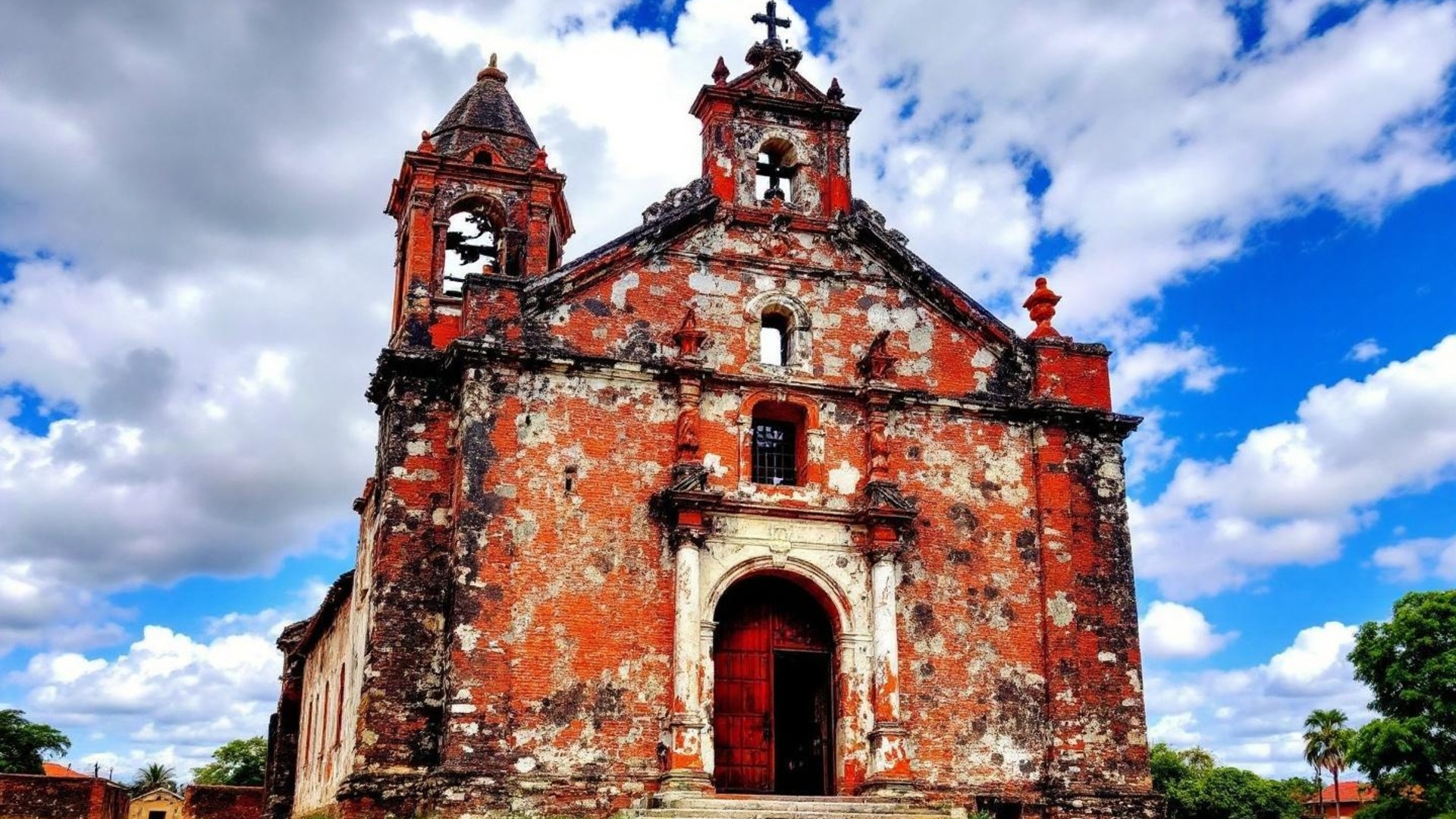
The Jesuit Missions of La Santísima Trinidad de Paraná and Jesús de Tavarangüe are UNESCO World Heritage Sites and the finest examples of the 17th-18th century reducciones in South America. Trinidad's massive sandstone church, with its carved friezes of angels playing Guaraní instruments, represents a unique fusion of European Baroque and indigenous aesthetics.
These missions once housed thousands of Guaraní in self-governing communities with workshops, schools, and orchestras. Their ruins, set amid rolling countryside near Encarnación, evoke both the ambition of the experiment and its abrupt end when the Jesuits were expelled in 1767.
The Chaco is Paraguay's wild west — a vast, flat wilderness of thorn scrub, palm savannas, and seasonal wetlands stretching 250,000 km² to the Bolivian border. Mennonite colonies, established in the 1920s-30s, have created prosperous dairy-farming oases in the wilderness, while indigenous communities including Ayoreo, Nivaclé, and Enlhet maintain traditional territories.
The Trans-Chaco Highway provides the main access, passing through increasingly remote landscape. Fortín Boquerón, site of a pivotal Chaco War battle, and the Defensores del Chaco National Park offer glimpses into this harsh but fascinating frontier.
08
Cuisine
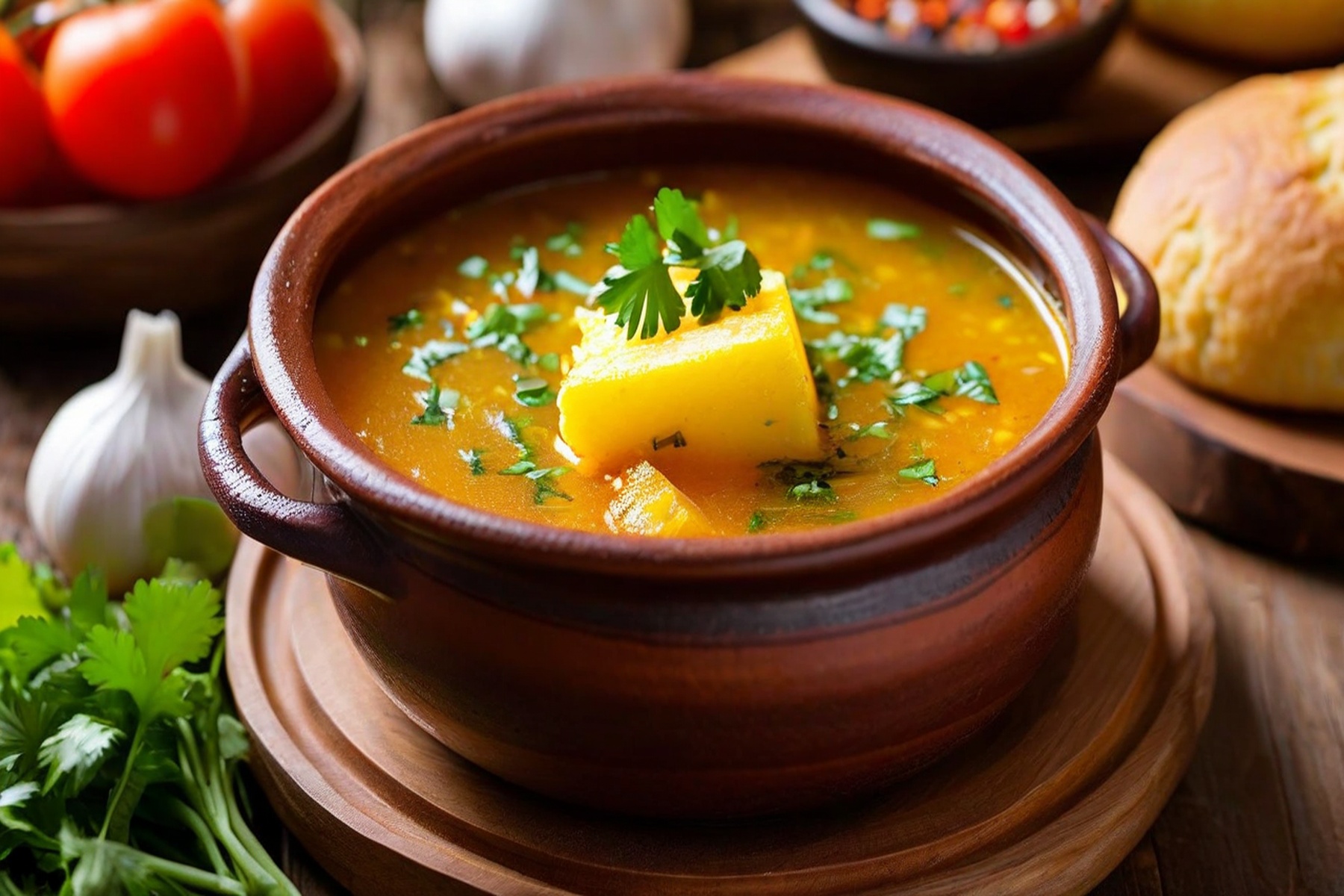
Paraguayan cuisine is the food of the Guaraní heartland, uniquely South American with a strong indigenous identity. Corn, cassava, and meat are the holy trinity, and Paraguay is one of the few countries where the indigenous language (Guaraní) dominates daily life – including food names.
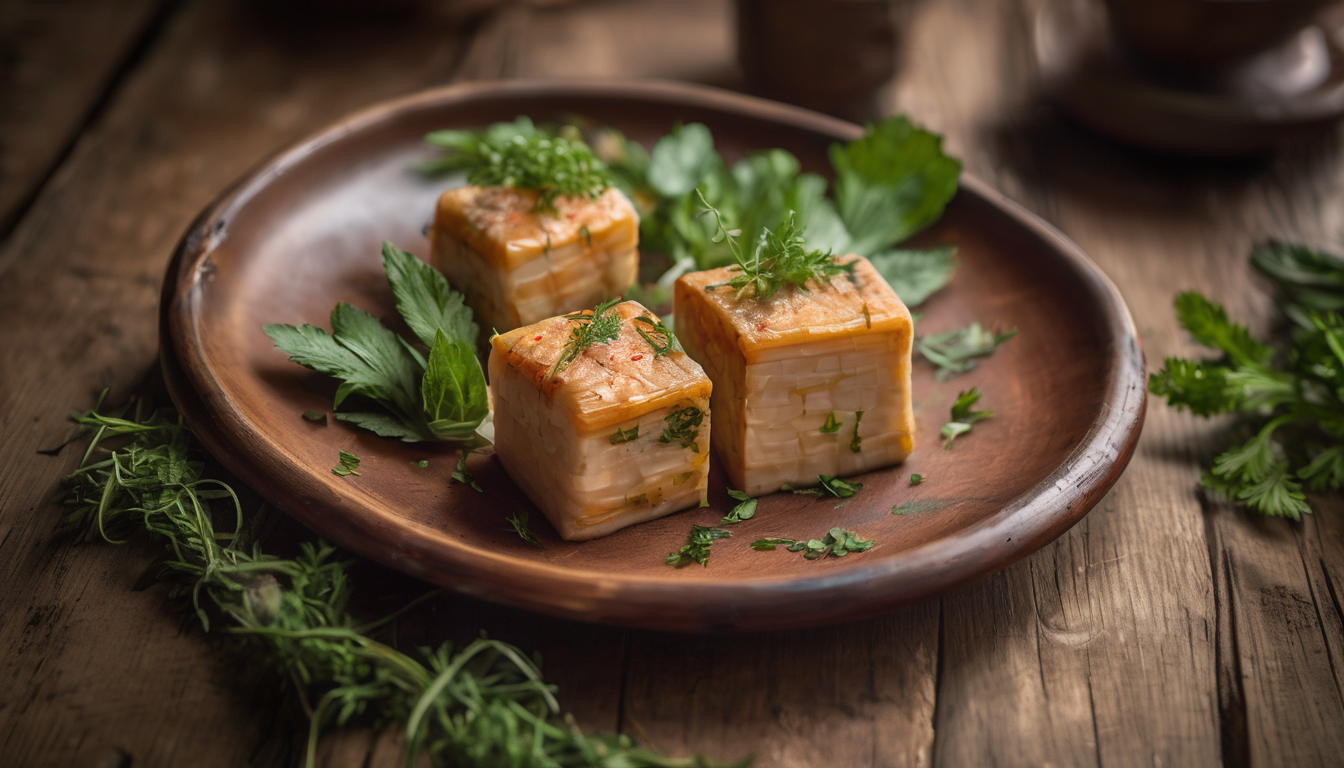
Preparation: Sauté onions until golden. After that, mix cornmeal with eggs and milk. Add corn, cheese, onions. Then pour into baking dish. Bake until golden and set. Finally, cut into squares.
💡 Despite the name, this is bread not soup—a story says cook added too much corn!
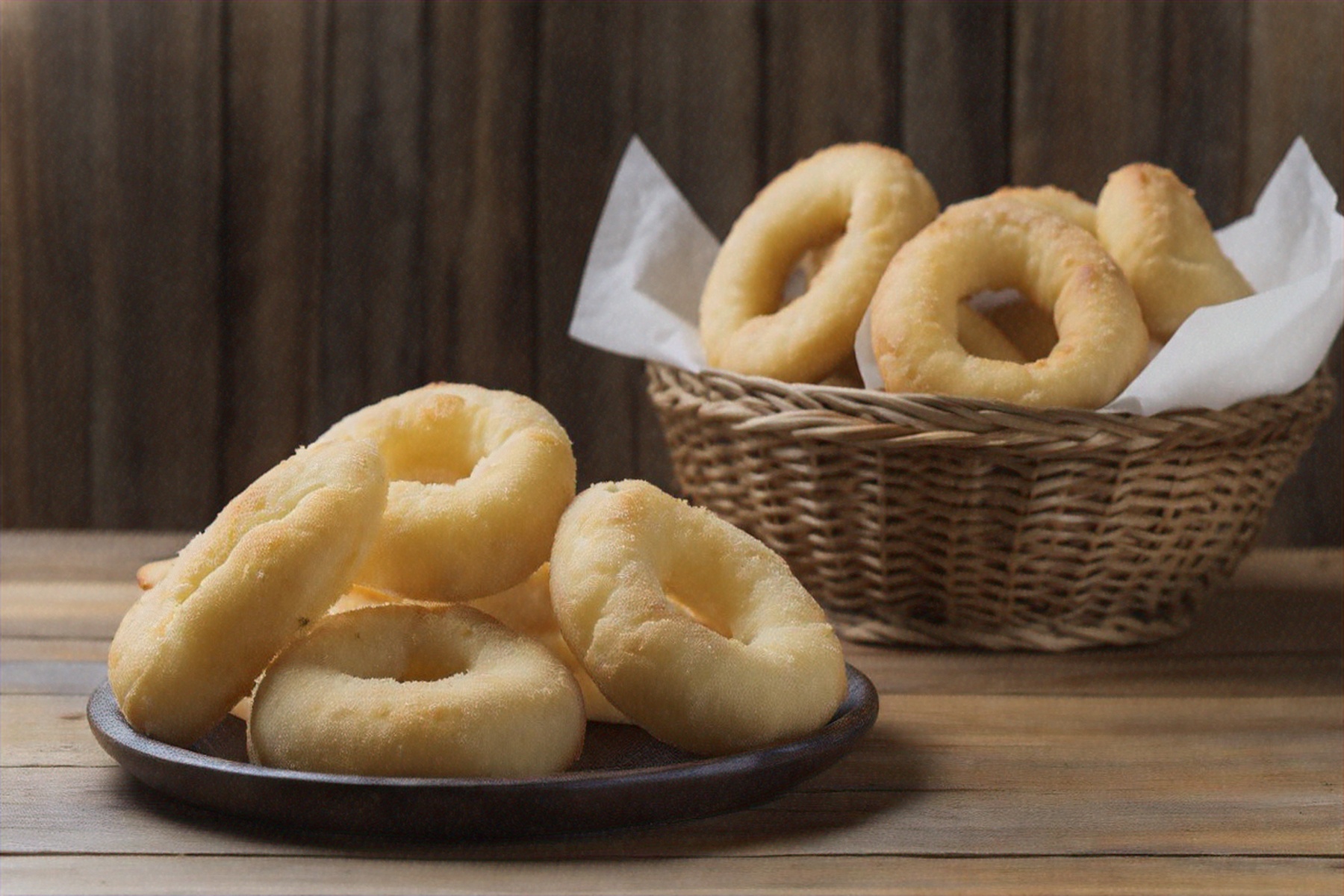
Chipa
Cheese Bread Rings
Chewy cassava and cheese bread—Paraguayan essential.
Ingredients: Cassava starch, Queso paraguayo (or similar cheese), Eggs, Butter or lard, Milk, Anise seeds.
Preparation: Mix starch with butter. After that, add cheese, eggs, milk. Knead until smooth. Then shape into rings or crescents. Bake until golden. To finish, best eaten warm.
💡 Traditionally made during Holy Week.
Tereré
Cold Yerba Mate
Ice-cold herbal mate—Paraguayan way to beat the heat.
Ingredients: Yerba mate, Cold water with ice, Fresh herbs (mint, boldo), Lime juice (optional), Guampa (horn cup), Bombilla (metal straw).
Preparation: Fill guampa 2/3 with yerba. Add fresh herbs. Pour cold water. Then let mate absorb water. Sip through bombilla. Refill many times.
💡 Tereré is social—shared among friends all day.
09
Wine, Spirits & Drinking Culture
Paraguay has a small wine industry concentrated in the Colonia Independencia (founded by German immigrants) and Itapúa departments, but the subtropical climate — hot, humid, with heavy rainfall — limits quality severely. Production is modest and almost entirely consumed domestically. Caña (sugarcane spirit, Paraguay's traditional aguardiente) is the most important local spirit. Pilsen (Cervecería Paraguaya) is the dominant beer brand.
Paraguay's most distinctive beverage tradition is tereré — cold yerba mate, shared communally through a metal bombilla (straw) from a guampa (cup), consumed all day, every day, by virtually everyone. Tereré is more than a drink: it is Paraguay's national ritual, a declaration of friendship and social belonging. The circle of tereré — passing the guampa from person to person in a fixed order — is Paraguay's most democratic institution, shared equally by presidents and street vendors, in offices and on construction sites.
✍️ Author's Note Radim Kaufmann
In Asunción's Plaza de los Héroes — where the memory of the Triple Alliance War (which caused devastating population losses) still haunts the national psyche — I was invited into a tereré circle by strangers. The cold yerba mate, herbal and refreshing in the subtropical heat, passed from hand to hand without question or hesitation. In Paraguay, to share tereré is to share life itself. No wine culture on Earth achieves the same radical communality.
10
Climate & Best Time to Visit
Paraguay has a subtropical climate with hot summers (October-March, 25-40°C) and mild winters (June-August, 10-25°C). The Chaco is hotter and drier than the east. Rainfall is highest from October to April. The best time to visit is May to September — pleasant temperatures, less rain, and the Chaco is more accessible.
Be prepared for intense summer heat, especially in the Chaco where temperatures can exceed 45°C. The transition months of April-May and September-October offer comfortable conditions for exploring both regions.
11
Getting There
Silvio Pettirossi International Airport serves Asunción. Confirm current routes and schedules with your airline before booking. Encarnación–Posadas crosses into Argentina; Ciudad del Este–Foz do Iguaçu crosses into Brazil. Check the entry rules of every country on your itinerary, including short trips to Iguazú Falls.
Buses are the main form of intercity transport, with comfortable long-distance services connecting Asunción to Encarnación, Ciudad del Este, and Chaco towns. The Ciudad del Este crossing provides easy access to Iguazú Falls on the Brazilian/Argentine border.
12
Practical Information
Entry: Visa rules depend on nationality, passport type and itinerary. Check current conditions with Paraguay’s immigration authority or a Paraguayan consulate. A yellow-fever vaccination certificate may be required for some itineraries; verify the rules before departure.
Money: The currency is the Paraguayan guaraní (PYG). ATMs are available in cities; carry local currency for smaller businesses and remote areas.
Language: Spanish and Guaraní are both official. English is limited outside tourist contexts; learning a few local greetings can help.
Safety: Theft and violent crime occur, including in tourist areas. Review current regional travel advice, arrange reliable transport and avoid border crossings after dark. Remote Chaco travel needs careful planning, water, fuel and supplies.
Health: Consult a travel-health clinician about vaccinations and mosquito-borne diseases, including yellow fever and dengue. Use sealed bottled or properly treated drinking water. Check your medical and evacuation insurance before remote travel.
13
Map
14
Author's Note
Paraguay doesn't try to impress you — and that's precisely its charm. In a continent of dramatic gestures, Paraguay offers something quieter and arguably more profound: a living indigenous culture that has shaped a modern nation, ruins that whisper of utopian experiments, and a warmth of welcome that feels unperformed because it is. Share a round of tereré with strangers under a lapacho tree and you'll understand why Paraguayans, despite a history of almost unimaginable suffering, remain among South America's most content people.
Practical information reviewed September 17, 2026. Check Paraguay Immigration, UK entry guidance and Smartraveller before departure. Entry and health requirements can change; advice depends on your passport and route.