

⚡ Oman at a Glance
🌍 Overview — The Gulf's Quiet Sultanate
Oman occupies a singular place in the Arabian Peninsula — the one Gulf nation that never joined the skyscraper race, never struck it rich enough on oil to forget its dhows and forts, and never stopped feeling like itself. Where Dubai reinvented its coastline and Doha built a skyline from a fishing village, Muscat kept its low white houses and its 1970s-era building-height rules, and Nizwa kept its Friday goat market running exactly as it has for centuries.
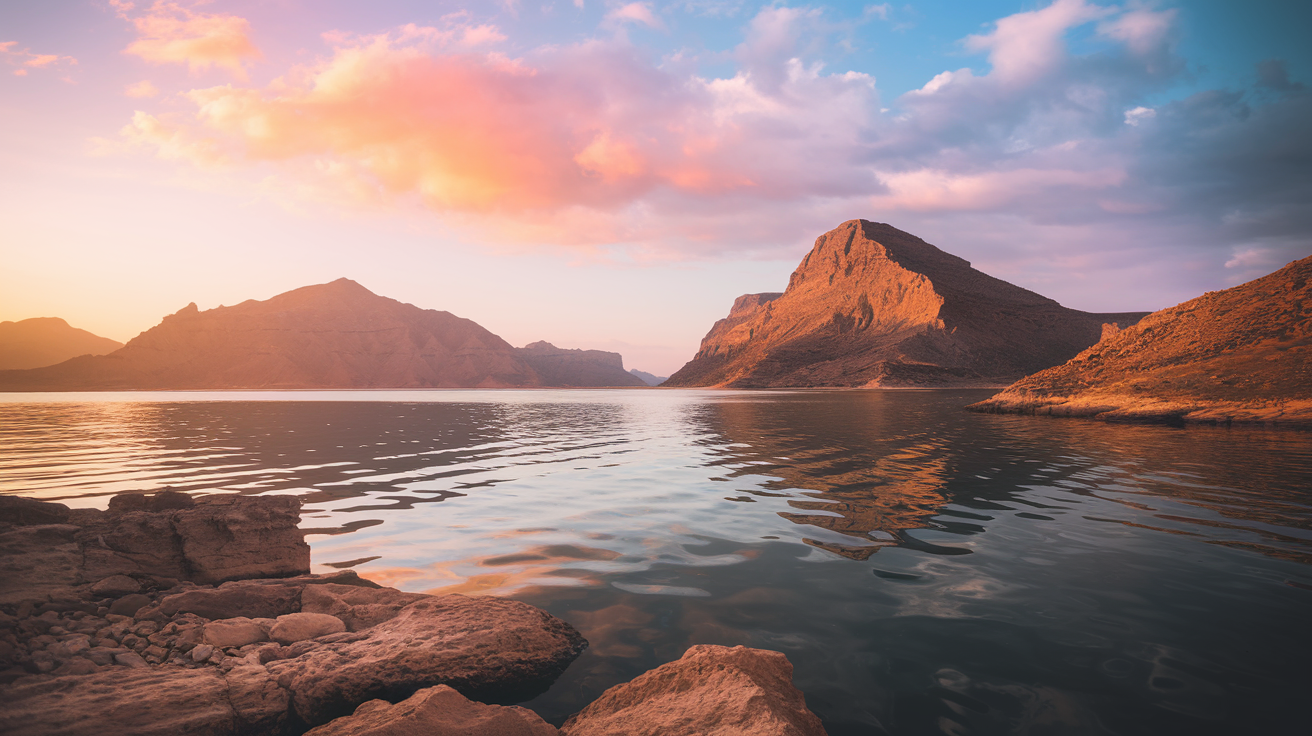
This is a country of extraordinary physical range for its size: the jagged, fjord-like inlets of the Musandam Peninsula in the far north; the terraced rose gardens and 3,000-meter peaks of Jebel Akhdar, the "Green Mountain"; the honey-colored dunes of the Wahiba Sands; and Salalah in the deep south, which turns tropical-green every summer when the khareef monsoon rolls in off the Arabian Sea — a climate quirk found nowhere else on the peninsula.
Oman has been an independent, continuously inhabited maritime power for over 5,000 years — its sailors reached East Africa and India centuries before European ships rounded the Cape, and Muscat once ruled an empire stretching to Zanzibar. Today, under Sultan Haitham bin Tariq, Oman pursues "Vision 2040," a deliberate, unhurried diversification away from oil — betting on tourism, logistics, and green hydrogen rather than the mega-projects of its neighbors. For travelers, that translates into a country that rewards patience: fewer five-star spectacles, far more genuine ones.
🏷️ Name & Identity
The country's official name is the Sultanate of Oman (سلطنة عُمان, Salṭanat ʻUmān). The origin of "Oman" is debated — one theory traces it to Oman bin Ibrahim al-Khalili, a legendary early settler; another to the Arabic root associated with "settled" or "peaceful" land, or to a tribal migration from Yemen's Ma'rib. What's certain is that Oman is one of the oldest continuously used place names in Arabia, appearing in Assyrian and Persian records from over two millennia ago.
Omanis are distinct within the Gulf for their branch of Islam: most follow Ibadism, a moderate, consensus-driven school that predates the Sunni-Shia split and is found almost nowhere else in significant numbers outside Oman and Zanzibar. This shapes a notably tolerant, understated public culture — Oman was mediating quiet back-channel diplomacy between Iran and the West for decades before it became fashionable, and it maintains cordial relations across the region's rival blocs.
🗺️ Geography & Regions
Oman covers 309,500 km², roughly the size of Kansas, wrapping around the UAE's eastern flank to command the Strait of Hormuz — through which nearly a fifth of the world's oil tanker traffic passes — before running southwest along 3,165 km of coastline to the Yemeni border. Two small exclaves, the Musandam Peninsula and Madha, are physically separated from the mainland by the UAE.
The country divides into four distinct zones: the Hajar Mountains running parallel to the northern coast, rising to 3,009 meters at Jebel Shams ("Mountain of the Sun"), Oman's highest peak and the site of the "Grand Canyon of Arabia"; the Al Sharqiya (Wahiba) Sands, a sea of orange dunes stretching to the coast; the vast, largely empty Rub' al Khali (Empty Quarter) in the interior; and Dhofar in the far south, whose monsoon-fed hills turn startlingly green each khareef season, producing waterfalls and grazing camels in a landscape that otherwise looks like the rest of Arabia's deserts.
📜 History
Oman's Bronze Age copper trade with Mesopotamia — the source of the ancient land the Sumerians called "Magan" — is now confirmed by archaeology at Bat, one of the country's UNESCO sites. By the medieval period, Omani sailors using the monsoon winds had built trading networks stretching to East Africa, India, and China; the compass and lateen sail technology that let Vasco da Gama round Africa arrived partly via Omani maritime knowledge.
In the 17th–19th centuries, the Omani Empire became a genuine regional power, at its height controlling Zanzibar, stretches of the East African coast, and parts of modern Pakistan and Iran — Muscat, not Muscat and Oman as one entity, briefly ruled an empire larger than its own territory, and the Sultan's capital moved to Zanzibar entirely from 1840 to 1861. The 20th century took a sharply different turn: under Sultan Said bin Taimur (r. 1932–1970), Oman turned deliberately inward, banning radios, sunglasses, and most modern infrastructure, keeping the country almost entirely isolated even as neighbors industrialized on oil wealth.
Everything changed on 23 July 1970, when Said's son Qaboos bin Said, backed by the British, deposed his father in a palace coup. Qaboos ruled for 50 years (1970–2020), using oil revenue to build the modern Omani state from close to zero — roads, schools, hospitals, and a currency — while keeping Oman's foreign policy carefully non-aligned. He died without an heir in January 2020; his cousin Haitham bin Tariq, whose name Qaboos had sealed in an envelope years earlier for exactly this contingency, succeeded him and now leads the Vision 2040 diversification push.
👥 People & Culture
Oman's population of roughly 4.6 million includes a substantial expatriate workforce — around 40% of residents are foreign nationals, mostly from South Asia, working in construction, services, and the oil sector. Ethnic Omanis are predominantly Arab, with significant minority communities of Baluchi descent (from historical ties to Gwadar, once an Omani possession in modern Pakistan), Swahili-speaking Zanzibaris who "returned" after Zanzibar's 1964 revolution, and Indian-origin trading families whose presence in Muscat's Muttrah souq predates the oil age by centuries.
Hospitality (karam) runs deep and is genuinely reciprocal, not performative: refusing offered coffee (qahwa, cardamom-spiced and served in tiny handleless cups) and dates is a real social misstep. Omani dress remains near-universal rather than ceremonial — the dishdasha (ankle-length robe) and kummah or masar (embroidered cap or turban) are everyday wear for Omani men across all classes, and the abaya for women, making Oman visually one of the most "intact" traditional dress cultures in the Gulf.
🕌 Muscat — The Low-Rise Capital
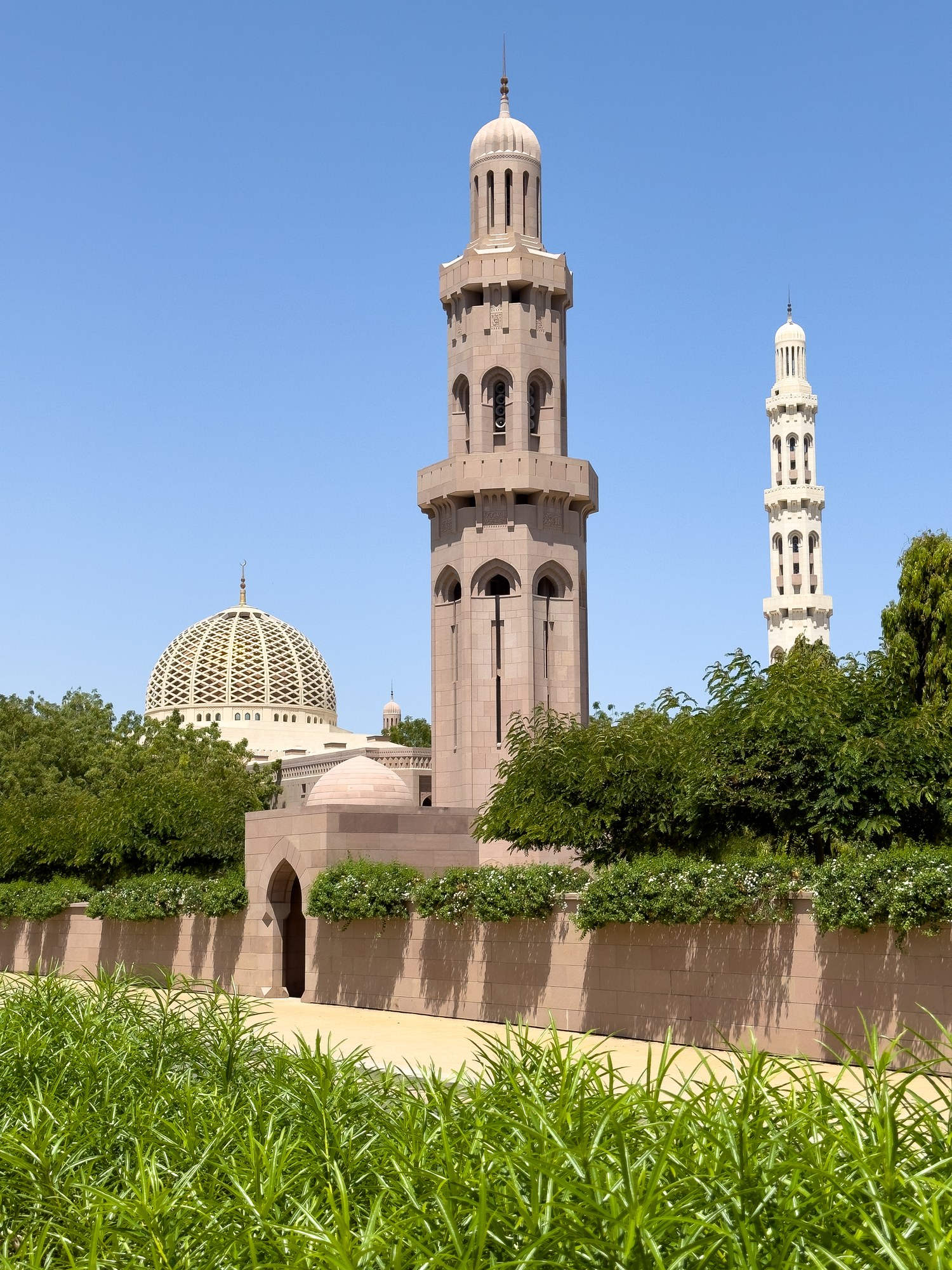
Photo: dronepicr / Wikimedia Commons, CC BY 2.0
The capital is deliberately, almost stubbornly low-rise — a 1970s royal decree capping building heights at a few stories still shapes the skyline, so Muscat sprawls in a long ribbon between mountains and sea rather than stacking upward. The Sultan Qaboos Grand Mosque, completed in 2001, remains the country's most spectacular building: its main prayer hall holds a 21-by-14-meter Persian carpet that was, at the time of weaving, the largest single-piece carpet on Earth, under a Swarovski chandelier nearly 8 meters tall.
Old Muscat's twin forts, Mirani and Jalali, guard the harbor entrance exactly as they have since the Portuguese built them in the 1580s. A short drive away, the Muttrah Corniche and its 16th-century souq remain a working market — frankincense, silver khanjar daggers, and pashmina alongside plastic sandals and phone cases — not a recreation. The Royal Opera House Muscat, opened in 2011, hosts international opera and ballet seasons that would be unremarkable in Europe and are genuinely startling in the context of the wider Gulf.
🏰 Nizwa — The Interior Heart
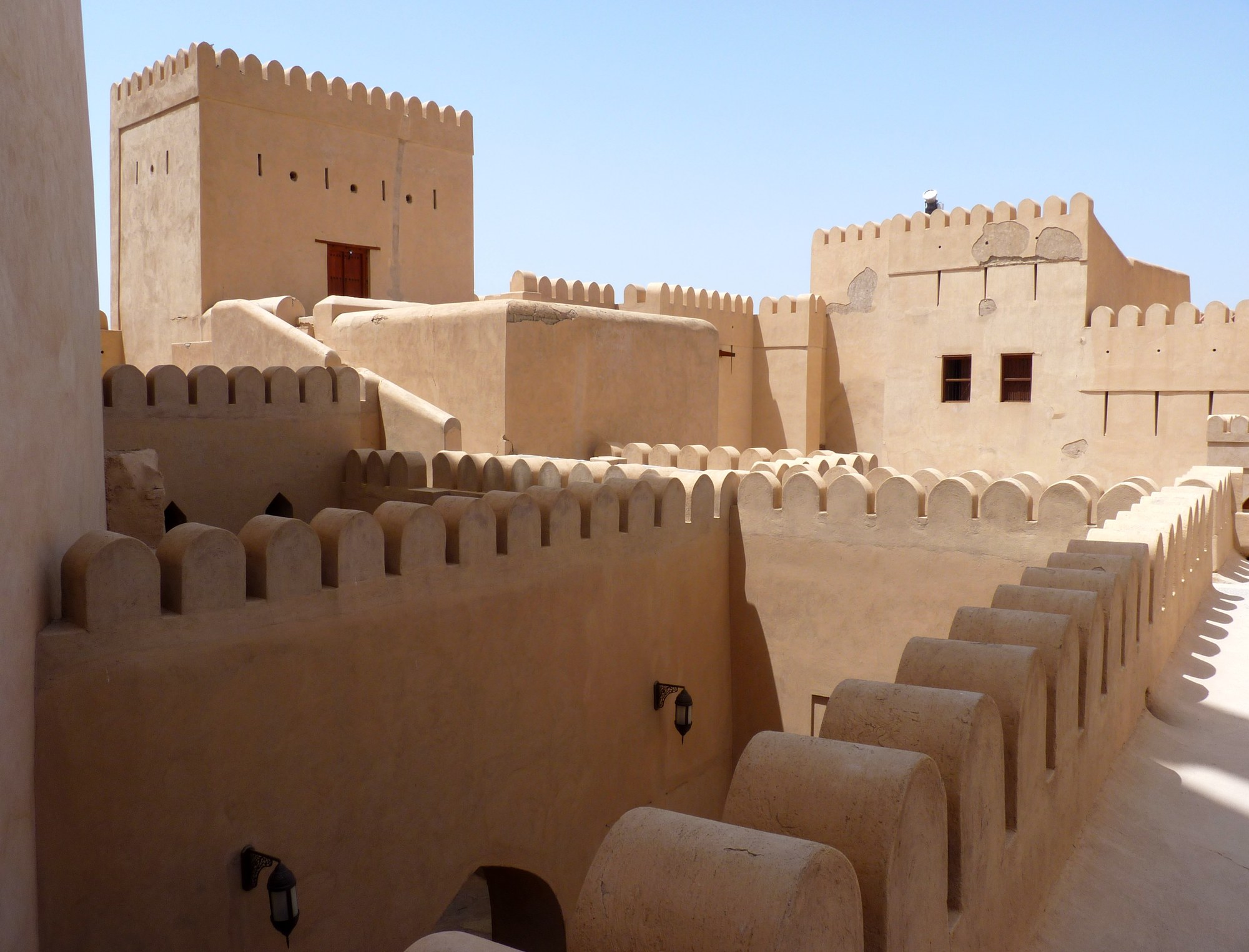
Photo: Dudva / Wikimedia Commons, CC BY-SA 4.0
For 600 years Oman's interior capital and still its cultural heart, Nizwa sits at the foot of Jebel Akhdar, an hour and a half from Muscat. Its circular fort, built in the 1650s with a 40-meter-diameter tower designed to withstand cannon fire, remains the best-preserved in the country. The Friday livestock souq — held early, before the heat — is a genuine working market where goats and cattle change hands through a rapid, semi-ceremonial auction chant, not a tourist reenactment, though visitors are entirely welcome to watch.
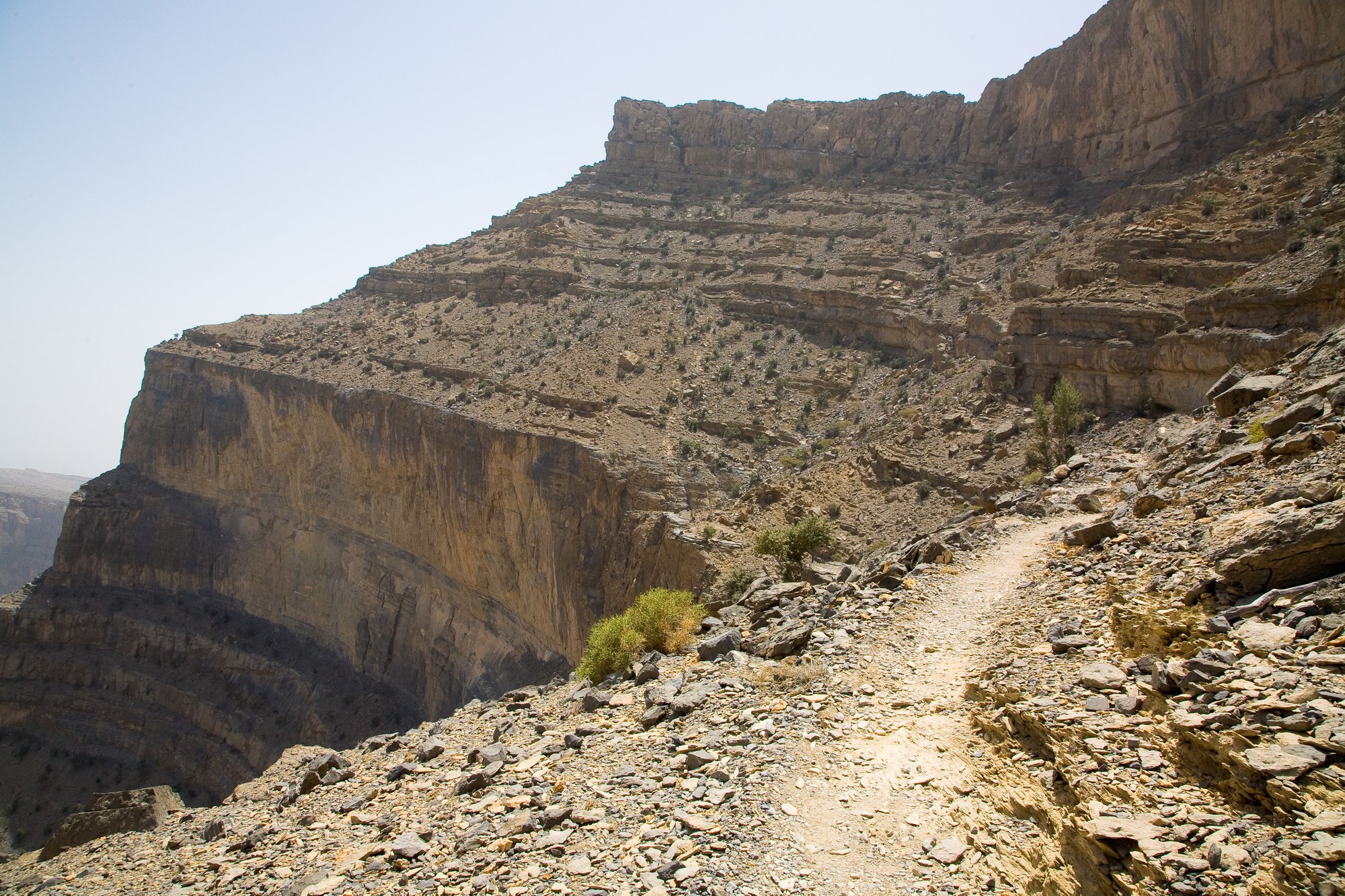
Nizwa is the gateway to Jebel Akhdar's terraced villages, where Damask roses are still hand-distilled into rosewater each spring, and to the deep, echoing canyon of Jebel Shams — Oman's answer to the Grand Canyon, with a rim-edge village trail that runs along a genuine 1,000-meter drop.
🌴 Salalah & the Khareef
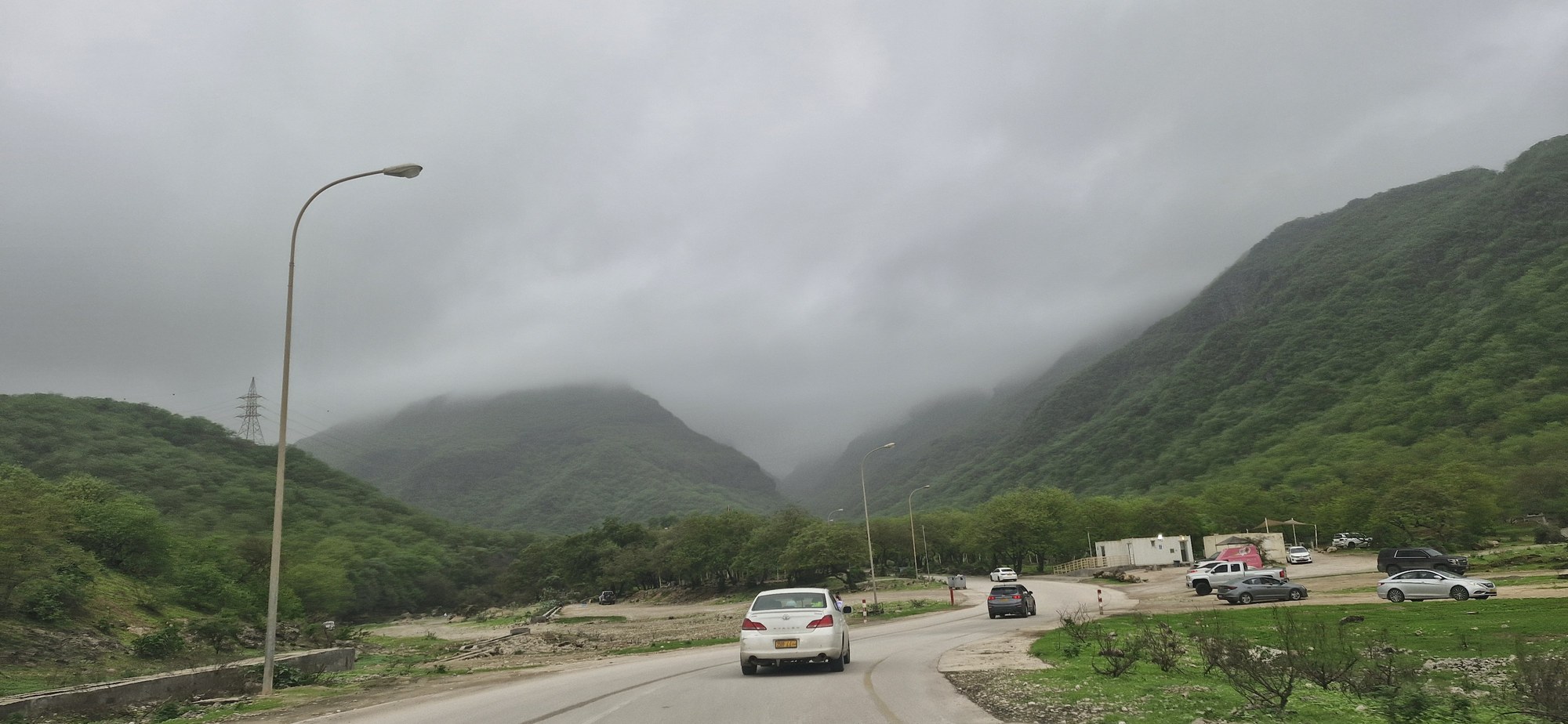
Photo: Syed99975 / Wikimedia Commons, CC BY 4.0
Salalah and the surrounding Dhofar region feel like a different country from northern Oman — for good reason. Each year from roughly late June to early September, the khareef monsoon wraps the Dhofar mountains in cloud and drizzle, turning the hillsides emerald and drawing enormous numbers of Gulf tourists escaping 45°C heat elsewhere for Salalah's mild, misty 25°C. Outside khareef season, the same hills return to standard Arabian desert-brown within weeks.
This is also frankincense country — the Boswellia sacra trees that made Dhofar wealthy in antiquity still grow wild in Wadi Dawkah, part of the UNESCO-listed Land of Frankincense site, and the resin is still hand-harvested and sold in Salalah's souq exactly as it was when it was worth its weight in gold to Rome and Egypt.
⛰️ Musandam — The Norway of Arabia
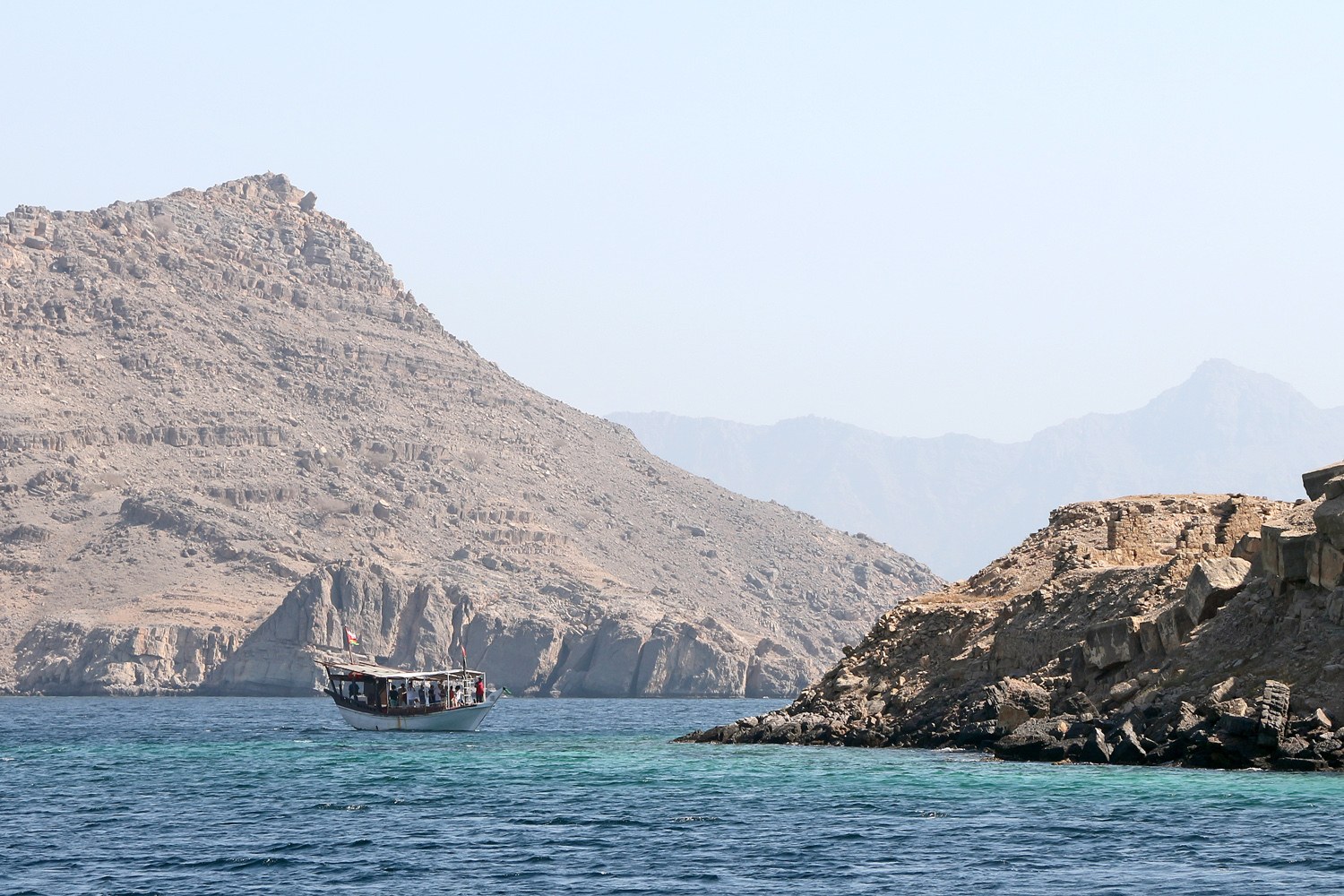
Photo: Banja-Frans Mulder / Wikimedia Commons, CC BY 3.0
Separated from the rest of Oman by a stretch of UAE territory, the Musandam Peninsula is the country's most dramatic and least-visited landscape — sheer limestone cliffs plunging directly into fjord-like inlets (khors) that have earned it the nickname "the Norway of Arabia." Khasab, the small regional capital, is the base for dhow cruises into Khor Ash Sham, where dolphins are a near-guarantee and the cliffs rise straight from water deep enough for naval vessels.
Musandam also commands the narrowest point of the Strait of Hormuz, and its remoteness — reachable by a scenic but long coastal drive through UAE territory, or a short flight to Khasab — has kept it free of the resort development found elsewhere in the Gulf.
📖 Explore More
Four topics got room to breathe on their own pages:
🌡️ Climate
Oman runs two climates on two calendars. In the north (Muscat, Nizwa, the interior), the pattern is standard Gulf desert: blistering 40–48°C summers from May to September, and a genuinely pleasant 20–30°C peak season from October to April, when most travelers come. Jebel Akhdar's altitude knocks 10–15°C off whatever Muscat is experiencing, making it a functional summer escape for Omanis themselves.
Dhofar in the south runs the opposite calendar: hot and dry most of the year, then transformed by the June–September khareef monsoon into cool, cloud-wrapped green — Salalah's high season is precisely when the rest of the country is least visited.
✈️ Getting There & Visas
Muscat International Airport (MCT) is the main gateway, with direct connections across the Gulf, South Asia, and increasingly Europe on Oman Air; Salalah Airport (SLL) serves the south directly, particularly useful during khareef season. Citizens of 100+ countries can enter visa-free for 14 days; most others apply for an eVisa in advance at evisa.rop.gov.om (roughly $52 for a 10 or 30-day single entry, about $130 for a one-year multiple-entry visa) — processing is typically same-day to 72 hours. GCC nationals enter visa-free with national ID.
Land entry from the UAE is straightforward and common — many visitors combine Dubai or Abu Dhabi with a few days in Oman, particularly Musandam, which is most easily reached by road through the UAE. Entry from Yemen is not advisable; the border area is subject to specific advisories and Americans attempting to cross it have been detained by Omani authorities.
ℹ️ Practical Information
⚠️ Practical Notes
Oman is consistently rated among the safest countries in the Middle East, with low crime and a stable government. The main real risks for travelers are environmental: extreme summer heat, flash flooding in wadis during rare but sudden rains (a genuine, recurring cause of tourist deaths — never camp in a dry wadi bed), and the Yemen border area, which carries its own specific advisory. Public behavior standards are strict and enforced: public intoxication, indecent dress, and public displays of affection can result in arrest, and yelling or rude gestures during any dispute — including traffic incidents — can escalate to criminal charges.
Money: the Omani Rial (OMR) is pegged to the US dollar and is one of the world's highest-valued currencies by unit (1 OMR ≈ $2.60), which surprises first-time visitors doing quick mental conversion. ATMs are widespread in cities; carry cash for the interior and souqs.
Dress: modest dress is expected in public for all genders — shoulders and knees covered is the safe default for women, and shorts are fine for men outside mosques. Women do not need to cover their hair except when entering mosques, where a headscarf is required (the Sultan Qaboos Grand Mosque provides abayas for visitors who need them).
Alcohol: unlike much of the wider region, alcohol is legally available to non-Muslim visitors in licensed hotel bars and restaurants; Muslim travelers are prohibited from bringing alcohol into the country, and non-Muslims may bring in up to 2 liters purchased duty-free on arrival.
💰 Cost of Travel
Oman sits mid-range for the Gulf — noticeably cheaper than the UAE or Qatar, but not a budget destination. A comfortable mid-range trip runs roughly $80–150/day per person including a rental car (the best way to see the country), 3-star to boutique hotels, and restaurant meals. Backpackers using shared taxis, guesthouses, and grocery-store food can manage $40–60/day. Luxury desert camps and 5-star coastal resorts in Muscat or Salalah run $300+/night. Fuel is cheap by Western standards, making a self-drive road trip one of the best-value ways to experience the country.
🏨 Accommodation
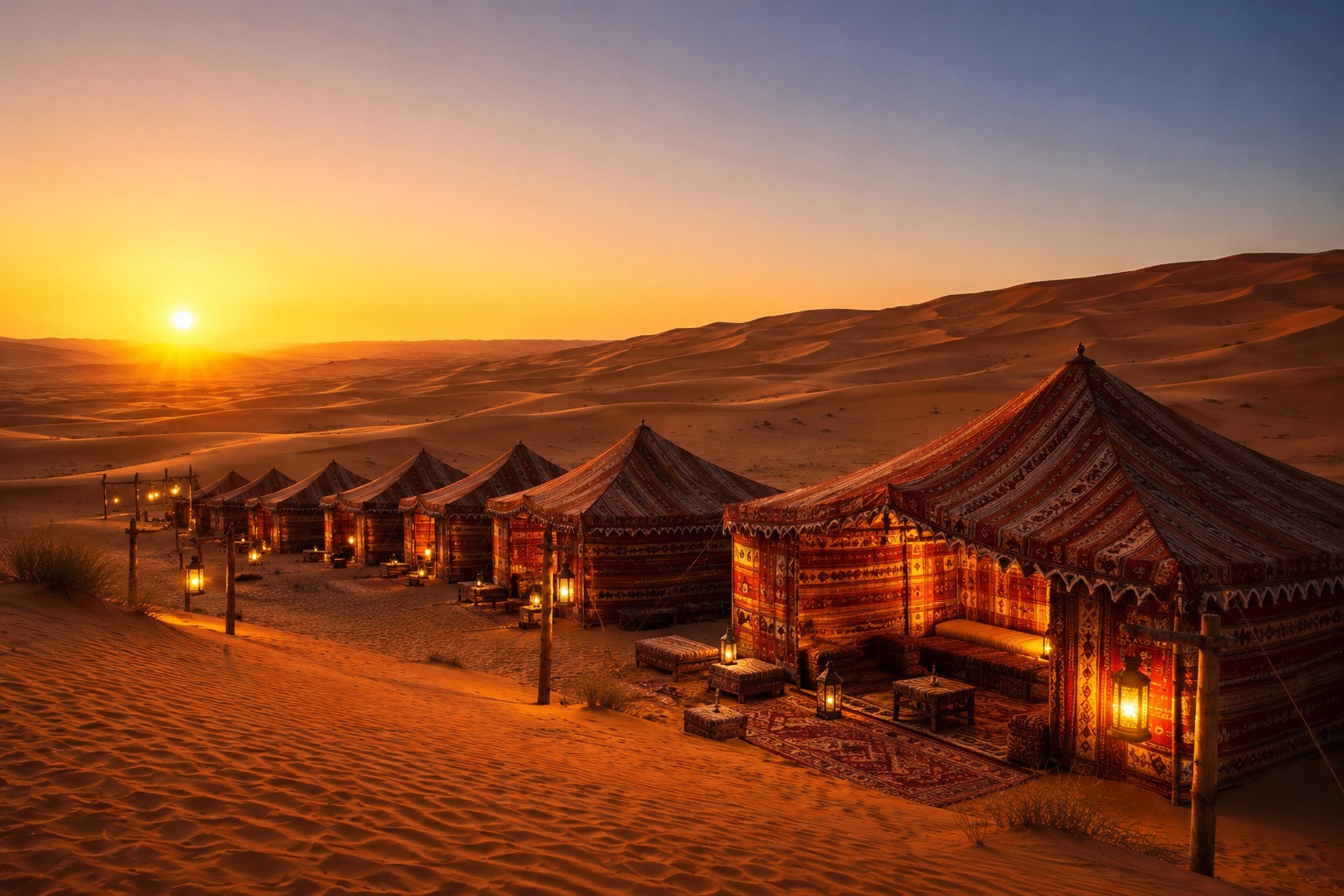
Options range from international 5-star chains in Muscat (Chedi, Al Bustan Palace, Kempinski) to atmospheric heritage hotels in converted forts and merchant houses in Nizwa and the interior, to genuinely memorable desert camps in the Wahiba Sands — some solar-powered and Bedouin-run, ranging from simple to luxury "glamping." Musandam's khor cruises often include overnight dhow stays. Booking ahead matters most during khareef season in Salalah (June–September) and the cool-weather peak in the north (October–March).
🎉 Festivals & Events
Khareef Festival (Salalah, Aug): the monsoon season's cultural counterpart — markets, concerts, and family entertainment timed to the green season, drawing huge numbers of GCC tourists.
Muscat Festival (Jan–Feb): a month of concerts, heritage villages, and fireworks across the capital, historically the country's flagship cultural event.
National Day (18 Nov): marks both Oman's 1650 expulsion of the Portuguese and Sultan Qaboos's 1940 birthday — celebrated with fireworks, flag displays, and public festivities nationwide.
Eid al-Fitr and Eid al-Adha: observed nationwide with family gatherings, feasting, and, for Eid al-Adha, livestock sacrifice traditions visible in interior towns like Nizwa.
⭐ Notable People
Sultan Qaboos bin Said (1940–2020): ruled 1970–2020, single-handedly modernized Oman from near-total isolation, remains close to a secular saint in national memory.
Ahmed bin Majid (c. 1421–1500): celebrated Omani navigator and cartographer, sometimes credited (disputedly) with guiding Vasco da Gama's pilot across the Indian Ocean; his navigational treatises remained in use for centuries.
Raoul Bott — no genuine Omani connection; skip. Badriya al-Badri and other contemporary Omani writers and filmmakers are increasingly visible internationally as the country's small but growing arts scene gains festival recognition.
⚽ Sports & Recreation
Football is the dominant spectator sport, with the national team a respectable if not dominant Gulf-region competitor. Traditional Omani sports retain real cultural weight: camel racing (increasingly using small robotic jockeys rather than child riders, following international reform pressure), bull-butting (a ritualized, non-violent pushing contest between bulls, distinct from Spanish bullfighting), and dhow sailing races that echo the country's maritime heritage. Adventure sports — canyoning in the wadis, rock climbing on Jebel Misht's limestone walls, and kitesurfing off Masirah — have grown quickly as tourism diversifies.
🎒 Packing Tips
Modest, breathable clothing covering shoulders and knees; a light scarf for mosque visits (required for women, provided at major sites if forgotten). Sturdy sandals or hiking shoes for wadis and canyons — many require wading or scrambling over rock. Reef-safe sunscreen and a proper sunhat; the sun is intense even in "cool" season. A light jacket for Jebel Akhdar evenings or winter nights in the interior, which can drop surprisingly cool. If self-driving to wadis or the Wahiba Sands, a 4WD is genuinely necessary, not just recommended — sand and gravel tracks are not forgiving to two-wheel-drive rentals.
🔗 Resources
The official eVisa portal (evisa.rop.gov.om) is the only place to apply for an Omani visa — third-party sites charge steep markups for the same service. Oman's Ministry of Heritage and Tourism maintains an official tourism portal with updated site hours and khareef-season advisories. For wadi and canyon conditions, local tour operators in Muscat and Nizwa are the most reliable real-time source, particularly regarding flash-flood risk after rain.
📚 Recommended Reading
"Motoring with Mohammed" by Eric Hansen — a classic, wry account of searching for a buried journal along Yemen's Red Sea coast that opens into a broader portrait of the region including Oman. "Oman: The Reinvention of a Sultanate" by Calvin H. Allen and W. Lynn Rigsbee is the standard academic history of Qaboos-era transformation. For fiction, Omani author Jokha Alharthi's "Celestial Bodies" — the first Arabic-language novel to win the International Booker Prize (2019) — offers a genuinely Omani literary voice, tracing three generations of a family through the end of slavery and the oil transition.
🎬 Videos
Search "Musandam dhow cruise" for the fjord scenery that photos struggle to convey, "Jebel Shams Balcony Walk" for a sense of the trail's exposure before committing to it, and "Nizwa Friday goat souq" for the genuine, unstaged energy of the livestock market. Oman's official tourism board channel also runs high-production khareef season footage that explains the Salalah phenomenon better than any description.
🔬 Fascinating Facts
🕌 The Sultan Qaboos Grand Mosque's main chandelier weighs 8.5 tonnes and was, for a time, the largest in the world.
🐫 Oman banned child jockeys from camel racing in 2005, replacing them with small robotic jockeys controlled remotely by owners driving alongside the track.
🏔️ Jebel Shams' canyon is deep enough that its rim village, Al Khitaym, sits over 1,000 meters above the wadi floor below.
🌧️ Salalah's khareef monsoon is the only place on the entire Arabian Peninsula that reliably receives seasonal monsoon rainfall.
🏴 Oman ruled Zanzibar as its capital from 1840 to 1861 — for two decades, the seat of the Omani empire was in East Africa, not Arabia.
📰 Media & Press
Oman ranks in the lower-middle tier globally for press freedom; domestic media is largely state-aligned or self-censoring on matters touching the Sultan, and the 2011 press law retains criminal penalties for material deemed to harm national security or public order. Foreign journalists generally operate without major restriction on tourism-adjacent reporting, and internet access is unrestricted for standard use, though some VOIP services face throttling.
📸 Photo Gallery
Photos from Musandam's fjords, Jebel Shams's canyon rim, Nizwa's fort and souq, and Salalah's khareef-green hills capture a country with more visual range than its "desert Gulf state" reputation suggests.
✍️ Author's Note
What stays with you about Oman isn't any single monument — it's the pacing. This is a country that had the same oil wealth as its neighbors and chose forts over towers, a 1970s-era height limit over a skyline arms race, and a 50-year sultan who preferred quiet diplomacy to headlines. Nizwa's goat souq runs exactly as it did before the oil age; Muttrah's merchants still haggle in the same alleys their grandfathers worked. For a traveler exhausted by the Gulf's more performative reinventions, Oman's genuine, unhurried continuity is the real luxury.
— Radim Kaufmann
