🏛️ Oman's Five World Heritage Sites
Oman holds five UNESCO World Heritage Sites, all listed for cultural rather than natural significance — a reflection of a country whose landscapes are spectacular but whose deepest claim to global heritage status is what humans built and organized within them.
Bahla Fort (1987)
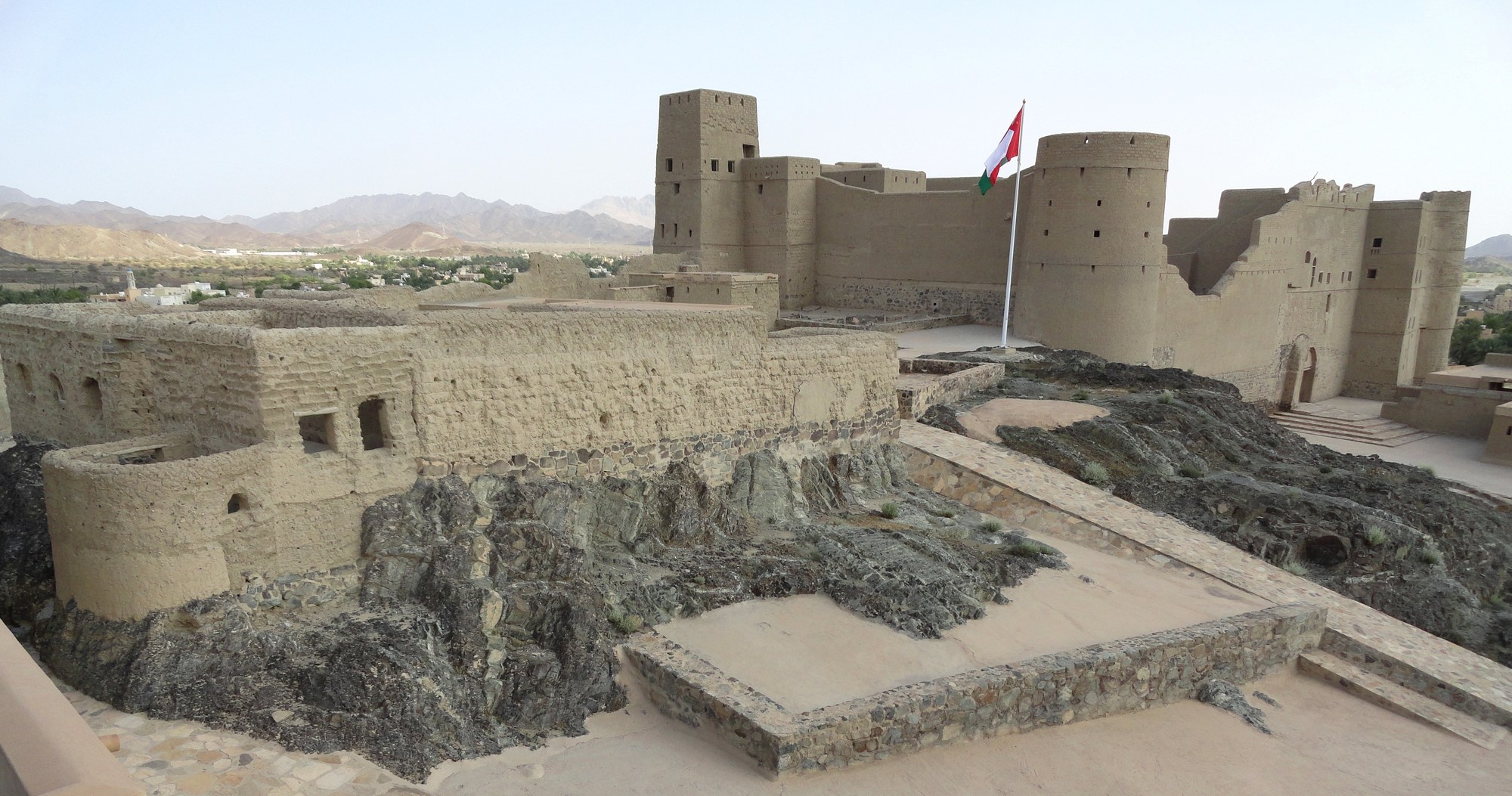
Photo: Fabio Achilli / Wikimedia Commons, CC BY 2.0
Oman's first UNESCO inscription and its largest fortification — a 13-kilometer mud-brick wall enclosing an entire oasis settlement, built by the Banu Nabhan tribe across the 12th–15th centuries. A multi-decade UNESCO restoration, finished in 2012, rebuilt the fort from a genuinely ruinous state; the first two years of work were spent simply clearing rubble.
Archaeological Sites of Bat, Al-Khutm and Al-Ayn (1988)
A Bronze Age necropolis and settlement complex near Ibri, dating to the 3rd millennium BCE — beehive-shaped tombs and a monumental tower forming one of the best-preserved ensembles of early settlement anywhere in the world, and the archaeological confirmation of ancient Magan, the copper-trading land the Sumerians recorded trading with.
Land of Frankincense (2000)
A multi-site listing across Dhofar: the wild frankincense groves of Wadi Dawkah, the caravan oasis of Shisr, and the ruined ports of Al-Baleed and Sumhuram, from which resin harvested from Boswellia sacra trees was shipped to Egypt, Rome, and beyond — frankincense was, for over a thousand years, worth its weight in gold, and this trail is where it began.
Aflaj Irrigation Systems of Oman (2006)
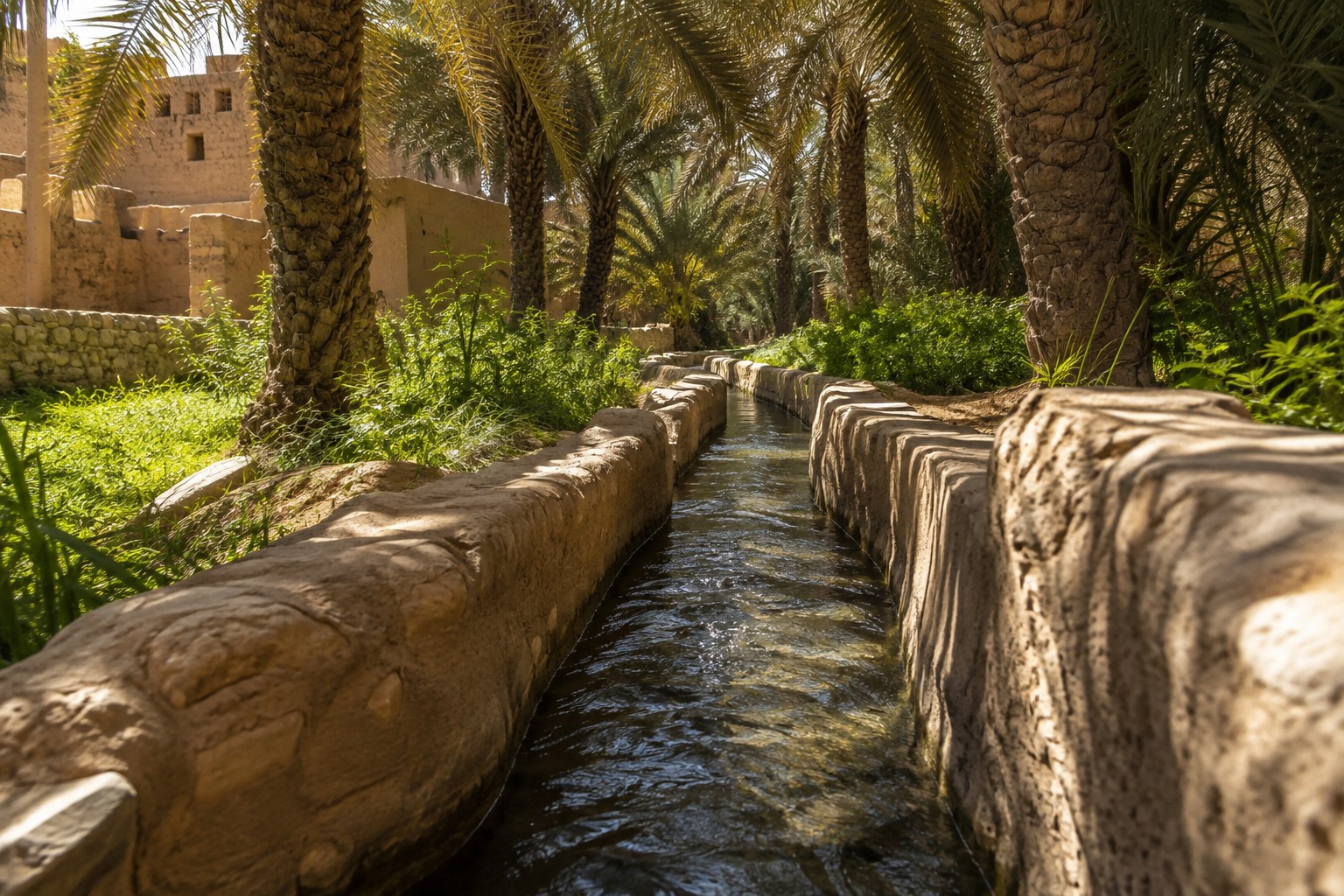
Five representative examples of the roughly 3,000 aflaj still in active use across Oman today — gravity-fed channels moving water from underground sources to fields and towns, some dating in principle to 500 CE, with archaeological evidence of irrigation in the region as early as 2500 BCE. These aren't museum pieces: they still supply roughly a third of the country's irrigation water, managed by community water-sharing systems that predate any modern utility.
Ancient City of Qalhat (2018)
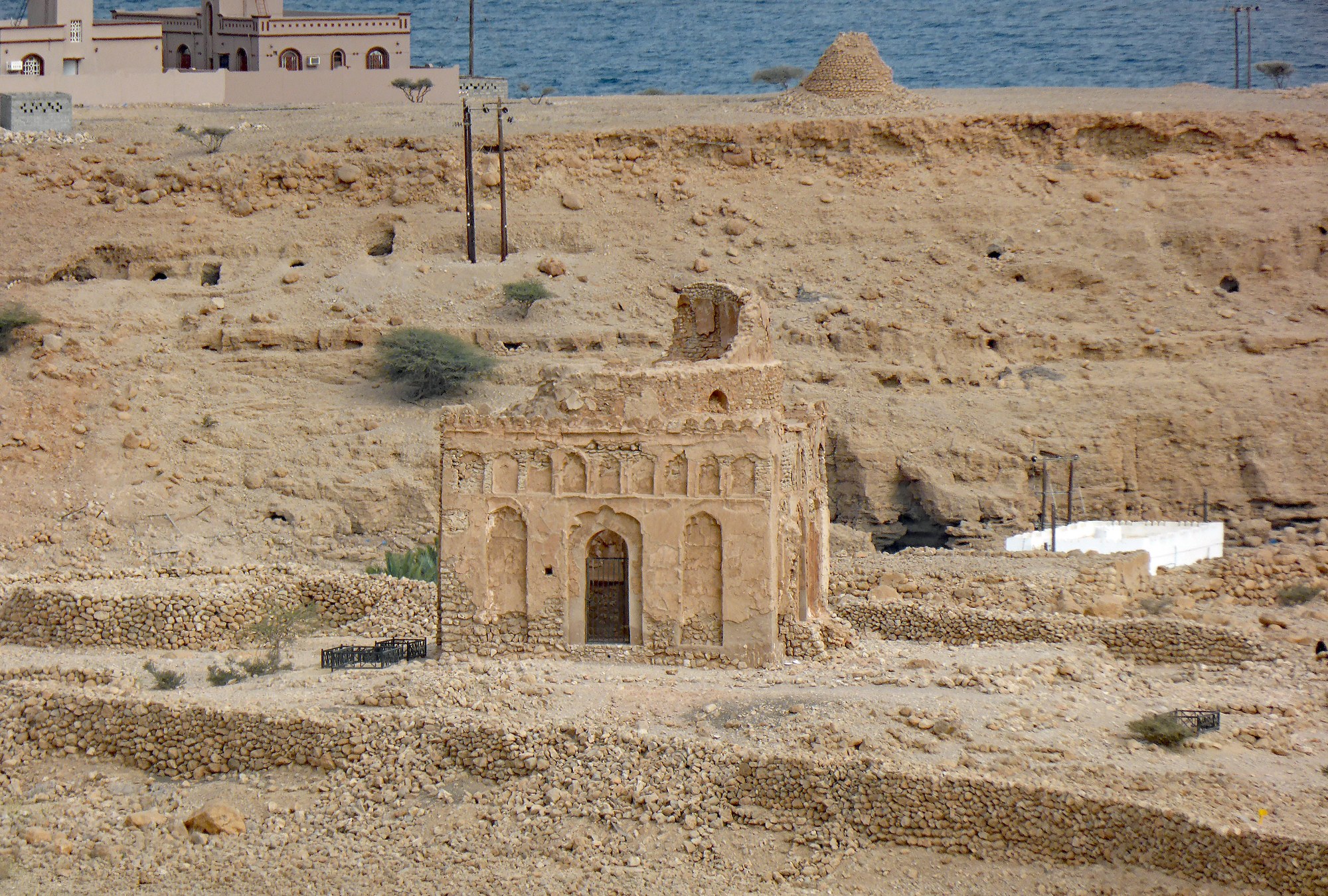
Photo: Hans Birger Nilsen / Wikimedia Commons, CC BY-SA 2.0
Oman's newest inscription — the ruins of a major Indian Ocean trading port near Sur, visited by both Marco Polo and Ibn Battuta at its height under the Hormuz princes in the 11th–15th centuries. Trade routes shifted north to Muscat by the 16th century and Qalhat declined; what remains, including the domed Bibi Maryam mausoleum, is one of the few physical traces of the Hormuz-era Indian Ocean trade network.
🗺️ Planning a Visit
Unlike some UNESCO circuits, Oman's five sites are genuinely, comfortably combinable. Bahla Fort and the Bat necropolis both sit within a manageable radius of Nizwa, making an interior loop from Muscat (Nizwa → Bahla → Jebel Akhdar, 2–3 days) a realistic way to see two sites alongside the region's forts and canyons. The Land of Frankincense sites cluster around Salalah in the far south, best combined with a khareef-season (June–September) visit if the monsoon-green hills are part of the draw. Qalhat, near Sur, fits naturally into a coastal drive from Muscat. Only the Aflaj systems require a bit more deliberate routing, since the five representative aflaj are scattered — but minor, well-preserved examples are visible in passing in almost any interior town, including Nizwa itself.
