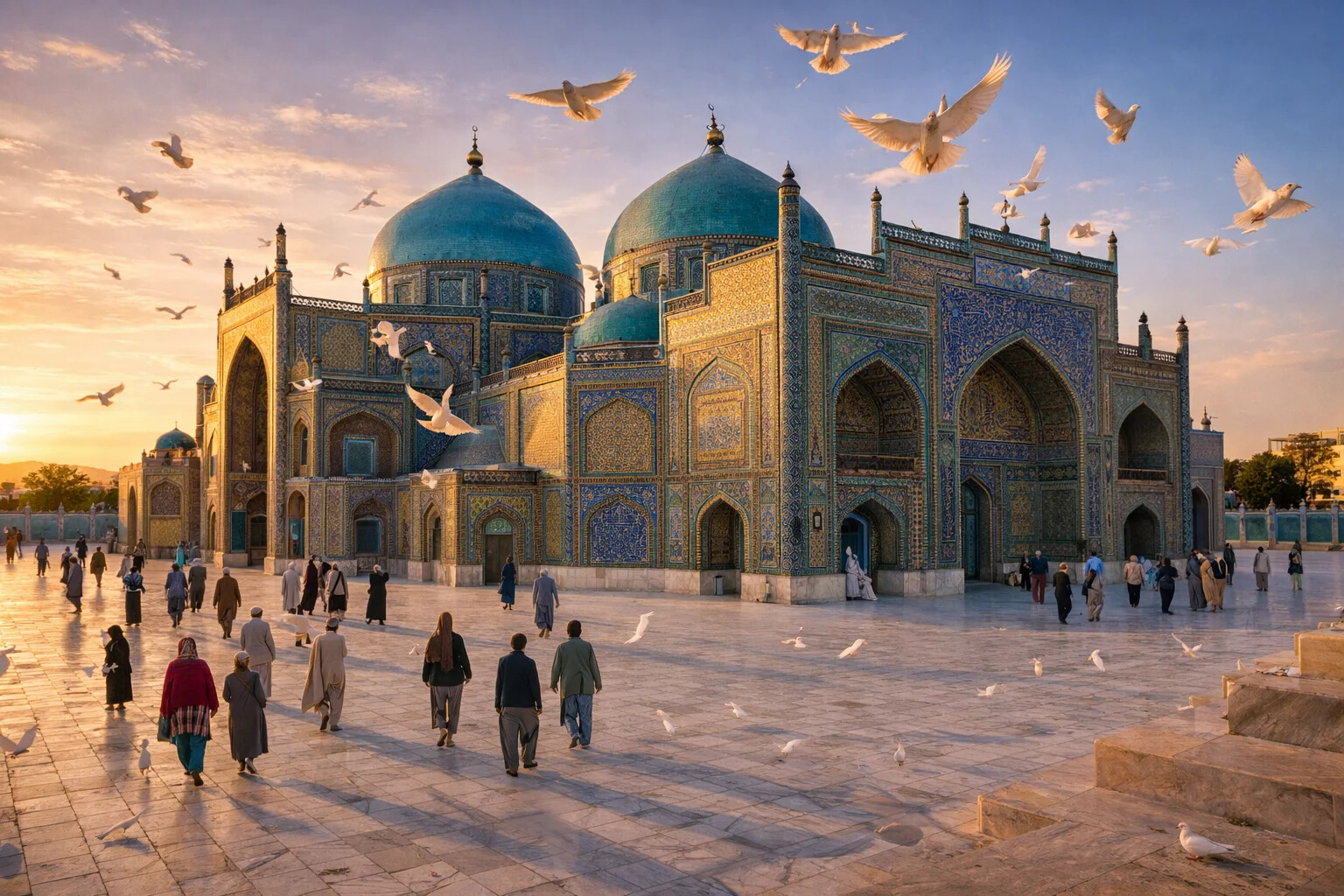
Kabuli pulao at weddings, mantu dumplings from the north, and the cardamom-scented kahwa that opens every visit — a traveler's guide to eating and drinking in Afghanistan.
Afghan cuisine reflects the country's position between Central and South Asia, combining Persian influences, spices familiar from the Indian subcontinent, and hearty Central Asian dishes. It is often aromatic rather than intensely hot, using cardamom, cumin, coriander, and cinnamon. Common meats include lamb, chicken, and beef; pork conflicts with Islamic dietary rules. Rice is an important staple, especially in pilaf dishes whose preparation rewards patience.
Kabuli pulao is one of Afghanistan's best-known dishes: long-grain rice prepared with lamb, carrots, raisins, and sometimes nuts, scented with cardamom and cumin. The aim is tender meat and separate, fluffy grains. A golden crust may develop with some cooking methods, but it is not a requirement of every pulao. Household and regional versions vary in their proportions of carrots, sweet additions, and seasonings such as saffron or citrus peel.
Mantu are delicate steamed dumplings filled with seasoned ground lamb or beef and onion. They are served with yogurt, mint, and sauces that may include split peas or tomatoes. Related dumplings appear across Central Asia, while Afghan mantu have their own local variations. Making them takes time, so they often feature at celebrations and when guests visit.
Bread accompanies many meals, often naan baked in a tandoor until puffed and lightly charred. Afghan breads range from thin lavash to thicker naan-e-roghani brushed with fat and sprinkled with nigella seeds. Sharing bread and attending to elders at the table express hospitality and respect, though practices vary among families and regions.
Kabuli Pulao
The national dish: rice with lamb, carrots, raisins, and spices
Mantu
Steamed dumplings with spiced lamb and yogurt sauce
Bolani
Stuffed flatbread with potato, leek, or pumpkin
Ashak
Leek-filled dumplings with meat sauce and yogurt
Qorma
Slow-cooked meat stew with vegetables
Chopan Kabab
Grilled lamb chops seasoned with salt and fat
Sheer Khurma
Festival dessert with milk, dates, and nuts
Chai
Green tea (qahwa) or black tea, always with hospitality
Kabuli Pulao
National Rice Dish
Kabuli Pulao
Afghanistan's celebrated rice dish—fragrant rice with tender lamb, topped with caramelized carrots and raisins.
Preparation: Soak rice 30 min, drain. Brown lamb with onions until golden. Add spices and 480ml water, simmer 45 min. Then fry carrots until caramelized. Parboil rice 70%, drain. Then layer rice over meat, steam 20 min. To finish, top with carrots, raisins, almonds.
💡 Keep the pot covered during the final steaming stage. Aim for separate, tender grains rather than a scorched bottom.
Mantu
Steamed Dumplings
Mantu
Delicate steamed dumplings filled with spiced meat, topped with yogurt and a split-pea sauce.
Ingredients: 240 ml flour (a dry volume measure), about 60 ml water and salt for the dough; 150 g ground beef, 1 small onion, diced, ½ tsp coriander, 120 ml yogurt, 60 ml yellow split peas, 15 ml dried mint, and 1 clove garlic. Adjust the water to the flour's absorption.
Preparation: Make dough, knead smooth, rest 30 min. Mix beef, onion, coriander for filling. Roll thin, cut 3-inch squares. Then fill and pinch corners together. Steam 40 minutes. To finish, serve with garlic yogurt, peas, mint.
💡 Freeze uncooked mantu on tray before bagging—keeps for months.
Bolani
Stuffed Flatbread
Bolani
Crispy pan-fried flatbread stuffed with seasoned potatoes and leeks.
Ingredients: 240 ml flour (a dry volume measure), about 120 ml water, salt, 1 cooked potato, mashed, 1 leek, chopped, 30 ml cilantro, ½ tsp turmeric, oil for frying, and yogurt to serve. Add water gradually to obtain a workable dough.
Preparation: Make dough, rest 20 min. After that, sauté leeks, mix with potato, cilantro, turmeric. Divide into 4, roll thin. Then fill half, fold, seal. Pan-fry until golden. To finish, serve with yogurt.
💡 Brush lightly with butter after frying for a richer flavor.
02
📜 Traditional Afghan Recipes
Bring Afghan flavors to your kitchen with these household-style recipes. Family methods vary; the brief recipes in the first chapter are complemented by fuller instructions below.
🍚 Kabuli Pulao — The National Dish
The crown jewel of Afghan cuisine, served at weddings and celebrations
Ingredients:
500g basmati rice, soaked 1 hour
500g lamb shoulder, cubed
2 large carrots, julienned
1 cup raisins (black preferred)
½ cup slivered almonds
1 large onion, sliced
1 tsp cumin, 1 tsp cardamom
½ tsp cinnamon, salt to taste
¼ cup vegetable oil
Instructions:
Brown lamb with onions in oil until golden
Add spices, cover with water, simmer 1 hour
Separately fry carrots until caramelized
Soak raisins in warm water 15 minutes
Parboil rice until half-cooked, drain
Layer: lamb, rice, carrots, raisins, almonds
Steam, covered, on very low heat for about 30–40 minutes until the rice is tender
💡 Tip: A heavy-bottomed pot helps distribute heat evenly. If a golden crust forms, you can serve it separately; it is not essential to every version of pulao.
Crispy pan-fried bread with savory fillings—perfect street food or appetizer
Ingredients:
Dough: 3 cups flour, 1 cup warm water
1 tsp salt, 2 tbsp oil
Potato filling: 3 mashed potatoes
1 bunch green onions, chopped
Fresh cilantro, salt, pepper
Or leek filling: 4 cups chopped leeks
Salt, pepper, touch of chili flakes
Instructions:
Make soft dough, rest 30 min covered
Mix your chosen filling ingredients
Divide dough into 8 balls
Roll each into thin oval, fill half
Fold over, seal edges with fork
Pan-fry in oil until golden, 3 min per side
Serve hot with yogurt or chutney
💡 Tip: For authentic crispiness, press down on bolani while frying. Popular variations include pumpkin (kadu) for a slightly sweet version, especially during autumn.
This chapter focuses on nonalcoholic drinks: green tea with cardamom, milk tea, and refreshing yogurt or syrup drinks. Alcohol cannot legally be used or brought into Afghanistan; consult the official guidance linked below for current rules and risks.
🫖Afghan Kahwa — Saffron & Cardamom Green Tea
A spiced green-tea variation served in small glass cups (istikan). This household recipe adds saffron, cardamom, and pistachios; everyday tea does not necessarily include all these ingredients.
Afghan Kahwa tea
Ingredients:
2 tsp loose green tea
500ml water
4–5 saffron threads
3 green cardamom pods, cracked
1 cinnamon stick
Sugar to taste
Crushed pistachios, to serve
Instructions:
Bring water to a boil with the cardamom and cinnamon
Reduce heat, add green tea and saffron threads
Steep 3–4 minutes, then strain into small glass cups
Sweeten lightly and top with crushed pistachios
💡 Tip: Tea is a frequent gesture of hospitality. If you have had enough, thank your host and say so; do not assume that a single gesture has the same meaning in every household.
🍵Sheer Chai (Qaymaq Chai) — Pink Milk Tea
Milk tea comes in sweet and salted variations. This recipe makes a salted version. Its pink color develops through preparation of the tea base with baking soda and the addition of milk, not from food coloring.
Sheer chai pink milk tea
Ingredients:
2 tbsp green tea leaves
¼ tsp baking soda
750ml water
250ml milk
Salt, to taste
Crushed pistachios or qaymaq (clotted cream) to serve
Instructions:
Boil tea leaves with baking soda and half the water for 10–15 minutes until deep red
Add the remaining water, then carefully pour between two pots to aerate the tea
Add milk and a pinch of salt, then simmer gently; the finished tea should have a pink hue
Serve hot, topped with pistachios or a spoon of qaymaq
💡 Tip: This recipe is savory. Other households may prefer a sweet version; if you are offered milk tea, ask how it is prepared.
🥛Doogh & Sharbat — Cooling Summer Drinks
Against Kabul's dry summer heat, Afghans reach for doogh — a savory, diluted yogurt drink with dried mint, sometimes lightly carbonated — or sharbat, a chilled, sweet syrup drink usually made from rose water, basil seeds, or dried fruit. Both are sold from carts in Kabul's bazaars.
Doogh and sharbat drinks
Doogh: whisk plain yogurt with cold water (roughly 1:1), a pinch of salt, and dried or fresh mint. Some versions add a few drops of rosewater or a splash of soda water for fizz.
Sharbat: dissolve rose water and sugar syrup in ice water — sharbat-e-behdana (quince seed) is prized for its cooling effect and is traditionally offered to guests and during Ramadan iftar.
💡 Tip: Doogh is tangy and savory, while sharbat is usually sweet. Sweetness does not make a drink safe: the quality of its water and ice matters. Tap water is unsafe to drink in many areas; see the official guidance below.
Tea plays an important role in Afghan hospitality, from home visits to gatherings in a chaikhana. Hosts may offer repeated refills. Thanking your host and communicating politely is more useful than assuming that every family follows the same rule.
Sources for current alcohol restrictions and water safety: UK FCDO and U.S. Department of State (checked October 8, 2026). Both advise against travel to Afghanistan.
Share Your Photo
Have an Afghanistan photograph you own? Attach it to your email and include the location and the name you want credited.