


🇬🇱 Greenland at a Glance
🌍 Overview
Greenland is the largest island on earth — 2,166,000 km², roughly twenty-seven times the size of Czechia — and about four-fifths of it lies under an ice sheet up to three kilometres thick. What is left is a rim of rock, fjord and tundra around the edge, and on that rim live some fifty-seven thousand people. That is fewer inhabitants than Kladno, spread along a coastline longer than the equator.
The single most useful thing to understand before you go is this: there are no roads between towns. Not few, not bad ones — none. Every settlement is an island in practice, reached by aircraft, helicopter, coastal ferry, boat, or in winter by snowmobile and dog sledge across sea ice. A journey that looks like ninety minutes on a map can take three days and cost more than the flight from Europe. This one fact shapes every itinerary, every budget and every disappointment on the island.
Politically, Greenland is an autonomous territory inside the Kingdom of Denmark. It has its own parliament, its own government, its own flag, and since 2009 a single official language that is not Danish. It is the only territory ever to leave the European Communities — it walked out in 1985 after a referendum, mostly over fishing rights — and it is therefore outside both the EU and the Schengen area, which has practical consequences for your insurance that are covered further down this page.
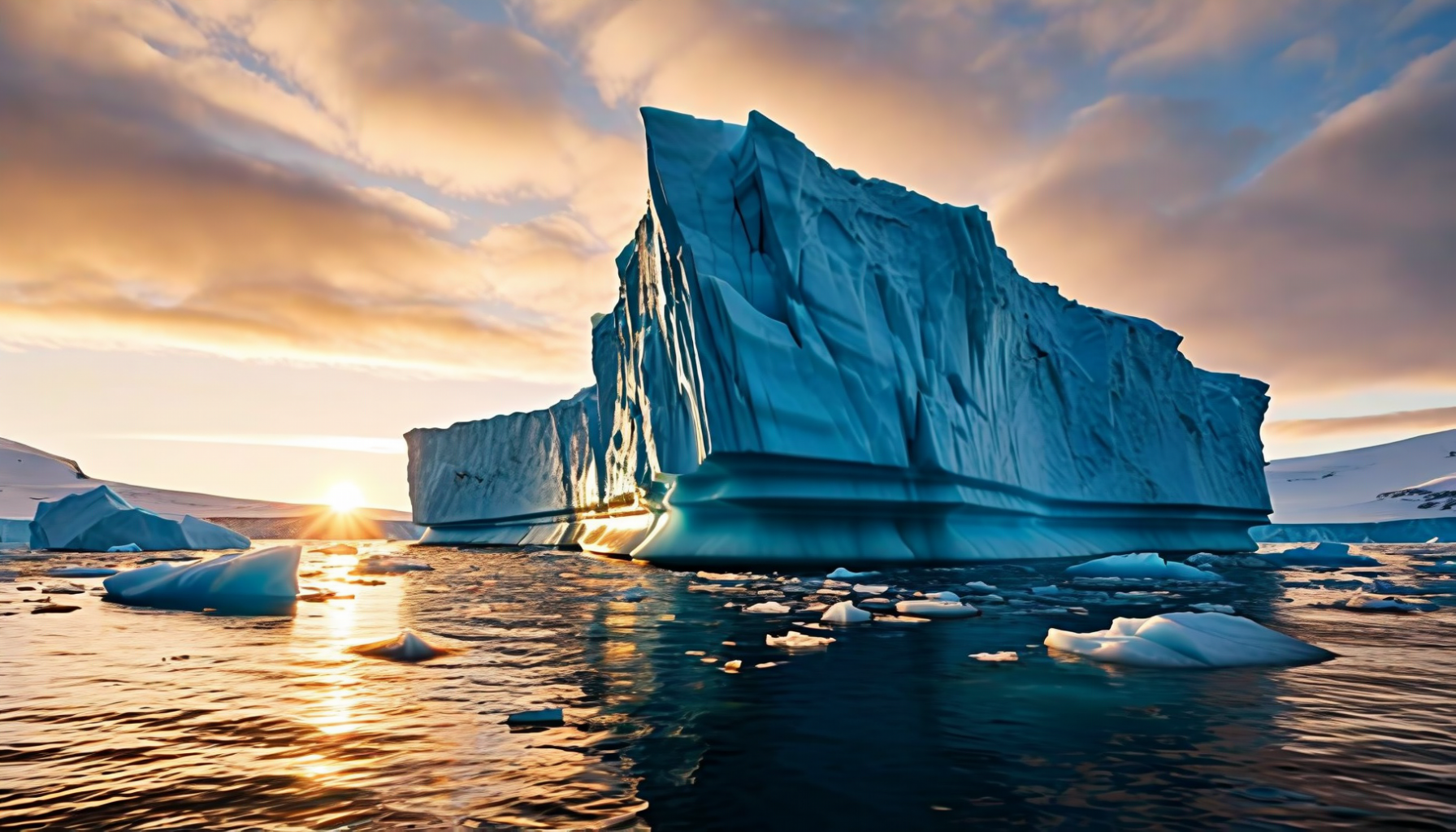
And it is, at the time of writing, one of the most geopolitically discussed places on earth — a territory of fifty-seven thousand people that an American president has twice proposed buying, that sits on the shortest missile trajectory between North America and Russia, and whose retreating ice is exposing both new shipping routes and mineral deposits the rest of the world would like access to. Greenlanders have been notably clear about how they feel: their land is not for sale, and their future is theirs to decide.
🏷️ Kalaallit Nunaat, Grønland, Grónsko
The Greenlandic name is Kalaallit Nunaat — "the land of the Kalaallit", the Greenlandic Inuit. It is the only name that describes the place from the inside, and it is the one used on the island. The Danish Grønland, English Greenland and Czech Grónsko all descend from the Old Norse Grœnland.
The traditional story is that Erik the Red, banished from Iceland for killing, named the island attractively in order to attract settlers to a place that was mostly ice. The Book of Icelanders says as much, more or less openly. It is a good story and it may even be broadly true, though the south-western fjords Erik actually settled genuinely are green in summer, with grass good enough that people farmed sheep and cattle there for four hundred years and farm sheep there again today.
Names on the map are a running lesson in whose island it is. Almost every town has a Greenlandic name and an older Danish one, and the Greenlandic names are now the official ones: Nuuk (not Godthåb), Ilulissat (not Jakobshavn), Sisimiut (not Holsteinsborg), Qaqortoq (not Julianehåb), Uummannaq, Aasiaat, Maniitsoq. Older maps, older guidebooks and older Danes still use the Danish forms, and airlines sometimes list both.
The flag
Erfalasorput, "our flag", designed by the Greenlandic artist Thue Christiansen and adopted in 1985. A white field over a red one with an offset disc, half red above and half white below — read as the midnight sun over the ice, or as an iceberg with its greater part submerged.
Kalaallit
The people of West Greenland, whose dialect became the standard language, and by extension the modern national name. East Greenlanders call themselves Tunumiit, and the far northerners of the Thule district are Inughuit — three groups with three dialects, not always mutually intelligible.
Not Eskimo
The word is not used in Greenland and is best avoided; Inuit is the term the people themselves use across the Arctic, and Kalaallit or Greenlander in Greenland specifically.
The Czech name
Grónsko came into Czech through German Grönland, which is why it keeps the ó. The Czech habit of calling the capital "Nuuk" rather than "Godthåb" arrived surprisingly early, in the 1970s translations of Arctic literature.
🗺️ Geography
Greenland stretches 2,670 km from Cape Morris Jesup in the north — one of the northernmost points of land on the planet, less than 750 km from the North Pole — to Cape Farewell in the south, which sits at roughly the latitude of Oslo. That span is the reason no single sentence about Greenland's climate or landscape is true everywhere.
Geologically it is a fragment of the ancient North American craton, some of the oldest rock exposed anywhere on earth — the Isua formation near Nuuk is around 3.8 billion years old and has been argued over by geologists looking for the first traces of life. The bedrock beneath the ice sheet has been pressed into a vast basin, so that much of the interior is actually below sea level; if the ice were removed and the land allowed to rebound, Greenland would probably prove to be an archipelago rather than one island.
The habitable part is the ice-free rim, about 410,000 km² of rock, tundra and fjord — still bigger than Germany and Poland combined, and almost entirely empty. The west coast, facing Baffin Bay and the Davis Strait, is milder, has the deep fjords and the towns. The east coast is colder, more mountainous, blocked for much of the year by drifting pack ice from the Arctic Ocean, and has two towns of any size in a stretch longer than Europe. The north is polar desert.
The fjords are the other defining feature. Scoresby Sund on the east coast is the largest fjord system in the world, branching some 350 km inland; Kangerlussuaq's fjord on the west is 170 km long and gave the old airport its access to the sea. These are not scenic detours — they are the roads. Greenlandic settlement follows the water, because the water is how you move.
🧊 The Ice Sheet
The Greenland ice sheet covers about 1.71 million km² — some 79% of the island — and holds roughly 2.9 million cubic kilometres of freshwater. It is the second largest body of ice on earth after Antarctica's, up to about 3,000 m thick in the middle, and old: ice recovered from the base of the deep cores has been there for well over one hundred thousand years, through the last interglacial.
It is not a static cap. Ice forms in the interior where snow accumulates, flows outward under its own weight at a few metres a year in the middle and at spectacular speed where it funnels into outlet glaciers, and leaves either by melting at the surface or by calving icebergs into the sea. Sermeq Kujalleq above Ilulissat — Jakobshavn Isbræ in Danish — is the fastest-moving glacier of its kind in the world, and has been measured at more than 40 metres per day in summer.
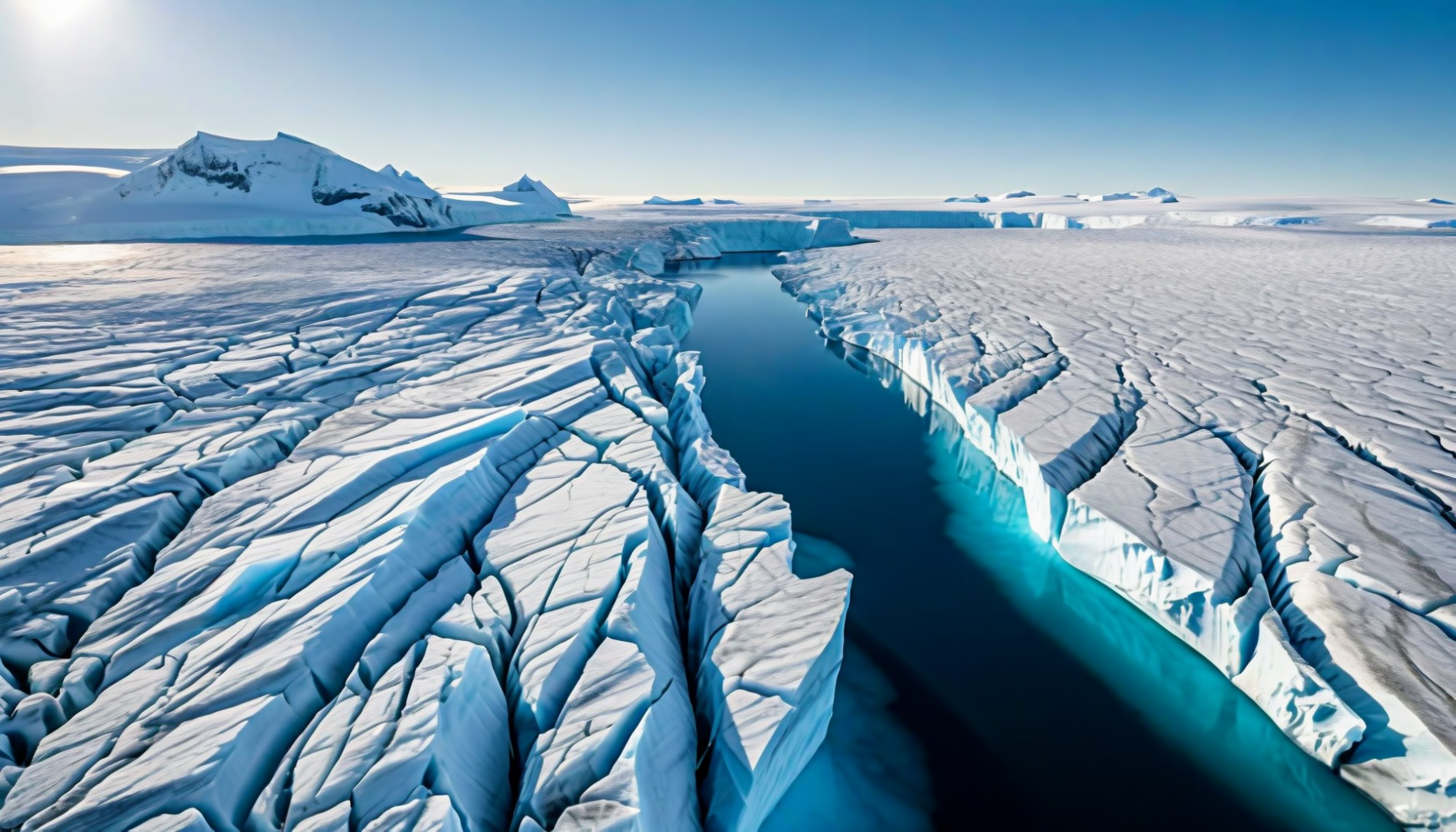
The numbers behind the headlines are worth having straight. If the entire Greenland ice sheet melted, global sea level would rise by about 7.4 metres. That is not going to happen this century. What is happening is a sustained net loss — the ice sheet has been losing mass in most years since the late 1990s, with cumulative losses on the order of five thousand gigatonnes since 1992, contributing something over a centimetre of the sea-level rise already recorded.
Standing on it is a strange experience and an accessible one. The ice cap is reachable on foot from the road at Kangerlussuaq, from Point 660, and by helicopter or boat elsewhere. What surprises most visitors is that the edge is dirty — grey with dust, black with cryoconite, streaked with meltwater — and that it makes noise. Ice sheets crack, drip, run and occasionally boom, and on a still day you can hear all of it.
🌡️ Climate and When to Go
Arctic, but with a range wider than most people expect. Nuuk averages about 7 °C in July and −8 °C in January, which makes the capital milder in winter than parts of Bohemia and far cooler in summer. The interior of the ice sheet is another planet: the automatic station at Klinck recorded −69.6 °C in December 1991, the lowest temperature ever measured in the northern hemisphere.
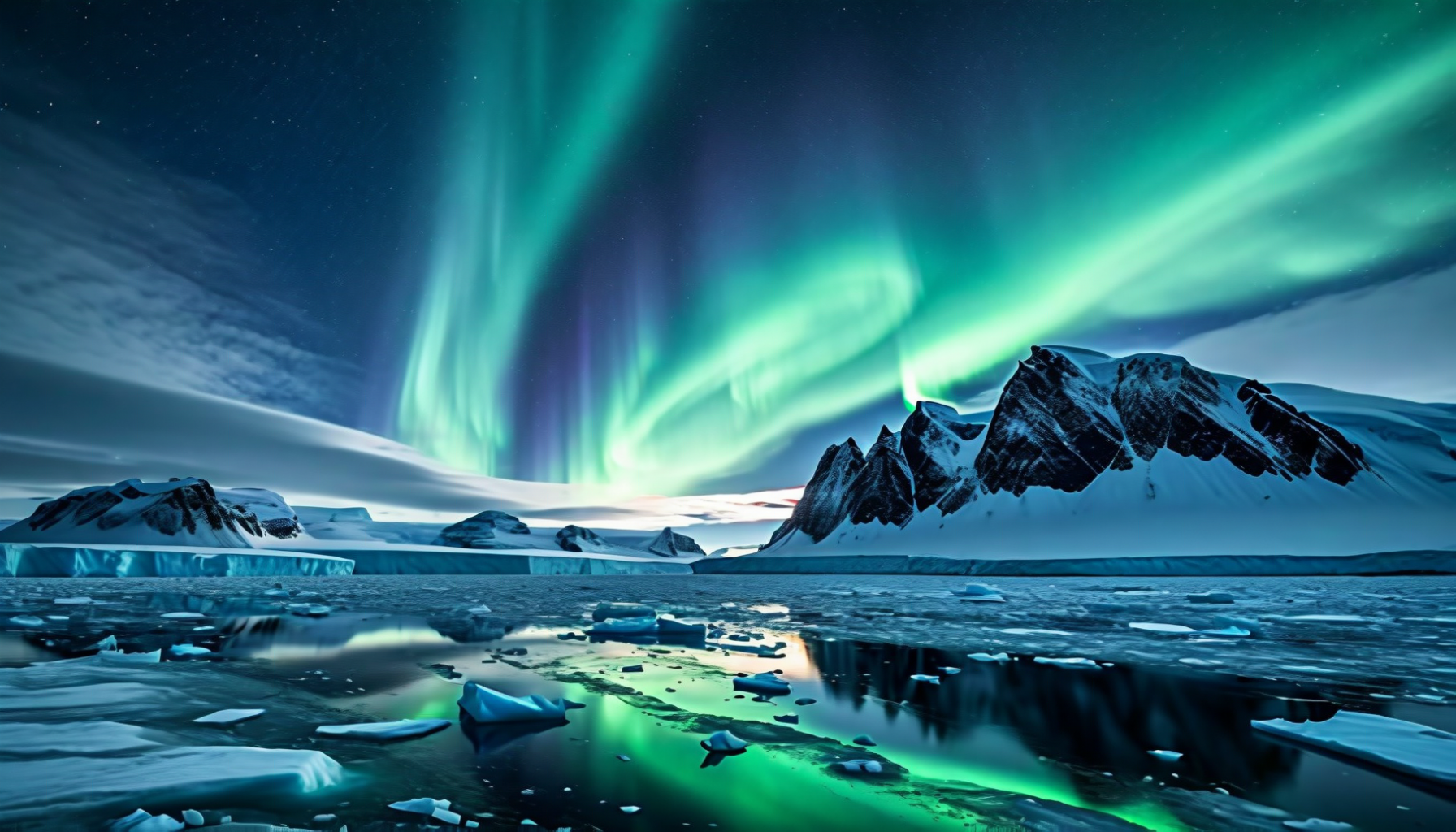
Latitude decides the light. North of the Arctic Circle — Ilulissat, Uummannaq, Qaanaaq — the sun does not set for weeks around midsummer and does not rise for weeks around midwinter. Ilulissat has continuous daylight from late May to late July and no true sunrise from late November to mid-January. Nuuk, just south of the circle, gets a long twilight rather than a true midnight sun, and about four hours of dim daylight at the winter solstice.
June–August
The main season. Everything runs, boats sail, hiking is possible, the tundra flowers, and mosquitoes in the sheltered inland valleys are genuinely bad — bring a head net for Kangerlussuaq and the Arctic Circle Trail. Warmest and busiest, and the only window for some boat routes.
September–October
Autumn colour on the tundra, the first aurora nights, fewer people, lower prices. Weather becomes less reliable and boat schedules thin out. For photographers this is arguably the best month of the year.
February–April
The winter season that actually works: returning light, stable sea ice in the north and east, dog sledging, ski touring and the best aurora with something to reflect it. Cold, but dry cold, and the light on snow is extraordinary.
November–January
The dark months. Aurora yes, but short days or no days, hard weather, cancelled flights and limited tours. Christmas in a Greenlandic town is memorable if you have a reason to be there; it is not a first visit.
The short answer: late June to early September for a first trip, March for dog sledging and light, September for colour and aurora. Whenever you go, build spare days into the itinerary — see the section on flights below, because weather here does not delay travel, it cancels it.
🗺️ Map
Greenland sits between the Arctic Ocean and the North Atlantic, west of Iceland and east of the Canadian Arctic Archipelago, separated from Ellesmere Island by the narrow Nares Strait. Nuuk, on the south-west coast, is roughly 3,500 km from Copenhagen and about 4,200 km from Prague.
Orientation for planning: the populated west coast runs from Qaqortoq and Narsarsuaq in the far south, through Nuuk and Maniitsoq, to Sisimiut and Kangerlussuaq at the Arctic Circle, then on to Aasiaat, Ilulissat and Uummannaq in Disko Bay and beyond, and finally to Qaanaaq in the far north-west. The east coast has essentially Tasiilaq (with the airstrip at Kulusuk) and Ittoqqortoormiit, and almost nothing between them.
🐋 Wildlife
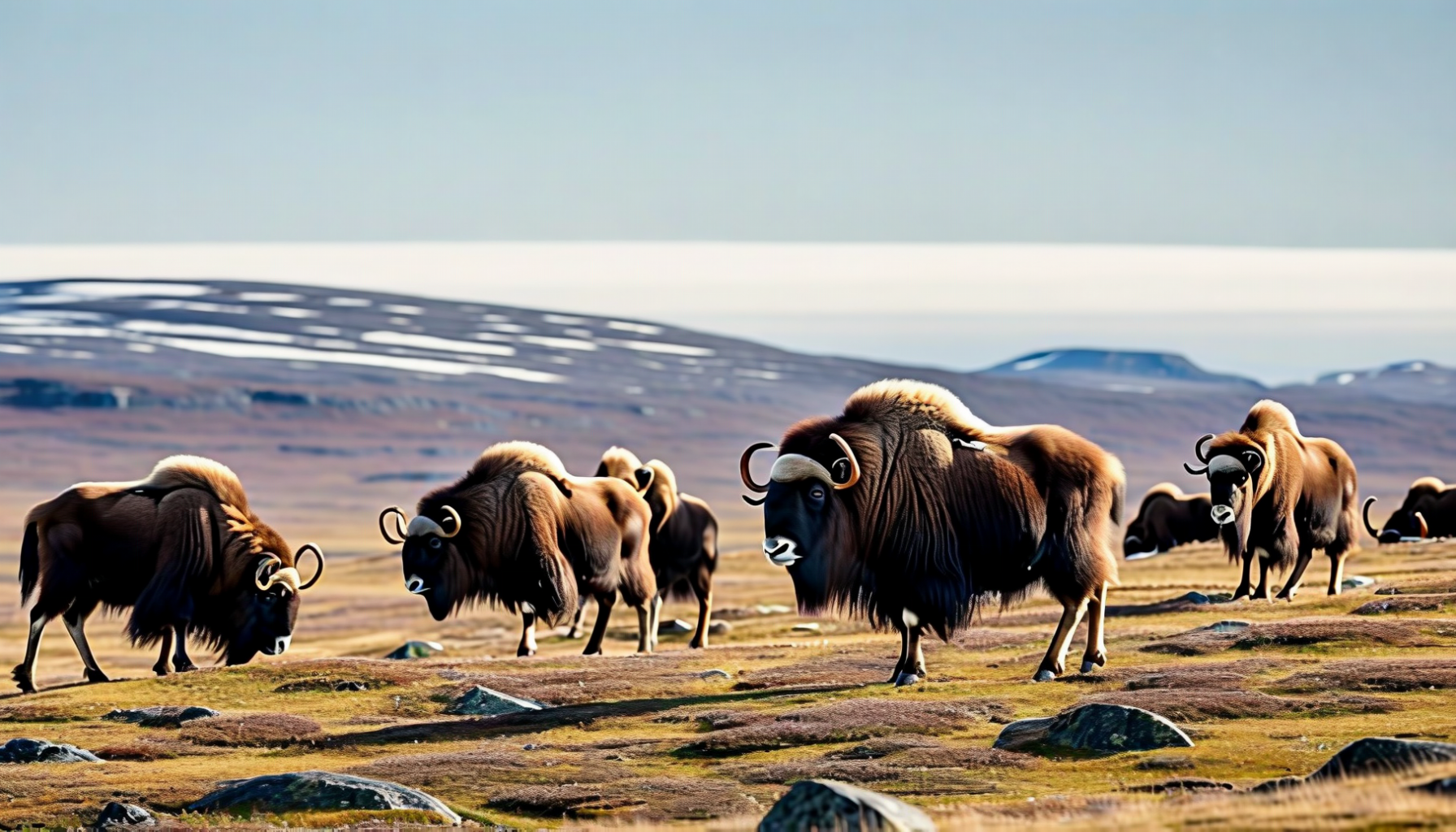
Greenland's animals are few in species and large in individual presence. There are no penguins — they live in the other hemisphere, and the confusion is common enough that Greenlandic tour guides have a weary standard answer. What there is instead: whales in numbers along the west coast in summer, seals everywhere, muskoxen and reindeer on the tundra, polar bears in the north and east, and birds in tens of thousands on the cliffs.
Whales are the main summer draw. Humpbacks, fin whales and minke whales feed in Disko Bay and the fjords from roughly June to September, close enough to town that you can sometimes watch them from the shore in Ilulissat or Aasiaat. Narwhal and beluga are northern and mostly winter animals; the bowhead, which can live over two hundred years, appears in Disko Bay in spring. All are also hunted under quota, which is discussed honestly in the section on hunting below.
Muskox
Umimmak, "the long-bearded one". A survivor of the ice-age megafauna, native to the north-east and introduced successfully around Kangerlussuaq, where the population now numbers in the thousands and is the easiest wildlife sighting in Greenland.
Polar bear
Present in the north and east, and around the fringes of the west coast in winter. Not something you meet on a normal tourist itinerary in Ilulissat or Nuuk — and in the areas where you might, you do not walk unarmed and unguided. Take that seriously.
Seals
Ringed, harp, hooded and bearded. The foundation of Inuit life for a thousand years: food, fuel, clothing, boat skins and thread. Still hunted, still eaten, and still the animal Greenlandic culture is built around.
Arctic fox and hare
Both common and both white in winter. The fox comes into settlements; the hare, oddly, is often approachable in summer, since it has little experience of ground predators in some areas.
Birdlife is seasonal and spectacular: little auks in colonies of hundreds of thousands in the Thule district, kittiwakes and guillemots on the cliffs, eider ducks, ptarmigan, snow bunting, and the white-tailed eagle, which is Greenland's largest bird of prey and reasonably common along the west coast. There are no land reptiles or amphibians, no trees to speak of, and only one native land mammal on the west coast south of Disko — the Arctic fox.
📜 Four Thousand Years of Arrivals
People have come to Greenland at least four separate times, and most of those arrivals ended in the population dying out or leaving. It is one of the harshest places humans have ever settled permanently, and the archaeology reads as a sequence of experiments.
The first were the Saqqaq culture, who crossed from Arctic Canada around 2500 BC and lived along the west and south coasts for nearly two thousand years, hunting seal and caribou with small, beautifully worked stone tools. In 2010 a genome sequenced from a tuft of Saqqaq hair preserved in permafrost — the man nicknamed Inuk — showed that they were not the ancestors of today's Greenlanders but a separate migration from Siberia that left no descendants here.
The Independence I and II cultures occupied the far north in the same broad period, in conditions so extreme that their camps are among the most northerly human dwellings known. Then came the Dorset people, twice, whose carvings — tiny faces in ivory and bone, often ambiguous, often disturbing — are the finest art of the pre-Inuit Arctic. The Late Dorset were still in the north when the next arrivals appeared, and then they were gone.
Around AD 1200–1300 the Thule people arrived from Alaska via Canada, and they were different: they had dog sledges, skin boats, the umiaq and the qajaq, toggling harpoons and the technology to hunt large whales from open water. They spread along the entire habitable coast within a few generations and they stayed. Today's Kalaallit are their descendants, and the continuity is unbroken — the same language family, the same hunting techniques, the same design of kayak that European sportsmen eventually copied.
⚔️ The Norse, and Their Disappearance
In about 985 Erik the Red, exiled from Iceland, sailed west and founded a settlement in the fjords of the south. Within a few decades there were two Norse colonies: the Eastern Settlement around today's Qaqortoq, Igaliku and Qassiarsuk, and the smaller Western Settlement near modern Nuuk. At their height they may have held between two and five thousand people, with churches, a bishop's seat at Gardar, tithes paid to Rome in walrus ivory, and farms running sheep, goats and cattle.
They lasted four and a half centuries — longer than the entire history of European settlement in most of the Americas — and then they vanished. The Western Settlement was found abandoned around 1350, with livestock still in the fields. The last written record of the Eastern Settlement is a wedding at Hvalsey church in 1408, reported by Icelanders whose ship had been blown off course. After that, silence.
Why is the great argument of North Atlantic archaeology, and the honest answer is that no single explanation survives contact with the evidence. The old story — that they refused to adapt, clung to European farming and starved while the Inuit thrived — has been steadily complicated. Isotope analysis of Norse bones shows their diet shifted heavily toward marine food; they clearly did adapt. What also happened: the climate deteriorated, the ivory trade that funded them collapsed when African elephant ivory reached Europe, the sea route became harder, contact with Norway became sporadic, and a small population on marginal land ran out of reasons to stay. Some may simply have sailed away.
What remains is genuinely worth travelling for. Hvalsey Church near Qaqortoq stands roofless but nearly complete, its walls squared and solid after six hundred years. At Qassiarsuk — Erik's Brattahlíð — there are foundations, reconstructions and a working sheep farm on the same grass. Together with the Inuit and modern farming landscape around them, these sites make up Kujataa, inscribed on the UNESCO list in 2017.
⛪ Egede, the Monopoly and the Mission
In 1721 a Dano-Norwegian Lutheran pastor named Hans Egede sailed for Greenland with the intention of finding the lost Norse colonists and correcting their Catholicism. He found no Norse — they had been gone three hundred years — and instead began a mission among the Inuit, founding the settlement that became Nuuk in 1728. He is called the Apostle of Greenland, his statue stands above the old harbour in Nuuk, and opinions about him on the island are not unanimous. In 2020 the statue was daubed with paint and the word "decolonize", and the town held a public vote about whether it should stay. It stayed, narrowly.
What followed the mission was the Royal Greenland Trading Department, established in 1774, which held a complete monopoly on all trade with Greenland for nearly two centuries. Its stated purpose was protective — to shield Greenlanders from exploitation by whalers and from alcohol — and its effect was to make an entire people economically dependent on a single Danish state company that set the price of everything they sold and everything they bought. Greenland was effectively closed to outsiders until after the Second World War.
The mission's other legacy is the language. Missionaries wrote Kalaallisut down, translated the Bible into it, and taught reading in it rather than in Danish — with the result that Greenland had near-universal literacy in its own language by the nineteenth century, and that the language survived colonisation in a way that many indigenous languages did not. Whatever else the colonial church did, that outcome is real and Greenlanders acknowledge it.
The nineteenth century added an odd Greenlandic institution: the forstanderskaber, local councils of Greenlanders given real say over the distribution of trade income and relief. They were paternalistic and limited, but they meant that when self-government finally came, there was a tradition of local administration to build on.
🕯️ War, Cold War and the Hard Decades
When Germany occupied Denmark in April 1940, Greenland was cut off from its government and effectively administered by the United States under an agreement signed by the Danish ambassador in Washington on his own authority. American bases went up, the cryolite mine at Ivittuut — essential to aluminium production, and for a time the world's only commercial source — was guarded, and Greenland spent the war supplying the Allies and being supplied by them. It never went back to being closed.
The Cold War made the island strategically central: the shortest air route between North America and the Soviet Union runs over it. Thule Air Base, built in secret from 1951 in the far north-west and renamed Pituffik Space Base in 2023, became one of the most important early-warning and space-surveillance sites in the American system. Its construction meant the forced relocation, in 1953, of the Inughuit community at Uummannaq — given days to move and resettled at Qaanaaq, 150 km north. A Danish court eventually acknowledged the wrong and awarded compensation; the community's own view is that it has never been made right.
In January 1968 a B-52 carrying four hydrogen bombs crashed on the sea ice near Thule. The conventional explosives detonated, plutonium was scattered, and the clean-up — carried out largely by Danish and Greenlandic workers — became a long-running scandal in Denmark, both because nuclear weapons had been in Greenlandic airspace at all under a supposedly nuclear-free policy, and because of the later health of the men who did the work.
Then came the modernisation policies. From 1953 Greenland was reclassified from colony to Danish county, and the state set about concentrating a scattered hunting population into a few towns with apartment blocks and fish factories — the G-50 and G-60 programmes. Settlements were closed, families moved, Danish became the language of advancement, and the social consequences — unemployment, alcohol, some of the highest suicide rates in the world — are still being lived with. Two specific injuries have been formally recognised: the 22 children taken to Denmark in 1951 for a social experiment, for whom Denmark apologised in 2020 and paid compensation in 2022; and the coil case, in which thousands of Greenlandic women and girls had contraceptive IUDs fitted from the mid-1960s, in many cases without consent or knowledge, the subject of a joint Danish–Greenlandic investigation and of compensation claims still working through the courts.
🏛️ Home Rule, Self-Government, and How It Works
Greenland got Home Rule in 1979 after a referendum, taking over schools, health, social services and internal affairs. In 1982 it voted to leave the European Communities, which it did in 1985 — the only territory ever to do so — chiefly because Brussels had authority over its fishing grounds and Greenlanders wanted it back. It now has the status of an Overseas Country and Territory associated with the EU, which is why the euro means nothing here and why EU rules, including the European Health Insurance Card, do not apply.
The Self-Government Act of 21 June 2009 went considerably further. It recognised Greenlanders as a people under international law with the right to self-determination, made Kalaallisut the sole official language, gave Greenland ownership of its subsoil resources, and set out a mechanism by which it can assume responsibility for almost every remaining field — and, if it chooses, become independent, subject to a referendum and a negotiated agreement with Denmark.
Inatsisartut
The parliament: 31 members, elected by proportional representation, sitting in Nuuk. Politics is personal in a country of this size — candidates are known individually rather than as party lists, and turnout is high.
Naalakkersuisut
The government, headed by a Premier. Greenland runs its own health service, schools, fisheries policy, minerals policy and much else; Denmark retains defence, foreign affairs, currency and the supreme court.
The block grant
Denmark transfers a bloktilskud of roughly 4.3 billion kroner a year — on the order of half of all public spending in Greenland. Any serious independence conversation begins and ends with what replaces it.
Two seats in Copenhagen
Greenland elects two members of the Danish Folketing, which has occasionally mattered a great deal when Danish governments have had thin majorities.
The economy behind all this is narrow: fish, above all cold-water prawn and Greenland halibut, make up something like nine-tenths of exports. Tourism is the declared second pillar and is growing fast, mining has produced far more prospectuses than mines, and the public sector employs a very large share of the workforce. Diversification is the central domestic political question, and has been for forty years.
🌐 Why Everyone Suddenly Wants to Talk About Greenland
In 2019 the President of the United States proposed buying Greenland, and the idea was widely treated as a joke. In 2025 he raised it again, rather less jokingly, and it stopped being funny. The Danish Prime Minister said Greenland was not for sale; Greenland's own leaders said the same, more pointedly — that Greenland belongs to Greenlanders, that it is not Danish property to sell in the first place, and that it does not wish to be American either.
The American interest is not new. The United States offered to buy the island in 1946 for 100 million dollars in gold, and had considered it as early as 1867. What is new is the combination of reasons. Pituffik Space Base sits on the shortest trajectory between the two nuclear powers and is central to ballistic-missile early warning. Retreating sea ice is opening northern shipping routes. And the geology holds rare earth elements, uranium, graphite and other minerals in a location that is neither Chinese nor Russian.
Greenlandic politics has its own view of all this, and it is more sophisticated than the international coverage suggests. Independence is broadly popular in principle across most parties; the argument is about sequence and cost — how to replace a block grant worth half the public budget without simply exchanging Danish dependence for someone else's. Mining is genuinely contested: the Kvanefjeld/Kuannersuit project in the south, which would extract rare earths alongside uranium, was effectively stopped by a 2021 election fought on that question and the uranium ban that followed.
For a visitor, the practical relevance is small but real. You will meet strong opinions if you raise the subject, and Greenlanders are used to outsiders discussing their future without them. The courteous approach is the obvious one: ask, listen, and do not assume that either Copenhagen or Washington speaks for the person you are talking to.
👥 The People
About 57,000 people live in Greenland, and roughly 89% of them are Greenlandic Inuit — the rest are mostly Danes, with a small number of other nationalities, many working in health, education, construction and increasingly tourism. Nuuk holds around 20,000, more than a third of the country and growing; Sisimiut about 5,500; Ilulissat about 4,700; Qaqortoq, Aasiaat and Maniitsoq a few thousand each. Below that come dozens of bygder, settlements of a few dozen to a few hundred people, some of which lose their school or their shop and then their population.
Greenland is young by European standards and mobile: people move to Nuuk, and a considerable number study in Denmark, where several thousand Greenlanders live at any time. The reverse flow — Danish professionals on two-year contracts — has shaped the towns for decades and is quietly resented and quietly relied upon in roughly equal measure.
The social statistics are hard and Greenlanders do not hide them. Suicide rates have been among the highest recorded anywhere, concentrated among young men and in the small settlements; alcohol and domestic violence have been serious public-health problems for two generations; housing is short in Nuuk and poor in places. Alongside this sits a society with universal health care, free schooling, near-total literacy in two languages, a national art scene, and an unusual degree of practical competence: a great many people here can navigate, shoot, butcher, sew skin and fix an outboard.
What a visitor notices first is a reserve that is not unfriendliness. Greenlandic social manners are quieter than Danish ones, let alone Czech ones — less small talk, longer pauses, less direct eye contact between strangers, and an assumption that people will say what they need to say without being prompted. Loud enthusiasm lands badly. Patience lands well.
🗣️ Kalaallisut
Kalaallisut — West Greenlandic — has been the sole official language since 2009, and it is spoken as a first language by the great majority of the population. It belongs to the Inuit branch of the Eskaleut family, and it is polysynthetic: instead of stringing short words together, it builds enormously long ones by adding suffix after suffix to a root, each adding a piece of meaning that other languages would express with a separate word.
The standard illustration, and it is not an exaggeration: Nalunaarasuartaatilioqateeraliorfinnialikkersaatiginialikkersaatilillaranatagoorunarsuarooq is a real, if deliberately extreme, single word. Ordinary speech produces words of forty letters without anyone noticing. Danish loanwords are adapted rather than borrowed whole, and the orthography — reformed in 1973 to fit the language rather than Danish spelling habits — is consistent enough that you can pronounce a place name correctly on sight once you know the rules.
The dialects
Kalaallisut in the west, Tunumiisut in the east and Inuktun in the far north around Qaanaaq. The gap between the west and east varieties is wide enough that speakers do not simply understand one another, and the eastern and northern dialects have far fewer speakers.
Danish
Still widely spoken, still the language of much of the health service and of higher education, and a live political question. Younger Greenlanders increasingly prefer English as their second language, which changes the relationship with Copenhagen in a way Copenhagen has noticed.
English
Well understood in Nuuk, Ilulissat and the tourism trade, patchier in the settlements and among older people. You will manage as a visitor; you will manage better with a few Greenlandic words.
Useful words
Aluu — hello. Qujanaq — thank you. Baaj — bye. Immaqa — maybe (and it is a real answer about weather and boats). Illu — house. Nuannaarpunga — I'm happy.
One correction worth making, since it appears in every second travel article: the claim that Inuit languages have dozens or hundreds of words for snow is a misunderstanding of exactly the polysynthesis described above. Because Kalaallisut builds words by suffixing, it can generate an unlimited number of highly specific snow-words — but so can German by compounding. What is true is that the vocabulary distinguishes sea ice, new ice, drift ice and rotten ice with a precision that reflects a genuine need not to fall through it.
🎣 Hunting, Fishing and How to Think About It
Greenland is a hunting society that also runs a modern fishing industry, and visitors from countries where meat arrives in packaging sometimes find this difficult. It is worth arriving with the argument already thought through, because you will meet it on the first day: at the open-air market — the kalaaliaraq or brættet — in Nuuk, Ilulissat or Sisimiut, where seal, whale, reindeer, muskox, eider and halibut are sold on plain tables by the people who caught them.
The facts are these. Subsistence and small-scale commercial hunting of seal, whale, narwhal, walrus and polar bear is legal in Greenland under quotas, and the whaling operates under an International Whaling Commission aboriginal subsistence framework, not the commercial regime. The animals hunted are not, as populations, endangered by Greenlandic hunting at current quota levels — the pressures on Arctic marine mammals come overwhelmingly from ice loss and shipping. And a seal skin here is not a luxury item; it is a coat, boots and a household's income in a place where imported food costs what it costs.
The European Union's 1983 ban on seal-product imports, and the tightened 2009 regulation, contained an exemption for Inuit hunters — but the market collapsed anyway, because buyers did not distinguish. The Greenlandic sealing economy has never recovered, and this is remembered here as a case of European campaigning that hurt exactly the people it was not aimed at. If you buy sealskin in Greenland, look for the Great Greenland tannery in Qaqortoq, which is the certified national operation — and check your own country's import rules before you fly home, because the EU exemption is narrow and paperwork matters.
Commercial fishing is the other half. Cold-water prawn and Greenland halibut dominate; cod has returned to some grounds as the water warms, and mackerel arrived off the south coast around 2011 in quantities nobody had planned for. Royal Greenland, state-owned, is the largest employer outside the public sector. If you want to understand the country's economics in one afternoon, stand on the quay at Sisimiut when the trawlers come in.
🎭 Art, Craft and the Drum
The tupilak is the object every visitor comes home with, and its history is stranger than the souvenir suggests. In East Greenlandic belief a tupilak was not a carving at all: it was a thing made in secret from bones, skin and other materials, animated by ritual and sent to kill an enemy — and liable to turn on its maker. The carved figures sold today began when Europeans asked to see one and were shown a model, because the real thing could not be shown. So the entire genre is, from the start, an artefact of the encounter. That does not make the best of them any less astonishing; the finest are carved from sperm-whale tooth or muskox horn by named artists and priced accordingly.
Drum dance — qilaat — is the oldest Greenlandic musical form: a shallow hoop drum struck on the rim, a chanted song, and a performance that historically served as entertainment, as history-keeping and as a formal way of settling disputes through song duels, in which two opponents mocked each other until the audience decided. Missionaries suppressed it in the west; it survived in East Greenland and among the Inughuit, and has been consciously revived nationally since the 1970s.
Beadwork
The Greenlandic national costume — kalaallisuut — carries a wide beaded collar that can take months of work and contains tens of thousands of glass beads. It is worn at confirmations, weddings and the National Day, and it is not a costume in the touristic sense; it is formal dress.
Mask dance
Uaajeerneq, from East Greenland: face painted black, red and white, mouth distorted, a performance meant to be frightening and funny at once, and traditionally about sexuality, fear and the loss of control. Performed today by a handful of specialists.
Modern art
Nuuk has a real contemporary scene — the Nuuk Art Museum, the Katuaq cultural centre, and artists like Pia Arke and Julie Edel Hardenberg who have made colonisation and identity their subject matter. Greenlandic hip-hop and rock in Kalaallisut have a following well beyond the island.
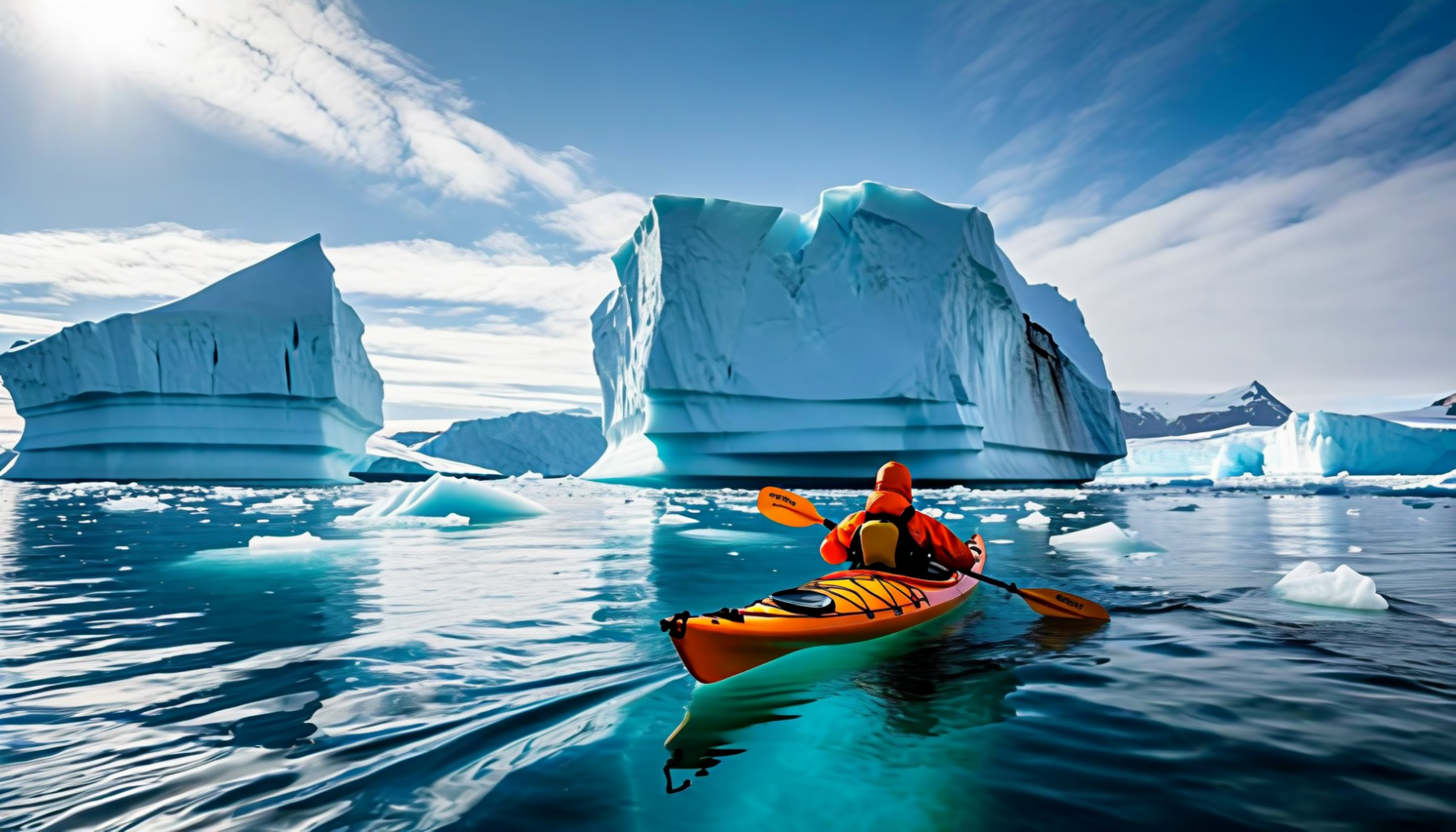
Kayak
The qajaq is a Greenlandic invention, sealskin over a driftwood and bone frame, and the Greenland roll is still taught worldwide as the model technique. Competitive kayaking championships are held annually and the traditional rolls are part of the contest.
🕯️ Belief, Old and New
Greenland is overwhelmingly Lutheran on paper — the Church of Denmark's Greenlandic diocese covers the island, most people are baptised and confirmed, and confirmation in particular is a major social occasion with the national costume and a kaffemik afterwards. Church attendance is another matter, as it is in Denmark.
Underneath sits the older system, which was never entirely displaced. Pre-Christian Greenlandic belief had no single creator but a world full of agencies that had to be respected: Sassuma Arnaa, the Mother of the Sea, who keeps the sea animals and withholds them when taboos are broken; the inua, the indwelling person of an animal, place or object; and the angakkoq, the shaman, who travelled to the sea floor or the moon to negotiate on the community's behalf. The rules that governed hunting were religious rules, and the courtesy still shown to a killed animal descends from them.
The missionaries — Egede from 1721, and the Moravian Brethren from Herrnhut from 1733, who were in some ways the more effective — broke the shamanic institution within a few generations. What they did not break was the sense that the land is inhabited. Stories of the qivittoq, the person who leaves the settlement after a humiliation and becomes something else out on the land, are told seriously enough that they are not simply folklore, and they surface in modern Greenlandic film and fiction constantly.
For a visitor this mostly matters as a matter of manners. Cairns, graves and old house rings are not scenery to climb on; take nothing from an archaeological site, including bone and stone; and if a guide asks you not to photograph something, that is the end of the conversation.
🍽️ Food
Greenlandic food divides cleanly into two categories that barely overlap. There is kalaalimernit — Greenlandic food, meaning what is hunted and caught here: seal, whale, reindeer, muskox, ptarmigan, eider, cod, halibut, Arctic char, capelin, mussels, crowberries and angelica. And there is what arrives by ship from Denmark in a container, which is everything else, and which costs what shipping to the Arctic costs.
The traditional cuisine is not elaborate. Boiling and drying are the two main techniques, because fuel was scarce and preservation was everything; frying arrived with Europeans. Meat is often eaten as mattak — whale skin with a layer of blubber, cut into cubes and chewed raw, faintly nutty, and historically a critical source of vitamin C in a diet with no vegetables. Dried fish and dried seal hang on racks outside houses in every settlement. Fermentation appears at the extreme end: kiviaq, from the Thule district, is several hundred little auks packed whole into a sealskin, sealed with fat and left under stones for months.
Modern Greenlandic cooking — the "New Nordic" strand — takes those ingredients and treats them with technique. Restaurants in Nuuk serve muskox with crowberry, snow crab, scallops from Disko Bay, and Greenland lamb from the south, which is genuinely exceptional: the sheep graze on herbs and grass under the midnight sun and the meat tastes of it. The best meal you eat in Greenland may well be in a small restaurant in Nuuk, and it will not be cheap.
Mattak
Whale skin and blubber, raw. The Greenlandic delicacy, offered at every kaffemik and market. Chewy, mild, oily. Try it; refusing politely is also fine and nobody minds.
Greenland lamb
From the sheep farms of the south, around Narsaq and Qassiarsuk — the same grass the Norse used. Available fresh in autumn, frozen the rest of the year, and worth ordering wherever you see it.
Ammassat
Capelin, dried in the sun on rocks in early summer in their thousands, eaten whole like crisps. The smell is unmistakable and the taste is better than the smell suggests.
Crowberry
Paarnaqutit — small round matte-black berries growing on low mats all over the tundra, picked by everyone in late summer, and the base of most Greenlandic desserts and sauces.
🥣 Suaasat — the National Soup
Suaasat is the closest thing Greenland has to a national dish, and it is a broth rather than a stew: meat simmered in water with onion, potato and a thickener, seasoned with salt, pepper and a bay leaf. Traditionally the meat is seal; in practice it is made with whatever the household has — seal, minke whale, reindeer, muskox or lamb — and the lamb version is the one visitors are most likely to be served and the one that works with European shopping.
Suaasat (Greenlandic soup)
Serves 4 · about 2 hours, mostly unattended
Ingredients: 800 g lamb or reindeer on the bone (shoulder or neck is ideal); 1.5 l cold water; 2 onions, roughly chopped; 4–5 potatoes, in large chunks; 2 bay leaves; 60 g pearl barley or short-grain rice; salt and coarsely ground black pepper.
Method: Put the meat in a large pot with the cold water, bring slowly to a simmer and skim the surface carefully for the first ten minutes. Add the bay leaves and half the salt, cover, and simmer very gently for about 90 minutes, until the meat is falling from the bone. Lift the meat out, take it off the bone in large pieces and return it. Add the onions and barley and simmer 20 minutes, then the potatoes and simmer another 15–20 minutes until they are soft but still holding. Season hard with salt and pepper — it should taste of meat and nothing else.
💡 The thickener is the point of the dish, not an afterthought: barley, rice or a spoonful of oatmeal, cooked long enough to break down slightly and give the broth body. In Greenland the soup would be served plain, in deep bowls, with rye bread on the side and nothing green.
What suaasat is not: a vegetable soup. There are no peppers in it, no fresh herbs on top, no tomatoes and no garnish. If a picture of "suaasat" shows a bright bowl of diced vegetables, it is a picture of something else. The real thing is brown, plain and very good, and it tastes of the animal it was made from.
🐟 Arctic Char with Crowberries
Arctic char — eqaluk — is the fish of Greenland: a salmonid that runs between the sea and inland lakes, caught in the fjords and rivers all along the coast, and available fresh in summer at any market. The flesh is between salmon and trout, softer than either, and it does not need much doing to it.
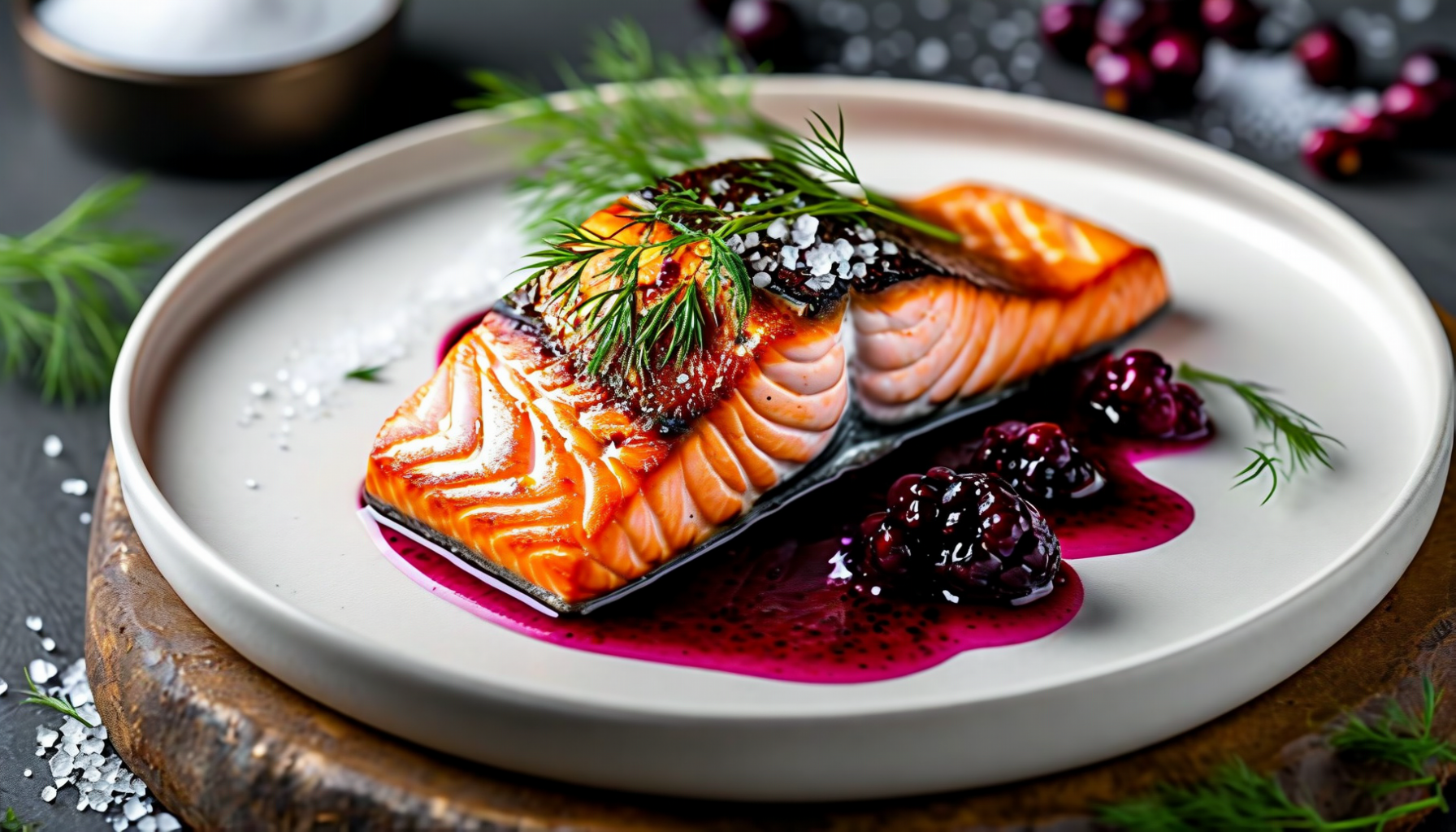
Pan-seared Arctic char, crowberry butter
Serves 2 · 20 minutes
Ingredients: 2 Arctic char fillets, skin on, about 180 g each (sea trout or salmon trout is the closest substitute in Czech shops); 60 g cold butter; 100 g crowberries, or blueberries with a squeeze of lemon; 1 tsp honey; flaky salt; black pepper; a little dill or, if you can get it, wild angelica leaf.
Method: Dry the fillets thoroughly and salt the skin. Heat a heavy pan until properly hot with a film of neutral oil, lay the fillets in skin-side down and press flat for the first ten seconds. Cook 4–5 minutes on the skin without moving them — the flesh will turn opaque from below — then turn for 40 seconds only and lift out onto a warm plate. Tip most of the fat away, drop in the berries and honey, let them collapse for a minute, then take the pan off the heat and swirl in the cold butter in pieces until it makes a glossy sauce. Season, spoon around the fish, and scatter dill on top.
💡 Do not cook the second side properly. Char is at its best barely done in the middle; the residual heat while you make the sauce finishes it.
☕ Kaffemik
A kaffemik is the central Greenlandic social institution and the thing most likely to surprise a visitor who gets invited to one. It is an open house: a family marks a birthday, a confirmation, a graduation, a name day, a new home or a homecoming by putting out coffee and a table of cakes, and letting the town come through the door in waves for as long as the day lasts.
There is no invitation list in the European sense and no fixed hour. People arrive, greet the family, take a plate, eat, talk for perhaps twenty minutes, thank the host and leave to make room for the next arrivals — a town of five thousand may put several hundred people through a small flat in an afternoon. The table is usually layered: open sandwiches and small savoury things first, then the cakes, then whipped-cream layer cakes at the end, and often mattak or dried fish somewhere along it.
If you are invited
Go. It is a genuine honour and a refusal is noticed. Bring nothing, or bring flowers or a small cake; take a modest portion of several things rather than a large portion of one; stay half an hour and then leave — lingering is what a stranger does wrong, not leaving early.
What to say
Qujanaq — thank you — covers most of it. Congratulating whoever the day is about, by name, covers the rest. Speeches are for family.
Coffee
The name is not decorative. Coffee is drunk here in quantities that would impress a Finn, and the coffee at a kaffemik is filter coffee served continuously.
Greenlandic coffee
The drink of that name is a different thing entirely — a flamed dessert coffee with whisky, Kahlúa and Grand Marnier, poured burning from a height over whipped cream. It is a restaurant showpiece, invented in Greenland, and worth ordering once. It is not what is served at a kaffemik.
🍺 Beer, Spirits and Rules
Alcohol has a heavier social weight in Greenland than in most of Europe, and the rules reflect a long and painful history. Sales are regulated — shops sell alcohol only during restricted hours, generally not late in the evening and not at all on some days, and individual municipalities and settlements have their own tighter restrictions, up to complete local bans. Do not turn up in a small settlement carrying drink as a gift; in some places that is illegal and in most it is a serious misjudgement.
What there is, is good. Godthaab Bryghus in Nuuk brews with meltwater from the ice sheet, and several of its beers are made with Greenlandic ingredients — crowberry, angelica, and in one case ice that came off a glacier. Danish beer and spirits fill the rest of the shelf, and imported wine is available and expensive everywhere.
Prices are the main practical point. Expect roughly 60–90 DKK for a beer in a bar in Nuuk — very approximately 200–300 CZK at the exchange rates prevailing when this was written — and considerably more in a hotel. Buying at the shop is much cheaper, within the permitted hours. Tipping is not expected anywhere in Greenland, including in bars.
One more piece of local etiquette: drinking in public places is restricted and drinking in front of children is regarded very badly. Greenlanders are direct about the reasons if asked. As with the hunting question, the useful posture for a visitor is to notice the local norms and follow them without commentary.
🌟 Greenlanders Worth Knowing
Knud Rasmussen (1879–1933)
Born in Ilulissat to a Danish missionary father and a Greenlandic-Danish mother, first language Kalaallisut. Led the Fifth Thule Expedition by dog sledge from Greenland across Arctic Canada to Alaska in 1921–24, recording Inuit oral tradition the whole way. His collected songs and stories are the foundation document of Inuit ethnography, and he is claimed by both countries.
Jonathan Motzfeldt (1938–2010)
Pastor, politician, and the first Premier of Greenland under Home Rule in 1979. More than anyone, the architect of Greenlandic self-government and of the decision to leave the European Communities.
Pia Arke (1958–2007)
Artist and writer of Greenlandic and Danish descent whose photographic work took the colonial archive apart from the inside. Stories from Scoresbysund is the key text, and her influence over the current generation of Greenlandic artists is hard to overstate.
Aleqa Hammond (b. 1965)
Greenland's first woman Premier, elected in 2013, and a forceful advocate of independence and of Greenlandic control over resources. Her career, including its later controversies, is a reasonable short course in the intensity of politics in a country of 57,000.
Nive Nielsen (b. 1979)
Musician and actor from Nuuk, singing in Kalaallisut and English, and one of the faces through which the outside world has actually heard contemporary Greenland rather than reading about it.
Múte Bourup Egede (b. 1987)
Premier from 2021 to 2025, in office through the period when Greenland became an international news story, and firm in the formulation that has since been repeated everywhere: Greenland is not for sale and its future is decided in Greenland.
Two more worth a mention because their names attach to places you will visit: Hans Egede, whose mission founded Nuuk in 1728 and whose statue on the hill above the old harbour is a live argument rather than a monument; and Erik the Red, whose farm at Qassiarsuk in the south is now a reconstruction next to a working sheep station, and who gave the island the marketing name it has never shaken off.
🏛️ Nuuk
Nuuk is the smallest capital city in the world by most reasonable definitions, and it does not feel like a village. Twenty thousand people, a university, a national museum, a national theatre in the Katuaq cultural centre, an art museum, office towers of six or seven storeys, sushi, a brewery, traffic jams of a kind at eight in the morning, and a mountain — Sermitsiaq, 1,210 m, flat-topped and snow-streaked — filling the view from most windows in town.
The place to start is the old colonial harbour, where the town began in 1728: a cluster of painted wooden buildings around the oldest structure in Greenland, Hans Egede's house of 1728, with the cathedral of Our Saviour, the statue of Egede on the rock above, and the Greenland National Museum a few steps away. The museum's central holding is the Qilakitsoq mummies — six women and two children from around 1475, found under an overhang in 1972, preserved by cold and dry air with their clothing intact. The face of the six-month-old boy is one of the most affecting objects in any museum in the world, and the display is handled with appropriate seriousness.
Katuaq
The cultural centre, a wave-fronted building by Schmidt Hammer Lassen, with a cinema, concert hall, exhibitions and the café that functions as Nuuk's living room. Check what is on the night you arrive; there usually is something.
Kalaaliaraq market
The open-air market by the harbour where hunters and fishermen sell directly — halibut, cod, seal, reindeer, muskox, whale, eider, and mussels in season. Cash helps. This is the most honest hour you can spend in the city.
Nuuk Fjord
The second-largest fjord system in the world, on the doorstep. Boat trips run to the abandoned settlement of Kangeq, the hot spring at Uunartoq is far to the south but the fjord itself has whales, and in the right season you can be among humpbacks twenty minutes after leaving the quay.
Where to eat
Nuuk has a genuine restaurant scene for its size — Greenlandic ingredients cooked with technique, and prices to match. Expect 300–500 DKK for a main course in the better places, roughly 1,000–1,700 CZK, and book ahead in summer.
Nuuk changed materially in November 2024, when the new international runway opened and the city gained direct flights from Copenhagen for the first time. Everything about visiting Greenland is easier as a result, and everything about Nuuk — housing costs, cruise numbers, construction — is under more pressure as a result. Both things are true and Greenlanders will tell you both.
🏔️ Ilulissat and the Icefjord
Ilulissat means "the icebergs", which is the least metaphorical place name in the Arctic. The town of about 4,700 people sits on the north side of a fjord permanently choked with them, and the reason is fifty kilometres inland: Sermeq Kujalleq, the outlet glacier that drains some 6.5% of the entire Greenland ice sheet and calves more ice than any other glacier outside Antarctica. The icebergs it produces run aground on a submarine moraine at the fjord mouth and pile up there until they are small enough to float out into Disko Bay.
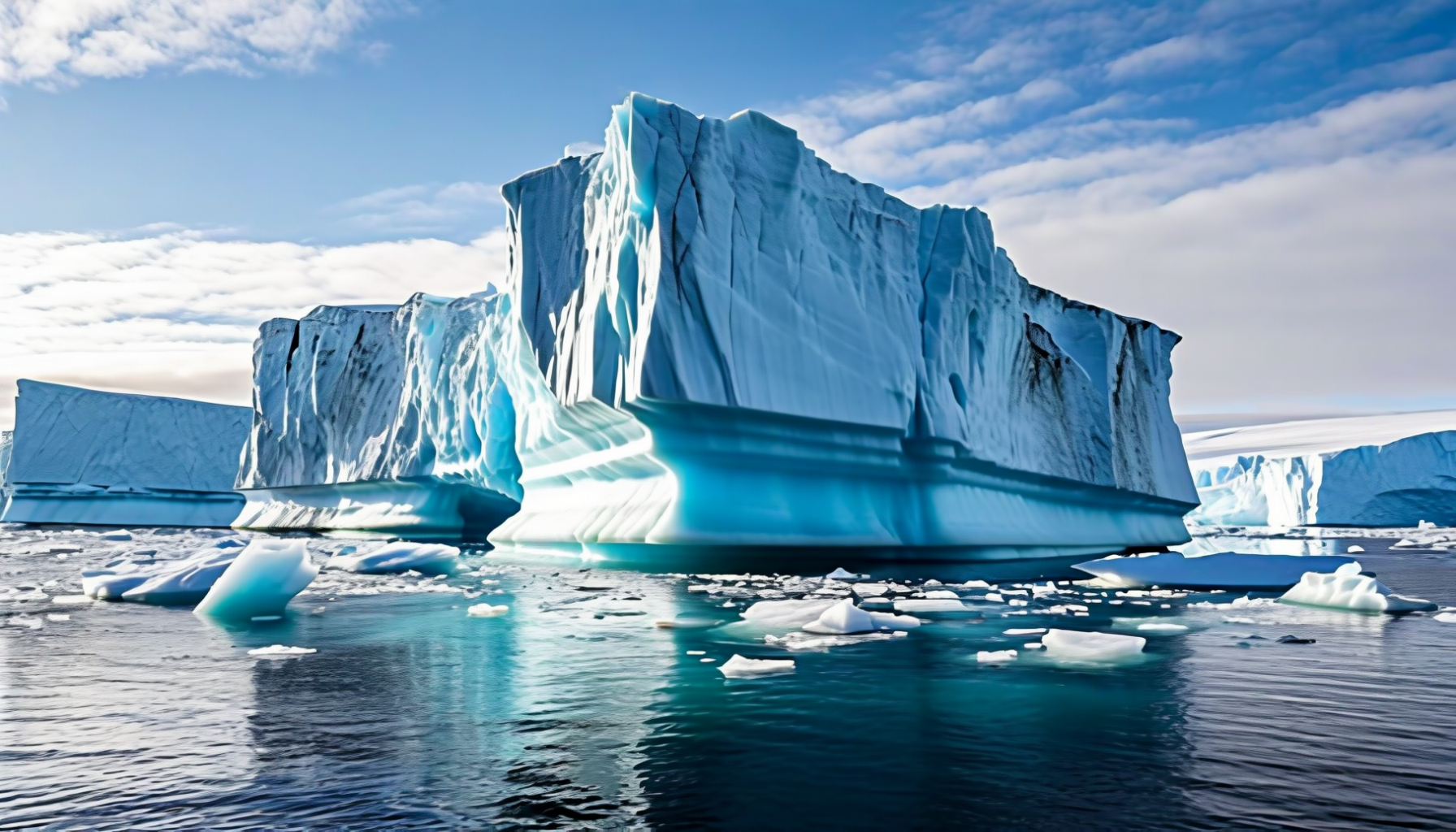
Ilulissat Icefjord was inscribed on the UNESCO World Heritage list in 2004, both as a landscape and as one of the most-studied glaciers on earth: the retreat of Sermeq Kujalleq has been documented continuously since 1850 and it is a primary data set in climate science. The Icefjord Centre, opened in 2021, is a fine piece of architecture by Dorte Mandrup, and its exhibition explains the glaciology properly rather than emotively.
The boardwalk
A wooden walkway runs from the edge of town to the Sermermiut viewpoint over the fjord — an hour there and back, flat, and one of the great short walks anywhere. Sermermiut itself was an Inuit settlement occupied for 4,000 years until the 1850s; the house rings are still visible and are not to be walked on.
Boat among the icebergs
The standard excursion, and the one that gives you scale. Midnight-sun sailings in June and July are the ones to book. Boats keep a legal distance from the large bergs, for the obvious reason.
Whales
Humpbacks and fin whales feed in Disko Bay from June to September, often within sight of the town. In spring, bowhead whales come into the bay — a rarer and stranger sighting.
Dog sledging
Ilulissat is north of the Arctic Circle and inside the sled-dog district, so working teams are kept in town in numbers. Winter and spring only, on sea ice or land. Do not approach or pet a working sled dog and keep children well clear — these are not household animals.
One practical note: the Sermeq Kujalleq iceberg field is also why Ilulissat is where cruise ships come. In July and August a single ship can add two thousand people to a town of under five thousand for six hours. If you can shift your dates to June or September, do.
🌊 Disko Bay and the North
Disko Bay is the great bight of the west coast, and beyond Ilulissat it holds some of the most rewarding places in Greenland. Disko Island itself is geologically unlike the rest of the country — basalt rather than gneiss, with flat-topped mountains, hot springs and, in the valleys behind Qeqertarsuaq, a small forest of dwarf birch that counts as woodland here. Qeqertarsuaq, the island's town of about 800 people, is reached by ferry or helicopter from Ilulissat and has an Arctic research station that has been running since 1906.
Uummannaq, further north, sits under a heart-shaped mountain of 1,175 m on an island in a fjord — the most photographed silhouette in Greenland after the icefjord. Its winter sea ice is thick enough for dog sledging and for the settlement's small children's home to have become internationally known. Aasiaat, at the south of the bay, is a working fishing town of about 3,000 with an unusually good music scene and easy access to a maze of small islands.
Far to the north-west lies Qaanaaq and the Inughuit, the northernmost permanently inhabited region of Greenland, where the traditional hunting economy persists most strongly and where the winters are darkest. This is not a casual destination — flights are infrequent and expensive, weather closes the airstrip for days, and visitors need a purpose and preferably a local host. It is also where the 1953 relocation happened, and the community has not forgotten it.
The far north-east is different again: Ittoqqortoormiit, a town of a few hundred at the mouth of Scoresby Sund, the world's largest fjord system, with the North-East Greenland National Park beyond it — 972,000 km², the largest national park on earth, larger than France and Spain together, with no permanent population at all beyond a research station and a military patrol.
⛷️ Sisimiut and Kangerlussuaq
Sisimiut is Greenland's second town, about 5,500 people, 40 km north of the Arctic Circle, and it is the one that feels most like a place that works. There is a shipyard, a trawler fleet, a technical college, a ski slope with a lift, an eighteenth-century blue church, and a lively conviction locally that Sisimiut rather than Nuuk is the real centre of the country.
It is also the northern end of the Arctic Circle Trail, the best-known long-distance hike in Greenland: roughly 160 km from Kangerlussuaq to Sisimiut across tundra, lakes and low hills, usually walked in 8–10 days, unmarked in places, with simple free huts along the route and no resupply. It requires genuine self-sufficiency — full food for the trip, a stove, river-crossing sense, and a satellite communicator — and in return it gives a week of walking through country with nobody else in it. July and August are the season; the mosquitoes in July are a real factor.
Kangerlussuaq is the other end and an odd place: a former American air base at the head of a 170 km fjord, with the longest runway in Greenland, roughly 500 residents, and the country's only road of any length — 35 km out to the edge of the ice sheet at Point 660. That road is why Kangerlussuaq is the easiest place on earth to stand on an ice sheet, and why the muskox herds around it are the most reliable large-mammal viewing in the country.
Aasivissuit–Nipisat
The UNESCO site inscribed in 2018 covers the land between Sisimiut and the ice cap — 4,200 years of Inuit hunting grounds, with caribou drive systems, winter house ruins and summer camps. You walk through it on the Arctic Circle Trail without necessarily noticing, which is rather the point.
Point 660
The ice-sheet edge by road from Kangerlussuaq. Guided trips run daily in summer; walking on the ice beyond the margin needs crampons and a guide, and the margin itself is unstable, meltwater-cut and genuinely dangerous to wander on alone.
The airport question
Kangerlussuaq was Greenland's international gateway for decades because it has the weather and the runway. With Nuuk's new runway open and Ilulissat's expected to follow, its role is shrinking — check current routings rather than assuming.
Skiing
Sisimiut has cross-country and downhill skiing from a town lift, and hosts the Arctic Circle Race in spring — 160 km of cross-country over three days, widely described as the hardest ski race in the world.
🏔️ Tasiilaq and the East Coast
East Greenland is a different country. Cut off by the East Greenland Current, which drags Arctic pack ice down the coast for much of the year, it had no sustained contact with Europeans until 1884, when Gustav Holm's expedition reached the Ammassalik district by umiaq and found some four hundred people living entirely traditionally. Their descendants, the Tunumiit, speak a dialect that West Greenlanders do not simply understand, and their art — the mask dance, the tupilak — is the strand that survived Christianisation most intact.
Tasiilaq, about 2,000 people, is the only town of any size on a coastline of 2,700 km, set in a bowl of mountains above a sheltered bay with the Valley of Flowers behind it. The scenery is the most dramatic in Greenland — the peaks of the Schweizerland range and the Mont Forel massif rise to over 3,000 m within reach of the town, and this is where ski-mountaineering and expedition climbing happen.
The practical gateway is Kulusuk, an island settlement with an airstrip built by the Americans, about 100 people, and a helicopter or boat link to Tasiilaq. Kulusuk is the reason East Greenland is unexpectedly accessible: the flight from Reykjavík takes about two hours and is one of the cheapest ways to reach Greenland at all. Day trips from Iceland exist and are worth doing if that is all you have — but staying two or three nights is a different and much better experience.
East Greenland's social problems are the country's worst, and visitors should know that before arriving rather than being surprised by it: the highest unemployment, the highest suicide rate, the hardest housing. The community is also proud, welcoming and used to visitors, and the tourism income matters here more than anywhere. Go, spend money locally, hire local guides, and photograph people only after asking.
🐑 South Greenland
The south is the green Greenland — the part that justifies the name. Below the Arctic Circle, sheltered by the fjords, the land carries real grass, willow scrub, herb meadows and about twenty thousand sheep on some forty farms. This is where the Norse settled, where their ruins stand, and where their descendants in practice are Greenlandic sheep farmers doing the same thing on the same fields a thousand years later.
Qaqortoq
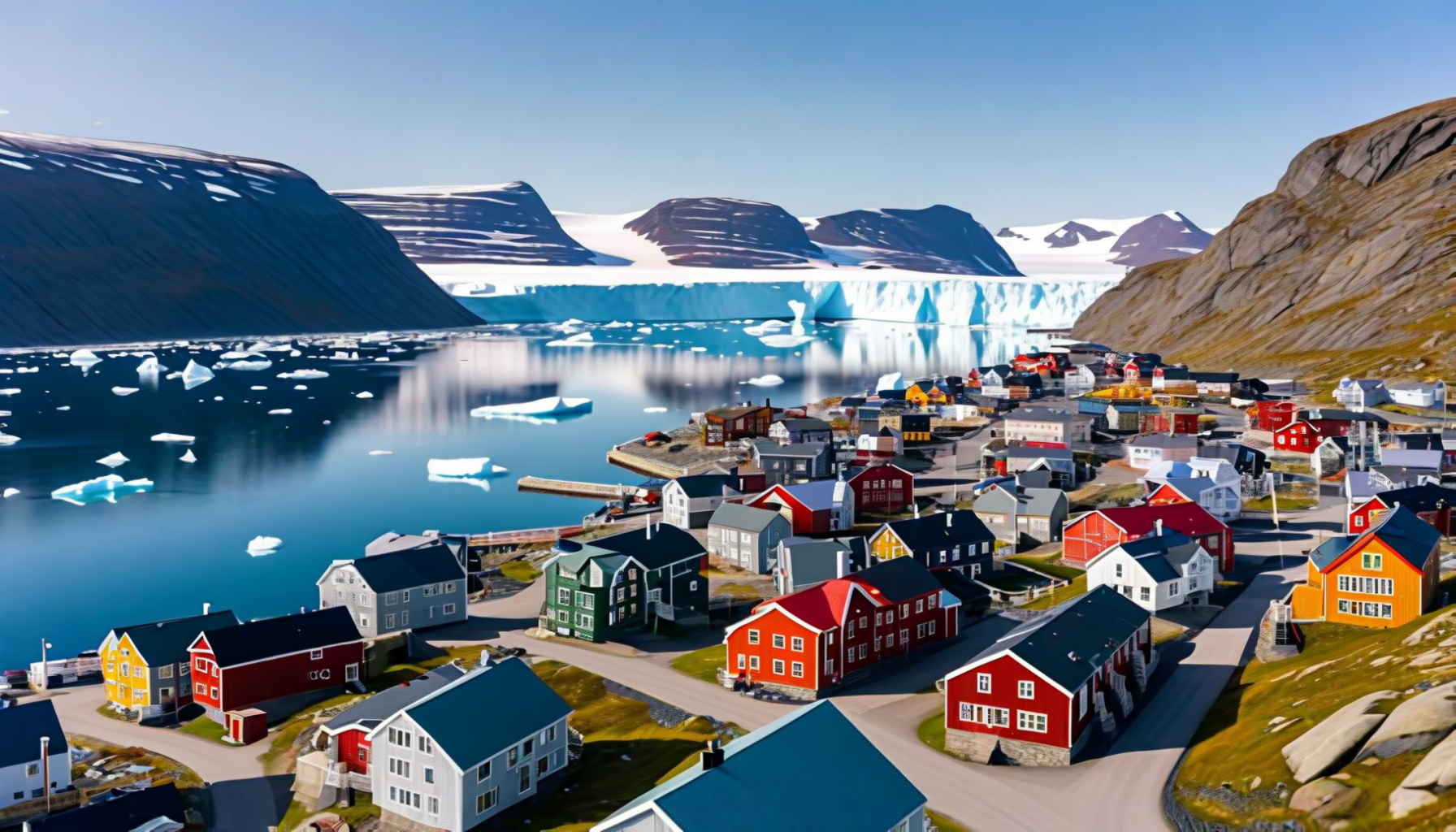
The largest southern town, around 3,000 people, with the only fountain in Greenland, the Great Greenland tannery, and Stone and Man — forty sculptures carved directly into the rock faces of the town by Nordic artists from 1993 onward, which turn a walk through the streets into a gallery.
Hvalsey
The best-preserved Norse ruin in Greenland: a church of squared stone standing to full wall height, roofless, on the grass by a fjord. The last recorded event in Norse Greenland was a wedding here in 1408. Reached by boat from Qaqortoq.
Qassiarsuk and Igaliku
Erik the Red's Brattahlíð and the old bishop's seat at Gardar, both now farming settlements with Norse foundations among the sheep pens. Part of the Kujataa UNESCO site inscribed in 2017, which covers the whole farming landscape rather than isolated monuments.
Uunartoq hot springs
Three natural hot pools on an uninhabited island, roughly 38 °C, with icebergs drifting past in the fjord beyond. Reached by boat from Qaqortoq or Nanortalik. There is no infrastructure beyond a wooden changing hut, and that is the appeal.
Access is via Narsarsuaq, another wartime American airfield, at the head of a fjord with a glacier at its end. From there boats fan out to Narsaq, Qaqortoq, Igaliku and the farms, several of which take guests. South Greenland is the part of the country where you can walk for a week between farms rather than camping, and the part where a first-time visitor is least likely to be beaten by the logistics.
✈️ Getting There
Greenland has been considerably easier to reach since 28 November 2024, when the new 2,200-metre runway at Nuuk opened and direct services from Copenhagen began landing in the capital instead of at Kangerlussuaq. A second new runway at Ilulissat is under construction on the same programme. Routings are therefore changing faster than guidebooks can keep up with, and the single most important piece of advice on this page is to check current schedules rather than trusting anything written more than a year ago, including this.
Via Copenhagen
The main route. Copenhagen to Nuuk is roughly 4.5 hours with Air Greenland; Kangerlussuaq and Narsarsuaq are also served seasonally. From Prague, Copenhagen is 1h40 with several carriers a day, so the whole journey is realistically one long day with a comfortable connection.
Via Iceland
Reykjavík to Kulusuk (East Greenland) is about two hours and is the cheapest way onto the island; Reykjavík also serves Nuuk and Ilulissat seasonally. Note that Icelandic domestic flights leave from Reykjavík city airport, not Keflavík — allow time and a taxi between them.
Via North America
United began a seasonal Newark–Nuuk service in June 2025, and Canadian charter links exist. Relevant mainly if you are combining Greenland with a North American trip.
By ship
Expedition cruises work both coasts from June to September, and are the only realistic way to see the north-east and Scoresby Sund. A cabin costs what an expedition cabin costs; in return the ship solves every logistical problem on this page.
Budget, honestly: a return from Prague to Nuuk via Copenhagen typically lands somewhere around 15,000–25,000 CZK if booked well ahead, and considerably more in July or at short notice. Internal Greenlandic flights then add up quickly — see below — and the domestic legs are frequently the larger half of the airfare.
🚁 Getting Around
There are no roads between towns in Greenland. This is the sentence that ruins the most itineraries, so it bears repeating in practical form: you cannot drive, hitch, take a bus or take a train from one settlement to another anywhere in the country. Your options are aircraft, helicopter, coastal ferry, chartered boat, and in winter snowmobile or dog sledge over sea ice.
Air Greenland
Runs the international service and almost all domestic flights, with Dash 8s between the towns and helicopters to the settlements. Book domestic legs as early as the international ones — capacity is small and summer seats sell out.
Weather
Fog, wind and low cloud cancel flights routinely, and there is no alternative routing when they do. Build two spare days into any itinerary with a fixed departure home — one before the flight out of Greenland at minimum. This is not pessimism; it is the normal operating condition.
Sarfaq Ittuk
Arctic Umiaq Line's coastal ferry runs the west coast between Qaqortoq and Ilulissat through most of the year — several days end to end, cabins and couchettes, calling at towns and settlements. It is slow, cheap by Greenlandic standards, and the most sociable travel in the country.
Boats and helicopters
Local boat charter is how you actually reach fjords, ruins, hot springs and abandoned settlements, and how residents move between neighbouring towns. Helicopter links serve the smaller settlements on fixed schedules. Both are weather-dependent in the same way.
Within towns you walk; Nuuk has a town bus and taxis, and everywhere else is small enough not to need them. Car hire exists in Nuuk and Kangerlussuaq and is useful only for the ice-road at the latter. If you are planning to move between three or more places, work the schedule backwards from your flight home and leave the slack at that end.
💰 What It Costs
Greenland is expensive — Danish price levels as a floor, with a shipping surcharge on almost everything and an internal transport system that has no cheap option. The single largest variable in a Greenland budget is not accommodation or food; it is domestic flights and boats.
Currency
The Danish krone (DKK). Cards are accepted essentially everywhere, including in settlements; carry a little cash for the open-air market and small boat operators. Very roughly 1 DKK ≈ 3.4 CZK at the time of writing — check the rate before you go, and price things in kroner in your head.
Accommodation
Hotel double rooms in Nuuk or Ilulissat run around 1,200–2,200 DKK (roughly 4,000–7,500 CZK); guesthouses, hostels and settlement homestays are substantially less, from perhaps 500–800 DKK. Summer sells out — book months ahead, not weeks.
Eating
A restaurant main course 200–500 DKK; a supermarket meal cooked yourself a fraction of that. Pilersuisoq and Brugseni sell everything, imported and priced accordingly — fresh vegetables in a settlement in winter are a luxury item, and locals will say so.
Excursions
Boat trips among the icebergs 700–1,200 DKK, whale watching similar, dog sledging by the half-day from around 900 DKK, helicopter sightseeing far more. These are the memorable parts of the trip and they are priced as such.
A workable rule of thumb for a self-organised trip: 1,500–2,500 DKK per person per day on the ground — roughly 5,000–8,500 CZK — excluding international flights and excluding domestic air travel, which should be budgeted separately as a line item of its own. A week in Greenland done properly is comparable in cost to two or three weeks in southern Europe, and there is no realistic way to do it much cheaper other than camping and cooking, which many people do.
📋 Practical Information
Entry. Greenland is part of the Kingdom of Denmark but is outside both the European Union and the Schengen area. Czech citizens do not need a visa for short stays, but they do need a valid passport — a national ID card is not sufficient, because you are leaving Schengen. Check the passport validity requirement before booking, and note that transiting Denmark means Schengen rules apply to the Copenhagen leg and Greenlandic entry rules to the second.
Health cover is the point most Czech travellers get wrong. Because Greenland is outside the EU, the European Health Insurance Card (Evropský průkaz zdravotního pojištění) does not apply here. You need commercial travel insurance, and it must explicitly cover the Arctic and, critically, medical evacuation — from a settlement, a hospital transfer means a helicopter or a charter aircraft, and the bill runs to hundreds of thousands of crowns. If you intend to hike, ski, kayak or take part in dog sledging, confirm those activities are covered by name.
Czech consular help
Greenland falls under the Embassy of the Czech Republic in Copenhagen — there is no Czech representation on the island. Register your trip with DROZD (drozd.mzv.gov.cz) before you go, and read the current MZV ČR travel advice for Denmark and Greenland; in a country where weather can strand you for days, being on that register is genuinely useful.
Connectivity
Mobile coverage is good in the towns, absent between them. Roaming is not covered by EU rules — Greenland is outside the EU, so EU roaming caps do not apply and charges can be severe. Buy a local Tusass SIM or accept that you will be offline; download offline maps before you leave.
Safety
Crime against visitors is rare. The dangers here are environmental: weather, cold water, unstable ice, calving icebergs producing waves that sweep shorelines, and polar bears in the north and east. Never stand at the water's edge near a large iceberg, take a guide where guides are advised, and tell someone your route.
Packing
Layers, a genuine windproof shell, warm hat and gloves in every season, sunglasses (snow glare is real), sunscreen, sturdy boots, and a head net for inland areas in July. Insulated boots and a serious down layer in winter. Nothing here is a fashion decision.
Etiquette in short. Ask before photographing people, especially children and hunters. Do not touch working sled dogs. Do not walk on house rings, graves or cairns, and take nothing from them. Do not bring alcohol into settlements as a gift. Accept food when it is offered, or decline once, politely, and leave it there. And do not tell Greenlanders what they should think about hunting, Denmark, mining or independence — you will get a courteous answer and you will have learned nothing.
❓ Common Misconceptions
"There are penguins."
There are not. Penguins live in the southern hemisphere; the northern bird that filled the same niche, the great auk, was hunted to extinction by 1844. What you will see is little auks, guillemots and kittiwakes in enormous numbers.
"It's part of Denmark, so my EHIC works."
It is part of the Kingdom of Denmark and outside the EU. The European Health Insurance Card does not apply, EU roaming rules do not apply, and you need a passport rather than an ID card. This trips up more European visitors than anything else on this page.
"You can drive between the towns."
There is no road network between settlements anywhere in Greenland. The longest road in the country runs 35 km from Kangerlussuaq to the ice sheet and connects nothing to anything.
"It's dark and frozen all year."
Nuuk's July average is about 7 °C and the south is green enough to farm sheep. The midnight sun runs for weeks north of the Arctic Circle, and summer visitors regularly overpack for cold and underpack for sun and rain.
"Igloos."
Snow houses were built as temporary hunting shelters in parts of the Arctic, mainly in Canada. Greenlandic houses were turf and stone, and today they are insulated timber and concrete with district heating. Nobody lives in an igloo.
"The Norse died out because they wouldn't adapt."
The evidence for dietary adaptation is strong — their bones show it. The disappearance was more likely a combination of a cooling climate, the collapse of the walrus-ivory trade, isolation from Norway and a small population's decision to leave. The simple morality tale does not survive the archaeology.
✍️ Author's Note
Greenland is the hardest country in this factbook to write about honestly, for two reasons. The first is scale: almost every statement true of Ilulissat is false of Tasiilaq, and almost every statement true of Nuuk is false of a settlement of ninety people two fjord systems away. The second is that Greenland has spent three hundred years being described by outsiders, and is at this moment being discussed internationally as an asset rather than a country. Adding to that pile requires some care.
So this page tries to be specific about what it knows and open about what it does not. Prices are approximate and move; flight routings are changing every season as the new runways open; the political situation is live. Where a photograph did not match what it claimed to show, it was left out, and where one was close but not exact — the berries in the char picture are the obvious case — the caption says so rather than pretending otherwise. Several images that came with this page's source material were rejected outright for showing Norwegian fishing villages, tandem dog teams and a vegetable soup labelled as suaasat.
Further reading and watching. Knud Rasmussen's Across Arctic America for the Fifth Thule Expedition in his own words. Jared Diamond's Collapse for the classic Norse argument and Kirsten Seaver's The Frozen Echo for the sustained rebuttal. Gretel Ehrlich's This Cold Heaven for the best outsider's account of living in the Thule district. Kim Leine's novel The Prophets of Eternal Fjord for the colonial mission at its most uncomfortable. And the Greenlandic films Nuummioq (2009) and Pipaluk Kreutzmann Jørgensen's Anori (2018), which are worth seeking out precisely because they are films about Greenlanders made by Greenlanders.
If you go: take the extra days, take the ferry at least once, eat what you are offered, and spend an hour at the open-air market watching what is actually sold and to whom. The ice is the reason everyone comes. The towns are the reason some people come back.
Support This Project 🌍
This World Travel Factbook is a labor of love – free to use for all travelers. If you find it helpful, consider supporting its continued development.