
🇬🇲 The Gambia at a Glance
🌍 Overview
The Gambia is the smallest country on mainland Africa and the only one whose shape is an argument. Look at a map of West Africa and there is a thin sliver cut into Senegal, following the River Gambia inland for about 480 kilometres and never widening beyond fifty. That shape is not geography. It is the residue of a nineteenth-century agreement in which Britain kept the navigable river and France kept everything either side of it, and the border was drawn — the story goes, not quite accurately — within cannon-shot of the water.
What that produces is a country of 11,295 km² and roughly 2.8 million people that is essentially a riverbank with a coastline attached. There are no mountains: the highest point is 53 metres. There is no great city: Banjul, the capital, has about 30,000 residents on an island at the river mouth, while the actual urban mass is inland at Serrekunda. What The Gambia has instead is 80 kilometres of Atlantic beach, a tidal river navigable by ocean-going ships for 200 kilometres, and over 580 recorded bird species in an area smaller than Jamaica.
It has also been, since the 1960s, the place where a great many Europeans see Africa for the first time. British charter flights land at Banjul six hours from Gatwick; English is the official language; the beaches are warm in January. The country's tourist slogan, "the Smiling Coast of Africa", is the kind of thing that usually makes a traveller wince — except that Gambians really are, by broad consensus of everyone who goes there, unusually easy to talk to.
This guide takes the country seriously as a destination rather than as a winter-sun package. The best of it is the river, the birds, and the upcountry heritage sites; the beach strip is the least interesting part. It also does not pretend the tourism is uncomplicated — the section on bumsters and the beach economy says plainly what the awkward parts are.
🏷️ The Definite Article
The Gambia is one of only two countries in the world that officially carry "The" in their name; the other is The Bahamas. This was not an affectation. In 1964, on the eve of independence, the government asked for the article to be retained specifically to avoid confusion with Zambia, which was becoming independent the same year — two new African states with near-identical names arriving simultaneously at the UN was a genuine administrative problem. "The" solved it, and it stuck.
The name comes from the river, and the river's name most likely comes from a Portuguese rendering of a Mandinka word — Kambaa or Kambra — meaning, in the way of rivers everywhere, simply "river". So the country is called, at two removes of translation, The River.
The deeper identity question is what separates The Gambia from Senegal, which surrounds it. Ethnically, almost nothing: Mandinka, Fula, Wolof, Jola and Serahuli communities live on both sides of the border and marry across it freely. The difference is colonial. Britain administered the river; France administered everything else. That produced English rather than French, common law rather than the Napoleonic code, a different school system, different bureaucratic habits, and a different set of onward connections to the world.
The two countries even tried merging. The Senegambia Confederation ran from 1982 to 1989, with a shared defence and monetary policy on paper; it collapsed because The Gambia would not surrender enough sovereignty and Senegal saw little return. The border remains one of the strangest in Africa and one of the most casually crossed: the Trans-Gambia Highway carries Senegalese traffic straight through the country, and since the 2019 bridge at Farafenni it no longer has to queue for a ferry to do it.
Official name
Republic of The Gambia. The capital T is deliberate and is used in the country's own documents.
Flag
Red, blue and green horizontal bands separated by thin white lines: the savanna and sun, the river, the forest — and the white stripes are the river's banks. One of the few flags with no political or religious symbolism at all.
Languages
English is official and is the language of government, courts and schooling. Mandinka is the most widely spoken first language, followed by Pulaar (Fula) and Wolof; Wolof dominates in Banjul and Serrekunda.
Teranga
A Wolof word usually translated as hospitality, though it means something closer to an obligation to the stranger. It is claimed as a national value on both sides of the Senegal–Gambia border and both are right.
🗺️ Geography — A Country Shaped Like a River
The River Gambia rises in the Fouta Djallon highlands of Guinea and runs 1,130 kilometres to the Atlantic. The final 480 kilometres are The Gambia, and the country extends only 24 to 50 kilometres either side of the water. At the mouth the river is 10 kilometres wide; 200 kilometres upstream it is still tidal and still deep enough for ocean-going ships, which is precisely why Europeans wanted it and why the borders look as they do.
The land is flat to the point of comedy — the highest point in the country is 53 metres above sea level — and the interest is entirely in what grows on it. Along the coast and lower river there are mangrove swamps and tidal mudflats, threaded with creeks (locally bolongs) that are the best thing in the country to travel by boat. Behind them come the banto faros, seasonally flooded saline flats. Further upriver the mangroves give out and gallery forest lines the banks, then savanna woodland, then increasingly dry Sahelian country as you approach the Senegalese interior.
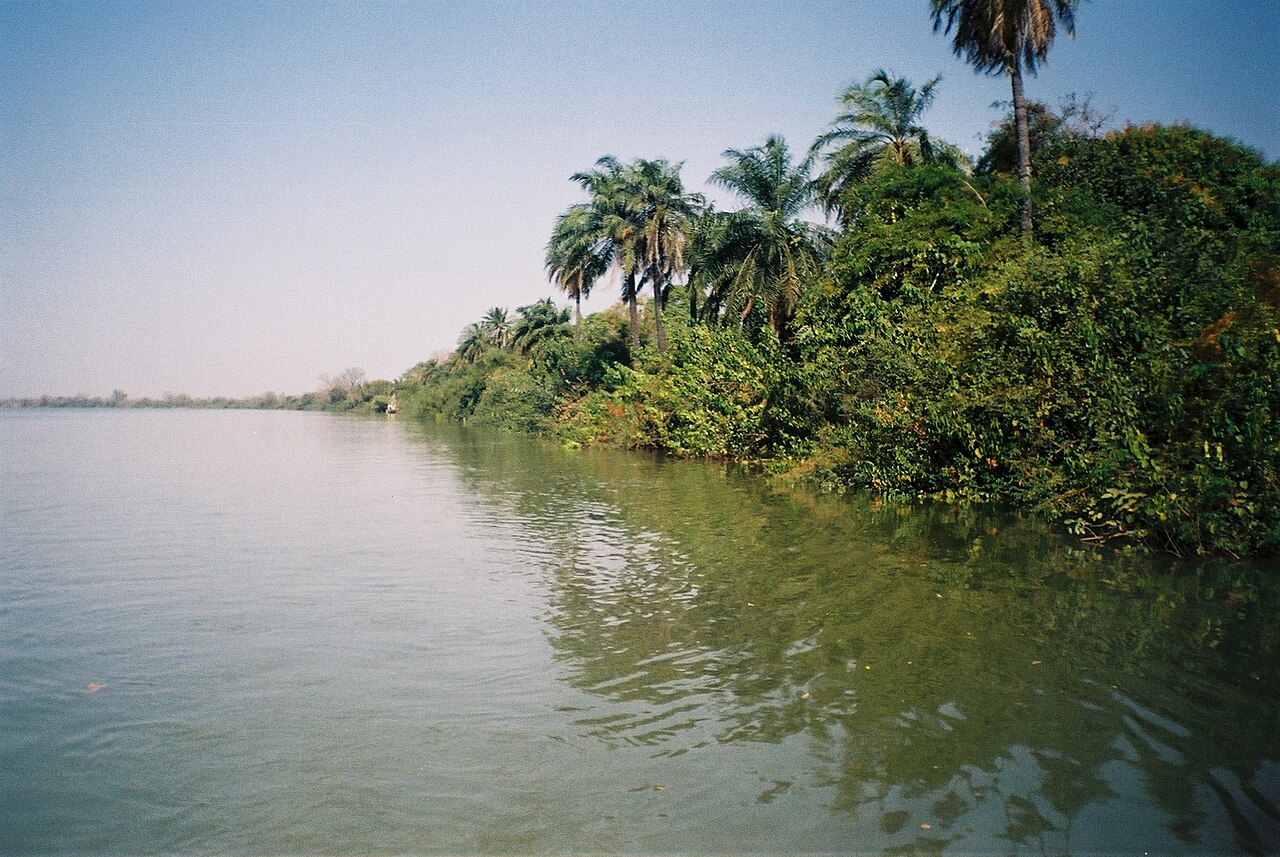
The Atlantic coast runs about 80 kilometres and is where almost all the tourism is: a strip of sandy beach backed by palms from Banjul south to the Senegalese border, taking in Bakau, Fajara, Kotu, Kololi and — further out and quieter — Brufut, Tanji and Sanyang. The whole coastal conurbation, including Serrekunda, holds close to half the national population.
Administratively the country divides into the Banjul city area, the West Coast Region (the coastal strip and its hinterland), and then four regions running upriver: Lower River, North Bank, Central River and Upper River. Almost nothing on the tourist trail is more than two hours from the coast except Janjanbureh and Wassu, which are five to seven.
🌡️ Climate and When to Go
Sahelian tropical: one wet season, one dry season, and nothing in between. The dry season runs roughly November to May, the rains June to October. The difference between them is not subtle — in the dry season the country turns dust-brown and the rivers shrink; six weeks into the rains it is green enough to be unrecognisable.
November–February · the season
20–30 °C, low humidity, clear skies, cool nights. This is peak European winter-sun traffic, peak birding (Palearctic migrants have arrived), and peak prices. Book December and January well ahead.
March–May · hot and dry
Building to 35–43 °C inland by May. Coastal areas stay bearable with the sea breeze; upriver does not. Birding still good, crowds much thinner, prices lower.
June–October · the rains
24–32 °C but humid, with heavy afternoon downpours rather than all-day rain. Many hotels close, some upriver roads become difficult, and mosquito activity peaks. The country is at its most beautiful and its emptiest.
The harmattan
December to February brings a dry dust-laden wind off the Sahara. It softens the light to a haze, drops visibility, and can be hard on contact-lens wearers and asthmatics. Photographers either love it or curse it.
The short answer: late November to early March if you want reliable weather and the full birding list. February and March if you want the same weather with fewer package tourists. September and October if you are willing to take rain in exchange for a green country, an empty coast and half-price rooms — but check your hotel is actually open.
🗺️ Map
The Gambia occupies both banks of the River Gambia from the Atlantic to a point some 480 km inland, entirely surrounded by Senegal except for its coastline. Banjul sits on St Mary's Island at the river mouth; the resort strip runs south along the coast; the heritage sites (Kunta Kinteh Island, Juffureh, Wassu, Janjanbureh) are reached upriver by road or boat.
Driving distances from the coastal strip: Banjul 15 km; Abuko 20 km; Makasutu 30 km; Tanji 25 km; Barra (via ferry) 30 minutes across the water; Juffureh and Kunta Kinteh Island about 3 hours by road via the north bank or a half-day by boat; Tendaba 150 km; Janjanbureh 300 km; Wassu 320 km.
📜 History Before Europe — and the Slave River
The Gambia valley was never the centre of a great West African empire, but it was inside their reach. Ghana, Mali and Songhai all projected influence this far west, and the Mandinka presence along the river dates from the expansion of the Mali Empire in the thirteenth and fourteenth centuries. What sits in the ground is older still: the stone circles at Wassu and Kerr Batch were raised between roughly the third century BCE and the sixteenth century CE by societies about which, frustratingly, very little else is known.
The Portuguese arrived in 1455 — Alvise Cadamosto, sailing for Henry the Navigator, was turned back by hostile canoes on his first attempt and got upriver on the second. Trade followed almost immediately, and within decades it included people. For the next three centuries the river functioned as a funnel: navigable deep inland, easy to control at the mouth, and therefore ideal for moving captives out of the interior to the Atlantic.
The British established themselves on James Island — a scrap of rock in mid-river, now Kunta Kinteh Island — in 1661, taking a fort the Courlanders had built. It changed hands repeatedly between Britain and France, was sacked by pirates, and functioned throughout as a holding and transhipment point. Estimates of how many enslaved people passed through the Gambia river system vary widely and should be treated with caution; what is not in doubt is that it was one of the trade's significant arteries and that the physical evidence is still standing in the water.
Britain abolished the trade in 1807 and used Bathurst — founded 1816, now Banjul — as a naval base for suppressing it, which is a genuinely complicated piece of history: the same power, the same river, in the same century, running the trade and then policing it. The Gambia became a British colony and protectorate in 1889 with its borders fixed by agreement with France, and stayed one of the smallest and least developed possessions in the empire.
🕰️ Independence, Jammeh, and 2017
Independence came on 18 February 1965 under Dawda Jawara, who governed for nearly three decades — a stretch that made The Gambia, by the standards of the region, conspicuously stable and conspicuously democratic. It was not without strain: an attempted coup in 1981 was put down with Senegalese troops, and the Senegambia Confederation that followed lasted seven years before quietly expiring.
On 22 July 1994 a group of young officers led by 29-year-old Lieutenant Yahya Jammeh took power in a bloodless coup. What followed was twenty-two years that Gambians are still working through. Jammeh's rule combined the ordinary machinery of authoritarianism — a feared intelligence agency, disappeared journalists, a compliant judiciary — with genuinely strange public theatre: he announced a personal herbal cure for HIV/AIDS and required patients to abandon antiretrovirals for it, declared the country an Islamic republic in 2015, withdrew from the Commonwealth and the International Criminal Court, and staged witch hunts in 2009 in which villagers were abducted and forced to drink hallucinogens.
In December 2016 he lost the election to Adama Barrow, a property developer who had once worked as a security guard in London. Jammeh conceded on television, then a week later retracted. What broke the impasse was ECOWAS: Senegalese troops crossed the border in January 2017 with a regional mandate and Nigerian air support offshore, Barrow was sworn in at the Gambian embassy in Dakar, and Jammeh flew into exile in Equatorial Guinea. It remains one of the very few cases anywhere of a regional bloc successfully enforcing an election result.
Since then: a Truth, Reconciliation and Reparations Commission that sat publicly from 2019 to 2021, took testimony from over 390 witnesses including confessed members of Jammeh's hit squad, and recommended prosecutions. Barrow won re-election in 2021. Progress on the TRRC's recommendations has been slow, and a special tribunal with ECOWAS backing was agreed only in 2024. Visitors will find a country that is open, safe and talkative about all of this — Gambians discuss the Jammeh years with strangers far more freely than you might expect.
🌊 The River
Everything here is the river. It made the trade route that made the colony that made the country; it is the reason the borders are absurd; it is the single best reason to visit. And crucially it is not scenery you look at from a road — it is something you get on and travel through.
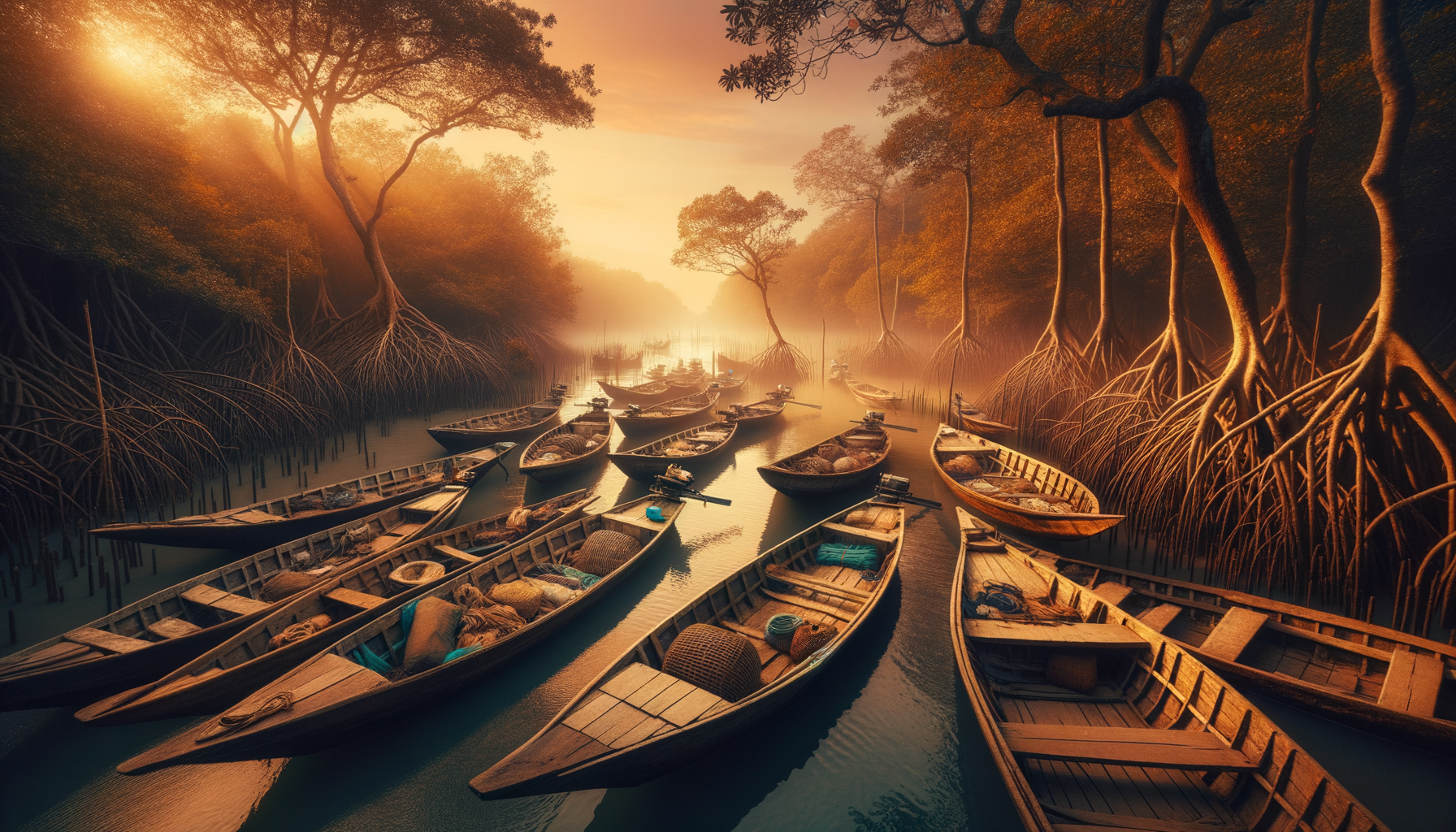
The lower river is tidal and brackish, fringed with red and white mangroves whose aerial roots make a wall two or three metres high on both banks. Cut into that wall are the bolongs: creeks that branch and narrow until the mangroves close overhead and the boat is moving through a green tunnel. Oyster harvesting happens here — women wade at low tide and cut clusters off the mangrove roots with machetes, which is why you see whitened shell middens along the banks. The oyster fishery is run largely by a women's cooperative, TRY, which secured exclusive-use rights over its stretch of the river in 2012 in what became a much-cited case in fisheries governance.
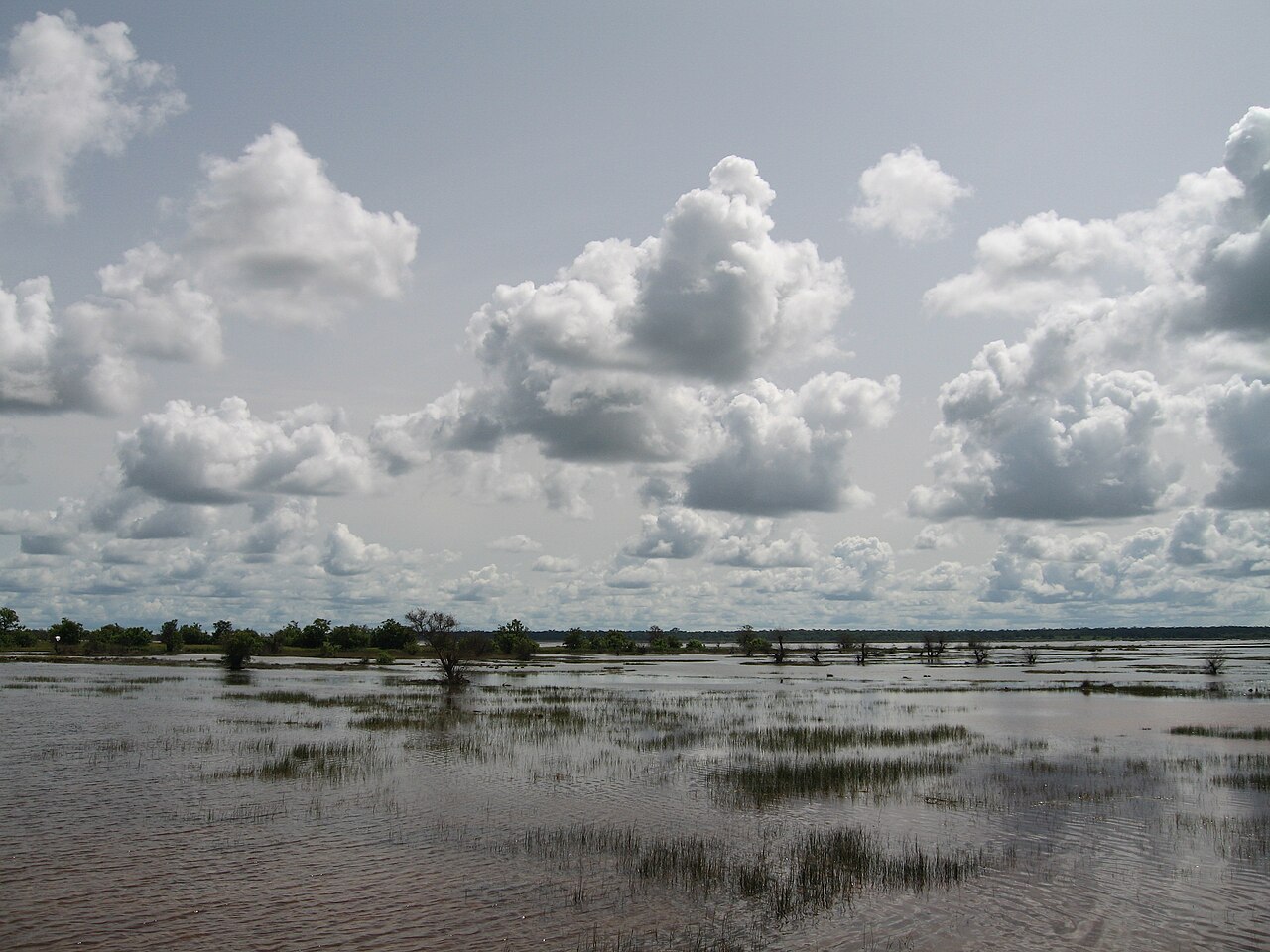
Upstream of the salt wedge the mangroves stop abruptly and gallery forest takes over — tall trees, oil palms, and an entirely different set of birds. Past Georgetown the country dries towards the Sahel. Making the whole journey by boat, over several days, is the way to understand what a small country this is and how much variation it fits into 480 kilometres.
The half-day everyone does
A creek trip from Lamin Lodge or Denton Bridge, roughly 3–4 hours, D1,500–2,500 per boat. Mangroves, kingfishers, oyster beds, and a stop at a village. Go at dawn, not at eleven.
Makasutu
A private reserve on the Mandina bolong where a pirogue trip is bundled with forest walks. The most polished version of the experience and the most expensive.
Tendaba
150 km upriver, a working camp rather than a resort, and the standard base for boat trips into the Baobolong wetlands opposite — a Ramsar site and the best mangrove birding in the country.
The full run
Multi-day charters to Janjanbureh and beyond can be arranged in Banjul but are not a scheduled service and are not cheap. The scheduled passenger boats that once ran the river no longer do.
🛶 Baboon Islands and the Chimpanzees
In the middle of the river, 300 kilometres upstream, five uninhabited islands make up the River Gambia National Park — universally called the Baboon Islands, which is confusing because the animals that matter there are chimpanzees.
Chimpanzees had been extinct in The Gambia for perhaps a century when, in 1979, Stella Marsden began releasing confiscated and orphaned animals onto the islands. The Chimpanzee Rehabilitation Project has run continuously ever since — one of the longest-running primate reintroduction programmes anywhere — and the population is now over a hundred animals across three island groups, largely self-sustaining and breeding in the wild.
Landing on the islands is prohibited. The chimpanzees are wild, habituated only to the boats that supply them, and the whole point of the project is that they are not a visitor attraction. What you can do is watch from the water, which — if the animals come to the bank, which they often do in the late afternoon — is a genuinely remarkable thing to do from a small boat on a river in the middle of a country the size of Yorkshire.
How to see them
Stay at Kairoh Garden or the Chimp Rehabilitation Project's own camp near Kuntaur, or arrange a boat from Janjanbureh. Late afternoon is best. Budget a full day from the coast to get there.
What else is on the river here
Hippos — a resident population, genuinely dangerous, and a real reason to take your boatman's instructions seriously. West African manatee are present but very rarely seen. Nile crocodiles throughout.
Do not expect Gombe
You will see chimpanzees at a distance across water, sometimes well, sometimes not at all. Anyone selling you a guaranteed close encounter is either lying or breaking the project's rules.
Combine it
Kuntaur is 20 minutes from the Wassu stone circles and an hour from Janjanbureh. Doing all three over two nights upriver is the single best itinerary in the country.
🐦 Birdwatching — the Real Headline
Over 580 bird species have been recorded in The Gambia. For context: that is more than the Czech Republic, Poland and Germany combined, in a country a seventh the size of Czechia. It is the reason a large slice of the visitors are British birders with scopes, and it is the strongest single argument for the country as a destination.
Two things produce the concentration. First, habitat packed tight: within twenty kilometres of the coast you can move from Atlantic shore to tidal mudflat to mangrove creek to gallery forest to savanna woodland to rice paddy, each with a different assemblage. Second, position — The Gambia sits on the East Atlantic Flyway, so from October the resident West African species are joined by Palearctic migrants wintering there, including birds that bred in Europe.
Crucially, it is easy. The birding is accessible, the guides are excellent and cheap, English is spoken, and the distances are short. A great many people who would never attempt Ghana or Cameroon do their first African birding here, and the standard first-week list of 200-plus species is not hard to hit.
Kotu Creek and bridge
Directly behind the hotel strip. Giant, pied, blue-breasted and malachite kingfishers, herons, waders, hamerkop. You can walk there from your room before breakfast, which is why it is one of the most-birded sites in Africa.
Abuko Nature Reserve
Gallery forest 20 minutes inland: western plantain-eater, violet turaco, African paradise flycatcher, and the reserve's celebrated photo hide over the pool.
Tanji Bird Reserve
Coastal lagoon, dunes and scrub south of the resorts, plus the offshore Bijol Islands — terns, gulls, ospreys and the largest seabird colony in the country.
Marakissa and Pirang
Rice fields, a river crossing and a forest park inland to the south. Reliable for raptors, and the classic full-day trip out of the coast.
Tendaba and Baobolong
Boat into the mangrove creeks opposite the camp for African finfoot, mouse-brown sunbird, blue-breasted kingfisher, and the goliath heron.
Upriver, for the plover
The Egyptian plover — the bird half these visitors came for — is reliable on sandbars around Janjanbureh and Basse in the dry season and almost impossible on the coast.
Guides. Use one. The Gambia Birding Guides Association trains and certifies local guides, and the good ones know individual trees. Expect D1,500–2,500 (roughly €20–35) for a day on the coast, more with transport upriver. It is the best-value guiding in West Africa and the money stays in the country.
🌳 Abuko Nature Reserve
Abuko is 105 hectares — you could walk its perimeter in an hour — and it is the oldest protected area in The Gambia, gazetted in 1968 after a game warden noticed that the stream feeding Banjul's water supply ran through the last decent patch of gallery forest near the coast. Protecting the water protected the forest, and the forest turned out to be the most species-rich accessible site in the country.
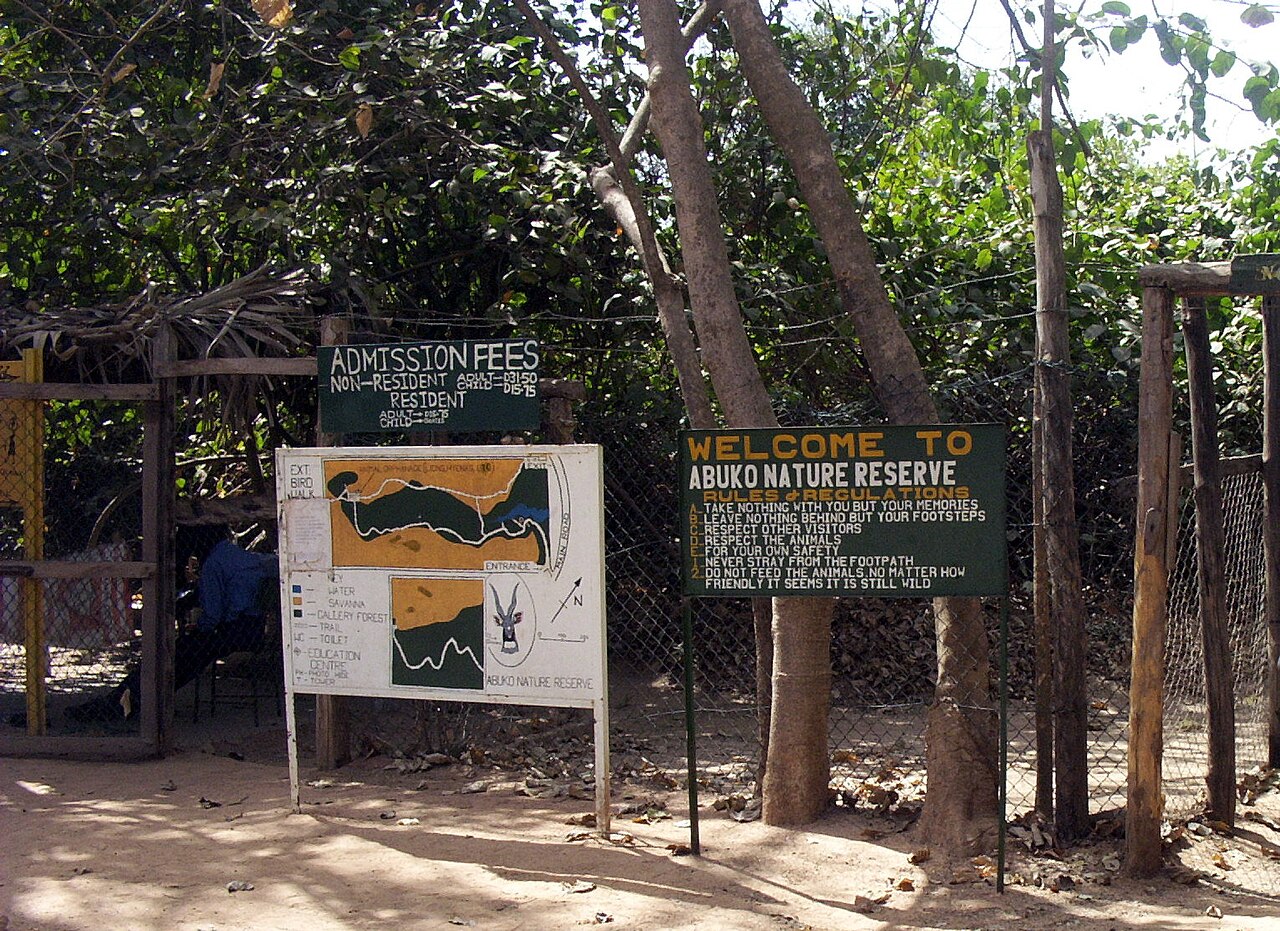
The walk is a loop on a made path through closed-canopy forest, past a pool with a photography hide, out into drier woodland and back. Along it: green vervet and red colobus monkeys, patas monkeys in the scrub, Nile crocodiles in the pool, and — with patience and a guide — violet turaco, western plantain-eater, African paradise flycatcher, giant kingfisher, and the narina trogon that everybody wants and few get.
There is also an animal orphanage at the far end holding confiscated and injured animals — hyena, vultures, monkeys — in enclosures that are honest about being enclosures. Some visitors find it upsetting. It is a rescue facility in a country with limited resources, not a zoo pretending otherwise.
Practicalities
Open daily from around 08:00. Admission for non-residents runs a few hundred dalasi; bring cash. Twenty minutes by taxi from the resort strip, on the road to Lamin.
Timing
Go at opening. By ten the light is flat, the heat is up and the birds have gone quiet. Two to three hours is enough.
What to bring
Binoculars, water, insect repellent, and closed shoes. The path is easy but the forest floor is not a place for sandals.
The baboons
Not present inside the reserve, but the monkeys are habituated and will investigate bags. Do not feed them and do not carry visible food.
🐊 Kachikally — Touching the Crocodiles
In Bakau, behind an unremarkable gate on an unremarkable street, there is a sacred pool full of Nile crocodiles that visitors are invited to touch. This is not a stunt aimed at tourists; the pool has been a fertility shrine of the Bojang family for centuries, women come to it to pray for children, and the crocodiles are considered sacred rather than kept.
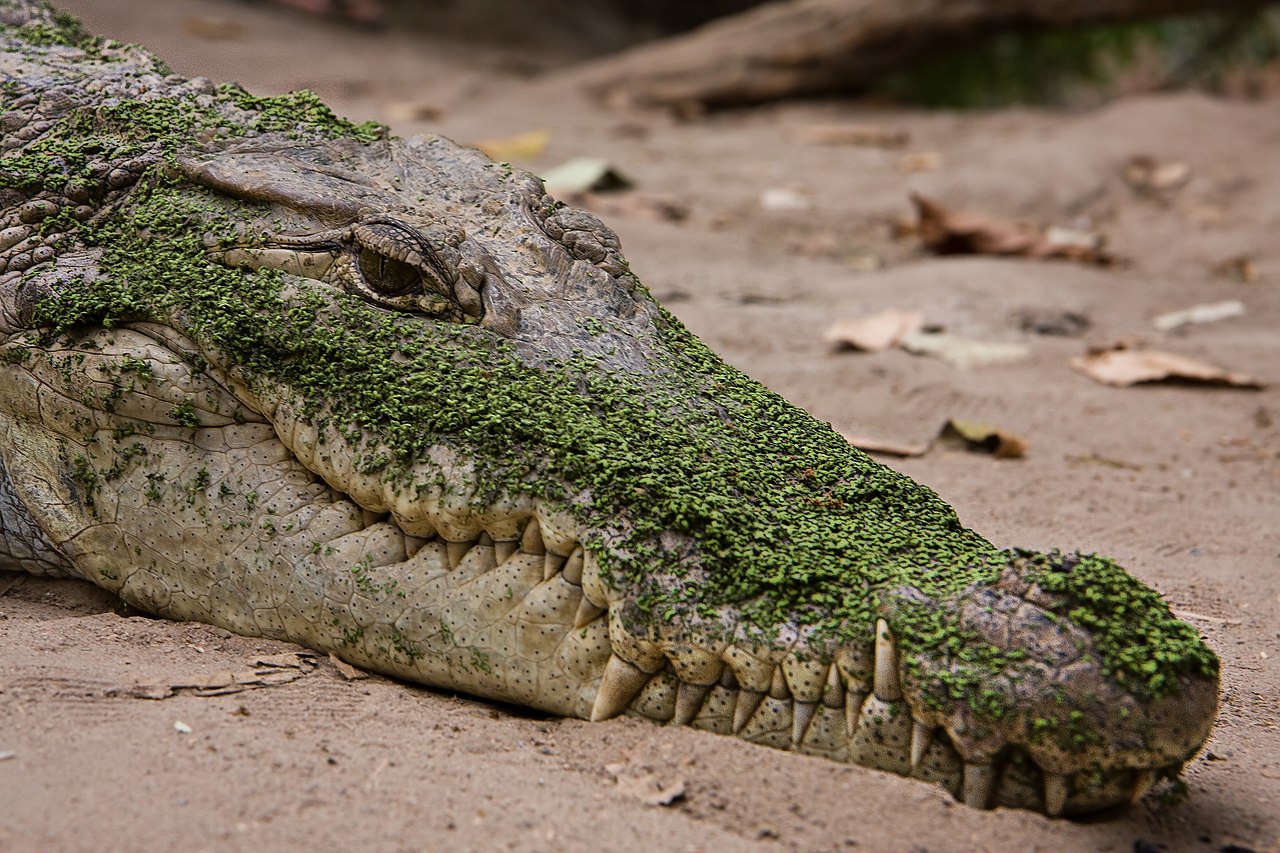
There are perhaps eighty crocodiles in the pool and its grounds. They are fed regularly, which is the entire mechanism: a well-fed Nile crocodile that has been around people its whole life will lie on the sand and ignore you. The keepers will point out which individuals may be touched — usually one large, elderly, extremely placid animal — and touching is done on the back, never near the head, and only when a keeper says so.
It is a strange twenty minutes. It is also, unmistakably, a live religious site rather than an attraction: there are shrines around the pool, women performing ablutions, and a small museum of Gambian material culture attached. Behave accordingly, ask before photographing people, and pay the modest entrance fee without haggling.
The obvious warning
These are wild Nile crocodiles, a species that kills people across Africa every year. They are touchable here because they are fed and habituated, not because they are tame. Follow the keeper exactly.
The museum
Small, dusty and genuinely good on Gambian ethnography — instruments, farming tools, initiation objects. Included in the ticket and skipped by almost everyone.
The other pools
Folonko in Kartong and Berending on the north bank are the same idea with far fewer visitors. Kartong pairs well with a day on the southern beaches.
Timing
Late afternoon: the crocodiles haul out to warm, and the light through the trees over the pool is better.
🏛️ Banjul
Banjul is one of the smallest capital cities in the world and one of the few that is shrinking. It sits on St Mary's Island at the mouth of the river, reachable by a causeway, with a resident population of around 30,000 — down from over 40,000 a generation ago, because everyone who can has moved to the mainland where there is room to build.
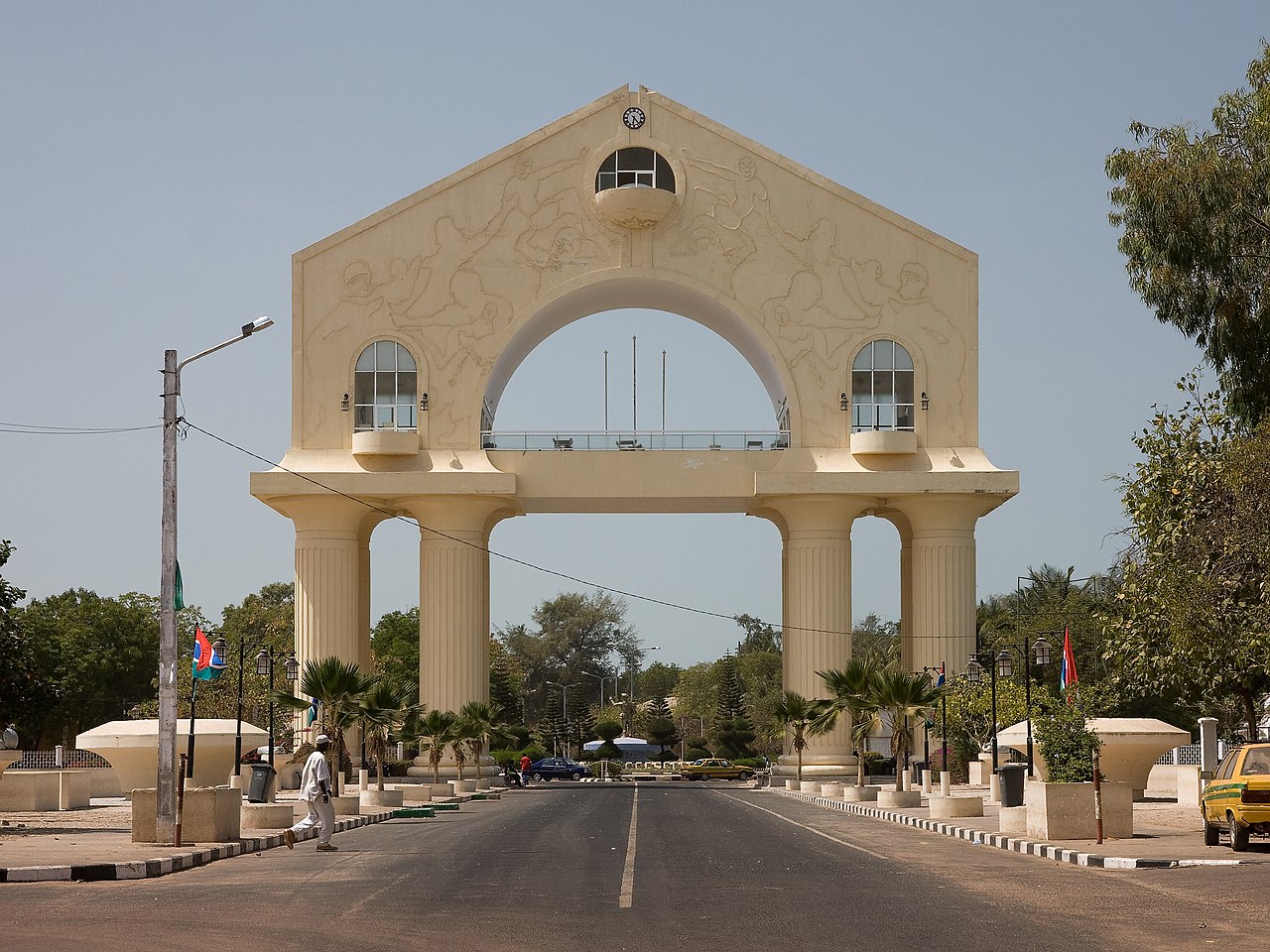
The city was founded by the British in 1816 as Bathurst, a naval station for suppressing the slave trade they had recently been running, and renamed in 1973. The colonial street grid survives, along with a diminishing stock of wooden-balconied merchant houses, most in an advanced state of collapse. The overall effect is not picturesque — Banjul is hot, low-lying, prone to flooding and visibly underinvested — but it is real, walkable, and completely unlike the resort strip.
Arch 22
A monumental gate on the road in, built to celebrate a military coup, which makes it awkward. Climb it anyway: the observation deck gives you the river, the city grid and the Atlantic in one turn, and there is a small textile museum inside.
Albert Market
The commercial heart, running back from the waterfront. See the next section.
National Museum
On Independence Drive. Ethnography, musical instruments, colonial documents and material on the slave trade. Modest, underfunded and worth an hour.
The ferry terminal
Boats to Barra on the north bank, every hour or two, chaotic and cheap. Even if you are not crossing, the terminal at loading time is the most concentrated slice of Gambian life available anywhere.
King Fahad Mosque
The largest in the country, funded by Saudi Arabia in the 1980s. Non-Muslims may visit outside prayer times if dressed appropriately; ask at the gate.
Serrekunda
Not Banjul but where the people actually are: the country's largest urban area, 15 km inland, with a sprawling market and none of the tourist infrastructure. Go with a guide the first time.
🧺 Albert Market
Albert Market has been Banjul's commercial centre since the 1850s and has burned down and been rebuilt more than once. It runs from Russell Street back through a warren of lanes: produce and fish at one end, fabric and tailoring in the middle, then the craft market — carvings, batik, drums, and a great deal of the same carving in three sizes.
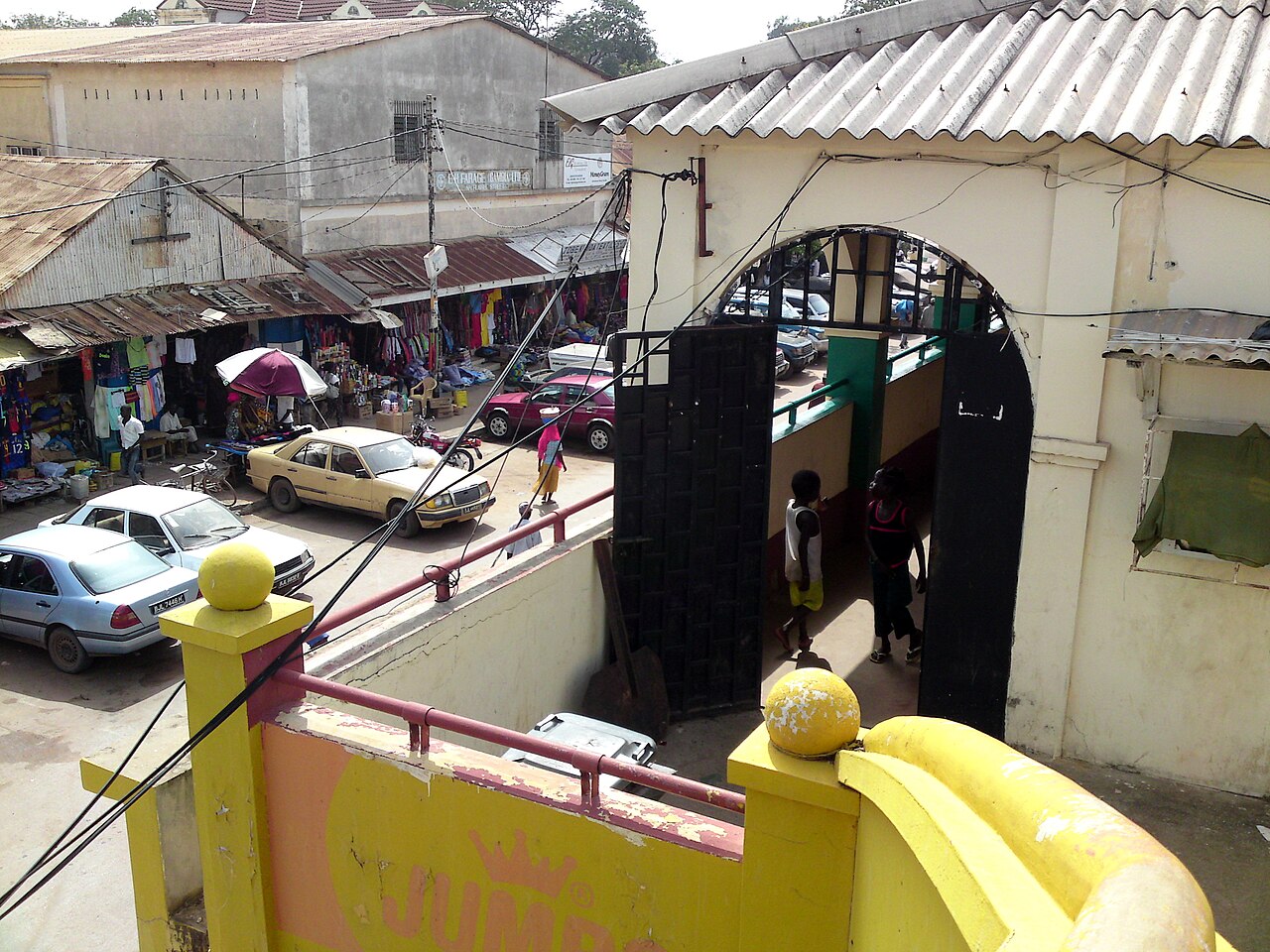
The fabric section is the reason to come. West African wax print — Vlisco and its imitators — is sold by the six-yard piece, and there are tailors within fifty metres who will make something from it in a day or two for very little. This is what Gambians use the market for, and it is a far better souvenir than a carved mask.
Haggling
Expected in the craft section, not in the food lanes where prices are prices. Start around half, settle around two-thirds, do it cheerfully. If you are not enjoying it, you are doing it wrong and should just pay.
What is actually good
Wax-print cloth by the piece. Batik. Locally made djembe and kora (check the skin and tuning, not the carving). Groundnuts, dried hibiscus for wonjo, and cashews.
What to skip
"Ebony" carvings, which are usually stained hardwood. Anything claiming to be an antique. Anything made from an animal.
Etiquette
Greet before you ask a price — a proper greeting is not optional in Gambian dealing. Ask before photographing anyone. Carry small notes.
🏖️ The Coast
The Gambia pioneered African beach tourism: the first charter of Scandinavian holidaymakers landed in 1965, the year of independence, and the industry has been running on that model ever since. The result is a 20-kilometre strip south of Banjul — Bakau, Fajara, Kotu, Kololi — that carries almost all the accommodation in the country.
The beaches are wide, sandy, backed by palms, and warm year-round. They are also public, working beaches: fishermen land here, boys play football here, and vendors walk them. If your expectation is a private resort strand with sun loungers and nobody else on it, this will be a shock. If your expectation is a beach in a country where people live, it is fine.
Kololi / Senegambia
The dense end: the largest hotels, the strip of bars and restaurants, most of the nightlife, and most of the hassle. Convenient, not charming.
Kotu
Slightly quieter, and the site of Kotu Creek — which means you can bird world-class habitat and be back for breakfast. The birders' default.
Fajara and Bakau
Older, leafier, more residential, smaller hotels. Bakau has the botanical garden, Kachikally, and a genuine fishing beach.
Brufut, Tanji, Sanyang, Kartong
Progressively further south and progressively emptier. Tanji has the fish-smoking village and the bird reserve; Sanyang has the best sand; Kartong has almost nothing, which is the point.
Swimming. The Atlantic here has rips, and few beaches have lifeguards. There is a real current running north along the coast. Swim where locals swim, not on an empty stretch, and be conservative about how far out you go.
⛓️ Kunta Kinteh Island and Juffureh
Thirty kilometres upriver from Banjul, a small island is being eaten by the water. It has been called St Andrew's Island, James Island and — since 2011 — Kunta Kinteh Island, and it holds the ruins of a fort that changed hands between Britain, France, the Dutch and pirates for two hundred years, and functioned throughout as a node in the Atlantic slave trade.
The island has lost perhaps five-sixths of its area to erosion since the eighteenth century. What remains is a rectangle of broken masonry, some cannon, and a few baobabs, with the river working steadily at the edges. UNESCO listed it in 2003 as "Kunta Kinteh Island and Related Sites", together with the ruined Portuguese chapel and Maurel Frères building at Albreda, the Fort Bullen battery at Barra, and the village of Juffureh.
Juffureh is where Alex Haley, in the early 1970s, was told by a griot that his ancestor Kunta Kinte had been taken from that village in 1767. Roots sold millions of copies, the television series was watched by a hundred and thirty million Americans, and Juffureh became a place of pilgrimage for the African diaspora. It also became one of the most-scrutinised claims in popular genealogy: professional historians examined the griot's testimony and found serious problems with it, and Haley later settled a plagiarism suit over another part of the book.
None of which makes the site less worth visiting — it makes it more interesting. What is standing on that island is not in dispute, whatever the truth of one family's genealogy. And the Kinteh family compound in Juffureh, where a descendant will receive visitors, has now been receiving them for fifty years, which has become its own genuine history.
How to go
By boat from Banjul or Denton Bridge as a full day (D3,000–5,000 per person on a shared tour), or by road on the north bank via the Barra ferry and a local pirogue across. The boat trip is better and includes the river.
What you see
The fort ruins and cannon on the island; the slave-trade museum at Albreda, which is small and good; the Maurel Frères building; the Kinteh compound at Juffureh; the freedom flagpole at Albreda.
Be prepared for
An emotionally heavy visit presented in a fairly commercial frame — donation books, guides expecting payment, sellers at the landing. Both things are true at once.
The Roots festival
A biennial diaspora homecoming festival centred on these sites, usually in May or June. Check dates well ahead; accommodation upriver fills.
🪨 The Wassu Stone Circles
Three hundred and twenty kilometres upriver, on flat dusty ground near Kuntaur, stand eleven circles of laterite pillars. They are between one and two and a half metres tall, weigh up to ten tonnes, were quarried and shaped with iron tools, and were raised over an extraordinary span — the earliest date to around the third century BCE, the latest to the sixteenth century CE.
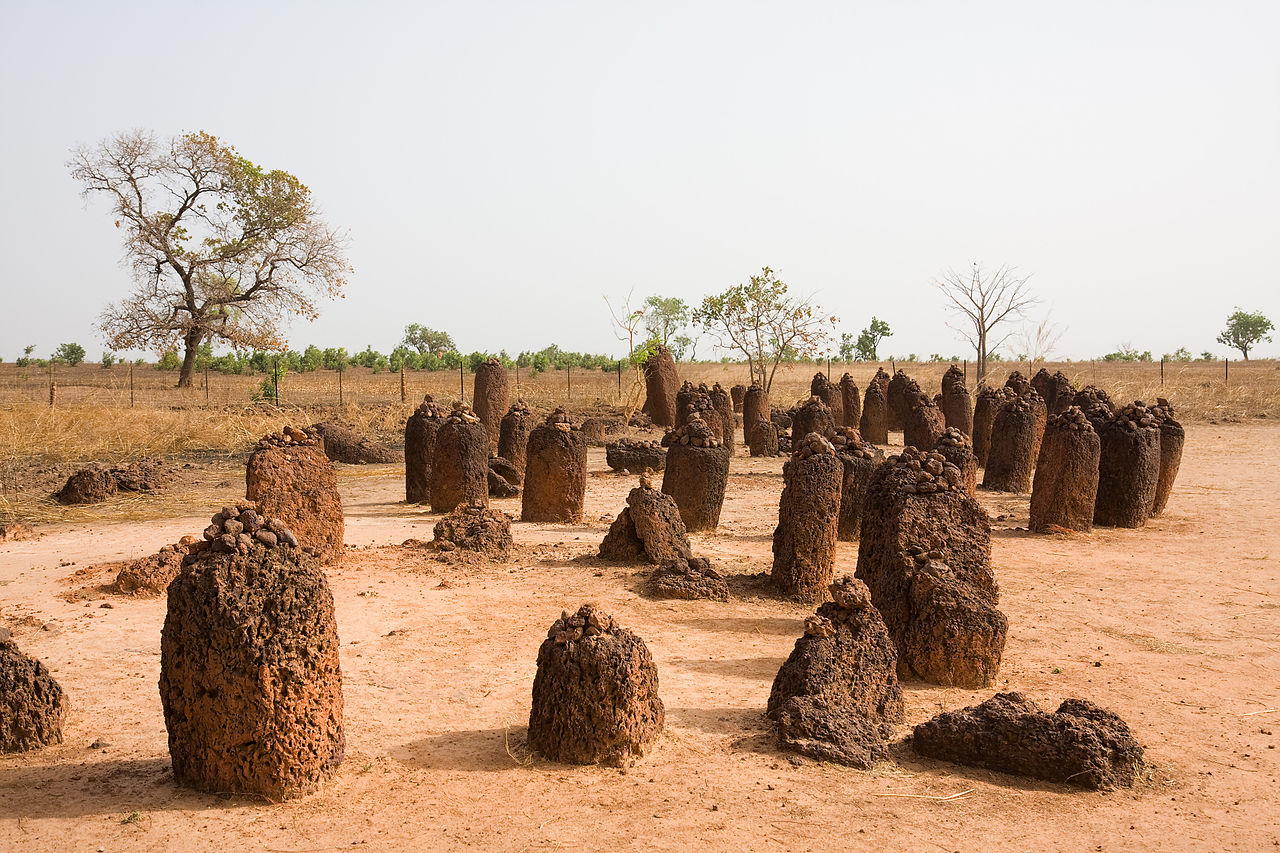
Wassu is one part of a much larger phenomenon. The Stone Circles of Senegambia, UNESCO-listed in 2006 and shared with Senegal, comprise over a thousand monuments in roughly 93 circle groups spread across a band 350 kilometres long and 100 wide. It is the densest concentration of megalithic monuments anywhere on earth, and there is no comparable site in Africa.
They are burial monuments — excavations have found single and multiple interments, sometimes with iron objects and pottery — but almost everything else about them is open. We do not know with any confidence which people built them, why the practice ran for nearly two thousand years, or why it stopped. There is no oral tradition that claims them. They stand in a field, largely unvisited, in one of the least-travelled parts of a small country.
Getting there
Five to seven hours' drive from the coast, or an hour from Janjanbureh. Realistically an overnight trip; do not attempt it as a day return.
The museum
A small site museum at Wassu explains the excavations and the wider Senegambian complex. Modest, and the only interpretation you will get.
Kerr Batch
The other Gambian group, 30 km away, with the site's famous "lyre stone" — a rare V-shaped double pillar. Even quieter than Wassu.
The stones on top
Piling a small stone on a pillar is a visitor custom of recent decades, not an ancient rite. Harmless, but do not let anyone tell you it is three thousand years old.
🚣 Upriver — Janjanbureh and Beyond
Almost nobody who comes to The Gambia goes upriver, and almost everybody who does says it was the best part. The road east from the coast — improved considerably in the last decade — takes you through a country that gets progressively drier, emptier and more agricultural, past groundnut fields and mango avenues and villages of round mud-brick compounds.
Janjanbureh, still widely called Georgetown, sits on an island in the river 300 kilometres inland. It was a colonial administrative post and a settlement for liberated slaves, and it has the decayed remains to prove it: a ruined warehouse on the waterfront presented as a slave house (the attribution is contested), an old colonial cemetery, and a Methodist mission. The town is small, quiet, and has an atmosphere unlike anywhere else in the country.
Tendaba
150 km in, on the south bank: the classic upriver camp, basic and long-established, with boat trips into the Baobolong wetlands and a track into Kiang West National Park behind it.
Kiang West National Park
The largest protected area in the country: dry woodland and escarpment above the river. Warthog, bushbuck, colobus, and a good raptor list. Genuinely little visited.
Janjanbureh
The island town. Base for the chimpanzee islands, Wassu, and the upper river. Two or three simple camps; book ahead in season.
Basse Santa Su
The last town before Senegal, 380 km in, a real river trading port with a large market and essentially no tourism. The end of the road in every sense.
Kunkilling and Bao Bolong
Forest park and Ramsar wetland respectively — the serious birding upriver, best reached by boat with a guide who knows the channels.
Getting around
Hire a car and driver from the coast (D4,000–7,000 a day including fuel), or take a bush taxi to Soma and change. Self-driving is possible; night driving is not advisable anywhere.
👥 People
About 2.8 million people, and one of the highest population densities in Africa outside the city-states — which is what happens when you compress a country into a riverbank. Around half live in the coastal conurbation around Serrekunda; the rest are strung along the river in farming villages.
Mandinka · ~34%
The largest group, descended from the Mali Empire's westward expansion. Farmers, historically the political core, and the source of most of the country's griot tradition and its kora music.
Fula / Pulaar · ~22%
Traditionally cattle-herding, spread across the Sahel from Senegal to Cameroon. Strongly represented upriver.
Wolof · ~16%
Dominant in Banjul and Serrekunda and disproportionately influential in trade and urban culture. Wolof is the practical lingua franca of the coast even though Mandinka has more speakers.
Jola · ~10%
Concentrated in the west and south, extending into Senegal's Casamance. Rice cultivators, with a distinct religious tradition alongside Islam and Christianity.
Serahuli · ~9%
Also called Soninke, descendants of the Ghana Empire, concentrated far upriver around Basse. Long-distance traders with a large diaspora.
Aku and others
The Aku are descendants of liberated slaves settled at Bathurst in the nineteenth century — Krio-speaking, largely Christian, historically prominent in the professions. Plus Serer, Manjago, Bambara and a Lebanese trading community.
Islam is the religion of roughly 95% of Gambians, practised in the West African Sufi tradition — the Tijaniyya and Qadiriyya brotherhoods are both strong — and coexisting comfortably with a Christian minority of about 4%. Interfaith marriage is unremarkable; Christmas and Tobaski are both effectively national events. Jammeh's 2015 declaration of an Islamic republic was reversed in 2017 and had little grassroots support.
🤝 Greetings, Teranga and Getting It Right
The single most useful thing a visitor can learn about The Gambia is that the greeting is not a formality that precedes the interaction. It is the interaction, and skipping it to get to your question marks you as rude in a way that is hard to recover from.
A proper Gambian greeting runs several exchanges deep — how are you, how is the morning, how is the family, how is the work, how is the house — with the answers largely formulaic and the point being the exchange itself. In Mandinka the standard reply to almost everything is Kayira dorong, "peace only". Do it, even badly, even in English, and doors open.
Mandinka
I be ñaadi? — how are you · Kayira dorong — peace only · Abaraka — thank you · Sumolu be ñaadi? — how is the family
Wolof
Na nga def? — how are you · Maa ngi fi rekk — I am here only · Jërëjëf — thank you · Ba beneen — until next time
Pulaar
No mbadda? — how are you · Jam tan — peace only · A jaaraama — thank you
Arabic, universally
Salaam aleikum and the reply Aleikum salaam work everywhere in the country regardless of language or religion.
Other things worth knowing. Eat and pass with the right hand. Dress modestly away from the beach — shoulders and knees covered, for men as well as women, especially in villages and markets. Ask before photographing people, and accept no for an answer. Remove shoes entering a home or a mosque. Do not be visibly impatient: hurry reads as contempt. And if you are invited to eat from a communal bowl, eat only from the wedge directly in front of you — the meat in the middle is distributed by the host.
Alcohol and Ramadan. Drinking is normal in the tourist areas and essentially invisible outside them. During Ramadan, do not eat, drink or smoke in public during daylight in non-tourist areas. Homosexuality is criminalised under Gambian law with severe penalties, and although prosecutions of foreigners are not a feature, LGBTQ+ visitors should be aware of the legal position and discreet accordingly.
🎶 Griots, the Kora and Where to Hear It
Mandinka society produced one of the world's great oral-history professions: the jali, or griot — a hereditary caste of musicians, praise singers and genealogists who hold the history of families and kingdoms in memory and perform it. You do not become a jali. You are born into one of a small number of lineages — Kuyateh, Diabate, Suso, Konte — and trained from childhood.
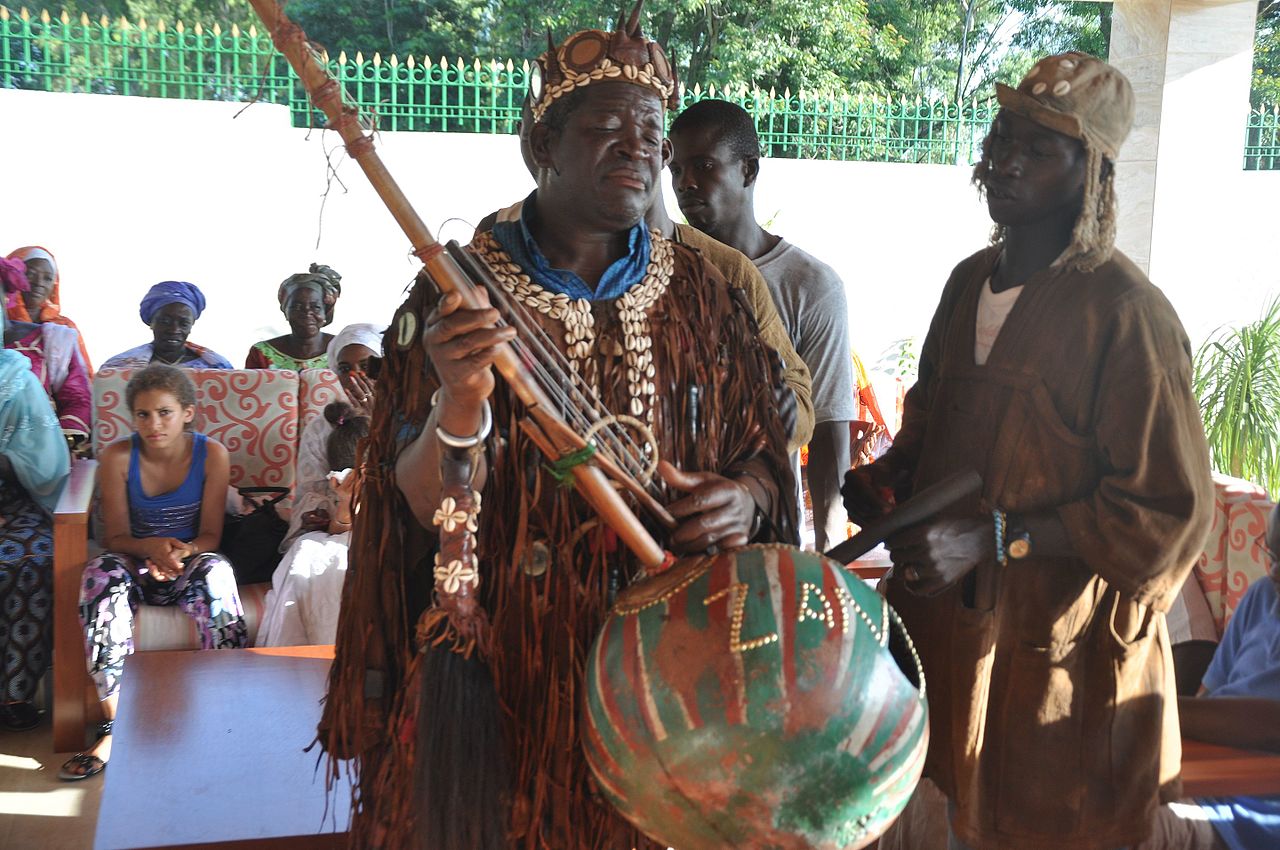
The kora is the instrument the region is famous for: 21 strings running over a tall notched bridge on a half-calabash covered with cowhide, played with the thumbs and index fingers of both hands while the other fingers grip two upright posts. It sounds like a harp crossed with a lute and it is played nowhere on earth except this corner of West Africa. Alongside it sit the balafon (wooden xylophone with gourd resonators), the ngoni family of plucked lutes, and the djembe and sabar drums.
Jaliba Kuyateh
The Gambia's biggest star — a Mandinka griot who electrified kora music into a full band sound in the 1980s and has been filling stadiums across Senegambia ever since. If there is one Gambian musician to hear before you go, it is him.
Foday Musa Suso
Gambian kora master who moved to Chicago, worked with Herbie Hancock and Philip Glass, and did more than anyone to put the kora into Western art music.
Sona Jobarteh
Of the Jobarteh griot lineage and the first woman from a major griot family to become a professional kora player — a genuine breach of a centuries-old male inheritance. She founded a school in The Gambia teaching the tradition.
Where to hear it live
Hotel performances on the strip are real musicians doing a shortened set — better than their reputation. Better: ask a guide about a naming ceremony or wedding, where the music is functional rather than performed. Best: the annual Kartong Festival, and the Sona Jobarteh school at Farato.
Wrestling deserves a mention as the other great Senegambian spectacle — borreh, held on sand, preceded by long ritual preparation with drumming and protective charms, and taken as seriously here as football. Matches happen in the dry season, mostly at village level; ask locally.
🍽️ Food
Gambian cooking is West African cooking in a specific dialect: groundnuts, rice, fish from the river and the Atlantic, palm oil, okra, and a chilli discipline that is more about depth than heat. Very little of it is difficult to like, and the national dish in particular is one of the world's great comfort foods.
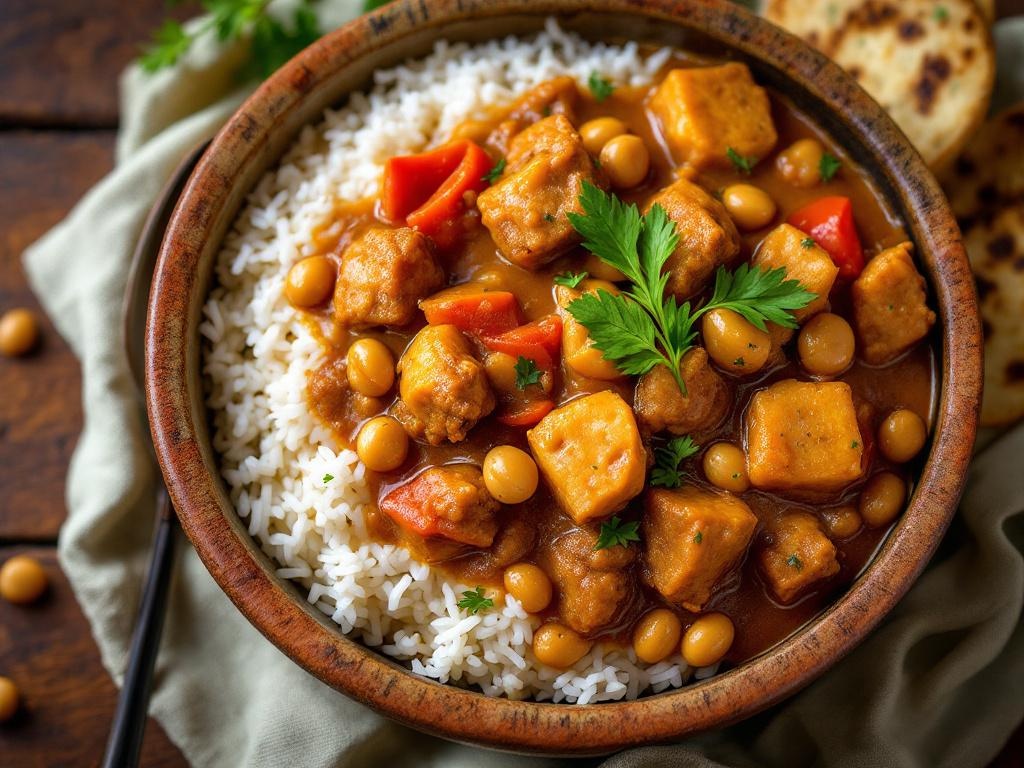
Domoda is peanut butter stew. Meat is browned, onions and tomato cooked down until the oil separates, then natural peanut butter is whisked into stock and the whole thing simmers for an hour or more with pumpkin, sweet potato and a whole Scotch bonnet floating in it. It is served over white rice, it is thick enough to coat a spoon, and it is savoury — anyone who has had it made with sweetened peanut butter has not had it.
Benachin — "one pot" in Wolof — is the ancestor of jollof rice, and Senegambians will tell you at length that this is where the whole West African jollof argument actually starts. Rice cooks in a tomato base with fish or meat and vegetables layered on top. The prize is the tahó, the caramelised crust at the bottom of the pot, which is scraped up and given to whoever is being honoured.
Superkanja is okra soup thickened by the okra itself, loaded with smoked fish, palm oil and greens, served over rice or fufu. Yassa is chicken or fish marinated in lemon and onion and grilled, then finished in the marinade — the easiest Gambian dish to reproduce at home and one of the best. Chere is steamed millet couscous, often eaten with sour milk. Chura gerte is a sweet groundnut porridge eaten at ceremonies.
Domoda — Gambian Groundnut Stew
Serves 4 · about 2 hours · the national dish
Ingredients: 500 g beef chuck or chicken thigh, cubed · 200 g natural unsweetened peanut butter · 2 tomatoes, blended, plus 2 tbsp tomato paste · 1 large onion, chopped · 300 g pumpkin or sweet potato, in chunks · 1 whole Scotch bonnet · 1 stock cube · 30 ml oil · 600 ml water or stock · salt
Method: Salt the meat and leave 15 minutes, then brown it hard in the oil and set aside. Soften the onion in the same pot. Add the tomato paste and fry two minutes, then the blended tomato, and cook it down for ten minutes until the oil separates — do not rush this, it is where the flavour is. Whisk the peanut butter into the water until smooth and pour it in with the stock cube. Return the meat, add the whole Scotch bonnet without piercing it, and simmer uncovered on low for an hour. Add the pumpkin for the last 25 minutes. It is ready when the oil rises to the surface and the sauce coats a spoon. Fish out the chilli and serve over white rice.
💡 Use natural peanut butter — peanuts and salt, nothing else. A sweetened supermarket one turns the dish into something that is not domoda.
Benachin — Gambian Jollof
Serves 4 · about 1 hour · one pot, no stirring
Ingredients: 400 g long-grain rice · 500 g fish steaks or chicken pieces · 4 tbsp tomato paste plus 400 g tinned tomatoes · 1 large onion, blended · 300 g mixed vegetables (carrot, cassava, cabbage, aubergine) · 1 Scotch bonnet · 2 bay leaves · 60 ml oil · 700 ml water · stock cube · salt
Method: Season and brown the fish or chicken, then set aside. In the same oil fry the tomato paste over medium heat for five to seven minutes until it darkens and the oil separates. Add the blended onion, then the tinned tomatoes, and cook down. Pour in the water with the stock cube, bay leaves and whole Scotch bonnet, add the harder vegetables and simmer ten minutes; lift the vegetables out. Rinse the rice, stir it in once, and level it — the liquid should just cover it. Lay the protein and softer vegetables on top, cover tightly and cook on the lowest heat for 25–30 minutes. Do not stir again.
💡 The scorched layer at the bottom, the tahó, is the best part and is served deliberately. Scrape it up and share it out.
🫖 Attaya, Wonjo and the Question of Alcohol
The Gambia's national drink involves no alcohol and takes two hours. Attaya is Chinese gunpowder green tea brewed three times in a tiny pot over charcoal, each round stronger, sweeter and more mint-laden than the last, poured from a height between two glasses to raise a thick head of foam and served in shot-sized glasses. The three rounds are said to run bitter as death, mild as life, sweet as love — or bitter like youth, sweet like adulthood, sweetest like old age, depending on who is telling you.
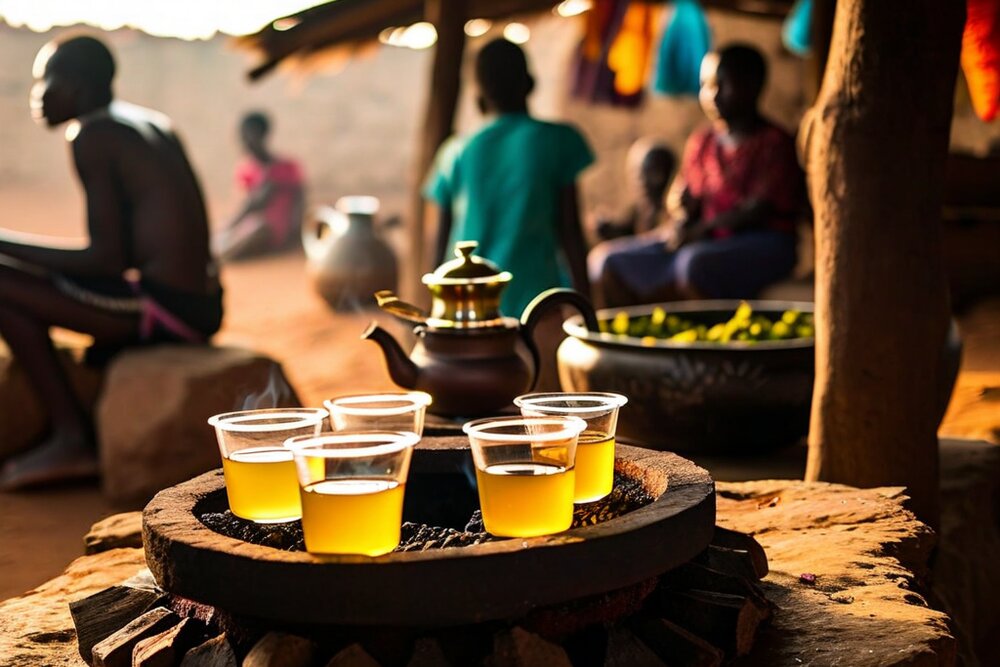
The point is not the tea. The point is that making it properly occupies an entire afternoon, so an attaya session is a licence to sit and talk for three hours. Being invited into one is the most reliable way a visitor gets past the transactional layer of Gambian tourism, and it costs nothing but time. Accept.
Wonjo
Hibiscus, dried and steeped, served cold and sweet, deep red, faintly tart. Sold in bags on the street and made at home everywhere. The best non-alcoholic drink in the country.
Baobab juice (bouye)
Made from the chalky fruit pulp of the baobab, often with milk and sugar. Tangy, thick, and an acquired but rewarding taste.
Ginger and tamarind
Fresh ginger juice, sharp enough to be medicinal, and dakhar from tamarind. Both sold from frozen bags at roadside stalls.
Palm wine
Tapped from oil palms, fermenting from the moment it is collected — sweet in the morning, sour and strongly alcoholic by evening. Associated with the Jola in the south and with Casamance across the border.
Alcohol. There is no wine production — the climate rules out viticulture entirely — and in a 95% Muslim country alcohol is confined largely to the tourist strip, where it is freely available and unremarkable. Julbrew, brewed at Kanifing since 1975, is the national beer and is a decent lager. Imported wine comes mostly from South Africa and Europe at a substantial markup. Outside the coastal corridor The Gambia is in practice dry, and drinking in public upcountry would be both hard to arrange and poorly received.
One caution about street drinks: wonjo and juices are often made with tap water and served with ice. In the resort areas this is usually fine; upcountry it is the most common cause of a ruined week. If in doubt, take the bottled version.
💰 Costs
The Gambia is inexpensive by any European measure, and the gap between the package-tourist economy and the local one is wide. A meal that costs D1,200 on the Senegambia strip costs D150 in a local chop shop two streets back, and is often better.
Currency
Gambian dalasi (GMD/D). Roughly D75–80 to the euro and D3 to the Czech crown at the time of writing — check the rate before you travel, because the dalasi has depreciated steadily for a decade.
Accommodation
Guesthouse D900–1,800 (€12–25) · mid-range hotel D3,000–7,500 (€40–100) · upmarket beachfront or Mandina Lodges D9,000–20,000 (€120–270). Upriver camps D2,000–4,500.
Eating
Street benachin or domoda D100–250 · local restaurant meal D300–600 · tourist-strip dinner D900–1,800 · Julbrew D100–200 · bottled water D25–40.
Transport
Shared gelly-gelly D15–50 a hop · town taxi D150–400 · tourist taxi from the strip to Banjul D700–1,000 · car with driver for a day D4,000–7,500 · Barra ferry a few dalasi as a foot passenger.
Guides and trips
Birding guide for a day D1,500–2,500 · Abuko entry a few hundred dalasi · Kachikally around D200 · creek boat trip D1,500–2,500 per boat · full-day Kunta Kinteh tour D3,000–5,000 per person.
Daily budget
Backpacking on local transport and local food: €25–35 a day. Comfortable mid-range with a driver some days: €70–110. The strip on an all-inclusive package with excursions: €120 upwards.
Money mechanics. Bring euros or sterling in cash and change them at a licensed bureau in Serrekunda or Banjul, where rates beat hotels by a wide margin. ATMs exist along the coast and are unreliable — they run out of notes, especially at weekends and during peak season. Cards are accepted at large hotels and almost nowhere else. Upriver, assume cash only and take enough for the whole trip. Keep small notes: nobody has change for a D200 note at a village stall.
📋 Practical Information
Visas
Nationals of the UK, most Commonwealth countries, ECOWAS states and a number of others enter visa-free for up to 90 days. EU citizens including Czechs and Slovaks normally require a visa; it can be obtained on arrival at Banjul airport, but the rules change and the Gambian mission list is short — confirm current requirements before booking. Passport valid six months.
Getting there
Banjul International (BJL) at Yundum, 25 km from the resort strip. Direct charters and scheduled flights from London Gatwick (about 6 hours), Brussels, Amsterdam, Barcelona and Madrid, heavily concentrated in the November–April season. Year-round connections via Casablanca, Istanbul, Dakar, Lisbon and Brussels.
Overland
From Dakar 4–5 hours via Karang, then the Senegambia bridge at Farafenni or the Barra ferry. From Ziguinchor in Casamance, 2–3 hours. Border crossings are straightforward; the Trans-Gambia Highway carries a lot of Senegalese through-traffic.
Health
Malaria is present year-round throughout the country and prophylaxis is essential. Yellow fever certificate required if arriving from an endemic country and advisable regardless. Hepatitis A and typhoid recommended; rabies worth considering for longer stays. Drink bottled or treated water only; avoid ice and salads outside good hotels.
Money
Cash economy. Bring euros or sterling and change at a licensed bureau. ATMs on the coast only and frequently empty. Cards at big hotels only. See the costs section.
Connectivity
Africell and QCell cover the populated areas well; a tourist SIM at the airport or in Serrekunda costs very little and data is cheap. Hotel wifi is common and slow. Time zone GMT (UTC+0) year-round — no time difference from London in winter, one hour behind Prague in winter and two in summer. Plugs are UK-style type G, 230 V.
🇨🇿 Getting There from the Czech Republic
There are no direct flights from Prague. The realistic routings are via Brussels, Barcelona, Madrid or Casablanca, with total journey times of nine to fourteen hours depending on the connection. Return fares from Prague generally run 14,000–22,000 CZK in the November–March season and less outside it.
Via Brussels
Brussels Airlines flies Banjul several times a week year-round, usually continuing to or from Freetown or Dakar. Prague–Brussels connections are frequent. The most reliable option and often the fastest.
Via Casablanca
Royal Air Maroc connects Prague seasonally and Vienna year-round to Casablanca and on to Banjul. Long layovers are common but fares are competitive.
Via Spain
Barcelona and Madrid both have Banjul services in the winter season, largely serving the Spanish package market. Cheap when the timings work.
Via a UK charter
Some Czech travellers fly to London and pick up a Gatwick charter with a UK operator. It can be the cheapest route but the charter seat is often only sold with accommodation.
Visa for Czech citizens. The Gambia has no embassy in Prague; the mission in Brussels or London handles Czech applicants, and visas on arrival at Banjul are in practice available. Because this is exactly the kind of arrangement that changes without notice, verify with the Gambian mission or your carrier before departure and carry a printed hotel booking and return ticket.
Before you go. Check the current advisory from the Czech Ministry of Foreign Affairs (MZV ČR) at mzv.cz, and register your trip in the DROZD system (drozd.mzv.cz) — free, five minutes, and the mechanism by which the ministry can reach you in a crisis. There is no Czech embassy in Banjul; consular affairs for The Gambia are handled from Dakar, Senegal, which is worth knowing before you lose a passport.
Insurance and health. Travel insurance with medical repatriation is not optional here: Gambian hospitals are limited and anything serious means evacuation to Dakar or Europe. See a travel-medicine clinic six to eight weeks before departure for malaria prophylaxis and vaccinations — the KHS travel clinics and the Institute of Tropical Medicine facilities in Prague both do this routinely.
🛡️ Safety
The Gambia is one of the safer countries in West Africa for visitors and has been notably calmer since the 2017 transition. Violent crime against tourists is rare. The risks are the ordinary ones — opportunistic theft, road accidents, malaria, and the sea — plus one social phenomenon that has its own section below.
Petty crime
Bag snatching and beach theft on the resort strip, especially after dark. Do not carry a passport or a full wallet to the beach. Use hotel safes.
Roads
The main hazard by a wide margin. Overloaded minibuses, unlit vehicles, livestock, and potholes. Avoid travelling between towns after dark, and do not get into an obviously overloaded gelly-gelly.
The sea
Strong rips along the whole coast and almost no lifeguards. Several tourists drown each season. Swim near other people, stay within your depth in swell, and take the beach flags seriously where they exist.
Malaria
Year-round transmission, peaking after the rains. Prophylaxis plus repellent plus a net. Any fever within three months of returning is malaria until a blood test says otherwise — tell the doctor where you have been.
Police and checkpoints
Routine on upcountry roads. Have your passport or a copy. Requests for informal payments have declined markedly since 2017 but have not vanished; be polite and unhurried.
Photography
Do not photograph the airport, military installations, State House or police. This is enforced.
Political stability. The country has held two credible elections since 2017 and the security situation is calm, but the region around it is not: Mali, Burkina Faso and Niger are in crisis, and Senegal's Casamance region south of The Gambia has a long-running low-level separatist conflict. None of this currently affects Gambian territory. Check MZV ČR or the UK FCDO advisory before travelling and again before crossing into Casamance.
🏨 Where to Stay
Most beds in the country are in a 20-kilometre coastal strip, most of them sold as part of a package, and quality ranges from genuinely good boutique properties to 1970s concrete blocks with sea views. The more interesting places are inland and upriver, and they are small.
Boutique on the coast
Ngala Lodge in Fajara — clifftop, art-filled, the best restaurant on the coast. Coco Ocean at Bijilo for a full-service spa resort. Leo's and Bakotu for smaller, older, well-run places.
Mid-range strip hotels
Kombo Beach, Senegambia Beach, Kairaba. Large, functional, dominated by UK and Scandinavian packages. Perfectly comfortable and entirely interchangeable.
Guesthouses
Kololi, Bakau and Fajara have plenty at D900–1,800. Standards vary; look at the room before paying, and check the fan or air conditioning actually works.
Makasutu / Mandina
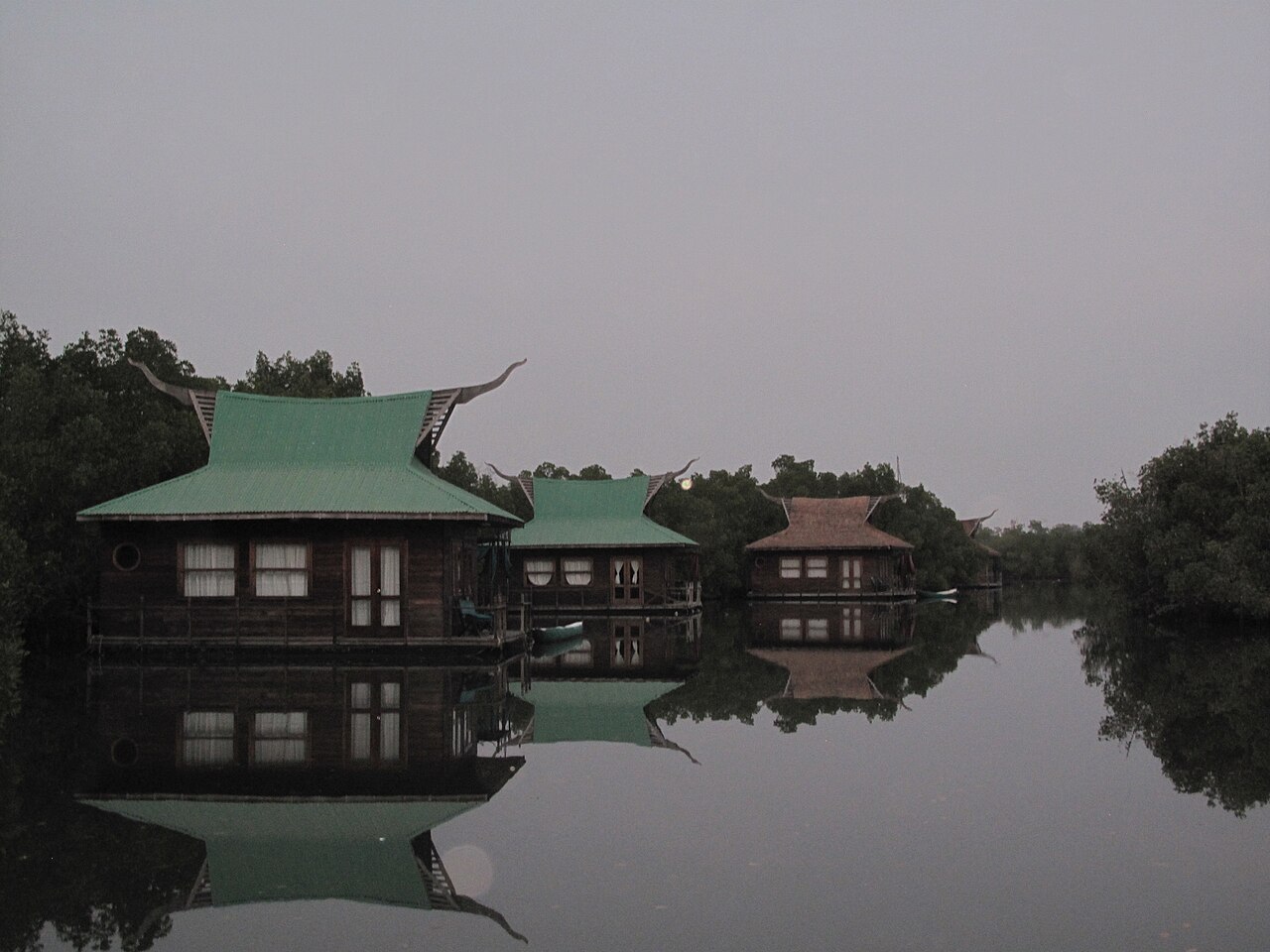
Floating and stilted lodges on a mangrove creek inside a private reserve, all-inclusive, expensive, and unlike anything else in West Africa. Book far ahead.
Upriver camps
Tendaba Camp (basic, long-established, superb location), Kairoh Garden and Bird Safari Camp at Janjanbureh, Bintang Bolong Lodge on the creek. Simple rooms, mosquito nets, cold beer, and the river.
Community tourism
Tumani Tenda is a Jola village-run eco-camp on a creek south of the river — mud-brick huts, village-cooked food, and the fees going into a community fund. Sandele at Kartong is a similar idea, more comfortable.
🗓️ Itineraries
One week · the honest version
Two nights on the coast (Kotu Creek at dawn, Abuko, Kachikally, Tanji). Then a car and driver: two nights Tendaba, two nights Janjanbureh via the chimp islands and Wassu, back via Juffureh and the ferry. This is the trip people wish they had done.
One week · low effort
Base on the coast the whole time. Day trips: Abuko and Lamin creek; Banjul and Albert Market; Makasutu; Tanji and Sanyang; a full-day boat to Kunta Kinteh and Juffureh; a birding day inland to Marakissa. Never more than two hours from your room.
Ten days · birding
Three nights on the coast doing Kotu, Abuko, Tanji and Brufut. Three nights Tendaba for the Baobolong creeks and Kiang West. Three nights Janjanbureh for the Egyptian plover, Kunkilling and the upper river. Hire a GBGA guide for the whole trip.
Two weeks · Senegambia
The Gambia as above, then cross into Casamance for Cap Skirring and the Jola villages, or north to Sine-Saloum and Dakar. Two countries, one flight, and the contrast between anglophone and francophone West Africa in a single trip.
Long weekend
Only worth it from a European charter hub. Coast, Abuko, Kachikally, a creek trip and Banjul. You will not see the country but you will see why people come back.
With children
The coast, Abuko, Kachikally, the crocodile and monkey encounters, and a short creek trip. Skip the upriver drive — it is long, hot and unair-conditioned. Malaria prophylaxis for children needs a doctor's advice well in advance.
🌟 Gambians Worth Knowing
Dawda Jawara (1924–2019)
A veterinary surgeon who led the country to independence and governed it for 29 years — an unusually long stretch of multiparty democracy in the region. Overthrown in 1994, returned from exile in 2002, died at 95.
Jaliba Kuyateh (b. 1957)
Griot and kora player who electrified the tradition into a full band and became the biggest musical star in Senegambia. Known as the King of Kora; the soundtrack to Gambian weddings for forty years.
Sona Jobarteh (b. 1983)
The first woman from a principal griot lineage to build a career as a professional kora player, breaking a strictly male inheritance. Founded The Gambia Academy, a school teaching academic subjects alongside Mandinka musical tradition.
Fatou Bensouda (b. 1961)
Gambian lawyer, formerly Minister of Justice, who served as Chief Prosecutor of the International Criminal Court from 2012 to 2021 — one of the most senior positions any Gambian has held internationally.
Foday Musa Suso (b. 1950)
Kora master who left for Chicago in 1977 and worked with Herbie Hancock, Philip Glass and Bill Laswell, taking the instrument into jazz and minimalism.
The TRRC witnesses
Not one person but a category: the more than 390 Gambians who testified publicly before the Truth Commission between 2019 and 2021, including former members of the state's own hit squad. Broadcast live, watched nationally, and the most consequential thing to happen in the country since 2017.
🤝 Bumsters, and Being Honest About the Beach Economy
Any honest guide to The Gambia has to deal with this, because every visitor encounters it and most guidebooks handle it badly — either pretending it does not exist or describing it as a menace.
"Bumster" is the Gambian term for a young man, usually on or near the beach, who attaches himself to a tourist. The approach is friendly and open-ended: a conversation, an offer to show you somewhere, a claim to remember you from your hotel. What follows might be a genuine friendship, might be a guiding service you did not ask for and will be asked to pay for, might be a request for school fees or a phone, and might be a long game aimed at a relationship with a foreigner who could provide a visa. All of these are common and they are not always distinguishable at the start.
The context matters. Youth unemployment is very high, the tourist strip is where the foreign currency is, and the informal economy around it is one of the few visible routes out — including migration, which a great many young Gambians have attempted by way of Libya and the Mediterranean at appalling cost. The men on the beach are not a criminal class. They are the labour market.
What works
Greet properly, be friendly, and be clear early. "No thank you, I'm walking alone today" delivered warmly and repeated without irritation ends almost every approach. Rudeness does not work and is remembered.
What does not work
Ignoring someone who has greeted you — deeply rude here and usually escalates. Also: agreeing to "just a walk" you do not want, then feeling trapped into paying.
If you do want a guide
Hire a licensed one. The Official Tourist Guides and the Gambia Birding Guides Association both badge their members. You get a better day, a fixed price, and nobody follows you home.
Giving
Cash to individuals is well-intentioned and largely useless, and it entrenches the beach economy. If you want to give, give to a school, a clinic or a community-tourism scheme, and ask your hotel which local ones are real.
Romance
Relationships between older European visitors and young Gambians are a visible and long-established part of the tourist economy in both directions. That is between adults. Just be clear-eyed about the asymmetry of money and mobility involved.
It has improved
Tourist-police patrols on the strip and community pressure have reduced the aggressive end of it considerably since the 2000s. Most visitors now describe it as mildly persistent rather than intimidating.
🧭 Travelling Well Here
Spend outside the compound
An all-inclusive package can be done without a single dalasi reaching a Gambian business. Eat in local restaurants, hire local guides directly, buy from the market, take a taxi rather than the hotel shuttle.
Use certified guides
The GBGA for birding, the official tourist guides elsewhere. They are trained, insured, cheap by European standards, and it is the country's clearest example of tourism money becoming skilled local employment.
Do not give to children
Sweets, pens and coins handed to children on village roads teaches begging from tourists and undermines school attendance. Every responsible-tourism organisation in West Africa says the same thing. Give to the school instead.
Ask before photographing
Always, and take no for an answer. Never photograph at Kachikally's shrines, at prayers, or at the fish-smoking racks without asking the women working there.
Water and plastic
Bottled water is a necessity and the waste-disposal system cannot cope with it. Bring a filter bottle or purification tablets and refill. It is the single biggest reduction in impact a visitor can make here.
Wildlife rules
Do not buy anything made from an animal. Do not feed the monkeys at Abuko or Bijilo. Follow the keeper's instructions at Kachikally exactly. The chimpanzee islands are not landable — anyone offering to take you ashore is breaking the project's rules.
❓ Common Misconceptions
"It's part of Senegal"
It is an independent state with its own language of government, legal system, currency and army, and it has been since 1965. The two countries tried a confederation and abandoned it.
"There is nothing to see beyond the beach"
The beach is the least interesting part. Two UNESCO World Heritage sites, 580 bird species, a chimpanzee reintroduction project and the largest megalithic complex on earth are all upriver.
"Kunta Kinte's story is verified"
It is not. Historians examined the griot's testimony to Alex Haley and found substantial problems with it, and Haley settled a plagiarism claim over a different part of the book. The fort, the trade and the site are entirely real; one family's genealogy is disputed.
"It's a dangerous part of Africa"
The Gambia is among the calmer countries in the region, has held credible elections since 2017, and has no insurgency. The Sahel crisis is real and is several countries away.
"Everyone speaks English"
English is official and universal in government, business and the tourist trade, but a farmer upriver may speak only Mandinka or Pulaar. Learn a greeting.
"The kora is a guitar"
It is a 21-string harp-lute with a cowhide-covered calabash body, played with four fingers while the other six grip two posts. It sounds nothing like a guitar and is played nowhere but this corner of West Africa.
📚 Reading and Watching
Roots · Alex Haley
The book that made Juffureh famous and put the Atlantic slave trade into a hundred million living rooms. Read it knowing the genealogy is contested and the plagiarism suit was settled — it remains the single most consequential piece of writing about this river.
Reading the Ceiling · Dayo Forster
A Gambian novel that opens with a young woman's eighteenth birthday and then follows three versions of what her life becomes. The best-known literary fiction from the country.
The Cambridge History of Africa, West Africa volumes
For anyone who wants the Senegambia trade in proper detail rather than through Haley. Philip Curtin's work on the Senegambian trade specifically is the standard scholarly account.
Birds of Senegal and The Gambia · Barlow, Wacher and Disley
The field guide. Everyone birding here carries it. Buy it before you go; it is hard to find locally.
Sona Jobarteh · Fasiya
The album to hear the kora on. Then Toumani Diabaté's Kaira for the Malian solo tradition and Jaliba Kuyateh for what the instrument sounds like at a Gambian wedding.
The TRRC hearings
The Truth, Reconciliation and Reparations Commission's sessions were broadcast in full and remain online. Extraordinary primary material on how a twenty-two-year dictatorship actually worked, in the words of the people who ran it.
✍️ Author's Note
The Gambia gets sold as winter sun with a bit of Africa attached, and that framing does it a disservice so complete that most visitors leave without having seen the country at all. They spend a fortnight on a twenty-kilometre strip of coast, take one boat trip to look at mangroves, and go home having formed an opinion about a place they never entered.
The country is upriver. It is a five-hour drive on a road that gets steadily emptier, through groundnut fields and mango avenues, to a town on an island where nothing much happens, and from there to eleven circles of stone that people raised over the course of eighteen centuries for reasons nobody now knows. On the way there are chimpanzees on river islands that a woman started putting there in 1979 and that are still breeding, and hippos, and a wetland with more birds in it than most European countries have in total.
Two pieces of advice. First: get a car and a driver and go east for three days. It will cost you less than two nights in a beach hotel and it is the difference between having been to The Gambia and having been to a beach. Second: say yes to attaya. When somebody sets up a charcoal brazier and a small pot and it becomes clear this is going to take three hours, that is not an interruption of your holiday. That is the thing itself.
And be straight with people. The beach economy is awkward, the asymmetry of money is real, and pretending otherwise helps nobody. A friendly, unhurried, clearly-stated no is understood perfectly well here — and a proper greeting first costs nothing and changes everything. Gambians have a national reputation for being easy to talk to. They have earned it. Meet them halfway.
— Radim Kaufmann
Support This Project 🌍
This World Travel Factbook is a labor of love – free to use for all travelers. If you find it helpful, consider supporting its continued development.