

🇪🇷 Eritrea at a Glance
🌏 Overview — Why Visit Eritrea
Eritrea has one of the most extraordinary and least visited capital cities in the world. Asmara sits at 2,325 m on a highland plateau and contains the best-preserved concentration of Italian modernist architecture anywhere on Earth — several hundred rationalist, futurist and Art Deco buildings put up between 1935 and 1941 and then left almost untouched by seventy years of poverty and war. UNESCO inscribed the whole city in 2017.
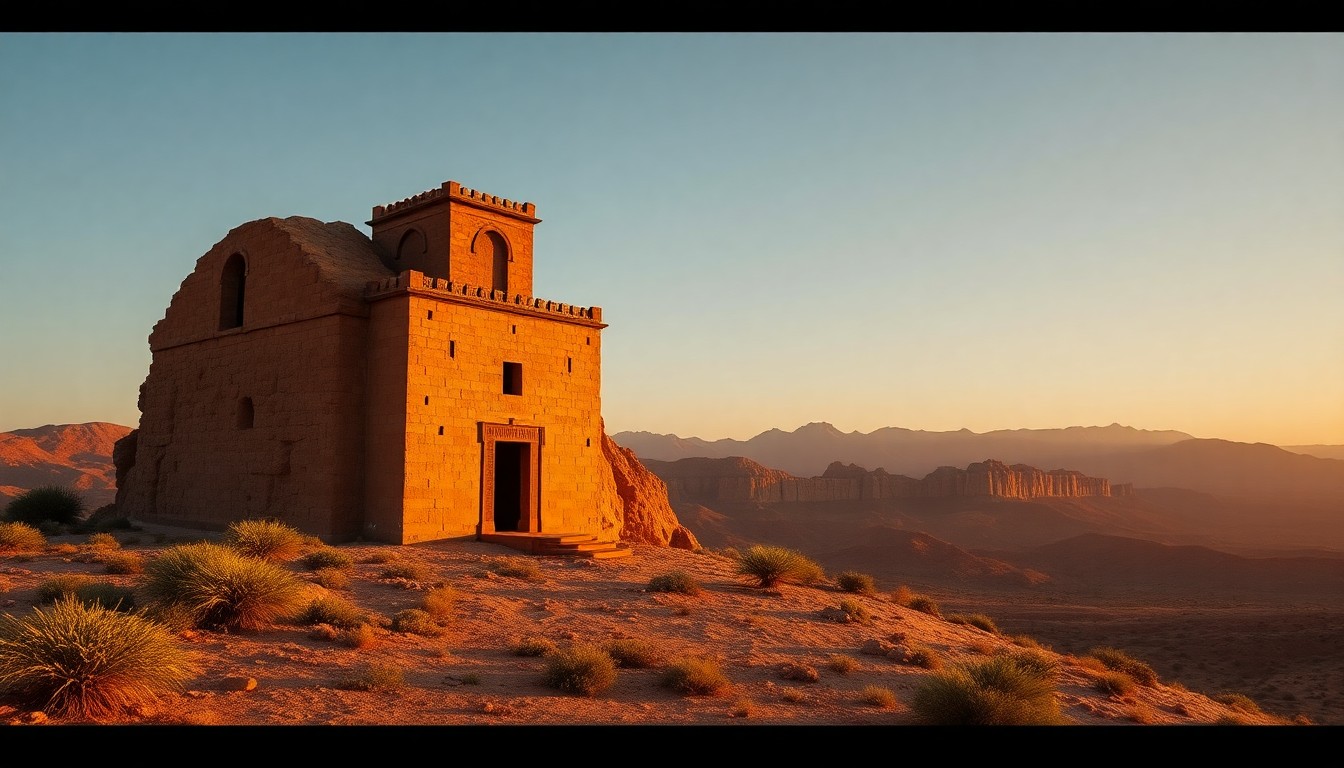
Below the escarpment, two hours and 2,300 vertical metres down, is Massawa — a coral-stone Ottoman and Egyptian port on the Red Sea, half ruined by the war, and one of the hottest inhabited places on the continent. Offshore, the Dahlak archipelago has over two hundred islands and coral reefs that essentially nobody dives. Inland there are pre-Aksumite ruins on a plateau at Qohaito, a Monday camel market at Keren, and a cloud forest called Filfil clinging to the escarpment in an otherwise dry country.
It is also one of the hardest countries in the world to visit, and the reasons are political. Eritrea has had no elections since independence in 1993, a constitution ratified in 1997 and never implemented, an open-ended national service that the UN has described as possibly amounting to enslavement, and a press freedom ranking that has placed it last in the world — 180th of 180 in Reporters Without Borders' 2026 index, the third year running at the bottom, below North Korea. Travel outside the capital requires a permit applied for in person and often refused.
This page treats that as the main content rather than as an afterthought, because you cannot plan a trip here without it. For the traveller who wants a city unlike any other and is prepared for the bureaucracy, Eritrea is one of the most rewarding places in Africa. For anyone else it is a hard sell, and honestly so.
🏷️ Name & Identity
The name is Italian and it is Greek. When Italy consolidated its Red Sea holdings into a single colony in 1890, it called them Colonia Eritrea, from the Greek Erythra Thalassa — the Red Sea. There was no polity of that name before; the colony created the borders, and thirty years of war created the nation inside them.
Independence
De facto on 24 May 1991, when the EPLF took Asmara; confirmed by a UN-supervised referendum in April 1993 in which 99.8% voted for independence, and formalised on 24 May 1993.
Nakfa
The currency is named after the highland town the liberation front held throughout the war, never losing it. Nakfa is to Eritrean national identity roughly what Verdun is to France.
Nine nationalities
Eritrea officially recognises nine ethnic groups and puts them on the banknotes. Roughly half the population is Christian and half Muslim, and the balance between them is treated as a national achievement rather than a fault line.
No official language
Unusually, the constitution names no official language. Tigrinya, Arabic and English are the working languages; all nine national languages have equal legal status.
The flag
A red triangle for the blood of the struggle, green for agriculture, blue for the sea, and a gold olive wreath taken from the 1952 federation flag — the one symbol retained from before the war.
Self-reliance
Hade libi, hade hizbi — one heart, one people. National self-reliance is the founding ideology and explains a great deal, including the refusal of most foreign aid and the isolation that followed.
🗺️ Geography
Three countries in one, stacked vertically. A central highland plateau at 1,800–2,500 m where most Eritreans live and where the climate is mild all year; a narrow, blisteringly hot coastal plain along 1,150 km of Red Sea; and western lowlands sloping towards Sudan. The escarpment between the first two drops 2,300 m in about 100 km.
The plateau
Asmara, Keren, Mendefera, Dekemhare. Terraced agriculture, eucalyptus, cool nights, and the population centre of the country.
The coast
Massawa and Assab, plus 1,150 km of shoreline and over 350 islands. Among the hottest inhabited coastlines anywhere — Massawa regularly exceeds 40 °C and the Danakil to the south-east is one of the hottest places on Earth.
The Danakil Depression
Eritrea's share of the Afar triangle, well below sea level in places, with salt flats and active volcanism. Extremely hot, extremely remote and effectively closed to visitors.
The western lowlands
Barentu, Tesseney and the Gash-Barka region towards Sudan — the country's agricultural belt and its most ethnically diverse area.
Emba Soira · 3,018 m
The highest point, in the southern highlands. The plateau's edge produces some of the most dramatic escarpment scenery in Africa.
Filfil / Semienawi Bahri
A strip of cloud forest on the escarpment north-east of Asmara, sustained by mist off the Red Sea, holding species found nowhere else in the country. The green belt in an otherwise brown landscape.
📍 Map of Eritrea
Asmara is in the middle of the highlands; Massawa is 115 km away and 2,300 m below it. Keren is 90 km north-west. Almost every road journey in Eritrea is either along the plateau or down the escarpment, and the escarpment road is one of the great drives in Africa.
Asmara → Massawa
115 km and about 2.5 hours, descending 2,300 m through 30 km of switchbacks with the Red Sea appearing below. Take it slowly and stop; it is the single best road in the country.
Asmara → Keren
90 km, about two hours through highland terraces and the Elabered estate.
Asmara → Qohaito
About 120 km south via Dekemhare and Adi Keyh, two to three hours.
Asmara → Filfil
Around 60 km north-east on the old road, into the cloud forest. A half-day trip and a completely different climate.
Massawa → Dahlak Kebir
Two to three hours by boat, chartered from the port. There is no scheduled service.
The catch
Every journey outside Asmara needs a travel permit, applied for in advance in the capital. See the permits section — this determines your itinerary more than the map does.
📜 History — Aksum, Italy, Britain
The highlands were part of the Aksumite empire, one of the great powers of the ancient world, whose Red Sea port at Adulis connected Rome and India. Pre-Aksumite sites at Qohaito and Metera date from the first millennium BCE. Christianity arrived in the fourth century, early enough that the Eritrean and Ethiopian Orthodox churches are among the oldest in the world; Islam arrived within the Prophet's lifetime, when followers fleeing Mecca crossed the Red Sea.
Ottoman, Egyptian and local powers contested the coast for centuries — Massawa's coral-stone architecture is the physical record of it. Then in 1890 Italy consolidated its holdings into the Colony of Eritrea, and used it as the base for the invasion of Ethiopia that ended in humiliating defeat at Adwa in 1896 and, forty years later, in Mussolini's conquest of 1935–36.
It was that second campaign that built the Asmara you see. Italy poured money and architects into the colonial capital between 1935 and 1941, at exactly the moment when rationalism, futurism and Art Deco were at their most confident, and with no planning committee to say no. By 1939 Asmara had a population that was around a third Italian, a cinema for every few thousand people, and more traffic lights than Rome.
Britain took Eritrea in 1941 and administered it for eleven years, dismantling and selling off a good deal of the industrial plant. In 1952 the UN federated Eritrea with Ethiopia, against significant Eritrean opposition. In 1962 Haile Selassie dissolved the federation and annexed the territory outright. The war had already started the year before.
🎖️ Thirty Years of War
The Eritrean war of independence ran from 1961 to 1991 — thirty years, one of the longest in African history. It was fought first by the ELF and then, decisively, by the EPLF, against an Ethiopian state that after 1974 was armed by the Soviet Union and fielded one of the largest armies in Africa.
Nakfa
The highland town the EPLF held from 1977 until the end, through repeated Ethiopian offensives, from a system of trenches and underground facilities dug into the mountains. The front built hospitals, schools, printing presses and a pharmaceutical factory underground.
Women fighters
Around a third of EPLF combatants were women, in front-line roles. It was central to the front's self-conception and is remembered as such — though the promised transformation of women's position after independence has been, at best, partial.
Afabet, 1988
The EPLF destroyed an entire Ethiopian corps at Afabet, in what Basil Davidson compared to Dien Bien Phu. It made the outcome inevitable.
24 May 1991
The EPLF entered Asmara as the Derg collapsed in Addis Ababa. Independence was confirmed by referendum in 1993 with a 99.8% vote.
The cost
Estimates run to 150,000 or more dead and a third of the population displaced. Every family in the country has a direct connection to it, and the martyrs' cemeteries outside every town are the most visible thing in the landscape.
1998–2000
Seven years after independence, war with Ethiopia broke out again over the border village of Badme. Between 70,000 and 100,000 died in two years of trench fighting. The 2000 Algiers agreement awarded Badme to Eritrea; Ethiopia refused to implement it for eighteen years, and Eritrea spent those eighteen years on a war footing. That is the origin of the national service.
🏛️ The Isaias Era
Isaias Afwerki led the EPLF from 1987, became president when Eritrea became independent in 1993, and has held the office ever since. Eritrea has never held a national election. The constitution ratified in 1997 was never implemented. The National Assembly has not met since 2002.
September 2001
The turning point. Eleven senior officials — the "G-15" — published an open letter calling for implementation of the constitution and elections. They were arrested. The entire independent press was closed the same week and its journalists detained. None of them has been tried, and most have never been seen again.
Dawit Isaak
A Swedish-Eritrean journalist arrested in that sweep on 23 September 2001 and held without charge ever since — the longest-detained journalist in the world. He passed 9,000 days in custody on 15 May 2026 and 25 years on 23 September 2026. The UN Working Group on Arbitrary Detention called his detention arbitrary in July 2023; RSF filed a crimes-against-humanity complaint against Isaias in Sweden in September 2024; the Raoul Wallenberg Centre launched a global appeal in July 2026. None of it has produced a trial, a visit or a confirmed location.
No parties, no press
There is one legal party, the PFDJ. There are no independent newspapers, no private broadcasters and no legal opposition. Foreign journalists are almost never granted access.
The Tigray war
Eritrean forces entered the Ethiopian conflict in Tigray from 2020, and UN investigators and human rights organisations documented massacres, sexual violence and looting by them. Eritrea was not a party to the November 2022 Pretoria agreement; its withdrawal was reported as incomplete, and on 7 February 2026 Ethiopia's foreign minister wrote to Asmara demanding it "immediately withdraw" troops it said had occupied Ethiopian territory along the border and stop backing armed groups inside Ethiopia. Asmara denies both.
Relations with Ethiopia, and Assab
The 2018 rapprochement with Abiy Ahmed reopened the border and won Abiy a Nobel Prize. The border closed again within about a year. Since 2023 Abiy has said repeatedly that Ethiopia's loss of the sea in 1993 was a "mistake" that will be "corrected", and in September 2025 that it was "only a matter of time" before Ethiopia regained access to Assab; in October 2025 he called for international mediation. Asmara calls it a "poisonous agenda of territorial claims". Analysts rate a full invasion in 2026 unlikely and proxy clashes along the border likely — the single biggest risk hanging over the country.
Red Sea, 2026
The US–Israel war on Iran that began on 28 February 2026 and the Houthi seizure of Yemen's entire Red Sea coast — Mocha on 10 September and Perim island in the Bab al-Mandeb strait on 11–12 September 2026 — have put Eritrea's coast 20 km from a live war zone. Egypt signed a deal in December 2025 to upgrade Assab, with berths for Egyptian warships; an Eritrean delegation was in Riyadh in September 2026; and on 12 September 2026 foreign minister Osman Saleh accused the UAE, which ran a base at Assab from 2016 to 2021, of "port imperialism" across Africa. None of this touches Asmara — but it is why the southern coast is closed.
The US travel ban
Since 9 June 2025 Eritrea has been one of the twelve countries under a full US entry ban — Eritrean nationals cannot get US visas, which matters to the large diaspora and to anyone with Eritrean-born family. It does not affect a Czech or EU visitor travelling to Eritrea.
As a visitor
None of this is aimed at you and none of it makes the country physically dangerous. It does mean you are in a place where politics is not discussed, where your guide is unlikely to speak freely, and where you should not press.
🎖️ National Service
This is the single most important thing to understand about contemporary Eritrea, and the reason so many Eritreans are not in it. National service was introduced in 1995 as eighteen months — six months of military training at Sawa and twelve months of deployment. Since the 2002 Warsai-Yikealo Development Campaign, it has been open-ended.
What it means in practice
Conscripts serve for years and in many cases decades, at pay that does not support a family — in the army, but also as teachers, civil servants, construction workers, hotel staff and agricultural labour. There is no fixed demobilisation date.
Sawa
The final year of secondary school is completed at the Sawa military training centre. Every Eritrean who finishes school passes through it, which is how the system reaches an entire generation.
The UN finding
The UN Commission of Inquiry on Human Rights in Eritrea concluded in 2015 and 2016 that the system, in its open-ended form, may amount to enslavement — a crime against humanity. The government rejects the finding and points to the unresolved border and the 2018 thaw not having ended the threat.
Emigration
Relative to its population, Eritrea has for years been among the largest sources of asylum seekers reaching Europe. Something like a fifth of Eritreans now live outside the country. Nearly every family has someone abroad, and remittances are a major part of the economy.
The 2% tax
The state levies a 2% "rehabilitation tax" on the income of citizens abroad, collected through embassies and often required before consular services. Several European countries have investigated it as coercive.
Why a visitor should know
Because the young man serving your coffee may be a conscript, because you will notice the absence of people between about 18 and 40 in some towns, and because it is the honest answer to "where is everybody?"
📰 Press & Information
Reporters Without Borders ranks Eritrea 180th of 180 in its 2026 World Press Freedom Index (score 10.24, last on the political, economic, legal and security indicators alike) — the third consecutive year at the very bottom, below North Korea, after 180th in 2024 and 2025 as well. RSF counts 14 journalists and media workers detained, several of them since 2001. The only independent voice is Radio Erena, run by exiled journalists from Paris since 2009 and often jammed. There has been no independent domestic media since the September 2001 closures, and the state broadcaster and Hadas Ertra are the only outlets.
Internet
Eritrea has the lowest internet penetration in the world. The state operator EriTel runs a 2G voice-and-SMS network; 3G/4G data has never been opened to the public, and the ITU records 0% 4G coverage. What connectivity exists is fixed wifi in hotels and internet cafés — where you show ID before you connect. Do not plan on being connected.
Getting online
Wifi in a handful of Asmara hotels and internet cafés, generally slow. Some international sites and services are unreliable. A trip here is, for most visitors, an involuntary digital detox.
Foreign media
Almost no foreign correspondents are accredited. What is reported about Eritrea abroad comes largely from the diaspora and from UN bodies, which is worth knowing when you read it — in both directions.
Photography
Do not photograph military sites, government buildings, the airport, the port, bridges, dams or anyone in uniform. This is enforced. Asmara's architecture is fine; ask your guide about anything you are unsure of.
Talking politics
Do not. Not with your guide, not with a stranger in a bar, not to be friendly. The person you put in that position bears the risk, not you.
What you can read
Michela Wrong's I Didn't Do It for You is the standard outside account of Eritrea's twentieth century; Dan Connell wrote from inside the liberation movement. Read both.
🏛️ Asmara
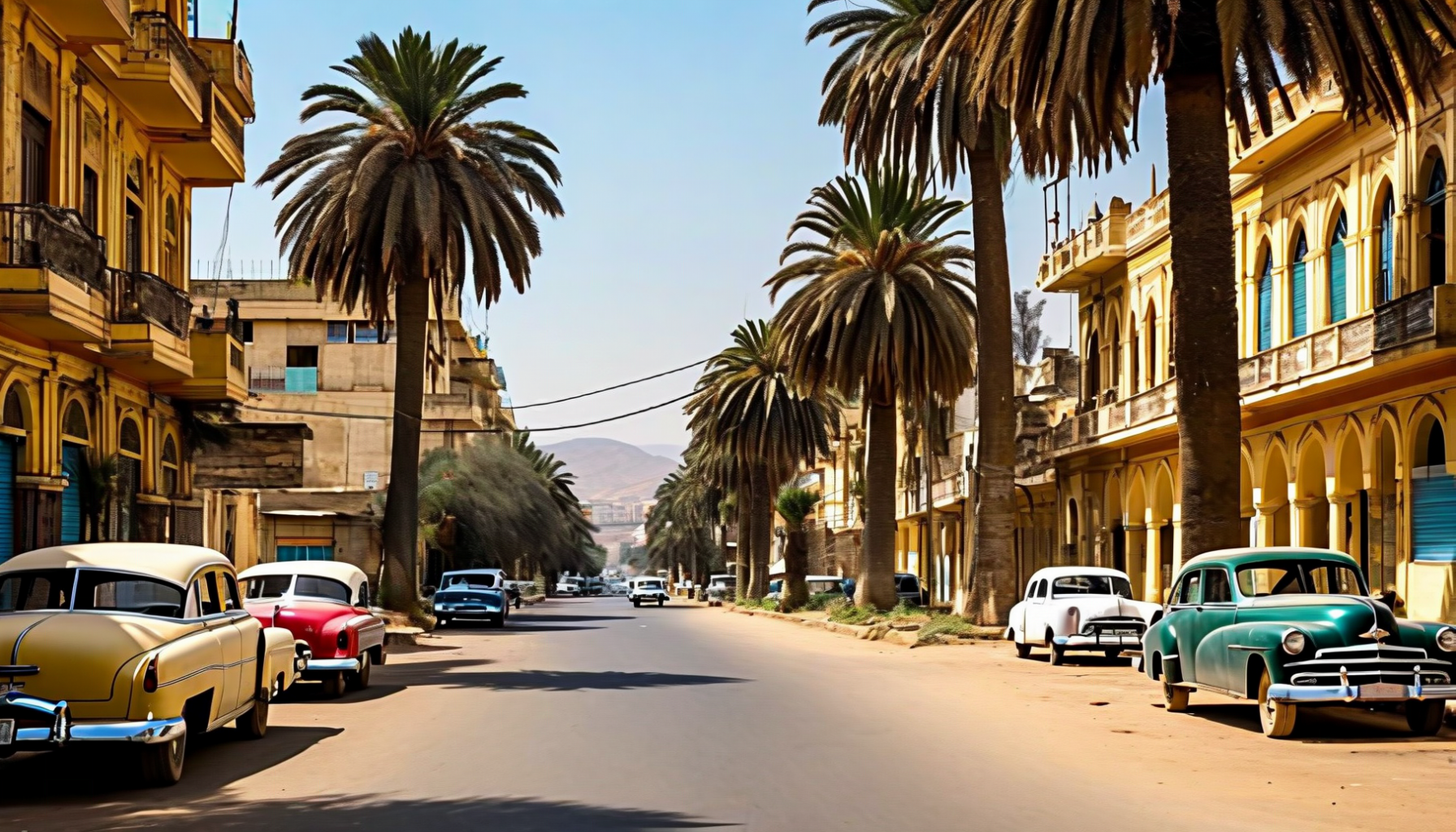
A city of around 800,000 at 2,325 m, laid out in avenues of palms and jacaranda, with a climate that hovers between 15 and 25 °C every month of the year and a pace that is genuinely unhurried. It is also — by common agreement among people who have been to a lot of African capitals — the safest and most pleasant to walk in.
Harnet Avenue
The main street, formerly Viale Mussolini and then Corso Italia. Everyone walks it in the early evening. Cafés, the cathedral, the opera house and most of the architecture are on or just off it.
Three faiths in three blocks
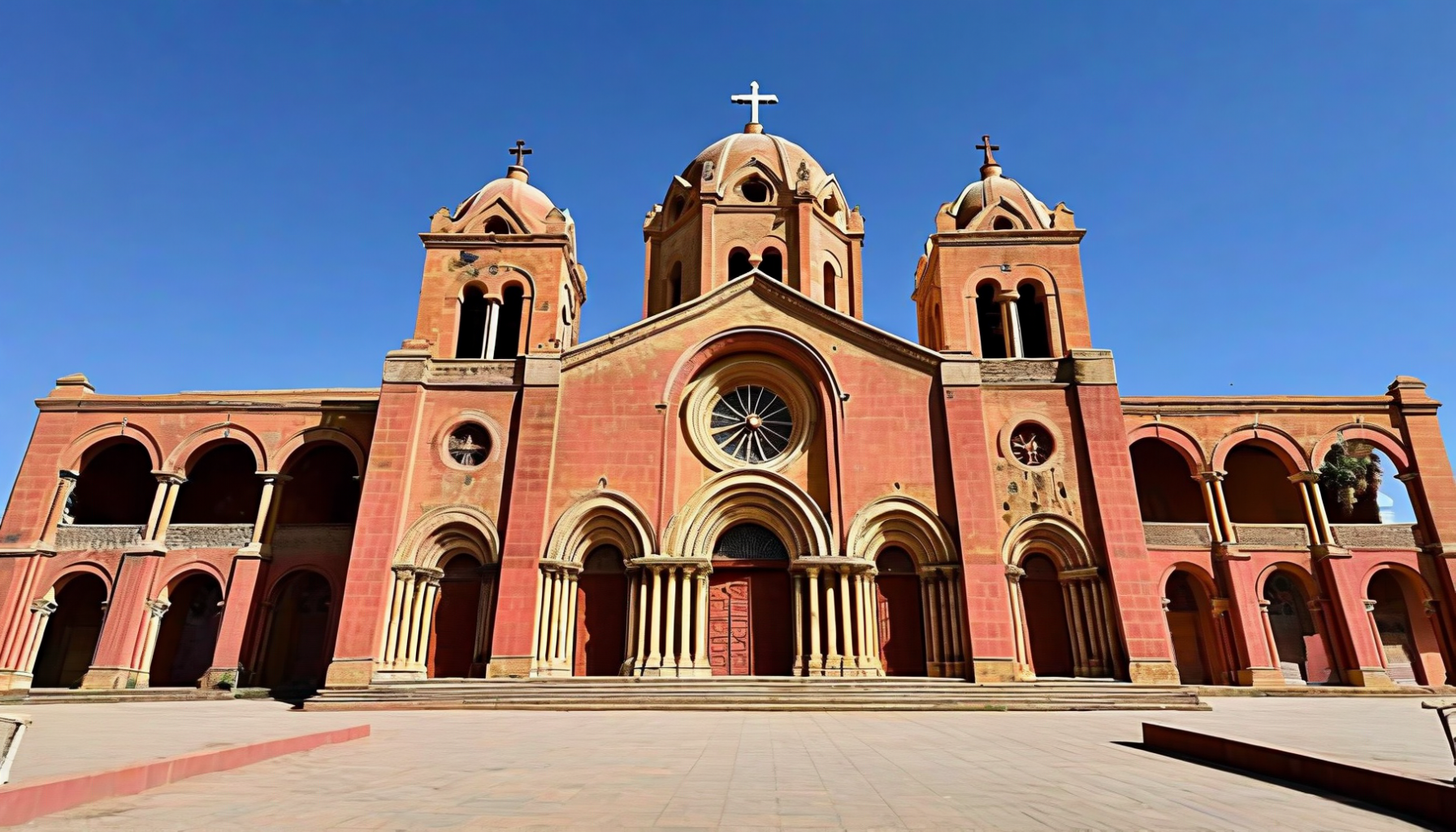
The Catholic Cathedral of Our Lady of the Rosary (1923, Lombard-Romanesque), the Enda Mariam Orthodox Cathedral with its mosaic tower, and the Al Khulafa Al Rashiudin mosque — all within a short walk, which Eritreans point out with justified pride.
Medeber market
A recycling market in the old caravanserai where scrap metal becomes buckets, stoves, coffee pots and hinges, worked by hand. Loud, sooty and the most alive place in the city.
The Tank Graveyard
On the edge of town: hundreds of destroyed Ethiopian tanks, trucks and armoured vehicles piled in a field. A permit may be needed and photography is sensitive — ask first.
Cafés
The Italian legacy is strongest here. Bar Vittoria, Bar Zilli, the Impero and the Cinema Roma bar all serve espresso and macchiato in original 1930s interiors. A macchiato costs a few nakfa and is the point of the afternoon.
National Museum
Modest but useful, with material from Adulis, Qohaito and Metera and a good section on the liberation war.
✈️ The Modernist City
In 2017 UNESCO inscribed the whole of central Asmara as "Asmara: A Modernist African City" — the first modernist city in sub-Saharan Africa on the list, and one of the most complete twentieth-century urban ensembles anywhere on it (Brasília in 1987, Tel Aviv's White City in 2003 and Le Havre in 2005 were inscribed as modernist cities before it). It remains Eritrea's only World Heritage Site. What survives is roughly 400 buildings from 1935–41, when Italy was building a colonial capital at speed with the most experimental architects of the period and no conservative planning authority to restrain them.
Fiat Tagliero · 1938
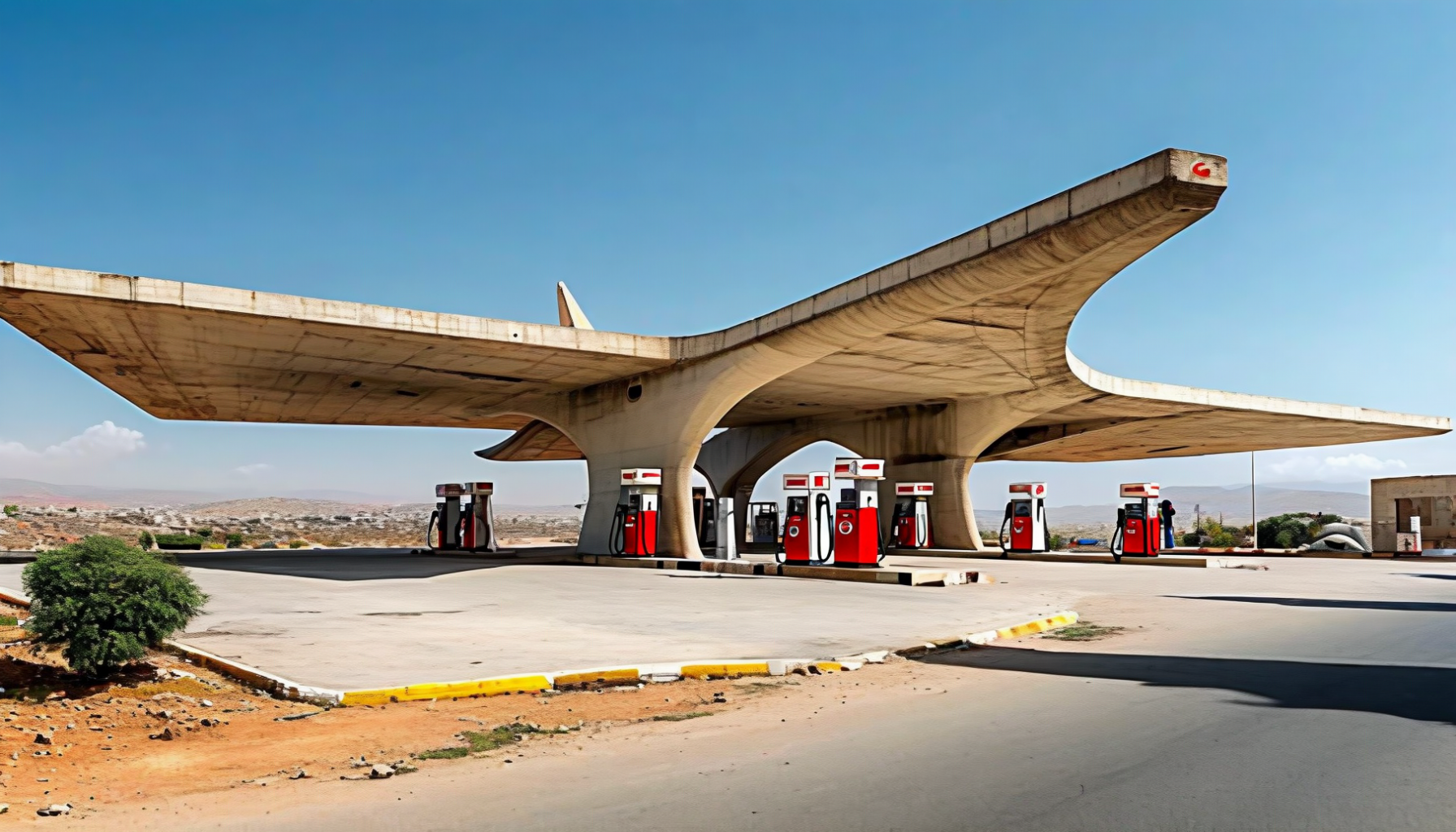
Giuseppe Pettazzi's service station in the shape of an aeroplane, with two 15 m cantilevered concrete wings. The story goes that the authorities insisted on support pillars, and Pettazzi held a gun to the builder until the formwork came away and the wings stayed up. The wings did stay up.
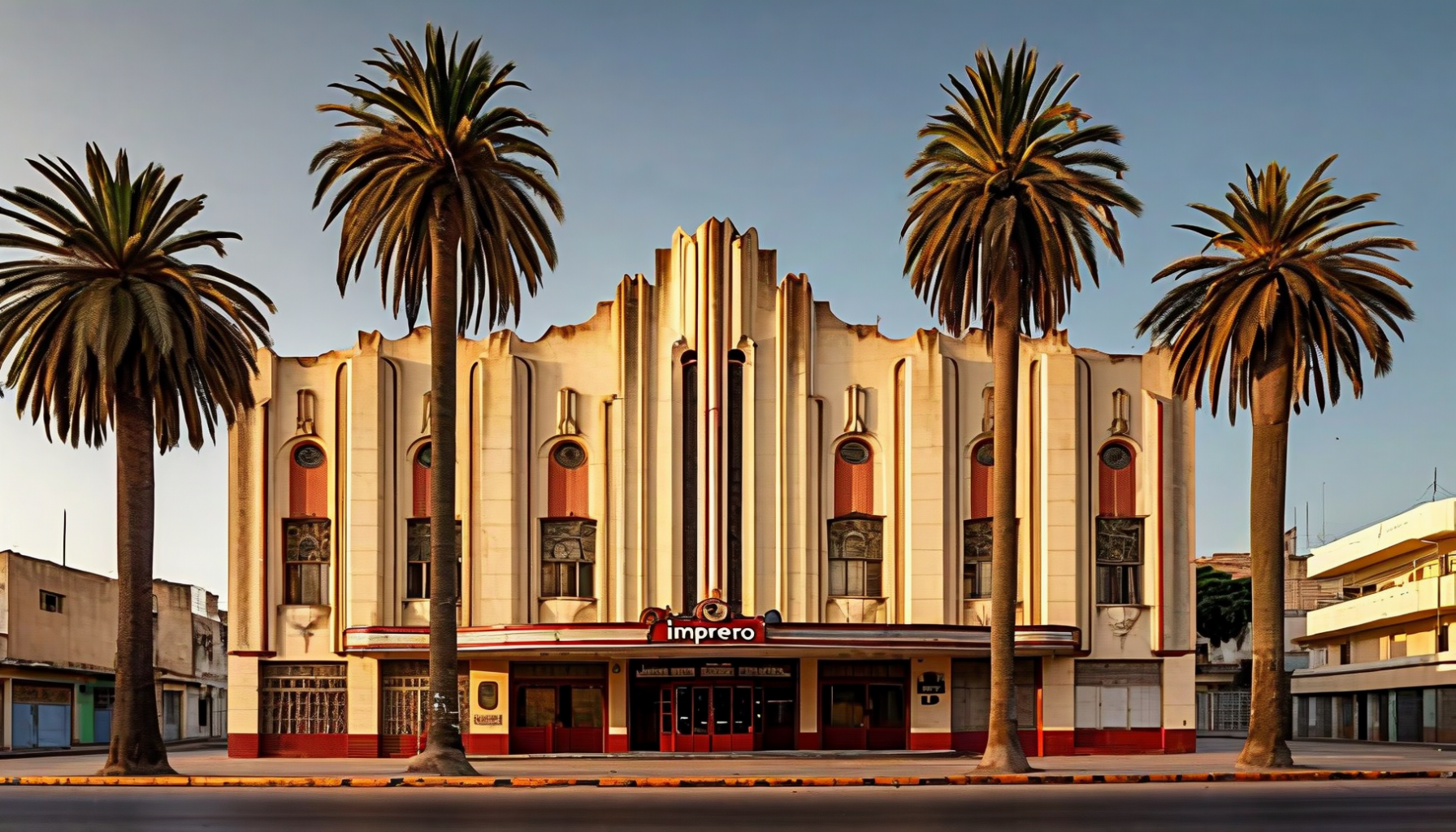
Cinema Impero · 1937
Art Deco, with a facade of vertical bands and three rows of round windows, and an interior largely intact including the original seating. Still operating as a cinema.
Cinema Roma & Odeon
Two more period cinemas, both still in use. For a colonial city of its size Asmara had an extraordinary number of cinemas, and three of them are still working.
Casa del Fascio & the Governor's Palace
The rationalist administrative buildings, and the older Italianate palace. Photography of official buildings is restricted — look, do not shoot.
The Bowling Alley & Selam Hotel
1930s interiors surviving as they were built, down to the pinsetters. The Selam's former Albergo CIAAO is one of the best-preserved period hotels anywhere.
Why it survived
Poverty and isolation. There was never money to demolish and rebuild, and after 1991 there was a deliberate conservation policy. The Cultural Assets Rehabilitation Project mapped the city from 1997 and the UNESCO listing followed.
UNESCO, as of 2026
Asmara is Eritrea's one World Heritage Site, inscribed in 2017 under criteria (ii) and (iv); UNESCO has filed state-of-conservation reports on it in 2019, 2021, 2023 and 2025. The Tentative List has a single entry, the Qohaito Cultural Landscape (2011). Eritrea has no intangible-heritage inscriptions at all — it is one of nine African states with none — and in July 2026 UNESCO ran a workshop in Asmara to start a nomination for ge'at, the cereal porridge shared at births, weddings and feasts.
🚂 The Steam Railway
The Italians built a 950 mm narrow-gauge railway from Massawa to Asmara between 1887 and 1911, later extended to Bishia — climbing 2,300 m through 30 tunnels and 65 bridges in 117 km. It is one of the great feats of colonial engineering and it still runs.
Destroyed and rebuilt
The line was wrecked during the liberation war and its rails used for trench fortifications. From 1994 Eritrean veterans — many of them the original railwaymen, by then in their seventies and eighties — rebuilt it by hand, without foreign contractors.
The locomotives
Italian Ansaldo and Breda steam engines from the 1930s, restored and running. Some of the Littorina railcars also survive.
Riding it
There is no scheduled passenger service. Charter trips run for groups, arranged in advance through a local agency, usually on the Asmara–Nefasit section. It is expensive by Eritrean standards and worth it.
The view
The line clings to the escarpment with the Red Sea plain 2,000 m below. The section around Nefasit and Shegerini is among the most spectacular railway alignments in the world.
The cable car
Italy also built a 75 km teleferica from Massawa to Asmara in 1937 — then the longest cableway in the world. The British dismantled it after 1941 and sold it off. The pylons are still visible in places.
Practical
Arrange it before you arrive, and expect it to depend on the availability of a working locomotive and a permit. Both are variable.
⚓ Massawa
Down the escarpment from Asmara — 115 km and 2,300 m of descent, from 18 °C to 40 °C in three hours — lies Massawa, the old Red Sea port the Ottomans, the Egyptians, the Italians and the British each held in turn. It is one of the hottest inhabited places on earth in summer, and it is architecturally unlike anywhere else in the country.
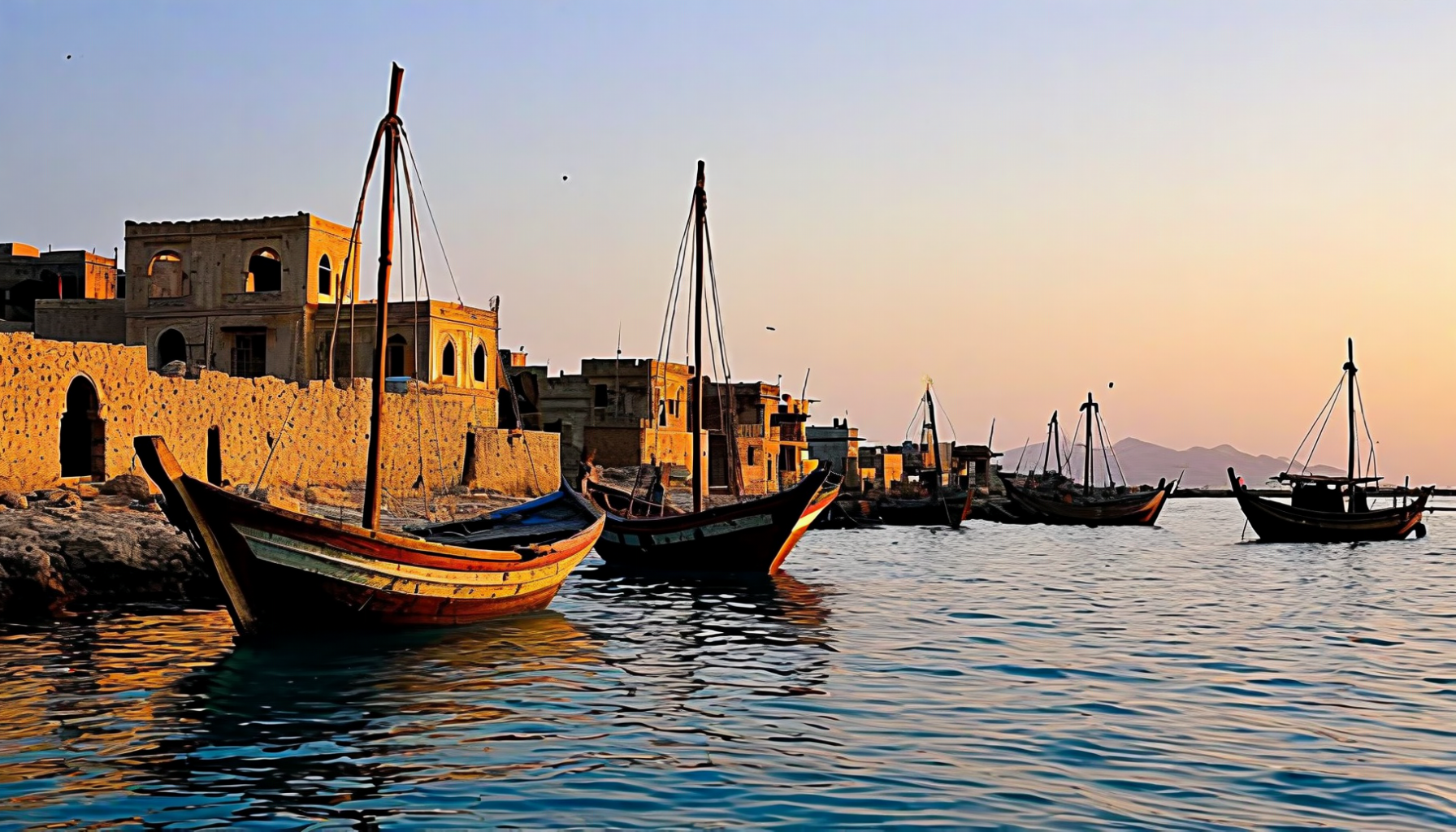
Coral architecture
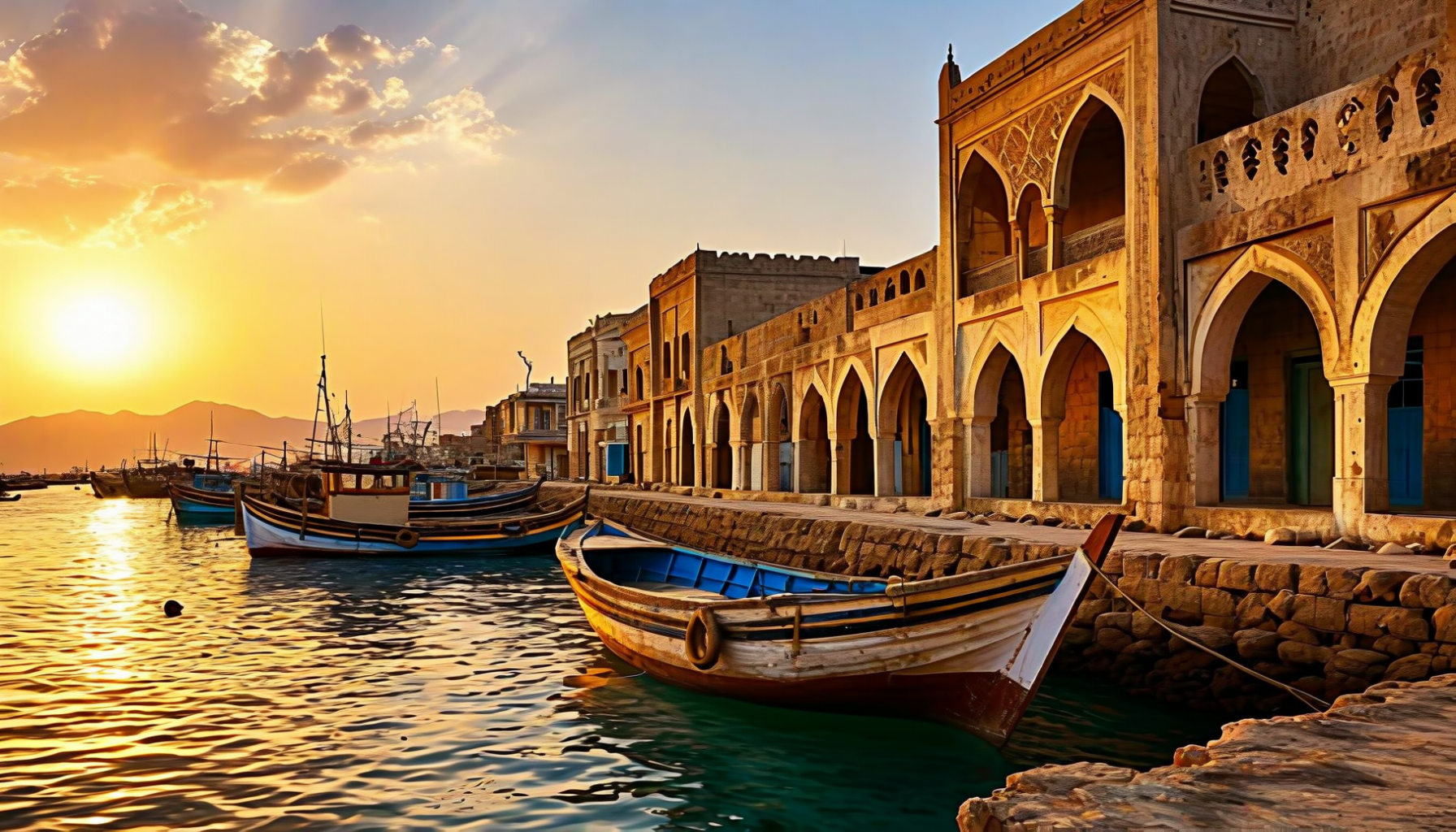
The old towns on Massawa and Taulud islands are built from blocks of coral rag quarried from the reef, with arcaded galleries, mashrabiya screens and heavy carved doors. The Ottoman-Egyptian tradition of the Red Sea coast, related to Suakin and Jeddah.
The scars
Massawa was fought over street by street in 1990, when the EPLF took it and cut the Ethiopian army's supply line. Much of the old town is still shelled ruin, some of it structurally propped, some of it lived in. Nobody has hidden it.
The Imperial Palace
The Ottoman-era palace rebuilt in the 1870s by Werner Munzinger for the Egyptian khedive, later Haile Selassie's summer residence, wrecked in the war. Its domes and colonnade still stand, roofless.
The port
Eritrea's main harbour, connected to Asmara by the railway and, until 1941, by the world's longest cable car. Photography of the port is prohibited.
Heat
May to September is genuinely dangerous — 45 °C with high humidity, and nights that do not cool. Visit between November and March, and even then move in the early morning and late afternoon.
Eating
Fish grilled in a clay oven, whole, with berbere and a flatbread — the coastal counterpoint to highland injera. The waterfront restaurants do little else and do it very well.
🏝️ The Dahlak Archipelago
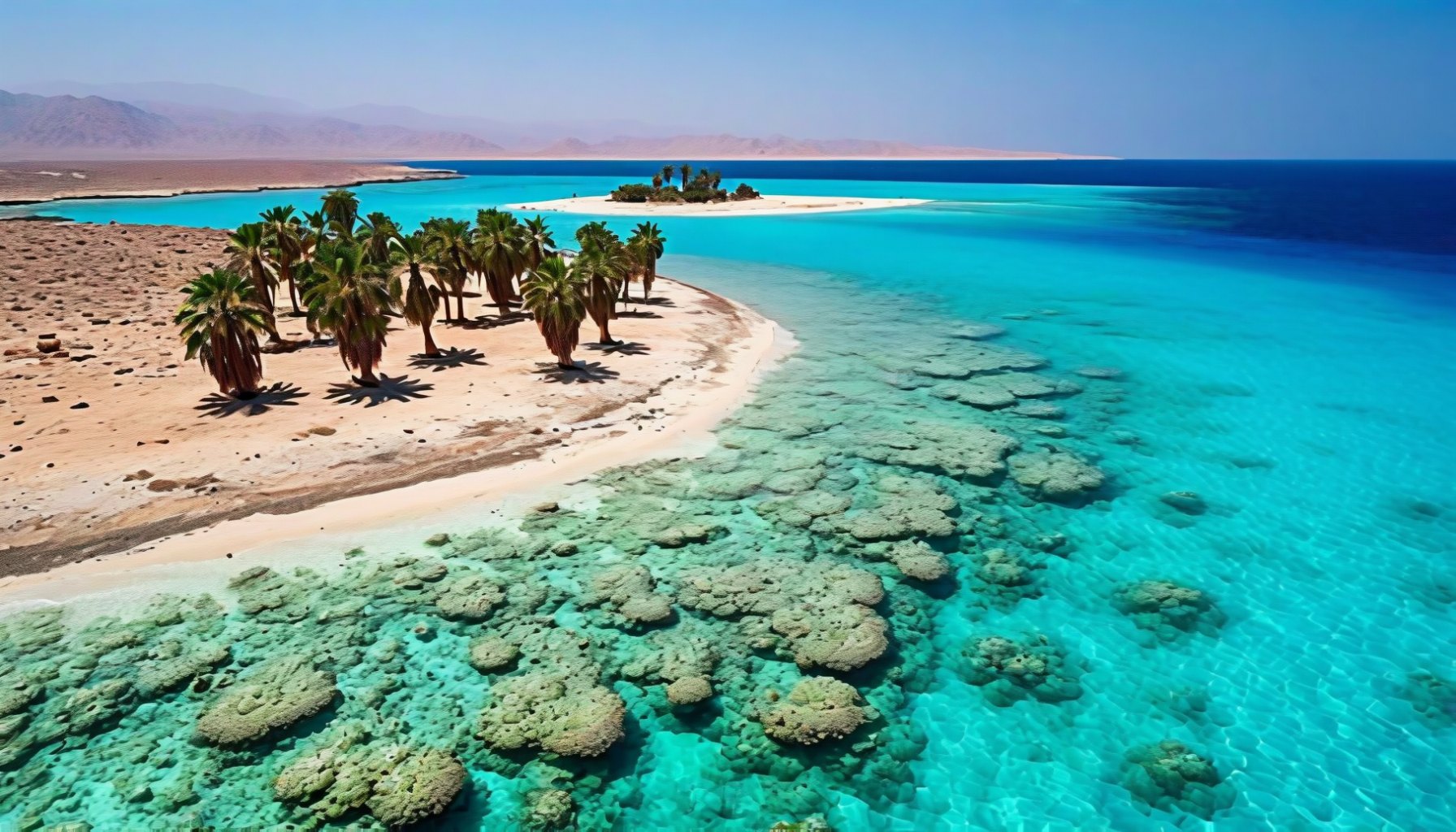
Off Massawa lie around 200 islands, of which four are permanently inhabited. The Dahlak are low, arid and largely uninhabited, ringed by reefs that were effectively closed to the world for the thirty years of the war and have had almost no diving pressure since.
Diving and snorkelling
Hard and soft corals, big schooling fish, turtles, rays, dugongs in the seagrass and a number of wrecks. Visibility is not always Egyptian-Red-Sea perfect — the southern basin is more productive and less clear — but the reefs are intact.
Dahlak Kebir
The largest island, with a Muslim population, brackish wells, and a field of Kufic funerary stelae from the ninth to twelfth centuries — the archipelago was a pearl-trading centre with its own sultanate.
Pearls
Dahlak pearls were traded to Egypt and Rome. The fishery collapsed in the twentieth century and the diving tradition with it.
Getting there
Boats from Massawa, chartered through a licensed operator, with a permit arranged in advance. There is no scheduled service and no independent island-hopping.
Where you sleep
On the boat, or camping on a beach. The single resort that existed on Dahlak Kebir has been closed for years.
Restrictions
Some islands are military and entirely off limits. Your operator knows which; do not improvise.
🐫 Keren & the Highlands
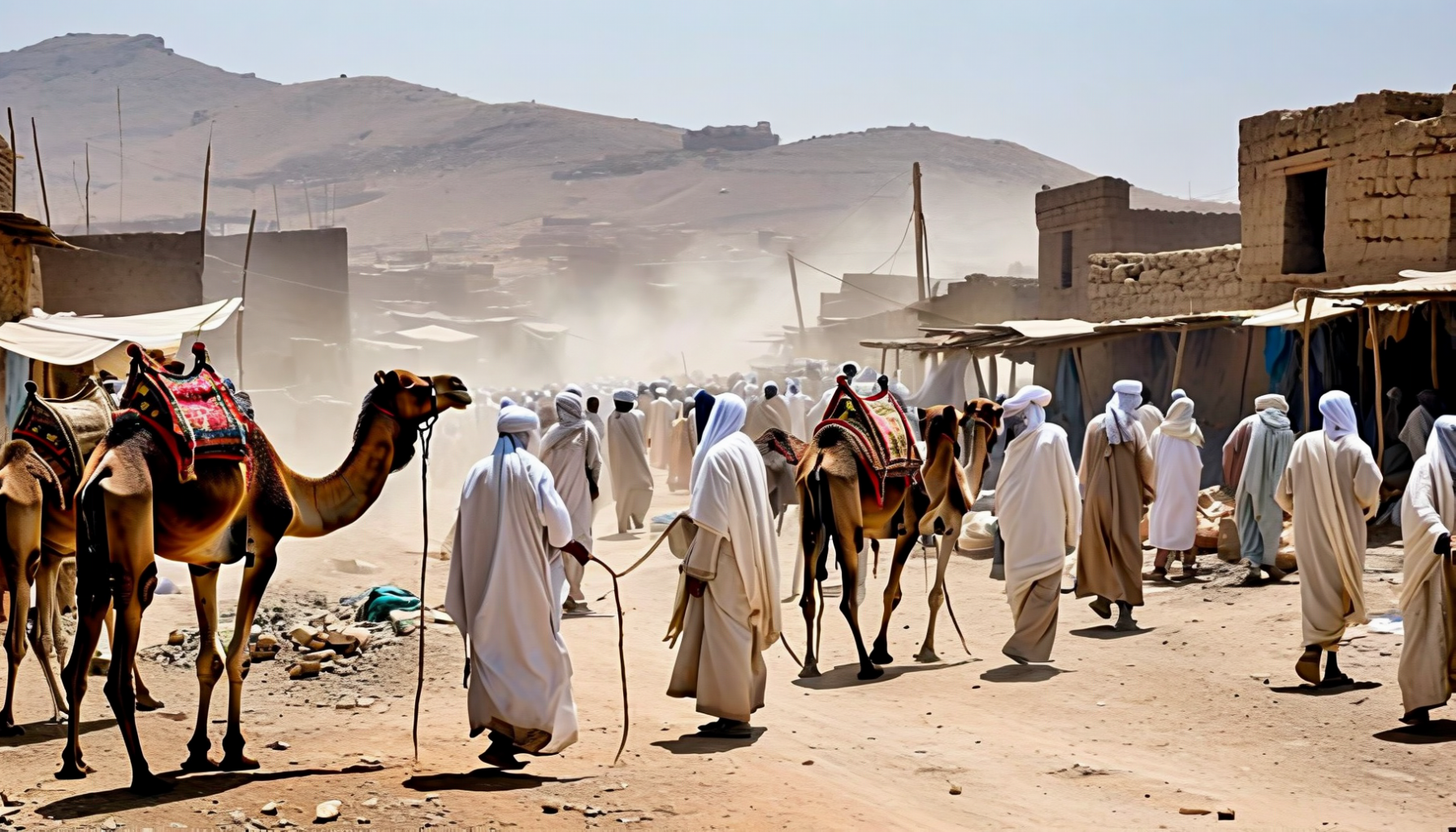
Keren, 91 km north-west of Asmara at 1,390 m, is Eritrea's second city and its most Muslim — a Tigre and Bilen town of flat-roofed houses, mosques and one of the great market days in the Horn of Africa.
The Monday market
Camels, cattle, goats, grain, silverwork and textiles, with sellers arriving from the lowlands the night before. It is a working market, not a display, and it is the best single day out in the country outside Asmara.
St Mariam Dearit
A shrine to the Virgin inside the hollow trunk of an ancient baobab, venerated by Christians and — unusually — visited by Muslims too. The pilgrimage is at the end of May.
The Italian and Commonwealth cemeteries
The Battle of Keren in February–March 1941 was one of the hardest-fought of the East African campaign; British, Indian, Free French and Italian troops died in thousands on the ridges above the town. Both cemeteries are kept.
The Bilen
A Cushitic-speaking people concentrated around Keren, half Christian and half Muslim, whose women wear distinctive nose rings and heavy silver. Bilen is one of Eritrea's nine languages.
Getting there
A permit is required for travel outside Asmara. The road is tarmac and the drive is about three hours through the Anseba valley, with the old Italian road engineering visible most of the way.
Elsewhere in the highlands
Dekemhare and Mendefera for more Italian small-town architecture; Adi Keih and Senafe for the road down to the Ethiopian border and the ruins beyond it.
🏛️ Adulis, Qohaito & Metera
Eritrea's archaeology is under-excavated and largely unvisited, and it is old — the Dahlak-to-highlands corridor carried Red Sea trade for two and a half thousand years, and the pre-Aksumite and Aksumite worlds are on both sides of the modern border.
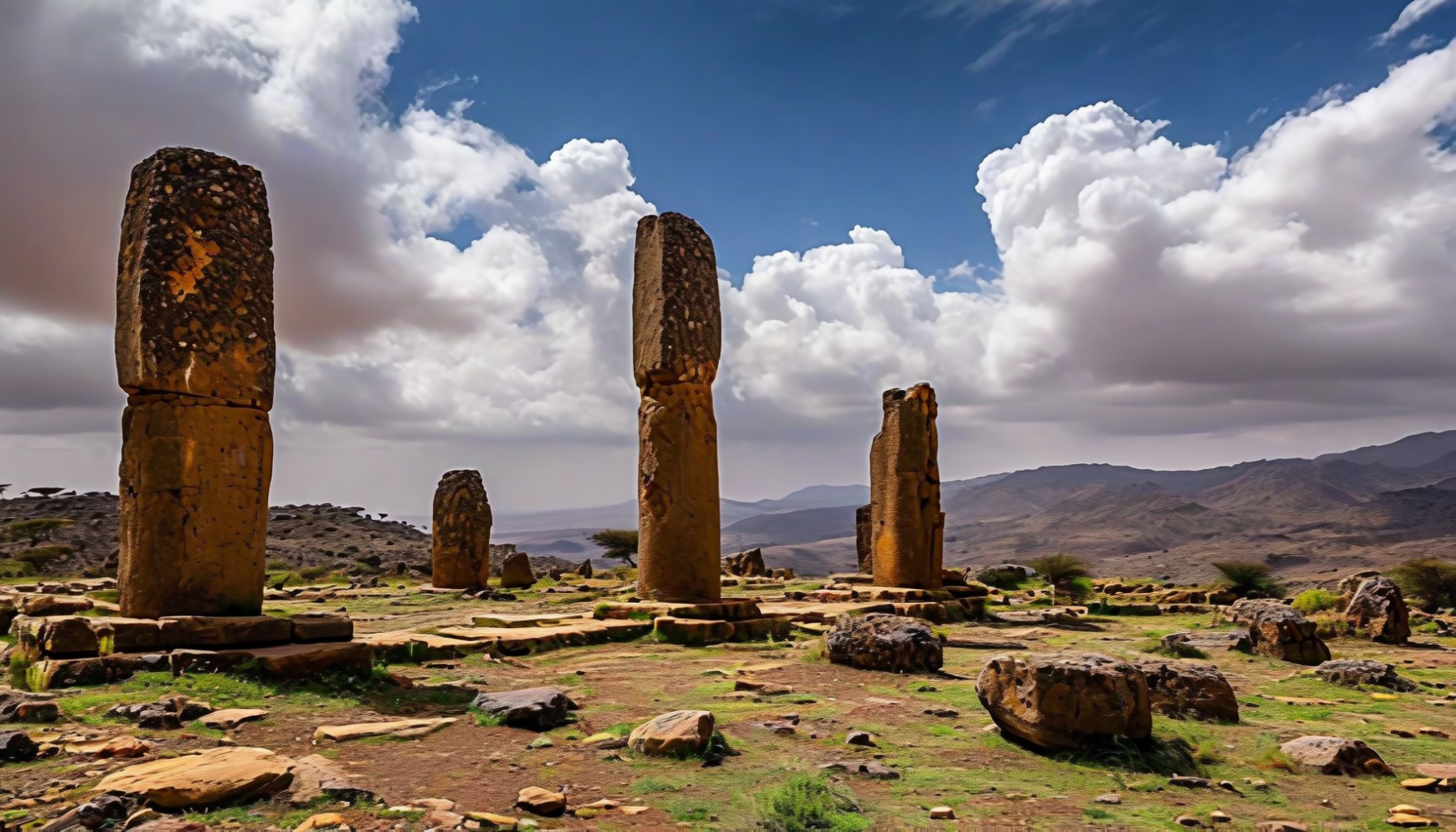
Qohaito
A city at 2,700 m on a plateau above the Adi Keih road, occupied from perhaps the first millennium BC. Standing columns, cisterns, a dam still holding water, rock shelters with cattle paintings, and a gorge on the edge of it. Excavated only in patches, and on UNESCO's Tentative List as the Qohaito Cultural Landscape since 2011 — the country's only candidate for a second World Heritage Site.
Adulis
The great Red Sea port of the Aksumite empire, near modern Zula, named in Greek and Roman sources and described in the Periplus of the Erythraean Sea. Basilica foundations and a sunken harbour; joint Eritrean-Italian work has continued in recent years.
Metera
Near Senafe, with a well-known inscribed stele and a settlement spanning the pre-Aksumite and Aksumite periods.
Rock art
Adi Alauti, Qohaito and other shelters carry cattle-herding paintings that are thousands of years old and almost entirely unprotected.
The Erythraean Sea
The country's name comes through Italian from the Greek Erythra Thalassa, "Red Sea" — the same word that titles the first-century Greek merchant's handbook that describes Adulis.
Visiting
All of it needs a travel permit and, realistically, a driver. Nothing is signposted, there are no visitor centres and no tickets. Bring water and a hat.
🌿 Filfil & the Green Belt
The eastern escarpment between Asmara and the coast catches enough moisture off the Red Sea to hold a band of tropical cloud forest — Filfil Solomuna, the last significant remnant of a forest that once covered much of the highlands.
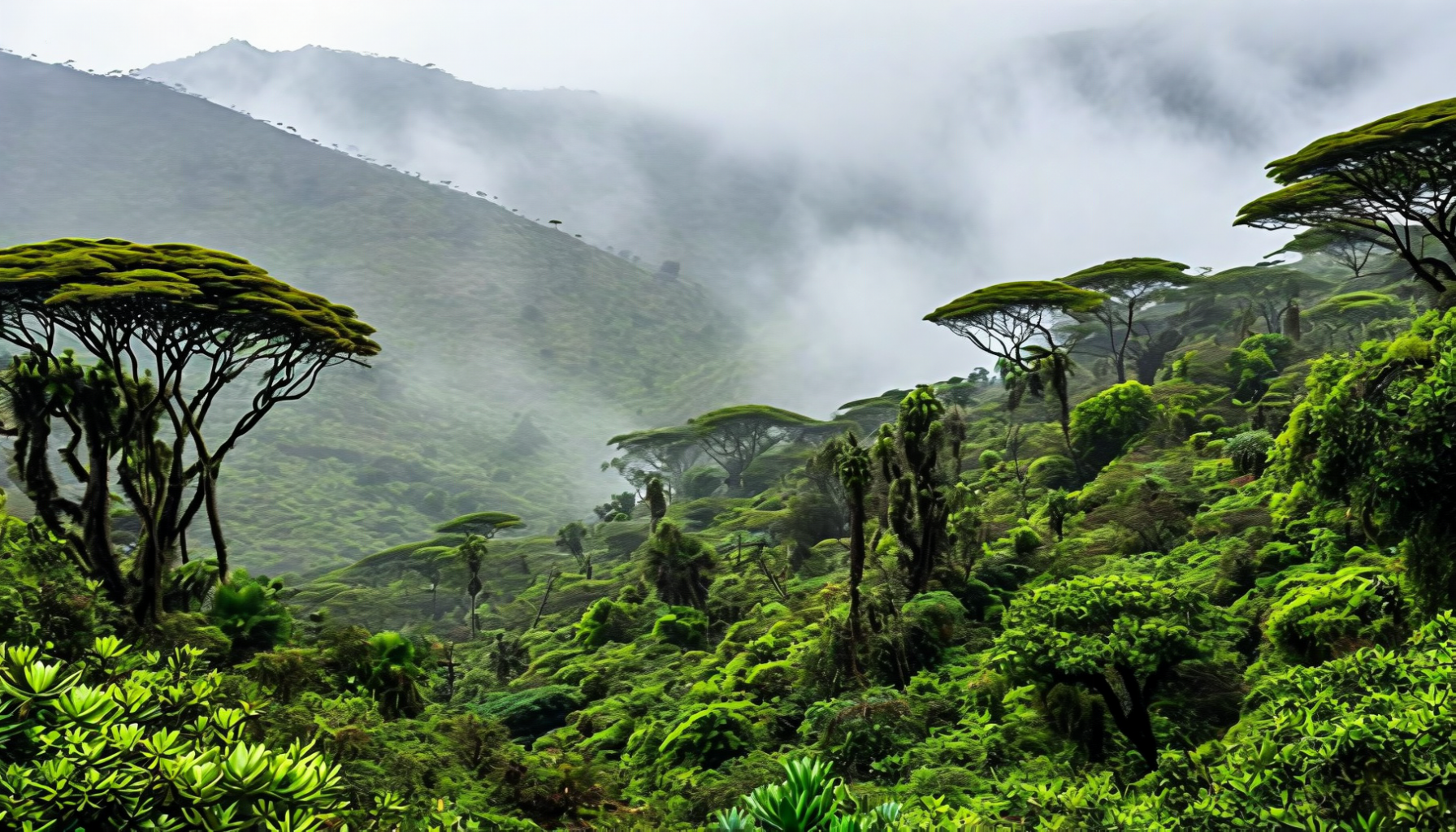
Semienawi Bahri
"Northern Sea" — the escarpment road from Asmara down towards Filfil, a couple of hours of hairpins from dry highland into mist and forest. The single most surprising drive in Eritrea.
Deforestation
Estimates put highland forest cover at around 30% a century ago and at a few per cent now, lost to fuel wood, charcoal and the war. Filfil survived because it was remote and steep.
Wildlife
Vervet and colobus, bushbuck, klipspringer, baboons, and good birding — Eritrea has endemic and near-endemic species and sits on a major raptor migration corridor down the Red Sea.
The African wild ass
The critically endangered Somali wild ass survives in the Denkalia lowlands in one of its last wild populations. You are extremely unlikely to see one.
Reafforestation
Terracing and tree planting are among the tasks national service conscripts are assigned to, and hillside terraces are visible across the highlands. The scale of the effort is real; so is the scale of the loss.
Visiting
A day trip from Asmara with a permit and a car. Green from July to September after the rains; drier and hazier the rest of the year, but the cloud is there most mornings.
🚴 A Cycling Country
The Italians brought bicycle racing with them and it never left. Eritrea is, per head, the strongest cycling nation in Africa — the Tour of Eritrea has run since the 1940s, and the country has put riders in the Tour de France.
Daniel Teklehaimanot
The first Eritrean — and the first Black African — to wear the polka-dot jersey of the Tour de France's mountains classification, in 2015. He and Merhawi Kudus were the first Eritreans to ride the Tour at all.
Biniam Girmay
The first Black African to win a Monument-adjacent classic (Gent-Wevelgem, 2022), the first to win a Giro d'Italia stage, and in 2024 the first to win stages of the Tour de France — three of them — and take its green points jersey. 2025 was a season without a win; for 2026 he moved to the NSN Cycling Team (the rebranded Israel–Premier Tech), which built its Tour squad around him, won three races early in the year including the Clásica de Almería, and finished third in the 2026 Tour's points classification behind Mads Pedersen and Jasper Philipsen. In Asmara this is a bigger deal than any political event.
Why they are good
Asmara sits at 2,325 m. Eritrean riders grow up training at an altitude European teams pay to visit, on Italian-built mountain roads, in a culture that treats the bicycle as normal transport.
The Sunday race
Amateur racing on the roads around Asmara most weekends, with crowds. Ask at any of the cafés on Harnet Avenue where and when.
Riding yourself
Bringing a bike is possible but paperwork-heavy, and travel outside the capital needs a permit that specifies your route. Riding within Asmara and its immediate surroundings is straightforward and the traffic is light.
The descent
The Asmara-to-Massawa road drops 2,300 m in 115 km. Eritrean riders use it as a training descent. It is also, for the record, an appalling climb.
Football, and why the team barely plays
Eritrea withdrew from the 2026 World Cup qualifiers in November 2023 rather than let players travel — since 2009 dozens of internationals have claimed asylum on away trips, about 80 people in football over twenty years by the UN's count. The team came back for the 2027 Africa Cup of Nations preliminaries in March–April 2026, its first AFCON matches since 2007, and beat Eswatini 2–0 and 2–1 (the "home" leg was played in Meknes, Morocco, because Eritrea has no international-standard stadium). Of the ten home-based players, seven then vanished in Johannesburg on the way back to Asmara. Zersenay Tadese's 10,000 m bronze in Athens 2004 remains the country's only Olympic medal.
👥 Nine Peoples
Nobody knows how many Eritreans there are: no census has ever been held, the UN puts the population at about 3.5 million and other estimates run above 6 million — a real disagreement between sources, not a rounding error. Eritrea recognises nine ethnolinguistic groups, and the state has been unusually consistent about treating them as equal — no official language, all nine taught at primary level, all nine on the banknotes. The population is also split roughly half Christian and half Muslim, broadly highland versus lowland, and this has been managed better here than almost anywhere comparable.
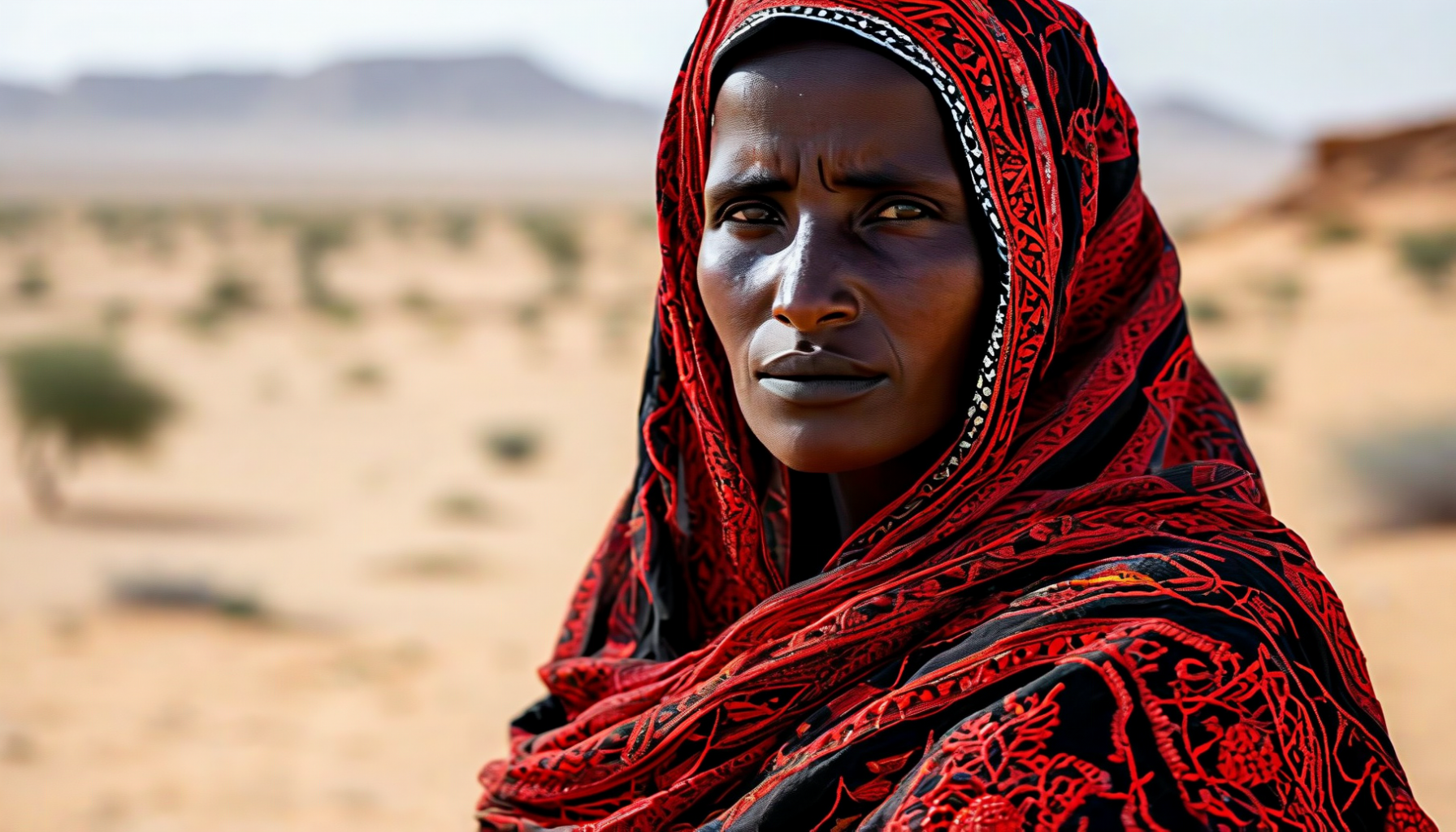
Tigrinya
About half the population, Orthodox Christian, farming the central highlands. The language of Asmara and of most of what you will hear.
Tigre
The second largest group, Muslim, in the western and northern lowlands. Tigre and Tigrinya are related but not mutually intelligible.
Saho, Bilen, Afar
Cushitic-speaking. The Afar occupy the Danakil in the south-east, one of the harshest inhabited environments anywhere; the Bilen are around Keren; the Saho on the eastern escarpment.
Kunama & Nara
Nilo-Saharan speakers in the west near the Sudanese border, with matrilineal traditions among the Kunama and a distinctive musical culture.
Rashaida
Arabic-speaking, of Arabian origin, arrived in the nineteenth century, semi-nomadic along the northern coast. The most visually distinct group and the most recent arrivals.
Hedareb
Beja-related, in the far north-west. The smallest of the nine.
🗣️ Language
There is no official language in Eritrea, which is a deliberate policy rather than an oversight. In practice Tigrinya, Arabic and English are the working languages — Tigrinya for daily life, Arabic for the lowlands and the coast, English for secondary and higher education and for most signage you will need.
Ge'ez script
Tigrinya is written in the Ge'ez abugida, the same script as Amharic — over 200 characters, each a consonant-vowel syllable. It is beautiful and it is not learnable in a week.
Italian
Older Asmarinos speak it, and it survives in the vocabulary of food, cars and building. Macchiato, pasta, cappuccino, chiave, tavolo — all everyday Tigrinya now.
English
Widely understood in Asmara among anyone under about fifty who finished school, since secondary education is in English. Outside the capital, less so.
Amharic
Understood by many older people from the Ethiopian period, but using it is politically loaded. Do not open with it.
Useful Tigrinya
Selam — hello. Kemey aleka/aleki? — how are you (m/f). Yekenyeley — thank you. Awo / aykonen — yes / no. Kndey? — how much?
A note on names
Eritreans use a given name followed by the father's name; there are no inherited surnames. "Mr Teklehaimanot" addresses a man by his father's given name, which is not wrong but is not how it works.
🍽️ Eritrean Food
Two cuisines share a table here: the highland Horn-of-Africa tradition of injera and spiced stews, and a genuinely surviving Italian one. Asmara restaurants serve lasagne and cotoletta without irony, and pasta has been Eritrean food for three generations.
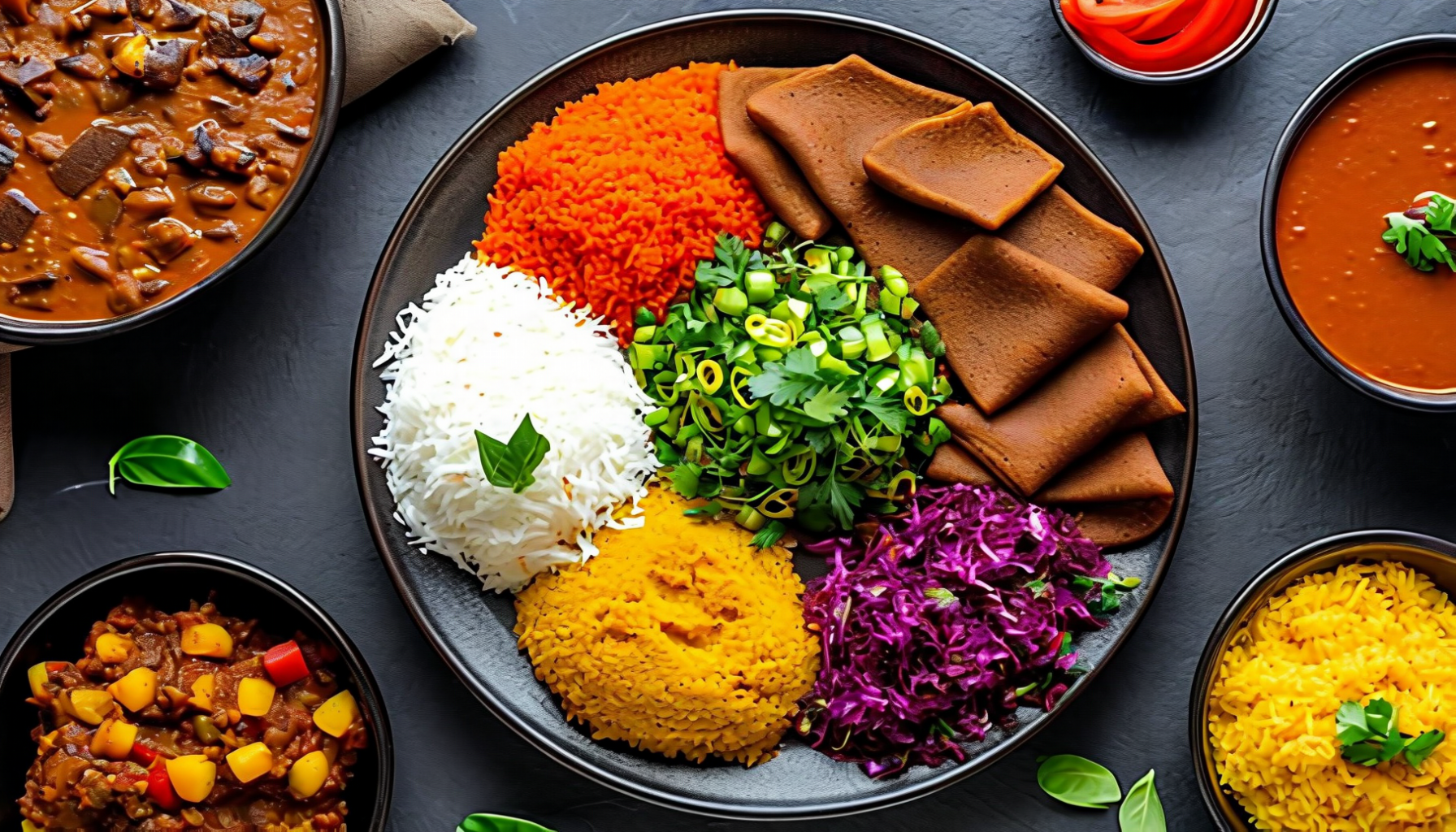
The essentials
Injera
A large, thin, spongy sourdough pancake of fermented teff, poured onto a clay mogogo. It is the plate, the bread and the cutlery. Sour, and it takes a couple of meals to like.
Berbere
The red spice mix that defines the cuisine — chilli, ginger, garlic, fenugreek, korarima, rue seed and more. Hot, but aromatic before it is hot.
Zigni
Beef simmered slowly in berbere, onion and tesmi (spiced clarified butter). The Sunday and celebration dish.
Shiro
Ground chickpea or broad bean cooked to a purée with onion and spice. The everyday dish, vegan by default, and the reason Eritrean restaurants are so good for vegetarians during the long Orthodox fasts.
Tsebhi derho
Chicken stew with berbere and a whole hard-boiled egg, traditionally the wedding dish.
The Italian half
Pasta al sugo with a berbere-inflected sauce, lasagne, cotoletta, gelato and proper bread. In Asmara you will eat both cuisines in the same week and possibly the same day.
Zigni
Beef in berbere · serves 4 · about 2 hours
Ingredients: 800 g beef chuck in 3 cm cubes; 3 large onions, very finely chopped; 4 tbsp berbere; 3 tbsp tesmi (or clarified butter with garlic, ginger and cardamom warmed in it); 4 garlic cloves and a thumb of ginger, crushed; 2 tomatoes, grated; 1 tsp ground cardamom; salt.
Method: Cook the onions dry in a heavy pot over low heat, stirring, for a full 20 minutes until collapsed and golden — no oil yet. Add the tesmi and the garlic and ginger, then the berbere, and fry gently 5 minutes so the spice loses its raw edge. Add the tomato and a splash of water and cook to a thick paste. Add the beef, turn to coat, cover, and simmer very gently 90 minutes, adding water a little at a time — the sauce should stay thick, never soupy. Finish with the cardamom.
💡 The long dry onion cook is not optional; it is the whole dish. Serve on injera with a spoon of plain yoghurt or fresh cheese to cut the heat.
Shiro
Chickpea purée · serves 4 · 30 minutes
Ingredients: 200 g shiro powder (finely milled roasted chickpea with spice — from any Ethiopian or Eritrean grocer); 1 large onion, finely chopped; 3 tbsp oil or tesmi; 2 garlic cloves; 1 tsp berbere; 1 tomato, grated; 750 ml water; salt.
Method: Soften the onion in the oil for 10 minutes, add garlic and berbere, then the tomato. Whisk the shiro powder into the cold water in a separate jug so it does not lump, then pour it in. Simmer, stirring often, 15–20 minutes until it thickens to a loose purée and no longer tastes floury. Season.
💡 If you cannot get shiro powder, blitz roasted chickpeas to a fine flour and add a pinch each of cumin, coriander and fenugreek. Serve bubbling in its clay dish.
Himbasha
Celebration bread · one loaf · 3 hours including rising
Ingredients: 500 g plain flour; 7 g dried yeast; 250 ml warm milk; 80 g sugar; 60 g melted butter; 1 egg; 1 tsp ground cardamom; ½ tsp ground coriander; ½ tsp salt; 2 tbsp sesame seeds; a little honey for glazing.
Method: Mix the yeast into the warm milk with a spoon of the sugar and leave 10 minutes. Combine with everything except the sesame and honey and knead 10 minutes to a soft, slightly sticky dough. Rise 1 hour. Knock back, shape into a flat round about 25 cm across on a lined tray, and rise 45 minutes. Score radially from the centre like the spokes of a wheel, brush with honey and scatter the sesame. Bake at 180 °C for 30–35 minutes.
💡 The radial scoring is the point — himbasha is a celebration bread and the pattern is meant to be seen when it is broken and shared.
☕ The Coffee Ceremony
Bun — the coffee ceremony — is not a performance for tourists. It is the ordinary way a household receives a guest, and it takes an hour or more. If you are invited, accept, and clear your afternoon.
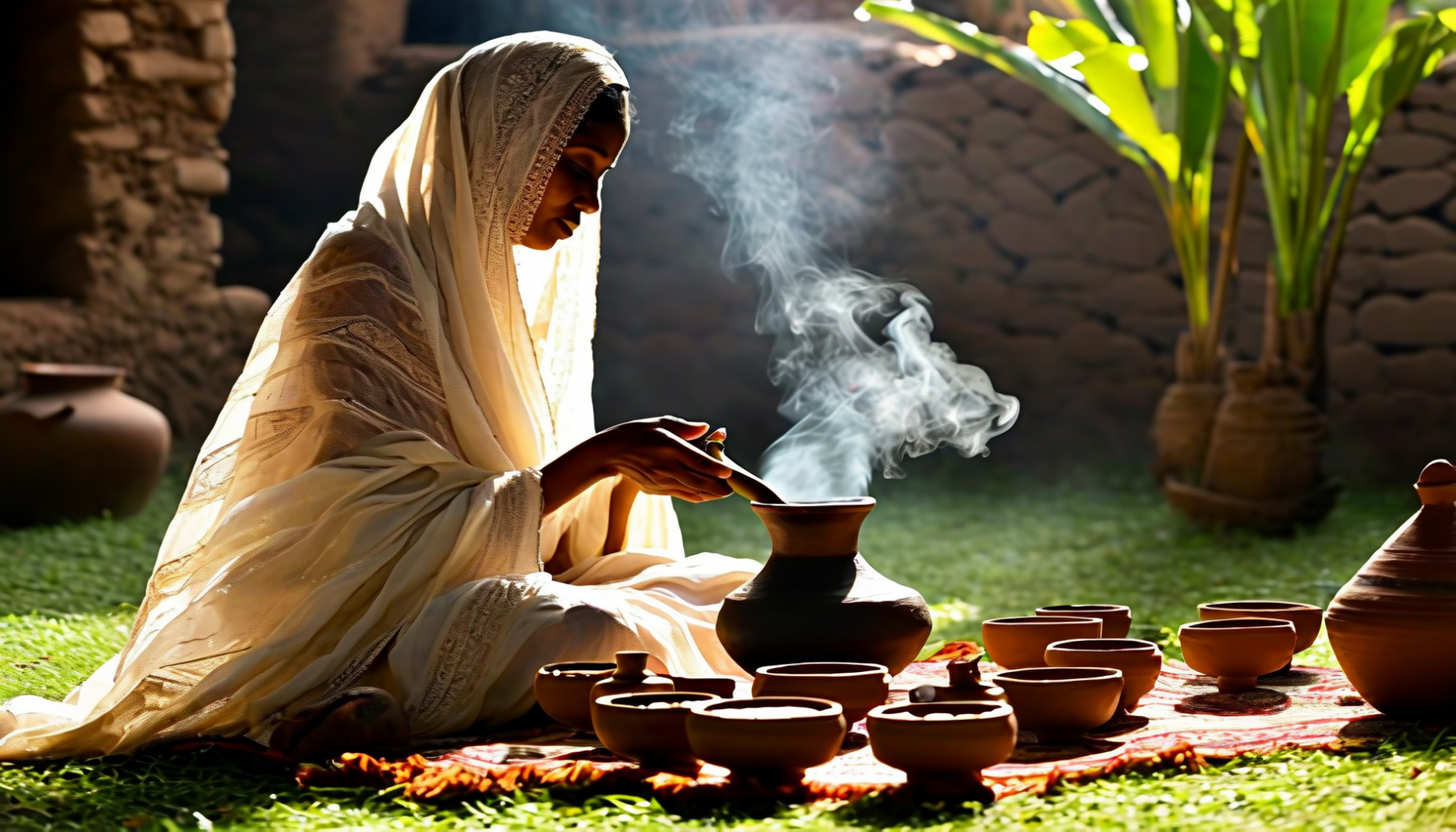
The sequence
Green beans are washed, roasted in a pan over coals in front of you, and the pan is carried round for everyone to take in the smoke. Then ground by hand in a mortar, brewed in the clay jebena, and poured from a height into small handleless cups.
Three rounds
Awel, kalayi, bereka — first, second and blessing. Each is weaker than the last and you are expected to stay for all three. Leaving after one is a real discourtesy.
What goes with it
Popcorn, roasted barley or himbasha. Sugar generously; some households add a leaf of rue (tena adam) to the cup, which is medicinal and slightly bitter.
Who makes it
A woman of the household, usually seated at a low table with the coals in front of her. It is a position of some ceremony and she runs the room.
Incense
Frankincense on the coals from the start. The smell of an Eritrean afternoon is smoke, incense and roasting coffee, in that order.
Café coffee
The Italian side. Asmara's macchiato is genuinely good, made on 1950s Faema and Gaggia machines that have been kept alive by hand for seventy years, and costs a few nakfa.
🍯 What Eritreans Drink
Alcohol is legal, available and unremarkable — one of the practical differences between Eritrea and its neighbours across the Red Sea. There is a domestic brewery, a domestic distillery, and a honey wine with a very long history.
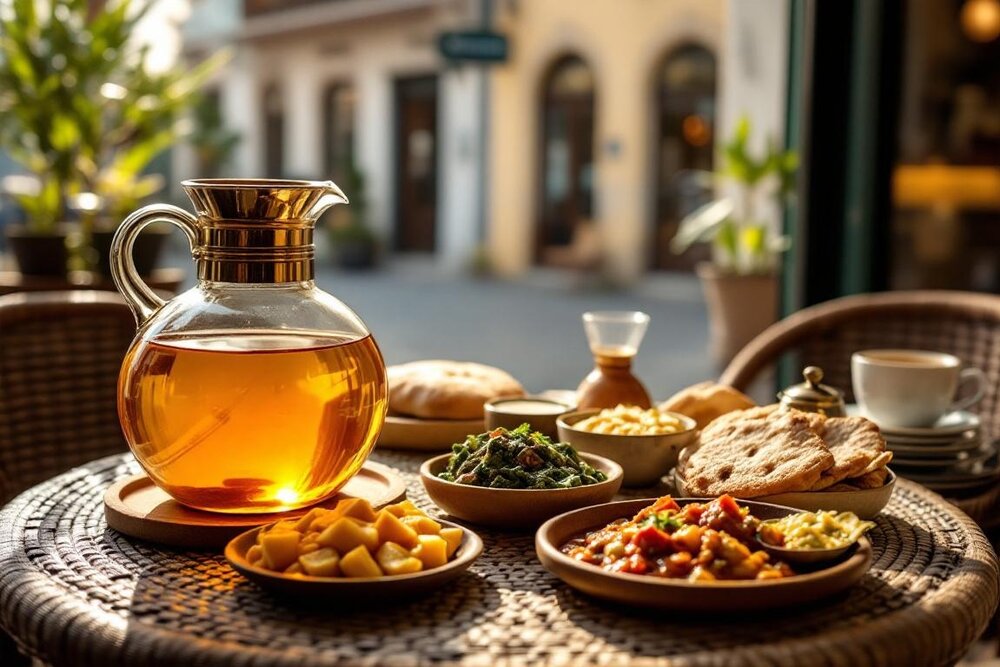
Mes
Honey wine fermented with gesho (buckthorn) leaves, amber, sweet-sour and stronger than it tastes — typically 8–14%. Drunk in dedicated mes bets, often a room in someone's house with a sign.
Suwa
Home-brewed barley or sorghum beer, cloudy, low in alcohol, sour. The village drink, and a staple at weddings and funerals.
Asmara Beer
Brewed in Asmara since 1939 and still the national lager. There is also Melotti, the historic Italian brand, and both are perfectly good.
Asmara Gin & Zibib
The Asmara Wine and Liquor Factory, founded by the Melotti family in 1939, still makes gin, brandy, araki and an anise zibib. The gin has a small international cult following.
Wine
Eritrea has no viticulture to speak of — no vineyards, no appellations and nothing to score. The Asmara Wine & Liquor Factory bottles a little sweet wine for the local market, and imported wine is expensive and scarce. Come for the mes and the gin instead.
Water
Do not drink from the tap. Bottled water is available in Asmara and reliably so; carry more than you think you need if you are going down to the coast.
🎉 The Year
The calendar runs on three systems at once — the Ge'ez calendar of the Orthodox church (thirteen months, seven or eight years behind the Gregorian), the Islamic lunar calendar, and the Gregorian one for the state. All three are visible in the same year.
Independence Day · 24 May
The taking of Asmara in 1991. A week of events, parades and street music in the capital, and the biggest date in the national calendar.
Festival Eritrea · August
A ten-day festival at the Expo grounds in Asmara with music, dance and pavilions from all nine groups, drawing the diaspora home. The best single opportunity to see the whole country in one place.
Timket · 19 January
Orthodox Epiphany. The tabot is carried in procession, and the crowds, the white netsela shawls and the umbrellas make it the most photogenic day of the year.
Genna & Fasika
Orthodox Christmas (7 January) and Easter, the latter after a 55-day fast during which observant households eat no animal products at all — which is why the vegan cooking is so good.
Meskel · 27 September
The Finding of the True Cross, marked with a bonfire of bundled branches — the damera — and yellow Meskel daisies across the highlands at the end of the rains.
Eid al-Fitr & Eid al-Adha
Public holidays, marked across the lowlands and in Asmara. Ramadan shifts about eleven days earlier each year; food service in Muslim areas is reduced during daylight.
🌦️ Climate & When to Go
Eritrea has three climates stacked on top of each other, and the difference between them is the altitude. Asmara at 2,325 m is temperate all year; Massawa at sea level, 115 km away, is one of the hottest places on the planet. October to March is the season for both.
The highlands
Asmara sits between about 15 and 25 °C every month of the year, with cool nights that need a jacket. The main rains fall June to September (kremti), usually as heavy afternoon storms rather than all-day rain, and the highlands are green from July.
The Red Sea coast
Massawa averages over 35 °C for much of the year and exceeds 45 °C from May to September, with high humidity and nights that barely cool. Its small rains fall in winter, the opposite of the highlands.
The Danakil
The south-eastern lowlands towards the Afar depression are among the hottest recorded places on earth. Not a casual destination, and effectively closed to independent travel.
Western lowlands
Barentu, Tesseney and the Barka valley: hot, dry, dusty, with a short rainy season in summer that briefly greens the whole west.
Best months
November to February for everything — mild in Asmara, tolerable on the coast, clear for diving. March and October are shoulder. Avoid the coast entirely May to September.
Packing
For one trip you need shorts and a fleece. Asmara evenings genuinely are cold; Massawa afternoons genuinely are dangerous. Sun protection at 2,300 m is not optional.
✈️ Getting There
Asmara International (ASM) is the only functioning international airport, and the route map is thin and changes without much notice. Check current schedules directly with the airlines rather than relying on aggregator sites, which handle Eritrea poorly.
The usual hubs
Cairo with EgyptAir, Dubai with flydubai and Istanbul with Turkish Airlines are the year-round connections; flynas flies from Jeddah. Two or three flights a week on a given route is normal. Eritrean Airlines has had no scheduled services for years — ignore any timetable that lists it.
Addis Ababa
Ethiopian Airlines resumed Addis–Asmara in 2018 during the thaw and suspended it for good on 3 September 2024, after Asmara ordered the airline out on 24 July 2024 citing baggage theft — which Ethiopian denied. There is no Ethiopia–Eritrea air link and, with the two countries trading accusations over Assab, do not expect one.
Land borders
The Ethiopian border is closed and, since early 2026, contested. The Djiboutian border is closed. The Sudanese crossings have opened and shut repeatedly and Sudan has been at war since April 2023 — not a plan. In practice you fly.
Massawa and Assab
Both ports handle cargo. There is no passenger ferry service you can book.
Arrival
Asmara airport is small and the process is slow but orderly. Have your visa, your accommodation address and your currency declaration ready — see below, it matters on the way out.
Onward planning
Build slack into your itinerary. Cancellations and reschedules are common enough that a same-day connection out of Cairo or Dubai is a bad idea.
The 2026 wars and your routing
Two of the three usual hubs sit next to war zones: the Gulf since the US–Israel war on Iran began on 28 February 2026, and the Red Sea since the Houthis took Yemen's coast and the Bab al-Mandeb islands in September 2026. Gulf airspace and flydubai schedules have been disrupted at times in 2026; Cairo and Istanbul are the fallbacks. Check the day before you fly, and insure for cancellation.
🇪🇺 From Europe & the Czech Republic
There are no direct flights from anywhere in Europe. From Prague or Vienna the realistic routings are one stop in Cairo, Dubai or Istanbul, with total journey times of roughly 12 to 20 hours depending on the connection.
Via Cairo
Prague or Vienna to Cairo with EgyptAir, then EgyptAir to Asmara. Usually the shortest total time when the connection lines up, but the Asmara leg operates only a few days a week.
Via Dubai
Prague or Vienna to Dubai with Emirates or flydubai, then flydubai to Asmara. Reliable, and the longest way round geographically.
Via Istanbul
Turkish Airlines to Istanbul and onward when the Asmara service is operating. Worth checking, not worth assuming.
Czech consular reality
The Czech Republic has no embassy in Asmara; the accrediting mission is in Addis Ababa or Cairo depending on the matter, and consular help on the ground would be slow. EU citizens can approach any EU member state's mission, of which there are few. Register your trip with the Ministry of Foreign Affairs before you go.
The visa problem from Prague
Eritrea has no embassy in Prague. Applications go to Berlin, Rome, Brussels or London by post or in person, and the process is slow — see the next section and start it two months out.
Insurance
Buy a policy that explicitly covers Eritrea and includes medical evacuation. Medical facilities are extremely limited and evacuation means a flight to Cairo, Dubai or Nairobi.
🛂 Visas & Travel Permits
This is the part that stops most trips. Almost every nationality — Czech, Slovak, and all EU passports included — needs a visa obtained in advance. There is no visa on arrival and no e-visa. And once you are in, you need a separate permit for every journey outside Asmara.
The visa
Apply at an Eritrean embassy (Berlin, Rome, Brussels, London, Stockholm, The Hague and others). Expect to supply an invitation or a confirmed booking from a licensed Eritrean tour operator, hotel confirmations, a flight itinerary and a letter of purpose. Tourist visas are usually 30 days, single entry.
Timing
Allow six to eight weeks, and be ready for it to take longer or to be refused without a reason. Refusals happen and are not appealable. Do not buy a non-refundable ticket first.
Journalists
If you work in media in any capacity, a tourist visa application that does not disclose it is a serious risk. Journalist accreditation is almost never granted.
Travel permits
Travel beyond roughly a 25 km radius from Asmara requires a permit issued by the Ministry of Tourism in Asmara, naming your route, your destinations and your dates. It typically takes a day or two, so build a buffer into your first days.
How permits work in practice
Your tour operator or hotel arranges them. Checkpoints on every road out of the capital will ask for the paper. Going somewhere not on it is not a minor infraction — treat the permit as a hard boundary.
Exit
Keep your currency declaration form and your permits. Both can be asked for on departure, and a missing declaration form is a genuine problem at the airport.
💵 Money
The currency is the nakfa (ERN), named after the mountain town that was the EPLF's wartime capital, and it is pegged to the dollar at a fixed official rate. Eritrea is a cash-only country for a visitor, and the mechanics are stricter than anywhere you have likely been.
No cards, no ATMs
International credit and debit cards do not work — not in hotels, not in restaurants, not anywhere. There are no ATMs that accept foreign cards. Bring every nakfa-equivalent you will spend, in cash, in advance.
The currency declaration
You must declare foreign currency on arrival and you will be given a form. Keep it. Exchanges are recorded against it, and on departure the arithmetic is expected to work out. Losing the form causes real trouble.
Where to change
At the Himbol exchange offices at the official rate. Changing money privately is illegal and is enforced; do not accept an approach on the street, however good the rate sounds.
What to bring
Euros or US dollars in clean, recent, undamaged notes. Older or marked notes may be refused.
Costs
By African standards Eritrea is not cheap, because the exchange rate is administered rather than market-set. A macchiato costs almost nothing; a hotel room, a permit-bearing car and a driver do not.
Taking nakfa out
You cannot. Export of nakfa is prohibited, and there is no market for it abroad. Spend down before you fly.
🛡️ Safety
The honest summary is that Eritrea is physically very safe and politically very constrained. Violent crime against visitors is rare to the point of being remarkable, and Asmara is a city where walking alone at night is genuinely unremarkable. The risks here are of a different kind.
⚠️ Travel Advisory — US State Department Level 2: Exercise Increased Caution (reissued 31 July 2023)
Cited reasons: travel restrictions, limited consular assistance, landmines and wrongful detention. US citizens, including dual nationals, have been detained without charge; the embassy is routinely denied access to detainees and needs special authorisation to leave Asmara. Landmines are named around Nakfa, Adi Keih, Arezza, the Setit–Mereb belt, north and west of Keren, near Massawa, Ghinda, Agordat, Barentu, Dekemhare and south of Tesseney.
A separate State Department Worldwide Caution has been in force through 2026. No government advises against visiting Asmara itself; the border zones and the coast south of Massawa are where the warnings concentrate.
Crime
Petty theft exists but is uncommon and street crime is close to absent. Most visitors find the capital safer than any European city they know.
Photography
The single most likely way to get into trouble. No military, no police, no government buildings, no airport, no port, no bridges, no dams, no uniforms, and no people without asking. Confiscation and detention have both happened.
Permits and checkpoints
Carry your permit and your passport at all times outside Asmara. Checkpoints are frequent and the officers are polite; the paperwork is not negotiable.
Border areas
The Ethiopian and Djiboutian frontier zones, the Danakil and parts of the west are closed or restricted — and the Ethiopian border has been the subject of formal "withdraw your troops" demands from Addis Ababa since February 2026, with Assab on the southern coast the port both governments are talking about. Landmines remain a real hazard in former front-line areas — stay on made roads and marked paths.
Conversation
Do not discuss politics, national service, the president or emigration, and do not press anyone who deflects. The risk falls on them, not you, and it is a serious one.
Health
Malaria prophylaxis for the lowlands and the coast; Asmara's altitude makes it low-risk. Yellow fever certificate if arriving from an endemic country. Medical care is very limited — insurance with evacuation cover is essential, not a formality.
🧭 Practical Eritrea
A trip here is not improvised. Almost everyone arrives on an itinerary arranged in advance with a licensed local operator, because that is what the visa application effectively requires and because the permit system makes independent movement outside Asmara impossible in practice.
Where to stay in Asmara
The Asmara Palace (the former Intercontinental), the Crystal, the Sunshine and the historic Albergo Italia are the main options, plus a handful of smaller pensions. Book ahead — capacity is small and it fills during Independence week and Festival Eritrea.
Outside the capital
Massawa has a few waterfront hotels of varying condition; Keren and the highland towns have basic guesthouses. Dahlak means sleeping on the boat. Standards drop steeply outside Asmara and nobody pretends otherwise.
Getting around
Buses connect the main towns cheaply and slowly and are fine for locals but awkward for a permit-bound visitor. Almost every trip is done with a car and driver arranged through your operator, which is also who holds your paperwork.
Connectivity
Poor and expensive. Buy a local SIM if your operator can arrange one, expect it not to work well, and tell people at home you will be out of contact.
Electricity
230 V, European two-pin sockets. Power cuts are routine, including in Asmara. Bring a battery pack and a torch.
Etiquette
Greet before you ask anything. Use the right hand for food and for giving. Dress modestly, especially in Keren and the lowlands. Ask before photographing anyone, and accept no as an answer.
💰 Costs
Eritrea is not the cheap country its GDP per head suggests, because the nakfa is pegged rather than traded and the tourism infrastructure is small enough to price accordingly. Day-to-day life is very cheap; the trip itself is not.
Accommodation
US$60–140 a night for the main Asmara hotels, US$30–60 for a pension, less outside the capital where less is also what you get.
Food and coffee
A macchiato is under a dollar. A plate of shiro or pasta in a local restaurant is a few dollars. A full meal in a hotel restaurant US$12–25. Eating is the cheap part of Eritrea.
Car and driver
US$80–150 a day including fuel — the single largest recurring cost, and effectively compulsory outside Asmara.
Permits and guiding
Travel permits themselves are inexpensive; the operator fee for arranging them, plus a guide, adds meaningfully. Budget for the arrangement, not the paper.
Dahlak and the railway
Both are charters. A boat to the islands and a steam charter to Nefasit each run to several hundred dollars for a small group and are the two big discretionary items.
Realistic daily budget
US$120–200 per person per day for a mid-range trip with a driver, before international flights and before charters. Bring it all in cash.
🤯 Fascinating Facts
A capital that is a World Heritage Site
Asmara was inscribed in 2017 as "A Modernist African City" — the first modernist city in sub-Saharan Africa on the UNESCO list (Brasília got there in 1987), and it is the whole central district of roughly 400 buildings, not a single monument.
No official language
Eritrea deliberately has none. Nine languages are recognised and taught, and the banknotes carry three scripts.
The country is named after a sea
"Eritrea" comes through Italian from the Greek Erythra Thalassa — Red Sea — the same phrase that titles the first-century merchant's handbook describing the port of Adulis.
Pensioners rebuilt a railway by hand
After 1994, veterans of the original Italian-era railway, then in their seventies and eighties, relaid the Massawa–Asmara line without foreign contractors. It still runs on 1930s steam.
The world's longest cableway
The 75 km teleferica from Massawa to Asmara, built in 1937, was the longest cable car ever constructed. The British dismantled and sold it after 1941.
A petrol station shaped like an aeroplane
The Fiat Tagliero of 1938 has two 15 m concrete wings cantilevered with no columns. The architect is said to have held a gun on the builder to get the formwork removed.
Thirteen months
The Ge'ez church calendar has twelve months of thirty days plus a short thirteenth, and runs seven to eight years behind the Gregorian one.
Green in Paris
Biniam Girmay became in 2024 the first Black African rider to win a stage of the Tour de France and to take its green points jersey — the third Eritrean landmark in ten years of a sport the Italians left behind.
Last on the list
Reporters Without Borders ranked Eritrea 180th of 180 in 2024, 2025 and 2026 — last in the world, below North Korea, with a 2026 score of 10.24 out of 100. Dawit Isaak, held since 23 September 2001, marked 25 years in custody in September 2026.
👤 Notable Eritreans
Isaias Afwerki (b. 1946)
Leader of the EPLF from 1987 and president since independence in 1993 — 33 years in office by 2026, with no national election, no implemented constitution and no designated successor. Only Cameroon's Paul Biya and Equatorial Guinea's Obiang have ruled longer in Africa.
Hamid Idris Awate (1910–1962)
Fired the first shots of the armed struggle at Mount Adal on 1 September 1961, the date Eritrea still marks as the start of the liberation war. Died within a year.
Dawit Isaak (b. 1964)
Swedish-Eritrean journalist and playwright, imprisoned without charge since 23 September 2001 — 25 years in September 2026 — the longest-detained journalist in the world and a standing European diplomatic issue. Winner of the UNESCO/Guillermo Cano prize (2017) and the Edelstam Prize (2024), both in absentia.
Zersenay Tadese (b. 1982)
Held the half-marathon world record for twelve years, won Eritrea's only Olympic medal (bronze, 10,000 m, Athens 2004), and was one of the three runners in Nike's Breaking2 marathon attempt.
Ghirmay Ghebreslassie (b. 1995)
World marathon champion at nineteen in Beijing 2015 — the youngest ever — and winner of the New York City Marathon in 2016.
Biniam Girmay (b. 2000)
The most successful Black African cyclist in history: Gent-Wevelgem 2022, a Giro stage the same year, three Tour de France stages plus the green jersey in 2024, and third in the Tour's 2026 points classification for his new NSN team.
Daniel Teklehaimanot (b. 1988)
The first Black African to wear the Tour de France's polka-dot climbing jersey, in 2015, and with Merhawi Kudus the first Eritrean to start the race.
Abraham Afewerki (1966–2006)
The defining Eritrean singer and songwriter of the independence generation, who fused krar and wata traditions with pop. His death by drowning at forty was a national event.
Tiffany Haddish (b. 1979) & Nipsey Hussle (1985–2019)
Two of the best-known children of the American Eritrean diaspora — the comedian and the rapper, both of whom made public returns to their father's country.
📸 Gallery
Eritrea in ten frames — the modernist capital, the coral port, the reef, the market, the plateau and the forest.
✍️ Author's Note
Eritrea is the most unexpected country I know. You arrive braced for a hard place — the press-freedom ranking, the conscription, the closed borders — and you walk out of your hotel into a palm-lined avenue full of people strolling in the evening cool, past Art Deco cinemas and 1930s espresso machines, in what may honestly be the safest capital city in Africa. Both things are true at once, and holding both of them is the whole experience.
What is worth coming for: Asmara itself, which is unlike any other city on the continent and which survived because nobody could afford to knock it down. The descent to Massawa. The reefs nobody has been diving. The Monday market at Keren. The coffee ceremony in someone's front room, which will take your whole afternoon and should.
What to be honest about: this is a country a great many of its own young people are trying to leave, and the reason is a national service with no end date. You will not hear that from anyone you meet, and you should not ask them for it. The generosity you are shown is real and it is not an argument about anything. Take the photography rules and the permits seriously — they are the difference between a good trip and an incident, and the person who pays for your carelessness may not be you.
Go with a good local operator, bring all your money in cash, expect to be offline, and give the place two weeks if you can. It rewards patience in a way very few countries still do.
— Radim Kaufmann
Support This Project 🌍
This World Travel Factbook is a labor of love – free to use for all travelers. If you find it helpful, consider supporting its continued development.
