🇪🇪 Estonia at a Glance
🌏 Overview — Why Visit Estonia
Estonia is a country of 1.36 million people (1,360,745 on 1 January 2026, and falling for the second year running) — fewer than live in Prague — spread across 45,339 km² that are more than half forest and dotted with 2,222 islands. It has the best-preserved medieval merchant town in northern Europe, a national park you can walk into from the capital, raised bogs you cross on boardwalks, and a sauna culture that is genuinely part of daily life rather than a spa product.
It is also the country that decided, in the late 1990s, to build its entire state on the internet. Ninety-nine per cent of public services are online, you sign a mortgage with a card reader, and the only three things Estonians say they still have to do in person are marry, divorce and buy property. This is not a marketing slogan; it is what daily life is actually like, and it is a genuinely interesting thing to observe from the inside.
For a traveller the practical appeal is that Estonia is small, cheap by Nordic standards, safe, in the EU and the eurozone, and startlingly easy. Tallinn to Tartu is two hours by train. Tallinn to the Lahemaa forests is an hour by car. Tallinn to Helsinki is two hours by ferry. You can see a great deal of a whole country in a week without ever feeling rushed.
What Estonia is not is dramatic. The highest point is 318 m. There are no mountains, no gorges and no big cities. What there is instead is a very particular northern quiet — pine forest, grey Baltic, bog, empty coastline, low light — and if that is a thing you like, it is one of the best places in Europe to find it.
🏷️ Name & Identity
Estonians call their country Eesti and themselves eestlased. The name most likely descends from Aesti, a people Tacitus placed on the Baltic coast in the first century — though whether he meant these Estonians or their Baltic neighbours is still argued. Estonians only began calling themselves eestlased in the nineteenth century; before that the ordinary self-description was maarahvas, "country people".
Not Baltic, exactly
Estonia is grouped with Latvia and Lithuania as "the Baltics", but Estonian is not a Baltic language and Estonians do not think of themselves as culturally Baltic. Their nearest relatives are the Finns, 80 km across the gulf.
Finno-Ugric
Estonian belongs to the same family as Finnish and Hungarian and is unrelated to any of its neighbours' languages except Finnish. This is the single most important fact about Estonian identity.
Independence twice
Declared 24 February 1918, lost in 1940, restored 20 August 1991. Both dates are public holidays and both are celebrated seriously.
The song
National identity was largely built by a nineteenth-century song-festival movement, and it was song that carried the country out of the Soviet Union in 1988–91. This is not a metaphor — see the Singing Revolution below.
The flag
Blue for the sky and lakes, black for the soil and for the centuries under foreign rule, white for snow and for the hope of a future. Adopted by a student society in 1881 and never really replaced.
The least religious country
Surveys repeatedly put Estonia at or near the bottom of the world for declared religious belief. What is left is not hostility but indifference — and a real, non-religious attachment to forest and to nature.
🗺️ Geography
Flat, wooded, wet and coastal. Estonia is a low limestone plain on the edge of the Baltic Shield, with an average elevation of about 50 m, a 3,794 km coastline once every inlet and island is counted, and more than 2,200 islands of which about twenty are inhabited.
Suur Munamägi · 318 m
"Great Egg Hill" in the south-eastern uplands is the highest point in the entire Baltic region. There is an observation tower on top so you can see over the trees, which is necessary.
The forest
Around half the land area, mostly pine, spruce and birch, and mostly accessible — Estonia has an everyman's right that lets you walk, camp and pick berries and mushrooms on most land regardless of who owns it.
The bogs
Raised peat bogs cover something like a fifth of the country. They are 5,000 to 10,000 years old, several metres deep, and crossed on boardwalks. Walking one is the most characteristically Estonian outdoor experience there is.
Lake Peipus
The fifth-largest lake in Europe, forming most of the border with Russia. Alexander Nevsky's "Battle on the Ice" was fought on it in 1242, and its western shore holds Old Believer villages and a great deal of onion farming.
The islands
Saaremaa and Hiiumaa are the big two; Muhu, Vormsi, Kihnu and Ruhnu are the interesting small ones. Kihnu has a UNESCO-listed living culture run largely by women, since the men were traditionally at sea.
Rising land
Estonia is still rebounding from the last ice age at up to 3 mm a year. The coastline is measurably growing, and some of today's islands were seabed within recorded history.
📍 Map of Estonia
Everything is close. Tallinn sits on the north coast; Tartu is 185 km south-east; Pärnu is 130 km south on the west coast; the Saaremaa ferry leaves from Virtsu, about two hours from Tallinn. You can drive the length of the country in four hours.
Tallinn → Tartu
185 km. Two hours by the Elron train, which is comfortable, cheap and runs several times a day. Driving takes about the same.
Tallinn → Lahemaa
70 km east, under an hour. The closest national park to any European capital that actually feels like wilderness.
Tallinn → Pärnu
130 km, 90 minutes. The summer resort town and the gateway to Soomaa.
Tallinn → Kuressaare (Saaremaa)
About 4.5 hours including the 30-minute ferry from Virtsu to Muhu. Book the ferry in advance in summer.
Tallinn → Helsinki
2 hours by ferry, several sailings a day, and cheap. A day trip to another country's capital is entirely normal here.
Tallinn → Riga
310 km, about 4.5 hours by Lux Express bus. The standard way of combining two Baltic capitals.
📜 History — Crusaders, Hansa, Empires
Estonians have been in Estonia for a very long time — the Kunda culture goes back around 11,000 years — and were among the last pagans in Europe. That ended with the Livonian Crusade of 1208–1227, when German and Danish crusaders conquered the territory. Tallinn's Estonian name comes from Taani linn, "Danish town", and the Danish flag is supposed to have fallen from the sky over the battle there in 1219.
For the next seven hundred years Estonians were peasants and someone else owned the land. The Baltic German nobility and the Hanseatic League ran Tallinn and Tartu as rich merchant cities trading Russian furs, wax and grain to the west; the countryside was serfdom. Sovereignty passed from Denmark to the Teutonic Order to Sweden (1561–1710, still remembered as "the good old Swedish time") to the Russian Empire after the Great Northern War.
The national awakening came in the second half of the nineteenth century: the language was standardised, the epic Kalevipoeg was assembled, newspapers appeared, and — decisively — the first national song festival was held at Tartu in 1869. Serfdom had been abolished in 1816–19, earlier than in Russia proper, and by 1900 Estonian peasants had begun buying the farms they worked.
Independence was declared on 24 February 1918 in the gap between the collapse of the Russian Empire and the arrival of German troops, and then had to be fought for: the War of Independence ran to 1920, when Soviet Russia recognised Estonia "for all time" at Tartu. The republic lasted twenty-two years, redistributed the Baltic German estates to Estonian farmers, and ended with a pact signed in Moscow.
🕯️ 1940–1991
The Molotov-Ribbentrop Pact of August 1939 assigned Estonia to the Soviet sphere. Occupation followed in June 1940, then German occupation from 1941, then Soviet reoccupation in 1944 that lasted forty-seven years. Estonia lost something like a fifth of its population to deportation, execution, war and flight.
The deportations
June 1941 and March 1949: tens of thousands of people, disproportionately farmers and the educated, sent to Siberia in cattle wagons. The March 1949 operation was explicitly designed to break resistance to collectivisation, and it worked.
The Forest Brothers
Armed resistance in the woods that continued into the 1950s — the last known Forest Brother, August Sabbe, died in 1978. Their bunkers are reconstructed in several museums and are worth seeing.
Russification
Large-scale industrial immigration from elsewhere in the USSR shifted the ethnic balance from roughly 97% Estonian in 1945 to about 61% by 1989. This is the origin of today's Russian-speaking minority and of most of the country's political friction.
The Great Escape
Around 70,000 people fled west in 1944, many across the Baltic in small boats. The Estonian diaspora in Sweden, Canada and the US kept the flag and the government-in-exile alive for half a century.
Vabamu & the KGB cells
The Museum of Occupations and Freedom in Tallinn and the KGB prison cells on Pagari Street are the places to understand this. Neither is comfortable and both are excellent.
Legal continuity
Estonia has never accepted that the Soviet period was a legal transfer of sovereignty. In 1991 it did not declare a new state but restored the 1918 republic — which is why the constitution, citizenship rules and property restitution all reach back over the occupation.
🎵 The Singing Revolution
Between 1987 and 1991 Estonia sang its way out of the Soviet Union, and the phrase is not decoration. In the summer of 1988, over successive nights, spontaneous crowds gathered at the Tallinn Song Festival Grounds to sing national songs that had been effectively banned for forty years. On one night there were an estimated 300,000 people — more than a quarter of the Estonian nation, in one field.
Why singing
Because the song festival tradition, running since 1869, was the one national institution the Soviets had allowed to continue — in edited form. It turned out to be a fully assembled mass movement waiting for a moment.
Laulupidu
The Estonian Song and Dance Celebration is held every five years and puts a choir of over 30,000 on one stage in front of 100,000 people. UNESCO lists it as intangible heritage. If your trip coincides with one, reorganise the trip.
The Baltic Way · 23 August 1989
Two million people joined hands in an unbroken human chain 675 km long from Tallinn through Riga to Vilnius, on the fiftieth anniversary of the Molotov-Ribbentrop Pact. It remains one of the largest peaceful demonstrations ever held.
The barricades
In August 1991, during the Moscow coup, Estonians blocked the approaches to the TV tower with concrete and buses while Soviet troops moved on it. Independence was declared on 20 August and Moscow recognised it three weeks later.
Nobody was killed in Estonia
Unlike Vilnius and Riga in January 1991, the Estonian transition passed without deaths. That outcome is a source of considerable and justified national pride.
Where to see it
The Song Festival Grounds in Tallinn are open and free, and standing in the empty arch gives you the scale. The 2006 documentary The Singing Revolution is the standard introduction.
💻 e-Estonia
Estonia rebuilt its state on the internet because in 1991 it had almost nothing to preserve — no legacy systems, no money and a bureaucracy that had to be created from scratch. Ninety-nine per cent of public services are now online, available 24 hours a day, and the digital signature has had full legal force since 2002.
The ID card
Every resident has one, and it is a cryptographic device as much as a document. It signs contracts, files taxes, accesses medical records, collects prescriptions and votes. Estonians sign things all day without printing anything.
X-Road
The backbone: a decentralised data exchange layer that lets state and private databases query each other without pooling data. It is open source and has been adopted by a number of other countries.
i-Voting
Estonia has offered binding internet voting in national elections since 2005 — the first country in the world to do so. By recent elections more than half of all votes were cast online.
Three minutes to file tax
The income tax declaration is pre-filled and most people confirm it in a couple of minutes. Company registration takes about fifteen.
The 2007 cyberattack
A three-week distributed attack on Estonian banks, ministries and media — the first time a state's whole digital infrastructure was targeted. The response was NATO's Cooperative Cyber Defence Centre of Excellence, which has been in Tallinn ever since.
The data embassy
Estonia keeps a full backup of its state data in Luxembourg under diplomatic protection — a state that can be restored from a server. It is a deliberate response to living next to Russia.
🪪 e-Residency
Since 2014 Estonia has issued e-Residency — a government-issued digital identity for non-residents, which lets anyone in the world run an EU company online from anywhere. More than 144,000 people from 187 countries have one, and between them they have founded over 43,600 Estonian companies — more than 4,200 of them in the first eight months of 2026 alone (programme figures, September 2026).
What it is
A smart card and PIN codes that give you an Estonian digital identity. You can register and run a company, sign documents, do banking and file taxes remotely, entirely online.
What it is not
It is not residency, not citizenship, not a visa and not the right to enter Estonia or the Schengen area. It is also not a way to avoid tax where you actually live — that is a common and expensive misunderstanding.
Who it suits
Freelancers, consultants, small software companies and other location-independent businesses that want a straightforward EU entity with English-language administration and near-zero paperwork.
The cost
A state fee in the low hundreds of euros for the application, plus a pickup appointment at an Estonian embassy or consulate, plus ongoing accounting — realistically a few hundred euros a year for a small company.
The 0% catch that isn't
Estonia taxes distributed profits, not retained ones — reinvested profit is untaxed. That is genuinely attractive, but it is corporate tax only; your personal tax residence is decided where you live.
For Czechs
The pickup point nearest to Prague is usually the Estonian embassy in Prague or in a neighbouring capital; check the current list when you apply, because collection points change.
🏰 Tallinn
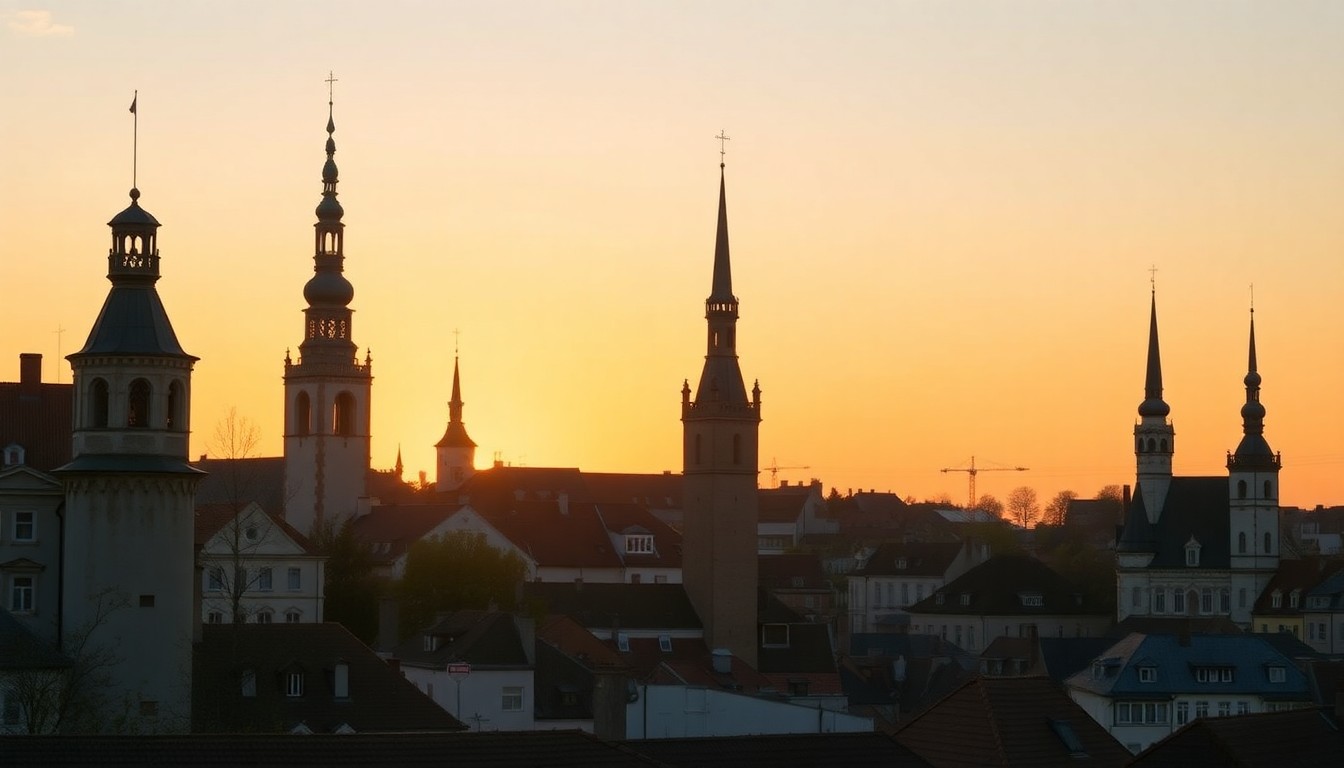
A city of 460,000 on the Gulf of Finland, with a medieval core so intact that it is used as a stand-in for any northern European city a film needs. The Old Town has been on the UNESCO list since 1997, and unlike most such places it is still lived in and worked in rather than purely a stage set.
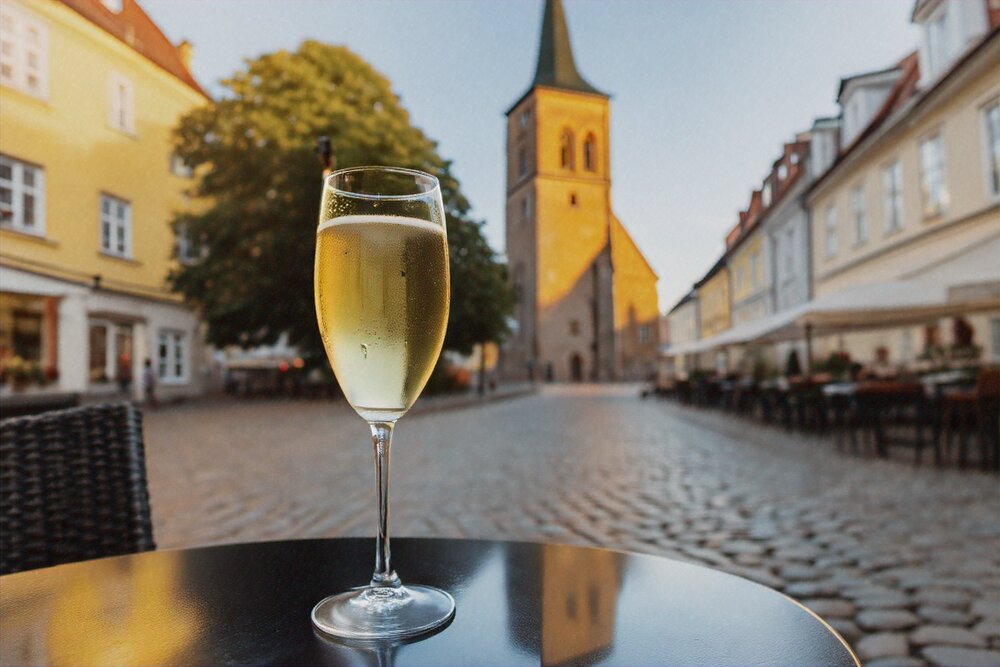
Toompea
The upper town on the limestone hill: the parliament in its pink baroque castle, the onion domes of Alexander Nevsky Cathedral, the Lutheran Dome Church, and the Kohtuotsa and Patkuli viewing platforms that produce every photograph of Tallinn you have ever seen.
The lower town
The merchants' town below: the Town Hall Square, the 15th-century town hall with its weathervane Old Thomas, guild halls, and the Raeapteek — a pharmacy on the same square since 1422, arguably the oldest continuously operating in Europe.
The walls
Nearly two kilometres of medieval wall survive with about twenty towers, several of them climbable. Fat Margaret and Kiek in de Kök are museums; the Hellemann tower lets you walk a stretch of the wall walk itself.
Getting past the cruise crowd
The Old Town takes a lot of day visitors between about 10 and 4 in summer. Go early, go in the evening, or go in winter — a snowy Tallinn old town at dusk is worth the cold.
Public transport
Free for registered Tallinn residents, cheap for everyone else, and largely unnecessary — the centre is walkable end to end in half an hour.
The TV tower
314 m, with a glass-floored viewing deck and an edge walk on the outside if you are that sort of person. It is also where the 1991 standoff happened.
🎨 Kadriorg, Kalamaja & Telliskivi
The mistake most visitors make is spending two days in the Old Town and leaving. The more interesting Tallinn is in the districts around it — an imperial park, a wooden-house neighbourhood, and a former factory quarter that is now the centre of the city's creative economy.
Kadriorg
Peter the Great's baroque palace and park, built for Catherine I from 1718, now an art museum. Beside it is KUMU, the national art museum in a striking 2006 building cut into the limestone, which is the best museum in the Baltics.
Kalamaja
"Fish house" — the old fishermen's and factory workers' district just north of the walls, full of two- and three-storey wooden apartment houses in pastel colours. Gentrified, walkable and the most pleasant neighbourhood in the city.
Telliskivi Creative City
A Soviet-era railway factory complex turned into studios, galleries, bars, a flea market and Fotografiska's Tallinn outpost. Busy on Saturdays, and the best food and drink in the city is here rather than in the Old Town.
Noblessner & Kalasadam
The former submarine shipyard on the seafront, now a waterfront quarter with a swimming area, restaurants and the Põhjala brewery taproom. Ten years ago it was fenced off.
Seaplane Harbour
Lennusadam: a 1917 seaplane hangar with the world's first unreinforced concrete shell dome, holding the submarine Lembit, a Short 184 seaplane and an icebreaker outside. The single best museum for anyone travelling with children.
Balti Jaam market
The market beside the railway station: produce, street food, a very good butcher and fishmonger, and a basement of second-hand everything. Locals shop here.
🎓 Tartu & the South
Tartu is Estonia's second city, its university town since 1632, and — Estonians will tell you — where the country actually thinks. It held the European Capital of Culture title in 2024. It is smaller, cheaper and considerably less touristed than Tallinn, and a good many people prefer it.
The university
Founded by Gustavus Adolphus of Sweden, and the institution around which the national awakening formed. The neoclassical main building and the ruined cathedral on Toome Hill are the centre of the town.
Estonian National Museum
A 2016 building running 355 m along a former Soviet airfield runway, holding the definitive collection of Estonian and Finno-Ugric material culture. Worth the trip on its own.
Supilinn
"Soup town" — a wooden-house district with streets named Potato, Bean and Pea, once a slum and now protected. Ramshackle, green and lovely.
AHHAA
The largest science centre in the Baltics, and unusually good.
Setomaa
The far south-east corner, where the Seto people speak their own language, keep an Orthodox rather than Lutheran tradition, and sing leelo polyphony that UNESCO lists. The Seto Kingdom Day each August elects a regent for the year.
Otepää and the south
Estonia's "winter capital" and its cross-country skiing centre, in the closest thing the country has to hills. Suur Munamägi and the Haanja uplands are nearby.
🌲 Lahemaa National Park
An hour east of Tallinn, Lahemaa was the first national park in the Soviet Union, designated in 1971 — a startling thing to get past Moscow, and it happened partly because the coast was a closed border zone anyway. It covers 747 km² of pine forest, bog, erratic boulders and four peninsulas of very quiet coastline.
Viru bog
The introduction to Estonian bogs: a 3.5 km boardwalk loop through raised peat bog with an observation tower. Easy, free, spectacularly atmospheric in mist, and reachable from Tallinn in an hour.
The manor houses
Palmse, Sagadi and Vihula — Baltic German estates restored to their eighteenth-century condition, with parks, outbuildings and, at Sagadi, a forestry museum. Palmse is the one to see if you only see one.
The fishing villages
Altja, Käsmu and Võsu. Käsmu was the "captains' village", where an implausible number of ship's masters lived, and it now has a small maritime museum in a former border guard station.
The boulders
The Lahemaa coast is strewn with glacial erratics, some the size of houses. Ehalkivi near Letipea is the largest in Estonia and among the largest in northern Europe — 7.6 m high, about 930 m³ and roughly 2,500 tonnes, standing in the shallows.
Wildlife
Elk, roe deer, wild boar and beaver are common; brown bear, lynx and wolf are present and you will almost certainly not see one. Beaver dams are everywhere and easy to find.
Practical
Free to enter, no permits, marked trails and RMK campfire sites you may use for nothing. A car makes it much easier, but there are buses to Võsu and Käsmu.
🛶 Soomaa & the Fifth Season
Soomaa — "land of bogs" — is 390 km² of raised bog, floodplain meadow and river in the south-west, and it is best known for something that happens to it every spring. When the snow melts, the rivers cannot drain and the whole park floods to a depth of several metres. Estonians call it the fifth season.
The flood
Usually March or April, lasting a week or two. Roads and farmyards go under, and the standard way of getting around becomes a boat. Local operators run canoe trips through flooded forest, which is genuinely strange and completely safe.
Haabjas
The traditional dugout canoe of the region, burnt and hollowed from a single aspen. Building one is UNESCO-listed intangible heritage, and a handful of people still make them.
Bog shoes
The other Soomaa speciality: snowshoe-like frames that let you walk across open bog off the boardwalks, on a guided trip. Deeply odd and highly recommended.
Riisa and Kuresoo
Boardwalk trails into the bogs, with towers. Kuresoo's edge drops 8 m over a short distance, which for Estonia counts as dramatic terrain.
When to go
Spring for the flood, summer for canoeing and swimming in brown bog pools, autumn for berries and colour, winter for skiing across frozen bog. There is no wrong season, only different equipment.
Getting there
About two hours from Tallinn via Pärnu. You need a car, and you should book a guide for anything off the boardwalks.
🏝️ Saaremaa & Hiiumaa
The two big western islands are a slower, older Estonia — juniper heath, windmills, limestone cliffs, thatched roofs and a dialect that mainlanders find funny. Saaremaa is the largest island at 2,673 km²; Hiiumaa to its north is a third of that and considerably emptier.
Kuressaare Castle
The best-preserved medieval castle in the Baltics — a late-fourteenth-century bishop's fortress with a full moat, largely unmodified, and a good museum inside. Kuressaare itself is a pleasant small spa town.
Kaali crater
A 110 m meteorite crater with a lake in it, formed around 1500 BC — recently enough that people saw it happen, which is probably why it appears in Baltic and Finnish mythology as the sun falling from the sky.
Panga cliff
A 21 m limestone bank on the north coast, the highest on the islands, with the Baltic below it. Modest by most standards, and the closest thing to a cliff Estonia has.
Hiiumaa's lighthouses
Kõpu is one of the oldest continuously operating lighthouses in the world, lit since 1531, and stands inland on a hill rather than on the shore. Tahkuna and Ristna are the other two.
Windmills and juniper
The five thatched windmills at Angla are the postcard; juniper grows everywhere and ends up in everything from smoked meat to the local gin.
Getting there
Ferries from Virtsu to Muhu (Saaremaa, 30 min) and Rohuküla to Heltermaa (Hiiumaa, 90 min). Book vehicle space in advance in July and August. There are also small flights from Tallinn.
⛵ The Small Islands
Beyond the big two are a couple of thousand smaller islands, about twenty of them inhabited, several with a distinct culture that survived precisely because getting there was difficult.
Kihnu
Sixteen square kilometres with about 700 people, where the men were traditionally at sea and the women ran everything — which is why the striped woollen skirts, the songs and the wedding customs are still living practice. UNESCO lists Kihnu cultural space. Getting around is by sidecar motorcycle.
Ruhnu
Estonia's most isolated inhabited island, far out in the Gulf of Riga with a population in the dozens. Its 1644 wooden church is the oldest surviving wooden building in Estonia. Nearly the whole Swedish-speaking population left in 1944.
Vormsi
The old Estonian Swedish island, with wheel crosses in the churchyard at Hullo and about 400 residents. Flat, forested and made for cycling.
Muhu
The stepping stone to Saaremaa, with the thatched village of Koguva preserved as an open-air museum and, at Pädaste, one of the best hotels and restaurants in the country.
Naissaar and Aegna
Day-trip islands off Tallinn. Naissaar was a Soviet naval mine factory and is now forest with rusting narrow-gauge railway and mine casings in it.
Prangli
An hour from Tallinn's Leppneeme harbour, with a permanent population under a hundred and a genuinely end-of-the-world feel for the effort involved.
🐻 Forest & Wildlife
For its size Estonia has extraordinary large-mammal density — roughly 900 brown bears, several hundred wolves and lynx, and elk everywhere. Half the country is forest, the human population is thin, and much of the interior is empty in a way little of Europe still is.
Bear watching
Hides in the north-east near Alutaguse, booked through local operators, with a very high success rate between May and August. You sit still from evening into the small hours; sleeping in the hide is part of it.
Wolves and lynx
Both present in healthy numbers, both effectively invisible. Estonia's lynx density is among the highest in Europe.
Birds
Estonia sits on a major migration flyway. Matsalu National Park on the west coast is one of the great European staging grounds — hundreds of thousands of geese, cranes and waders in spring and autumn.
Flying squirrels and beavers
The Siberian flying squirrel reaches its western limit in Estonian old forest. Beavers are so numerous they are a nuisance, and their engineering is easy to find in any wet woodland.
Everyman's right
You may walk, ski, cycle, camp for a night, swim and pick berries and mushrooms on unenclosed land regardless of ownership, and the state forest agency RMK maintains free campfire sites, huts and trails across the country. Do not light fires outside them.
Ticks
The one real hazard. Tick-borne encephalitis is present and Estonia is a high-incidence country — vaccination is worth arranging before a summer trip in the forest, and check yourself after every walk.
🔥 Sauna
Sauna in Estonia is not wellness, it is hygiene, sociability and something close to ritual. The smoke sauna tradition of Võromaa in the south-east is on the UNESCO intangible heritage list, and a proper one is a very different experience from the electric box in a hotel basement.
Suitsusaun
The smoke sauna: no chimney. A fire burns for five or six hours heating a pile of stones, the smoke fills the room and is then aired out, and you bathe in the residual heat on soot-blackened walls. Softer, lower and far better than a modern sauna.
Viht
The bundle of leafy birch twigs you beat yourself and each other with. It is not punishment — it moves the hot air, opens the skin and smells extraordinary. Soak it in hot water first.
The cold
Straight into a lake, the sea or a snowdrift, then back in. In winter people cut a hole in the ice for it. This is the point of the exercise, not an optional extra.
Etiquette
Naked in single-sex company, swimwear in mixed public saunas. Wash before entering. Sit on a towel. Ask before throwing water on the stones. Silence is fine and often expected.
Where to try one
Almost any rural guesthouse has one and will heat it for you. For a smoke sauna, Mooska farm in Võrumaa and several Setomaa farms take visitors. In Tallinn, the 1928 Kalma sauna is the historic public bath and Iglupark's floating saunas are the modern take.
How hot
70–90 °C in an electric sauna, more like 60–70 °C in a smoke sauna but far more humid. Estonians will tell you the smoke sauna is gentler. They are right and it will still finish you.
👥 People & Culture
Estonians have a reputation, which they cultivate, for being reserved to the point of comedy. It is broadly true and it is not unfriendliness: small talk is regarded as noise, silence in company is comfortable, and a straight answer is a courtesy. Once that is understood, Estonians are among the easiest people in Europe to deal with.
The population
About 1.36 million (Statistics Estonia, 1 January 2026), roughly 68.5% Estonian and 20.2% ethnic Russian, with the Russian-speaking population concentrated in Tallinn and in the north-eastern industrial towns of Narva and Kohtla-Järve.
Narva
Estonia's third city, over 95% Russian-speaking, with a castle facing Ivangorod fortress across the river — the two staring at each other from opposite sides of the EU's external border. It is a genuinely interesting and much-misrepresented place.
Citizenship and language
Restoring the pre-1940 republic in 1991 meant Soviet-era arrivals had to naturalise, which required an Estonian language exam. Tens of thousands still hold grey "alien's passports". It is the central unresolved issue in Estonian domestic politics — and in March 2025 the Riigikogu amended the constitution (92 votes to 7) to strip citizens of non-EU states, in practice Russian and Belarusian passport-holders, of the local vote; the grey-passport holders voted for the last time at the October 2025 local elections.
Who runs it
A parliamentary republic. Kristen Michal (Reform Party) has been prime minister since 23 July 2024, in a Reform–Eesti 200 coalition that lost its majority on 10 August 2026 when two MPs quit their parties, leaving it 50 of 101 seats; the next general election is due in March 2027. The Riigikogu elected Chancellor of Justice Ülle Madise president on 2 September 2026 with 71 votes in a single round — she succeeds Alar Karis, who chose not to stand again, and is sworn in on 12 October 2026 as the seventh president and second woman in the office.
Local politics
At the 19 October 2025 local elections the Centre Party, the traditional home of the Russian-speaking vote, took 37 of Tallinn's 79 council seats — three short of a majority — while EKRE fell below the 5% threshold in the capital.
Song and dance
Choral singing is a mass participation activity, not a niche. The five-yearly Laulupidu involves a substantial fraction of the whole population as performers or audience.
Nature as identity
Berry and mushroom picking is close to a national sport, most families have or want a summer house, and the everyman's right is defended fiercely. "Going to the forest" is what Estonians do at weekends.
Design and modesty
Estonian design — Marimekko-adjacent textiles, wooden architecture, clean typography — is good and is not shouted about. This applies to the country generally.
🗣️ Language
Estonian is Finno-Ugric, related to Finnish and distantly to Hungarian, and unrelated to Latvian, Lithuanian, Russian, German or anything else nearby. It has fourteen grammatical cases, no future tense, no grammatical gender, and three degrees of phonemic length — short, long and overlong — which is what makes it hard.
English
Very widely spoken, especially by anyone under fifty and anyone in Tallinn or Tartu. You will not have a language problem as a visitor.
Russian
Widely understood, particularly by older people and in the north-east, but it is politically sensitive and defaulting to it with a young Estonian can land badly. Ask in English first.
Finnish
Close enough to Estonian to be partly mutually intelligible, and full of false friends — hallitus is "government" in Finnish and "mould" in Estonian, which has produced a lot of jokes.
Useful Estonian
Tere — hello. Aitäh — thank you. Palun — please / here you are. Jah / ei — yes / no. Kui palju see maksab? — how much is it? Terviseks! — cheers.
Võro and Seto
Southern varieties distinct enough to be considered separate languages by many of their speakers, with their own literature and, in Seto's case, a UNESCO-listed singing tradition.
The word count
Estonian has one of the highest ratios of compound words going, and a famously long list of onomatopoeia. It also gave the world the sentence "Kuuuurija istus töööö ajal jäääärel", which is real.
🍽️ Estonian Food
The traditional cuisine is northern peasant food — rye, pork, potato, dairy, herring and whatever the forest gave — and it is honest rather than refined. The modern one is something else entirely: Tallinn and the islands now hold some of the most interesting new-Nordic cooking anywhere, built on the same short list of ingredients.
What to eat
Must leib
Dense sour black rye bread, and the emotional centre of Estonian food. It goes with everything, it is served with butter before every meal, and emigrants have it posted to them.
Kiluvõileib
The open sandwich of Baltic sprats on buttered black bread with hard-boiled egg and spring onion. The national snack, and the thing to order with a beer.
Verivorst
Blood sausage with barley, eaten at Christmas with lingonberry jam and sauerkraut. Better than it sounds by a wide margin.
Sült and hapukapsas
Jellied meat and sauerkraut — the winter table. Both are far more present in Estonian homes than in restaurants.
Kama
A powder of roasted barley, rye, oat and pea flour, stirred into kefir or yoghurt with berries. Estonia's most distinctive flavour, and now also an ice-cream and a cocktail ingredient.
The new Estonian kitchen
Restaurants working with forest, bog and sea — birch sap, pine, juniper, smoked fish, game, fermented everything. Tallinn holds Michelin stars — 180° by Matthias Diether kept its two stars and NOA Chef's Hall its one in the 2026 guide, with nine Bib Gourmands around the country — and the islands are catching up. Book ahead.
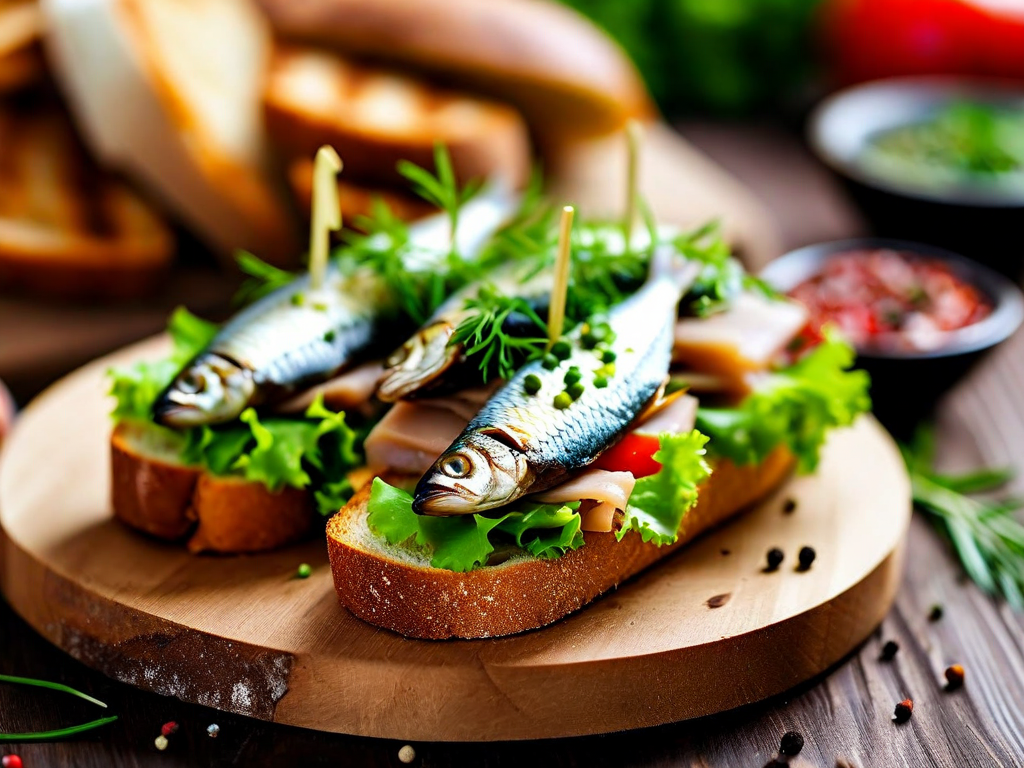
Kiluvõileib
Sprat open sandwich · makes 6 · 15 minutes
Ingredients: 6 slices dense black rye bread; good salted butter; 12 marinated Baltic sprat fillets (Estonian kilu, or Scandinavian anchovy-style sprats); 3 hard-boiled eggs; 3 spring onions; a handful of dill; a few grinds of black pepper.
Method: Butter the bread generously — this is not the moment to be careful. Slice the eggs into rounds and lay them over the butter. Arrange two sprat fillets across each slice. Scatter finely sliced spring onion and torn dill over the top and grind on black pepper. Do not add salt; the sprats bring it.
💡 The proportions matter more than the technique: cold hard butter, room-temperature fish, and enough dill that you can smell it before you taste it.
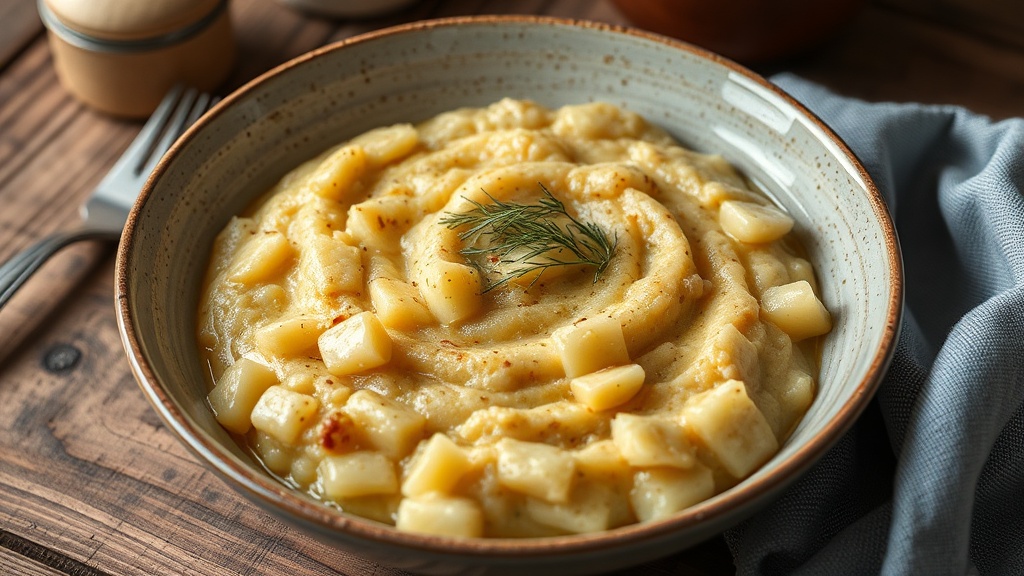
Mulgipuder
Potato and barley mash · serves 4 · 1 hour
Ingredients: 1 kg floury potatoes; 200 g pearl barley; 150 g smoked pork belly or streaky bacon, diced; 1 large onion; 50 g butter; salt; a little milk.
Method: Rinse the barley and simmer it in salted water for about 40 minutes until soft, topping up as needed. Boil the potatoes separately until tender, drain, and combine with the cooked barley. Mash together with the butter and a splash of hot milk — leave it coarse, with lumps of potato still visible. Fry the bacon and onion until deeply browned and spoon over the top with the fat.
💡 Named for Mulgimaa in the south, whose farmers got rich on flax in the nineteenth century and could afford to put barley in with the potato. "Cooking and eating Mulgi puder" was inscribed on UNESCO's Representative List of intangible heritage in December 2024. Serve with lingonberry jam and cold milk.
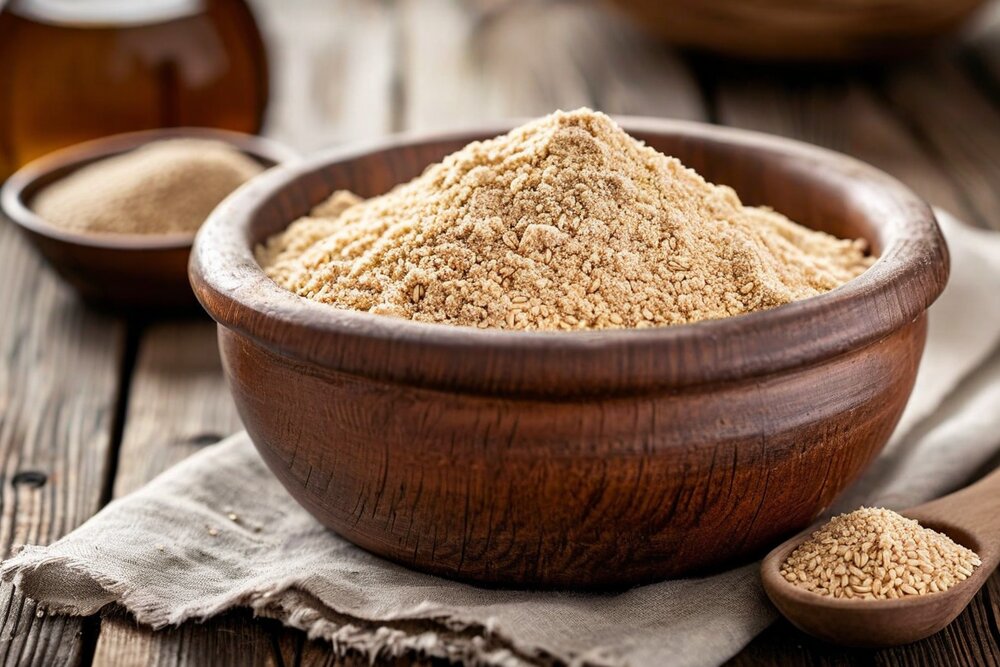
Kama pudding
Roasted grain dessert · serves 4 · 10 minutes plus chilling
Ingredients: 500 ml kefir or plain yoghurt; 6 tbsp kama flour (roasted barley, rye, oat and pea meal — from any Baltic or Finnish grocer); 2–3 tbsp sugar or honey; 200 g berries — lingonberries, blueberries or raspberries; whipped cream to finish.
Method: Whisk the kama into the kefir a spoonful at a time so it does not lump, add the sugar, and chill for at least half an hour so the grain swells and the texture goes silky. Serve in glasses with the berries and a spoon of whipped cream.
💡 Kama was originally a shepherd's ration — dry roasted grain that kept and needed only liquid. If you cannot find it, roast equal parts barley, rye and oat flour in a dry pan until nutty and grind in chickpea flour for the pea element.
🍺 What Estonians Drink
Beer, and increasingly good beer. Estonia has a serious craft scene for a country of 1.4 million, a national liqueur that tastes of medieval pharmacy, and a rapidly growing production of ciders and sparkling apple wines that suit the climate far better than grapes ever will.
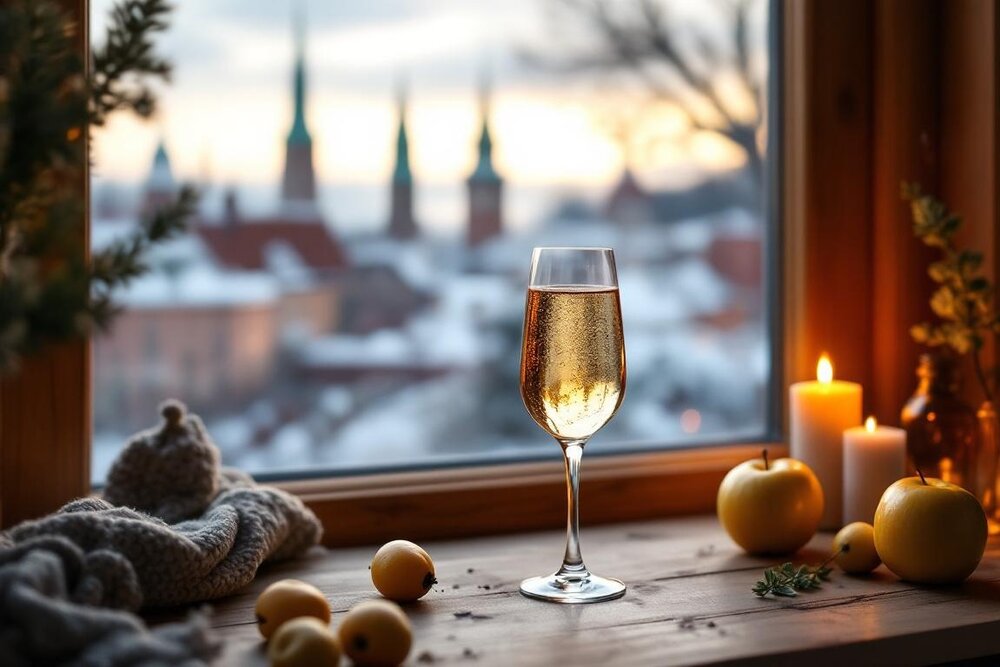
Vana Tallinn
The national liqueur since 1960: rum-based, dark, sweet and heavy with vanilla, cinnamon and citrus oil. Estonians mostly put it in coffee. Everyone takes a bottle home and most of them regret it.
Craft beer
Põhjala from Tallinn is the flagship and exports widely; Sori, Lehe, Pühaste from Tartu and a dozen others are worth finding. Almost every decent bar has a rotating tap list.
A. Le Coq and Saku
The two big industrial brewers, both perfectly drinkable. A. Le Coq in Tartu has been brewing since 1826 and runs a good museum.
Cider and apple wine
Estonia's climate suits apples far better than vines. Jaanihanso and several small producers make traditional-method sparkling apple wine that is genuinely good and much better value than champagne.
Handsa and vodka
Home-distilled spirit in the countryside, and Estonian vodkas in the shops. Juniper appears in a growing number of local gins, which makes sense on an island covered in it.
The rules
Legal drinking age 18; shop sales of alcohol are prohibited between 22:00 and 10:00. Drink-driving is effectively zero tolerance at 0.2 g/l and enforced hard. Estonians drink less than they used to and the country is no longer the bargain booze cruise it was in 2005.
🎉 Festivals & the Year
The Estonian year is organised around light. Midsummer is the biggest date by a distance, the song festival is the biggest event, and the long dark from November to February is survived with candles, sauna and a great deal of indoor culture.
Jaanipäev · 23–24 June
Midsummer, and the most important holiday of the year — bigger than Christmas for many people. Bonfires, beer, sausages, jumping the fire and staying up through a night that never really gets dark. Cities empty; everyone goes to the country.
Laulupidu · every five years
The Song and Dance Celebration in Tallinn — the last one, Iseoma, filled the grounds in July 2025; the next is in 2030. Over 30,000 singers and a crowd of 100,000. If your dates line up, build the trip around it.
Independence Day · 24 February
The 1918 declaration, marked with a military parade and a presidential reception that the whole country watches for the dresses. Cold.
Restoration of Independence · 20 August
The 1991 date, celebrated more casually and often with concerts.
Winter festivals
Tallinn's Christmas market on Town Hall Square runs from late November and claims to descend from the first public Christmas tree in 1441. Dark Nights Film Festival (PÖFF) in November is a serious international festival.
Summer music
Viljandi Folk Music Festival in July is the best of them — the country's traditional music scene at full strength in a small town. Weekend Festival and Intsikurmu cover the other end.
🏅 Sport
Estonia punches enormously above its weight in a narrow set of sports — anything involving endurance, throwing, or precision. Per head of population it is one of the most successful Olympic nations in history.
Cross-country skiing
The national winter sport, centred on Otepää. The Tartu Marathon in February draws thousands over 63 km and is one of the Worldloppet classics.
Rally
Ott Tänak became world rally champion in 2019 and finished the 2025 season still in mathematical contention, then announced he would not drive a single WRC round in 2026. Rally Estonia is a WRC round again — the 16–19 July 2026 edition, fast gravel through forest, was won by Finland's Sami Pajari — and it is the closest thing the country has to a mass sporting event.
Throwing and lifting
Gerd Kanter's discus gold in 2008, Erki Nool's decathlon gold in 2000, and a long line of wrestlers and weightlifters going back to Georg Lurich and Kristjan Palusalu in the 1930s.
Basketball
The most popular team sport, and the national league is decent. Kalev/Cramo is the club most people follow.
Kelly Sildaru
Freestyle skier, X Games champion at thirteen, world champion at sixteen (2019), Olympic bronze medallist in 2022 — and for a while the most famous Estonian under twenty in the world. At Milano-Cortina 2026 she went out in halfpipe qualifying while her younger brother Henry Sildaru took silver in the men's halfpipe on 20 February — Estonia's only medal of those Games.
Olympic scorecard
Paris 2024 was the first Summer Games since 1996 at which Estonia won nothing — épée fencer Nelli Differt finished fourth. Milano-Cortina 2026 brought one silver (Henry Sildaru) from 31 athletes, plus Kristjan Ilves sixth and seventh in Nordic combined and figure skater Niina Petrõkina seventh, and Marie Kaldvee and Harri Lill were the country's first-ever Olympic curlers.
Host nation
Estonia hosted the UEFA European Under-17 Championship, 25 May – 7 June 2026, in Tallinn and Rakvere — Italy beat Belgium on penalties in the final, and the hosts lost all three group games. Tallinn also staged the European Figure Skating Championships (January 2025) and the Rhythmic Gymnastics Europeans (June 2025).
Chess and mind sports
Paul Keres, on the five-kroon note, was one of the strongest players never to become world champion. Estonia takes this personally and still does well at chess for its size.
🌦️ Climate & When to Go
Cool, damp, maritime and defined by how much light there is. Tallinn gets about 19 hours of daylight in June and about six in December, and that difference matters far more to the experience of the country than the temperature does.
Summer · June–August
The season. 17–22 °C, occasionally 30, long light evenings and a country that visibly cheers up. Midsummer, festivals, swimming in the Baltic at a bracing 18 °C, and everything open. Also the busiest and most expensive.
Autumn · September–October
Underrated. Mushrooms, forest colour, migrating cranes at Matsalu, cheap accommodation and almost no other visitors. Cold and wet by late October.
Winter · November–March
Dark by 15:30 in December, −5 to −15 °C in the cold spells, and often snow-covered. This is when saunas, Christmas markets, skiing and museums make sense. November before the snow is the one genuinely grim month.
Spring · April–May
The thaw, the Soomaa flood, and a country that goes from brown to green in about three weeks. May is lovely and still quiet.
The Baltic
Sea temperature reaches about 17–20 °C in July and August in the shallow bays and is otherwise cold. It freezes near shore most winters, and ice roads to the islands sometimes open — the longest legal ice road in Europe runs to Hiiumaa.
What to pack
A windproof layer in any season — the wind off the Baltic is the thing that gets people. Waterproof shoes for the bogs. In winter, proper boots, a hat and something to cover your face.
✈️ Getting There
Tallinn Airport (TLL) is small, 4 km from the centre, connected by a tram in about fifteen minutes, and has repeatedly been voted the most pleasant airport in Europe — it has a library, a cinema and actual armchairs. Getting to Estonia is easy from anywhere in Europe.
Flights
airBaltic, Finnair, Lufthansa, LOT, Ryanair, Wizz Air and others. Direct connections to most of northern and central Europe; long-haul goes via Helsinki, Riga, Frankfurt or Warsaw.
Ferry from Helsinki
Two hours across the gulf, several sailings a day with Tallink, Viking Line and Eckerö, and cheap. A very common way to arrive, and a Helsinki day trip in the other direction is entirely normal.
Ferry from Stockholm
Overnight with Tallink, about 16 hours. A pleasant way to arrive if you have the time.
Bus
Lux Express and Ecolines connect Tallinn with Riga (4.5 h), Vilnius (9 h) and Warsaw. Comfortable, cheap and with wifi that works.
Rail Baltica
The new standard-gauge line intended to link Tallinn to Warsaw and the rest of the European network is under construction, with completion pushed into the 2030s — in September 2026 the government was weighing a further slip to 2034. It does not help you yet.
Entering from Russia
The Narva road bridge has been closed to vehicles since February 2024 and now handles pedestrians only, with hours-long queues and Estonian exit checks; the government has said it can shut the crossing entirely at short notice. It is not a route to plan around. Check current status before assuming anything.
🇨🇿 From the Czech Republic
Estonia is genuinely easy from Prague — EU, Schengen, eurozone, no visa, no border check, no currency to change and no roaming charges. Flying time is under two and a half hours direct.
Direct flights
Prague–Tallinn has been served directly by low-cost carriers, typically seasonally and a few times a week. Availability changes year to year, so check Ryanair, Wizz Air and airBaltic before assuming a connection is needed.
With one stop
airBaltic via Riga is the most reliable routing and often the cheapest; Finnair via Helsinki, LOT via Warsaw and Lufthansa via Frankfurt or Munich all work. Total travel time 4–7 hours.
Documents
A Czech ID card is enough. No visa, no vaccination requirement, and the European Health Insurance Card covers state healthcare — though travel insurance is still worth having for repatriation and private clinics.
Czech embassy
The Czech Republic maintains an embassy in Tallinn. Register your trip with the Ministry of Foreign Affairs system DROZD before you go — it takes two minutes and matters if anything goes wrong.
MZV advice
The Czech Ministry of Foreign Affairs treats Estonia as a low-risk destination with no travel restrictions. Check the current entry on mzv.cz before departure anyway; the north-eastern border area is the only part with any advisory content.
Money
Estonia uses the euro, so at roughly 25 Kč to the euro a €1.50 coffee is about 38 Kč and a €12 restaurant main about 300 Kč. Cards work absolutely everywhere, including in village shops and on buses.
🧭 Practical Estonia
One of the easiest countries in Europe to travel in. English is widespread, everything takes cards, the trains and buses run on time and are cheap, and the whole country fits comfortably into a week.
Getting around
Elron trains from Tallinn to Tartu, Narva, Pärnu and Viljandi — modern, punctual and inexpensive. Long-distance buses (tpilet.ee) cover everywhere the trains do not. Buy tickets on your phone.
Driving
Good roads, low traffic, and the essential tool for Lahemaa, Soomaa and the islands. Headlights on at all times, day and night, all year — this is enforced. Winter tyres are compulsory from December to March.
Cards and cash
Estonia is close to cashless. Cards work everywhere including on rural buses, and many small businesses no longer keep a float. Carry €20 in notes for emergencies and expect never to use it.
Connectivity
Free public wifi is almost universal — cafés, buses, petrol stations, forest campsites. Mobile coverage reaches essentially the whole country including the bogs. EU roaming applies, so a Czech SIM works at home rates.
Tap water
Safe and good everywhere. Tallinn's is soft and perfectly pleasant.
Tipping
Not expected. Rounding up or 10% for genuinely good restaurant service is generous and appreciated, and nobody will chase you for it.
💰 Costs
Cheaper than the Nordics, more expensive than it was. Estonia is now roughly on a level with the Czech Republic for restaurants and groceries and a little above it for accommodation, having caught up fast over the last decade.
Accommodation
Hostel dorm €20–30 (500–750 Kč). Mid-range Tallinn hotel €70–120 (1,700–3,000 Kč). Rural guesthouse with sauna €60–100. Design hotels and island manor houses €150–250.
Eating
Lunch special (päevapraad) €7–10 — the single best value in the country. Restaurant main €12–20. Tasting menu at a top Tallinn restaurant €90–150. Coffee €3.
Beer
€4–6 for a craft pint in Tallinn, €3–4 for a standard lager outside it, around €1.50–2.50 in a shop. Alcohol may not be sold in shops between 22:00 and 10:00.
Transport
Tallinn–Tartu train €12–14. Tallinn–Pärnu bus around €10. Car rental €30–60 a day. The Virtsu–Muhu ferry about €3 per person and €10 for a car. Public transport in Tallinn is free for registered residents and about €2 a ride for everyone else.
Museums
€8–15 for the big ones — KUMU, Seaplane Harbour, the Estonian National Museum. Most national parks and all forest trails are free.
Taxes in the price
VAT has been 24% since 1 July 2025 and the flat income tax rose to 24% in 2026, which is why the "cheap Baltic" reputation is out of date. Tallinn public transport for non-residents: €2 for an hour, €5.50 for a day, €30 for 30 days — tap a bank card at the front-door validator; no cash.
Daily budget
Backpacking €50–65 a day (1,250–1,650 Kč). Comfortable mid-range €100–140 with a rental car. Good hotels and restaurants €200+. Estonia rewards a mid-range budget unusually well.
🛡️ Safety
Estonia is a very safe country by any measure — low violent crime, competent police, EU-standard healthcare and no natural hazards worth the name. The genuine risks here are ticks, ice and, in a different register, the neighbour.
Crime
Petty theft in the Tallinn Old Town and around the port in summer, and that is essentially the list. Violent crime against visitors is rare. Nightlife around Tallinn's Old Town can get loud with stag parties, which is the most likely nuisance.
Ticks
The real hazard. Tick-borne encephalitis is endemic and Estonia has one of the higher incidence rates in Europe; Lyme disease is also present. If you plan to walk in forest or long grass, arrange TBE vaccination well before the trip and check yourself daily.
Ice and cold
Winter roads and pavements are properly icy; shoes with grip matter. Never walk on sea or lake ice without local advice — Estonians do it constantly and know exactly which ice.
Bogs
Stay on the boardwalks unless you have a guide and bog shoes. Open bog is genuinely dangerous and people do get into trouble in it.
Emergency
112 for everything, with English-speaking operators. Healthcare is good; the European Health Insurance Card covers state treatment for EU citizens.
The border
Estonia shares a long border with Russia and its north-east is a NATO frontier. On 19 September 2025 three Russian MiG-31s spent twelve minutes in Estonian airspace near Vaindloo island — the longest violation on record — and Estonia invoked NATO's Article 4 for consultations. Day-to-day life is entirely normal and Narva is a perfectly ordinary city to visit, but do not wander off marked areas near the frontier, and follow current official advice. The US State Department keeps Estonia at Level 1, its lowest advisory tier, and the Czech MFA treats it as low-risk.
🏨 Where to Stay
Tallinn Old Town
Boutique hotels in medieval merchant houses, and the highest prices in the country. Atmospheric, central, and noisy at weekends on the streets near Town Hall Square.
Kalamaja and Telliskivi
Where to stay if you want the city rather than the postcard — apartments and small hotels in the wooden-house district, ten minutes' walk from the Old Town and next to the best bars.
Rotermann and the port
Modern hotels in the converted industrial quarter between the Old Town and the ferry terminals. Convenient for a Helsinki hop.
Rural guesthouses
The characteristic Estonian stay: a farmhouse with a lake, a sauna heated on request and breakfast from the garden, for €60–100. Book through puhkaeestis.ee or directly.
Manor houses
The Baltic German estates restored as country hotels — Pädaste on Muhu, Vihula in Lahemaa, Alatskivi near Peipus. Expensive and genuinely special.
RMK huts and campsites
The state forest agency maintains free campfire sites, shelters and basic huts across the country, bookable or first-come. Combined with the everyman's right, camping in Estonia costs nothing.
📰 Media, Digital Life & Freedom
Estonia consistently ranks among the top handful of countries in the world for press freedom and internet freedom — 3rd of 180 in the 2026 RSF World Press Freedom Index (score 88.54, behind Norway and the Netherlands; 2nd in 2025) and consistently at or near the top of Freedom House's internet-freedom rankings, alongside Iceland. This is one of the more genuinely remarkable things about a country that was a closed Soviet republic within living memory.
Internet as a right
Estonia declared internet access effectively a social right in 2000 and built free public wifi across the country. There is no state filtering.
The media landscape
ERR is the well-regarded public broadcaster; Postimees and Eesti Päevaleht are the main dailies; Delfi dominates online. Media in Estonian and in Russian operate in largely separate spheres, which is a recognised problem.
Disinformation
Estonia has been dealing with Russian-language information operations for two decades and takes them seriously — it is one of the reasons NATO's cyber defence centre is in Tallinn.
Digital privacy
The X-Road model is built so that every access to your data is logged and visible to you. Estonians can see which official looked at their records and when, and complain about it. That is a meaningfully different design from most e-government.
Language politics
The gradual transition of Russian-language schools to Estonian-language instruction is the sharpest ongoing domestic argument. It is worth understanding before you have opinions about it in a Narva bar.
Startups
Skype was built in Tallinn. So were Wise, Bolt, Pipedrive and Playtech. Estonia has more unicorns per head than anywhere in Europe, and the Skype money seeded most of what came after.
🤯 Fascinating Facts
The world's first internet vote
Estonia held binding online voting in a national election in 2005 and is still, twenty years later, one of very few countries that does it at all.
Skype was Estonian
Written in Tallinn in 2003 by Estonian developers. The proceeds funded a generation of startups and the phrase "Skype mafia" is used locally without irony.
More meteorite craters than most
Kaali on Saaremaa fell around 1500 BC, in front of witnesses, and appears in Finnish and Estonian myth as the sun falling to earth.
A quarter of the nation in one field
An estimated 300,000 people gathered to sing at the Tallinn Song Festival Grounds in 1988 — more than a quarter of all Estonians.
675 km of people
The Baltic Way of 23 August 1989 joined two million hands from Tallinn to Vilnius, and is on the UNESCO Memory of the World register.
The oldest pharmacy
The Raeapteek on Tallinn's Town Hall Square has traded on the same spot since at least 1422 and still sells medicine. Its historic stock included burnt bees and powdered unicorn horn.
The tallest waterfall is about 30 m
Valaste, tumbling off the limestone Klint near Kohtla-Järve, is the highest at roughly 30 m — though a drainage ditch feeds it. Jägala, 8 m high and 50 m wide, is the widest natural one, and in a hard winter it freezes into a wall you can walk behind.
Two World Heritage Sites, seven living traditions
Tallinn's Old Town (1997) and three points of the Struve Geodetic Arc (2005) — the 19th-century meridian survey run from Tartu Observatory, with markers at Simuna and Võivere. UNESCO's intangible lists carry seven Estonian entries: the Baltic song and dance celebrations and Kihnu cultural space (2008), Seto leelo (2009), the Võromaa smoke sauna (2014), the Soomaa expanded dugout boat (2021, urgent-safeguarding list), Mulgi puder (2024) and the multinational Ukrainian pysanka (2024). The tentative list holds the Baltic Klint, the wooded meadows and Kuressaare fortress.
Fourteen cases, no future
Estonian has fourteen grammatical cases and no future tense. You say "I go tomorrow" and let the adverb carry it.
Rebounding land
The country is still rising out of the sea after the last ice age at up to 3 mm a year. Estonia is measurably getting bigger.
👤 Notable Estonians
Arvo Pärt (b. 1935)
For years the most performed living composer in the world. His tintinnabuli style — spare, slow, bell-like — is one of the twentieth century's genuine inventions. The Arvo Pärt Centre at Laulasmaa is worth the trip from Tallinn.
Lennart Meri (1929–2006)
Writer, film-maker, deportee to Siberia as a child, and the first president of the restored republic. His travel writing on Finno-Ugric peoples is still read.
Kersti Kaljulaid (b. 1969)
President 2016–2021, the first woman and the youngest to hold the office, and a forceful international advocate for Estonia's digital state.
Paul Keres (1916–1975)
One of the strongest chess players never to become world champion, beaten to it repeatedly by circumstance and politics. He was on the five-kroon note.
Jaan Tallinn (b. 1972)
A founding engineer of Skype and Kazaa, and now one of the most prominent funders of AI safety research worldwide.
Ott Tänak (b. 1987)
World Rally Champion 2019, the first Estonian to take the title, and runner-up three times. After the 2025 season he switched the ignition off — no WRC rounds in 2026, not even Rally Estonia. Rally is close to a national religion.
Kelly Sildaru (b. 2002)
Freestyle skier, X Games champion at thirteen and Olympic bronze medallist in 2022, from a country with no mountains. Her brother Henry (b. 2006) won Estonia's only medal at Milano-Cortina 2026, silver in the halfpipe.
Ernst Öpik (1893–1985)
Astronomer who predicted the Oort cloud two decades before Oort, estimated the distance to Andromeda in 1922, and worked out how asteroids and comets behave entering the atmosphere.
Karl Ernst von Baer (1792–1876)
Baltic German naturalist born in Estonia, the founder of embryology, who discovered the mammalian egg cell. He was on the two-kroon note.
📸 Photo Gallery
Click any image to enlarge.
✍️ Author's Note
Estonia is the country I recommend most often to people who say they want to go somewhere in Europe they have not been. It is cheap enough, close enough, easy enough and small enough that a week gets you the whole thing, and it is different enough from central Europe to be genuinely worth the trip rather than a variation on it.
The specific thing to do here is get out of Tallinn. The Old Town is beautiful and it takes a day, maybe two. What stays with you is the Viru bog at seven in the morning with mist on the pools, a smoke sauna in Võrumaa followed by a lake, a ferry to Hiiumaa in flat grey weather, an empty beach on the west coast with pine behind it. The country's real subject is quiet, and you cannot get quiet from a cobbled square in July.
Go in September if you can. The light is low and gold, the forest is full of mushrooms, the cranes are moving through Matsalu, everything costs less and there is nobody there. Second choice is late May. Midsummer is wonderful if you have Estonian friends and slightly pointless if you do not, because the whole country vanishes into private gardens.
And spend an evening thinking about what they built. A country of 1.3 million people, occupied for fifty years, that came out of it in 1991 with nothing, decided to put the entire state online, and now has a functioning digital democracy and more tech companies per head than anywhere in Europe. It is a small place that made a very large decision and stuck to it. That is worth a look on its own.
— Radim Kaufmann
Support This Project 🌍
This World Travel Factbook is a labor of love – free to use for all travelers. If you find it helpful, consider supporting its continued development.
