
🇨🇫 Central African Republic at a Glance
🌏 Overview — Why Visit Central African Republic
The Central African Republic sits at the geographic heart of Africa, a landlocked nation of vast savannas, dense equatorial rainforests, and winding rivers that together create one of the continent's last great wildernesses. With roughly 5.5 million people (UN mid-2025 estimate) spread across an area the size of France, this is one of the most sparsely populated countries on Earth—a place where nature still dominates the landscape and where wildlife roams in numbers that recall an earlier age.
For the intrepid traveler willing to embrace real adventure, the Central African Republic offers experiences that are virtually impossible to find anywhere else. In the southwestern corner, the Dzanga-Sangha rainforest shelters one of the world's densest populations of western lowland gorillas, habituated groups that can be tracked on foot through pristine jungle. At Dzanga Bai—a vast mineral-rich clearing in the forest—dozens of critically endangered forest elephants gather daily, observed from elevated platforms in a spectacle that ranks among Africa's greatest wildlife encounters. The indigenous BaAka people, renowned forest-dwellers, share their ancestral knowledge of the rainforest with visitors who join them on traditional net hunts and medicinal plant walks.
Beyond the famous southwest, the country's northern savannas harbor the vast Manovo-Gounda St Floris National Park, a UNESCO World Heritage Site that once rivaled the Serengeti for its wildlife concentrations. The Boali waterfalls cascade dramatically near Bangui. The Ubangi River, forming much of the southern border, carries pirogue canoes past villages where life moves at the rhythm it has kept for centuries. And everywhere, the warmth and resilience of Central Africans—who have endured decades of conflict yet maintain extraordinary hospitality—leave lasting impressions on those who visit.
2026 Update: The security situation in the Central African Republic remains challenging, with armed groups still controlling significant portions of the country. However, the southwestern Dzanga-Sangha region has remained relatively stable and accessible for organized tourism, thanks in part to the presence of international conservation organizations. All Western governments advise against travel to most of the country; President Touadéra began a third term on 30 March 2026 with Russian Africa Corps contractors still guaranteeing his security. Those who visit typically fly directly to Bayanga via charter from Bangui and travel with experienced tour operators specializing in gorilla and wildlife tourism.
⚠️ Critical Travel Advisory
- US Level 4 "Do Not Travel" (reissued 15 January 2026); UK FCDO, France and the EU advise against all travel
- Armed conflict ongoing: Armed groups control large parts of the country outside Bangui
- Limited embassy services: Few Western embassies maintain full operations in Bangui
- Dzanga-Sangha exception: The southwestern park area is generally safer and accessible via charter flight
- Cash only economy: ATMs are unreliable; bring euros or CFA francs in cash
- Limited medical facilities: Evacuations to Douala (Cameroon) or Europe may be necessary
- Malaria risk: Year-round throughout the country; prophylaxis essential
- Insurance: Ensure your policy covers evacuation from conflict zones
📛 Name & Identity
The Central African Republic takes its name from its geographic position at the very center of the African continent. During the colonial era, the territory was known as Ubangi-Shari (French: Oubangui-Chari), named after the two great rivers—the Ubangi and the Chari—that define much of its borders and drainage systems. When independence approached in the late 1950s, founding father Barthélemy Boganda championed the name "Central African Republic," envisioning it as the nucleus of a broader Central African federation that never materialized.
The country's identity has been shaped by a complex history of colonialism, autocratic rule, and civil conflict. Most notoriously, President Jean-Bédel Bokassa declared himself Emperor Bokassa I in 1976, renaming the country the "Central African Empire" and staging a lavish coronation ceremony modeled on Napoleon's. French paratroopers overthrew him in 1979, and the republic was restored. Since independence in 1960, the country has experienced multiple coups and armed conflicts, including the ongoing civil war that erupted in 2012.
The Central African Republic is home to more than 80 ethnic groups, with the Baya (33%), Banda (27%), Mandjia (13%), Sara (10%), Mboum (7%), and M'Baka (4%) being the largest. Each group maintains its own language and cultural traditions. In the southwestern rainforests, the BaAka (also called Bayaka or "Pygmy" peoples, though many consider this term pejorative) represent one of Africa's oldest indigenous communities, with deep ancestral knowledge of the forest ecosystem.
French serves as the official language—a legacy of colonial rule—and is used in government, education, and formal business. However, Sango, a creole language based on the Ngbandi tongue, functions as the true national language spoken and understood throughout the country, serving as a unifying force across ethnic lines. Most Central Africans are bilingual in Sango and their ethnic group's language, with French as a third language for the educated.
🗺️ Geography & Regions
The Central African Republic covers 622,984 square kilometers of landlocked territory in the heart of Africa—roughly the size of France or the US state of Texas. The country sits on a vast rolling plateau averaging about 600 meters in elevation, forming a natural watershed between two of Africa's great river systems: the Congo basin to the south and the Lake Chad basin to the north. Mount Ngaoui, at 1,420 meters in the western Karre Mountains near the Cameroon border, is the highest point.
The landscape divides into three broad ecological zones. The northern savannas, part of the Sahelo-Sudanian belt, feature open grasslands and scattered trees that become increasingly arid toward the Chadian border—this is the domain of the Manovo-Gounda St Floris National Park. The vast central plateau consists of Sudano-Guinean savanna, a mosaic of grasslands and gallery forests along rivers, where most of the population lives. The southern and southwestern regions transition into dense equatorial rainforest, part of the great Congo Basin forest—the second-largest tropical forest on Earth—and home to the extraordinary biodiversity of Dzanga-Sangha.
The country shares borders with six nations: Chad (1,556 km) to the north, Sudan (174 km) and South Sudan (1,055 km) to the northeast and east, the Democratic Republic of the Congo (1,747 km) to the south, the Republic of the Congo (487 km) to the southwest, and Cameroon (901 km) to the west. The Ubangi River, a major tributary of the Congo, forms much of the southern border and passes through Bangui, the capital. The Sangha River in the southwest flows through the rainforest region toward the Congo.
The climate is tropical throughout, with a wet season running roughly from May to October in the south and June to September in the drier north. Temperatures are consistently warm, ranging from about 21°C to 36°C depending on season and region. The south receives up to 1,800 mm of rainfall annually, while the far north is considerably drier. The dry season, particularly from December to February, brings the hot, dusty Harmattan wind from the Sahara to the northern regions.
🗺️ Map of Central African Republic
The Central African Republic sits almost exactly at the continent's centre — landlocked, roughly 6°N of the equator, bordered by six countries. Bangui hugs the Ubangi River in the far southwest; Dzanga-Sangha lies deeper southwest still, reachable in practice only by charter aircraft.
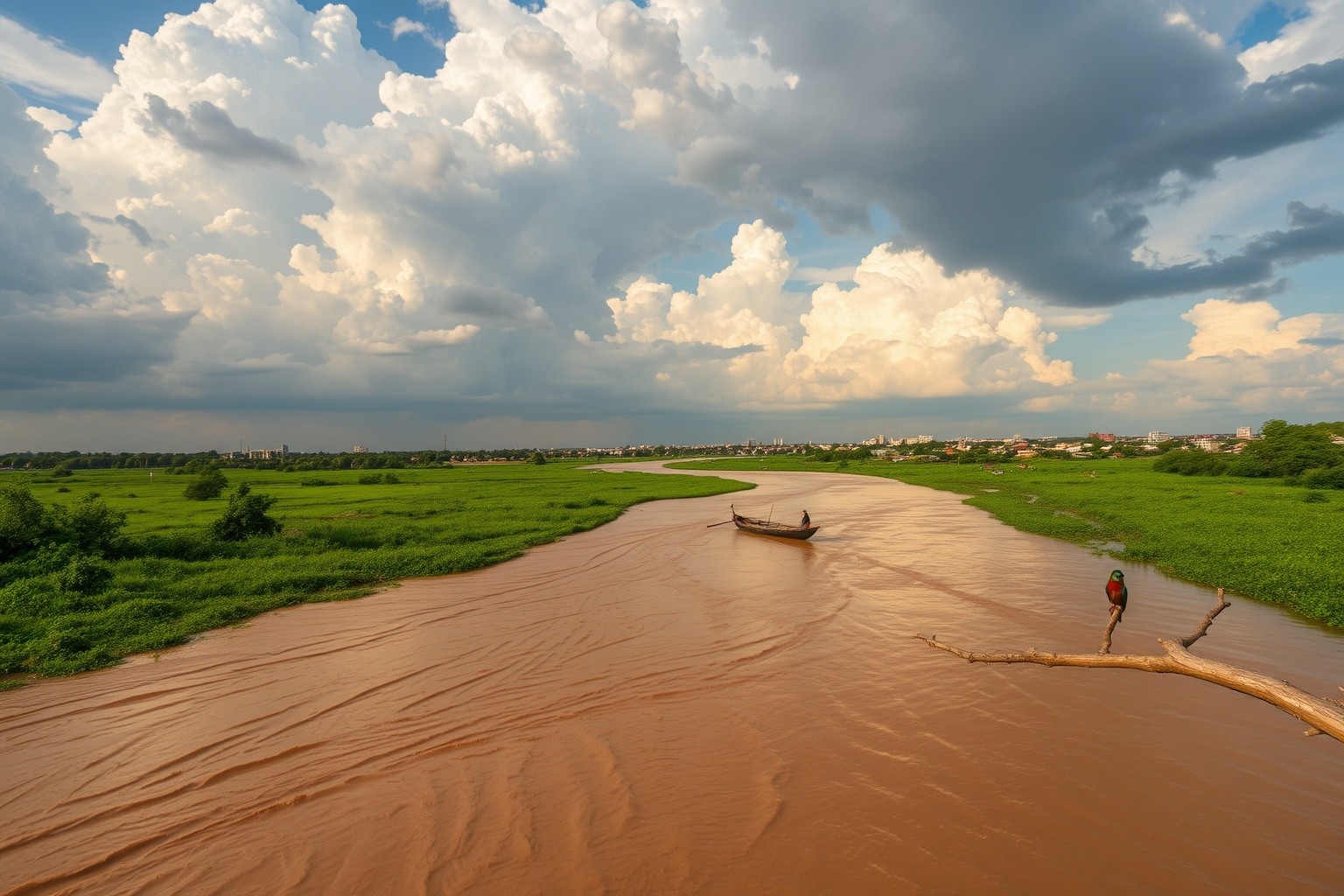
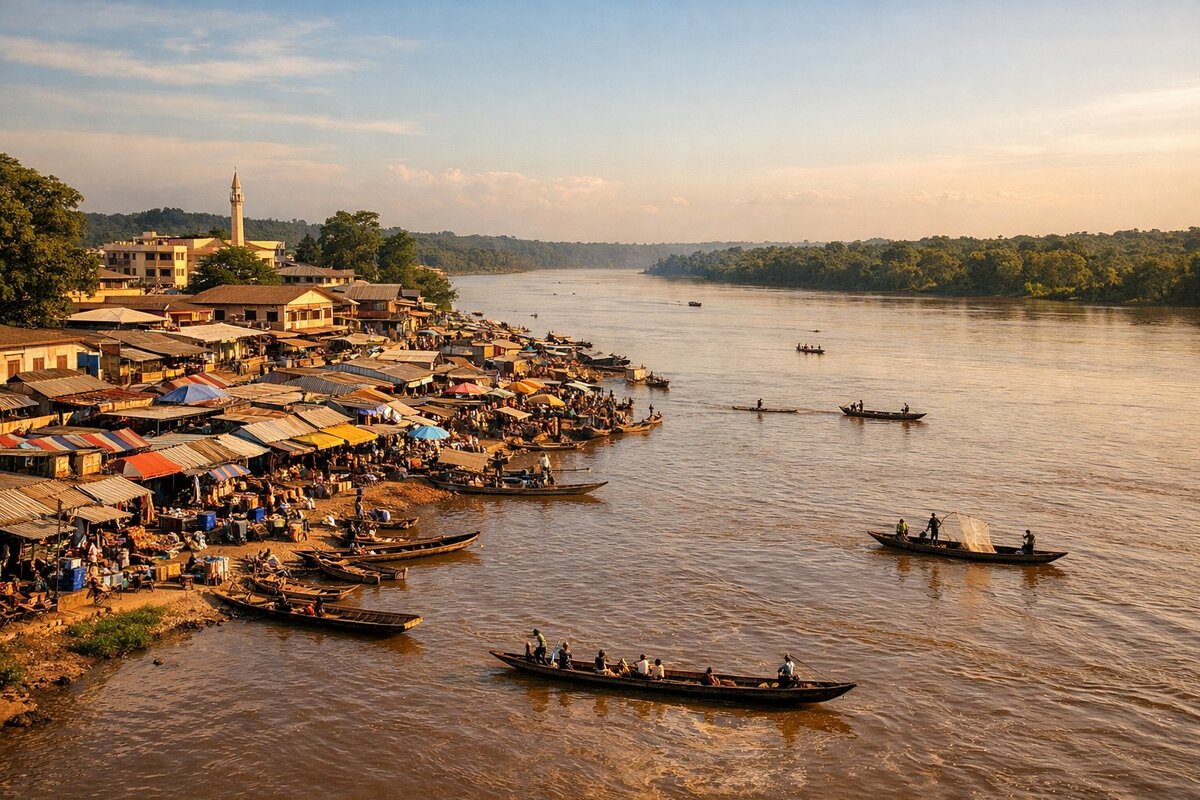
The Ubangi River
The mighty Ubangi flows past Bangui, forming the southern border — the country's lifeline for transport, fishing, and commerce
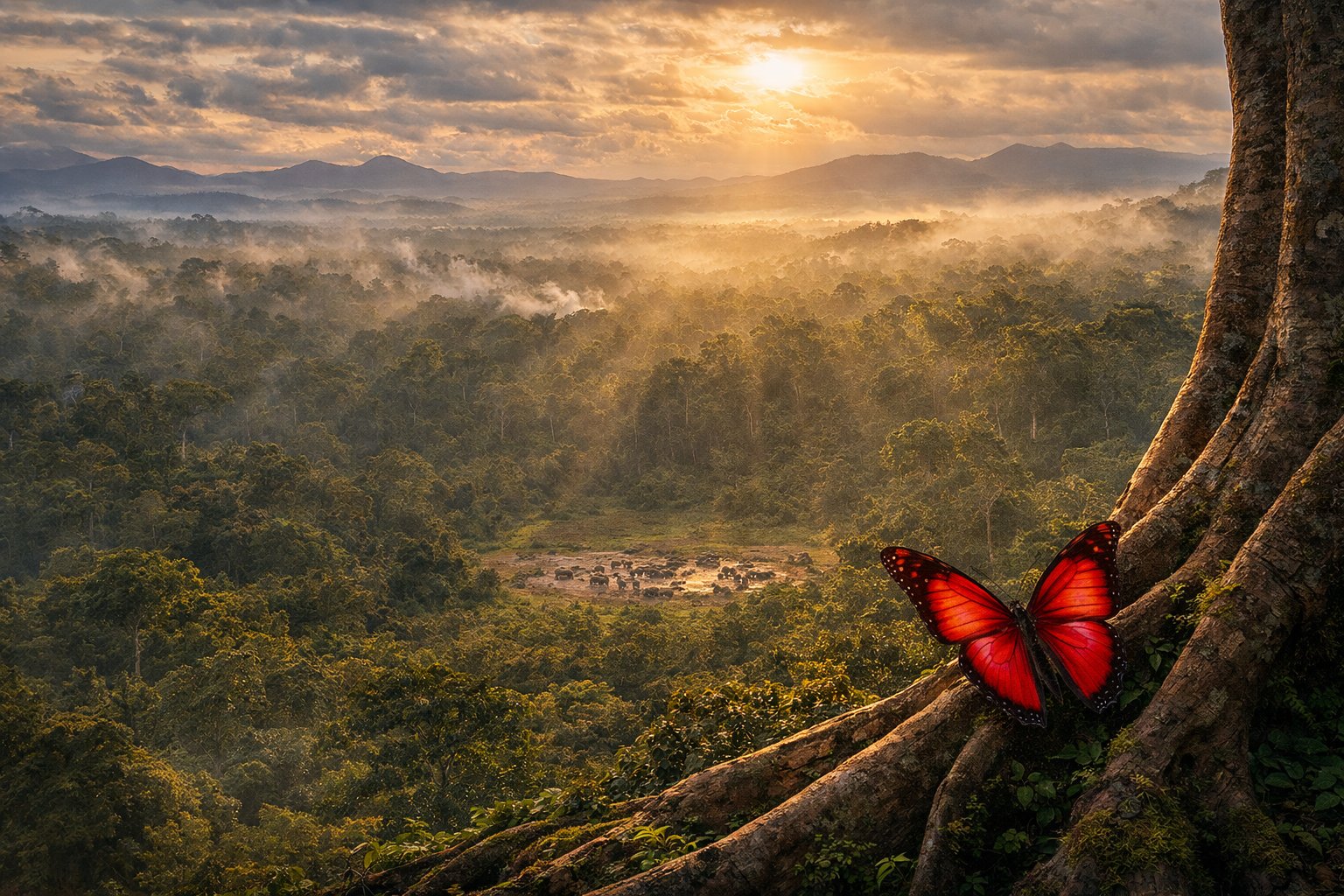
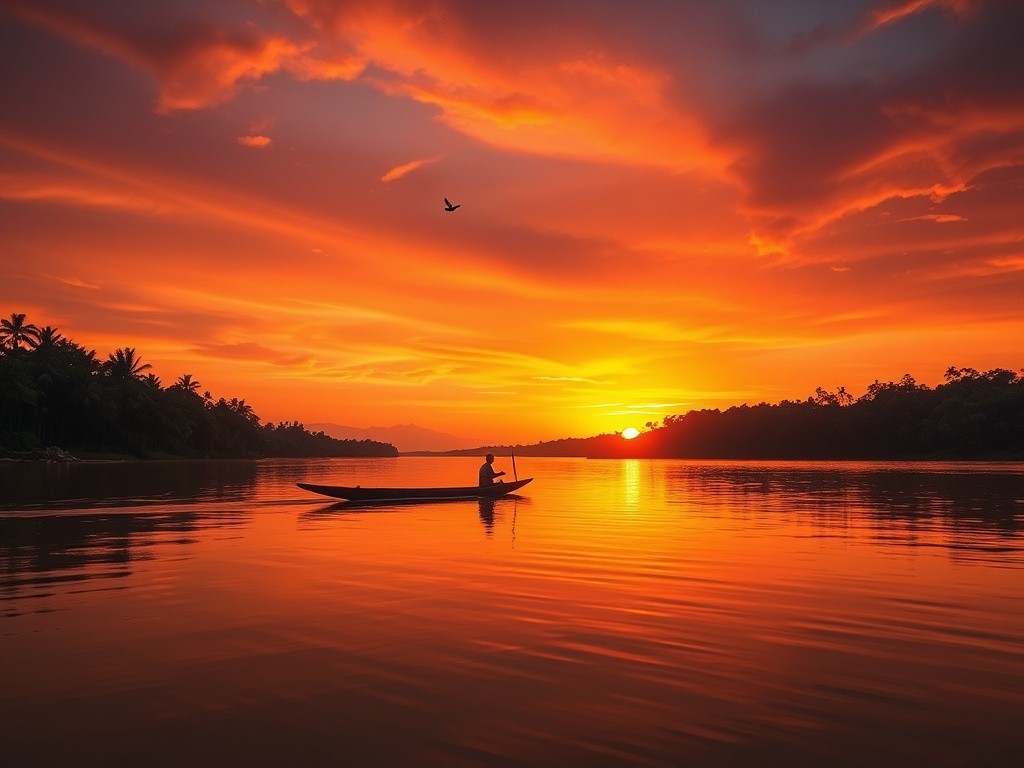
Savanna at Sunset
Golden light bathes the vast Sudano-Guinean savanna — the open grasslands and scattered trees that define the Central African landscape
🏛️ History
Human habitation in the Central African Republic dates back at least 10,000 years, when shifting climate patterns pushed hunter-gatherer societies southward into the Sahel and savanna regions. The BaAka and other forest-dwelling peoples are among the oldest inhabitants, while Bantu-speaking farmers migrated into the region over the past two millennia, bringing agriculture and iron-working. Before European contact, the territory was influenced by powerful neighboring kingdoms—including the Kanem-Bornu Empire to the north and various Bantu and Sudanic states—but never unified under a single indigenous power.
The region's modern tragedy began with the slave trade. From the 17th century onward, Arab and African slave raiders devastated the population, capturing hundreds of thousands of people for sale to North Africa and the Atlantic trade. French colonizers arrived in the late 19th century, establishing Bangui as a trading post in 1889 and formally creating the colony of Ubangi-Shari in 1903. French rule proved exceptionally brutal—the colonial government leased vast territories to private concessionary companies that used forced labor to extract rubber, ivory, and other resources, causing widespread suffering and population decline.
Independence came on August 13, 1960, under President David Dacko, but stability proved elusive. In 1966, Colonel Jean-Bédel Bokassa seized power in a coup and ruled with increasing megalomania—declaring himself Emperor in 1976 and staging an extravagant coronation financed largely by France. His regime ended in 1979 when French troops intervened after the massacre of schoolchildren. Subsequent decades brought a cycle of coups, brief democratic interludes, and renewed authoritarian rule. President Ange-Félix Patassé (1993–2003) and General François Bozizé (2003–2013) each came to power promising stability but ended in overthrow.
The current crisis began in 2012 when Séléka, a coalition of predominantly Muslim rebel groups from the northeast, launched an insurgency that captured Bangui in March 2013. The resulting sectarian violence between Séléka and Anti-balaka (predominantly Christian militias) displaced over a million people and devastated the country. Despite a peace agreement signed in 2019 and the election of President Faustin-Archange Touadéra in 2016 (re-elected 2020, and again on 28 December 2025 for a seven-year third term after a 2023 referendum removed term limits), armed groups still control significant territory. A UN peacekeeping mission, MINUSCA, has been present since 2014, and Russian Wagner Group mercenaries operated in the country from 2018 until their role passed to the Russian state-run Africa Corps, adding another layer of complexity.
👥 People & Culture
The Central African Republic's approximately 5.5 million people represent one of the world's youngest and most diverse populations. More than 80 ethnic groups coexist within its borders, each with distinct languages, traditions, and artistic expressions. Despite decades of conflict and some of the lowest development indicators on Earth, Central Africans maintain a vibrant cultural life centered on music, dance, storytelling, and communal bonds that have endured through extraordinary hardship.
Music is the heartbeat of Central African culture. The country's musical traditions range from the extraordinary polyphonic singing of the BaAka people—recognized by UNESCO as Intangible Cultural Heritage—to the popular modern genre of "Centrafrique rumba" that blends Congolese soukous with local rhythms. The balafon (wooden xylophone), ngombi (harp), and various drums form the backbone of traditional music. Dancing accompanies virtually every social and ceremonial occasion, with distinct styles varying by ethnic group and region. The Bangui dance band Musiki, active from the 1970s, is considered one of the founders of the country's modern popular music scene.
Religion plays a significant role in daily life. Approximately 85% of the population identifies as Christian (roughly split between Protestant and Roman Catholic denominations), while about 10% practice Islam—primarily among northern communities and the trading diaspora—and traditional indigenous beliefs remain influential throughout the country, often blended with Christian or Muslim practice. Sadly, religious identity became a fault line during the recent civil conflict, pitting predominantly Muslim Séléka fighters against predominantly Christian Anti-balaka militias, though the roots of the conflict were political and economic rather than theological.
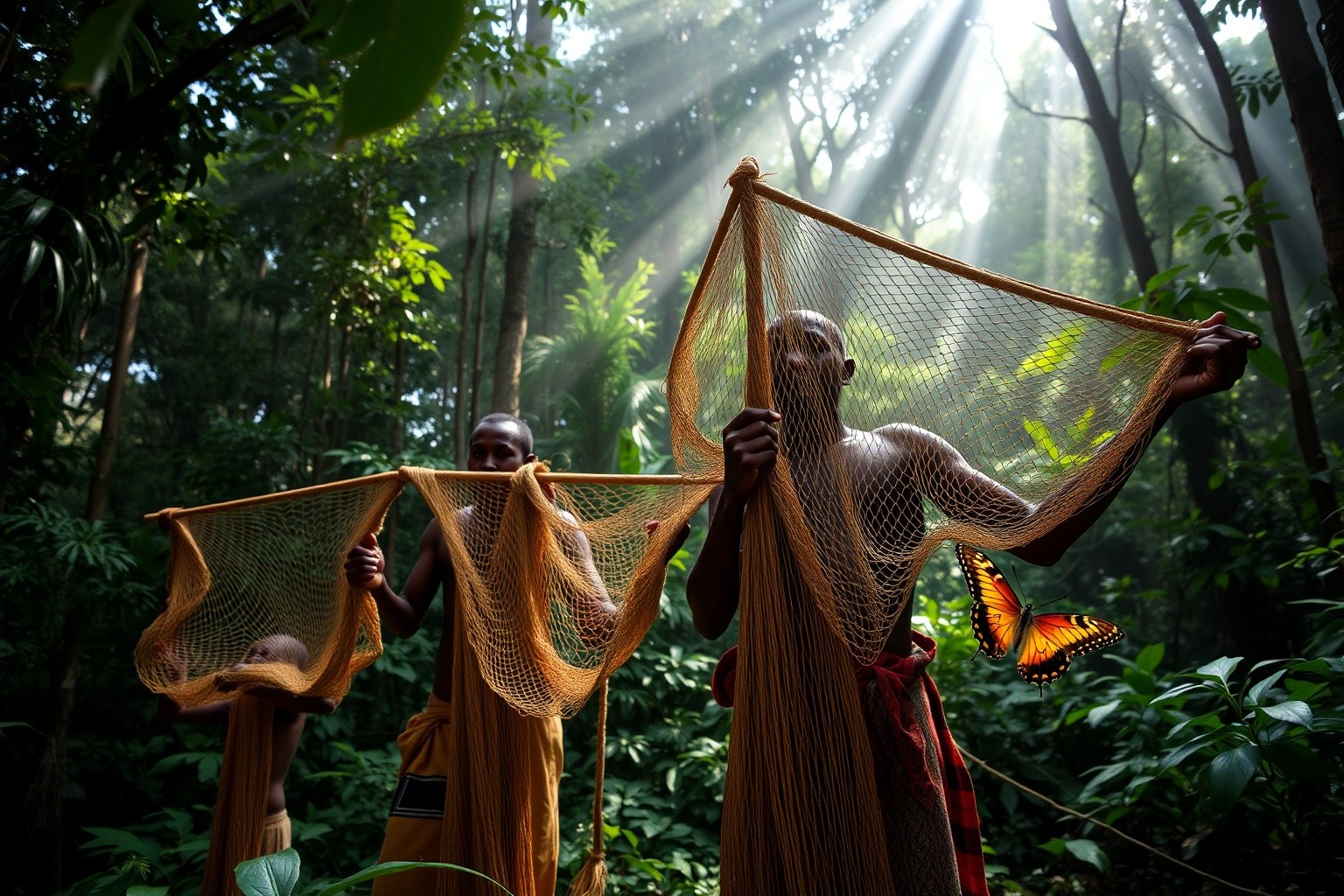
The BaAka people of the southwestern rainforests represent one of the most culturally distinctive communities in the Central African Republic. Semi-nomadic hunter-gatherers with an intimate knowledge of the forest ecosystem, they practice a remarkably egalitarian social structure and possess one of the world's most complex musical traditions. Their polyphonic singing, in which multiple independent vocal lines interweave in elaborate counterpoint, has been studied by ethnomusicologists and celebrated worldwide. BaAka traditional knowledge of medicinal plants and animal behavior makes them invaluable partners in conservation efforts at Dzanga-Sangha.
🗣️ Useful Phrases
Sango (national language):
- Balao — Hello / Good day
- Singila — Thank you
- Mbi gbu gere ti mo — Please
- Ée / Én-én — Yes / No
- Tônga na nyen? — How are you?
French (official language):
- Bonjour — Good day
- Merci beaucoup — Thank you very much
- S'il vous plaît — Please
- Parlez-vous anglais? — Do you speak English?
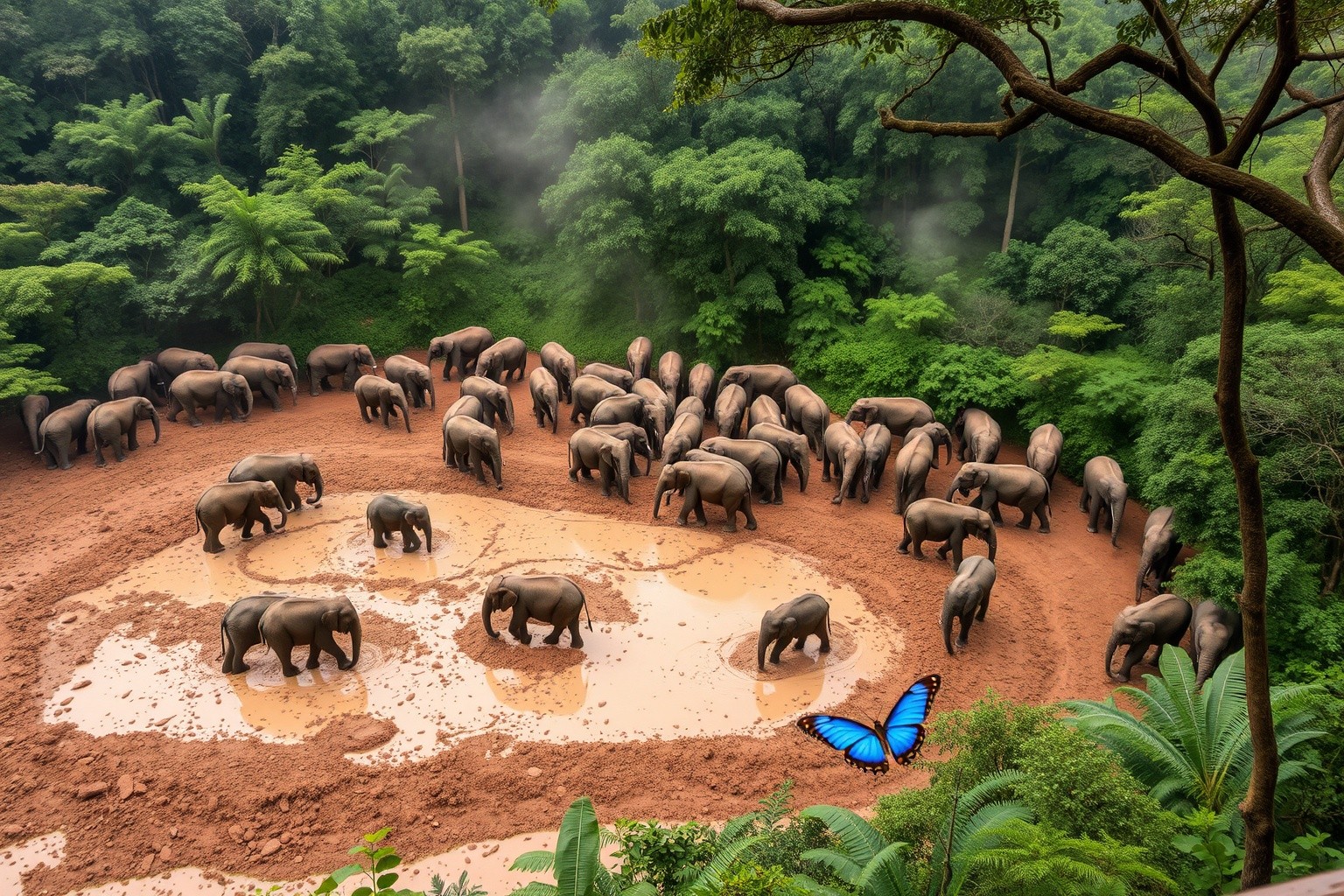
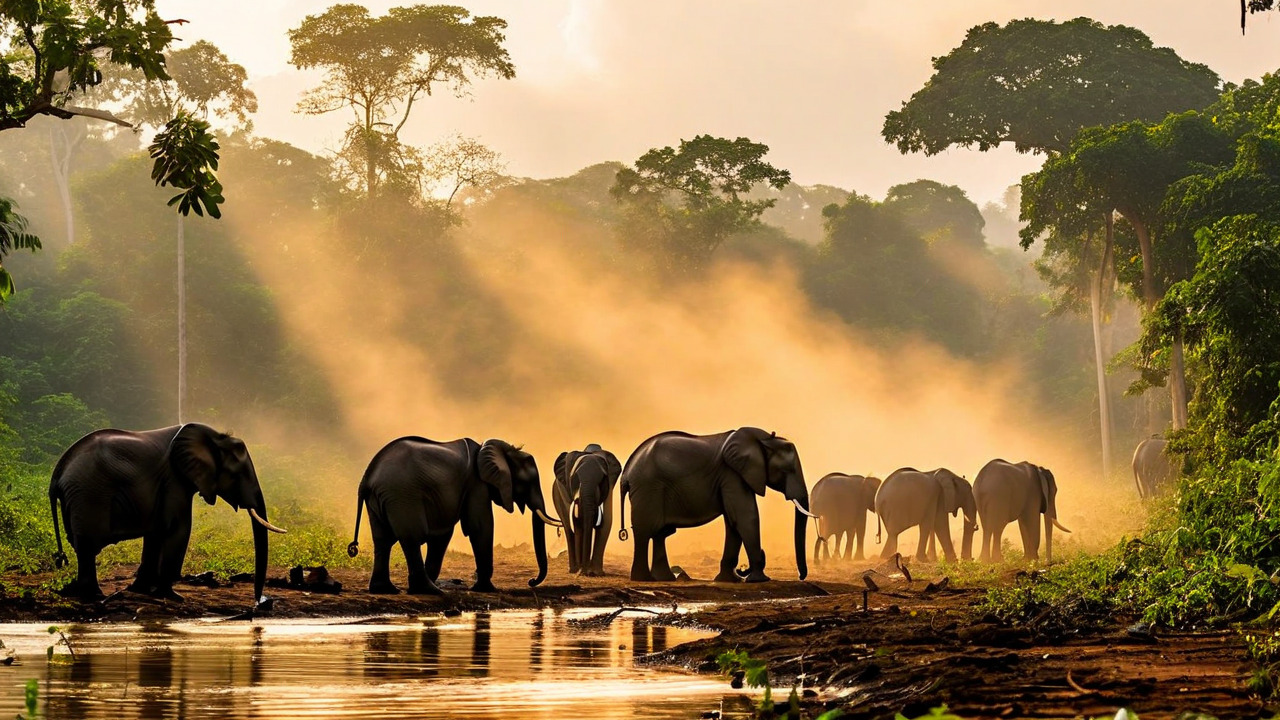
Dzanga Bai — Village of the Elephants
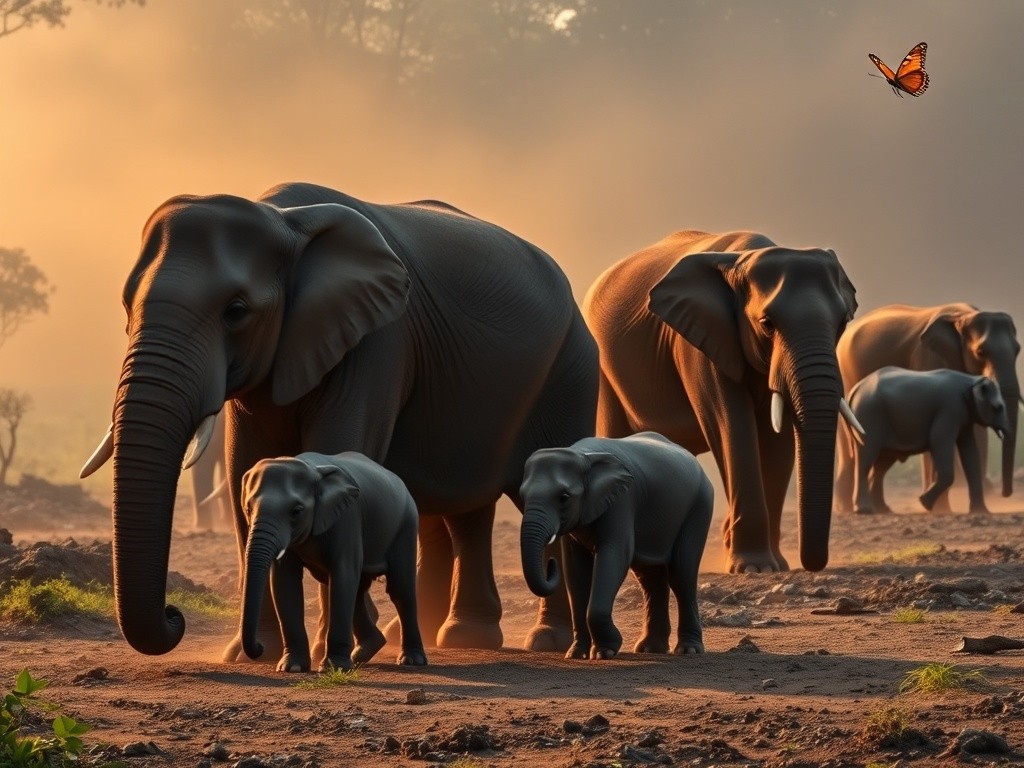
Dozens of critically endangered forest elephants gather daily at this mineral-rich clearing in the heart of the rainforest
🏙️ Bangui — Capital on the River
Bangui, the capital and largest city, sits on the northern bank of the Ubangi River where rapids mark the limit of navigable water from the south. Founded as a French trading post in 1889, the city has grown to an estimated population of over one million—roughly a fifth of the entire country lives here. Bangui sprawls across a landscape of wooded hills and grassy meadows, its center marked by colonial-era buildings, bustling markets, and the grand but somewhat worn architecture of its brief imperial period under Bokassa.
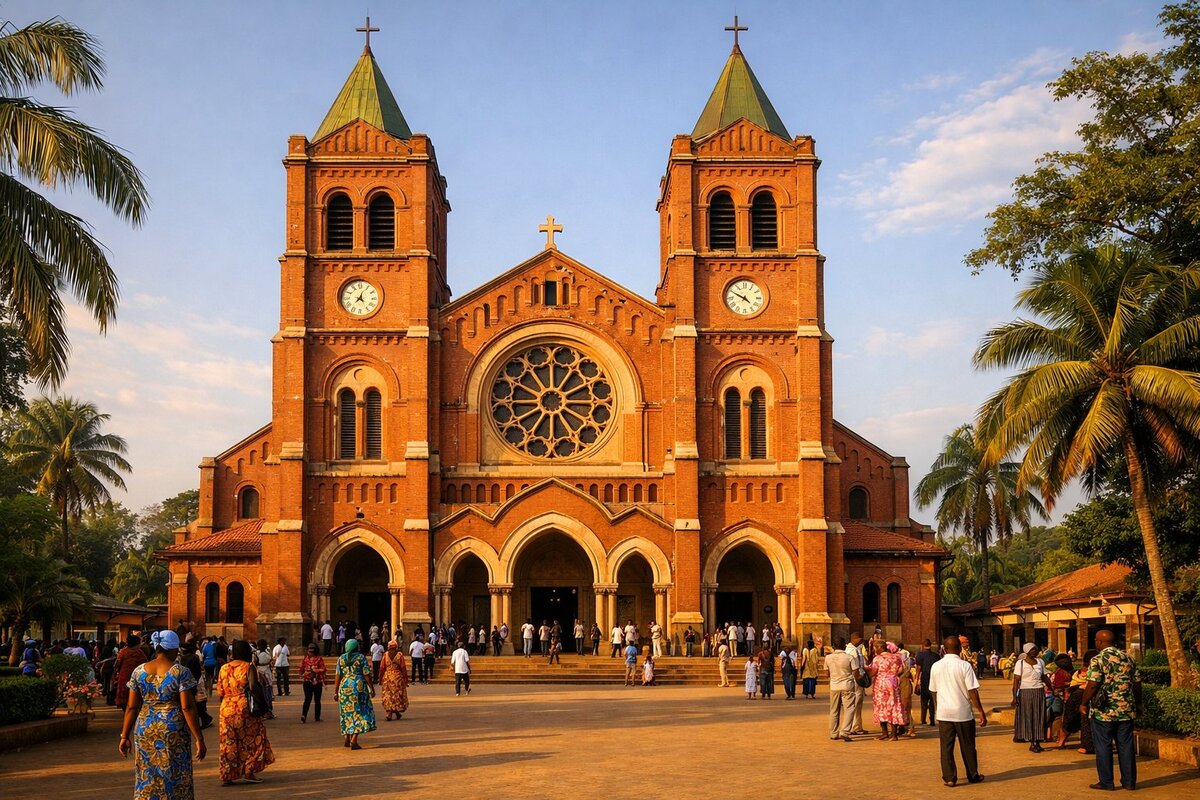
Despite its challenges, Bangui possesses a distinctive charm. The central market—the Marché Central—overflows with tropical produce, dried fish, woven baskets, and the sounds of Sango bargaining. The Boganda Museum (Musée Boganda) preserves artifacts of the country's diverse ethnic heritage, from traditional musical instruments to ceremonial masks. The Cathédrale Notre-Dame de Bangui, completed in 1937, stands as a prominent landmark. Along the riverside, pirogues (dugout canoes) ferry passengers and goods across to the Democratic Republic of the Congo.
The city sits at the center of the Bangui Magnetic Anomaly, one of the largest magnetic anomalies on Earth. This geophysical curiosity, measuring roughly 700 kilometers across, was first identified in 1956 and may be related to an ancient meteorite impact—lending an air of geological mystery to this already fascinating capital. Bangui is also the starting point for almost all tourism in the country, with charter flights departing for the Dzanga-Sangha region from the M'Poko International Airport.
The city's climate is hot and humid year-round, with temperatures averaging 25–32°C. The dry season (November–February) offers the most pleasant conditions for visiting. Bangui has experienced significant insecurity during the recent civil conflict, and travelers should exercise extreme caution, stay informed about the current situation, and follow the advice of local contacts and security experts.
🌿 Dzanga-Sangha — Heart of the Rainforest
The Dzanga-Sangha Protected Areas, located in the extreme southwestern corner of the Central African Republic, represent the country's premier tourist destination and one of Africa's most extraordinary wilderness areas. Established in 1990 and covering some 4,600 square kilometers of tropical rainforest (the Dzanga-Sangha Special Reserve wrapped around the two sectors of Dzanga-Ndoki National Park; published totals vary), the complex forms part of the larger Sangha Trinational—a UNESCO World Heritage Site shared with Cameroon and the Republic of the Congo that protects one of the last great intact rainforest ecosystems in the Congo Basin.
The undisputed highlight is Dzanga Bai, a vast mineral-rich clearing in the forest where 40 to 100 forest elephants gather on a daily basis to extract vital salts and minerals from the earth. An elevated observation platform allows visitors to watch these critically endangered animals as they dig, bathe, and socialize. Researcher Andrea Turkalo spent 27 years studying the elephants here, individually identifying over 4,000 animals in the longest forest elephant study ever conducted.
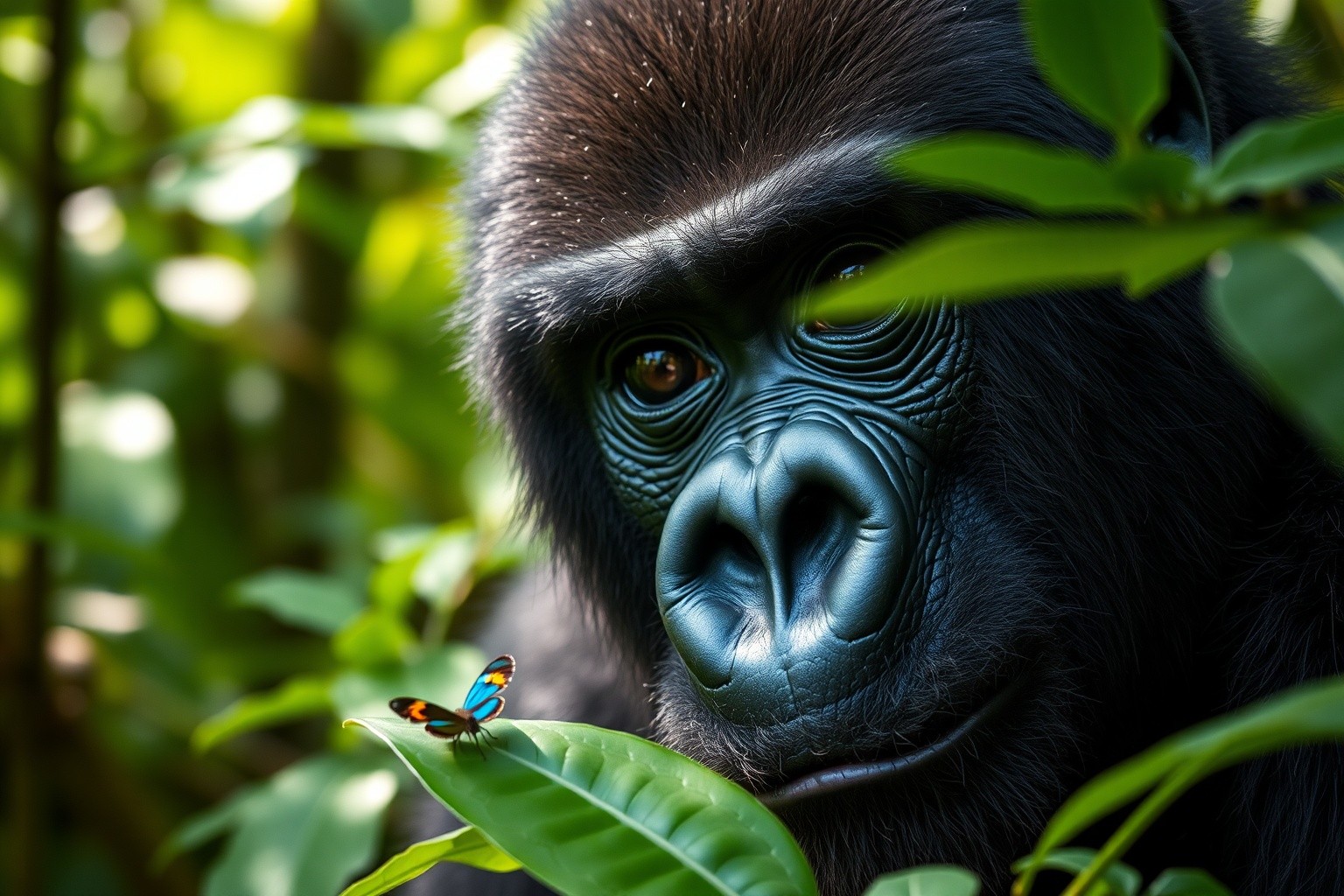
Dzanga-Sangha is also one of the very few places on Earth where habituated western lowland gorillas can be tracked on foot. The Primate Habituation Programme, launched in 1997, has accustomed several family groups to the presence of human observers. Small groups of visitors, accompanied by expert BaAka trackers, follow the gorillas through dense undergrowth for encounters that rank alongside Rwanda's mountain gorilla treks. The reserve also shelters chimpanzees, habituated agile mangabey monkeys, bongo antelope, forest buffalo, giant forest hogs, leopards, and an astonishing diversity of bird and insect species.
The small town of Bayanga, on the banks of the Sangha River, serves as the gateway to the reserve. Sangha Lodge and Doli Lodge, the primary accommodations, offer comfortable eco-tourism facilities. Cultural visits to BaAka communities provide insight into traditional net-hunting, medicinal plant knowledge, and the extraordinary polyphonic singing that UNESCO has recognized as Intangible Cultural Heritage. Getting to Bayanga typically involves a charter flight from Bangui (about 1.5 hours) or a connection from the Odzala reserves in neighboring Congo.
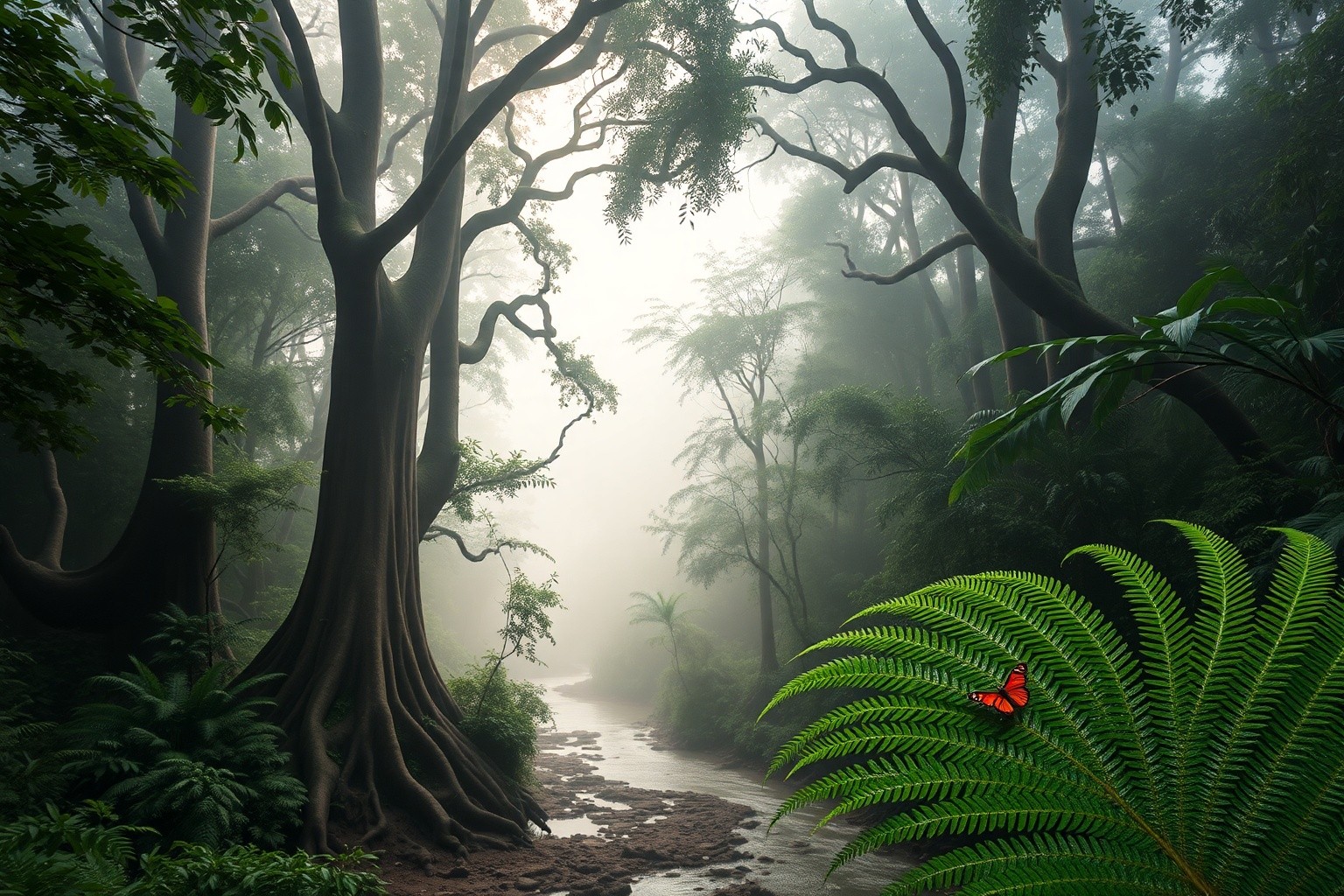
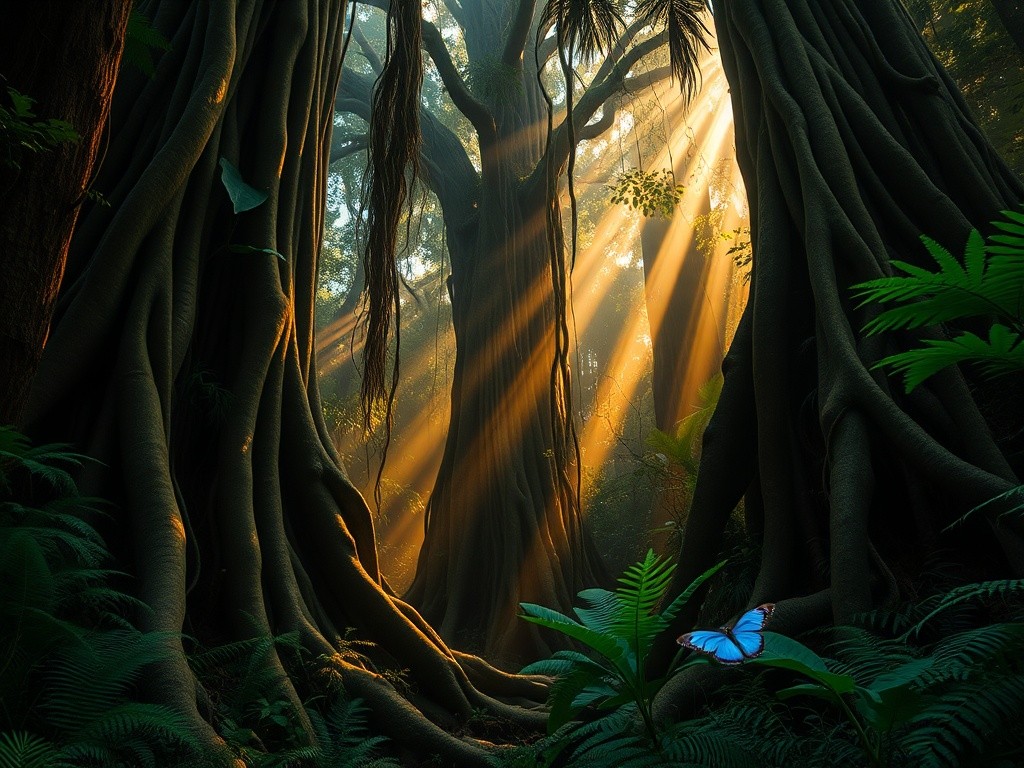
Dzanga-Sangha Rainforest
Dense tropical canopy of the Congo Basin — UNESCO World Heritage Site protecting one of Africa's last great wilderness areas
🦁 Manovo-Gounda St Floris — Savanna Wilderness
Manovo-Gounda St Floris National Park, inscribed as a UNESCO World Heritage Site in 1988, covers over 1.7 million hectares of savanna, floodplains, and gallery forests in the northeastern Central African Republic. The park once rivaled East Africa's great reserves for its wildlife abundance, sheltering large populations of elephants, black rhinoceros, leopards, cheetahs, red-fronted gazelles, and a spectacular variety of birds along the seasonal wetlands.
Tragically, decades of poaching and armed conflict have devastated the park's wildlife. The black rhinoceros has been extirpated, elephant numbers have plummeted, and UNESCO placed the site on its List of World Heritage in Danger in 1997, where it remains. Armed groups have used the park's remote territory as a base, making it largely inaccessible to both conservationists and tourists.
The park's landscape is defined by the flood plains of the Bahr Aouk and Bahr Kameur rivers in the north, and the sandstone plateau of the Bongos Massif in the south, rising to over 1,000 meters. During the wet season, the northern floodplains attract concentrations of waterbirds and provide critical habitat for hippopotamus populations.
For travelers, Manovo-Gounda is currently not accessible for tourism due to security concerns. However, it represents the enormous potential the Central African Republic holds as a wildlife destination if peace and stability can be achieved. Conservation organizations continue to advocate for its rehabilitation.
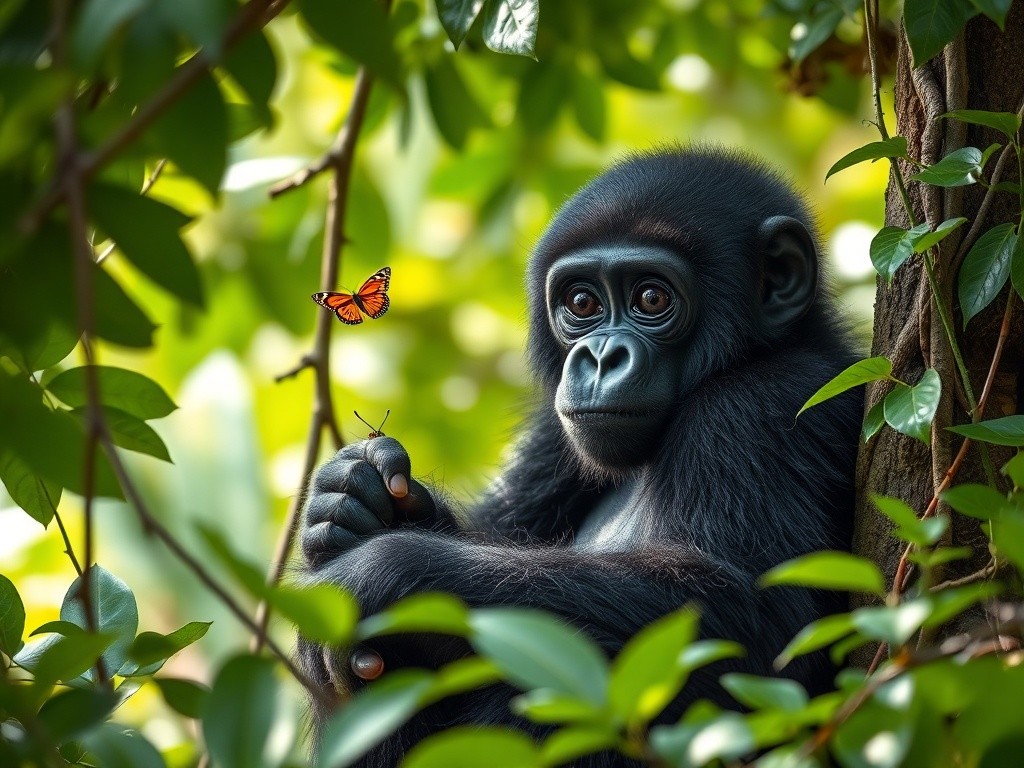
Western Lowland Gorilla
A silverback rests in the rainforest undergrowth at Dzanga-Sangha — one of the few places on Earth where habituated lowland gorillas can be observed
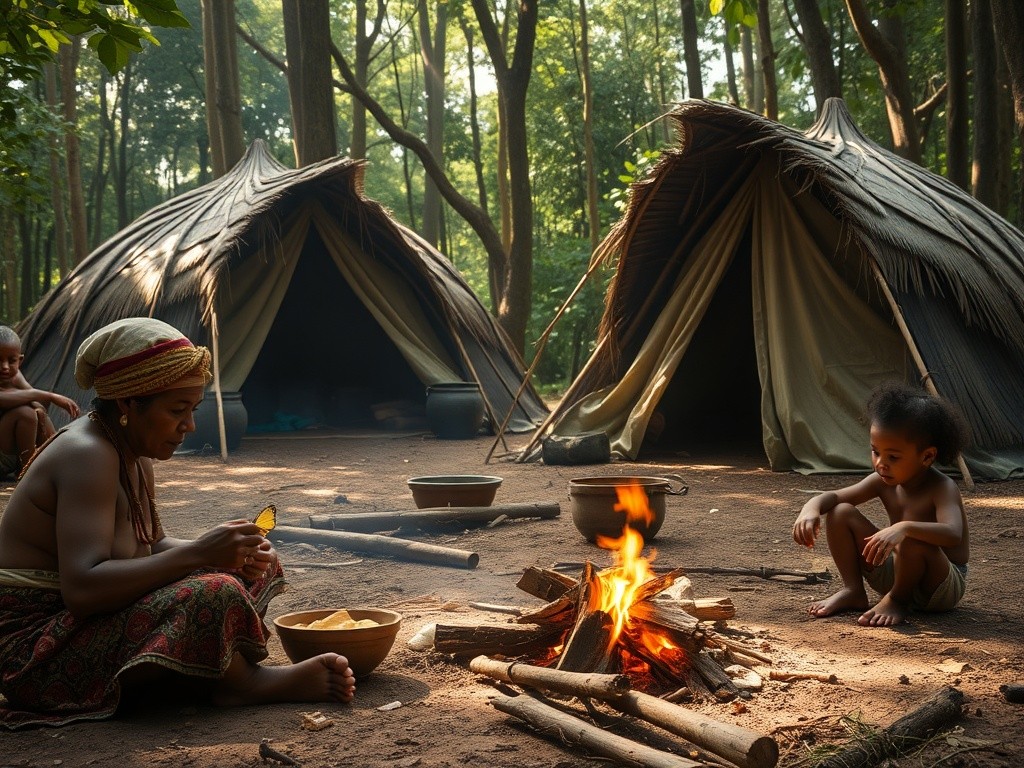
BaAka Community
Indigenous BaAka people gather in a forest camp — their extraordinary knowledge of the rainforest makes them essential partners in conservation
💧 Boali & Surroundings
The Boali waterfalls, located approximately 100 kilometers northwest of Bangui on the Mbali River, offer the most accessible natural attraction near the capital. The falls cascade over a wide rock shelf, dropping roughly 50 meters in a series of steps that are particularly spectacular during and just after the rainy season. The surrounding area features pleasant forest walks and a refreshing respite from Bangui's heat.
The Boali area also hosts a small hydroelectric plant that provides a portion of Bangui's electricity supply. Nearby, the village ecologique offers visitors a chance to sample local dishes and experience traditional Central African hospitality in a relaxed setting. The drive from Bangui passes through rolling savanna landscape dotted with mango trees and small farming communities.
Further afield, the town of Bouar in the western highlands is known for its megalithic stone formations—large standing stones that may date back over a thousand years. These megaliths represent some of the most significant archaeological sites in Central Africa and have been included on the UNESCO Tentative List for future consideration.
The western region around Bouar benefits from slightly cooler temperatures and transitions between savanna and forest ecosystems. Security conditions have varied during the recent conflict—current conditions should be verified before planning any visit.
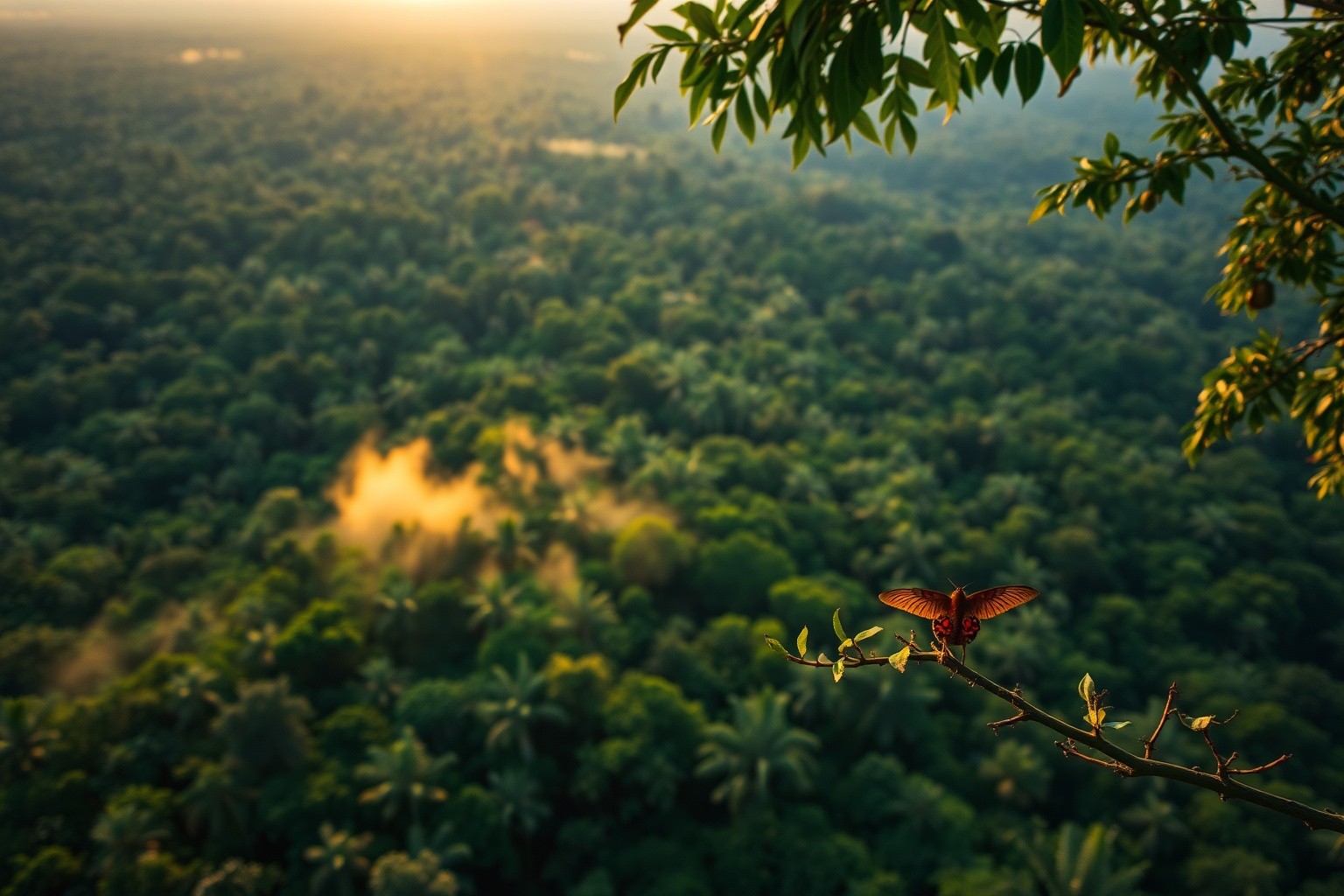
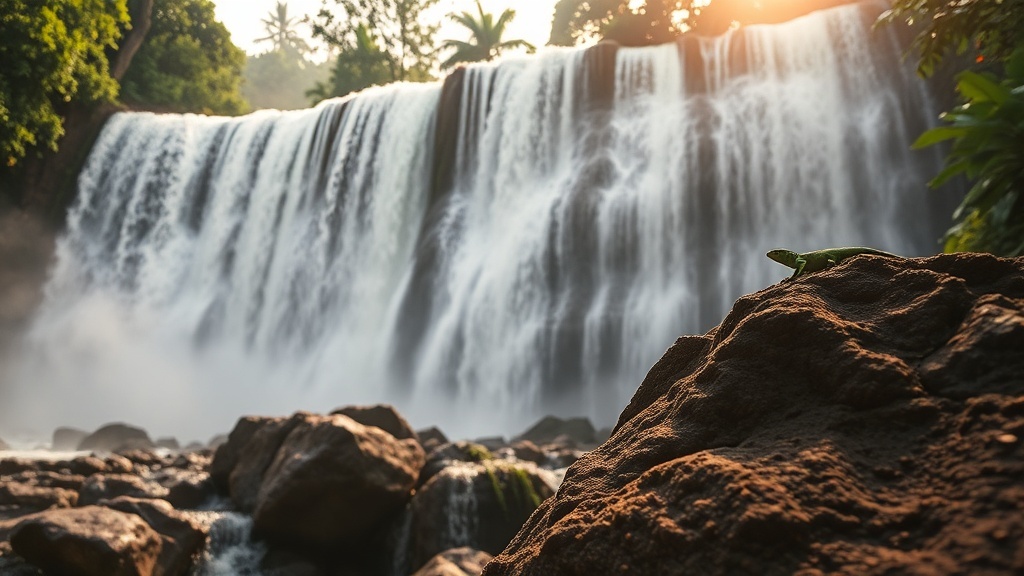
Boali Waterfalls
The most accessible natural attraction near Bangui — water cascades over a wide rock shelf surrounded by lush tropical forest
🌴 Bayanga & the Southwest
Bayanga, a small town on the banks of the Sangha River, serves as the gateway to the Dzanga-Sangha Protected Areas and is effectively the tourism capital of the Central African Republic. Despite its modest size, Bayanga has an outsized significance as the base for gorilla tracking, elephant observation at Dzanga Bai, and cultural encounters with BaAka communities.
The Sangha River, a major tributary of the Congo, provides the primary transportation route in this remote corner of the country. River trips offer opportunities to spot wildlife along the forested banks, including monkeys, hornbills, and African grey parrots. The river connects Bayanga to communities in neighboring Cameroon and the Republic of Congo.
The surrounding rainforest harbors extraordinary biodiversity: bongo antelope, forest buffalo, giant pangolins, numerous primate species, and thousands of insect and plant species. The forest canopy reaches heights of 50 meters or more, creating a cathedral-like atmosphere on the forest floor.
Accommodation centers on Sangha Lodge and Doli Lodge. Visitors should expect basic but adequate amenities—intermittent electricity, wholesome meals, and the sounds of the forest as nighttime entertainment. The experience is one of genuine immersion in wild Africa, far from the polished safari circuits of East and Southern Africa.
🍽️ Central African Cuisine
Central African cuisine reflects the country's tropical environment and agricultural traditions, built around starchy staples, leafy sauces, and the flavors of palm oil, peanuts, and fresh river fish. Cassava—both the root and the leaves—forms the dietary backbone, alongside plantains, yams, millet, sorghum, and rice. Meals are typically communal affairs, with dishes served in large shared bowls around which family and guests gather to eat by hand or with pieces of fufu.
Fufu (also called foutou), the quintessential Central African staple, is a thick, dough-like preparation made by pounding boiled cassava, plantains, or yams until smooth and stretchy. Diners pull off small pieces and use them to scoop up richly flavored sauces and stews. The preparation of fufu is itself a social activity, with the rhythmic pounding of mortar and pestle a familiar sound in households across the country. Sauces served with fufu range from gozo (cassava leaf and peanut sauce) to ngou-pata (peanut butter stew) and various preparations featuring okra, spinach, or sorrel leaves.
Protein comes from diverse sources. River fish—tilapia, Nile perch, and catfish—are staples near waterways, often prepared as maboké (fish steamed in banana leaves with tomatoes, onions, and peppers). Chicken and goat are the most common meats, while bushmeat (wild game) remains significant in rural diets despite conservation concerns. Kanda, a signature dish, consists of meatballs made with ground beef mixed with pumpkin seeds, simmered in a tomato and chili sauce. Insects—including grasshoppers, crickets, cicadas, and termites—are important protein sources, collected seasonally and often fried or roasted as snacks.
Beverages hold their own cultural significance. Palm wine (kangouea), tapped from raffia or oil palms, is widely consumed and plays a role in social and ceremonial occasions. Ginger beer, made from fresh ginger root, sugar, and water, provides a sharp, refreshing non-alcoholic option. Locally brewed millet or sorghum beer is common in northern regions. The hibiscus flower drink known as karkanji, popular across the Sahel, is enjoyed in the north. French-influenced café culture persists in Bangui, where strong coffee is served in small establishments throughout the city center.
Pounded cassava or plantain dough with sauce
Pumpkin seed meatballs in tomato-chili sauce
Fish steamed in banana leaves
Cassava leaf and peanut sauce
Melon seed soup with vegetables and meat
Chicken stew with palm nut sauce
Crispy golden plantain slices
Traditional palm wine
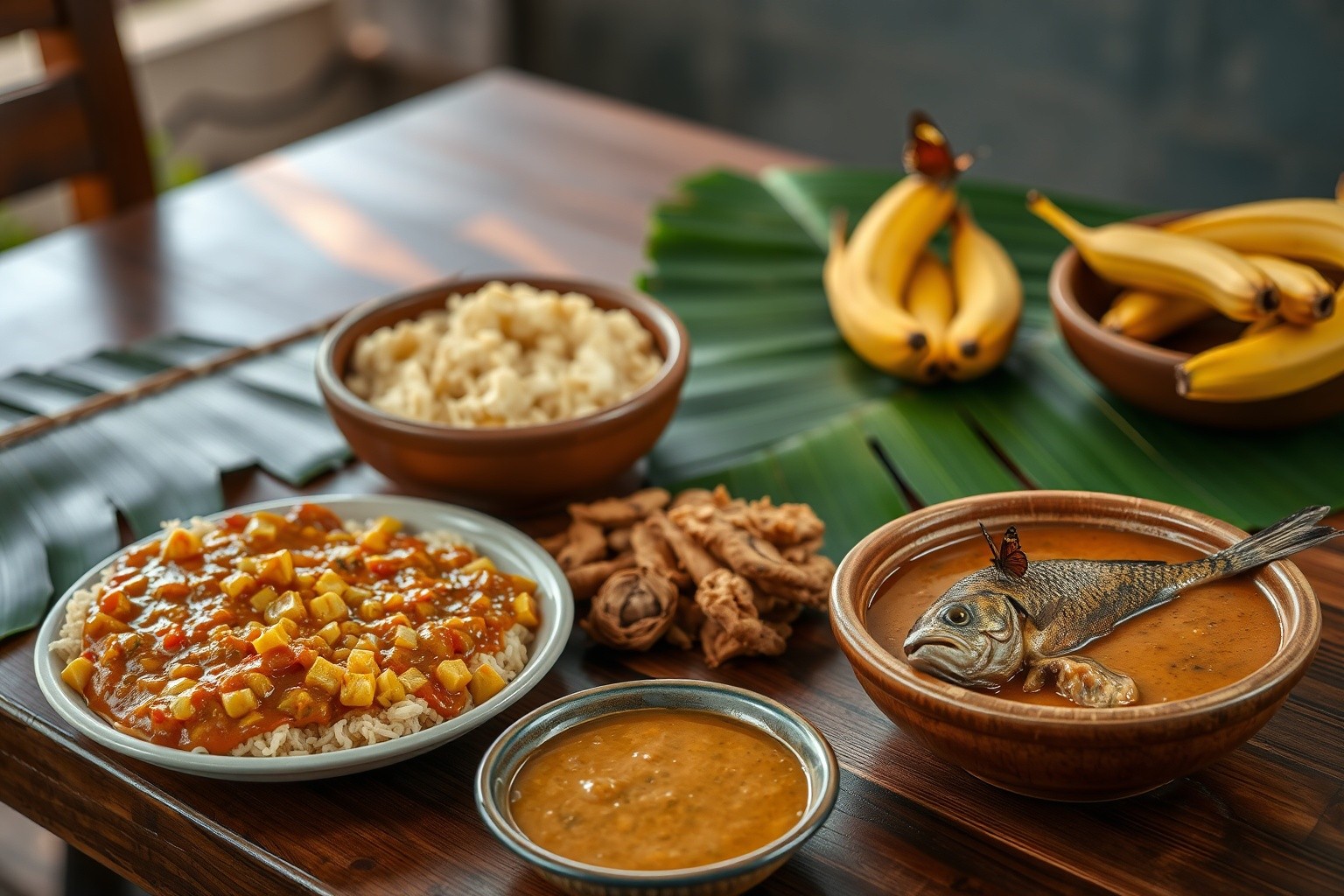
Fufu with Gozo Sauce
Pounded cassava served with rich cassava leaf and peanut sauce — the everyday staple of Central African cuisine
📜 Traditional Central African Recipes
Four dishes that between them cover almost every Central African table: a staple, a river fish, a peanut sauce, and the country's most distinctive meatball.
🍚 Gozo with Ngunza — Cassava Fufu & Cassava-Leaf Sauce
The national plate. Gozo is the dough; ngunza is what you dip it in.
- 1 kg cassava root (or 500 g cassava flour)
- 500 g fresh cassava leaves, finely pounded (frozen works)
- 150 g raw peanuts, ground to a paste
- 100 ml red palm oil
- 1 onion, 2 garlic cloves, chopped
- 1 smoked fish or 200 g smoked beef
- 1 hot chilli, salt
- Peel and soak cassava 2–3 days, then dry and pound to flour (or use flour).
- Whisk flour into boiling water, stirring hard with a wooden spatula until a stiff, elastic dough forms — about 15 minutes.
- Shape the gozo into a smooth ball; keep warm in a covered bowl.
- Boil the pounded cassava leaves 45–60 minutes, changing water once, until the bitterness goes.
- Add peanut paste, palm oil, onion, garlic and the smoked fish; simmer 30 minutes uncovered.
- Season with chilli and salt; the sauce should be thick enough to cling to a pinch of gozo.
💡 Tip: Cassava leaves must be boiled thoroughly — raw cassava contains cyanogenic glycosides. Never shorten the boil. Eat with the right hand, pinching off gozo and using it as a scoop.
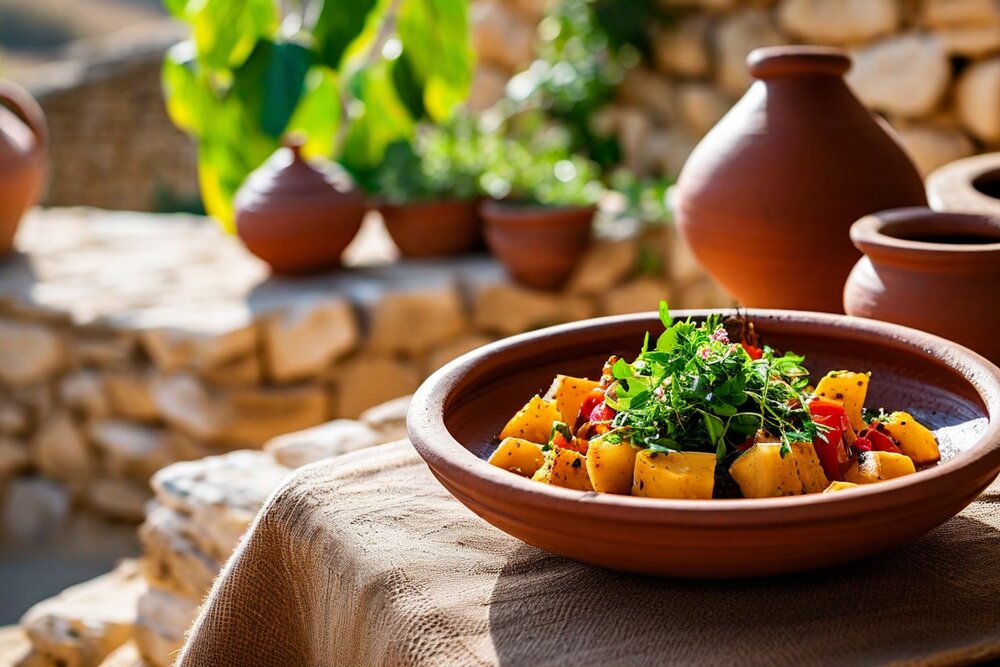
🐟 Maboké — River Fish Steamed in Banana Leaves
Ubangi capitaine, wrapped and steamed — the dish Bangui cooks for guests.
- 1 whole capitaine (Nile perch) or tilapia, ~1 kg, cleaned
- Large banana leaves, softened over a flame
- 3 tomatoes, diced
- 2 onions, sliced
- 3 garlic cloves, crushed
- 1–2 hot chillies, chopped
- 3 tbsp red palm oil
- Juice of 1 lime, salt, black pepper
- Score the fish on both sides; rub with lime, salt and pepper. Rest 30 minutes.
- Mix tomatoes, onions, garlic, chilli and palm oil into a rough relish.
- Pass banana leaves briefly over a flame until glossy and pliable.
- Lay the fish on the leaves, pack the relish inside the cavity and over the top.
- Fold into a tight parcel and tie with strips of leaf or kitchen string.
- Steam over simmering water 40–50 minutes, or bake at 180°C for 45 minutes.
- Open at the table — the escaping steam is half the point. Serve with gozo or plantain.
💡 Tip: No banana leaves? Baking parchment inside foil works, though you lose the faint grassy perfume the leaf gives the fish. Any firm white fish substitutes for capitaine.
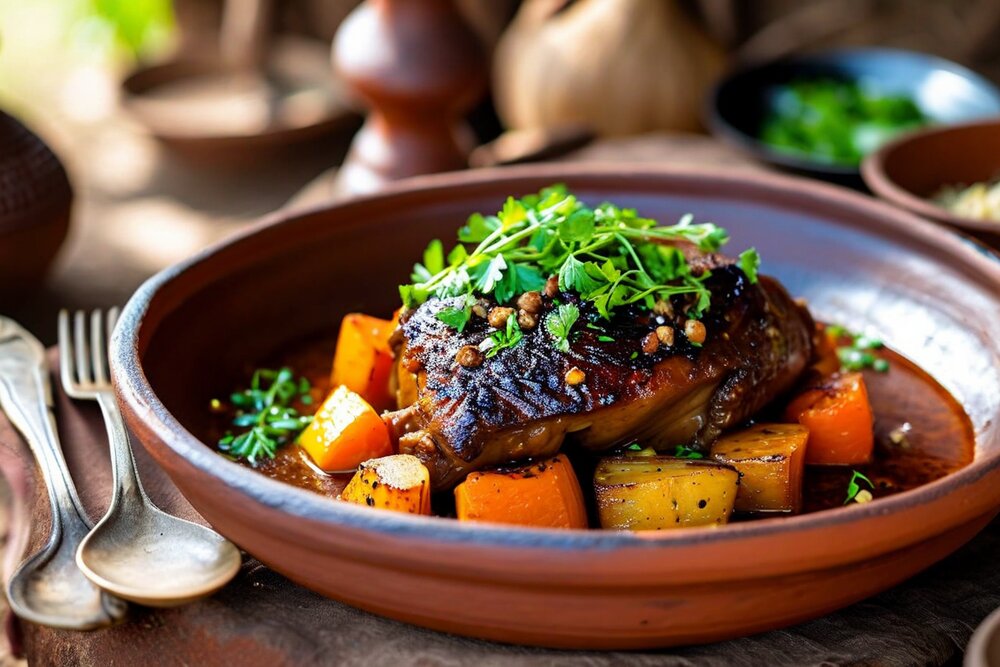
🥜 Ngou-Pata — Peanut Sauce with Greens
Sauce arachide: the everyday sauce, made wherever peanuts grow — which is everywhere.
- 250 g raw peanuts, roasted and ground (or unsweetened peanut butter)
- 600 g chicken or goat, jointed
- 2 onions, 3 tomatoes, chopped
- 1 bunch greens: amaranth, spinach or sweet-potato leaves
- 2 tbsp red palm oil
- 1 chilli, 1 stock cube, salt
- 750 ml water
- Brown the meat in palm oil with the onions.
- Add tomatoes and chilli; cook down 10 minutes.
- Slacken the peanut paste with a ladle of hot water, then stir it in — never add it dry.
- Add remaining water, cover, simmer 45 minutes, stirring often so the peanut doesn't catch.
- Fold in the greens for the last 10 minutes.
- The sauce is ready when a film of orange oil rises to the surface.
💡 Tip: Stir constantly in the last 15 minutes. Peanut sauce scorches on the bottom of the pot faster than almost anything else, and burnt peanut cannot be rescued.
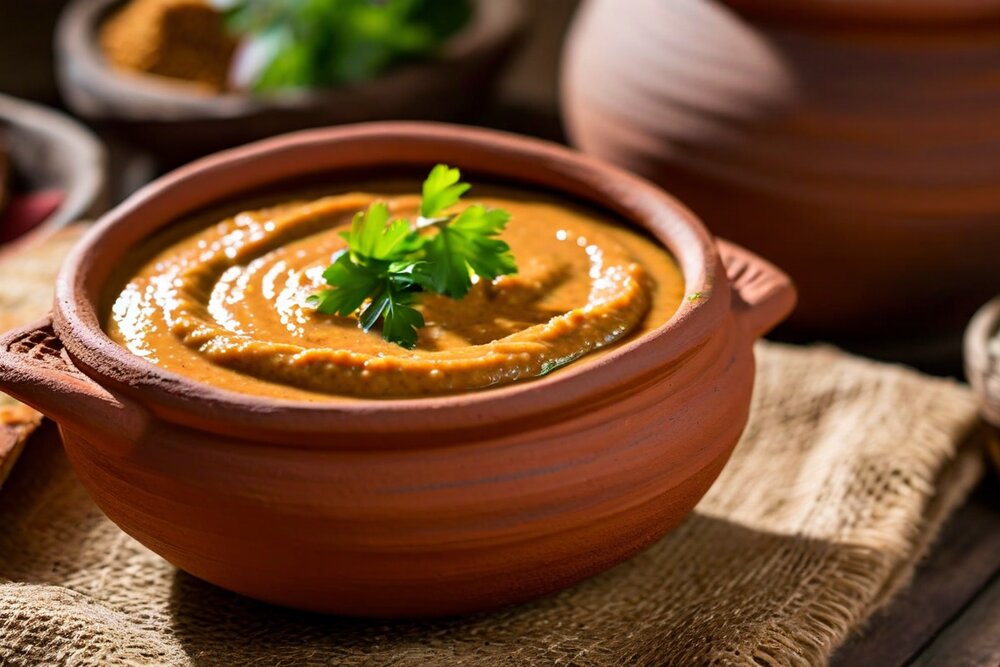
🍫 Kanda ti Nyma — Pumpkin-Seed Meatballs
The country's signature dish, and the one nobody outside Central Africa has heard of.
- 500 g ground beef
- 200 g hulled pumpkin (egusi) seeds, toasted and ground
- 4 tomatoes, blended
- 1 onion, finely chopped
- 2 garlic cloves, 1 thumb ginger
- 2 tbsp red palm oil
- 1–2 hot chillies, salt
- Optional: 6 okra pods, sliced
- Toast the pumpkin seeds in a dry pan until nutty, then grind to a coarse meal.
- Mix two-thirds of the seed meal into the beef with half the onion, garlic, ginger and salt.
- Roll into walnut-sized balls; rest 15 minutes so they hold together.
- Fry the remaining onion in palm oil, add blended tomato and chilli, simmer 15 minutes.
- Stir the reserved seed meal into the sauce to thicken it.
- Slide in the meatballs, cover and simmer gently 25 minutes without stirring hard.
- Add okra in the final 8 minutes if using. Serve with gozo.
💡 Tip: The pumpkin seed does the work of both binder and flavour — there is no breadcrumb, no egg. Grind it coarse, not to butter, or the meatballs turn pasty.
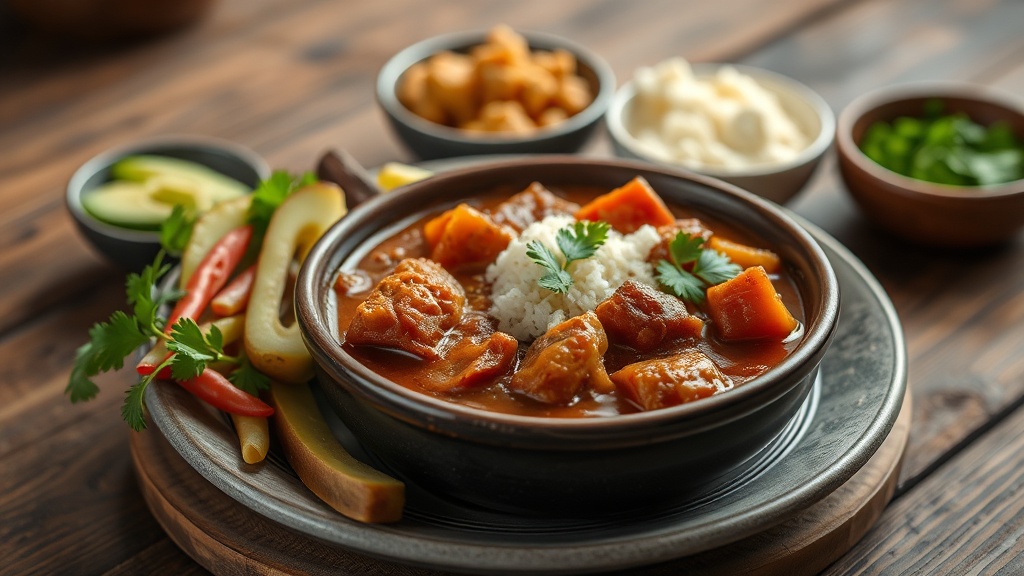
🦍 Wildlife & Conservation
The Central African Republic harbors one of Africa's most remarkable but threatened collections of wildlife. The country's ecological range—from Sahelo-Sudanian savanna in the north to dense equatorial rainforest in the south—supports extraordinary diversity, much of which has been severely affected by decades of poaching and armed conflict.
The western lowland gorilla is the country's flagship species. Dzanga-Sangha supports an estimated 2,000 gorillas—one of the highest densities anywhere—and the reserve's habituation program allows tourists and researchers to observe family groups at close range. Chimpanzees also inhabit the southwestern forests, along with grey-cheeked mangabeys, colobus monkeys, and bushbabies.
The African forest elephant, classified as critically endangered in 2021, finds one of its most important refuges at Dzanga Bai. The bongo, Africa's largest forest antelope, is another key species, along with forest buffalo, giant forest hogs, sitatungas, and the nocturnal giant pangolin—the world's most trafficked mammal.
In the northern savannas, once-abundant wildlife has been decimated by poaching and armed groups. However, conservation efforts continue, and the country's future depends on achieving lasting peace and strengthening protected area management. The community-based approaches successful at Dzanga-Sangha offer a model for the country's broader conservation recovery.
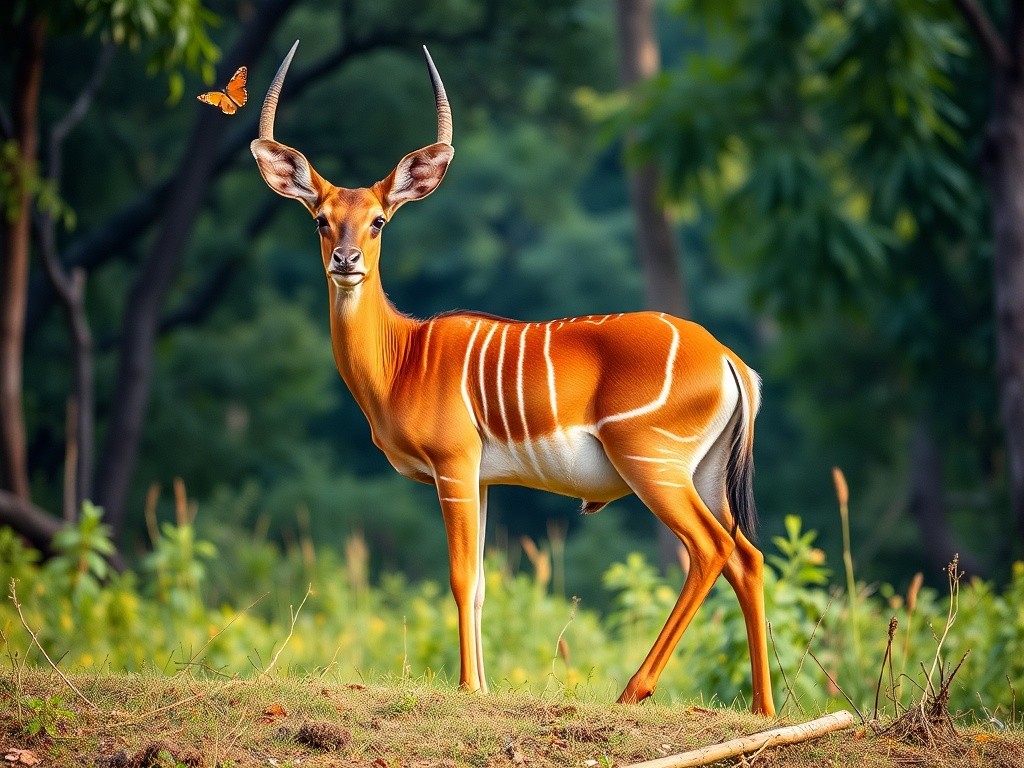
Bongo Antelope — Forest Jewel
The stunning bongo, with its distinctive white stripes and spiraling horns, is one of Dzanga-Sangha's most iconic and elusive residents
🍷 Wine, Spirits & Drinking Culture
The Central African Republic — one of the world's poorest and most conflict-affected countries — has a traditional drinking culture centred on palm wine, banana beer, and locally distilled spirits that serve as the social glue of communities under immense strain. In a country where formal economy barely functions outside Bangui, traditional brewing provides both livelihood and social cohesion.
🌴 Ngbako & Palm Wine
Palm wine is the most common traditional drink, tapped from oil palms and raffia palms across the southern forest zone. Ngbako — a distilled spirit made from cassava or maize — is the stronger option, produced at home with simple pot stills. Mocaf (the national beer brand) and imported Castel are available in Bangui but scarce outside the capital. In rural areas, palm wine and ngbako remain the only options.
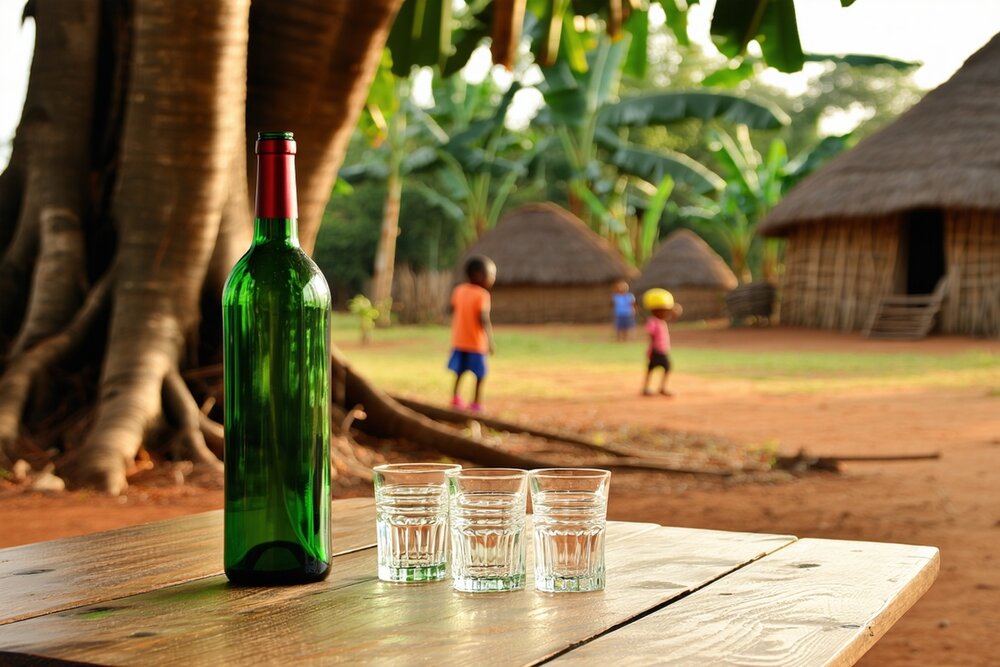
🍹 Drinks & Mixed Cocktails
The Central African Republic has no cocktail culture in the Havana or Lima sense, and it would be dishonest to invent one. What it has is a set of drinks people actually make — hibiscus infusions, ginger brews, palm wine drawn that morning — plus a handful of long drinks improvised in Bangui's hotel bars from whatever the Cameroon supply road delivered. Here are four you can genuinely reproduce.
🌺 Karkanji
Traditional · non-alcoholic
Steep 50 g dried hibiscus calyces in 1 litre of boiling water with 3 cloves, a stick of cinnamon and a thumb of bruised ginger. Cover, cool to room temperature, strain, sweeten to taste and chill hard. Serve over ice with a squeeze of lime. Sold from jerrycans at every northern market; the deep crimson is the point.
🫛 Gnamakoudji — Ginger Beer
Traditional · non-alcoholic
Blend 200 g peeled fresh ginger with 500 ml water until pulpy. Strain through cloth, pressing hard. Add 1 litre water, the juice of two limes, sugar to taste and a split vanilla pod. Rest 6 hours in the fridge. It should sting the back of the throat — if it doesn't, add more ginger, not less water.
🌴 Palm Wine Cooler
Traditional base · lightly alcoholic
Fresh palm wine, drunk within hours of tapping, is sweet and barely alcoholic; by evening it has fermented sharp and cloudy. The village compromise: half a glass of morning palm wine topped with chilled karkanji and a wedge of lime. Outside CAR, substitute unpasteurised cloudy cider — the yeasty edge is close.
🍺 Mocaf Shandy
Bangui bar staple
The most-ordered long drink in Bangui, and about as complicated as it gets: a cold bottle of Mocaf — the national lager, brewed in the capital since 1951 — cut roughly half and half with ginger beer or lemonade, over ice, with lime. In a country where refrigeration is a luxury, "cold" is the ingredient that matters.
⚠️ Water warning: Every recipe above assumes bottled or treated water and ice made from it. Tap water is not potable anywhere in the country, and ice from street vendors is a common cause of illness.
🏛️ Government & Politics
The Central African Republic is a semi-presidential republic, and has been a formally democratic one since 2016 — though the distance between the constitutional text and the reality on the ground is wider here than almost anywhere. The state's writ runs securely over Bangui and a handful of garrison towns; large tracts of the north and east have been administered by armed groups, in various configurations, for more than a decade.
General elections were held on 28 December 2025. On 19 January 2026 the Constitutional Court validated the result: President Faustin-Archange Touadéra re-elected with 77.9% of the vote, against 13.5% for the veteran opposition figure Anicet-Georges Dologuélé, who contested the count and lost. Turnout was 52.4%, a marked rise from 35.3% in 2020. Touadéra's third candidacy was made possible by the constitutional referendum of July 2023, which abolished the two-term limit and extended presidential terms from five years to seven. He was sworn in on 30 March 2026, in a ceremony the government framed as the founding of a "Seventh Republic."
Félix Moloua, prime minister since February 2022, was reappointed by decree on 16 May 2026, and a 29-member cabinet — ten of them new faces — was announced on 22 May. In the National Assembly, Touadéra's Mouvement cœurs unis (MCU) took 50 of the first 74 of 144 seats declared, giving the presidency a comfortable working majority.
The defining and most contested feature of the current government is its security relationship with Russia. The Wagner Group's role protecting the presidency and conducting operations against rebel factions has passed to the state-run Africa Corps, under direct Russian Ministry of Defence oversight — an arrangement formally consolidated after Touadéra's visit to Moscow in March 2026, and still compensated substantially through mining concessions. The UN mission MINUSCA remains the largest international presence: Resolution 2800 (13 November 2025) renewed it to 15 November 2026 with a ceiling of 14,046 troops and 2,999 police, while signalling a "firm intention" to review numbers once the elections were done. The gradual handover has begun — the mission closed its Electoral Assistance Division on 5 August 2026, and on 10 August Prime Minister Moloua and UN Special Representative Valentine Rugwabiza co-chaired the first formal meeting on transferring tasks to national authorities. The November 2026 renewal is widely expected to open the drawdown proper.
Semi-presidential republic; 7-year presidential terms since 2023
Faustin-Archange Touadéra (MCU), third term from 30 Mar 2026
Félix Moloua, reappointed 16 May 2026
National Assembly, 144 seats; MCU majority
13 August 1960, from France
Sango and French
⚠️ Travel Advisory & Safety
There is no way to write this section gently. The Central African Republic carries the most severe advisory level that Western governments issue, and it has done so continuously for over a decade. Nothing below is intended to talk anyone out of an informed decision — but an informed decision requires knowing exactly what the advisories say.
🛑 United States — Level 4: Do Not Travel
Reissued 15 January 2026, citing crime, civil unrest, kidnapping, landmines, terrorism and inadequate health infrastructure. The US government has limited ability to provide emergency services. US government employees in the country require special authorisation to travel outside Bangui, must move in armoured vehicles even inside the capital, and are subject to a curfew. The advisory flags a continuing risk of demonstrations and election-related violence, and specifically warns of landmines in rebel-held areas near the Cameroon and Chad borders.
🇬🇧 United Kingdom
FCDO advises against all travel to the entire country. Consular support is severely limited — the UK has no permanent embassy in Bangui.
🇫🇷 France
Formally discourages all travel; most of the territory is mapped red. France retains an embassy in Bangui — for many EU nationals it is the nearest functional consular point.
🇨🇿 Czechia & EU
The Czech MFA and most EU foreign ministries advise against all travel. Czech citizens should register with the DROZD system and rely on the French embassy in Bangui.
What this means in practice
- Insurance will almost certainly not cover you. Standard travel policies void against a Level 4 / "advise against all travel" designation. Specialist high-risk cover with conflict-zone medical evacuation is the only realistic option, and it is expensive.
- Medical evacuation is the plan, not the hospital. Facilities in Bangui are basic; outside it, effectively absent. Evacuation runs to Douala or Yaoundé in Cameroon, or to Europe.
- The southwest is the exception, not a contradiction. The Dzanga-Sangha area around Bayanga has been comparatively stable, sustained by the permanent presence of conservation organisations. Visitors fly Bangui–Bayanga by charter precisely to avoid the roads.
- Do not drive between regions. Landmine risk near the Cameroon and Chad borders is explicit in the US advisory, and armed groups operate checkpoints across the north and east.
- Cash, and only cash. ATMs in Bangui are unreliable and frequently reject foreign cards. Bring euros; carry them carefully.
- Yellow fever certificate is mandatory for entry, and malaria transmission is year-round and high across the whole country. Prophylaxis is not optional.
Advisory levels change. Verify directly with your own foreign ministry within days of travelling — the links are collected in the Useful Resources section below.
📋 Practical Information
Visas & Entry
Most nationalities require a visa to enter the Central African Republic. Visas can be obtained from CAR embassies or consulates, primarily in Paris, Brussels, and select African capitals. A visa on arrival may be available at Bangui M'Poko International Airport for some nationalities, but this is unreliable—arrange your visa in advance. You will need a valid passport, yellow fever vaccination certificate (mandatory), passport photos, and proof of accommodation. French-speaking abilities are very helpful when dealing with authorities.
Money
The CFA Franc (XAF) is the official currency, pegged to the euro at a fixed rate (1 EUR ≈ 656 XAF). ATMs exist in Bangui but are often out of service or reject foreign cards. Bring euros or US dollars in cash for exchange. Outside Bangui, cash is essentially the only option. Credit cards are accepted at very few establishments in the capital. Budget approximately €80–150/day for organized tourism including guide, transport, and accommodation; Dzanga-Sangha safari packages typically cost €200–400/day all-inclusive.
Getting There & Around
Bangui M'Poko International Airport (BGF) receives flights from several African hubs, primarily Douala and Yaoundé (Cameroon), Paris (Air France, roughly weekly), Casablanca (Royal Air Maroc), Addis Ababa (Ethiopian Airlines), Kigali (RwandAir) and Lomé (ASKY). Internal travel to Dzanga-Sangha is by charter flight (approx. 1.5 hours to Bayanga). Road travel outside Bangui is very challenging—most roads are unpaved and deteriorate severely in the rainy season. Armed escort may be required for overland travel in some regions.
Health & Safety
Yellow fever vaccination is mandatory. Malaria prophylaxis is essential—the country has year-round high-risk transmission. Bring a comprehensive medical kit, as facilities are extremely limited outside Bangui (and basic even there). Ensure your travel insurance covers medical evacuation. Water is not potable; use bottled or treated water only. For the Dzanga-Sangha region, insect repellent, long clothing, and waterproof boots for forest walks are essential.
Visa Required
Arrange in advance
CFA Franc (XAF)
Bring EUR/USD cash
UTC +1
WAT timezone
220V / Type C, E
European plugs
🌡️ Climate & Best Time to Visit
The Central African Republic has a tropical climate throughout, with temperatures remaining warm year-round. The country experiences two main seasons: a wet season (May–October in the south, June–September in the north) and a dry season (November–April). Temperatures typically range between 21°C and 36°C, with the hottest period in February–March before the rains arrive.
Spring (Apr-May)
Dry season ending — 28-36°C, roads passable, good wildlife viewing as animals gather near water sources.
Summer (Jun-Aug)
Main rainy season — 24-32°C, daily thunderstorms, lush green landscapes, some roads impassable.
Autumn (Sep-Oct)
Late rains tapering off — 24-32°C, forest very green and lush, rivers full, some access challenges.
Winter (Nov-Mar)
Dry season — 25-35°C, best for travel. Dusty Harmattan winds in the north. Peak gorilla tracking season.
✅ Recommended: December-February (Dry Season)
The dry season (November–March) offers the best conditions for travel, with passable roads and comfortable temperatures. December–February is ideal for Dzanga-Sangha gorilla tracking, with less rain and better forest trail conditions.
✈️ How to Get There
Reaching the Central African Republic requires careful planning. International flights to Bangui operate from a limited number of African and European hubs. For Dzanga-Sangha tourism, a charter flight from Bangui to Bayanga is the standard approach. Overland travel within the country is challenging due to poor roads and security concerns.
✈️ By Air
Bangui M'Poko International Airport (BGF)
- Paris (Air France) — about weekly; also via Casablanca (Royal Air Maroc) or Lomé (ASKY)
- Addis Ababa (Ethiopian Airlines) — Major hub connection
- Douala/Yaoundé (Camair-Co) — Regional connection
- Kigali (RwandAir) — East African connection
💡 Schedules change frequently — confirm before booking
🚗 By Land
Border Crossings:
- Garoua-Boulaï (Cameroon) — Main road crossing, busiest route
- Nola/Bayanga (Congo) — Southwestern route for Dzanga-Sangha
- Bangassou (DRC) — Eastern crossing via Ubangi River
- Sido / Kabo (Chad) — Northern route, seasonal access
- Obo – Bambouti (South Sudan) — Far southeastern route, security varies
⚠️ Road conditions and security vary — verify before overland travel
💰 Cost of Living
The Central African Republic uses the CFA Franc (XAF), pegged to the euro at approximately 656 XAF per euro. While basic goods are inexpensive by Western standards, organized tourism (especially Dzanga-Sangha safaris) carries premium prices due to remote logistics, charter flights, and limited infrastructure. Bring euros or US dollars in cash — ATMs are unreliable and cards rarely accepted.
🏨 Accommodation
Accommodation in the Central African Republic is limited, with the best options concentrated in Bangui and the Dzanga-Sangha area. Standards are basic by international comparison, though a few Bangui hotels offer comfortable facilities. For Dzanga-Sangha tourism, Sangha Lodge and Doli Lodge provide the primary options in a spectacular rainforest setting.
💡 Booking Tips
- Book Dzanga-Sangha lodges well in advance through specialist tour operators
- Bangui hotels can sometimes be booked online, but confirmation is advisable
- Bring a mosquito net and insect repellent — essential everywhere
- Electricity is intermittent; lodges use generators with limited hours
🎭 Festivals & Events
Despite decades of instability, the Central African Republic's cultural celebrations endure, reflecting the country's rich ethnic diversity, Christian heritage, and deep connection to music and dance. Festivals bring communities together and offer visitors rare glimpses into Central African traditions.
🇨🇫 Independence Day (August 13)
The national holiday commemorating independence from France in 1960. Celebrations center on Bangui with parades, traditional dancing, music performances, and speeches. Communities across the country mark the day with local festivities and communal meals. The other great state holiday is Republic Day, 1 December — the anniversary of Boganda's proclamation of the republic in 1958 — marked by a military parade in Bangui.
📍 Best location: Bangui🎵 Music & Dance Festivals
Traditional music and dance festivals occur throughout the year, particularly around harvest time and holidays. BaAka polyphonic singing ceremonies, balafon (xylophone) performances, and drumming competitions showcase the country's extraordinary musical heritage.
📍 Best locations: Bangui, Bayanga, regional towns⛪ Christmas & Easter
As the country's majority is Christian, Christmas and Easter are major celebrations with church services, family gatherings, feasting, and lively music. The cathedral in Bangui holds particularly memorable services. Boganda Day (March 29) honors the founding father with national commemorations.
📍 Celebrated nationwide, especially Bangui🏵️ UNESCO World Heritage
The Central African Republic has two inscribed World Heritage Sites, both natural, and between them they tell the country's whole story: one is a global conservation success held together by international money and local employment, the other has been on the List of World Heritage in Danger since 1997 and is, in practical terms, lost.
Sangha Trinational
Inscribed 2012 · Natural (criteria ix, x) · Transboundary
A single protected block of Congo Basin lowland rainforest spanning three countries — the CAR's Dzanga-Ndoki National Park, Cameroon's Lobéké and the Republic of the Congo's Nouabalé-Ndoki. Largely unlogged forest, seasonally flooded clearings, and the bais where forest elephants, bongo, sitatunga and western lowland gorillas gather in the open. Dzanga Bai, on the Central African side, is the most reliable place on Earth to watch forest elephants in numbers. This is the site tourists actually reach.
Manovo-Gounda St Floris National Park
Inscribed 1988 · Natural (criteria ix, x) · In Danger since 1997
Some 17,400 km² of northern savanna, floodplain and gallery forest along the Chadian border, inscribed for wildlife densities once compared to the Serengeti — black rhino, elephant, cheetah, leopard, red-fronted gazelle, vast buffalo herds. Poaching by heavily armed cross-border groups destroyed most of it: rhino are gone and elephant numbers collapsed by well over 80%. The park sits in territory the state does not control, and it is not visitable. It remains inscribed as a marker of what was there.
On the Tentative List
All the CAR's inscribed sites are natural, but its tentative nominations lean cultural — the Bouar megaliths (tazunu), among the oldest monumental stone alignments in Central Africa; rock art and petroglyph complexes; colonial-era architecture in Bangui; and cultural landscapes associated with the forest peoples of the southwest. None has advanced far, for the obvious reasons.
Separately, UNESCO recognises the polyphonic singing of the Aka Pygmies of the CAR on the Representative List of the Intangible Cultural Heritage of Humanity — proclaimed a Masterpiece in 2003 and incorporated into the ICH list in 2008. It is intangible heritage, not a World Heritage Site; the two lists are frequently and incorrectly conflated.
⭐ Notable People
Though small in population and devastated by conflict, the Central African Republic has produced remarkable individuals whose courage, creativity, and determination have left lasting marks on African and world history.
Barthélemy Boganda
1910-1959
Founding father and first prime minister. A former Catholic priest who championed independence, his vision for a united Central Africa inspired the nation. He died in a plane crash before seeing independence achieved.
Jean-Bédel Bokassa
1921-1996
Military ruler who declared himself Emperor in 1976. His extravagant coronation and brutal reign became internationally notorious. Overthrown by French intervention in 1979 after the massacre of schoolchildren.
Catherine Samba-Panza
b. 1954
Lawyer and mayor of Bangui who served as interim head of state from January 2014 to March 2016 — the first woman to lead the country — steering it from the worst of the Séléka/Anti-balaka violence to the 2016 elections that brought Touadéra to office.
Faustin-Archange Touadéra
b. 1957
President since 2016 and a former mathematics professor and prime minister. Re-elected on 28 December 2025 with 77.9% of the vote, he was sworn in for a third term on 30 March 2026 — a term made possible by the 2023 constitutional referendum that abolished the two-term limit. His close alignment with Russian military contractors remains the defining and most contested feature of his rule.
Idylle Mamba
b. 1985
Born Lydie Natacha Mamba Danga in Bangui, the youngest of sixteen children. Her stage name inverts her own — "Mamba" means smile in Sango. A finalist for RFI's Découvertes prize in 2014 and named Best Central African Artist at Canal 2'Or in 2017, she blends jazz, blues and Afro-folk on albums including Bêkou ("hope"), and has performed for children in Bangui's displacement camps.
⚽ Sports
Sports play an important social role in the Central African Republic, bringing communities together despite the challenges of limited infrastructure and resources. Football (soccer) dominates, while traditional sports and wrestling maintain cultural significance.
Football (Soccer)
The national team "Les Fauves" (The Wild Beasts) has never reached a World Cup or an Africa Cup of Nations. In 2026 World Cup qualifying they finished fifth of six in Group I behind Ghana, Madagascar, Mali and Comoros (2 wins, 2 draws, 6 losses, 8 points), and they missed AFCON 2025 in Morocco. Football remains the most popular sport, with matches drawing enthusiastic crowds across the country.
Basketball
The CAR's quiet success story. The men's national team — the Fauves du Bas-Oubangui — has won the AfroBasket title twice (1974 and 1987) and appeared at the 1974 FIBA World Championship. The streak ended in 2025: after ten consecutive AfroBaskets, the Fauves failed to qualify for AfroBasket 2025 in Angola, finishing bottom of their qualifying group — though Allan Dokossi set a qualifiers record of 19 rebounds in the 87–75 win over Madagascar. Courts in Bangui stay busy long after the football pitches empty.
Traditional Wrestling
Traditional wrestling (lutte traditionnelle) is popular across ethnic groups. Village tournaments are social events featuring music, dance, and community feasting alongside the athletic competition.
Olympics & Athletics
The Central African Republic has competed at every Summer Games since 1968 without winning a medal. At Paris 2024 it sent four athletes in three sports — swimmers Terence Tengue and Tracy Marine Andet, judoka Nadia Matchiko Guimendego and runner Hervé Toumandji — all eliminated in the first round. Tengue and Guimendego carried the flag at the opening ceremony.
🎒 Packing Tips
Packing for the Central African Republic requires preparation for tropical heat, rain, insects, and basic infrastructure. Whether visiting Bangui or trekking through Dzanga-Sangha's rainforest, self-sufficiency is key.
👔 Clothing Essentials
- Light, breathable clothing — cotton or quick-dry fabrics
- Long trousers and long sleeves for forest walks (insect protection)
- Rain jacket or poncho (essential)
- Sturdy waterproof boots (for forest trails)
- Gaiters for rainforest walking (leeches, mud)
- Sun hat, sunscreen, and sunglasses
🧳 Practical Items
- Cash in EUR or USD (small denominations useful)
- Photocopies of passport, visa, yellow fever certificate
- Comprehensive medical kit + malaria prophylaxis
- Water purification tablets and reusable bottle
- Headlamp/flashlight (essential — power unreliable)
- Power adapter (Type C/E — European plugs)
- Mosquito net (if not provided by accommodation)
- Strong insect repellent (DEET-based) and hand sanitizer
📱 Electronics
- Unlocked phone for local SIM
- Power bank (high capacity)
- Offline maps (Google Maps, Maps.me)
- Waterproof bag for electronics (humidity and rain)
- Camera (be discreet at checkpoints)
- Backup chargers
⚠️ Do NOT Bring
Drone (permits required and rarely granted), camouflage clothing (illegal to wear), unnecessary valuables, large amounts of cash displayed openly. For Dzanga-Sangha: avoid bright colors during gorilla tracking (neutral earth tones preferred).
🌐 Useful Resources
Planning travel to the Central African Republic requires extensive preparation and current security information. These resources provide essential guidance for understanding the situation and arranging logistics.
🚨 Government Travel Advisories
🏢 Tour Operators
📞 Emergency Contacts
📰 Media & Press Freedom
The Central African Republic's media landscape reflects the challenges of operating in one of the world's poorest and most conflict-affected countries. Radio remains the dominant medium, reaching communities that lack electricity, internet, or print distribution. Press freedom has been hampered by the civil conflict, with journalists facing threats from multiple armed groups and operating in extremely difficult conditions.
📊 Press Freedom Status (2026)
Reporters Without Borders ranks the Central African Republic 81st of 180 in its 2026 World Press Freedom Index (score 56.73), down from 72nd in 2025 — a nine-place fall driven by the political and security indicators. RSF notes a Russian-modelled "foreign agents" bill under consideration since October 2024, Russian-run outlets spreading disinformation since 2018, and the May 2025 detention of Quotidien de Bangui editor Ulrich Landry Nguéma Ngokpélé. The ongoing conflict creates dangers for reporters, and media infrastructure outside Bangui is minimal. International media coverage remains limited and often focused solely on the humanitarian crisis.
📺 Major Media Outlets
- Radio Ndeke Luka — Main independent radio station
- Radio Centrafrique — State broadcaster
- Radio ICDI — Community radio network
- Guira FM (MINUSCA) — UN peacekeeping radio
- Le Confident / Le Citoyen — Print newspapers
🌐 Internet & Social Media
- Internet penetration: ~7% of population
- Facebook and WhatsApp used in urban areas
- Limited infrastructure rather than censorship restricts access
- Mobile phone penetration growing; radio remains primary medium
- UN-operated Radio Guira FM provides vital information during crises
🎬 Videos About Central African Republic
Explore the Central African Republic through documentaries and travel content. These videos offer rare glimpses into one of Africa's least-visited and most extraordinary countries.
Dzanga-Sangha Gorillas Documentary
Journey into the rainforest to track western lowland gorillas with BaAka trackers
Forest Elephants of Dzanga Bai
Watch dozens of forest elephants gather at the famous Dzanga Bai mineral clearing
BaAka People — Forest Knowledge
Discover the extraordinary culture and polyphonic music of the BaAka forest people
Central African Republic Travel
Rare travel documentaries exploring this beautiful and challenging country
📚 Recommended Reading
Understanding the Central African Republic requires engaging with its complex history and the voices of those who have lived through its turbulent decades. These works offer insights into a nation that defies simple narratives.
State of Rebellion: Violence and Intervention in the Central African Republic — Louisa Lombard
An anthropologist's account (Zed Books, 2016) of why the 2013 collapse happened and why international intervention keeps misreading the country. Pair it with Making Sense of the Central African Republic (Carayannis & Lombard, eds., 2015), the standard English-language primer.
The Central African Republic and Small Arms: A Regional Tinderbox — Eric G. Berman & Louisa N. Lombard
Detailed analysis of the arms flows and security dynamics that have driven the CAR's recurring conflicts. Essential reading for understanding the country's challenges.
Africa's World War — Gérard Prunier
A sweeping account of the interconnected conflicts across Central Africa, providing crucial context for the instability that has plagued the CAR and its neighbors.
Song from the Forest — Louis Sarno
The remarkable story of an American who went to live with the BaAka people in the rainforest, documenting their extraordinary music and way of life. Also a documentary film.
🔴 2025–2026 Updates
🗳️ A Third Term, and a Seventh Republic
General elections were held on 28 December 2025. The Constitutional Court validated the result on 19 January 2026: President Faustin-Archange Touadéra re-elected with 77.9%, ahead of Anicet-Georges Dologuélé on 13.5%, who challenged the count unsuccessfully. Turnout was 52.4%, well up on 2020. Touadéra's Mouvement cœurs unis took 50 of the first 74 National Assembly seats declared. He was inaugurated on 30 March 2026, opening what the government calls the Seventh Republic; Félix Moloua was reappointed prime minister on 16 May 2026, and a largely unchanged 29-member cabinet followed on 22 May.
🐘 Tourism: Small Numbers, Real Money
Roughly 800 tourists reached Dzanga-Sangha in 2025, generating about US$1 million — a trivial figure by regional standards and a transformative one locally. Revenue-sharing between the park, communities and government funds a mobile clinic, a solar farm supplying Bayanga, a community radio station and a human rights centre. The gorilla habituation programme continues to expand. This remains the only functioning tourism economy in the country.
🔒 Security: Africa Corps In, MINUSCA Drawing Down
Security in the major towns still rests on Russian contractors. The state-run Africa Corps, operating under Russian Ministry of Defence oversight, has absorbed Wagner's role, an arrangement formally consolidated after Touadéra's March 2026 visit to Moscow; payment continues to run through mineral concessions. MINUSCA keeps its Resolution 2800 ceiling of 14,046 troops until the mandate expires on 15 November 2026, but the handover has started: the Electoral Assistance Division closed on 5 August 2026 and a government–UN task-transfer process was launched on 10 August (about a quarter of the mission's tasks assessed as transferable in the short term). Most independent observers consider the timetable premature. The gold rush is the other 2026 story: a Swiss geologist working for an Emirati mining company was killed near Damara, 50 km north of Bangui, in late July, and on 18 August the collapse of the Zamboyé artisanal gold mine near Baboua (Nana-Mambéré) killed more than 100 Central African and Cameroonian miners.
🌍 Conservation & Access
The Sangha Trinational — shared with Cameroon and the Republic of the Congo — continues to draw EU and WWF funding for anti-poaching patrols and ecological monitoring. Manovo-Gounda St Floris, by contrast, has been on the List of World Heritage in Danger since 1997 and is effectively unvisitable. Charter flights from Bangui to Bayanga remain the only realistic way into the southwest; road access degrades to impassable through the May–October rains.
📸 Photo Gallery
Twelve frames from one of the least-photographed countries on Earth — the bais of Dzanga-Sangha, the Ubangi at Bangui, and the forest in between. Click any image to enlarge. Have photos to share? Send them to photos@kaufmann.wtf.
✍️ Author's Note
"The Central African Republic remains one of the most challenging destinations on Earth to recommend. The security situation across much of the country demands extreme caution, government advisories counsel against travel, and the risks are real and serious. Yet I cannot pretend this extraordinary land doesn't exist, or that its rainforests, wildlife, and people aren't among Africa's most remarkable.
This guide exists not to encourage reckless travel, but to document a country that deserves to be known for more than its conflicts. Whether you're planning an organized safari to Dzanga-Sangha with experienced operators, researching Central African history and culture, or simply curious about one of the world's least-known countries, I hope these pages offer something of value.
The Central African people — through travelers' accounts, through literature, through the tireless work of conservationists and community leaders — possess a resilience and warmth that transcends their circumstances. May the day come when this extraordinary country's treasures can be shared safely with all who wish to discover them."
— Radim Kaufmann, 2026
❤️ Support This Project
Help us create and maintain comprehensive travel guides for every corner of the world.
