

🌍 Cayman Islands at a Glance
🌏 Overview
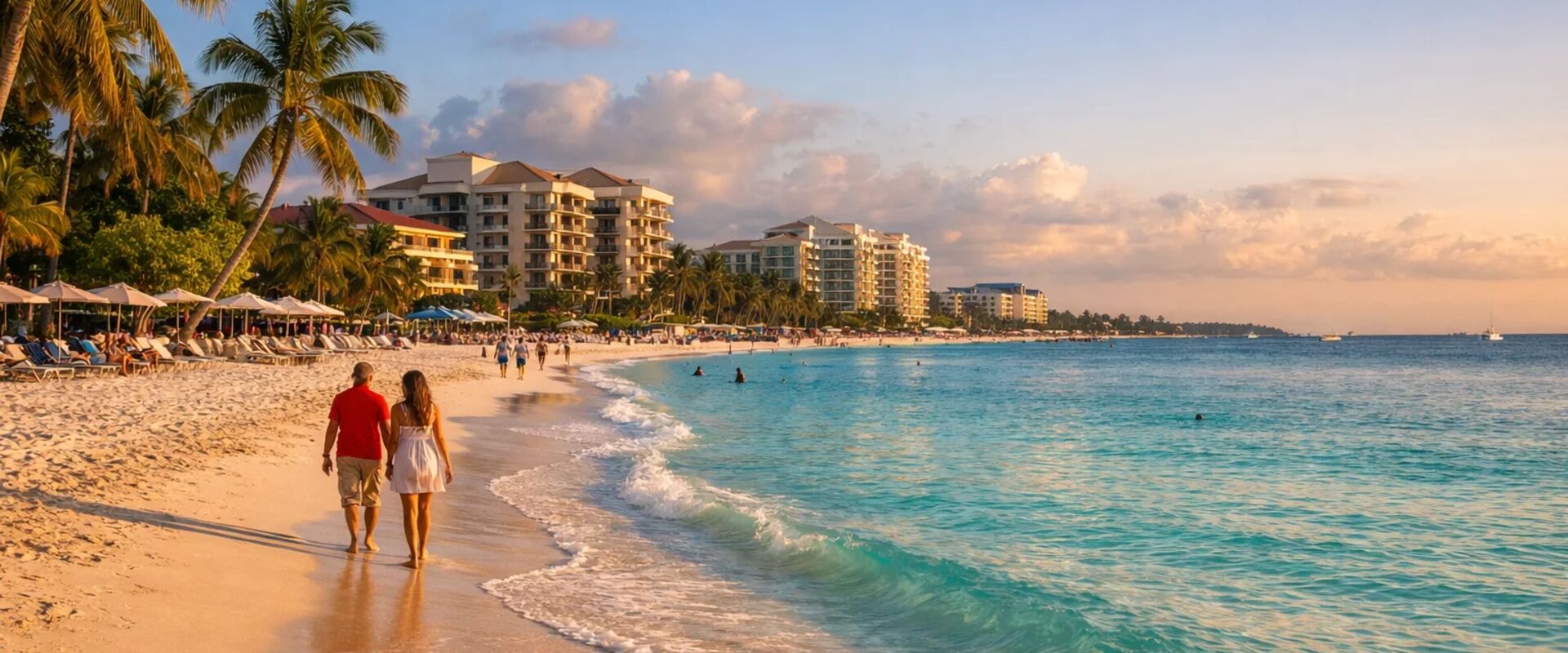
There is a moment, standing at the edge of Seven Mile Beach as the sun melts into the Caribbean Sea, when the water turns from turquoise to molten gold and the soft white sand holds the warmth of the day between your toes, and you understand why this tiny archipelago south of Cuba has become one of the most coveted destinations in the Western Hemisphere. The Cayman Islands — Grand Cayman, Cayman Brac, and Little Cayman — rise from the Caribbean Sea as three jewels of ancient coral limestone, their flat profiles belying the dramatic underwater worlds that plunge thousands of feet into the abyss just offshore.
Known primarily as an offshore financial center where more registered companies exist than residents, the Cayman Islands offer far more than banking secrecy and corporate mailboxes. Seven Mile Beach on Grand Cayman consistently ranks among the world's finest stretches of sand — a crescent of powdery white coral lapped by crystalline water so clear that you can count the grains on the seafloor ten feet below. Beneath the surface, the legendary Cayman Wall drops from shallow reef to over 1,800 meters of blue-black depth, creating some of the Caribbean's most spectacular wall diving. At Stingray City, wild Southern Atlantic stingrays glide around visitors in waist-deep water — an experience that has become one of the region's most iconic encounters with marine life.
Despite their small size, the Caymanians maintain a distinct identity that blends British colonial traditions, Caribbean warmth, and American influences. The islands are prosperous, safe, and exceptionally well-organized — a Caribbean destination where infrastructure matches the natural beauty, where Sunday church attendance remains high alongside world-class restaurants, and where the gentle rhythm of island life coexists with billions of dollars flowing through gleaming office towers just blocks from where fishermen once dried their catch.
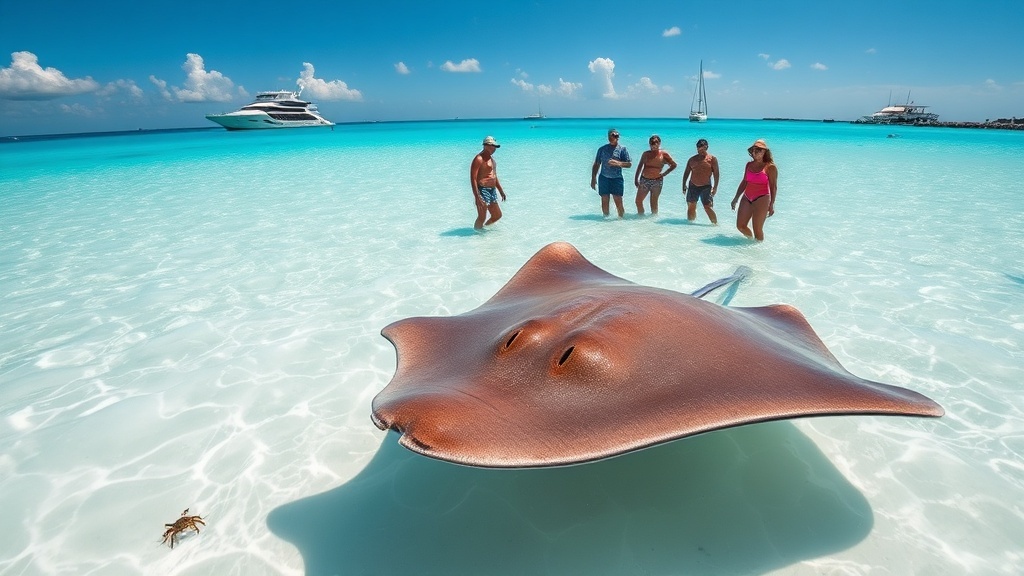
Stingray City
Wild Southern Atlantic stingrays glide through the crystal-clear shallows of the North Sound — one of the Caribbean's most iconic experiences
🏷️ Name & Identity
When Christopher Columbus first sighted the islands in May 1503 during his fourth and final voyage to the New World, he named them "Las Tortugas" for the extraordinary number of sea turtles swarming the surrounding waters. The name was later changed to "Caymanas" — believed to derive from a Carib word for crocodile or from the marine iguanas that inhabit the rocky shores. By the time English settlers arrived in the 1730s, the name had settled into "Cayman," and the islands' identity had become inseparable from the sea creatures that gave them their various names.
The Cayman Islands flag tells the story of dual identity: the Blue Ensign bears the Union Jack in the canton, acknowledging the islands' status as a British Overseas Territory, while the coat of arms features a green turtle above wavy blue-white lines, a pineapple representing the islands' traditional agriculture, and the motto "He hath founded it upon the seas." This maritime motto, drawn from Psalm 24, captures the fundamental truth about Caymanian identity — these are islands literally and figuratively built upon the ocean.
Modern Caymanian identity navigates a fascinating tension between old-world Caribbean simplicity and new-world financial sophistication. Older Caymanians remember when these were quiet fishing islands where turtle boats sailed to Nicaragua and Honduras, where "heavy cake" was baked in sand ovens, and where everyone knew everyone. Today's Cayman is a cosmopolitan territory where over sixty nationalities work side by side, yet the traditional warmth known as "Caymankind" persists — a genuine hospitality that visitors encounter in casual beach conversations and Sunday church welcomes alike.
🗺️ Geography & Regions
The Cayman Islands sit atop the Cayman Ridge, an undersea mountain range extending westward from Cuba's Sierra Maestra. The three islands total just 264 square kilometers of land area, yet they rise from oceanic depths exceeding 7,000 meters in the nearby Cayman Trench — the deepest point in the Caribbean Sea. This geological drama means that within minutes of leaving shore by boat, you can be floating above an underwater cliff that plunges deeper than the Grand Canyon.
Grand Cayman (197 km²) is the largest and most developed island, home to approximately 95 percent of the population. The island is remarkably flat — its highest natural point reaches just 18 meters above sea level. The North Sound, a large shallow lagoon protected by a barrier reef, is home to Stingray City. The western coast features the famous Seven Mile Beach, while the quieter East End preserves a more traditional Caymanian character. Cayman Brac (39 km²) rises dramatically to a limestone bluff reaching 43 meters — the highest point in the territory — earning its name from the Gaelic word "brac" meaning bluff. The island attracts nature lovers and climbers. Little Cayman (26 km²) is a sparsely inhabited paradise with fewer than 200 permanent residents, prized by divers for the legendary Bloody Bay Wall and by birdwatchers for the Booby Pond Nature Reserve, one of the largest red-footed booby colonies in the Western Hemisphere.
All three islands are coral limestone formations surrounded by fringing reefs, with no rivers or streams — all fresh water comes from rainfall collected in natural underground lenses or from desalination. Mangrove wetlands, ironshore formations carved by wave action, and patches of tropical dry forest complete the landscape. The islands lie squarely in the Atlantic hurricane belt, a reality that has shaped Caymanian architecture, culture, and resilience for centuries.
🗺️ Map
Grand Cayman lies at the western end; Cayman Brac and Little Cayman sit 130 km to the north-east. Markers show the destinations described on this page.
📜 History
Discovery and Early Years: Unlike most Caribbean islands, the Caymanians have no indigenous history — no Taíno or Carib peoples ever settled here permanently, though the islands served as seasonal fishing grounds. After Columbus's sighting in 1503, the islands became a provisioning stop for Spanish ships, where sailors hunted the abundant sea turtles. England gained formal control through the Treaty of Madrid in 1670, but permanent settlement only began in the 1730s with the first royal land grant from the governor of Jamaica in 1734.
The Seafaring Centuries: Early Caymanians were a hardy mix of British soldiers, shipwrecked sailors, buccaneers, and enslaved Africans. For generations, the islands' economy depended on the sea — turtle fishing expeditions that lasted months, sailing to Central American coastlines, and the maritime skills that made Caymanian seamen prized crew members throughout the Caribbean. The legendary Wreck of the Ten Sail in 1794, when locals rescued crews from ten merchant ships that ran aground on the eastern reef, cemented the Caymanian reputation for seamanship and courage.
From Dependency to Prosperity: The islands were administered as a dependency of Jamaica until Jamaica's independence in 1962, when Caymanians chose to remain under British sovereignty. The transformation from sleepy fishing islands to global financial center began in the 1960s when visionary legislation created a tax-neutral jurisdiction. Banks, hedge funds, and insurance companies arrived, and by the 21st century the Cayman Islands had become one of the world's largest offshore financial centres and the leading domicile for hedge funds. Tourism followed finance, and today the islands enjoy one of the highest standards of living in the Caribbean, with a GDP per capita exceeding $97,000.
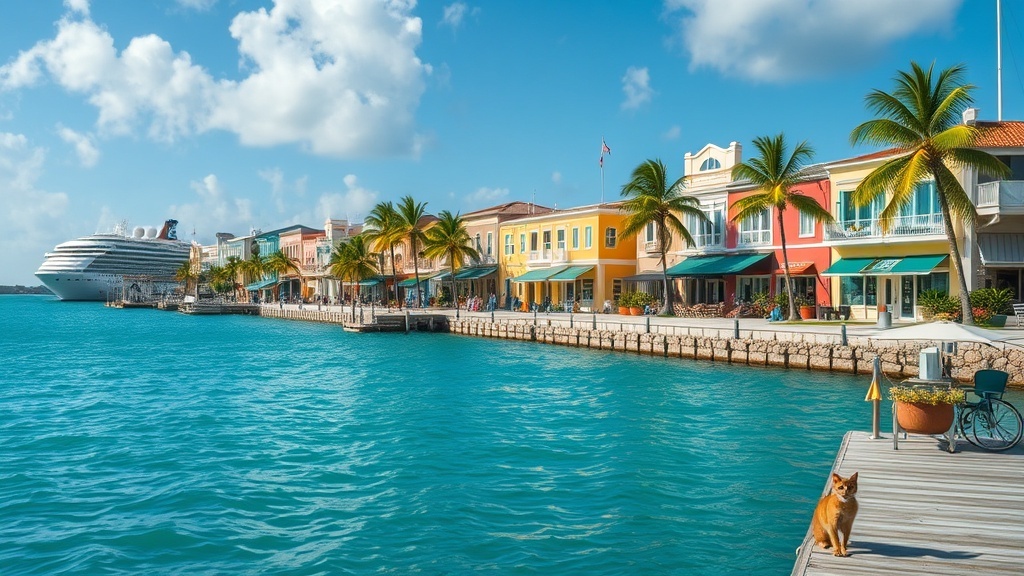
George Town Waterfront
The capital's colorful harbor where colonial charm meets Caribbean cruise ship energy and duty-free shopping
🎭 People & Culture
Caymanian culture is woven from threads of British colonial heritage, African traditions brought by enslaved peoples, and the practical wisdom of generations of seafarers who learned to thrive on flat coral islands far from anywhere. The population of approximately 91,000 includes native Caymanians — people of mixed African and European descent who form the cultural backbone of the islands — alongside expatriate workers from over sixty countries, with significant communities from Jamaica, the Philippines, India, the United Kingdom, and Canada.
Religion plays a central role in Caymanian life. Sunday church attendance remains remarkably high, and the islands support an extraordinary density of churches — the traditional denominations including Church of God, United Church, Anglican, Baptist, and Catholic congregations anchor communities across all three islands. The Caymanian accent itself preserves echoes of English, Scottish, and Welsh settlers in a distinctive Caribbean creole that older residents speak with particular warmth, though Jamaican patois, Spanish from Latin American workers, and Tagalog from Filipino communities add to the islands' linguistic richness.
Community bonds remain strong despite modernization. Catboat sailing — traditional wooden boats without centerboards that require exceptional seamanship — is a uniquely Caymanian sport and a living connection to maritime heritage. The concept of "Caymankind" — an innate warmth, courtesy, and willingness to help strangers — is not merely a tourism slogan but a genuine cultural value that visitors encounter in everyday interactions, from fishermen sharing their catch to shopkeepers offering directions with unhurried kindness.
🏛️ Government & Politics
The Cayman Islands are a British Overseas Territory, self-governing in almost everything that touches daily life yet constitutionally tethered to London. The 2009 Constitution, substantially amended in 2020, gives the islands a Premier, a Cabinet and a 19-seat Parliament, while reserving defence, external affairs, internal security and the civil service to the Crown's representative.
Head of State: King Charles III, represented locally by the Governor. The Cayman Islands are one of the fourteen British Overseas Territories; the King appears on the CI$ banknotes and coins, and the territory's highest court of appeal is his Privy Council.
Governor: Jane Owen, a career British diplomat previously ambassador to Norway and to Switzerland & Liechtenstein, has represented the King in Cayman since April 2023 — only the second woman to hold the post. In her Throne Speech at the State Opening of Parliament on 19 June 2026 she announced a new Electoral Boundary Commission to address the growing imbalance between single-member constituencies; its three members, chaired by Mark Ramkerrysingh, held their first meeting on 26 August 2026 and must report within nine months.
Premier: André Ebanks took office on 6 May 2025 at the head of a coalition assembled after the general election of 30 April 2025, which drew a 72.89% turnout — high even by Caymanian standards. Ten of the 19 seats are needed for a majority, and Caymanian politics is famously personality-driven rather than party-driven; independents and shifting alliances decide governments as often as manifestos do. The next general election is due in 2029. Election day 2025 doubled as a three-question referendum: voters rejected cruise berthing piers (about 64% No, 11,973 to 5,417) but approved a national lottery and the decriminalisation of small amounts of cannabis.
For visitors the practical consequences are quiet but real: British consular protection applies, the legal system is English common law with final appeal to the Privy Council in London, and the Cayman Islands Dollar is issued by the Cayman Islands Monetary Authority rather than by the Bank of England. Cayman is not part of the United Kingdom, not part of the European Union, and has never been in the Schengen or UK common travel areas — entry rules here are entirely its own.
🏛️ George Town — The Capital
George Town spreads along a natural harbor on Grand Cayman's western coast, serving as both the financial nerve center of an industry whose banks and funds hold trillions of dollars and the colorful tender port where well over a million cruise passengers a year come ashore (1.83 million at the 2019 peak). The capital embodies the Cayman paradox — gleaming modern office towers housing hundreds of banks and financial institutions stand just blocks from colonial-era buildings painted in Caribbean pastels, and the billions flowing through electronic networks coexist with waterfront fish-fry vendors and the casual rhythms of island life.
The Cayman Islands National Museum, housed in a restored 19th-century building on Harbour Drive, chronicles the islands' journey from uninhabited turtle grounds to global financial hub. Heroes Square and the handsome Elmslie Memorial Church anchor the historic district, while the nearby Cayman Craft Market showcases local artisans working with Caymanite — a multicolored stone found only in these islands and designated as the national gemstone. For shopping enthusiasts, the duty-free stores along Cardinal Avenue and the upscale Camana Bay development offer everything from Swiss watches to local rum.
Beyond the cruise ship crowds, George Town reveals a more intimate character. The Observation Tower at Camana Bay offers free 360-degree panoramic views, the National Gallery of the Cayman Islands hosts eight major exhibitions annually, and the waterfront comes alive at sunset when the day-trippers have departed and the real George Town — a place of local restaurants, evening strolls, and genuine Caribbean warmth — emerges.
🏖️ Seven Mile Beach
Actually spanning 5.5 miles along Grand Cayman's western shore, Seven Mile Beach is the island's crown jewel — a continuous crescent of white coral sand so fine it squeaks beneath your feet, backed by casuarina trees and luxury resorts that face the setting sun across calm, impossibly clear Caribbean water. The beach consistently ranks among the world's finest, and unlike many Caribbean resort beaches, it remains entirely public by law — even where the Ritz-Carlton and other exclusive properties line the shore, multiple access points ensure every visitor can walk the full length unimpeded.
The west-facing orientation delivers spectacular sunsets nightly, painting the sky in shades of amber and violet that draw crowds to waterfront bars and restaurant terraces. Water sports abound — kayaking, paddleboarding, parasailing, jet skiing, and snorkeling along the nearshore reef where parrotfish and sergeant majors dart through sea fans and elkhorn coral. The northern end near the Ritz-Carlton tends to be quieter, while the central section near the public beach park buzzes with activity on weekends when Caymanian families gather for picnics and children chase the gentle surf.
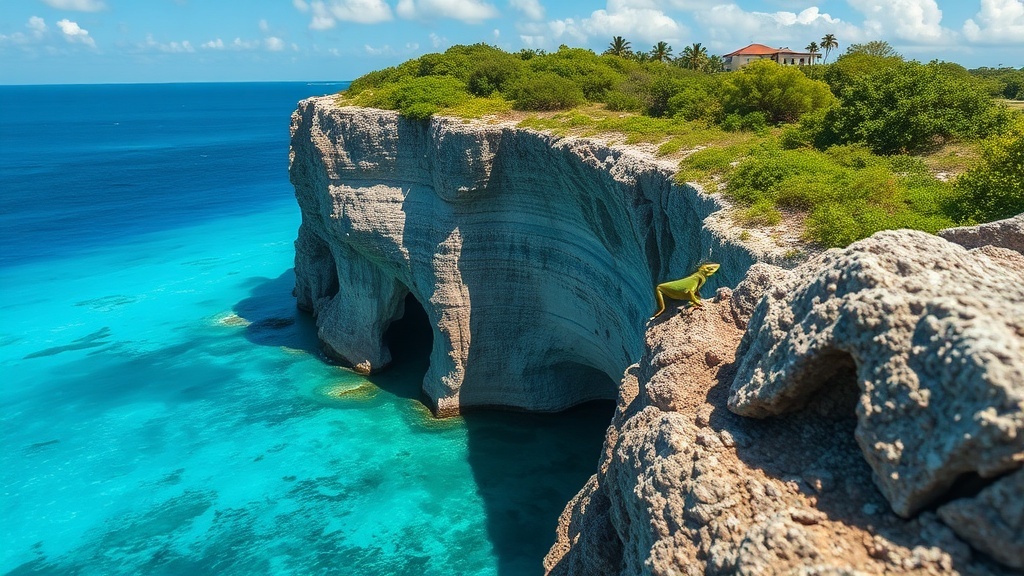
Cayman Brac — The Bluff
The dramatic limestone bluff rises 43 meters above the Caribbean — the highest point in the Cayman Islands and a haven for nature lovers
🐟 Stingray City & Diving
Stingray City is a series of shallow sandbars in the North Sound where approximately 105 wild Southern Atlantic stingrays gather daily, habituated to human contact by decades of fishermen who once cleaned their catches in these calm waters. The rays learned to associate boat engines with food, and today visitors can stand in waist-deep crystal water while these gentle, graceful creatures — some with wingspans exceeding a meter — glide around them, brushing against legs with their velvety undersides. It is one of the Caribbean's most iconic wildlife encounters, and for many visitors, the defining memory of a Cayman trip.
But the real underwater magic lies along the Cayman Wall. Surrounding all three islands, the reef drops from shallow coral gardens at 15-20 meters to a sheer cliff plunging over 1,800 meters into the Cayman Trench — the deepest point in the Caribbean. With over 365 recognized dive sites and visibility regularly exceeding 30 meters, the Caymanians can justifiably claim some of the world's finest diving. Little Cayman's Bloody Bay Marine Park is consistently rated among the top five dive sites globally, while Grand Cayman's USS Kittiwake — a former submarine rescue vessel scuttled in 2011 at 19 meters depth — has become a spectacular artificial reef visited by 20,000 divers annually. Eagle rays, reef sharks, green sea turtles, and massive barrel sponges populate the walls, and the sheer diversity of coral formations — tunnels, grottos, swim-throughs, and overhangs — ensures that even experienced divers find new discoveries on repeated visits.
🏝️ Cayman Brac & Little Cayman
Cayman Brac is the adventurer's island, named for the dramatic limestone bluff (from the Gaelic "brac") that runs the length of its eastern half, rising to 43 meters at the eastern tip. The Bluff is honeycombed with caves — some accessible only by scrambling through dense vegetation — that served as shelters during hurricanes for generations of "Brackers." The MV Captain Keith Tibbetts, a Soviet-era frigate deliberately sunk in 1996, is one of only a handful of diveable Soviet warships in the Western Hemisphere. Hiking trails traverse the Bluff through tropical dry forest where the endemic Cayman Brac parrot — the national bird — flashes brilliant green among the branches.
Little Cayman is the quiet soul of the territory — just 16 kilometers long, barely 1.6 kilometers wide, with fewer than 200 permanent residents and more iguanas than people. The Booby Pond Nature Reserve hosts one of the largest breeding colonies of red-footed boobies in the Western Hemisphere, alongside magnificent frigatebirds that soar on thermals above the mangroves. Offshore, the Bloody Bay Wall begins at just 6 meters depth before plunging vertically into darkness — a dive experience so profound that seasoned instructors describe it as the closest thing to flying. For those seeking the castaway experience, Owen Island — a deserted sandy islet just 180 meters from shore — can be reached by kayak for an afternoon of absolute solitude.
⚓ Wreck of the Ten Sail
On the night of February 8, 1794, a convoy of ten merchant ships escorted by HMS Convert struck the reef off Grand Cayman's East End in heavy seas. The Caymanian residents of Gun Bay and East End launched their boats into the storm, risking their own lives to rescue over 400 sailors and passengers from the floundering vessels. Only six to eight lives were lost out of several hundred aboard — a feat of seamanship and courage that became the founding legend of Caymanian identity. On the bicentenary in 1994 Queen Elizabeth II came to East End to dedicate the memorial to the victims.
Local tradition holds that King George III was so grateful for the rescue — particularly because a member of the royal family was allegedly aboard one of the ships — that he decreed the Cayman Islands would never be taxed. While no historical record confirms this royal decree (the Caymanian tax-free status actually stems from 1960s legislation), the legend has become so integral to national identity that it serves as an origin story for the islands' most distinctive modern characteristic. A monument at the site in East End commemorates the event, and the wreck remains — scattered across the shallow reef — are a popular snorkeling destination where visitors can float above cannon, anchors, and ballast stones that have rested on the seabed for over two centuries.
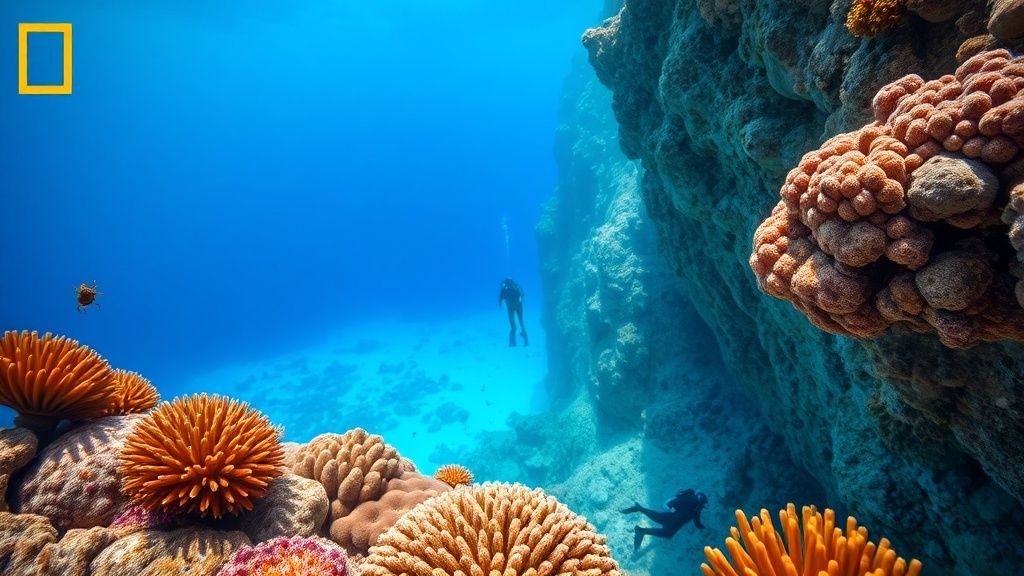
The Cayman Wall
World-class wall diving where shallow coral gardens give way to a sheer cliff plunging over 1,800 meters into the Caribbean abyss
🍽️ Cuisine
The Cayman Islands' cuisine tells the story of seafarers, turtlers, and settlers who learned to thrive on coral outcrops in the Caribbean Sea. With limited arable land, Caymanians developed a resourceful kitchen built around the sea's bounty — particularly the green sea turtle that once sustained the islands and gave them their identity. Today, while turtle farming has replaced wild harvesting, the culinary heritage persists in dishes that blend Caribbean, British, and Jamaican influences. Coconut, cassava, and breadfruit grow in sandy soil, while the surrounding waters yield conch, lobster, and countless reef fish. The national dish, turtle stew, remains a connection to the past, while modern Caymanian cooking celebrates the tropical abundance that makes island life sweet.
Cayman-Style Fish Rundown
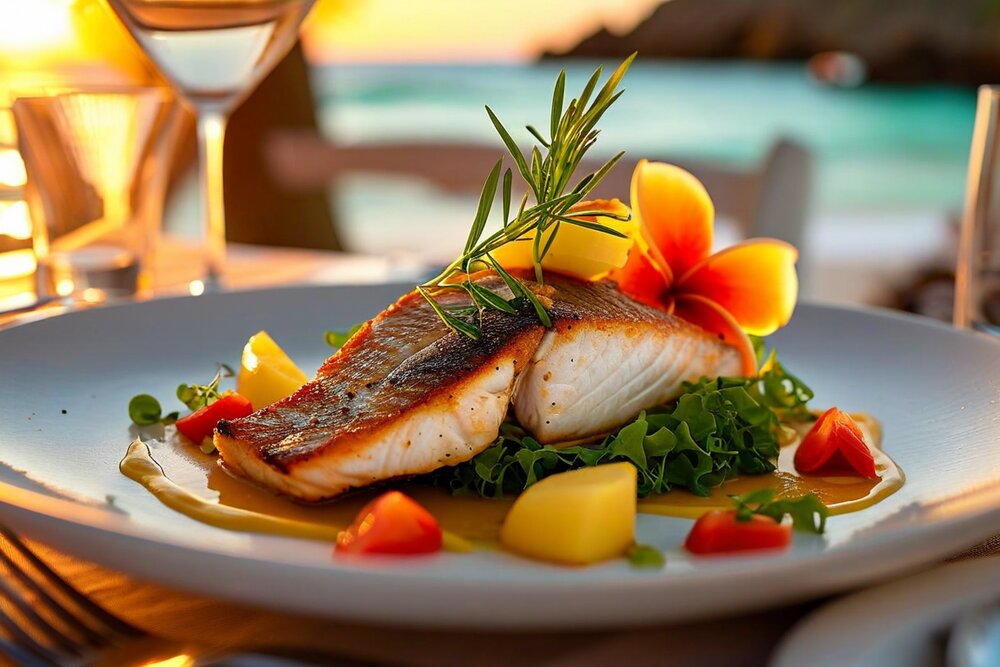
A rich, coconut-based fish stew that showcases the islands' love affair with the sea. Fresh snapper or grouper simmers in seasoned coconut milk until it literally "runs down" into a thick, luscious sauce. Served over rice and provisions, this is comfort food Caymanian-style. This recipe serves two.
Ingredients: 400g fresh snapper or grouper fillets, 400ml coconut milk, 1 medium onion (sliced), 2 cloves garlic (minced), 1 Scotch bonnet pepper (whole, for flavor), 2 sprigs fresh thyme, 1 medium tomato (chopped), 15ml lime juice, 5ml salt, 2ml black pepper, 15ml vegetable oil, 2 green onions (chopped).
Preparation: Season the fish with lime juice, salt, and pepper. Let it marinate for 15 minutes while you prepare the other ingredients. Heat oil in a deep skillet over medium heat. Add onion and garlic, cooking until softened and fragrant, about 3 minutes. Pour in the coconut milk and bring to a gentle simmer. Add the thyme sprigs, whole Scotch bonnet, and chopped tomato. Let the coconut milk reduce for 10 minutes, stirring occasionally, until it begins to thicken slightly. Nestle the fish fillets into the sauce. Spoon some sauce over the top and cover the pan. Simmer gently for 12-15 minutes until the fish is cooked through and flakes easily. The sauce should be thick and creamy. Remove the Scotch bonnet (unless you want more heat) and thyme sprigs. Garnish with green onions and serve immediately over white rice.
💡 The Scotch bonnet adds flavor without excessive heat when left whole — pierce it once if you want more spice, or remove it entirely for a milder dish.
Heavy Cake
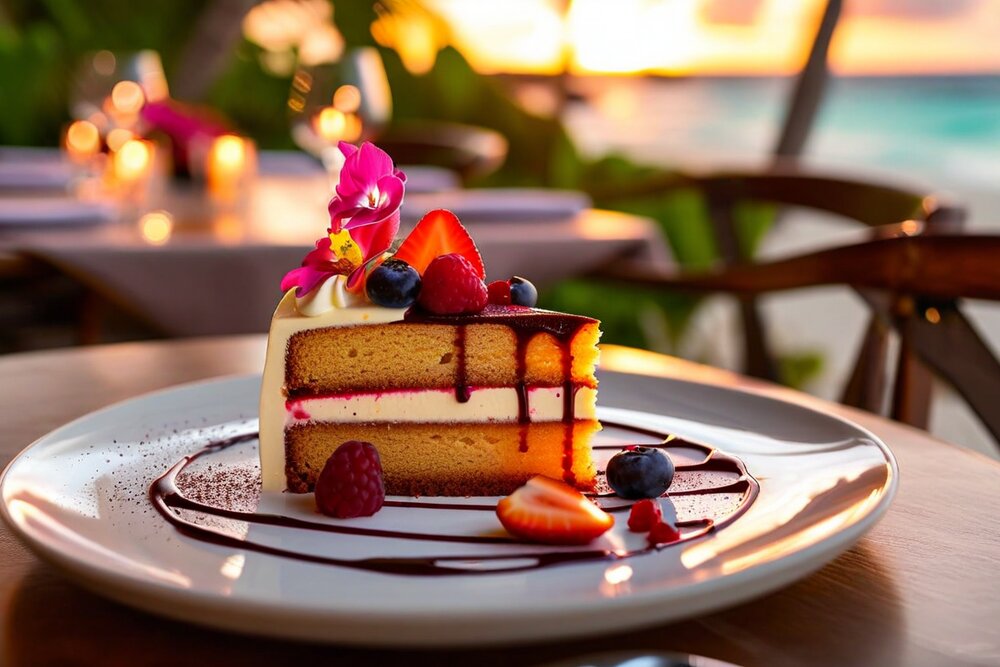
This dense, sweet cassava cake is a beloved Caymanian tradition, especially during holidays and celebrations. Made from grated cassava, coconut, and warming spices, it earns its name from its substantial, pudding-like texture. Each family guards their recipe, but all agree it should be rich, moist, and utterly addictive. This recipe serves two.
Ingredients: 300g fresh cassava (peeled and finely grated), 100g freshly grated coconut, 150g brown sugar, 200ml coconut milk, 50g butter (melted), 2ml vanilla extract, 2ml ground cinnamon, 1ml ground nutmeg, 1ml salt.
Preparation: Preheat your oven to 175°C. Grease a small baking dish (about 20cm square) with butter. In a large bowl, combine the grated cassava and coconut. Mix thoroughly with your hands, breaking up any clumps. Add the brown sugar, melted butter, vanilla, cinnamon, nutmeg, and salt. Mix well to distribute the spices evenly. Pour in the coconut milk gradually, stirring until you have a thick, pourable batter. Pour the mixture into the prepared dish and smooth the top. Bake for 60-75 minutes until the top is golden brown and a knife inserted in the center comes out mostly clean. Let cool for at least 30 minutes before cutting into squares.
💡 If fresh cassava is unavailable, frozen grated cassava works well — just thaw and squeeze out excess moisture before using.
Conch Fritters
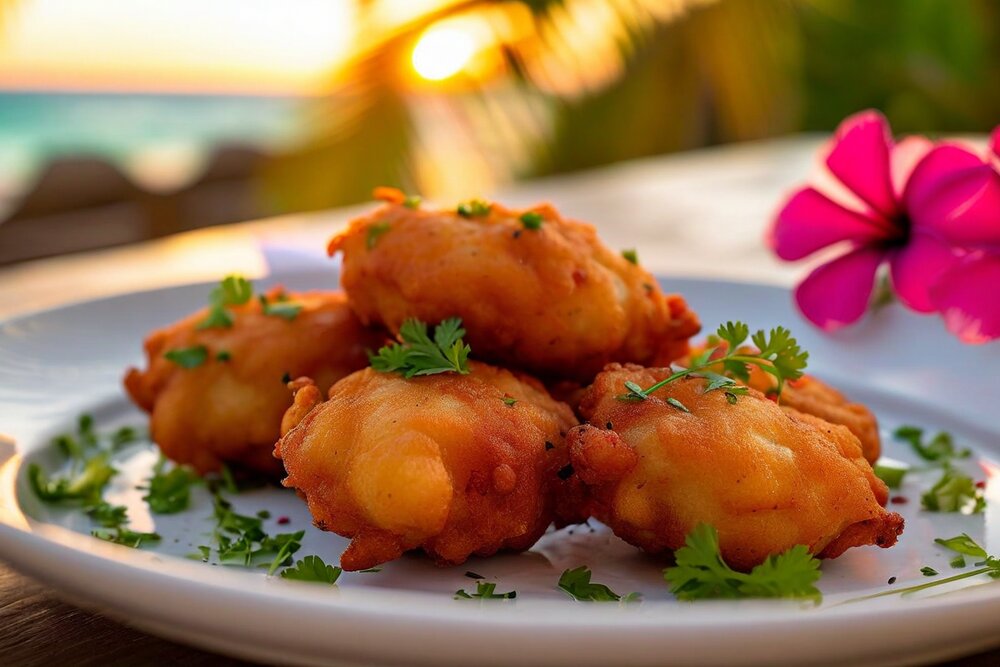
These golden, crispy fritters are a Caribbean staple, and Caymanians make them exceptionally well. Tender conch meat is diced and folded into a seasoned batter, then fried until puffed and golden. Served with a tangy dipping sauce, they're the perfect appetizer for any island gathering. This recipe serves two.
Ingredients: 200g cleaned conch meat (tenderized and finely diced), 100g all-purpose flour, 1 egg (beaten), 60ml milk, 1 small onion (finely diced), 1 celery stalk (finely diced), 1 clove garlic (minced), 2ml baking powder, 2ml hot sauce, 3ml salt, 2ml black pepper, vegetable oil for frying.
Preparation: Tenderize the conch by pounding it with a meat mallet until thin, then dice it very finely. In a bowl, whisk together flour, baking powder, salt, and pepper. Add the beaten egg and milk, stirring until you have a thick batter. Fold in the diced conch, onion, celery, garlic, and hot sauce. Heat 5cm of oil in a heavy pot to 175°C. Drop rounded tablespoons of batter into the hot oil, frying 4-5 at a time for 3-4 minutes until deep golden brown. Drain on paper towels and serve hot with lime wedges.
💡 If conch is unavailable, substitute with firm white fish like grouper or shrimp — the technique and flavors work beautifully with any seafood.
Signature Dishes: Turtle Stew — the national dish, slow-cooked with cassava and breadfruit. Conch Stew — queen conch in rich broth. Fish Rundown — fish in coconut milk. Heavy Cake — dense cassava and coconut dessert. Jerk Chicken — Jamaican-influenced grilled chicken.
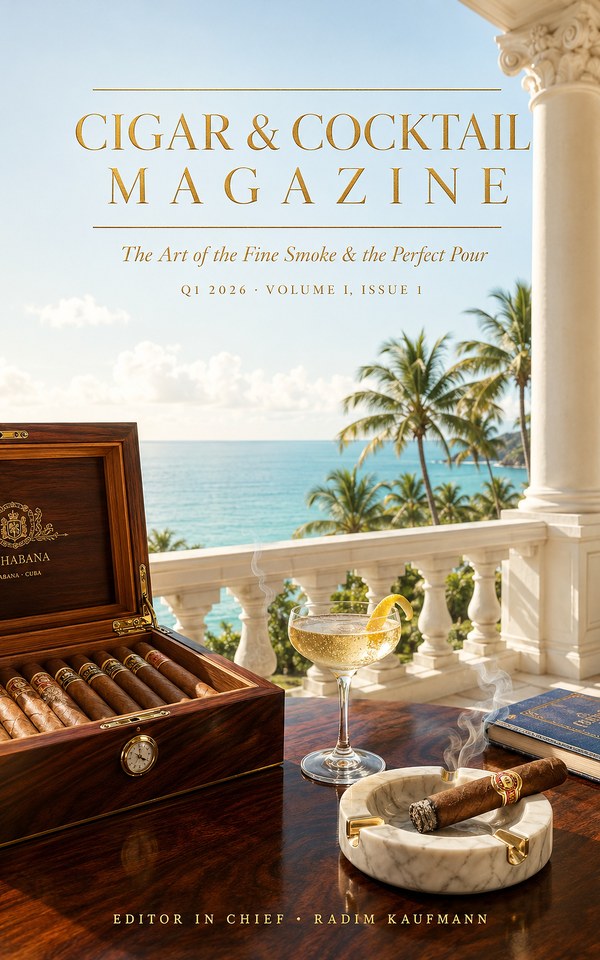
Beverages: Rum Punch — local rum with tropical fruit juices. Mudslide — frozen cocktail from the legendary Wreck Bar. Caybrew — locally brewed beer. Tortuga Rum Cake — the islands' most beloved edible souvenir. Fresh coconut water is ubiquitous.
🥃 Rum & Spirits
There are no vineyards on these islands. Coral rock, salt spray and a permanent 28°C make viticulture impossible, so the Cayman Islands produce no wine of their own and every bottle on a wine list here has crossed an ocean and paid import duty to get there. What Cayman does make — and makes unusually well — is rum, and it ages it in a way nobody else does.
Seven Fathoms Premium Rum is the islands' signature spirit and the reason Cayman appears on serious rum lists at all. Distilled by Cayman Spirits Company on Grand Cayman — the territory's first and only distillery, founded in 2008 — the rum is filled into ex-bourbon casks that are then submerged seven fathoms, forty-two feet, beneath the sea off the East End. The constant temperature and the slow rocking of the current push spirit in and out of the oak far faster than still air in a warehouse ever could. The result is smooth, faintly saline and noticeably rounder than its age would suggest; it has taken a Double Gold at the WSWA and a 90-point score from Wine Enthusiast.
The same distillery bottles Governor's Reserve, a fuller aged rum, and Gun Bay Vodka, distilled through a thirty-foot column still. The tasting room at the end of the distillery tour usually has a Distiller's Special that is sold nowhere else on earth.
Tortuga Rum Company, founded in 1984, blends and bottles a broad range of rums — gold, dark, coconut, spiced — and is better known worldwide for what it bakes than what it distils: the Tortuga Rum Cake is Cayman's most-exported edible souvenir, produced by the millions and carried home in a distinctive gold tin.
On the beer side, Cayman Islands Brewery in George Town produces Caybrew, White Tip Lager and a seasonal stout, all brewed with desalinated island water. Expect to pay CI$5–6 for a bottle in a bar — imported beer costs the same, so there is no reason not to drink local.
No Kaufmann Wine Score is published for the Cayman Islands: with no domestic viticulture, there is nothing to rate.
🍹 Cocktails
Cayman's bar culture is built on beach bars, boat days and a single world-famous invention. Ask any bartender on Grand Cayman where the Mudslide comes from and you will be pointed east along the North Sound to Rum Point.
The Mudslide (Rum Point original)
Invented in the 1970s at the Wreck Bar at Rum Point when a guest asked for a White Russian and the bar had no cream — Irish cream liqueur went in instead. The frozen version is now the house pour at every beach bar on the island.
Ingredients: 30 ml vodka, 30 ml coffee liqueur, 30 ml Irish cream liqueur, 60 ml vanilla ice cream or heavy cream, 1 cup ice, chocolate syrup.
Preparation: Swirl chocolate syrup around the inside of a chilled hurricane glass. Blend vodka, coffee liqueur, Irish cream, ice cream and ice until smooth and thick. Pour, top with a drizzle of syrup and drink with a straw, preferably in a hammock.
Cayman Lemonade
The unofficial drink of Seven Mile Beach — pink, deceptively light and served by the pitcher at beach bars from Calico Jack's to the Royal Palms.
Ingredients: 45 ml vodka, 30 ml peach schnapps, 60 ml cranberry juice, 30 ml lemonade, splash of club soda, lime wedge.
Preparation: Fill a tall glass with ice, add vodka, schnapps and cranberry, top with lemonade and a splash of soda, stir once and squeeze the lime over the top.
Seven Fathoms Old Fashioned
The way the Cayman Spirits Company tasting room shows off its sea-aged rum: the saline edge from the underwater casks stands in for the usual dash of bitters.
Ingredients: 60 ml Seven Fathoms rum, 1 sugar cube (or 5 ml demerara syrup), 2 dashes Angostura bitters, orange peel, one large ice cube.
Preparation: Muddle the sugar with the bitters and a few drops of water in a rocks glass, add the ice cube and rum, stir 20 seconds until cold, express the orange peel over the surface and drop it in.
Tortuga Rum Punch
Ingredients: 45 ml Tortuga gold rum, 15 ml Tortuga dark rum, 60 ml pineapple juice, 60 ml orange juice, 15 ml lime juice, 15 ml grenadine, grated nutmeg.
Preparation: Shake everything except the nutmeg hard with ice, strain over fresh ice in a tall glass and dust with nutmeg. Remember the old rhyme — one of sour, two of sweet, three of strong, four of weak.
🌡️ Climate & Best Time
The Cayman Islands enjoy a tropical marine climate with temperatures between 25–32°C year-round, moderated by steady trade winds that keep humidity bearable even in the warmest months. The dry season from November through April brings slightly cooler temperatures, lower humidity, and the calmest seas — this is the peak tourist season when resort prices climb accordingly. The wet season from May through October sees afternoon showers that are typically brief and intense, greening the landscape and filling the natural underground water lenses.
Hurricane season officially runs June through November, with September and October presenting the highest risk. The islands sit squarely in the hurricane belt, and major storms have shaped Caymanian history — Hurricane Ivan (11–12 September 2004) devastated Grand Cayman with sustained winds near 250 km/h and a storm surge of 2.5–3 metres that put most of the island under water for two days, damaging more than 80 percent of its buildings and causing close to US$3 billion in losses. Hurricane Melissa, the Category 5 storm that wrecked western Jamaica on 28 October 2025, passed to the east; Cayman escaped with heavy swells and a string of cancelled cruise calls. The rebuilt infrastructure is now among the most storm-resilient in the Caribbean. Water temperatures stay between 26–30°C year-round, making diving and snorkeling comfortable in any season. The best time to visit for budget travelers is May through June, when prices drop but weather remains pleasant.
✈️ Getting There
By Air: Owen Roberts International Airport (GCM) on Grand Cayman receives direct flights from Miami (1 hour), New York (3.5 hours), Toronto, London Heathrow (British Airways, with a stop in Nassau, about 12 hours), and other major cities via Cayman Airways (the national carrier), American Airlines, JetBlue, United, Delta, Air Canada, WestJet and — since December 2025 — Porter Airlines from Toronto and Ottawa. Six new North American routes launched in December 2025 alone, and first-quarter 2026 seat capacity was up 18%. Charles Kirkconnell International Airport on Cayman Brac and Edward Bodden Airfield on Little Cayman are served by small Cayman Airways Express turboprops connecting to Grand Cayman.
By Sea: Grand Cayman remains one of the Caribbean's busiest cruise calls, though the numbers have drifted down from the 2019 peak of 1.83 million passengers; a record December 2025 (148,489 cruise passengers) and 681,391 in the first half of 2026 mark the first sustained recovery in years. Stayover tourism is the growth story: 450,441 air arrivals in 2025 (third-highest ever) and the best month in the territory's history in March 2026 — 64,213 stayover visitors and 221,731 total. There is still no cruise berthing pier: on 30 April 2025 voters rejected the proposed piers in a referendum by roughly two to one, so ships continue to anchor offshore and tender passengers into George Town harbour, which means calls are cancelled outright when the swell runs from the north or west. There is no public ferry service between the three islands; inter-island travel is exclusively by air. Private charter boats and sailing vessels can clear customs at George Town harbor.
⚠️ Travel Advisory
🇺🇸 US State Department: Level 1 — Exercise Normal Precautions
Reaffirmed 21 May 2026. The Cayman Islands sit in the safest tier of the US advisory system — the same level as Canada, Japan or Iceland — and have held it without interruption for years. The UK FCDO issues no general warning against travel either.
Firearms and ammunition — the one rule that ruins holidays. It is illegal to arrive in, depart from or transit the Cayman Islands with any firearm or ammunition, and enforcement is absolute. A single stray round forgotten in a rucksack or a range bag has landed American visitors in custody at Owen Roberts International Airport; there is no tourist exemption and no on-the-spot fine. Empty your bags before you fly.
Water safety. Most Caymanian beaches have no lifeguards. Rip currents form quickly on the ironshore coasts and on the north side when the wind swings, and drowning is the leading cause of visitor death here — far ahead of crime. Snorkellers should stay clear of boat channels, which are marked but heavily used.
Medical access. Grand Cayman handles most emergencies well: Cayman Islands Hospital in George Town and Health City Cayman Islands in East End are both modern facilities, and there is a recompression chamber for diving accidents. Cayman Brac has only a small district hospital and Little Cayman has a clinic, so serious cases are flown to Grand Cayman or on to Miami. Travel insurance with medical evacuation cover is not optional for divers.
Hurricane season runs 1 June to 30 November, peaking August to October. Cayman's building codes are among the strictest in the Caribbean and hotels are well drilled, but flights and cruise calls are cancelled at short notice. Check the Cayman Islands Hazard Management bulletins if you travel in the peak window.
📋 Practical Information
Money: The Cayman Islands Dollar (KYD/CI$) is pegged at a fixed rate of 1 KYD = 1.20 USD. US dollars are accepted everywhere at par or near-par rates. Credit and debit cards are widely accepted. ATMs are plentiful on Grand Cayman, less so on the sister islands.
Safety: The Cayman Islands rank among the safest destinations in the Caribbean, with very low crime rates and a visible police presence. Driving is on the left (British style) with speed limits of 25-50 mph. No visa is required for citizens of the US, Canada, UK, EU and most Commonwealth nations; Customs & Border Control normally stamps visitors in for 30 days, extendable at their discretion to a maximum of six months. Everyone must show a return or onward ticket and may be asked to prove sufficient funds. Firearms and ammunition of any kind are banned on arrival, departure and transit — see the Travel Advisory section.
Connectivity: Mobile coverage is excellent on Grand Cayman and reliable on Cayman Brac. Free Wi-Fi is available at most hotels and many restaurants. The international dialing code is +1-345.
Health: Tap water is safe to drink (desalinated). The George Town Hospital provides modern medical care, and there is a hyperbaric chamber for diving emergencies. Bring reef-safe sunscreen — coral protection is taken seriously, and non-reef-safe products face restrictions. There are no venomous snakes or dangerous land animals.
Tax: There is no income tax, no capital gains tax, no sales tax and no annual property tax — which is why the territory exists as a financial centre. That does not make it cheap: the government funds itself through import duty of roughly 22–27% on almost everything that lands at the dock, plus a 13% tourist accommodation tax on hotel and rental stays and a departure tax bundled into airfares. Only designated duty-free shops in George Town sell liquor, jewellery and perfume free of duty. Gratuities of 15-18% are customary in restaurants, and some establishments add an automatic service charge.
💵 Cost of Living
The Cayman Islands are expensive — among the priciest destinations in the Caribbean, reflecting both the high standard of living and the cost of importing nearly everything to a small island territory. Budget travelers should plan for $150–250 USD per day minimum, mid-range travelers $300–500, and luxury visitors can easily spend $800+ daily.
💰 Sample Prices (USD)
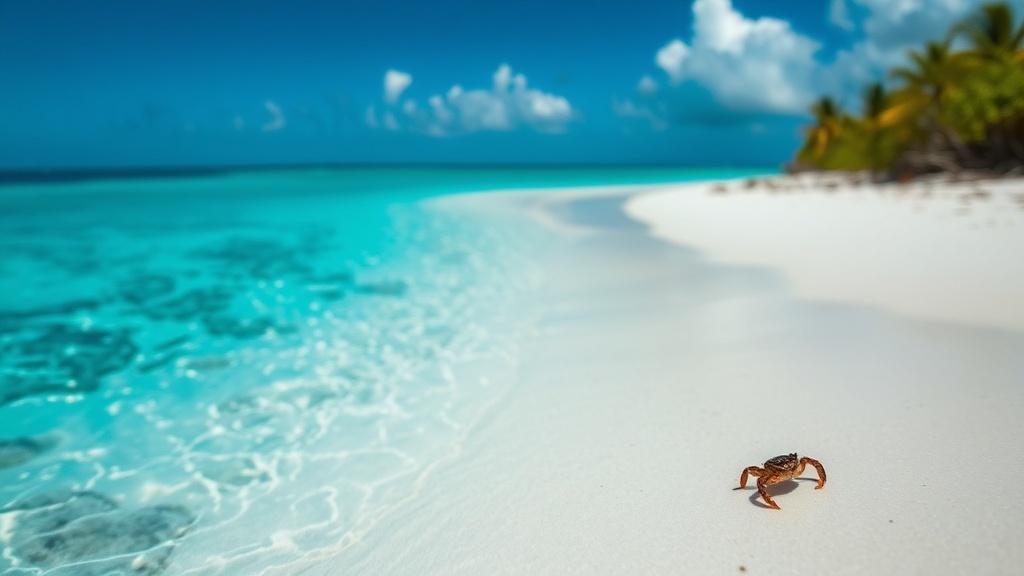
Little Cayman
Fewer than 200 residents, more iguanas than people, and the legendary Bloody Bay Wall — the quiet soul of the Cayman Islands
🏨 Accommodation
Luxury: The Ritz-Carlton Grand Cayman anchors the northern end of Seven Mile Beach with world-class facilities. The Kimpton Seafire Resort and Palm Heights offer boutique luxury alternatives. Rates start around $500/night in high season.
Mid-Range: Condominiums along Seven Mile Beach — such as the Sunshine Suites Resort or Plantana Condos — offer kitchen facilities and beach access at $200–400/night, ideal for families and longer stays.
Budget: True budget accommodation is scarce but exists — guesthouses in George Town and the Eastern districts offer rooms from $80–150/night. The Cayman Brac Beach Resort provides affordable options on the sister island. Vacation rentals through platforms like Airbnb and VRBO expand the range, particularly for groups willing to share costs.
Sister Islands: Little Cayman's Southern Cross Club and Pirates Point Resort are legendary dive lodges with all-inclusive packages. On Cayman Brac, Le Soleil d'Or is the boutique choice alongside the dive-focused Cayman Brac Beach Resort. On Grand Cayman, roughly 500 new rooms arrive in 2026 with the Grand Hyatt Grand Cayman Resort & Spa and One|GT.
🎉 Festivals & Events
Pirates Week (November): The islands' largest annual celebration attracts around 35,000 people with mock pirate invasions from the sea, street dances, heritage days, a float parade, firework shows, an underwater treasure hunt, and over 30 events across Grand Cayman. The festival celebrates the islands' swashbuckling maritime heritage with theatrical flair.
Batabano (May): Grand Cayman's Carnival — a vibrant explosion of color, music, and dancing through the streets of George Town. Elaborate costumes, soca music, and street food create an atmosphere rivaling Trinidad's famous carnival.
Braccanal (mid-year): Cayman Brac's version of Carnival — smaller but equally spirited, reflecting the sister island's tight-knit community. Includes costumed parades, live music, and traditional food.
Cayman Cookout (January): A world-class food and wine festival hosted by celebrity chef Eric Ripert at the Ritz-Carlton, featuring demonstrations, tastings, and beachside dinners with internationally acclaimed chefs.
Taste of Cayman (January): A food festival showcasing the best of local and international cuisine available on-island, held at the Camana Bay waterfront.
🏛️ Heritage Sites
While the Cayman Islands have no UNESCO World Heritage Sites, they preserve a rich heritage of maritime and colonial history through carefully maintained national landmarks.
Pedro St. James (1780): Known as "The Birthplace of Democracy in the Cayman Islands," this 18th-century great house is the oldest known stone structure on the islands. Built by slaves for English planter William Eden, it was the venue for the 1831 meeting that formed the islands' first elected parliament and the 1835 proclamation ending slavery. The restored plantation house, immersive 3D theatre, and manicured grounds overlooking the sea make this the islands' most significant historical attraction.
Queen Elizabeth II Botanic Park: A 65-acre nature reserve showcasing endemic species including the endangered blue iguana — once reduced to an estimated 10–25 individuals in the wild in 2002, now numbering well over 1,000 thanks to the Blue Iguana Conservation programme run from the park — one of the most successful reptile recoveries ever attempted, though road deaths and feral dogs keep the species dependent on active management.
Miss Lassie's House: This 19th-century wattle-and-daub cottage in South Sound preserves the visionary artwork of Gladwyn "Miss Lassie" Bush, who began painting late in life, covering the walls, windows, and ceilings with vivid works inspired by Christian visions and Caymanian seafaring culture.
Cayman Turtle Centre: A conservation facility that breeds endangered green sea turtles for release into the wild while educating visitors about the species that gave the islands their name. Over 31,000 turtles have been released since the program began.
🎒 Packing Tips
Essentials: Reef-safe sunscreen (non-nano zinc oxide), water shoes for ironshore coastline, lightweight rain jacket for sudden tropical showers, and insect repellent for evening outings near mangroves. The sun is intense — SPF 50+ is recommended even for experienced sun-seekers.
Clothing: Casual resort wear dominates — shorts, sundresses, and sandals cover most situations. A few restaurants require "smart casual" evening attire. Bring a light long-sleeve shirt for sun protection on boats and a cover-up for walking through George Town (beachwear in town is frowned upon).
Diving/Snorkeling: Most dive operators provide equipment, but bringing your own mask ensures a perfect fit. Rash guards provide sun protection and reduce the need for sunscreen underwater. A waterproof camera or GoPro is essential for documenting underwater encounters.
Don't Forget: A valid passport (no visa needed for most Western nationals), travel insurance (medical evacuation from the Caribbean is extremely expensive), and cash in small denominations — while cards are accepted everywhere, some beach vendors and taxi drivers prefer cash.
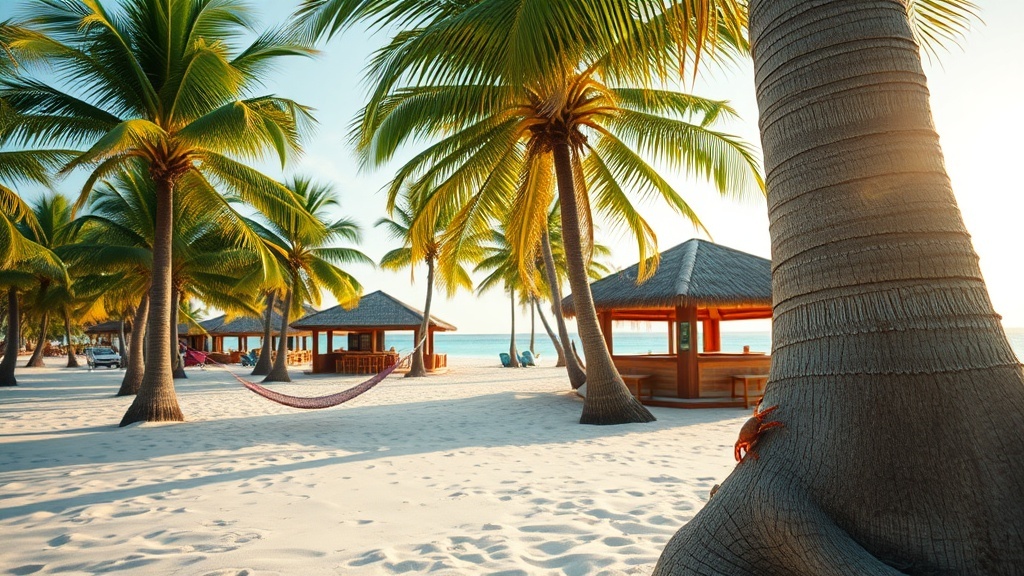
Rum Point
Hammocks between casuarina trees, the legendary Mudslide cocktail, and Caribbean relaxation at its purest
🔗 Resources
Official Tourism: visitcaymanislands.com — Comprehensive travel planning including accommodation, activities, and events.
National Trust: nationaltrust.org.ky — Heritage sites, nature reserves, hiking trails, and conservation programs.
Dive Information: divecayman.ky — Comprehensive guide to all 365+ dive sites across the three islands.
Local News: caymancompass.com — The Cayman Compass is the territory's leading newspaper.
Government Portal: gov.ky — Official government website with immigration, customs, and regulatory information.
📚 Recommended Reading
"Born Fi Dead" by Laurie Gunst — While focused on Jamaica, provides essential context for understanding the Caribbean migration patterns that shaped modern Caymanian demographics.
"Founded Upon the Seas: A History of the Cayman Islands and Their Peoples" by Michael Craton — The definitive historical account of the islands from Columbus to the modern financial era.
"Treasure Islands" by Nicholas Shaxson — An investigative look at offshore financial centers including the Cayman Islands — essential reading for understanding why these coral outcrops became a global financial power.
"Lonely Planet Caribbean Islands" — Practical travel guide with a dedicated Cayman Islands section covering logistics, dining, and activities.
🎬 Videos
Search YouTube for these recommended topics to explore the Cayman Islands visually:
🎥 "Seven Mile Beach Grand Cayman drone" — Stunning aerial footage of the iconic beach and turquoise waters.
🎥 "Stingray City Cayman Islands" — Experience swimming with wild stingrays in crystal-clear water.
🎥 "Bloody Bay Wall Little Cayman diving" — Breathtaking footage of one of the world's top-rated wall dives.
🎥 "USS Kittiwake wreck dive Cayman" — Explore the spectacularly preserved artificial reef.
🎥 "Cayman Islands Pirates Week" — The annual festival's parades, pirate invasions, and celebrations.
🤯 Fascinating Facts
🐢 The islands were originally named "Las Tortugas" (The Turtles) by Columbus in 1503 for the vast numbers of sea turtles in surrounding waters.
🏦 Over 100,000 companies are registered in the Cayman Islands — more businesses than people. A single building in George Town, Ugland House, was the registered address of 18,857 companies when US auditors counted them in 2008.
🪨 Caymanite, a multicolored sedimentary rock found only in the Cayman Islands, is the territory's national gemstone and is used in jewelry sold throughout the islands.
🌊 The Cayman Trench, located between the Cayman Islands and Jamaica, reaches a depth of 7,686 meters — the deepest point in the Caribbean Sea.
🦎 The endemic blue iguana was reduced to an estimated 10–25 individuals by 2002. A conservation breeding program has restored the wild population to over 1,000 — one of the most successful reptile recoveries in history.
🏖️ Seven Mile Beach is technically only 5.5 miles long — the name dates from historical surveys that rounded up generously.
💰 The Cayman Islands have never levied income tax, capital gains tax, or any wealth tax in their entire history.
🐦 Little Cayman's Booby Pond is home to approximately 20,000 red-footed boobies — one of the largest breeding colonies in the Western Hemisphere.
👤 Notable People
Gladwyn "Miss Lassie" Bush (1914–2003): Visionary folk artist who began painting in her sixties, covering her cottage with vivid works inspired by Christian visions and seafaring culture. Her home is now a national heritage site.
Jim Bodden (1930–1988): Regarded as the father of modern Caymanian tourism and finance, he served as the first elected Leader of Government Business and championed the legislation that transformed the islands into a global financial center.
Jordan Crooks (b. 2002): The most decorated athlete in Caymanian history. The George Town-born sprinter won the 50 m freestyle at the 2022 short-course World Championships in Melbourne — the territory's first world title in any sport — defended it in Budapest in December 2024, and in the semi-final there became the first swimmer ever under 20 seconds (19.90, a world record). At Paris 2024 he was the first Caymanian to reach an Olympic swimming final, placing eighth in the 50 m freestyle. He stepped away from the pool in 2025 to finish at the University of Tennessee and announced his return in June 2026 with Los Angeles 2028 as the target.
Cydonie Mothersill (also spelled Mothersille): The most decorated track athlete Cayman has produced. A 200 m specialist, she competed at five Olympic Games between 1996 and 2012, won Commonwealth gold in Delhi in 2010, took silver at the 2003 Pan American Games, and was awarded the bronze from the 2001 World Championships — the first world medal in Caymanian history — after the disqualifications of Marion Jones and Kelli White. She later served as the territory's national athletics coach.
Kemar Hyman (b. 1989): Sprinter and national record holder in the 100 m at 9.95 seconds, set in 2012 — a mark that made him the first Caymanian to break ten seconds and remains among the fastest ever run by an athlete from a nation of under 100,000 people.
Shaune Fraser (b. 1988): Swimmer, three-time Olympian and long the holder of most Caymanian national records in freestyle and butterfly; he carried the flag for the territory and later moved into coaching in the United States.
⚽ Sports & Recreation
Catboat Sailing: The most uniquely Caymanian sport — traditional wooden boats without centerboards or modern keels that require extraordinary seamanship to handle. Catboat races are held in the North Sound and represent a living connection to the islands' maritime heritage. The annual Catboat Regatta draws participants from across the territory.
Diving & Water Sports: With 365+ dive sites, the islands are one of the Caribbean's premier diving destinations. Freediving, spearfishing (regulated), sport fishing for marlin and wahoo, paddleboarding, and kitesurfing on the East End round out the water activities.
Football (Soccer): The Cayman Islands Football Association fields national teams in FIFA competitions. The Premier League season runs from September to April with matches at the Truman Bodden Sports Complex in George Town.
Rugby: The Cayman Islands rugby union has a growing following, with the national team competing in regional tournaments. Cricket, introduced by British settlers, also maintains a loyal following.
Recent record: The Cayman Islands have never won an Olympic or Commonwealth Games medal; at Glasgow 2026 (23 July–2 August) a 20-strong team in swimming, 3x3 basketball and gymnastics went home empty-handed for the fourth Games running. The territory's sporting high-water mark is Jordan Crooks — two short-course world titles (2022, 2024), a 19.90 world record and an Olympic final at Paris 2024 (see Notable People). In football the men's team went out in the second round of Concacaf qualifying for the 2026 World Cup in June 2025 (0–5 to Bermuda, 0–1 to Honduras), but earned promotion from Nations League C and open the 2026–27 League B campaign in a group with Guyana, Puerto Rico and Dominica. Cayman hosted rounds of the Concacaf International Friendly Series in November 2025 (a 1–2 loss to the British Virgin Islands, then 4–0 over Anguilla) and again in March 2026.
📰 Media
The Cayman Islands enjoy a free press with several media outlets serving the territory. The Cayman Compass, established in 1965, is the leading newspaper; Cayman News Service and Cayman Marl Road provide independent digital coverage. Loop Cayman closed on 8 July 2025 when Digicel shut its Loop News network across the Caribbean, and the territory's only television news station, Cayman 27, went off air in 2019. Reporters Without Borders does not rank the Cayman Islands separately; as a British Overseas Territory it falls under the UK's press-freedom framework, and there is no local licensing of journalists. Radio Cayman (government-owned), Rooster 101.9, and several other stations broadcast across the islands. CIGTV (Cayman Islands Government Television) produces local programming, while most households access international channels via cable or satellite.
Social media plays an increasingly important role in Caymanian public discourse, with platforms like Instagram and Facebook serving as primary channels for community news, event promotion, and the lively debate that characterizes this small but engaged society.
📸 Photo Gallery
Share your Cayman Islands photos! Send to photos@kaufmann.wtf to be featured.
✍️ Author's Note
The Cayman Islands surprised me with their substance beyond the offshore finance reputation. Seven Mile Beach really is that beautiful — not in the hyperbolic way that tourism boards promise, but in the quiet, breathtaking way that stops you mid-step as the sunset paints the water gold. Stingray City delivers an encounter with wild marine life that feels genuinely magical, and diving along the Cayman Wall — watching the coral garden give way to blue-black infinity — ranks among the most profound underwater experiences available to recreational divers anywhere.
Yes, the prices are steep, and the financial district's gleaming towers can feel incongruous with Caribbean palm trees. But beneath the prosperity lies a genuine island culture — the catboat sailors preserving centuries of seamanship, the church communities that hold neighborhoods together, the fishermen at the East End who still know the reef the way their grandfathers did. The Caymanians have managed something rare: they've become wealthy without entirely losing their soul. That's worth the trip.
"He hath founded it upon the seas" — National Motto
—Radim Kaufmann, 2026
Support This Project 🌍
This World Travel Factbook is a labor of love – free to use for all travelers. If you find it helpful, consider supporting its continued development.
