
🌍 Barbados at a Glance
🌏 Overview
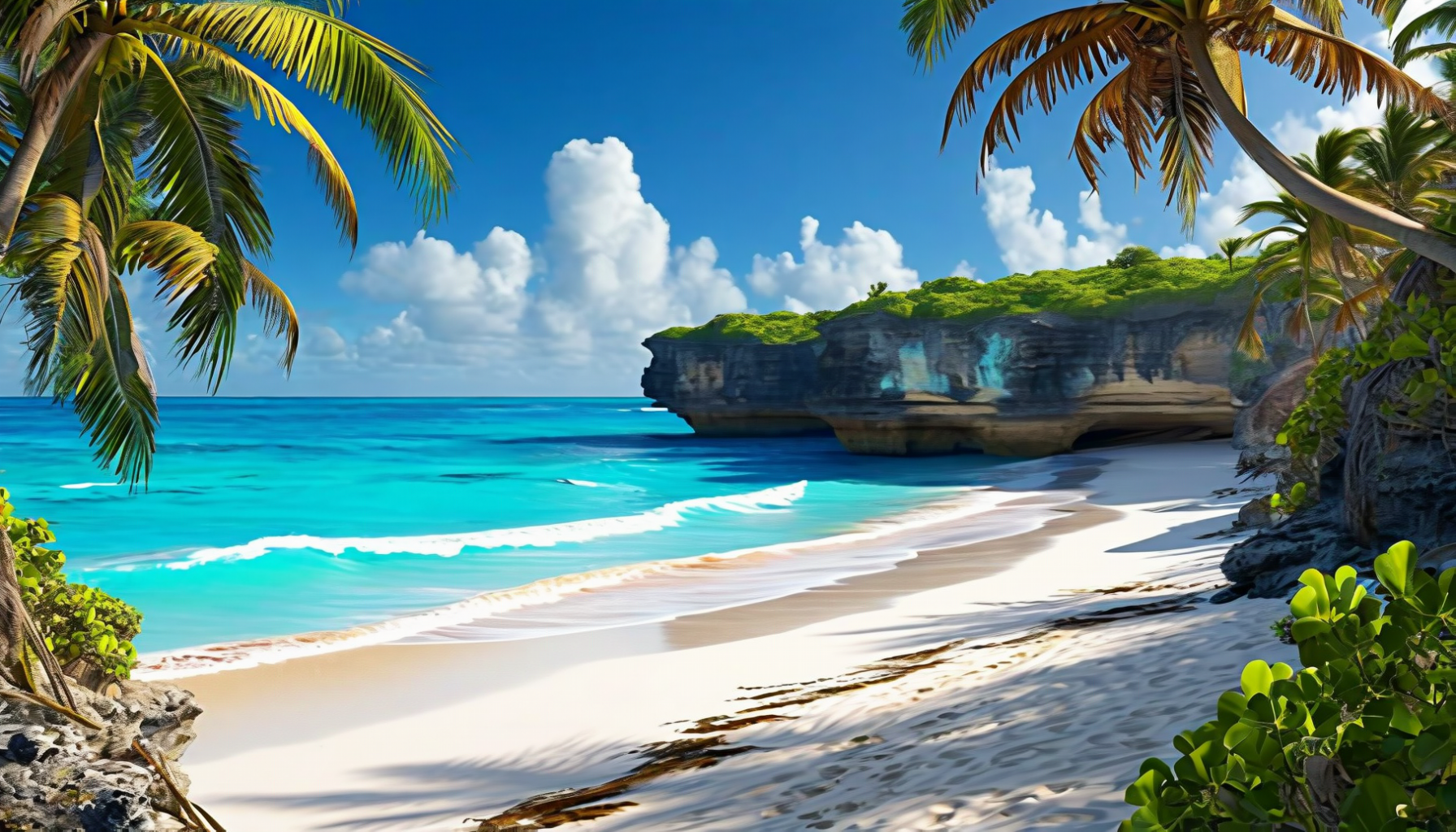
Barbados is the easternmost Caribbean island, a coral limestone jewel just 431 square kilometers in size that punches far above its weight in culture, cuisine, and character. Unlike its volcanic neighbors, Barbados rose from the sea as a coral platform, giving it gently rolling terrain, underground caves, and some of the most stunning coral beaches in the Caribbean — from the calm turquoise west coast to the wild Atlantic surf of the east.
The island's distinct personality stems from nearly 400 years of continuous British colonial rule — longer than any other Caribbean island — which left behind a cricket-obsessed culture, Anglican parish churches, afternoon tea traditions, and a parliamentary system that earned Barbados the nickname "Little England." Yet beneath this British veneer beats an unmistakably African and Caribbean heart. The rhythms of calypso and soca fill the streets during Crop Over, the food blends African, British, and Indian influences, and Bajan Creole adds musicality to every conversation.
Barbados became a republic on November 30, 2021 — exactly 55 years after independence — replacing Queen Elizabeth II with a Barbadian president as head of state. The island's economy has transitioned from sugar to tourism and offshore finance, with a booming food and rum scene that draws discerning travelers. Mount Gay, founded in 1703, is the world's oldest commercial rum distillery, and the island's 1,500+ rum shops remain the social heart of every village.
🏷️ Name & Identity
The name "Barbados" comes from the Portuguese "Os Barbados" ("The Bearded Ones"), likely referring to the island's distinctive bearded fig trees whose aerial roots hang like beards from branches. The Portuguese visited around 1536 but never settled — English colonists arrived in 1627 and claimed the island as uninhabited, though the indigenous Arawak and Carib peoples had previously lived there before being displaced or enslaved by Spanish raiders.
Modern Barbadian identity — "Bajan" in local parlance — blends African heritage (over 90% of the population descends from enslaved people brought to work sugar plantations), British institutions, and Caribbean creativity. Bajans are renowned for their warmth, directness, and fierce pride in their island. The national heroes include Errol Barrow (father of independence), Sir Garfield Sobers (greatest cricketer of his era), and Rihanna, who was appointed a National Hero in 2021.
🗺️ Geography
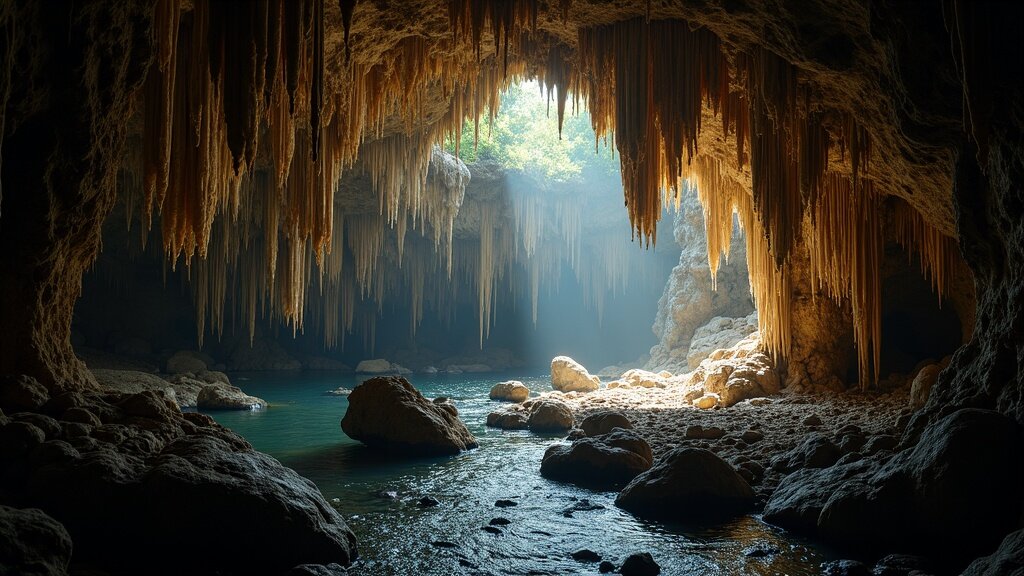
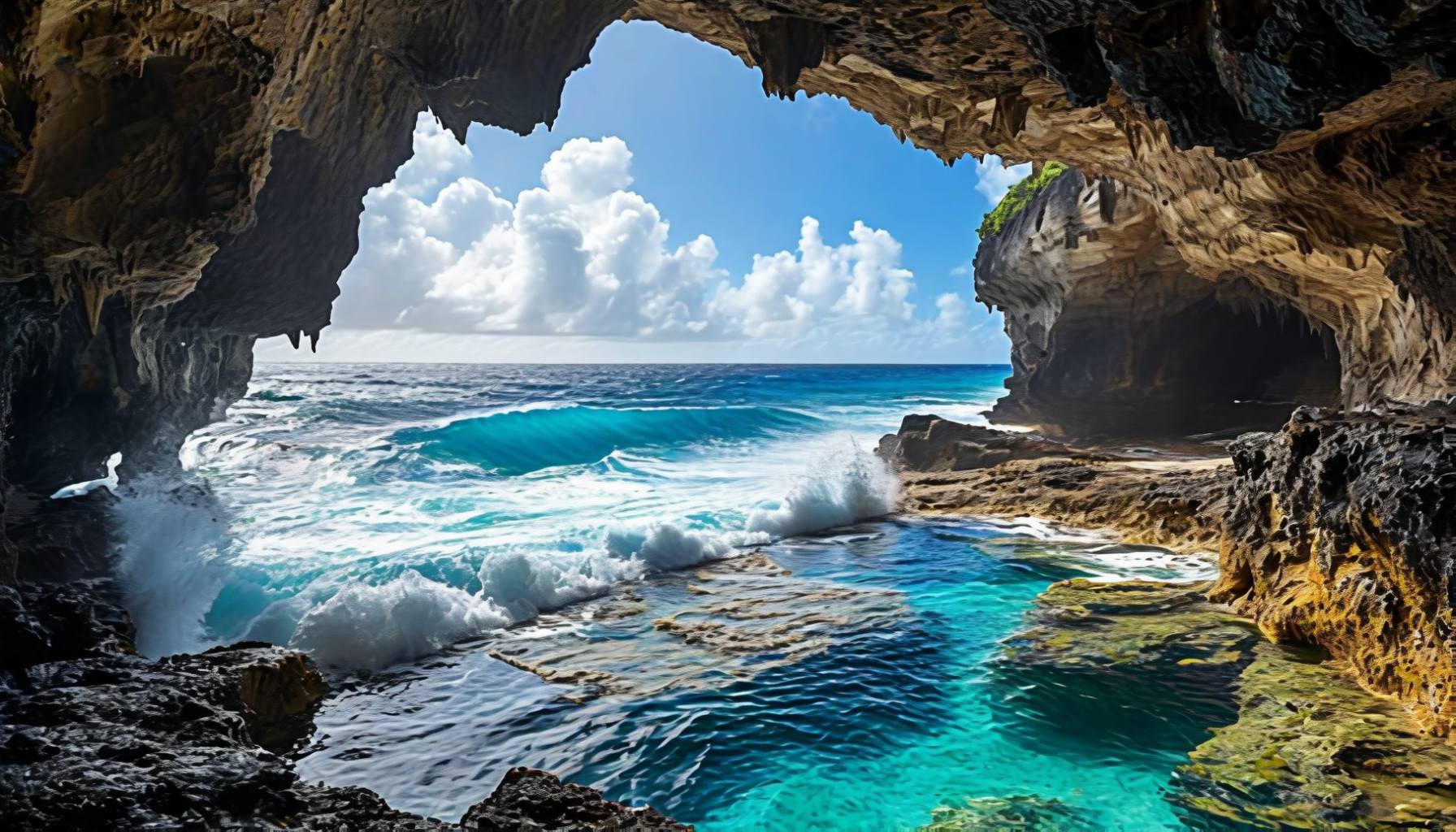
Barbados measures just 34 km long and 23 km wide — you can drive the entire island in a couple of hours. Unlike volcanic Caribbean neighbors, Barbados is primarily coral limestone, creating a gently undulating landscape with a central highland reaching 336 meters at Mount Hillaby. This coral geology has created underground wonders: Harrison's Cave features crystallized limestone stalactites and an underground stream, while Animal Flower Cave opens dramatically onto the Atlantic at the island's northern tip.
The island divides naturally into distinct coastal personalities. The sheltered west coast ("Platinum Coast") offers calm, clear Caribbean waters ideal for swimming and snorkeling. The east coast faces the full force of the Atlantic, producing dramatic surf at Bathsheba and the Soup Bowl — one of the Caribbean's premier surf spots. The south coast combines nightlife, restaurants, and accessible beaches, while the rugged Scotland District in the northeast reveals an older, more eroded landscape with dramatic cliffs and gullies.
🗺️ Map of Barbados
Bridgetown and the Garrison (UNESCO) in the south-west; the Platinum Coast running north to Speightstown; Bathsheba and the Soup Bowl on the Atlantic east coast; Harrison's Cave and Hunte's Gardens in the limestone interior; Animal Flower Cave at the northern tip; Grantley Adams airport and Oistins on the south coast. Scroll-zoom is off — use the +/− buttons.
📜 History
English settlers arrived in 1627 and quickly transformed Barbados into a sugar powerhouse. By the 1650s, the island was one of the most densely populated places on Earth — and one of the wealthiest colonies in the English-speaking world. This wealth came at an enormous human cost: over 600,000 enslaved Africans were brought to Barbados between 1627 and 1807, enduring brutal conditions on sugar plantations. Bussa's Rebellion in 1816 was the first major slave revolt, though emancipation didn't come until 1834.
Barbados' parliament has met continuously since 1639, making it the third-oldest parliamentary body in the Commonwealth. The island remained under British rule longer than any other Caribbean colony — through the sugar decline, the Panama Canal construction migration, the labor riots of 1937, and the post-war march toward independence. Full independence came on November 30, 1966, under Premier Errol Barrow. The transition to a republic in 2021, with Dame Sandra Mason as the first president, marked the final step in Barbados' long journey to full sovereignty.
👥 People & Culture
Barbados' 282,700 people are predominantly of African descent, with smaller communities of mixed-race, white Bajan ("Redleg" descendants of indentured Irish and Scottish workers), Indian, and other backgrounds. English is the official language, but Bajan Creole — a rhythmic, expressive dialect — is the true lingua franca. Literacy exceeds 99%, and Bajans place enormous value on education.
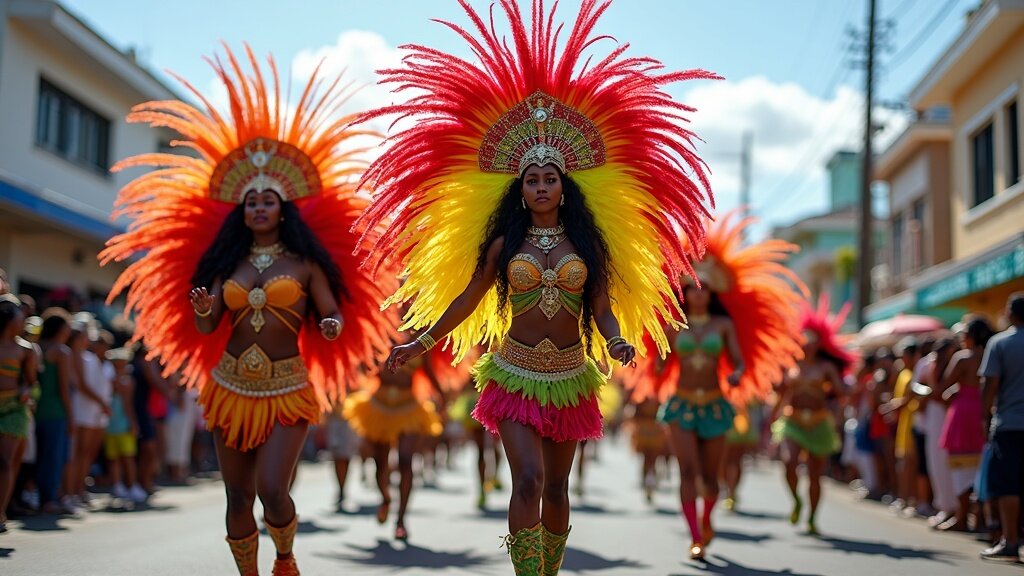
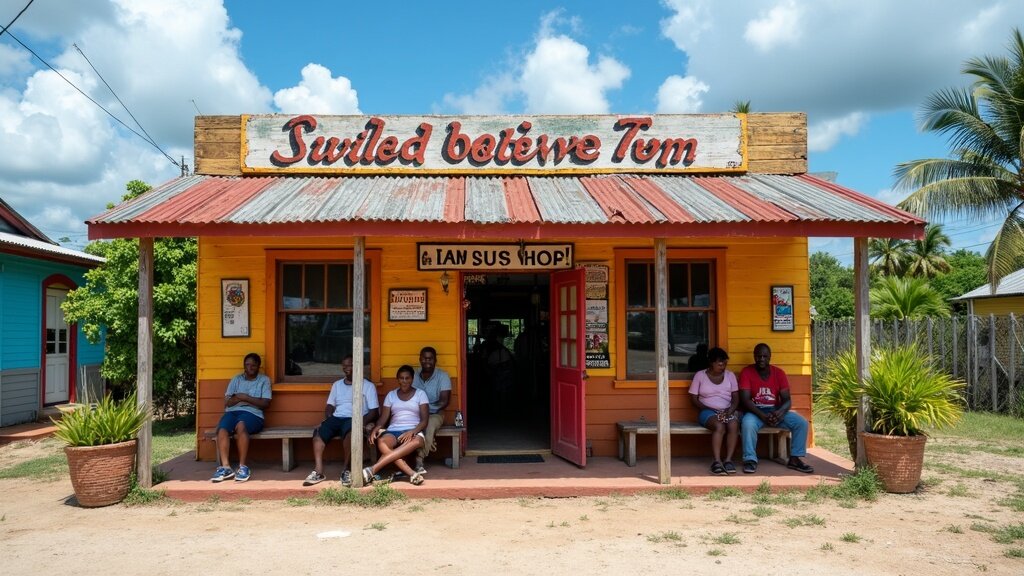
Crop Over is the island's cultural crescendo — a summer festival that evolved from the celebration marking the end of the sugar harvest. Running from July through the first Monday in August (Grand Kadooment Day), it features calypso competitions, soca music, elaborate costume parades ("bands"), and the infectious energy of thousands dancing through the streets in feathered, bejeweled creations. Outside Crop Over, Bajan culture revolves around the rum shop (estimated 1,500+ across the island), the cricket pitch, church on Sunday, and the legendary Friday night fish fry at Oistins.
🏛️ Government & Politics
Barbados became a parliamentary republic on 30 November 2021, retiring Queen Elizabeth II as head of state on the 55th anniversary of independence. What replaced her is deliberately modest: a ceremonial president chosen by a joint sitting of both houses, with real executive power staying exactly where it already was — with the Prime Minister and Cabinet. Barbados did not rewrite its system; it swapped out one figurehead for another and kept the Westminster machinery running.
The current head of state is President Jeffrey Bostic, the country's second. He was declared elected unopposed on 7 October 2025 and sworn in on 30 November 2025, succeeding Dame Sandra Mason at the end of her four-year term. A former paramedic, health minister and Speaker of the House of Assembly, Bostic is a considerably more political appointment than Mason, who came from the judiciary.
The head of government is Prime Minister Mia Amor Mottley, KC, in office since May 2018 and by some distance the most internationally visible Barbadian politician alive — largely on the strength of the Bridgetown Initiative, her campaign to rewire how development banks lend to small climate-exposed states. She dissolved Parliament on 19 January 2026 and called a snap election for 11 February 2026, more than a year early. Her Barbados Labour Party won all 30 seats in the House of Assembly, and she was sworn in for a third consecutive term on 12 February. Ralph Thorne's Democratic Labour Party took none.
Foreign policy under Mottley is unusually visible for a country of 280,000: on 27 April 2026 Venezuela's acting president Delcy Rodríguez made an official visit to Bridgetown seeking oil-and-gas investment, and on 30 November 2026 the country marks "60 and 5" — sixty years of independence and five as a republic — with three months of celebrations that began on 1 September 2026.
That result deserves a footnote, because it is the third clean sweep in a row and it produces an oddity: with every elected seat held by one party, Barbados has no elected parliamentary opposition. The formal opposition role falls to appointed senators. It is a stable arrangement, and Barbadians will tell you cheerfully that it reflects genuine popularity rather than any thumb on the scale — but it is an unusual way for a two-century-old parliamentary democracy to run, and it is a live topic in the island's newspapers.
- System: parliamentary republic (since 30 November 2021)
- President: Jeffrey Bostic (ceremonial head of state, since 30 November 2025)
- Prime Minister: Mia Amor Mottley, KC (BLP, since May 2018; third term February 2026)
- Legislature: House of Assembly (30 elected) · Senate (21 appointed)
- Last election: 11 February 2026 — BLP 30 of 30 seats
- Parliament sitting since: 1639 — third-oldest in the Commonwealth
- Independence: 30 November 1966 · Capital: Bridgetown
🏛️ Bridgetown
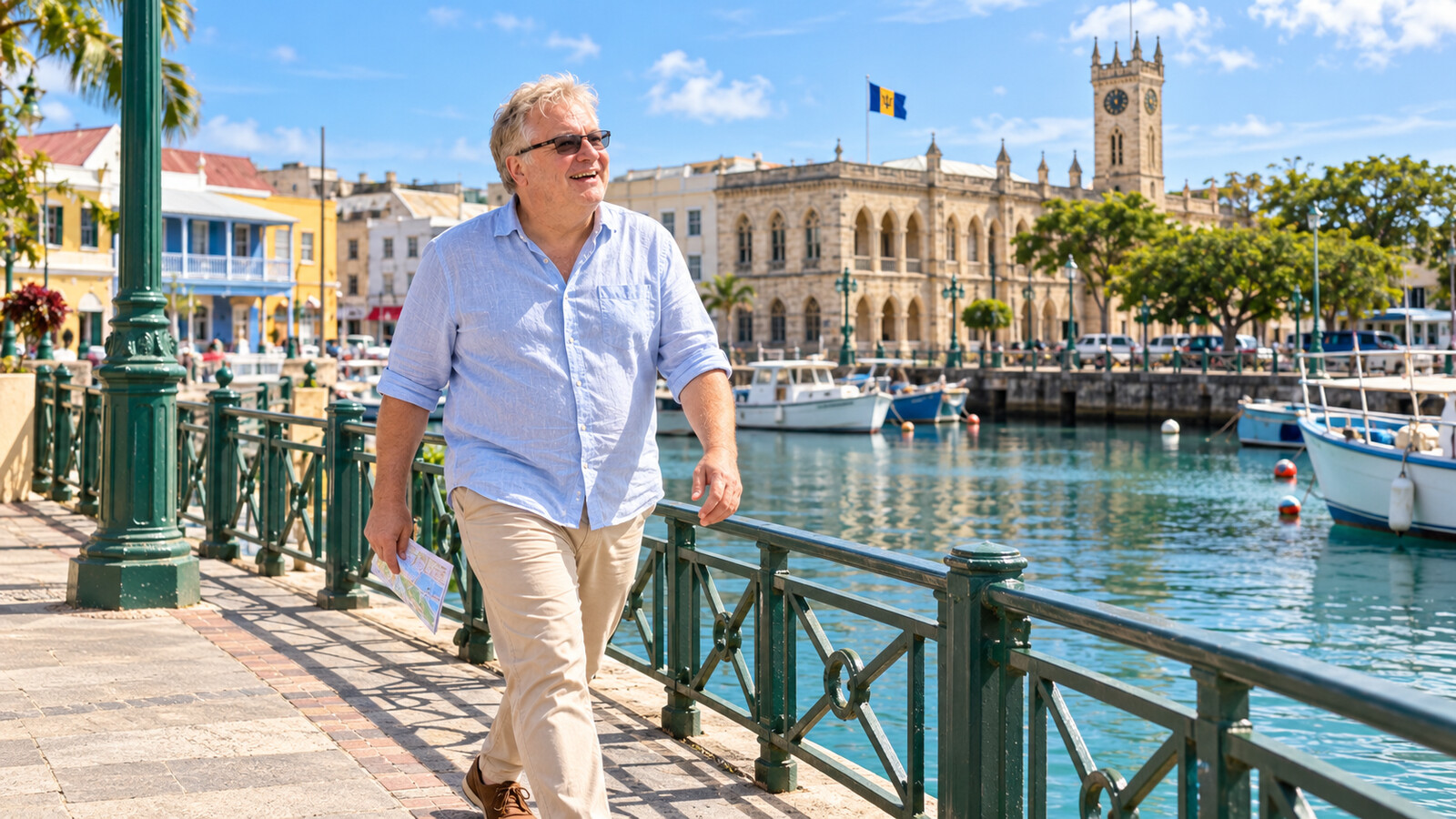
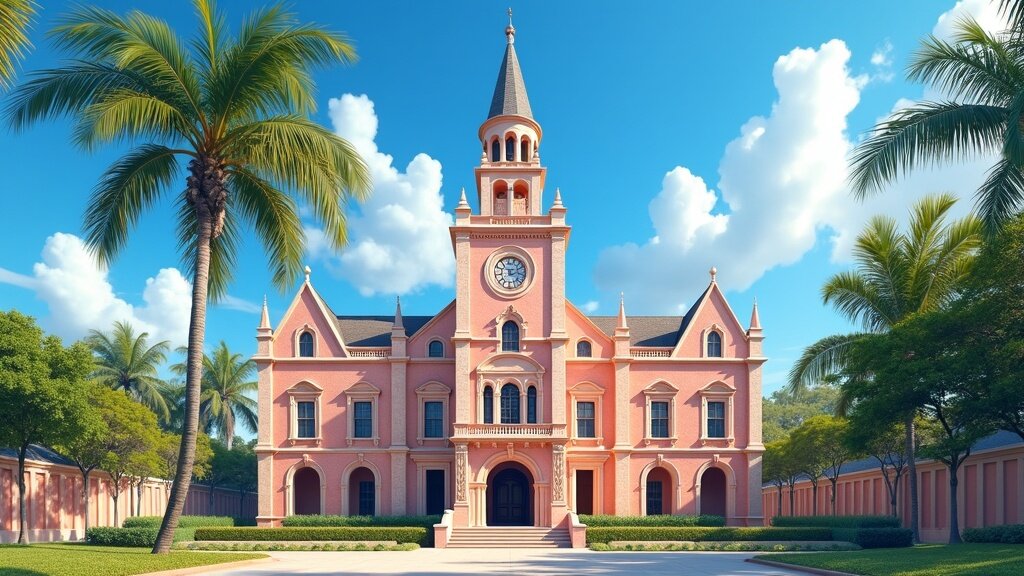
Bridgetown, the capital and only city, is a UNESCO World Heritage Site — recognized for its outstanding example of British colonial architecture adapted to a tropical Caribbean context. The neo-Gothic Parliament Buildings, dating from the 1870s, house one of the oldest legislative assemblies in the Americas. National Heroes Square (formerly Trafalgar Square) anchors the compact downtown, surrounded by colonial-era buildings, the Synagogue (one of the oldest in the Western Hemisphere, dating to 1654), and Broad Street's duty-free shopping.
The Careenage — a natural harbor where boats were once careened (tipped on their sides) for hull cleaning — now serves as a picturesque waterfront lined with bars and restaurants. The Garrison area, part of the UNESCO site, preserves one of the best-preserved British military complexes in the Caribbean, including the George Washington House where the future US president stayed in 1751 — his only trip outside North America.
🏖️ The Coasts
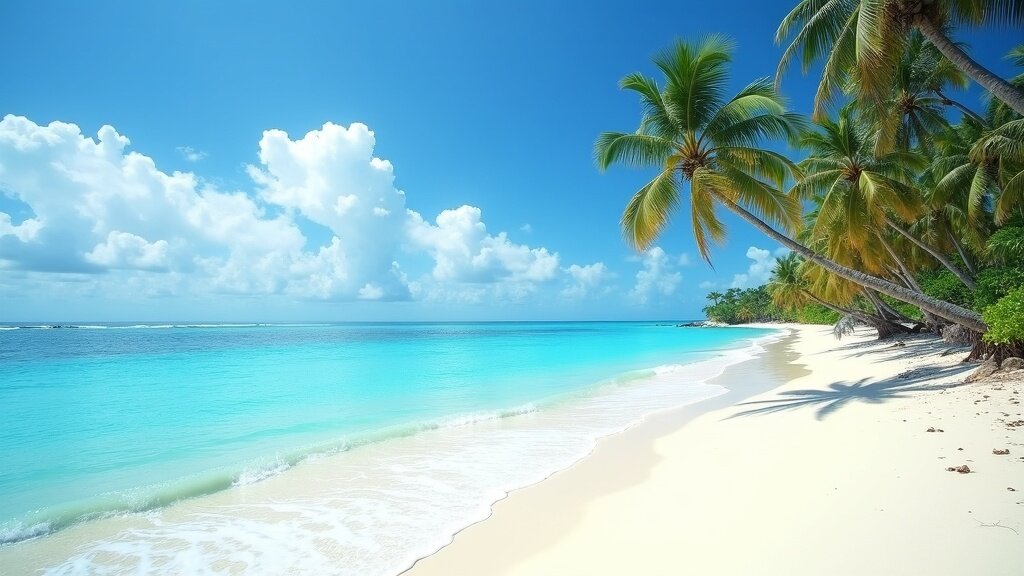
The west coast "Platinum Coast" stretches from Speightstown to Bridgetown with calm, crystal-clear waters lapping white sand beaches backed by luxury hotels and elegant restaurants. Paynes Bay, Mullins Beach, and Gibbes Beach offer excellent swimming and snorkeling with sea turtles — swim-with-turtle experiences are among the island's most popular activities.
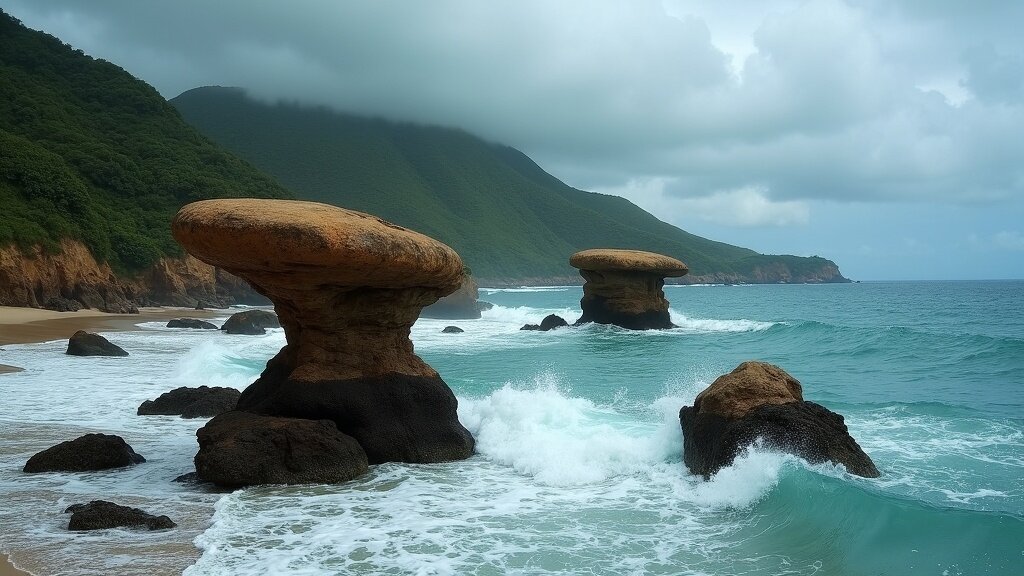
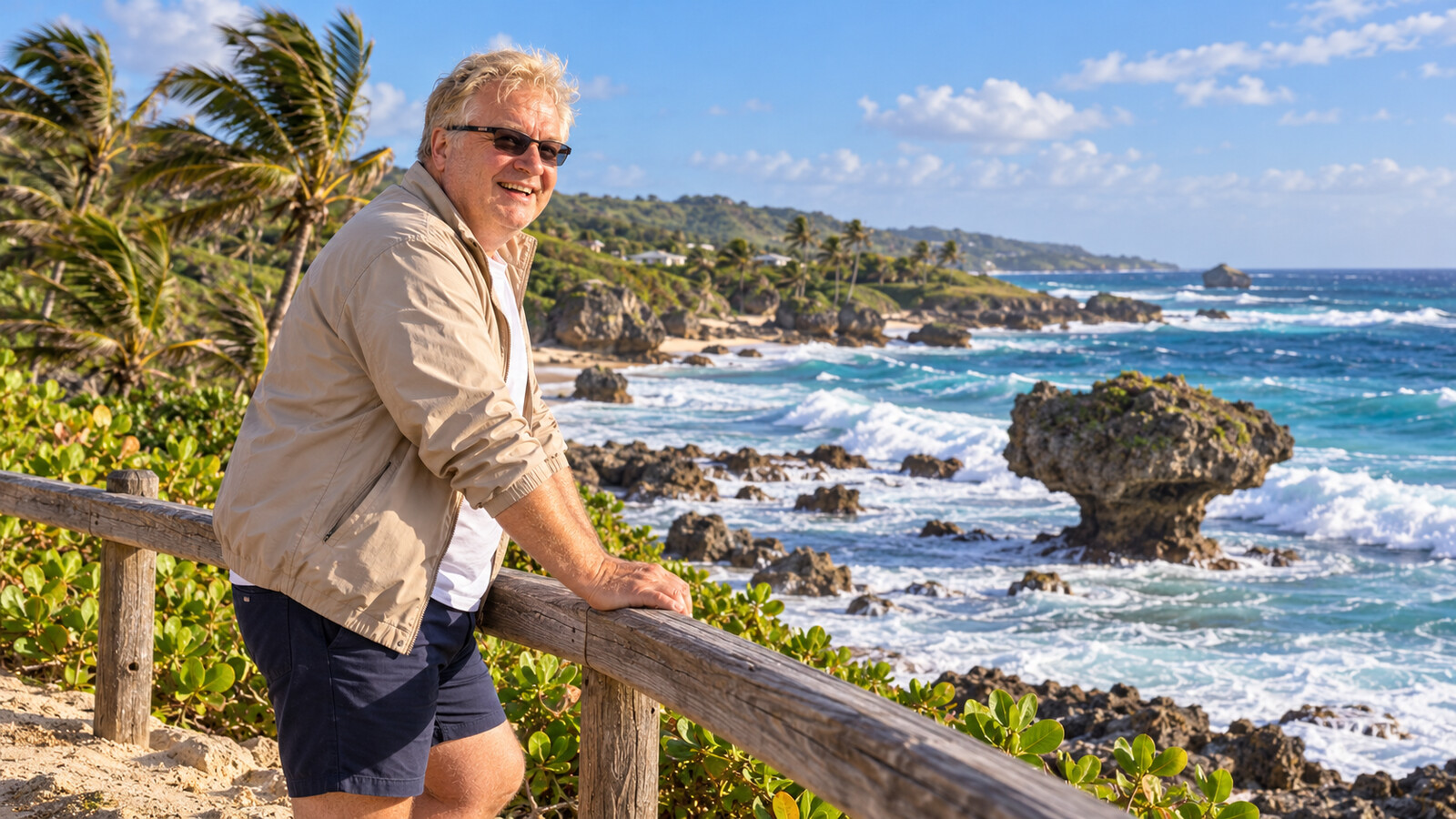
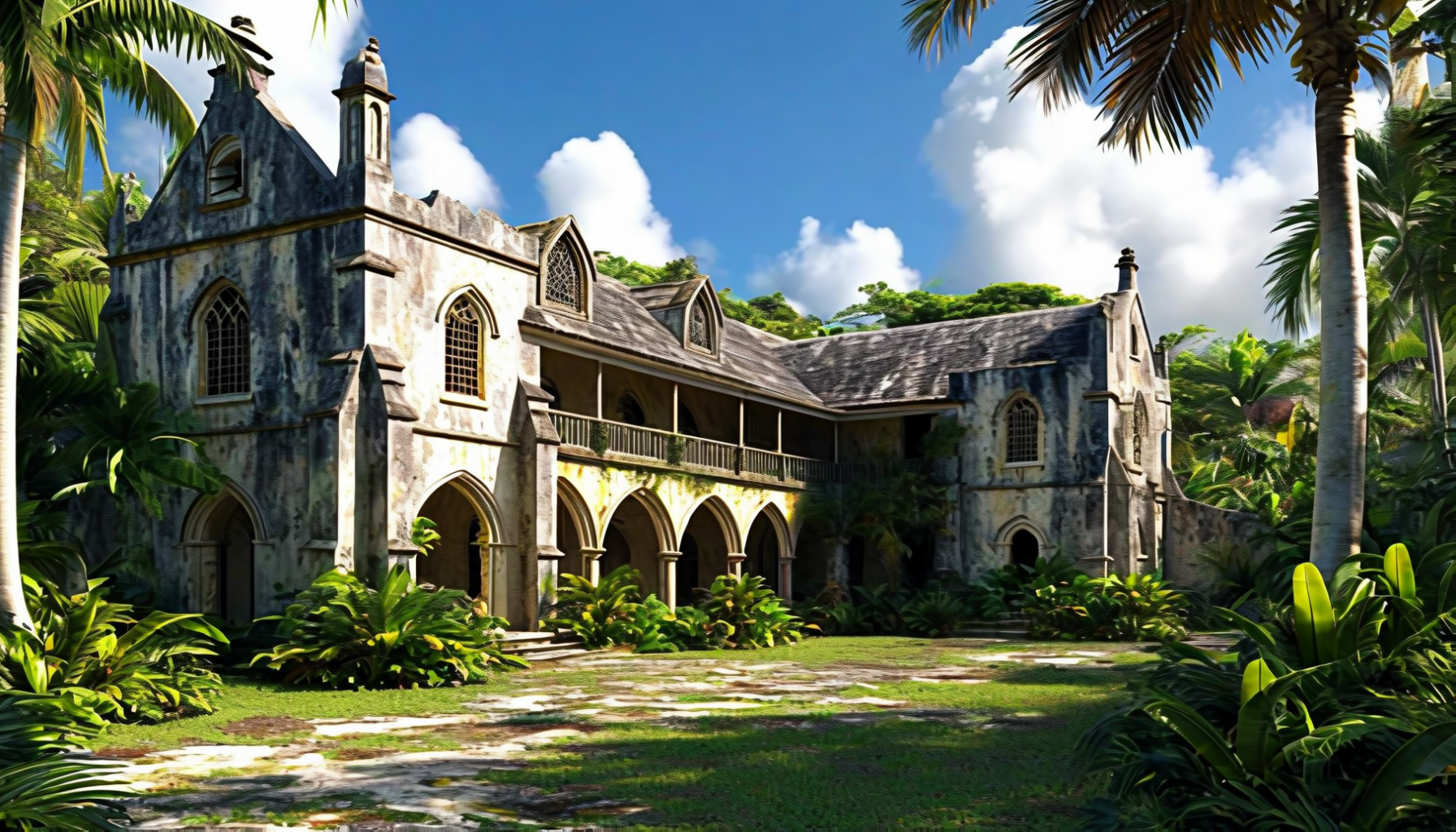
The east coast is another world entirely. Bathsheba's mushroom-shaped rock formations, carved by relentless Atlantic waves, create a dramatic landscape that feels more Scottish Highlands than Caribbean. The Soup Bowl break draws surfers from around the world. Between these contrasting coasts, the interior hides sugar plantation great houses (St. Nicholas Abbey, Sunbury), tropical gardens (Hunte's Gardens in a collapsed sinkhole), and the underground wonderland of Harrison's Cave.
🥃 Rum Heritage
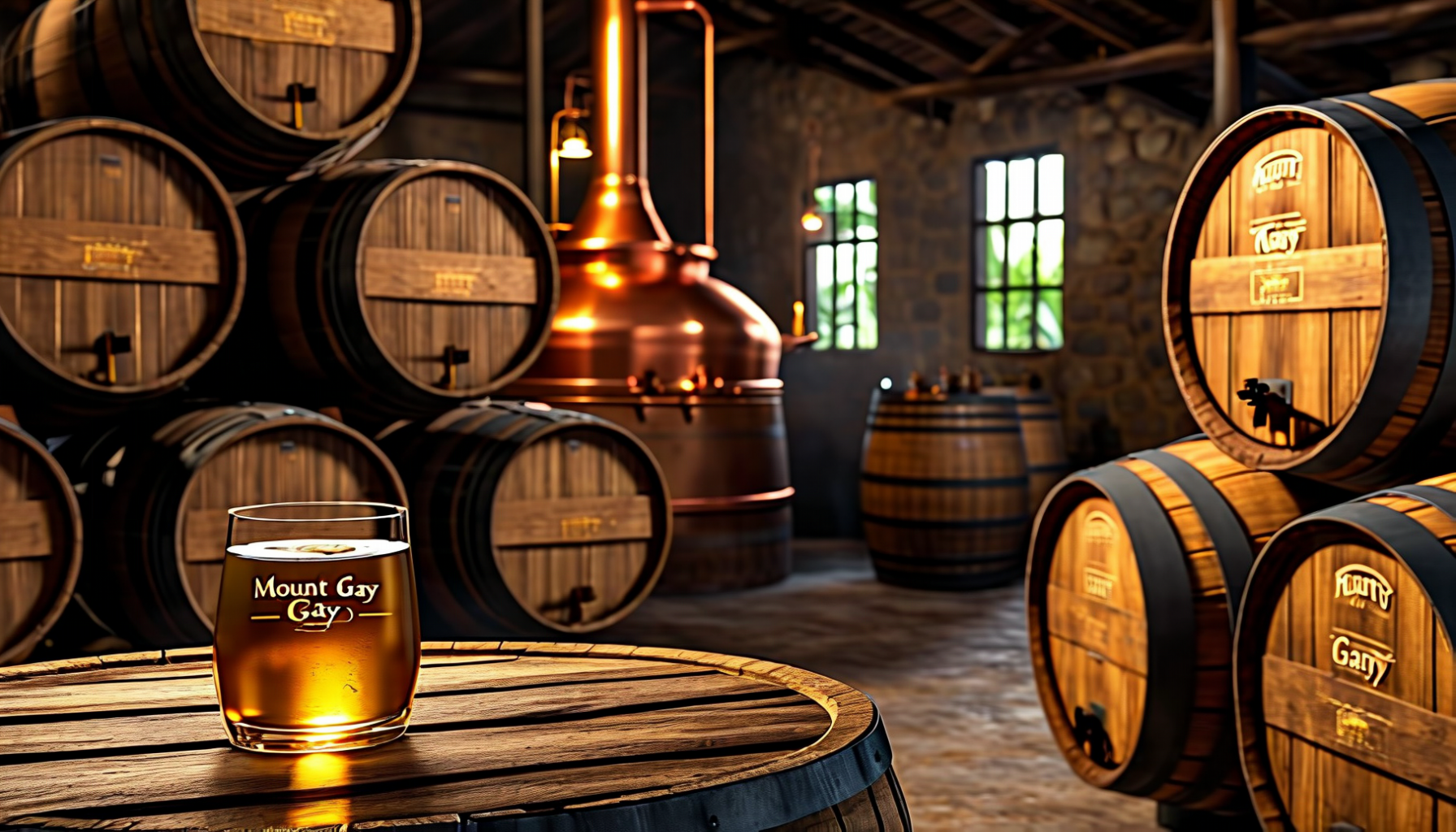
Barbados is widely considered the birthplace of rum. The first documented reference to "rumbullion" comes from Barbados in 1650, and Mount Gay Distillery, established in 1703, holds the record as the world's oldest continuously operating rum producer. The island currently boasts four major distilleries — Mount Gay, Foursquare, St. Nicholas Abbey, and West Indies Rum Distillery — producing spirits that rival the finest Scotch and Cognac.
Foursquare, under master blender Richard Seale, has won more international awards than arguably any rum producer in the world, pioneering the "Exceptional Cask Selection" range that has transformed how connoisseurs view Caribbean rum. The island's 1,500+ rum shops — informal bars in every village — serve as community centers where dominoes are played, politics debated, and "a rum and Coke" costs just a few Bajan dollars. A rum shop crawl is perhaps the most authentic way to experience Bajan culture.
🍽️ Cuisine
Bajan cuisine is the Caribbean's best-kept secret. The national dish is cou-cou and flying fish — a cornmeal and okra polenta-like preparation served with pan-fried or steamed flying fish in a tomato-based sauce. Macaroni pie (a firm, baked version quite different from American mac and cheese) accompanies almost every Sunday lunch alongside rice and peas, pickled breadfruit, and stewed meats.
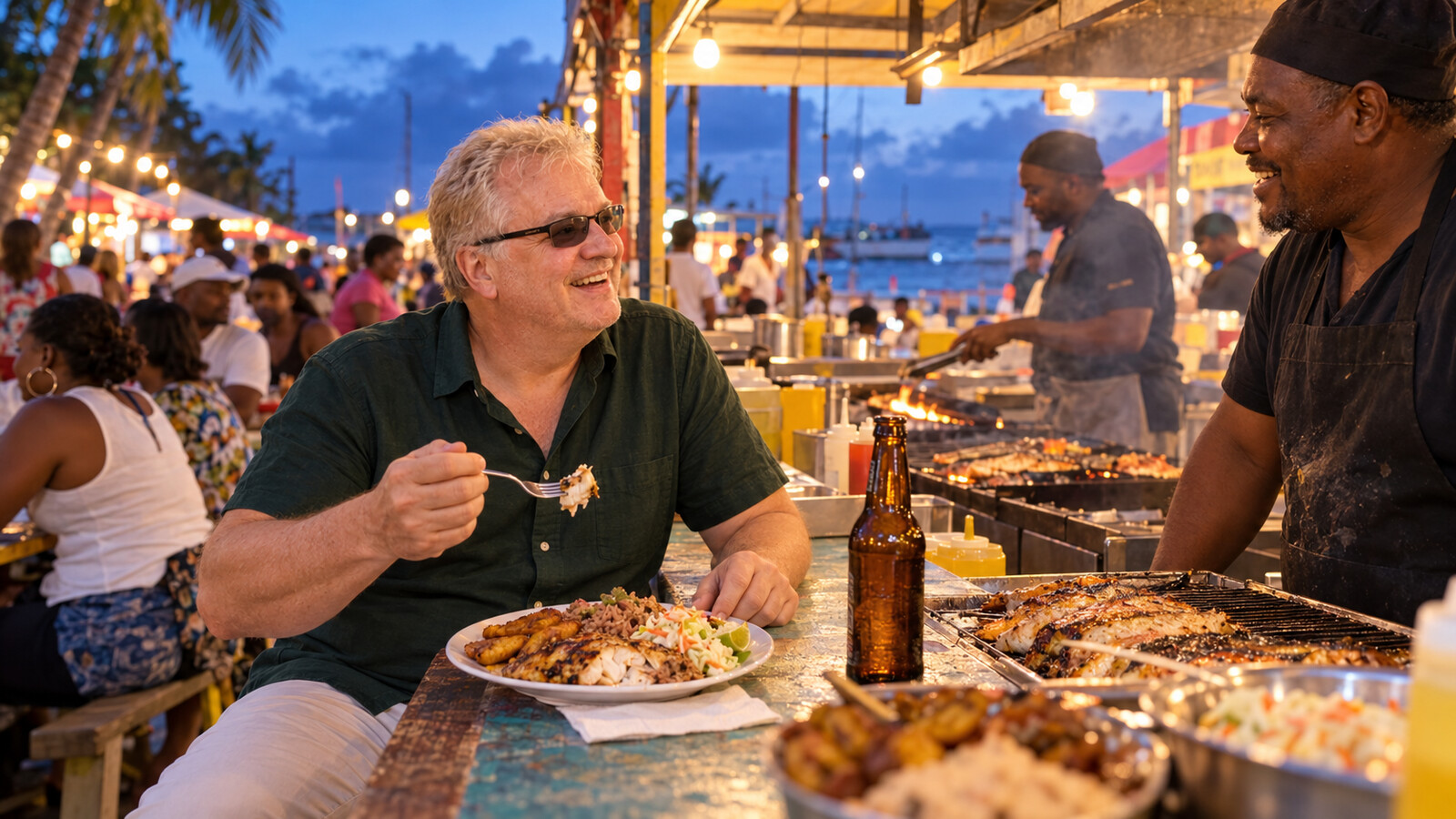
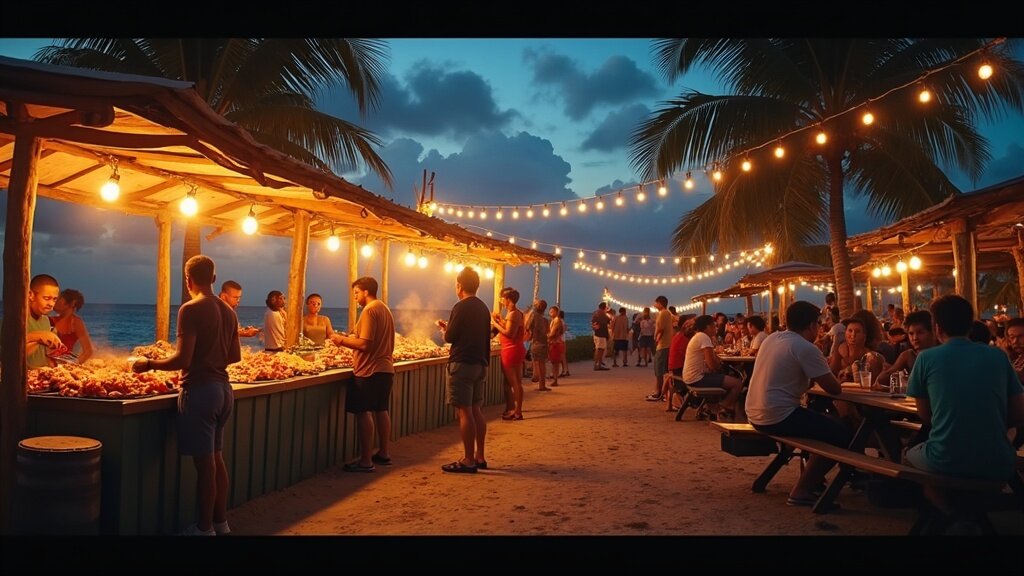
The Friday night fish fry at Oistins is a legendary institution — dozens of stalls serve freshly grilled mahi-mahi, marlin, tuna, and swordfish alongside Banks beer and rum punch. Cutters (sandwiches in salt bread) filled with fish cakes, ham, or cheese are the go-to street food. Pudding and souse — a Saturday tradition of pickled pork and steamed sweet potato — divides opinion but rewards the adventurous. For fine dining, the west coast rivals any Caribbean destination, with restaurants like The Cliff and Cin Cin by the Sea offering world-class cuisine above the surf.
COOKBOOK NOTE -- Radim Kaufmann
Barbados takes its food personally. Every Bajan has an opinion on whose cou-cou is the smoothest, whose fish cakes have the best ratio of salt fish to batter, and whether pudding and souse should be eaten only on Saturdays or if midweek indulgence is acceptable. At Oistins Fish Fry on a Friday night, with the smoke from a dozen grills curling into the Caribbean sky and rum punch flowing freely, I understood that Bajan food is not just sustenance — it is community, identity, and celebration served on a plate.
Cou-Cou and Flying Fish KCS 85
National Dish
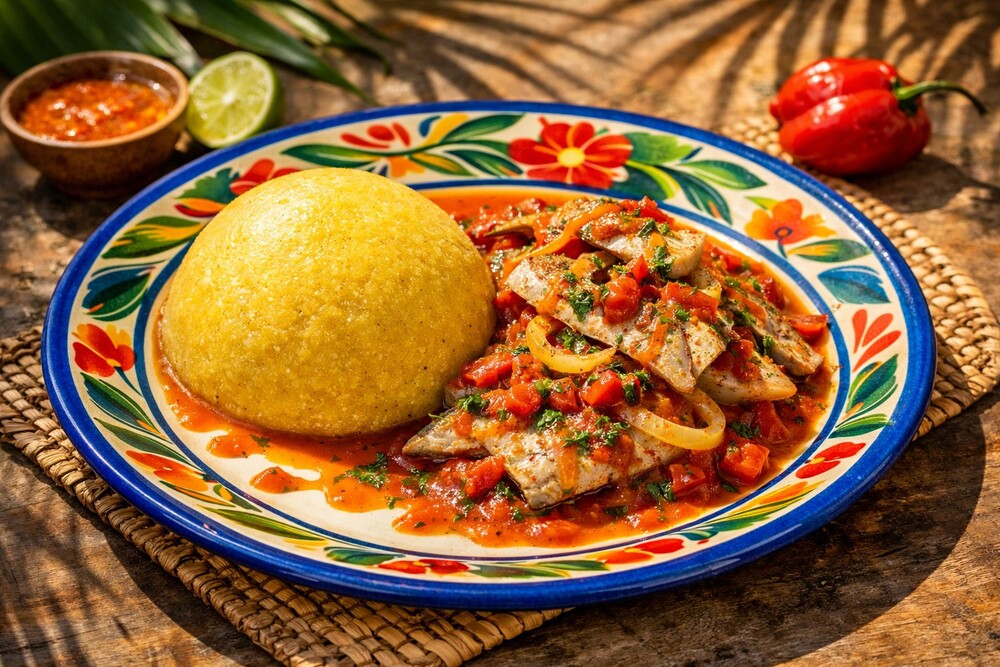
Ingredients: 240ml (1 cup) cornmeal, 6 okras, sliced, 2 flying fish fillets (or other white fish), 1 lime, For sauce: tomato, onion, garlic, thyme, scotch bonnet.
Preparation: Start with the flying fish: take six cleaned and deboned flying fish fillets and marinate them in a mixture of lime juice, minced garlic, finely chopped fresh thyme, a diced scotch bonnet pepper, salt, and black pepper for at least 30 minutes. This Bajan seasoning is the foundation of the dish. Prepare the Creole sauce by heating two tablespoons of butter in a wide pan. Saute one large sliced onion, one diced red bell pepper, two cloves of minced garlic, and a sprig of fresh thyme until softened. Add a 400g tin of diced tomatoes, a tablespoon of tomato paste, a splash of water, and a teaspoon of Bajan pepper sauce. Simmer for 15 minutes until the sauce thickens and becomes rich. Gently lay the marinated fish fillets into the sauce, cover, and steam for eight to ten minutes until the fish is cooked through and flaky. For the cou-cou, bring 600ml of salted water to a boil in a heavy pot. Add 200g of sliced fresh okra and cook for about 10 minutes until the okra is very soft and has released its characteristic sticky liquid — this is essential for the right texture. Gradually add 250g of fine yellow cornmeal in a slow steady stream, stirring constantly with a wooden cou-cou stick or sturdy wooden spoon. The stirring is vigorous and continuous — this is where the work happens. Keep stirring and cooking over low heat for another 15 to 20 minutes, adding small splashes of water if the mixture becomes too thick. The cou-cou is ready when it pulls cleanly away from the sides of the pot and has a smooth, elastic consistency with no lumps. Stir in a generous knob of butter at the very end. To shape, wet a small bowl and press the hot cou-cou into it, then unmould onto a plate to create the traditional dome. Place the steamed flying fish alongside, spoon the Creole sauce generously over the fish and around the base of the cou-cou dome. Finish with a drizzle of Bajan pepper sauce and a wedge of lime. The proper way to eat it is to break pieces of the soft cou-cou with your fork and drag them through the sauce.
TIP: Never stop stirring the cou-cou—constant motion is key.
Fish Cakes KCS 77
Bajan Fritters
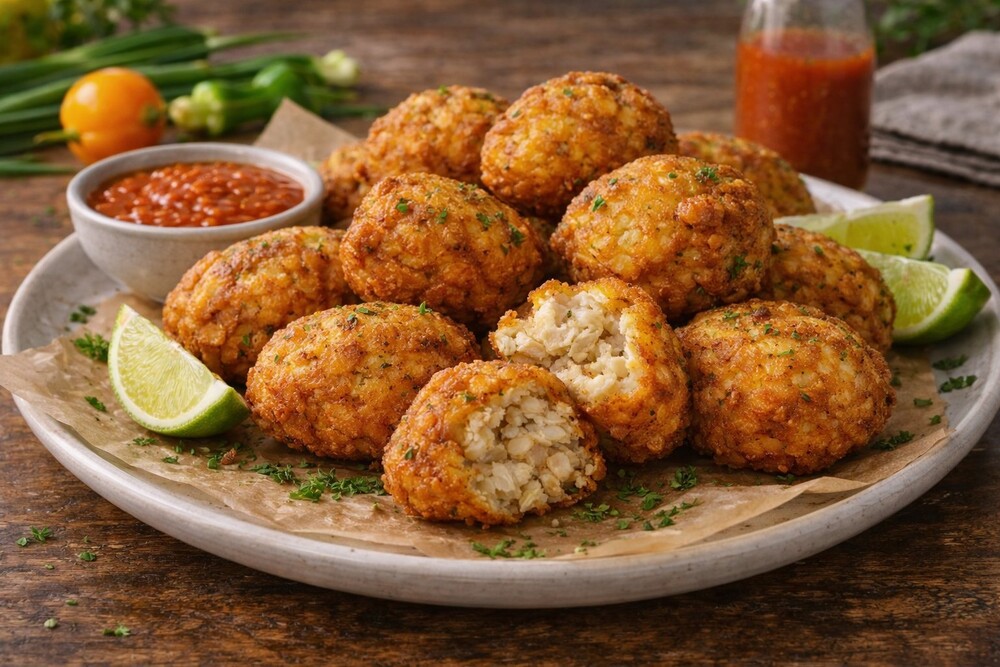
Ingredients: 150g salt cod, soaked overnight, 240ml (1 cup) flour, 120ml (½ cup) water, 1 onion, Thyme, scotch bonnet, 5ml (1 tsp) baking powder, Oil for frying.
Preparation: Begin by preparing the saltfish: soak 300g of salted cod in cold water overnight, changing the water at least twice. The next day, drain, place in a pot of fresh cold water, and bring to a gentle boil. Simmer for 15 minutes until the fish is tender. Drain, allow to cool, then flake the fish finely with your fingers, removing all bones and skin. The texture should be fine and shredded, not chunky. In a large mixing bowl, combine 200g of plain flour, one teaspoon of baking powder, and a pinch of salt. Make a well in the centre and add one beaten egg along with about 150ml of water, mixing gradually to form a thick batter — it should be stiffer than pancake batter but still pourable. Some Bajan cooks add a splash of the fish poaching water for extra flavour. Fold the flaked saltfish into the batter along with one finely diced onion, two minced spring onions, one small finely chopped scotch bonnet pepper (seeds removed unless you want serious heat), two tablespoons of finely chopped fresh parsley, a teaspoon of fresh thyme leaves, and a generous grinding of black pepper. Mix until everything is evenly distributed through the batter. The mixture should hold its shape on a spoon. Heat vegetable oil in a deep heavy pot to 175 degrees Celsius — the oil should be at least five centimetres deep. Using two tablespoons, shape the batter into rough rounds about the size of a golf ball and carefully lower them into the hot oil. Fry in batches of four or five, turning occasionally, for about four to five minutes until deep golden brown and crispy on the outside. The fish cakes should puff up slightly and develop a satisfying crunch. Drain on paper towels and serve immediately while still crackling hot. Arrange on a platter with lime wedges and a bowl of Bajan pepper sauce for dipping. Fish cakes in Barbados are eaten at every hour — as a breakfast snack tucked into a salt bread roll, as a party appetiser, or as a late-night street food after a Friday night at Oistins. They are best eaten standing up, with a cold Banks beer in the other hand.
TIP: Taste the fish—if too salty, boil longer.
Pudding and Souse KCS 73
Saturday Tradition
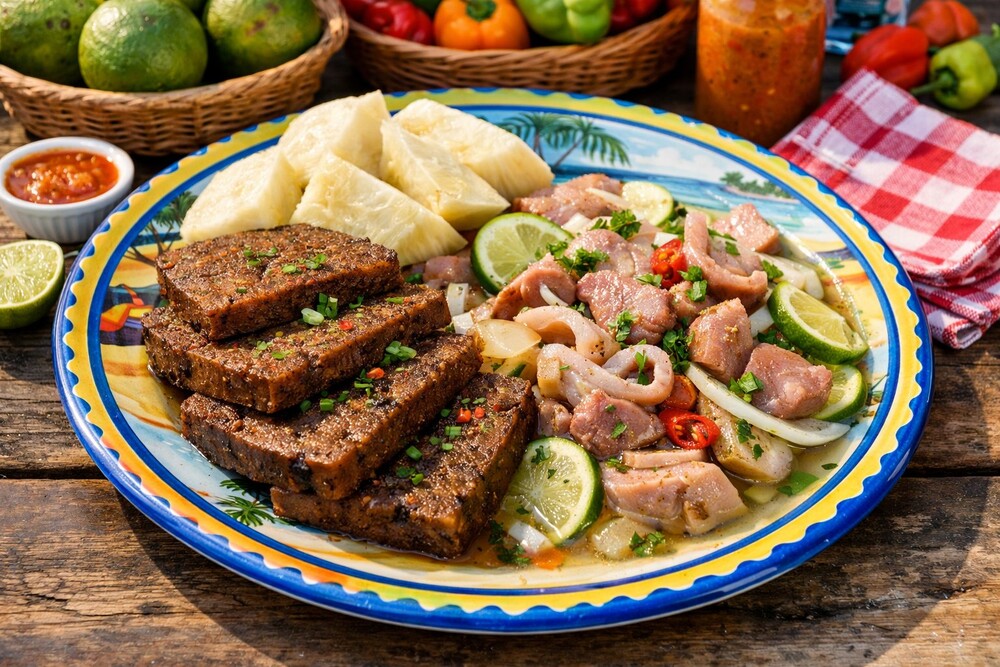
Ingredients: 250g pork, Lime, cucumber, onion for pickle, For pudding: sweet potato, flour, butter, thyme.
Preparation: For the pudding, peel and grate one kilogram of sweet potatoes on the fine side of a box grater — the texture should be almost like a paste. Place in a large bowl and add 150g of fine cornmeal, mixing thoroughly. Season generously with one tablespoon of Bajan seasoning (a blend of spring onions, thyme, marjoram, garlic, scotch bonnet, and black pepper, all finely chopped), two tablespoons of butter, salt to taste, and enough water to create a thick but pourable batter. Grease a loaf tin or cylindrical mould and pour in the mixture. Place in a steamer or in a large pot with water coming halfway up the sides of the tin. Cover tightly and steam for one to one and a half hours until the pudding is firm and set. When a skewer inserted in the centre comes out clean, it is done. Allow to cool slightly, then turn out and slice into thick rounds. For the souse, take 800g of lean pork — traditionally a mix of trotters, ears, and snout, though many modern versions use pork loin or shoulder for a leaner result. Place the pork in a large pot, cover with cold water, and bring to a boil. Skim any foam, then simmer for about an hour until the meat is very tender. Drain and allow to cool, then cut into bite-sized pieces. Prepare the pickling liquid: in a large bowl, combine the juice of six limes, one thinly sliced cucumber, one thinly sliced onion, two finely chopped scotch bonnet peppers, a handful of fresh parsley, salt, and enough cold water to create a brothy pickle. The liquid should be tart and refreshing, not thick. Add the cooled pork pieces and stir to coat. Refrigerate for at least two hours — overnight is better — to allow the flavours to develop and the lime to gently cure the pork. To serve, arrange slices of the steamed pudding on one side of a colourful Bajan plate with the souse alongside, spooning plenty of the lime-cucumber pickle over the pork. Add a few pieces of steamed breadfruit and a generous splash of Bajan pepper sauce. Pudding and souse is traditionally a Saturday dish in Barbados — you will find it at every rum shop and roadside vendor from mid-morning, and no Bajan weekend is complete without it.
TIP: The contrast of cold souse and warm pudding is essential.
🏏 Cricket & Sports
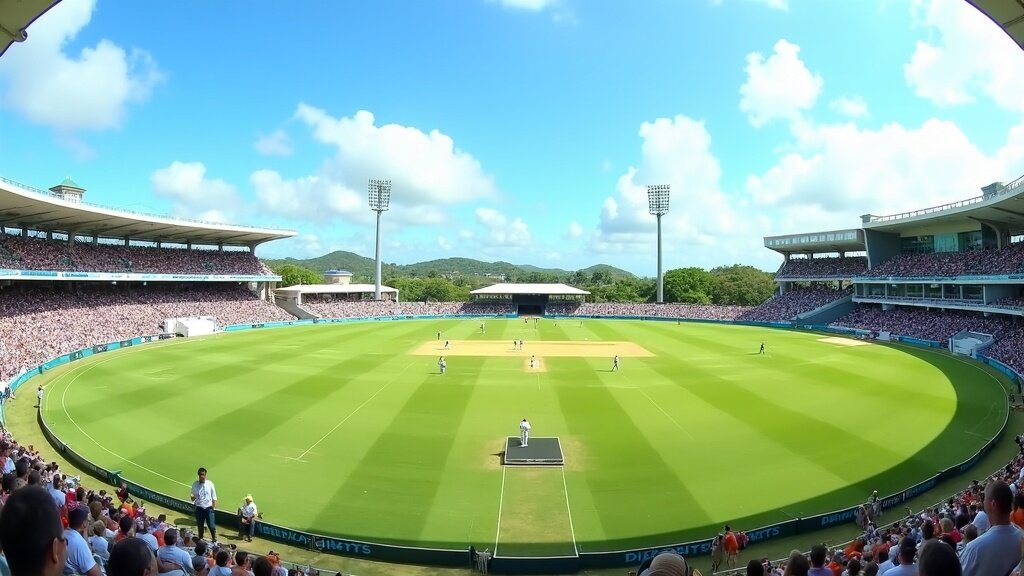
Cricket isn't just a sport in Barbados — it's a religion, an identity, and a source of immense national pride. This tiny island has produced more world-class cricketers per capita than any nation on Earth, including Sir Garfield Sobers (widely regarded as the greatest all-rounder in history), Sir Frank Worrell, Sir Everton Weekes, and modern stars like Jason Holder. Kensington Oval in Bridgetown is hallowed ground — attending a test match or One Day International here, surrounded by passionate, rum-fueled Bajan fans, is an unforgettable sporting experience. The Oval staged the 2024 ICC Men's T20 World Cup final on 29 June 2024 — India beat South Africa by seven runs — the first men's World Cup final ever played in Barbados. The West Indies themselves went out of the 2026 T20 World Cup at the Super 8 stage, losing a winner-takes-all match to India at Eden Gardens on 1 March 2026; Barbadian Shai Hope captains the regional white-ball sides. At franchise level the island's CPL team dropped the Barbados Royals name in May 2026 and became the Barbados Tridents again — blue-and-gold kit, government as minority co-investor under a "One Barbados" deal — and the CPL 2026 final is at Kensington Oval on 20 September 2026.
On the track, Sada Williams is the current standard-bearer: 400 m bronze at the 2022 and 2023 World Championships, Commonwealth gold in 2022, and seventh in the Paris 2024 final (49.83 s) — the first Barbadian woman ever to reach an Olympic athletics final. Barbados left Paris without a medal; its only Olympic medal remains Obadele Thompson's 100 m bronze at Sydney 2000.
Beyond cricket, surfing thrives on the east coast (the Soup Bowl hosts international competitions), horse racing has a long tradition at the Garrison Savannah, and road tennis — a uniquely Bajan invention played on marked road surfaces with wooden paddles — is the island's unofficial second sport.
🌡️ Climate
Barbados enjoys a tropical maritime climate with consistent temperatures of 24-30°C year-round. The dry season (December–May) brings sunny days with cooling trade winds — perfect beach weather. The wet season (June–November) sees brief afternoon showers and slightly higher humidity. Barbados sits south of the main hurricane belt and is struck less frequently than northern Caribbean islands, though it's not immune — Hurricane Beryl was a stark reminder: on 1 July 2024 it passed about 150 km to the south as a Category 4 storm, and its swell wrecked or sank some 200 boats in the Bridgetown Fisheries Complex; in May 2026 the government was still weighing whether to relocate the fisheries harbour altogether. Water temperature stays between 26-29°C throughout the year.
🍷 Wine, Spirits & Drinking Culture
Barbados has no wine production but is one of the most important rum origins in the world. The island is widely credited as the birthplace of rum — the earliest known references to rum distillation date to 1640s Barbados, and the "Mount Gay" distillery (established 1703) is the oldest continuously operating rum distillery on Earth. Mount Gay, Foursquare (Richard Seale's operation, producing some of the world's finest single-blended rums — the Exceptional Cask Selection series is extraordinary), Cockspur, and St. Nicholas Abbey (producing rum in a Jacobean great house, one of only three remaining in the Western Hemisphere) represent Barbadian rum at its finest. Banks Beer is the national lager. Mauby (a bittersweet bark-based drink) and rum punch are ubiquitous.
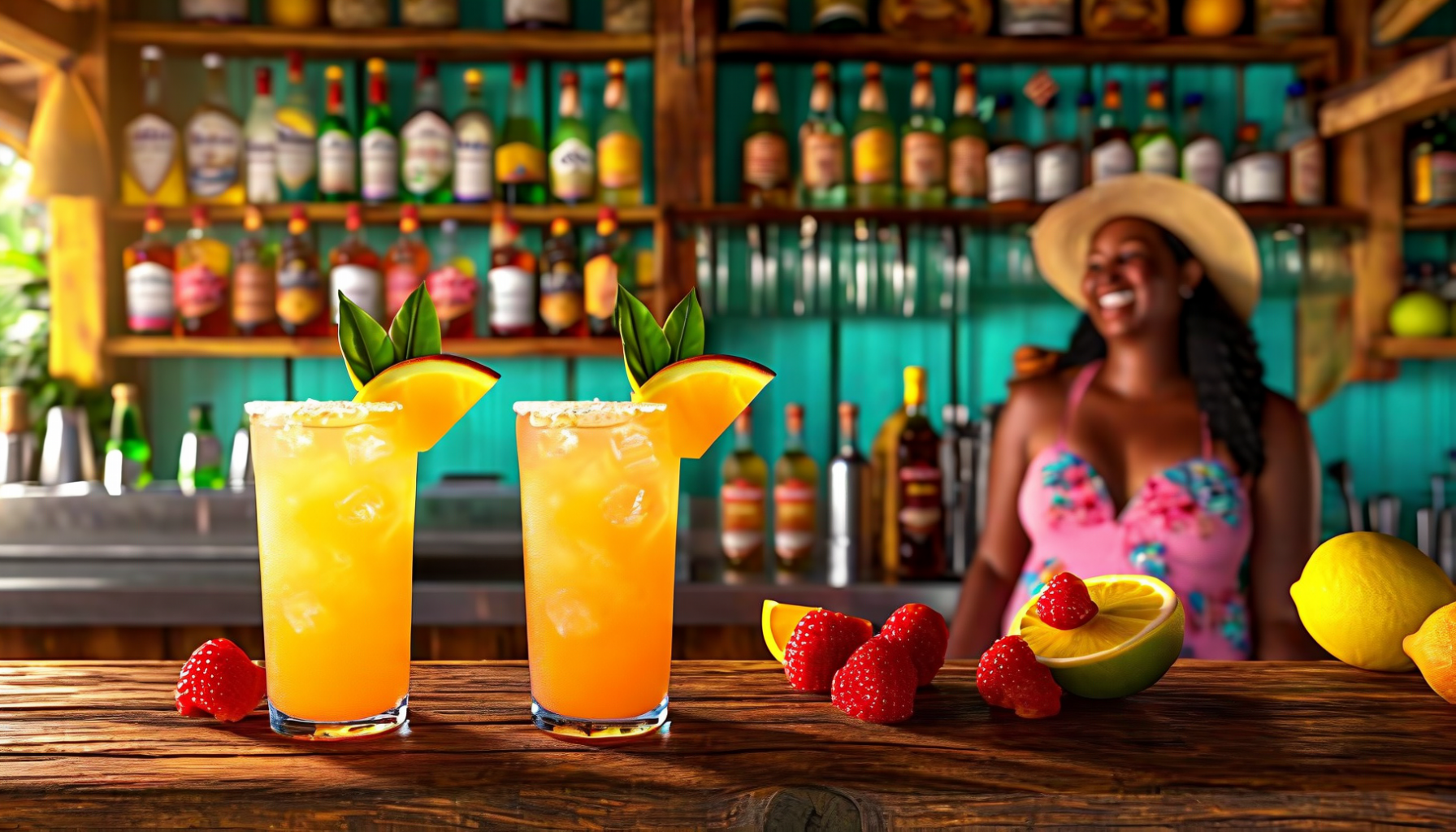
🍸 Cocktails & Mixed Drinks
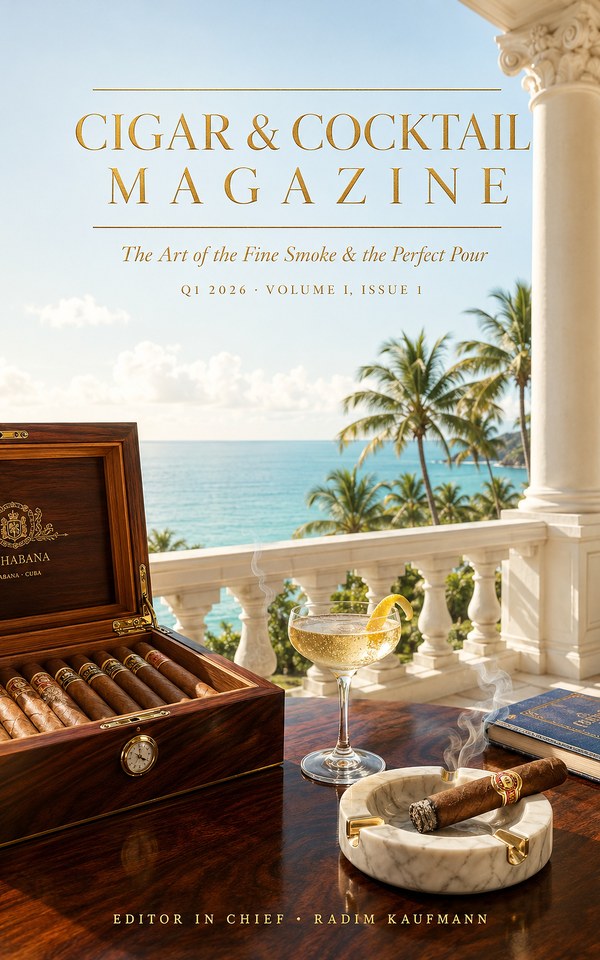
Barbados invented rum, so it is only fair that it also gave the world one of the few cocktail recipes that survives entirely as a rhyme. Everything below is built on Bajan rum, and every one of them is better made with the local bottle than with anything imported.
Bajan Rum Punch
The national formula — "one of sour, two of sweet, three of strong, four of weak"
Ingredients: 1 part fresh lime juice · 2 parts simple syrup or cane sugar syrup · 3 parts Barbadian rum (Mount Gay Eclipse or Doorly's 3-Year) · 4 parts water or fruit juice · Angostura bitters · freshly grated nutmeg.
Preparation: Squeeze the limes fresh — bottled juice ruins the balance and every Bajan will know. Combine the lime, syrup, rum and water in a jug and stir until fully blended; the drink is not shaken and not built in the glass. Add four or five dashes of Angostura bitters, which is not optional: it is what turns a sweet rum drink into rum punch. Refrigerate for at least an hour so the flavours marry — this matters more than the ice. Serve over plenty of ice in a short glass, and grate fresh nutmeg generously over the surface just before it reaches the table. A slice of lime on the rim, and nothing else. The rhyme is the recipe, and it scales to any size party you like.
TIP: Make it the day before. Rum punch left overnight is measurably better than rum punch made to order.
Corn 'n' Oil
The old Bajan classic — dark, bitter, faintly medicinal, completely addictive
Ingredients: 60 ml aged Barbadian rum (Mount Gay Black Barrel, Doorly's 5-Year or a Foursquare release) · 15–20 ml Velvet Falernum · 3–4 dashes Angostura bitters · half a lime.
Preparation: Fill a rocks glass with cracked ice. Pour in the falernum first — a clove-and-almond-scented Barbadian liqueur that is the whole point of the drink — then the rum, then squeeze in the juice of half a lime. Stir briefly, just enough to chill and combine. Float the Angostura across the top so it bleeds slowly down through the drink and gives it the streaked, oily look the name refers to. Do not over-dilute: this should taste concentrated and slightly bracing. Some Bajan bartenders add a splash of soda on hot afternoons; purists do not. Garnish with the spent lime shell.
TIP: If you can only bring one bottle home from Barbados, make it the falernum — it is hard to find abroad and there is no substitute.
Mauby
Non-alcoholic — the bittersweet bark drink Bajans grow up on
Ingredients: 30 g mauby bark · 1 litre water · 1 cinnamon stick · 4 cloves · 2 star anise · strip of orange peel · 150–200 g sugar to taste.
Preparation: Boil the bark with the spices and orange peel in a litre of water for about twenty minutes, until the liquid is very dark and smells like bitter root beer. Strain carefully and discard the solids. Sweeten while still warm, then dilute with two to three parts cold water — the concentrate is far too strong to drink neat, and getting the dilution right is the skill. Chill thoroughly and serve over ice. Mauby is genuinely bitter on the first sip and most visitors dislike it; by the third glass most of them have changed their minds. Bajans drink it for the cooling effect and swear by it for blood pressure.
✈️ Getting There
Grantley Adams International Airport (BGI) sits on the south-east coast in Christ Church, roughly 13 km from Bridgetown, and is one of the best-connected airports in the eastern Caribbean. Direct flights arrive from the United States (Miami, New York JFK, Charlotte, Atlanta), the United Kingdom (London Gatwick and Heathrow, Manchester), Canada (Toronto), and across the region via interCaribbean Airways (which runs a hub at BGI), Caribbean Airlines from Port of Spain, and LIAT Air — the relaunched LIAT (2020) Ltd, flying again from Antigua since August 2024 and rebranded in July 2025. Flight time from London is about 8 hours 30 minutes; from Miami roughly 4 hours. One September 2026 change worth knowing: Caribbean Airlines dropped its direct Tobago–Barbados service on 2 September 2026 (the twice-daily Port of Spain–Bridgetown flights BW216/BW448 continue), so Tobago now means a change in Trinidad. Hurricane season (June–November) brings occasional same-day cancellations — the August 2026 tropical waves closed nothing but produced flash-flood warnings.
Barbados is also a major cruise port — the Bridgetown deep-water harbour handles a substantial share of eastern-Caribbean itineraries and puts you a fifteen-minute walk from the UNESCO-listed old town. There is no scheduled passenger ferry to the neighbouring islands; inter-island travel is by air. Arriving passengers should expect an immigration form (submitted online in advance) and a customs queue that moves faster than it looks.
📋 Practical Information
Visa: citizens of the United States, Canada, the United Kingdom, the EU and most Commonwealth countries do not need a visa and are generally granted stays of up to six months. A passport valid for the duration of stay and onward or return ticket are required. An online immigration/customs form should be completed before arrival.
Currency: the Barbados dollar (BBD), pegged at a fixed 2 BBD = 1 USD — the simplest currency maths in the Caribbean. US dollars are accepted almost everywhere, though change usually comes back in Bajan dollars. Cards are widely accepted; carry small bills for rum shops, buses and beach vendors. VAT is 17.5 percent and is normally included in displayed prices.
Getting around: driving is on the left, and visitors need a temporary Barbadian driving permit, sold with car hire or at police stations. Roads are narrow, well-signposted by roundabout name rather than route number, and the island is small enough to cross in under an hour. Public transport is excellent value at a flat BBD 3.50 — the blue government buses, the yellow privately-run minibuses and the white ZR vans all cover the same routes with wildly different atmospheres. Taxis are unmetered; agree the fare before you get in.
Health & safety: tap water is drawn from underground coral-filtered aquifers and is safe and pleasant to drink — Barbados is one of the few places where locals will insist you skip the bottled stuff. No vaccinations are required for most travellers. Mosquito-borne dengue occurs; use repellent. Emergency numbers are 211 (police), 311 (fire) and 511 (ambulance). Queen Elizabeth Hospital in Bridgetown is the main public facility; private clinics on the west and south coasts are quicker for minor problems.
Practicalities: electricity is 115 V / 50 Hz with US-style type A and B plugs — American devices work directly, European ones need an adapter. Tipping is typically 10 percent, and many restaurants add a service charge already. English is the official language; Bajan Creole is what you will actually hear. Wearing camouflage-patterned clothing is illegal in Barbados for civilians, including children's clothing and bags — leave it at home, as it does get confiscated at the airport.
⚠️ Travel Advisory
🇺🇸 US State Department — Level 1: Exercise Normal Precautions
Barbados carries the lowest of the four US advisory levels, reaffirmed on 10 April 2026. That places it alongside most of Western Europe. The advisory summary was nonetheless updated in April 2026 with more specific street-crime guidance, so it is worth reading rather than skipping.
- Crime: violent crime against visitors is rare, but there is persistent opportunistic theft aimed at tourists — bag snatching, thefts from parked hire cars, and items taken from beach towels while their owners swim.
- After dark: the specific 2026 guidance is to avoid walking alone at night, particularly on beaches or in poorly lit areas. Beaches are unlit and largely deserted after sunset.
- The sea: the greater practical risk on this island is water, not people. The east and south-east coasts — Bathsheba, the Soup Bowl, Cattlewash, Bottom Bay — have powerful Atlantic surf and rip currents and are not swimming beaches, whatever they look like from the road. Most beaches have no lifeguard.
- Hurricane season runs 1 June to 30 November. Barbados sits at the southern edge of the belt and is hit less often than the northern islands, but Hurricane Beryl in July 2024 was a direct reminder that "less often" is not "never."
- Practical: enroll in STEP or your own foreign ministry's equivalent, and check travel.state.gov or the UK FCDO page shortly before departure.
In practice Barbados is one of the calmer places you can travel in the Americas, and the advisory reads more like a reminder to lock the hire car than a warning. The genuine hazards are mundane and physical: sunburn at 13 degrees north, unlit roads with no pavements, and an Atlantic coastline that drowns confident swimmers every few years. Treat the east coast as scenery rather than as a swimming pool and the rest takes care of itself.
💰 Cost of Living
Barbados is expensive by Caribbean standards and very expensive by global ones — almost everything except rum, fish and root vegetables is imported, and it shows on the bill. The saving grace is that the island supports two completely parallel economies: a west-coast one priced for people arriving by yacht, and a local one where a rum shop lunch costs less than a coffee in London. Moving between them is the single biggest lever on your budget.
| Daily budget | Roughly | What that looks like |
|---|---|---|
| Budget | USD 80–120 | Guesthouse or apartment, buses at BBD 3.50 a ride, rum shop and roadside food, Oistins on Friday. |
| Mid-range | USD 150–300 | South-coast hotel, hire car, a mix of local and restaurant meals, a distillery tour or two. |
| Luxury | USD 400+ | Platinum Coast resort, west-coast fine dining, catamaran charters. The ceiling here is essentially unlimited. |
Useful reference points: a Banks beer in a rum shop runs BBD 5–7 and in a west-coast hotel bar three to four times that; a fish cutter (the national sandwich) is BBD 8–12; a plate at Oistins Fish Fry BBD 30–45; a mid-range restaurant main BBD 60–90. Hire cars start around USD 60 a day plus the temporary driving permit. Groceries are noticeably pricier than in North America or Europe — budget accordingly if you are self-catering, and buy fruit and vegetables at the roadside stalls rather than the supermarket.
🏨 Accommodation
Where you sleep on Barbados determines what holiday you have, because the four coasts are genuinely different countries. The west coast — the "Platinum Coast" from Bridgetown up to Speightstown — is the luxury strip: Sandy Lane, Coral Reef Club, Cobblers Cove, and a run of villas that host names you would recognise. Calm water, no surf, and prices to match.
The south coast, from Hastings through Worthing to St Lawrence Gap and Oistins, is where most independent travellers stay: mid-range hotels, apartments and guesthouses, good swimming, and the island's densest concentration of bars and restaurants within walking distance. It is livelier, cheaper and considerably more Bajan than the west. The east coast is for people who want the opposite of a resort — a handful of small guesthouses around Bathsheba and Cattlewash, wind, Atlantic noise and almost no nightlife. The north around St Lucy is quietest of all, and effectively requires a car.
Two practical notes. Villa rentals are unusually well developed here and often work out cheaper than a resort for a family or group, particularly on the west coast in low season. And Barbados runs the Welcome Stamp, a twelve-month remote-work visa introduced in 2020 and renewed by Cabinet through 31 December 2026 (USD 2,000 per person or 3,000 per family, minimum USD 50,000 annual income earned abroad, renewable) — if you are staying longer than a holiday, it is far more straightforward than the usual visitor-extension routine, and long-stay apartment rates drop steeply outside the December–April high season.
🎭 Festivals & Events
Crop Over is the one that matters. It began in the 1780s as the celebration marking the end of the sugar harvest, died out with the industry, and was revived in 1974 as a full national carnival. It runs from late June through to the first Monday in August, building through calypso and soca competitions, the Pic-O-De-Crop finals and Foreday Morning jouvert to Grand Kadooment Day — thousands of masqueraders in feathered costume parading from the National Stadium to Spring Garden Highway behind trucks of soca. If you come for one thing, come for this. Book accommodation months ahead.
The rest of the calendar, roughly in order: Errol Barrow Day (21 January), the Holetown Festival in February marking the first English landing in 1627, the Oistins Fish Festival over Easter weekend with boat races and fish-boning competitions, National Heroes Day (28 April), Emancipation Day (1 August, the morning before Kadooment), the Barbados Food and Rum Festival (5–8 November 2026 — Oistins Under the Stars, the Rum Route, the Liquid Gold Feast; it moved from its old October slot), Run Barbados in early December, and Independence Day on 30 November — which since 2021 doubles as Republic Day and is celebrated with a month of activity rather than a single day.
2026 is the big one: "60 and 5". On 30 November 2026 Barbados marks 60 years of independence and five years as a republic together. Mia Mottley opened the celebrations on 1 September 2026 by declaring every Friday until 30 November a "Barbados Day" (national colours, flags out), with a national clean-up ("Leh We Paint Barbados"), a lecture series and concert, a President's Gala, the opening of the Richard Stoute Amphitheatre and the long-delayed Newton Slave Memorial, the return of NIFCA and the Spirit of the Nation show, and the Prime Minister's Cup football final to close it. If you are on the island that autumn, the flags will tell you.
Cricket has its own season logic layered on top: a test match or ODI at Kensington Oval is a festival in everything but name, and if the West Indies are playing while you are on the island, rearrange your plans.
🏛️ UNESCO World Heritage
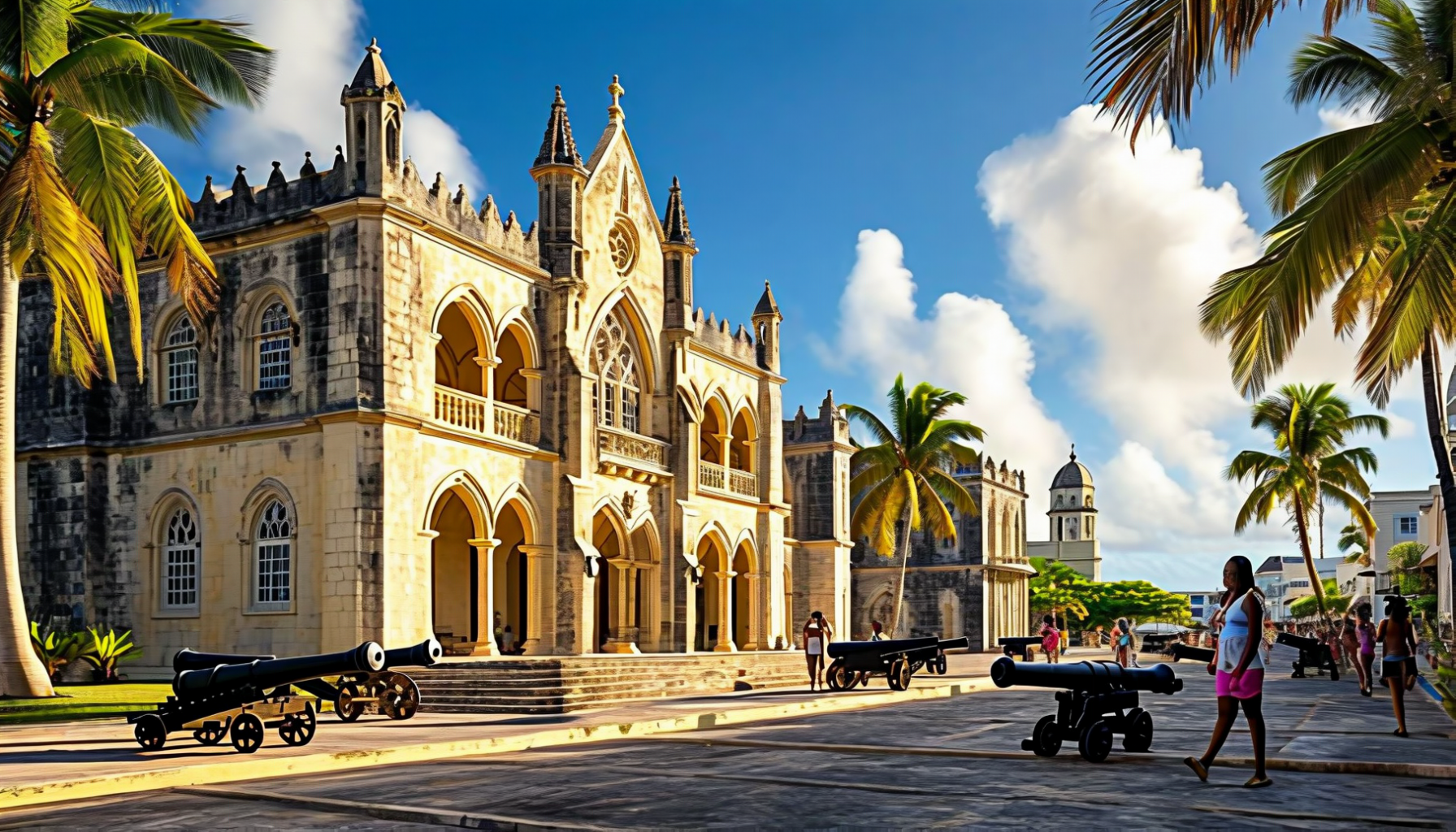
Historic Bridgetown and its Garrison (2011) — The old town center and its military garrison represent an outstanding example of British colonial architecture spanning the 17th to 19th centuries, adapted to tropical conditions. The site includes the Screw Dock (opened 1893, the only surviving screw-lift dry dock in the world), the Parliament Buildings, and a remarkably well-preserved military complex that served as the headquarters of the British West Indies forces.
Tentative List (2 entries): The Scotland District of Barbados (submitted 2005) — the eroded, non-coral north-east; and The Industrial Heritage of Barbados: The Story of Sugar and Rum (2014), a serial nomination bundling St. Nicholas Abbey, Morgan Lewis Windmill, Codrington College, the Newton Burial Ground and the Mount Gay distillery. Neither has yet gone forward for inscription. Barbados has no biosphere reserve, geopark or Creative City, and nothing on the Intangible Heritage lists — Bridgetown is the whole UNESCO story so far.
🎒 Packing Tips
Leave the camouflage at home. Camouflage-patterned clothing is illegal for civilians in Barbados — including children's clothes, backpacks and hats — and it is confiscated at the airport. This surprises more visitors than anything else on the island.
Otherwise: reef-safe sunscreen (the sun at 13 degrees north is unforgiving and the reefs are worth protecting), light linen or cotton rather than synthetics, a rain shell for the June–November afternoon showers, and something smart-casual — the west coast restaurants have dress codes and Bajans dress properly for church, dinner and cricket alike. Beachwear stays on the beach; walking into a shop in a swimsuit is considered rude.
Practical extras: water shoes if you plan to explore the rocky east coast, a snorkel and mask (turtle swims are the island's signature and hire gear is mediocre), insect repellent for dusk, a type A/B plug adapter if you are coming from Europe, and small Barbadian bills for buses and rum shops. Bring a reusable bottle — the tap water is excellent and buying bottled here is money set on fire.
📖 Recommended Reading
- In the Castle of My Skin — George Lamming (1953). The foundational Barbadian novel: a boy's village childhood in the 1930s, written with a density that rewards slow reading. Lamming is the island's great man of letters.
- The Polished Hoe — Austin Clarke (2002). Giller Prize winner; a single night's confession by a plantation servant on a fictional Caribbean island that is unmistakably Barbados.
- Sugar in the Blood — Andrea Stuart (2012). The author traces her own family from a 17th-century English blacksmith who sailed to Barbados through to enslaved ancestors on the same island. The best single-volume way into Barbadian history.
- The First Black Slave Society — Sir Hilary Beckles (2016). The unsparing academic account of what Barbados actually was, by the historian who has led the Caribbean reparations case.
- Beyond a Boundary — C.L.R. James (1963). Not Barbadian (James was Trinidadian) but the one book that explains why cricket in the West Indies is not a sport but a political inheritance — read it before Kensington Oval.
📺 YouTube & Video
- 🎥 Crop Over & Grand Kadooment — parade footage is the only way to understand the scale before you arrive.
- 🎥 Foursquare Distillery & Richard Seale — long-form interviews with the master blender who changed how the world rates rum.
- 🎥 The Soup Bowl, Bathsheba — surf footage that explains why nobody swims there.
- 🎥 Oistins Fish Fry — walk-through videos of the Friday night market.
- 🎥 Road tennis — the island's homegrown sport, played on public roads with plywood paddles.
🤯 Fascinating Facts
- 🥃 Mount Gay (est. 1703) is the world's oldest commercial rum distillery — Barbados is considered the birthplace of rum
- 🏏 Barbados has produced more world-class cricketers per capita than any nation on Earth
- 🇺🇸 George Washington's only trip outside North America was to Barbados in 1751
- 🎤 Rihanna was appointed a National Hero on the night Barbados became a republic in 2021
- ✡️ The Nidhe Israel Synagogue (1654) is one of the oldest in the Western Hemisphere
- 🐢 Hawksbill and leatherback sea turtles nest on Barbados' beaches — swimming with turtles is a signature experience
- 🏎️ Road tennis, invented in Barbados in the 1930s, is played on public roads with wooden paddles and is bidding for Olympic recognition
⭐ Notable People
Barbados formally recognises eleven National Heroes, and the list is a decent map of the island's self-image: Bussa, the enslaved man who led the 1816 rebellion; Sarah Ann Gill, who defended Methodist worship against a mob; Samuel Jackman Prescod, the first non-white member of the House of Assembly; Charles Duncan O'Neal and Clement Payne, the labour organisers behind the 1937 riots; Sir Grantley Adams, first Premier and the only Prime Minister the West Indies Federation ever had; Errol Barrow, who led the island to independence in 1966; Sir Hugh Springer; the cricketers Sir Frank Worrell and Sir Garfield Sobers; and, added on the night the republic was declared in 2021, Rihanna.
On the cricket side the density is absurd for a population under 300,000: Sobers, still widely considered the greatest all-rounder the game has produced; the "Three Ws" — Worrell, Sir Everton Weekes and Sir Clyde Walcott, all born within a couple of miles of each other; Sir Wes Hall, Malcolm Marshall, Joel Garner, Gordon Greenidge, Desmond Haynes, and in the modern era Jason Holder, Kraigg Brathwaite and white-ball captain Shai Hope. In athletics, Obadele Thompson took 100 m bronze at Sydney 2000, Ryan Brathwaite won the 110 m hurdles world title in 2009, and Sada Williams has two world-championship 400 m bronzes (2022, 2023) and a Commonwealth gold.
Beyond sport: Robyn "Rihanna" Fenty, born in St Michael in 1988, National Hero and Ambassador Extraordinary and Plenipotentiary; the novelists George Lamming and Austin Clarke; the historian Sir Hilary Beckles; soca artists Alison Hinds ("Queen of Soca") and Rupee; the singer Shontelle; master blender Richard Seale of Foursquare; and Prime Minister Mia Mottley, whose 2021 UN General Assembly and COP speeches made her one of the most quoted small-state leaders in the world.
📰 Media & Press Freedom
Freedom of expression is guaranteed by the constitution, and Barbados consistently sits in the upper tier of press-freedom rankings — among the freest media environments in the Caribbean and comfortably ahead of most of the Americas. Freedom House rates it Free, 94/100 (Freedom in the World 2026, unchanged from 2025); Reporters Without Borders does not rank Barbados at all — its 180-country index simply omits most of the small Caribbean states. There are no journalists imprisoned, no state licensing of print media, and a long habit of vigorous political argument conducted in public.
The main outlets are the Nation (the dominant daily, part of the regional One Caribbean Media group), the Barbados Advocate — founded in 1895 and one of the oldest continuously published papers in the region — and the online-first Barbados Today, which has become the fastest of the three. Broadcasting is led by the state-owned Caribbean Broadcasting Corporation (CBC), which runs the main television channel and several radio stations, alongside private radio groups including Starcom Network's VOB 92.9, whose call-in programmes are the island's real political arena.
The criticisms that do get made are structural rather than dramatic: state ownership of the dominant broadcaster invites questions about editorial independence, criminal defamation remains on the books (Defamation Act, up to a year in prison) even though it is not used against the press, Barbados has debated but not yet enacted comprehensive freedom-of-information legislation, and a Cybercrime Bill that passed the House of Assembly in February 2024 — criminalising online messages that cause "annoyance" or "embarrassment" — drew formal objections from press bodies and a hearing at the Inter-American Commission on Human Rights, and has been under review since. On the credit side, Barbadian outlets took 15 awards at the Caribbean Broadcasting Union Media Awards in August 2026, the most of any country. For a visitor it is a country where you can buy a paper that is openly rude about the government, which is not true everywhere in the region.
📚 Resources
🌐 Official
🔗 Quick Links
📸 Gallery
✍️ Author's Note
"Barbados surprised me. I expected a pleasant beach island with British colonial charm — and found a place with extraordinary depth. The east coast at Bathsheba felt like another planet, the rum at Foursquare rivaled any spirits I've tasted anywhere, and the Friday night fish fry at Oistins — grilled mahi-mahi, cold Banks beer, and soca music under the stars — was one of those perfect travel moments you replay in your mind for years."
"But it's the people who make Barbados unforgettable. Bajans are warm without being performative, proud without being guarded, and funny in that dry, understated way that catches you off guard. The island that invented rum also seems to have perfected the art of enjoying life."
— Radim Kaufmann, 2026
Support This Project 🌍
This World Travel Factbook is a labor of love – free to use for all travelers. If you find it helpful, consider supporting its continued development.
