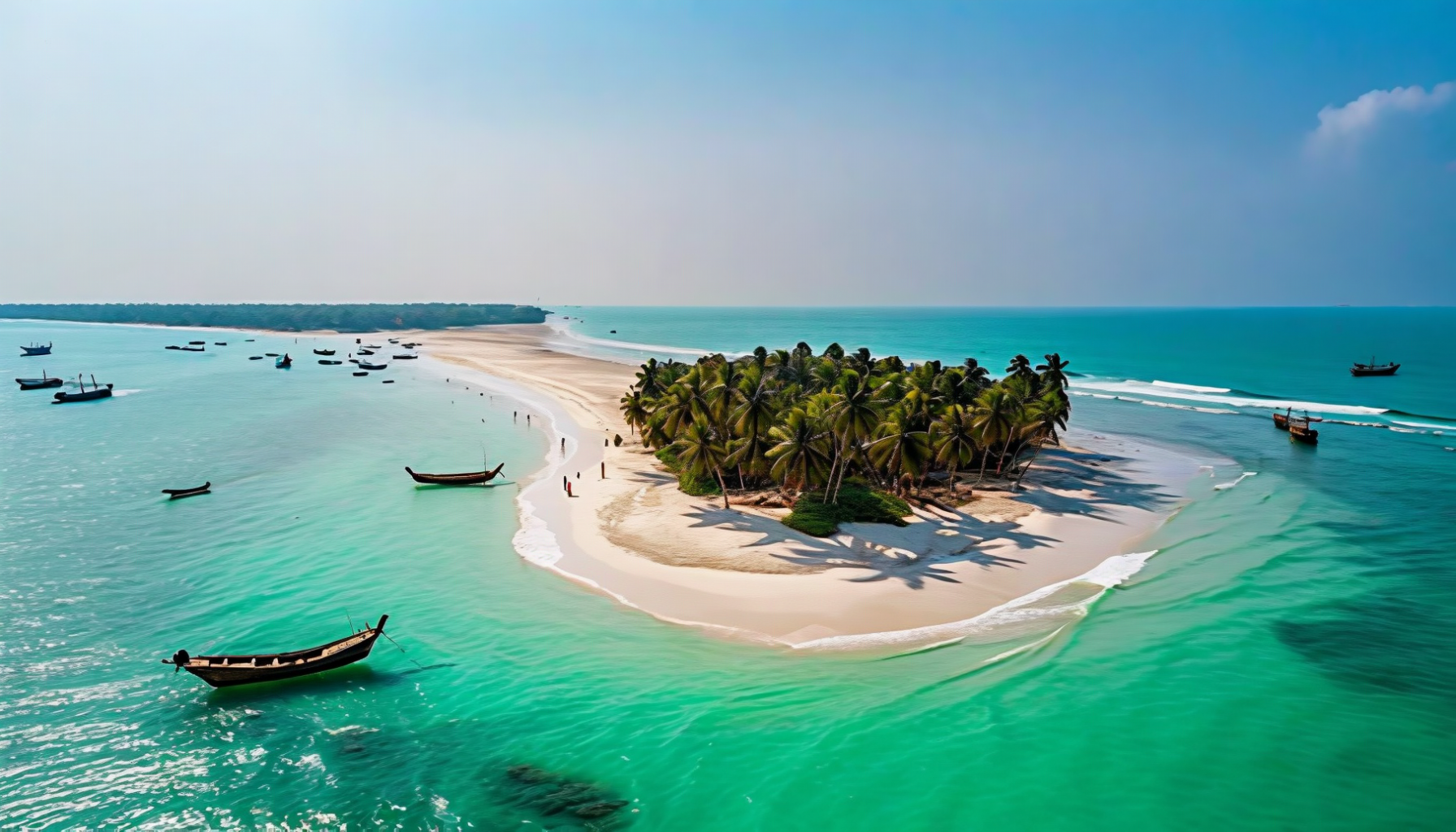



🇧🇩 Bangladesh at a Glance
🌍 Overview
Bangladesh is a nation defined by water. Three of Asia's mightiest rivers – the Ganges, Brahmaputra, and Meghna – converge here, creating the world's largest river delta. During monsoon season, roughly one-third of the country floods. Yet somehow, 175 million people – more than Russia in an area smaller than Iowa – not only survive but increasingly thrive.
This is the world's eighth most populous country, one of its most densely packed, and one of the great development success stories of recent decades. A nation dismissed at birth as a "basket case" has dramatically reduced poverty, improved health outcomes, and developed a massive garment industry that clothes much of the world.
For travelers, Bangladesh offers raw, unfiltered South Asia. Dhaka's overwhelming intensity makes Mumbai feel calm. The Sundarbans harbor the world's largest mangrove forest and its most famous tiger population. Ancient mosques and Buddhist monasteries preserve centuries of religious heritage. Riverboat journeys reveal a country that lives with, on, and through its waterways.
With three UNESCO World Heritage Sites – the Sundarbans mangroves, the Mosque City of Bagerhat, and the Buddhist Vihara at Paharpur – Bangladesh rewards adventurous travelers seeking experiences beyond the tourist trail.
🏷️ Name & Identity
Bangladesh means, quite literally, "the country of Bengal" — Bangla (the language and the people) plus desh (land, country). It is one of the very few national names on Earth built explicitly around a language rather than a dynasty, a river or a colonial administrator, and that is not an accident. The name was popularised during the Language Movement of the 1950s and formally adopted at independence in 1971, immediately after a war fought in large part over the right to speak Bangla.
The older root, Vanga or Banga, appears in Sanskrit texts more than two thousand years old and referred to the eastern delta kingdoms. The British compressed it into "Bengal," which in 1947 was partitioned along religious lines: the western half stayed in India as West Bengal, the eastern half became East Pakistan, governed from Karachi over a thousand miles away. Twenty-four years of that arrangement ended on 16 December 1971.
The flag carries the same argument in two colours: a deep bottle-green field for the delta's fertility and a red disc, set slightly off-centre toward the hoist so that it appears centred when the flag flies, for the sun rising over Bengal and for the blood of the 1971 war. The national anthem, Amar Sonar Bangla ("My Golden Bengal"), was written by Rabindranath Tagore — who also wrote India's anthem, making him the only person credited with writing two national anthems (Sri Lanka’s is also often traced to his influence). Bangladeshis are Bangladeshi; the language and the ethnic identity are Bengali (Bangla). The distinction matters locally and is worth getting right.
🗺️ Geography & Climate
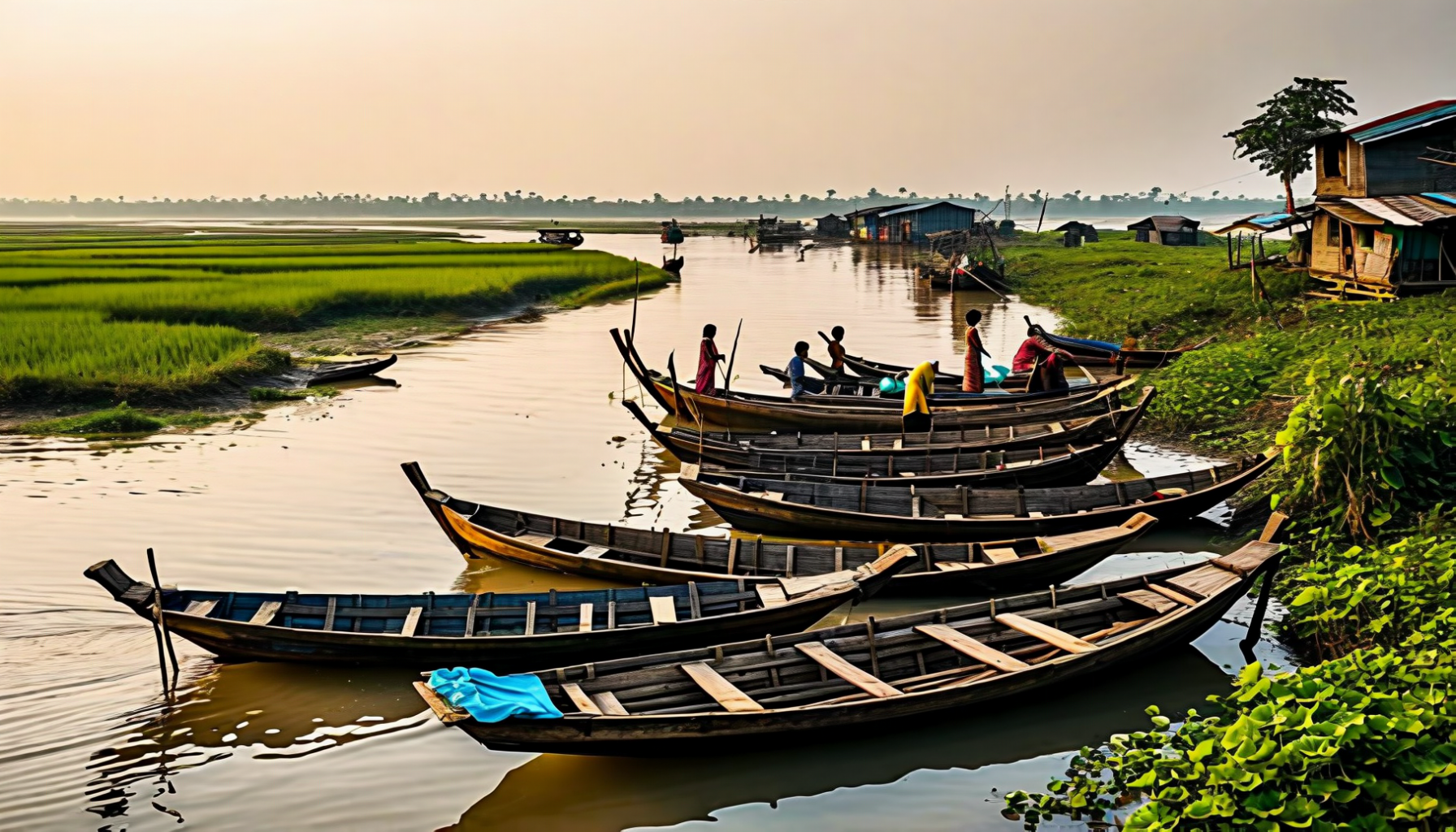
Bangladesh sits on the Bengal Delta, where sediments from the Himalayan watershed create one of the world's most fertile – and most flood-prone – regions. The landscape is overwhelmingly flat and riverine, with over 700 rivers, tributaries, and distributaries threading through the countryside.
The Delta: Most of Bangladesh is low-lying floodplain, rarely more than 12 meters above sea level. Rice paddies, jute fields, and fish ponds dominate the landscape.
The Sundarbans: The southwestern coast holds the world's largest mangrove forest, shared with India. This UNESCO World Heritage site protects the famous Royal Bengal tigers.
Climate: Tropical monsoon with three seasons: Winter (November-February) is cool and dry (12-25°C), ideal for travel. Summer (March-May) is hot and humid (25-40°C). Monsoon (June-October) brings extreme rainfall and widespread flooding.
Best Time to Visit: November-February offers the best weather – cool, dry, and comfortable. Avoid May-October unless you're prepared for extreme heat, humidity, and flooding.
🗺️ Map of Bangladesh
Dhaka in the centre of the delta; the three UNESCO sites — Bagerhat and the Sundarbans in the south-west, Paharpur in the north-west; Cox's Bazar, St Martin's and the Hill Tracts in the far south-east; Sylhet's tea country in the north-east. Scroll-zoom is off — use the +/− buttons.
📜 History
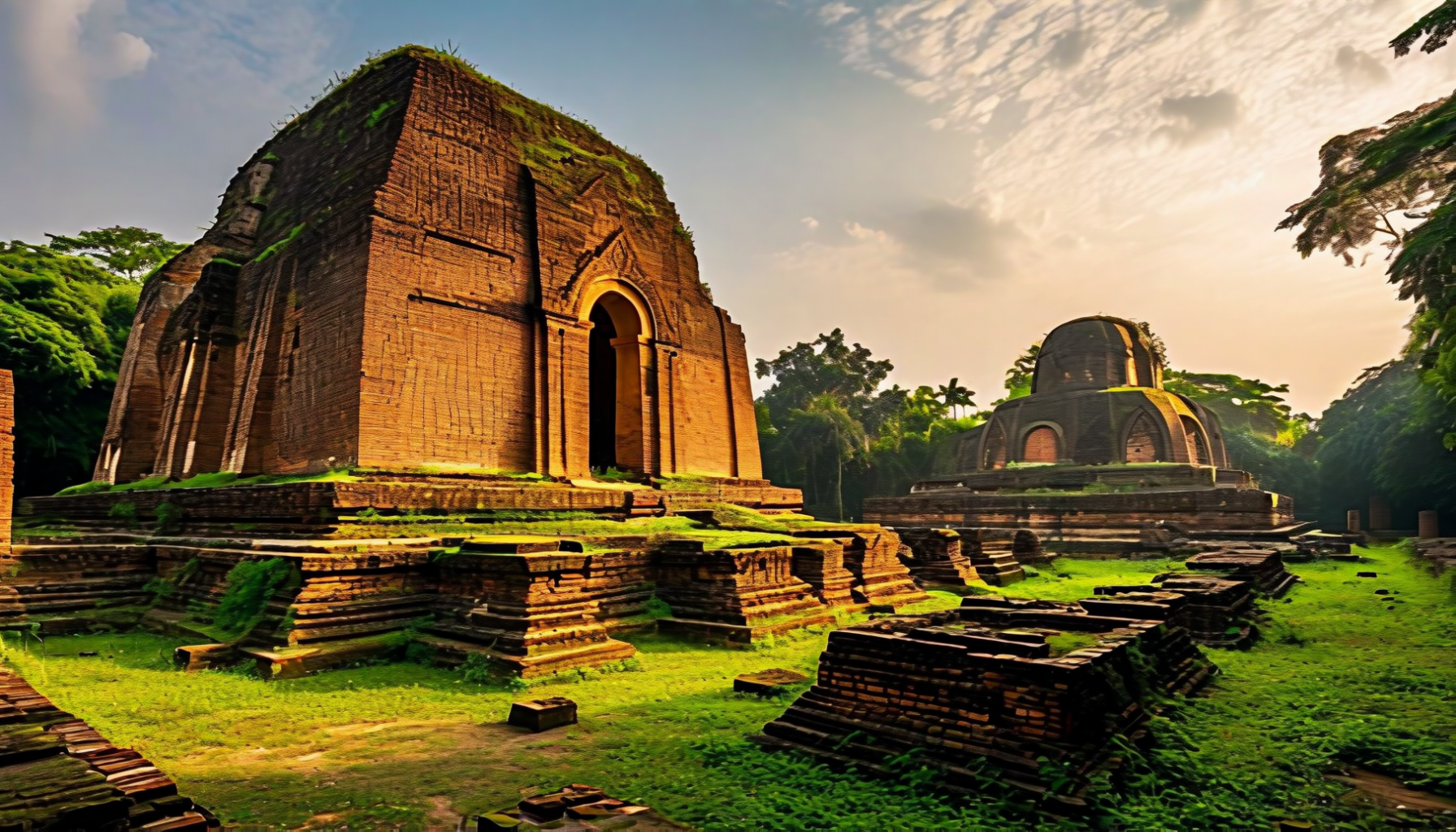
Ancient Bengal: The region was part of successive Indian empires – the Mauryas, Guptas, and Palas. Buddhism flourished under the Pala dynasty (8th-12th centuries), which founded the massive Somapura Mahavihara monastery at Paharpur.
Islamic Period: Turkish military commanders conquered Bengal in 1204. The Bengal Sultanate (1352-1576) saw the construction of great mosques, including those of Bagerhat. Under Mughal rule, Bengal became the empire's wealthiest province, famous for muslin cloth so fine it was called "woven air."
British Rule (1757-1947): The Battle of Plassey established British dominance. The Bengal Famine of 1943 killed an estimated 2-3 million people. When British India partitioned in 1947, the Muslim-majority region became East Pakistan.
Liberation War (1971): On March 25, 1971, the Pakistan Army launched Operation Searchlight, killing tens of thousands. Bangladesh declared independence the next day. The war killed 300,000 to 3 million people. India's intervention in December 1971 ended Pakistani resistance. On December 16, 1971, Bangladesh was born.
Modern Bangladesh: Despite political turmoil, Bangladesh has achieved remarkable development, cutting poverty dramatically and building a massive garment industry. Climate change poses existential threats to this low-lying delta nation.
👥 People & Culture
Bangladesh is one of the world's most densely populated countries, with 175 million people in an area about the size of Iowa. The vast majority are Bengali Muslims, but Hindu, Buddhist, and Christian minorities contribute to cultural diversity.
Language: Bengali (Bangla) is the national language and source of fierce pride. The Language Movement of 1952, when students died protesting for Bengali recognition, is commemorated as International Mother Language Day by UNESCO.
Religion: About 90% Muslim, 9% Hindu. Islam is central to daily life, with the call to prayer punctuating the day. Religious festivals – Eid, Durga Puja – are celebrated with enthusiasm across communities.
Hospitality: Bangladeshi hospitality is legendary. Visitors are treated as honored guests, offered tea and food at every opportunity. This warmth transcends language barriers and remains one of the country's greatest attractions.
🏛️ Government & Politics
Bangladesh is a unitary parliamentary republic. The country went through a major political transition after the student-led uprising of July–August 2024 and the departure of Prime Minister Sheikh Hasina on 5 August 2024. An interim administration led by Nobel laureate Muhammad Yunus served from August 2024 until the elected government took office in February 2026.
A general election was held on 12 February 2026. The Bangladesh Nationalist Party (BNP) won a clear parliamentary majority, and party leader Tarique Rahman was sworn in as prime minister on 17 February 2026. A constitutional referendum held alongside the election approved the July Charter reform package; published results reported 68.06% voting “Yes,” with turnout around 60%.
The head of state is President Mirza Fakhrul Islam Alamgir, a veteran BNP politician elected by parliament on 20 August 2026 after Mohammed Shahabuddin resigned. Bangladesh’s presidency is largely ceremonial, while executive authority rests with the prime minister and cabinet.
The political environment remains active. Large rallies, demonstrations and hartals (general strikes) can disrupt transport and may become confrontational. Travelers should avoid demonstrations and monitor local news, especially when moving between cities.
- System: unitary parliamentary republic
- Head of state: President Mirza Fakhrul Islam Alamgir, elected 20 August 2026
- Head of government: Prime Minister Tarique Rahman, sworn in 17 February 2026
- Legislature: Jatiya Sangsad
- Latest general election: 12 February 2026
- Capital: Dhaka
Current political facts checked 18 September 2026 against Reuters, AP and the Office of the President of Bangladesh.
🏛️ Dhaka
Bangladesh's capital is one of the world's most intense urban experiences. Nearly 22 million people crowd the metropolitan area, creating traffic, noise, and sensory overload that can overwhelm unprepared visitors.
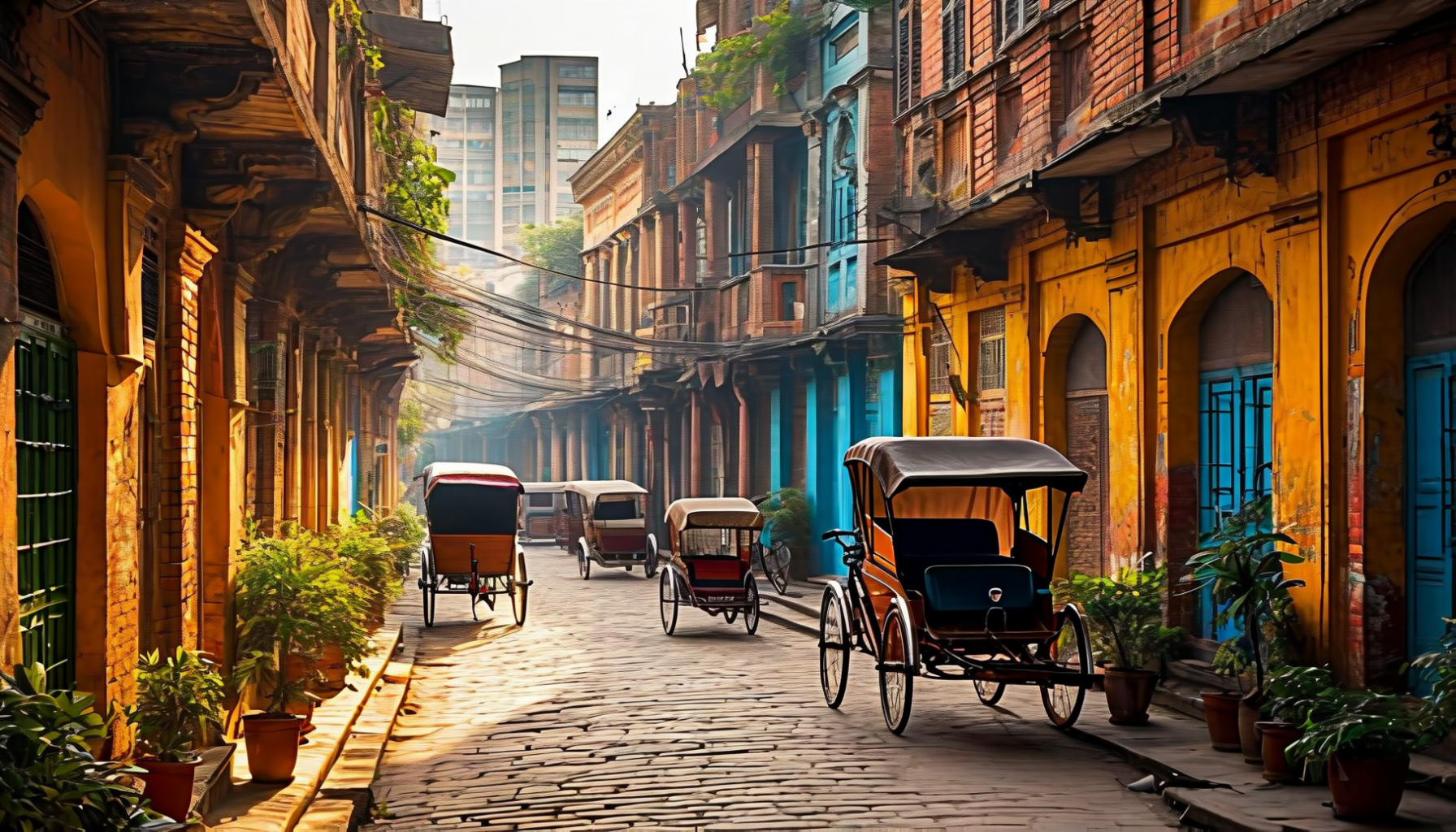
Old Dhaka: The historic heart preserves Mughal-era buildings, including the 17th-century Lalbagh Fort and the Ahsan Manzil (Pink Palace). The Star Mosque features elaborate ceramic decoration. Armenian and Hindu merchants' houses recall the city's cosmopolitan trading past.
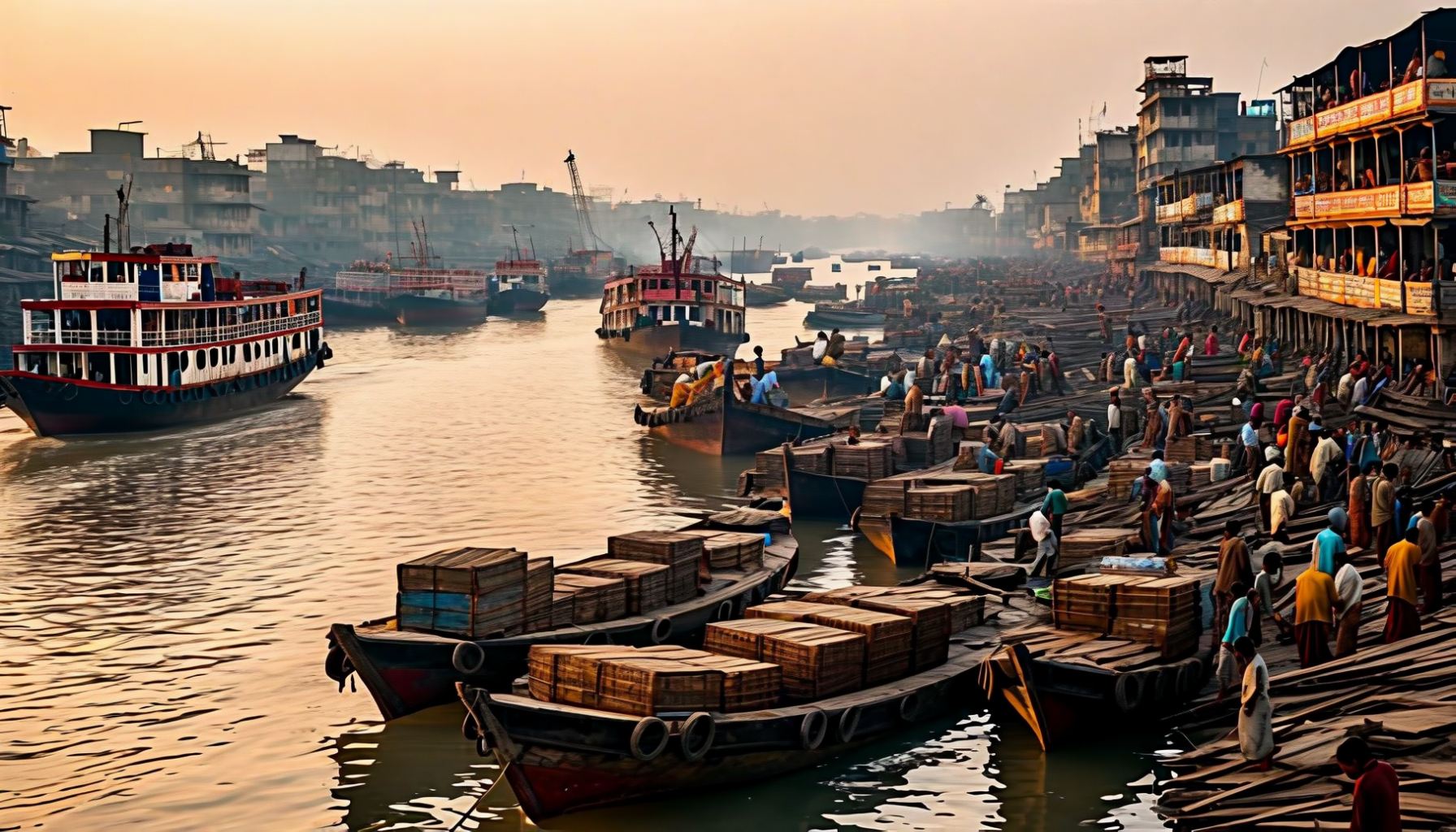
Sadarghat: The river port offers the quintessential Dhaka experience: hundreds of boats ferry passengers across the Buriganga River, creating one of the world's busiest waterways. Boat trips reveal a city that lives on water.
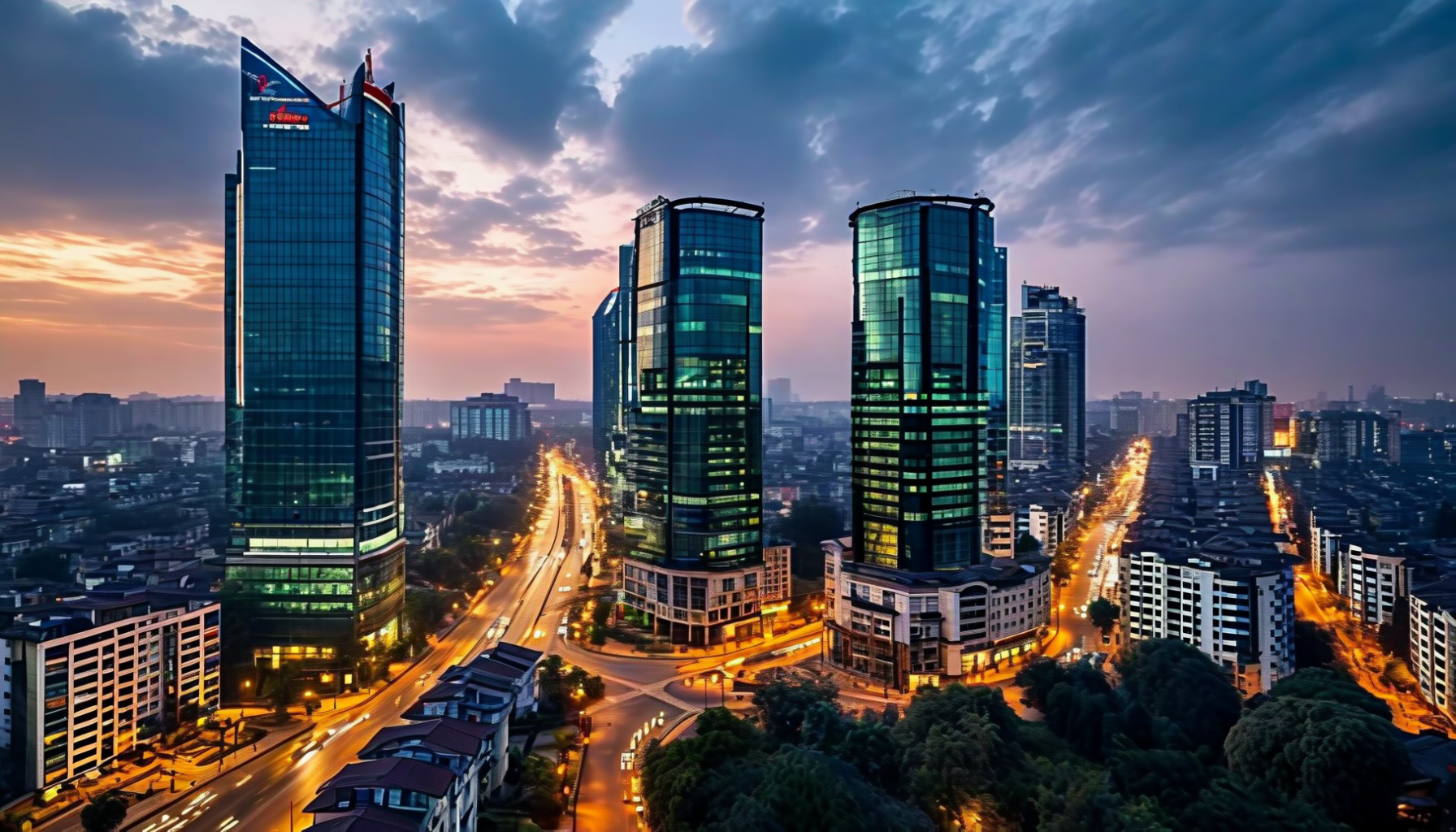
Modern Dhaka: Gulshan and Banani host expat-friendly restaurants, cafés, and shops. The MRT Line 6 metro (Uttara–Motijheel, fully open since November 2023) and the Dhaka Elevated Expressway are slowly changing how the city moves. Despite the chaos, Dhaka rewards those who persist with unforgettable experiences.
🐅 Sundarbans
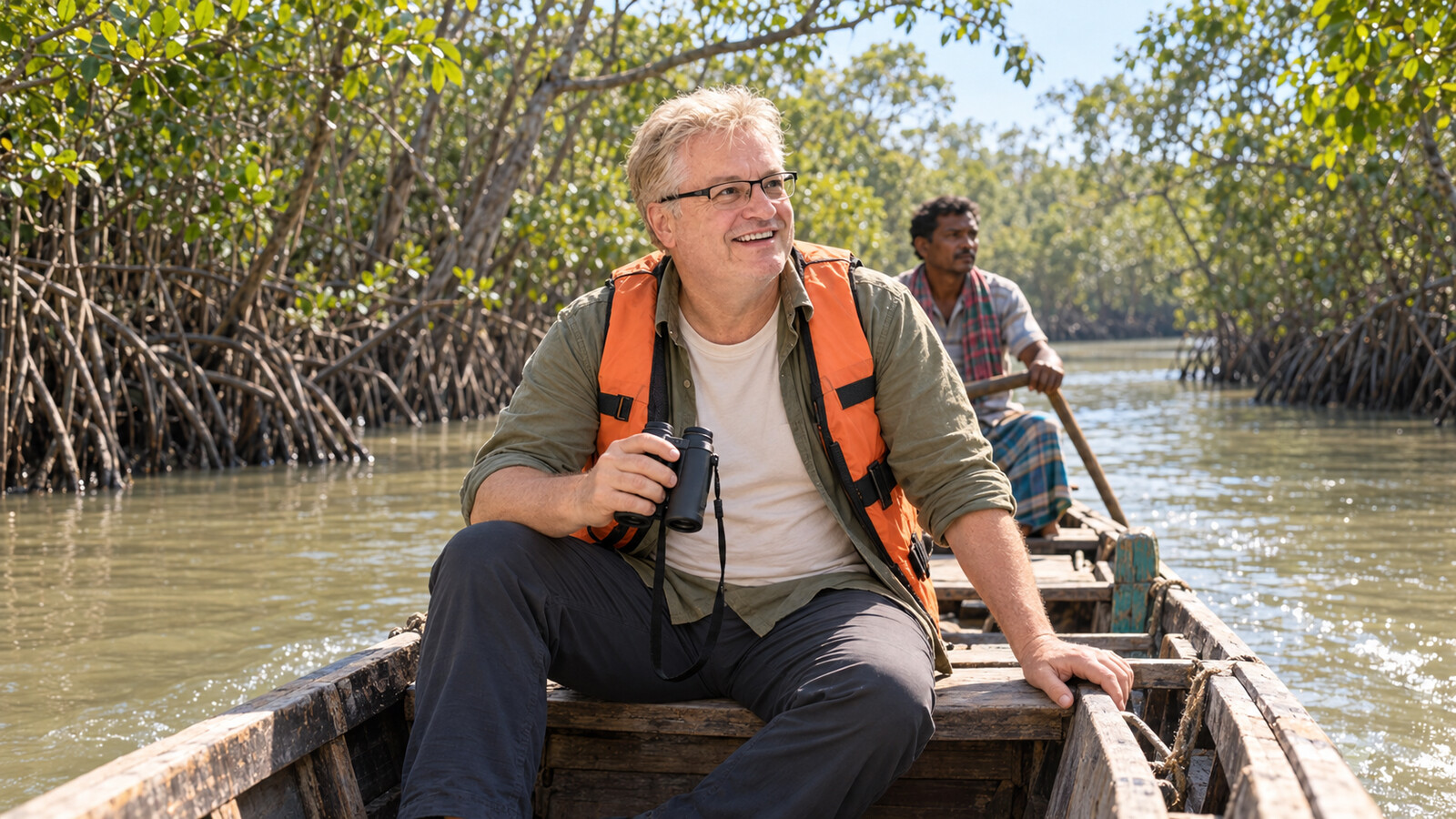
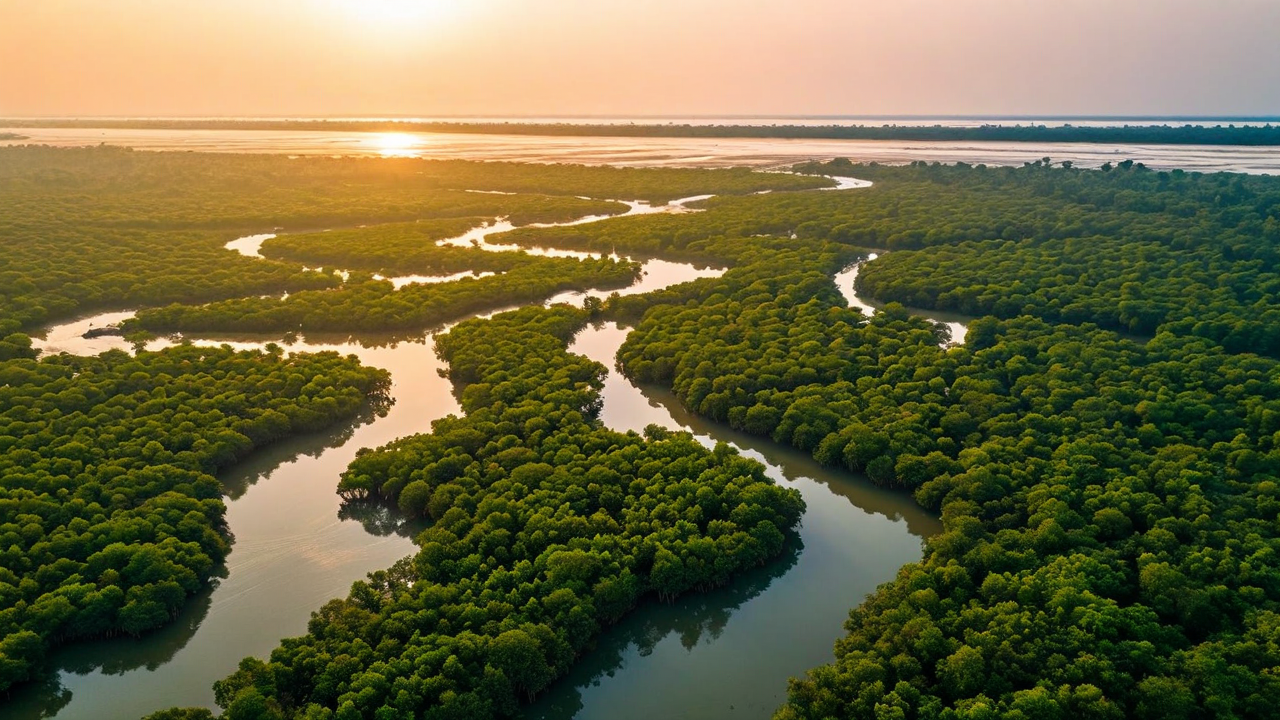
The world's largest mangrove forest covers 10,000 square kilometers across Bangladesh and India. The Bangladeshi portion, a UNESCO World Heritage Site since 1997, protects approximately 6,000 square kilometers of tidal waterways, mudflats, and salt-tolerant forest.
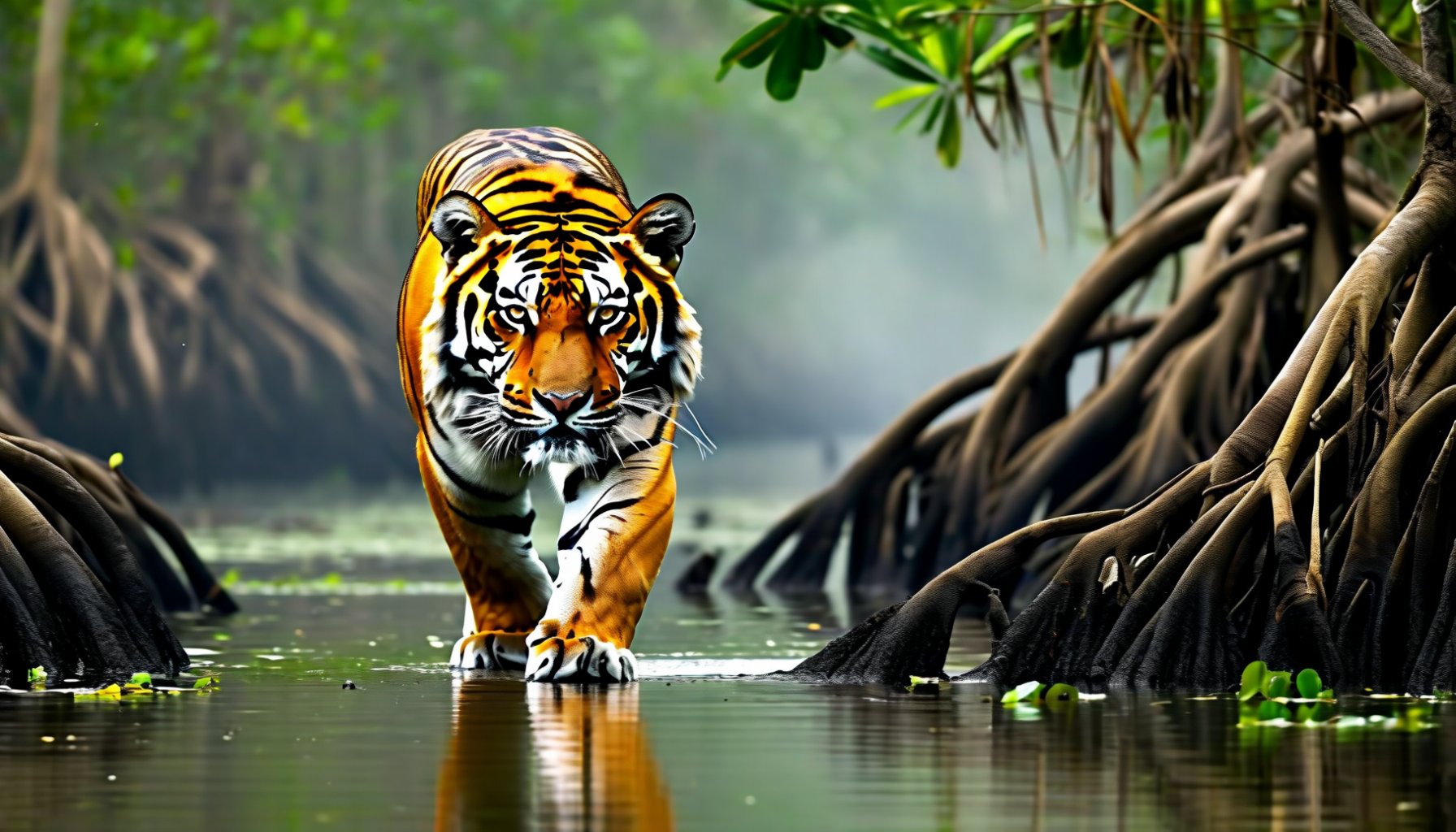
Royal Bengal Tigers: The Sundarbans are famous for the Royal Bengal tiger – the 2024 national camera-trap census counted 125, swimming between islands and occasionally attacking honey collectors and fishermen. These are wild animals in dense vegetation; sightings are never guaranteed.
Wildlife: Beyond tigers, the forest supports spotted deer, wild boar, estuarine crocodiles, Ganges river dolphins, and over 260 bird species. The experience of sleeping on a boat surrounded by mangrove forest, listening for tigers' calls, is unforgettable.
How to Visit: Multi-day cruises from Khulna or Mongla penetrate the tidal waterways, visiting watch towers for wildlife viewing. The journey often combines with visits to Bagerhat's historic mosques.
🏖️ Cox's Bazar & the Islands
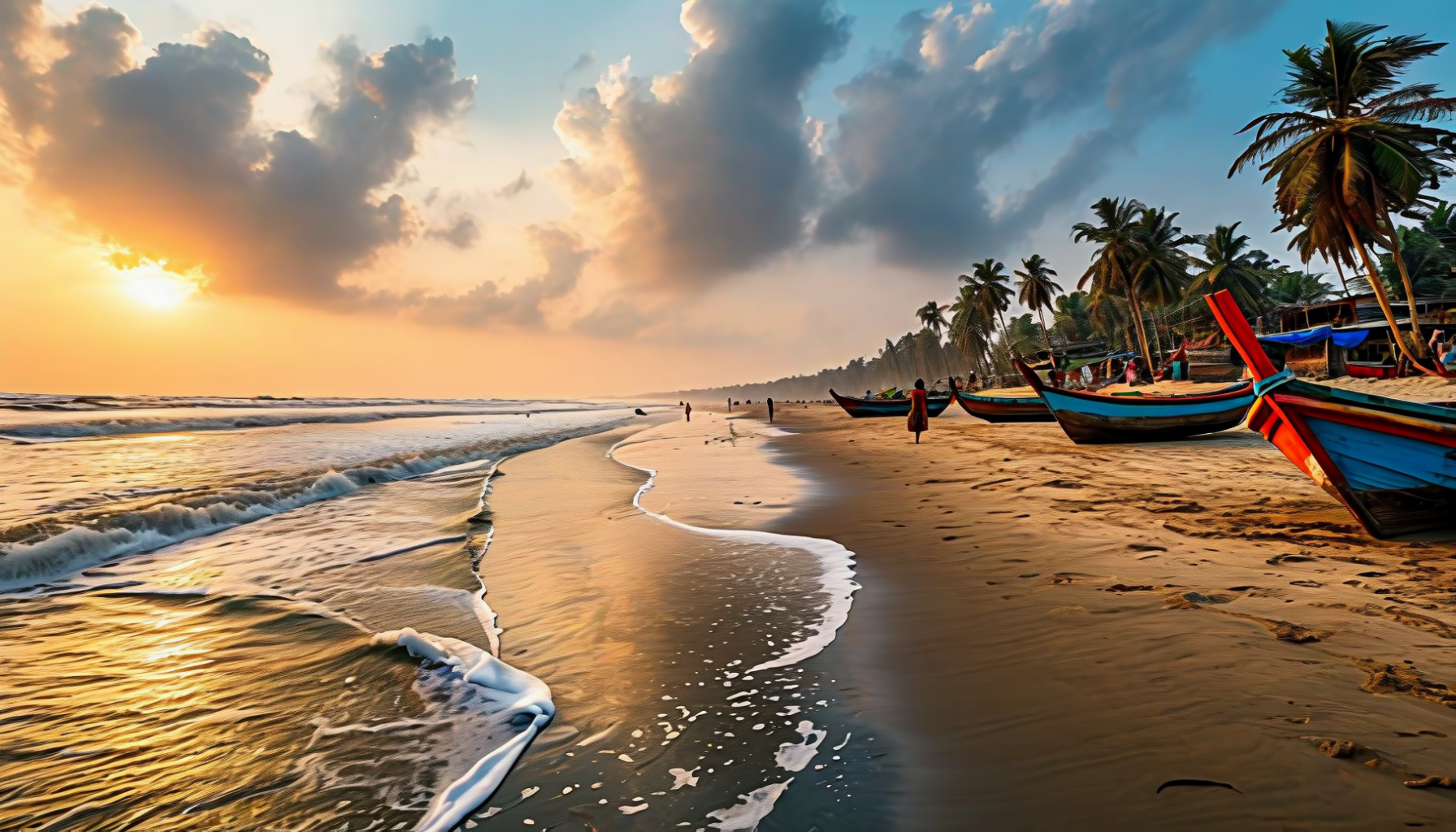
Cox's Bazar is Bangladesh's beach capital and home to what Bangladesh proudly bills as the world's longest natural sandy sea beach. Guinness does not agree — it has listed Brazil's 212–254 km Praia do Cassino as the longest beach since 1994 — but what Cox's Bazar can truthfully claim is Asia's longest beach and one of the longest unbroken stretches of natural sand anywhere: a 120 km ribbon of golden sand running south from the town along the Bay of Bengal. It is the country's busiest domestic tourist destination, drawing millions of Bangladeshis every winter, and yet most foreign travellers still pass it by. That makes it both crowded and exotic at the same time: tea-stalls, beach horses, candy-floss vendors, conservative Muslim families wading fully clothed into the surf, and almost no other Westerners.
The town itself (population ~250,000) sits at the northern end of the beach. The classic strip is divided into three named beaches: Laboni (the busy main beach next to town), Sugandha (a kilometer south, slightly quieter), and Kalatali (the hotel zone, calmest of the three). Walking south at low tide for an hour or two, the crowds vanish completely and you'll have kilometers of sand to yourself.
📍 Map of Cox's Bazar & the Islands
🏝️ The Islands
St. Martin's Island (Narikel Jinjira — "Coconut Island") is the highlight: Bangladesh's only coral island, an 8 km² speck of white sand, turquoise water and coconut palms about 9 km off the southern tip at Teknaf. Since the 2024–25 season the island has been under strict conservation rules: it opens only from November to January (closed February–October), overnight stays are banned in November, a cap of 2,000 visitors a day applies in December–January, every visitor needs a QR-coded travel pass bought through the Bangladesh Tourism Board portal, and only licensed passenger ships from Cox's Bazar or Teknaf may land — about seven hours from Cox's Bazar, so November day trips are barely worth it. Check the current season's notification before booking. If you can get a December–January slot, the magic of the island is at night, after the day boats have left. Stay at a basic resort, eat freshly caught grilled lobster and tuna for a few dollars, walk to the southern point ("Chera Dwip", which becomes a separate islet at high tide), and watch bioluminescent plankton in the surf. The reefs around St. Martin's are the only true coral habitat in Bangladesh and snorkeling is possible in the dry season.

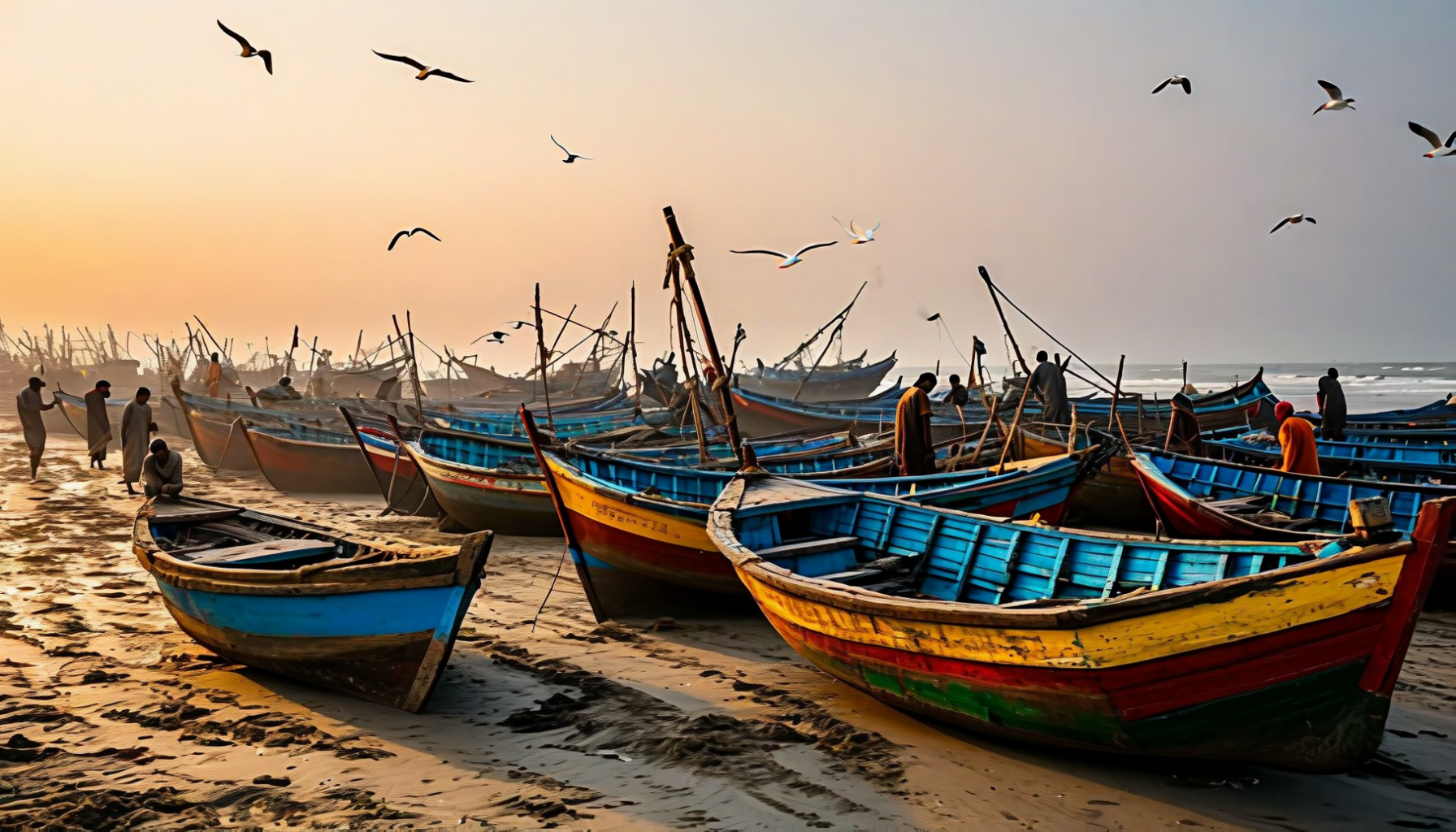
Sonadia Island is a near-uninhabited 9 km² island 7 km west of Cox's Bazar, ringed by mangroves, mudflats and dunes — one of South Asia's most important stopover points for migratory shorebirds (look for the critically endangered spoon-billed sandpiper in winter). You'll need to charter a small boat from the Cox's Bazar harbour or from Maheshkhali. Maheshkhali Island, just 8 km offshore, is the only hilly island in Bangladesh and home to the famous Adinath Shiva temple, salt-evaporation flats, betel-leaf plantations and a working dry-fish (shutki) industry whose smell announces itself before the island does.
🌿 Day Trips from Cox's Bazar
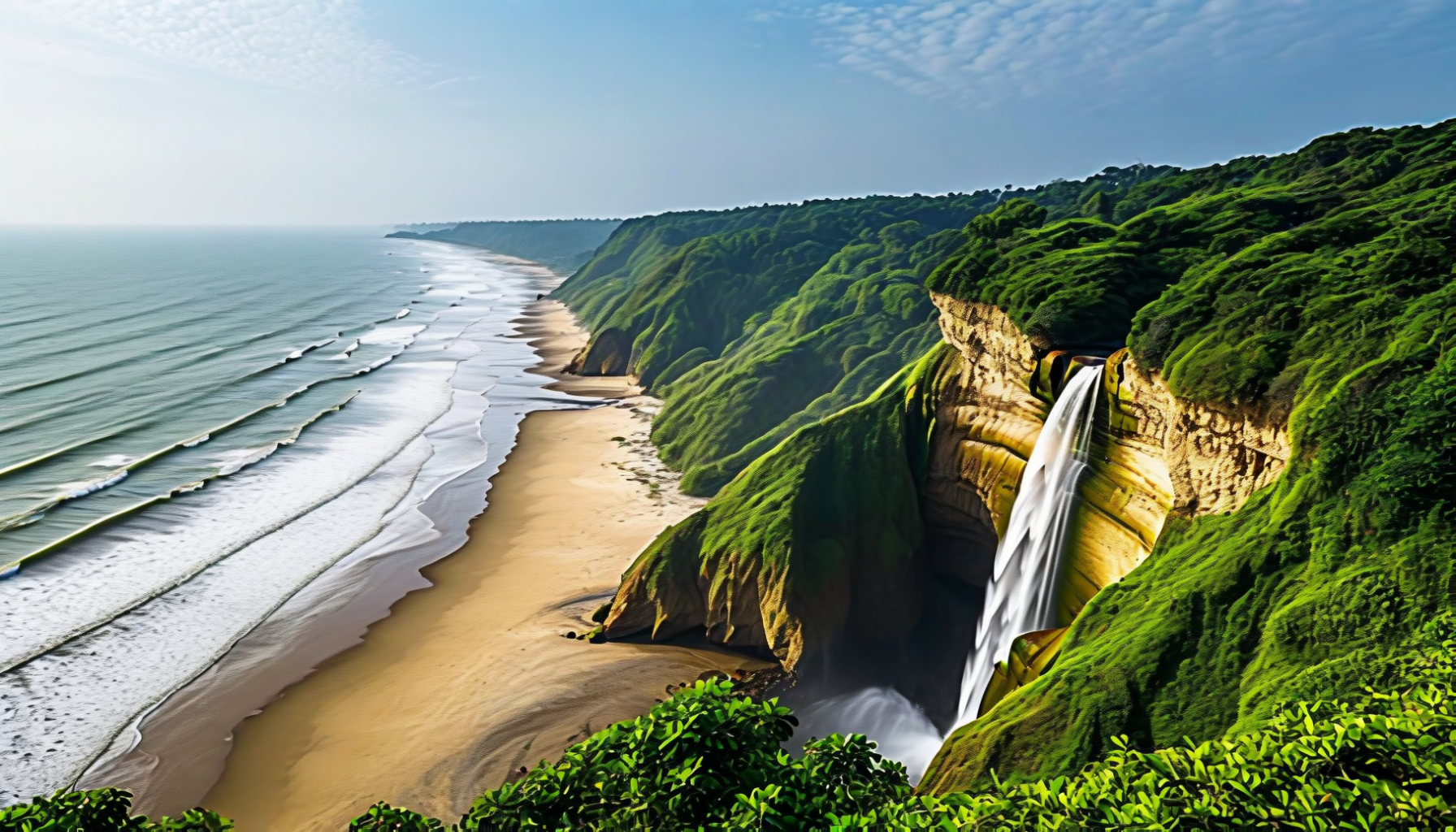
Himchari National Park (8 km south) is where the Eastern Hills meet the Bay of Bengal — green forested cliffs, a small waterfall (impressive in monsoon, trickle in dry season), monkeys and panoramic ocean viewpoints. Inani Beach (32 km south) is famous for its strange, weather-rounded coral rocks half-buried in the sand and is far less crowded than Laboni. Ramu (16 km east) is the centre of Bangladesh's small Buddhist Marma community, with several richly decorated wooden monasteries and a 100-foot gilded reclining Buddha. Teknaf at the country's southern tip looks straight across the Naf River into Myanmar's Rakhine State and is also the gateway port for St. Martin's.
🛏️ Where to Stay
The Kalatali Beach hotel zone is the most comfortable base. Top end: Sayeman Beach Resort (heritage 5★), Long Beach Hotel, Royal Tulip Sea Pearl Beach Resort (south of town toward Inani — the country's flashiest beach resort). Mid-range: Hotel The Cox Today, Ocean Paradise. Budget: dozens of guesthouses behind Sugandha Beach for $15–30. On St. Martin's, the best are Blue Marine Resort and Neel Digonto; book ahead in peak season (Dec–Jan).
🍽️ Eating
Cox's Bazar is all about seafood. Don't miss grilled rupchanda (silver pomfret), coral fish, jumbo tiger prawns, fresh squid, lobster, and the local fish curry with mustard. The Burmese-influenced corner of the bazaar (legacy of nearby Rakhine traders) sells excellent noodle soups and pickled tea-leaf salad. Poushi Restaurant and Jhauban are local institutions for set-fish-meal lunches.
🚐 Getting There & Around
Cox's Bazar Airport (CXB) has 6–8 daily flights from Dhaka (Biman, US-Bangla, NOVOAIR — about 1 hour, $40–80). The new Dohazari–Cox's Bazar railway opened in late 2023; trains from Dhaka via Chittagong take ~8 hours and tickets sell out fast. Long-distance overnight buses from Dhaka take 9–11 hours. Locally, battery-powered "tomtom" rickshaws and CNG auto-rickshaws are the way to get around; for trips down the coast, hire a car with driver for the day (~$30–50).
🗓️ When to Go & Practical Tips
Best season: November to early March — dry, sunny, 20–28 °C, calm sea, and the St. Martin's window (November–January only under the conservation rules). April–May is hot and pre-monsoon storms make the sea rough. June–September is monsoon (dramatic but wet, with frequent travel disruptions and occasional cyclone alerts). Bangladesh is conservative — locals (men included) generally swim in shorts and T-shirts. Bring modest swimwear for the main beach and save the bikini for St. Martin's, where it is more tolerated. Alcohol is officially restricted; only a few large hotels have licensed bars. Be aware that the area south of Cox's Bazar around Kutupalong/Ukhia hosts the world's largest refugee settlement (Rohingya from Myanmar) — entry is restricted to humanitarian workers and the area should not be visited as a tourist.
⚠️ Safety
Cox's Bazar is generally safe and welcoming. Watch for strong rip currents — the beach has lifeguards on the main strip but obey the red flags. Petty theft on the beach is rare but possible; don't leave valuables on your towel. Check your government's travel advisory before going, particularly regarding the Bandarban / Chittagong Hill Tracts area inland (separate permit required) and the Myanmar border zone.
🕌 Bagerhat
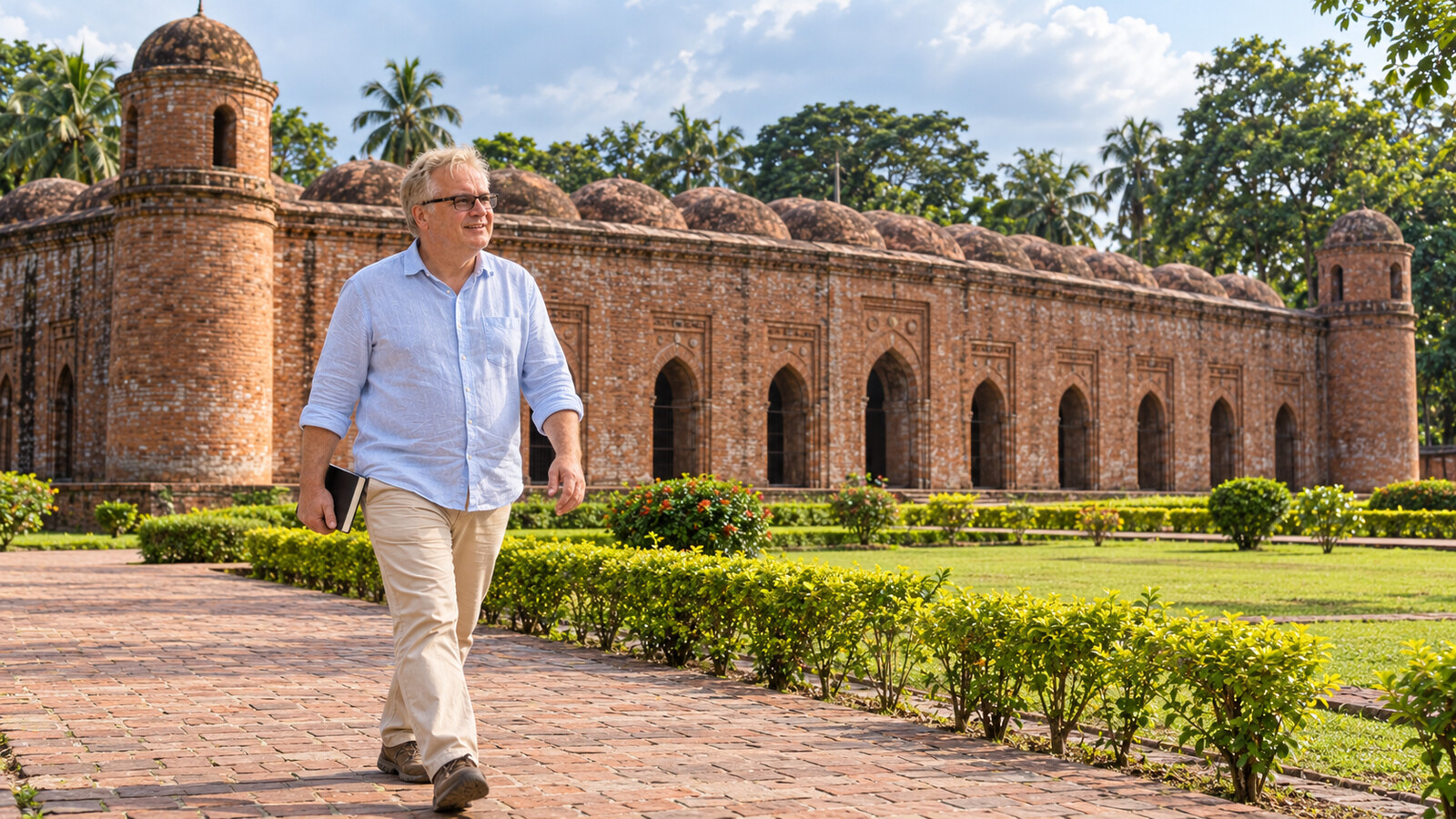
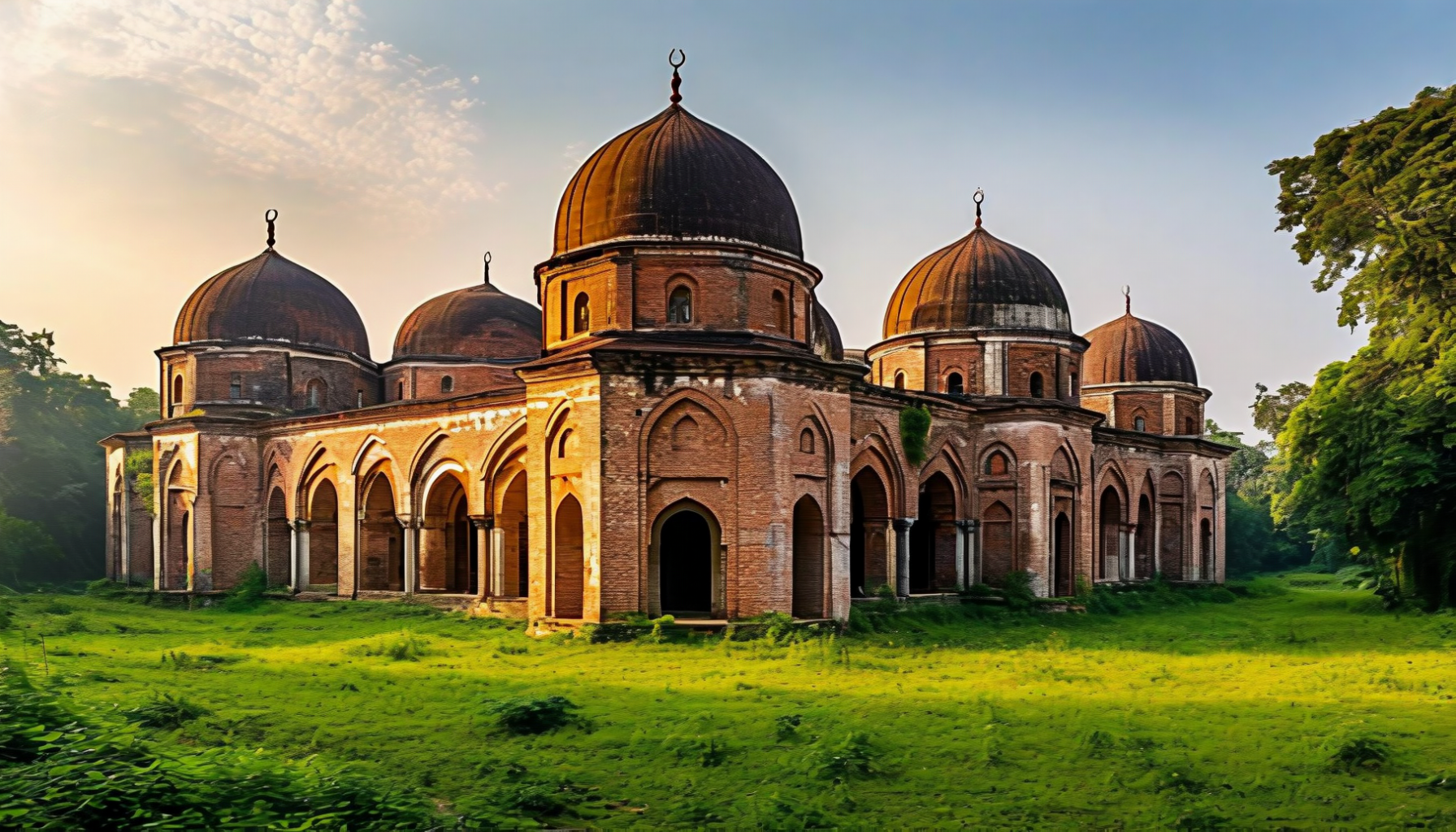
The Historic Mosque City of Bagerhat, a UNESCO World Heritage Site since 1985, preserves the remains of a remarkable 15th-century Islamic city founded by the Turkish general and Sufi saint Ulugh Khan Jahan.
Sixty Dome Mosque: The centerpiece is the Shat Gombuj Masjid – a massive prayer hall with actually 77 domes supported by 60 stone pillars. Despite the name, "sixty" reflects the Bengali term for "many" rather than a precise count. This is the largest Sultanate-era mosque in Bangladesh (the largest overall is Dhaka's modern Baitul Mukarram) and a masterpiece of Sultanate architecture.
Khan Jahan's Tomb: The saint's mausoleum is a pilgrimage site with sacred crocodiles in the adjacent pond – fed by pilgrims seeking blessings.
Getting There: Bagerhat lies approximately 200 kilometers southwest of Dhaka. The site combines well with Sundarbans tours from nearby Khulna.
🍵 Sylhet & Tea Gardens
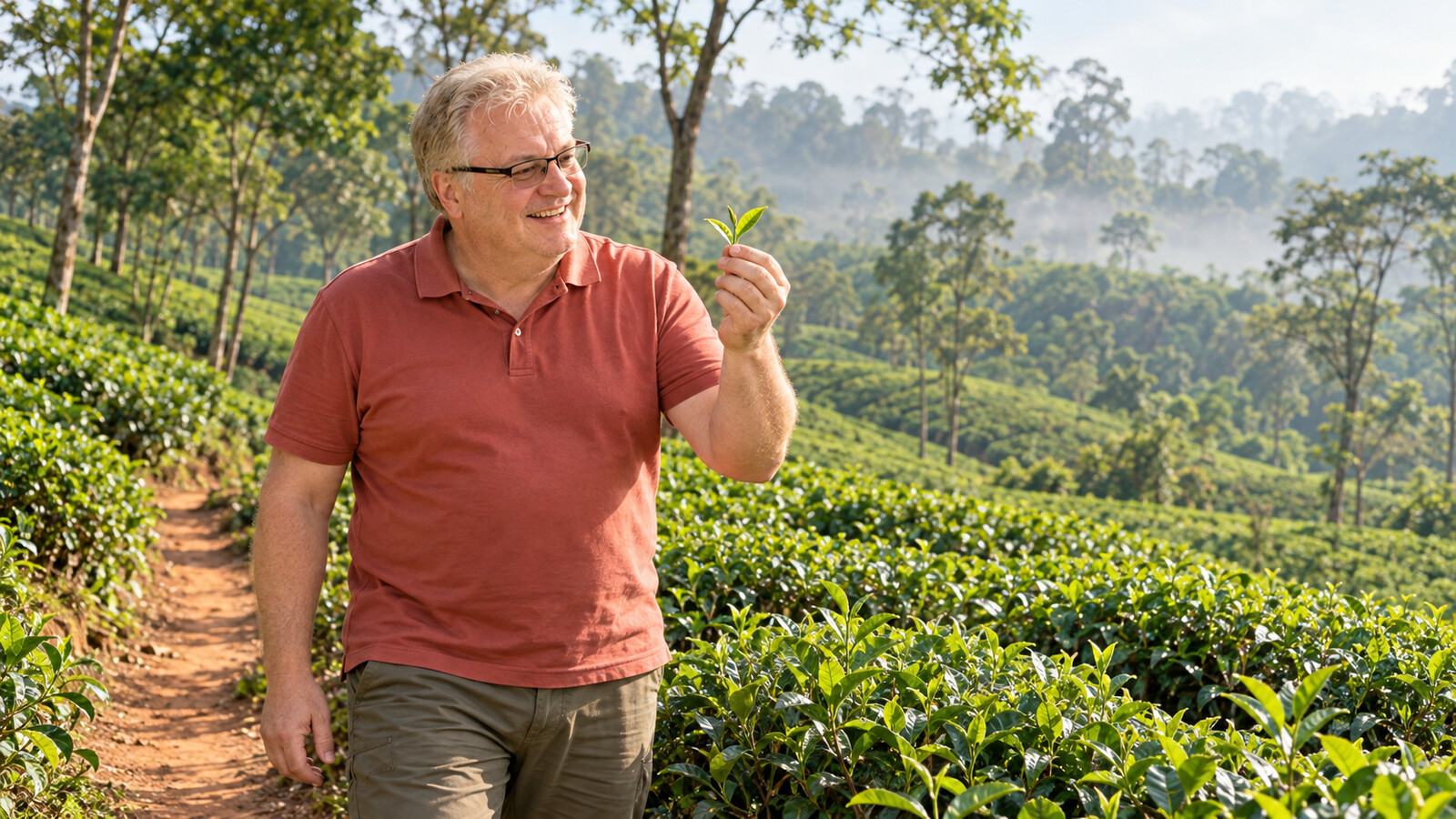
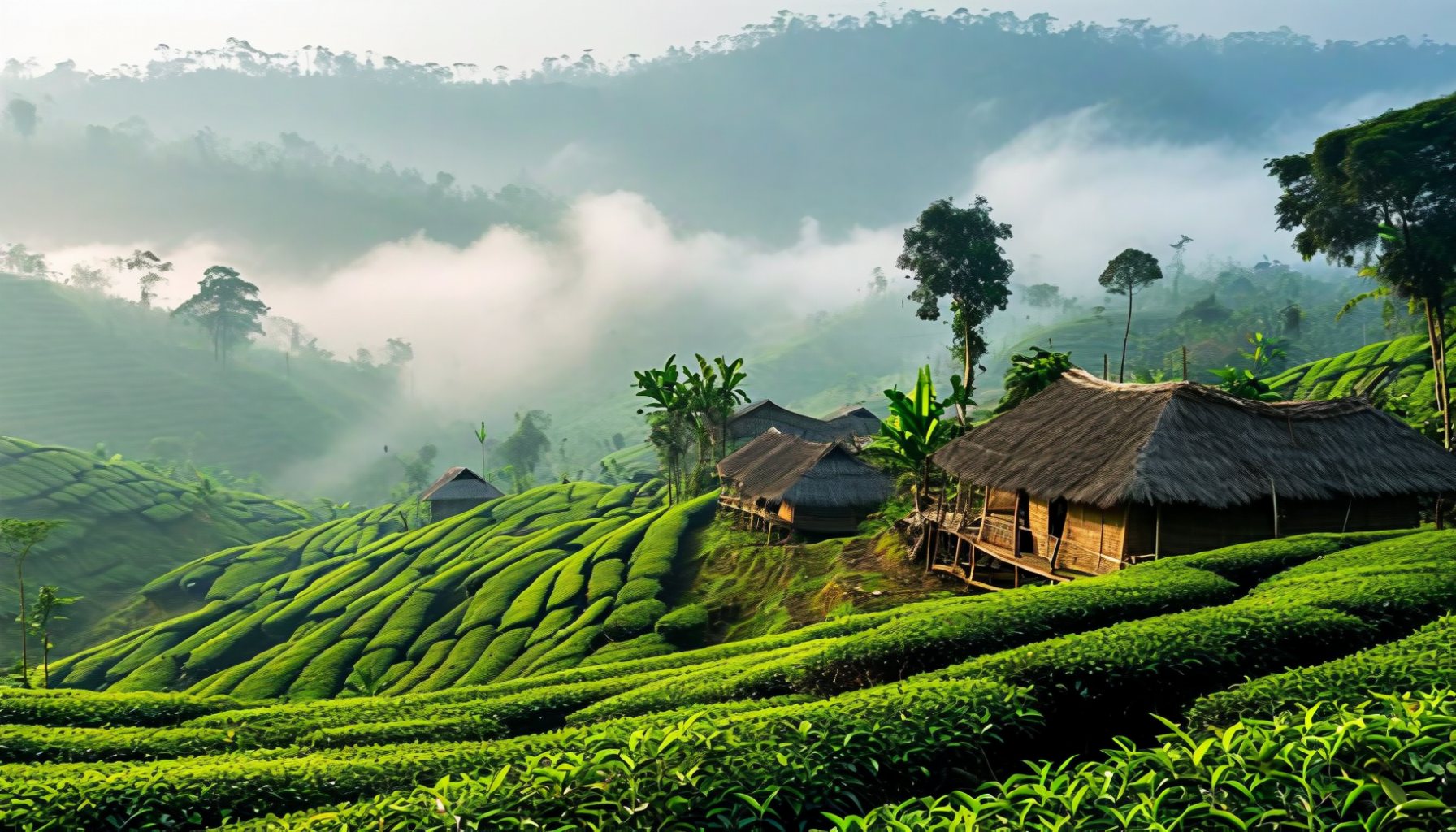
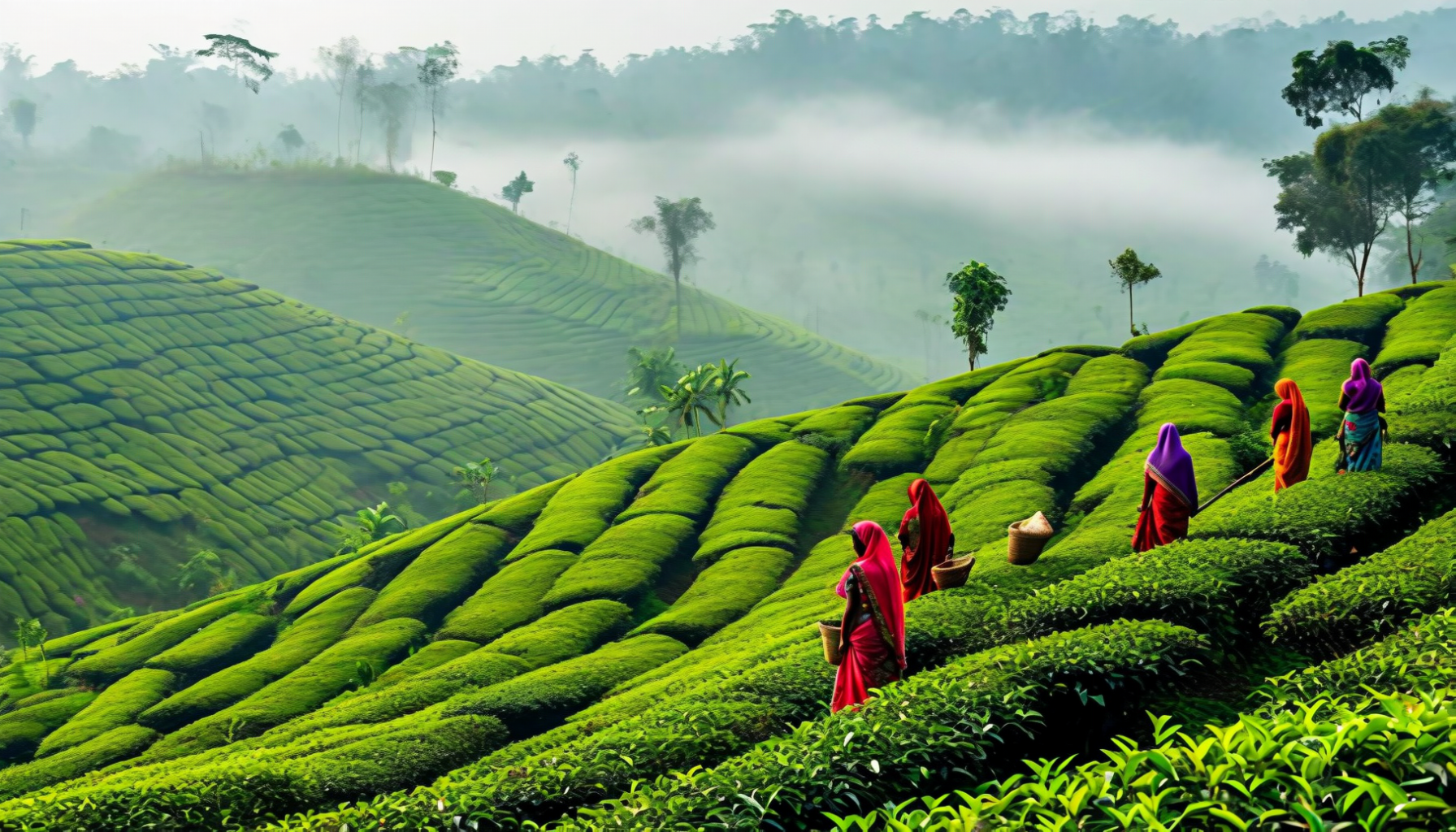
The northeastern Sylhet region offers tea gardens, natural beauty, and a more relaxed pace than frenetic Dhaka. Rolling green estates produce some of the world's finest tea, cultivated since British times.
Sreemangal: The "tea capital of Bangladesh" features expansive plantations where visitors can tour factories, taste fresh brews, and photograph the iconic seven-layer tea unique to the region.
Ratargul Swamp Forest: Bangladesh's only freshwater swamp forest is accessible by boat – an otherworldly experience as you glide between submerged trees.
Haor Wetlands: Vast seasonal lakes support migratory birds and traditional fishing communities. The Tanguar Haor is internationally recognized for biodiversity.
🍽️ Cuisine
Bengali cuisine centers on rice and fish – "mach-bhat" (fish and rice) is the national staple. The country's rivers provide abundant freshwater fish; hilsa (ilish) is the undisputed king, its rich, oily flesh featured in countless preparations.
COOKBOOK NOTE — Radim Kaufmann
Bangladesh is the land of fish and rice — and no fish matters more than the hilsa. During monsoon season, when the silvery ilish run upriver from the Bay of Bengal, the entire country enters a state of collective obsession. Prices soar, arguments erupt over which river produces the finest specimens, and families gather for ilish bhapa feasts that border on the sacred. In Old Dhaka, I ate kacchi biryani sealed in a clay pot with flour dough — when the waiter cracked it open at the table, the fragrance of saffron and slow-cooked mutton was almost overwhelming. Bengali food is not subtle; it is generous, aromatic, and deeply tied to the rhythms of the land and water.
Ilish Bhapa KCS 90
Steamed Hilsa in Mustard
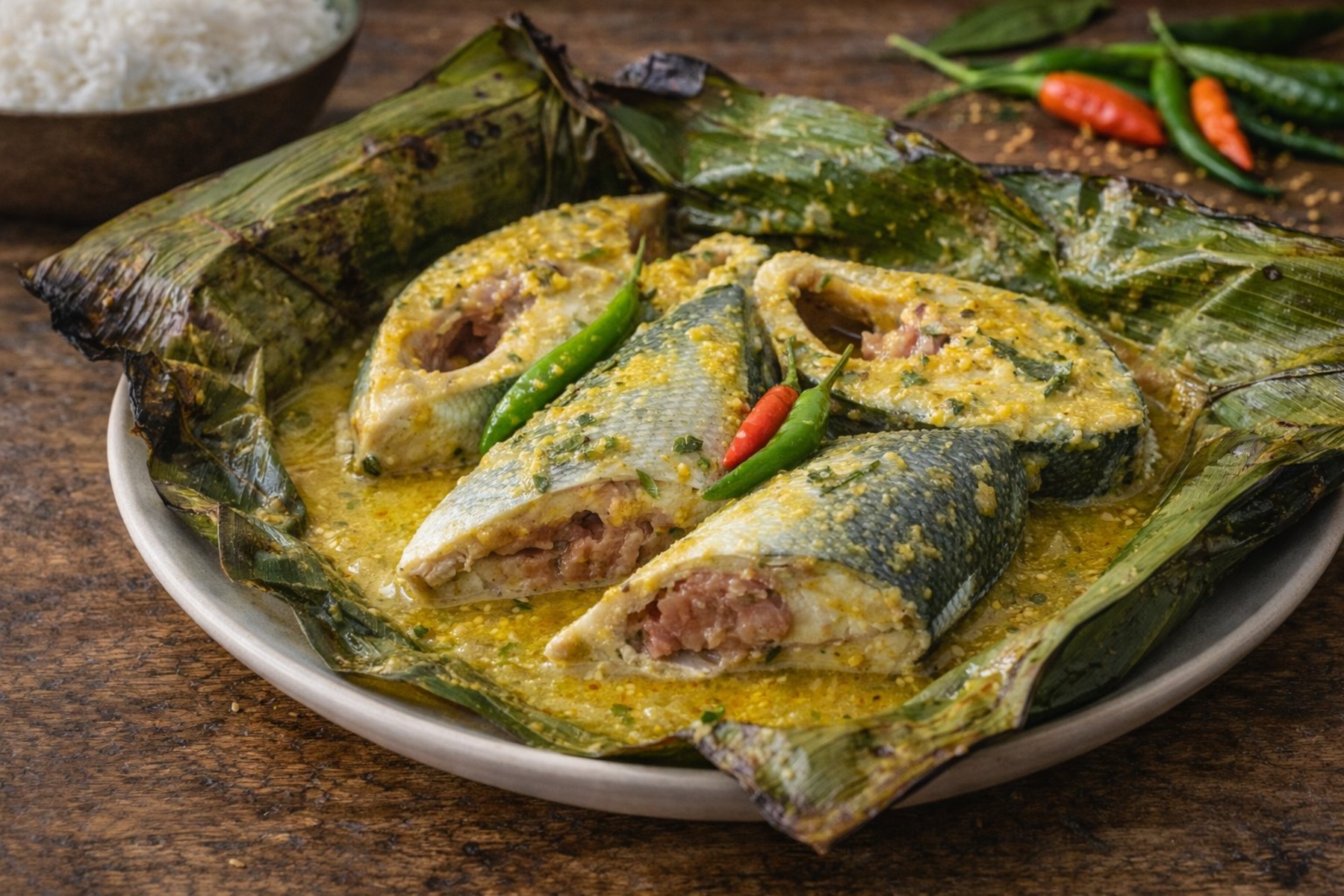
The king of Bengali fish dishes—prized Hilsa steamed in pungent mustard sauce with green chilies. This recipe serves two.
Ingredients: 4 Hilsa fish steaks, 60ml mustard paste (freshly ground), 30ml mustard oil, 5ml turmeric, 4-6 green chilies, slit, 5ml nigella seeds (kalonji), Salt to taste, Banana leaf for wrapping.
Preparation: Select four thick steaks cut from the middle section of a fresh hilsa fish — this is where the flesh is fattest and most flavourful. Rinse gently under cold water and pat completely dry. Score each piece lightly on both sides with two shallow diagonal cuts to help the marinade penetrate. Prepare the mustard paste by soaking three tablespoons of brown mustard seeds and one tablespoon of yellow mustard seeds in water for at least two hours. Drain and grind to a smooth, pungent paste using a mortar and pestle or blender, adding just enough water to keep the blades moving. The paste should be thick, not runny — this is the heart of the dish. In a large bowl, combine the mustard paste with three tablespoons of mustard oil (use raw, pungent mustard oil for authenticity), one teaspoon of turmeric, one teaspoon of red chilli powder, salt to taste, and four slit green chillies. Mix thoroughly until the marinade is a vivid yellow-ochre colour. Add the hilsa steaks and coat each piece generously on all sides. Let this marinate for 20 minutes. Cut four large pieces of banana leaf, each big enough to wrap a fish steak completely. Pass them briefly over an open flame or dip in hot water to make them pliable. Place a marinated hilsa steak in the centre of each leaf, spoon extra marinade over the top, and drizzle with a teaspoon of raw mustard oil. Fold the banana leaf into a neat parcel, securing with a toothpick or kitchen twine. Steam the parcels in a large steamer or pressure cooker without the weight for 15 to 18 minutes. The fish cooks gently in its own fat and the mustard paste, creating a sauce that is simultaneously fiery, pungent, and rich. The banana leaf imparts a subtle herbal fragrance that cannot be replicated with foil. Serve the parcels unopened at the table — the drama of unwrapping the banana leaf to reveal the glistening golden fish is part of the experience. Accompany with plain steamed rice and nothing else. The Bengalis insist that ilish bhapa needs no accompaniment — the fish, the mustard, and the rice form a holy trinity that should not be disturbed.
💡 Fresh mustard paste is essential—the pungency mellows beautifully when steamed. The oil should be raw and pungent for authentic flavor.
Kacchi Biryani KCS 87
Dhaka-Style Layered Rice
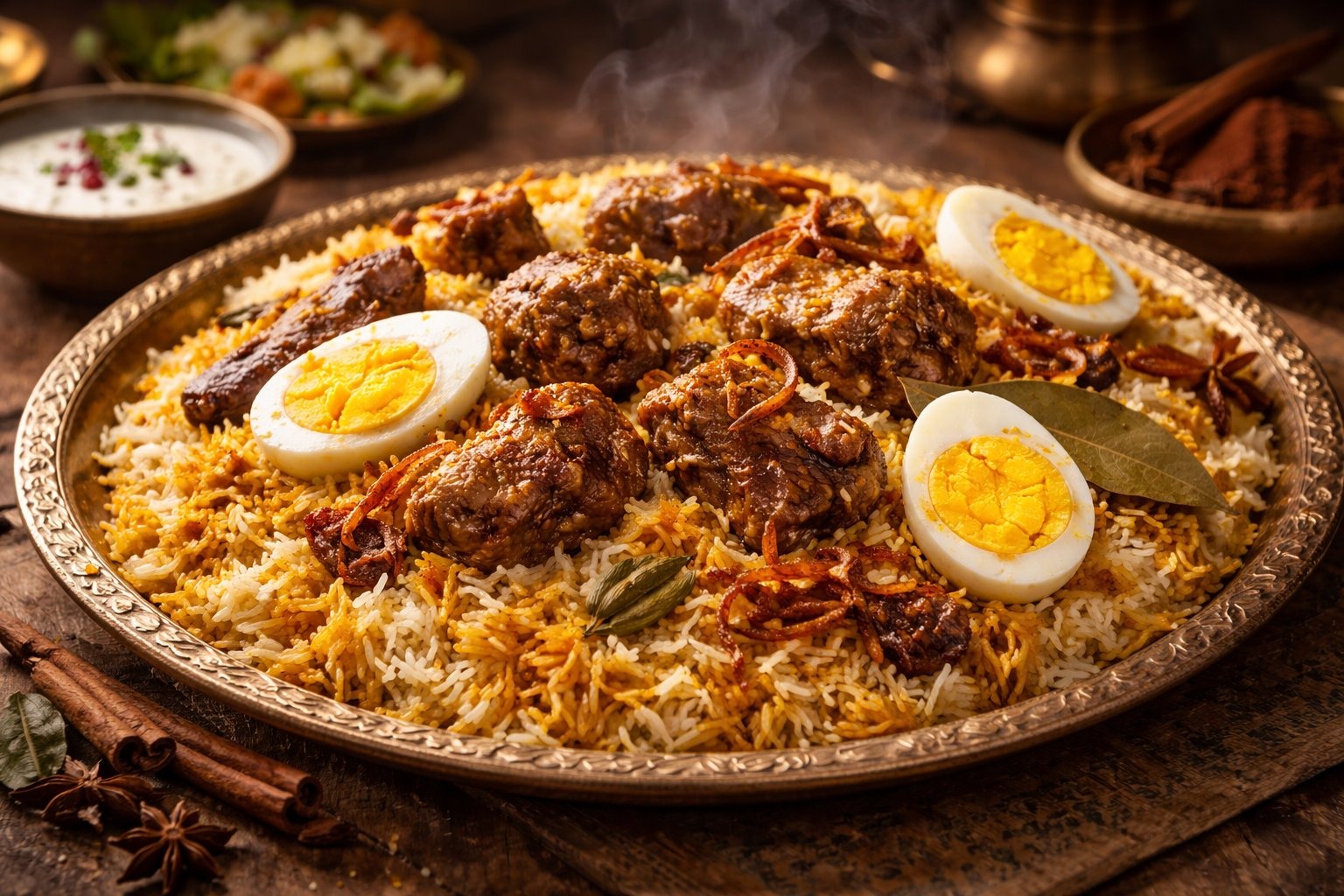
The pride of Old Dhaka—raw marinated meat layered with rice and slow-cooked under a sealed lid. This recipe serves two.
Ingredients: 500g goat meat (bone-in), 500g basmati rice, soaked, 240ml yogurt, 2 large onions (fried crispy), 1g saffron in warm milk, Whole spices (cardamom, cinnamon, bay), 30ml biryani masala, Ghee, boiled eggs, Potatoes (optional).
Preparation: The night before, marinate 800g of bone-in mutton pieces in a mixture of 200g thick yogurt, one tablespoon each of ginger paste and garlic paste, half a teaspoon each of nutmeg and mace, one teaspoon of garam masala, a generous pinch of saffron soaked in two tablespoons of warm milk, and salt to taste. The word 'kacchi' means raw — the meat goes into the pot uncooked, which is what makes this biryani unique. Refrigerate overnight. Soak 500g of aged basmati rice in cold water for two hours. The longer grain and lower moisture of aged basmati is essential for achieving separate, fluffy grains. Drain and parboil in a large pot of vigorously boiling salted water for exactly four minutes. The rice should be about 70 percent cooked — firm at the core. Drain immediately. Prepare the birista: thinly slice four large onions and deep-fry in batches in vegetable oil until deep mahogany brown and crispy. Drain on paper towels. This is not optional — birista provides the essential sweet-savoury backbone of Dhaka-style biryani. Reserve the onion-flavoured oil. In a heavy-bottomed pot or traditional clay handi, spread a layer of the marinated raw mutton across the bottom. Scatter half the birista and a few whole boiled potatoes (a Dhaka signature) over the meat. Spread the parboiled rice evenly on top. Drizzle with the remaining saffron milk, two tablespoons of rose water, a tablespoon of kewra water, and three tablespoons of the reserved onion oil. Top with the remaining birista. Seal the pot completely by wrapping the lid with a ring of flour dough — this creates an airtight seal that traps all the steam inside. This technique, called 'dum,' is the defining method. Place the sealed pot over the highest heat for five minutes to build up steam, then reduce to the absolute lowest setting and cook undisturbed for two hours. The raw meat slowly cooks in its marinade, releasing juices that steam upward through the rice. When ready, break the dough seal at the table for maximum dramatic effect. The fragrance of saffron, rose water, and slow-cooked mutton will fill the room. Gently fold the layers together and serve on a platter, topped with halved boiled eggs and extra birista. Accompany with a cooling borhani (spiced yogurt drink) and a simple kachumber salad.
💡 The magic is in the seal—no steam should escape. The raw meat cooks in its own juices, flavoring the rice from below.
Pitha KCS 75
Bengali Rice Cakes
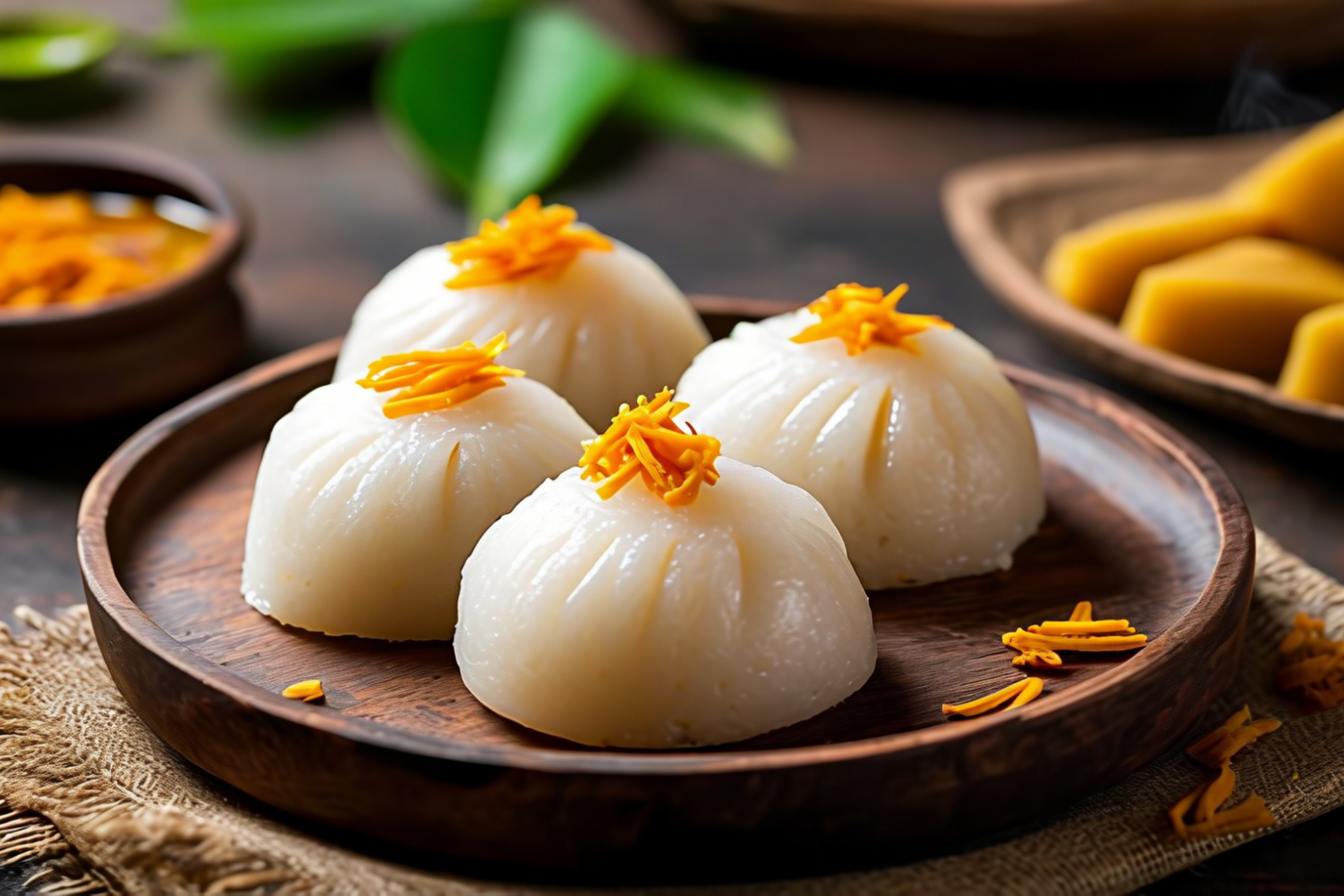
Beloved winter sweets—rice flour cakes filled with sweetened coconut and date palm jaggery. This recipe serves two.
Ingredients: 480ml rice flour, 240ml fresh coconut, grated, 240ml date palm jaggery (nolen gur), 1/10ml cardamom, Pinch salt, Water as needed, Banana leaves for steaming.
Preparation: Pitha encompasses dozens of traditional Bengali rice cake varieties. Here we prepare three classics that appear together during the winter pitha season. Begin with the rice flour base: soak 300g of regular rice in water overnight, then drain and grind to a fine powder (or use store-bought rice flour). For bhapa pitha (steamed rice cakes): mix 200g of rice flour with just enough warm water to create a crumbly, sand-like texture — it should hold its shape when pressed but not be a dough. Prepare the filling by combining 150g of freshly grated coconut with 100g of jaggery (date palm gur is traditional) and a pinch of cardamom. Take a small handful of the rice flour, press it flat in your palm, place a spoonful of coconut-jaggery filling in the centre, then shape into a round ball, sealing the filling inside. Steam in a bamboo or metal steamer lined with muslin cloth for 12 to 15 minutes until the outside is firm and slightly translucent. For chitoi pitha (lacy rice pancakes): make a thin batter by mixing 150g of rice flour with 250ml of water and a pinch of salt until smooth and pourable. Heat a non-stick pan or traditional clay tawa, cover it with a lid, and pour a ladleful of batter over the surface. Cover immediately and cook for three to four minutes — the steam creates the characteristic honeycomb pattern of holes on the surface. Do not flip. The chitoi should be soft, spongy, and slightly translucent. For puli pitha (crescent dumplings): knead 200g of rice flour with hot water to form a smooth, pliable dough. Roll into small balls, flatten each into a thin disc, place a teaspoon of the coconut-jaggery filling on one half, fold over into a crescent shape, and crimp the edges decoratively with your fingers or a fork. Simmer these dumplings in a sweetened coconut milk sauce made from 400ml coconut milk, three tablespoons of jaggery, and cardamom until they float and the sauce thickens slightly, about 10 minutes. Arrange all three varieties on a banana leaf-lined platter. Drizzle the bhapa and chitoi pitha generously with date palm jaggery syrup (khejur gur). Serve with a bowl of freshly grated coconut alongside. Pitha is winter food in Bangladesh — made during Poush Mela festivals when the new rice harvest coincides with the date palm jaggery season, creating a celebration of sweetness that defines Bengali winters.
💡 Fresh date palm jaggery (nolen gur) is seasonal and irreplaceable—it has a unique smoky sweetness. Pitha season is a celebration!
Signature Dishes: Biryani rivals Hyderabad's best. Kacchi biryani (slow-cooked with raw meat) is a Dhaka specialty. Bhuna khichuri (spiced rice and lentils) comforts during monsoon rains. Street food includes fuchka (puri with spiced water), chotpoti (chickpea curry), and jhal muri (puffed rice snack).
Sweets: Bengalis are legendary sweet-lovers. Roshogolla, sandesh, mishti doi (sweet yogurt), and countless other confections fill sweet shops in every neighborhood.
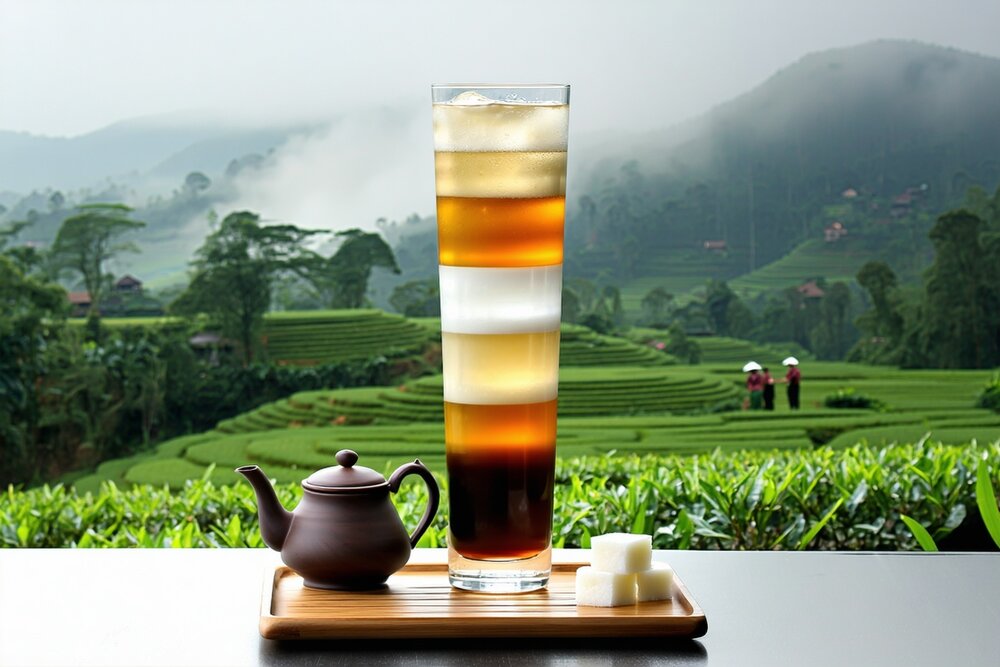
Tea: Cha (tea) is served everywhere, anytime – sweet, milky, and essential to social life. The seven-layer tea of Sylhet is a colorful local specialty.
🍷 Wine, Spirits & Drinking Culture
Bangladesh is a predominantly Muslim country where alcohol plays a marginal role in mainstream culture — but it would be wrong to say drinking doesn't exist. The reality is more nuanced than the official picture suggests. Licensed bars operate in Dhaka's international hotels (the Westin, Pan Pacific, Radisson), diplomatic zones, and a handful of members' clubs. The indigenous Adivasi (tribal) communities in the Chittagong Hill Tracts and Sylhet region have centuries-old traditions of rice beer and palm wine that predate Islam's arrival.
🍺 Tari & Handi — The Ancient Brews
Tari (toddy) — fermented palm sap tapped from date palms — is Bangladesh's oldest alcoholic drink, produced and consumed primarily in rural areas and among Hindu and Adivasi communities. The sap is collected at dawn from incisions in the palm trunk, and begins fermenting naturally within hours. Fresh tari is mildly sweet and gently alcoholic (3-5%); left for a day, it becomes pungent and potent. Handi (or handia) — rice beer brewed by the Garo, Chakma, and Marma tribal peoples of the Chittagong Hill Tracts — uses a fermentation starter of herbs and rice, producing a cloudy, sour-sweet brew of profound cultural importance, served at weddings, harvest festivals, and communal celebrations.
☕ Cha — Bangladesh's True Passion
Tea (cha) is Bangladesh's national obsession — the country is one of the world's ten largest producers (Sylhet's tea gardens are magnificent), and consumption is universal. Seven-layer tea (shat ronga cha) from Sylhet — layers of differently coloured tea created by varying milk density and brewing strength, served in a clear glass — is a visual marvel found in the tea stalls of Srimangal ("the tea capital of Bangladesh"). Street-corner cha stalls are the country's true social infrastructure — more important than any bar.
🍸 Cocktails & Traditional Beverages
Bangladesh's drinking culture is rooted in tea — the country is one of the world's great tea producers, and the seven-layer tea of Sylhet has become an Instagram sensation. Street-side cha stalls serve as the nation's living rooms, where politics, cricket, and life are debated over tiny cups of sweet milky tea from dawn to midnight.
🍵 Saat Ronga Cha
Seven-Layer Rainbow Tea
The jewel of Sylhet's tea culture — seven distinct colored layers created by varying the density of tea, milk, and spices in a single glass. Each layer has a different flavor: from smoky black tea at the bottom through cinnamon, cardamom, and clove layers to creamy condensed milk on top. A visual masterpiece that takes years to perfect.
Glass: Tall clear glass · Method: Layer by density
Ingredients: Strong black tea (3 different brew strengths), Condensed milk, Evaporated milk, Sugar syrup of varying concentrations, Cinnamon, cardamom, clove (each brewed separately), Turmeric milk
Preparation: 1. Prepare 7 liquids of decreasing density: heavy sugar syrup with condensed milk, then progressively lighter brews. 2. Start with the densest mixture — pour slowly into the glass. 3. Using the back of a spoon held against the glass, gently pour each subsequent layer. 4. Work from densest (bottom) to lightest (top). 5. Each layer must be at room temperature to prevent mixing. 6. Let each layer settle for 30 seconds before adding the next. 7. The final result should show 7 distinct colored bands.

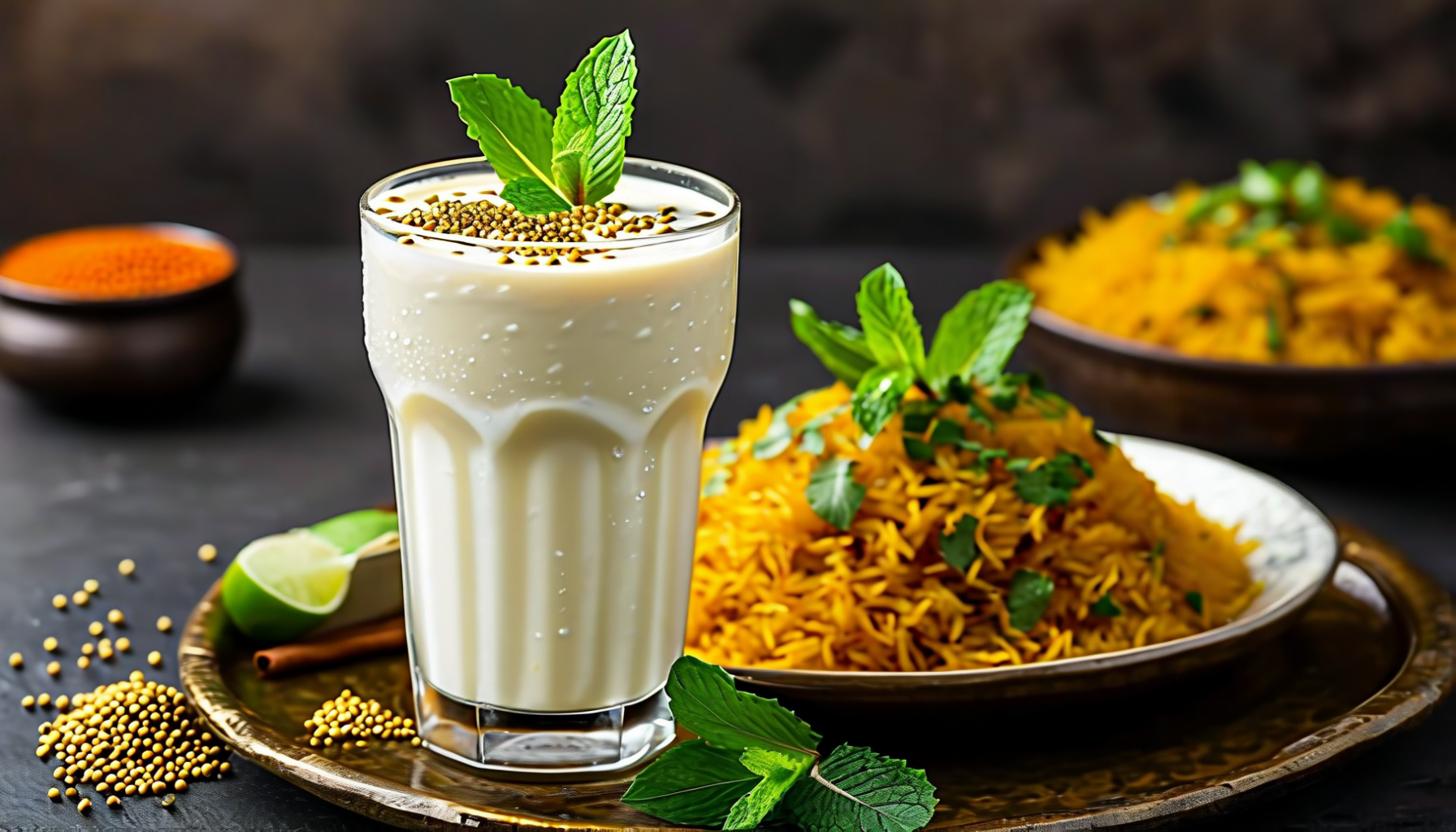
🍵 Borhani
Spiced Yogurt Digestif
A tangy, spiced yogurt drink served at every Bangladeshi wedding and biriyani feast. Made from whisked yogurt with mustard seeds, green chilies, and fresh mint, this probiotic powerhouse cuts through the richness of Dhaka's legendary kacchi biriyani. No wedding is complete without a glass of borhani.
Glass: Tall glass · Method: Blend & chill
Ingredients: 250ml plain yogurt, 150ml cold water, 1 green chili (deseeded), 1 tsp black mustard seeds (toasted), Fresh mint leaves, 1 tsp cumin (roasted and ground), Salt and sugar to taste, Ice
Preparation: 1. Toast mustard seeds until they pop, then cool. 2. Blend yogurt, water, green chili, and mint until smooth. 3. Add roasted cumin, salt, and a pinch of sugar. 4. Strain through a fine mesh for silky texture. 5. Chill for at least 1 hour. 6. Serve over ice, garnished with mint and a sprinkle of mustard seeds.
🍵 Cha (Doodh Cha)
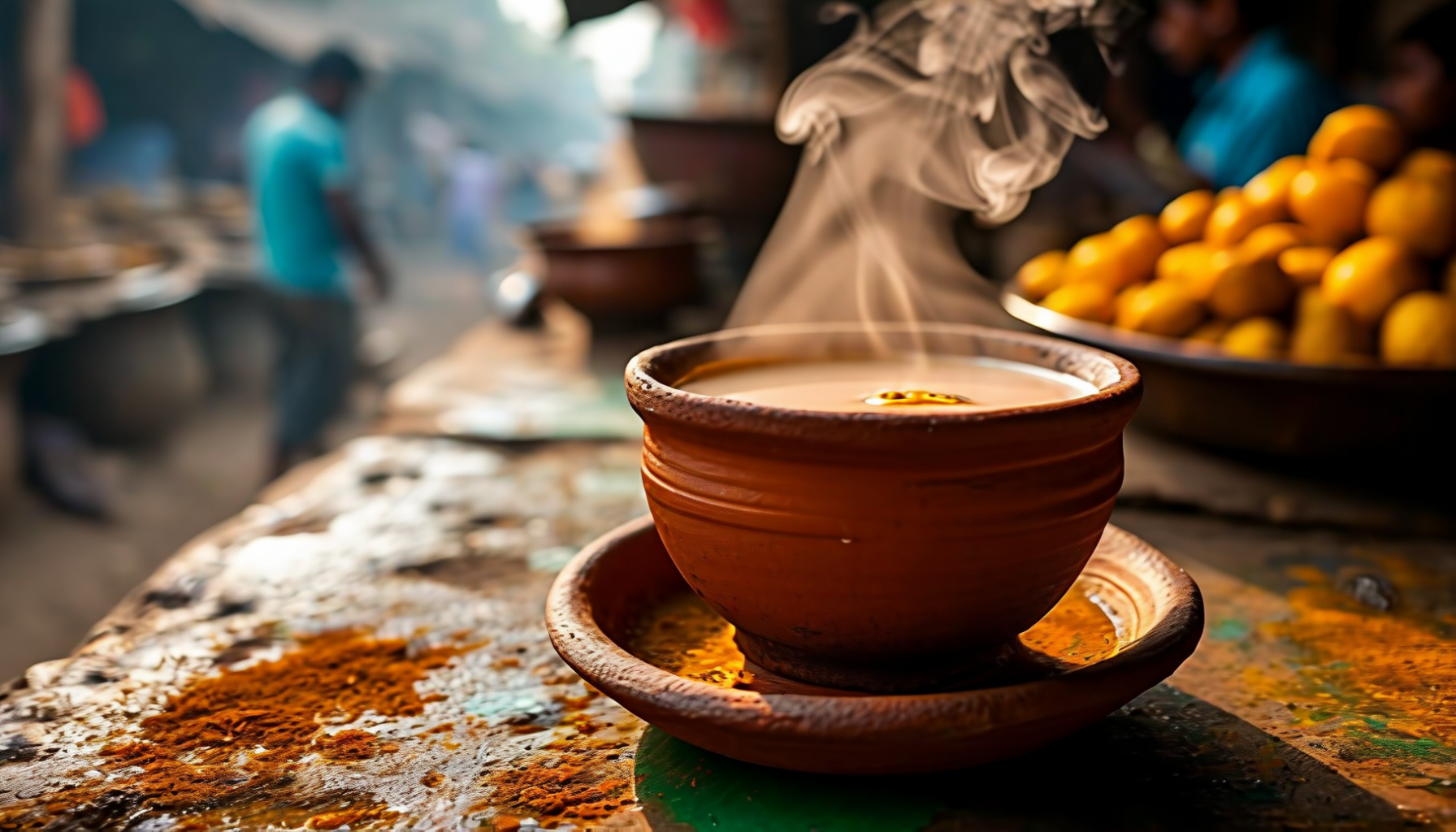
Bangladeshi Sweet Milk Tea
The lifeblood of Bangladesh — impossibly sweet, milky tea brewed in tiny aluminum kettles at street stalls across the country. Doodh cha uses a higher ratio of milk to water than Indian chai, creating a thick, creamy brew that's practically a meal. Served in small clay cups (bhar) that add an earthy flavor, it costs just a few taka and powers the entire nation.
Glass: Small clay cup (bhar) or glass · Method: Boil together
Ingredients: 2 tsp CTC black tea (strong Bangladeshi tea dust), 100ml whole milk, 50ml water, 2-3 tsp sugar, 1 crushed cardamom pod (optional), Fresh ginger slice (optional)
Preparation: 1. Bring water to a rolling boil in a small saucepan. 2. Add tea dust and boil vigorously for 2 minutes until very dark. 3. Add milk, sugar, and cardamom if using. 4. Bring back to boil, letting it rise and fall 3 times for richness. 5. Strain into a small cup — traditionally a clay bhar. 6. The tea should be thick, very sweet, and deeply amber-colored.
ℹ️ Practical Information
Getting There: Hazrat Shahjalal International Airport (DAC) in Dhaka is the main gateway. Biman Bangladesh Airlines, Emirates, Singapore Airlines, and Qatar Airways serve international routes.
Visa: Required for most nationalities. E-visa available for many countries – apply online before travel. Visa on arrival possible for some nationalities.
Money: Bangladeshi Taka (BDT). 1 USD ≈ 122 BDT (August 2026). ATMs available in cities; carry cash for rural areas. Credit cards accepted at upscale establishments only.
Transport: Domestic flights connect major cities. Road travel is slow but improving. The BIWTC "Rocket" paddle-steamer service ended in October 2022, but the century-old PS Mahsud came back on 21 November 2025 as a weekly heritage cruise (Dhaka–Barishal on Fridays, back on Saturdays); modern launches still leave Sadarghat every evening for the southern delta. Ride-hailing apps (Uber, Pathao) work in Dhaka and major cities.
Health: Drink bottled or purified water only. Dengue prevention (mosquito repellent) essential. Healthcare limited outside Dhaka and Chittagong.
Safety: Generally safe but challenging for inexperienced travelers. Dress conservatively. Avoid political demonstrations. Allow extra time in Dhaka's notorious traffic.
Daily Budget: Backpacker $15-30, Mid-range $40-80, Comfortable $100-150.
🌤️ Climate
Bangladesh has a tropical monsoon climate with three main seasons: hot summer (March–June, 30–40°C), monsoon (June–October, with heavy rains and over 80% of annual rainfall), and cool winter (November–February, 10–25°C). The country is highly vulnerable to cyclones from the Bay of Bengal, especially in April–May and October–November. Best time to visit: November to February, when temperatures are mild and humidity is low.
✈️ Getting There
Hazrat Shahjalal International Airport (DAC) in Dhaka is the main gateway, served by Biman Bangladesh, Emirates, Qatar Airways, Turkish Airlines, Singapore Airlines, and regional carriers from across Asia, the Middle East, and Europe. Secondary international airports operate at Chittagong (CGP) and Sylhet (ZYL). Land borders connect with India (Benapole–Petrapole, Akhaura–Agartala) and Myanmar (Teknaf, restricted). A visa is required for most nationalities; many can obtain one on arrival at Dhaka. Since the 2022 Padma Bridge and the 2023 Karnaphuli tunnel, Khulna, Bagerhat and Barishal are three to four hours by road from Dhaka. One caution from 2026: the Gulf hubs that most European and American travellers route through were badly disrupted by the Iran war — roughly 800 Middle East-bound flights from Bangladesh were cancelled after 28 February 2026 — and although Emirates, Qatar Airways and Biman's Gulf services were largely back by August, keep a non-Gulf alternative (Turkish via Istanbul, Singapore Airlines, or an India connection) in mind if the ceasefire wobbles.
⚠️ Travel Advisory
Current travel context · checked 18 September 2026
The U.S. Department of State rates Bangladesh Level 2 — Exercise Increased Caution because of unrest, crime, terrorism and kidnapping. It advises Do Not Travel to the Chittagong Hill Tracts and to areas near the Myanmar border and refugee camps around Cox’s Bazar. The UK FCDO advises against all but essential travel to the Chittagong Hill Tracts.
Demonstrations can occur with little warning and may disrupt roads and rail services. Avoid political gatherings, monitor local reporting and allow extra time for overland journeys. Crime risks include robbery and pickpocketing in crowded urban areas; use established transport providers and keep valuables discreet.
The Chittagong Hill Tracts — Rangamati, Khagrachari and Bandarban — require particular caution and may also involve government permission requirements. Access to refugee-camp areas near Cox’s Bazar is restricted. Conditions near the Myanmar border can change quickly because violence across the border can affect adjacent Bangladeshi areas.
Before departure, re-check your own government’s advice and travel-insurance terms. Entry rules, electronic arrival/departure procedures and local restrictions can change independently of security-advisory levels.
Official sources: U.S. Department of State · UK FCDO.
💰 Cost of Living
Bangladesh is one of the cheapest countries in Asia for travelers. Budget travelers can comfortably get by on $20–30 per day, mid-range travelers on $50–80, and luxury seekers will rarely spend more than $150 per day. A street meal costs $1–2, a sit-down restaurant meal $3–8, an inter-city bus ticket $3–10, and a budget hotel room $10–25. The currency is the Bangladeshi taka (BDT). Cash is essential outside Dhaka and Chittagong; ATMs are common in cities but rare in rural areas.
🏨 Accommodation
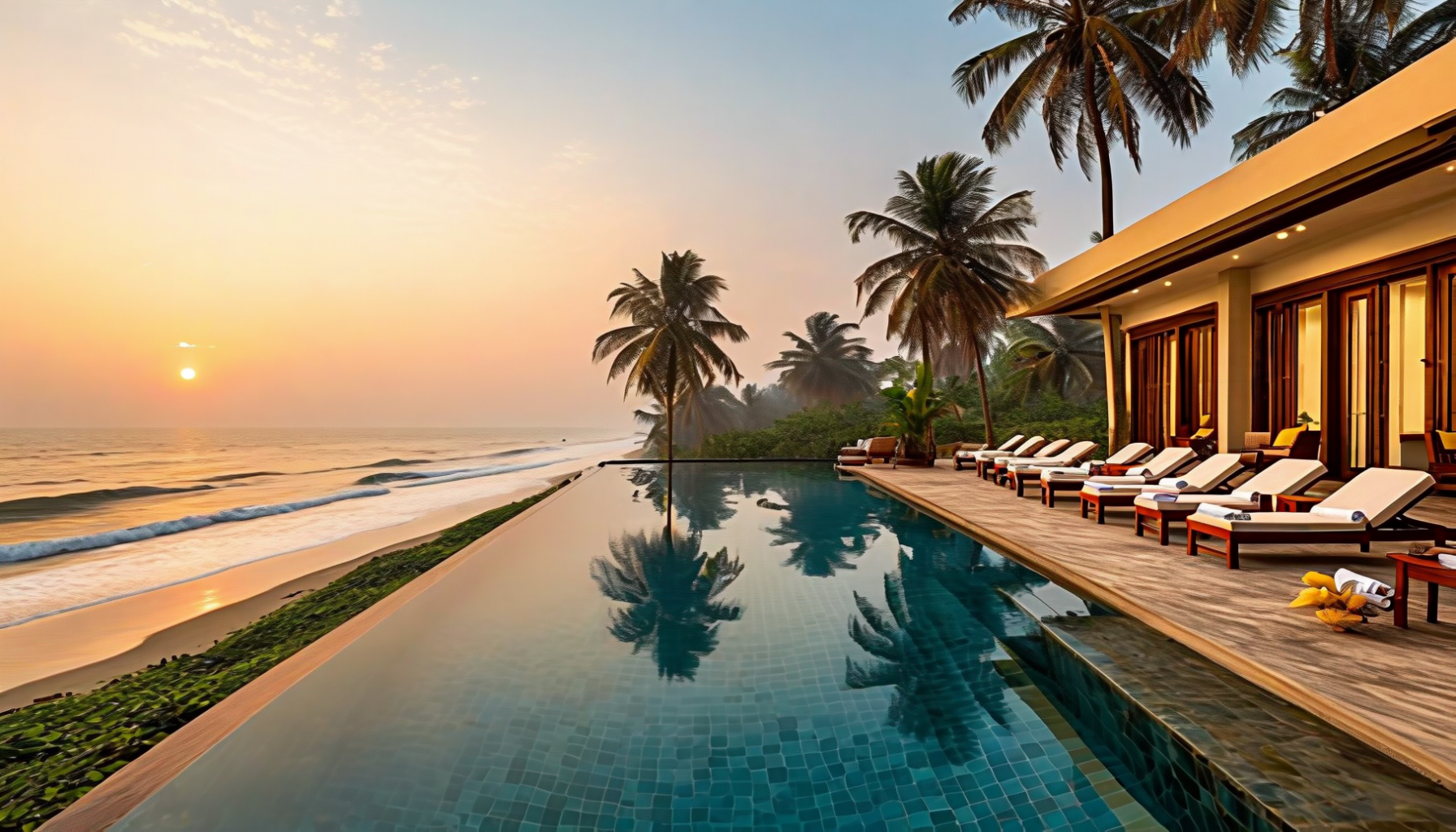
Dhaka offers everything from international five-star hotels (Pan Pacific Sonargaon, Le Méridien, Westin, Radisson Blu) to mid-range business hotels and budget guesthouses in Banani and Gulshan. Cox's Bazar has resorts along the beach. In the Sundarbans, most visitors stay on multi-day boat tours. Sylhet and Sreemangal offer tea-estate bungalows and eco-resorts. Booking ahead is recommended during winter peak season (November–February).
🎉 Festivals & Events
Pohela Boishakh (Bengali New Year, April 14) is the country's largest secular festival, celebrated with colorful Mangal Shobhajatra processions in Dhaka — a UNESCO Intangible Cultural Heritage. Other major events include Eid ul-Fitr and Eid ul-Adha (Muslim holidays), Durga Puja (Hindu, October), Victory Day (December 16), Independence Day (March 26), and International Mother Language Day (February 21), commemorating the 1952 Bengali language martyrs and now observed worldwide by UNESCO.
🏛️ UNESCO World Heritage Sites
Bangladesh has three UNESCO World Heritage Sites — two cultural and one natural — plus a growing tentative list. All three are easy day-trips or weekend trips from major cities and together tell the story of the country's three great civilizations: Buddhist, Islamic, and the wild delta itself.
1. Historic Mosque City of Bagerhat (inscribed 1985, cultural)
Founded in the 15th century by the Sufi general and saint Khan Jahan Ali, Bagerhat (originally called Khalifatabad) was a city of mosques, water tanks and roads carved out of the mangroves of the southern delta. After the founder's death in 1459 the city was swallowed back by the jungle and forgotten for nearly four centuries — when rediscovered, more than 50 Islamic monuments still survived. The centerpiece is the Sixty Dome Mosque (Shait Gumbad Masjid), which despite its name actually has 77 domes supported by 60 pillars. It is the largest Sultanate-era mosque in Bangladesh and a masterpiece of pre-Mughal Bengal Islamic architecture, with its slightly tapering walls, terracotta detailing and forest of brick columns. Other surviving monuments include the Singair Mosque, the Nine-Dome Mosque, Khan Jahan's tomb, and the vast Ghora Dighi water tank. Getting there: 4 hours by road from Dhaka, or 1 hour from Khulna. Often combined with a Sundarbans trip.
2. Ruins of the Buddhist Vihara at Paharpur (inscribed 1985, cultural)
Hidden in the rice fields of Naogaon district in northwestern Bangladesh, Somapura Mahavihara ("the Great Monastery") was once one of the largest Buddhist monasteries south of the Himalayas. Built in the late 8th century by the second king of the Pala dynasty, Dharmapala, it functioned for over 400 years as a major center of learning that influenced Buddhist architecture from Cambodia to Indonesia. The monastery is built around a massive cruciform brick stupa rising in three terraces, surrounded by 177 monastic cells facing inward — a layout that became the prototype for monasteries in Burma and Java (Borobudur shows clear Paharpur influence). The terracotta plaques on the walls depict scenes from everyday Pala life, animals, dancers and Buddhist iconography. Today it is a tranquil archaeological site, vastly less visited than its scale would justify. Getting there: 6–7 hours by road or train from Dhaka via Rajshahi or Bogura — best done as an overnight trip.
3. The Sundarbans (inscribed 1997, natural)
The Sundarbans ("beautiful forest" in Bengali) is the largest single block of tidal halophytic mangrove forest on Earth — roughly 10,000 km² of which 6,000 km² lie in Bangladesh and the rest in India's West Bengal (separately listed). It is the only mangrove habitat on the planet that is home to tigers: an estimated 125 Royal Bengal tigers (2024 camera-trap census) prowl the labyrinth of tidal channels, salt-water creeks and mudflats, having evolved into excellent swimmers and partial fish-eaters. The reserve also protects spotted deer, wild boar, estuarine crocodiles, Ganges river dolphins, Irrawaddy dolphins, sawfish and over 260 bird species. The dominant tree is the Sundari (Heritiera fomes) from which the forest takes its name, alongside Gewa and Goran trees and dense pneumatophore "snorkel" roots that breathe at low tide. Visits are by multi-day boat tours from Khulna or Mongla — typical itineraries include the Karamjal forest station, Kotka beach, Hiron Point and Tin Kona Island. Best season: November to February.
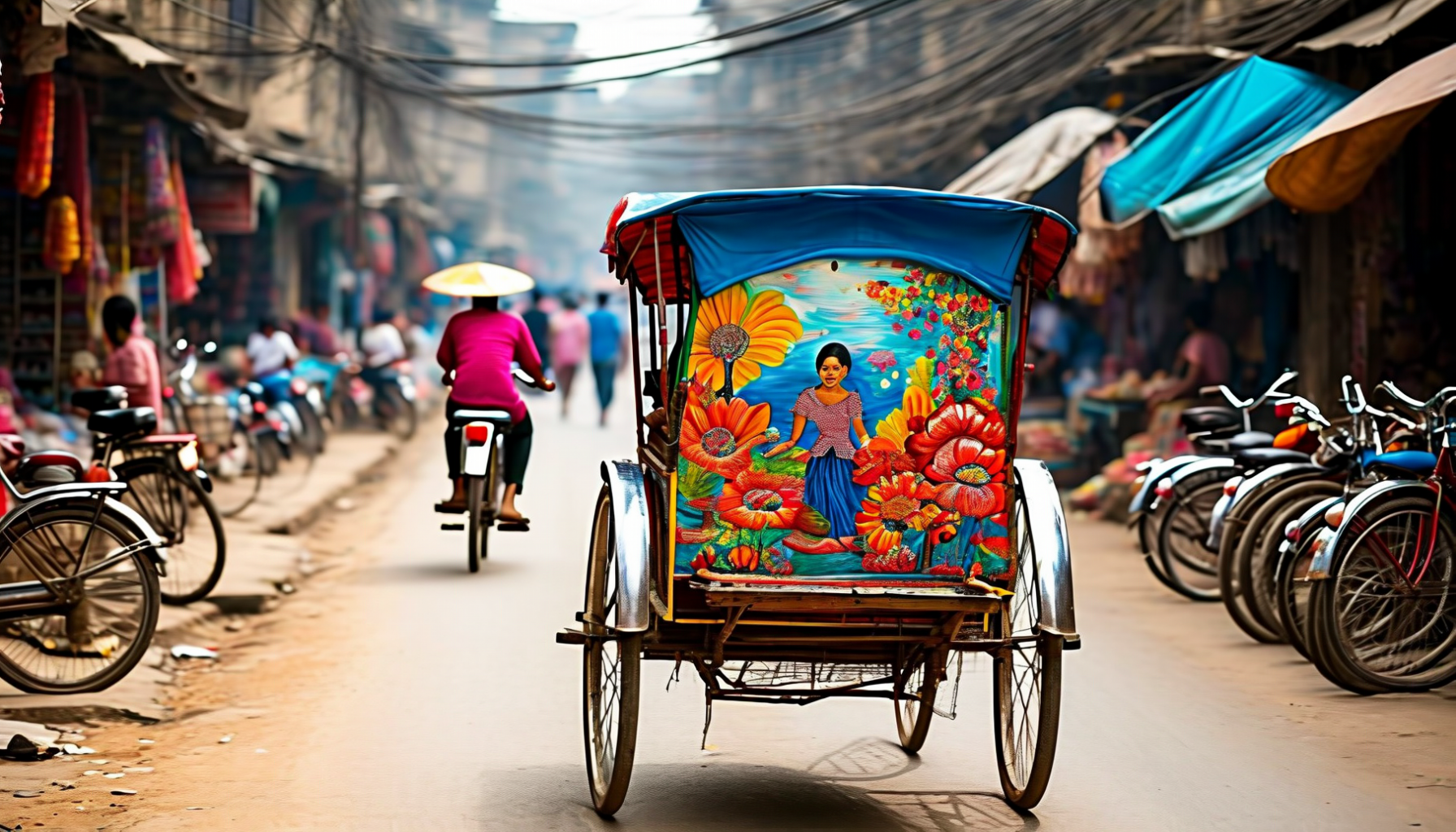
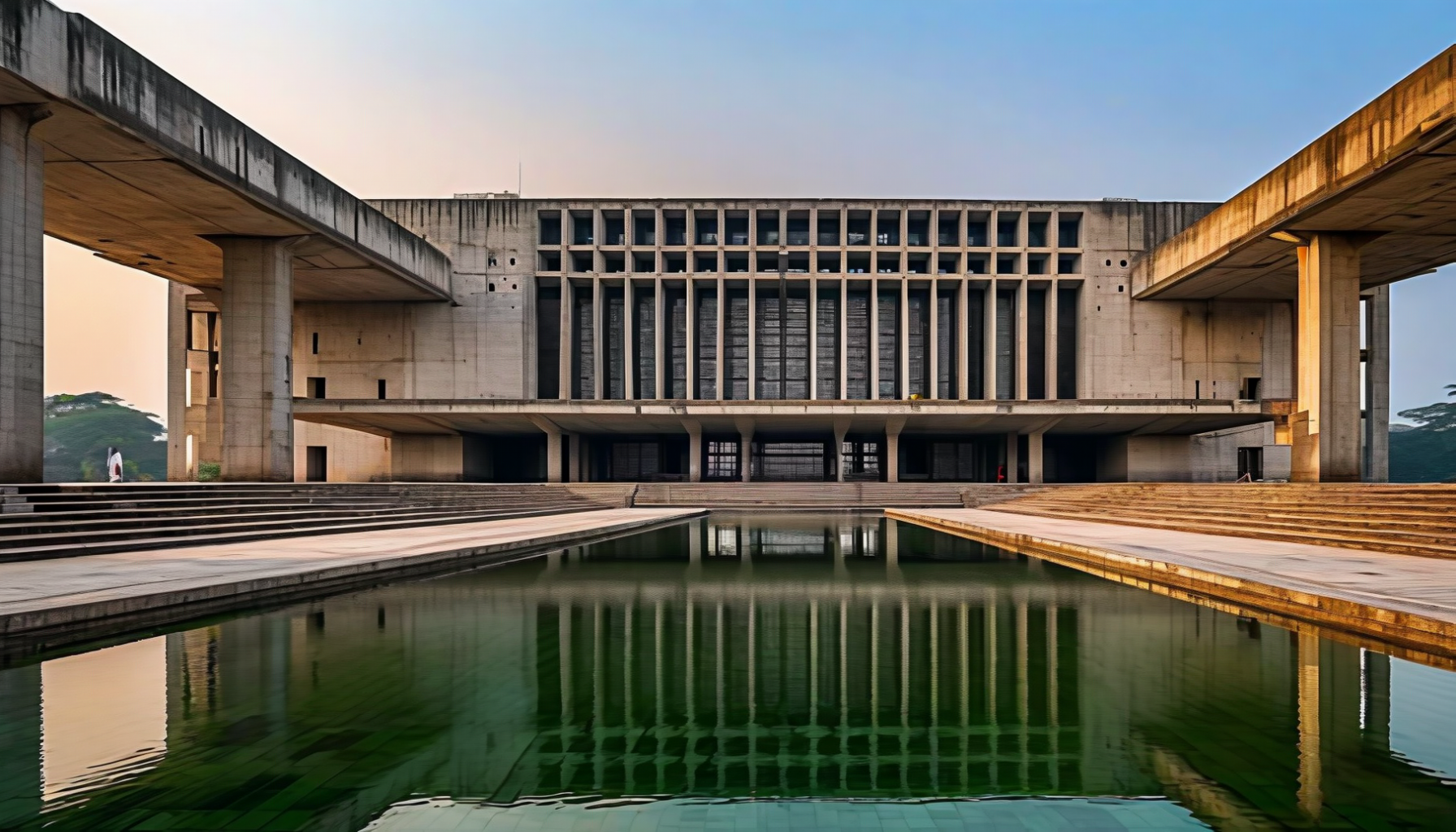
Bangladesh rewrote its Tentative List in 2023; the seven current entries are the Archaeological Sites on the Deltaic Landscape, the Archaeological Sites of Lalmai-Mainamati near Comilla, the Cultural Landscape of Mahasthan and the Karatoya River (Bogura — Bangladesh's oldest known city, 3rd century BCE), Mughal Mosques in Bangladesh, Mughal and Colonial Temples, the Architectural Works of Muzharul Islam, and the Mughal Forts on Fluvial Terrains in Dhaka (Lalbagh among them). Separately, UNESCO's Intangible Cultural Heritage lists carry Baul songs (2008), Jamdani weaving (2013), the Mangal Shobhajatra new-year procession (2016), Sylhet's shital pati mat weaving (2017) and the rickshaws and rickshaw painting of Dhaka (2023).
💼 Business & Economy
Bangladesh is one of the world’s major garment-exporting economies, with textiles and ready-made clothing at the center of manufacturing and foreign trade. Pharmaceuticals, shipbuilding, leather goods, information services and remittances also contribute significantly. Dhaka is the principal commercial hub, while Chattogram is the country’s main seaport and a major industrial center.
For visitors on business, traffic and travel time are operational factors rather than minor inconveniences: schedule generous buffers between meetings. The currency is the Bangladeshi taka (BDT), and larger hotels and businesses generally accept cards, while cash remains important in smaller establishments and outside major cities.
📊 Tourism Statistics
🎒 Packing Tips
Pack lightweight, modest clothing (Bangladesh is conservative — cover shoulders and knees, especially women). Bring breathable cotton, a light rain jacket during monsoon, sturdy sandals, mosquito repellent with DEET, sunscreen, hand sanitizer, oral rehydration salts, and a basic first-aid kit. A scarf or shawl is useful for visiting mosques. Bring a power adapter (Type C, D, G plugs, 220V). A water filter or purification tablets are highly recommended.
📚 Resources
Official tourism information: Bangladesh Tourism Board. Visa information: visa.gov.bd. Travel advisories: US State Department and UK FCDO. Currency converter: XE.com.
📖 Recommended Reading
The Hungry Tide by Amitav Ghosh (novel set in the Sundarbans), A Golden Age by Tahmima Anam (the 1971 Liberation War), The Good Muslim by Tahmima Anam (the sequel, set in the 1980s), Bangladesh: A Legacy of Blood by Anthony Mascarenhas (the 1975 coups), Banker to the Poor by Muhammad Yunus (Nobel laureate, founder of Grameen Bank), and the poetry of Rabindranath Tagore and Kazi Nazrul Islam — Bangladesh's two greatest literary figures.
📺 YouTube Videos
Search for "Bangladesh travel" on YouTube for content from Drew Binsky, Indigo Traveller, Eva zu Beck, and Best Ever Food Review Show (Sonny Side has done excellent street food episodes in Old Dhaka). For natural history, the BBC's Planet Earth features the Sundarbans Bengal tigers.
💡 Fascinating Facts
Bangladesh is the world's 8th most populous country with over 175 million people, packed into an area smaller than the US state of Iowa — making it one of the most densely populated nations on Earth. Cox's Bazar's 120 km beach is Asia's longest and one of the longest unbroken natural sand beaches on Earth — though Guinness gives the overall record to Brazil's Praia do Cassino. The Sundarbans is the largest mangrove forest on the planet and home to the only mangrove-dwelling tigers. Bangladesh fought a brutal nine-month war for independence from Pakistan in 1971. Microcredit was pioneered here by Muhammad Yunus, who won the 2006 Nobel Peace Prize.
⭐ Notable People
Sheikh Mujibur Rahman — founding father, leader of the 1971 independence movement. Muhammad Yunus — economist, Nobel Peace Prize laureate, founder of Grameen Bank and pioneer of microcredit; served as Chief Adviser — de facto head of government — of Bangladesh's interim administration from August 2024 until the handover in February 2026. Rabindranath Tagore — first non-European Nobel laureate in Literature (1913), composer of the national anthem. Kazi Nazrul Islam — national poet, "the rebel poet". Shakib Al Hasan — one of the greatest all-rounders in cricket history; an Awami League MP until 2024, he has lived abroad and not played for Bangladesh since October 2024 while cases against him are pending. Tarique Rahman — BNP leader, prime minister since 17 February 2026 after seventeen years of exile in London. Hamza Choudhury — Leicester City midfielder, the first Premier League player to represent Bangladesh (debut 25 March 2025). Fazle Hasan Abed — founder of BRAC, the world's largest NGO.
🏏 Sports
Cricket is by far the most popular sport in Bangladesh — a national obsession. The Bangladesh national cricket team (the "Tigers") gained Test status in 2000 and has produced world-class players like Shakib Al Hasan, Tamim Iqbal, and Mushfiqur Rahim. Recent firsts: a first-ever Test series win in Pakistan (2–0, August–September 2024) and, on 16 August 2026, a first Test win on Australian soil — by nine wickets in Darwin, after Mehidy Hasan Miraz's five-for. The low point was the interim government's decision to pull the team out of the February–March 2026 T20 World Cup in India over security concerns; Scotland took Bangladesh's place. Football is second in popularity — with a new hero since Leicester City's Hamza Choudhury debuted on 25 March 2025 (0–0 v India in Shillong) — followed by traditional sports like kabaddi (the national sport), boat racing (nouka baich) on the country's many rivers, and chess.
📰 Media & Press Freedom
Bangladesh has a vibrant but constrained media landscape. Major English-language newspapers include The Daily Star, Dhaka Tribune, and New Age. Bangla-language papers include Prothom Alo. Bangladesh ranked 152nd of 180 in Reporters Without Borders' 2026 World Press Freedom Index, three places worse than in 2025; RSF's barometer still counted five journalists in detention in September 2026. The notorious Digital Security Act 2018 and its successor the Cyber Security Act 2023 were both repealed by the Yunus interim government, replaced in May 2025 by the Cyber Security Ordinance; press-freedom groups argue the new text repackages rather than removes the old restrictions. Self-censorship is common when reporting on politics, military, or religious issues.
📸 Photo Gallery
✍️ Author's Note
I arrived at Sadarghat at six in the morning, when the Buriganga is the colour of milky tea and a hundred wooden launches are nosing out at once, horns going, boys leaping between decks with trays of paratha. Nobody in Dhaka had told me to go there — they had told me to avoid it. That is the pattern in Bangladesh: the things that overwhelm you are the things you will remember. Two days later I was on a boat in the Sundarbans, engine cut at dusk somewhere near Kotka, and the forest went so quiet that the guide whispered when he pointed out the pug marks in the mud. We never saw the tiger. I have stopped minding.
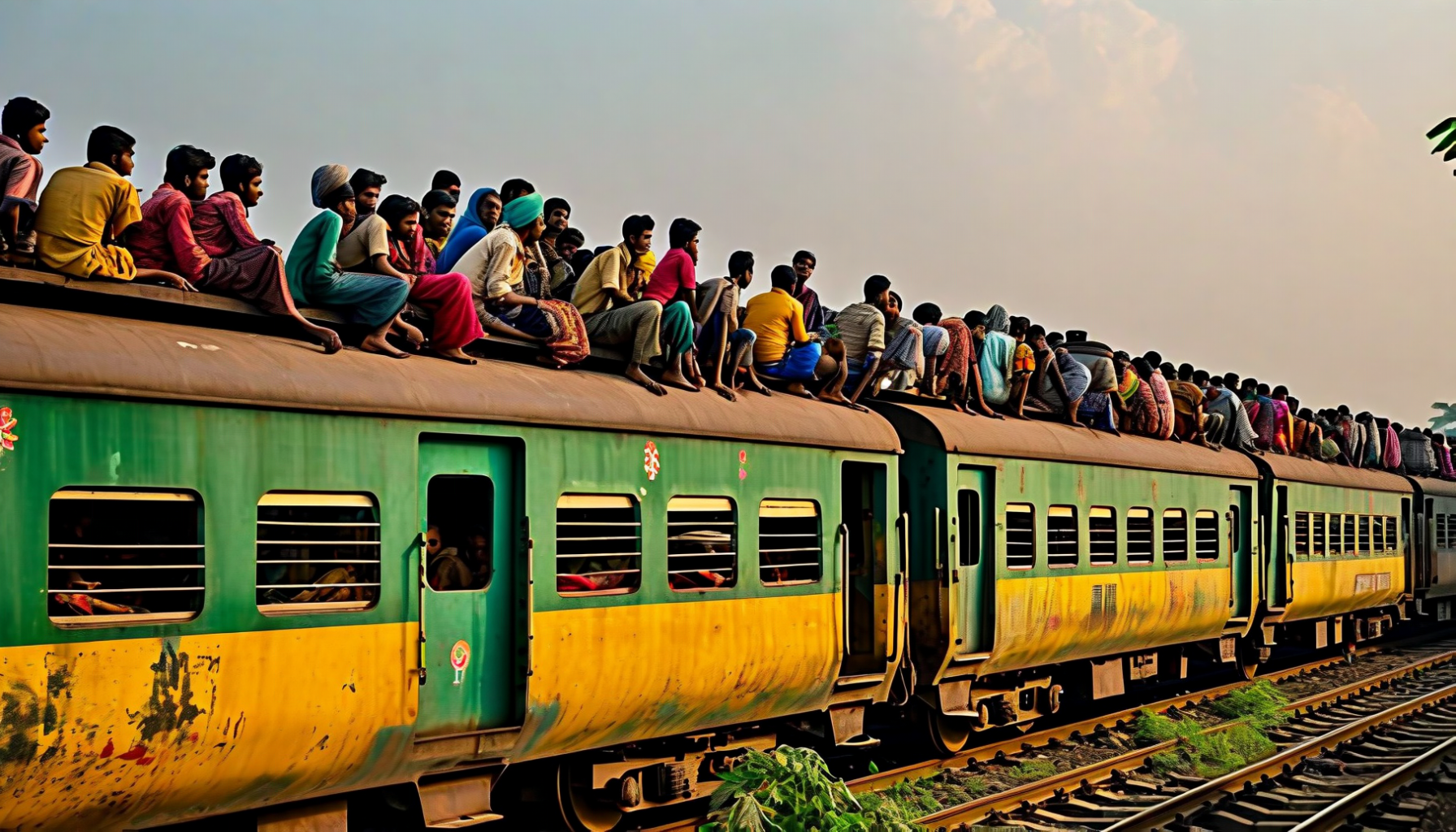
In Old Dhaka a waiter cracked open a clay pot of kacchi biryani at the table and the whole room turned round. In Sreemangal a tea-stall owner who had never left the district poured me a seven-layer cha and refused to be paid. And on the rooftop of a train out of Kamalapur — yes, on the roof, at Eid, with a few hundred others — a student explained the July uprising to me in careful English while the rice fields went past below. I have rewritten this page after the 2026 election, a new president, a war in the Gulf that stranded thousands of Bangladeshi workers, and a Test win in Darwin that had the country dancing. Bangladesh is not an easy trip. It is one of the very few that changes what you think travel is for.
"Our rivers have taught us to flow with obstacles, not against them."
—Radim Kaufmann, 2026
Support This Project 🌍
This World Travel Factbook is a labor of love – free to use for all travelers. If you find it helpful, consider supporting its continued development.
