

🇳🇵 Nepal at a Glance
🌍 Overview — Sixty Metres to Eight Thousand in a Hundred and Fifty Kilometres
Nepal is a rectangle roughly 800 km long and 150–200 km wide, and the only thing you really need to know about its geography is what happens across that width. At the southern edge, in the Terai, the land is 60 metres above the sea, flat, hot and agricultural. A hundred and fifty kilometres north it is 8,848.86 metres. No other country compresses that much vertical into that little horizontal, and almost everything about Nepal — its ecology, its languages, its castes, its poverty and its tourism — follows from it.
Inside those 147,516 km² live about 29.2 million people speaking more than 120 languages, and standing eight of the world's fourteen mountains over 8,000 metres. Nepal was also never colonised — the one South Asian state the British never ruled — which Nepalis will tell you, and which explains more about the country's self-image than any other single fact.
Where it is
Wedged between India on three sides and China (Tibet) along the Himalayan crest. Landlocked, with the nearest sea port at Kolkata, about 1,000 km away — a dependency that India has used as leverage more than once, most damagingly in the unofficial blockade of 2015–16.
The three strips
Terai in the south: flat, subtropical, the food basket and now the most populous belt. Hills (Pahad) in the middle, 1,000–4,000 m, with the Kathmandu and Pokhara valleys in them, where most of the culture you have heard of comes from. Himalaya in the north, with the eight-thousanders and a thin, hard-living population of Sherpa, Thakali, Manangi and Tibetan-descended communities.
How it is governed
A federal democratic republic since 28 May 2008, when the constituent assembly abolished a monarchy that had lasted 240 years. The 2015 constitution created seven provinces. Parliament has 275 seats. And in March 2026 the entire post-1990 political establishment was swept out in a single election — see Politics.
Who lives there
Around 125 recognised caste and ethnic groups. The largest are Chhetri and Bahun (hill Hindu castes, historically dominant in the state), Magar, Tharu, Tamang, Newar, Kami, Musalman, Yadav, Rai, Gurung, Limbu, Sherpa and many more. Nepali is the official language and a second language for most of the country.
The economy
GDP around $45 billion, low-income to lower-middle. The single biggest line is remittances — money sent home by Nepalis working in the Gulf, Malaysia, Korea and India — at somewhere between a quarter and a third of GDP, one of the highest ratios in the world. Then agriculture, tourism, and hydropower, which has gone from chronic blackouts to net exports to India inside a decade.
2026 in one line
A new government under a 35-year-old prime minister with no party history before 2022, a generation that brought down the old one by force in September 2025 and then voted in March 2026, a reconstruction of parliament that is literally a building site, and a trekking season that — as always — opened in October regardless.
🏷️ The Name, the Flag, the Clock
Nepal
The etymology is not settled. The most commonly cited derivation is from the sage Ne (Ne Muni) plus pala, "protected" — "the land protected by Ne". Others propose Tibeto-Burman roots meaning "holy place" or a Newar origin in nepa. Historically the name meant only the Kathmandu Valley; it expanded to the whole country only after the eighteenth-century unification.
Sagarmatha and Chomolungma
Everest is the surveyor's name, imposed in 1865 after Sir George Everest, who objected to it. The Nepali name Sagarmāthā ("forehead of the sky") was coined in the 1960s; the far older Tibetan name is Chomolungma ("goddess mother of the world"). Both local names are in current use and both predate or postdate the English one in ways that make "Everest" the odd one out.
The flag
The only non-rectangular national flag in the world — two stacked pennants, carrying a moon and a sun. Its proportions are defined in the constitution by a geometric construction, which makes Nepal the only country whose flag comes with a compass-and-straightedge recipe. The two pennants are usually read as the Himalaya and as the Hindu and Buddhist traditions; the sun and moon as a wish that the nation lasts as long as they do.
UTC+5:45
Nepal is the only country in the world on a 45-minute offset — fifteen minutes ahead of India, set to the meridian of Gaurishankar. It is a small, deliberate statement of not being India, it breaks a great deal of scheduling software, and Nepalis find the whole thing quietly funny.
Never colonised
The core fact of Nepali self-understanding. The Anglo-Nepalese War of 1814–16 cost Nepal a third of its territory but not its sovereignty; the British were impressed enough to start recruiting Gurkhas instead. Nepal has therefore never had an independence day, because it never lost independence — and its national days are about unification and about the republic instead.
The world's only Hindu kingdom
Until 2008, Nepal was constitutionally a Hindu state — the last one on earth — with a king widely regarded as an incarnation of Vishnu. The republic declared Nepal secular, which remains contested: a visible movement wants the Hindu state restored, and it has been a live issue in every election since.
🗺️ Geography — A Continent Being Driven Into Another One
The Himalaya exists because the Indian plate is still driving north into Asia at about 45 mm a year and has been for fifty million years. Nepal sits directly on the collision. Everything here — the height, the rivers, the landslides and the earthquakes — is that one process seen from different angles.
The Terai
The northern rim of the Gangetic plain: 60–300 m, subtropical, once malarial sal forest and the homeland of the Tharu, who have a genetic resistance to malaria. DDT eradication from the 1950s opened it to hill migration, and it is now the agricultural heartland, the industrial belt and home to roughly half the population.
The Chure and the Mahabharat
Two parallel foothill ranges. The Chure (Siwalik) is geologically young, soft and catastrophically prone to erosion — unregulated quarrying there is one of Nepal's most serious environmental problems. Behind it the Mahabharat Lekh rises to 3,000 m and forms the real wall between plain and hills.
The hills
1,000–4,000 m, terraced to the horizon, and where the Nepali state and most of its culture were made. The Kathmandu Valley (1,400 m) and the Pokhara Valley (830 m) are both ancient lake beds, which is why they are flat, fertile and full of people.
The Himalaya
The crest, with eight peaks over 8,000 m — see the next section. Behind the main range, in the rain shadow, sit the trans-Himalayan deserts of Mustang, Dolpo and Manang, which are physically and culturally part of the Tibetan plateau and look nothing like the rest of the country.
The rivers
Three great systems — Koshi, Gandaki, Karnali — all of which are older than the mountains: they cut down through the Himalaya as fast as it rose, producing some of the deepest gorges on earth. The Kali Gandaki between Dhaulagiri and Annapurna is by one common measure the deepest gorge in the world. They also carry Nepal's hydropower potential, estimated at over 40,000 MW economically viable, of which only a fraction is built.
Earthquakes
Not a risk but a certainty. The 1934 Nepal–Bihar earthquake killed over 10,000 in Kathmandu alone. The 25 April 2015 Gorkha earthquake (Mw 7.8) killed about 9,000, destroyed 600,000 houses, flattened the Dharahara tower and badly damaged all three Durbar Squares. Seismologists are explicit that the segment west of Kathmandu has not ruptured in centuries and is overdue.
⛰️ Everest and the Other Seven
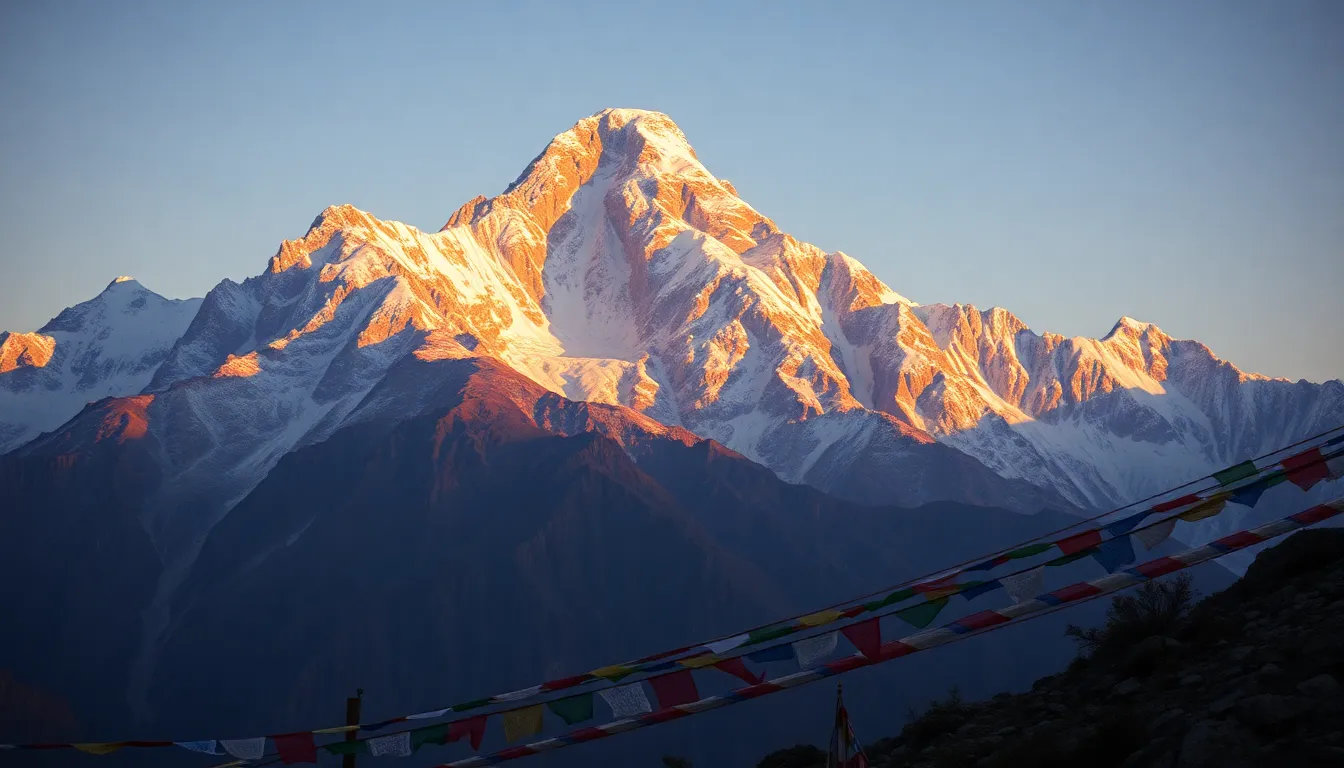
Nepal has eight of the world's fourteen eight-thousanders wholly or partly within its borders, which is more than every other country combined except Pakistan and China. Three of them — Everest, Kanchenjunga and Lhotse — are the three highest mountains on earth.
The eight
Everest 8,848.86 m · Kanchenjunga 8,586 · Lhotse 8,516 · Makalu 8,485 · Cho Oyu 8,188 · Dhaulagiri I 8,167 · Manaslu 8,163 · Annapurna I 8,091. Dhaulagiri and Manaslu are entirely Nepali; the rest straddle the border with China or India.
The height
8,848.86 m, agreed jointly by Nepal and China in December 2020 after separate surveys — the first time the two countries announced a single figure together, and a piece of diplomacy as much as geodesy. Everest is also still growing, by a few millimetres a year, and moving north-east.
1953
Edmund Hillary and Tenzing Norgay reached the summit on 29 May 1953 and never publicly said who stepped on it first, which was a deliberate and admirable decision. 29 May is marked in Nepal as International Everest Day.
Annapurna I
The first eight-thousander ever climbed — Maurice Herzog and Louis Lachenal, 3 June 1950, three years before Everest. It is also, by a wide margin, the deadliest: the fatality rate against successful summits has historically run around 30%, far above K2. Very few people climb it and that is why.
Kami Rita Sherpa
The record holder for Everest summits, standing at 31 as of 2025 — a number he has extended most years since 2018. He is the clearest single illustration of a fact the mountaineering press took decades to say plainly: the people who actually make Everest possible are Nepali, and they go up far more often and for much less money than the clients do.
The trekking peaks
Below the giants, Nepal designates a set of "trekking peaks" — Island Peak (6,189 m), Mera Peak (6,476 m), Lobuche East, Pisang, Chulu — climbable on a cheaper permit with basic technical skill. They are not easy, altitude does not care that a mountain is called a trekking peak, and people die on them every year.
📜 Before 1768 — Lumbini, the Licchavis and the Malla Cities
The Buddha, c. 563 BCE
Siddhartha Gautama was born at Lumbini in what is now Nepal's Terai — the site is a UNESCO World Heritage property and the Ashoka pillar of 249 BCE, with its inscription recording the emperor's visit, is the oldest hard evidence for the location. This makes Nepal the birthplace of Buddhism, a fact its neighbours periodically try to blur.
The Kirats
The semi-legendary early dynasty of the Kathmandu Valley, from perhaps the seventh century BCE. Their descendants — the Rai and Limbu of eastern Nepal — still identify as Kirat, follow the Kirat Mundhum tradition, and are recorded as a separate religion in the census.
The Licchavis, c. 400–750 CE
The valley's classical period: Sanskrit inscriptions, the first Nepali coinage, and the beginnings of the Newar architectural tradition. The Changu Narayan temple carries an inscription of 464 CE, the oldest dated object in the country.
The Mallas, 1201–1769
The golden age, and the reason the Kathmandu Valley looks the way it does. The Malla kings split the valley into three rival kingdoms — Kathmandu, Patan and Bhaktapur — which then spent three centuries competing to out-build each other. Every Durbar Square, every pagoda and almost every carved window in the valley is a product of that rivalry, and it is one of the great cases in history of architecture produced by envy.
The Newars
The people of the valley, with their own language (Nepal Bhasa, Tibeto-Burman), their own calendar, their own extraordinarily elaborate cuisine and festival cycle, and a craft tradition — metalwork, woodcarving, painting — that was exported across the Himalaya. The Newar architect Araniko was sent to the Yuan court in the thirteenth century and built the White Stupa in Beijing.
The western kingdoms
Outside the valley, the Khasa Malla empire of the far west and the Baise and Chaubise confederations — twenty-two and twenty-four small hill states in the Karnali and Gandaki basins. One of those twenty-four was a place called Gorkha, and in 1743 it acquired an ambitious young king.
⚔️ 1768–1846 — Gorkha, the War with Britain, and the Gurkhas
Modern Nepal was assembled in twenty-five years by one small hill state, and then had a third of it taken away by the East India Company in two. Both halves of that sentence still shape the country.
Prithvi Narayan Shah
King of Gorkha, a minor hill state west of Kathmandu, who spent twenty-five years taking the valley — blockading it, failing repeatedly, and finally entering Kathmandu during the Indra Jatra festival on 25 September 1768 while the city was drunk and watching the procession. He is Nepal's founding figure, and his description of the country as "a yam between two boulders" is still quoted by every foreign minister.
Kirtipur
The unification was not gentle. After Kirtipur resisted three sieges, Prithvi Narayan's forces took it and, according to contemporary accounts, cut off the noses and lips of the male inhabitants. The story is disputed in detail and accepted in outline, and it is taught in Nepali schools — which says something creditable about how the country handles its founder.
Expansion
His successors pushed the empire from Sikkim to Kangra, roughly twice the size of modern Nepal, in thirty years. Then they ran into the East India Company along an ill-defined southern border, and both sides wanted the same Terai.
The Anglo-Nepalese War, 1814–16
Two years of fighting in which the British won and were badly shaken doing it. The Treaty of Sugauli (1816) cost Nepal about a third of its territory — Sikkim, Kumaon, Garhwal and much of the Terai — fixed the modern borders, and installed a British Resident in Kathmandu. Nepal kept its sovereignty, which is the part that mattered.
The Gurkhas
The most consequential clause of that peace: Britain began recruiting Nepali soldiers, and has done so continuously for 210 years. Gurkhas fought in both world wars — roughly 200,000 served in the Second — and have won 13 Victoria Crosses. They remain in the British Army today, and in far larger numbers in the Indian Army.
The pension fight
Gurkha veterans were paid a fraction of British pensions and denied UK settlement rights for decades. A campaign fronted by the actor Joanna Lumley — whose father served with the 6th Gurkha Rifles — forced a government climbdown in 2009, granting settlement rights to all who served four years. Pension parity has still not been fully achieved, and veterans staged hunger strikes in London as recently as 2021.
🏰 1846–1951 — A Century Under One Family
For 104 years Nepal had a king who was a ceremonial prisoner and a hereditary prime minister who ran everything. The Rana period is why Nepal entered the twentieth century with almost no roads, no universities and a literacy rate in the low single digits.
The Kot massacre
On the night of 14 September 1846, in the Kot armoury courtyard beside Kathmandu's Durbar Square, a confrontation between court factions ended with dozens of nobles dead. Jung Bahadur Kunwar emerged holding the state, made himself prime minister, took the grander surname Rana, and made the office hereditary.
The system
The king remained — divine, revered and powerless. Real authority passed down a Rana roll of succession. The family built itself enormous neoclassical palaces (Singha Durbar, completed 1908, was reportedly the largest private residence in Asia) while the country outside had essentially nothing.
Deliberate isolation
Foreigners were almost entirely excluded, mass education was actively prevented, and Nepal was kept sealed — a policy that preserved sovereignty and also guaranteed that when it opened in 1951 there were fewer than a dozen kilometres of paved road in the whole country and almost no one who could read.
What did happen
Jung Bahadur visited Britain in 1850 and came back with a taste for neoclassical architecture and a legal code, the Muluki Ain of 1854, which for the first time codified caste for the entire kingdom — including the ethnic groups that had never had it. That codification is the direct ancestor of Nepal's modern caste politics, and Dalit exclusion in particular.
Sati and slavery
Two genuine reforms, both late: sati was abolished in 1920 and slavery in 1924, by Chandra Shamsher Rana — who did it partly to head off British criticism and partly because he could, and who is accordingly remembered with real ambivalence.
The end
Educated Nepalis in Indian exile founded the Nepali Congress; India's own independence in 1947 removed the Ranas' protector; and in 1951 King Tribhuvan fled to the Indian embassy, a brief armed revolution followed, and the Shah monarchy was restored to actual power. Nepal's first experience of anything like democracy began then — and lasted nine years.
🔫 1960–2006 — Panchayat, the Massacre and the People's War
The 1960 coup
Nepal's first elected government, under B. P. Koirala of the Nepali Congress, lasted eighteen months. In December 1960 King Mahendra dismissed it, jailed the cabinet and imposed the Panchayat system — a partyless "guided democracy" under direct royal rule that lasted thirty years.
Jana Andolan I, 1990
Mass protests forced King Birendra to legalise parties and accept a constitutional monarchy in April 1990. The decade that followed produced twelve governments, chronic corruption and very little delivery outside Kathmandu — which is the soil the insurgency grew in.
The People's War, 1996–2006
The Communist Party of Nepal (Maoist) under Pushpa Kamal Dahal “Prachanda” launched an armed insurgency in February 1996 with a 40-point demand list. Over ten years it spread from the mid-western hills across most of rural Nepal. Roughly 17,000 people were killed, the great majority of them civilians, and both the Maoists and the Royal Nepalese Army committed extensive documented abuses. Disappearances from that period remain largely unresolved.
💀 The royal massacre, 1 June 2001
At a family dinner in the Narayanhiti palace, Crown Prince Dipendra shot dead King Birendra, Queen Aishwarya and eight other royals, then shot himself. He was technically king for three days while in a coma. His uncle Gyanendra took the throne. The official inquiry was quick, the crime scene was destroyed within days, and a very large proportion of Nepalis have never accepted the finding — whatever the truth, the massacre destroyed the monarchy's standing in a single night.
Gyanendra's gamble
In February 2005 Gyanendra dismissed the government, assumed direct power and cut the phone lines. It united everyone against him: the parties signed a 12-point understanding with the Maoists in Delhi, and in April 2006 Jana Andolan II — nineteen days of general strike and mass protest — forced him to restore parliament.
The end of the monarchy
The Comprehensive Peace Accord of November 2006 ended the war. The Maoists entered parliament, won the 2008 constituent assembly election, and on 28 May 2008 that assembly voted to abolish the monarchy. Gyanendra left the palace with, by his own account, little argument. It is now a museum.
🏛️ 2008–2024 — A Constitution, an Earthquake and a Blockade
Seven years to write a constitution
The first constituent assembly failed entirely and dissolved in 2012 without producing a document. The second finally promulgated the constitution of 20 September 2015 — federal, secular, republican, seven provinces — which was a genuine achievement and immediately triggered a crisis.
The Madhes protests and the blockade
Madhesi parties from the Terai rejected the new provincial boundaries as gerrymandering that diluted plains representation. Protests killed over 50 people. India, sympathetic to the Madhesi position, then applied an unofficial blockade of the border from September 2015 to February 2016 — five months, five months after the earthquake — cutting fuel, medicine and cooking gas. It is remembered in Nepal with a bitterness that is difficult to overstate and it pushed Kathmandu decisively toward Beijing.
🌋 25 April 2015
The Gorkha earthquake, Mw 7.8, with a major aftershock on 12 May. About 9,000 dead, 22,000 injured, 600,000 houses destroyed. The Dharahara tower collapsed with people inside; Durbar Squares in all three valley cities lost temples; Langtang village was buried by an avalanche that killed most of its population. Reconstruction took most of a decade and, contrary to expectations, largely got done.
The revolving governments
Between 2008 and 2025 Nepal had thirteen prime ministers, cycling almost entirely between three men — K. P. Sharma Oli (UML), Sher Bahadur Deuba (Congress) and Prachanda (Maoist) — in every combination the arithmetic permitted. Deuba was prime minister five times; Prachanda three; Oli four. That churn, and the visible impunity around it, is the single best explanation of what happened in 2025.
What did improve
It would be wrong to write the period off. Load-shedding ended around 2018 and Nepal now exports electricity to India in the wet season. Maternal and child mortality fell sharply. Road access reached districts that had never had it. Nepal has been on track to graduate from least-developed country status. None of that was nothing.
Between two boulders
Prithvi Narayan's yam metaphor became policy. Nepal joined China's Belt and Road in 2017, took the Chinese-built Pokhara International Airport (opened 2023, and largely without international flights, with a loan that has become a public argument), and simultaneously kept the open border, the currency peg and the labour flows with India. Both boulders press.
✊ September 2025 — Thirty-Six Hours
On 4 September 2025 the government blocked 26 social media platforms — Facebook, Instagram, X, YouTube, WhatsApp — for failing to register with the Ministry of Communication. Four days later the government was gone, the parliament building was on fire, and seventy-four people were dead.
What it was actually about
Not the ban. The ban was the trigger for something that had been building for years: #NepoKid, a viral campaign contrasting the lifestyles of politicians' children with a country where roughly 2,000 young people leave every day for work abroad. Youth unemployment above 20%, visible impunity, and a political class that had swapped the premiership between the same three men for seventeen years.
8 September
Tens of thousands of school and university students, most in uniform, marched on the parliament complex at New Baneshwor. Security forces used tear gas, water cannon, rubber bullets and then live ammunition. Nineteen people were killed that day. Pathologists at one Kathmandu morgue later recorded that of 47 bodies received over the two days, 35 had died of high-velocity gunshot wounds to the head, neck, chest or abdomen.
9 September
The response to the shootings was far larger and far angrier, and it went beyond the students. Crowds set fire to the parliament building, the Supreme Court, the presidential residence, Singha Durbar and the homes of senior politicians; the Hilton Kathmandu was burned; prisons were broken open. Prime Minister K. P. Sharma Oli resigned. By 22 September the toll stood at 74 dead and more than 2,100 injured.
Sushila Karki
With no parliament and no obvious mechanism, the protest organisers — negotiating partly on Discord — converged on Sushila Karki, the former Chief Justice, known for anti-corruption rulings and for having survived an impeachment attempt in 2017. She was sworn in on 12 September 2025 as Nepal's first woman head of government, with a mandate to hold elections and do nothing else.
The uncomfortable parts
Two of them. First, the arson was not only the students — the burning of the Hilton, the looting and the prison breaks drew in others, and the Gen Z organisers publicly disowned much of it. Second, Human Rights Watch concluded in November 2025 that the use of lethal force was unlawful, and the question of who ordered live fire on schoolchildren is the central unresolved issue in Nepali politics.
Why it matters beyond Nepal
This was the first case of a government falling to a protest movement organised substantially on Discord and TikTok by people too young to vote in the previous election, and it was watched extremely closely across South Asia and beyond. Whether it produces better government is a separate question from whether it worked. It worked.
🗳️ March 2026 — The Old Parties Were Not Defeated, They Were Erased
The interim government held the election it was appointed to hold, on 5 March 2026. The result was the most complete rejection of an established political class that any democracy has produced in recent memory.
The numbers
The Rastriya Swatantra Party (RSP) — founded in 2022, four years old — took 182 of 275 seats, including 122 of the 165 first-past-the-post constituencies. The Nepali Congress, which has existed since 1947, took 38. The CPN-UML took 25. Prachanda's Maoists, who fought a ten-year war to enter this parliament, were reduced to a rump.
Balen Shah
Sworn in on 27 March 2026, aged 35 — Nepal's youngest elected prime minister and the first from the Madhes. A structural engineer by training, a rapper by early career, and mayor of Kathmandu from 2022, where he built a reputation for demolishing illegal construction, clearing the Bagmati and picking fights with his own council. He ran as an independent for mayor and beat both major parties.
What he inherits
A parliament building that is a burnt shell. An unresolved question of criminal responsibility for 74 deaths. A civil service staffed by the appointees of the parties he destroyed. The federal structure of the 2015 constitution, which the RSP has criticised as expensive. And the same geography between the same two boulders.
The obvious risks
A four-year-old party with a supermajority and almost no governing experience, in a country where every previous political generation arrived promising to be different. The RSP's own founder, Rabi Lamichhane, spent much of 2024–25 facing cooperative-fraud charges. A 93% majority removes the check that coalition politics, for all its paralysis, used to provide.
What to watch
Whether the prosecutions over September 2025 actually happen. Whether the federal provinces survive. Whether the remittance economy — a quarter of GDP, and the reason two thousand young people a day board planes at Kathmandu — is treated as a problem to solve or a revenue stream to protect. And whether a generation that brought down a government by force accepts being governed by the people it installed.
For a visitor
None of this makes Nepal dangerous to travel in, and the 2025–26 trekking seasons ran essentially normally. What it does mean is that strikes (bandhs), demonstrations and sudden road closures are a live possibility in Kathmandu, that you should not join or photograph political gatherings, and that you should keep a day of slack before an international flight.
💰 The Economy — Run on Money Sent Home
The defining economic fact about Nepal is that its largest export is people. Somewhere between a quarter and a third of GDP arrives as remittances from Nepalis working abroad — one of the highest ratios of any country on earth — and it is what keeps the current account, the rupee and several million households afloat.
The labour migration
Roughly 2,000 people a day leave Kathmandu airport on labour permits, principally for Qatar, Saudi Arabia, the UAE, Malaysia and South Korea, plus an uncounted and much larger flow to India across an open border. The money is transformative for the households that receive it and the human cost is real: recruitment debt, confiscated passports, and Nepali workers' bodies returning by air freight at a rate of several a day.
Tourism
Around a million visitors in a good year, and worth perhaps 6–8% of GDP directly, more counting knock-on effects. It collapsed to almost nothing in 2020–21 and recovered by 2024. Trekking is the core, but Indian pilgrims and shoppers are the largest single national group by a wide margin — not the trekkers of the popular image.
Hydropower — the real turnaround
Nepal had 18-hour daily power cuts as recently as 2016 and now has a surplus in the monsoon that it exports to India. Installed capacity passed 3,000 MW in the mid-2020s against an economically viable potential above 40,000 MW. If Nepal has an industrial future it is this, and the constraint is dry-season capacity and transmission, not water.
Agriculture
Still around a quarter of GDP and well over half of employment, most of it smallholder and rain-fed. Rice, maize, wheat, millet, lentils, and a growing commercial trade in cardamom, tea (Ilam, which is Darjeeling's twin across the border) and coffee.
What it does not have
No oil, no coal, no sea, very little manufacturing, and a rupee pegged to the Indian rupee at 1.6, which means Nepal has effectively outsourced monetary policy to Delhi. Imports run at several times exports, and the gap is remittances.
The everest of the economy
Mountaineering is famous and financially small — royalties are a few million dollars a year against a $45 billion economy. Its significance is local and seasonal: for Khumbu and Manang, expedition work is the difference between a functioning cash economy and subsistence, and it is why an Everest permit-fee decision in Kathmandu is followed very closely in Namche.
🏙️ Kathmandu — The Valley and the City On Top of It
The Kathmandu Valley is an ancient lake bed at 1,400 m, about 25 km across, holding roughly three million people and one of the densest concentrations of world-class architecture anywhere in Asia. It is also loud, polluted, chaotic and, in January, genuinely among the worst air in the world. Both things are true and you will experience them in the same afternoon.
Kathmandu Durbar Square
The royal square of the old Kathmandu kingdom, with the Hanuman Dhoka palace, the Kumari Ghar — home of the living goddess, a prepubescent Newar girl recognised as an incarnation of Taleju who appears at her window for visitors — and the Kasthamandap, the wooden pavilion that gave Kathmandu its name, destroyed in 2015 and rebuilt by 2022.
Patan
Across the Bagmati, and the one most people end up loving most. Patan Durbar Square is the best-preserved of the three, with the stone Krishna Mandir (1637) and a genuinely excellent museum in the old palace. Patan is still a working city of metalworkers and woodcarvers, and the back lanes are where the Newar valley is most itself.
Bhaktapur
The third kingdom, 13 km east, the least modernised and the most complete — brick lanes, no cars in the core, the five-storey Nyatapola temple (1702) which survived both 1934 and 2015, and the 55-Window Palace. It charges a separate entry fee, it is worth it, and the juju dhau — "king curd", buffalo-milk yoghurt set in clay pots — is the best thing you will eat in Nepal.
Swayambhunath and Boudhanath
Swayambhunath, the "monkey temple", on a hill west of the city, with the painted eyes that are Nepal's most reproduced image — a site with 1,500 years of continuous worship. Boudhanath, one of the largest stupas in the world, is the centre of Tibetan Buddhist life in exile; walking the kora at dusk with several thousand other people is the single most atmospheric hour in the valley.
Pashupatinath
The most important Hindu temple in Nepal, on the Bagmati, and the country's principal cremation ground. Non-Hindus cannot enter the main temple but can watch the ghats from the opposite bank. Be careful how you behave here: these are funerals, they are public because that is the tradition, and photographing a burning family member's pyre for a feed is not something the tradition invites.
Thamel, and the air
Thamel is the tourist quarter — trekking gear, bookshops, bakeries, bars, and the place to sort permits and porters. It is also where you will spend more than you meant to. On the air: Kathmandu's winter inversions regularly put it at the top of global pollution rankings, and if you have asthma, plan around it — fly in and head for the hills.
🛕 UNESCO — Four Sites, Seven Monument Zones
Kathmandu Valley (1979)
Inscribed as a single property comprising seven monument zones: the three Durbar Squares of Kathmandu, Patan and Bhaktapur; the Buddhist stupas of Swayambhunath and Boudhanath; and the Hindu temples of Pashupatinath and Changu Narayan. It was on the List of World Heritage in Danger from 2003 to 2007 over uncontrolled development and came off after Nepal tightened valley planning rules.
Lumbini (1997)
The birthplace of the Buddha in the Terai: the Maya Devi temple over the marker stone, the sacred pond, and the Ashoka pillar of 249 BCE whose inscription is the primary evidence for the identification. Around it, a master plan by the Japanese architect Kenzo Tange lays out monasteries built by Buddhist countries from Thailand to Germany — a sort of global Buddhist embassy quarter, and much stranger and better than it sounds.
Sagarmatha National Park (1979)
1,148 km² of the Khumbu, natural World Heritage, containing Everest, Lhotse, Cho Oyu and the Sherpa homeland. Its listing covers the ecosystem — snow leopard, Himalayan tahr, musk deer — and increasingly the question of whether an ecosystem with 50,000 visitors a year is still the thing that was listed.
Chitwan National Park (1984)
932 km² of Terai sal forest and grassland, Nepal's first national park, and the great conservation success story of the region — see the Terai section.
The 2015 damage
The earthquake destroyed or badly damaged dozens of structures across the seven monument zones — the Kasthamandap, the Maju Deval, temples in all three squares, the Dharahara tower (not itself a listed monument). Reconstruction has been slow, contested between traditional and modern-materials approaches, and by 2025 largely complete. The traditionalists mostly won, which was the right outcome.
What is on the tentative list
Tilaurakot (the archaeological remains of Kapilavastu, where the Buddha grew up), the Khokana Newar village, the medieval earthen settlements of Lo Manthang in Upper Mustang, and Rara and Khaptad national parks. Lo Manthang in particular has a strong case and a serious conservation problem — the road from China now reaches it.
🏔️ Pokhara and the Annapurnas
Pokhara sits at 830 m on a lake, and 30 km to the north the ground rises to 8,091 m at Annapurna I. That is the steepest elevation gain over that distance anywhere on earth, and it is why the view from the lakeside on a clear October morning stops people mid-sentence.
The town
Nepal's second city and its adventure capital — Phewa Lake with rowing boats and the Tal Barahi temple on its island, a lakeside strip of guesthouses and gear shops, and the jump-off for Annapurna trekking. It is far more relaxed than Kathmandu, which is the main reason people stay longer than they planned.
Machhapuchhre
The Fish Tail, 6,993 m, the most beautiful mountain in Nepal and closed to climbing — declared sacred in 1964 after a British expedition stopped short of the summit by agreement. It has never been officially climbed and that is a genuinely good thing that Nepal has held to for sixty years.
Sarangkot and the paragliding
The ridge above town, for sunrise over the Annapurnas, and the launch site for what is one of the best tandem paragliding locations in the world — reliable thermals, a huge mountain backdrop and a lake to land beside. It is a twenty-minute flight, it costs less than you expect and it is the single best value experience in Nepal.
The Annapurna Circuit
Historically the greatest trek on earth: 15–20 days around the whole massif, over the Thorong La at 5,416 m, from subtropical rice terraces to Tibetan desert. Road construction has now reached far up both sides, which has shortened the walking and genuinely improved local life, and most trekkers now do a modified route using the NATT side trails. It is still excellent; it is no longer what it was in 1995, and anyone who tells you otherwise is selling something.
Annapurna Base Camp
The Sanctuary trek — 7–12 days into a glacial amphitheatre ringed by peaks, sleeping at 4,130 m surrounded by a 360-degree wall of mountain. Shorter, lower and for many people more spectacular than the Circuit, and correspondingly busier.
Poon Hill and Mardi Himal
Ghorepani–Poon Hill: 4–5 days, tops out at 3,210 m, rhododendron forest and a famous sunrise — the standard first Himalayan trek and deservedly so. Mardi Himal: 5 days up a ridge directly beneath Machhapuchhre, quieter, and the better choice if you have done Poon Hill or want fewer people.
🦏 The Terai — Rhinos, Tigers and the Buddha's Birthplace
Most visitors treat the Terai as the bit you fly over. That is a mistake: it holds the birthplace of the Buddha, the country's best wildlife and one of the genuinely great conservation recoveries of the last fifty years.
Chitwan
932 km² of sal forest, elephant grass and riverine floodplain, a World Heritage site since 1984. The headline animal is the greater one-horned rhino, down to around 100 animals in the 1960s and now roughly 750 in Nepal, mostly here. Bengal tiger, sloth bear, gaur, wild elephant, gharial and mugger crocodile, and over 500 bird species.
The tiger number
Nepal committed in 2010 to doubling its tigers by 2022 and instead came close to tripling them, from 121 to about 355. It is the clearest conservation success in South Asia, it was achieved largely through anti-poaching patrols staffed by the army and by local community forest user groups, and it has a cost — human-tiger conflict deaths in buffer-zone villages have risen sharply, and that argument is not settled.
How to visit
Base at Sauraha. Jeep safari and above all walking safari with two licensed guides — walking in rhino and tiger country is genuinely thrilling and genuinely not risk-free. Do not ride elephants. Nepal's elephant tourism has moved substantially toward ethical models and the remaining riding operations depend entirely on tourists who have not thought about it.
Bardia
Far west, 968 km², harder to reach and therefore much emptier. Nepal's best chance of actually seeing a wild tiger, plus wild elephant and the Karnali's gangetic dolphins. If you have the days, Bardia over Chitwan every time.
Lumbini
The birthplace of the Buddha, and a place people either find deeply moving or oddly quiet, sometimes both. The Maya Devi temple, the Ashoka pillar, the bodhi tree and the pond; then the monastic zone, where you can walk from a Thai wat to a Burmese pagoda to a German-funded meditation hall in half an hour. Go early, stay overnight, and skip the day trip from Kathmandu.
The Tharu
The indigenous people of the Terai, with a genetic resistance to malaria that let them live in forest the hill population could not. Malaria eradication from the 1950s brought mass hill migration and the Tharu lost most of their land, in many cases to bonded labour (kamaiya) that was not legally abolished until 2000. Their villages, stick-and-mud houses and stick dances are on every Chitwan itinerary; the history behind them is usually not.
🪨 Behind the Himalaya — Mustang, Dolpo and Manang
North of the main range, in its rain shadow, Nepal stops looking like Nepal. The monsoon never arrives, the forest stops, and you are on the Tibetan plateau — ochre cliffs, whitewashed gompas, barley walled in stone, and a culture that is Tibetan in language, religion and architecture and has been for a thousand years.
Upper Mustang
The former Kingdom of Lo, closed to foreigners until 1992 and still requiring a restricted-area permit of US$500 for 10 days plus a licensed guide. Its walled capital Lo Manthang holds fifteenth-century monasteries with wall paintings of the first rank. The road from the Chinese border now reaches it, which has changed the trek from a three-week walk into something you can drive, and has started an argument about what is being preserved.
Dolpo
The most remote inhabited region in Nepal — Upper Dolpo needs a $500 permit and about three weeks, over passes above 5,000 m, to reach Shey Gompa and the turquoise Phoksundo Lake. It is the setting of Peter Matthiessen's The Snow Leopard and of Eric Valli's film Himalaya (1999), which was shot here with a local cast and is the best film ever made about Nepal.
Manang
On the north side of the Annapurna Circuit, in the Marsyangdi's rain shadow — the acclimatisation stop before the Thorong La, at 3,540 m, and a genuinely fascinating place in its own right. Manangis held royal trading privileges from the eighteenth century and became one of Nepal's most successful merchant communities.
Kali Gandaki
The gorge between Dhaulagiri (8,167 m) and Annapurna I (8,091 m), with a river bed at around 2,500 m — by the common measure of peak-to-river depth, the deepest gorge in the world. It is also a trade route that predates the mountains being famous, and where you can pick shaligrams, fossil ammonites sacred to Vishnu, out of the river gravel.
Marpha and the apples
The Thakali village in the Kali Gandaki famous for apple brandy and apple pie, and the reason that a country with no wine has a genuinely good local distillate. Thakali cooking — buckwheat, dried meat, thick dal — is widely reckoned the best food in Nepal, and Thakali-run lodges are the best-run lodges on any trek.
Getting up there
Flights into Jomsom from Pokhara (spectacular, weather-dependent, morning only because the Kali Gandaki wind is ferocious by 11 a.m.), jeeps up the new roads, or walking. Restricted-area permits cannot be issued to solo travellers — a minimum of two trekkers plus a registered agency is required by law, and this one is actually enforced.
🥾 Trekking — Permits, Guides and What Changed
Trekking in Nepal is not mountaineering. On the main routes you walk on trails, you sleep in teahouses with a bed and a menu, and you carry a daypack. That is what makes it accessible to ordinary people, and it is also why the risks — altitude above all — catch people who assumed a walk could not hurt them.
⚠️ The guide rule
Since 1 April 2023, the Nepal Tourism Board requires trekkers in national parks and conservation areas to be accompanied by a licensed guide; solo independent trekking on the main routes is no longer permitted. Enforcement has been uneven and the rule is unpopular with veteran trekkers, but it is the law and checkpoints do check. Budget for a guide at US$30–40 a day.
The permits
TIMS card (Trekkers' Information Management System), plus a conservation area or national park entry permit — ACAP for Annapurna, Sagarmatha NP plus the Khumbu Pasang Lhamu rural municipality fee for Everest. Restricted areas (Upper Mustang, Dolpo, Manaslu, Tsum, Kanchenjunga, Nar-Phu) need a separate and much more expensive permit, a registered agency and at least two trekkers.
Everest Base Camp
12–14 days from Lukla, topping out at Kala Patthar (5,545 m) for the view of Everest you cannot get from base camp itself. The classic, the busiest, and genuinely worth doing. Flying into Lukla — a 527 m sloped runway against a mountainside — is part of the experience; flights are weather-cancelled constantly and in peak season now often depart from Ramechhap instead, four hours' drive from Kathmandu, which nobody tells you until you have booked.
The quieter ones
Manaslu Circuit — restricted permit, over the Larkya La (5,106 m), what the Annapurna Circuit was twenty years ago. Langtang — closest to Kathmandu, and a place with an obligation attached: the 2015 earthquake buried Langtang village and killed most of its people, and the valley rebuilt itself on trekking income. Kanchenjunga, Makalu, and the Great Himalaya Trail, which runs the length of the country in about 150 days.
When
October–November is the best: post-monsoon clarity, stable weather, cold nights, and crowds. March–April is the second season, warmer, hazier, with rhododendron in flower. Winter is clear, very cold and passes close. Monsoon (June–September) is wet, leech-ridden and cloudy — except in the rain shadow, where Mustang and Dolpo are at their best.
Porters
If you hire one, you take on a responsibility. The International Porter Protection Group guidelines exist because porters have died of altitude and exposure carrying other people's luggage in trainers. Check your agency provides boots, jacket, shelter, insurance and a weight limit (typically 20–25 kg), and pay through a company that can show you it does. This is not an optional ethical extra.
🏕️ The Everest Industry — Queues, Fees and Who Actually Dies
Around 800 people summit Everest in a good spring. The photograph of a queue on the Hillary Step is real and it is also seasonal and partial — there are perhaps five viable summit days in a year, and if the jet stream gives you two, everyone goes on those two. The deeper problems are not the queue.
What it costs
The Nepal government royalty for a spring south-side permit rose from US$11,000 to US$15,000 with effect from September 2025 — the first increase in about a decade. That is the permit alone; a full guided expedition runs US$45,000 to $120,000 depending on the operator, the oxygen and how much of the work is done for you.
Who takes the risk
For every client on the mountain there are typically several Nepali workers — climbing Sherpas, icefall doctors, cooks, porters — who cross the Khumbu Icefall many more times than any client does. The 2014 icefall avalanche killed 16 Nepali workers in one morning and produced the first effective strike in the industry's history; the 2015 earthquake avalanche killed 22 at base camp. The fatality distribution on Everest has always been lopsided and it is finally being said out loud.
The rule changes
Nepal has moved, unevenly, toward tightening: a proposed requirement that applicants have already summited a 7,000 m peak in Nepal, mandatory tracking devices, a stricter ratio of guides to clients, and a rule that each climber must bring down 8 kg of waste. Enforcement is the recurring weakness, because the ministry that writes the rules also collects the royalties.
The rubbish and the bodies
Decades of expeditions left tonnes of equipment, human waste and around 200 bodies on the mountain. Nepali army clean-up campaigns since 2019 have removed many tonnes and a number of bodies; a body above 8,000 m can cost tens of thousands of dollars to bring down and some families ask that they be left. Base camp waste is now largely managed; the higher camps are not.
The climate problem
The Khumbu Glacier is thinning fast and the icefall is becoming less predictable; melting has exposed bodies and rubbish frozen in for decades. A 2022 study found that ice on the South Col that took 2,000 years to form has been lost in about 25. Base camp has been proposed for relocation to a lower, more stable site.
Is it worth doing?
Honest answer: if you want a Himalayan experience, Everest is a poor choice and an expensive one. The trek to base camp is magnificent and costs 2% of the climb. Island Peak or Mera give you a genuine 6,000 m summit for a few thousand. Everest is worth it if you specifically want Everest — which is a legitimate thing to want, and not the same thing as wanting mountains.
👥 Peoples — A Hundred and Twenty-Five Groups on a Staircase
Nepal's ethnic map is largely a map of altitude. Indo-Aryan peoples and languages predominate in the plains and hills, Tibeto-Burman peoples in the mountains and eastern mid-hills, and the two have been mixing along the contour lines for a very long time.
The hill Hindu castes
Bahun (Brahmin) and Chhetri (Kshatriya) together make up around a quarter of the population and have historically dominated the army, the bureaucracy and every government Nepal has had. The Dalit castes — Kami, Damai, Sarki, roughly 13% — remain the most excluded people in the country; caste discrimination was criminalised in 2011 and caste-based killings still happen.
The Janajati
The indigenous nationalities, about a third of the population: Magar, Tamang, Gurung, Rai, Limbu, Sherpa, Thakali, Newar, Tharu and dozens more, each with its own language, and most of them Tibeto-Burman. Janajati political mobilisation since the 1990s is one of the main forces that produced federalism — and the dissatisfaction with how the 2015 provinces were drawn.
The Madhesis
The plains peoples of the Terai — Yadav, Teli, Koiri, Musalman and many others — culturally and linguistically continuous with Bihar and Uttar Pradesh across an open border, speaking Maithili, Bhojpuri and Awadhi. Roughly a fifth of the population, long under-represented in the state, and the source of the citizenship and federalism disputes that have shaped every constitution since 1990. Nepal's new prime minister is the first Madhesi to hold the office.
The Newars
Five per cent of the population and a hugely disproportionate share of its art, architecture, trade and food. The Newars are not an ethnic group in the simple sense — they are a valley civilisation with both Hindu and Buddhist castes inside it, their own language, their own calendar (Nepal Sambat, year 1146 in 2026) and a festival cycle so dense that Kathmandu seems to have one most weeks.
The mountain peoples
Sherpa (from shar-pa, "people of the east" — they came from Kham in Tibet around 500 years ago), Thakali, Manangi, Dolpo-pa, Lhomi, Walung and Tibetan refugee communities. All are Tibetan Buddhist, all traditionally traded over the passes, and the border closure after 1959 destroyed an economy that the trekking boom then partly replaced.
Language
Nepali (Khas Kura), an Indo-Aryan language in Devanagari script, is the official language and the lingua franca — first language for about 45%, understood by almost everyone. Then Maithili, Bhojpuri, Tharu, Tamang, Nepal Bhasa, Bajjika, Magar, Doteli, Urdu, Awadhi, Limbu and over a hundred more, several with only a few hundred speakers left.
🕉️ Religion — Where the Boundary Is Not Where You Expect
Nepal is around 81% Hindu, 9% Buddhist, 5% Muslim, plus Kirat, Christian and others. Those numbers are also slightly misleading, because in the Kathmandu Valley in particular the line between Hindu and Buddhist practice is not a line — the same family will use the same shrine for both, and a census box does not capture it.
The Newar synthesis
In the valley, Buddhist and Hindu tantric traditions have been interwoven for over a thousand years. The living goddess Kumari is a Buddhist Shakya girl worshipped as a Hindu goddess and blessed the Hindu king. Swayambhunath has Hindu shrines; Pashupatinath has Buddhist ones. Asking a Newar which religion they are can produce a puzzled look.
The Kumari
A prepubescent girl, selected from the Shakya caste against thirty-two physical criteria and an examination of temperament, who lives in the Kumari Ghar and is carried in procession at Indra Jatra. She returns to ordinary life at puberty. The institution has been challenged in Nepal's Supreme Court on children's-rights grounds; the court in 2008 ordered reforms — education, movement, a pension — rather than abolition, and the practice continues in modified form.
Tibetan Buddhism
Centred on Boudhanath, which became the heart of the exile community after 1959, and on the Sherpa monasteries of Khumbu — above all Tengboche, on the Everest trail at 3,867 m. Nepal hosts a large Tibetan refugee population and, under Chinese pressure, restricts its political activity, which is a permanent quiet tension.
Hinduism, Nepali style
Pashupatinath is one of the holiest Shiva sites anywhere and draws pilgrims from all India at Maha Shivaratri. Nepali Hinduism also carries strong Shakta (goddess) and tantric currents, and animal sacrifice — at Dashain above all, and at the Gadhimai festival in the Terai, which was the largest ritual sacrifice on earth until the Supreme Court ordered it phased out in 2015 and it has shrunk substantially since.
Kirat, Islam, Christianity
Kirat Mundhum, the indigenous tradition of the Rai and Limbu, is recorded separately in the census and is undergoing a deliberate revival. Muslims, about 5%, are concentrated in the Terai. Christianity is the fastest-growing religion from a very small base, largely among Dalit and Janajati communities — and proselytising is a criminal offence under the 2017 penal code, which is enforced.
The secularism argument
Nepal was the world's only Hindu state until 2008. Secularism was written into the 2015 constitution and has been contested ever since; pro-monarchy and pro-Hindu-state demonstrations have been a recurring feature, including violent ones in Kathmandu in March 2025. It is one of the genuinely open questions in Nepali politics.
🎭 Festivals — There Is Almost Always One
🌾 Dashain — Sept/Oct
The big one: fifteen days, the whole country stops, everyone travels home and buses are impossible. Celebrates Durga's victory over the buffalo demon. Involves large-scale animal sacrifice, kite flying, bamboo swings built in every village, and elders applying a rice-and-yoghurt tika to younger relatives' foreheads. If you are in Nepal in Dashain, accept that nothing will run and get invited to someone's house.
🪔 Tihar — Oct/Nov
The festival of lights, five days, and much the most charming thing in the Nepali calendar: successive days honour crows, dogs, cows, oxen and finally brothers. Kukur Tihar — the day every dog in Nepal, including strays, gets a marigold garland and a tika — is internationally famous for excellent reasons.
🐘 Indra Jatra — Sept
Kathmandu's own, eight days around Durbar Square: the Kumari's chariot procession, masked Lakhe dancers, the raising of the Indra pole, and rice beer flowing from the mouth of a Bhairav mask. This is the festival Prithvi Narayan Shah used as cover to take the city in 1768, which the city has not forgotten.
🛕 Buddha Jayanti — April/May
The Buddha's birth, enlightenment and death on one full-moon day, marked at Lumbini, Swayambhunath and Boudhanath. Lumbini on this day is one of the more genuinely international gatherings anywhere.
🛖 Bisket Jatra — April
Bhaktapur's new year, and the least sedate festival in Nepal: enormous wooden chariots hauled through narrow streets by hundreds of men, a tug-of-war between the upper and lower town, and a 25 m pole raised and then pulled down. People are injured most years. It is spectacular.
🐮 Gai Jatra, Holi and the rest
Gai Jatra (Aug) — Newar families who lost someone that year lead a cow through the streets, and the day licenses satire so sharp that it was for centuries the only safe way to mock the king. Holi (March) — colours, and in Kathmandu a great deal of water thrown at foreigners specifically. Teej, Janai Purnima, Losar and Mani Rimdu at Tengboche in November.
🪖 The Gurkhas
For 210 years Nepal's most consistent export has been soldiers. The arrangement began in the peace treaty of 1816, it survives in the British and Indian armies today, and it is simultaneously a source of deep national pride and an unresolved argument about what a country is doing renting out its young men.
How it started
The East India Company fought the Gorkhali army for two years, found the experience unpleasant, and started recruiting them instead. The first Gurkha regiments were raised in 1815, before the war had even formally ended.
The record
Roughly 200,000 Gurkhas served in the Second World War alone; around 43,000 died in the two world wars combined. Thirteen Victoria Crosses have gone to Nepali Gurkhas. They served at Gallipoli, Monte Cassino, Imphal, the Falklands, Kosovo, Sierra Leone, Iraq and Afghanistan.
Where they come from
Historically recruited from four hill groups — Magar, Gurung, Rai and Limbu — in the mid-hills, which is why those districts have British Army pensions circulating in villages with no road. The selection in Pokhara is among the most competitive military entry processes in the world: thousands of applicants for a couple of hundred places, culminating in the doko race, 5 km uphill carrying 25 kg in a basket on a headband.
India's Gurkhas
Far more numerous and much less discussed. Under the 1947 tripartite agreement between Britain, India and Nepal, six Gurkha regiments went to India and four to Britain. The Indian Army has around 32,000 serving Nepali Gurkhas. India's Agnipath short-service reform in 2022 broke the arrangement — Nepal objected that it violated the 1947 agreement, and recruitment has been suspended since, cutting off pensions for an entire cohort.
The pay fight
Gurkhas were paid on Indian rather than British scales for decades and denied UK settlement. The campaign fronted by Joanna Lumley won settlement rights in 2009. Pension parity for those who retired before 1997 remains unresolved — veterans held a hunger strike outside Downing Street in 2021 — and it is a live grievance.
The uncomfortable question
Every year a few hundred of Nepal's fittest and most capable young men leave to serve a foreign army, and the pension they bring back is often the most reliable income their district has. Nepalis debate whether this is an honourable tradition, a colonial residue, or simply the most lucrative form of the same labour migration that sends two thousand people a day to Qatar. It is arguably all three.
🍽️ Cuisine — Dal Bhat Twice a Day, and Everything Else
Nepali food is not Indian food, and the difference is worth learning: it is less oil, fewer spices used more sparingly, more sourness and more fermentation, with a Tibetan layer on top in the north and a distinct Newar cuisine in the middle that is one of the most elaborate in South Asia.
🍛 Dal bhat
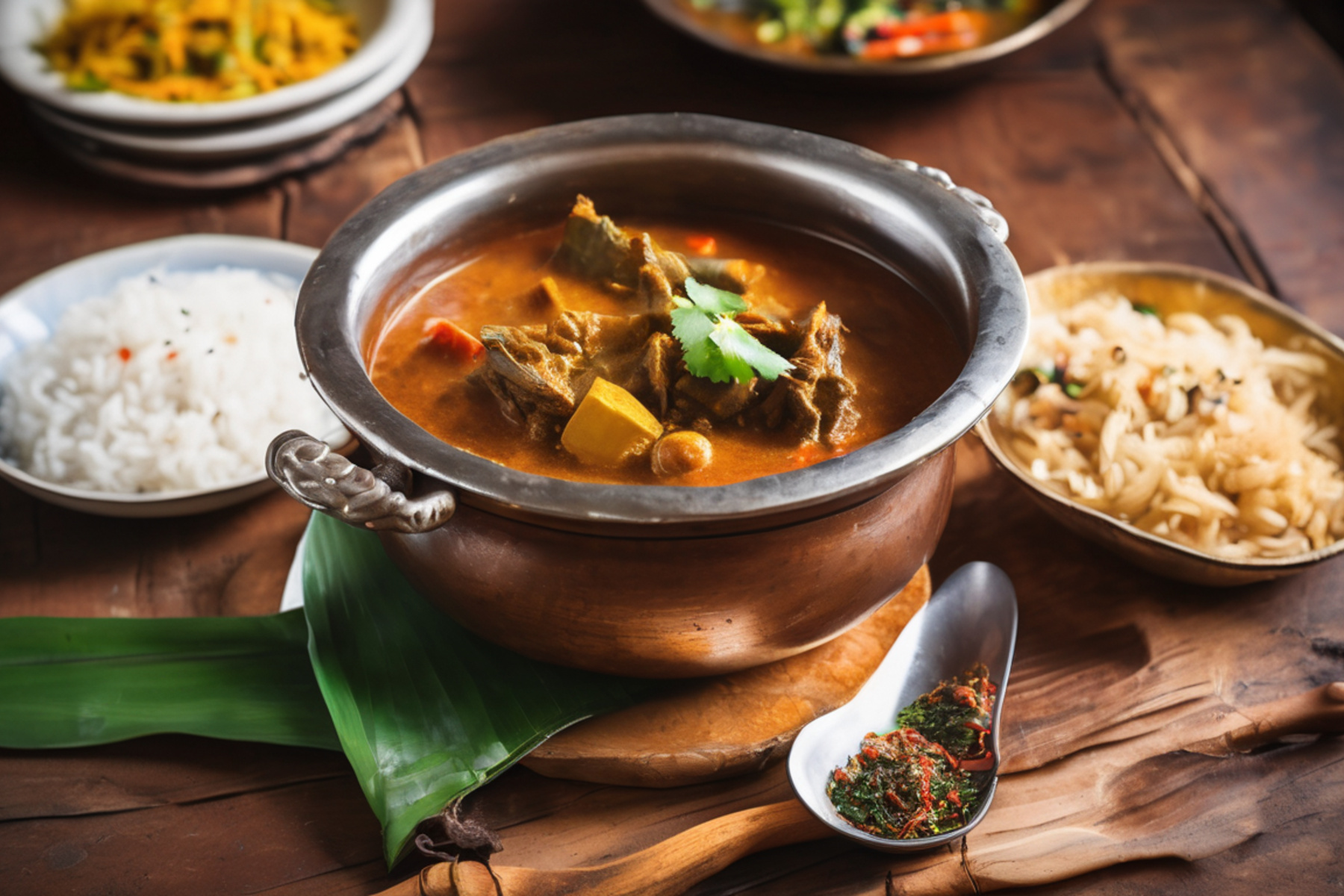
The national dish and, for most Nepalis, two meals a day, every day: rice (bhat) with lentil soup (dal), a vegetable curry (tarkari), pickle (achar), often greens (saag) and sometimes meat. Eaten with the right hand. In teahouses it comes with free refills — hence "dal bhat power, 24 hour", which is a real thing trekkers chant and also basically true.
🥟 Momo
Steamed or fried dumplings, Tibetan in origin and comprehensively adopted — buffalo, chicken, or vegetable, with a tomato-sesame achar. The national street food and the subject of more regional partisanship than any other dish. Jhol momo, served swimming in spiced broth, is the Kathmandu variant worth seeking out.
🍜 Thukpa and the northern food
Tibetan-derived noodle soup, the standard high-altitude meal, alongside tsampa (roasted barley flour) and butter tea — salty, with yak butter, an acquired taste that starts making sense somewhere above 4,000 m.
🍚 Newar khaja set
The great cuisine of the valley: chiura (beaten rice) with choila (spiced grilled buffalo), bara (lentil patty), chatamari (rice-flour crepe, the "Newar pizza"), sanya khuna (jellied fish), aloo tama (potato and bamboo shoot), and at festivals the full samay baji. Eat it in Patan or Bhaktapur, not in Thamel.
🌿 Gundruk and dhido
Gundruk — leafy greens fermented and dried, then made into a sour soup — is arguably the most distinctively Nepali thing in the kitchen, and the technique is centuries old because there was no other way to keep vegetables through a hill winter. Dhido, a stiff porridge of millet or buckwheat, is what the hills ate before rice was affordable, and is now fashionable in Kathmandu for exactly that reason.
🍮 Sweet things
Juju dhau — Bhaktapur's "king curd", buffalo yoghurt set in unglazed clay pots which draw off the whey and concentrate it, and genuinely one of the best yoghurts in the world. Sel roti, the ring-shaped fried rice bread. Lakhamari, malpua, barfi, and Nepali masala chiya — milk tea with cardamom, ginger and cloves — drunk constantly.
🍳 Three Nepali Recipes

🍛 Dal Bhat Tarkari
The national meal · serves 4 · about 1 hour
Ingredients: Dal: 250 g masoor or mixed lentils · 1 litre water · 1 tsp turmeric · 1 tsp salt · 2 tbsp ghee or oil · 1 tsp cumin seed · 1 dried red chilli · 3 cloves garlic, sliced · 1 small onion · a pinch of asafoetida · 1 tsp jimbu (Himalayan herb) if you can find it. Bhat: 400 g long-grain rice. Tarkari: 500 g potato and cauliflower, cubed · 1 tsp each cumin, coriander, turmeric · 1 tomato · ginger and garlic paste. Achar: tomato, roasted sesame, chilli, lime.
Method: Dal: rinse the lentils and simmer with the turmeric and salt until completely collapsed, 25–30 minutes, whisking to break them up. Now the step that makes it Nepali rather than generic: the jhaneko, or tempering. Heat the ghee until it shimmers, drop in the cumin, chilli, asafoetida and jimbu, let them crackle for a few seconds, add the garlic and onion and fry to deep gold — then pour the whole sizzling lot into the dal and clamp the lid on for a minute before stirring through. Tarkari: fry the ginger-garlic and spices, add the vegetables and tomato, cover and cook in their own moisture until tender. Bhat: plain boiled rice. Serve rice in the middle of the plate, everything else around it, and eat with the right hand, mixing as you go.
💡 Nepali dal is thinner than Indian dal and that is deliberate — it is poured over rice, not scooped with bread. And the tempering goes in at the very end, off the heat of the dal, or you lose the aromatics you just made.

🥟 Momo
Steamed dumplings · makes about 30 · 1½ hours
Ingredients: Wrappers: 300 g plain flour · 150 ml water · ½ tsp salt. Filling: 400 g minced buffalo, chicken or finely chopped cabbage and mushroom · 1 onion, very finely diced · 3 spring onions · 1 tbsp ginger-garlic paste · 1 tsp ground coriander · ½ tsp ground cumin · ¼ tsp ground Sichuan/timur pepper · 2 tbsp oil · salt. Achar: 3 tomatoes · 2 tbsp sesame seeds · 2 dried red chillies · 2 cloves garlic · juice of half a lime.
Method: Make a firm dough and rest it 30 minutes under a cloth. Mix all the filling ingredients — it should be quite wet, because the juice is the point. Roll the dough into a rope, cut walnut-sized pieces and roll each into a 8 cm circle, thin at the edge and thicker in the middle so the base does not tear. Put a spoon of filling in the centre and pleat the edge round with your thumb and forefinger, closing at the top. Steam in an oiled steamer, not touching each other, for 10–12 minutes. Achar: char the tomatoes, dry-roast the sesame and chillies, blitz everything with the garlic and lime and a little water.
💡 The two things that go wrong: too little filling (a momo should be uncomfortably full) and a base rolled as thin as the edge (it will split and you will lose the juice, which is the best part).

🍩 Sel Roti
Ring-shaped fried rice bread · makes about 12 · overnight soak plus 40 minutes
Ingredients: 500 g white rice · 150 g sugar · 100 ml milk · 2 tbsp ghee, melted · 1 small banana, mashed (optional but traditional) · ½ tsp ground cardamom · a pinch of salt · oil for deep frying.
Method: Soak the rice in cold water overnight, then drain it thoroughly. Grind it to a smooth, thick batter with the sugar, milk, ghee, banana and cardamom — the consistency should be like a thick pancake batter that ribbons off the spoon, and getting this right is the whole recipe. Rest the batter 30 minutes. Heat oil to about 170 °C in a deep pan. Take a handful of batter, hold your fist above the oil and squeeze a steady stream out through the gap between thumb and forefinger while moving in a circle, joining the ends. Fry until deep gold, turning once. Lift out on a skewer and drain.
💡 This is made for Tihar and for weddings and every Nepali grandmother can do it one-handed while talking. Your first three will be shapeless. Pipe from a bottle if you must — it is cheating and it works.
🍵 Raksi, Tongba and Why There Is No Wine
Nepal has no significant grape wine industry and there is no mystery about it: the monsoon arrives exactly when grapes need to ripen, the hills are terraced for food, and the small trial plantings around Pokhara and the valley have never got past curiosity. What Nepal has instead is millet, and what it does with millet is far more interesting.
🌾 Tongba
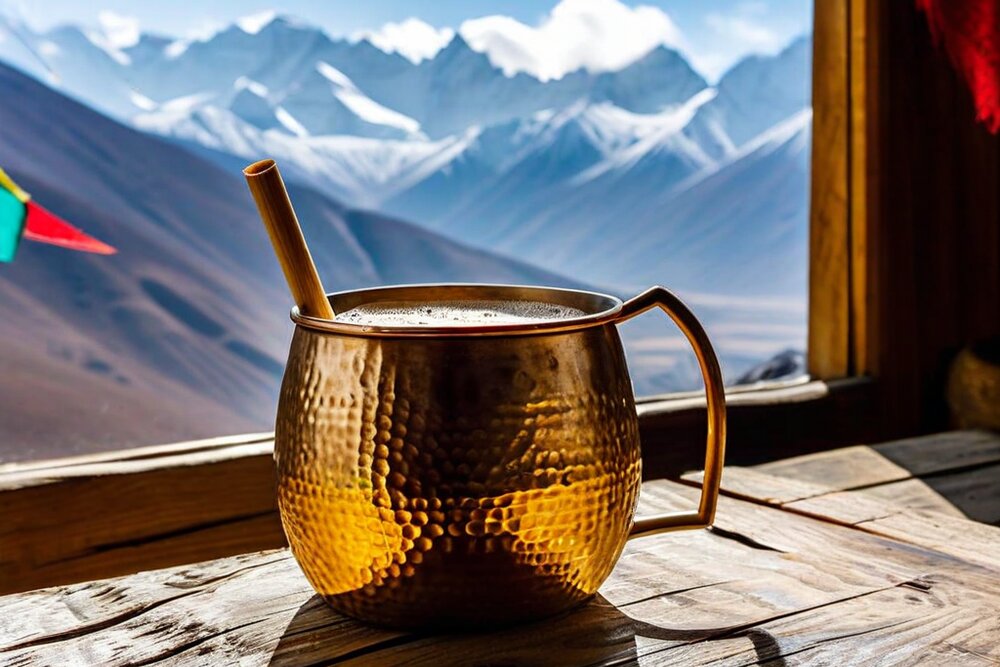
The best drink in the Himalaya and the one most worth going out of your way for. Whole millet is fermented for weeks, packed into the wooden cylinder, and hot water is poured over it; you sip the warm, gently sour, faintly sweet liquid through a bamboo straw with a filter at the bottom, and top up with hot water three or four times as it weakens. It is Limbu and Rai in origin, it is the correct thing to drink at 3,500 m in February, and it is served warm, which at altitude matters.
🍶 Raksi
The national spirit: distilled from millet, rice or barley in village stills, clear, harsh, usually 20–40% and of enormously variable quality. Served warm in small metal cups, often at festivals and always at Newar feasts. Quality ranges from excellent home-distilled Thakali raksi to things that should not be drunk.
🍺 Chhyang and beer
Chhyang is the unfiltered fermented rice or millet beer — milky, sour, low in alcohol, drunk by the jug. Commercially, Nepal drinks Gorkha, Everest and Nepal Ice lagers, all decent and all cheaper than anything imported. Khukri Rum is the national spirit brand and is genuinely good in hot lemon at altitude.
☕ Chiya
Masala chiya — black tea boiled with milk, sugar, cardamom, ginger, cinnamon and cloves — is drunk all day everywhere and is the single most reliable pleasure in the country. In the mountains, butter tea (su cha) instead: salty, with yak butter, and deeply strange until the day it suddenly is not. Nepali Ilam tea, from the eastern hills, is the same terroir as Darjeeling across the border and a fraction of the price.
🍎 Marpha apple brandy
From the Thakali village of Marpha in the Kali Gandaki — apples grow beautifully in the rain shadow, and the local distillery turns them into a brandy that is the closest thing Nepal has to a serious fruit spirit. Also apple pie, everywhere in Mustang, for the same reason.
⚠️ Altitude and alcohol
Alcohol at altitude is a genuinely bad idea on the way up. It suppresses the ventilatory response, worsens dehydration and masks exactly the symptoms you need to notice. Drink the tongba on a rest day at a height you have already slept at, not on the evening you arrived 800 m higher. See Altitude.
🌡️ Climate & When to Go
✅ October–November
The best season, without much argument. The monsoon has washed the air, visibility is at its annual maximum, the weather is stable, days are warm and nights are cold. It is also when everyone else comes and when Dashain and Tihar fall, so book ahead and expect company on the trails.
✅ March–April
The second season: warmer, longer days, rhododendron forests in flower across the middle hills, and the Everest and Annapurna climbing season. Haze builds through spring, so the mountain views are less sharp than autumn's — the trade is flowers for clarity.
❄️ December–February
Cold and exceptionally clear. Teahouses at altitude thin out or close, high passes may be snowed shut, and nights in the mountains go well below −15 °C. Down low it is pleasant. Kathmandu's winter air pollution is at its worst — regularly among the very worst readings in the world — because of the valley inversion.
🌧️ June–September
The monsoon: roughly 80% of the annual rain, cloud on the mountains, landslides closing roads, leeches on the trails, and flight cancellations. It is also green, empty and cheap. And critically: the rain-shadow regions — Mustang, Dolpo, Manang — are at their best now, which is why the monsoon is the correct time to go there and only there.
The lapse rate
The single most useful number for planning: temperature falls roughly 6.5 °C per 1,000 m. Kathmandu at 20 °C means about 2 °C at Everest Base Camp, before wind. People pack for the country they flew into and freeze in the country they walked to.
Air and landslides
Two practical hazards that are not weather exactly. Kathmandu's winter AQI can exceed 300; if you are asthmatic, plan around it. And the monsoon brings landslides that kill hundreds of people a year and close highways for days — which is a real itinerary risk if you are travelling overland between June and September.
✈️ Getting There & Getting Around
Tribhuvan International (KTM)
Nepal's only meaningful international gateway, in Kathmandu, and a single-runway airport in a bowl of hills that handles far more traffic than it was built for. Delays are routine. There is no direct flight from Europe; you connect through the Gulf, Istanbul or Delhi.
The other two
Pokhara International opened in 2023, Chinese-built under the Belt and Road, and has had almost no scheduled international service — a $216 million airport that has become the centrepiece of Nepal's debt argument. Gautam Buddha International at Bhairahawa, near Lumbini, opened 2022 with similarly thin traffic.
🛂 Visa on arrival
Nepal grants visa on arrival at Kathmandu and the land borders to nationals of almost every country — Czech citizens included. US$30 / 15 days, $50 / 30 days, $125 / 90 days, payable in cash in major currencies or by card. Fill the online form in advance to skip a queue. The main exceptions are a short list including Nigeria, Afghanistan, Iraq, Syria and a few others, who must apply in advance.
Domestic flights
Essential for reaching the mountains, and with a safety record that has to be stated plainly: all Nepali carriers have been on the EU air safety list since 2013, and the Yeti Airlines crash at Pokhara in January 2023 killed 72. Terrain, weather and pressure to fly are the recurring factors. Buddha Air has the best reputation. Fly in the morning, accept cancellations, and do not book a mountain flight the day before an international departure.
Roads and buses
The road network has expanded enormously and remains slow and dangerous — Kathmandu to Pokhara is 200 km and 6–8 hours. Tourist buses (Greenline and similar) are far safer and more comfortable than local buses; night buses on mountain roads are the single thing most worth avoiding in Nepal. Jeeps take over where tarmac ends.
Overland to India and Tibet
Open land borders with India at Sunauli, Birgunj, Kakarbhitta and others — straightforward, slow, and requiring an Indian visa arranged in advance. The Tibet crossing at Rasuwagadhi/Kerung is open only on a pre-arranged Chinese group permit through an agency; you cannot cross independently.
📋 Practical Information
💰 Money
The Nepalese rupee (NPR), pegged to the Indian rupee at 1.6. ATMs are everywhere in Kathmandu and Pokhara and thin out fast on trek — carry enough cash for the whole trek, in small notes, because lodges do not take cards and the mountain ATM you were counting on will be empty. Indian rupee notes above ₹100 are not legal tender in Nepal.
📱 Connectivity
Ncell and Nepal Telecom SIMs are cheap and cover more of the country than you would expect — there is 4G in Namche. Buy at the airport with your passport. Teahouses charge for wifi and charging above about 3,000 m, typically NPR 200–500 a go; a power bank pays for itself in three days.
⚕️ Health
Altitude is the main risk and has its own section. Otherwise: water-borne illness is near-universal among visitors — filter or treat all water and skip the ice. Rabies is present and dog bites need immediate attention. Vaccinations worth having: hepatitis A and B, typhoid, tetanus, and Japanese encephalitis if you will be in the Terai in the wet season. Malaria is a low risk in the Terai only. The CIWEC clinic in Kathmandu is genuinely excellent.
🛡️ Insurance — read the exclusions
Most standard policies exclude trekking above 3,000–4,000 m and almost all exclude helicopter evacuation unless specifically added. A rescue from the Khumbu costs US$5,000–15,000 and the helicopter will not lift without a guarantee of payment. Buy the altitude extension, name the maximum altitude of your route, and carry the policy number where your guide can find it. There is also a known helicopter rescue fraud problem — use a reputable operator and be sceptical of a guide who is very keen you should be evacuated.
🔌 Practicalities
230 V, plugs types C, D and M — a universal adapter is the safe answer. Time is UTC+5:45. Nepal's week runs Sunday to Friday, with Saturday as the day off, so government offices and many shops close Saturday and are open Sunday. Tap water is not drinkable anywhere.
🙏 Etiquette
Eat and pass with the right hand; the left is unclean. Food you have touched or bitten is jutho and cannot be shared. Take shoes off entering homes and temples. Do not point your feet at people or shrines, do not touch anyone's head, and walk clockwise around stupas and mani walls. Public affection is frowned on. Ask before photographing people, especially at Pashupatinath. And do not give money or sweets to children — it demonstrably keeps them out of school; give to a school or a registered organisation instead.
💸 What It Actually Costs
Nepal is one of the cheapest countries in the world to travel in badly and a surprisingly expensive one to travel in well. The gap between the two is almost entirely made of permits, domestic flights and the wages of the people carrying your things — and the second and third of those are where most travellers quietly economise without admitting it.
Everything below is 2026 money. The rupee has sat in a band around 135–142 NPR to the US dollar for several years because it is pegged to the Indian rupee at a fixed 1,60 NPR = 1 INR, which makes Nepal one of the few destinations where a budget written a year in advance is still roughly right when you arrive.
🛏️ A bed
A teahouse room on a trekking route: 500–1 500 NPR (US$4–11), and on the popular sections lodges will give you the room almost free on the understanding that you eat there. Kathmandu guesthouse in Thamel: 1 500–3 500 NPR. A good mid-range hotel: 5 000–9 000 NPR. Dwarika's, the Yak & Yeti, the Pavilions — 25 000 NPR and up.
🍛 A meal
Dal bhat in a local bhatti: 150–350 NPR, with the refills that make it the best value on earth. The same plate at 4 000 m on the Everest trail: 700–1 000 NPR, because every lentil walked up. A plate of momo: 150–400 NPR. A tourist-restaurant main in Thamel or Lakeside: 500–900 NPR. A large Everest beer: 350–500 NPR in the valley, 800–1 000 NPR in Namche.
🥾 Guide and porter
The rates set by the trekking associations and generally honoured: a licensed guide 4 000–6 000 NPR/day (US$30–45), a porter 2 500–3 500 NPR/day, a porter-guide who does both around 3 500–4 500. That covers their food and lodging on the trail. It does not cover their insurance unless the agency says so in writing — ask, and ask for the policy number.
📄 Permits
TIMS card 2 000 NPR (1 000 for SAARC nationals). Sagarmatha National Park 3 000 NPR plus the Khumbu Pasang Lhamu Rural Municipality fee 2 000 NPR. ACAP for the Annapurnas 3 000 NPR. Langtang 3 000 NPR. Restricted areas are a different order entirely: Upper Mustang US$500 for ten days, Upper Dolpo US$500 for ten, Manaslu US$100/week in season — and all restricted permits require two trekkers, a registered agency and a licensed guide.
✈️ Getting about inside
Kathmandu–Lukla US$200–230 one way in season, and in the busy months it flies from Ramechhap instead, which means a 4–5 hour drive at 01:00 that nobody mentions when they sell you the ticket. Kathmandu–Pokhara US$100–130 by air, 800–1 800 NPR by tourist bus over 6–8 hours. A private car with driver for a day: 6 000–10 000 NPR.
📊 The honest totals
Backpacking, teahouses, local buses, no guide on an open route: US$25–35 a day. The normal version — guide and porter, tourist buses, decent rooms in the cities: US$60–90 a day. Everest Base Camp with a reputable agency, flights included, 14 days: US$1 400–2 500. Annapurna Circuit, 12–16 days, same standard: US$900–1 600. An actual guided ascent of Everest: US$45 000–160 000, and the cheap end of that range is the part of the industry that the rest of the mountain worries about.
Two things that reliably blow a Nepal budget. The first is the weather: Lukla closes, and the choice becomes waiting days or paying US$500–1 200 for a seat on a helicopter, which in a group of five is not absurd and alone is painful. The second is tipping, which is genuinely expected at the end of a trek and which nobody quotes you in advance: budget around 10 % of the trip cost, handed over directly, guide roughly twice the porter.
🫁 Altitude — the Thing That Actually Hurts People
More trekkers are hurt in Nepal by going up too fast than by everything else combined — falls, traffic, dogs, water, crime. Altitude sickness is not a question of fitness, age, experience or nationality. Very fit people get it. People who were fine last year get it. It is caused by one thing only: gaining height faster than your body makes the adjustments, and the only reliable treatment is to lose the height again.
Above about 2 500 m the air still holds 21 % oxygen but there is less air, so each breath delivers less. The body responds by breathing harder, making more red cells and shifting fluid. If the climb outpaces that, fluid leaks where it should not — into the brain or into the lungs.
AMS — acute mountain sickness
Headache plus at least one of: nausea, tiredness out of proportion, dizziness, sleeplessness. It is common — roughly half of everyone who walks to Everest Base Camp gets some of it. Treatment: stop climbing. Stay at that height until it has gone, then continue. Do not go higher with symptoms, and never sleep higher with symptoms.
HACE — the brain
AMS plus ataxia (cannot walk a straight line heel-to-toe), confusion, drowsiness, behaving oddly. The heel-to-toe test is the one to know: if someone cannot do it, that is HACE until proved otherwise. Descend immediately, at night if necessary, with someone. Dexamethasone buys time. It does not buy altitude.
HAPE — the lungs
Breathlessness at rest, a dry cough turning wet, sometimes pink froth, a crackling in the chest, blue lips, a racing pulse. It can kill within hours and it often comes on overnight. Descend immediately. Nifedipine and oxygen help; descent is the treatment. HAPE has killed fit young trekkers on the Thorong La and it will do so again this season.
The rules that work
Above 3 000 m, raise your sleeping altitude by no more than 300–500 m a day. Take a rest day every 1 000 m, and on it walk high and sleep low. Drink 3–4 litres. No alcohol and no sleeping pills while ascending. Eat more carbohydrate than feels natural. And build two spare days into the itinerary, because the commonest cause of a bad decision on a mountain is a flight home on Thursday.
Diamox
Acetazolamide, 125 mg twice a day, started a day before you go high. It genuinely accelerates acclimatisation rather than masking symptoms — it is a respiratory stimulant, not a painkiller. It makes your fingers tingle and fizzy drinks taste foul, and it is a diuretic, so drink more. It is a sulphonamide: if you react to sulpha drugs, do not take it. It reduces the risk; it does not remove it, and it is not permission to skip a rest day.
Where it bites on the classic routes
Everest Base Camp: the flight lands you at 2 840 m and people walk hard on day one. Take the acclimatisation days at Namche (3 440) and Dingboche (4 410) — they are in every itinerary and they are the reason it works. Annapurna Circuit: the danger is Thorong La at 5 416 m crossed from Thorong Phedi in one push. Sleep at Manang (3 519) for two nights. Gosaikunda and Kanchenjunga both climb faster than they look on a map.
Two practical points. Helicopter rescue in Nepal has a fraud problem that has been documented by insurers and investigated by the government — there have been cases of trekkers being encouraged to feel unwell, flown out, and billed to a policy, with the proceeds split. Use an operator with a reputation to protect, and be sceptical of a guide who is unusually enthusiastic about an evacuation. Conversely, do not let that scepticism kill you: when the symptoms are real, the helicopter is the correct answer and cost is not the question.
And check the policy before you leave home. Most standard European travel insurance covers trekking to 3 000 or 4 000 m and no higher, excludes anything the insurer calls mountaineering, and will not pay for a helicopter without a doctor's authorisation which is impossible to obtain at 5 000 m. Czech readers: see the Czech section for which policies actually go to 6 000 m.
🧠 Fifteen Things About Nepal That Are True
The flag is not a rectangle
Nepal has the only non-quadrilateral national flag on earth — two stacked pennants, originally two separate flags of rival branches of the ruling house, joined in the 19th century. The 1962 constitution specifies its geometry with a 24-step ruler-and-compass construction, which makes it the only flag whose legal definition is a piece of Euclidean geometry homework.
The clock is 45 minutes off
Nepal runs on UTC+5:45, one of only three quarter-hour offsets in the world and the only one at :45 with a whole country in it. It is set to the local mean time of Gaurishankar, and it exists mainly so as not to be on Indian time.
The year is 2082
The official calendar is Bikram Sambat, which runs about 56 years and 8 months ahead of the Gregorian. The new year falls in mid-April. Month lengths vary between 29 and 32 days and are fixed by astronomical calculation, so the calendar is genuinely published annually. Government documents, contracts and newspapers all use it.
Eight of the fourteen
Of the world's fourteen mountains above 8 000 m, eight are wholly or partly in Nepal: Everest, Kangchenjunga, Lhotse, Makalu, Cho Oyu, Dhaulagiri, Manaslu and Annapurna I. The remaining six are in Pakistan, China and the Karakoram. There is no third country in this competition.
The Buddha was born here
Lumbini, in the Terai near the Indian border, is the birthplace of Siddhartha Gautama, confirmed by the Ashokan pillar of 249 BCE which says so in Brahmi script. Nepal minds very much that the world tends to assume it was India, and after you have been asked about it three times you will understand why.
It was never colonised
Nepal is one of a very short list of Asian countries never under European rule. It fought Britain to a standstill in 1814–16, lost territory, and kept its sovereignty — and the British were impressed enough by the soldiers to start recruiting them, which is a whole section of its own.
A living goddess
The Kumari is a pre-pubescent girl, chosen from the Newar Shakya caste, worshipped as the incarnation of the goddess Taleju until she first bleeds. There are several; the Royal Kumari of Kathmandu lives in the Kumari Ghar off Durbar Square and appears at a window. The Supreme Court ordered in 2008 that Kumaris must receive an education.
60 m to 8 848 m in 150 km
The Terai at Kechana Kalan is 60 m above sea level. Everest is 8 848,86 m. In places the horizontal distance between the lowland plain and the high Himalaya is under 150 km. No country on earth packs a comparable vertical range into a comparable width.
Yaks do not live at Base Camp
The animal on the Everest trail is usually a dzo or dzopkyo, a yak-cow hybrid that handles lower altitude better. True yaks are uncomfortable below about 3 000 m. And the female is a nak — "yak cheese" and "yak milk" are, strictly, nak products.
The rhinos came back
Chitwan held around 100 greater one-horned rhinos in the mid-1960s. It now holds over 690, and Nepal has recorded multiple full years with zero rhino poaching — 2011, 2013, 2014, 2015, 2017, 2018 among them. It is one of the genuinely successful conservation stories anywhere.
Remittances are the economy
Money sent home by Nepalis working in the Gulf, Malaysia, Korea and India is worth roughly a quarter to a third of GDP — among the highest ratios on earth. Around 1 500 to 2 000 Nepalis leave for work every day. Almost every family you meet on a trek has someone abroad.
The king was shot by the prince
On 1 June 2001 Crown Prince Dipendra shot dead King Birendra, Queen Aishwarya and eight other members of the royal family at a palace dinner, then shot himself. He was technically king for three days while in a coma. The monarchy never recovered and was abolished seven years later.
Everest is taller than it was
The joint Nepal–China survey announced in December 2020 settled the height at 8 848,86 m — about 86 cm higher than Nepal's long-used figure, and the first number both countries agreed on. It included the snow cap. India's 1954 survey, 8 848 m, had stood for 66 years.
The tallest man who ever lived
Chandra Bahadur Dangi, from Dang district, was the shortest adult human ever recorded at 54,6 cm. He met Sultan Kösen, the tallest living man, in 2014. Nepal has held both the world's shortest man and, in Everest, its highest point — a coincidence Nepalis enjoy more than they should.
Cows outrank traffic
The cow is the national animal and killing one is a criminal offence with a custodial sentence. Cows accordingly sleep in the middle of arterial roads in Kathmandu and traffic goes around them. Beef is not served; "buff" — water buffalo — is, and is what is in most momo.
🌟 Nepalis Worth Knowing About
The two names everyone abroad can produce are Tenzing Norgay and, at a push, the Buddha. Here are some others, with a bias towards people who are alive and still doing things.
Tenzing Norgay (1914–1986)
Born in Tibet or in Khumbu depending on which account you believe, and himself vague about it. Reached the summit of Everest with Edmund Hillary on 29 May 1953, at his seventh attempt on the mountain. He and Hillary refused for the rest of their lives to say who stepped on the summit first, which was a decision about politics and dignity rather than about mountaineering. Later ran the Himalayan Mountaineering Institute in Darjeeling.
Kami Rita Sherpa (b. 1970)
Has summited Everest 31 times as of the spring 2025 season, more than any human being. He works as a guide; the record is a by-product of the job. His father was among the first Sherpa guides and his brother has more than twenty summits. When Kami Rita talks about the mountain being crowded, he is not a commentator, he is a witness.
Nirmal "Nims" Purja (b. 1983)
Ex-Gurkha and ex-Special Boat Service. In 2019 he climbed all fourteen 8 000 m peaks in six months and six days, demolishing a record that had stood at just under eight years. In January 2021 he led the ten-man Nepali team that made the first winter ascent of K2, the last 8 000er never climbed in winter — and they stopped below the summit to walk onto it together singing the national anthem.
Pasang Lhamu Sherpa (1961–1993)
The first Nepali woman to summit Everest, on 22 April 1993, at her fourth attempt after being refused sponsorship and told repeatedly that it was not a woman's business. She died on the descent. She was given a state funeral and a posthumous Nepal Tara, and she is on a postage stamp, a highway and a mountain. A generation of Nepali women climbers cite her.
Arnico Valley's Araniko (1245–1306)
A Newar architect who went to Tibet at seventeen with a party of craftsmen and ended up chief architect to Kublai Khan. He built the White Stupa in Beijing, which is still standing. The Kathmandu–Lhasa highway is named after him. Newar craftsmen exported the pagoda form to China and Japan, which is an inversion of the usual direction of cultural traffic and Nepal is right to mention it.
Sushila Karki (b. 1952)
Nepal's first female Chief Justice (2016–2017), a judge with a reputation for anti-corruption rulings and for surviving an impeachment attempt brought in response to them. In September 2025, at 73, she was chosen by the Gen Z protest movement, negotiated with by the army and sworn in as Nepal's first woman head of government, leading the interim administration to the March 2026 election. She did not stand in it.
Balen Shah (b. 1990)
A structural engineer and battle rapper who ran for mayor of Kathmandu in 2022 as an independent, with no party and almost no money, and won. He spent four years demolishing illegal construction, clearing footpaths and arguing with ministers on Facebook. In March 2026 he led the Rastriya Swatantra Party to 182 of 275 seats and was sworn in as prime minister on 27 March, aged 35 — the youngest ever elected, and the first from the Madhes.
Anuradha Koirala (b. 1949)
Founder of Maiti Nepal, which since 1993 has intercepted, sheltered and repatriated women and girls trafficked across the Indian border — tens of thousands of them. CNN Hero of the Year in 2010. Nepal's trafficking problem is one of the things this page has tried not to be squeamish about, and she is the reason anyone has numbers for it at all.
Mira Rai (b. 1988)
A child soldier in the Maoist insurgency who entered her first trail race in 2014 more or less by accident, wearing borrowed shoes, and won it. She became one of the best ultra-runners in the world, was National Geographic Adventurer of the Year in 2017, and now runs an initiative putting Nepali girls from the hills into the sport. Her story is the Nepali twentieth century compressed into one life.
📰 Media, Press Freedom & Resources
Nepal has one of the freer press environments in South Asia, which is a real achievement and a low bar simultaneously. It sits around 90th of 180 on the RSF index — well ahead of India, Bangladesh and Pakistan, well behind where its own journalists think it should be.
What to read in English
The Kathmandu Post and myRepública for daily news; Nepali Times, a weekly, for the best long-form analysis in the country; Setopati and Online Khabar (both largely Nepali, partly English) for what people actually read; and The Record for investigative work. Kantipur is the large Nepali-language daily.
The pressure points
Defamation and cybercrime provisions in the Electronic Transactions Act have been used against journalists and online commentators. Ownership is concentrated and advertising is a lever. The social media ban of 4 September 2025 — the proximate cause of the uprising — was framed as registration enforcement and understood by everyone as something else. The RSP government elected in 2026 has promised to repeal the relevant clauses; at the time of writing it has not.
September 2025, on the record
The most reliable accounts of the killings are the Human Rights Watch report of November 2025, which concluded the lethal force was unlawful, the Amnesty International documentation, and the reporting of the Nepali Times and The Record, who were on the street. The official toll is 74 dead and 2 113+ injured. The commission of inquiry's findings are the document to watch.
📚 Reading
Jonathan Neale, Tigers of the Snow — the Sherpa side of the mountaineering century, and the best book on this list. Jon Krakauer, Into Thin Air for 1996. Manjushree Thapa, Forget Kathmandu — a Nepali writer on the massacre and the war, and the one to read if you read only one. Prashant Jha, Battles of the New Republic on the Madhes and the peace process. Peter Matthiessen, The Snow Leopard for Dolpo, with the caveat that it is about Matthiessen. Samrat Upadhyay for fiction.
🎬 Watching
Sherpa (2015) — a documentary crew went to film the 2014 season and accidentally filmed the avalanche that killed sixteen Sherpas and the strike that followed; it is the single most useful thing ever filmed about the Everest industry. Caravan / Himalaya (1999), shot in Dolpo, Oscar-nominated and mostly non-professional actors. Kathmandu: the Mountain Beneath for 2015.
Search terms that work
"Gen Z protest Nepal September 2025" · "Balen Shah RSP 2026 election" · "Khumbu Icefall doctors" · "Nepal earthquake 2015 Durbar Square reconstruction" · "Upper Mustang Lo Manthang restricted permit" · "Nepal remittance economy Gulf". As always, read the Nepali outlets and the foreign ones in pairs; they disagree in informative ways.
🇨🇿 For Czech Readers
Nepal is one of the few genuinely remote destinations where Czech travellers have a long, serious and continuous history — not as visitors but as climbers. It is worth knowing before you go that Czech names are on a good number of these mountains.
The route from Prague
No direct flight and there never has been. The sensible options are Istanbul (Turkish), Doha (Qatar), Dubai (Emirates/flydubai) and Delhi (Air India, with a change) — roughly 12–17 hours door to door with one stop. Return fares run 18 000–32 000 Kč, cheapest in the monsoon and dearest in October. Turkish and Qatar are the comfortable choices; the Gulf routings usually land in Kathmandu in the early afternoon, which matters because the Himalaya are visible on the approach from the left-hand side.
Visa on arrival
Czech citizens get a visa on arrival at Tribhuvan and at the land borders. US$30 for 15 days, US$50 for 30, US$125 for 90, payable in cash in hard currency — bring dollars or euros, the card machines are unreliable and the queue for them is long. Fill in the online form at nepaliport.immigration.gov.np within 15 days before arrival and bring the printout; it turns 45 minutes into 10. A passport valid six months and one photo.
MZV ČR and DROZD
The Czech Ministry of Foreign Affairs advises increased caution for Nepal, with specific notes on political demonstrations, on the road network and on high-altitude trekking. After September 2025 the demonstration advice is not boilerplate — read the current text at mzv.gov.cz rather than this page. Register in DROZD (drozd.mzv.gov.cz) before you go and put your trekking route and dates in it; for anyone going above 4 000 m that registration is the difference between the embassy knowing which valley you are in and not.
Consular cover
There is no Czech embassy in Nepal. Nepal falls under the Czech Embassy in New Delhi (+91 11 2611 0205), which is a flight away. There is an honorary consulate in Kathmandu — useful for a lost passport and for local advice, but it cannot issue travel documents. In a real emergency the MZV emergency line +420 222 264 000 operates around the clock. EU citizens may also approach the German, French or British missions in Kathmandu, all of which are substantial.
⚠️ Insurance is the thing to get right
This is the single most important paragraph on this page for a Czech reader. Standard Czech policies — Allianz, ČSOB, Generali, UNIQA, Kooperativa — cover trekking to 3 000 m or 3 500 m as standard and exclude everything above it. Everest Base Camp is 5 364 m; Thorong La is 5 416 m. You need an explicit high-altitude extension to 6 000 m and an explicit line covering helicopter rescue — the two are sold separately and people buy one. Expect 1 500–4 000 Kč for two weeks with both. The Czech alpine club (ČHS) and the Austrian Alpenverein card are the alternatives most Czech climbers actually use. A medevac from the Khumbu costs US$5 000–15 000 and is billed to you, not to the insurer, if the cover is wrong.
Money and budget
1 NPR ≈ 0,16 Kč; put another way, 100 Kč ≈ 620 NPR. Bring euros or dollars in cash to change — Czech crowns are not exchangeable in Nepal and nobody will take them. Cards work in Kathmandu and Pokhara and nowhere on a trek. ATMs dispense a maximum of 35 000 NPR per withdrawal with a 500 NPR fee, so take the maximum each time. Two weeks including flights, guide, permits and a Lukla ticket comes to 45 000–70 000 Kč; without the Everest flights, 30 000–45 000 Kč.
The Czechoslovak Himalayan record. Czechoslovak expeditions were a serious force in the Himalaya from the 1960s onward, and the achievements are not small. In 1984 a Czechoslovak team put Zdeněk Jan Wolf, Josef Rakoncaj and their companions onto Everest by the south-west pillar, a genuinely hard new line, and Rakoncaj went on to become the first person in the world to climb K2 twice by two different routes. Dina Štěrbová was the first Czechoslovak woman on an eight-thousander, summiting Cho Oyu in 1984. And in 2014 Radek Jaroš completed all fourteen eight-thousanders without supplementary oxygen, finishing on K2 — the fifteenth person and the first Czech to do it, and one of a very small number to have done it on the Crown of the Himalaya without bottled air. There is a Czech climbing presence in Kathmandu's Thamel that goes back decades; the old hands in the gear shops on Chaksibari Marg still recognise the accent.
One last practical note that Czech readers ask about more than any other: you do not need to be a mountaineer to walk to Everest Base Camp. It is a walk, on a path, sleeping in buildings, with tea. What it needs is two weeks, a tolerance for cold rooms, and the willingness to go slowly enough — which, for a nation that likes to be at the chata by lunchtime, is genuinely the hard part.
📸 Photo Gallery — and What the Files Got Wrong
An authoritative listing of the image store on 14 September 2026 found nine files for this entry: three under the country folder and six recipe images. Six are used on this page, each captioned to say what it does and does not show; two were rejected as pictures of something other than what their filename claims; and one is not displayed because it contradicts the text. The audit is published because a page that spends this many words on what Everest photographs conceal should be straight about its own.
❌ The flatbread that is a naan
nepal-nepal-flatbread.jpg is a thick, leavened, blistered naan — a tandoor bread from the Punjab. Nepali bread is thin unleavened roti or chapati, or the ring-shaped fried rice bread sel roti, which is in fact on this page and is correct. This is the third country where the file named <country>-flatbread.jpg has turned out to be wrong (Namibia: a tandoor naan; Nauru: a vegetable pizza). Not used.
❌ The sweet treat that is mochi
nepal-nepal-sweet-treat.jpg shows Japanese mochi dusted with icing sugar — glutinous rice cakes from a kitchen 5 000 km away. Nepal's sweets are juju dhau, the king curd of Bhaktapur, lakhamari, malpua and barfi. Third instance of the <country>-sweet-treat file being wrong after Namibia's carrot muffins and Nauru's caramel pudding. The pair of them look like a generated series that is generically wrong and the whole set is now logged for audit.
⚠️ The wine map of a country with no wine
nepal-wine-regions-map.jpg is not displayed, and the reason is unusual: the geography on it is actually sound. Mustang, Dhading and the Kathmandu Valley are real places in the correct west-to-east order. But it presents Nepal as a country with wine regions, and Nepal has essentially no grape wine industry — which is what this page's own drinks section says. Showing it would make the page contradict itself. The legend also reads "Sml:" where it should read "Scale".
⚠️ A WEBP called .jpg
01-hero.jpg, the picture at the top of this page, is not a JPEG. The bytes begin RIFF....WEBPVP8 — it is a lossy WebP, served with a .jpg extension and a Content-Type: image/jpeg header, with nosniff set. Browsers render it anyway. It is the third format in this defect family after PNG-served-as-jpg on Namibia and on four Nauru files, which makes it a systematic fault in the pipeline rather than three accidents. Logged for repair.
✅ The hero, which is honest
01-hero.jpg shows snow peaks at sunrise behind prayer flags. It is generic — it could be almost any high Himalayan viewpoint — but it is honest, because it claims to be no particular summit. Most "Everest" stock photography is a picture of Nuptse or Ama Dablam, both of which are more photogenic and neither of which is Everest. A picture that does not name a mountain cannot name the wrong one.
✅ What else is used, with its caveats
The tongba image appears in the drinks section with the error named — the vessel is a hammered-copper mug with a handle, and a real tongba is a hooped wooden cylinder with none. Momo and sel roti are both correct. The khasi-ko-masu spread is genuinely close. And the dal bhat photograph shows a bowl of dal only — no bhat, no rice, in a dish named for the rice — which the caption says, because dal bhat is a thali and a single bowl is not one.
📩 If you have your own
This entry would be better with real photographs: Lo Manthang's walls, the Khumbu Icefall from Kala Patthar at dawn, a Dashain swing, Bhaktapur's Durbar Square rebuilt, a Chitwan rhino at the water. If you have been and hold your own pictures, the project would be glad to hear from you at photos@kaufmann.wtf. Everest is one of the most photographed objects on earth and almost none of it is available to use.
✍️ Author's Note
The thing that is hardest to convey about Nepal is the vertical. A map shows a rectangle about 800 km by 200, roughly the shape and area of England, and that is a lie of the flat page. In the west of the country you can stand in a place 60 metres above the sea, in heat, among elephants and sal forest, and be 150 km from the summit of an eight-thousander. There is no plain, no foothill country to speak of, no gradual approach. The land simply stands up. Everything else about Nepal — why it was never colonised, why it has a hundred and twenty-odd languages, why a bus journey of 200 km takes nine hours, why the people who live at 4 000 m are genetically different from the people who live at 400 — follows from that one fact.
I find the Everest industry very hard to write about fairly, and I want to say why rather than pretend I have. The easy version is the one everybody writes: the queues, the rubbish, the bodies, the rich amateurs. All of it is true and all of it is told from the point of view of the customer, which is the least interesting party on the mountain. The people the mountain actually kills are Sherpas and other Nepali high-altitude workers, carrying loads through the Icefall at 02:00, crossing it eight, ten, twenty times a season so that the client crosses it twice. When sixteen of them died in 2014 the international response was to ask whether the season would be cancelled. Their response was to cancel it themselves. I do not think foreigners get to be sniffy about the commercialisation of Everest while also being the market for it.
And yet. The industry is 4 % of Nepal's GDP and the best-paid work available to a man from a village at 3 800 metres with no other route to a cash income. The strongest argument for the queues is made by the people standing in them for wages. When Kami Rita says the mountain is crowded, that is a man on his thirty-first summit saying it, not a columnist. I have tried on this page to let the Nepali voices be the ones that criticise the thing they also live on, because they have earned the right and nobody in Prague has.
The September 2025 killings changed what this page could be. I had a draft that treated Nepal's politics as a familiar story of coalition churn — thirteen governments in sixteen years, the same three men rotating — and it was tonally wrong within a week. Seventy-four people, most of them under twenty-five, were shot by their own police for demonstrating against a ban on Facebook and against the spectacle of ministers' children posting from Dubai. Parliament burned. Human Rights Watch concluded in November that the force used was unlawful. Six months later the electorate handed 182 of 275 seats to a party founded in 2022 and the premiership to a 35-year-old rapper, and I genuinely do not know whether that is the best political news out of South Asia this decade or a repeat of every Nepali revolution since 1990, which were also led by people who meant it.
What I would say to anyone going: the walking is the least of it. The route to Base Camp is a path, with beds and food and tea on it, and thousands of ordinary people manage it every season. What is worth the flight is not the view from Kala Patthar, which lasts a morning, but the two weeks of living at the pace of the trail — up at six, walking by seven, in by two, in bed by eight, with nothing to look at but weather and nothing to decide. And the people. Nepal is poor in a way that is visible and it is also the least aggressive place I know; no one will hassle you, no one will hurry you, and a great many people will feed you more than you paid for. Both things are true at once and neither excuses the other.
I have been to Nepal twice and both times in the good months, which is an easy version of the country. I have not been in the monsoon, I have not been to Dolpo or Kanchenjunga, and I have never been above 5 500 m. Where this page is confident, it is because the source is named. Where it sounds certain about a place I have not stood in, treat it as reading rather than knowledge.
— Radim Kaufmann, 2026
Support This Project 🌍
This World Travel Factbook is a labor of love – free to use for all travelers. If you find it helpful, consider supporting its continued development.