Buenos AiresCapital
46.47 millionResidents · estimate
ARS · $Currency
SpanishOfficial language
Contents
01
Overview
Argentina spans more than 3,700 kilometres from subtropical Misiones to subantarctic Tierra del Fuego. Its scale, climate zones and long north-south distances make it feel like several countries joined together.
Covering about 2.78 million square kilometers, the republic is South America's second-largest country and one of the world's great geographic journeys. A single itinerary can pass from the Paraná wetlands and red-earth subtropics through the Pampas, arid Andean valleys, temperate forests, Patagonian steppe and the channels of Tierra del Fuego. Distances are therefore the first fact of Argentine travel, not a detail to solve later.
The rewards are equally large: Buenos Aires can sustain a week of museums, cafés and neighborhood walks; the northwest holds pre-Columbian and colonial histories; Mendoza turns mountain water into vineyards; and Patagonia pairs working towns with landscapes of exceptional scale. A strong trip selects two or three regions and gives each enough time, rather than treating the country as a rapid collection of icons.
02
Name & Identity
The name Argentina comes from the Latin argentum, meaning silver, and from early European stories about a wealthy interior. Modern identity is shaped by province, city, migration, Indigenous heritage and football allegiance as much as by nationality.
The constitutional name is the Argentine Republic, República Argentina, while everyday speech uses Argentina and the adjective argentino or argentina. The silver association belongs to early colonial imagination around the Río de la Plata rather than to a vast local silver industry. National symbols—the sky-blue-and-white flag, the Sun of May and the anthem—grew from the independence era and remain unusually visible in schools, football and civic ritual.
Identity is intensely regional. A porteño from Buenos Aires, a cuyano from Mendoza, a cordobés, a salteño and a patagónico may share nationality while differing in accent, food, climate and historical reference points. The Falkland Islands, known in Argentina as Islas Malvinas, remain a sensitive sovereignty question; visitors should use tact, listen to local terminology and avoid turning lived memory into a casual debate.
03
Geography & Regions
The Andes form the western spine, the Pampas occupy the agricultural centre and Patagonia opens toward the Atlantic in the south. The northwest, Cuyo, Mesopotamia and the Lake District each have distinct landscapes and travel rhythms.
Argentina extends for roughly 3,700 kilometers from north to south and shares borders with Chile, Bolivia, Paraguay, Brazil and Uruguay. The Andes define the west, but their character changes from the dry high plateau of the Puna to the central high peaks and the glaciated southern ranges. Eastward, major river systems drain toward the Paraná–Paraguay basin and the broad Río de la Plata estuary.
Travel regions are more useful than a single national weather forecast: the Northwest, Northeast, Cuyo, Pampas, Atlantic coast, northern and southern Patagonia, and Tierra del Fuego. The central plains contain the agricultural heartland; Patagonia alternates steppe with Andean forest; and the northeast supports wetlands and Atlantic Forest. Provincial boundaries matter because transport, park rules and local holidays are often administered locally.
04
Map of Argentina
Buenos Aires lies on the Río de la Plata, while Iguazú is roughly 1,050 kilometres to the northeast and Ushuaia about 2,400 kilometres to the south by air. Route planning should begin with distance rather than the number of sights.
A map reveals why Argentina resists compressed itineraries. Buenos Aires to Mendoza is roughly a two-hour flight but more than 1,000 kilometers by road; Buenos Aires to Bariloche exceeds 1,500 road kilometers; and the overland journey to Ushuaia requires crossing into Chile and navigating the Strait of Magellan. Iguazú sits in the far northeast, almost in a different climatic world from the capital.
Use the map in layers: first choose regions, then confirm airports and long-distance bus links, and only afterward add local excursions. Mountain roads, border crossings, seasonal ferries and national-park access can change. Offline maps are valuable, but remote routing should be checked with park authorities or local operators rather than inferred from an apparently continuous line on a screen.
05
History
Indigenous societies flourished long before Spanish rule, and independence was declared in 1816. Civil conflict, mass immigration, export prosperity, Peronism, military dictatorship and democratic recovery all left visible marks on the country.
The territory held diverse societies long before Europeans arrived, including agricultural communities of the northwest, Guaraní-speaking peoples in the northeast and mobile societies across the plains and Patagonia. Spanish colonization developed unevenly from the sixteenth century. Buenos Aires grew through Atlantic trade, while northwestern cities remained connected to older Andean commercial networks centered on Upper Peru.
The May Revolution of 1810 began the political break with Spain, and independence was declared at Tucumán on July 9, 1816. The nineteenth century brought civil wars over federalism, provincial power and the role of Buenos Aires, followed by state-building, territorial conquest and export-led growth. The twentieth century was shaped by mass politics, Peronism, repeated military interventions, dictatorship, economic crises and the democratic continuity established in 1983.
06
Indigenous Peoples
Mapuche, Guaraní, Qom, Wichí, Kolla, Diaguita and many other peoples remain part of Argentina's present, not only its past. Their languages, territorial claims, foods and artistic traditions vary greatly by region.
Argentina's Indigenous peoples are contemporary communities with distinct institutions, languages and territorial claims. The 2022 census framework recognizes self-identification, and communities include Mapuche, Qom, Wichí, Guaraní, Kolla, Diaguita-Calchaquí, Mocoví, Huarpe and many others. Their experiences differ sharply between the Andean northwest, Chaco, Mesopotamia, the Pampas and Patagonia.
Museums and tourism once presented Indigenous cultures mainly as archaeology or folklore; responsible interpretation now emphasizes living voices, land, language and continuity. Buy crafts from identifiable makers or cooperatives, ask permission before photographing ceremonies or individuals, and avoid presenting contested territories as empty wilderness. Community-led visits can offer deeper context than a brief commercial performance.
07
Immigration & the Making of Modern Argentina
Large arrivals from Italy and Spain transformed cities, language and food between the late nineteenth and early twentieth centuries. Communities with Jewish, Arab, Welsh, German, Japanese and neighbouring South American roots further broadened the national story.
Between the late nineteenth century and the First World War, Argentina received millions of migrants, especially from Italy and Spain. Their influence entered Rioplatense speech, labor politics, architecture, family names, pasta, pizza and neighborhood institutions. Immigration was never only European: Jewish, Syrian-Lebanese, Armenian, Japanese, Korean, Chinese and other communities built durable cultural landscapes.
Later migration from Bolivia, Paraguay, Peru, Chile, Venezuela and other parts of Latin America reshaped cities and regional economies. Welsh settlement left a distinctive legacy in Chubut, while German-speaking colonies, Afro-Argentine histories and internal migration complicate the familiar story of a uniformly European nation. Markets, religious buildings, mutual-aid societies and local museums make these layered histories visible.
08
Democracy, Dictatorship & Memory
The 1976–1983 dictatorship used systematic kidnapping, torture and disappearance against real and suspected opponents. Sites of memory, human-rights organisations and the weekly presence of the Mothers of Plaza de Mayo keep this history in public view.
The last military dictatorship, from 1976 to 1983, carried out systematic state terrorism. Thousands were abducted, held in clandestine centers, tortured and disappeared; babies born in captivity were appropriated. The return to democracy led to the landmark Trial of the Juntas in 1985, later reversals and renewed prosecutions after amnesty protections were removed.
Memory is embedded in the urban landscape. The former ESMA detention center in Buenos Aires is now a museum and UNESCO World Heritage property, while memorials and archives exist across the country. Visits require time and emotional care. Photography rules should be respected, and the term desaparecidos should be understood as a continuing human and legal reality rather than a dramatic historical label.
09
People & Culture
Argentina is highly urbanised, yet provincial identity remains powerful. Conversation, friendship, family meals, cafés and public debate occupy an unusually visible place in everyday life.
More than nine in ten residents live in urban areas, and Greater Buenos Aires dominates national media and politics, yet it does not stand for the whole country. Rosario, Córdoba, Mendoza, Tucumán, Salta, Neuquén and many provincial capitals sustain their own cultural scenes. Family networks, friendship groups, clubs and neighborhood associations organize much of social life.
Daily rhythms often run later than in North America or northern Europe. Dinner may begin after 9 p.m., nightlife much later, and a shared mate can turn a short meeting into a long conversation. Warmth does not erase etiquette: greet people, avoid rushing service, learn basic Spanish, and understand that debate can be animated without being hostile.
10
Argentine Spanish
Río de la Plata Spanish is recognised by its melodic cadence, the use of vos and distinctive pronunciation of ll and y. Vocabulary and accent shift across Córdoba, Cuyo, the northwest, the northeast and Patagonia.
The best-known Argentine variety is Rioplatense Spanish, spoken around Buenos Aires and the lower Río de la Plata. It uses voseo—vos tenés rather than tú tienes—and often pronounces ll and y with a sound resembling English sh or the s in measure. Lunfardo, a vocabulary shaped by immigration and urban life, survives in tango lyrics and everyday expressions.
Argentina contains many other accents. Córdoba is famous for distinctive vowel length and intonation; northwestern speech reflects Andean contact; the northeast carries Guaraní influence; and Cuyo shares features with neighboring Chile. Standard Spanish works everywhere, but recognizing vos and a few local forms makes conversation easier. Che is common, but imitation should remain natural rather than theatrical.
11
Literature & Book Culture
Jorge Luis Borges, Julio Cortázar, Silvina Ocampo, Ernesto Sábato and contemporary writers made Argentina a major literary centre. Buenos Aires supports a dense network of bookshops, independent publishers, cafés and festivals.
Buenos Aires was named UNESCO World Book Capital in 2011 and remains a city where bookshops function as civic spaces. The converted theater El Ateneo Grand Splendid is the famous photograph, but independent stores along Corrientes and in Palermo, San Telmo and other neighborhoods reveal the deeper reading culture. The annual international book fair draws publishers and readers from across the Spanish-speaking world.
Borges made libraries, mirrors and labyrinths universal literary symbols; Cortázar transformed the modern novel; Silvina Ocampo, Adolfo Bioy Casares, Alejandra Pizarnik and Manuel Puig widened the canon. Contemporary writers such as Samanta Schweblin, Mariana Enríquez, Selva Almada, Leila Guerriero and Claudia Piñeiro show that Argentine literature is still restless, regional and politically alert.
12
Tango — Music, Poetry & Social Dance
Tango grew in the port districts of Buenos Aires and Montevideo from African, European and criollo influences. A milonga is a social world with its own music sequences, invitations and etiquette, not merely a performance for visitors.
Tango emerged around the Río de la Plata in the late nineteenth century through encounters among Afro-Rioplatense rhythms, European immigrant music, criollo traditions and urban working-class life. The bandoneón became its defining instrument, while lyricists turned lost neighborhoods, desire and disappointment into a portable literature. Carlos Gardel remains the iconic voice, but the tradition extends far beyond one star.
A stage show and a neighborhood milonga are different experiences. At a milonga, dancers follow floor circulation, musical tandas and subtle invitations called cabeceo or mirada. Beginners should take a lesson, watch before entering a crowded floor and avoid treating dancers as performers available for unsolicited photography. UNESCO recognizes tango jointly with Argentina and Uruguay.
13
Buenos Aires — The Capital
The capital combines monumental avenues, neighbourhood life, political symbolism and a strong night-time culture. Travellers understand it best by exploring individual barrios rather than repeatedly crossing the vast metropolitan area.
Buenos Aires is an autonomous city divided into forty-eight barrios, each with smaller identities. The grand civic axis around Plaza de Mayo, Avenida de Mayo and Congreso tells the story of the state; Recoleta displays elite urbanism; Palermo contains parks and many sub-neighborhoods; and quieter districts such as Colegiales, Villa Crespo or Caballito reveal ordinary metropolitan life.
Use walking and public transport together. The Subte is efficient on central corridors, buses reach almost everywhere, and a rechargeable SUBE card is widely used. Distances can deceive, so group sights by neighborhood. Sidewalks, traffic and summer heat slow the pace, while cafés, museums and late opening hours reward an itinerary with unplanned space.
14
San Telmo & La Boca
San Telmo preserves markets, courtyards and layers of port-city history, while La Boca carries immigrant memory, colour and football mythology. Caminito is only a small, highly visited fragment of a complex working neighbourhood.
San Telmo's nineteenth-century houses became crowded conventillos after wealthier residents moved north during yellow-fever epidemics. Today antiques, food halls, churches and performance coexist with gentrification and everyday residential life. The Sunday market fills Defensa Street, but weekday mornings offer a calmer view of courtyards, façades and local businesses.
La Boca grew around the Riachuelo port and Genoese immigration. Its painted sheet-metal houses and Boca Juniors mythology became national symbols, yet the tourist strip of Caminito is small. Visit in daylight, use established routes, respect residents, and do not wander with expensive equipment simply because colorful façades suggest an open-air theme park.
15
Córdoba — University City
Argentina's second-largest urban centre combines Jesuit heritage, a large student population and access to the sierras. Its identity and accent are distinct from Buenos Aires, and the surrounding valleys reward slower road travel.
Founded in 1573, Córdoba became an intellectual and religious center. Its Jesuit Block, university tradition and nearby estancias connect it to a wider colonial network now recognized by UNESCO. The 1918 University Reform, launched here, influenced higher education and student politics across Latin America.
The surrounding sierras change the journey from urban history to rivers, dry woodland and small resort towns. Alta Gracia, La Cumbrecita, Villa General Belgrano and the Traslasierra valley serve different audiences and should not be compressed into one excursion. Summer weekends are busy, while wildfire restrictions and water conditions require current local checks.
16
Iguazú Falls — The Devil's Throat
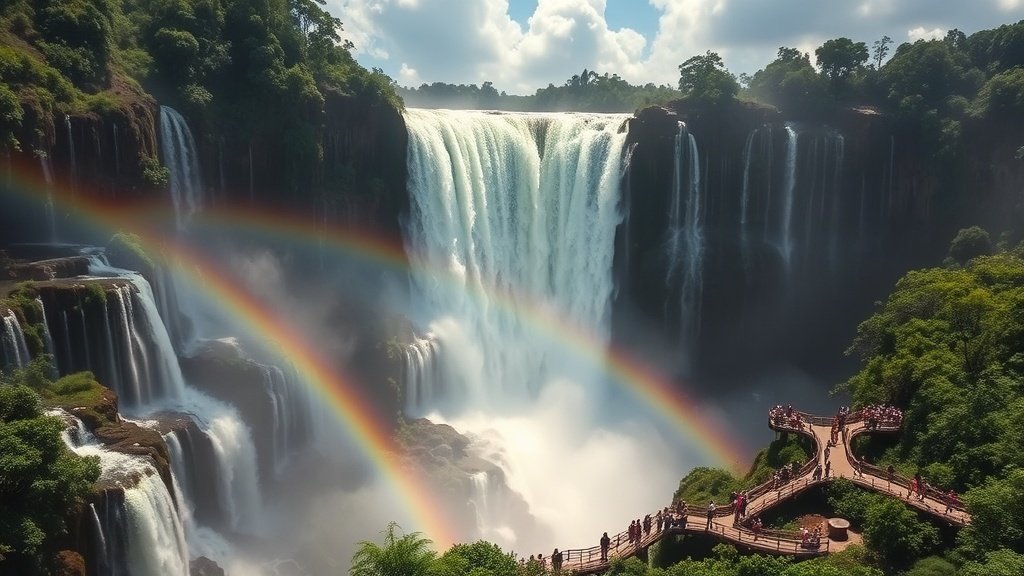
Hundreds of cascades spread across the Argentina-Brazil border within protected Atlantic Forest. The Argentine circuits offer close contact with the water, while river levels can temporarily close walkways.
Iguazú is not a single waterfall but a system of about 275 cascades extending across nearly three kilometers, depending on river conditions and how individual falls are counted. The Argentine national park provides upper and lower circuits and access toward Garganta del Diablo, while the Brazilian side offers the broadest panorama. Both perspectives are complementary.
Allow a full day for the Argentine side and verify which walkways are open after floods or maintenance. Heat, humidity, spray and long walks require water, sun protection and quick-drying layers. Coatis and monkeys are wild animals: never feed them, secure food and follow park instructions. Border procedures can make a two-country day slower than maps imply.
17
Misiones & the Atlantic Forest
Beyond the falls, Misiones contains red-earth roads, yerba mate plantations, Jesuit mission ruins and surviving rainforest. Heat, humidity and biodiversity define travel throughout the province.
Misiones protects one of the largest surviving Argentine sections of the Upper Paraná Atlantic Forest, a biodiversity hotspot shared with Brazil and Paraguay. Red soils, subtropical rain, yerba mate cultivation and Guaraní heritage distinguish the province. Wildlife is often heard or glimpsed rather than conveniently displayed.
The Jesuit-Guaraní mission ruins at San Ignacio Miní are the best known, but Santa Ana, Loreto and Santa María la Mayor add context and quieter landscapes. Interpretation should acknowledge both architectural achievement and the complex colonial system in which Indigenous communities negotiated, adapted and resisted. Rural roads and opening hours merit advance planning.
18
Salta — Colonial Northwest
Salta's historic centre preserves churches, courtyards and a strong Andean-criollo identity. The city is a base for high valleys, vineyards, colourful geology and routes where altitude changes rapidly.
Salta's low colonial profile, cathedral and Cabildo make it one of Argentina's most coherent historic centers. The High Mountain Archaeology Museum displays Inca ritual objects and, under carefully controlled conditions, the Llullaillaco children. This is human remains interpretation, not spectacle, and visitors should approach it with particular respect.
The city anchors several very different routes: the Calchaquí Valleys and Cafayate, the cloud forest of the yungas, and high-altitude roads toward the Puna. Travel times expand on mountain curves. Renters should confirm road surfaces and insurance, while anyone ascending rapidly should build in acclimatization and avoid an overloaded first day.
19
Jujuy & Quebrada de Humahuaca
The Quebrada de Humahuaca follows an ancient Andean corridor through villages, archaeological sites and vividly layered mountains. Altitude, sun and large temperature changes require measured pacing.
The Quebrada de Humahuaca follows the Río Grande through a corridor used for trade and movement for millennia. Purmamarca, Tilcara, Humahuaca and smaller communities combine archaeological layers, Indigenous and colonial heritage, agriculture and contemporary tourism. The Hill of Seven Colors is one feature within a living cultural landscape, not the entire valley.
Elevation rises steadily northward, and excursions to the Salinas Grandes or high Puna go higher still. Hydration and gradual ascent matter; alcohol, heavy exertion and rushed schedules can worsen altitude symptoms. Markets are good places to support regional textiles and foods, but bargain respectfully and ask before photographing vendors or ceremonies.
20
Mendoza — Wine Capital
Mendoza is an irrigated oasis beneath the Andes and the centre of Argentina's most famous wine region. Winery visits usually require reservations and safe transport between estates.
Mendoza survives as an oasis because meltwater is distributed through a historic network of canals and ditches called acequias. Tree-lined streets provide shade, and parks offer relief from the dry climate. The city was largely rebuilt after the destructive 1861 earthquake, which explains its broad streets and generous public spaces.
Wine areas are dispersed among Maipú, Luján de Cuyo and the Uco Valley. A day of tastings requires reservations and a driver, organized tour or carefully planned cycling route. Producers range from small family bodegas to architectural estates. Ask about irrigation, altitude and soil rather than tasting only labels already familiar from export markets.
21
Aconcagua & the High Andes
At 6,961 metres, Aconcagua is the highest mountain outside Asia. Even short walks in the surrounding provincial park demand respect for altitude, dry air, intense sun and rapidly changing weather.
Aconcagua rises to 6,961 meters in the central Andes and attracts expeditions from around the world. The normal route is nontechnical in mountaineering terms but remains a severe high-altitude undertaking with cold, wind and objective risk. Summit attempts require permits, acclimatization, logistics and experience; success cannot be safely compressed into a short holiday.
Day visitors can see the mountain from routes near Horcones when weather and park access permit. Even lower trails sit at meaningful altitude. Carry water and layers, use strong sun protection and turn back if headache, nausea, dizziness or unusual fatigue develops. Border-road traffic and seasonal snow can affect the wider corridor toward Chile.
22
Bariloche & the Lake District
Bariloche combines a working Patagonian city with lakes, forests, ski terrain and mountain routes. The compact Circuito Chico is only an introduction to a much larger region extending toward Villa La Angostura and San Martín de los Andes.
San Carlos de Bariloche sits on Lake Nahuel Huapi within Argentina's oldest national-park landscape. Its stone-and-timber civic center helped create a consciously alpine image, while chocolate shops and winter tourism reinforced that identity. Beyond the center, it is a growing city with ordinary traffic, housing pressure and neighborhoods spread along the lakeshore.
Classic excursions include Circuito Chico, Cerro Campanario and boat routes, but longer stays open trails, refuges and the Seven Lakes corridor. Weather changes quickly, and trail difficulty is often underestimated. Register where required, check park and refuge information, carry layers and avoid relying on mobile reception in mountain terrain.
23
Península Valdés — Atlantic Wildlife
Whales, elephant seals, sea lions and penguins use different parts of the peninsula in different seasons. Wildlife plans should therefore follow current calendars, distances and protected-area rules.
Península Valdés is a UNESCO-listed coastal ecosystem where southern right whales, elephant seals, sea lions, penguins and orcas use different sites at different times. Puerto Madryn is the principal regional base, while Puerto Pirámides lies within the protected area. The peninsula's gravel roads and long distances make self-drive days slower than expected.
Wildlife calendars matter more than a generic 'best season.' Whale viewing usually peaks during the austral winter and spring, while penguin, seal and orca activity follows other patterns and remains unpredictable. Use authorized boats and guides, keep required distances and never pressure an operator to disturb animals for a closer image.
24
El Chaltén & Fitz Roy
El Chaltén is Argentina's best-known trekking base, with trails beginning close to town beneath the Fitz Roy massif. Strong wind, cloud and sudden temperature shifts make flexible planning essential.
El Chaltén was founded in 1985 and has grown into a global trekking center beneath Cerro Fitz Roy and Cerro Torre. Many famous paths start from town without a vehicle, but free access does not make them casual. Distance, elevation gain, exposed terrain and Patagonian wind should guide route choice.
Start early, carry food and water, and check official trail information. Clouds can hide the peaks for days, so flexibility is more valuable than a rigid photo schedule. Popular viewpoints suffer erosion and crowding; stay on marked trails, pack out waste and consider less famous walks when conditions allow.
25
Perito Moreno Glacier
Walkways near El Calafate reveal the glacier's scale from several levels and angles. Ice movement and calving are natural processes, but visitors must remain within marked areas and follow current park guidance.
Perito Moreno forms part of the Southern Patagonian Ice Field and flows into Lago Argentino within Los Glaciares National Park. Unlike many retreating glaciers, its short-term behavior has often been described as comparatively stable, but that does not place it outside regional climate change. Periodic ice-dam formation and rupture are natural, irregular events rather than scheduled spectacles.
The network of walkways provides excellent views without approaching unstable ice. Boat trips offer another scale, and guided ice excursions operate under age, fitness and seasonal rules. Never cross barriers for a photograph: calving can throw ice and water unpredictably. El Calafate is the transport base, and park days should include generous transfer time.
26
Ushuaia — The End of the World
Ushuaia faces the Beagle Channel beneath steep mountains and serves as a base for Tierra del Fuego National Park and Antarctic voyages. Its maritime and prison history deserves time beyond a quick departure transfer.
Ushuaia developed through Indigenous maritime histories, missionary settlement, a penal colony and later naval and industrial growth. The former prison museum explains much of the modern city's origin. The phrase 'end of the world' is powerful marketing, but Tierra del Fuego is also a cross-border archipelago with deep Yaghan and Selk'nam histories.
Boat trips explore the Beagle Channel, while Tierra del Fuego National Park offers coastal and forest walks. Wind, rain, sun and sleet can alternate in one day. Cruise passengers should reserve time beyond embarkation, and Antarctic travelers should keep essential clothing in hand luggage because delayed baggage at the last airport can threaten an expedition.
27
Cuisine & Regional Food
Beef and asado are famous, but Argentine cooking also includes empanadas, pasta, pizza, Andean stews, river fish and Patagonian lamb. Regional food tells a more complete story than a steakhouse alone.
Asado is a social method as much as a menu: cuts cook slowly over embers while conversation structures the gathering. Beef traditions differ by region and household. Empanada fillings and folds vary across Salta, Tucumán, Mendoza, Córdoba and Patagonia, making them an excellent edible map of provincial identity.
Italian migration left pasta, milanesa, fugazzeta and distinctive Argentine pizza; the northwest offers locro, humita and tamales; Mesopotamia uses river fish and cassava; Patagonia is associated with lamb and trout. Dulce de leche, alfajores and ice cream complete the familiar canon. Vegetarians can eat well in large cities but should explain needs clearly at traditional parrillas.
28
Wine, Malbec & High-Altitude Vineyards
Malbec brought global attention to Mendoza, but Argentina also produces Torrontés, Cabernet Franc, Bonarda and cool-climate wines. Altitude, irrigation and large day-night temperature differences shape the vineyards.
Argentina is one of the world's major wine producers, with most vineyards along the dry Andean west. Mendoza dominates volume and recognition, yet Salta's Calchaquí Valleys produce at extreme altitude, Patagonia offers cooler conditions, and newer Atlantic projects test maritime influence. Torrontés is the country's signature aromatic white variety.
Malbec changes with site: warmer areas yield generous fruit, while high and cooler vineyards can emphasize acidity, floral notes and structure. Responsible tasting means booking ahead, using safe transport and drinking water. Harvest generally falls in the austral late summer and early autumn, when events increase demand for rooms and restaurant reservations.
30
Climate & Best Time to Visit
There is no single best season for a country this long. Spring and autumn suit Buenos Aires and Mendoza, summer opens high Patagonian trails, winter supports skiing, and the subtropical northeast remains warm but humid.
Seasons are reversed from the Northern Hemisphere. Buenos Aires is hot and humid in summer and cool in winter; Iguazú stays subtropical; the high northwest combines strong sun with cold nights; Mendoza is dry; and Patagonia is cooler, windier and highly variable. Elevation can matter more than latitude in the Andes.
Plan around activities rather than national averages. High mountain routes may close with snow, Patagonian trekking is most accessible in the warmer months, whale seasons follow migration, and waterfalls change with rainfall. Heat waves, wildfire smoke, floods and strong wind can disrupt transport, so check regional forecasts close to departure.
31
How to Get There
Most intercontinental travellers arrive through the Buenos Aires airport system, while regional flights also connect major provincial cities. Airport choice, transfer time and domestic-terminal changes should be checked before booking tight connections.
Buenos Aires is served principally by Ministro Pistarini International Airport at Ezeiza and the centrally located Aeroparque Jorge Newbery. Some itineraries require changing airports, a transfer that must account for urban traffic, baggage and separate check-in deadlines. Regional gateways such as Córdoba, Mendoza, Salta, Bariloche and Iguazú can reduce unnecessary backtracking.
Entry rules depend on nationality and purpose and can change. Check Argentina's immigration authority and the airline before travel, especially for onward travel, minors, dual nationals or long stays. Proof of insurance, accommodation or departure may be requested even when a tourist visa is not. Never rely solely on an old guidebook's visa table.
32
Domestic Flights, Buses & Trains
Flights save days on north-south routes, and long-distance buses offer broad coverage with several comfort classes. Passenger rail is useful on selected corridors but does not form a comprehensive national tourist network.
Domestic aviation is the practical backbone of a multi-region trip. Fares and baggage conditions vary, and weather can affect Patagonia. Long-distance buses remain extensive, with reclining-seat categories suited to overnight journeys; compare terminal locations and total duration rather than price alone.
Rail services link selected routes from Buenos Aires but are not a complete national system. Rental cars are valuable in wine country, the northwest and Patagonia, yet one-way fees, gravel-road exclusions and border permissions require attention. Fuel stations can be far apart, so rural drivers should refill early and carry an offline route plan.
33
Practical Information
Carry more than one payment method, keep digital and paper copies of essential documents and allow generous transfer margins. Opening hours, public holidays and long distances can affect a plan more than expected.
Electricity is 220 volts and plug types C and I are common. Argentina uses the UTC−3 time zone without the visitor needing to navigate multiple continental zones. Mobile coverage is strong in cities and weak across remote steppe and mountain corridors; an eSIM or local SIM does not replace offline reservations and maps.
Carry identification or a secure copy as local rules and hotel check-in may require it. Strikes, demonstrations and sudden schedule changes can affect roads, flights and public transport. Build buffers into connections, confirm services directly and keep critical medication in original packaging with documentation.
34
Money, Inflation & Exchange
Prices and exchange arrangements can change quickly, making old travel budgets unreliable. Use legal, transparent exchange channels, confirm card terms and check current conditions immediately before travel.
Argentina's inflation and exchange system have changed repeatedly, so any printed conversion can become obsolete. The peso is the legal currency; cards are common in cities, but network failures and smaller businesses make cash useful. Foreign-card rates, bank fees, withdrawal limits and legal exchange options should be checked immediately before and during the trip.
Avoid street exchangers and any transaction whose legality or arithmetic is unclear. Ask whether a restaurant price includes service, keep small notes for minor purchases and review bills before paying. Quote budgets in both local currency and a stable reference only with a date, since accommodation and transport prices can move independently.
35
Safety & Health
Most visits are trouble-free, but phone snatching, pickpocketing and transport scams require ordinary urban caution. Travel insurance, sun protection, safe water practices and region-specific health advice remain important.
The most common visitor problems are opportunistic theft, phone snatching, distraction scams and unofficial transport. Use registered taxis or established apps where appropriate, keep phones away from vehicle windows and café-table edges, and separate cards and cash. Demonstrations are frequent in central Buenos Aires and can block transport even when peaceful.
Outdoor risk varies by region: altitude in the Andes, heat and mosquito-borne disease in the northeast, wind and exposure in Patagonia, and long emergency response times in remote areas. Insurance should cover the planned activity and evacuation. Follow current health advice, register for demanding routes where required and never underestimate cold water or fast-changing mountain weather.
36
Accommodation
Options range from city hotels and apartments to estancias, wine lodges, hosterías and mountain refuges. In Patagonia, during festivals and on holiday weekends, transport and rooms should be booked early.
Buenos Aires offers everything from historic hotels and hostels to apartment rentals, but neighborhood and transport access matter more than a generic central label. Provincial cities have business hotels and family-run options; Patagonia uses hosterías, cabins and refuges; wine regions add lodges and estancias.
Confirm whether taxes, breakfast and payment terms are included, especially when exchange rules are changing. Remote properties may require a car and may not offer late meals. Peak demand coincides with summer Patagonia, winter ski periods, harvest festivals and national holiday weekends, when flexible cancellation terms are valuable.
37
Festivals & Events
Carnival, harvest celebrations, folklore festivals, book fairs, tango events and provincial patronal feasts fill the calendar. Dates and ticket systems change, and major events can transform accommodation availability.
The calendar combines national events with powerful provincial celebrations. Mendoza's Vendimia celebrates the grape harvest; Cosquín hosts major folklore gatherings; Gualeguaychú is known for carnival; Buenos Aires stages tango, film, theater and book events; and Jujuy, Salta and other provinces maintain religious and Indigenous-linked observances.
Festival dates, venues and ticket rules change, while free public programs can draw immense crowds. Book accommodation and transport early, particularly around long weekends. Participate respectfully: costumes and ceremonies may carry community or sacred meaning, and not every procession exists primarily for visitors.
38
UNESCO & World Heritage
Argentina's World Heritage properties include natural landscapes, Jesuit complexes, archaeological routes and modern architecture. Each site should be approached through its specific conservation rules rather than as a single checklist.
Argentina has twelve properties on UNESCO's World Heritage List: seven cultural and five natural. They range from Iguazú, Los Glaciares, Los Alerces, Península Valdés and Ischigualasto–Talampaya to Cueva de las Manos, the Jesuit sites, Quebrada de Humahuaca, Qhapaq Ñan, Le Corbusier's Casa Curutchet and the ESMA Museum and Site of Memory.
The list is not a ranking of attractions. Each property has a specific statement of outstanding universal value and distinct conservation pressures, from crowding and wildfire to urban change and the ethics of memory. Consult UNESCO and the site's managing authority, remain on designated routes and avoid collecting archaeological or natural material.
39
Hidden Gems
Esteros del Iberá, Catamarca's high deserts, the Sierras de Córdoba, coastal Chubut and lesser-known Andean valleys reward travellers who move beyond the headline circuit. Access often requires more time and stronger logistics.
The Iberá wetlands in Corrientes support caiman, capybara, marsh deer and ambitious rewilding work. Catamarca contains pumice fields, salt flats and volcanic highlands; La Rioja and San Juan offer geological parks and quiet Andean roads; and La Pampa preserves grassland and caldén woodland far from the standard circuit.
'Hidden' should not mean unprepared. Less-visited areas may have scarce fuel, limited accommodation, poor signal and sensitive environments. Local guides turn logistical difficulty into interpretation and income. Choose one secondary region and stay longer rather than broadcasting fragile coordinates after a rushed stop.
40
Packing Tips
Pack for regions rather than for Argentina as a whole: humidity protection for Iguazú, layers and windproof clothing for Patagonia, and sun protection for altitude. Comfortable footwear and a reusable bottle are useful almost everywhere.
A modular layering system works better than one heavy coat. Add a waterproof and windproof shell for Patagonia, breathable clothing and insect protection for the northeast, and warm layers plus high-SPF protection for altitude. Broken-in walking shoes are more useful than specialized gear on most cultural itineraries.
Carry a reusable bottle, power bank, plug adapter, small daypack and secure document copies. Prescription medicine should cover delays. For serious trekking, follow the route's actual equipment list; casual urban footwear, cotton layers and an emergency phone are not a mountain safety system.
41
Useful Resources
Use official immigration, national park, weather and transport sources for decisions that can change. Save essential confirmations offline because mobile coverage is uneven in remote mountain and steppe regions.
Use Argentina's National Parks Administration for trails, closures, tickets and conservation rules; the National Meteorological Service for forecasts and alerts; Migraciones for entry requirements; and provincial transport agencies for local services. INDEC provides official demographic and economic data, while UNESCO maintains the authoritative World Heritage list.
Save official pages offline shortly before remote travel and note the publication date. Social-media groups can reveal current conditions but do not replace a park closure, border rule or weather warning. For emergencies, confirm the national and local numbers applicable to the province and carry insurer contact details.
42
Recommended Reading
Borges and Cortázar open literary doors, while works by María Moreno, Selva Almada and Leila Guerriero reveal contemporary voices and places. History and travel writing should be read from more than one political perspective.
Begin with Borges's short fiction and Cortázar's Hopscotch, then widen the view through Silvina Ocampo, Manuel Puig, Alejandra Pizarnik and Rodolfo Walsh. Contemporary fiction by Mariana Enríquez, Samanta Schweblin, Selva Almada and Claudia Piñeiro moves between horror, social observation, crime and provincial landscapes.
Narrative journalism is equally important: Leila Guerriero and María Moreno show the precision of the Argentine crónica. Read history from multiple perspectives, particularly on Peronism, Indigenous dispossession, dictatorship and the Malvinas/Falklands conflict. A local bookshop can match a province or journey with writers omitted from international lists.
43
Films & Videos About Argentina
Documentaries on memory, football, tango, Patagonia and the economic crisis offer very different introductions to the country. Prefer identified filmmakers, institutions and full context over anonymous travel compilations.
Argentine cinema provides a richer introduction than generic destination reels. The Official Story confronts dictatorship and appropriated children; Argentina, 1985 dramatizes the Trial of the Juntas; Wild Tales channels social tension through dark comedy; and The Secret in Their Eyes combines crime, memory and obsession.
Documentaries and regional films reveal Patagonia, football, tango, rural labor and Indigenous issues without reducing the country to scenery. Check who made a film, when, and from what institutional position. Spanish subtitles can help learners recognize voseo and regional rhythm while preserving the original performances.
44
Business & Economy
Agriculture, energy, mining, manufacturing, knowledge services and tourism all matter to the economy. Inflation, regulation, exchange controls and provincial differences require current specialist advice for any commercial decision.
Argentina combines fertile agricultural land, major food exports, energy resources, lithium and other minerals, manufacturing capacity, scientific institutions and a strong software and professional-services sector. Vaca Muerta has made unconventional oil and gas central to energy policy, while the knowledge economy links Argentine talent to global clients.
Commercial decisions require current professional advice. Inflation, taxation, import rules, labor law, exchange arrangements and provincial regulation can change the economics of a project quickly. Relationships and Spanish-language communication matter, but so do written contracts, compliance review and scenario planning that does not assume today's currency framework will remain unchanged.
45
Fascinating Facts
Argentina contains the highest mountain outside Asia, one of the world's great waterfall systems and some of its most extensive temperate grasslands. It also pioneered fingerprint identification and maintains a permanent cultural connection with Antarctica.
Argentina stretches from subtropical latitudes to subantarctic islands and administers some of the world's southernmost permanent settlements. Aconcagua is the highest mountain outside Asia; the Río de la Plata forms one of the planet's broadest estuaries; and the Pampas became synonymous with large-scale grain and cattle production.
The country helped pioneer systematic fingerprint identification through Juan Vucetich's work in La Plata. It has produced Nobel laureates in science and peace, operates long-standing Antarctic stations and gave the world the modern ballpoint pen through the work of Hungarian-Argentine inventor László Bíró. Such facts matter most when connected to institutions and migration rather than used as trivia alone.
46
Notable People
From José de San Martín and Eva Perón to Borges, Mercedes Sosa, Astor Piazzolla, Lionel Messi and leading scientists, Argentine public life crosses politics, art, sport and research. Their legacies are often debated rather than simply celebrated.
José de San Martín led independence campaigns across the Andes; Domingo Sarmiento shaped education and state-building; Eva Perón became an enduring symbol of social mobilization; and Raúl Alfonsín personified democratic restoration. Each legacy is contested, which is why monuments and museums should be read alongside criticism rather than as final verdicts.
Borges, Cortázar, Mercedes Sosa, Astor Piazzolla, Martha Argerich and Quino transformed global literature, music and visual culture. Bernardo Houssay, Luis Federico Leloir and César Milstein received Nobel Prizes for science, while Lionel Messi and Diego Maradona became cultural figures far beyond sport. Contemporary Argentina continues to produce influential filmmakers, researchers, activists and writers.
47
Sports Beyond Football
Rugby, field hockey, basketball, tennis, polo and motor racing all have strong Argentine traditions. The country's geography also supports skiing, climbing, trekking, fishing and water sports.
Argentina's men's basketball team won Olympic gold in 2004, and the country's field-hockey program has built sustained international success. Rugby union is anchored by the Pumas and a strong club culture, while polo combines elite competition with breeding and horsemanship traditions. Tennis has produced Grand Slam champions and a passionate Davis Cup following.
Geography supports skiing near Bariloche, Las Leñas and Ushuaia; climbing in the Andes; trekking across Patagonia; fishing in river and lake systems; and sailing around the Río de la Plata and Atlantic coast. Operators should be chosen for permits, equipment and emergency standards, not merely price or social-media images.
48
Media & Press Freedom
Argentina has a diverse and highly politicised media environment with national broadcasters, newspapers, digital outlets and strong provincial voices. Ownership concentration, economic pressure and political confrontation shape how news is produced and trusted.
National media are concentrated in Buenos Aires, but provincial newspapers, radio, television and digital outlets remain important. The landscape is openly polarized, and audiences often interpret news through assumptions about ownership and political alignment. Public media, large private groups, cooperatives and independent projects coexist under uneven economic pressure.
Visitors researching demonstrations, economic policy or human-rights disputes should compare several named sources and distinguish reporting from commentary. Press-freedom concerns include harassment, legal pressure, ownership concentration and the financial fragility of local journalism. Social platforms accelerate both first-hand documentation and misinformation.
49
Photo Gallery
The gallery moves from Buenos Aires and Iguazú to Mendoza, the Pampas, Patagonia and Tierra del Fuego. Open any photograph for a larger view and its credit line.
The gallery follows the country's visual arc without pretending to be exhaustive: tropical water at Iguazú, urban performance and architecture in Buenos Aires, viticulture beneath the Andes, food traditions of the plains, Patagonian ice and the maritime south. Each photograph can be enlarged, and every displayed image carries a credit linked to the site's license record.
Landscape photographs should not erase human presence or conservation pressure. When making your own images, stay behind park barriers, avoid blocking working streets or trails, and ask before photographing identifiable people. Dawn and late afternoon often provide better light while reducing crowd pressure at famous viewpoints.
50
Author's Note
Argentina is not a single landscape but a sequence of worlds. Its strongest memories often arise between the famous sights: a shared mate, a late dinner, a road beneath the Andes or the sound of ice breaking from a glacier.
— Radim Kaufmann, 2026
What remains after an Argentine journey is often a sense of scale: a city block that continues farther than expected, a bus crossing a night of open plain, a glacier whose sound arrives after the fracture, or an Andean road climbing into colors that seem invented. The country rewards patience because its distances resist the urge to consume it quickly.
The most generous approach is to let each region keep its difference. Buenos Aires is not shorthand for the provinces, tango is not the whole culture, and Patagonia is not empty. Listen to accents, read local history, share the table and leave room for the political and personal stories through which Argentines explain their country to themselves.
Support This Project 🌍
This World Travel Factbook is a labor of love — free to use for all travelers. If you find it helpful, consider supporting its continued development.
Share Your Photo
Share your own photograph of Argentina. Attach it to your email and include the location and your preferred credit. Send only photographs you own.
Back to top ↑