Antarctica & the Subantarctic World · Ice, Ocean & Science
Antarctica
The Last Wilderness on Earth — icebergs the size of cathedrals, silence made physical, and a continent that belongs to no one and therefore to everyone.
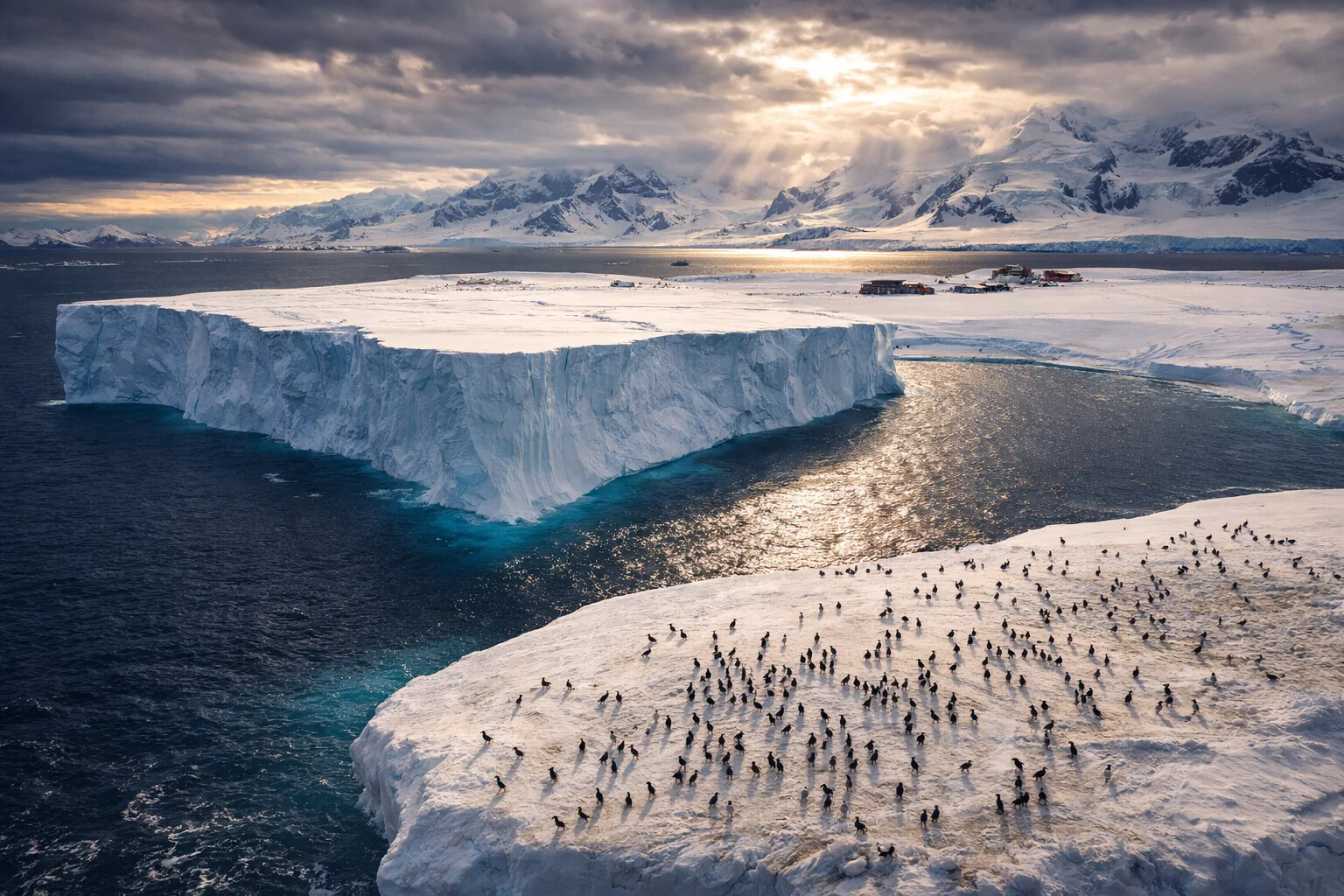
There is a moment, two days out from Ushuaia across the Drake Passage, when the first iceberg appears on the horizon — a cathedral of blue-white ice floating in silence on a sea so dark it seems to absorb light itself. This is your first glimpse of Antarctica, and nothing you have read or imagined quite prepares you for it. The scale is wrong — icebergs the size of apartment blocks, glaciers stretching to the horizon, a silence so profound it becomes almost physical. You have arrived at the end of the Earth.
Antarctica is the coldest, driest, windiest, and highest continent on the planet — 14.2 million square kilometers of ice covering 98% of the land beneath, holding 70% of the world's fresh water in frozen storage. No country owns it; the 1959 Antarctic Treaty designates it as a scientific preserve, with around 70 research stations operated by 30 nations scattered across this vast white wilderness. As of April 2026 the Treaty has 58 parties, 29 of them Consultative Parties with voting rights. Roughly 1,000 people endure the brutal polar winter; in summer, the population swells to about 5,000 researchers and support staff.
For travelers, Antarctica represents the ultimate frontier. Expedition cruises cross the legendary Drake Passage to reach penguin colonies numbering in the hundreds of thousands, towering tabular icebergs that dwarf ocean liners, breaching humpback whales, and volcanic islands where you can swim in geothermally heated waters while snow falls on your shoulders. The Antarctic Peninsula — the most accessible region — offers zodiac landings on ice-covered shores, kayaking among leopard seals, and sunsets that paint impossible colors across glacial landscapes stretching to infinity.
⚠️ Important Travel Advisory
Environmental Protocol: Antarctica is protected under the Protocol on Environmental Protection (Madrid Protocol, 1991). All visitors must comply with strict environmental regulations, including no collecting specimens, maintaining distance from wildlife (5 meters minimum), and carrying out all waste. IAATO member operators enforce these rules.
Season: Tourism is only possible during the austral summer (November–March). The Antarctic Peninsula is the most visited region, accessible by expedition cruise from Ushuaia, Argentina or Punta Arenas, Chile. Fly-cruise options reduce Drake Passage transit time.
🔴 Health & Safety: There are no hospitals in Antarctica. Comprehensive travel insurance with emergency evacuation coverage is absolutely essential. The nearest hospital is in Ushuaia, Argentina — roughly 1,000 km from the Antarctic Peninsula. Seasickness medication for the Drake Passage is strongly recommended. Temperatures can drop to -20°C even in summer, with wind chill making it feel much colder.
The name "Antarctica" derives from the Greek "Antarktikos" — meaning "opposite to the Arctic." The Greeks reasoned that the Arctic, named for the constellation Arktos (the Bear), must have a counterpart at the opposite end of the Earth. For millennia before its discovery, cartographers drew a hypothetical southern landmass labeled "Terra Australis Incognita" — the Unknown Southern Land — on their maps, convinced that a great continent must exist to "balance" the landmasses of the Northern Hemisphere.
Antarctica has no national flag, no government, no permanent citizens, and no native culture. Instead, it is governed by an international treaty system that represents one of humanity's most successful experiments in cooperative governance. The Antarctic Treaty flag — a white continent on a blue background — symbolizes peace and scientific cooperation. The continent's identity is defined not by who lives there, but by what it represents: the last place on Earth that belongs to no one, and therefore to everyone.
Seven nations maintain territorial claims — Argentina, Australia, Chile, France, New Zealand, Norway, and the United Kingdom — but the Antarctic Treaty of 1959 effectively froze these claims, allowing all signatory nations to conduct scientific research across the entire continent. This diplomatic achievement, born from the cooperation of the International Geophysical Year (1957–58), has endured for over six decades. The Treaty parties still meet every year: the 48th Antarctic Treaty Consultative Meeting was held in Hiroshima, Japan, from 11-21 May 2026 - Japan's first time hosting in 32 years - drawing over 400 delegates from 44 countries and marking the 35th anniversary of the Madrid Environmental Protocol. Applications from Canada, Belarus and Türkiye for Consultative Party status remain under discussion.
For visitors, Antarctica's identity lies in its otherness. This is a continent without borders, without cities, without roads, without trees — a place where nature operates on a scale that reduces human presence to insignificance. The ice sheet averages 2,160 meters thick, reaching 4,776 meters at its deepest point. Beneath this frozen mantle lie mountains, lakes, and valleys that no human eye has ever seen.
Antarctica occupies 14.2 million square kilometers — larger than Europe, nearly twice the size of Australia. The Transantarctic Mountains divide the continent into East Antarctica (the larger, higher, colder mass) and West Antarctica (including the Antarctic Peninsula, the mountainous finger reaching toward South America). The ice sheet covering 98% of the surface contains approximately 26.5 million cubic kilometers of ice — enough, if melted, to raise global sea levels by roughly 58 meters.
The Antarctic Peninsula is the warmest, most accessible, and most visited region — a spine of mountains and glaciers extending 1,300 kilometers toward Tierra del Fuego. Here, temperatures in summer can reach above freezing, supporting the continent's most diverse wildlife. The South Shetland Islands, just north of the Peninsula, offer volcanic landscapes, geothermal hot springs, and some of Antarctica's largest penguin colonies.
The Ross Sea region, accessible from New Zealand, offers a more remote and dramatic experience. Here lies McMurdo Station — Antarctica's largest settlement — and the historic huts of Scott and Shackleton preserved in the dry cold exactly as their occupants left them a century ago. Mount Erebus, the southernmost active volcano on Earth, rises 3,794 meters above Ross Island, its summit crater containing a rare persistent lava lake.
The interior plateau rises to over 4,000 meters, with the geographic South Pole sitting at 2,835 meters elevation. This is among the most hostile environments on Earth — average winter temperatures at the Pole reach -60°C, and the sun disappears entirely for six months. The McMurdo Dry Valleys, among the rare ice-free areas, constitute one of the most extreme deserts on the planet, so similar to Mars that NASA has used them as a testing ground for planetary exploration equipment.
04
🗺️ Map of Antarctica
ANTARCTICAPolar geography
Geography · stations · expedition gateways
Markers show the Peninsula landing sites reached from Ushuaia, the Ross Sea stations reached from New Zealand, and the inland camps. The web map projection stretches the polar regions and cannot draw the South Pole itself (90° S), so the interior appears as a broad strip along the bottom edge. Scroll-zoom is disabled; use the +/− buttons.
Antarctica remained unseen by human eyes until remarkably recently. In 1820, three separate expeditions independently sighted the continent: the Russian navigator Fabian Gottlieb von Bellingshausen on 27 January, the British naval officer Edward Bransfield three days later on 30 January, and the American sealer Nathaniel Palmer that November. The discovery sparked decades of sealing and whaling that devastated Southern Ocean wildlife but brought the first regular human presence to Antarctic waters.
The Heroic Age of Antarctic Exploration (1897–1922) produced the most dramatic stories in exploration history. Ernest Shackleton's Nimrod Expedition (1907–09) came within 180 kilometers of the South Pole before turning back. Roald Amundsen's Norwegian team reached the Pole on December 14, 1911, five weeks ahead of Robert Falcon Scott's British expedition — whose entire polar party perished on the return journey. Shackleton's Endurance expedition (1914–16), in which his ship was crushed by pack ice and the crew survived 22 months on ice floes and uninhabited islands, remains perhaps the greatest survival story ever told.
The story gained a postscript on 5 March 2022, when the Endurance22 expedition, organised by the Falklands Maritime Heritage Trust aboard the South African icebreaker S.A. Agulhas II, found the wreck of Endurance at a depth of 3,008 metres in the Weddell Sea — upright, remarkably preserved by the cold, oxygen-poor water, with her name still legible across the stern, about 6 km south of the position Captain Worsley had recorded in 1915. The site is protected under the Antarctic Treaty as Historic Site and Monument No. 93, and no visitor will ever see it: the Weddell Sea pack ice that crushed the ship still guards it.
The International Geophysical Year (1957–58) transformed Antarctica from an arena of national competition into a space for international scientific cooperation. Twelve nations established over 50 research stations across the continent, leading directly to the Antarctic Treaty of 1959. This landmark agreement — signed at the height of the Cold War — dedicated the continent to peaceful purposes and scientific research, banning military activity and nuclear testing.
Tourism began in the late 1960s, with expedition cruises carrying a few hundred adventurous travelers annually. By the 2023–24 season, visitor numbers peaked at over 122,000; the 2025–26 season saw a modest decline to roughly 113,500, the second consecutive dip. IAATO has not attributed it to a single cause; industry analysts point to fewer large cruise-only sailings and rising prices rather than any new regulation — heavy fuel oil has been banned in Antarctic waters under MARPOL since 2011, and ships carrying more than 500 passengers have long been barred from landing anyone under IAATO rules. The International Association of Antarctica Tour Operators (IAATO) regulates tourism to minimize environmental impact, limiting shore landings to 100 visitors at a time.
Antarctica has no indigenous population and no permanent residents. The continent's "inhabitants" are rotating crews of scientists, support staff, and military personnel stationed at roughly 70 research bases operated by 30 nations. During the austral summer (October–February), the population swells to approximately 5,000; in winter, barely 1,000 hardy souls remain, enduring months of perpetual darkness, extreme cold, and profound isolation.
Life at an Antarctic research station creates its own unique culture — a blend of intense camaraderie, creative improvisation, and dark humor born of shared hardship. Midwinter celebrations (around June 21) are the year's most important social event, marked by elaborate feasts, homemade gifts, and theatrical performances. The tradition dates to the earliest expeditions, when raising morale during the darkest months was essential for survival. Some stations screen the film "The Thing" as a midwinter ritual.
Several children have been born in Antarctica — the first was Emilio Marcos Palma, born at Argentina's Esperanza Base in 1978, part of a deliberate effort to strengthen Argentina's territorial claim. At least eleven babies have been born on the continent since. McMurdo Station, the largest settlement, operates a chapel, a bar (nicknamed "Southern Exposure"), a coffee house, and even an ATM. Villa Las Estrellas, Chile's civilian settlement on King George Island, has a school, a post office, and a small hospital. The station map keeps changing: China opened its fifth base, Qinling Station on Inexpressible Island in the Ross Sea, in February 2024, and Belarus, Canada and Türkiye are lobbying for Consultative Party status on the strength of their own programmes.
The culture of Antarctica is ultimately the culture of science. Researchers here study everything from cosmic neutrinos to ancient climate patterns locked in ice cores millions of years old. The IceCube Neutrino Observatory at the South Pole peers deep into the cosmos, while drilling projects have extracted ice cores containing atmospheric records stretching back 800,000 years. In Antarctica, the pursuit of knowledge is not just an occupation — it is the reason the entire human presence exists.
07
🏛️ McMurdo Station — Antarctica's Capital
McMurdo Station
Antarctica's largest research base, home to over 1,000 people at the height of summer.
McMurdo Station sits on the bare volcanic rock of Hut Point Peninsula on Ross Island, the closest thing Antarctica has to a capital city. Operated by the United States Antarctic Program, McMurdo is the continent's largest settlement — home to roughly 1,000 people in summer and 200 in winter. It functions as a small town, complete with a harbor, two airfields (Phoenix Airfield for wheeled aircraft, which replaced the melt-prone Pegasus runway in 2017, and Williams Field for ski-equipped planes), a water distillation plant, and over 100 buildings including dormitories, laboratories, a firehouse, and the famous Chapel of the Snows.
Named after Lieutenant Archibald McMurdo of the HMS Terror (which charted these waters in 1841), the station was established in 1956 during preparations for the International Geophysical Year. Daily life revolves around the galley — three meals a day plus "midrats" (midnight rations) for night-shift workers. A gymnasium, hiking trails, and the annual "Icestock" music festival (held on New Year's Day) keep morale high. Scott Base, New Zealand's station, sits just three kilometers away, and visits between the two for social events are a cherished tradition.
08
🏔️ Antarctic Peninsula — Gateway to the Ice
Antarctic Peninsula
The most accessible and most-visited part of the continent, reached by expedition ship.
The Antarctic Peninsula is where 95% of all Antarctic tourists make landfall — a 1,300-kilometer spine of mountains and glaciers reaching northward toward South America. The Lemaire Channel — nicknamed "Kodak Gap" for the sheer volume of photographs taken there — threads between towering ice cliffs so narrow that expedition ships must navigate with extreme care, while icebergs float past in ethereal blue silence.
The Peninsula hosts the continent's greatest concentration of wildlife: gentoo, chinstrap, and Adélie penguin colonies carpet rocky shores in their thousands, humpback whales surface alongside zodiac boats, and leopard seals patrol the ice edges. Paradise Harbor — aptly named — offers one of the most spectacular anchorages on Earth, ringed by glaciers that calve thunderously into mirror-calm waters. Neko Harbor provides one of the few opportunities to set foot on the actual Antarctic continent, as opposed to offshore islands.
Landing conditions depend entirely on weather and ice. Expedition leaders make real-time decisions about where to go, and flexibility is essential — the continent sets the agenda, not the itinerary. This unpredictability is part of Antarctica's magic: no two voyages are alike.
09
🌋 Deception Island — Fire Under Ice
Deception Island
An active volcanic caldera with geothermally warmed black-sand beaches.
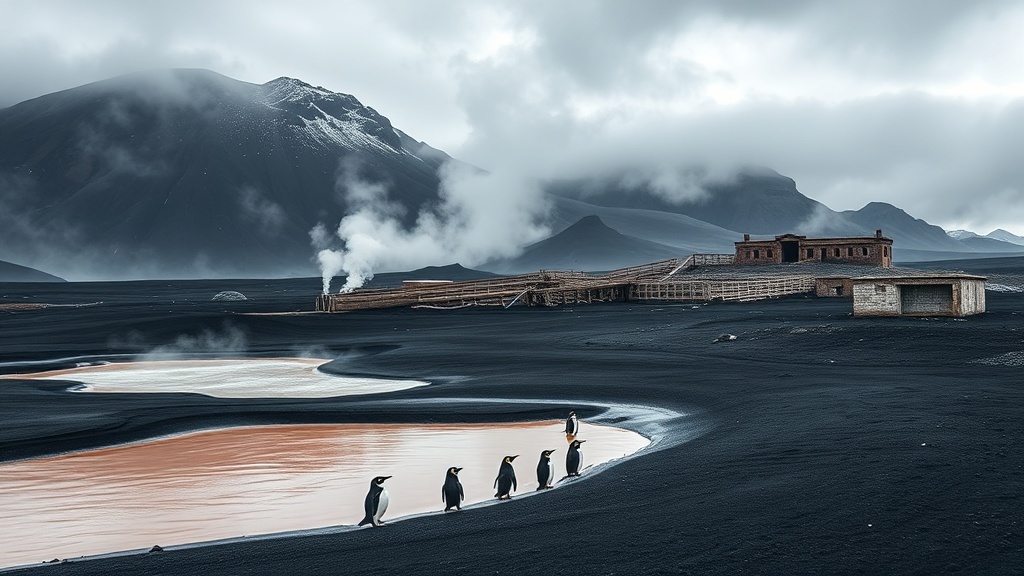
Deception Island is Antarctica's most surreal destination — a volcanic caldera entered by ship through a narrow gap called Neptune's Bellows, sailing directly into the flooded crater of an active volcano. The inner harbor, Whalers Bay, is sheltered and eerily calm, surrounded by steaming black sand beaches, rusting industrial ruins, and slopes striped with snow and volcanic ash in stark monochrome.
Norwegian and British whalers operated here from 1906 to 1931, processing tens of thousands of whales in the sheltered harbor; the remains of the whaling station create an atmosphere of haunting industrial archaeology. The volcano's geothermal activity provides the island's most memorable experience: swimming in the heated waters of Pendulum Cove, where visitors dig personal hot pools in the black sand while snow falls and chinstrap penguins look on. The island remains volcanically active — the last eruption was in 1970 — and over 100,000 chinstrap penguins breed here today.
10
🧭 South Pole — 90° South
South Pole Station
The Amundsen-Scott Station, sitting atop nearly 3km of ice at 90° South.
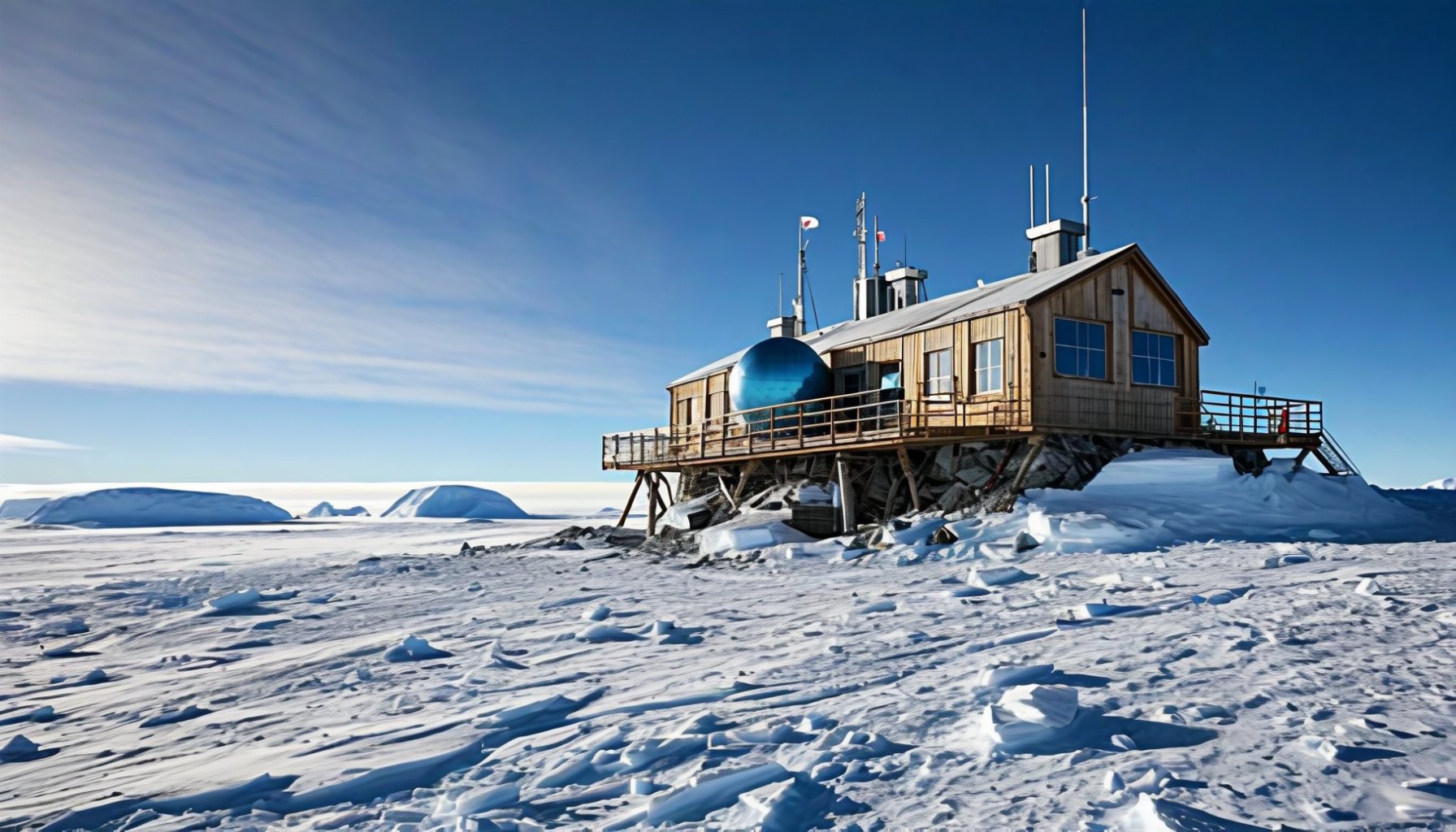
The geographic South Pole — 90°00'S, where all lines of longitude converge — sits atop the Antarctic ice sheet at an elevation of 2,835 meters on a featureless white plateau. The Amundsen-Scott South Pole Station, operated by the United States since 1957, is the only permanently inhabited structure at the bottom of the world.
Reaching the South Pole as a tourist is possible but extraordinarily expensive — fly-in expeditions from Union Glacier cost upwards of $50,000–$60,000 per person. Operators like Antarctic Logistics & Expeditions (ALE) offer "last degree" ski expeditions covering the final 111 kilometers to the Pole. At the Pole itself, two markers commemorate the spot: the ceremonial pole, ringed by the flags of the original twelve Antarctic Treaty nations, and the actual geographic pole, marked by a simple stake that must be repositioned every January 1st because the ice sheet moves roughly 10 meters per year.
The science conducted here is extraordinary: the IceCube Neutrino Observatory uses a cubic kilometer of ice as a particle detector, while the South Pole Telescope observes the cosmic microwave background — the faint afterglow of the Big Bang.
11
📮 Port Lockroy — The World's Southernmost Post Office
Port Lockroy
A restored 1944 British base, now the world's southernmost post office.
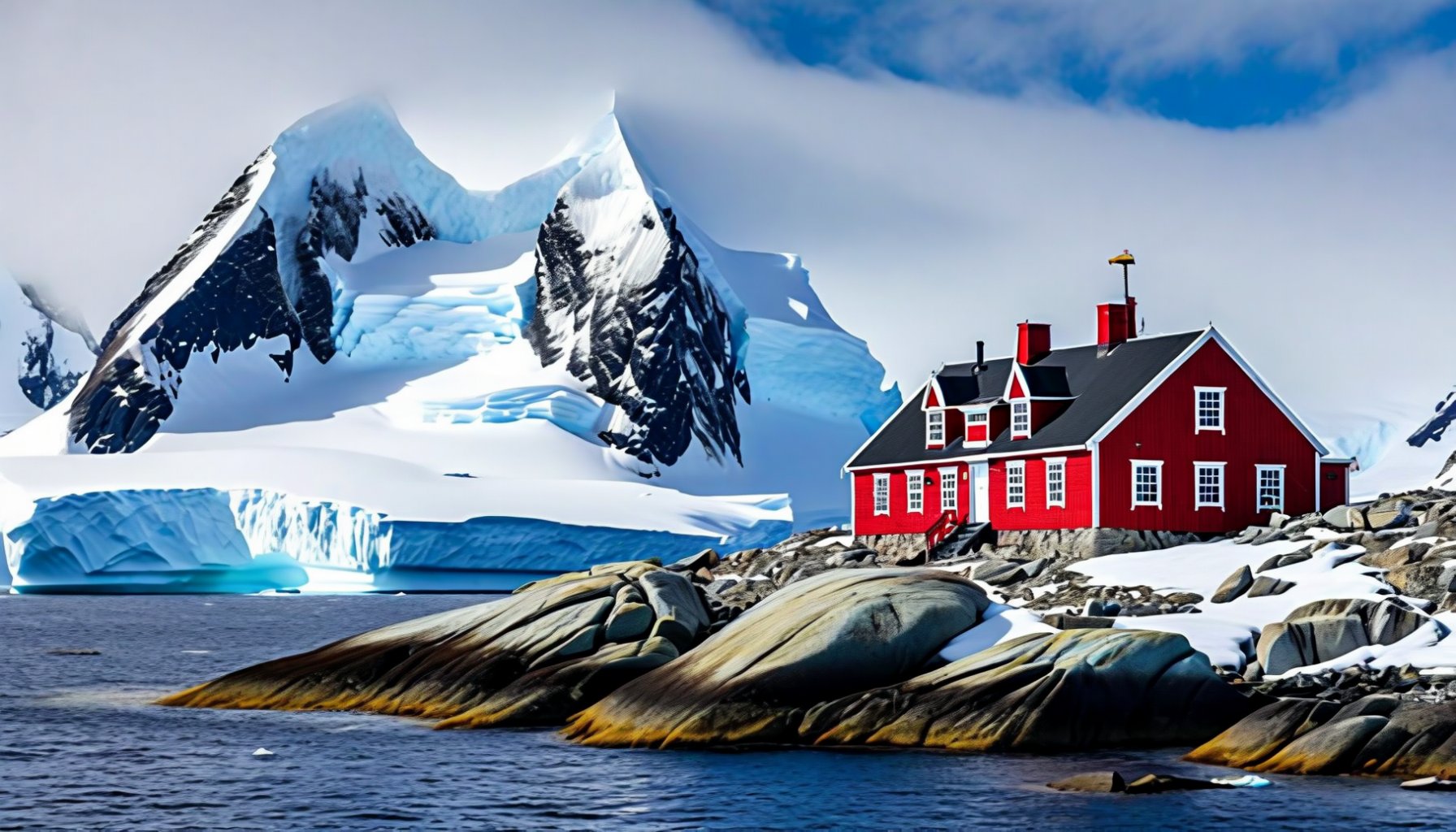
Port Lockroy, on tiny Goudier Island off the Antarctic Peninsula, is one of the most visited sites in Antarctica and home to the continent's most charming attraction: the world's southernmost functioning post office. Originally a British military base from World War II (Operation Tabarin, 1944), it was restored in 1996 by the UK Antarctic Heritage Trust and now operates as a museum and gift shop each summer.
A small team of four or five — a base leader, a shop manager and general assistants who share the post-office and penguin-monitoring duties — staffs Port Lockroy each season; the 2026/27 team was selected in May 2026 and deploys from late October 2026 to late March 2027. They hand-cancel roughly 70,000 postcards a season, which travel out via the Falkland Islands and can take weeks or months to arrive by Royal Mail. Gentoo penguins share Goudier Island with the human inhabitants, nesting right up to the base buildings. Scientists use the colony as a long-term study site, and remarkably, the penguins on the tourist side appear to thrive as well as their undisturbed neighbors — possibly because tourist presence deters predatory skuas.
Antarctica's wildlife thrives not despite the extreme conditions but because of them. The Southern Ocean is among the most productive marine ecosystems on Earth, fueled by upwelling nutrients that support vast blooms of phytoplankton and krill — the tiny crustaceans that form the foundation of the entire food web. An estimated 500 million tonnes of Antarctic krill sustain everything from the smallest fish to the largest whales.
Penguins: seven species breed in Antarctica and the sub-Antarctic islands. Emperor penguins — the largest species, standing 1.2 meters tall — breed on sea ice during the brutal winter, enduring temperatures below -50°C. Adélie penguins are the classic Antarctic species, with colonies numbering in the hundreds of thousands. Gentoo penguins, recognizable by their orange bills, are the fastest-swimming penguin species.
Marine Mammals: humpback whales feed in Antarctic waters during summer; orca pods hunt cooperatively, washing seals off ice floes with coordinated waves. Leopard seals — Antarctica's apex predator — patrol penguin colonies with calculating intelligence. Weddell seals can dive to 600 meters and hold their breath for over an hour.
Birds: the wandering albatross — wingspan reaching 3.5 meters — soars over the Southern Ocean on winds that would ground any other bird. Snow petrels, pure white against the ice, range further south than any other bird.
Under Pressure: the emperor penguin was listed as threatened under the US Endangered Species Act in October 2022, and a British Antarctic Survey study published in June 2025 found that the 16 colonies of the Antarctic Peninsula, Weddell Sea and Bellingshausen Sea sectors — about a third of the world population — shrank by 22% between 2009 and 2024, twice the rate earlier models had projected, as breeding sea ice thins and breaks up early. A second threat arrived by air: highly pathogenic avian influenza (H5N1) was confirmed on the Antarctic mainland in February 2024 in skuas near Argentina's Primavera base, and by the 2024–25 season it had been detected at 24 of 27 Peninsula and island sites surveyed, in nine bird and four seal species. Expect stricter biosecurity as a result — boot and tripod disinfection at every landing, no sitting or kneeling ashore, and landing sites closed at short notice where die-offs are found.
13
Explore More About Antarctica
ANTARCTICAExplore Antarctica
Food · protection · economy · culture
A few deep-dive guides live on their own pages so this one doesn't turn into a wall of text.
--°Cright now at McMurdo Station Loading live weather…
🧊 Sea Ice Watch — 2026
After four consecutive years of historic lows, Antarctic sea ice rebounded in 2026. The summer minimum reached 2.58 million km² on 26 February 2026 — the sixteenth lowest in the 48-year satellite record, still 260,000 km² under the 1981–2010 average but 730,000 km² above the all-time low set on 21 February 2023. For travelers this matters practically: heavier pack ice pushes back early-November Peninsula itineraries and makes Weddell Sea and Ross Sea routes less predictable, while late-season (February) departures see the most open water.
Best Time: December–January for warmest temperatures, longest days, and peak wildlife activity. Late February–March for spectacular whale encounters. November for pristine snow landscapes and penguin courtship rituals. Antarctica holds the record for the lowest temperature ever recorded on Earth: -89.2°C at Vostok Station on July 21, 1983.
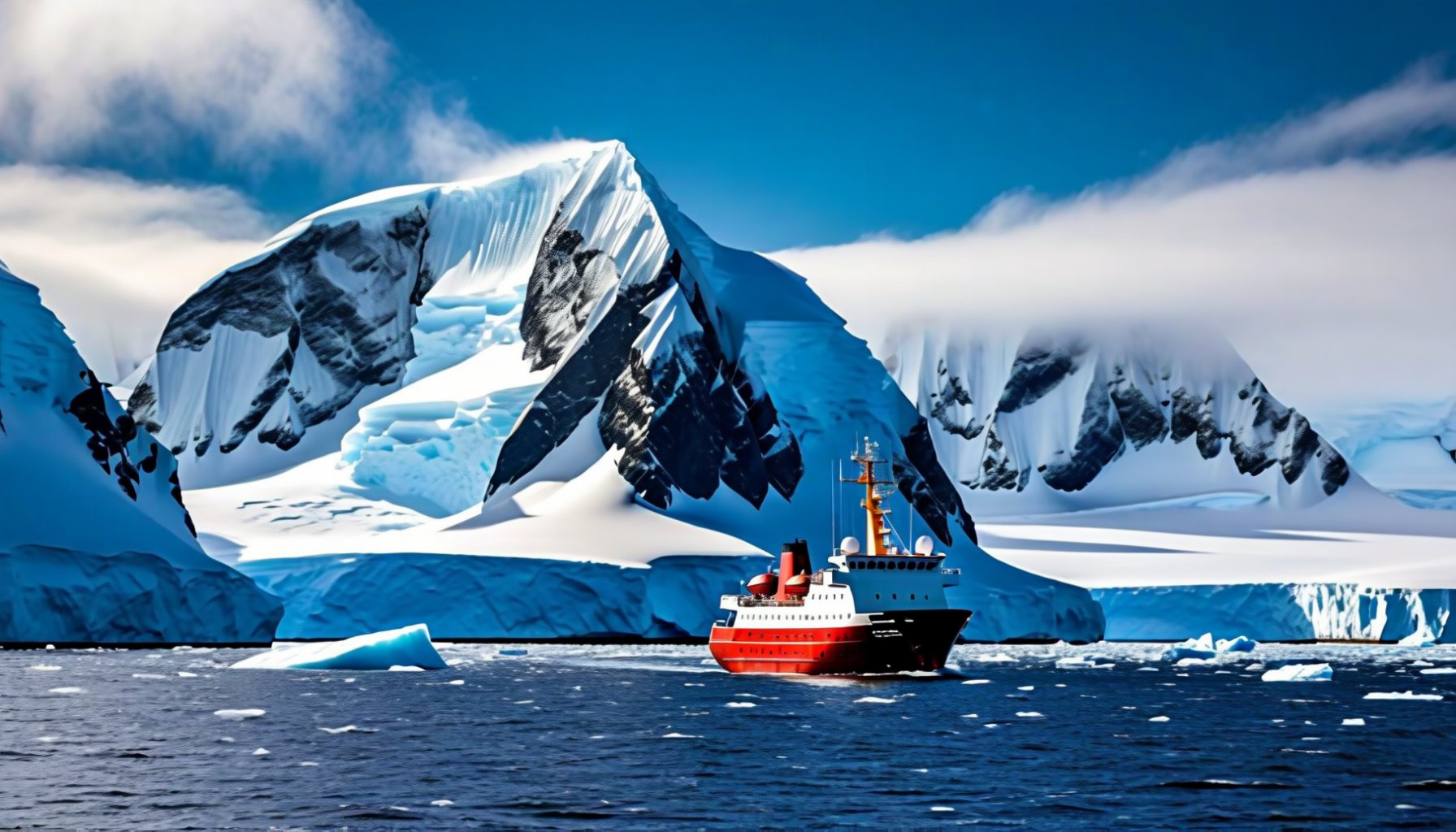
Expedition Cruise from Ushuaia (Most Popular): the vast majority of Antarctic tourists sail from Ushuaia, Argentina — the world's southernmost city. The Drake Passage crossing takes approximately 2 days each way, during which seas can range from glassy calm ("Drake Lake") to 10-meter swells ("Drake Shake"). Typical Peninsula voyages last 10–12 days. Major operators include Quark Expeditions, HX (the former Hurtigruten Expeditions, rebranded in December 2023), Ponant, Lindblad-National Geographic, and Silversea.
Fly-Cruise Options: several operators fly from Punta Arenas (Chile) to King George Island in the South Shetlands (about 2 hours), bypassing the Drake Passage entirely. This reduces voyage time but costs more.
Ross Sea Expeditions: longer, more expensive voyages depart from Hobart (Australia), Lyttelton, or Bluff (New Zealand) to reach the Ross Sea region and the historic huts — 28–35 day expeditions carrying price tags of $15,000–$40,000+.
South Pole Fly-In: Antarctic Logistics & Expeditions (ALE) operates seasonal flights from Punta Arenas to Union Glacier, with onward flights to the South Pole. Costs range from $50,000–$60,000 for a fly-in, to $90,000+ for guided last-degree ski expeditions. Book 12–18 months ahead.
Visa: no visa is required for Antarctica itself. All visitors traveling via commercial operators will have permits arranged through IAATO-member companies. You will need visas for gateway countries: Argentina (Ushuaia), Chile (Punta Arenas), or New Zealand (Christchurch/Lyttelton).
Money: there is no currency in Antarctica. Expedition ships operate cashless. Port Lockroy accepts credit cards for gift shop purchases. McMurdo Station has an ATM (the world's southernmost), but it's accessible only to station personnel.
Communications: satellite internet is available on modern expedition ships, though bandwidth is limited and expensive. There is no mobile phone coverage; Iridium satellite phones work across the continent. Time zones are largely irrelevant — stations typically use the time zone of their supply country.
Safety: all expedition operators conduct mandatory safety briefings. Follow IAATO guidelines: stay 5 meters from wildlife, never leave marked paths near penguin colonies, carry out everything, never collect rocks or specimens, and follow the avian-flu biosecurity drill (disinfected boots, nothing placed on the ground, no sitting near wildlife). Hypothermia and frostbite are real risks — dress in layers and follow crew instructions at all times.
Demand has cooled slightly: IAATO recorded 113,500 visitors in the 2025–26 season (November 2025 – March 2026), down 4.2% year on year and the second consecutive annual decline from the ~122,000 peak. Softer demand has meant more late availability than the pre-2024 scramble.
Antarctica is expensive — there is no way around it. Last-minute deals can reduce costs by 20–40%, and some operators offer "repositioning" voyages at significant discounts. Budget travelers should plan 12–18 months ahead and consider shoulder-season (November or late February) departures.
There are no hotels in Antarctica. All tourist accommodation is aboard expedition ships, ranging from basic vessels with shared facilities to ultra-luxury ships with butler service and heated pools.
Small Expedition Ships (under 200 passengers): Quark Expeditions, Poseidon Expeditions, and Aurora Expeditions offer intimate vessels where everyone gets ashore at every landing. Mid-size ships (200–500 passengers): HX, Ponant, and Lindblad-National Geographic operate larger vessels with more amenities while maintaining meaningful landing programs. Luxury ships: Silversea, Scenic, and Seabourn offer all-suite ships with premium dining and butler service — expect $15,000–$50,000+ per person.
Camping: some operators offer optional camping on the continent — sleeping in bivouac bags on the ice under the midnight sun, typically an additional $200–$500. Booking Tips: book 12–18 months ahead for best cabin selection; last-minute deals (2–4 weeks before departure) can save 20–50% but sacrifice cabin choice.
Midwinter (June 21): the most important date in the Antarctic calendar. Stations celebrate with elaborate feasts, handmade gifts, films, and performances — a tradition dating to the earliest polar expeditions, when maintaining morale during months of darkness was critical. Stations exchange greetings by radio, and the South Pole station screens "The Thing" and "The Shining" as darkly humorous midwinter traditions.
Icestock Music Festival (January 1): McMurdo Station's annual outdoor music festival, drawing residents from both McMurdo and nearby Scott Base. Antarctic Marathon (March): run on King George Island, one of the world's most extreme marathon events, at around -10°C.
Polar Plunge: a beloved expedition cruise tradition where passengers leap into Antarctic waters at approximately 0°C. Antarctic Treaty Day (December 1): commemorates the 1959 treaty, celebrated at research stations with lectures and ceremonies honoring international cooperation.
McMurdo Dry Valleys — the most Mars-like place on Earth. These ice-free valleys, sheltered from glacial flow by the Transantarctic Mountains, receive virtually no precipitation and host bizarre extremophile organisms; NASA tests Mars exploration equipment here. Blood Falls — a five-story blood-red waterfall emerging from Taylor Glacier in the Dry Valleys, colored by iron-rich saltwater from an ancient subglacial lake sealed beneath the ice for 2 million years.
Cuverville Island — the largest gentoo penguin colony on the Antarctic Peninsula, with over 6,500 breeding pairs, less visited than Neko or Paradise Harbor but equally spectacular. Wilhelmina Bay — known as "Whale-mina Bay" for its extraordinary concentration of humpback whales; during late season, dozens can be seen bubble-net feeding simultaneously. Elephant Island — where Shackleton's stranded crew survived for 137 days, marked by a bust of Captain Luis Pardo, their rescuer.
Essential: waterproof outer layers (most operators provide expedition parkas), thermal base layers (merino wool recommended), waterproof pants, insulated waterproof boots (often provided), a warm hat covering ears, neck gaiter, waterproof gloves AND liner gloves, UV-rated sunglasses, high-SPF sunscreen (UV reflected off snow and ice is intense), seasickness medication (start before the Drake Passage).
Photography: spare batteries (cold drains them rapidly), a waterproof camera bag, lens cloths, and a dry bag for zodiac transfers. A telephoto lens (200–400mm) is essential for wildlife; a wide-angle captures landscape scale. Bring more memory cards than you think you need.
What NOT to bring: drones (prohibited by IAATO guidelines), clothing or bags that have been to the Arctic (biosecurity risk — seeds could contaminate Antarctic ecosystems), velcro-fastened gear (attracts seeds and debris), expectations of phone signal. DO bring binoculars, a waterproof daypack, and a sense of wonder.
Planning: IAATO (iaato.org) — official tourism regulatory body, operator directory, and visitor guidelines. Antarctic Treaty Secretariat (ats.aq) — official treaty information and environmental protocols. COMNAP (comnap.aq) — Council of Managers of National Antarctic Programs.
Non-Fiction: "Endurance: Shackleton's Incredible Voyage" by Alfred Lansing — the definitive account of the greatest survival story ever told. "The Worst Journey in the World" by Apsley Cherry-Garrard — a Scott expedition member's memoir, widely regarded as the finest polar narrative. "Antarctica: An Intimate Portrait" by Gabrielle Walker — a modern exploration of the continent's science.
History: "Scott and Amundsen: The Last Place on Earth" by Roland Huntford — the definitive dual biography of the South Pole race. "South" by Ernest Shackleton — his own account of the Endurance expedition. Modern: "Big Dead Place" by Nicholas Johnson — a darkly humorous account of life at McMurdo Station.
24
🎬 Videos About Antarctica
ANTARCTICAAntarctica on Film
Expeditions · science · wildlife · history
Discover Antarctica through these carefully selected documentaries and travel videos. From penguin colonies to polar exploration, these films capture the continent's awe-inspiring beauty and scientific significance.
Buried beneath nearly 4 kilometers of ice lies Lake Vostok — one of the largest subglacial lakes on Earth. Roughly the size of Lake Ontario, this freshwater body has been sealed from the outside world for an estimated 15–25 million years. Scientists believe the lake may harbor unique microbial life forms that evolved in complete isolation, making it one of the most exciting targets in astrobiology — a potential analog for subsurface oceans on Jupiter's moon Europa.
Russian scientists drilled through the ice sheet and reached the lake surface in 2012 after decades of work. Over 400 subglacial lakes have now been identified beneath the Antarctic ice sheet, suggesting an entire hidden hydrological network.
3,769m
Ice Depth Above
15M+
Years Sealed
12,500 km²
Lake Surface Area
400+
Known Subglacial Lakes
Driest Continent: despite holding 70% of Earth's fresh water, Antarctica receives less precipitation than the Sahara Desert. The McMurdo Dry Valleys haven't seen rain in nearly 2 million years. Coldest Temperature: -89.2°C recorded at Vostok Station (1983); satellite data suggests surface temperatures may drop below -93°C in some locations, and a 2018 re-analysis of the same satellite record found pockets on the East Antarctic plateau reaching about -98°C. Thickest Ice: the ice sheet reaches 4,776 meters thick in places — nearly the height of Mont Blanc.
Meteorites: Antarctica is the world's best place to find meteorites — dark rocks stand out against the white ice, and glacial movement concentrates them in specific areas. Over 45,000 meteorites have been recovered, including ALH84001, the famous Mars meteorite that sparked debate about possible ancient Martian life. Time Zones: all lines of longitude converge at the South Pole, making time zones meaningless — Amundsen-Scott Station uses New Zealand time for convenience.
People Actually Vote Here: Argentina and Chile both treat their Antarctic claims as legal provinces back home, which means real national elections happen on the ice. Argentina runs a polling station at Esperanza Base as part of Tierra del Fuego province; in the second round of Argentina's 2023 presidential election, Javier Milei took 90.57% of the vote cast by the personnel stationed there (173 of 191 ballots) — the most lopsided precinct result in the entire country.
Roald Amundsen (1872–1928) — Norwegian explorer who led the first expedition to reach the South Pole on December 14, 1911. Ernest Shackleton (1874–1922) — Anglo-Irish explorer whose failed attempt to cross Antarctica (1914–16) produced the greatest survival epic in exploration history; his leadership in saving all 28 crew members of the Endurance remains a case study in crisis management.
Robert Falcon Scott (1868–1912) — British naval officer who reached the South Pole on January 17, 1912, five weeks after Amundsen, only to perish with his entire polar party on the return journey. Apsley Cherry-Garrard (1886–1959) — member of Scott's expedition who wrote "The Worst Journey in the World," considered the finest polar memoir ever written.
Modern Figures: Felicity Aston — first woman to ski across Antarctica alone and the first person to do so by muscle power alone, without kites (2012). Colin O'Brady — crossed the continent solo in 54 days in 2018 and billed it as the first "unsupported, unaided" crossing, a claim polar veterans dispute: Børge Ousland crossed alone without resupply in 1996–97 (using a kite), and O'Brady's route followed the groomed South Pole Traverse road for its final stretch. Emilio Marcos Palma — the first person born in Antarctica (1978, Esperanza Base). Susan Solomon — atmospheric chemist whose research confirmed CFCs were destroying the ozone layer over Antarctica, leading to the Montreal Protocol.
Antarctic Ice Marathon: held annually near Union Glacier at 80°S latitude, this is the world's southernmost marathon. Runners compete at around -10 to -20°C on a compacted snow surface at 700 meters elevation; winners come in under four hours, while much of the field needs five to seven. The 20th edition on 13 December 2025 made history when Australia's Catherine Drysdale became the first woman to win the race outright, finishing in 3:48:43, more than six minutes clear of every man in the field; the same day 70-year-old Domitilia dos Santos of Portugal became the oldest woman to complete it.
Research Station Sports: McMurdo Station has a volleyball court, basketball court, and fitness center. The annual "Turkey Bowl" (American football on Thanksgiving) is a beloved tradition. The most popular informal sports are hiking and cross-country skiing around station perimeters. Polar Swimming: the polar plunge is a "sport" practiced by thousands of expedition passengers annually; a few exceptional athletes have completed long-distance swims in Antarctic waters.
The Antarctic Sun — McMurdo Station's newspaper, published by the U.S. Antarctic Program, documenting life and science at American research stations. Polar Journal — Swiss-based independent publication covering Arctic and Antarctic news and policy. BBC Earth / National Geographic — regularly produce Antarctic documentaries; "Frozen Planet" (2011) and "Frozen Planet II" (2022) remain the definitive visual records of Antarctic wildlife.
Films: "March of the Penguins" (2005) — Oscar-winning documentary about emperor penguin breeding. "Encounters at the End of the World" (2007) by Werner Herzog — philosophical exploration of McMurdo Station's unusual human community. "South" (1919) — Frank Hurley's original footage from Shackleton's Endurance expedition, among the earliest motion pictures shot in Antarctica.
29
📜 The Antarctic Treaty System
ANTARCTICAAntarctic Treaty System
Peace · science · environmental protection
Antarctica is not a sovereign state and has no indigenous population or official local language. It is governed through the Antarctic Treaty System, which reserves the continent for peaceful purposes and scientific cooperation while setting aside disputes over territorial claims. The Environmental Protocol designates Antarctica as a natural reserve devoted to peace and science and prohibits mineral-resource activities other than scientific research.
30
🔬 Science on the Ice
ANTARCTICA🔬 Science on the Ice
Research · environment · responsible exploration
Antarctic research helps explain climate, atmospheric chemistry, sea-level change, astronomy, geology and the evolution of life in extreme environments. Ice cores preserve ancient air, subglacial lakes reveal isolated ecosystems and observatories exploit exceptionally clear, dry skies. Fieldwork is international, expensive and logistically demanding, with every sample and instrument dependent on carefully planned transport and environmental controls.
31
🏗️ Research Stations & Field Camps
ANTARCTICA🏗️ Research Stations & Field Camps
Research · environment · responsible exploration
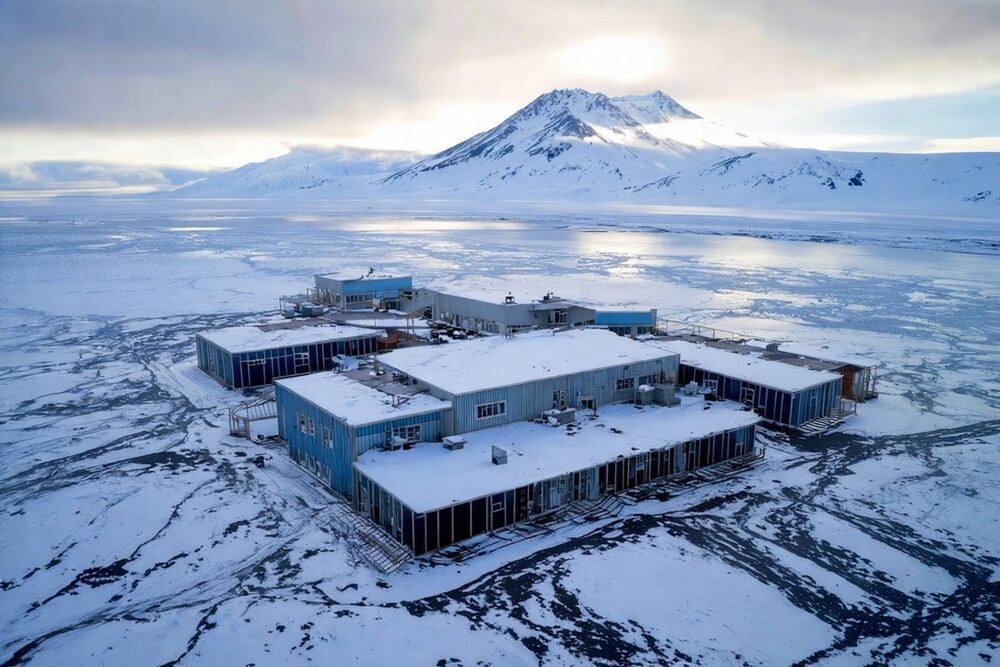
Dozens of countries operate year-round or seasonal stations, ranging from large logistical hubs such as McMurdo to compact specialist bases. Stations are working scientific communities rather than visitor attractions; access normally requires formal permission. Daily life combines laboratory work, maintenance, medical preparedness, waste management and the psychological demands of isolation, darkness and severe weather.
32
🧊 Ice Sheet, Glaciers & Sea Level
ANTARCTICA🧊 Ice Sheet, Glaciers & Sea Level
Research · environment · responsible exploration
The Antarctic ice sheet contains most of Earth’s freshwater ice and averages well over a kilometre in thickness. East and West Antarctica behave differently because much of the western ice rests on bedrock below sea level. Changes in outlet glaciers and ice shelves matter globally: floating shelves do not directly raise the sea when they melt, but their loss can accelerate land ice flowing into the ocean.
33
🌊 The Southern Ocean
ANTARCTICA🌊 The Southern Ocean
Research · environment · responsible exploration
The Southern Ocean circles Antarctica without a continental barrier, allowing the Antarctic Circumpolar Current to connect the Atlantic, Indian and Pacific oceans. Its cold waters absorb heat and carbon and support a food web built around krill. Sea ice expands dramatically each winter and retreats in summer, shaping ecosystems, weather, navigation and the exchange of energy between ocean and atmosphere.
34
🌱 Conservation & Visitor Responsibility
ANTARCTICA🌱 Conservation & Visitor Responsibility
Research · environment · responsible exploration
Antarctic ecosystems recover slowly from disturbance. Visitors must follow biosecurity procedures, keep regulated distances from wildlife, clean footwear and equipment, avoid introducing seeds or soil, and leave every site as they found it. Expedition operators generally work under national permits and international visitor guidelines; responsible travel also requires honest consideration of aviation and ship emissions.
35
⛵ Heroic Age & Exploration
ANTARCTICA⛵ Heroic Age & Exploration
Research · environment · responsible exploration
The so-called Heroic Age produced famous journeys by Amundsen, Scott, Shackleton, Mawson and others, but Antarctic history is broader than a contest between celebrated men. Sealers, whalers, sailors, scientists, radio operators, pilots and support crews built the practical knowledge that made later research possible. Historic huts and artefacts are fragile archives whose survival depends on strict conservation.
36
👩🔬 Women in Antarctica
ANTARCTICA👩🔬 Women in Antarctica
Research · environment · responsible exploration
Women were long excluded from official expeditions and national programs even while contributing to polar science from afar. During the twentieth century they entered field teams, station leadership, aviation, medicine and every major research discipline. Their histories correct the older heroic narrative and show how institutional barriers, not the environment itself, determined who was permitted to work on the continent.
37
🏝️ Bouvet Island
ANTARCTICA🏝️ Bouvet Island
Research · environment · responsible exploration
Bouvet Island is a remote Norwegian dependency in the South Atlantic, volcanic, ice-covered and surrounded by difficult seas. It is often described as the world’s most isolated island and has no permanent population. Landings are rare and hazardous; its importance lies in protected wildlife habitat, meteorological observation and the scientific value of an island far from continental pollution sources.
38
🇫🇷 French Southern & Antarctic Lands
ANTARCTICA🇫🇷 French Southern & Antarctic Lands
Research · environment · responsible exploration
The French Southern and Antarctic Lands include Adélie Land in Antarctica and subantarctic archipelagos such as Kerguelen, Crozet and Amsterdam–Saint-Paul. These islands host research stations and globally important breeding colonies of seabirds and marine mammals. Access is tightly controlled, and conservation focuses on invasive species, fisheries management and the protection of exceptionally large marine ecosystems.
39
🌋 Heard Island & McDonald Islands
ANTARCTICA🌋 Heard Island & McDonald Islands
Research · environment · responsible exploration
Australia’s Heard Island and McDonald Islands are among the planet’s least modified island ecosystems. Heard is dominated by the active volcano Mawson Peak, the highest Australian mountain, while glaciers descend toward storm-lashed coasts. The uninhabited territory is a UNESCO World Heritage Site; permits are stringent because remoteness has protected ecological processes rarely preserved elsewhere.
40
🐋 Ross Sea & Marine Protection
ANTARCTICA🐋 Ross Sea & Marine Protection
Research · environment · responsible exploration
The Ross Sea supports large populations of penguins, seals, whales and Antarctic toothfish and is one of the best-studied high-latitude marine ecosystems. A vast marine protected area was established through international agreement in 2016. Its management illustrates both the promise and difficulty of conservation where science, fishing interests and consensus-based diplomacy meet.
41
📷 Polar Photography & Ethics
ANTARCTICA📷 Polar Photography & Ethics
Research · environment · responsible exploration
Snow and ice can deceive cameras, so photographers often need careful exposure control, spare batteries kept warm and protection against condensation. Ethics matter more than the image: never crowd wildlife, block an animal’s route or ask guides to bend landing rules. Long lenses and patience produce stronger photographs than approaching too closely, while captions should identify whether an image is documentary or generated.
42
📡 Communications & Navigation
ANTARCTICA📡 Communications & Navigation
Research · environment · responsible exploration
Satellite links connect stations and expedition vessels, but bandwidth, coverage and reliability remain limited. Navigation combines modern positioning systems with radar, ice charts, weather forecasts and experienced visual judgment. Travellers should not expect ordinary mobile service; emergency communication belongs to the operator’s safety system, and independent excursions away from supervised areas are inappropriate.
43
🌍 Antarctica’s Global Future
ANTARCTICA🌍 Antarctica’s Global Future
Research · environment · responsible exploration
What happens in Antarctica will not remain there. Ice loss affects coastlines worldwide, Southern Ocean change alters climate and ecosystems, and growing tourism tests the strength of environmental governance. The continent’s future depends on sustained scientific observation, credible international cooperation and decisions made far beyond the polar circle about greenhouse-gas emissions, fishing and protected areas.
44
🧊 East Antarctica — The High Ice Plateau
ANTARCTICA🧊 East Antarctica — The High Ice Plateau
Research · environment · responsible exploration
East Antarctica contains most of the continent’s area and ice, including the immense polar plateau, the Gamburtsev Subglacial Mountains and some of the coldest environments measured on Earth. Its coastal stations are separated from the interior by vast crevassed routes, while deep ice cores preserve atmospheric records extending hundreds of thousands of years into the past.
45
⛰️ Transantarctic Mountains & Mount Erebus
ANTARCTICA⛰️ Transantarctic Mountains & Mount Erebus
Research · environment · responsible exploration
The Transantarctic Mountains divide East and West Antarctica for more than 3,500 kilometres. Their exposed rocks allow geologists and palaeontologists to read a history otherwise buried beneath ice. On Ross Island, Mount Erebus rises as the world’s southernmost active volcano, its persistent lava lake making it a rare natural laboratory as well as a formidable presence above McMurdo Sound.
46
🌿 Subantarctic Islands & Ecosystems
ANTARCTICA🌿 Subantarctic Islands & Ecosystems
Research · environment · responsible exploration
The subantarctic belt is greener, wetter and biologically richer than the continental interior. Tussock grass, cushion plants, seabird colonies and marine-mammal breeding grounds thrive on isolated islands exposed to powerful winds and cold oceans. These ecosystems are exceptionally vulnerable to invasive species, disease and climate change, so biosecurity rules are as important as the dramatic scenery.
47
🌌 Polar Night, Aurora & Astronomy
ANTARCTICA🌌 Polar Night, Aurora & Astronomy
Research · environment · responsible exploration
During winter the Sun disappears for weeks or months, while summer brings continuous daylight. The high, dry and stable atmosphere over the plateau offers exceptional conditions for astronomy, cosmic-microwave-background research and atmospheric observation. Auroras illuminate the long night, but darkness, isolation and extreme cold make winter science possible only through carefully prepared station communities.
48
🧑🔬 Daily Life, Food & Mental Health on Stations
ANTARCTICA🧑🔬 Daily Life, Food & Mental Health on Stations
Research · environment · responsible exploration
Life on an Antarctic station combines advanced science with ordinary communal work: cooking, waste sorting, maintenance, medical drills and cleaning are essential to survival. Fresh food becomes scarce in winter, privacy is limited and evacuation may be impossible for months. Successful crews therefore depend on routines, trust, recreation, psychological support and the ability to manage conflict in confined conditions.
49
📸 Photo Gallery
Radim Kaufmann at Troll Station with Norwegian glaciologist Lars from the Norwegian Polar Institute, blue-grey modular buildings of the Norwegian Antarctic research base in Queen Maud Land, dramatic granite spires of Jutulsessen mountains, both holding steaming metal mugs of coffee
Radim Kaufmann at Troll Station with Norwegian glaciologist Lars from the Norwegian Polar Institute, blue-grey modular buildings of the Norwegian Antarctic research base in Queen Maud Land, dramatic granite spires of Jutulsessen mountains, both holding steaming metal mugs of coffee
Radim Kaufmann seated at the bow of an orange Zodiac expedition boat in the Lemaire Channel, with expedition guide Astrid pointing toward a Weddell seal on an ice floe, dramatic vertical ice-and-rock walls, a humpback whale spout in the distance
Radim Kaufmann at Port Lockroy on Goudier Island holding postcards stamped with the Port Lockroy postmark, beside Sophie, a UK Antarctic Heritage Trust volunteer, the historic 1944 Bransfield House behind, gentoo penguins nesting on the snowy rocks
Radim Kaufmann sitting inside a yellow expedition tent at an overnight camp on the sea ice of Paradise Bay at midnight twilight, holding a steaming mug of hot chocolate, crabeater seals on the ice outside, pink-orange alpenglow on distant glacier walls
Antarctica is not a destination in the conventional sense — it is an encounter with the sublime. No photograph, no documentary, no written account can prepare you for the moment you first stand on that shore and comprehend the scale of what surrounds you. Icebergs the size of cathedrals drift past in silence. Penguins regard you with mild curiosity, having never learned to fear humans. The air is so clean it almost hurts to breathe. And the silence — the profound, absolute silence of a continent without cities, without roads, without a single tree — settles over you like something sacred.
Getting here is expensive, physically demanding, and logistically complex. The Drake Passage can be brutal. The cold can be punishing. But every person I have met who has made this journey says the same thing: it changed them. Antarctica strips away the noise of civilization and confronts you with the raw, indifferent beauty of a planet that existed for billions of years before we appeared, and will endure long after we are gone. Come here, and you will understand why this frozen wilderness must be protected — not for us, but from us.