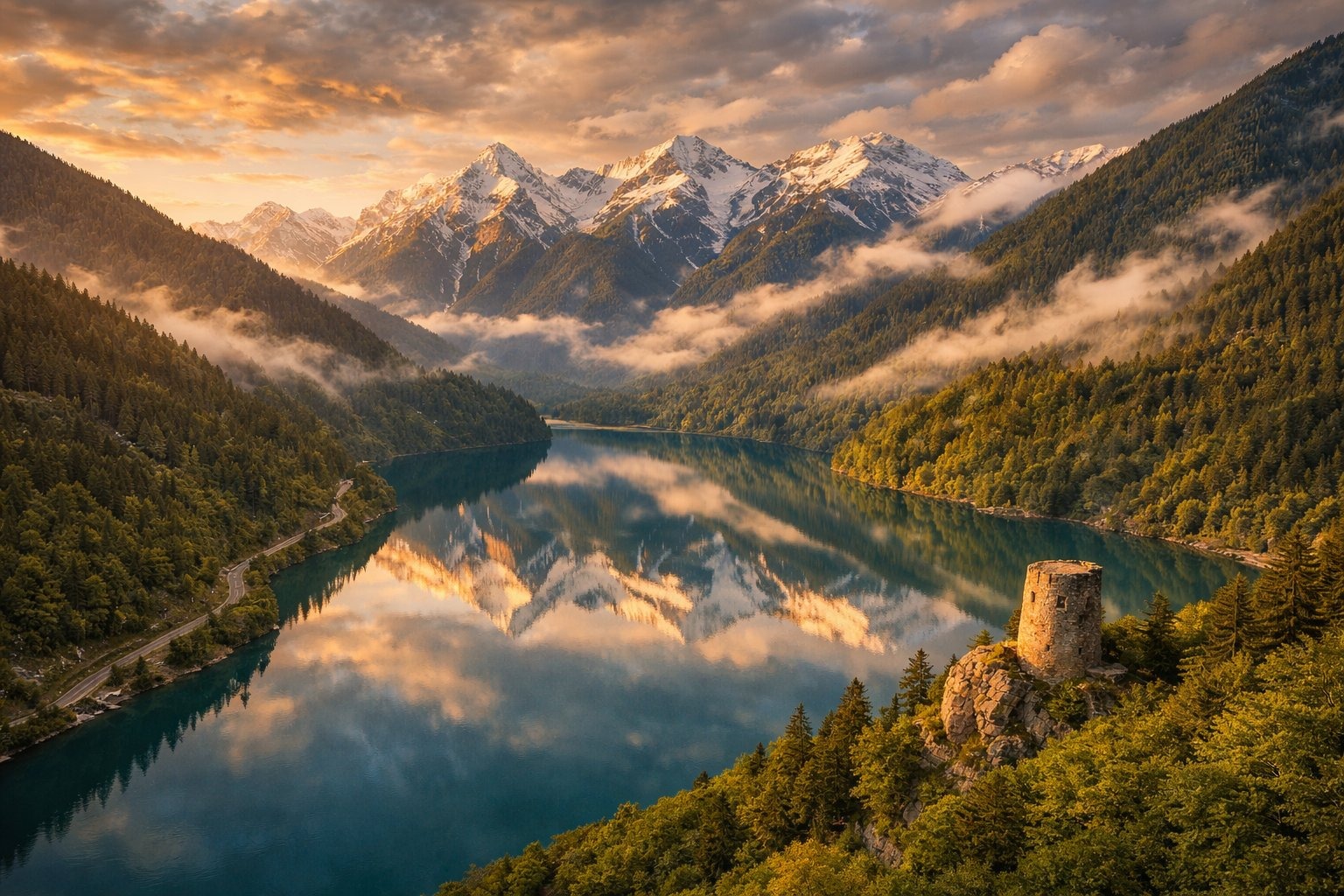
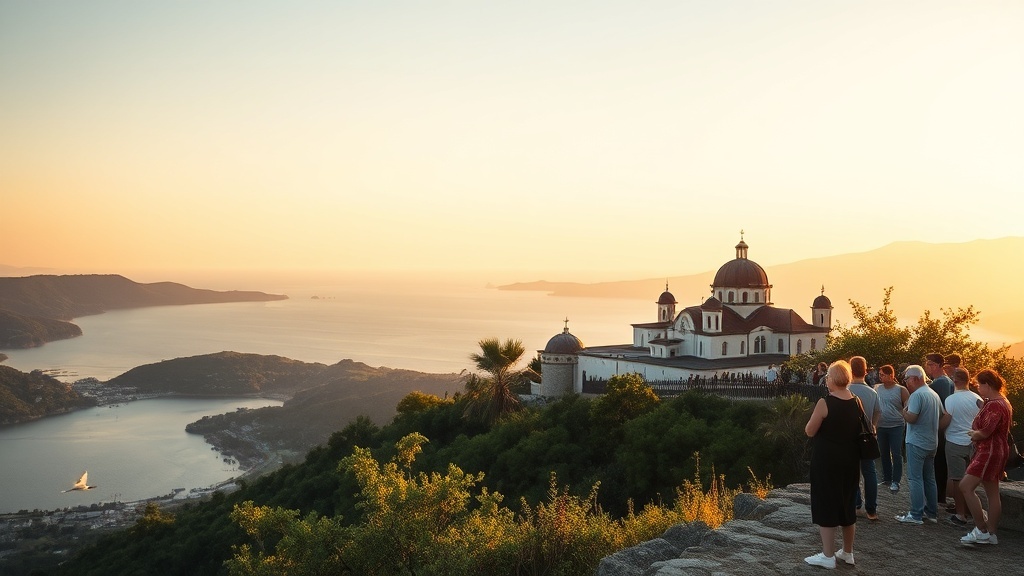
There is a moment, driving the serpentine road from Gagra toward Lake Ritsa, when the Black Sea disappears behind you and the Caucasus mountains rise like a wall of impossible green. Waterfalls cascade down cliffs hidden in morning mist, and the air carries the scent of box trees whose evolutionary lineage, a relict of the ancient Colchic forest refugium, predates the age of dinosaurs. This is Abkhazia—a place that exists somewhere between memory and dream, between Soviet grandeur and post-war melancholy, between international recognition and determined isolation.
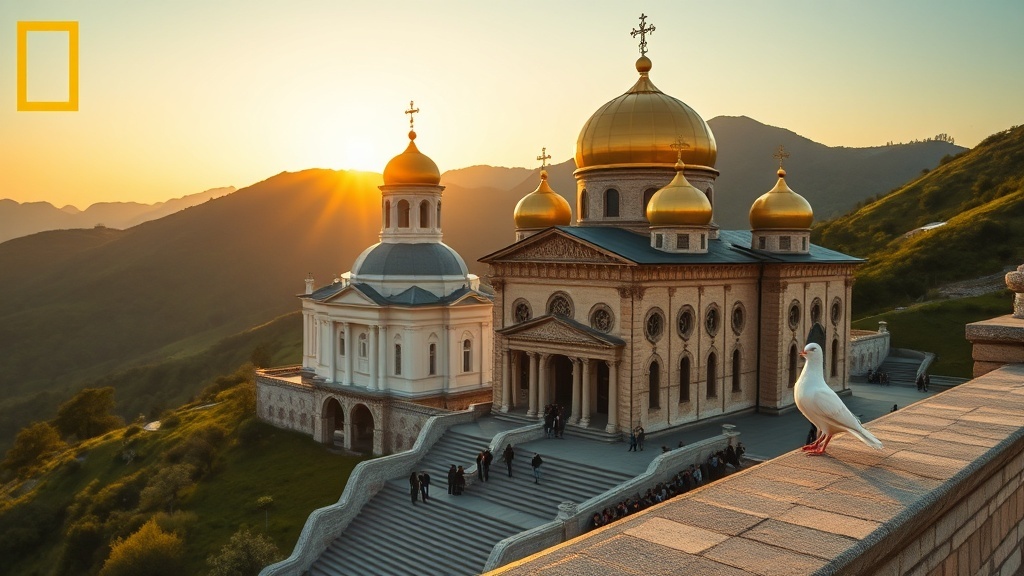
The Abkhaz call their homeland "Apsny" (Аҧсны), meaning "Land of the Soul," and the name feels earned rather than merely aspirational. Once the crown jewel of Soviet resorts where cosmonauts and Communist Party officials recuperated in palatial sanatoriums along the subtropical coast, Abkhazia today offers something increasingly rare in our connected world: authentic discovery without the crowds. The turquoise waters of landslide-dammed Lake Ritsa reflect snow-capped Caucasus peaks while Stalin's preserved green dacha watches silently from the forested shore. In New Athos, golden Orthodox domes rise majestically above subtropical gardens, and deep beneath the monastery complex, an underground railway carries visitors into one of the world's largest and most spectacular cave systems.
Sukhumi, the capital, spreads along a crescent bay where elegant Soviet-era promenades meet bullet-scarred buildings from the devastating 1992-93 war with Georgia. The famous Monkey Colony research facility still operates, the Botanical Garden founded in 1840 still blooms with exotic species, and elderly men still play dominoes in seaside cafés. For travelers willing to navigate genuinely complex entry requirements — in practice controlled by the de facto Abkhaz authorities mostly via Russia, while Georgian law recognizes only entry from the Zugdidi direction as legal — Abkhazia offers something the overcrowded Mediterranean cannot: the ghost of a civilization preserved in subtropical amber.
The name "Abkhazia" derives from the Georgian "Apkhazeti," but the Abkhaz call their homeland "Apsny"—meaning "Land of the Soul" or "Land of Mortals" in their ancient Northwest Caucasian tongue. This linguistic distinction hints at deeper questions of identity that have shaped the region's turbulent modern history. The Abkhaz language itself stands as one of the world's most phonologically complex: the standard literary Abzhywa dialect is analyzed as having 58 consonant phonemes against just two core vowel phonemes, while the Bzyp dialect pushes past 60 — an extreme consonant-to-vowel ratio found in a language family spoken nowhere else on Earth except by related peoples in the northwestern Caucasus.
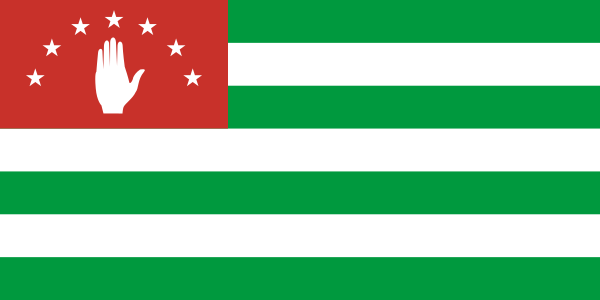
The national flag tells its own story: seven alternating green and white stripes representing the seven historical regions of Abkhazia, with a burgundy canton bearing an open hand—the ancient symbol of Abkhazian statehood—beneath seven stars representing those same districts. The hand symbolizes the Abkhaz concept of "Apsuara," a code of honor, hospitality, and national consciousness that defines what it means to be Abkhaz.
International recognition remains Abkhazia's central challenge. After declaring independence following the 1992-93 war with Georgia, the territory exists in diplomatic limbo—recognized as sovereign by just four UN member states — Russia, Nicaragua, Venezuela, and Syria — after Nauru withdrew its recognition in July 2026, while Tbilisi, the European Union, the United States, and the great majority of the international community consider Abkhazia occupied Georgian territory. This contested status shapes everything from travel logistics to economic development.
For visitors, understanding this identity question enriches every interaction. The Abkhaz are fiercely proud of their distinct heritage—neither Georgian nor Russian, but inheritors of one of the Caucasus's oldest continuous cultures. Their hospitality toward guests, enshrined in the concept of "Apsua"—the Abkhaz way—transcends political complexities.
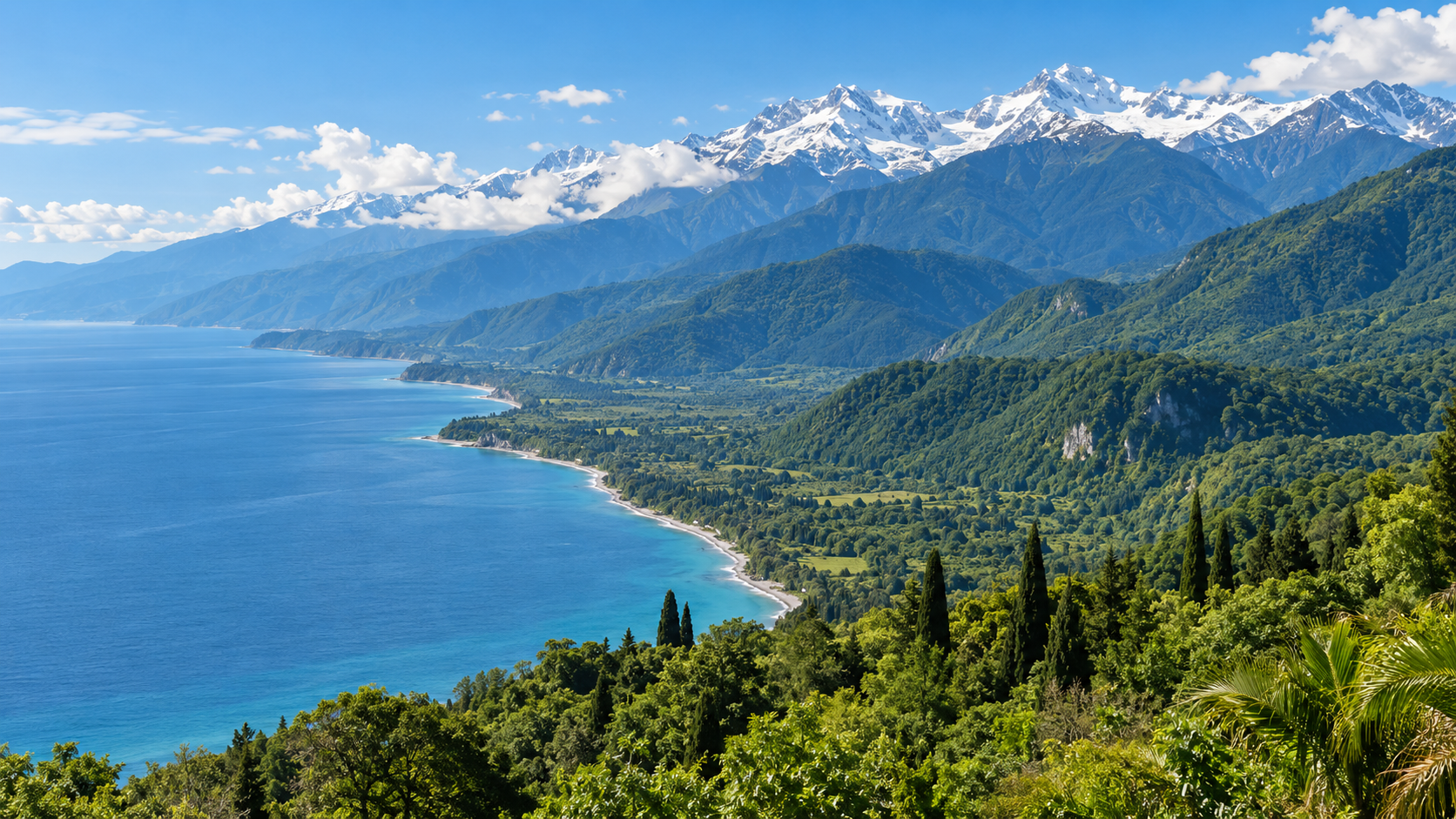
Abkhazia occupies 8,660 square kilometers of extraordinarily varied terrain between the Black Sea and the crest of the Greater Caucasus mountains. The coastline stretches 210 kilometers from the Russian border near Gagra to the Inguri River marking the ceasefire line with Georgia, offering beaches that range from fine sand to smooth pebbles. Behind this narrow coastal strip, the land rises dramatically—within 50 kilometers, elevations climb from sea level to peaks exceeding 4,000 meters.
The climate reflects this topographic compression. The coast enjoys humid subtropical conditions, with average January temperatures around 6°C and summer highs in the upper 20s. Palm trees, citrus groves, and tea plantations thrive here. But ascend into the mountains and you enter a different world—alpine meadows, glacial valleys, and permanent snowfields that feed the rivers rushing down to the sea. Mount Dombay-Ulgen reaches 4,046 meters, though it lies partly across the border in Russia.
Seven administrative districts organize the territory: Gagra in the north hosts the warmest beaches and the road to Lake Ritsa; Gudauta district contains New Athos and Pitsunda; Sukhumi district surrounds the capital; Gulripshi, Ochamchira, Tkuarchal, and Gali stretch southward toward the Georgian border, the latter areas still bearing heavy scars from the 1990s conflict and subsequent tensions.
The natural environment remains remarkably intact. The Ritsa Relict National Park protects high mountain ecosystems, while Colchic box tree forests—survivors from the Tertiary period—shelter endemic species found nowhere else. This biodiversity, combined with minimal development pressure, makes Abkhazia a destination for nature lovers seeking genuinely wild landscapes within reach of comfortable coastal bases.
04
🗺️ Map
05
📜 History
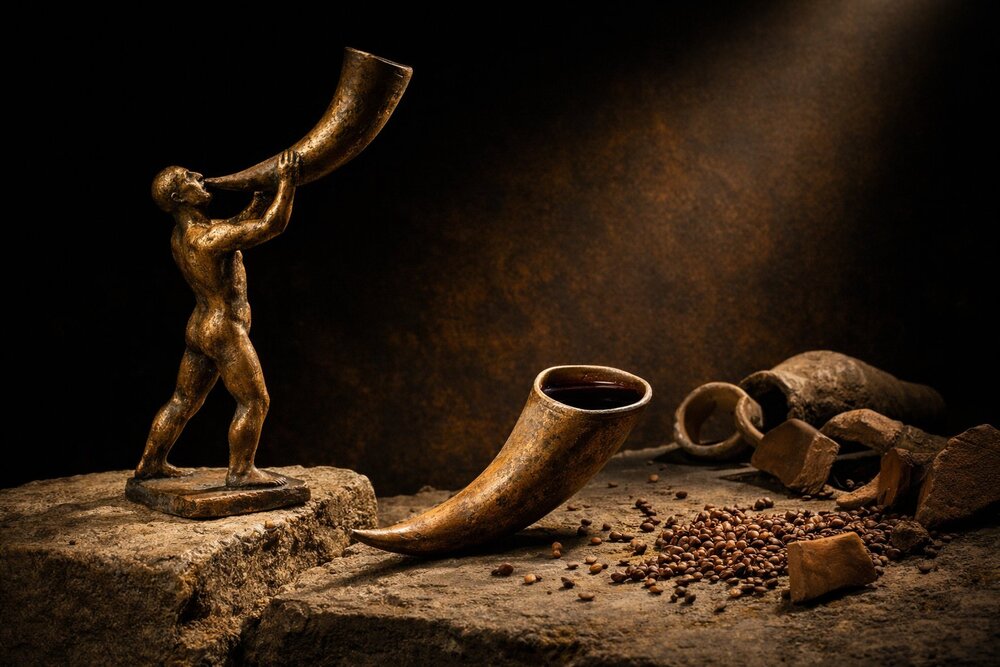
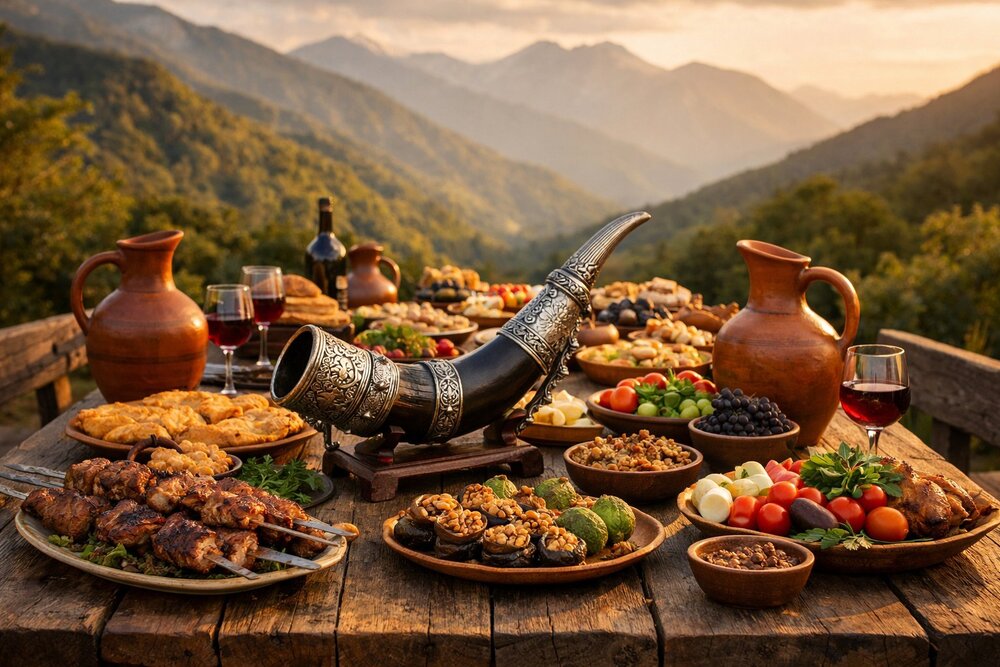
Illustration of a figure with a drinking horn, not a documentary photograph of an archaeological find
Human presence in Abkhazia stretches back to the Paleolithic, but recorded history begins with Greek colonists who established trading posts along the coast around 600 BCE. Dioscurias—modern Sukhumi—became a significant port where Colchian gold flowed westward and Greek goods penetrated the Caucasus interior. Roman influence followed, then Byzantine Christianity, which took root so deeply that Abkhazia became a stronghold of Orthodox faith.
The medieval Abkhazian Kingdom reached its zenith in the 9th and 10th centuries, briefly unifying much of western Georgia under Abkhaz rulers. The fortress of Anacopia, above present-day New Athos, served as the kingdom's capital during this golden age. Subsequent centuries brought fragmentation, Ottoman influence along the coast, and gradual incorporation into the expanding Russian Empire during the 19th century.
Russian conquest triggered catastrophe. The Muhajirstvo—the mass expulsion of Muslim Abkhaz to Ottoman territories in the 1860s and 1870s—reduced the population from perhaps 100,000 to barely 20,000. The demographic void was filled by Georgian, Russian, Armenian, and Greek settlers, fundamentally altering the region's ethnic composition. Soviet rule created the Abkhaz Autonomous Republic within Georgia, a status that papered over tensions until the USSR's collapse.
War erupted in August 1992 when Georgian forces entered Sukhumi. Fourteen months of brutal conflict followed, ending with Abkhaz forces—supported by Russian troops and North Caucasian volunteers—expelling some 250,000 ethnic Georgians. The 2008 Russo-Georgian War brought Russian recognition of Abkhazian independence and permanent military deployment. Today, this small territory remains suspended between sovereignty and isolation, its future uncertain but its determination to chart an independent course unwavering.
06
⚔️ 1992-93 — The War That Remade Abkhazia
Abkhazia's modern political reality is inseparable from a fourteen-month war that began on August 14, 1992, when Georgian government forces entered Sukhumi, ostensibly to secure rail lines during Georgia's own post-Soviet civil turmoil, and rapidly escalated into full territorial conflict with Abkhaz separatist forces. Ethnic Georgians living in Abkhazia fought largely alongside Georgian government units; ethnic Armenians and Russians in the territory's mixed population mostly sided with the Abkhaz, and thousands of volunteer fighters from across the North Caucasus — organized as the Confederation of Mountain Peoples of the Caucasus — crossed into Abkhazia to fight alongside them, a mobilization Moscow's role in remains genuinely disputed by historians.
The war's defining and most contested episode came with the fall of Sukhumi on September 27, 1993. International monitors, including the OSCE, documented a large-scale campaign of killings and expulsions targeting the city's ethnic Georgian population in the days that followed — what is widely described internationally as ethnic cleansing, a characterization the de facto Abkhaz authorities dispute. A United Nations fact-finding mission the following month documented serious human rights violations committed by multiple parties to the conflict. Estimates of the dead range from roughly 10,000 to 30,000 across the full war, with more than 200,000 people, overwhelmingly ethnic Georgians, permanently displaced from Abkhazia — a displacement that, for the great majority, has never been reversed.
A Russian-brokered ceasefire in 1994 froze the conflict roughly along today's administrative boundary line, backed initially by CIS peacekeepers and later by a continued Russian military presence that persists to this day. Georgia considers Abkhazia Russian-occupied territory; the de facto Abkhaz authorities regard the war's outcome as a war of national liberation and independence secured. The 2008 Russo-Georgian War, fought elsewhere in Georgia, ended with Russia formally recognizing Abkhazia's independence — a recognition joined, as of 2026, by only three other UN member states. Nearly every practical reality described elsewhere on this page — the entry restrictions, the ruined sanatoriums, the demographic shape of who lives here now, the international isolation — traces back to these fourteen months.
07
🚢 Muhajirs — The Abkhaz Nation Beyond the Caucasus
Long before the 1992-93 war created its own refugee crisis, a much larger displacement had already scattered the Abkhaz people across the world. Between 1864 (when Russia declared final victory in the decades-long Caucasian War) and 1877, wave after wave of Abkhaz were deported or fled to the Ottoman Empire — a process known as Muhajirism, from the Arabic word for migration also used for early followers of Muhammad. Historians estimate roughly 135,000 ethnic Abkhaz and closely related Abazins left in these waves alone; one contemporary account claimed Abkhazia lost up to 60% of its population in the single worst year, 1877.
The scattering that followed was genuinely global: significant Abkhaz communities took root in Turkey (still home to the largest diaspora population by far), Syria, and Jordan, with smaller communities eventually reaching as far as Egypt and Western Europe. The numbers involved remain surprisingly uncertain even today — estimates for the total global Abkhaz diaspora range from 500,000 to as much as a million people, against a population living inside Abkhazia itself of well under 250,000. By most estimates, roughly 80% of all ethnic Abkhaz alive today live outside their historic homeland, a ratio that inverts almost every assumption a visitor might bring about where "Abkhaz culture" actually lives.
Under Tsarist and then Soviet rule, contact between the diaspora and the homeland was largely forbidden; a repatriation committee formed in 1993, at the height of the war with Georgia, as the de facto authorities sought diaspora political and financial support, and a dedicated repatriation fund followed in 1998. Actual repatriation has remained modest and complicated — bureaucratic hurdles, language loss after generations abroad, and the practical difficulty of resettling in a small, war-scarred, internationally unrecognized territory have all slowed a process diaspora communities and Sukhum's government alike have wanted to accelerate for decades. Syria's own civil war after 2011 added a bitter final twist: some Syrian-Abkhaz families, descendants of 19th-century refugees, found themselves displaced yet again, this time seeking to "return" to a homeland many had never actually seen.
08
🏖️ The Soviet Riviera — How an Empire Built a Holiday Coast
The story of Abkhazia's resort coast begins not with the Soviets but with a Romanov: Prince Alexander of Oldenburg, a great-grandson of Tsar Paul I, who arrived in a malaria-ridden fishing village called Gagra around 1901 with an audacious plan — to build "the Russian Nice" on the Black Sea. He drained swamps, imported ornamental plants from across the Mediterranean, built a palace, and in 1902 purchased a prefabricated wooden pavilion at the Paris World's Fair, built from Norwegian timber, and shipped it in pieces to become the Gagripsh restaurant that still operates today. The resort officially opened on January 9, 1903, and Gagra briefly became a genuine playground for pre-revolutionary Russian high society.
The Soviet state that came after didn't abandon Oldenburg's vision — it nationalized and massively expanded it. Abkhazia's subtropical microclimate, rare anywhere in the USSR, made it irresistible to Soviet planners building a system of sanatoriums where factory workers, trade-union members, and eventually Communist Party elites earned state-subsidized stays as a reward for labor. Entire hillsides above Sukhumi, Gagra, and Pitsunda filled with monumental modernist sanatorium complexes — part hospital, part hotel, built with genuine architectural ambition rather than budget utilitarianism, since a healthy, productive workforce was itself considered a Soviet achievement worth investing in. Stalin himself kept multiple dachas along this coast (see below), and later Soviet cosmonauts, scientists, and Politburo members followed the same pattern of subtropical recuperation that had first drawn Oldenburg's aristocratic guests.
The system collapsed with the USSR itself, and the 1992-93 war turned much of this resort infrastructure into a genuine war zone — shelled sanatoriums, looted hotels, and a decade of near-total tourism collapse followed. What exists today is a partial recovery built almost entirely around Russian tourism: some Soviet-era sanatoriums have been renovated and reopened, others still stand as genuinely haunting ruins that draw urban explorers as much as beachgoers, and the coast as a whole remains recognizably the product of a state that once believed a seaside vacation was something every citizen was owed.
Approximately 245,000 people inhabit Abkhazia today, with ethnic Abkhaz comprising around half the population—roughly 125,000 souls who speak one of the world's rarest language families. Armenians form the second-largest group, followed by Russians and a small remaining Georgian population, mostly in the Gali district near the ceasefire line. This demographic mosaic reflects the violent upheavals of the past century, yet daily life proceeds with remarkable normalcy.
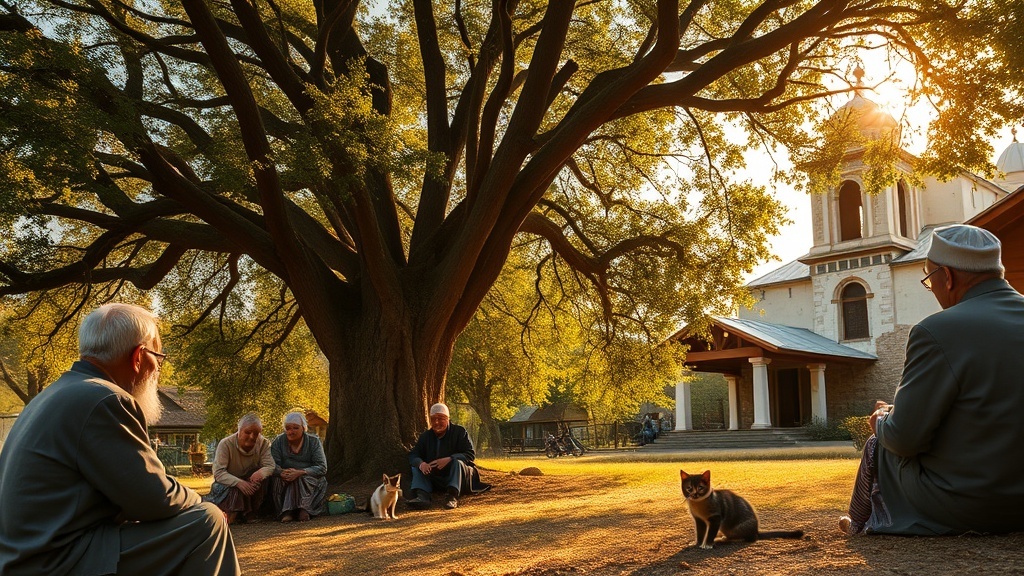
Abkhaz society traditionally organized around extended family clans, with complex systems of mutual obligation and collective responsibility that persist in modified form today. The concept of "Apsuara"—roughly translatable as "Abkhazness"—encompasses codes of honor, hospitality, respect for elders, and connection to ancestral lands that define cultural identity. A guest in an Abkhaz home receives near-sacred protection; the expression "a guest is from God" carries genuine meaning here.
Religion presents a fascinating syncretism. Most Abkhaz identify as Orthodox Christians, yet pre-Christian beliefs remain woven through daily life. Sacred groves dedicated to the supreme deity Antsva still receive offerings; the Abkhaz wedding ceremony blends Orthodox ritual with ancient customs; funeral traditions follow patterns older than Christianity itself. This layered spirituality gives Abkhaz culture a distinctive character quite unlike neighboring Georgia or Russia.
Traditional culture finds expression in music, dance, and craftsmanship. Polyphonic singing (Georgian polyphonic traditions specifically hold UNESCO intangible-heritage recognition, a status not directly extended to Abkhazia's own related but distinct tradition) features rich vocal harmonies that echo through mountain villages. The "apsua" dance traditions, the distinctive "apkhyartsa" bowed instrument, and the two-stringed "ayumaa"—all carry forward artistic traditions spanning millennia. For visitors, witnessing these living traditions offers windows into a culture that has survived against remarkable odds.
Ask an Abkhaz elder what defines their people and the answer will rarely be a place, a religion, or even the language — it will be Apsuara, literally "Abkhazness," an unwritten ethical code that Abkhaz ethnographer Shalva Inal-Ipa described as the historical foundation of the nation's entire self-understanding. Where Apsny is the name of the land — "the country of the soul" — Apsuara is the code by which its people are expected to live in it: a comprehensive, orally transmitted system covering hospitality, respect for elders, family obligation, personal honor, and conduct toward guests, all built around a core concept called alamys, roughly translatable as conscience or shame-bound honor.
In practice, Apsuara shapes everyday interaction in ways a visitor notices quickly: a younger person greets an elder first, not the reverse; a guest at any Abkhaz table is treated as a genuine obligation of honor rather than a customer, with the ritual of toasting (see the Cuisine section) itself a formalized expression of the code. Traditional large households — some counting up to thirty family members under one roof well into the 20th century — placed grandparents and great-grandparents at the literal and social center of family life, as living carriers of Apsuara passed down through direct example rather than any written text. The horizontal open hand on Abkhazia's national flag is a direct symbol of this same code: hospitality and welcome, formalized as a mark of national identity.
Apsuara predates Abkhazia's Christianity, its Soviet era, and its current political isolation, and — unlike the recognition disputes and border complications that dominate outside coverage of the territory — it's the thing Abkhaz themselves are most likely to point to when explaining who they are. Understanding it, more than any single monastery or mountain view, is the closest thing to a key for reading Abkhaz society as it actually functions.
11
🗣️ Abkhaz — A Language Built from Consonants
Abkhaz belongs to the Northwest Caucasian language family, a small group spoken nowhere on Earth outside this corner of the Caucasus and its diaspora communities, related only to Circassian and Abaza and to no other language family on the planet. Its defining feature is a consonant inventory that ranks among the largest documented anywhere in the world: the standard literary Abzhywa dialect is analyzed as having 58 consonant phonemes, while the northern Bzyp dialect pushes past 60 — set against a strikingly minimal two core vowel phonemes, an imbalance almost nowhere else replicated in a living language.
That "two vowels" figure routinely surprises people into assuming Abkhaz speech must sound impossibly monotone — it doesn't. The two underlying vowel phonemes are realized in a wide range of actual sounds depending on the surrounding consonants, which do most of the phonetic heavy lifting; the result is a language that a linguist would call vowel-poor but is, in practice, richly and unmistakably melodic to hear spoken. Abkhaz also preserves grammatical features — a complex system of noun classes and verb agreement markers baked directly into the verb — that give sentences an information density very different from English or Russian.
A written Abkhaz literary tradition is genuinely young: the language was first systematically transcribed only in the 1860s, went through several changes of alphabet across the 20th century (Cyrillic-based, briefly Latin-based under Soviet nationalities policy, then Cyrillic again), and Soviet-era pressure toward Russian-language education left many urban Abkhaz more comfortable in Russian for daily practical use even today. Russian remains the dominant language of business, higher education, and internet life throughout the territory; Abkhaz survives as the language of home, village life, oral tradition, and — increasingly, through state-backed cultural policy since the 1990s — a deliberate project of linguistic revival that treats the language's survival as inseparable from the survival of Abkhaz identity itself.
Officially, Abkhazia is an Orthodox Christian country with an ancient Christian heritage (see the dedicated section below) — but Christianity here has never fully displaced a much older, still-living tradition of sacred natural sites and hereditary ritual practice. Traditional Abkhaz religion centers on anykha — sacred shrines, often a grove, spring, or mountain site rather than any built structure — tended historically by hereditary priestly families and associated with a supreme deity figure, Antswa, alongside a wider pantheon of nature and ancestor-linked spirits.
Abkhaz tradition speaks of a network of principal shrines spread across the territory, sites where communities have historically gathered for oath-taking, conflict resolution, and seasonal ritual — practices that never fully stopped even through Soviet-era atheist policy and generations of nominal Orthodox observance. This isn't a revived or invented "neopaganism" in the sense the word often implies elsewhere; it's better understood as a continuous, syncretic layer of belief that coexists with Orthodox Christianity rather than competing with it, much as pre-Christian practices persist in folk observance across large parts of the wider Caucasus and Balkans. Villagers who attend Sunday liturgy at an Orthodox church may, in the same year, take part in a ritual gathering at a hereditary family shrine — the two systems are experienced as complementary layers of the same inherited world rather than a contradiction requiring resolution.
For visitors, this layer of Abkhaz spiritual life is largely invisible — most active shrine sites are not tourist attractions, some are actively kept private by the families who maintain them, and outside visitors are not generally welcome at living ritual sites. But its existence reshapes how the more visible Christian heritage described elsewhere on this page should be read: not as the sum total of Abkhaz religious identity, but as one layer — genuinely important, genuinely old — laid over something older still.
13
⛪ Christian Abkhazia — A Thousand Years Before New Athos
New Athos Monastery, Abkhazia's best-known religious site, is a 19th-century Russian imperial project — genuinely striking, but barely more than a century old. Abkhazia's actual Christian history runs vastly deeper, into the Byzantine world of Late Antiquity, and a handful of far older churches scattered across the territory tell that longer story.
Dranda Cathedral, generally dated to the early Byzantine period (with a 6th-century dating commonly cited, though the precise chronology has been debated by architectural historians), is among the oldest surviving church buildings anywhere in the Caucasus — a domed cross-in-square structure built in an era when this coast sat within Byzantium's cultural and religious orbit, centuries before Kievan Rus' adopted Christianity at all. Mokvi Cathedral, built in the 10th century under King Leon III of Abkhazia, represents the architectural confidence of the medieval Kingdom of Abkhazia at its height, a genuinely major regional power in its era rather than the small, isolated territory of today. Bedia Cathedral, consecrated at the very end of the 10th century under King Bagrat III — the ruler who first unified the medieval kingdoms of Abkhazia and Georgia into a single crown — physically embodies that unification, and its surviving Bedia Chalice is considered one of the masterpieces of medieval Caucasian goldsmithing.
Lykhny, the historic princely seat of Abkhazia, centers on a 10th-century church whose interior frescoes have survived Soviet-era atheist campaigns, war, and neglect largely intact — and the surrounding village green remains, to this day, the traditional site of Abkhaz popular assembly, the place where major national gatherings and declarations have historically been made. Together, these sites reframe the New Athos-Pitsunda version of Abkhaz Christianity that dominates typical tourist itineraries: this coast was already a serious, sophisticated Christian cultural landscape a thousand years before the Russian Orthodox monks of New Athos ever arrived.
Sukhumi spreads along a crescent bay where the Caucasus mountains meet the Black Sea, Abkhazia's capital and largest urban center, home to approximately 65,000 residents. Few cities this size anywhere carry as many distinct historical layers: a Greek trading colony some 2,500 years before it was ever called Sukhumi (see Dioscurias & Sebastopolis, above), a Soviet resort city that once drew millions of annual visitors to its sanatoriums, and a capital still visibly marked by the war that ended its Soviet-era prosperity in 1993.
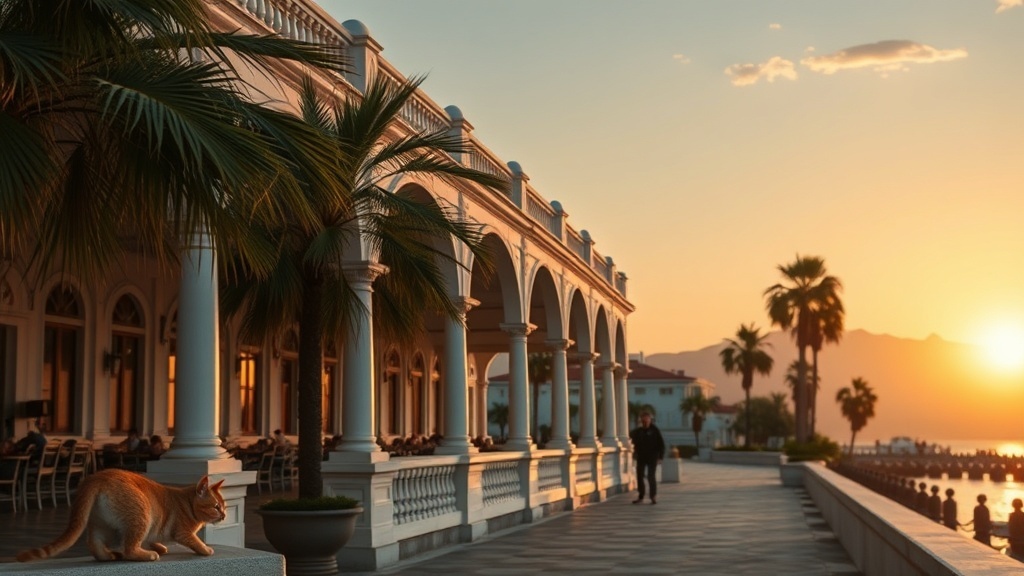
The seafront promenade remains the heart of Sukhumi, a palm-lined walkway where locals gather for evening strolls past neoclassical buildings and outdoor cafés. The Botanical Garden, founded in 1840 and home to over 5,000 plant species, survived both war and neglect to remain one of the oldest in the former Soviet Union. Nearby, the quirky Monkey Colony—a Soviet-era medical research facility—still houses hundreds of primates, a surreal reminder of the city's scientific past.
The 1992-93 war left a lasting physical mark on the city. The burned-out shell of the Parliament building stands as a memorial to the conflict, its damaged columns a stark counterpoint to the subtropical greenery around it. Abandoned hotels and sanatoriums dot the hillsides, their empty windows overlooking the same turquoise waters that once attracted three million Soviet tourists annually. The State Museum chronicles millennia of local history, while the ruins of the ancient Sukhum-Kale fortress hint at even older stories.
For visitors, Sukhumi offers an experience unlike any Mediterranean resort—a city where time has fractured rather than simply passed, where tragedy and beauty coexist in every street, and where the warmth of Abkhazian hospitality provides unexpected comfort amid the melancholy of a capital still finding its way forward.
15
🏺 Dioscurias & Sebastopolis — Sukhumi Before Sukhumi
Sukhumi's history as a settled port stretches back roughly 2,500 years before the word "Sukhumi" existed at all. Greek colonists from Miletus founded Dioscurias here in the 6th century BCE, naming it for the mythical Dioscuri twins, patrons of sailors — a natural choice for a city built around one of the Black Sea's best-sheltered bays, and soon a major trading hub linking the Caucasus interior to the wider Greek and later Roman Mediterranean world. Under Roman control from the 1st century CE, the settlement was refortified and renamed Sebastopolis ("the revered city") in honor of Augustus.
Coastal subsidence and shifting shorelines over two millennia have genuinely submerged parts of the ancient city beneath the modern harbor — underwater archaeological surveys have documented walls and a round tower structure beneath the waves, and in 1953 the extraordinary Sukhumi Stela, a marble Greek grave monument dated to roughly 430-420 BCE depicting a mother bidding farewell to her children, was recovered from the seabed near the mouth of the Besleti River and is now displayed at the Sukhumi State Museum. This is a genuine, documented archaeological phenomenon — but it isn't an organized "snorkel through ancient ruins" tourist activity, and claims framing it that way overstate what's actually accessible. What is accessible is a proper on-land archaeological site near the city center, with visible 2nd-century fortress remains and ancient ceramics, free to explore.
The city's name kept shifting with its rulers: Byzantine Sebastopolis (restored under Justinian I in 565 after being deliberately demolished in 542 to deny it to the Sasanians), sacked by the same Arab commander Marwan II who besieged Anakopia in 736, a Genoese trading post by the 14th century, Ottoman Sukhum-Kale from 1578, and finally Russian imperial Sukhumi after 1810 — each layer still legible, in fragments, beneath the modern capital.
16
🐒 Sukhumi's Primate Institute — Soviet Science in the Subtropics
Founded in 1927 as the Institute of Experimental Pathology and Therapy, Sukhumi's "monkey station" was, genuinely, the world's first dedicated primate research laboratory — chosen for this subtropical hillside specifically because Abkhazia's mild climate let researchers keep primates alive and breeding outside the tropics year-round, something no facility further north or inland could manage. Its scientific legacy is real and substantial: primate testing here contributed to research underlying vaccines and treatments for polio, yellow fever, typhus, and other diseases, and the institute trained the Soviet space program's primate cosmonauts — Dryoma and Yerosha, launched into orbit and safely recovered in 1987, the best-known of several successful primate spaceflights run through Sukhumi.
The institute's history carries a genuinely darker chapter as well: biologist Ilya Ivanov, who had pioneered artificial insemination techniques in horses, conducted controversial experiments here in the late 1920s attempting to inseminate female chimpanzees with human sperm, an episode tied to the era's broader Soviet interest in disproving religious objections to Darwinism through direct experimental provocation. The experiments failed to produce results and Ivanov later fell from Soviet favor, dying in one of Stalin's prison camps — a genuinely strange footnote even by the standards of early Soviet science.
At its Soviet peak the institute held over 2,500 primates and employed roughly 1,000 staff; the 1992-93 war devastated it directly, with looting, shelling damage still visible on the buildings today, and hundreds of animals killed, released, or left to fend for themselves in the surrounding hills (a wild baboon population, descended partly from a deliberate 1970s cold-tolerance experiment near the Enguri dam, still persists locally). Today the institute survives at a fraction of its former scale — several hundred primates, a much-reduced staff — continuing genuine pharmaceutical and medical research even as its Soviet-era monuments to Lenin and Darwin remain standing, oddly preserved, on the same grounds.
Gagra was once the most glamorous resort on the entire Soviet coastline, where Communist Party elites and celebrated artists escaped Moscow winters for palm-lined promenades and subtropical warmth (see The Soviet Riviera, above, for the full story of how a malaria-ridden fishing village became this). Today the town stretches along the Black Sea at the foot of the Caucasus, its Belle Époque and Soviet-era architecture standing in varying states of repair — some restored and functioning, some genuinely abandoned — a visible record of the resort's successive booms and busts rather than a single unbroken decline.
The town divides naturally into Old Gagra and New Gagra, each with distinct character. Old Gagra clusters around the historic colonnade—that iconic row of white arches that has welcomed visitors since Soviet times and remains the most photographed landmark in Abkhazia. Nearby stands the legendary Gagripsh Restaurant, an Art Nouveau wooden structure that Prince Alexander of Oldenburg purchased at the 1902 Paris World's Fair — Norwegian-sourced timber, shipped disassembled to Gagra and reassembled without a single nail. Chekhov dined here; so did Stalin. The restaurant still operates, its ornate fretwork balconies overlooking the same sea that inspired generations of Russian writers.
Above Old Gagra, the ruins of Prince Oldenburg's own palace stand overgrown in what remains of his gardens — the same Prince Alexander of Oldenburg whose original resort vision, malaria-clearing, and imported plantings shaped everything that followed here, Soviet included.
New Gagra offers more practical amenities—functioning hotels, restaurants, and the warmest beaches in Abkhazia. The climate here is genuinely subtropical, with temperatures rarely dropping below freezing even in January. For travelers, Gagra serves as the natural gateway to Lake Ritsa and the mountain wilderness beyond, a base camp where the comforts of civilization—however faded—remain accessible before venturing into Abkhazia's spectacular interior.
18
🕳️ Arabika Massif — Where the Earth Goes Two Kilometres Down
In the mountains behind Gagra sits one of the strangest concentrations of extreme geography on the planet: the Arabika Massif, a high plateau of Upper Jurassic and Lower Cretaceous limestone whose interior has been dissolved by groundwater into a maze of vertical shafts descending, in places, more than two kilometers straight down. Four of the world's ten deepest known caves sit inside this one massif, a density found nowhere else on Earth.
Veryovkina Cave, discovered in 1968 and pushed past the 2,000-meter mark by Russian expeditions between 2016 and 2018, and Krubera-Voronya Cave, first explored by Ukrainian speleologists who broke the 2,000m barrier in 2004, have spent the past two decades trading the title of the world's deepest known cave back and forth as re-surveys refine their measurements to the meter. Depending on which recent source you check, either cave might currently hold the record — both sit around 2,197-2,212 meters deep, and the dispute genuinely hasn't settled as of 2026. A third system, Sarma Cave, discovered in 1990 and measured to 1,830 meters in 2012, makes Arabika home to three of the planet's five deepest caves in a single massif barely a few kilometers across.
The geology explains the extremity: Arabika's limestone plunges southwest beneath the Black Sea itself, and dye-tracing experiments in the 1980s proved that water entering sinkholes on the high plateau reaches the sea via submarine springs — meaning the cave systems form part of a groundwater network connecting mountain peaks directly to the seafloor. Expedition teams descending Krubera or Veryovkina spend up to three weeks underground, establishing camps at successive depths, hauling equipment through sumps (flooded passages requiring cave-diving gear) and boulder chokes that have killed experienced cavers — a Russian diver's body was recovered from Veryovkina in 2021 after a solo attempt went wrong. In return, biologists have found genuinely alien life down there: blind amphipods and shrimp found nowhere else on the surface, and springtails discovered living at nearly 2,000 meters depth — the deepest terrestrial animals ever documented anywhere on the planet.
19
⚡ Enguri — A Power Station Divided by a Conflict Line
Few pieces of infrastructure anywhere capture the strange logic of a frozen conflict better than the Enguri Hydroelectric Complex. Built by Soviet engineers between 1961 and 1987, Enguri's arch dam — at 271.5 meters, one of the tallest in the world — and its reservoir sit on Georgian-government-controlled territory near Jvari. But the actual underground power station, where the water's energy is converted into electricity, sits across the Enguri River inside Abkhaz-controlled Gali district, connected to the dam by a 15-kilometer diversion tunnel bored through the mountain.
Neither side can operate the system alone. Georgia controls the dam and reservoir but needs Abkhaz cooperation to reach the power station; Abkhazia hosts the generating equipment but cannot fill or manage the reservoir that feeds it. The result, sustained since the 1994 ceasefire through nothing more formal than an ongoing working arrangement between engineering staff on both sides, is Georgia supplying Abkhazia with a share of the power generated — commonly cited around 40% to Abkhazia and 60% to Georgia — in exchange for continued access to the shared facility. Plant engineers, many from the same local ethnic communities on both sides of the line, describe Enguri as effectively the only place where Georgian and Abkhaz officials still meet and cooperate as a matter of routine, technical necessity rather than diplomacy.
The arrangement is genuinely fragile. Aging Soviet infrastructure requires periodic shutdowns for repair — a 2020-21 closure left Abkhazia dependent on emergency Russian power imports for months — and Abkhazia's own energy situation has been further strained in recent years by cryptocurrency mining operations drawing on the territory's historically near-free electricity, triggering rolling blackouts even when Enguri runs normally. It's a genuinely rare case in any active territorial conflict: politics has divided Enguri's dam from its power station as thoroughly as any border ever could, but the physics of hydroelectric power generation, stubbornly, has not.
Every itinerary described elsewhere on this page — Gagra, Lake Ritsa, New Athos, Pitsunda — sits along a single northwestern corridor. Southern and eastern Abkhazia, the area between Sukhumi and the administrative boundary with Georgia proper, remains almost entirely off the standard tourist map, for reasons that are as much about ongoing human reality as about limited infrastructure.
Tkvarcheli (Tkuarchal in Abkhaz) was a major Soviet coal-mining city, purpose-built around industrial coal extraction with a peak population near 40,000. During the 1992-93 war it endured a genuinely brutal 413-day siege by Georgian forces, supplied only by intermittent helicopter flights and small boats across Lake Sukhumi under fire — an episode central to Abkhaz wartime memory. The city's population collapsed after the war and never recovered; much of it stands today as genuine industrial ruin, though — contrary to a common "ghost town" label — Tkvarcheli is not abandoned. People still live and work there, in a city whose surviving population coexists with block after block of empty Soviet apartment buildings.
Ochamchira, a Black Sea port town south of Sukhumi with its own Soviet-era infrastructure and nearby historic churches, carries additional weight as a site of continued Russian military presence — a naval facility here has been part of Russia's post-2008 basing arrangements in Abkhazia, a subject the de facto authorities and Moscow treat with limited public transparency. Gali district, the southernmost part of Abkhazia bordering Georgia proper, requires the most careful description of any place on this page: it was, before the war, overwhelmingly populated by ethnic Georgians (specifically Mingrelians), the great majority of whom were displaced in 1993 and again during renewed violence in 1998. Some tens of thousands have since returned or never fully left, living today under de facto Abkhaz administration while facing documented, ongoing difficulties around citizenship status, freedom of movement across the administrative boundary line, and language rights — a situation international human rights bodies continue to monitor and that has no resolved endpoint. Gali is not a "hidden gem" for tourism; understanding it is part of understanding Abkhazia honestly.
21
🏔️ Pskhu — The Remote Caucasus
Almost everything described elsewhere on this page sits within a couple of hours of the coast. Pskhu doesn't: an isolated high mountain valley deep in the Caucasus interior, connected to the rest of Abkhazia by a single unpaved road that becomes genuinely difficult, and sometimes impassable, outside summer months. That isolation is precisely the point for the handful of travelers who make the trip — a chance to see traditional mountain settlement patterns and wilderness landscape essentially unchanged by either Soviet resort development or post-war coastal tourism, a version of Abkhazia that has simply been too remote for either to fully reach.
The valley's small population lives largely as mountain communities across the wider Caucasus historically have — livestock, subsistence agriculture, a rhythm of life dictated by mountain passes that open and close with the seasons rather than by tourist demand. It's not a place with developed visitor infrastructure, and it isn't trying to be; Pskhu functions as a genuine wilderness and cultural counterweight to the resort coast that dominates the rest of this page, worth knowing about even for travelers who won't attempt the journey themselves, as a reminder of how much of interior Abkhazia the standard Gagra-Ritsa-Sukhumi itinerary simply never touches.
22
🍊 Tea, Tangerines & Tobacco — The Soviet Subtropics
Abkhazia's tangerine groves aren't a quirky local specialty that happened to catch on — they're the direct, deliberate product of Soviet central planning treating this coast as a strategic agricultural asset. The USSR had remarkably little genuinely subtropical territory anywhere within its borders, and Abkhazia's rare combination of high rainfall, mild winters, and protection from Arctic air by the Caucasus wall made it one of a small handful of places capable of growing citrus, tea, and tobacco at any real scale on Soviet soil at all — a strategic value that translated directly into heavy state investment in plantations, processing infrastructure, and research institutes dedicated to subtropical agriculture.
Tea cultivation, introduced at real scale in the early 20th century and expanded dramatically under Soviet planning, turned hillsides across the territory into terraced plantations supplying tea across the entire Soviet Union — domestic tea production was itself a point of Soviet self-sufficiency pride, reducing dependence on imports from British-controlled colonial tea markets. Citrus, above all mandarin oranges, followed the same logic on an even larger scale, while tobacco rounded out a genuinely three-crop subtropical economy that made Abkhazia disproportionately important to Soviet agricultural planning relative to its tiny size.
That economic structure has proven remarkably persistent. Post-Soviet Abkhazia, cut off from most of the world by its unresolved political status, still exports tangerines to Russia as one of its few reliable sources of foreign currency — meaning a crop pattern designed by Soviet five-year plans in the 1930s-50s continues, almost unchanged, to shape what Abkhazia actually sells to the outside world nearly a century later. When Russia briefly banned tangerine imports during a 2024-25 political dispute with Sukhum (see Overview), the fact that this counted as genuine economic leverage says everything about how concentrated that dependence remains.
New Athos packs two genuinely distinct stories into one small town of barely 2,000 residents: a 19th-century Russian Orthodox monastery above ground, and one of the world's most spectacular cave systems below it — with the much older Anakopia fortress, covered in its own section above, completing a third, still earlier layer on the same hillside.
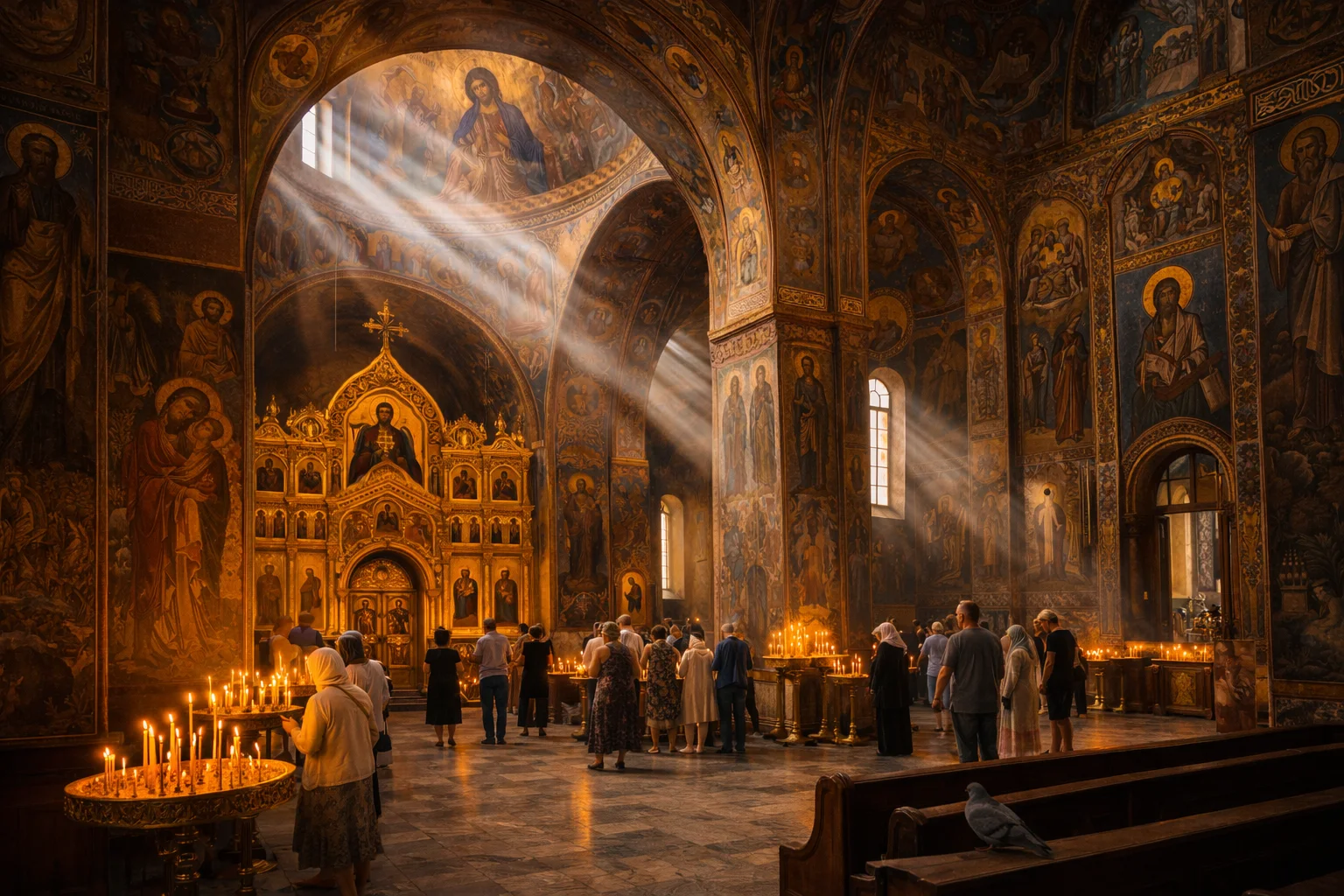
The New Athos Monastery dominates the landscape, its neo-Byzantine complex constructed between 1875 and 1900 by Russian monks from Mount Athos in Greece. Six churches cluster within the monastery walls, their interiors glowing with frescoes and iconostasis of extraordinary beauty. The Cathedral of St. Panteleimon, with its soaring central dome, remains an active place of worship where bearded monks in black robes conduct services using ancient liturgies.
New Athos's most otherworldly attraction lies underground. The New Athos Cave—discovered only in 1961—plunges into the mountain through chambers of staggering dimensions. Visitors descend via an underground railway, emerging into halls reaching 100 meters high, where stalactites and stalagmites have grown for millions of years. Underground lakes reflect the cave lights, and the temperature holds steady at 14°C regardless of the subtropical heat above.
The combination of monastery, fortress, and cave makes New Athos essential visiting—a place where faith, history, and geology converge in unforgettable fashion.
24
🏰 Anakopia — Fortress Above the Black Sea
Tucked inside modern New Athos, easy to miss beneath the fame of its 19th-century Russian monastery, sits a citadel with a far older and, in its own way, more consequential story: Anakopia, capital of the Abkhazian princedom and then the medieval Kingdom of Abkhazia itself. Archaeological work dates military construction on this hilltop back to the 2nd-4th centuries CE, with the surviving defensive walls generally attributed to the 7th century, built with direct Byzantine involvement as the empire's eastern frontier came under growing pressure.
Anakopia's defining moment came in 736 or 737, when Arab commander Marwan ibn Muhammad — the future Umayyad Caliph Marwan II — arrived at its walls with a reported force of some 60,000 men, the high-water mark of the Arab-Byzantine wars' push into the Caucasus. According to Georgian chronicle sources, a defending force of roughly 1,000 Georgians (Iberians) and 2,000 Abkhazians under Leon I held the citadel; the same chronicles describe an epidemic tearing through the besieging army, killing a reported 35,000 Arab soldiers, with several thousand more falling in the fighting itself before Marwan withdrew. Whatever the precise numbers — medieval chronicle figures are notoriously prone to exaggeration and should be read with appropriate skepticism — the successful defense is treated as the pivotal event that preserved local Christian rule in the region and set up what followed: Leon II's declaration of the independent Kingdom of Abkhazia later in the 8th century, with Anakopia as its first capital before the seat of power later moved to Kutaisi.
Visitors today reach the fortress by a steep climb above New Athos to find a partially restored complex roughly 450 by 150 meters, limestone walls up to 60cm thick, a surviving stone altar with early Christian fish-symbol frescoes, and a 25-meter cistern that kept the garrison supplied with water during sieges — engineering that let a numerically outmatched force hold one of the most strategically vital chokepoints on the entire Black Sea coast.
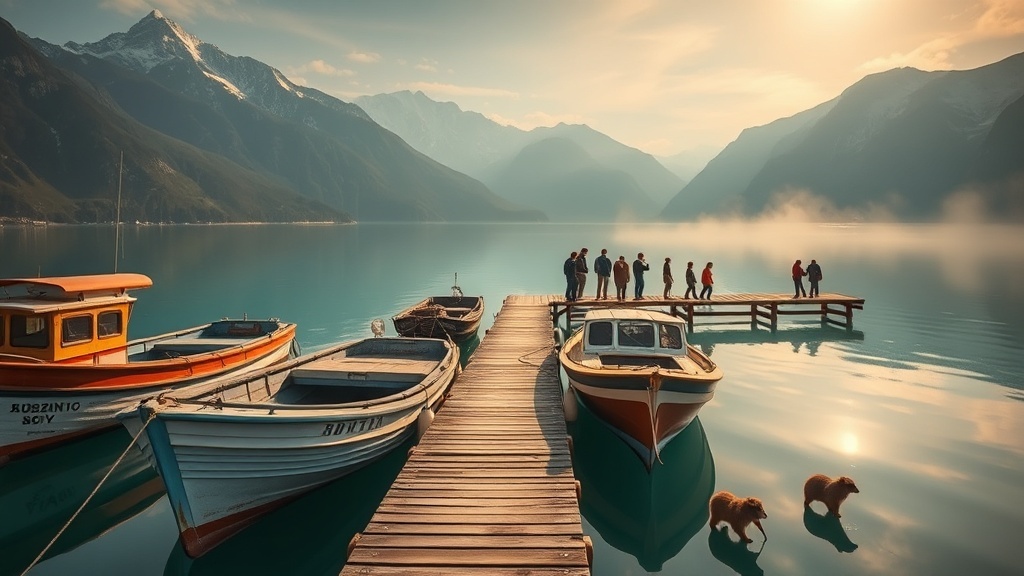
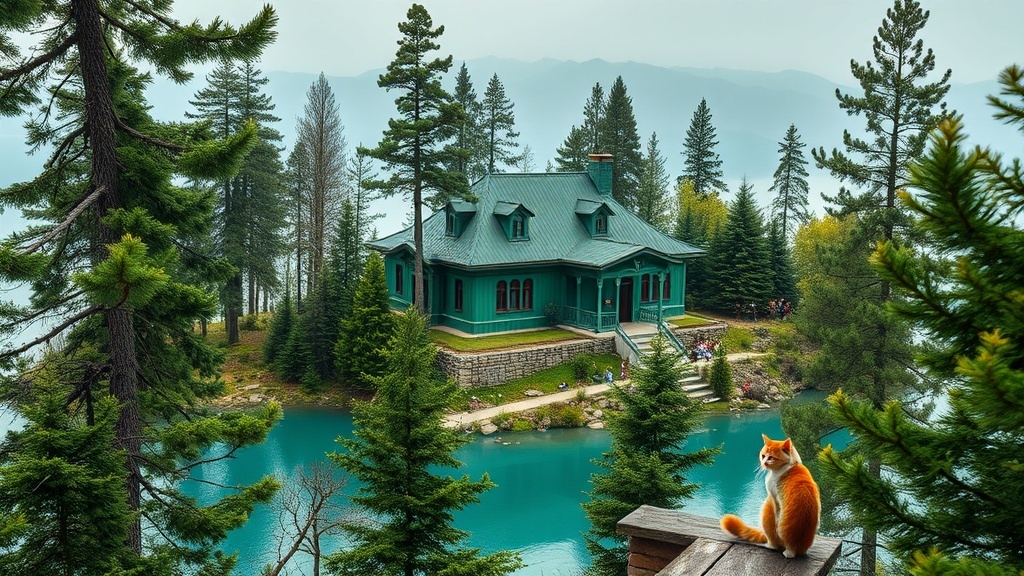
Lake Ritsa emerges from the mountain wilderness like a revelation—a sheet of impossible turquoise cradled between forested slopes and snow-dusted peaks at 950 meters elevation. This lake was not carved by ice at all but born from catastrophe: a colossal rockslide, some 300-400 years ago, sealed off a valley on the Lashipse River and backed up the water that now forms Ritsa. Barely two kilometers long and reaching depths estimated at roughly 100-116 meters depending on the survey, it has captivated visitors since Russian explorers first mapped it in the 1860s. Today it stands as Abkhazia's most iconic natural landmark, the destination that draws more visitors than any other.
The journey to Ritsa constitutes half the experience. The road from Gagra winds through the spectacular Bzyb River gorge, past waterfalls cascading from limestone cliffs, beneath rock overhangs draped in ferns and moss. Blue Lake—a tiny, impossibly azure pool fed by underground springs—offers a preview of the colors to come. The Gega Waterfall, plunging 70 meters into a natural amphitheater, demands a stop; this was where Soviet filmmakers shot the Reichenbach Falls scene in their Sherlock Holmes series.
At the lake itself, the water shifts color with seasons and weather—emerald green in spring, deep blue in summer, slate gray under autumn clouds. Mountains rise directly from the shoreline, their reflections doubling the grandeur on calm days. Trout swim in the clear depths, though fishing requires permits. Simple restaurants serve fresh fish and traditional Abkhaz cuisine, while boat rentals allow exploration of the quieter northern shore.
Above the eastern shore, accessible by a short drive, Stalin's dacha perches on a forested promontory. This modest green wooden building—deliberately camouflaged against aerial observation—served as the dictator's favorite retreat. Inside, time stopped in 1953: the original furniture, billiard table, and even bathroom fixtures remain exactly as Stalin left them, a surreal museum of Soviet power at rest.
26
🌊 Lake Amtkel — A Lake Born in a Catastrophe
On October 3, 1891, an earthquake tore loose the southwestern slope of Mount Little Shkhapach in the Kodori mountain range, sending a colossal landslide down into the valley of the Amtkeli River. The rubble dam it created has never fully cleared, and the water backed up behind it is Lake Amtkel — a body of water that, unlike almost everything else described on this page, has a birth certificate precise to the day.
The lake's behavior reflects its violent origin: rather than a single visible outflow, most of its water disappears through underground passages within the landslide debris itself, re-emerging elsewhere in the karst system, while only a small portion drains back into the visible riverbed. Water levels fluctuate dramatically enough that the lake's visible length has been measured anywhere from roughly one kilometer to four depending on season and rainfall, with a maximum depth cited between 65 and 100 meters across different surveys. Remote and reachable only by 4x4 track through the Gulripshi district, Amtkel remains a genuine backcountry destination — clear, blue-tinted water good for trout fishing, framed by the steep, grass-covered slopes of the same landslide that created it, with none of the crowds or infrastructure of Lake Ritsa a short distance to the northwest.
27
⛓️ Abrskil — The Abkhaz Prometheus
Every culture with mountains and caves seems to eventually produce a legend about a hero chained inside one, and Abkhazia's version is genuinely one of the richest in the Caucasus. Abrskil, hero of the Abkhaz national epic, is described in oral tradition as a boy of unlikely birth who grew into an extraordinary warrior — strong enough to hurl boulders from horseback, defiant enough to declare himself equal to God. For that defiance, the legend holds, he was chained inside a cave near the village of Otapi (sometimes given as Otap), condemned to remain there, his loyal horse said to gnaw eternally at the chains binding him — parallels to Prometheus, bound to a mountain and tormented for defying the gods, are close enough that Abrskil is routinely nicknamed the "Abkhaz Prometheus."
Whether the resemblance reflects genuine ancient cultural contact along the Black Sea coast, independent parallel invention, or later observers projecting a familiar Greek frame onto an Abkhaz story is a real and open question — the parallel has often invited comparison, but that is different from proof of direct historical borrowing in either direction, and this page won't claim more certainty than the evidence supports. What's not in dispute is the cave itself: a genuine karst system stretching roughly two kilometers, of which some 1,500-1,700 meters are developed for visitors, its main gallery threaded by an underground river and studded with stalactite and stalagmite formations rivaling the better-known New Athos Cave, without anything close to New Athos's tourist crowds.
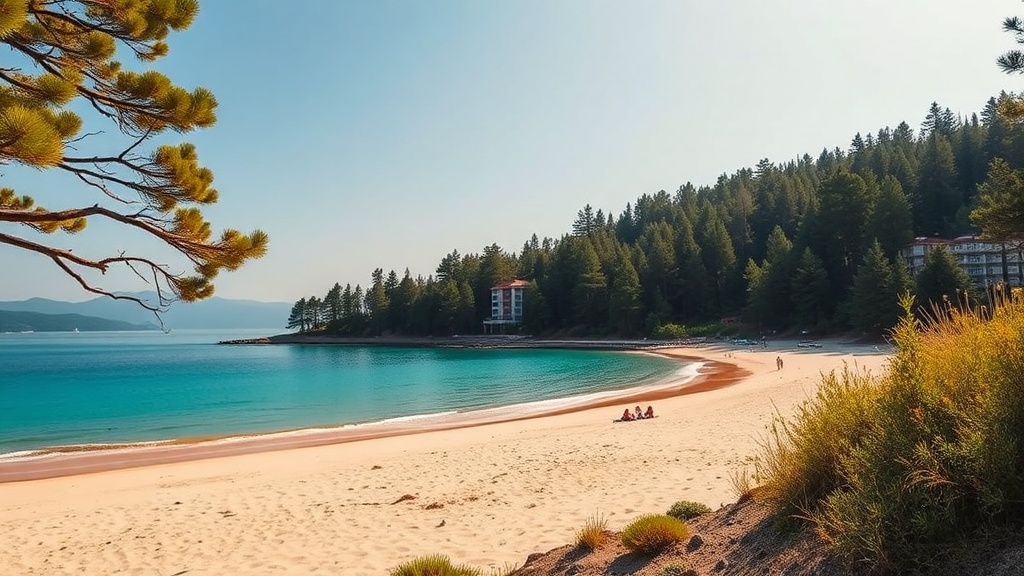
Pitsunda occupies a small peninsula jutting into the Black Sea, its defining feature a forest of relict pines belonging to an ancient evolutionary lineage that has grown along this coast for millions of years. These Pitsunda pines—survivors from the Tertiary period—create an atmosphere unlike anywhere else on the Abkhazian coast, their resinous fragrance mixing with sea air to produce what locals claim is the healthiest microclimate in the entire region. Soviet sanatoriums were built here specifically to exploit this therapeutic combination.
The beaches of Pitsunda rank among Abkhazia's finest, long stretches of sand and fine pebbles lapped by remarkably clear water. Unlike the sometimes crowded shores of Gagra, Pitsunda maintains a quieter, more contemplative atmosphere. The surrounding pine forest provides natural shade, and the peninsula's geography creates calm swimming conditions even when winds trouble other parts of the coast.
At the heart of Pitsunda stands the Patriarchal Cathedral, a monumental 10th-century cross-domed cathedral associated with the medieval Kingdom of Abkhazia and its Catholicate — significant, though the Caucasus holds Christian churches and basilicas dating considerably earlier, to the 4th-6th centuries. The cathedral's remarkable acoustics—accidentally perfect for music—have made it a venue for classical concerts and organ recitals. The massive stone walls, weathered by a thousand years of Black Sea storms, shelter frescoes that hint at the building's former glory as seat of the Catholicos of Abkhazia.
The Soviet-era resort complex dominates the modern town, a series of high-rise hotels and sanatoriums arranged along the shore. These buildings, dating from the 1960s and 70s, show their age but continue operating, offering affordable accommodation with direct beach access. The contrast between ancient cathedral and Soviet concrete captures Pitsunda's essential character—a place where deep history meets the optimistic utilitarianism of socialist resort planning, all wrapped in the timeless embrace of those extraordinary prehistoric pines.
29
🌿 The Colchic Forest — Europe's Subtropical Refuge
Abkhazia's forests aren't simply old — many of the species growing in them belong to evolutionary lineages that have occupied this exact stretch of coastline more or less continuously since long before the most recent Ice Ages reshaped the rest of Europe. The Greater Caucasus range, running east-west just inland of the coast, acted as a climatic wall during successive glaciations, blocking the worst of the cold and preserving a warm, extremely humid microclimate — among the wettest anywhere in the former Soviet Union — in which older, broadly Tertiary-period plant lineages survived here while related species died out almost everywhere else on the continent. Botanists call this a refugium: a place species retreat to and survive in when the wider region becomes hostile, and the Colchic forest (named for ancient Colchis, the classical-era name for this coast) is one of the most significant refugia in the whole of temperate Eurasia.
The signature species read like a checklist of evolutionary survivors: Pitsunda pine, relict boxwood forests, wild rhododendron, and fern species whose closest relatives are found not in neighboring parts of the Caucasus but in East Asia or even North America — a distribution pattern that only makes sense if you understand these as fragments of a once-continuous northern-hemisphere forest belt, broken apart by millions of years of climate change, with the Colchic coast as one of the last places holding on to the original cast. Altitude compresses the whole story into a single afternoon's drive: subtropical coastline gives way within a couple of hours to alpine meadow and, higher still, permanent snowfields — an extraordinary vertical compression of climate zones in a territory barely 8,660 km² in size.
The refugium faces real modern pressure. The invasive box-tree moth, accidentally introduced to the wider Black Sea region within the past two decades, has devastated ancient boxwood stands that had survived everything the Ice Ages could throw at them, a reminder that a lineage's ability to outlast geological time is no guarantee against a single imported insect.
The Soviet dictator Joseph Stalin maintained five residences throughout Abkhazia, reflecting his deep attachment to this subtropical region where he could escape the Moscow winters. These dachas, preserved as museums and occasional government retreats, offer fascinating glimpses into the paranoid world of one of history's most powerful—and brutal—leaders.
The Lake Ritsa Dacha remains the most famous—a green-painted wooden house deliberately camouflaged against aerial observation, perched on a promontory overlooking the turquoise waters. Built in 1947, the 500-square-meter interior features walls lined with rare walnut, boxwood, and Karelian birch. All furniture was custom-made for Stalin's 165cm height. The building contains five bedrooms—Stalin would rotate between them nightly to confuse potential assassins. Notably, there is no office; Lake Ritsa was purely for rest.
The Kholodnaya Rechka (Cold River) Dacha near Gagra was reportedly Stalin's favorite retreat—a more modest structure in an even more secluded setting. The Musser Dacha served as a hunting lodge in the Musser Nature Reserve. Two additional residences in New Athos and Sukhumi completed the network, each guarded by thousands of soldiers and surrounded by elaborate security perimeters.
After Stalin's death in 1953, local guides commonly relate that successor Nikita Khrushchev declined to use these particular residences and built his own retreat nearby instead — a story repeated widely enough locally that it likely reflects some real history, though it isn't independently documented with the same certainty as the dachas' physical details. Leonid Brezhnev later added his own dacha to the network. Today, the Lake Ritsa dacha operates as a museum (entrance ~200 RUB); the others remain government property with limited access. These buildings stand as monuments to absolute power—comfortable yet paranoid, luxurious yet fortress-like.
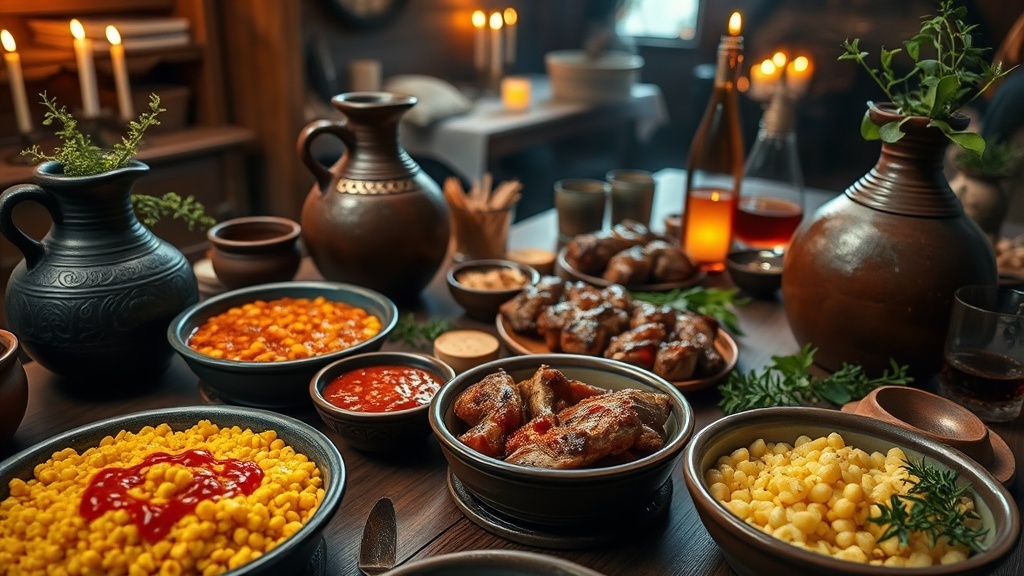
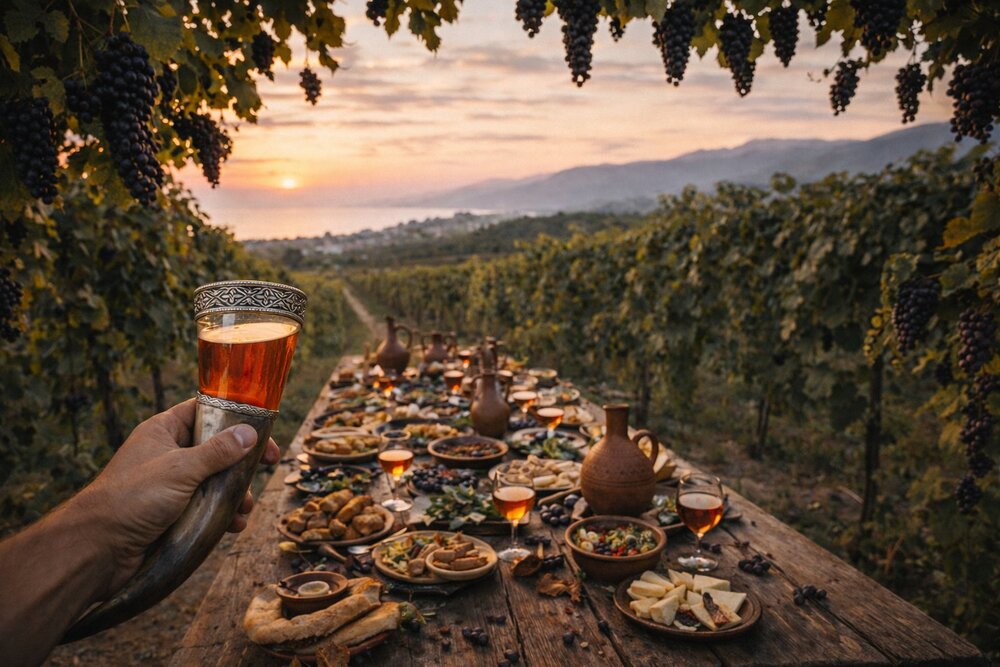
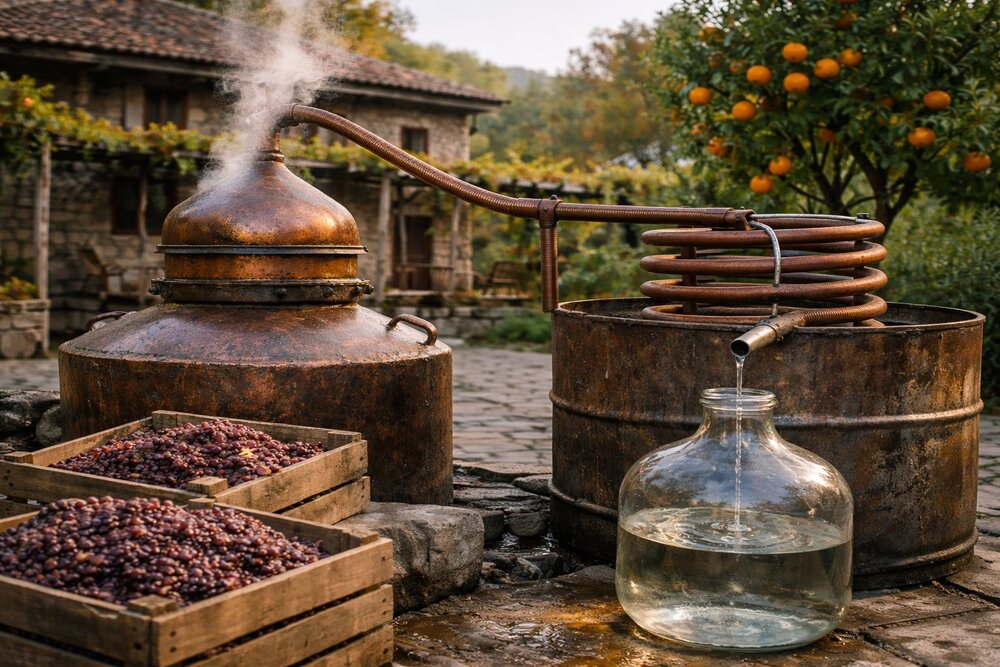
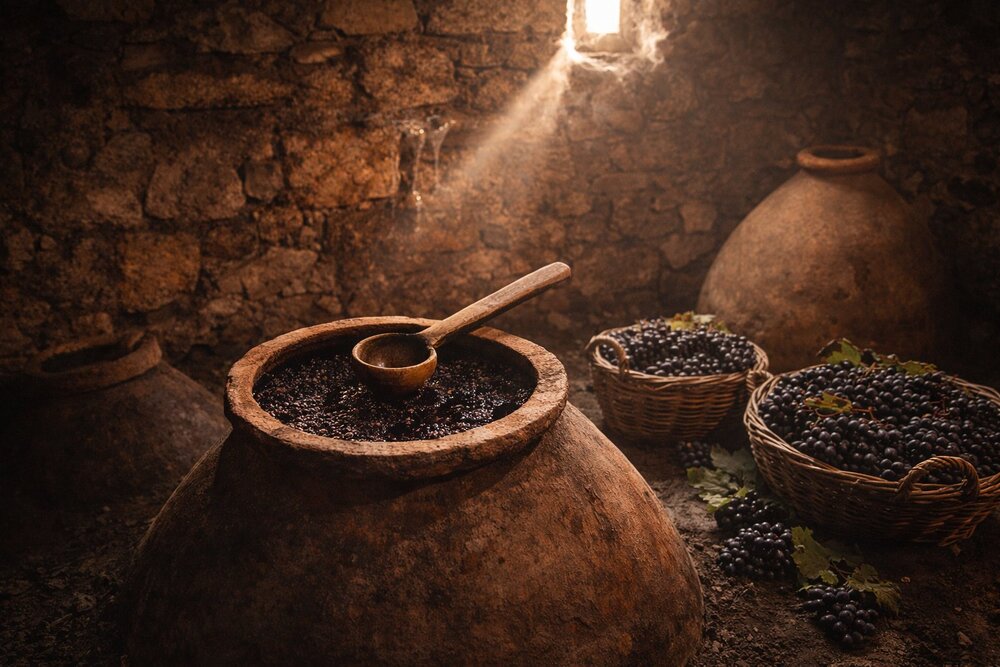
Abkhaz cuisine is built on corn rather than wheat — abysta, a stiff cornmeal porridge, replaces bread at most tables — alongside walnut sauces, smoked meats, and the fiery adjika spice paste that flavors nearly everything. Feasting and toasting culture, rooted in Apsuara (see above), turns any shared meal into something closer to ritual than routine, with a designated toastmaster guiding rounds of wine or chacha through a genuinely formal sequence of tributes.
🍽️ Food & Drink
Abysta, adjika, smoked meats, and the recipes behind them.
External user ratings, converted to a 100-point display scale.
Wine
🔴 Aroma
🟡 Taste
🟢 Finish
🔵 Value
KWS*
Lykhny
—
—
—
—
76
Apsny
—
—
—
—
74
Psou
—
—
—
—
76
Radeda
—
—
—
—
66
KWS*: reference points derived from external community ratings, not Radim Kaufmann’s personal tasting. Checked October 4, 2026: Lykhny 3.8/5, Apsny 3.7/5 and Psou 3.8/5 are Vivino user ratings displayed by Aromatny Mir; Radeda 3.3/5 is the Vivino rating displayed by Winestyle.co.uk. Conversion: stars × 20. These reference totals are not a full four-criterion KWS assessment. The sources do not provide separate Aroma, Taste, Finish or Value scores; these remain blank. Ratings are not tied to a specified vintage and may change.
Best Time: May-June or September-October for ideal weather and fewer crowds. July-August is peak beach season but can be hot and humid. Independence Day (September 30) offers unique cultural celebrations.
2026 editorial update - verify before travel. The route is not a standard visitor transfer. Georgian law permits foreign entry into Abkhazia only from the direction of Zugdidi; the UK warns that entry from Russia through Abkhazia is illegal under Georgian law and can carry serious consequences. Whether any crossing is operating for a foreign traveler is a separate, same-day question. A de facto entry permit, a Russian visa or a hotel booking does not settle every legal or practical requirement.
Do not rely on old claims about border hours, card acceptance, ATM cash or evacuation. Obtain current official advice for your nationality, documented insurance confirmation, and written confirmation of every planned border movement. If any part of the route is unclear, do not proceed.
From Russia (Primary Route): Fly to Sochi/Adler Airport (AER), then take marshrutka or taxi to Psou border crossing (40 minutes). Alternatively, the Moscow-Sukhumi train runs daily (36+ hours) along a scenic coastal route. Seasonal high-speed boat service operates Sochi-Gagra (June-October, 1.5 hours).
Sukhumi Airport: Reopened May 2025 with flights from Moscow and Nizhny Novgorod. Limited schedule—check current availability.
Border Crossing: Cross at Psou checkpoint near Adler. Requires double-entry Russian visa + Abkhaz visa/clearance. Border hours: 8:00 AM - 7:00 PM (can vary). Expect document checks on both sides.
From Georgia (Currently Closed): The Inguri crossing via Zugdidi has been closed since 2020. When open, this was the only legal entry point per Georgian law.
Visa: Required for most nationalities. Email visa@mfaapsny.org with passport copy and application form. Cost: $10-40 depending on duration. Processing: 7 working days. Must register at Consular Department within 3 days of arrival. Visa-free for Russia, Belarus, Kazakhstan, Armenia.
Money: Russian Ruble (RUB) is the only currency. ATMs available in Sukhumi and Gagra (Visa/Mastercard accepted). Cash essential outside major towns. Budget ~$30-50/day, mid-range ~$60-100/day.
Communications: Mobile coverage available (Abkhaz operators use Russian networks). Internet patchy outside main towns. Russian SIM cards work. Time Zone: UTC+3 (Moscow Time).
Getting Around: Marshrutkas (minibuses) connect main towns. Taxis available—negotiate price beforehand. Limited car rental options. Coastal railway runs Psou-Sukhumi.
🔴 Current Travel Advisory: As of 2026, the UK FCDO advises against all travel to Abkhazia, with consular support unavailable to British nationals there; other Western foreign ministries issue similarly cautious guidance. Travel insurance can be invalidated by traveling against such advisories. The territory's unresolved status, a continued Russian military presence, and unmarked administrative boundary lines (crossing them risks arrest by local authorities) are the core underlying concerns, alongside genuinely basic medical infrastructure outside Sukhumi.
Safety: Day-to-day violent crime against tourists is uncommon in the main resort towns, but this is not a conventional safe-travel destination. Avoid the Gali district near the administrative boundary with Georgia proper. Don't photograph military installations. Land mine warnings exist in some rural and border-adjacent areas—stay on marked paths. Medical facilities are basic outside Sukhumi—travel insurance with medical evacuation coverage is essential, not optional.
Online menu checked October 6, 2026 · Seiko, Sukhumi
Burger / source
Menu price
In US dollars
Seiko burger · Seiko
400 ₽
$4.71
Cheeseburger · Seiko
350 ₽
$4.12
US Big Mac · The Economist
$6.22
$6.22
This local price comparison is inspired by the Big Mac Index. Abkhazia has no separate entry in The Economist’s dataset. Seiko’s menu was checked on October 6, 2026; it does not state an effective date or burger weight. Conversion: 1 USD = 84.9309 RUB, Bank of Russia, October 6, 2026. The US Big Mac reference price is dated July 1, 2026. These are different products and observation dates; portion size, recipe and taxes may differ. This comparison does not calculate an official Big Mac Index or currency valuation. Delivery and separately listed sides are excluded.
Abkhazia's accommodation reflects its emergence from post-war isolation. Don't expect international chains—instead, find Soviet-era sanatoriums being renovated, family-run guesthouses, and a handful of modern hotels in Gagra and Sukhumi.
Sukhumi: Hotel Ritsa (Soviet landmark, $40-60), Leon Hotel (modern, $50-80), guest houses ($15-25). Gagra: Alex Beach Hotel (best modern option, $60-100), Amra Park Hotel (renovated sanatorium with spa, $50-80), numerous guesthouses ($20-40). Lake Ritsa Area: Auadhara Resort ($40-70), guesthouses in Bzyb Valley ($15-30).
Booking Tips: Book in advance for July-August peak season. Cash payment often required. Booking.com works for some properties; others need direct contact. Don't expect consistent hot water or WiFi outside major hotels.
Victory and Independence Day (September 30) — The most important celebration, marking the end of the 1992-93 war and Abkhaz forces gaining control of nearly all the former autonomous republic's territory; the formal declaration of independence followed as a separate, later process. Military parades, concerts, fireworks. Hotels book up weeks in advance. Victory Day (May 9) — WWII commemoration shared with Russia, featuring "Immortal Regiment" march. Remembrance Day (May 21) — Solemn tribute to the Muhajir deportation victims.
Religious: Orthodox Christmas (January 7) at New Athos Monastery. Old New Year (January 13-14) with traditional Abkhaz customs and fortune-telling. Cultural: Lykhny Festival (October) featuring horse racing and folk music. Sukhumi Music Festival (summer) with classical performances.
No site within Abkhazia currently holds its own UNESCO World Heritage inscription — a reflection of the territory's contested international status rather than the significance of what's here, since UNESCO listings are administered through recognized states and Abkhazia is internationally treated as part of Georgia. That doesn't make New Athos Monastery, Anakopia, or Lake Ritsa's surrounding landscape any less remarkable. Explore the heritage sites →
Tkvarcheli Ghost Town — Once 40,000 people, besieged 413 days during the war. Now a haunting shell with abandoned blocks and rusting cable cars. Photographer's paradise; local guide essential. Krubera-Voronya & Veryovkina Caves — Both over 2,100m deep, these two Arabika Massif caves have traded the title of world's deepest known cave back and forth as re-surveys refine their measurements; as of 2026 sources genuinely disagree on which currently holds the record. Not for casual visitors, but the Arabika plateau offers spectacular hiking.
Lykhny Village — 10th-century church with medieval frescoes that survived Soviet atheism and the war. Traditional festivals and unchanged rural life. Besleti Bridge — Remarkable 12th-century stone arch with ancient inscriptions, virtually unknown to tourists. Kelasuri Wall — Mysterious 160km defensive wall, sections accessible near Sukhumi.
40
🎒 Packing Tips
Essential: Passport with double-entry Russian visa, printed Abkhazian visa clearance, cash in rubles (ATMs unreliable), travel insurance with evacuation coverage, unlocked phone for local SIM.
Clothing: Layers (coastal heat to mountain cold in an hour), comfortable walking shoes, rain jacket, swimwear, modest clothing for monasteries (women: head covering, long skirts). Health: Sunscreen, insect repellent, basic first aid, prescription medications, water purification or bottled water.
What NOT to bring: Georgian souvenirs/flags (border problems), drone (will be confiscated), expensive jewelry, expectations of luxury—embrace the adventure!
41
🌐 Useful Resources
Visa: visa@mfaapsny.org | www.mfaapsny.org | +7 840 226 39 15. Emergency: Police 02/102, Ambulance 03/103, Fire 01/101. Note: Abkhazia has no embassies abroad—contact your embassy in Moscow for emergencies.
Tour Operators: Abkhazia Travel (English guides, visa help), Sputnik Abkhazia (mountain excursions), Intourist (packages from Sochi). Maps: Maps.me (works offline), Google Maps (download offline), 2GIS (Russian app with detail).
Non-Fiction: "The Caucasus: An Introduction" by Thomas de Waal — essential regional context. "Black Garden" by Thomas de Waal — broader Caucasus conflicts. Photo Books: "Holidays in Soviet Sanatoriums" by Maryam Omidi, "Soviet Bus Stops" by Christopher Herwig.
Fiction: Works by Fazil Iskander — Abkhazia's most famous writer. "Sandro of Chegem" offers magical realism set in Abkhazian village life (available in English). Online: Eurasianet and OC Media for current Abkhazian affairs.
43
🎬 Videos About Abkhazia
Documentaries and travel films covering Soviet-era resorts, the world's deepest cave, and Abkhazia's contested statehood. Watch the videos →
Hidden in the Arabika Massif of the Western Caucasus, Krubera-Voronya Cave plunges over 2,197 meters into the Earth. For two decades it has traded the title of world's deepest known cave back and forth with nearby Veryovkina Cave as re-surveys refine the measurements — the dispute genuinely hasn't settled as of 2026, but either way you'd be nearly half a kilometer deeper than the summit of Ben Nevis, Britain's highest mountain, is tall.
The cave was first explored by Georgian speleologists in the 1960s, but the true depth wasn't revealed until Ukrainian expeditions in the 2000s pushed beyond the 2,000-meter barrier. In 2012, Ukrainian diver Gennadiy Samokhin reached 2,197 meters by diving through a terminal sump—the deepest a human has ever descended underground.
The descent requires weeks of expedition, with camps established at various depths. Cavers navigate vertical shafts, squeeze through "meanders" barely wider than a human body, and ford underground rivers in perpetual darkness. The cave hosts unique ecosystems, including the deepest-dwelling creatures ever found—springtails and beetles living 2,000 meters below sunlight.
2,197m+
Depth (record disputed w/ Veryovkina)
13.4km
Total Passage Length
1960
Year Discovered
2°C
Temperature Inside
🏔️ Kelasuri Wall
Often called the "Great Abkhazian Wall," this 160-kilometer fortification stretches from the Kelasuri River to the Inguri — one of the longest ancient walls outside China, historically described as having roughly 300 towers along its length. Its construction date remains genuinely debated among historians, with proposals ranging from late antiquity to the early medieval period; a 6th-century dating is common but not conclusively settled.
🧬 Longevity Hotspot
Abkhazia was once world-famous for extraordinary longevity, with Soviet-era claims of residents living well past 120. The reality is more myth than measurement: birth records from the era are frequently incomplete or unverifiable, and Western researchers have never been able to confirm the most dramatic claims. What's genuinely documented is a Soviet scientific and propaganda fascination with Caucasian centenarians, theories linking longevity to mountain air and fermented dairy, and a study subject that says as much about Soviet science communication as it does about Abkhaz demographics.
🗣️ 58 Consonants, 2 Vowels
The Abkhaz language is one of the world's most phonologically complex, with up to 58 consonant sounds but only 2 vowels. It belongs to the Northwest Caucasian family, spoken nowhere else on Earth, making it a linguistic treasure.
🚇 Underground Metro
New Athos Cave features an extraordinary dedicated underground electric railway, unusual anywhere in the world. Soviet engineers built the 1.3km line in 1975 to carry tourists deep inside the mountain — a surreal blend of nature and socialist engineering.
🍊 Tangerine Economy
Abkhazia produces over 50,000 tons of tangerines annually—a legacy of Soviet subtropical agriculture. These citrus fruits are a major export to Russia and a symbol of Abkhazian identity. The 2024 Russian import ban caused significant economic disruption.
🏛️ Dioscurias — Lost Greek City
Ancient Greek colony Dioscurias (6th century BCE) now lies submerged beneath Sukhumi Bay. Underwater archaeological surveys have documented city walls, ceramics, and amphorae — but this isn't an organized snorkeling attraction; what's actually accessible to visitors is the on-land site near the city center, with visible 2nd-century fortress remains.
🐒 Soviet Monkey Research
The Sukhumi Primate Research Center, established in 1927, once housed 1,000+ monkeys used for medical research including space program experiments. Despite war damage and funding cuts, around 300 primates remain—a bizarre Soviet legacy still operating today.
46
⭐ Notable People
Fazil Iskander (1929-2016) — Abkhazia's most celebrated writer, twice nominated for the Nobel Prize. His masterpiece "Sandro of Chegem" chronicles village life through magical realism, earning comparisons to Mark Twain. A statue of his literary character Chik stands on Sukhumi's waterfront, and the city's Russian Drama Theater bears his name.
Hibla Gerzmava (b. 1970) — Internationally acclaimed operatic soprano who has performed at the Bolshoi and major stages worldwide, but is most closely associated with Moscow's Stanislavsky and Nemirovich-Danchenko Music Theatre, where she became a soloist in 1995; winner of BBC Cardiff Singer of the World (2008). Demna Gvasalia (b. 1981) — Fashion designer, displaced by the 1992-93 war, creative director at Balenciaga from 2015 before moving to head Gucci's creative direction; named among Time's most influential people (2022).
Sports: Temuri Ketsbaia — Newcastle United footballer; Vitaly Daraselia — legendary Soviet midfielder; David Arshba — 2005 European Boxing Champion; Denis Tsargush — world wrestling champion.
47
⚽ Sports
ConIFA World Cup 2016: Abkhazia hosted and won this tournament for teams not recognized by FIFA, defeating Northern Cyprus, Panjab, and Somaliland. The trophy ceremony in Sukhumi brought rare international attention to the territory.
Football League: Since 1994, nine amateur teams compete: Nart (Sukhumi), Gagra, Kiaraz (Pitsunda), Samurzakan (Gali), Afon (New Athos), and others. Most Abkhazians hold Russian citizenship, so athletes compete internationally for Russia—with notable successes in boxing and freestyle wrestling.
48
📰 Media & Press Freedom
Freedom House classifies Abkhazia as "Partly Free," scoring 40/100 in 2026 (up slightly from 39/100 in 2025) — citing concerns over judicial independence, discrimination against ethnic Georgian residents, and heavy external Russian influence, while also noting a genuinely active civil society and real political competition between factions. Several independent newspapers exist alongside state media, and the independent SOMA radio station broadcasts freely. Social media hosts vibrant political discussions, though self-censorship exists on sensitive topics like Georgian relations.
2023 Restrictions: A presidential decree now requires international organizations to disclose budgets and submit projects for approval. USAID-funded projects are banned. Human Rights: Key concerns include discrimination against Georgians in Gali district and constitutional limits on presidency to ethnic Abkhazians only.
49
📸 Photo Gallery
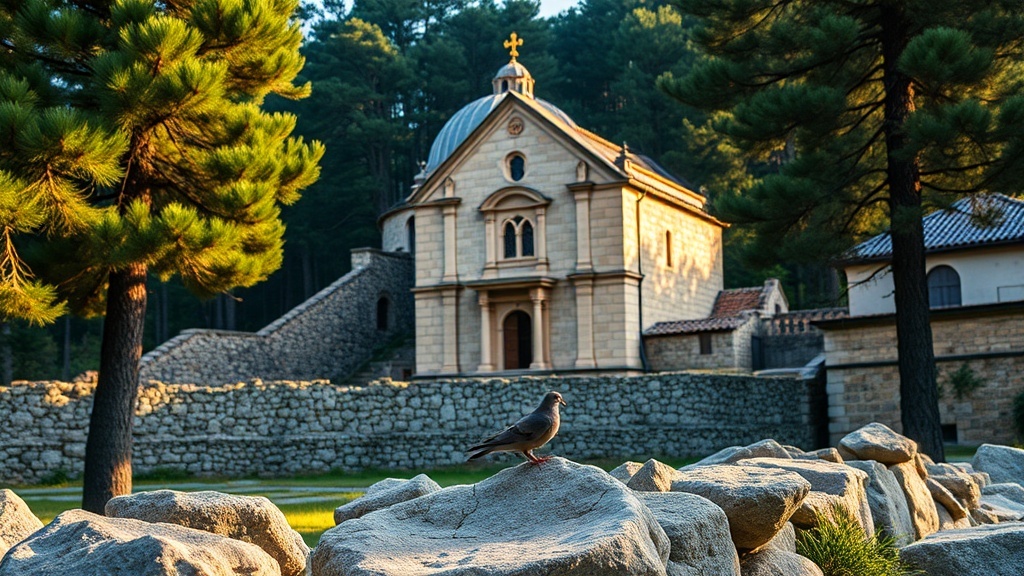
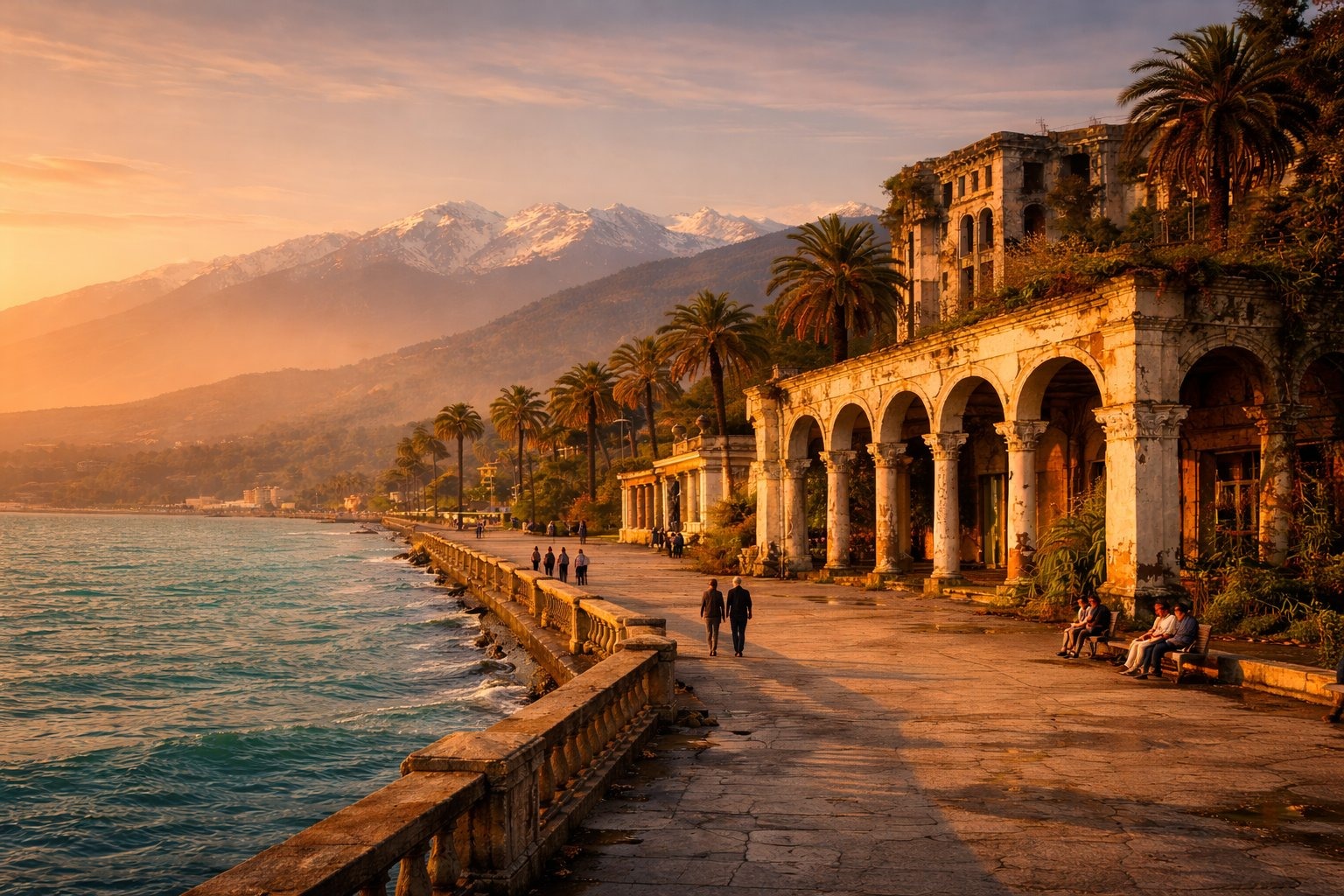
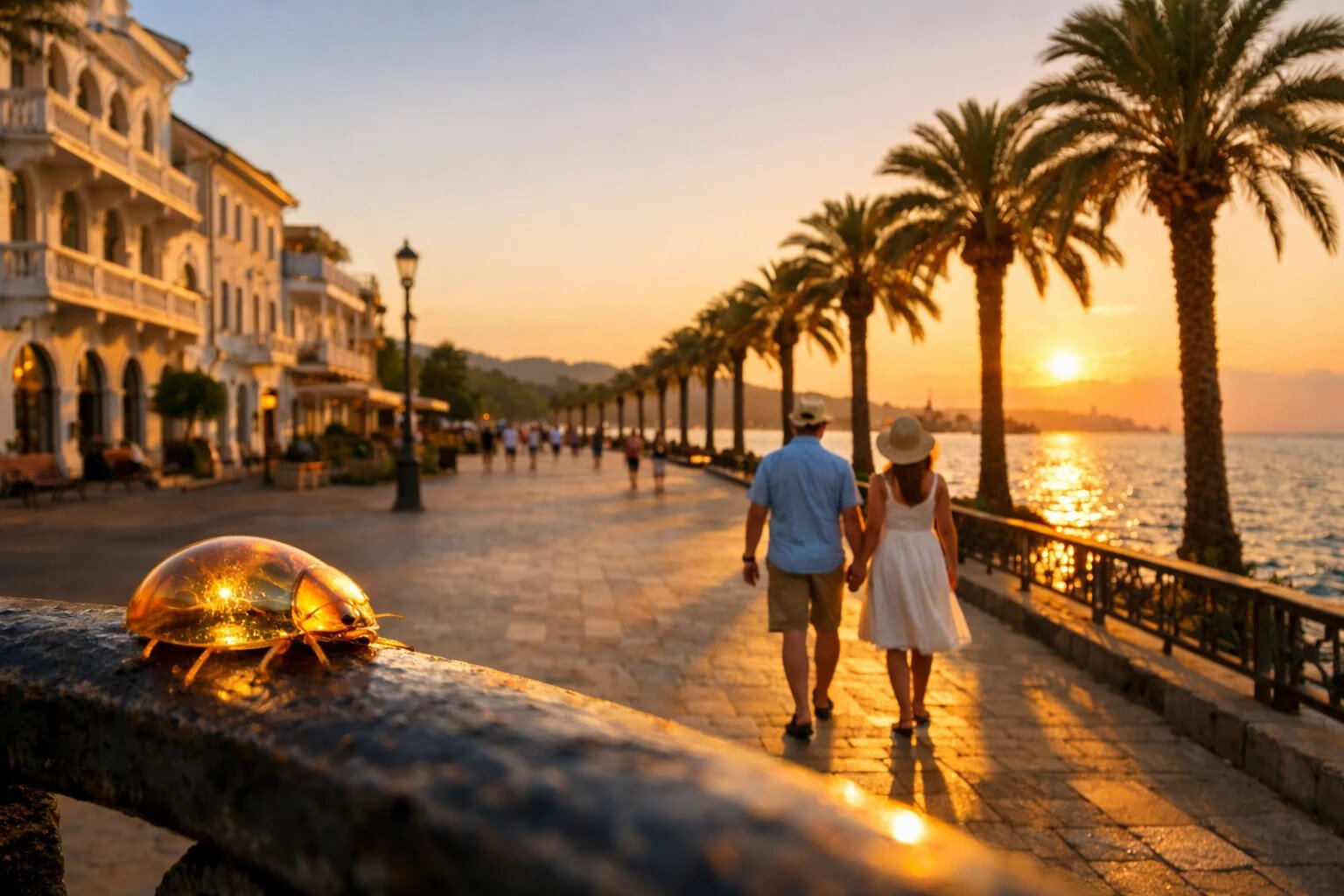
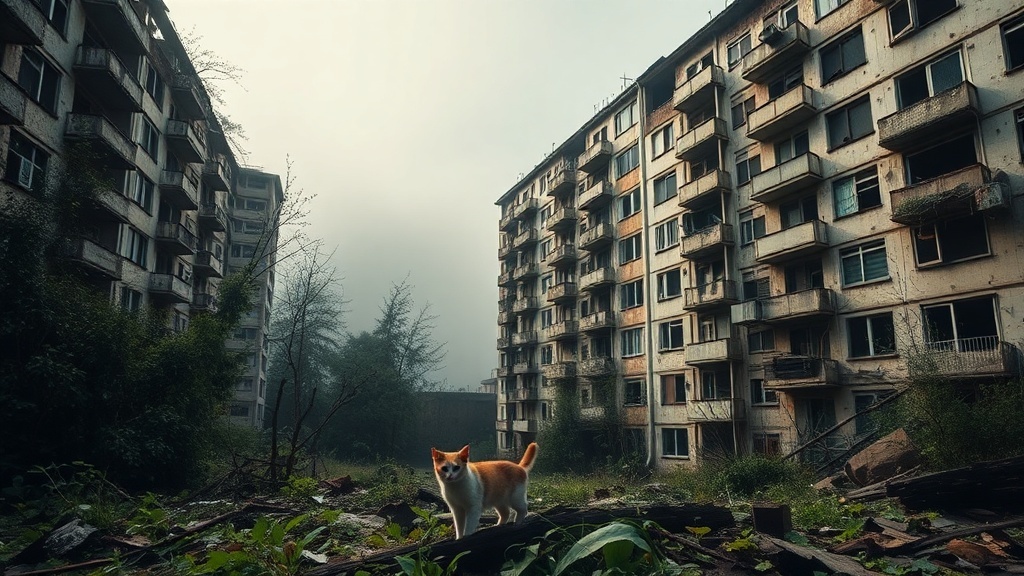
The gallery moves from the Black Sea coast to Lake Ritsa, New Athos, Gagra and Pitsunda. Open any image for a larger view; Radim’s own photographs are labelled separately.
New visual and field notes from the 2026 Kaufmann guide
The guide's first seven chapters add a more careful way to read this coast: sea, humid lowland, river gorge and high Caucasus are close on the map but not interchangeable in weather or access. Plan mountain days for the highest and most exposed point, not the sunshine outside a coastal hotel; after rain, gorges, caves and river roads deserve a fresh local check.
Sukhumi is best approached as a living city rather than a backdrop for ruins: ask before photographing people, homes, memorials or market stalls, and never treat an apparently empty building as public or safe to enter. The same restraint applies to Gagra, New Athos and Anakopia. These project illustrations are representative visual companions, not documentary evidence of a particular site or current operating conditions.
Rivers and gorges
Plan for changing water and road conditions after rain.
Abkhazia cannot be understood through scenery alone. The Black Sea light, subtropical gardens and abrupt wall of the Caucasus create a landscape of unusual beauty, yet every road, resort and monument also belongs to a history that remains painfully unresolved.
That tension is the reason to approach the region slowly and without easy conclusions. Its architecture, food, languages and traditions deserve attention in their own right, while the human consequences of conflict and displacement must never be reduced to background detail. A responsible account should leave room for beauty, memory and disagreement at the same time.
— Radim Kaufmann, 2026
Share Your Photo
Have a Abkhazia photograph you own? Attach it to your email and include the location and the name you want credited.