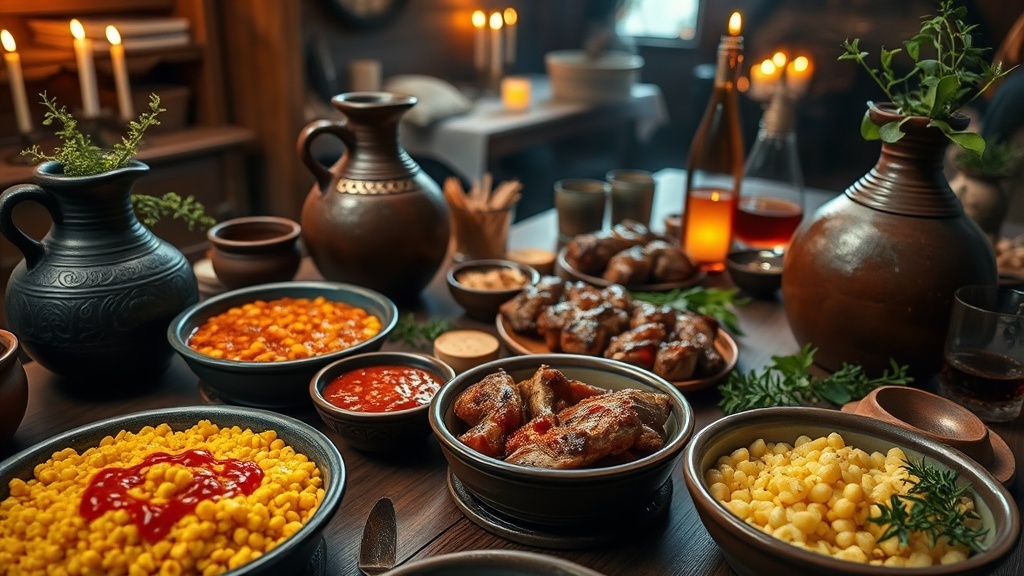
Abkhazian cuisine reflects the region's agricultural heritage and mountain traditions, emphasizing corn, dairy, herbs, and the legendary adjika spice paste. The Abkhazian diet, low in fat and rich in herbs and vegetables, was once credited with exceptional longevity in the population.
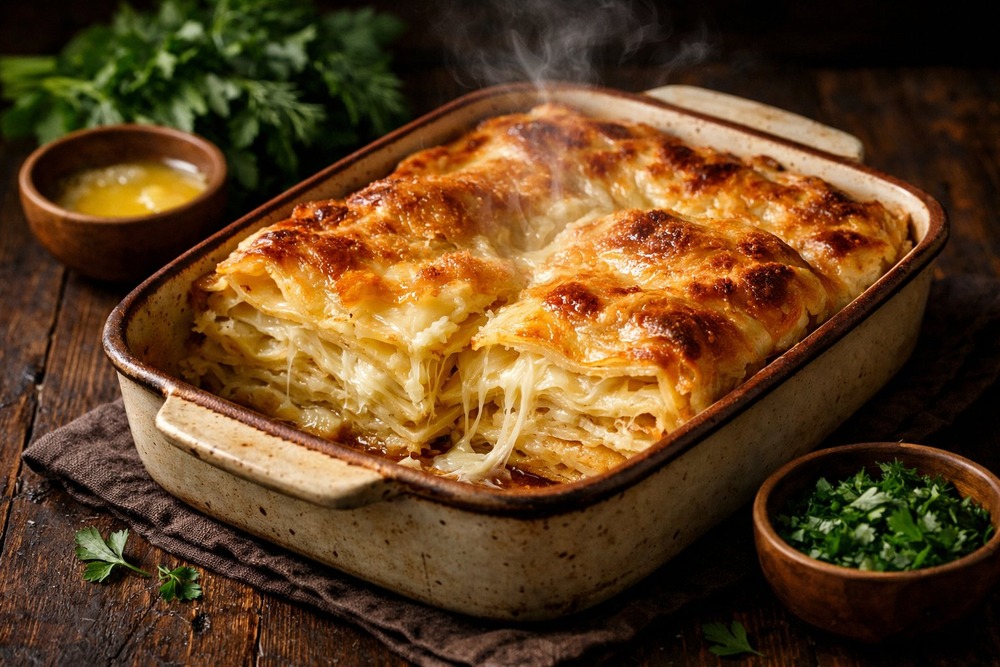
Signature Dishes:Abysta (Mamalyga) – thick corn porridge served with fresh cheese, walnut sauce, or meat, the cornerstone of Abkhazian diet. Adjika – the iconic spicy paste made from hot red peppers, garlic, herbs, and salt, accompanying virtually every meal. Achapa – refreshing salad of cooked green beans dressed with walnut sauce. Achma – layered cheese bread resembling lasagna. Haluj – cheese-filled dumplings similar to Georgian khachapuri.
Beverages:Chacha – potent grape vodka (40-65% alcohol). Abkhazian wines – Lykhny, Apsny, Anakopia varieties from vineyards cultivated for 3,000 years. Matsoni – fermented milk drink. Practically every Abkhazian farm makes its own wine and chacha.
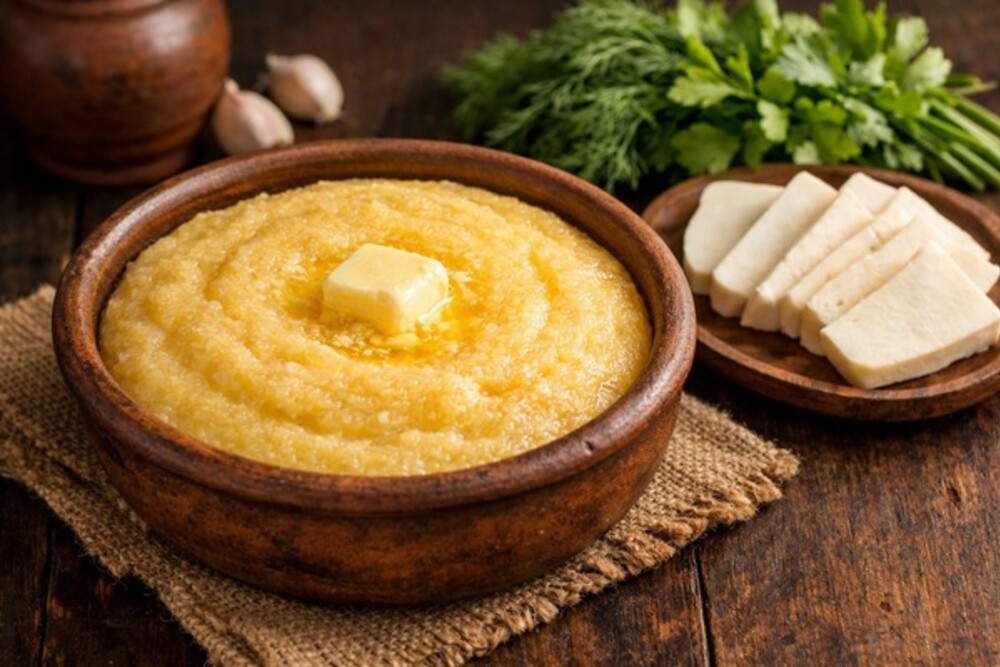
🌽 Abysta (Mamalyga) — Corn Porridge
Ingredients: 300g fine cornmeal (white or yellow), 1L water, 200g fresh suluguni cheese (or mozzarella), 50g butter, adjika paste, salt. Optional: walnut sauce, grilled meat, or tkemali plum sauce.
Preparation: Bring salted water to boil, slowly pour in cornmeal while stirring constantly with a wooden spoon. Cook on low heat 20–25 minutes, stirring vigorously to prevent lumps — the porridge should be thick enough to hold its shape. Turn out onto a wooden board. Slice cheese over the hot surface so it melts into the abysta. Serve with a generous knob of butter, fiery adjika, and walnut sauce on the side. This is the cornerstone of every Abkhazian meal.
Editorial illustration · provenance under review
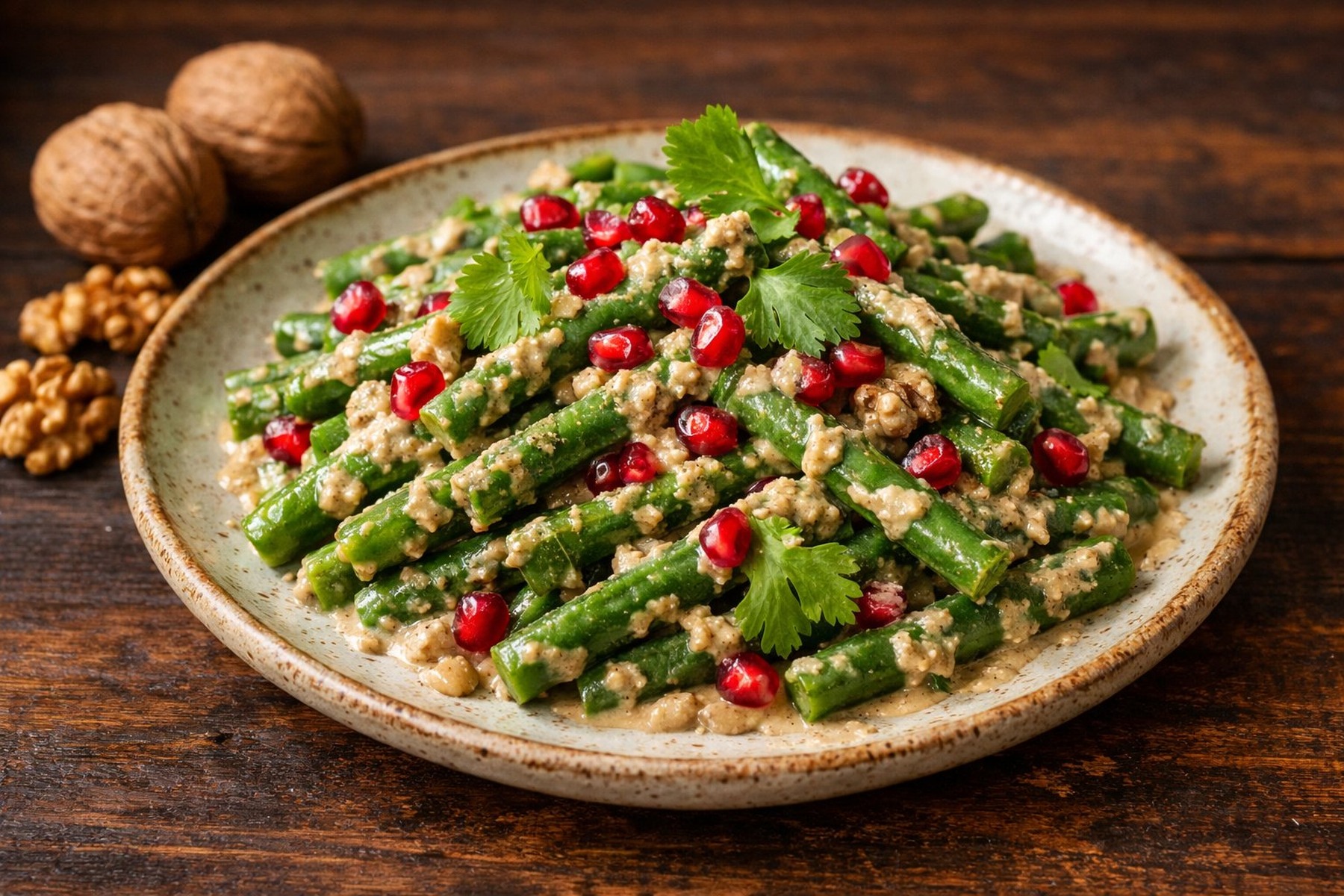
🥗 Achapa — Green Bean & Walnut Salad
Ingredients: 500g green beans, 120g walnuts, 3 cloves garlic, 60ml fresh cilantro, 5ml ground coriander, 2ml adjika or cayenne, 15ml wine vinegar, salt, pomegranate seeds for garnish.
Preparation: Boil beans until tender-crisp (5–7 min), drain and cool in ice water immediately. Grind walnuts, garlic, and cilantro to a rough paste. Add coriander, adjika, vinegar, and a splash of water. Toss beans with walnut sauce until evenly coated. Chill for at least 1 hour. Scatter with pomegranate seeds before serving. The beans should keep a slight crunch — overcooking ruins the contrast.
Editorial illustration · provenance under review
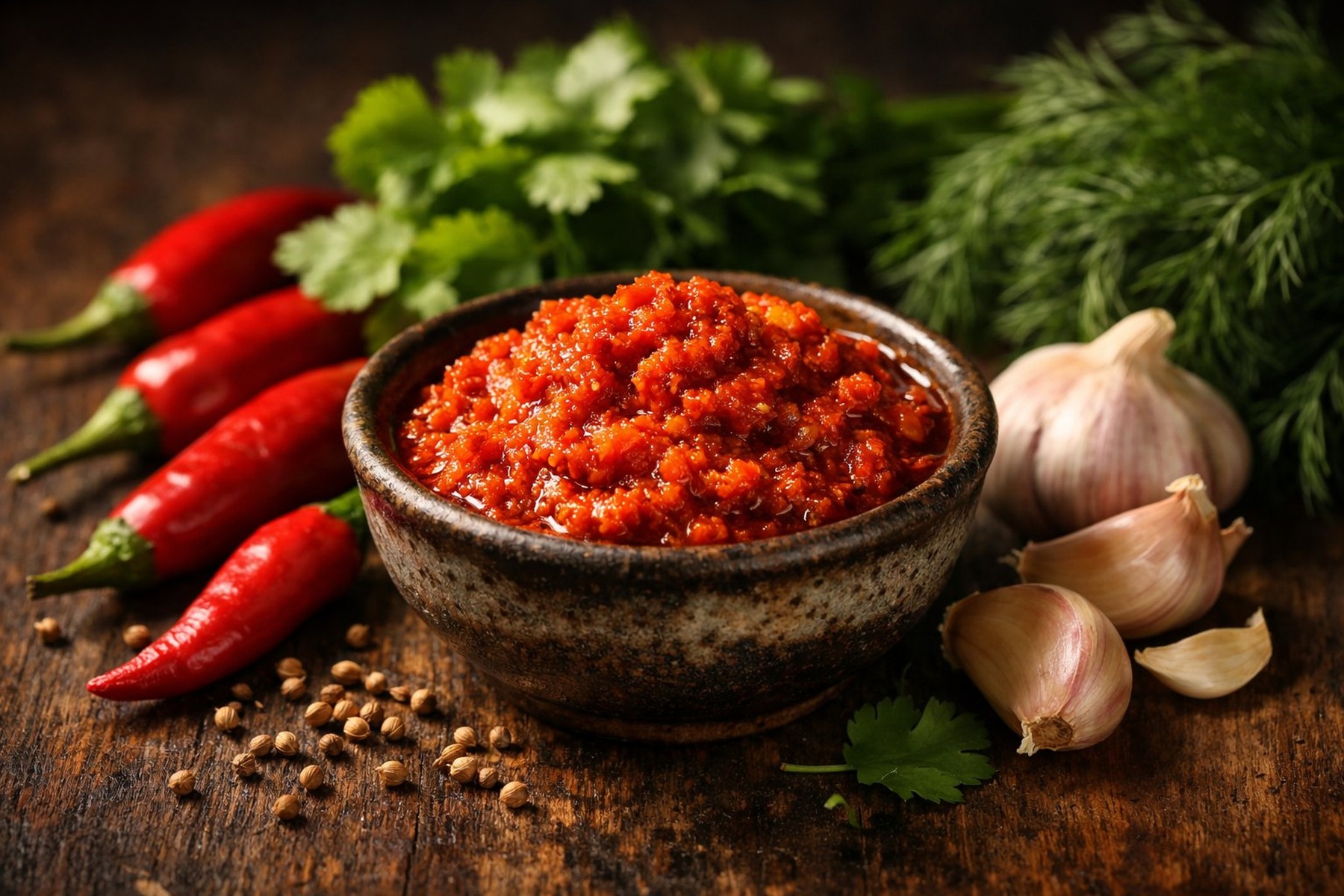
🌶️ Adjika — Fiery Spice Paste
Ingredients: 500g fresh hot red peppers, 1 whole head garlic, 120ml fresh cilantro, 120ml fresh dill, 30ml blue fenugreek (utskho suneli), 15ml coriander seeds, 45ml coarse salt.
Preparation: Remove stems from peppers (keep seeds for full heat). Grind peppers, garlic, and fresh herbs together using a mortar or food processor. Add ground spices and salt. Pound to a rough paste — never smooth; authentic adjika should have visible herb flecks, not resemble commercial hot sauce. Rest 24 hours before first use. Store in a glass jar, refrigerated — it lasts months and improves with age. No Abkhazian meal is complete without it.
Preparation: Make a soft dough from flour, eggs, water, and salt; rest 30 minutes. Divide into 8–10 balls and roll each paper-thin — the secret is translucent layers. Boil each sheet 2 minutes in salted water, drain carefully. Layer in a buttered pan: dough sheet, brushed butter, crumbled cheese. Repeat all layers, finishing with butter on top. Bake at 180°C for 30–40 minutes until golden and bubbling. Often called "Caucasian lasagna" — it's even better.
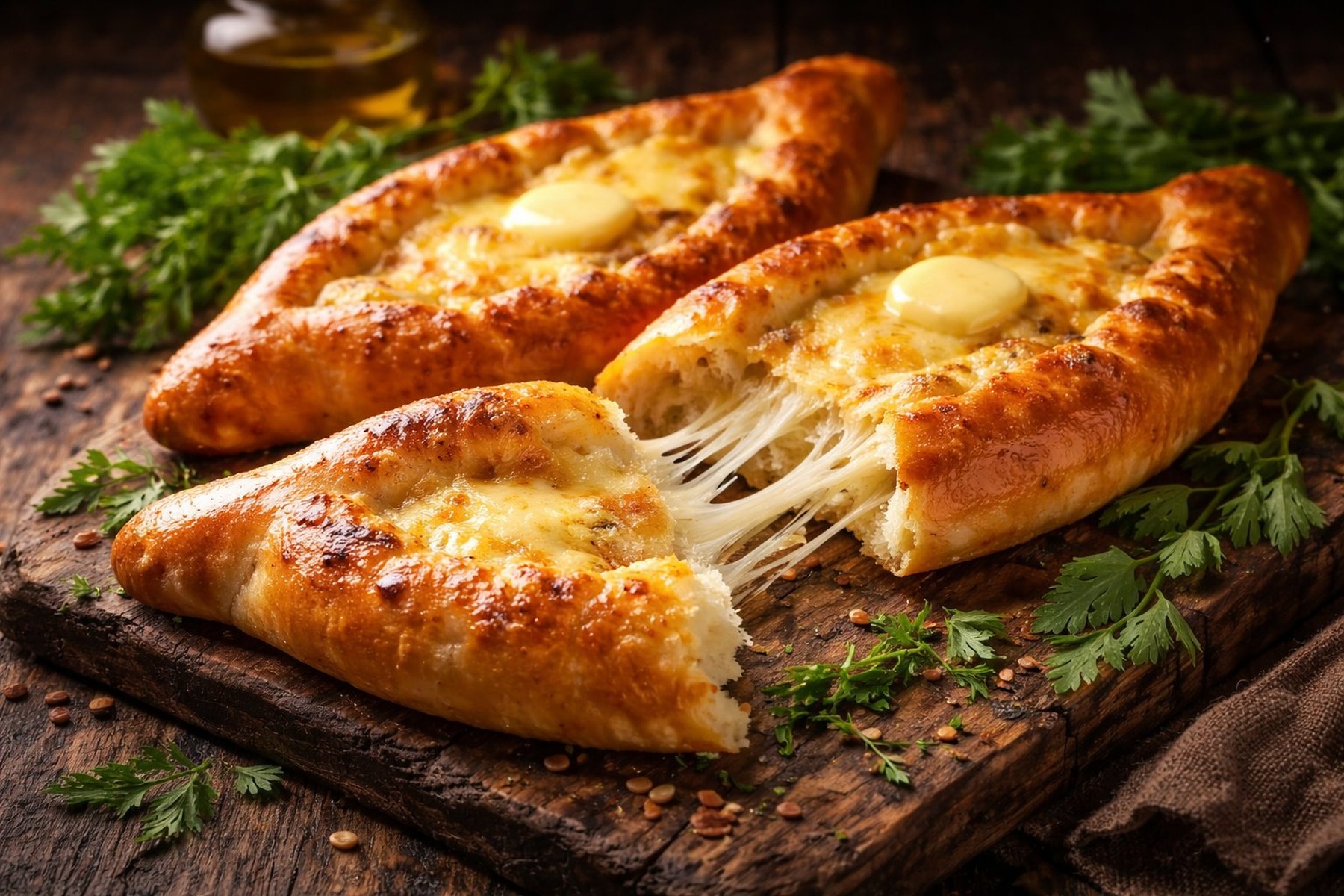
Preparation: Activate yeast in warm milk with sugar. Mix flour, egg, and salt, add yeast mixture, knead into a soft dough and let rise 1 hour. Mix cheeses with egg for the filling. Shape dough into boat-shaped parcels, fill generously with cheese mixture. Bake at 200°C for 15–20 minutes until golden. Drop a knob of butter into the centre while still sizzling hot. Serve immediately — cheese boats waits for no one, the cheese must be stretchy and the butter still melting.
Editorial illustration · provenance under review
🍬 Churchkhela — Grape & Walnut Candy
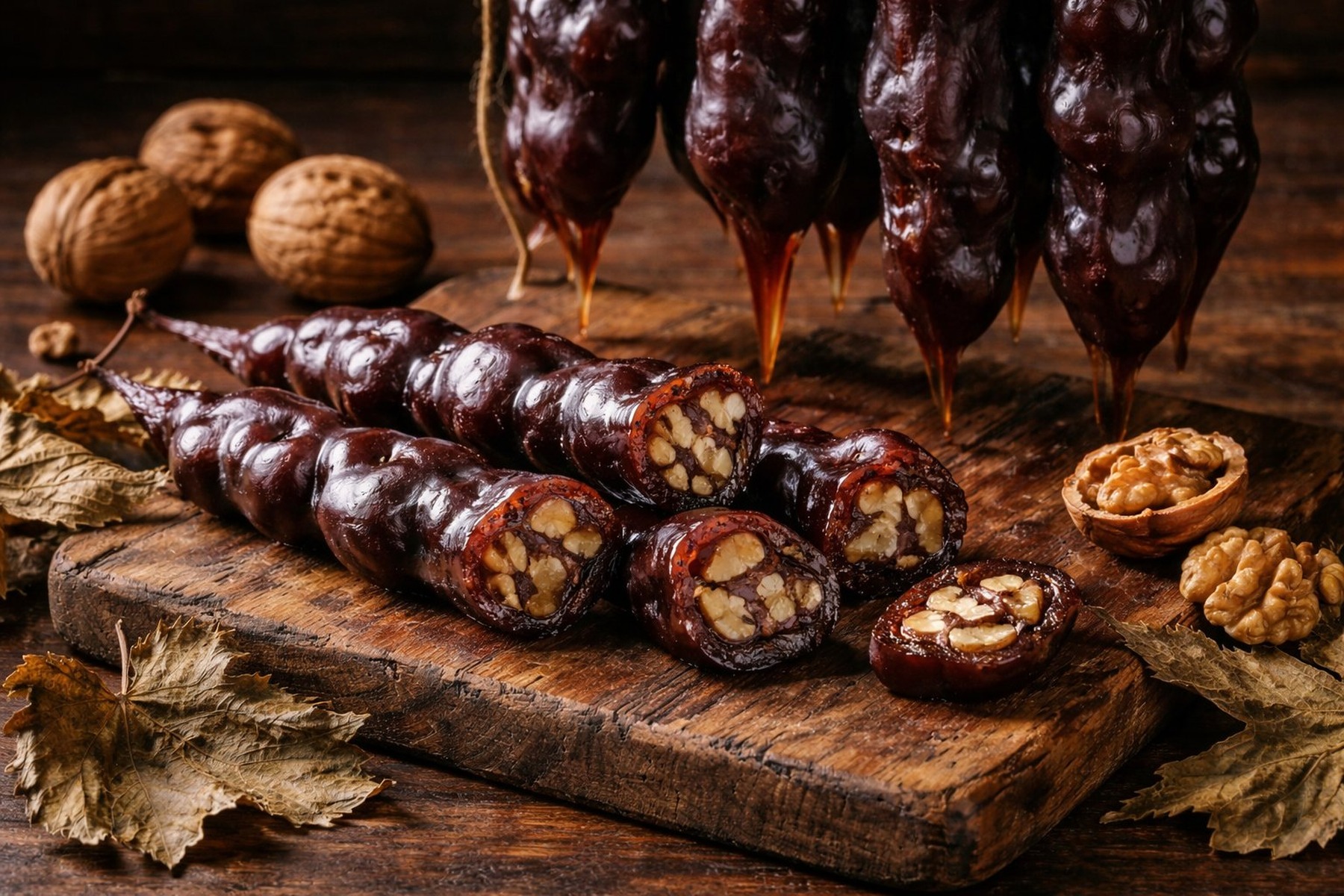
Ingredients: 500ml fresh dark grape juice, 120g flour, 60g sugar, 300g walnut halves, strong cotton thread and needle.
Preparation: Thread walnut halves onto 30cm cotton strings. Heat grape juice with sugar. Whisk flour into a little cold juice until smooth, then stir into the warm juice. Cook over medium heat, stirring constantly, until it reaches a thick pudding-like consistency (tatara). Dip the walnut strings into the hot tatara, coating evenly. Hang to dry 30 minutes, then repeat dipping 3–4 times for a thick shell. Air-dry for 5–7 days until firm but chewy. The ancient Caucasian energy bar — keeps for months.
Preparation: Fill a copper mug (or tall glass) with ice. Pour chacha, lime juice, and honey syrup over the ice. Stir gently. Top with ginger beer and give one gentle stir. Garnish with a mint sprig and lime wheel. The Caucasian twist on the Moscow Mule — the chacha's grape character and honey sweetness replace vodka's neutrality with something far more interesting.
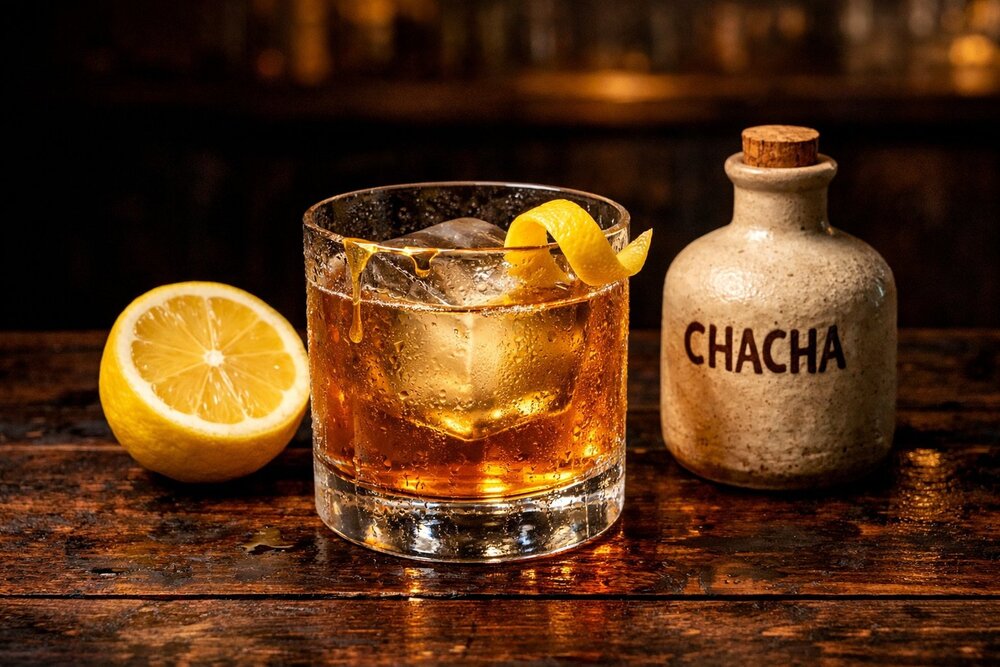
Preparation: Add chacha, lemon juice, syrup, and egg white to a shaker. Dry shake vigorously for 15 seconds (without ice) to emulsify the egg white. Add ice and shake again for 15 seconds until very cold. Double-strain into a chilled coupe glass. Dash bitters onto the foam in a decorative pattern. Garnish with a lemon twist. The grape pomace character of chacha gives this classic sour format a depth that whiskey and pisco envy.
Editorial illustration · provenance under review
🍷 Izabella Punch — Spiced Wine Bowl
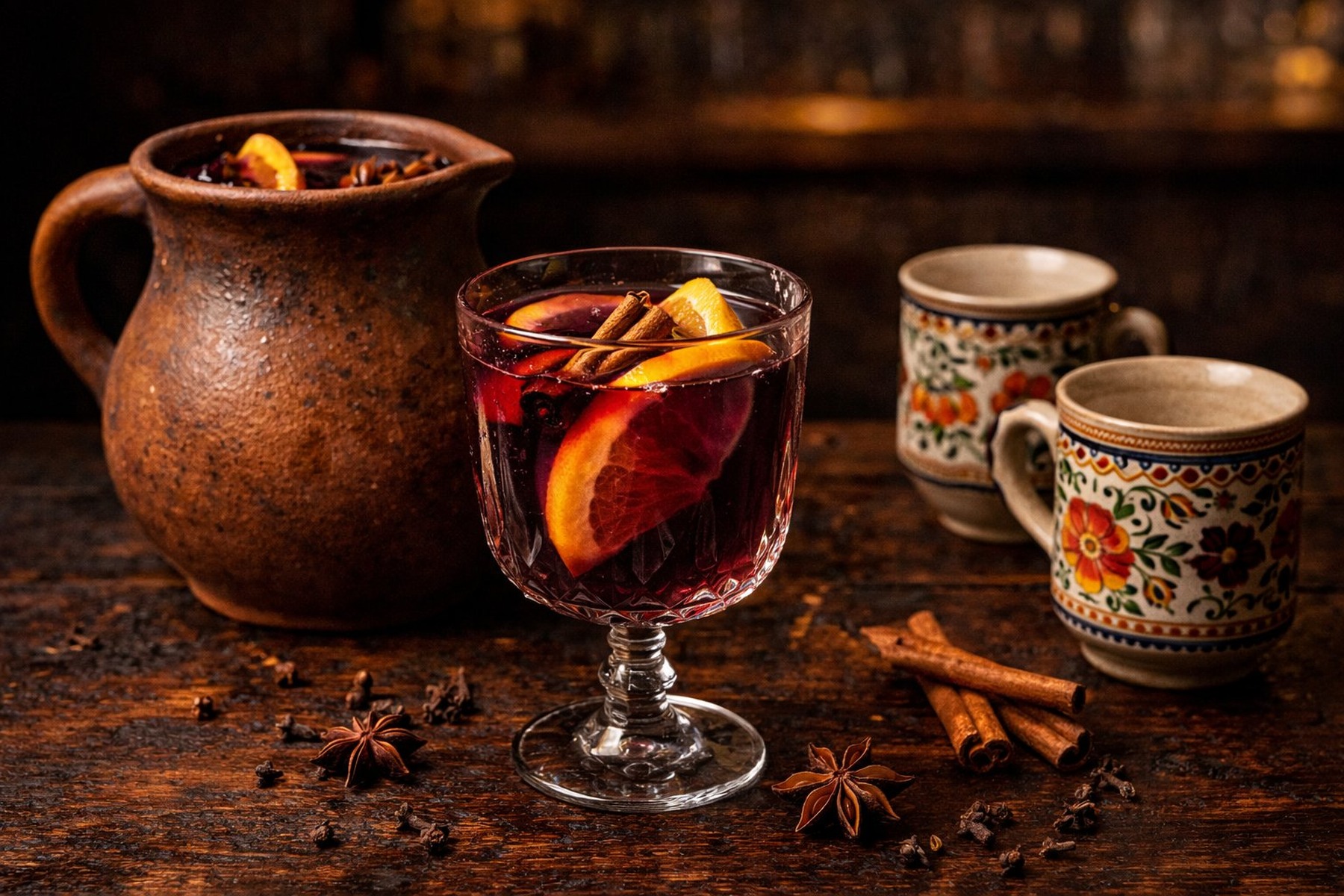
Ingredients: 1 bottle Lykhny or Bouquet of Abkhazia wine, 100ml chacha, 50ml mountain honey, 2 cinnamon sticks, 4 cloves, 3 star anise, zest of 1 tangerine, 2 bay leaves, 200ml fresh tangerine juice, sliced tangerines and pomegranate seeds.
Preparation: Gently warm the wine in a large pot — never boil, or you'll kill the Izabella character. Add honey, spices, tangerine zest, and bay leaves. Simmer on the lowest heat for 15 minutes until fragrant. Remove from heat, add chacha and tangerine juice. Ladle into cups or a punch bowl, garnish with tangerine slices and pomegranate seeds. Serves 6–8. Perfect for cool Black Sea evenings on the veranda.
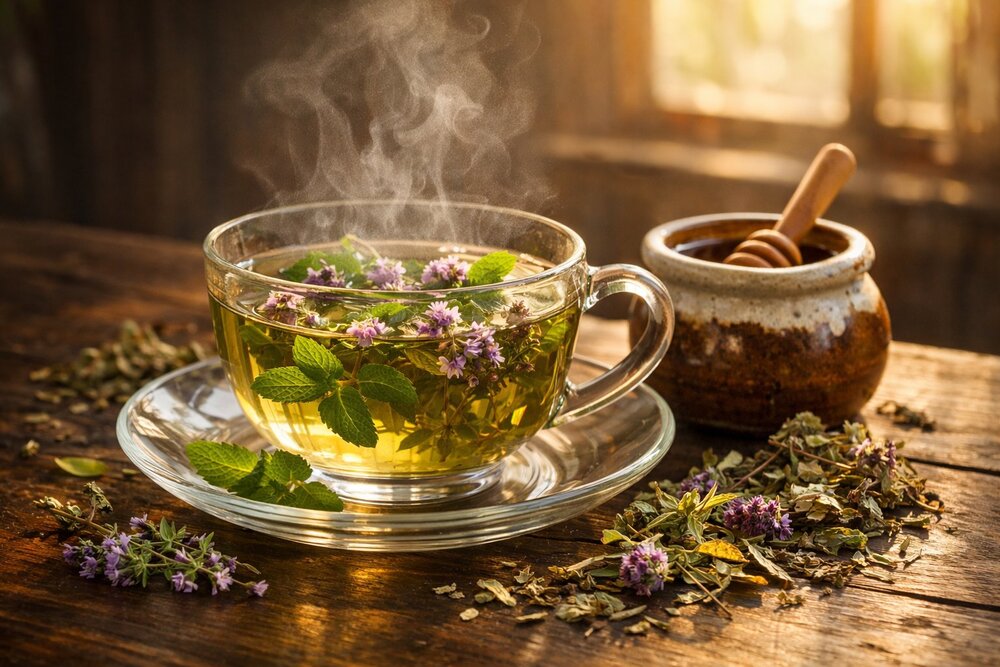
Preparation: Place herbs, ginger, and cinnamon in a teapot or heatproof jar. Pour boiling water over, cover, and steep 7–10 minutes. Strain into cups. Sweeten with mountain honey — never sugar. Add a squeeze of lemon. The herb blend varies by village and season, but Abkhazians credit this daily ritual with their legendary longevity. Served at every social gathering, sometimes alongside matsoni (fermented milk).
Editorial illustration · provenance under review
The Sacred Art of the Abkhazian Toast
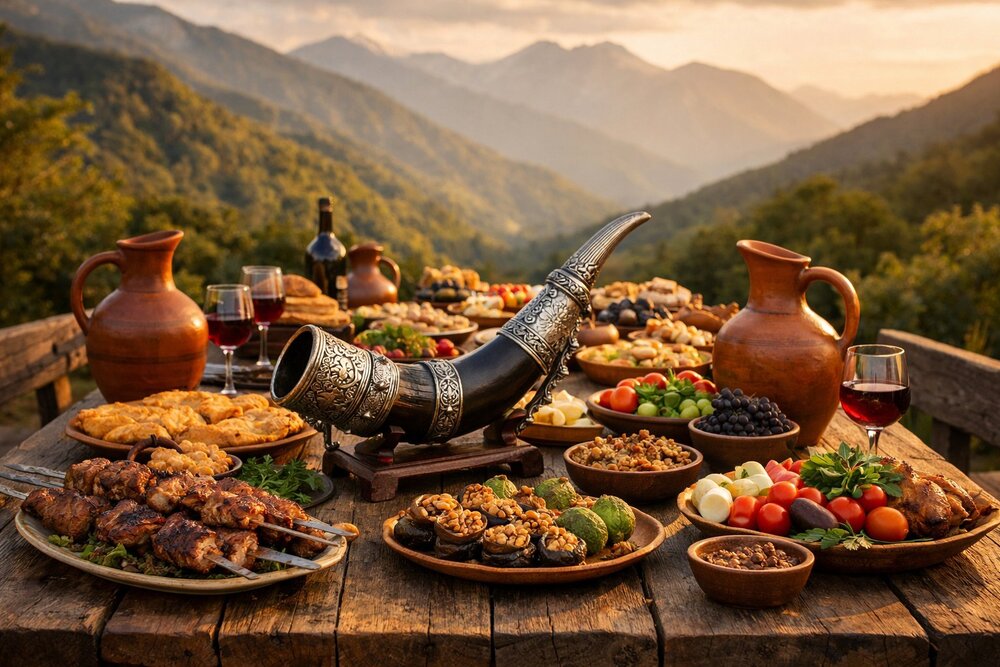
A table set with meat, vegetables, pitchers and a ceremonial horn. An illustration of communal dining traditions.
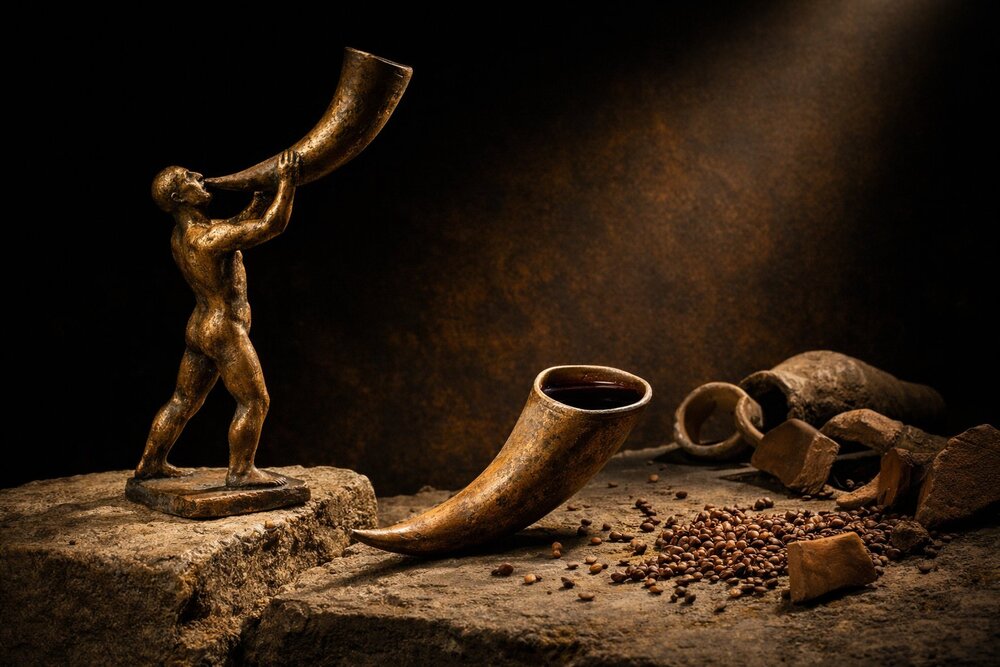
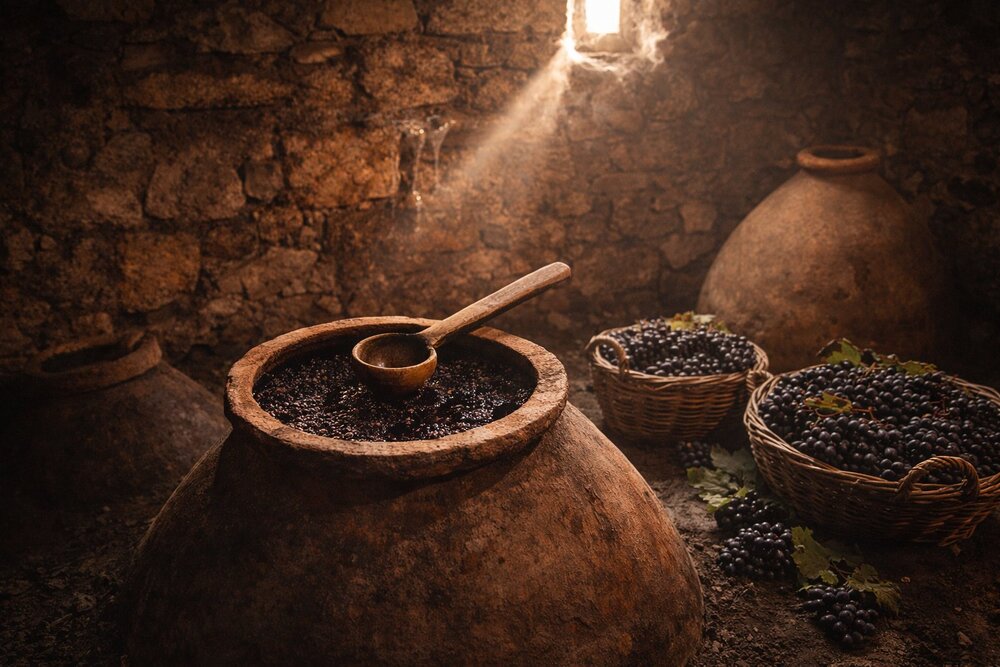
Abkhazia's claim to winemaking stretches back at least five millennia. Archaeological excavations in the Gudauta district have unearthed pitchers containing grape seeds dating to 3000–2000 BCE, while a celebrated bronze statuette from the Bombora settlement — a man raising an enormous wine horn — dates to the second millennium BCE and now graces the label of Apsny wine. Clay vessels buried underground for fermentation and aging, some holding over 200 litres, have been used in the western Caucasus for an estimated 8,000 years — a tradition that survives in Abkhazian households to this day.
The ancient Greek colony of Dioscurias, centered where modern Sukhumi stands, was one of the principal wine suppliers to Rome from the 6th century BCE onward. This heritage was not lost through centuries of Ottoman, Russian, and Soviet rule. Contemporary industrial production began in 1925 at the Sukhum Winery, reaching its golden age between 1960 and 1990, when some 1,500 hectares of vineyards produced the legendary brands that define Abkhazian wine today.
Illustration of a figure with a drinking horn, not a documentary photograph of an archaeological find
8,000 Years Underground · Clay kvevri vessels buried in the earth floor of a centuries-old cellar — the Caucasian fermentation method that UNESCO recognized as Intangible Cultural Heritage.
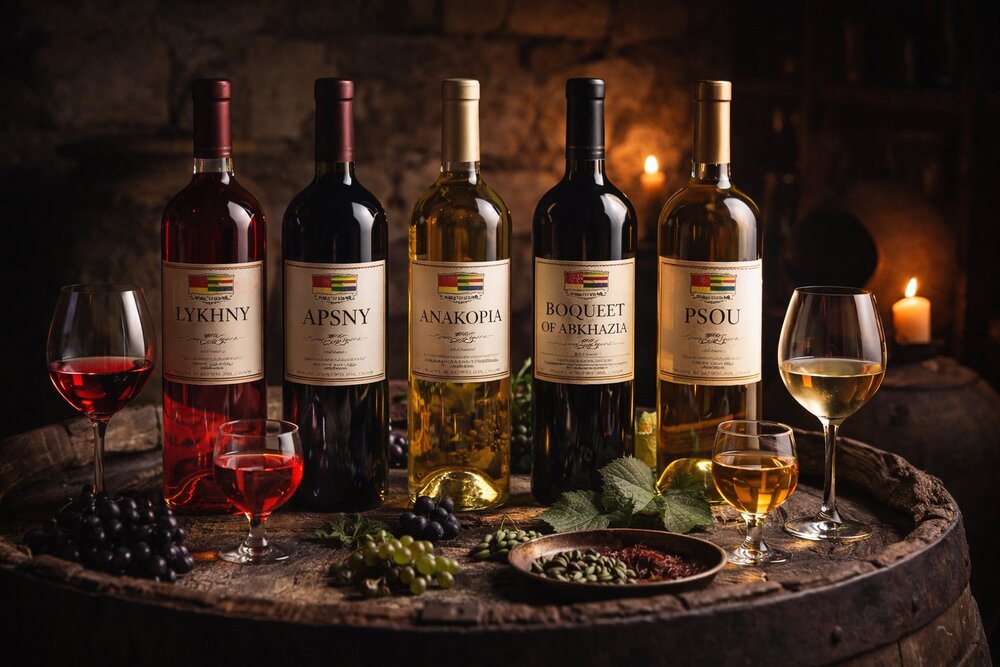
🏷️ Iconic Abkhazian Wines
🍷 Lykhny
Semi-sweet rosé · Isabella grape · Since 1962
Named after the historic village with its 1,500-year winemaking heritage. Made from the local Isabella hybrid crossed with wild Caucasian grapes, yielding a delicate strawberry-scented wine unlike any standard Isabella. Alcohol 9–11%, sugar 3–5%. Often called "the prince of Abkhaz wines."
🍷 Apsny
Semi-sweet red · Cabernet Sauvignon, Saperavi, Merlot blend
Named after the Abkhaz word for their homeland — "Land of the Soul." Pomegranate-coloured with a full, harmonious taste and gentle sweetness. The label features the famous Bombora bronze statuette. Silver medal winner at international exhibitions. Alcohol 9–10%.
🥂 Anakopia
Semi-dry white · Tsolikauri grape · Since 1978
Named after the ancient Abkhazian fortress capital. Light to dark straw colour with a specific aroma and subtly fresh taste. Made from Tsolikauri grapes grown in the Sukhumi and Gudauta districts. Alcohol 9–11%, sugar 1–2%.
🌸 Bouquet of Abkhazia
Semi-sweet red · Isabella grape
A classic Isabella expression with the unmistakable fruity, slightly foxy aroma that devotees of Caucasian wines adore. More traditionally styled than Lykhny, with deeper colour and bolder character. Hugely popular across Russia.
🏞️ Psou
Semi-sweet white · Tsolikauri & Tsitska blend
Named after the Psou River that forms Abkhazia's northern border with Russia. A lighter, fruit-forward white with floral notes — the go-to aperitif wine of the Black Sea coast.
Illustrative bottles and wine glasses; not verified product photographs
🔥 Chacha — The Spirit of the Caucasus
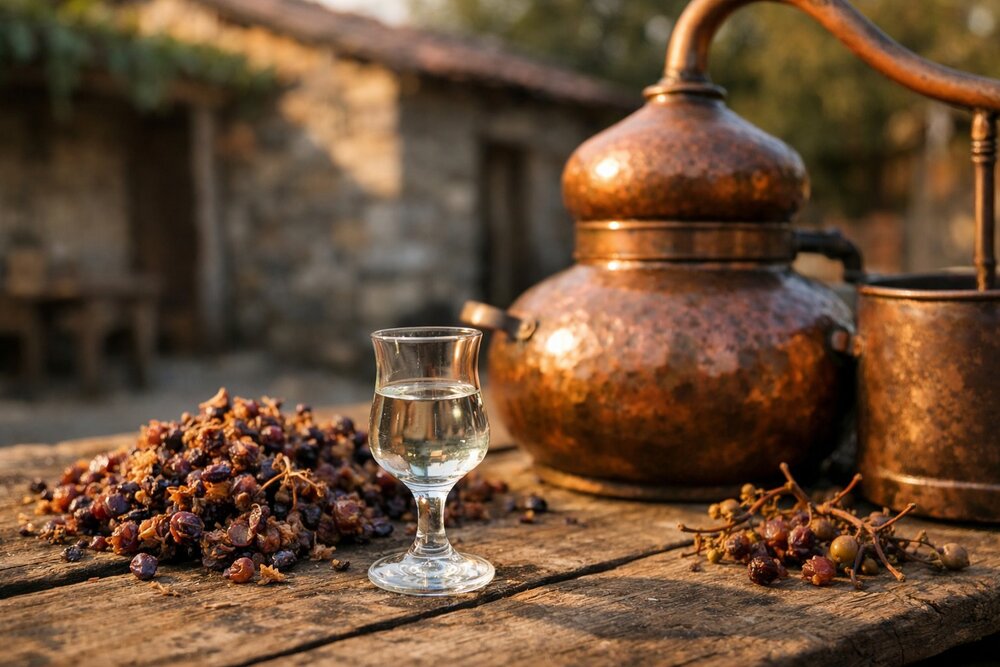
No discussion of Abkhazian drinking culture is complete without chacha — a potent grape pomace brandy ranging from 40% to a staggering 65% alcohol. Every rural household distils its own, using the skins, stems, and seeds left over from winemaking. The quality varies enormously: industrial chacha from the Sukhum distillery is smooth and refined, while homemade versions can be bracingly raw. Chacha is traditionally served at room temperature in small glasses, always accompanied by food — drinking without eating is considered deeply uncivilised in Abkhazian culture.
The Art of Chacha · A copper alembic still in a traditional courtyard with tangerine trees and grape pergola — every Abkhazian family distils their own fiery grape brandy from the season's pomace.
🥛 Non-Alcoholic Traditions
Matsoni (fermented milk drink) remains the daily beverage of choice in mountain villages, believed to be one of the secrets behind Abkhazia's legendary longevity. Strong black tea, often sweetened with mountain honey, accompanies every social gathering. Fresh fruit compotes from local tangerines, figs, and persimmons round out the non-alcoholic repertoire.
🏛️ Drinking Culture & Toasting Traditions
The Abkhazian feast (amkhadzyr) follows an ancient and strictly observed protocol. The tamada (toastmaster) guides the evening through a series of mandatory toasts: the first to God and higher powers (all rise), the second to the sacred land of Apsny and its protectors (all rise again), followed by toasts to the host family, to the departed, and to future generations. Wine — never hard spirits — is used for formal toasts. The horn (ap'arakh) remains the ceremonial drinking vessel, a tradition directly linked to that Bronze Age statuette from Bombora.
Remarkably, despite the centrality of wine to social life, public drunkenness is virtually unknown and deeply stigmatised. The Abkhaz view wine not as an intoxicant but as a sacred medium connecting the living to their ancestors, the earth, and the divine. This philosophy — drinking with intention and reverence — may explain why a culture so deeply entwined with alcohol maintains one of the lowest rates of alcoholism in the Caucasus.
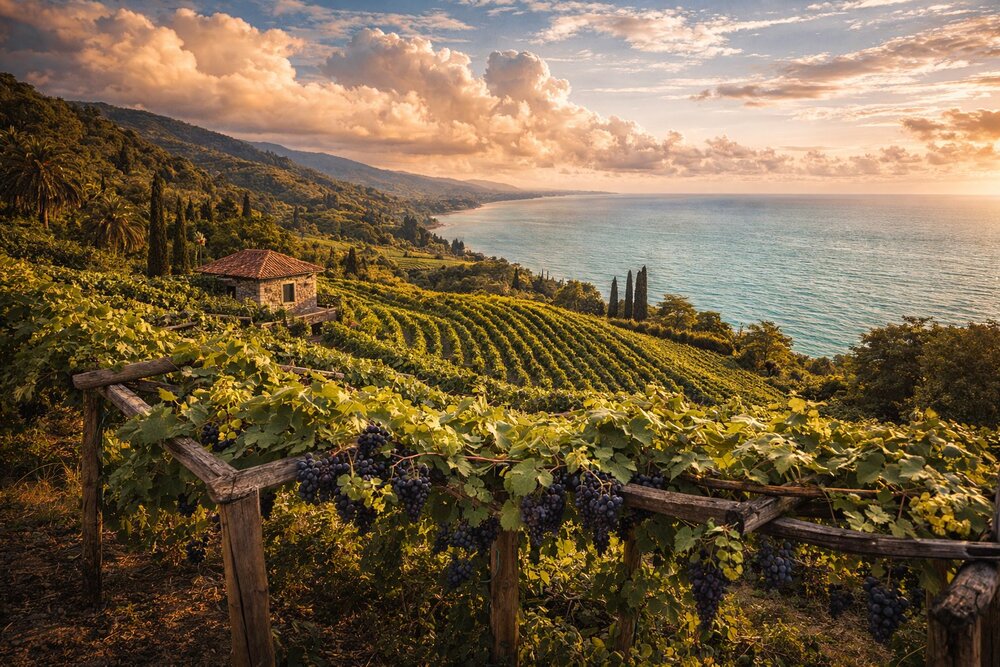
Where the Vineyards Meet the Sea
Pergola-style vineyards heavy with Isabella grapes cascade down subtropical hillsides toward the turquoise Black Sea — a winemaking paradise where palm trees and cypress grow alongside ancient vine rows
🍔 Big Mac Index
Economic Indicator
⚠️ McDonald's does not operate in Abkhazia
Abkhazia is one of the few places on Earth where you cannot buy a Big Mac—not because of taste preferences, but because of geopolitics. In 2014, McDonald's briefly announced plans to open in Abkhazia, triggering immediate backlash from Georgia. The Georgian franchisee blocked the move, stating that "even if some map showed Abkhazia as independent, construction of new McDonald's would require my permission." International companies cannot enter the Abkhazian market without Georgian government approval.
The absence of McDonald's reflects Abkhazia's profound economic isolation. The nearest Big Mac is either in Batumi, Georgia (across the closed border) or Sochi, Russia (accessible via Psou crossing). This makes Abkhazia part of a small club of territories—alongside North Korea, Cuba until recently, and a handful of others—where the golden arches have never appeared.
📊 Alternative Price Comparison (vs. Big Mac ~$5.50 USD):
Abysta with cheese & meat — $3-5 (local restaurant)
Shashlik plate — $6-10
Full traditional meal — $8-15
Khachapuri — $3-5
Local beer (0.5L) — $1-2
Bottle of Abkhazian wine — $5-10
Verdict: Abkhazia offers excellent value—a full traditional feast costs roughly what two Big Macs would in neighboring countries, with infinitely more character and 3,000 years of winemaking tradition.
Keep exploring
Read another chapter, send a correction or get the monthly English newsletter.