

🍷 Wine, Spirits & Drinking Culture

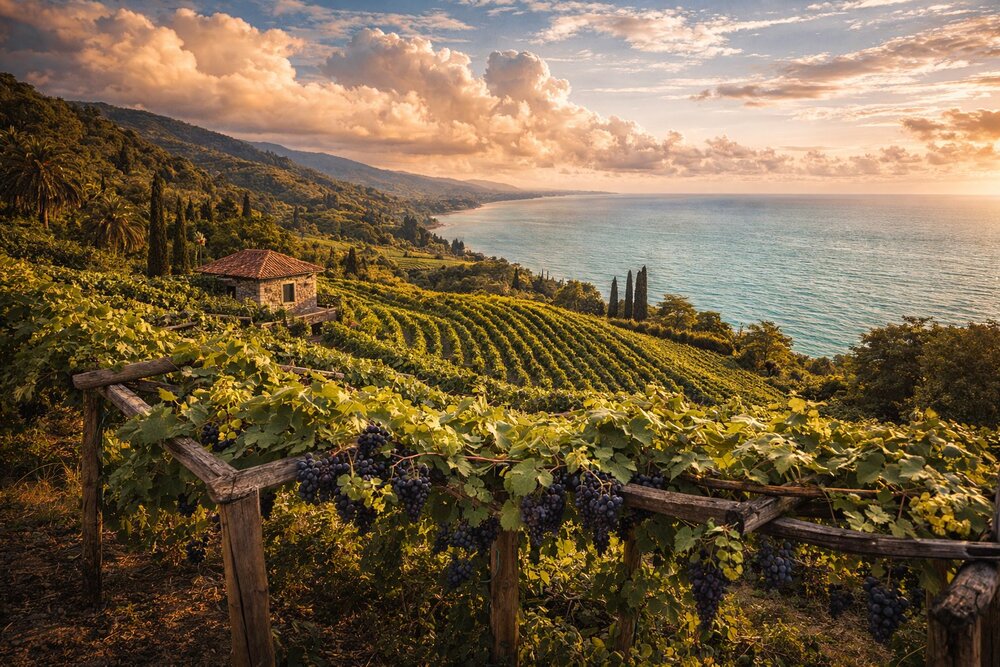
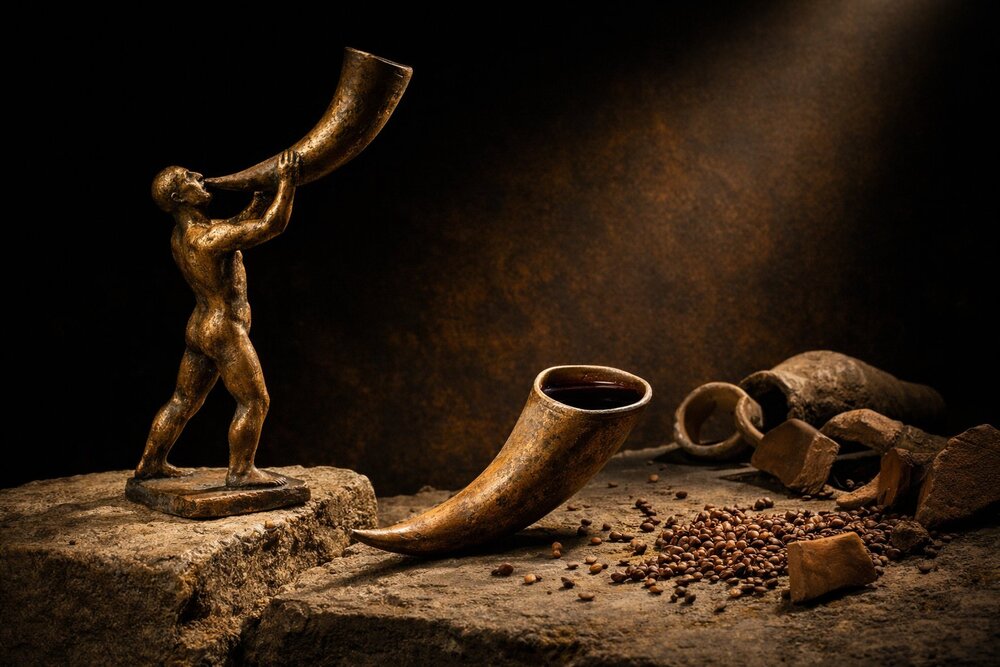
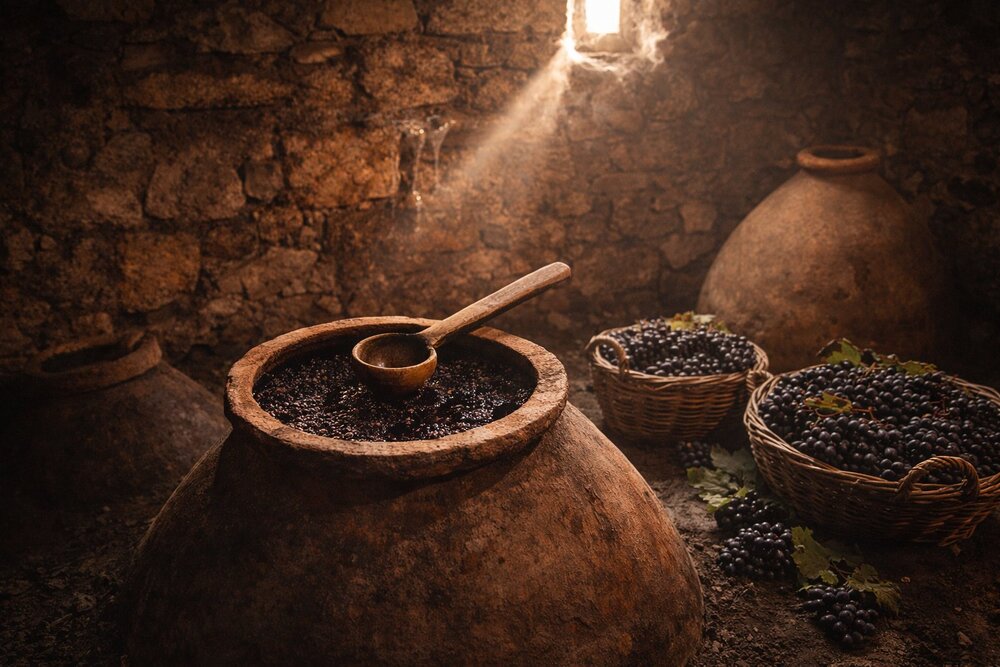
Abkhazia's claim to winemaking stretches back at least five millennia. Archaeological excavations in the Gudauta district have unearthed pitchers containing grape seeds dating to 3000–2000 BCE, while a celebrated bronze statuette from the Bombora settlement — a man raising an enormous wine horn — dates to the second millennium BCE and now graces the label of Apsny wine. Clay vessels buried underground for fermentation and aging, some holding over 200 litres, have been used in the western Caucasus for an estimated 8,000 years — a tradition that survives in Abkhazian households to this day.
The ancient Greek colony of Dioscurias, centered where modern Sukhumi stands, was one of the principal wine suppliers to Rome from the 6th century BCE onward. This heritage was not lost through centuries of Ottoman, Russian, and Soviet rule. Contemporary industrial production began in 1925 at the Sukhum Winery, reaching its golden age between 1960 and 1990, when some 1,500 hectares of vineyards produced the legendary brands that define Abkhazian wine today.
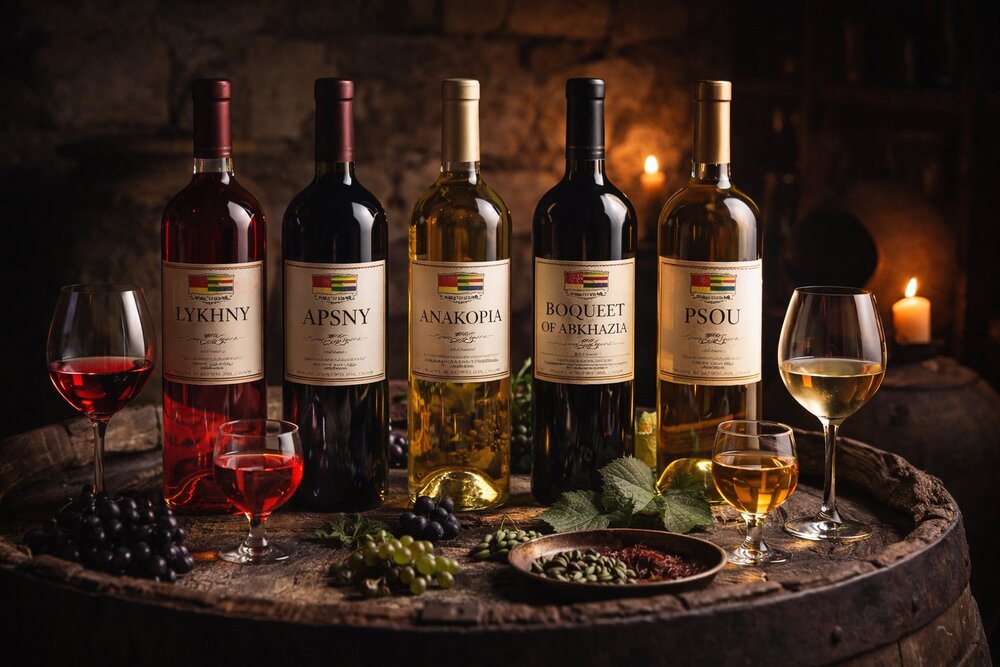
🏷️ Iconic Abkhazian Wines
🍷 Lykhny
Semi-sweet rosé · Isabella grape · Since 1962
Named after the historic village with its 1,500-year winemaking heritage. Made from the local Isabella hybrid crossed with wild Caucasian grapes, yielding a delicate strawberry-scented wine unlike any standard Isabella. Alcohol 9–11%, sugar 3–5%. Often called "the prince of Abkhaz wines."
🍷 Apsny
Semi-sweet red · Cabernet Sauvignon, Saperavi, Merlot blend
Named after the Abkhaz word for their homeland — "Land of the Soul." Pomegranate-coloured with a full, harmonious taste and gentle sweetness. The label features the famous Bombora bronze statuette. Silver medal winner at international exhibitions. Alcohol 9–10%.
🥂 Anakopia
Semi-dry white · Tsolikauri grape · Since 1978
Named after the ancient Abkhazian fortress capital. Light to dark straw colour with a specific aroma and subtly fresh taste. Made from Tsolikauri grapes grown in the Sukhumi and Gudauta districts. Alcohol 9–11%, sugar 1–2%.
🌸 Bouquet of Abkhazia
Semi-sweet red · Isabella grape
A classic Isabella expression with the unmistakable fruity, slightly foxy aroma that devotees of Caucasian wines adore. More traditionally styled than Lykhny, with deeper colour and bolder character. Hugely popular across Russia.
🏞️ Psou
Semi-sweet white · Tsolikauri & Tsitska blend
Named after the Psou River that forms Abkhazia's northern border with Russia. A lighter, fruit-forward white with floral notes — the go-to aperitif wine of the Black Sea coast.
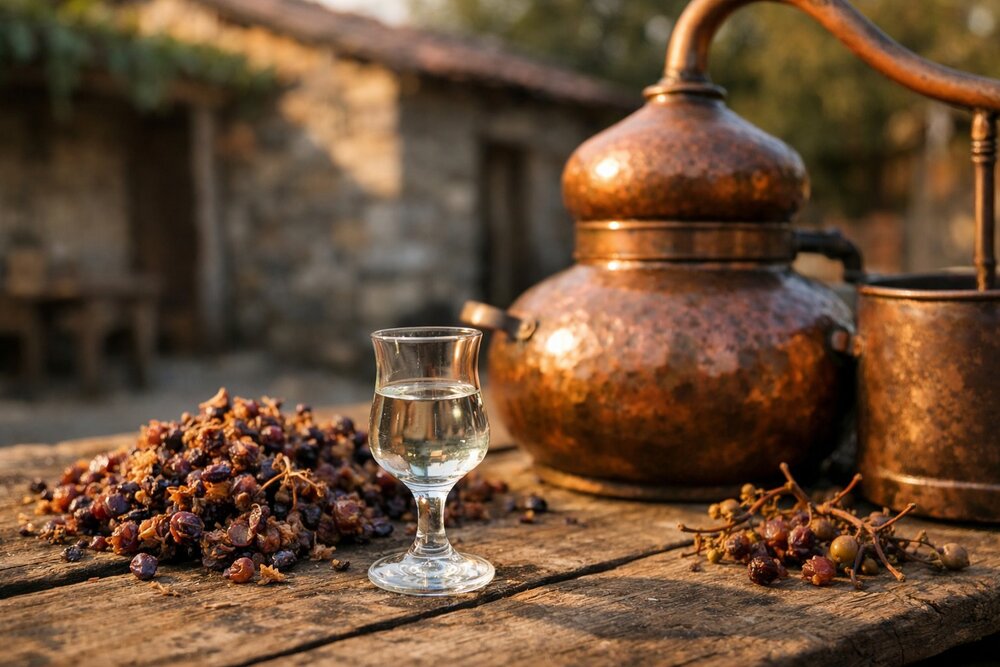
🔥 Chacha — The Spirit of the Caucasus
No discussion of Abkhazian drinking culture is complete without chacha — a potent grape pomace brandy ranging from 40% to a staggering 65% alcohol. Every rural household distils its own, using the skins, stems, and seeds left over from winemaking. The quality varies enormously: industrial chacha from the Sukhum distillery is smooth and refined, while homemade versions can be bracingly raw. Chacha is traditionally served at room temperature in small glasses, always accompanied by food — drinking without eating is considered deeply uncivilised in Abkhazian culture.
🥛 Non-Alcoholic Traditions
Matsoni (fermented milk drink) remains the daily beverage of choice in mountain villages, believed to be one of the secrets behind Abkhazia's legendary longevity. Strong black tea, often sweetened with mountain honey, accompanies every social gathering. Fresh fruit compotes from local tangerines, figs, and persimmons round out the non-alcoholic repertoire.
🏛️ Drinking Culture & Toasting Traditions
The Abkhazian feast (amkhadzyr) follows an ancient and strictly observed protocol. The tamada (toastmaster) guides the evening through a series of mandatory toasts: the first to God and higher powers (all rise), the second to the sacred land of Apsny and its protectors (all rise again), followed by toasts to the host family, to the departed, and to future generations. Wine — never hard spirits — is used for formal toasts. The horn (ap'arakh) remains the ceremonial drinking vessel, a tradition directly linked to that Bronze Age statuette from Bombora.
Remarkably, despite the centrality of wine to social life, public drunkenness is virtually unknown and deeply stigmatised. The Abkhaz view wine not as an intoxicant but as a sacred medium connecting the living to their ancestors, the earth, and the divine. This philosophy — drinking with intention and reverence — may explain why a culture so deeply entwined with alcohol maintains one of the lowest rates of alcoholism in the Caucasus.