Sukhumi seafront pier — coastal tourism as part of the local economy · VoyageVoyage · CC BY-SA 3.0 · Image credits
Abkhazia offers a genuinely unusual case study for anyone curious how an economy functions without most of the tools economists take for granted. Abkhazia does not issue its own circulating currency — the Russian ruble is legal tender by law (Article 140 of the Abkhazian Civil Code), and the National Bank of Abkhazia, despite its official-sounding name, has essentially no ability to set interest rates or control the money supply, since it doesn't control the currency in circulation. Abkhazia does mint a commemorative currency called the apsar, pegged at 1 apsar = 10 rubles, but it exists mainly for coin collectors and ceremonial gifts, not as everyday money.
The bigger structural fact: Abkhazia is recognized as independent by only a handful of UN member states (Russia, and a small number of others including Venezuela, Nicaragua, and Syria). Georgia, the United States, the EU, and the great majority of the world consider Abkhazia part of Georgian territory under Russian occupation. This isn't just a diplomatic footnote — it has direct economic teeth: the IMF and World Bank exclude Abkhazia from their data entirely, meaning there's no official GDP figure most economists would recognize, no access to international development lending, and essentially no path for a Western company to invest with normal legal protections. Whatever the politics, the practical result is an economy almost entirely dependent on a single patron.
02
🤝 The Russia Relationship, By the Numbers
Gagra colonnade — resort tourism in the economic context · Alexxx1979 · CC BY-SA 4.0 · Image credits
Russian financial transfers have covered roughly half of Abkhazia's state budget in recent years — reported figures put cumulative Russian support at over ₽30 billion (about $400 million) between 2020 and 2025 alone, against domestic tax revenue that covers only 35–40% of what the government actually spends. Major Russian companies (MegaFon, MTS, and Rosneft among them) operate as the closest thing Abkhazia has to a corporate private sector. An April 2026 investment forum, "Abkhazia – Investing in the Future," brought together over 500 participants from Abkhazia, 15 Russian regions, and South Ossetia, with officials citing signed memoranda potentially worth $1.3 billion — almost entirely Russian capital, concentrated in tourism, transport, and infrastructure.
This dependency is genuinely a live political fault line inside Abkhazia, not just an outside observation — Abkhazian opposition figures have publicly criticized recent Russian investment agreements as effectively "colonial," and Russia has, at points, suspended payments during political disagreements, which gives a sense of just how much leverage the relationship gives Moscow over day-to-day Abkhazian governance.
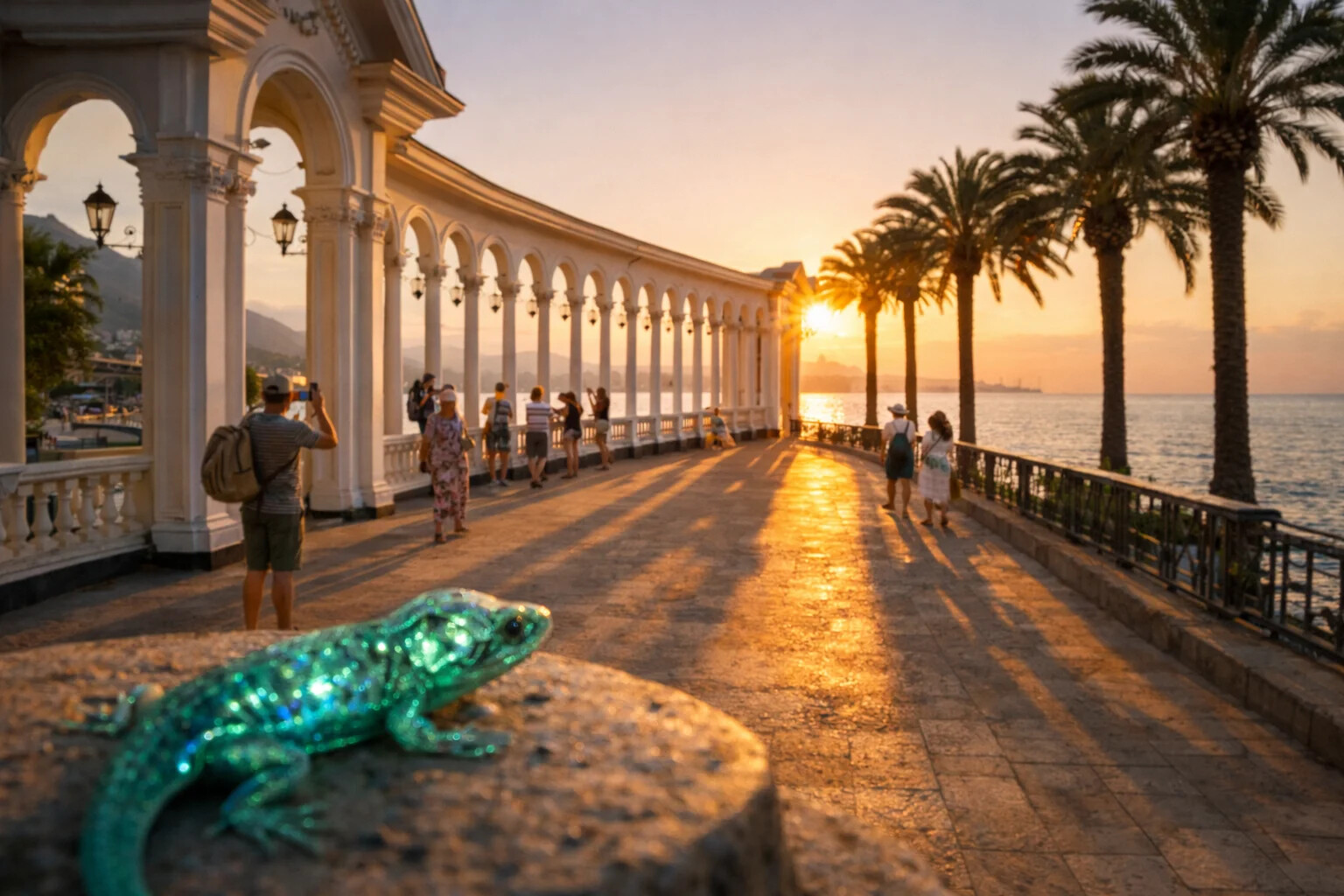
Abkhazia's real export economy is small, agricultural, and almost entirely Russia-bound. By value, the leading 2024 export was local brandy — Abkhazian producers and officials will tell you, with real pride, that it rivals or beats French cognac, and it accounted for roughly a third of total exports. Citrus fruit (tangerines especially) made up close to a quarter, with textiles and fish products rounding out the rest. Tourism is the other pillar: close to a million visitors a year, the overwhelming majority Russian, taking advantage of visa-free travel under a bilateral agreement that doesn't extend to most other nationalities.
There is no meaningful stock exchange, and no realistic path for an American to register a company in Abkhazia the way one might in, say, Georgia or Armenia — the disputed status, ruble dependency, and near-total absence of recognized international banking relationships make it impractical rather than merely difficult. The one notable diversification attempt worth knowing about: Abkhazia's government explored legalizing cryptocurrency mining, reasoning that a blockchain-based revenue stream might eventually reduce dependence on the ruble — a genuinely interesting idea for a state that can't issue its own currency, though it remains a minor, experimental part of the economy rather than a going concern.
Keep exploring
Read another chapter, send a correction or get the monthly English newsletter.