There is a moment, standing on the observation deck at Miraflores Locks, when a massive container ship rises silently before you—lifted by nothing more than gravity-fed water from Gatun Lake—and the sheer audacity of the Panama Canal hits you. This narrow strip of land, barely 80 kilometers wide at its thinnest, changed the course of global trade and connects two great oceans. But Panama is far more than its famous canal. From the Caribbean archipelagos of Bocas del Toro and San Blas to the cloud forests of Boquete, from the vibrant nightlife of Casco Viejo to the impenetrable wilderness of the Darién Gap, this small nation packs extraordinary diversity into its compact territory.
Panamanians call their homeland "the bridge of the world, the heart of the universe"—a phrase that adorns the national coat of arms—and the name feels earned rather than merely aspirational. Located at the narrowest point of the Americas, Panama has been a crossroads of civilizations for millennia. Indigenous peoples traded gold and ceramics here long before the Spanish arrived. Today, Panama City's glittering skyline—often called the "Dubai of Latin America"—rises above the colonial charm of Casco Viejo, where restored 17th-century mansions house boutique hotels and rooftop bars overlooking the Pacific. The country operates on the US dollar alongside its own Balboa, and its economy—driven by the canal, banking, and the vast Colón Free Trade Zone—punches far above its weight for a nation of just 4.4 million people.
Panama City sprawls along the Pacific coast, a modern metropolis of gleaming towers and congested highways that gives way, within an hour's drive, to pristine rainforest teeming with wildlife. The country harbors an astonishing density of biodiversity—more bird species than the United States and Canada combined, more tree species in a single hectare of rainforest than in all of Europe. For travelers seeking a destination where world-class urban sophistication meets raw tropical wilderness, where Caribbean and Pacific beaches are just an hour apart, and where the engineering marvel of the century operates alongside indigenous communities living as they have for centuries, Panama delivers an experience unlike anywhere else in the Americas.
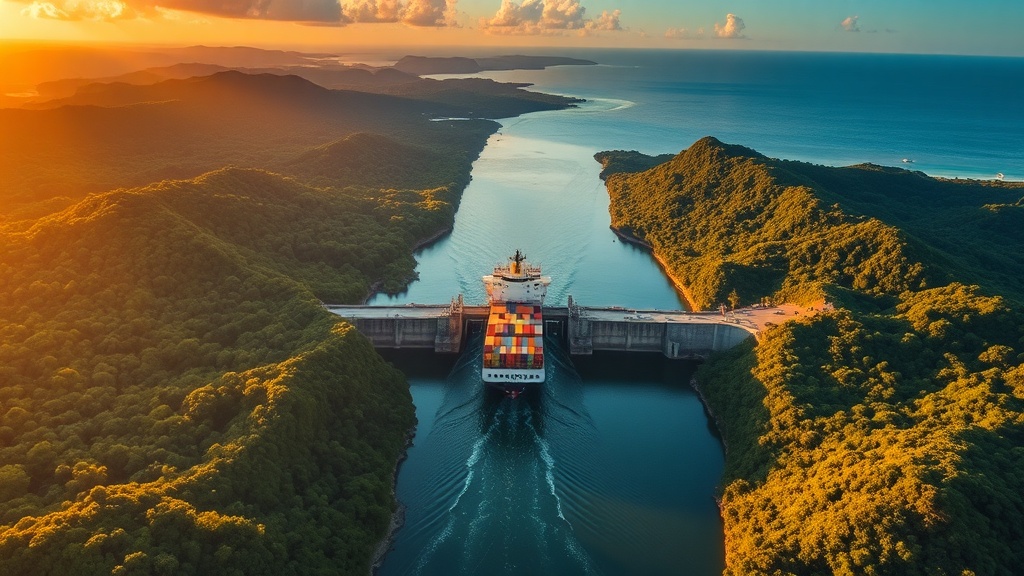
Panama Canal
The engineering marvel connecting two oceans — ships from around the world transit the legendary 82-kilometer waterway that changed global trade forever
The origin of the name "Panama" is debated among historians. The most popular theory holds that it comes from an indigenous phrase meaning "abundance of fish" or "abundance of butterflies," both of which remain apt descriptions today. Another theory traces it to a native tree of the same name that was common in the area. Spanish explorer Vasco Núñez de Balboa first crossed the isthmus in 1513, becoming the first European to see the Pacific Ocean from the Americas. The name "Panama" was first applied to a small fishing village and later adopted for the entire isthmus and eventually the nation.
The national flag features four quarters: white with a blue star (representing civic virtues and the Conservative Party), red (the Liberal Party), blue (representing law and authority), and white with a red star (symbolizing the law). Designed by Manuel Amador Guerrero's family in 1903, it deliberately avoided the Colombian flag's colors to assert independence. The two stars and two colors represent the two political parties that agreed to work together for the new nation's future—a symbol of unity that transcends partisanship.
Panama's identity has been shaped by its unique geography—the narrowest point of the Americas—which made it a crossroads long before the canal was built. The Spanish colonial legacy, the 19th-century Gold Rush transit route, the French and American canal-building eras, and the long presence of the US Canal Zone (returned to Panama in 1999) have all layered upon indigenous Guna, Emberá, and Ngäbe-Buglé cultures to create a remarkably diverse society. Panama City today is one of Latin America's most cosmopolitan capitals, with significant Chinese, Indian, Jewish, Greek, and Middle Eastern communities alongside the mestizo, Afro-Panamanian, and indigenous majority.
For visitors, understanding this layered identity enriches every interaction. Panamanians are proud of their country's unique role in the world, its astonishing biodiversity, and its multicultural heritage. The warmth and openness of Panamanian hospitality—from a taxi driver's friendly conversation to a Guna grandmother welcoming you to her island—reflects a society that has always welcomed travelers passing between two worlds.
Panama occupies 75,417 square kilometers of the narrowest section of the Central American isthmus, stretching roughly 770 kilometers from Costa Rica in the west to Colombia in the east. Despite being only 80 kilometers wide at its thinnest point near the canal, the country features extraordinary geographic diversity. Two coastlines—1,700 kilometers on the Caribbean Sea and 1,690 kilometers on the Pacific Ocean—frame a mountainous interior dominated by the Cordillera Central, whose highest peak, Volcán Barú (3,475 meters), allows you to see both oceans on a clear day.
The climate is tropical, with temperatures averaging 27°C year-round at sea level. The country has two distinct seasons: the dry season (verano) from mid-December to April, and the rainy season (invierno) from May to November, when afternoon downpours are common but rarely last long. The Caribbean coast receives significantly more rainfall than the Pacific side. In the highlands around Boquete and El Valle, temperatures are noticeably cooler (15–25°C), creating a pleasant "eternal spring" climate that has attracted retirees from around the world.
Ten provinces and five indigenous comarcas organize the territory. Panamá province contains the capital and canal; Bocas del Toro on the Caribbean coast offers island-hopping adventures; Chiriquí in the west hosts Boquete and Volcán Barú; Coclé features the mountain retreat of El Valle de Antón; Veraguas spans both coasts; and Darién in the east remains one of the planet's last great wilderness frontiers. The three Guna comarcas (including the famous San Blas Islands), Emberá-Wounaan, and Ngäbe-Buglé are self-governing indigenous territories where traditional cultures thrive.
Panama's biodiversity is staggering. The country harbors over 10,000 plant species, 1,000 bird species, 220 mammal species, and more tree species per hectare than anywhere in North America. National parks protect roughly 33% of the territory, from the marine reserves of Coiba Island (a UNESCO World Heritage Site) to the cloud forests of La Amistad International Park. The Darién Gap—the only break in the Pan-American Highway—remains one of Earth's most biodiverse and impenetrable rainforest regions.
Human habitation in Panama dates back at least 12,000 years, with some of the earliest pottery in the Americas found here. The pre-Columbian cultures produced exquisite gold work—the famous huacas (gold figures) that would later drive Spanish conquest. When Rodrigo de Bastidas arrived in 1501 and Vasco Núñez de Balboa crossed the isthmus in 1513 to become the first European to sight the Pacific from the Americas, they encountered thriving indigenous societies. The Spanish founded Panama City in 1519—the first European settlement on the Pacific coast of the Americas—and the isthmus quickly became the crucial link in the route carrying Inca gold and silver from Peru to Spain.
The colonial era made Panama fabulously wealthy as the transit point for the Camino Real and Camino de Cruces—treasure routes connecting the Pacific to the Caribbean port of Portobelo, where massive trade fairs attracted merchants from across the Spanish Empire. In 1671, the Welsh privateer Henry Morgan sacked and burned the original Panama City (now the ruins of Panamá Viejo). The Spanish rebuilt the city at what is now Casco Viejo, fortifying it with massive walls. After independence from Spain in 1821, Panama joined Simón Bolívar's Gran Colombia, and later became a province of the Republic of Colombia.
The dream of a canal across the isthmus transformed Panama's destiny. France's Ferdinand de Lesseps began construction in 1881 but abandoned the effort in 1889 after tropical diseases killed over 20,000 workers and costs spiraled out of control. In 1903, with US backing, Panama declared independence from Colombia. The Hay–Bunau-Varilla Treaty granted the United States control of the Canal Zone "in perpetuity." American engineers completed the Panama Canal in 1914—one of the greatest engineering achievements in history—fundamentally reshaping global trade routes.
The 20th century brought military dictatorships, the most notorious being Manuel Noriega's regime, which ended with the US invasion of 1989 (Operation Just Cause). Democracy was restored, and the landmark 1977 Torrijos-Carter Treaties were fulfilled on December 31, 1999, when Panama assumed full control of the canal. Since then, the country has experienced remarkable economic growth, completing a massive canal expansion in 2016 (the "Third Set of Locks") that doubled capacity for modern mega-ships. Today, Panama is one of Latin America's fastest-growing economies and a major international banking and logistics hub.
Approximately 4.4 million people call Panama home, making it one of the most ethnically diverse nations in the Americas. Mestizos (mixed indigenous and European) comprise about 65% of the population, with significant Afro-Panamanian communities (15%) descended from enslaved Africans and later Caribbean canal workers. Seven indigenous groups maintain distinct identities: the Guna (famous for their autonomous San Blas comarca and exquisite mola textile art), the Emberá and Wounaan (rainforest peoples of the Darién), and the Ngäbe-Buglé (the largest group, in the western highlands). Panama City is remarkably cosmopolitan, with significant Chinese, Indian, Jewish, Greek, and Middle Eastern communities reflecting the canal's century-long role as a global crossroads.
Panamanian society blends Latin American warmth with Caribbean informality and a dose of North American pragmatism inherited from a century of canal-zone coexistence. Family ties remain strong, and social gatherings—from Sunday family lunches to neighborhood fiestas—are the fabric of daily life. Panamanians are famously friendly and approachable, with a relaxed attitude toward time (the expression "hora panameña" acknowledges a flexible relationship with punctuality) and a genuine curiosity about visitors. Spanish is the official language, though English is widely spoken in business and tourism, and indigenous languages thrive in the comarcas.
Religion in Panama is predominantly Roman Catholic (about 63%), with a growing Protestant and Evangelical population (about 25%). Religious syncretism is common, particularly in Afro-Panamanian communities along the Caribbean coast where Catholic saints blend with African spiritual traditions during festivals like the Congo dances of Portobelo. The Guna people maintain their own spiritual practices centered on the teachings of their prophets, recorded in pictographic texts. Panama's religious tolerance extends to its diverse immigrant communities—you'll find Hindu temples, mosques, synagogues, and a Baha'i House of Worship alongside colonial Catholic churches.
Traditional culture finds vibrant expression in music, dance, and craftsmanship. The tamborito—Panama's national dance—combines Spanish colonial choreography with African drum rhythms. Típico music, featuring the accordion, drums, and churuca scraper, fills rural festivals. The pollera, Panama's stunning national dress, is an elaborate handmade costume that can take a year to complete and cost thousands of dollars—worn with pride at festivals and celebrations. Guna mola textile art, with its intricate reverse-appliqué designs, is recognized worldwide as a masterpiece of indigenous craftsmanship.
🗣️ Useful Phrases
American (universally understood):
- Hola / Buenos días — Hello / Good morning
- Gracias / Muchas gracias — Thank you / Thank you very much
- Sí / No — Yes / No
- Adiós / Hasta luego — Goodbye / See you later
- ¿Cuánto cuesta? — How much does it cost?
Panamanian (appreciated by locals):
- Bziala shʼaabeyt (Бзи|ала шәаабе|ит) — Hello (formal)
- Itabup (Иҭабуп) — Thank you
- Aa / Map (Аа / Мап) — Yes / No
- Panamá — "Bridge of the World" (Panama)
Panama City is the vibrant, fast-growing capital of Panama, home to roughly 1.5 million people in the metro area. The skyline—a dramatic wall of glass towers rising from the Pacific shoreline—rivals Miami or Singapore and seems almost surreal against the backdrop of tropical rainforest pressing in from all sides. This is a city of extraordinary contrasts: gleaming financial district skyscrapers overlook the centuries-old cobblestone streets of Casco Viejo, while the ruins of the original Panamá Viejo (founded 1519, destroyed 1671) stand as a UNESCO World Heritage reminder of the city's deep colonial roots.
The Cinta Costera waterfront promenade stretches for miles along the bay, a beloved gathering spot where joggers, cyclists, and families enjoy Pacific breezes and skyline views. Frank Gehry's Biomuseo—his only work in Latin America—tells the story of how the isthmus of Panama rose from the sea and changed the planet's biodiversity. The Amador Causeway, built from rock excavated during canal construction, connects three small islands and offers stunning views of ships entering the canal, the Bridge of the Americas, and the city skyline at sunset.
The culinary scene reflects Panama's global connections—world-class restaurants in Casco Viejo serve fusion cuisine alongside traditional Panamanian fondas, while the Mercado de Mariscos (seafood market) offers the freshest ceviche in Central America for a few dollars. Shopping ranges from the luxury boutiques of Multiplaza to the chaotic energy of the Albrook Mall (one of the largest in the Americas) and the fascinating Chinese shops of El Dorado. Nightlife thrives in Casco Viejo's rooftop bars, the clubs of Calle Uruguay, and the casinos that dot the financial district.
For visitors, Panama City offers an experience unlike any other Latin American capital—a hyper-modern metropolis with world-class infrastructure where the canal forms the daily backdrop, indigenous markets coexist with luxury malls, and you can be hiking in tropical rainforest within 30 minutes of leaving your downtown hotel. Metropolitan Natural Park, one of the only tropical forests within a capital city's limits, offers trails where you might spot toucans, sloths, and monkeys while the city skyline rises in the distance.
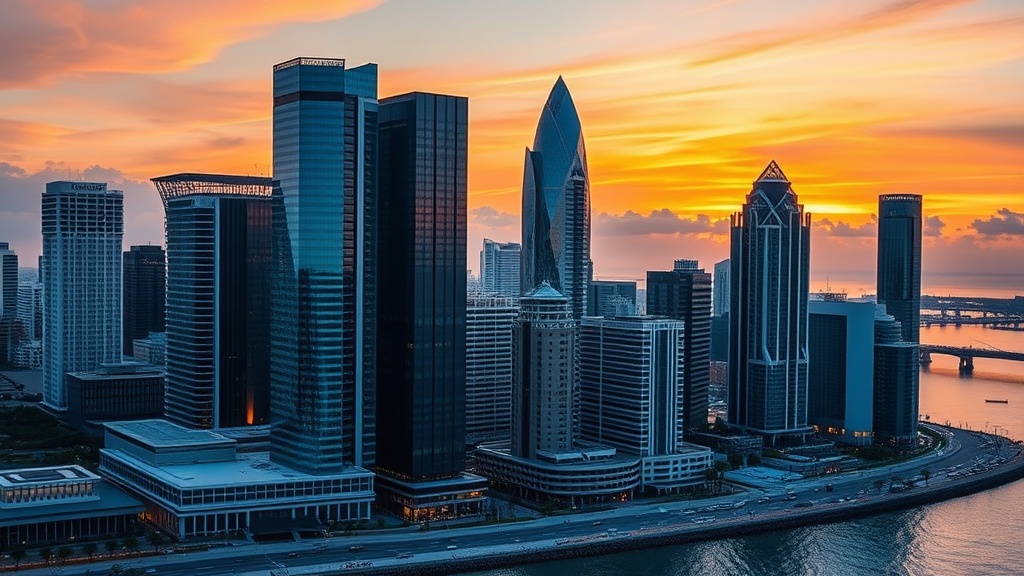
Panama City Skyline
Latin America's most dramatic skyline rises above the Pacific — a forest of gleaming towers reflects the nation's role as a global business hub
Bocas del Toro is Panama's premier Caribbean beach destination—an archipelago of nine main islands and hundreds of smaller islets scattered across a turquoise bay off the northwestern coast. The laid-back provincial capital, Bocas Town, sits on Isla Colón and radiates a funky, backpacker-meets-surfer vibe with colorful wooden buildings on stilts, reggae music drifting from waterfront bars, and water taxis bobbing at every dock. This is where Panama goes full Caribbean—think Belize or the Bay Islands of Honduras, but with better infrastructure and easier access.
The main draws are the beaches and marine life. Starfish Beach (Playa Estrella) on Isla Colón is famous for its shallow, crystal-clear water dotted with large orange starfish—an Instagram sensation that delivers in person. Red Frog Beach on Isla Bastimentos offers excellent surfing and the chance to spot the tiny red poison dart frogs for which it's named. Zapatilla Cays, two pristine uninhabited islands in the Bastimentos National Marine Park, feature some of the most beautiful beaches in Central America, with excellent snorkeling on nearby coral reefs.
The archipelago's biodiversity is exceptional. Bastimentos Island National Marine Park protects coral reefs, mangroves, and nesting beaches for sea turtles. Dolphins are frequently spotted in the channels between islands, and between July and October, humpback whales migrate through the offshore waters. On land, howler monkeys crash through the canopy, sloths hang motionless in cecropia trees, and at night, bioluminescent plankton light up the water in secluded bays—a magical experience accessible by night kayak tours.
Bocas Town itself is a social hub with an unexpectedly diverse dining scene—from fresh Caribbean seafood and Panamanian rice-and-beans to Italian trattorias and Thai restaurants catering to the international crowd. Accommodation ranges from budget hostels to luxurious overwater bungalows. Getting there is easy: daily flights from Panama City to Bocas del Toro airport (one hour), or a scenic overland journey via David and the Almirante water taxi terminal. The rainy season (May–November) sees more precipitation here than the Pacific side, but the warmth never fades and sunny breaks are frequent.
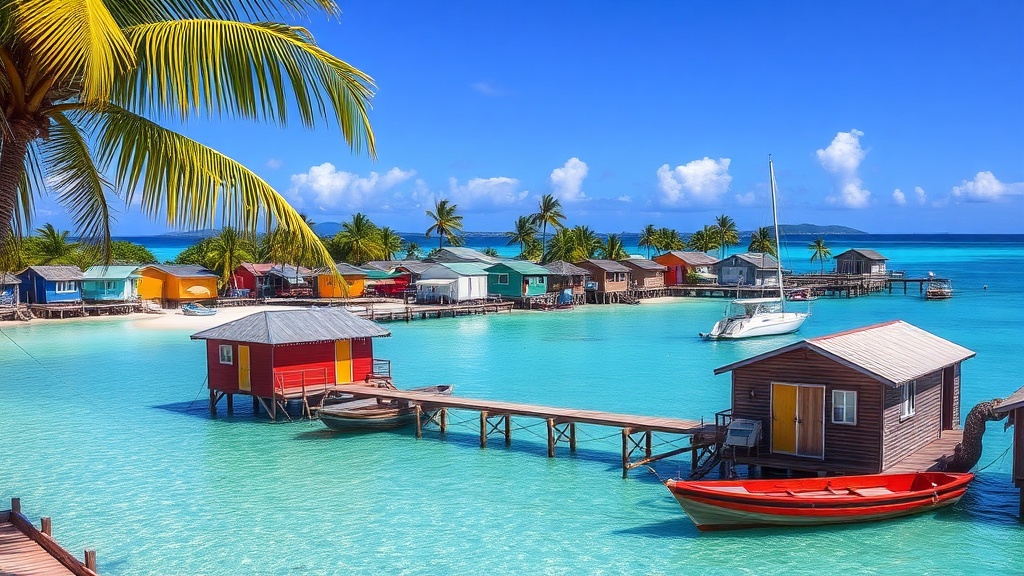
Bocas del Toro
Colorful Caribbean houses perch on stilts above crystal-clear waters — the laid-back archipelago where reggae rhythms meet jungle adventures
Casco Viejo—also known as Casco Antiguo or the Old Quarter—is the historic heart of Panama City and a UNESCO World Heritage Site. Founded in 1673 after Henry Morgan's pirate raid destroyed the original Panamá Viejo, this compact peninsula district is a masterclass in colonial architecture undergoing one of Latin America's most successful urban revivals. Crumbling facades are being restored into boutique hotels, art galleries, and some of the best restaurants in Central America, while the neighborhood retains its authentic character with local families, street vendors, and children playing in the plazas.
The architectural landmarks are stunning. The Metropolitan Cathedral, with its mother-of-pearl encrusted towers, dominates Plaza de la Independencia where Panama declared its separation from Colombia in 1903. The Church of San José houses the legendary Golden Altar—a baroque masterpiece that survived Morgan's raid because, according to legend, a clever priest painted it black to disguise its value. The Presidential Palace (Palacio de las Garzas), named for the white herons that stroll its courtyard, overlooks the waterfront with elegant Moorish-influenced arches.
Casco Viejo's revival has made it Panama City's premier dining and nightlife district. Rooftop bars offer spectacular views of the modern skyline across the bay, jazz clubs fill colonial courtyards with music on weekend nights, and acclaimed restaurants serve everything from traditional Panamanian cuisine to innovative fusion. The neighborhood is compact and walkable—you can explore its churches, plazas, street art, and museums in an afternoon, though the atmosphere invites lingering well into the evening.
Nearby, the ruins of Panamá Viejo—the original city founded in 1519—offer a fascinating contrast. The stone cathedral tower, the oldest European structure on the Pacific coast of the Americas, rises above the archaeological site where excavations continue to reveal the layout of this once-prosperous colonial settlement. The small museum explains the city's rise as the Pacific terminus of the Camino Real treasure route and its dramatic destruction by Morgan's buccaneers in 1671.
The combination of UNESCO heritage, culinary excellence, vibrant nightlife, and authentic neighborhood character makes Casco Viejo essential visiting—a place where five centuries of history come alive in the most delightful way.
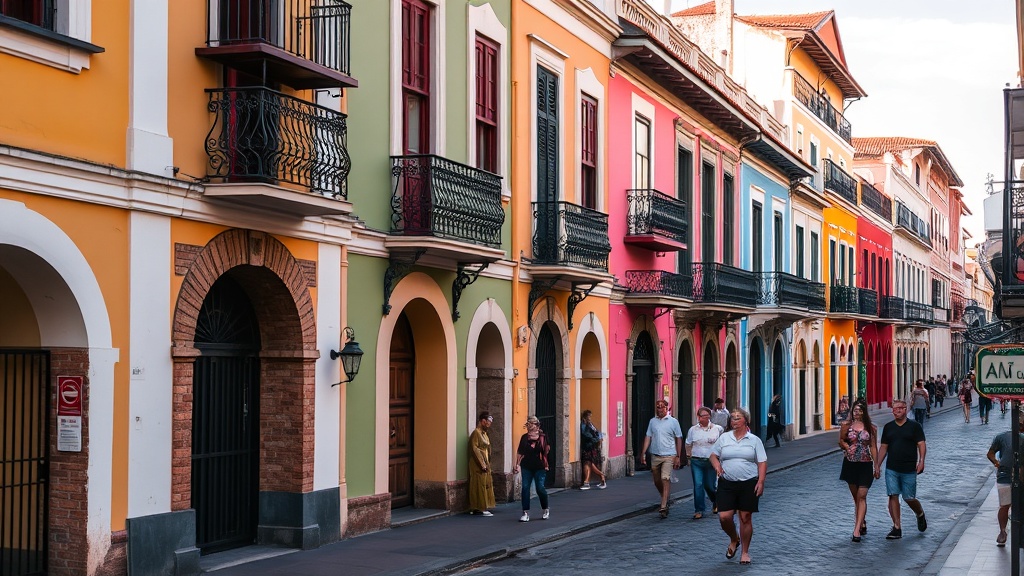
Casco Viejo
Cobblestone streets and colonial plazas tell four centuries of history — UNESCO World Heritage district reborn as Panama's vibrant cultural heart
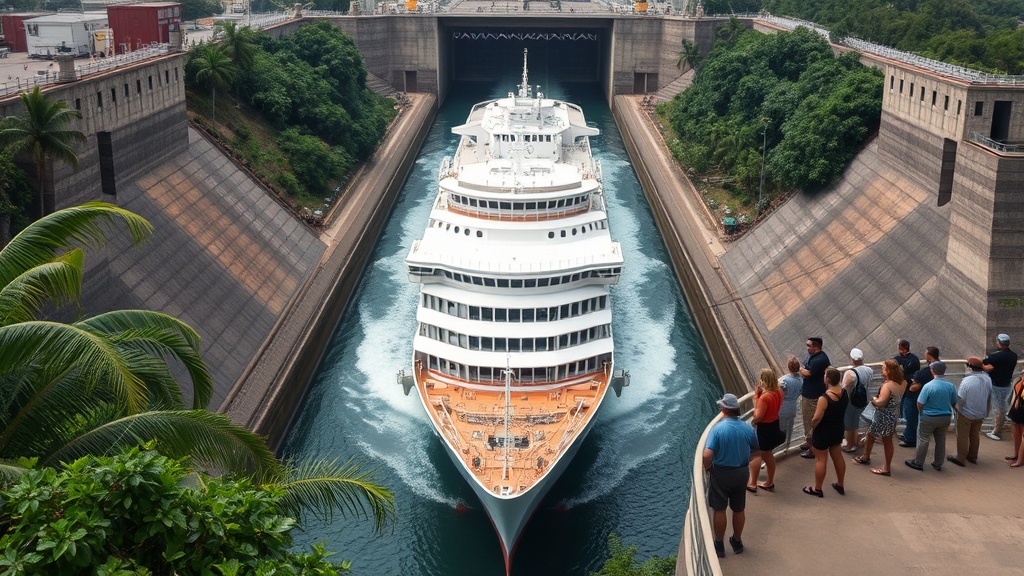
Miraflores Locks
Massive ships rise 16 meters in engineering precision — visitors watch in awe as vessels transit between two oceans
The Panama Canal is, without exaggeration, one of humanity's greatest engineering achievements—an 82-kilometer waterway carved through the continental divide that lifts ships 26 meters above sea level through a series of locks, carries them across the artificial Gatun Lake, and lowers them back down on the other side. About 14,000 vessels transit the canal each year, carrying roughly 5% of world trade. Watching a massive Neopanamax container ship—nearly 400 meters long—glide through the locks with barely a meter to spare on each side is a humbling, almost hypnotic experience.
The best place to witness the canal in action is the Miraflores Locks Visitor Center, just 25 minutes from downtown Panama City. The four-story facility offers observation decks, an excellent museum tracing the canal's history from the doomed French attempt through American construction to the 2016 expansion, and a theater showing documentaries. Ships transit throughout the day, but mornings (typically 9–11 AM) offer the most consistent traffic. The newer Agua Clara Visitor Center near Colón provides views of the expanded Neopanamax locks, where the truly massive ships pass.
For an immersive experience, partial and full canal transits are available on tour boats. A partial transit (4–5 hours) takes you through the Miraflores and Pedro Miguel locks and across part of Gatun Lake—a vast artificial lake created by damming the Chagres River, whose forested islands are home to monkeys, crocodiles, and tropical birds. A full transit (8–10 hours) traverses the entire canal from ocean to ocean. The surrounding Canal Zone offers excellent hiking, birdwatching, and visits to indigenous Emberá villages accessible only by dugout canoe along the Chagres River.
The canal's economic importance to Panama cannot be overstated. Canal tolls generate over $4 billion annually for the national treasury, and the Colón Free Trade Zone—the second-largest free trade zone in the world after Hong Kong—processes billions more in re-exported goods. The 2016 expansion, which added a third lane of wider, deeper locks, was completed on budget at $5.25 billion and has allowed Panama to accommodate the newest generation of mega-ships that increasingly dominate global shipping.
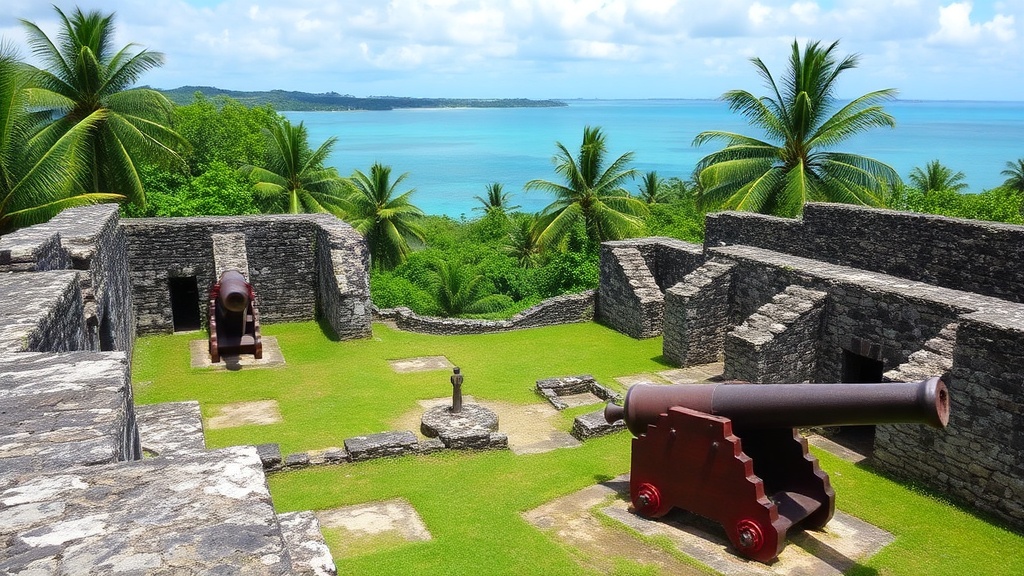
Portobelo
Weathered Spanish fortresses guard the Caribbean coast — once the richest port in the Americas where treasure fleets loaded Inca gold
Portobelo is a small Caribbean town with an outsized place in history. In the 16th and 17th centuries, this was one of the most important ports in the Spanish Empire—the Caribbean terminus where treasure from Peru was loaded onto galleons bound for Spain. The massive stone fortifications that guarded this wealth are now a UNESCO World Heritage Site, their weathered walls and rusting cannons standing guard over a sleepy fishing village where Afro-Colonial culture runs deep and one of Panama's most spectacular religious festivals draws tens of thousands of pilgrims each October.
The Fortifications of Portobelo and San Lorenzo—spread along the Caribbean coast—were built between the 16th and 18th centuries to protect Spain's treasure route. Santiago Fort, San Fernando Fort, and the Battery of San Jerónimo are the best-preserved, their massive coral-stone walls and strategic placement telling the story of the constant battle against pirates, including Sir Francis Drake (who died and was buried at sea near here in 1596) and Henry Morgan. The Royal Customs House has been restored as a museum documenting the legendary Portobelo trade fairs.
The Festival of the Black Christ (Festival del Cristo Negro) on October 21st transforms this quiet town into one of Panama's most extraordinary cultural events. Tens of thousands of purple-clad devotees converge on the Church of San Felipe, which houses a life-sized statue of a dark-skinned Christ believed to possess miraculous powers. The celebration blends Catholic devotion with Congo dance traditions—an Afro-Colonial cultural expression involving elaborate costumes, drumming, and theatrical reenactments of slavery and liberation that represent one of Panama's most powerful living traditions.
Beyond the forts and festivals, Portobelo offers excellent scuba diving on Caribbean reefs, hiking trails through lush tropical forest, and the authentic atmosphere of an Afro-Panamanian community where Congo culture has been passed down for centuries. The town is an easy day trip from Panama City (about 1.5 hours by car along a scenic coastal road) or can serve as a base for exploring the surrounding Caribbean coast. Nearby Isla Grande offers beach getaways, and the San Lorenzo fortress at the mouth of the Chagres River provides another spectacular colonial ruin in a dramatic jungle setting.
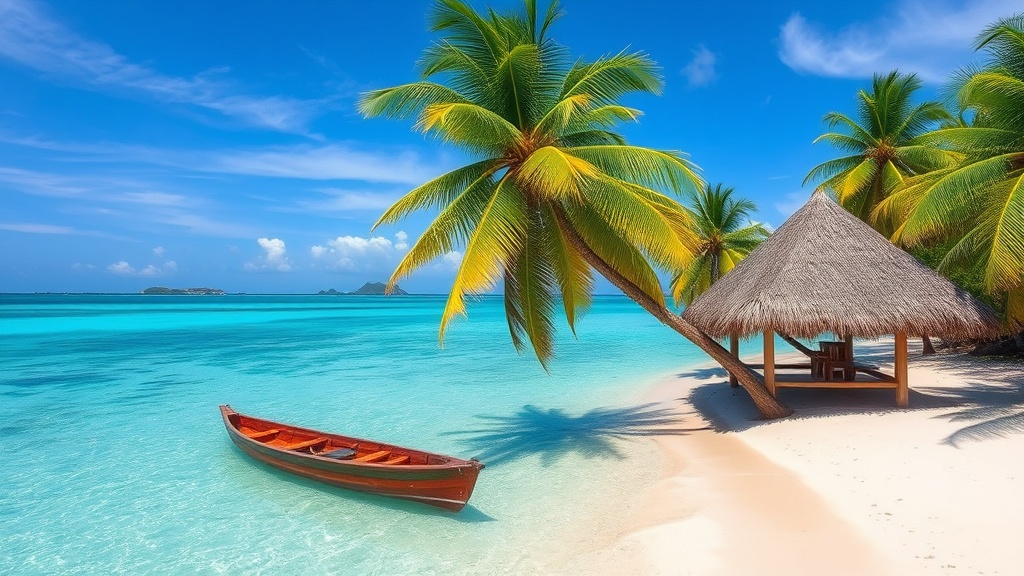
San Blas Islands
365 palm-fringed islands dot the turquoise Caribbean — the Guna people preserve ancient traditions in this autonomous tropical paradise
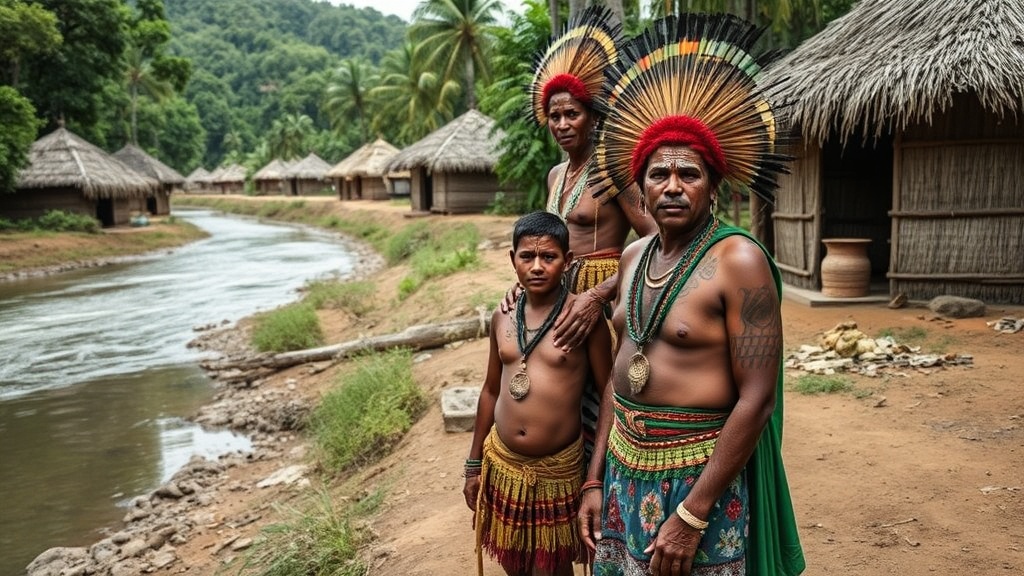
Emberá Village
Indigenous communities thrive along jungle rivers — traditional body paint, music and crafts passed down through countless generations
The San Blas Islands (officially Guna Yala) are a breathtaking archipelago of 365 islands—most uninhabited—scattered along Panama's Caribbean coast in the autonomous territory of the Guna people. These palm-fringed islands, surrounded by crystal-clear turquoise water and pristine coral reefs, represent one of the most authentic and unspoiled island experiences in the Caribbean. This is not a resort destination—it's a chance to visit a living indigenous culture that governs itself, maintains its traditions, and has chosen to share its paradise with visitors on its own terms.
Accommodation is deliberately simple—bamboo and palm-thatch cabañas on private islands, where the rhythm of life is dictated by the tides and the fishermen's catch. Meals of fresh lobster, fish, coconut rice, and plantains are included. There is no WiFi (a deliberate choice by Guna communities), limited electricity, and the only sounds are waves, birdsong, and the occasional boat motor. The islands are low-lying coral cays—most barely a meter above sea level—which makes them hauntingly beautiful but also vulnerable to rising seas, adding urgency to any visit.
The Guna people are famous for their mola textile art—intricate, multi-layered fabric panels featuring geometric and nature-inspired designs created using a reverse-appliqué technique. These vibrant works, originally worn as blouse panels by Guna women, are now collected as art worldwide. Purchasing molas directly from the artisans who create them is one of the most meaningful souvenirs you can buy in Panama, directly supporting indigenous communities and preserving a living art tradition.
Getting to San Blas requires either a short domestic flight from Panama City (about 30 minutes to one of several small airstrips) or a 4x4 drive over the mountainous road to the coast followed by a boat transfer—an adventure in itself. The Guna Congress controls tourism tightly: visitor numbers are limited, a daily island fee applies, and photography of Guna people requires permission and sometimes a small fee. This careful management has preserved both the natural environment and cultural integrity of the islands in a way that mass-tourism destinations can only envy.
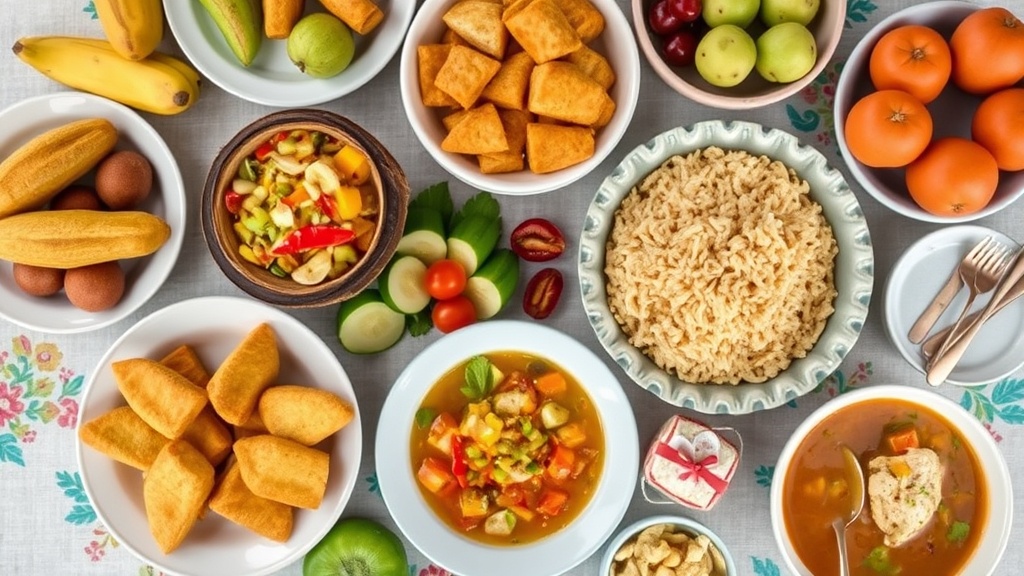
Panamanian Cuisine
Fresh ceviche, crispy patacones and hearty sancocho — flavors that blend indigenous, Spanish and Afro-Caribbean culinary traditions
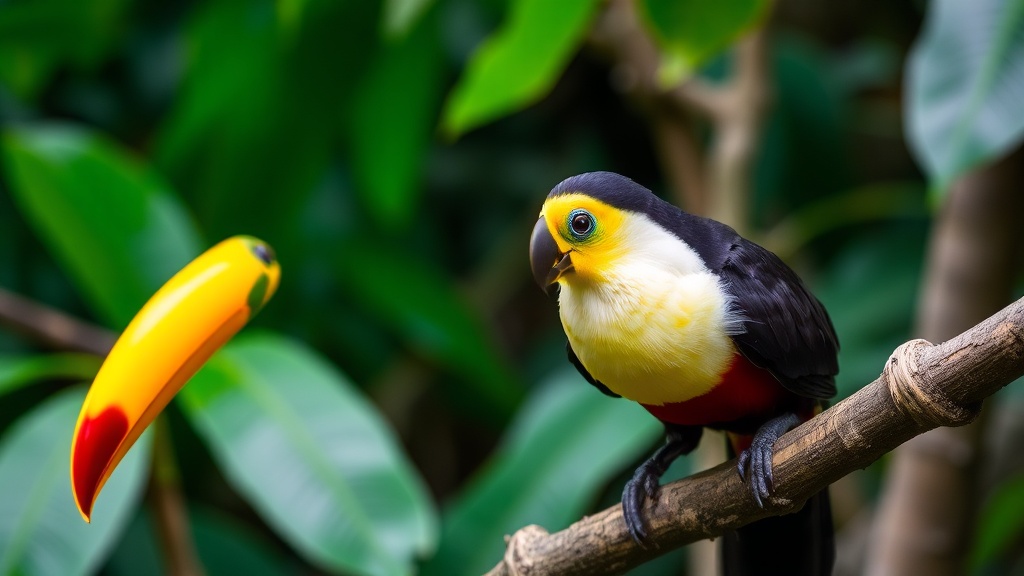
Tropical Wildlife
Toucans flash rainbow beaks through emerald canopy — Panama's land bridge between continents hosts extraordinary biodiversity
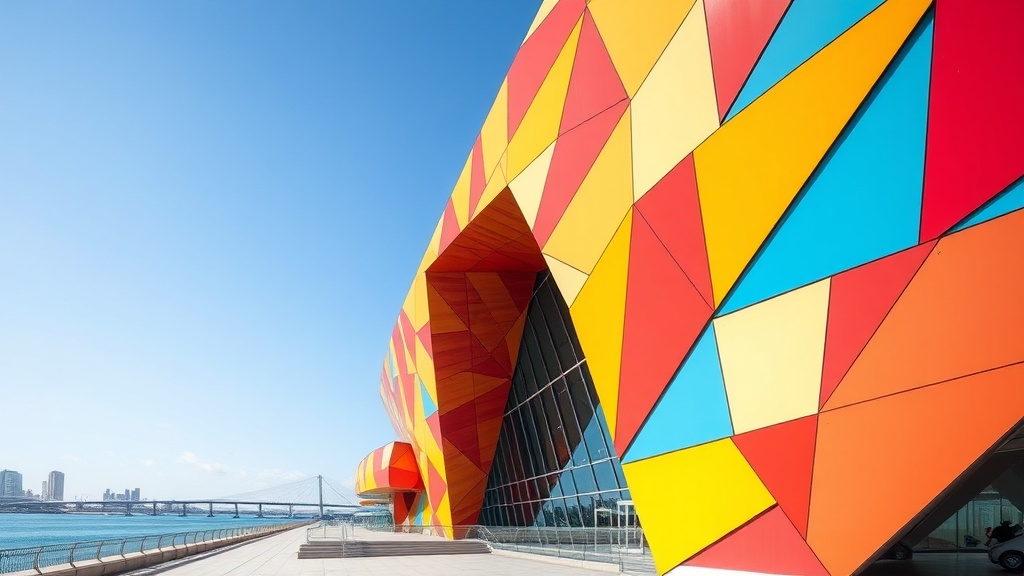
Biomuseo
Frank Gehry's explosion of color celebrates Panama's role as biological bridge — the isthmus that transformed life on two continents
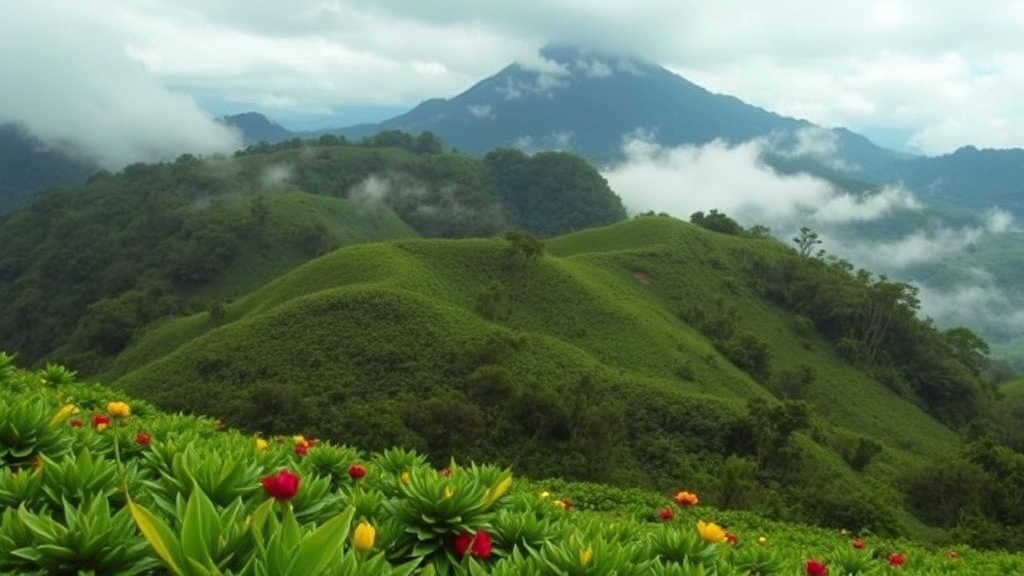
Boquete Highlands
Coffee plantations blanket volcanic slopes in eternal spring — the charming mountain town beloved by adventurers and retirees alike
📜 Traditional Panamanian Recipes
Bring the flavors of the Central America to your kitchen with these authentic recipes passed down through generations.
🍸 Cocktails & Traditional Beverages
From seco herrerano cocktails to tropical fruit refreshers — drinks that define Panamanian hospitality.
🍸
Seco Sour — Grape Spirit Cocktail
The Panamanian answer to a whiskey sour — seco herrerano, citrus, and tropical honey

Ingredients:
- 60ml seco herrerano (or grappa)
- 30ml fresh lemon juice
- 20ml Panamanian honey syrup
- 1 egg white (optional)
- Lemon twist for garnish
- Large ice cube
Instructions:
- Make honey syrup: equal parts honey and warm water
- Dry shake seco, lemon, honey syrup, egg white (no ice) for 15 seconds
- Add ice and shake vigorously for 20 seconds
- Strain over a large ice cube in rocks glass
- Express lemon twist over the surface and garnish
💡 Tip: The egg white creates a silky foam — skip it for a cleaner, spirit-forward drink.
🍸
Panamanian Mule — Seco & Ginger Beer
A Panamanian twist on the classic mule — seco herrerano meets spicy ginger beer

Ingredients:
- 60ml seco herrerano (or grappa)
- 15ml fresh lime juice
- 120ml ginger beer
- Crushed ice
- Lime wheel
- Fresh mint sprig
Instructions:
- Fill copper mug with crushed ice
- Pour seco and lime juice
- Top with ginger beer
- Stir gently once
- Garnish with lime wheel and mint sprig
💡 Tip: Use a spicy ginger beer (Fever-Tree or homemade) — the heat plays beautifully against seco's clean sugarcane notes.
🍷
Ron Abuelo Punch — Spiced Rum Bowl
Warm, aromatic punch made with Panama's premium Ron Abuelo aged rum

Ingredients:
- 750ml Ron Abuelo Añejo (or dark aged rum)
- 2 cinnamon sticks
- 4 whole cloves
- 2 star anise
- 1 orange, sliced
- 60ml honey
- 30ml seco (optional, for kick)
Instructions:
- Combine rum, spices, and orange in a pot
- Heat gently — never let it boil
- Stir in honey until dissolved
- Simmer on low for 15 minutes
- Add seco for extra warmth if desired
- Serve in ceramic cups with a cinnamon stick
💡 Tip: Never boil the rum — gentle heat preserves Ron Abuelo's caramel and vanilla character. Perfect for cool highland evenings in Boquete.
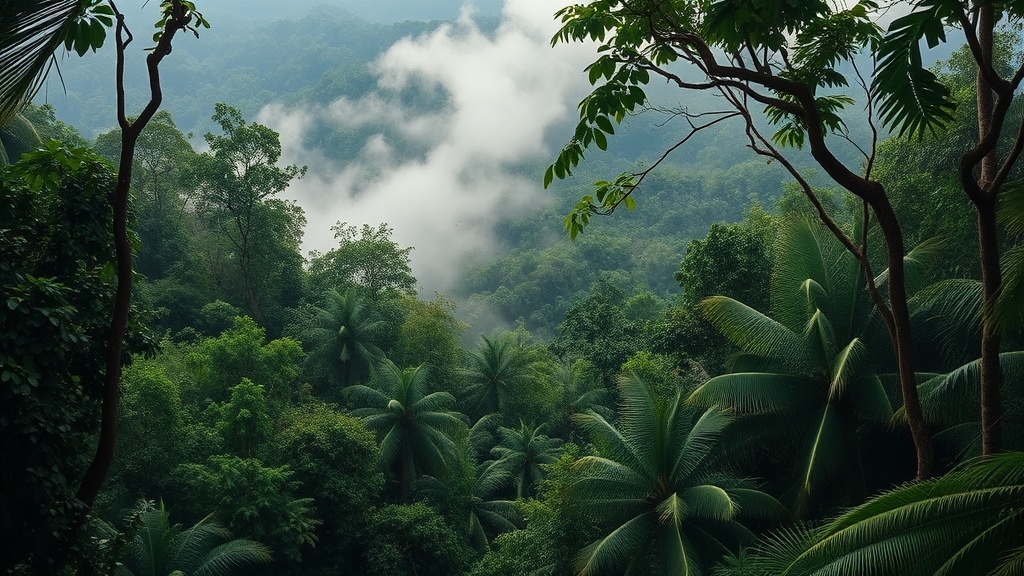
Darién Rainforest
One of Earth's last great wilderness frontiers — impenetrable jungle where jaguars prowl and harpy eagles soar above the canopy
📖 Explore More
Three topics got room to breathe on their own pages:
| Season |
Temperature |
Conditions |
Rating |
| Dry Season (Dec-Apr) |
25-33°C |
Sunny, low humidity, perfect for beaches and hiking |
✅ Best overall |
| Green Season (May-Jul) |
25-32°C |
Afternoon showers, lush green, fewer tourists, lower prices |
✅ Good value |
| Rainy Peak (Aug-Nov) |
24-31°C |
Heaviest rain, whale watching season, Portobelo festival (Oct) |
⚠️ Wettest months |
| Transition (Nov-Dec) |
24-30°C |
Rain easing, holiday season begins, great deals |
✅ Improving |
Best Time: December through April (dry season) offers the most reliable weather. For lower prices and fewer crowds, May-June and November-December are excellent. The Caribbean coast (Bocas del Toro, San Blas) has its own microclimate and can be sunny when the Pacific side is rainy. Panama's Independence celebrations in November (3rd and 28th) are festive and colorful.
By Air: Tocumen International Airport (PTY) is Panama City's main gateway, one of Latin America's busiest hubs. Copa Airlines, Panama's flag carrier and Star Alliance member, offers direct flights from dozens of cities across the Americas and Europe. Major carriers including American, Delta, United, Iberia, KLM, Air France, and Lufthansa serve Panama City. Flight time from Miami is about 3 hours, from New York 5.5 hours, from London 10.5 hours.
Domestic Flights: Air Panama operates daily flights from Albrook Airport (PAC, in the city center) to Bocas del Toro, David, San Blas (several airstrips), and the Darién. Flights are short (30-60 minutes) and affordable ($80-150 one way). Book early for San Blas as planes are small and popular.
By Land: Excellent long-distance buses connect Panama City to David (6 hours), Bocas del Toro (10 hours via David), and Boquete (7 hours). International buses run to San José, Costa Rica (16 hours). The Pan-American Highway is well-maintained. Note: there is NO road connection to Colombia—the Darién Gap breaks the highway.
By Sea: Sailing from Colombia to Panama (through San Blas) is a popular backpacker route, typically 4-5 days via catamaran ($400-550 including meals). Cruise ships regularly dock in Colón (Caribbean side) and Fuerte Amador (Pacific side).
Visa: Citizens of the US, EU, UK, Canada, Australia, and most Latin American countries can enter visa-free for up to 180 days with a valid passport (must have 3+ months validity). Some nationalities require a tourist visa or authorized electronic travel card. Proof of onward travel and sufficient funds may be requested at entry.
Money: The US Dollar is the official currency (the Panamanian Balboa exists only as coins, at 1:1 parity). ATMs are widespread in cities (Visa/Mastercard accepted). Credit cards work at most hotels, restaurants, and shops. Cash is needed in rural areas, indigenous comarcas, and small towns. Budget ~$40-60/day, mid-range ~$80-150/day.
Communications: Mobile coverage is excellent in cities and tourist areas (providers: +Móvil, Tigo, Digicel). Prepaid SIM cards available at the airport and shops ($5-10 with data). WiFi is standard in hotels and restaurants. Time Zone: EST (UTC-5) year-round, no daylight saving time.
Getting Around: Panama City has an efficient Metro system (2 lines), Uber and regular taxis (use only yellow ones or Uber). Long-distance buses are modern and comfortable. Domestic flights connect remote areas. Car rental is available ($30-50/day) but Panama City traffic is challenging. Water taxis serve island destinations.
Safety: Generally safe for tourists, especially in Panama City, Boquete, Bocas del Toro, and beach resorts. Exercise caution in Colón city center and El Chorrillo neighborhood in Panama City. The Darién Gap is dangerous—visit only organized indigenous community tours on its fringes. Medical facilities in Panama City are excellent (Johns Hopkins-affiliated hospital); travel insurance recommended.
| Item |
Cost (USD) |
| Budget hostel/guesthouse | $12-30/night |
| Mid-range hotel | $60-120/night |
| Local meal (fonda) | $3-7 |
| Restaurant dinner | $15-40 |
| Beer (Atlas/Balboa) | $1-3 |
| Ron Abuelo 7-Year bottle | $10-15 |
| Miraflores Locks entrance | $20 |
| Uber across Panama City | $3-8 |
| Metro ride | $0.35 |
Panama offers good value for the Americas—budget travelers can manage on $40-60/day, mid-range travelers on $80-150/day. Panama City is more expensive than the rest of the country, but still cheaper than comparable cities like Miami or San José, Costa Rica.
Panama offers the full spectrum of accommodation, from world-class luxury hotels to budget hostels and unique jungle lodges. International chains (Marriott, Hilton, Waldorf Astoria, Hyatt) cluster in Panama City's financial district, while boutique hotels fill restored colonial mansions in Casco Viejo.
Panama City: American Trade Hotel (Casco Viejo boutique, $150-300), Las Clementinas (colonial charm, $120-200), Selina (hip hostel/hotel, $20-80). Bocas del Toro: Red Frog Beach Resort ($150-250), Aqua Lounge (overwater hostel, $15-40), Palmar Beach Lodge ($100-200). Boquete: Panamonte Inn (historic, $100-180), Haven Spa ($80-150), hostels ($12-25). San Blas: Community cabañas ($50-100 all-inclusive).
Booking Tips: Book well ahead for December-April (dry season), holidays, and Carnival week (February). Booking.com and Airbnb work well. San Blas requires booking through specific operators. WiFi is standard in most accommodation. Many boutique properties in Casco Viejo and Boquete offer exceptional value compared to similar experiences elsewhere in the Americas.
Carnival (February/March) — Panama's biggest party, four days of parades, water trucks, music, and dancing, centered on the Cinta Costera in Panama City and Las Tablas (the traditional capital of Carnival). Hotels sell out months ahead. Independence Days (November 3 & 28) — Patriotic celebrations with parades and marching bands across the country. Festival del Cristo Negro (October 21) — Portobelo's dramatic pilgrimage draws tens of thousands of devotees in purple.
Cultural: Boquete Flower & Coffee Fair (January) — highland festival celebrating Boquete's world-famous Geisha coffee and tropical flowers. Feria de las Flores y del Café. Music: Panama Jazz Festival (January) — week-long celebration with international artists. Traditional: Corpus Christi in Los Santos (May/June) — elaborate devil masks, traditional dances, and religious ceremonies blending indigenous and Catholic traditions.
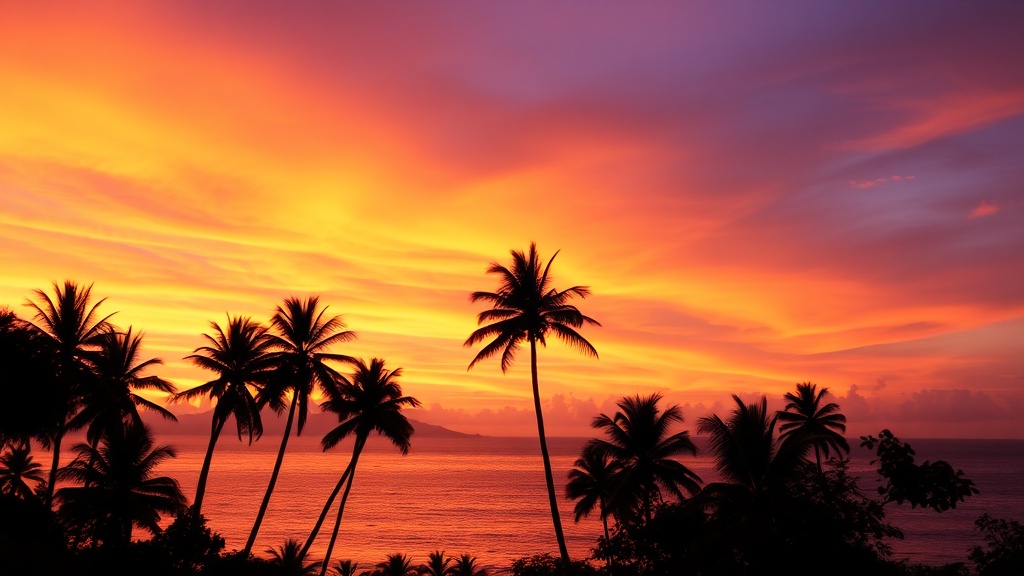
Pacific Sunset
Golden light bathes the coast as another tropical day ends in paradise — palm silhouettes frame nature's daily masterpiece
Coffee Country
Local farmers harvest world-class Geisha coffee on the volcanic slopes of Chiriquí Province, a scene little changed for generations
Jungle Canopy
Dense tropical canopy shelters incredible biodiversity — Panama's forests are home to more species per hectare than almost anywhere on Earth
El Valle de Antón — A charming mountain town nestled in the crater of an extinct volcano, with a famous Sunday market, golden frog sanctuary, waterfall hikes, and eternal-spring climate. Just 2 hours from Panama City. Coiba Island — A former penal colony turned UNESCO World Heritage marine park with world-class diving, whale sharks, and pristine reefs. Often called the "Galápagos of Central America."
Santa Catalina — A tiny Pacific surf village with world-class waves, jumping-off point for Coiba diving trips, and authentic rural Panamanian atmosphere. Camino de Cruces — Hike the original 16th-century Spanish treasure trail through jungle between Panama City and the Caribbean coast. Emberá Villages — Visit indigenous communities along the Chagres River, accessible by dugout canoe from Gamboa. Traditional body painting, music, crafts, and a genuinely immersive cultural experience.
Essential: Valid passport (3+ months validity), US dollars in cash (small bills useful), credit/debit card, travel insurance, unlocked phone for local SIM or eSIM, proof of onward travel.
Clothing: Lightweight, breathable fabrics (it's tropical!), rain jacket or compact umbrella (essential May-November), comfortable walking shoes, swimwear, a light layer for air-conditioned buses and restaurants, hiking boots if visiting highlands. Health: High-SPF reef-safe sunscreen, strong insect repellent (DEET or picaridin), basic first aid kit, any prescription medications, motion-sickness pills for boat trips.
What NOT to bring: Heavy clothing (even the highlands are mild), excessive luggage (domestic flights have weight limits), expensive jewelry for beach areas. Pro tip: Bring a dry bag for boat trips and island visits, reef-safe sunscreen (some marine parks require it), and binoculars if you're into birdwatching—Panama is a world-class birding destination.
Visa: www.migracion.gob.pa | Autoridad Nacional de Migración. Emergency: Police 104, Fire 103, Ambulance 911. Embassies: Panama has diplomatic representation worldwide; major embassies are located in the banking district of Panama City.
Tour Operators: Autoridad de Turismo de Panamá (ATP) — www.visitpanama.com. Platforms like GetYourGuide and Viator offer vetted local experiences. For San Blas, book through specialized operators (San Blas Adventures, Cacique Cruiser). Maps: Google Maps works well in cities; Maps.me and offline Google Maps recommended for rural areas.
Online: Wikivoyage: Panama, Lonely Planet, r/panama (Reddit). News: Check local English-language media for current travel advisories and updates.
Non-Fiction: "The Path Between the Seas" by David McCullough — the definitive history of the Panama Canal, masterfully told. "Getting to Know the General" by Graham Greene — Greene's friendship with General Omar Torrijos. Photo Books: "Panama: A Legendary Hat" by Martine Buchet, "Molas: Dress, Identity, Culture" by Diana Marks — exploring Guna textile art.
Online: Wikivoyage: Panama, Lonely Planet, r/panama (Reddit). News: Check local English-language media for current travel advisories and updates.
Discover Panama through these carefully selected documentaries and travel videos. From colonial-era resorts to the world's deepest cave, these films capture the territory's haunting beauty and complex reality.
Untamed Wilderness
Pristine rainforest stretches to the horizon, revealing where nature reigns supreme and adventure awaits
🕳️ Panama Canal — Engineering Marvel
The Panama Canal is one of the greatest engineering achievements in history. Stretching 82 kilometers from the Atlantic to the Pacific, it uses a system of locks to lift ships 26 meters above sea level into artificial Gatun Lake, then lowers them back down on the other side. Building it required excavating over 200 million cubic meters of earth—enough to circle the globe at the equator.
Construction claimed over 25,000 lives during the French attempt (1881-1889) and the American completion (1904-1914), mostly from malaria and yellow fever. The breakthrough came when Dr. William Gorgas implemented mosquito control measures that dramatically reduced disease. The canal was completed ahead of schedule and under budget by chief engineer George Washington Goethals.
Today, about 14,000 vessels transit the canal annually, carrying roughly 5% of world trade. The 2016 expansion added a third lane of larger locks that can accommodate Neopanamax ships—vessels up to 366 meters long and 49 meters wide. A single transit takes 8-10 hours, and the canal generates over $4 billion annually for Panama. The water used in each lock transit—over 200 million liters—comes entirely from rainwater collected in Gatun Lake.
🌊 Gravity-Powered Canal
The Panama Canal uses no pumps—ships are raised and lowered entirely by gravity-fed water from Gatun Lake. Each lockage uses about 200 million liters of fresh water, which flows from the lake through culverts into the lock chambers. Gatun Lake was the largest artificial lake in the world when created in 1913 by damming the Chagres River.
🦜 Biodiversity Champion
Panama has more bird species (over 1,000) than the United States and Canada combined, and more tree species per hectare than anywhere in North America. The land bridge formed about 3 million years ago, triggering the Great American Interchange that mixed species from two continents. This makes Panama one of Earth's most important biodiversity hotspots.
🚢 Three-Ocean Country
Panama is one of only three countries in the world to have a functioning canal connecting two oceans (the others being Egypt's Suez Canal and, technically, the Kiel Canal in Germany). But only Panama's requires lifting ships over a mountain range using freshwater locks—a feat of engineering that remains awe-inspiring over a century later.
🚇 First Central American Metro
Panama City's modern Metro system (opened 2014) was the first in Central America. Line 1 runs 16 km from Albrook to San Isidro; Line 2 extends 21 km to Nuevo Tocumen near the airport. A single ride costs just $0.35, making it the most affordable metro in the Americas.
☕ World's Priciest Coffee
Boquete's Geisha coffee variety regularly sells for over $1,000 per pound at auction, making it one of the most expensive coffees in the world. Originally from Ethiopia and brought to Panama in the 1960s, the variety thrived at Hacienda La Esmeralda's high altitude, developing extraordinary floral and citrus flavor notes prized by coffee connoisseurs globally.
🌙 Children of the Moon
The indigenous Guna people of San Blas have one of the highest rates of albinism in the world—roughly 1 in 150, compared to 1 in 17,000 globally. Albino children are considered "Children of the Moon" and hold special cultural significance. The Guna were among the first indigenous peoples in the Americas to achieve political autonomy, governing their territory through a democratic congress system since the 1925 Guna Revolution.
🎩 The Hat That Isn't Panamanian
Panama's hat—the famous "Panama hat"—is actually made in Ecuador! The misnomer dates to the 1800s when hats were shipped through Panama en route to the rest of the world. However, the genuine Panamanian sombrero pintao (painted hat) is the real national headwear—a handwoven masterpiece that was recognized by UNESCO as Intangible Cultural Heritage in 2017.
Further Reading: Check Lonely Planet and Rough Guides for comprehensive Panama travel guides. Local literature and travel memoirs provide deeper cultural insights.
Rubén Blades (b. 1948) — Legendary salsa singer, actor, lawyer, and politician who served as Panama's Minister of Tourism. Grammy winner and Latin music icon. Omar Torrijos (1929–1981) — Military leader who negotiated the Torrijos-Carter Treaties returning the Canal Zone to Panama, a national hero.
Sports: Mariano Rivera — greatest closer in baseball history (New York Yankees), first unanimous Baseball Hall of Fame inductee (2019). Roberto Durán — legendary boxer, one of the greatest pound-for-pound fighters ever, known as "Manos de Piedra" (Hands of Stone). Rod Carew — Baseball Hall of Famer. Culture: Danilo Pérez — Grammy-winning jazz pianist; Erika Ender — co-wrote "Despacito," the most-streamed song in history.
Baseball is Panama's most popular sport, producing an extraordinary number of Major League stars relative to its population. Mariano Rivera, Rod Carew, Carlos Lee, and dozens more have represented Panama in the MLB. The country's baseball academies are producing the next generation of stars.
Football (Soccer): Panama's national team made history by qualifying for the 2018 FIFA World Cup in Russia—the country's first appearance. The qualifying goal against Costa Rica sparked a national holiday. Boxing is deeply embedded in Panamanian culture, with world champions including Roberto Durán, Eusebio Pedroza, and Celestino Caballero. The country has produced more world boxing champions per capita than almost any nation on Earth.
Freedom House classifies Panama as "Free" with one of the most vibrant media landscapes in Central America. Major newspapers include La Prensa, La Estrella de Panamá, and Panamá América. Television stations TVN, Telemetro, and RPC compete for viewers. A free press tradition exists alongside challenges including occasional defamation suits against journalists and media concentration.
Safety: Panama is generally safe for tourists, particularly in Panama City, Boquete, and Bocas del Toro. Exercise caution in Colón city and avoid the Darién Gap jungle region near the Colombian border, which is used by illegal migrant routes and drug trafficking. Human Rights: Key concerns include the migrant crisis in the Darién Gap, indigenous land rights, corruption, and environmental issues related to mining operations.
Share your Panama photos! Send to photos@kaufmann.wtf to be featured.
Panama City Skyline
The dramatic modern skyline rises above the Pacific coastline
Bocas del Toro Caribbean
Colorful houses on stilts above crystal-clear Caribbean waters
Casco Viejo Historic District
Restored colonial architecture meets vibrant nightlife and culture
Gatun Lake
Ships transit through the massive lock chambers between two oceans
Portobelo Beach
Weathered Spanish fortifications guard the Caribbean coast
Panama surprised me. I came expecting the canal and little else, but found a country of staggering diversity—from the ultramodern skyline of Panama City to the pristine silence of a San Blas island, from the misty coffee highlands of Boquete to the wild Caribbean energy of Portobelo's Black Christ festival. This is a nation that defies easy categorization: Latin American yet distinctly Caribbean, deeply traditional yet thoroughly modern, tiny on the map yet enormous in its global impact.
The Panamanians who greet visitors with genuine warmth—the Guna grandmother weaving molas on her island, the ceviche vendor at the Mercado de Mariscos, the birding guide who spots a resplendent quetzal before dawn—are people proud of what their small country has accomplished and eager to share its treasures. Come for the canal, stay for everything else. Panama is far more than a transit point—it's a destination that rewards every day you give it.
"Puente del Mundo, Corazón del Universo" — Bridge of the World, Heart of the Universe
—Radim Kaufmann, 2026
Support This Project 🌍
This World Travel Factbook is a labor of love – free to use for all travelers. If you find it helpful, consider supporting its continued development.
📬 Stay Updated
