


🇮🇳 North Sentinel Island at a Glance
🌍 Overview — and the Point of This Page
North Sentinel Island is about 60 km² of flat, forested land in the Bay of Bengal, roughly 50 km west of South Andaman, inside the Indian union territory of the Andaman and Nicobar Islands. It is inhabited by the Sentinelese, and it is illegal to go there.
This atlas exists to help people travel. This is the one page in it that exists to tell you not to. Not as a dare, not as mystique — because approaching the island is a criminal offence under Indian law, because people have been killed doing it, and because a single visitor carrying an ordinary respiratory virus could end a people. What follows is what is genuinely known, what is repeated but unverified, and where in the same archipelago you can legitimately go.
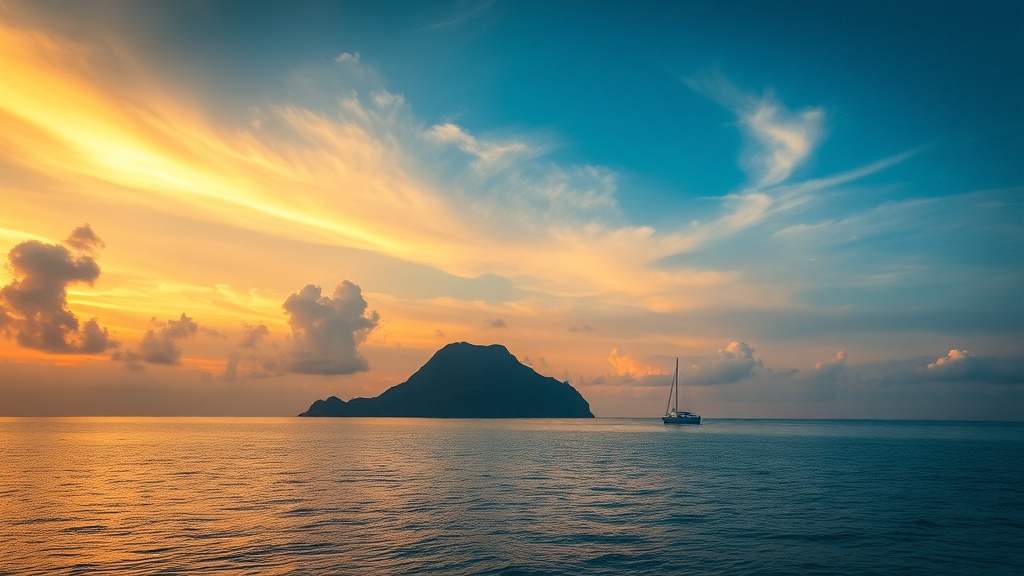
⚠️ Can you go?
No. The island and its surrounding waters are a tribal reserve under the Andaman and Nicobar Islands (Protection of Aboriginal Tribes) Regulation, 1956. Entering is a criminal offence carrying imprisonment. The Indian Navy and Coast Guard patrol the approaches. See the law and how it is enforced.
Who lives there
The Sentinelese, a people about whom almost nothing is verified. Population estimates run from fifty to a few hundred; the 2011 Census of India recorded fifteen individuals, counted from a distance, and that number is a floor rather than an estimate. See what is actually known.
Their language
Unrecorded and unclassified. Nobody outside the island has ever transcribed a sentence of it. When members of the neighbouring Onge were brought within earshot in the 1960s they reportedly could not understand it, which — if accurate — suggests a long separation even from the Sentinelese's nearest relatives.
⭐ Why the policy is no-contact
Because of immunology before ethics. The Andamanese peoples who were contacted lost the overwhelming majority of their population to introduced disease within a generation or two. The Great Andamanese went from several thousand to a few dozen. There is no reason to believe the Sentinelese would fare differently. See the section on disease.
What they are not
They are not "stone age", not "the last uncontacted tribe" (there are others, chiefly in Amazonia and West Papua), and not a people who have never encountered outsiders. They have encountered outsiders repeatedly for two hundred and fifty years, have salvaged and worked metal from wrecks, and have formed a consistent and informed policy about it. See terminology.
⭐ Where to go instead
The Andamans are one of India's most beautiful destinations and are entirely open to visitors — Havelock's beaches, the diving, the colonial and penal history at Port Blair, Baratang's mangroves. The last sections of this page are a real guide to them.
❓ What Is Actually Known — a Short List
Most writing about the Sentinelese states more than the evidence supports. The genuine evidence base is: a handful of offshore encounters, aerial photography, a small number of expedition reports mostly from the 1960s to 1990s, salvage and drift observations, and a census conducted with binoculars from a boat. That is all. What follows separates the two categories.
⭐ Reasonably established
They live on the island and have for a long time. They are hunter-gatherers and fishers working the reef and the forest. They use bows and arrows and long spears, build narrow outrigger canoes poled in shallow water, make lean-to shelters and larger communal huts, and use fire. They have worked iron salvaged from wrecks into arrowheads and blades. They survived the 2004 tsunami.
Reasonably established, negatively
They have consistently and repeatedly refused contact across every documented encounter since the eighteenth century, with a small number of brief exceptions in the early 1990s. That consistency, across generations, is the single best-evidenced fact about them, and it is the one that policy rests on.
⚠️ Widely repeated, not established
That they have been isolated for 60 000 years — see the next section. That they number exactly 50, or 150, or 400. That they cannot make fire and must preserve embers — this comes from observations of the Onge, not the Sentinelese. That their arrows are poisoned. That they are the "last" uncontacted people. That they have a particular social structure, religion or leadership — nothing whatever is known about any of this.
The census
India's decennial census records them. In 2011 enumerators counted fifteen people — twelve male, three female — from a boat offshore. In 2001 the figure recorded was 39. These are not population estimates; they are counts of individuals visible on a beach on a particular day, and the honest reading is that the real number is higher and unknown.
What the photographs show
A small number of images exist, chiefly from Indian government expeditions and post-tsunami aerial surveys. They show people on a beach, canoes, shelters among the trees, and — in the most reproduced image of all — a man on the sand aiming a bow at the helicopter photographing him. That photograph has done more to shape outside perception than every written account combined.
Why so little
Because obtaining more would require doing the thing that must not be done. This is the genuinely unusual epistemological position of the subject: the information does not exist because acquiring it would be wrong, and a page that fills the gap with confident detail is not informing you, it is making things up.
⏳ The 60 000 Years Problem
Almost every article about North Sentinel — including the page this one replaces — says the Sentinelese have been isolated for sixty thousand years. The figure is doing two different jobs at once and only one of them is defensible.
What the number really refers to
The peopling of the Andamans. The Andamanese are associated with early modern human expansion out of Africa along the southern coastal route, and genetic and archaeological estimates for the ancestry of Andamanese populations run from roughly 26 000 to 60 000 years depending on method and on what exactly is being dated. That is a statement about deep ancestry, not about a single island community.
⚠️ What it is taken to mean
That this specific group of people on this specific island has had no contact with any other human beings for sixty millennia. That is not supported by anything. The Andaman islands are within sight of each other; the Andamanese peoples were related and in some cases in contact; and the Sentinelese have demonstrably encountered outsiders many times in the historical period.
The honest version
The Sentinelese are an Andamanese people whose ancestors have been in the archipelago for a very long time, who diverged from their neighbours far enough back that their language appears unintelligible to them, and who have refused sustained contact with the outside world throughout the documented period — roughly two hundred and fifty years. That is remarkable enough without the extra fifty-nine thousand.
Why the inflation matters
Because "unchanged for 60 000 years" turns living people into a museum exhibit, and because it feeds the idea that they are frozen and pre-historical rather than a contemporary society making a contemporary decision. It also makes them sound like a scientific resource, which is exactly the framing that has historically justified interfering with them.
Genetics
Nobody has Sentinelese genetic material and nobody should try to get any. What is known about Andamanese genetics comes from the Great Andamanese and the Onge, and indicates deep divergence from mainland South Asian populations and a long period of small-population isolation in the archipelago. Extending those findings to the Sentinelese is inference, reasonable but not evidence.
⭐ The safe formulation
"One of the world's few remaining peoples living without sustained outside contact, on an island their ancestors have occupied for millennia." It is accurate, it is still extraordinary, and it does not require anyone to invent a number.
🗺️ The Island Itself
Size and shape
Roughly 8 km by 7 km and about 60 km² including the reef flat — close to the area of Manhattan, and the comparison is the one everyone reaches for. Almost square, with a small outlying islet, Constance Island, off the south-east.
⚠️ Flat
This is the detail the image bank gets wrong and it matters: North Sentinel is flat to gently undulating with no significant elevation. It is a low forested plate, not a peak. Anything you see depicting it as a mountainous island is not depicting it.
The forest
Dense tropical moist broadleaf forest covering essentially the whole interior. It has never been surveyed on foot by outsiders and never will be under current policy. What is inside it — how many settlements, how the people are distributed, what the clearings are — is unknown.
The reef
A fringing coral reef encircles the island, broken by only a few narrow passages, with a shallow lagoon on the western side. It is the reason the island is defensible and the reason ships have wrecked on it. The reef is the main fishing ground and, together with the forest, feeds everyone on the island.
Tectonics
The Andaman chain sits on the boundary where the Indian plate subducts beneath the Burma plate. The 26 December 2004 earthquake that caused the Indian Ocean tsunami ruptured this boundary, and it lifted North Sentinel by an estimated one to two metres, pushing the reef partly out of the water and enlarging the island. See the tsunami section.
Climate
Equatorial. Hot and humid all year, sea temperatures 27–30 °C, and a heavy south-west monsoon from roughly May to September with a second wetter spell later in the year. The dry season, December to April, is when the sea is calm enough that approaches have historically been attempted — which is also when patrols are heaviest.
🌳 An Ecosystem Nobody Has Studied
North Sentinel is one of the very few substantial tropical islands on earth whose biology has never been surveyed on the ground. Everything below is inference from the neighbouring Andaman islands, which share the same biogeography, and should be read as such.
What is almost certainly there
The forest of the Andamans carries Andaman padauk, gurjan, dipterocarps and a rich understorey. Fauna includes wild pigs (the Sentinelese are documented hunting them), monitor lizards, fruit bats, and a bird fauna with a high proportion of Andaman endemics — the Andaman wood pigeon, Andaman woodpecker, Narcondam and Andaman serpent eagles among them.
⭐ What makes it valuable
The absence of everything else. No logging, no plantation, no road, no introduced deer, no cats or dogs in numbers, no tourism, no plastic beyond what drifts ashore. It is, entirely by accident of the Sentinelese's own policy, one of the best-protected tropical forest ecosystems in Asia — protected far more effectively than any reserve with a fence and a ranger.
The reef
Andaman reefs suffered severe bleaching in 1998, 2010 and 2016, and the wider archipelago's corals are under the same pressure as everywhere else in the Indian Ocean. North Sentinel's reef has none of the local pressures — no anchoring, no fishing fleet, no runoff — which makes it, potentially, a reference site of real scientific interest that nobody can study.
The tsunami's effect
The uplift of one to two metres in 2004 raised parts of the reef flat above water and killed the coral on them, while extending the island's dry land. The ecological consequences — for the lagoon, for the fishing the Sentinelese depend on, for the forest edge — have never been assessed and cannot be.
⚠️ Climate exposure
A low, flat island in a warming Bay of Bengal, with a reef under thermal stress and a rising sea, is exposed in the obvious way. It is also a place where no adaptation assistance can be offered without violating the policy that keeps its people alive. That tension has no clean answer and is worth sitting with.
What research is possible
Satellite imagery, aerial survey at altitude, and offshore observation — that is the lawful envelope, and it is roughly what the Indian government uses for its own periodic welfare checks. Anything closer trades a small scientific gain for a catastrophic risk to a population of perhaps a hundred and fifty people.
🛶 The Andamanese Peoples
To understand why India protects North Sentinel as fiercely as it does, you have to know what happened to the other Andamanese. It is the reason the policy exists and it is not ancient history.
Who they are
Four broad groupings, historically: the Great Andamanese, a set of ten related peoples of the main islands; the Onge of Little Andaman; the Jarawa of the western coasts of South and Middle Andaman; and the Sentinelese. The Shompen and the Nicobarese of the Nicobar islands to the south are separate again, and not Andamanese.
⚠️ The Great Andamanese
The catastrophe. At British colonisation in 1858 they numbered somewhere around 5 000. Within fifty years, through introduced measles, influenza, syphilis and pneumonia — and through the "Andaman Home" where children taken into colonial care died in appalling numbers — they were reduced by well over ninety per cent. Today the surviving Great Andamanese, amalgamated from several once-distinct peoples, number a few dozen and live on Strait Island. Their languages are effectively extinct.
The Onge
Of Little Andaman. Contacted and settled by the administration; population fell from several hundred to around a hundred and has stayed there. In 2008 eight Onge men died after drinking what they had found washed ashore and believed to be alcohol; it was methanol. The episode is a grim illustration of what proximity to the outside world does to a very small population.
The Jarawa
Of South and Middle Andaman, numbering somewhere around four to five hundred. They ended their own hostility to outsiders in 1998 and began emerging from the forest — and the consequences have been dismal: measles outbreaks, alcohol, sexual exploitation, and the human safari scandal. See their section, which is the most important cautionary tale on this page.
The Shompen
Of Great Nicobar, a few hundred people, semi-nomadic, and currently facing an enormous Indian government development project on their island — a transhipment port, an airport, a power plant and a new township for hundreds of thousands of people. See their section. Of all the peoples on this page, they are the ones in immediate danger.
⭐ The pattern
Every Andamanese people that has had sustained contact with the outside world has lost most of its population, most of its language and most of its autonomy within two generations. The Sentinelese are the only ones who have not, and the only variable that distinguishes them is that they refused, and were eventually left alone.
⚠️ 1880 — the Thing That Was Done
If you want one event to explain why the Sentinelese behave as they do, it is probably this one. In 1880 a British colonial officer landed on North Sentinel, pursued the inhabitants into the forest, and abducted six of them.
Maurice Vidal Portman
A Royal Navy officer who became the British administrator responsible for the Andamanese from 1879. He was a serious amateur anthropologist, he photographed and measured the Andamanese extensively, and his interest in them was — on the evidence of his own material — possessive and sexualised in ways that modern readers find difficult. He is the central figure in the colonial treatment of these peoples.
⚠️ What happened
Portman landed with an armed party. The islanders withdrew into the forest. His men found and seized an elderly couple and four children and took them to Port Blair. The two adults fell ill and died within days. The four children were given presents and returned to the beach, and what happened to them afterwards is unknown.
What it did
Portman himself recorded that the party had probably done harm. In all likelihood the children carried pathogens back into a population with no exposure to them. There is no way to know the death toll, and it is entirely possible that the single most consequential event in Sentinelese history is an epidemic nobody outside the island ever saw.
⭐ The inference
A people who were visited, whose elders were taken and did not come back, and whose community then — plausibly — began dying of an unfamiliar illness, would draw a conclusion. The consistent hostility documented ever since is not mysterious and does not need to be explained by temperament. It looks a great deal like an informed policy, transmitted across generations.
The caveat
This is inference, and it should be labelled as such. There is no Sentinelese account of 1880 and there never will be. But it is the most parsimonious explanation available, it is the one most Andaman specialists reach for, and it inverts the usual framing: the interesting question is not why they are hostile, it is why anyone expected otherwise.
Portman's legacy
His photographic archive is held in Britain and is now a case study in the ethics of colonial anthropological collections. The Andamanese he documented were, in many cases, dead within a few years of being photographed — and his images are among the only records that they existed.
🏛️ The Penal Colony, 1858–1945
North Sentinel's protection is a modern Indian policy, but the situation it protects against was created by the British, who turned the Andamans into a prison and in doing so destroyed most of the people already living there.
Why the British came
After the 1857 rebellion the East India Company needed somewhere remote to put political prisoners. The Andamans were chosen and a penal settlement was established at Port Blair in 1858. Over the following decades tens of thousands of convicts were transported there.
⚠️ Cellular Jail
Built 1896–1906: seven wings radiating from a central tower, 693 solitary cells, designed so that no prisoner could see or communicate with another. Kala Pani — "black water" — is the name it carries in Indian memory, and the independence movement's leaders who were held there made it a national site. Three wings survive and it is now a memorial and the Andamans' most visited place.
What it did to the Andamanese
Everything described in the previous section. Disease, the punitive expeditions, the "Andaman Home" where captured Andamanese children were kept and where the child mortality rate was effectively total, and the steady loss of land to the settlement, the forest clearance and the convict farms.
The Japanese occupation
Japan held the Andamans from 1942 to 1945. The occupation was harsh — mass executions, forced labour and a famine. Subhas Chandra Bose raised the flag of the Provisional Government of Free India at Port Blair in December 1943, which is why the islands have a complicated double significance in Indian nationalist memory.
After 1947
Independent India inherited the islands and settled them heavily — refugees from the Partition of Bengal, later from East Pakistan, plus Tamil and Telugu settlers and mainland administrators. The population went from a few tens of thousands to around four hundred thousand. Almost all of the archipelago's people today have no ancestral connection to it.
⭐ The policy inheritance
Independent India also inherited the wreckage of the Andamanese, and the 1956 Regulation is a direct response to it. Whatever else is said about Indian policy in the islands, the decision to leave North Sentinel alone is a decision made in full knowledge of what the alternative produced next door.
🚢 The MV Primrose, 1981
The single strangest episode in the island's history, and the one that put it into the world's newspapers for the first time: a Hong Kong-registered freighter ran hard onto the reef in a monsoon storm, and its crew spent a week watching people on the beach build boats.
The grounding
In August 1981 the Primrose, carrying chicken feed, went aground on the reef off North Sentinel in heavy weather. The thirty-odd crew were unhurt and in no immediate danger — the ship was held fast and upright — and they radioed for assistance.
⭐ The telegram
After a few days the captain sent a message that has become the most quoted document in the island's history, requesting an airdrop of firearms because "wild men, estimated more than 50" were building boats on the beach and appeared to be preparing to come out to the ship. The seas were too rough for the islanders to launch; the weather that had wrecked the ship also protected its crew.
The rescue
It took roughly a week. Bad weather delayed everything; eventually a helicopter lifted the crew off. Nobody was harmed on either side. The wreck stayed on the reef for decades, visible on satellite imagery, slowly breaking up.
⚠️ What it gave the Sentinelese
Steel. The wreck was a windfall of workable iron, and the archaeology of arrowheads observed afterwards suggests it was used. The Sentinelese are frequently described as having no metal technology; more precisely, they have no metal source and considerable metalworking skill, cold-working salvaged iron into points and blades.
Other wrecks
The Primrose is the famous one but not the only one. The reef has taken vessels for as long as there has been shipping in the Bay of Bengal, and salvage from wrecks is likely to have been a significant material input to the island for centuries — which is another reason the "untouched by the modern world" framing does not hold.
The lesson usually drawn
That the Sentinelese are dangerous. The more useful one is that they are consistent: something large and foreign arrived uninvited inside their reef and they prepared to respond to it, exactly as they have every other time. Nobody on the ship was actually attacked, because nobody from the ship went ashore.
🥥 The Gift Drops, 1967–1996
For thirty years the Indian government ran an official programme of periodic approaches to North Sentinel, leaving gifts on the beach in the hope of establishing friendly contact. It was led for much of that time by the anthropologist Triloknath Pandit, and it was eventually abandoned — by the people who ran it, on the grounds that it was wrong.
How it worked
A boat would approach the shallows, a party would put coconuts, bananas, cooking pots, lengths of cloth and iron tools on the beach or float them in, and withdraw. Sometimes the islanders took the goods after the boat had gone. Often they gathered at the treeline and fired arrows. The pattern repeated for decades with no lasting change.
⭐ T. N. Pandit
The Indian anthropologist who made more approaches to North Sentinel than anyone alive, across roughly twenty-five years. He is also — and this is the important part — the most prominent advocate of the position that the visits should never have been made and must never resume. His reasoning is not sentimental: he watched what contact did to the Onge and the Great Andamanese.
What was learned
Very little that could not have been guessed. The islanders' preferences among the gifts (they took iron and coconuts, showed less interest in cloth, and on one occasion are said to have buried a live pig rather than eat it). Their numbers on a beach at a given moment. That they were healthy and self-sufficient. And that they did not want the boats to come back.
⚠️ Why it stopped
Officially the expeditions were discontinued in 1996, and the rationale was explicitly the disease risk and the right of the Sentinelese to be left alone. India's policy shifted from eventual friendly contact to no contact at all, with only distant welfare observation, and that has been the settled position for thirty years.
The uncomfortable part
The programme was benign in intention and was run by people who cared. It was also a sustained attempt to change the mind of a population that had expressed it clearly, using material inducements, by a state that had overwhelming power. That is worth naming plainly, and Pandit has named it himself.
Where the photographs come from
Almost every image of the Sentinelese in circulation dates from these expeditions or from the post-tsunami flights. There will not be new ones under current policy, which means the public picture of these people is frozen in the 1970s and 1990s — another small distortion worth being conscious of.
🤝 January 1991 — the Exception
Once, and only briefly, it appeared to work. In early 1991 a party including Pandit and the anthropologist Madhumala Chattopadhyay approached the island and the Sentinelese came into the water, unarmed, and took coconuts directly from the boat.
What happened
On 4 January 1991 the expedition found islanders on the shore who did not raise weapons. Some waded out. Gifts were handed over hand to hand rather than left on the sand. It was repeated a few weeks later. For a brief period the thirty-year effort seemed to have produced exactly what it was aiming at.
⭐ Madhumala Chattopadhyay
The first woman to make contact with the Sentinelese, and a figure who deserves to be better known than she is. Her presence in the party has often been credited with lowering the temperature — a boat carrying a woman reads differently from a boat carrying armed men — and her accounts are among the few first-hand records of a peaceful encounter.
⚠️ And then it stopped
The friendliness did not persist. Later approaches met the old response, and by 1996 the programme was ended. Whether the 1991 encounters were a genuine opening that was not followed up, or a local and temporary decision by whoever happened to be on that beach, is unknowable.
What it is used for
Both sides of the argument reach for 1991. Advocates of contact point to it as proof that peaceful relations are possible. Opponents point out that it proves nothing about what would have followed — and that the Jarawa also came out of the forest peacefully, in 1998, with results nobody would choose. See the Jarawa section.
The photograph
Images from the 1991 encounters exist and show something very unlike the famous bow-drawing shot: people in the water beside a boat, hands out, taking coconuts. They are worth seeking out precisely because they complicate the standard picture.
What it does not mean
That the Sentinelese changed their minds, or that they want visitors now. The most recent evidence — 2018 and every offshore observation since — points the other way, and a thirty-five-year-old exception is not a basis for policy.
🌊 26 December 2004
The Indian Ocean earthquake and tsunami killed more than two hundred thousand people. In the Andaman and Nicobar Islands it killed thousands and devastated the Nicobars in particular. On North Sentinel, as far as anyone can tell, everyone was fine.
What the island did
The rupture ran along the plate boundary the archipelago sits on, and it lifted North Sentinel by an estimated one to two metres. That uplift pushed much of the surrounding reef flat out of the water — enlarging the island, killing exposed coral, and probably changing the lagoon fishery substantially.
⭐ The helicopter
Days after the wave, an Indian Coast Guard helicopter flew over to check whether anyone had survived. A man walked out onto the beach and fired an arrow at it. The photograph taken from that aircraft is the most reproduced image of the Sentinelese in existence and it answered the question it was sent to ask.
Why they survived
Nobody knows with certainty, and the plausible explanations are unglamorous: the island is small enough that most of it is near high ground relative to the immediate shore, the uplift may have blunted the wave's local effect, and the community lives with the sea and reads it. A widespread claim that all the Andamanese groups had oral tradition warning them of earthquakes and sea withdrawal is well attested for some groups and is at least consistent with what happened.
⚠️ What the story is used for
The arrow-at-the-helicopter photograph is usually presented as charming defiance. It is worth reading it the other way: a community that had just survived a planetary-scale disaster saw an aircraft and treated it as a threat. That is not whimsy. It is the same consistent position, held under the worst conditions imaginable.
The Nicobars
Meanwhile, to the south, the tsunami killed thousands of Nicobarese and destroyed settlements outright. Some Nicobarese communities have never fully recovered and the demographic and cultural damage was severe. The islands' disaster is remembered internationally almost entirely through the one photograph from North Sentinel, which is its own kind of distortion.
What was done afterwards
Nothing, deliberately. No relief landing, no assessment on the ground, no medical visit. Under the no-contact policy the correct response to the Sentinelese surviving a disaster is to confirm from the air that they survived and then leave, and that is what happened.
⚠️ 2006 — Two Fishermen
In January 2006 two Indian fishermen, Sunder Raj and Pandit Tiwari, were killed on North Sentinel. It is the least discussed of the island's deaths and in some ways the most instructive, because unlike the later cases they were not there on purpose.
What happened
The two men were fishing illegally for mud crab in the waters off the island — a known and dangerous practice, done for money. They anchored, and by most accounts had been drinking. Their boat dragged its anchor overnight and drifted into the shallows. They were killed on the beach.
The recovery attempt
A Coast Guard helicopter was sent to retrieve the bodies and was driven off by arrows. The downwash exposed what appeared to be shallow graves. The bodies were never recovered, and the attempt was abandoned rather than pressed.
⚠️ No prosecution
As in 2018, no action was taken against anyone on the island. The Indian position — consistent across all three incidents — is that the Sentinelese are within their rights on their own territory, that the law protecting them is designed precisely to prevent the situations in which these deaths occur, and that pursuing them would be both impossible and wrong.
What it says about the fishing
That the exclusion zone leaks. Poaching in the waters around North Sentinel — for crab, lobster and sea cucumber — has been a persistent problem, driven by the value of the catch and the absence of anyone else fishing there. It is the most likely route by which an infection would actually reach the island, more so than any headline-grabbing missionary.
The men
They were poor fishermen taking a known risk for a living, not adventurers. They are usually reduced in the retelling to a detail in someone else's story, and they had families. It is worth saying their names.
⭐ The real lesson
Every death at North Sentinel has followed the same structure: somebody entered waters they were forbidden to enter, and the people on the island did what they have always said they would do. The deaths are not evidence of Sentinelese ferocity. They are evidence that the exclusion zone is not adequately enforced.
🕊️ November 2018 — John Allen Chau
The case that made North Sentinel internationally famous. A 26-year-old American missionary paid fishermen to take him to the island, went ashore repeatedly over several days to preach, and was killed on 17 November 2018.
What he did
Chau had prepared for years. He travelled to Port Blair, recruited local fishermen to take him out at night past the patrols, and used a kayak to make the last approach. He went ashore, called out religious greetings, and was driven back with arrows — an arrow struck the Bible he was carrying. He returned the following day, and did not come back.
⭐ His diary
He left a journal and letters with the fishermen. They show a man who understood exactly what he was risking and did it anyway, who described the island as "Satan's last stronghold", who wondered in writing whether it was worth dying for, and who instructed his family not to blame the islanders if he was killed. It is a document of real conviction and complete disregard for the consequences to anyone else.
⚠️ Why it was not brave
Because the risk he took was not only his. He had been in the region for weeks, he did not quarantine meaningfully, and he went ashore among people with no immunity to anything he carried. Had he been incubating measles or influenza, the community could have been destroyed and nobody outside would ever have known. The gravest thing he risked was not his own life.
The aftermath
Seven fishermen were arrested for taking him. Attempts to locate his body were made from a boat offshore and then abandoned on the advice of anthropologists including Pandit — retrieving it would have required an armed landing. No charges were brought against anyone on the island, and Indian authorities eventually stated the case would not be pursued further.
The reaction
Survival International and Indian tribal-rights organisations were unambiguous: the Sentinelese had done nothing wrong and the failure was one of enforcement. A section of the American evangelical press treated Chau as a martyr. Among Andaman specialists there was no debate at all.
What changed
Enforcement was tightened and the case became the standard reference point in every subsequent discussion. What did not change is more telling: seven years later, somebody did it again. See the next section.
📱 March 2025 — a Can of Diet Coke
The most recent intrusion, and the one that says the most about where the threat now comes from. On 29 March 2025 a 24-year-old American, Mykhailo Viktorovych Polyakov, landed on North Sentinel, left a can of Diet Coke and a coconut on the sand, filmed himself doing it, and went home. He was arrested two days later.
What he did
He crossed roughly 35 km of open sea from the main archipelago in an inflatable boat with an outboard, arrived off the island, and blew a whistle for about an hour to attract attention. Getting no response, he went ashore for around five minutes, left the offerings, collected sand samples, shot video, and returned to the boat.
⭐ It was the third attempt
This is the part that matters. He had tried in October 2024 with an inflatable kayak and was stopped by hotel staff; he tried again in January 2025 and failed; he succeeded on the third try. A man made three separate attempts on the most legally protected island on earth and only the third one was interrupted, after he had already been ashore.
⚠️ The motive
Content. He filmed the landing and has since been open about wanting the footage, and about being willing to do it again. Where Chau was a religious obsessive, this is something newer and in some ways harder to police: the island as a piece of extreme-travel content, of the same genre as sneaking into Chernobyl or Pripyat, except that the hazard here is other people's lives.
The charges
He was remanded into judicial custody and charged under the legislation protecting the tribal reserve. The offence carries a possible sentence of up to five years' imprisonment and a fine. Survival International described the act as reckless and idiotic and pointed out, again, that he could have wiped out the people he was filming.
⚠️ The Diet Coke
It is easy to read the detail as absurd and leave it there. It is worth reading literally instead: an object manufactured in a factory, handled by an unknown number of people and carried across an ocean, was deliberately left on a beach where the inhabitants have no immunity to anything it may have carried. That is the act, stripped of the whimsy.
What it proves
That the exclusion zone can be crossed by a determined amateur with a rubber boat, and that the deterrent is not currently sufficient. Whatever the next decade brings for North Sentinel, the pressure will come from people with cameras, and enforcement designed around fishing boats and missionaries is not obviously adequate to it.
⚖️ What the Law Actually Says
There is a widespread belief that North Sentinel is protected by some special one-off decree. It is not. It is protected by an ordinary piece of Indian subordinate legislation dating from 1956 that covers all the Andamanese tribal reserves, plus the entry-permit regime for the islands generally.
The 1956 Regulation
The Andaman and Nicobar Islands (Protection of Aboriginal Tribes) Regulation, 1956, made under the Constitution's provisions for scheduled areas. It declares tribal reserves, prohibits entry without authorisation, and prohibits photographing or filming members of the protected peoples. It has been amended several times, including to raise the penalties.
⚠️ The buffer
The reserve covers the island and the surrounding sea. The figure usually quoted is five nautical miles, and it is the one this page uses in its facts panel; the Ministry of Home Affairs, restating the position in February 2019, referred to the island and the waters within three miles. Both figures circulate in official material. What is not in doubt is that a maritime exclusion zone exists and entering it is an offence.
The Restricted Area Permit
Separately, foreign nationals visiting parts of the Andamans have historically needed an RAP. In August 2018 the government suspended the RAP requirement for 29 islands including North Sentinel until the end of 2022, as a tourism measure — and a great deal of confused reporting followed, some of it suggesting the island had been opened.
⚠️ It was not opened
The Home Ministry clarified in November 2018, in the wake of the Chau killing, that the relaxation was intended to allow pre-approved researchers and officials, not tourists; and in February 2019 it reaffirmed that North Sentinel and its surrounding waters remain a tribal reserve under the 1956 Regulation, so that unauthorised travel there is illegal regardless of the RAP position. Anything you read suggesting the island is now accessible is wrong.
Who cannot be prosecuted
The Sentinelese. Indian authorities have consistently declined to treat deaths on the island as crimes committed by its inhabitants, on the basis that they are a protected people acting on their own territory against unlawful entrants. This has never been formally tested in court and, sensibly, nobody is trying to test it.
⭐ What it is really for
Not to protect outsiders from the Sentinelese. To protect the Sentinelese from outsiders — specifically from pathogens, and secondarily from the sequence of dispossession that followed contact for every other Andamanese people. Read that way the law is not exotic at all; it is a quarantine.
🚢 How It Is Policed, and How Well
Who patrols
The Indian Coast Guard and the Navy, with the Andaman and Nicobar Administration and the local police. The Andaman and Nicobar Command is a rare tri-service integrated command, so the assets in the region are substantial — but they are spread across an archipelago of several hundred islands and a very large exclusive economic zone.
What patrolling means in practice
Periodic circuits rather than a permanent cordon. There is nobody stationed on or immediately off North Sentinel. A small boat crossing 35 km in darkness has a realistic chance of not being seen, which is precisely what 2025 demonstrated and 2018 demonstrated before it.
⚠️ The enablers
In both recent cases the intruder needed local boatmen. In 2018 seven were arrested. Enforcement has therefore leaned on prosecuting the people who provide the transport, which is effective in principle and awkward in practice, since the boatmen are poor and the fees offered are large.
Poaching
The persistent, unglamorous breach. Illegal fishing for crab, lobster and sea cucumber in the island's waters has gone on for decades — it killed two men in 2006 — and it is the most frequent unauthorised presence inside the zone by a wide margin.
What would actually help
Specialists and Survival International have argued for years for a permanent monitored exclusion zone with dedicated assets, tighter control of boat hire on South Andaman, and serious penalties for facilitation. The counter-argument is cost, for a policy whose success is invisible — nothing happening is the desired outcome and it does not photograph well.
⭐ The visitor's part
Small and real. Do not charter a boat to "go and look". Do not book anything that offers a route anywhere near the island. If somebody in Port Blair offers it, the correct response is to refuse and to report it. The market for this exists because people keep asking.
🗣️ "Uncontacted", "Stone Age" and Other Bad Words
How the Sentinelese are described shapes what people think may be done to them, and most of the standard vocabulary is wrong in ways that are not neutral.
"Uncontacted"
The term of art, used by Survival International and others, and the least bad available — but it does not mean has never met an outsider. It means has no peaceful sustained contact with the surrounding society, and has chosen not to. The Sentinelese have met outsiders many times. They have declined the relationship, which is a different and more interesting thing.
⚠️ "Stone Age"
Wrong and damaging. They work iron. They build boats. They have a language, a social order and a technology adapted to their environment, all of which are contemporary because they are being used now, by living people. "Stone Age" places them in the past, and things in the past are for studying and collecting rather than for leaving alone.
"The last"
There are more. Estimates put the number of peoples living without sustained outside contact worldwide at over a hundred, most of them in the Amazon — Brazil and Peru in particular — and in West Papua. North Sentinel is the most famous because it is small, defined, photogenic and has produced dramatic incidents; it is not unique, and the Amazonian groups are under far greater immediate pressure.
"Hostile"
Used constantly, and it frames a defensive posture as a character trait. A community that was raided in 1880 and has been approached by armed strangers intermittently ever since is not displaying hostility. It is displaying a boundary, consistently, for two hundred and fifty years.
"Forbidden island"
Including in the title of the page this one replaces, and in a great deal of clickbait. It makes the island the object and the Sentinelese the obstacle. The framing that actually fits is somebody's home, with a door that is closed.
⭐ What to say instead
"The Sentinelese", who "live on North Sentinel Island without sustained contact with the outside world" and "have consistently declined contact". It takes four more words and it does not invite anyone to go and have a look.
🦠 The Reason, Stated Plainly
Strip away the mystique and the no-contact policy is a piece of epidemiology. A population of perhaps a hundred and fifty people, isolated for many generations from the world's circulating pathogens, has no acquired immunity to almost anything — and in a group that small, an ordinary outbreak is not an illness, it is an extinction event.
⚠️ What "no immunity" means
Not that they are frail. They are, by every observation, healthy. It means their immune systems have never encountered measles, influenza, tuberculosis, pertussis, chickenpox, mumps, rubella, hepatitis or the common cold coronaviruses, and carry no memory of them. In populations meeting these for the first time, mortality has historically run from severe to catastrophic.
The precedent next door
It is not hypothetical. The Great Andamanese fell from roughly five thousand to a few dozen within decades of contact, overwhelmingly through introduced disease. The Jarawa, after emerging in 1998, had a measles outbreak within a year and further outbreaks since. This is the specific, local, documented consequence of exactly the thing intruders keep doing.
⭐ The arithmetic of a small population
In a group of 150, a pathogen with 30 % mortality kills about 45 people. That is not merely a tragedy — it removes a large proportion of the adults who know how to fish the reef, make the canoes, work the iron, treat the sick and speak the language. A society that small can be destroyed without being killed outright, and the survivors cannot rebuild what was lost.
Why it cannot be managed
The usual answer — vaccinate them first, send a medical team, quarantine the visitors — founders on the same problem: every one of those requires contact. You cannot vaccinate a population that will not let you land, and the act of trying would carry exactly the risk the vaccination was meant to prevent. There is no clever way around this and people have looked.
⚠️ What an intruder actually risks
Not being shot with an arrow. The realistic worst case of a landing is that the visitor is perfectly fine, goes home, posts the video, and a few weeks later a respiratory infection moves through the island and nobody outside ever learns that it happened. That is the scenario the law exists to prevent, and it is the reason this page is written the way it is.
The COVID note
During the pandemic the Andaman administration tightened protection around all the vulnerable groups, and the Jarawa had confirmed cases in 2020. North Sentinel, as far as anyone can tell, was untouched — because nobody got to it. That is the policy working.
🧭 The Argument For Contact, Taken Seriously
The no-contact position is close to unanimous among people who study the Andamans, and this page holds it. It is still worth setting out the opposing case properly rather than as a straw man, because it is made by serious people and it is not stupid.
The case for contact
That the Sentinelese suffer and die from treatable things — infected wounds, complicated births, parasites — and that withholding medicine from people because of an abstraction about cultural integrity is a choice with a body count too. That their isolation is not really voluntary in any informed sense, since they cannot know what they are declining. And that contact is coming eventually whatever anyone decides, so a controlled, medically prepared contact now is better than an uncontrolled one later.
⭐ Who makes it
Most prominently the anthropologists Robert Walker and Kim Hill, writing about Amazonian isolated groups, who argued in Science that a policy of leaving groups alone amounts to accepting their eventual destruction by unregulated intruders, and that well-organised contact with immediate medical support has better outcomes. It is an argument from harm reduction, not from curiosity.
The answer to it
Three parts. Empirically, the record of "controlled" contact in the Andamans and Amazonia is bad — the Jarawa contact was peaceful and the aftermath was measles, alcohol and exploitation. Practically, nobody has proposed a workable method of medically preparing a population that will not permit approach. Morally, an unambiguous and repeated refusal is the strongest expression of preference available to people who share no language with you.
⚠️ The consent problem
It cuts both ways and that should be admitted. They cannot give informed consent to contact; they also cannot give informed consent to being left alone. The difference is who bears the risk of being wrong. If the no-contact policy is mistaken, some Sentinelese die of treatable conditions over generations. If the contact policy is mistaken, the Sentinelese cease to exist. Those are not symmetrical.
What T. N. Pandit says
The man who made more approaches than anyone alive says they should stop and stay stopped, and that the islanders "have a right to be left alone". That carries weight precisely because he spent a career doing the opposite and changed his mind on the evidence.
⭐ Where the argument actually bites
Not on North Sentinel, where the policy is settled and the island is defensible, but on the Shompen and on Amazonian groups facing roads, mining and logging. There, "leave them alone" is not a policy anybody is implementing, and the harm-reduction argument is a live and serious one. See the Shompen section.
⚠️ The Jarawa — What Happens When the Forest Opens
If you want to know what the Sentinelese are being protected from, do not look at history. Look at the island next door, at what has happened since 1998, and at the road that runs through it.
Who they are
Around four to five hundred people on the western coasts of South and Middle Andaman — hunter-gatherers who, like the Sentinelese, resisted outsiders violently for a century and a half. Until 1998.
What changed
In 1998 Jarawa individuals began walking out of the forest voluntarily and entering settlements. Nobody fully knows why. The administration's response was to provide medical care and food, and the contact became routine within a few years. This was the friendly contact everyone had spent decades hoping for.
⚠️ What followed
A measles outbreak in 1999 and further outbreaks since. Alcohol and tobacco introduced by settlers and drivers. Documented sexual exploitation of Jarawa women, and children born of it. Dependence on handouts replacing foraging. And a steady erosion of the community's ability to decide anything about its own situation.
⭐ The Andaman Trunk Road
A road built through the Jarawa reserve in the 1970s, against objections, and still in use. The Supreme Court of India ordered it closed in 2002. It was not closed. Convoys of tourist vehicles run along it daily, and for years these amounted to "human safaris": tourists filming Jarawa people at the roadside, sometimes throwing food, sometimes paying for them to dance. Undercover footage published in 2012 caused an international scandal.
What was done about it
Photography of the Jarawa was made an offence, a buffer zone was declared, and enforcement was tightened after the 2012 scandal. The road remains open. Tourists still travel it. The practice has been reduced rather than ended, and Survival International has campaigned on it for more than a decade.
⚠️ Read this back onto North Sentinel
The Jarawa were contacted peacefully, by a state that meant well, with medical support available, in the modern era — the best-case scenario for contact by any reasonable measure. The outcome is measles, alcohol, exploitation and a tourist road. That is what the argument at the previous section is really about, and it is why the answer is no.
🌿 The Onge and the Great Andamanese Today
The Onge
Of Little Andaman, and the Sentinelese's nearest linguistic relatives — it was Onge speakers who were brought to North Sentinel in the 1960s and reportedly could not understand what was being shouted at them. They were contacted and settled during the twentieth century.
Their numbers
From several hundred at the start of the twentieth century to around a hundred today, in two settlements at Dugong Creek and South Bay. The population has been roughly stable at that level for decades, which is a fragile equilibrium rather than a recovery.
⚠️ 2008
Eight Onge men died and several more were hospitalised after drinking a liquid found washed ashore in a container, believing it to be alcohol. It was methanol. In a population of about a hundred, losing eight adult men at once is a demographic event. It is also a precise illustration of what proximity to the modern world's rubbish does to a very small community.
The Great Andamanese
A few dozen people on Strait Island, descended from the survivors of ten once-distinct peoples, amalgamated by the collapse. Their languages are effectively gone — the last fluent speaker of Bo, Boa Sr, died in 2010, and her death was reported worldwide as the end of a language with a 65 000-year lineage. What is spoken now is a creolised Great Andamanese with a handful of speakers.
⭐ Why this section exists
Because these are the Sentinelese's relatives, and they are the control group. Same archipelago, same biology, same starting point — different answer to the same question, two centuries ago. One group said no and is still there. The others did not and are counted in dozens.
Little Andaman's future
NITI Aayog, the Indian government's policy think tank, has floated a large-scale development plan for Little Andaman — a new city, a port, tourism. It would take place on the island where the Onge live. The proposal has been heavily criticised and its status is unsettled, and it belongs on this page because it is the same pressure, arriving now, one island over.
🚧 The Shompen — the Urgent Case
North Sentinel is safe, relatively speaking, because it is small, defensible and of no economic interest to anyone. The Shompen of Great Nicobar have none of those advantages, and their situation in 2026 is the genuinely urgent one in this archipelago.
Who they are
A semi-nomadic people of the interior forest of Great Nicobar, numbering somewhere between two and four hundred, some groups of whom have limited contact with the outside world and some of whom have effectively none. They are a Particularly Vulnerable Tribal Group under Indian law, as are the Sentinelese and the Onge.
⚠️ The project
The Indian government is pursuing a major development of Great Nicobar: an international container transhipment terminal, a greenfield international airport, a power plant and a new township — a scheme costed in the tens of thousands of crores and intended to bring a population in the hundreds of thousands to an island whose current population is around eight thousand.
The objections
That it requires clearing a very large area of rainforest on a biodiversity hotspot; that it is in a seismically active zone devastated by the 2004 tsunami; and — most directly — that it would place a city next to a people who cannot survive contact with one. In February 2024 a group of 39 international scholars wrote to the Indian President warning that the project could amount to a death sentence for the Shompen.
The government's position
That the project is a strategic necessity — Great Nicobar sits beside the Malacca Strait shipping lane and close to a region of increasing Chinese naval activity — that tribal reserve land has been adjusted rather than abolished, and that safeguards are in place. Clearances have been granted and preliminary work has proceeded.
⭐ Why it belongs on this page
Because the ethics discussed in the ethics section are abstract for North Sentinel and concrete here. Nobody is proposing to contact the Sentinelese. Somebody is proposing to build a port city next to the Shompen, and the outcome will be decided in the next few years.
⚠️ The asymmetry
North Sentinel gets global headlines whenever a YouTuber lands on it. The Shompen, facing something far more dangerous, get almost none. If you take away one thing from this page that is actionable, it is probably that name.
📢 Who Campaigns, and What They Ask For
Survival International
The London-based tribal-peoples' organisation that has campaigned on the Andamans for decades and is the most prominent voice on North Sentinel. Its positions: enforce the exclusion zone properly, close the Andaman Trunk Road, end human safaris, and stop the Great Nicobar project. It was the organisation that publicised the human-safari footage in 2012.
Indian organisations
The Andaman Adim Janjati Vikas Samiti (AAJVS), the administration's own tribal welfare body, together with Indian anthropologists and the Anthropological Survey of India. The National Commission for Scheduled Tribes has intervened on the RAP question. Indian civil society groups and journalists have driven most of the Jarawa reporting.
⭐ What they actually ask of a visitor
Very little, and all of it easy. Do not go near the island, do not charter anything that would. If you visit the Andamans, do not photograph the Jarawa and do not travel the Trunk Road as a sightseeing trip. Do not give food or anything else to tribal people at the roadside. Do not buy "tribal encounter" excursions of any kind.
The photography rule
Photographing members of the protected peoples is a criminal offence in India, not merely bad manners. It applies on the Trunk Road, where tourists have been prosecuted. Assume your camera stays in your bag.
⚠️ What not to do with sympathy
Crowdfunding an expedition, sending supplies, mounting a drone survey, or any other well-intentioned initiative directed at the island. Every one of these is illegal, and the well-intentioned versions carry the same pathogen risk as the exploitative ones. The useful form of support is political and it is aimed at governments.
Where to read further
Survival International's Andaman material; Madhusree Mukerjee's The Land of Naked People; Adam Goodheart's essays on the island; T. N. Pandit's own writing; and Indian reporting in The Hindu and Scroll on the Great Nicobar project. Treat the large volume of listicle and YouTube content on North Sentinel as entertainment, not information.
📰 The Island as Content
North Sentinel occupies a peculiar position in the internet's imagination: a small real place that has become a genre. Understanding that genre is part of understanding why the island keeps getting visitors.
The formula
"The most dangerous island on Earth." "The tribe that kills anyone who lands." "Forbidden." The material is almost always built from the same four incidents — the Primrose, the helicopter arrow, Chau and 2025 — with the same three photographs and a great deal of invented detail.
⚠️ What gets invented
Poisoned arrows. Cannibalism. A population figure stated to the individual. Descriptions of their religion, their chief, their rituals. Claimed footage of the island interior. Almost all of it is fabricated, and some of it is generated — there is now a steady output of AI-narrated video and AI-illustrated "documentary" about a place of which perhaps a dozen genuine photographs exist.
The incentive problem
The island is the ideal subject: famous, forbidden, impossible to fact-check, and with no one able to object. Nobody from North Sentinel will ever issue a correction. That combination is exactly what a content pipeline optimises for, which is why the volume keeps rising.
⭐ And why it matters
Because 2025 was a filming trip. The content economy does not merely describe the pressure on the island — at this point it generates it. Each viral video raises the value of the footage that does not yet exist, which is footage of somebody going ashore.
The photographs you have seen
There are essentially three: the man aiming a bow at the 2004 helicopter; the beach with canoes; and the 1991 encounter images of people in the water beside a boat. Almost every article recycles them. If you see a fourth that looks like a close-up portrait or an interior scene, assume it is not what it claims to be.
This page's own position
It is written to be useful without being a trailhead. It gives the history and the law, it gives no route, no operator, no coordinates beyond the island's published location, and it says as plainly as it can that the correct number of visits is zero.
🔬 What Could Be Learned, and Why It Is Not
The scientific loss, honestly stated
It is real. An unstudied language, possibly unrelated to anything recorded. An untouched tropical forest and reef. A human population with a demographic history of enormous interest to genetics and epidemiology. A material culture nobody has examined. In a different world every one of these would be a career.
⚠️ And the price
Obtaining any of it requires contact, and contact carries the risk of destroying the population being studied. That is not a trade-off that improves with better equipment or better intentions. It is the same trade-off in 2026 as in 1880, and the answer has not changed.
What is lawful
Satellite imagery, which is routinely used to monitor the island's coastline, the state of the reef and signs of habitation. High-altitude aerial survey during welfare checks. Offshore observation. Modelling and inference from the neighbouring islands. It is a thin diet, and it is the whole menu.
⭐ The tempting technologies
Drones, remote acoustic recording, environmental DNA sampling from the water. Each looks like a way to learn something without landing, and each has advocates. Each also involves entering the exclusion zone, is therefore illegal, and would be experienced by the people on the island as precisely the intrusion they have refused for two centuries. A drone is not a neutral observer to somebody who has been raided before.
The linguistic loss
This is the sharpest one. Andamanese languages appear to form an isolated family with no demonstrated relatives, and the Great Andamanese languages are now essentially gone — Boa Sr, the last fluent speaker of Bo, died in 2010. Sentinelese is very likely the last member of that world still spoken by a viable community, and it will never be recorded. That is a genuine and permanent loss to human knowledge, and it is the correct price to pay.
What the situation teaches anyway
Something, at least, about us. A whole discipline built on the premise that populations may be approached, measured and described has had to formulate an answer to a group that says no — and the answer it has arrived at, after a century of getting it wrong, is to stop. That is not nothing.
🌴 The Andamans You Can Actually Visit
Here the page turns into an ordinary travel guide, because the archipelago around North Sentinel is open, beautiful and startlingly under-visited by non-Indians. If reading about the island has made you want to go to the Bay of Bengal, this is where to go instead.
What is there
Around five hundred islands, of which a few dozen are inhabited and a handful are set up for visitors. White sand, clear water, the best diving and snorkelling in India, mangrove creeks, limestone caves, an active volcano offshore, and a colonial and penal history that is genuinely heavy going in the best sense.
The three you will actually visit
Port Blair, the capital — recently renamed Sri Vijaya Puram — for the history and because everything arrives there. Havelock, renamed Swaraj Dweep, for Radhanagar beach and the diving. Neil, renamed Shaheed Dweep, smaller and quieter. Note that the renamings are recent, from 2018 and 2023, and that everybody still uses the old names in practice, including ferry operators.
⭐ Diving
The reason a lot of people come. Havelock has a serious, well-established dive industry, with sites like Dixon's Pinnacle and Johnny's Gorge, reliable visibility in season, and prices far below Southeast Asia. It is also one of the cheapest places in the world to learn — a PADI Open Water course here costs a fraction of what it does in Thailand.
Barren Island
The only confirmed active volcano in South Asia, about 135 km north-east of Port Blair, which has erupted repeatedly in recent years. Landing is not permitted; liveaboard dive boats visit the waters around it, and diving a volcanic slope with lava-black sand is as strange as it sounds.
⚠️ What to avoid
Anything sold as a tribal encounter or a chance to see the Jarawa. The Andaman Trunk Road convoy through the Jarawa reserve is a legitimate transport route to Baratang and the north, and it is also the human-safari route — if you take it, take it to get somewhere, keep the camera away, and do not stop or interact. See the responsible-visit section.
And obviously
No boat charter towards North Sentinel, under any framing, at any price, for any reason. If it is offered to you, that is a person committing an offence and endangering a hundred and fifty people, and the answer is no.
🏛️ Port Blair / Sri Vijaya Puram
⭐ Cellular Jail
The reason to spend a day in the capital and one of India's most affecting historical sites. Seven wings of solitary cells radiating from a central watchtower, built 1896–1906, where the independence movement's prisoners were held in isolation. Three wings survive. The evening sound-and-light show is well done and is in Hindi, with English performances on some nights — check locally.
The museums
The Samudrika Naval Marine Museum for the reefs and the archipelago's natural history, and the Anthropological Museum for the Andamanese peoples — the latter is the closest anyone should come to the subject of the first two-thirds of this page, and it is thoughtfully done.
Ross Island
Renamed Netaji Subhas Chandra Bose Dweep. The British administrative headquarters, abandoned after the 1941 earthquake and the Japanese occupation, and now a ruin being slowly eaten by strangler figs, with deer wandering through the officers' club. A short boat ride and an excellent hour.
Corbyn's Cove and around
The town beach, adequate rather than exceptional. Chidiya Tapu at the southern tip is better for sunset and birdwatching, and Wandoor, half an hour west, is the gateway to the Mahatma Gandhi Marine National Park and the boat trips to Jolly Buoy and Red Skin islands.
Practicalities
Most flights arrive around midday and most ferries to Havelock leave in the morning, so almost everyone spends at least one night here. It is a working Indian port town rather than a resort — busy, hot, not beautiful, and worth a full day for the history.
⚠️ The name
Officially Sri Vijaya Puram since September 2024. Airline systems, ferry tickets, hotel listings and everyday speech are all still full of Port Blair, and the airport code remains IXZ. Search both.
🏖️ Havelock, Neil and Beyond
⭐ Radhanagar
Beach No. 7 on Havelock, and routinely named among the best beaches in Asia. A long arc of white sand backed by forest, with a genuinely spectacular sunset and — unusually for a beach with that reputation — no development on it at all. Swim at the marked area; there are strong currents and there has been a fatal crocodile attack here, which is the reason for the signage.
Havelock generally
Elephant Beach for snorkelling, reached on foot through the forest or by boat. Kalapathar on the east coast for sunrise. A cluster of dive centres, beach restaurants and accommodation from bamboo huts to genuinely expensive resorts. It is the most developed island and still feels small.
Neil / Shaheed Dweep
Forty minutes further on and considerably quieter — a flat green island of rice paddy and banana, three beaches, a natural rock bridge at Laxmanpur, and a pace that suits a few days of nothing. If Havelock feels too busy, this is the answer.
Baratang
North from Port Blair along the Trunk Road: limestone caves reached through a mangrove creek by speedboat, and a mud volcano. It is a long day trip and the road passes through the Jarawa reserve — see the rules, which are not optional.
Further north
Rangat, Mayabunder and Diglipur in North Andaman, with turtle nesting beaches at Ramnagar and Kalipur, the twin islands of Ross and Smith joined by a sandbar, and Saddle Peak, the archipelago's highest point at 732 m. Few foreign visitors get this far and it is the best part of the islands for anyone who does.
⚠️ Getting between them
Government and private ferries, which book out in season and are the single biggest logistical constraint on an Andamans trip. The fast private catamarans (Makruzz, Green Ocean, Nautika) are comfortable and should be booked weeks ahead for December to February. Government ferries are cheaper, slower and harder to book from abroad.
✈️ Getting There and Around
Flights
Veer Savarkar International Airport, Port Blair (IXZ), with several flights a day from Chennai, Kolkata, Delhi, Bengaluru and Hyderabad on IndiGo, Air India and others. Two to two and a half hours from Chennai or Kolkata. There are effectively no useful international flights — everything routes through mainland India.
The ship
A passenger ship runs from Chennai, Kolkata and Visakhapatnam, taking around three days. It is cheap, it is an experience, and it is booked through government offices in a way that is difficult from abroad. Almost every visitor flies.
⚠️ Permits
Indian nationals need no permit for the main islands. Foreign nationals are issued a permit on arrival for the permitted areas — Port Blair, Havelock, Neil, Baratang and a defined list — valid for 30 days and extendable. It is issued at the airport; carry your passport, and expect to show the permit when checking into hotels and boarding ferries. Several islands remain closed to foreigners entirely.
On the islands
Scooters and motorbikes on Havelock and Neil, cheaply and easily. Autorickshaws and taxis in Port Blair, where you should agree the fare first. Buses on the main roads. Roads are narrow, the driving is Indian, and the scooters on Havelock have taken a steady toll of tourist ankles.
Connectivity
Much better than it used to be. A submarine fibre-optic cable reached the islands in 2020 and mobile data now works reasonably in Port Blair and the main settlements. It still drops out on the smaller islands and in the north, and the electricity supply is not uniformly reliable — bring a power bank and do not plan to work from Neil.
⚠️ Cash and cards
Cards work in Port Blair and in the larger Havelock resorts. Elsewhere, and for ferries, scooters, small restaurants and everything in the north, it is cash. ATMs exist and run dry. Draw money in Port Blair before you leave for the islands.
✅ The Rules That Are Not Optional
Most travel advice is advisory. This is not. Several of the items below are criminal offences in India, and the rest are the difference between being a visitor and being part of the problem described on the rest of this page.
⛔ Do not approach North Sentinel
Under any pretext, at any distance inside the exclusion zone, in any vessel, and do not charter, join or fund anything that would. If it is offered to you in Port Blair — and it is occasionally offered — refuse it and report it. See the law.
⛔ Do not photograph tribal people
Photographing or filming members of the protected peoples is a criminal offence, prosecuted on the Andaman Trunk Road. Keep the camera in the bag for the whole of that road. This applies to phones, to video, and to shots "taken out of the window".
⛔ No interaction on the Trunk Road
Do not stop, do not offer food or gifts, do not gesture, do not roll the window down. The convoy exists to move traffic through the reserve, not to show you anything. If a tour is sold to you as a chance to see the Jarawa, that is a human safari and the answer is no — see their section.
⭐ Do the ordinary reef things properly
Reef-safe sunscreen, no touching or standing on coral, no anchoring on it, no shell or coral souvenirs (export is restricted anyway), and no feeding fish. Andaman reefs have been hit hard by bleaching in 1998, 2010 and 2016 and the diving industry here is one of the better-behaved ones — do not be the exception.
Plastic
Single-use plastic is restricted on several of the islands and the ban is taken seriously on Havelock and Neil. Bring a refillable bottle; filtered water refills are widely available and cheap.
⚠️ Saltwater crocodiles
Real, present and occasionally fatal — there has been a fatal attack at Radhanagar. Swim only in the marked areas, never in or near mangrove creeks, and never at dawn or dusk. Local warnings exist because of incidents, not out of caution.
🍛 Eating in the Andamans
Andaman food is what a century and a half of settlement produced: Bengali, Tamil and Telugu cooking on an island with extraordinary seafood, plus Burmese traces and a tourist layer of banana pancakes and wood-fired pizza on Havelock. There is no indigenous Andamanese restaurant cuisine and there should not be one.
⭐ The seafood
The point. Tuna, snapper, grouper, barracuda, kingfish, and lobster and crab in season, usually simply grilled with lime and chilli or cooked into a coconut curry. On Havelock a whole grilled fish with rice and salad at a beach shack is among the best-value meals in India.
Bengali
The dominant settler cuisine and the one to look for in Port Blair. Fish curry with mustard, macher jhol, shorshe preparations, and rice with everything. Ask for the local rather than the tourist menu and it is considerably better.
South Indian
Breakfast, essentially: idli, dosa, vada and sambar in the Port Blair cafés from early morning, and filter coffee. Cheap, fast, excellent, and the reliable answer for vegetarians anywhere in the islands.
Coconut everything
Coconut water sold from the nut at the roadside, coconut in the curries, coconut oil in the cooking. The Andamans grow their own and it shows.
⚠️ Practical notes
Alcohol is available but not everywhere — Havelock's licensed places are limited and the islands go dry on certain days. Freshwater is precious on the smaller islands; drink bottled or filtered. And most Havelock restaurants close early, by 21:30 or so.
Costs
A thali or a South Indian breakfast ₹80–200. A grilled fish dinner at a beach place ₹400–800. A resort meal on Havelock ₹800–2 000. A beer where sold ₹200–400. Everything in the islands costs more than the mainland because everything arrives by ship.
💸 What a Trip Costs
Getting there
Return flights from mainland India ₹8 000–20 000 (roughly €90–220) depending on season and how far ahead. From Europe, add an international return to Chennai, Kolkata or Delhi — typically €500–800.
Accommodation
Budget guesthouse ₹1 200–2 500 a night. Comfortable mid-range on Havelock ₹3 500–7 000. The genuinely upmarket resorts ₹15 000–40 000 and upwards. Port Blair is cheaper than the islands across every category.
⭐ Diving
The bargain. A PADI Open Water course on Havelock runs roughly ₹22 000–28 000 (about €240–300), a fraction of European prices and cheaper than Thailand. A single fun dive ₹3 500–5 000; a two-tank day ₹6 000–9 000.
Ferries
Private fast catamaran Port Blair–Havelock ₹1 200–2 500 each way depending on class and operator. Government ferry considerably less. Book weeks ahead for December to February — this is the thing that most often derails an Andamans itinerary.
Getting around
Scooter hire ₹400–600 a day. Autorickshaw across Port Blair ₹100–200. A day's taxi ₹2 000–3 500. Cellular Jail entry and the sound-and-light show are a few hundred rupees together.
A week
Comfortably ₹35 000–60 000 per person (roughly €380–650) for a week on the ground including domestic flights, ferries, mid-range rooms, food and a couple of dives. Backpacking it, considerably less; at the resort end, several times more.
🌡️ When to Go
⭐ December to March
The season. Dry, calm seas, the best diving visibility of the year, and comfortable heat — around 24–30 °C. It is also when everything is full and the ferries sell out, so book early. Christmas and New Year are the peak of the peak.
October–November and April
The shoulders, and arguably the sweet spot. Fewer people, lower prices, generally workable seas. April gets hot and humid as the monsoon builds; October can still throw weather at you as the earlier monsoon clears.
⚠️ May to September
The south-west monsoon. Heavy rain, rough seas, ferries cancelled at short notice, many dive operators closed or running a reduced service, and some accommodation shut. The islands are green and empty and very cheap — and you may not be able to move between them when you want to.
Cyclones
The Bay of Bengal is a cyclone basin, with the risk concentrated in late April to June and again October to December. Direct hits on the Andamans are not common but disruption is, and travel insurance that covers weather cancellation is worth having.
Turtles
Nesting season on the North Andaman beaches — olive ridley, green, hawksbill and leatherback — runs roughly December to March, with Kalipur near Diglipur the accessible place to see it. Go with the forest department rather than independently.
Sea temperature
27–30 °C year-round, which is why the diving is so pleasant and why nobody needs a thick wetsuit. A 3 mm shorty is ample and many people dive in a rash vest.
📋 Practical Information
Visas
Standard Indian entry rules apply — most nationalities, including EU citizens, use the e-Visa, applied for online several days ahead. On top of that, foreign nationals receive the island permit on arrival at Port Blair, valid 30 days. See getting around.
Money and time
Indian rupee. IST, UTC+5:30 — the same as the mainland, which means in the Andamans the sun rises around 05:00 and sets around 17:00. Plan your days early; by six in the evening it is fully dark.
⚠️ Health
No compulsory vaccinations for most travellers; hepatitis A and typhoid are commonly advised, and there is some malaria and dengue risk — use repellent, particularly at dusk. Drink bottled or filtered water. G. B. Pant Hospital in Port Blair is the only substantial facility; anything serious means a flight to Chennai, so take insurance that covers evacuation.
Electricity and connectivity
230 V, Indian type C/D/M sockets. Supply is not uniformly reliable outside Port Blair. Data works in the main settlements since the submarine cable landed in 2020 and is patchy elsewhere; an Indian SIM bought on the mainland works, but foreign SIMs do not roam usefully.
Safety
Very low crime and generally a comfortable place to travel, including alone. The genuine hazards are natural: currents and rips at unmarked beaches, saltwater crocodiles near mangroves, sunstroke, and scooter accidents on narrow roads.
⚠️ And the one that matters
Everything in the rules section. In the Andamans specifically, the difference between a good visitor and a bad one is not litter or noise — it is whether you keep away from people who have asked to be kept away from.
🇨🇿 For Czech Readers
Getting there from Prague
No direct route. Realistically Prague → a Gulf hub (Doha, Dubai, Abu Dhabi) or Istanbul → Chennai, Kolkata or Delhi → Port Blair. Total travel time 18–24 hours with one overnight in India, because the Port Blair flights all leave in the morning. Reckon 18 000–30 000 Kč for the international return and 2 000–5 000 Kč for the domestic leg.
⚠️ Visas and the island permit
Czech citizens need an Indian e-Visa, applied for online at least four days before travel — apply only through the official Indian government portal, since the field is full of overpriced intermediaries. On arrival at Port Blair you also receive the island permit, free, valid 30 days. Carry your passport and the permit for hotels and ferries.
Prices in crowns
Guesthouse 320–670 Kč a night, mid-range on Havelock 930–1 900 Kč. Grilled fish dinner 110–220 Kč. Ferry Port Blair–Havelock 320–670 Kč. Scooter 110–160 Kč a day. A PADI Open Water course roughly 5 900–7 500 Kč, which is about a third of the Czech price. A week on the ground 9 500–16 000 Kč, plus flights.
MZV ČR
The Czech Ministry of Foreign Affairs issues no blanket warning for India and treats it as a destination requiring ordinary precautions, with the usual advice on food and water hygiene, monsoon weather and petty crime. Consular protection is provided by the Czech Embassy in New Delhi, with a Consulate General in Mumbai; there is no Czech representation in the Andamans, and it is three hours' flying from the nearest one.
DROZD
Register in DROZD (drozd.mzv.cz). Here it is not a formality: you will be on remote islands, ferries get cancelled for weather, medical capacity is limited and evacuation means a flight to Chennai. Take insurance that explicitly covers medical repatriation and diving — standard Czech policies frequently exclude scuba as a risk sport, and diving is the main reason to come.
⚠️ And the North Sentinel part
Czech media periodically run the "most dangerous island" story and it is reliably full of invented detail. What a Czech traveller needs to know is short: the island cannot be visited, approaching it is a criminal offence in India, and people have been imprisoned for it as recently as 2025. Go to Havelock, learn to dive, and leave the Sentinelese alone.
✍️ Author's Note — a Dead Hotlink and the Island That Cannot Be Photographed
Every page in this atlas is rebuilt by reading the old one and checking it. This one was better than most — thorough, careful, and right about the important things. Two problems, though, and the first is not about the text at all.
⚠️ The image was gone
The old page had no image of its own. Its single illustration was a hotlink to Wikimedia Commons, and that URL now returns 404. The page was showing a broken image on the live site and had lost the only picture it ever had. That is a new category for this project's running audit: not a wrong image, but an image on somebody else's server that went away. Any other page in this collection that hotlinks an external host has the same exposure and ought to be swept.
⚠️ Sixty thousand years
The old page said the Sentinelese "have lived in complete isolation for an estimated 60,000 years". That figure belongs to the peopling of the Andamans, not to one island community's separation from the modern world — and stretching it does real damage, because it turns living people into a museum exhibit. Corrected, with the reasoning, in its own section.
What was missing
March 2025. An American landed on the island, left a can of Diet Coke and a coconut, filmed it, and was arrested — on his third attempt. It is the most important thing to have happened there since 2018 and it changes where the pressure comes from: not missionaries now, but content.
⭐ The hero image, and why it is used anyway
It shows a steep peak — North Sentinel is flat, as the old page itself said three sections below the picture it ran — and a yacht at anchor beside an island whose waters it is a crime to enter. Both are named in the caption. It is used regardless, because no lawful close photograph of this island exists or can exist, and because a distant silhouette seen from far out at sea is the only honest way to picture the place.
What this page does differently
It turns the last third into a real guide to the Andamans you can visit, and it gives the Jarawa and the Shompen sections of their own. The Jarawa are what contact actually looks like. The Shompen are the ones in danger right now, from a port project rather than a kayak, and they get a fraction of the attention.
The uncomfortable bit
A page like this is part of the problem it describes. Every article about North Sentinel raises its profile, and the profile is what brings the boats. The only defence is to be useful rather than tantalising — to give the history, the law and the epidemiology, to give no route and no operator, and to say plainly what the correct number of visits is. It is zero.
Support This Project 🌍
This World Travel Factbook is a labor of love – free to use for all travelers. If you find it helpful, consider supporting its continued development.
