

🇲🇱 Mali at a Glance
🌍 Overview
⚠️ Read this first. Mali is at war. A military junta has ruled since 2020 and dissolved every political party in May 2025; the al-Qaeda-affiliated JNIM has enforced a fuel blockade on the capital since 3 September 2025, burning hundreds of tankers, and Bamako is supplied by armed convoy. Two-thirds of the country is outside effective government control. MZV ČR advises against all travel to Mali, as do the British, French and US governments, which rate the entire country “do not travel”. Kidnapping of foreigners for ransom is a live and specific risk. This page describes Mali; it is emphatically not an encouragement to go.
Mali is 1,241,238 km² — nearly sixteen times the size of Czechia, the eighth-largest country in Africa — with around 24 million people. The northern two-thirds is Sahara. The south is Sahel and savanna, and it is watered by the Niger, the river that made everything here possible and around which the country's entire history is arranged.
It is also one of the most historically significant places in Africa. Three great empires — Ghana, Mali and Songhai — rose on this stretch of river between roughly 700 and 1590. Timbuktu was a university city when Oxford was new. And the country holds four UNESCO World Heritage sites, all four of them currently on the List of World Heritage in Danger.
The state
A military junta. General Assimi Goïta has led Mali since coups in August 2020 and May 2021. In May 2025 the government dissolved all political parties; in July 2025 the appointed transitional council granted Goïta a five-year renewable presidential mandate without an election, extending his rule to at least 2030. Elections promised for 2022 have never been held.
The war
Two overlapping insurgencies plus a broken peace. JNIM (al-Qaeda-affiliated) and Islamic State in the Greater Sahara operate across the centre and north; the 2015 Algiers peace accord with the Tuareg-led CMA collapsed in 2023 and fighting with northern separatists resumed. French forces left in 2022, the UN mission MINUSMA withdrew at the end of 2023, and Russia’s Africa Corps — successor to Wagner — is the junta’s main foreign partner.
The blockade
The defining fact of 2025 and 2026. Mali is landlocked and imports roughly 95% of its fuel by road from Senegal and Côte d’Ivoire. From 3 September 2025 JNIM has attacked those convoys systematically, burning 300 or more tankers. Bamako has had fuel queues, rationing prioritising the army, closed schools and a darker skyline. The siege eased in early 2026, and JNIM declared a full blockade again on 28 April 2026.
What is still true
None of the above erases what Mali is. It has the great mud architecture of the Sahel, one of the richest musical traditions on earth, the Dogon escarpment, an inland river delta the size of Belgium, and a manuscript heritage that was smuggled to safety by librarians under fire in 2012. This page is written for readers who want to understand the place, not visit it.
🏷️ Named After an Empire
Modern Mali took its name at independence in 1960 from the Mali Empire, the thirteenth- to sixteenth-century state that dominated West Africa — a deliberate act of historical claim by a new country whose borders had been drawn by France and which contains only part of that empire's territory.
What the word means
Most likely from the Manding word for hippopotamus, or from a root meaning “the place where the king lives”. The Fulani form Malli gave the version Ibn Battuta and the Arab geographers used. The empire’s own people called their state Manden or Mandé, which survives in the name of the Mandinka and Bambara peoples.
Before it was Mali
The colony was French Sudan (Soudan français), and at independence it briefly joined Senegal as the Mali Federation in 1959. That federation lasted two months after independence before Senegal seceded in August 1960, and the rump kept the name. This is why the country is Mali and the empire’s heartland is largely in modern Guinea.
The flag
Green, gold and red vertically — the pan-African colours, adopted from Ghana’s example. The original 1959 flag carried a black human figure, the kanaga, in the centre; it was removed in 1961 after objections from religious conservatives to the depiction of a human form. The flag has been plain ever since.
What Malians call themselves
There is no single Malian ethnicity. Bambara (about a third of the population), Fulani (Peul), Sarakolé/Soninké, Senufo, Dogon, Songhai, Malinké, Bozo, Tuareg and Moor. What holds it together is Bambara as a lingua franca, Islam, and a system of joking kinship called sinankuya that formally licenses ritual mockery between named clans and ethnic groups — a genuine and much-cited social technology for defusing conflict.
🗺️ The River, and Everything Else Is Sand
Mali runs about 1,500 km from the Saharan north to the Guinean-savanna south, and the transition is the whole geography. Rainfall goes from essentially nothing above the 17th parallel to over 1,200 mm in the far south-west, and almost every person, town and field is arranged along that gradient or along the river.
The Niger bend
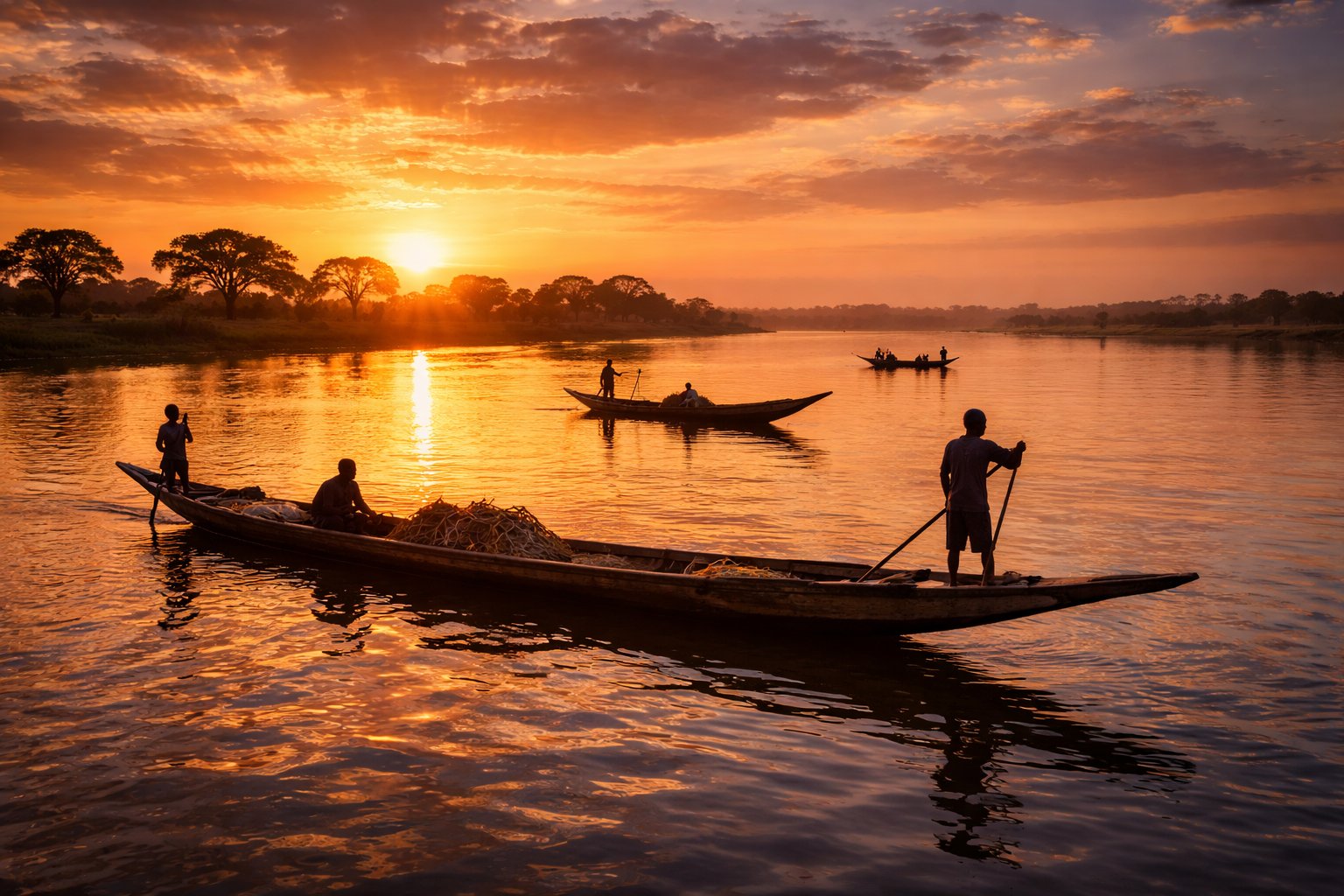
The river’s great arc is the single most consequential piece of geography in West Africa. It carries water and traffic north into the Sahara and then swings back, so that the desert’s southern edge has a navigable river along it. Every city that mattered here — Djenné, Timbuktu, Gao — sits where that river met a trans-Saharan caravan route.
The Inner Niger Delta
Between Ségou and Timbuktu the river spreads into an inland delta of channels, lakes and seasonal floodplain covering some 30,000 km² in flood — roughly the size of Belgium. It supports enormous fisheries, Fulani cattle herding on the flood-recession pastures, and rice. It is also a Ramsar wetland of global importance and a critical wintering ground for European migratory birds.
The Sahara
The northern two-thirds: the Tanezrouft and Erg Chech, some of the emptiest terrain on earth, plus the Adrar des Ifoghas massif in the north-east, a broken granite highland that has sheltered Tuareg rebellions and, more recently, jihadist commands. Taoudenni in the far north still produces slab salt cut by hand and hauled south, one of the last working links to the medieval caravan trade.
The Bandiagara escarpment
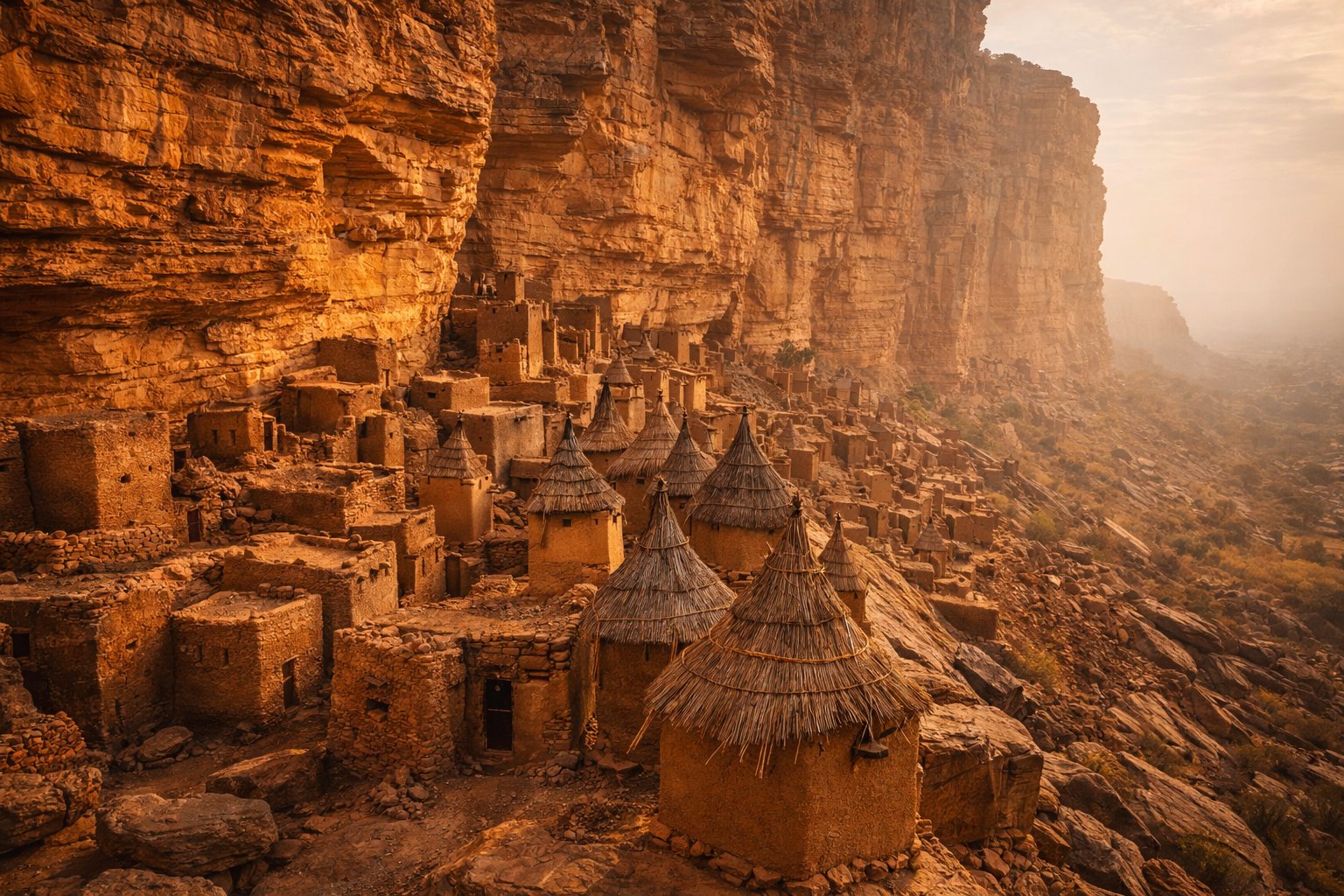
A 150 km sandstone cliff running south-west to north-east across the Dogon plateau, up to 500 m high, with villages built into and beneath it. It is a UNESCO site for both its landscape and its culture, and it is the most visually extraordinary place in the country.
Hombori and the highest point
Hombori Tondo at 1,155 m is Mali’s summit, one of a group of sandstone inselbergs rising abruptly from the plain near the Burkinabè border. The Main de Fatma beside it is a cluster of vertical rock towers that was, until the security situation closed it, a world-class big-wall climbing destination.
Climate
Three bands. Saharan in the north: under 200 mm of rain, 45 °C summers. Sahelian in the middle: 200–600 mm in a single short rainy season from June to September. Sudanian in the south: up to 1,200 mm and real vegetation. The harmattan blows dust off the desert from November to February and turns the sky white.
👑 Ghana, Mali, Songhai
For roughly nine hundred years, the middle Niger was the seat of some of the wealthiest and most sophisticated states in the world, and the source of a very large share of the gold circulating in medieval Europe and the Islamic world.
Ghana, c. 700–1240
The first of the three, and nothing to do with the modern country of that name — it lay in what is now western Mali and southern Mauritania. Arab writers called it the land of gold. It controlled the southern end of the trans-Saharan trade, exchanging gold and slaves for salt, and it declined under Almoravid pressure and shifting trade routes.
Sundiata and the Mali Empire
Founded around 1235 when Sundiata Keita defeated the Sosso at Kirina — an event preserved in the Epic of Sundiata, still performed by griots today. At its height Mali ran from the Atlantic to beyond Gao. The Kurukan Fuga, the charter Sundiata’s assembly is said to have proclaimed, is cited as one of the world’s earliest declarations of rights and is on the UNESCO intangible heritage list.
Mansa Musa
The tenth mansa, who ruled from about 1312, and by many reckonings the wealthiest individual in recorded history. His hajj of 1324 is the famous episode: he crossed the Sahara with an enormous retinue and gave away so much gold in Cairo that he is said to have depressed its value in Egypt for a decade. He returned with scholars and architects, and put Mali on the European maps — the Catalan Atlas of 1375 shows him holding a gold nugget.
Songhai
The last and largest. Based at Gao, expanded by Sonni Ali from 1464 and consolidated by Askia Muhammad (1493–1528), who reorganised the administration, standardised weights and measures, and built the tomb at Gao. Songhai at its height was larger than the Mali Empire had been, and it ran a professional army and a river navy.
1591: the end
A Moroccan expeditionary force of a few thousand men crossed the Sahara with firearms and destroyed the Songhai army at Tondibi. Cavalry and courage lost to arquebuses. The empire fragmented, the trans-Saharan trade began its long decline as Europeans opened the Atlantic coast to trade instead, and the middle Niger has never since been the centre of anything on that scale.
Why it matters now
Because it is the reason Mali’s heritage is world heritage, and because it is central to how Malians understand themselves. The griot tradition that transmits this history is unbroken; the Sundiata epic is not an antiquarian curiosity but a living text; and the destruction of Timbuktu’s shrines in 2012 was an attack on that continuity, which is exactly why it was prosecuted as a war crime.
🇫🇷 French Sudan and Independence
Conquest
France took the middle Niger between about 1880 and 1900, against serious resistance — Samori Touré’s Wassoulou Empire fought the French for sixteen years before his capture in 1898, and the Tukulor state of Umar Tall and his successors was reduced only after long campaigning. The territory was administered as Haut-Sénégal-Niger and then Soudan français within French West Africa.
What colonialism built and took
It built the Dakar–Niger railway, the Office du Niger irrigation scheme at Markala (planned to grow cotton for French mills on a scale never achieved), and an administrative French-speaking elite. It took forced labour, conscription into two world wars, head taxes, and the reorientation of a river economy toward an Atlantic port. Malian tirailleurs sénégalais died in large numbers in both wars.
Independence, 1960
French Sudan and Senegal federated as the Mali Federation in 1959 and became independent on 20 June 1960. Senegal left in August; Mali declared its own independence on 22 September 1960, which remains the national day. Modibo Keïta, the first president, took the country onto a socialist and non-aligned course, left the CFA franc zone in 1962 and was overthrown by the army in 1968.
Moussa Traoré, 1968–1991
Twenty-three years of military rule, later under a single legal party, marked by the catastrophic Sahel droughts of 1968–74 and 1983–85, structural adjustment, and deepening corruption. It ended in March 1991 when the army fired on demonstrators, killing well over a hundred, and Lieutenant Colonel Amadou Toumani Touré arrested Traoré days later.
The democratic decades
Touré handed power to an elected civilian government in 1992 — genuinely unusual, and the reason Mali was for twenty years held up as a West African democratic success. Alpha Oumar Konaré served two terms; Touré returned as an elected president in 2002. Multiparty politics, a free press and regular elections operated for two decades on very weak state foundations.
Why it collapsed
The state never controlled the north, four Tuareg rebellions between 1962 and 2009 were settled with agreements that were not implemented, the army was hollowed out by corruption, and in 2011 the fall of Gaddafi sent heavily armed Tuareg fighters home from Libya. What looked like a democracy turned out to be a thin institutional layer over an unresolved territorial and ethnic settlement.
💥 2012 to Now
The last fourteen years are a single connected sequence, and it is worth setting out in order because the fragments make no sense apart.
2012: the north falls
In January the Tuareg MNLA, reinforced from Libya, launched a rebellion. In March, junior officers overthrew President Touré in frustration at the army’s failures — and in the vacuum the rebels took Kidal, Gao and Timbuktu within days. The MNLA was then pushed aside by its jihadist allies Ansar Dine, AQIM and MUJAO, who imposed a harsh rule across the north and began destroying Timbuktu’s shrines.
2013: Serval
When the jihadists moved south towards Mopti in January 2013, France intervened with Operation Serval, retook the northern towns within weeks and was widely welcomed. Serval became the wider regional operation Barkhane in 2014, and a UN peacekeeping mission, MINUSMA, deployed — it would become the deadliest UN mission in the world, with over 300 peacekeepers killed.
2015: an agreement that did not work
The Algiers Accord was signed with the Tuareg-led CMA coalition, promising decentralisation and integration of fighters. It was never substantively implemented by either side. Meanwhile the insurgency spread south out of the desert into the Mopti and Ségou regions, where it fused with local Fulani–Dogon land conflicts and became far harder to characterise as separatism.
2020 and 2021: the coups
Mass protests over a disputed election and the war brought down President Ibrahim Boubacar Keïta in August 2020 when the army arrested him. A transitional government was formed; in May 2021 Colonel Assimi Goïta, already vice-president, removed the civilian transitional leadership and took the presidency himself. ECOWAS sanctions followed and were later lifted.
2022–2023: the pivot
Mali ended its defence agreements with France; Barkhane withdrew in 2022. Russian Wagner contractors arrived, and were implicated in the Moura massacre of March 2022, in which a UN investigation found at least 500 civilians were killed by Malian forces and foreign fighters. In 2023 the junta demanded MINUSMA leave; it did, by December. The army then retook Kidal from the CMA in November 2023, ending the Algiers framework.
2024–2026
Withdrawal from ECOWAS with Burkina Faso and Niger, formal in January 2025, and the building of the Alliance of Sahel States as a replacement bloc. Wagner announced its departure in June 2025 and was succeeded by Russia’s Africa Corps. All political parties were dissolved in May 2025; Goïta was granted five more years in July 2025. And from September 2025, JNIM began strangling the capital’s fuel supply.
🏛️ Mali in 2026
This section describes the situation as of early September 2026.
Who governs
General Assimi Goïta, 43, who came to power through the coups of August 2020 and May 2021 and has never faced an election. The prime minister since November 2024 is General Abdoulaye Maïga — his civilian predecessor Choguel Maïga was dismissed after publicly criticising the junta’s failure to hold elections. The government is dominated by officers.
The five-year mandate
In July 2025 the appointed National Transitional Council passed a law granting Goïta a five-year presidential mandate, renewable, without election — running to at least 2030 and describing him as president “until the country is pacified”. The transition that began in 2020 with a promised return to civilian rule in 2022 has been formally converted into open-ended military government.
No political parties
In May 2025 a decree dissolved every political party and political association in Mali and banned their meetings and activities. It followed a rare opposition rally calling for elections. Party leaders who protested have been arrested; several prominent figures have been detained or have disappeared into the security services’ custody. There is no legal political opposition.
Press and civil society
Sharply restricted. Foreign broadcasters have been repeatedly suspended — RFI and France 24 in 2022, and French television channels again in November 2025 over their reporting on the fuel blockade. Malian journalists have been detained. Some independent reporting continues, much of it from exile, and the junta’s information environment is heavily supplemented by an organised pro-Russian and anti-French social media effort.
What support there is
Genuine, and it should be reported honestly. Anti-French sentiment in Mali is real and predates the junta, rooted in the perception that nine years of French operations did not defeat the insurgency and that France treated Mali as a client. The junta’s sovereigntist rhetoric, the retaking of Kidal in 2023 and the break with ECOWAS all had substantial popular backing. That support has been strained by the blockade and the economy.
The humanitarian position
Severe. Well over 300,000 people are internally displaced, with hundreds of thousands more in Mauritania, Burkina Faso and Niger; large parts of the centre and north have no functioning schools or clinics; and a UN-declared famine risk has affected areas under armed-group siege, notably around Farabougou and in the Ségou and Mopti regions.
🛡️ The War, and the Siege of the Capital
JNIM
Jama'at Nusrat al-Islam wal-Muslimin, the al-Qaeda affiliate formed in 2017 by merging four groups under Iyad Ag Ghaly, a Tuareg who led earlier rebellions. It is the dominant insurgent force in Mali and now operates across Burkina Faso, Niger and into Benin and Togo. It taxes, governs and negotiates as well as fights, which is why blockade works for it.
Islamic State in the Greater Sahara
The rival jihadist organisation, concentrated in the Ménaka region and along the Niger border, and in open war with JNIM since 2020. The two groups have fought each other as hard as they have fought the state, and civilians in the tri-border area have borne the result.
The fuel blockade
The decisive tactic. Mali imports around 95% of its fuel by road from Dakar and Abidjan. From 3 September 2025 JNIM declared and enforced a blockade on those corridors, and has burned more than 300 tankers. Bamako has seen kilometre-long fuel queues, rationing that prioritises the military, school and university closures, and power cuts. Convoys now move only under heavy escort. The siege eased in early 2026; JNIM declared a renewed full blockade on 28 April 2026.
Why it is so effective
It requires no assault on the capital. A landlocked country whose energy arrives on two roads can be strangled by attacking the roads, and the junta cannot protect 1,200 km of highway. It also inverts the usual insurgent problem: instead of the state besieging the rebels, the rebels are besieging the state, in full view of the population whose living standards collapse.
Africa Corps
Wagner announced its withdrawal from Mali in June 2025 and was replaced by Russia’s state-run Africa Corps, which continues to provide training, combat support and regime protection in exchange for mining concessions and political alignment. Russian and Malian forces have been credibly accused of large-scale abuses; the UN found at least 500 civilians killed at Moura in March 2022.
The northern front
The army’s recapture of Kidal in November 2023 was its most significant victory in a decade and ended the Algiers Accord in practice. It did not end the fighting: the Tuareg-led FLA continues to operate in the far north, and in July 2024 inflicted a heavy defeat on Malian and Wagner forces at Tinzaouaten near the Algerian border.
💰 Gold, Cotton and a Blockaded Economy
Gold
Mali is one of Africa’s three largest gold producers, alongside Ghana and South Africa, and gold is around 80% of exports. Most comes from large industrial mines in the west and south — Loulo-Gounkoto, Syama, Fekola — plus a very large artisanal sector employing hundreds of thousands of people in conditions ranging from hard to lethal, and increasingly taxed by armed groups.
The mining dispute
The junta rewrote the mining code in 2023 to raise the state’s share and applied it retroactively. The confrontation with Barrick Gold over Loulo-Gounkoto escalated through 2024 and 2025 into arrest warrants, the detention of company staff, seizure of gold stocks and the mine being placed under state-appointed administration. It is the sharpest signal to foreign investors of how the junta intends to operate.
Cotton
“White gold”, and the livelihood of several million people in the south. Mali is regularly the largest or second-largest cotton producer in Africa, through the state company CMDT. Output swings violently with input prices, producer-price disputes and farmer boycotts — a collapse in 2020 and a record in 2022 within three seasons.
Livestock and fish
Underweighted in most accounts. Mali has one of the largest cattle herds in West Africa, and Fulani pastoralism on the Inner Niger Delta flood pastures is a major economic system in its own right — and the source of much of the violence in the centre, as herding routes, farmland and water access have been militarised.
What the blockade has done
Substantial damage across the whole economy. Transport costs have multiplied, businesses have closed, generators have gone silent, and the World Bank and IMF have marked growth down sharply. Mali is also in arrears on parts of its external and domestic debt, and the exit from ECOWAS removed its access to some regional financial mechanisms.
What has not changed
Mali remains a country where the great majority of people live from farming, herding and fishing, largely outside the formal economy, and where remittances from a very large diaspora — particularly Soninké communities in France — are a substantial and reliable source of income for rural families. That structure is more resilient than the state is.
🤝 The Alliance of Sahel States
The most consequential geopolitical shift in West Africa in a generation, and it is being built by three military governments who came to power the same way.
What it is
The Alliance of Sahel States (AES), created by treaty in September 2023 between Mali, Burkina Faso and Niger as a mutual-defence pact, and upgraded to a confederation in July 2024. All three are ruled by juntas that took power in coups between 2020 and 2023, and all three have expelled French forces.
Leaving ECOWAS
The three announced withdrawal from the Economic Community of West African States in January 2024 and it took formal effect in January 2025 — the first departures in ECOWAS’s fifty-year history. The trigger was ECOWAS sanctions and its threat of military intervention to reverse the Niger coup. Free movement has been partly preserved by negotiation, but the regional architecture is broken.
What has been built
More than sceptics expected: a joint force of several thousand troops, a common AES passport issued from 2025, an interparliamentary body meeting in Niamey, a 0.5% import levy to fund the confederation, and plans for a common bank and a shared development strategy. There is also persistent talk of leaving the CFA franc, which would be the genuinely radical step and has not happened.
Who backs it
Russia, primarily — security partnerships, mining deals, nuclear-energy memoranda and an information ecosystem. Also increasing engagement from Turkey (drones), Iran, China and, on the Sahel’s southern flank, Morocco, which has offered the landlocked three access to an Atlantic port — a serious offer given what the fuel blockade has demonstrated about coastal dependence.
Does it work?
As a political project, yes: it has survived, institutionalised and given three isolated governments mutual legitimacy. As a security project, no. Violence in all three countries has increased since the alliance was formed, JNIM operates freely across their shared borders, and the departure of French and UN forces was not replaced by anything of comparable capability.
What it means for the region
Coastal West Africa — Benin, Togo, Ghana, Côte d’Ivoire — is now dealing with an insurgency pushing south out of a bloc it has no security cooperation with. For Europe, it means the Sahel policy of the last decade has ended without a successor. For Malians it means fewer external constraints on their government and fewer external resources against the insurgency.
🏙️ Bamako
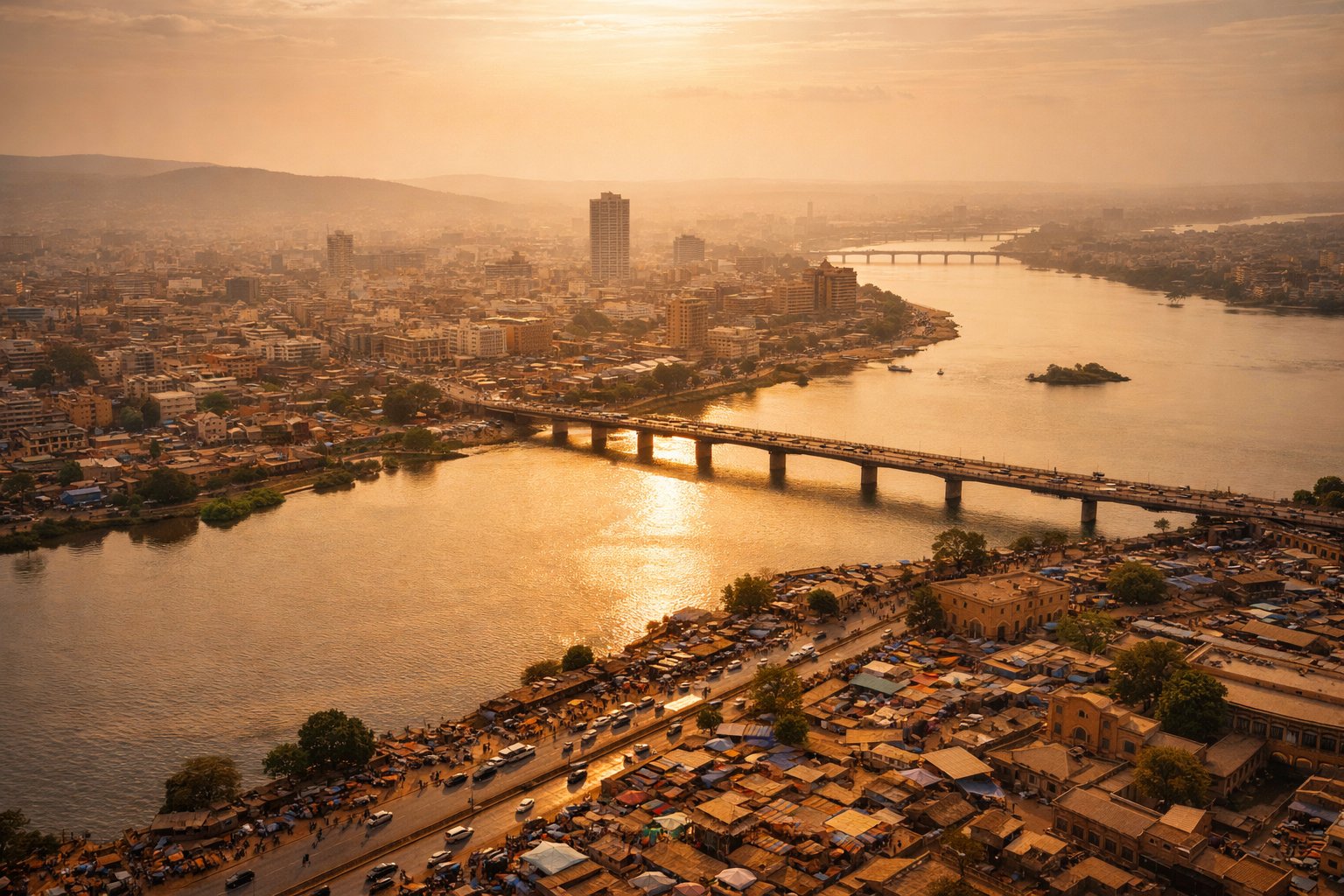
The capital has grown from about 100,000 people at independence to somewhere near 3 million, making it for years one of the fastest-growing cities in Africa. It sits on both banks of the Niger where the river runs between low hills, and it is a working, dusty, loud, intensely social place rather than a monumental one.
The shape of it
The old centre is on the north bank, with the Grand Marché, the cathedral, the Bibliothèque Nationale and the ministries. Three bridges cross to the south bank, where most of the growth has been. Above it all, the Point G hill holds the main hospital and a view over the whole city.
The National Museum
Genuinely excellent, and by common consent one of the best museums in West Africa: masks, Dogon and Bamana sculpture, textiles including a superb bogolan collection, and archaeology from Djenné-Djenno. It sits in a garden below Point G and it was the institution that helped coordinate the rescue of the Timbuktu manuscripts.
Markets
The Grand Marché and the Marché Rose for everything; the Marché des Féticheurs for traditional medicine and animal parts, which is confronting and entirely serious; and the artisan quarter at the Maison des Artisans for bogolan cloth, silver and leather.
Music
Bamako has been one of the world’s great music cities for fifty years. Live venues, wedding orchestras, the annual sessions that produced Ali Farka Touré and Toumani Diabaté, and a rehearsal-and-street-corner culture that keeps producing players. Security conditions and the fuel crisis have hurt nightlife badly, but it has not stopped.
Bamako under blockade
The 2025–26 fuel siege has been a city-level experience: queues at every station, motorbikes pushed rather than ridden, generators silent, schools shut for periods, and prices for everything trucked in rising steeply. Bamako has not been attacked at scale — a JNIM raid on the gendarmerie school and the airbase in September 2024 was the one major exception — but it has been squeezed.
What it is not
Bamako is not a sightseeing city. There is no old town, few colonial-era monuments of note, and the heat and dust are relentless. What it has is the museum, the market, the music, and a street life of extraordinary density and warmth. Under current conditions, none of that is accessible to ordinary visitors.
🕌 Timbuktu
The name has been shorthand in European languages for the ends of the earth for four hundred years, which is a joke at the expense of the people who use it. Timbuktu was a real and specific place: a trading city of perhaps 100,000 people at its height, and one of the most important centres of learning in the Islamic world.
Why it existed
Founded around 1100 by Tuareg as a seasonal camp where the Niger comes closest to the desert — the exact point at which river transport and camel caravan meet. Gold, ivory and slaves went north; salt from Taghaza and Taoudenni came south, and salt was so valuable that it was traded weight for weight against gold. The city was a warehouse before it was a university.
The universities
By the fifteenth and sixteenth centuries Timbuktu had Sankoré, Djinguereber and Sidi Yahya — three mosque-universities with, by some accounts, 25,000 students in a city of 100,000. Teaching covered law, theology, astronomy, mathematics, medicine and rhetoric, on the Islamic model of individual scholars licensing students. Ahmed Baba, the great jurist deported to Morocco in 1594, is the figure most often named.
The three mosques
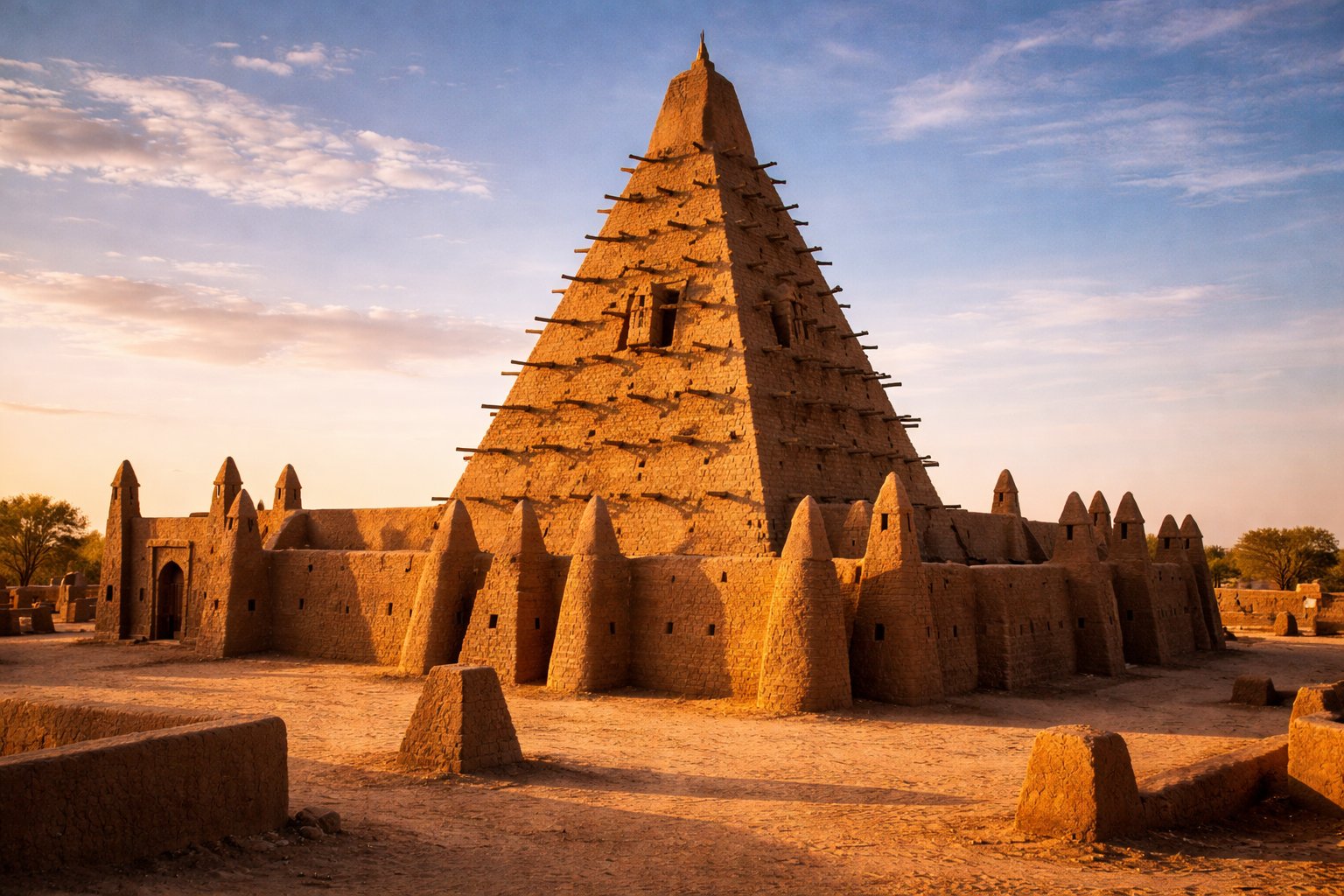
All three still stand and all three are part of the UNESCO inscription of 1988. Djinguereber, built in 1327 on Mansa Musa’s return from Mecca, is a broad low mud building with a pyramidal minaret. Sankoré has the distinctive stepped cone bristling with toron. Sidi Yahya is the smallest and most enclosed.
2012, and the shrines
When Ansar Dine took the city in 2012 they began destroying the mausoleums of the saints — the tombs of the scholars whose veneration they regarded as idolatry — and eventually demolished fourteen of the sixteen inscribed by UNESCO, along with the sealed door of Sidi Yahya, which local belief held should not be opened before the end of the world. They opened it.
The trial
In 2016 the International Criminal Court convicted Ahmad al-Faqi al-Mahdi, who had led the destruction, and sentenced him to nine years. It was the first ICC conviction ever handed down for the destruction of cultural heritage as a war crime, and it set a precedent that has been cited since in Syria and Ukraine. UNESCO and Malian masons rebuilt the mausoleums, using the same earth, by 2015.
Timbuktu now
A town of about 35,000 people under permanent threat, encircled and periodically blockaded by JNIM, with a diminished population and no tourism. It is reachable only by military convoy or by air on the intermittent services that operate. It remains on the UNESCO Danger List, where it has been since 2012.
🏛️ Djenné and the Architecture of Earth
The Great Mosque
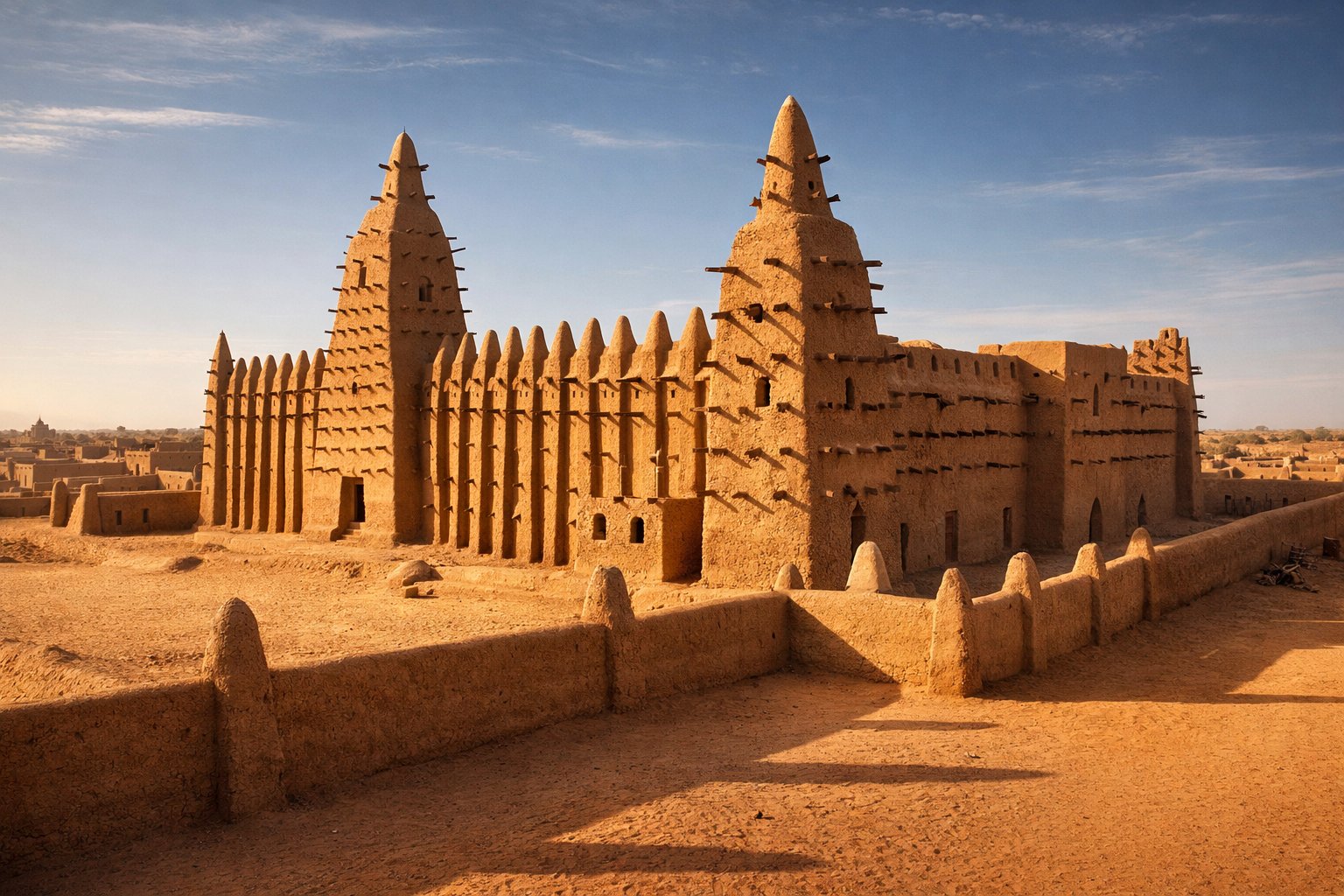
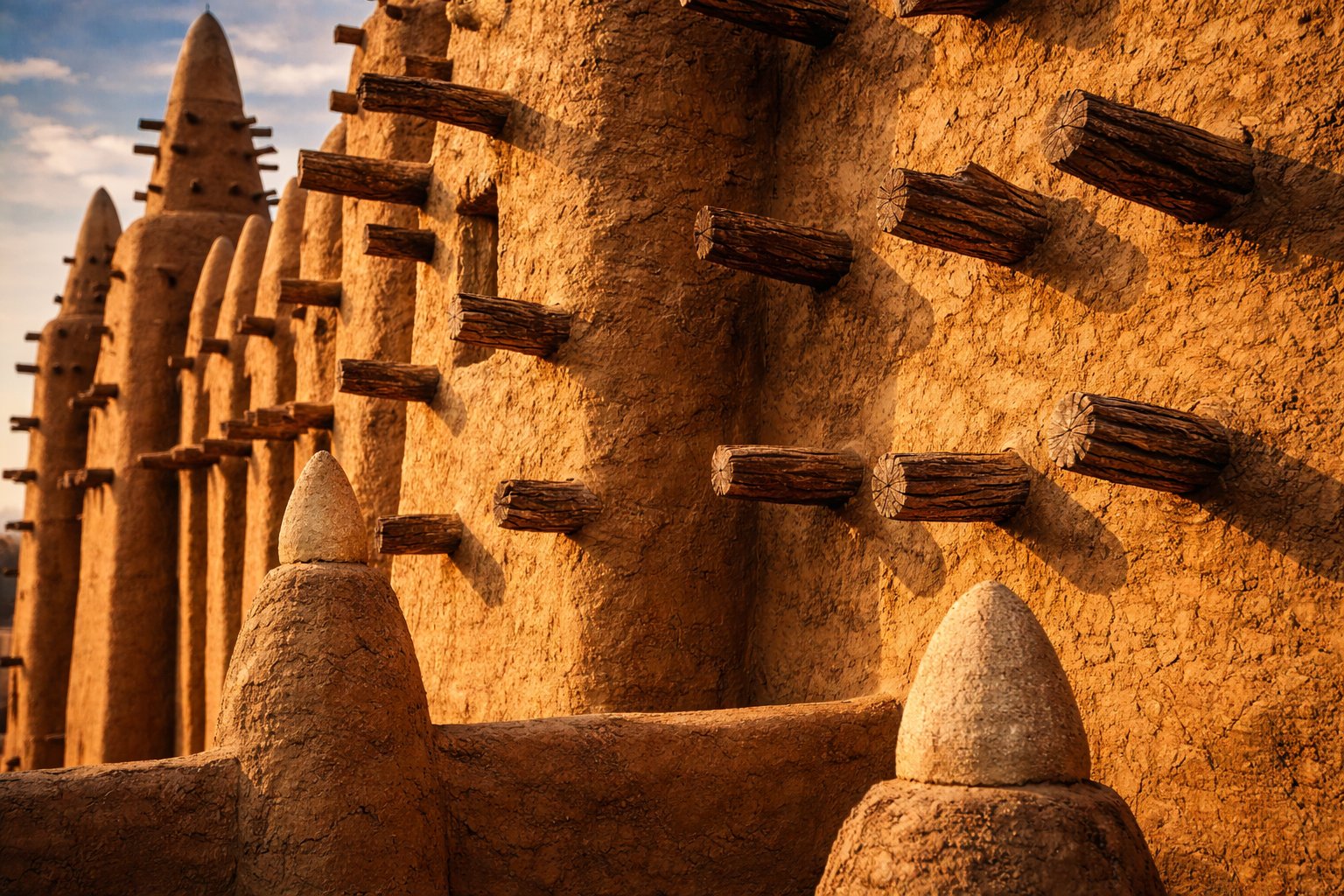
The largest mud-brick building in the world. The present structure dates from 1907, rebuilt on the foundations of a thirteenth-century mosque, and it is the defining image of Sudano-Sahelian architecture: three towers on the qibla wall, a forest of internal pillars, a raised plinth, and walls of banco — sun-dried earth mixed with rice husks and shea butter.
The crépissage
Every year before the rains, the entire town turns out for the replastering festival: the masons’ guild directs, young men carry the mud, women bring water, and the mosque is recoated by hand in a day. It is a festival, a public works project and the mechanism by which a mud building survives a century of tropical downpours. It is also, in itself, the reason UNESCO treats this as living heritage.
Djenné the town
Around 30,000 people, built on an island in the Bani river floodplain, with a monumental Monday market in front of the mosque and streets of two-storey mud houses in the distinctive Tukolor and Moroccan façade styles. The whole town is inscribed, not just the mosque, and it was one of the most beautiful places in Africa to walk around.
Djenné-Djenno
Three kilometres away lies the archaeological site of Djenné-Djenno, occupied from about 250 BCE and abandoned around 1400 — one of the oldest urbanised sites in sub-Saharan Africa, and evidence that West African cities predate both Islam and any external stimulus. It produced the terracotta figures that made Malian antiquities a target for looters.
The masons
The barey ton, the hereditary masons’ guild of Djenné, holds the technical knowledge of the architecture and directs the annual replastering. Their craft is on the UNESCO intangible heritage register in effect through the town’s inscription, and their continuity is what has kept the buildings standing. Their apprentices are what will decide whether it continues.
On the Danger List
Djenné was inscribed in 1988 and moved to the List of World Heritage in Danger in 2016 — for insecurity, for the erosion of maintenance as the town’s economy collapsed with tourism, and for encroaching modern construction in cement, which does not breathe and which cracks the buildings around it.
⛰️ Dogon Country
The escarpment
The Bandiagara cliffs run about 150 km and rise up to 500 m, with Dogon villages built on the plateau above, in the talus at the base and into the face itself. UNESCO inscribed the Cliff of Bandiagara (Land of the Dogons) in 1989 as a mixed cultural and natural site — one of relatively few anywhere with that designation.
Who the Dogon are
Around 400,000 to 800,000 people who moved onto the escarpment from about the fifteenth century, in most accounts to escape Islamisation and slave raiding on the plains. They displaced or absorbed the Tellem, whose cliff granaries and burial caves are still visible high in the rock and whose name means, in Dogon, “we found them”.
The masks and the sigui
Dogon ritual masking is among the most studied in anthropology: the dama funerary dances, the towering kanaga and sirige masks. The sigui ceremony, marking the renewal of the world, is held once every sixty years and takes seven years to pass through the villages; the last ran from 1967 to 1973 and the next is due around 2027.
Griaule and the Sirius question
The French anthropologist Marcel Griaule published accounts from the 1930s to the 1950s of an elaborate Dogon cosmology, including apparent knowledge of the invisible companion star Sirius B. The material became famous and then contested: later anthropologists could not replicate it, and the most-cited explanation is that Griaule’s informants incorporated ideas from earlier European visitors. The episode is a standard cautionary tale in the discipline, and the ancient-astronaut literature built on it should be disregarded.
The tourism that was
Until 2012 Dogon country was Mali’s main tourist destination — trekking village to village with a guide, sleeping on roofs, three to seven days. It was the economic base of the region. It ended completely, and the collapse of that income is one of the reasons the area became vulnerable.
The violence since
This is the hardest part of the story. Central Mali has seen severe intercommunal violence between Dogon farmers and Fulani herders since 2016, weaponised by jihadist recruitment among Fulani and by self-defence militias among Dogon. The massacre at Ogossagou in March 2019 killed around 160 Fulani villagers; there have been comparable attacks in the other direction. UNESCO moved the site to the Danger List in 2016.
🛶 Mopti, Ségou and the Inland Delta
Mopti
Where the Bani joins the Niger, built on three islands joined by causeways, and long the country’s river transport hub — hence the tourist-brochure name Venice of Mali, which oversells it and points at something real. Its port, its mud mosque of 1936 and its enormous fish market made it the base for travel to Djenné, Timbuktu and Dogon country. It is now a garrison town in a conflict zone.
The pinasse
The long, narrow, motorised river boat of the Niger, roofed with mats and loaded to the waterline with people, sacks and livestock. Public pinasses and the larger Comanav passenger vessels ran the Mopti–Timbuktu–Gao route when the river was high, from roughly August to December. It was one of the great river journeys in the world.
The Bozo
The fishing people of the Niger, whose name has entered French as a byword and who are the specialists of this river — nets, weirs, seasonal camps, and a body of technical knowledge about a fishery that supports millions. Bozo and Dogon are joking-kinship partners, which means they are licensed to insult each other freely and obliged to help each other absolutely.
Ségou
Upstream, calmer, and the most attractive small city in Mali: a Niger-side town of colonial-era Sudanese-style architecture in ochre, wide streets and mango trees, capital of the eighteenth-century Bambara kingdom. Its Festival sur le Niger, founded in 2005, was the country’s major surviving international arts festival and one of the last to keep going.
The Office du Niger
At Markala, a barrage begun by the French in 1934 diverts the Niger into a vast irrigation scheme originally intended to grow cotton for France. It never met its colonial targets, but today it produces a large share of Mali’s rice on around 100,000 hectares and is the country’s single most important piece of agricultural infrastructure — and a magnet for foreign land acquisition.
The delta under pressure
The Inner Niger Delta is squeezed from several directions at once: upstream dams and irrigation reduce the flood, the rains are less reliable, the fisheries are over-exploited, and the competition between herders, farmers and fishers over shrinking flood pasture is precisely the fault line that armed groups have exploited. The conflict in central Mali is, at bottom, partly about water.
👥 Twenty-Four Million People, Very Young
The demography
Around 24 million people, growing at roughly 3% a year — among the fastest rates on earth. The fertility rate is close to six children per woman and the median age is about 16. Half the population was born after the 2012 crisis began. Any projection of Mali’s future is first of all a projection about a very large cohort of young people entering an economy that has no jobs for them.
The peoples
Bambara around a third; Fulani (Peul), pastoralists spread across the whole Sahel; Soninké/Sarakolé, with a long tradition of labour migration to France; Senufo and Bobo in the south; Dogon on the escarpment; Songhai along the river bend; Bozo on the water; Tuareg and Moor in the north; and small Arab communities in the desert towns.
Sinankuya
The joking-kinship system, and one of the more remarkable pieces of social engineering anywhere. Named clans and ethnic groups — Coulibaly and Keïta, Dogon and Bozo, Peul and Dogon — are formally licensed to trade elaborate ritual insults, and correspondingly obliged to offer help and mediation. It is used consciously as a conflict-resolution mechanism, is invoked in national politics, and is on the UNESCO intangible heritage list.
Religion
About 95% Muslim, overwhelmingly Sunni of the Maliki school with a strong Sufi character — brotherhoods, saints’ tombs, a tolerant syncretism with older practice. That Sufi tradition is precisely what the jihadist groups attacked in 2012. There are small Christian and animist minorities, and Mali’s constitution has been formally secular since independence.
Women
Among the harder places in the world to be a woman. Female genital mutilation prevalence is among the highest globally, at roughly 80–90%, and remains legal; child marriage is common; maternal mortality is high. A family code reform in 2011 was withdrawn and rewritten under religious pressure into a more conservative version. Malian women’s organisations campaign on all of this and do so under real constraint.
Education and migration
Literacy is around 30–35%, among the lowest in the world, and thousands of schools in the centre and north have been closed by conflict for years. Migration is a central family strategy: to Bamako, to Côte d’Ivoire, and to France — and, for a minority, north across the Sahara toward Libya and Algeria, a route on which many Malians die.
📜 The Librarians Who Smuggled a Library
One of the great cultural rescue operations of the century happened here in 2012 and 2013, and almost nobody outside Mali noticed at the time.
What the manuscripts are
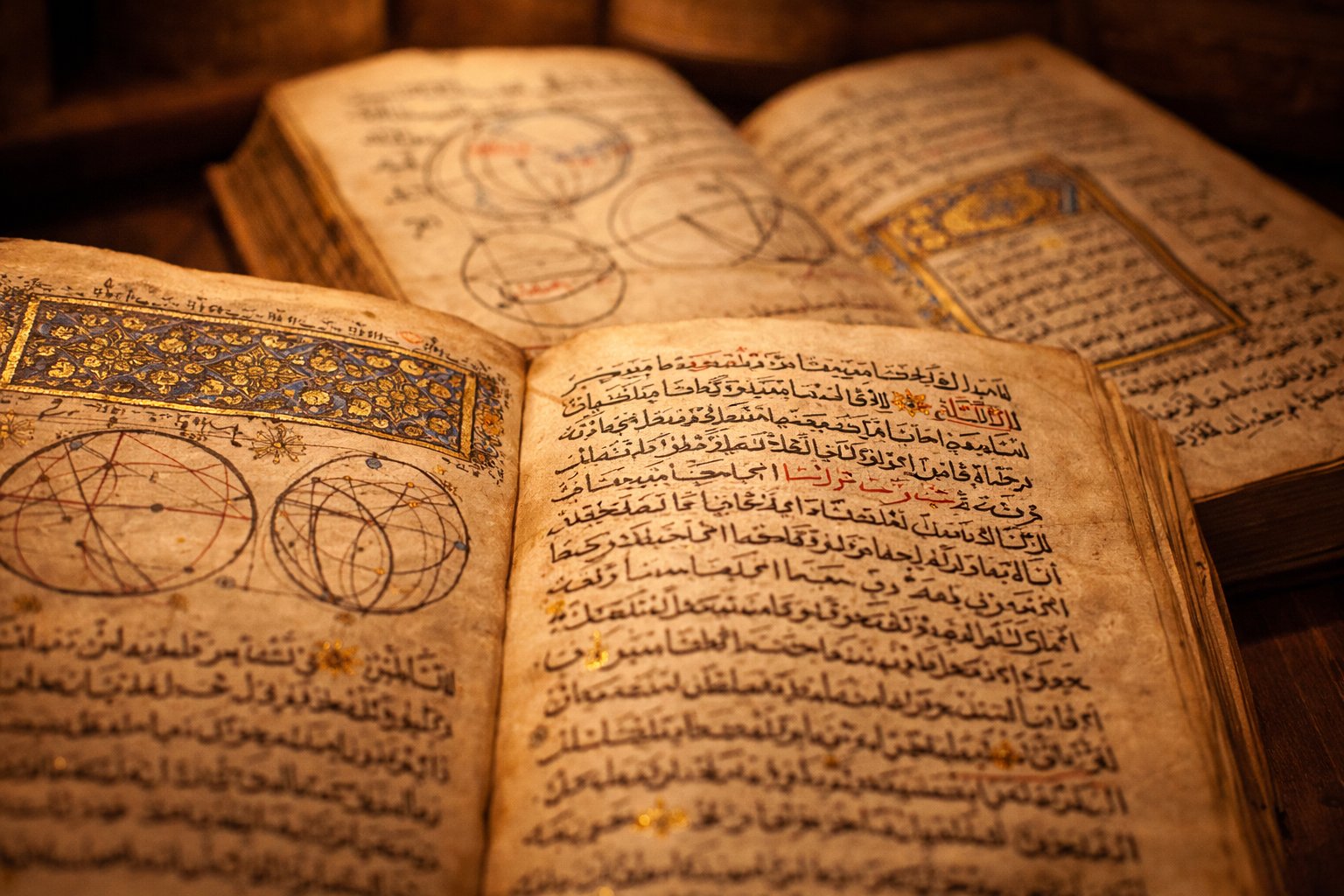
Between 300,000 and 700,000 handwritten volumes survive in and from Timbuktu and the surrounding region, most in Arabic, some in African languages written in Arabic script (ajami). They date mainly from the thirteenth to the twentieth century and cover law, theology, astronomy, mathematics, medicine, pharmacology, poetry, correspondence, contracts and diplomacy. They are held not by one library but by scores of private family collections.
Why they matter
They are the standing refutation of the claim, still occasionally made, that sub-Saharan Africa had no written intellectual tradition. They document a scholarly culture operating at a high level continuously for six centuries, in contact with Cairo, Fez and Córdoba, and they include material found nowhere else.
The evacuation
When the jihadists took Timbuktu in 2012, the librarian Abdel Kader Haidara organised the removal of the collections. Manuscripts were packed into metal footlockers, moved out of the city by donkey cart, motorbike, taxi and river pinasse, past both the occupiers’ checkpoints and the army’s, and taken 1,000 km south to Bamako. Roughly 350,000 volumes were saved over about eight months, funded by an improvised international appeal.
What was lost
The Ahmed Baba Institute’s building was burned as the jihadists withdrew in January 2013, and around 4,200 manuscripts were destroyed — a serious loss, and a small fraction of what would have gone had the evacuation not happened. Haidara’s operation is the subject of the book The Bad-Ass Librarians of Timbuktu.
The problem now
The manuscripts are safe from fire and safe in Bamako — and Bamako is humid, which is the one thing the Saharan climate had protected them from for six hundred years. Conservation, digitisation and eventual return are all underfunded and slow, and the families who own them have been separated from their inheritance for over a decade.
Where to see them
Digitised collections are online through the Hill Museum & Manuscript Library, Google Arts & Culture and the SAVAMA-DCI project, and are freely browsable. For readers who cannot go to Mali and will not be able to for the foreseeable future, this is the single most rewarding way to engage with Malian heritage from a desk.
🎵 One of the Greatest Musical Cultures on Earth
This is not a tourist-brochure claim. Mali's musical output per head is extraordinary by any measure, it is directly ancestral to the blues, and the standard of musicianship is startling.
The griots
The jeli (Bambara) or griot (French): hereditary caste musicians, historians and praise-singers who hold the oral record of families and dynasties and who perform the Sundiata epic. The instruments are theirs by inheritance — the kora (21-string harp-lute), the ngoni (a plucked lute that is a direct ancestor of the banjo), and the balafon (wooden xylophone), of which the Sosso-Bala, held in Guinea, is claimed as Sundiata’s own.
Ali Farka Touré
From Niafunké on the Niger, and the musician who made the connection to American blues audible — his playing on a Songhai and Fulani basis sounds so much like the Mississippi hill-country tradition that the resemblance is uncanny. His Talking Timbuktu with Ry Cooder (1994) and In the Heart of the Moon with Toumani Diabaté (2005) both won Grammys. He died in 2006.
Toumani Diabaté
The greatest kora player of his generation and the 71st in an unbroken line of kora players in his family. He recorded with Ali Farka Touré, Björk, Damon Albarn and the Symmetric Orchestra, and did more than anyone to establish the kora as a solo concert instrument. He died in July 2024, and his son Sidiki continues.
Tinariwen and desert blues
The Tuareg guitar tradition, born among exiles and fighters in Libyan and Algerian camps in the 1980s and carried home. Tinariwen won a Grammy in 2012; Tamikrest, Bombino (Nigerien) and the late Mdou Moctar generation followed. The music is inseparable from the northern rebellions — several of the founding members were fighters — and from exile.
The rest of an absurd list
Salif Keïta, the albino nobleman who broke caste rules to become a singer; Amadou & Mariam, who met at Bamako’s institute for the blind; Oumou Sangaré, whose Wassoulou songs argue directly against polygamy and forced marriage; Rokia Traoré; Fatoumata Diawara; Songhoy Blues, formed by young musicians displaced from the north in 2012.
The music ban
In 2012, the jihadist authorities in the north banned music outright — in a country where music is the medium of history, law and social memory. Radio stations were closed, instruments destroyed, musicians threatened. It was, as many Malians said at the time, an attack on the culture’s nervous system, and it is why the international musical response to the occupation was so immediate.
🍲 Rice, Millet and Peanut Sauce
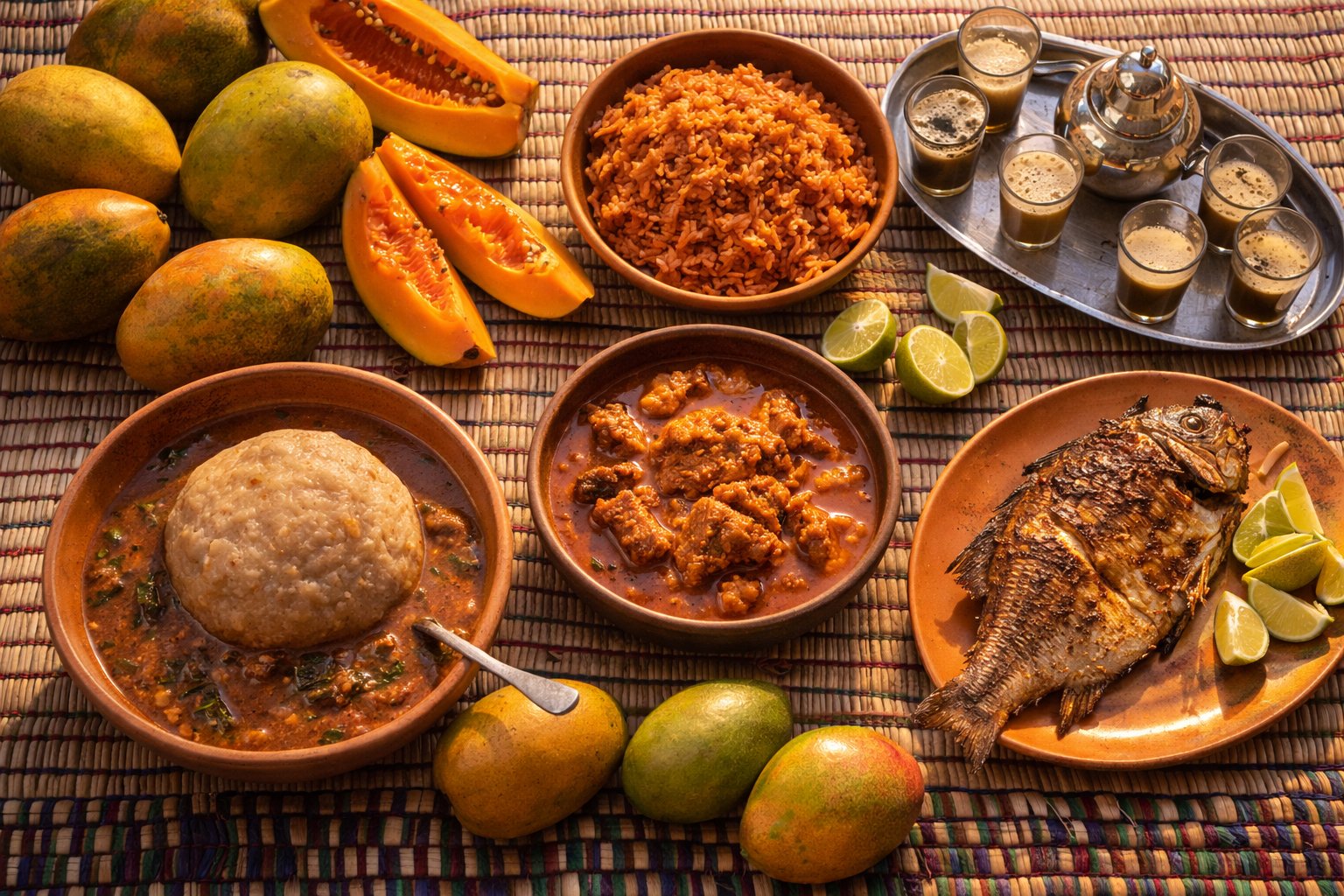
Tô
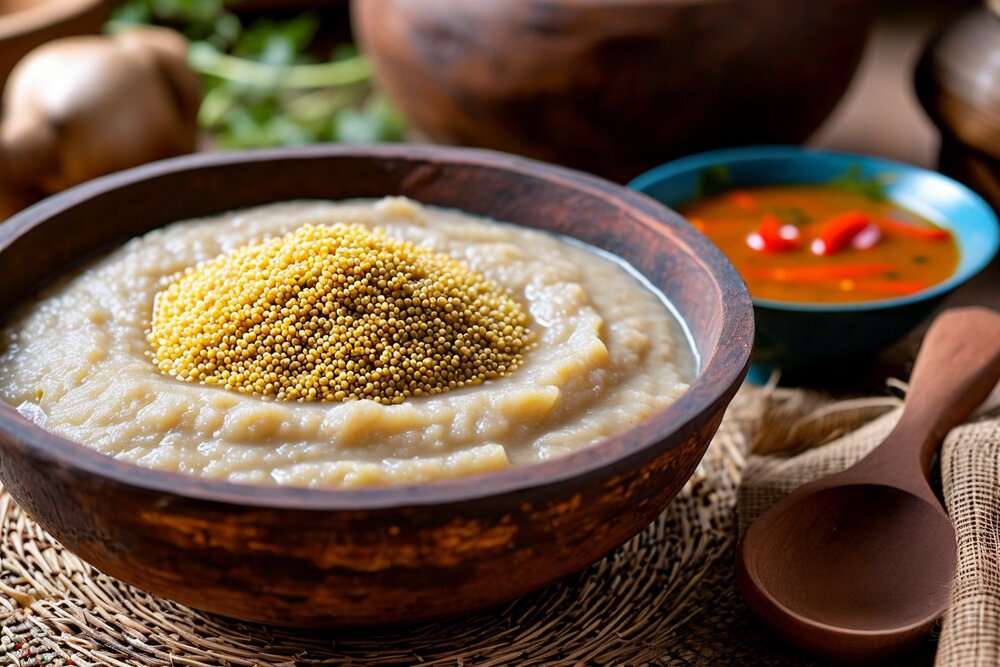
The staple of the countryside: a stiff porridge of millet, sorghum or maize flour, beaten in a pot until smooth and firm enough to hold its shape, and eaten by pinching off a piece with the right hand, denting it with the thumb and using it to scoop sauce. The sauce is usually made with baobab leaf, okra or sorrel. It is what most Malians eat most days.
Tiguadègè na / mafé
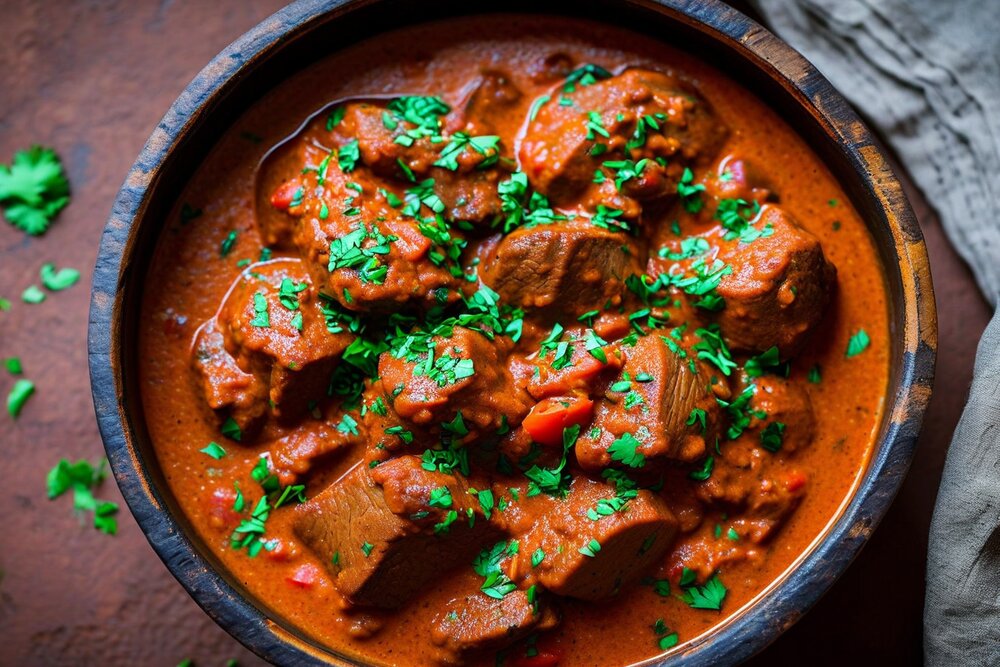
The famous one: groundnut stew, a thick sauce of peanut paste and tomato with beef, lamb or chicken and root vegetables, served over rice. It is found across West Africa under many names; tiguadègè na is the Bambara. Made properly, with real peanut paste rather than commercial peanut butter, it is one of the great stews of the world.
Riz au gras and jollof
Riz au gras (zamè) is rice cooked in a tomato, oil and meat base until it takes the colour — the Malian member of the jollof family that West Africa argues about endlessly. It is the celebration dish, the wedding dish and the Sunday dish.
Fish
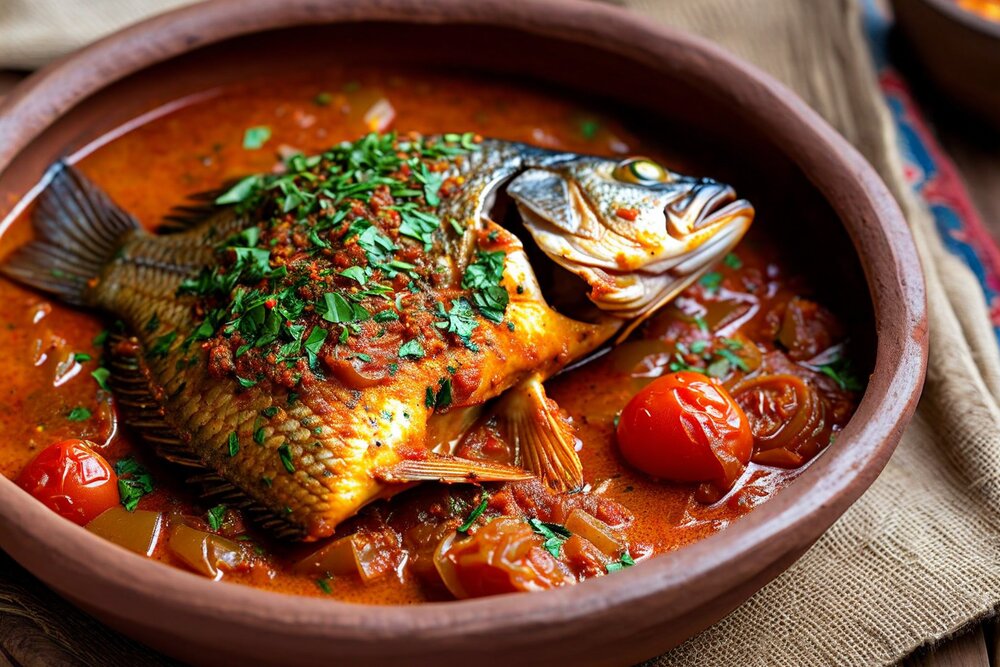
The Niger provides. Capitaine is Nile perch, a very large predatory fish, usually served as thick grilled or braised steaks in a tomato and onion sauce — the classic restaurant dish of Bamako and Mopti. Smaller river fish are grilled whole or smoked and dried, and dried fish is a staple seasoning across the region.
Fonio
An ancient West African grain, one of the oldest cultivated cereals in Africa, tiny-seeded, drought-tolerant, quick-growing and nutritionally excellent. It nearly disappeared under rice and has been revived commercially in the last two decades — partly by Malian and Senegalese producers selling into export markets as a gluten-free grain. In Mali it is eaten steamed like couscous.
Eating manners
From a shared bowl, with the right hand only, sitting on mats. You take from the part of the bowl in front of you, not across it. The host will press more on you repeatedly and refusing takes several attempts. Hospitality obligations here are strong enough that a stranger arriving at a meal will be fed, which is the single most consistent report from every traveller who has been.
👨🍳 Two Malian Recipes
The great stew and the everyday staple. Both are cheap, both feed a lot of people, and both are genuinely worth making. Quantities serve four to six.
Tiguadègè na — Malian groundnut stew
Main course · about 1 hour 30 minutes · the most famous dish in West Africa, in its Bambara version
Ingredients: 800 g beef chuck or lamb shoulder, cut into 4 cm chunks (chicken thighs work); 250 g smooth unsweetened peanut butter, or better, 250 g roasted peanuts ground to a paste; 2 large onions, chopped; 4 tbsp groundnut oil; 3 tbsp tomato purée; 1 tin (400 g) chopped tomatoes; 2 carrots, in thick chunks; 1 sweet potato or 2 potatoes, in chunks; ¼ small cabbage, in wedges; 1 scotch bonnet or habanero, whole and unpierced; 2 bay leaves; 1 stock cube; 1.2 l water; salt. To serve: plain long-grain rice.
Method: Brown the meat hard in the oil in a heavy pot, in batches so it colours rather than steams, and set aside. Soften the onions in the same pot, add the tomato purée and fry it for two full minutes until it darkens. Return the meat, add the tinned tomatoes, bay, stock cube and about a litre of water, and simmer covered for 45 minutes. Meanwhile slacken the peanut paste with a ladleful of the hot cooking liquid, whisking to a smooth cream — never add it straight from the jar or it will seize. Stir the loosened paste into the pot along with the whole chilli, and simmer uncovered for 30–40 minutes, stirring regularly so it does not catch. The sauce will thicken and a slick of reddish peanut oil will rise to the surface: that is the sign it is done. Add the carrot, potato and cabbage for the last 20 minutes. Fish out the chilli before serving unless you want it hot, and season.
💡 The oil separating and floating is the traditional test for a finished mafé, and it takes longer than you expect — do not rush the last half hour, and do not let the peanut paste stick to the bottom or the whole pot will taste burnt.
Tô with baobab leaf sauce
Staple · about 40 minutes · what most of Mali eats most days
Ingredients: For the tô: 400 g millet, sorghum or fine maize flour; 1.2 l water; a pinch of salt. For the sauce: 3 tbsp dried baobab leaf powder (tomi; dried okra powder or 200 g fresh okra is the usual substitute); 1 onion, chopped; 2 tbsp groundnut oil; 2 tbsp tomato purée; 200 g beef or smoked fish; 1 tbsp dried ground fish or a stock cube; 1 chilli; 700 ml water; salt.
Method: For the sauce, brown the meat with the onion in the oil, add the tomato purée and fry it out, then the water, the dried fish or stock cube and the chilli, and simmer 25 minutes. Whisk in the baobab or okra powder and cook 5 minutes more — it will turn the sauce viscous and slightly slippery, which is exactly the intention. For the tô, bring a litre of water to the boil with the salt. Mix the remaining 200 ml of cold water with about a quarter of the flour to a smooth slurry and whisk it into the boiling water; let it thicken. Now add the rest of the flour in handfuls, beating hard with a strong wooden spoon after each addition — this is genuinely heavy work and it is the whole technique. Keep beating over low heat for 10–15 minutes until the mass is smooth, very stiff, and pulls away from the sides of the pot. Wet a bowl, press the tô into it, turn it out onto a plate as a smooth dome, and serve with the sauce around it.
💡 Tô must be stiff enough to pinch off in pieces and hold a thumb-dent — if it slumps into a puddle it is undercooked or too wet, and no amount of sauce will rescue it. Beat harder and longer than feels reasonable.
🍵 Three Glasses of Tea
Mali is overwhelmingly Muslim and alcohol is marginal. What it has instead is one of the most elaborate tea rituals in the world, performed several times a day across the whole country.
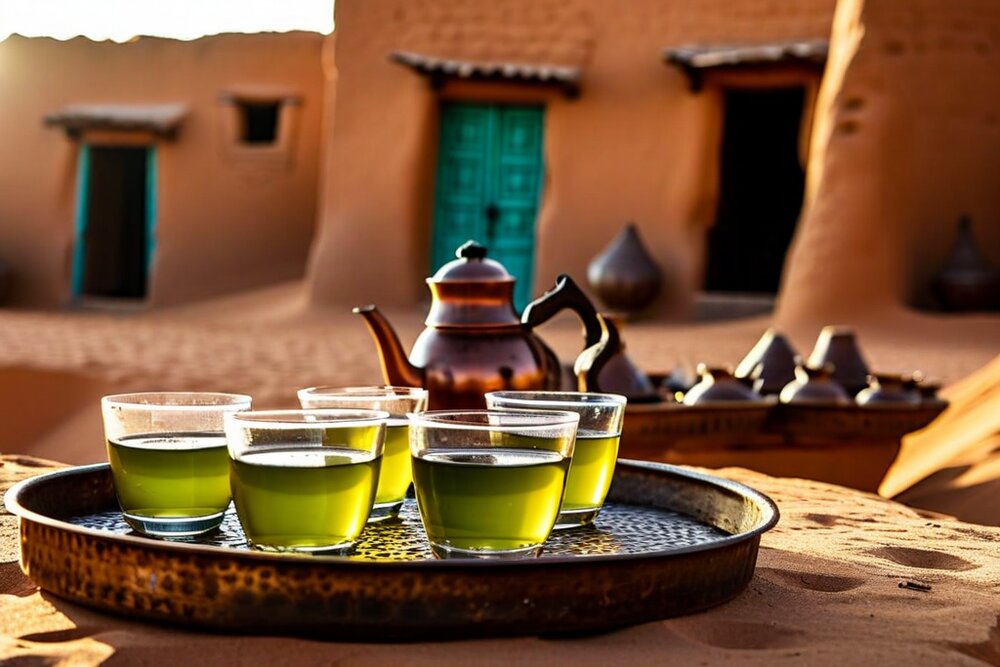
Ataya
Chinese gunpowder green tea, boiled hard with a great deal of sugar and often mint, in a small enamelled or brass pot on a charcoal brazier. It is poured back and forth between pot and glass from a height to build a thick foam head, which is the mark of a competent maker, and drunk in small glasses in three successive rounds.
The three rounds
The proverb is everywhere in the Sahel and is worth quoting: the first glass is bitter as death, the second mild as life, the third sweet as love — the same leaves rebrewed and re-sugared each time. Drinking all three takes an hour or more, and that is the point: ataya is a way of holding people in one place long enough to talk.
Who makes it
Traditionally young men, and the making is a display of skill — the height of the pour, the depth of the foam, the exact bitterness. Every gathering, every workshop, every long wait at a checkpoint or a bus station has someone making tea. It is the social infrastructure of the country.
Dabileni and bissap
Bissap (hibiscus) and dabileni, deep red, sharp and heavily sweetened, sold ice-cold in knotted plastic bags on every street. Ginger juice (gnamakoudji), fierce and cloudy. Baobab juice (bouye), made from the chalky fruit pulp, milky and slightly sour. All three are excellent and all three should be treated with the usual caution about the water they are made with.
Millet beer and dolo
In the non-Muslim south and among Dogon and Bobo communities, dolo or chapalo — a cloudy, sour, low-alcohol millet beer brewed by women and drunk communally from calabashes — is a genuine tradition with ritual as well as social functions. It is a minority practice in a country that is 95% Muslim, and it is regionally important.
Alcohol generally
Legal, produced in small quantities (the Bamako brewery makes Castel and Flag lagers) and consumed discreetly, mostly in Bamako and in the south. Public drinking is not the norm and drinking in front of people who are fasting or observant is poor form. Bars operated in Bamako before 2015; a jihadist attack on La Terrasse in March 2015 and the Radisson Blu siege in November of that year changed the nightlife permanently.
🏺 Four World Heritage Sites, All in Danger
Mali has four UNESCO World Heritage sites. All four are on the List of World Heritage in Danger — a distinction shared by very few countries, and one that summarises the last fifteen years accurately.
Timbuktu
Inscribed 1988 for the three mosque-universities and the mausoleums of the saints. Placed on the Danger List in 1990 for desertification, removed in 2005 after conservation work, and put back in 2012 when the city was occupied and fourteen of the sixteen inscribed mausoleums were destroyed. Rebuilt by Malian masons and reconsecrated in 2016. Still in danger.
Old Towns of Djenné
Inscribed 1988 for the Great Mosque, the town’s mud architecture and the archaeological site of Djenné-Djenno. On the Danger List since 2016, for insecurity, for the collapse of the tourism income that funded maintenance, and for the spread of cement construction, which traps moisture and damages the earth buildings around it.
Cliff of Bandiagara
Inscribed 1989 as a mixed site — cultural and natural — for the Dogon villages, the Tellem remains and the escarpment landscape. On the Danger List since 2016, for armed conflict, the displacement of communities and the interruption of the ritual and building traditions the inscription protects.
Tomb of Askia
Inscribed 2004 for the 1495 monument at Gao and its associated mosque complex. On the Danger List since 2012, when Gao fell to MUJAO. It survived the occupation better than Timbuktu’s shrines did, but the region has been insecure ever since.
The precedent that came out of it
The ICC conviction of Ahmad al-Faqi al-Mahdi in 2016 for destroying the Timbuktu mausoleums was the first time an international court had treated the destruction of cultural heritage as a war crime in its own right. He was sentenced to nine years and ordered to pay 2.7 million euros in reparations. Mali’s catastrophe produced a durable piece of international law.
Looting
The quieter loss. The terracotta figures of Djenné-Djenno were looted at scale from the 1970s onward for European and American collectors, destroying the archaeological context that gives them meaning. Mali and the US signed a bilateral import restriction in 1993; enforcement has been partial, and the trade in Malian antiquities continues.
🗣️ Thirteen National Languages, and French Demoted
In 2023 Mali did something no other francophone African country had done: a new constitution removed French as an official language, demoting it to a "working language", and elevated thirteen national languages to official status. It was approved by referendum in June 2023 and is one of the junta's most substantive acts.
The thirteen
Bambara, Bomu, Bozo, Dogon, Fulfulde (Peul), Hasanya Arabic, Kassonké, Malinké, Minyanka, Senufo, Songhai, Soninké and Tamasheq. In practice the change is largely declarative — the administration, the courts and secondary education still run in French — but it names something real about how the country actually speaks.
Bambara
The one that matters most. Bambara (Bamanankan) is the first language of about a third of Malians and is understood by perhaps 80% as a lingua franca; it is the language of the market, the street and popular music across the south and centre. It is close enough to Malinké and Dyula that a speaker can travel from Bamako to Bobo-Dioulasso and Abidjan and be understood.
French
Still the language of government, higher education, business and the press, and spoken with genuine fluency by perhaps a fifth of the population — a figure that reflects a literacy rate near 30% more than any lack of interest. The 2023 demotion was as much a political signal to Paris as a language policy.
Tamasheq and the Tifinagh script
The Tuareg language of the north, written in Tifinagh — a consonantal script descended from ancient Libyco-Berber and one of the world’s oldest writing systems still in use. Tifinagh appears on rock inscriptions across the Sahara and is still written by hand, traditionally taught by women.
Arabic and ajami
Arabic is the language of religion and of the manuscript tradition, and it has been written in Mali for eight hundred years. Ajami — African languages written in modified Arabic script — was used for Fulfulde, Songhai and Soninké, and a good part of the Timbuktu corpus is in it.
A few words of Bambara
I ni sogoma — good morning. I ni ce — thank you / hello (all-purpose). Aw ni ce — the plural. Awo / ayi — yes / no. Ka kene? — are you well? Greetings in Mali are long, formal and non-negotiable: you ask after the family, the work and the household before anything else, and skipping it is genuinely rude.
📅 Season and Security
To be explicit: this section describes the seasons because the information is useful for understanding the country. It is not a recommendation. MZV ČR advises against all travel to Mali, and the risk of kidnapping for ransom applies specifically to Western nationals across the whole country including the capital.
The three seasons
Cool dry, November to February: daytime 28–33 °C, nights genuinely cold in the desert, and the only comfortable period. Hot dry, March to May: 40–45 °C and above, brutal. Rainy, June to October: humid, storms, roads impassable in the south, and the river high enough for boats.
The harmattan
From November to February a dry dust-laden wind blows off the Sahara, dropping visibility to a few kilometres, turning the sky white and coating everything. It moderates the heat and it makes photography flat and hazy. Malians treat it as ordinary weather; visitors find it disorienting.
The river calendar
The Niger’s flood arrives in the middle Niger months after the rain that caused it, upstream in Guinea. The river is navigable for large boats roughly August to December, high enough for the pinasse route from Mopti to Timbuktu and Gao, and drops to shallows and sandbanks by spring. The whole traditional economy is arranged around that cycle.
What used to be worth timing
The crépissage at Djenné in April or May, when the town replasters the Great Mosque in a day. The Monday market at Djenné. The Festival sur le Niger at Ségou in February. The Festival au Désert near Timbuktu in January, which ran from 2001 and was one of the great music festivals in the world before it was suspended in 2012 and went into exile.
The security picture, region by region
The north (Timbuktu, Gao, Kidal, Ménaka) and the centre (Mopti, Ségou, Douentza, Dogon country) are conflict zones with a specific kidnapping threat. The south-west around Bamako and Kayes is safer in relative terms and is where the fuel-blockade attacks now occur. Bamako itself has seen attacks on hotels, restaurants, the gendarmerie school and the airbase.
If you go anyway
Some people do — aid workers, journalists, mining staff, diaspora Malians. The standard measures are: register with your embassy and DROZD, use a trusted local fixer, never publish your movements in advance, avoid patterns, do not travel outside Bamako by road, and understand that specialist insurance and evacuation cover for Mali are expensive and often excluded outright.
✈️ Getting There, in Theory
The airport
Bamako-Sénou (BKO), 15 km south of the city, is the only international gateway of consequence. It has been served by Air France, Turkish Airlines, Royal Air Maroc, Ethiopian, ASKY and Air Sénégal, though schedules have been volatile — several carriers have suspended and resumed the route since 2022. There are also airports at Mopti, Timbuktu, Gao and Kayes with intermittent domestic service.
From Prague
No direct route and none plausible. The realistic connections are Prague–Istanbul–Bamako with Turkish, Prague–Paris–Bamako with Air France when it is flying, or Prague–Casablanca–Bamako with Royal Air Maroc. Count on 12–18 hours and a fare in the €700–1,200 range.
Visas
Required for Czech citizens and not available on arrival for most. Mali has no embassy in Prague; the nearest missions are in Berlin and Paris. You will need a letter of invitation or a hotel booking, yellow fever vaccination proof, and time. Business and NGO travellers are generally sponsored.
Overland
Not realistic. The routes from Senegal and Mauritania in the west and Côte d’Ivoire in the south are the ones that function commercially — and they are precisely the fuel-convoy corridors JNIM has been attacking since September 2025. The Algerian and Nigerien borders are closed or lawless. The Burkinabè border crosses an active insurgency on both sides.
Inside the country
The Bamako–Dakar railway, once the great route, has been effectively out of passenger service for years. River boats stopped for tourists long ago. Road travel outside the Bamako region is the specific activity that the kidnapping and IED warnings are about. Domestic flights are the only method used by those who must move, and they are intermittent.
Health
Yellow fever vaccination is mandatory and checked. Malaria is year-round and chloroquine-resistant — prophylaxis is essential. Meningitis belt vaccination is advised in the dry season, plus typhoid, hepatitis A and B and rabies. Medical facilities outside Bamako are minimal; serious illness means air evacuation, which requires insurance that many policies exclude for Mali.
📋 Practical Realities
Money
The West African CFA franc (XOF), pegged to the euro at a fixed 655.957 to 1 — so prices convert exactly and predictably. Cash is king; cards work in a handful of Bamako hotels and almost nowhere else. Bring euros to change. Mobile money (Orange Money, Moov) is very widely used by Malians and is the practical payment system in much of the country.
Connectivity
Mobile coverage is decent in Bamako and the south and patchy to absent in the north and the conflict zones. Internet is slow and expensive. The state has restricted social media during political crises. Assume communications are monitored and that this matters for anyone doing anything the government dislikes.
Photography
Be very careful. Photographing military, police, government buildings, bridges, the airport or checkpoints will get you arrested, and in the current environment a foreigner with a camera attracts suspicion generally. Always ask before photographing people; in many communities there are strong objections and in others it is simply a matter of courtesy.
Etiquette
Greet at length — the sequence of questions about family and health is obligatory and abbreviating it is rude. Right hand only for eating and passing. Modest dress; for women, covered shoulders and knees at minimum. Ramadan is widely observed and eating in public during daylight is offensive. Elders are addressed and served first, always.
The Czech position
There is no Czech embassy in Mali. Consular affairs are handled from the Czech Embassy in Abuja, Nigeria, with honorary representation. In an emergency that means help is a long way away and slow. Register in DROZD before travelling, and leave a full itinerary with someone at home.
Legally
Homosexuality was explicitly criminalised in 2024 under a new penal code, having previously been legal though socially unaccepted. Drug penalties are severe. Photography restrictions are enforced. There is no functioning tourist police, and the judicial system under military rule offers limited recourse to anyone.
💰 What It Costs
Mali is cheap on the ground and expensive to reach and to insure. Figures are indicative for 2026 and the CFA franc is fixed to the euro, so conversions are exact: 1 EUR = 655.957 XOF ≈ 24.5 CZK. Note that the fuel blockade has pushed transport-dependent prices up sharply.
Flights
The dominant cost. €700–1,200 return from Prague with one connection, and prices spike when carriers suspend routes. Domestic flights within Mali, when running, are €100–200 a leg.
Insurance
The second dominant cost and the one people underestimate. Standard travel policies exclude countries under a “do not travel” advisory. Specialist cover including medical evacuation and, for some travellers, kidnap-and-ransom provision runs into hundreds or thousands of euros for a short trip. Going uninsured to Mali is not a saving.
Accommodation
A decent Bamako hotel with generator and security: €60–120 a night. The international-standard hotels used by expatriates and NGOs are €150–250 and are also the ones that have been attacked. Simple guesthouses elsewhere, where they still operate: €15–30.
Food and daily costs
Very cheap. A street plate of rice and sauce 500–1,000 XOF (€0.75–1.50); a restaurant meal in Bamako €8–20; a bottle of water €0.50; a glass of tea, small change. A local SIM with data is a few euros. Fuel is the exception: prices have risen dramatically and availability is the real constraint.
Getting around
Shared taxis and sotramas (green minibuses) in Bamako cost well under a euro a ride. A driver with a vehicle for the day is €40–80 plus fuel, and finding fuel is now part of the negotiation. Long-distance bus fares are low and the journeys are the risk.
A realistic day
For someone working in Bamako with a hotel, a driver and meals: €120–200 a day. For a Malian household, the same day costs a small fraction of that, and the blockade has made even that harder — which is the more important number and the one that explains the country’s politics.
🇨🇿 For Czech Readers
MZV ČR
The Czech Foreign Ministry advises against all travel to Mali — the highest category, applied to the whole country including Bamako. The specific risks named are terrorism, armed conflict and the kidnapping of foreigners for ransom. That advice has been in place for years and is not going to relax soon.
No embassy, and where help would come from
There is no Czech embassy in Mali. Mali falls under the Czech Embassy in Abuja, Nigeria, roughly 2,500 km away, with honorary consular representation on the ground. In practice this means that consular assistance would be slow and limited, which is precisely the situation in which DROZD registration stops being a formality.
Visas from Prague
Mali has no embassy in the Czech Republic. Czechs apply in Berlin or Paris, with an invitation or confirmed accommodation and proof of yellow fever vaccination. Allow weeks. This is not a destination anyone reaches on a whim, which is just as well.
Czechoslovakia and Mali
There is a real history. Modibo Keïta’s socialist Mali of the 1960s had close ties with the Eastern bloc: Czechoslovak advisers, machinery and arms went to Bamako, Malian students studied in Prague and Brno, and Czechoslovak geologists worked on Malian mineral surveys. A number of Malian professionals of that generation speak Czech, and the connection is remembered warmly on the Malian side.
Czechs in Mali now
Very few, and mostly in two categories: staff of humanitarian organisations, and soldiers — the Czech Army contributed to the EU training mission EUTM Mali and to the French-led Takuba task force before both wound down as relations with the junta collapsed. Czech participation ended with the wider European withdrawal.
Scale, for a Czech reader
Mali is 1,241,238 km² — almost sixteen times the size of Czechia. Bamako to Timbuktu is about 900 km by road, roughly Prague to Zagreb, and it is a journey no foreigner can currently make safely. The country’s median age is about 16; Czechia’s is around 43.
🎲 Things That Are True About Mali
The richest person who ever lived
Mansa Musa, ruler of the Mali Empire from about 1312, is the standard answer to that question — his fortune is unquantifiable in modern terms precisely because it was large enough to distort a national economy. His 1324 hajj put so much gold into circulation in Cairo that its value there is reported to have stayed depressed for a decade.
Salt for gold, weight for weight
The trans-Saharan trade rested on a genuine scarcity: the Sahel had gold and no salt, the Sahara had salt and no gold. At certain periods the two were exchanged at close to equal weight. Slab salt is still cut by hand at Taoudenni and hauled south by truck — and, until recently, by camel.
The banjo came from here
The ngoni, the West African plucked lute with a skin-covered body and a wooden neck, is the direct ancestor of the American banjo, carried across the Atlantic by enslaved people from this region. The line from ngoni to banjo to the blues to everything after is one of the shortest and best-documented in the history of music.
A ceremony every sixty years
The Dogon sigui marks the renewal of the world, is held once in sixty years, and takes seven years to progress through the villages of the escarpment. The last one ran from 1967 to 1973; the next falls due around 2027, in a region that has been a conflict zone for a decade.
Insulting your allies is the law
Sinankuya, joking kinship, formally obliges named clans and ethnic groups to trade elaborate ritual insults — and equally obliges them to help each other. It is invoked in national politics to defuse ethnic tension, it is on the UNESCO intangible heritage list, and it is deployed daily by people who have never heard of UNESCO.
A library moved by donkey cart
In 2012 and 2013, roughly 350,000 manuscripts — some of them seven hundred years old — were packed into metal footlockers and moved 1,000 km from Timbuktu to Bamako past two sets of hostile checkpoints, by taxi, motorbike, donkey cart and river boat. It is one of the largest cultural evacuations ever attempted and it was organised by a librarian.
🔭 What Happens Next
The blockade decides the near term
Whether JNIM can keep strangling Bamako’s fuel supply is the immediate question. If it can, the junta’s core promise — that soldiers would deliver the security civilians could not — fails visibly in the capital. If the army and the Africa Corps can secure the corridors, the junta buys years. Everything else in Malian politics is downstream of that.
No electoral off-ramp
With every political party dissolved and Goïta granted five renewable years without a vote, there is no constitutional mechanism by which the government changes. Historically, Malian governments that lose legitimacy have been removed by their own armies; there have been five successful coups since 1968, and nothing in the current arrangement makes a sixth less likely.
The demographic arithmetic
A population of 24 million growing at 3% a year, with a median age of 16, literacy near 30% and no functioning schools across large parts of the country. Mali will have roughly 45 million people by 2050. Whatever settles the current war, that cohort is the actual long-term question, and no current policy addresses it.
The regional stakes
The AES bloc has locked three Sahelian states out of ECOWAS and into a mutual-defence arrangement that has not reduced violence. The insurgency is pressing south into Benin, Togo and northern Côte d’Ivoire and Ghana. A Sahel-wide security collapse would reach the Gulf of Guinea coast, and coastal West Africa knows it.
Climate
Mali sits in the fastest-warming inhabited region on earth, warming roughly 1.5 times the global average. The rains are becoming less predictable rather than simply less abundant, the Inner Niger Delta flood is shrinking under upstream abstraction, and the herder-farmer conflicts that armed groups exploit are at bottom competition for water and pasture. Climate is not a background condition here; it is a driver.
What endures regardless
The manuscripts are safe in Bamako. The masons of Djenné still know how to build in earth. The griots still hold the Sundiata epic. The music has gone into exile and kept recording. Mali has been through the Moroccan conquest, the French conquest, drought and dictatorship, and the cultural institutions have outlasted every state that governed them. That is not optimism, but it is the historical record.
🚫 A Destination That Has Ceased to Exist
What it was
Before 2012, Mali received roughly 200,000 visitors a year and had a genuine, if small, tourism industry: Dogon trekking, Djenné on market day, the pinasse to Timbuktu, the Festival au Désert. It was a specialist destination for people who wanted culture and landscape rather than comfort, and it worked.
What ended it
The 2012 occupation, and then the steady southward spread of the insurgency. Kidnappings of Western tourists began earlier — there were abductions from Timbuktu and the Niger bend from 2009 — and after 2012 no responsible operator would go. Tourist arrivals have effectively been zero for over a decade outside business, diaspora and humanitarian travel.
Who it hurt
Guides, hoteliers, boatmen, cooks, drivers, mask carvers and the entire Dogon village economy, which had come to depend on trekking income. When that vanished overnight, thousands of young men in central Mali lost their livelihoods in a region where armed groups were recruiting and paying. It is not a coincidence and Malians point it out.
Heritage without visitors
Djenné’s mosque needs an annual replastering that costs money and labour; Timbuktu’s mausoleums need maintenance; the manuscripts need conservators. All of it was partly funded by visitors. UNESCO, the EU and private foundations have kept some of it going, and the gap between what is needed and what is funded has widened every year.
Will it come back?
Not soon, and not while the kidnapping economy makes a Western passport worth a seven-figure ransom. The realistic optimistic scenario is a partial reopening of the far south-west and Bamako, with the north and the Dogon country closed for a decade or more. Nobody serious is forecasting a return to 2010.
What to do instead
Read. The Bad-Ass Librarians of Timbuktu for the manuscripts. Ryszard Kapuściński and Bruce Chatwin have both written on the Sahel. Listen to Ali Farka Touré, Toumani Diabaté, Oumou Sangaré, Tinariwen and Songhoy Blues. Browse the digitised Timbuktu manuscripts online. And support the conservation organisations working in-country, which is the one form of engagement that currently helps.
📸 Gallery — the Best Image Set in This Project, and Three Absurdities
Mali is a pleasant surprise. Of the image files found, nine are genuinely good and materially accurate — several of them among the best in this whole remaster — and there is no sign of the misfiled Abkhazian set that has turned up under Lebanon, Lesotho, Lithuania and Luxembourg. What Mali has instead are three files named after Malian places that are photographs of Greece, East Africa and Indonesia.
Rejected: Santorini, filed as Djenné
djenne-mosque.jpg is a photograph of Oia on Santorini — whitewashed Cycladic houses cascading down a caldera cliff, windmills on the ridge, the Aegean beyond, blue hour lighting. It is filed under Mali with the name of the greatest mud-brick building in the world. There is a correctly named and genuinely excellent 05-djenne-mosque.jpg in the same folder, which makes this one both wrong and redundant.
Rejected: East African savanna, filed as Timbuktu
timbuktu.jpg shows a lone flat-topped acacia on green grassland with red earth and blue hills on the horizon at sunset — the standard Kenyan or Tanzanian savanna frame. Timbuktu sits on the edge of the Sahara: flat, sandy, treeless, with mud buildings and no hills within a very long way. Wrong ecosystem, wrong continent-quadrant, wrong everything.
Rejected: a Balinese waterfall, filed as Bamako
bamako.jpg is a tall twin waterfall dropping through dense tropical rainforest with tree ferns and lianas — it reads as Sekumpul in Bali. Bamako is a dusty Sahelian city of three million people on a wide brown river. This is the most extreme mismatch found in this project so far, and it sits alongside a perfectly good 06-bamako-city.jpg.
What these three have in common
All three are bare-name files — djenne-mosque, timbuktu, bamako — sitting beside a correctly numbered series (02- to 10-) that is accurate throughout. That is a distinct pattern from the Abkhazian misfiling: it looks like generic stock images dropped in under place names, rather than one country's photo set copied wholesale. Both patterns are worth the site owner's attention and both are logged.
Used with corrections: the recipes
mali-tiguadege-na.jpg is close — the thick orange peanut-and-tomato sauce with beef is right — but it is over-garnished with flat parsley and is missing the rice it is always served over. mali-to.jpg shows tô as a loose wet porridge with raw millet sprinkled on top; real tô is stiff enough to hold a thumb-dent and is mounded, as the cuisine photograph in this gallery correctly shows. mali-capitaine.jpg shows a small whole fish in red sauce; capitaine is Nile perch, which grows to enormous size and is served in thick steaks.
How this list was made
By systematic HTTPS probing, because the AWS connection was unavailable when this page was built — the same limitation as the Luxembourg page. Every filename pattern seen across the project was tested, including the Abkhazian set by name, which came back empty for Mali. Numbered slots 01 and 08 were not found under any name tried, so they may exist under names not guessed. Treat this list as a minimum; a proper bucket listing is still owed.
The verdict
After several countries where almost nothing was usable, Mali’s numbered set is a relief and a demonstration: 07-dogon-country, 05-djenne-mosque, 09-malian-cuisine and 02-niger-river are all both beautiful and materially correct, and the food image is the most accurate in the entire remaster. Nine of twelve usable is by a wide margin the best ratio so far.
Support This Project 🌍
This World Travel Factbook is a labor of love – free to use for all travelers. If you find it helpful, consider supporting its continued development.