

🇭🇹 Haiti at a Glance
🌍 Overview
⚠️ Travel advisory. At the time of writing, the Czech Ministry of Foreign Affairs and every major Western foreign ministry advise against all travel to Haiti. Armed groups control much of Port-au-Prince, more than a million people are displaced inside the country, and the capital's international airport has been closed to US commercial traffic since November 2024. This page is written as a guide to the country, its history and its culture — not as an invitation to go now. Check the current advisory at mzv.cz before making any plan.
Haiti occupies the western third of the island of Hispaniola, which it shares with the Dominican Republic: 27,750 km², about a third of Czechia, with roughly 11.8 million people. It is mountainous — two-thirds of the country is over 400 m — densely populated, and the poorest country in the Americas by a wide margin.
It is also one of the most historically consequential small countries on Earth. In 1804 Haiti became the second independent state in the Americas after the United States, the first free Black republic, and the only nation in history founded by a successful revolt of enslaved people. The army it defeated was Napoleon's. The colony it replaced, Saint-Domingue, had been the single most profitable European possession in the world.
What happened next matters just as much. In 1825 France sailed a fleet into Port-au-Prince harbour and demanded 150 million francs — compensation to the former slaveholders for their lost property, meaning the Haitians themselves — as the price of recognition. Haiti paid, borrowing from French banks to do it, and did not finish paying until 1947. Any account of why Haiti is poor that begins later than 1825 is not a serious account.
And it is a country of extraordinary cultural output: a painting tradition that museums collect worldwide, a religion of its own in Vodou, a language of its own in Kreyòl, a dance music (kompa) that the whole francophone Caribbean moves to, a soup that UNESCO inscribed as heritage in 2021, and a literature that has produced members of the Académie française. None of that is on hold because of the crisis.
🏷️ Ayiti, Kreyòl and the Gourde
Ayiti is a Taíno word, generally translated as "land of high mountains", and it was the indigenous name for the whole island before Columbus renamed it Hispaniola. When Jean-Jacques Dessalines declared independence on 1 January 1804 he deliberately discarded the colonial name Saint-Domingue and took the Taíno one back — a gesture of solidarity with a people who had already been destroyed, and one of the earliest acts of decolonial naming anywhere.
Two official languages
Haitian Creole (Kreyòl ayisyen) and French. Kreyòl is spoken by 100% of the population; French comfortably by perhaps five to ten per cent, and it remains the language of law, higher education and status. Kreyòl became co-official only in 1987. It is a full language with its own orthography and grammar, not "broken French," and saying so out loud will be noticed and appreciated.
A few words
Bonjou (good morning), bonswa (good afternoon/evening — the switch happens around midday), kijan ou ye? (how are you), mwen byen (I'm fine), mèsi anpil (thank you very much), souple (please), sak pase? — nap boule (what's up? — we're burning, i.e. getting by). Greeting before anything else is not optional in Haiti.
The gourde
The gourde (HTG), named after the calabash — Henri Christophe once decreed the gourd itself a unit of currency, which is one of the better monetary anecdotes anywhere. Around 130 gourdes to the US dollar, so roughly 6 gourdes to the Czech crown. Haitians frequently quote prices in "Haitian dollars," a ghost unit equal to five gourdes; ask which one is meant.
The flag
Blue over red horizontal bands with the coat of arms on white in the centre. The story: in May 1803 Dessalines took the French tricolour, tore out the white, and had the blue and red sewn together — a design whose meaning is difficult to miss. The motto on the scroll is L'Union fait la force, unity makes strength.
🗺️ Geography: Land of High Mountains
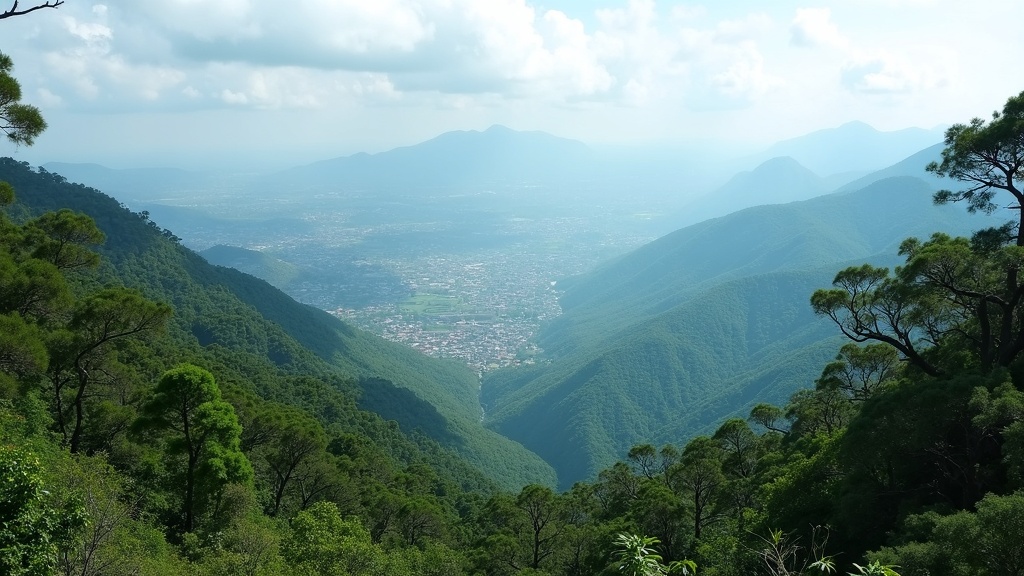
Haiti is shaped like a crab's claw, with two long peninsulas — the Northern and the much longer Southern — enclosing the Gulf of Gonâve and the large island of La Gonâve in its mouth. The name was accurate: the country is dominated by four mountain chains, and less than a fifth of it is flat.
The ranges
The Massif du Nord behind Cap-Haïtien, continuing into the Dominican Cordillera Central; the Chaîne des Matheux and Montagnes Noires in the middle; the Massif de la Selle east of Port-au-Prince, holding Pic la Selle at 2,680 m, the highest point in Haiti; and the Massif de la Hotte along the southern peninsula, with Pic Macaya at 2,347 m.
The plains
The Plaine du Nord around Cap-Haïtien, which was the sugar heartland of Saint-Domingue; the Plaine du Cul-de-Sac behind Port-au-Prince, holding the capital and the saline Étang Saumâtre; and the Artibonite valley, the country's rice bowl and its largest river system.
The fault
Haiti sits directly on the boundary between the Caribbean and North American plates. The Enriquillo–Plantain Garden fault runs the length of the southern peninsula and through the outskirts of Port-au-Prince; it ruptured on 12 January 2010 and again, further west, in August 2021. The Septentrional fault does the same in the north. This is not background geology — it is the country's central physical risk.
The border
360 km with the Dominican Republic, running through mountains and across the Massacre river at Ouanaminthe/Dajabón. It is politically fraught, periodically closed, and the site of the country's most painful modern injury — the 1937 Parsley Massacre, in which Trujillo's Dominican forces killed thousands of Haitians on the frontier.
🌳 The Deforestation Story, Corrected
You will read everywhere that Haiti has "2% forest cover" and that this is the difference between Haiti and the Dominican Republic. The figure has been repeated for forty years and is not reliable. It appears to derive from an old estimate of primary or closed-canopy forest, and it has been applied to "tree cover" as though the two were the same thing. Satellite studies since 2018 put Haiti's actual tree cover in the region of 30%, though the great majority of that is agroforestry, coffee and fruit shade and secondary growth rather than intact forest.
That correction does not make the problem go away. Haiti's primary forest is very nearly gone — a study in 2018 found that of 137 mountain blocks surveyed, forty-two had lost all their primary forest since 1988, and projected complete loss of the country's primary forest well within a generation. Charcoal remains the main cooking fuel for most households, hillside farming without terracing has stripped soil off slopes into the sea, and the flash floods that kill people in every storm are a direct consequence.
Why it happened
Not simply poverty. The colonial plantations cleared the plains; the 1825 indemnity forced Haiti to export timber and coffee to service the debt; the US occupation and the Duvaliers licensed logging; and a state too weak to enforce anything in the countryside completed it. The comparison with the Dominican Republic usually skips the fact that the DR had a state that could ban charcoal and enforce parks, and Haiti has not had one for a long time.
What survives
Pic Macaya National Park on the southern peninsula and La Visite National Park in the Massif de la Selle hold the last cloud forest and are extraordinarily biodiverse — Hispaniola is one of the Caribbean's great endemism hotspots. Both are under severe encroachment pressure and neither is really protected on the ground.
The endemics
The island holds the Hispaniolan solenodon, a venomous shrew-like insectivore from a lineage 70 million years old, and the Hispaniolan hutia — two of the very few native land mammals left in the entire Caribbean. Plus the Hispaniolan trogon, the ridgway's hawk, dozens of endemic frogs, and the world's largest population of American crocodile in the neighbouring Dominican lake.
Rebuilding
Haitian and diaspora-run reforestation projects — including large mango, moringa and vetiver programmes — are real and are working at a local scale. Haiti is also the world's largest producer of vetiver oil, a perfumery essential grown on southern hillsides, which both binds soil and pays for it.
🌡️ Climate and Hurricanes
Tropical, warm all year, with temperatures on the coast between about 23 and 33 °C and no real winter. Altitude does the work instead: Kenscoff at 1,500 m needs a sweater at night, and Furcy above it is genuinely cold by Caribbean standards. Rain comes in two seasons — April to June and August to November — with a drier stretch in between and a properly dry season from December to March.
The overriding weather fact is hurricanes. The Atlantic season runs 1 June to 30 November, peaking in August and September, and Haiti's exposure is worse than its neighbours' because the deforested slopes turn ordinary rainfall into landslides and flash floods. Hurricane Jeanne in 2004 killed around 3,000 people at Gonaïves without even making landfall in Haiti; Hurricane Matthew in 2016 devastated the southern peninsula and killed over 500. A storm that would be a nuisance in Florida is a catastrophe here.
December–March
The dry season, the coolest and clearest months, and the time of Kanaval in February. This is the window in which travel to Haiti has historically made sense, and it is when the diaspora comes home.
April–June
The first rains. Warm, green and humid, with afternoon storms. Fine for the mountains, harder on unpaved roads. Rara processions run through Lent and peak at Easter, which is one of the great things to witness in the Caribbean.
June–November
Hurricane season, with the risk concentrated August to October. Even in a quiet year, the rain is heavy and the roads suffer. If you are ever in Haiti in this window, know where the high ground is and take official warnings seriously.
Altitude
Port-au-Prince is at sea level and is hot; Pétion-Ville above it is noticeably cooler; Kenscoff at 1,500 m and Furcy above that are cool enough for pine forest and woodsmoke. The colonial and modern elites have always moved uphill in summer, and the vertical difference is the closest Haiti gets to a change of season.
🗺️ Map
Haiti lies between about 18° and 20° north, on the western third of Hispaniola, some 90 km from Cuba across the Windward Passage and 200 km from Jamaica. Port-au-Prince is at the head of the Gulf of Gonâve; Cap-Haïtien is 170 km north across the mountains; Jacmel is 40 km south of the capital as the crow flies and about three hours by road over the Massif de la Selle.
The distances are short and the times are long. Haiti's road network is limited, mountainous and in poor repair, and — at present — large sections of the national highways around Port-au-Prince are controlled or taxed by armed groups, which makes internal travel a security question before it is a logistical one.
⚓ Taíno, Tortuga and the Richest Colony on Earth
Columbus made landfall on Hispaniola in December 1492 and his flagship, the Santa María, ran aground on Christmas Day near what is now Cap-Haïtien. Its timbers were used to build La Navidad, the first European settlement in the Americas; when Columbus returned a year later every man he had left there was dead. The Taíno population of the island — estimates run from several hundred thousand to over a million — was effectively destroyed within fifty years by disease, forced labour in the mines and war.
Spain then largely abandoned the western end of the island for richer conquests on the mainland, and by the 1620s French and English buccaneers had established themselves on Île de la Tortue (Tortuga) off the north coast — the classic pirate base of the Caribbean, and a real one. France took formal possession of the western third at the Treaty of Ryswick in 1697 and named it Saint-Domingue.
What France built there in the following century is difficult to overstate. By the 1780s Saint-Domingue produced roughly 40% of the world's sugar and 60% of its coffee, plus indigo, cotton and cacao. It was worth more to France than all thirteen British colonies in North America were to Britain, and it generated something approaching a third of French foreign trade. It was, by a distance, the most profitable colony in the world.
The arithmetic
It ran on around 500,000 enslaved people against roughly 30,000 whites and 28,000 free people of colour. Working conditions were lethal enough that the enslaved population did not reproduce itself: the colony imported something like 30,000 people a year simply to hold its numbers steady. Life expectancy on the sugar estates after arrival is usually estimated at under ten years.
The free people of colour
Gens de couleur libres — many of them wealthy, some slave-owning, legally free and socially excluded by an elaborate colour code. Their exclusion from the rights the French Revolution proclaimed, and the execution of Vincent Ogé in 1791 for demanding them, was one of the sparks.
The Code Noir
France's 1685 slave code, applied here, prescribed baptism, forbade certain punishments and permitted others including branding and mutilation. Its enforcement in Saint-Domingue was largely fictional; the colony's planters made their own arrangements and the metropole did not look.
What survives
Very little physically — the plantations were burned. What survives is in the language, the food, the layout of the plains, the names, and in the fact that a large share of Haitians can trace an origin in a specific West or Central African region, because the Africa-born share of the population in 1791 was around two-thirds.
⛓️ The Haitian Revolution
The Haitian Revolution (1791–1804) is the only slave revolt in recorded history that founded a state, and one of the most consequential events of the modern era. It began on the night of 22–23 August 1791 in the northern plain, traditionally after a Vodou ceremony at Bois Caïman led by the houngan Dutty Boukman and the manbo Cécile Fatiman. Within weeks a thousand plantations were burning.
Toussaint Louverture, born enslaved on the Bréda plantation and freed before the revolt, emerged as the movement's political and military genius. He outmanoeuvred the Spanish, the British — who lost tens of thousands of men trying to take the colony — and successive French governments, secured the abolition of slavery, and by 1801 governed the whole island under a constitution that made him governor for life. Napoleon sent an expedition under his brother-in-law Leclerc; Toussaint was seized under a flag of truce in 1802, deported to France, and died of cold and neglect in the Fort de Joux in the Jura in April 1803.
His arrest destroyed the last restraint. When word spread that France intended to restore slavery — as it had already done in Guadeloupe — the war became total. Jean-Jacques Dessalines and Henri Christophe destroyed Leclerc's army at Vertières on 18 November 1803. French losses over the campaign are usually put at around 50,000 dead, most from yellow fever, and it was the worst defeat any European army suffered in the Americas.
1 January 1804
At Gonaïves, Dessalines proclaimed independence, tore the white from the tricolour, and gave the country back its Taíno name. The declaration was read in French and its most famous line is unambiguous: independence or death. Haiti was the second independent state in the Americas and the first in the world founded by formerly enslaved people.
The 1805 constitution
Extraordinary reading. It abolished slavery for ever, forbade any white person from owning land in Haiti, declared all Haitians — including the Polish and German soldiers who had defected to the revolution — to be legally "black" regardless of complexion, and offered citizenship to any person of African or Amerindian descent who reached Haitian soil. It was the most radical constitution in the world at the time.
The 1804 massacre
It has to be included. Between February and April 1804 Dessalines ordered and oversaw the killing of most of the remaining French population — several thousand people, including women and children. He exempted Poles, Germans, priests, doctors and some others. Haitian historians debate its necessity and its cost, and it is one of the reasons the young republic was treated as a pariah.
Louisiana
The revolution had a direct and enormous consequence for the United States. Having lost his army and his richest colony, Napoleon abandoned his American ambitions and sold Louisiana to Jefferson in 1803 for fifteen million dollars, doubling the size of the United States. The purchase was paid for, in a real sense, by the Haitians who beat his troops.
💰 The Debt France Charged for Freedom
This is the fact that explains more about Haiti's condition than any other, and it is not widely known outside the country.
For twenty-one years after 1804 no major power recognised Haiti. The United States, with a slaveholding South of its own, refused until 1862. Then in 1825 Charles X sent a squadron of fourteen warships to Port-au-Prince with an ordinance: France would recognise Haitian independence in exchange for 150 million gold francs, payable in five annual instalments, as indemnity to the former colonists for the property they had lost — that property being the Haitians themselves. President Boyer, facing a blockade and a possible invasion, signed.
Haiti could not pay 150 million francs. It borrowed from French banks to make the first instalment, and thereby acquired a second debt on top of the first — what historians call the "double debt". The sum was reduced to 90 million in 1838, and the borrowing was refinanced repeatedly, latterly through the National Bank of Haiti, which was itself French-owned and took a cut of every transaction. The last payment was made in 1947.
A New York Times investigation published in 2022 attempted to quantify it. Its estimate: Haiti transferred the equivalent of roughly US$560 million in then-value to France and French banks, and the compounding cost to the Haitian economy over two centuries — money that never became roads, schools, ports or irrigation — lies somewhere between US$21 billion and US$115 billion. For most of the 19th century, debt service consumed a very large share of the Haitian government's entire revenue.
Where the money went
Into French bondholders' pockets, and into an international financial architecture that treated Haiti as a source of extraction. The Banque Nationale d'Haïti, founded in 1880 to manage it, was a private French bank in all but name; its successor was later part-owned by the American bank that became Citigroup.
Why it kept mattering
Because a state that spends its revenue on debt cannot build anything. Haiti entered the 20th century with almost no public infrastructure, having spent seventy-five years paying for its own emancipation, and every subsequent problem — deforestation for export crops, dependence, weak institutions — sits on top of that.
Restitution
Aristide formally demanded repayment of the indemnity in 2003, quantifying it at US$21 billion; he was removed from office the following year, and few observers think the two facts are unconnected. In 2025 President Macron publicly acknowledged that the 1825 ordinance had placed an unjust price on Haiti's independence and announced a joint Franco-Haitian commission on the history. No repayment has been made.
What to say about it
Simply that it happened. Haitians know this history in detail and are used to foreigners not knowing it. Mentioning the indemnity in conversation marks you out as someone who has read something, and will change the conversation you get.
🪖 The US Occupation, 1915–1934
In July 1915, after the lynching of President Vilbrun Guillaume Sam by a Port-au-Prince crowd, US Marines landed and stayed for nineteen years. The stated reason was stability; the operative reasons were debt, German commercial influence, and the approaches to the newly opened Panama Canal.
The occupation rewrote the Haitian constitution — a draft prepared in Washington, reportedly with the involvement of the then Assistant Secretary of the Navy, Franklin Roosevelt — to permit foreign ownership of land, which the 1805 constitution had forbidden. It took control of the customs revenue, moved the gold reserve of the Banque Nationale to New York, dissolved the legislature at gunpoint when it refused to ratify, and revived the corvée, a colonial-era forced-labour system, to build roads.
The corvée provoked the Caco rebellion under Charlemagne Péralte, who was betrayed and shot by a Marine officer in 1919. The Marines photographed his body tied to a door and circulated the picture to demonstrate that he was dead; the image reads unmistakably as a crucifixion, and it became — and remains — one of the central icons of Haitian nationalism. Estimates of Haitian deaths during the occupation run into the thousands and possibly well beyond.
What it left
Roads, a centralised army — the Garde d'Haïti, which became the instrument of every subsequent coup — a hardened racial hierarchy, and a habit of external supervision. It also left a fierce cultural reaction: the indigéniste movement of the 1920s and 1930s, which turned Haitian writers and painters towards Vodou, Kreyòl and the peasantry, and which is the root of modern Haitian art.
The gold
The removal of Haiti's gold reserve to New York in December 1914, by Marines, ahead of the occupation proper, is documented and is not a conspiracy theory. It is a good example of the kind of episode that Haitians cite and outsiders have generally never heard of.
Afterwards
The Marines left in 1934 under Roosevelt's Good Neighbor policy; American financial control of Haitian customs continued until 1947 — the same year the French debt was finally cleared. Haiti therefore regained genuine fiscal sovereignty only after the Second World War.
The 1937 massacre
In October 1937 the Dominican dictator Rafael Trujillo ordered the killing of Haitians living in the Dominican borderlands. Somewhere between several thousand and 20,000 people were murdered, largely with machetes, in what is called the Parsley Massacre after the shibboleth used to identify Kreyòl speakers. It is the deepest wound in the relationship between the two countries.
🕶️ The Duvaliers
François Duvalier — "Papa Doc" — was a country doctor and an indigéniste ethnologist who had written seriously about Vodou, and who was elected president in 1957 as a champion of the black majority against the mulatto elite. He then built one of the most complete personal dictatorships of the twentieth century.
His instrument was the Tontons Macoutes — formally the Volontaires de la Sécurité Nationale, in practice a militia in denim and dark glasses that answered only to him, was paid by extortion, and operated entirely outside the law. Duvalier deliberately cultivated the imagery of Vodou around himself, dressing in the black and purple of the death spirit Bawon Samdi. Estimates of those killed under the two Duvaliers range from 30,000 to 60,000. Tens of thousands more fled; the Haitian professional class in Montreal, New York and Paris largely dates from these years.
He declared himself president for life in 1964, and on his death in 1971 was succeeded by his 19-year-old son Jean-Claude "Baby Doc" Duvalier, who ruled for fifteen further years while the country's economy was hollowed out and the family's fortune moved abroad. Popular uprisings and the withdrawal of American support forced him out in February 1986; he flew to France on a US Air Force plane. He returned to Haiti unexpectedly in 2011, was charged, and died in 2014 with the case unresolved.
Dechoukaj
The uprooting: the wave of popular reprisals against Macoutes and Duvalierists that followed 1986. It is the Kreyòl word for pulling a tree out by the roots, and it entered the political vocabulary permanently.
1987
The constitution written after Duvalier is a genuinely liberal document — it made Kreyòl co-official, recognised Vodou's place, decentralised power and barred Duvalierists from office for ten years. It has been suspended, amended and ignored repeatedly since, and it remains the reference point for every constitutional argument in Haiti.
The boat people
Large-scale maritime migration to Florida began under Baby Doc and has never stopped. US policy — interdiction at sea, detention at Guantánamo, and a persistent legal distinction between Cuban and Haitian arrivals — is a long and unedifying story that Haitians follow closely.
Aristide
Jean-Bertrand Aristide, a liberation-theology priest from the Port-au-Prince slums, won the country's first genuinely free election in December 1990 with 67% of the vote. He was overthrown by the army eight months later, restored by a US intervention in 1994, re-elected in 2000, and removed again in February 2004 — flown out on an American aircraft in circumstances he describes as a kidnapping and Washington describes as a resignation.
🏚️ 2010, 2021 and Now
At 16:53 on 12 January 2010 a magnitude 7.0 earthquake struck 25 km from Port-au-Prince on the Enriquillo fault. The National Palace, the cathedral, the parliament, the tax office, the UN headquarters and a very large share of the capital's housing came down. Death toll estimates range from about 100,000 to the Haitian government's figure of 316,000; most independent researchers settle somewhere between 100,000 and 160,000, and the honest answer is that nobody knows. Around 1.5 million people were displaced.
The international response was enormous — some US$13 billion pledged — and is widely regarded as a failure. A small fraction went through Haitian institutions; the Interim Haiti Recovery Commission was co-chaired by a foreigner; and audits of some of the largest recipients found remarkably little permanent housing built. Worse: in October 2010 cholera, absent from Haiti for a century, was introduced by UN peacekeepers from Nepal through a leaking sanitation system into the Artibonite river. It killed around 10,000 people and infected 800,000. The UN denied responsibility for six years before acknowledging a role in 2016; compensation has never been paid.
Since then: President Jovenel Moïse was assassinated in his bedroom on 7 July 2021 by a commando composed largely of Colombian former soldiers, in a plot still not fully explained. Six weeks later a magnitude 7.2 earthquake in the southern peninsula killed more than 2,200 people. And from 2022 the armed groups that had long existed in Port-au-Prince consolidated, coordinated, and took the city.
Where it stands
Armed groups, coordinated since 2024 in the Viv Ansanm coalition, control most of Port-au-Prince and the routes out of it. A Transitional Presidential Council was installed in April 2024 after the prime minister was blocked from returning to the country. A Kenyan-led Multinational Security Support mission deployed from June 2024, under-resourced and with limited effect, and the Security Council authorised a larger successor force in 2025.
The human figures
More than a million people are internally displaced — the highest number in Haiti's history, exceeding even 2010. Around half the population faces acute food insecurity. Most schools and hospitals in the capital have closed or relocated. These are UN and IPC figures, not rhetoric.
No elected officials
Haiti has held no elections since 2016. The last ten senators' terms expired in January 2023, since when the country has had no sitting elected official at any level. Restoring an electoral process is the stated purpose of the transition and it has not yet happened.
What this page is for
Not to advise a trip. It is to say what the country is, what it did, what it made, and what has been done to it — because Haiti is routinely reduced to its worst week, and the country that beat Napoleon and invented kompa deserves better than that.
🕯️ Vodou
Vodou is a religion. It has a theology, a priesthood, a liturgy, a moral code and a two-hundred-year documented history, and it is practised by a large share of Haitians alongside Catholicism without either party finding this contradictory. The old formulation — Haiti is 70% Catholic, 30% Protestant and 100% Vodou — is a joke that carries a good deal of truth.
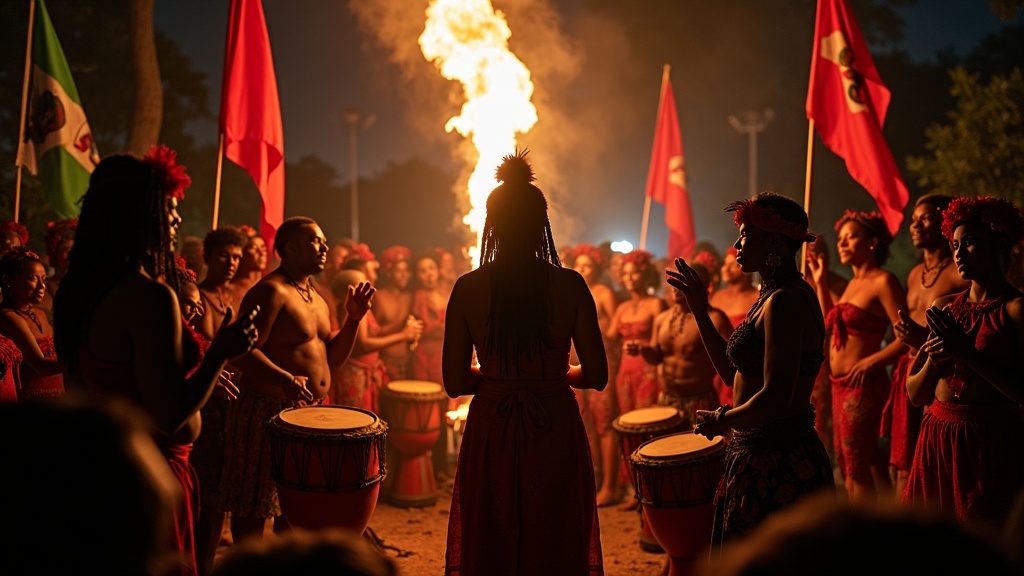
The system: a single distant creator, Bondye (from bon dieu), who is not petitioned directly, and a large family of lwa — spirits with names, personalities, colours, foods, songs and days — who are. The lwa are served by a houngan (male priest) or manbo (female priest) in a temple called an ounfò, through drumming, song, dance, offerings and possession, in which a lwa "mounts" a devotee and speaks through them. The theology is African — Fon, Yoruba and Kongo in the main — with a Catholic overlay adopted under a régime that banned everything else.
Some of the lwa
Papa Legba, who opens the gate and is saluted first at every ceremony; Ezili Freda, love and luxury and grief; Ezili Dantò, the fierce single mother with the scarred cheek, patron of the revolution; Ogou, iron and war and politics; Danbala, the white serpent; and the Gede, the raucous, obscene, funny spirits of death led by Bawon Samdi.
What it is not
It is not "voodoo" as Hollywood built it. There are no pin-stuck dolls in Haitian practice — that image comes from European folk magic by way of New Orleans fiction. Zonbi exist in Haitian belief and folklore, and the anthropology around them is genuinely interesting, but the shuffling-corpse film genre is an American invention with racist roots in the occupation years.
The revolution
The rising of August 1791 is traditionally held to have been launched at a Vodou ceremony at Bois Caïman, which is why the religion is inseparable from Haitian nationalism — and why the slander that Haitians "made a pact with the devil," repeated by an American television preacher after the 2010 earthquake, causes such fury here. It is a nineteenth-century calumny with a very long tail.
Status
Vodou was persecuted by the Church and the state in periodic "anti-superstition" campaigns, most severely in 1941, when temples were burned and sacred objects destroyed. It was granted official recognition as a religion in 2003, and houngans and manbos can now legally register marriages. The big pilgrimages — Souvenance at Easter, Saut-d'Eau in July, Plaine-du-Nord in the same month — draw tens of thousands.
🎨 Haitian Art
Haiti's painting is one of the genuinely distinctive national traditions of the twentieth century, and it is collected by museums worldwide. It has its origin in the indigéniste reaction to the American occupation, and its institutional beginning in the Centre d'Art, founded in Port-au-Prince in 1944 by the American watercolourist DeWitt Peters, which set out to find and supply painters rather than to teach them a European manner.
What it found included Hector Hyppolite, a Vodou priest and house-painter working with chicken feathers and enamel, whose work André Breton bought and took to Paris; Philomé Obin in Cap-Haïtien, painting the north's history with the precision of a draughtsman; Préfète Duffaut, whose imaginary vertical cities climb impossible mountains; Rigaud Benoit, Castera Bazile, Wilson Bigaud. The label "naive" was attached by the market and most Haitian critics reject it.
Sainte-Trinité
The Episcopal cathedral in Port-au-Prince held a cycle of murals painted in 1950–51 by Obin, Bigaud, Benoit and others, placing the Gospel in Haiti with Haitian faces — one of the great works of twentieth-century religious art anywhere. The building collapsed in the 2010 earthquake. Three panels were salvaged and conserved with help from the Smithsonian; the rest is gone.
Croix-des-Bouquets
The metal sculpture village outside Port-au-Prince, where the tradition begun by the blacksmith Georges Liautaud in the 1950s turns flattened oil drums into cut-metal figures, lwa, trees of life and mirrors. Whole streets of workshops, hammering. It is Haiti's most accessible living art form and the pieces travel well.
Drapo Vodou
Sequinned and beaded ritual flags, worked in thousands of sequins on satin, depicting the vèvè and image of a particular lwa. Made to be carried at the opening of a ceremony, and now also made for sale. The best of them are extraordinary objects and command serious prices abroad.
Where to see it
Outside Haiti, honestly: the Waterloo Center for the Arts in Iowa holds one of the largest collections in the world, the Milwaukee Art Museum and the Figge have major holdings, and the Fowler at UCLA has the flags. In Haiti, the Musée d'Art Haïtien du Collège Saint-Pierre and the Nader collection, security permitting.
🎺 Kompa, Rara and Roots
Kompa (konpa dirèk) is Haiti's national music and one of the Caribbean's major genres. The saxophonist Nemours Jean-Baptiste created it in 1955 out of méringue with a slowed, insistent beat built for close dancing, and it went from Port-au-Prince to Guadeloupe, Martinique, Dominica, Cape Verde and francophone Africa. Zouk, the Antillean genre that conquered the 1980s, is kompa's direct descendant, which the bands from Guadeloupe generally acknowledge and Haitians never let anyone forget.
Rara
The other Haitian sound: street processions through Lent, peaking over Easter, in which bands walk kilometres playing vaksin — single-note bamboo or metal trumpets, each playing one pitch in interlocking hocket — with drums, whistles and rattles, and everyone follows. It is simultaneously carnival, religion and politics, and it is unlike anything else in the world. If you are in Haiti at Easter, follow a rara.
Mizik rasin
Roots music: the movement from the late 1970s that put Vodou drumming and ceremonial song into rock and funk arrangements. Boukman Eksperyans, whose "Kè-m Pa Sote" became an anti-Duvalierist anthem at Kanaval in 1990, and RAM, who play at the Hotel Oloffson in Port-au-Prince on Thursday nights, are the names to start with.
Twoubadou and the rest
Twoubadou is the acoustic guitar-and-accordion trio tradition, related to Cuban son and played in restaurants and yards. Beyond it: rap kreyòl, which is enormous and political; the big kompa bands (Tabou Combo, T-Vice, Carimi); and a gospel industry that is now one of the largest employers of musicians in the country.
The exports
Wyclef Jean, born in Croix-des-Bouquets, took the Fugees to global sales in the 1990s and has been a controversial figure in Haitian politics since. Jean-Michel Basquiat's father was Haitian and the influence is legible in the work. The New York, Miami and Montreal Haitian scenes are large and self-sustaining.
🎭 Kanaval and Fèt Gede
Kanaval runs on the three days before Ash Wednesday and is the biggest event in the Haitian year: chan pwen — songs with a barbed political point — new tracks released by every major band, enormous slow-moving floats, and days of walking crowds. Historically the government funded it, chose the theme and used it, and every band used it back; a Kanaval song has brought down more than one political career.
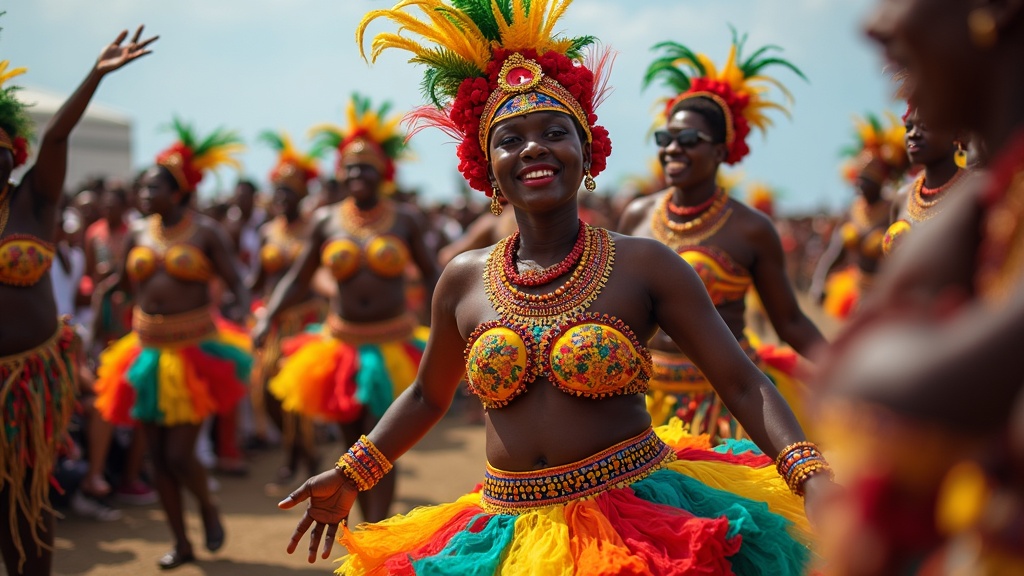
Jacmel
The best Kanaval in Haiti and one of the best in the Caribbean, held the Sunday before the Port-au-Prince days. Jacmel's papier-mâché tradition produces masks and full-body animal figures of genuine artistic seriousness, and the workshops are open to visitors year-round in normal times.
Rara
Kanaval ends on Mardi Gras and rara begins: the Lenten processions, which are half religious observance and half moving party, and which run every weekend through to Easter. The two together mean Haiti is effectively in the street from January to April.
Fèt Gede
1–2 November, the Vodou festival of the dead, and the most visually extraordinary thing in the Haitian calendar. Devotees dressed in the purple and black of Bawon Samdi and the Gede spirits fill the cemeteries — above all the Grand Cimetière in Port-au-Prince — drinking clairin infused with scotch bonnet, dancing the banda, and behaving with the deliberate obscenity the Gede require. It is not a costume party; it is worship.
The other dates
1 January is Independence Day and soup joumou; 2 January is Ancestors' Day; 18 May is Flag Day; 18 November commemorates Vertières. Saut-d'Eau in mid-July brings tens of thousands to bathe in the waterfall for Our Lady of Mount Carmel, who is also Ezili Dantò, at the same time and in the same place.
📖 Literature
For a country of twelve million with a literacy rate around 60%, Haiti's literary output is disproportionate to the point of absurdity. It writes in French, in Kreyòl and increasingly in English, and it is one of the central literatures of the Caribbean.
Jacques Roumain
Gouverneurs de la rosée (1944, Masters of the Dew) is the founding novel of modern Haitian fiction — a peasant returns from Cuba to a drought-stricken village and finds water — and it has been translated into more than a dozen languages. Roumain also founded the Bureau of Ethnology and the Haitian Communist Party, and died at 37.
Marie Vieux-Chauvet
Amour, colère et folie (1968), a trilogy about the terror of the Duvalier years so dangerous that her family bought and destroyed the print run to protect her. She went into exile and died in New York. It was properly republished only decades later and is now recognised as one of the great Caribbean novels.
Frankétienne
Poet, painter, playwright and novelist, inventor of "spiralism," and author of Dézafi (1975), the first novel written in Haitian Creole — a book about zombification that is also about dictatorship. An enormous figure at home, difficult to translate, and largely unknown abroad. He died in 2025.
Dany Laferrière and Edwidge Danticat
Laferrière, who left for Montreal in 1976 and was elected to the Académie française in 2013 — the first Haitian and first Québécois immigrant to hold a seat. Danticat, writing in English from Brooklyn: Breath, Eyes, Memory, The Farming of Bones on the 1937 massacre, and Brother, I'm Dying. Both are the obvious entry points for a European reader.
One more name that is not fiction: Michel-Rolph Trouillot, the Haitian anthropologist whose Silencing the Past (1995) uses the Haitian Revolution to argue that some events are "unthinkable" to the societies that record them and are therefore erased from history as it is written. It is one of the most influential works of historical theory of the last fifty years and it is, at bottom, about why nobody taught you any of this.
🗣️ Kreyòl and the Tenth Department
Haitian Creole is spoken by every Haitian and is the mother tongue of essentially all of them. It grew in the 18th century from French vocabulary on a grammatical frame drawn largely from Gbe and other West African languages, and it is not a dialect, a patois or a simplified anything — it has its own consistent grammar, a standardised orthography adopted in 1979, a Bible, a growing literature and, since 2014, an Akademi Kreyòl Ayisyen.
The politics of it are sharp. For most of Haiti's history the state operated in French, a language most citizens do not speak, which meant that courts, laws, schools and the civil service were structurally inaccessible to the majority. Kreyòl became co-official only in 1987, and instruction in Kreyòl in primary schools is still contested. It is, in a small way, the country's oldest inequality expressed in grammar.
The Tenth Department
Haiti has nine administrative departments, and Haitians call the diaspora the tenth. Somewhere between two and four million people of Haitian origin live abroad — above all in the Dominican Republic, the United States (Florida, New York, Boston), Canada (Montreal), France, Chile and the Bahamas. It is a very large fraction of the nation.
Remittances
The tenth department sends home somewhere in the region of US$3.8–4 billion a year — roughly a fifth of Haiti's GDP, and by a wide margin the country's largest source of foreign exchange, exceeding all exports and all aid combined. Haiti runs on money wired from Miami and Montreal, and that is the plainest fact about its economy.
The Dominican question
Around half a million to a million people of Haitian descent live in the DR, many in sugar bateyes. A 2013 Dominican constitutional court ruling retroactively stripped citizenship from those born to undocumented parents back to 1929, rendering tens of thousands stateless; international pressure produced a partial and incomplete remedy. Deportations are constant. It is the single most difficult bilateral relationship in the Caribbean.
Culture in exile
Much of Haitian intellectual and artistic life has been produced abroad since the Duvalier years — the Montreal and Brooklyn scenes especially — and Haitians treat this as an extension of the country rather than a loss from it. Kreyòl is an official language of instruction in some New York City schools and a working language of the Miami-Dade court system.
🍽️ Food
Haitian cooking is French technique on African and Taíno ingredients with a Caribbean climate, and it is distinctly hotter, more aromatic and more heavily marinated than anything else in the region. Two things define it: epis, the green seasoning base of parsley, thyme, scallion, garlic, pepper and citrus that goes into everything and lives in a jar in every fridge, and pikliz, the ferociously hot pickled slaw that goes on top of it.
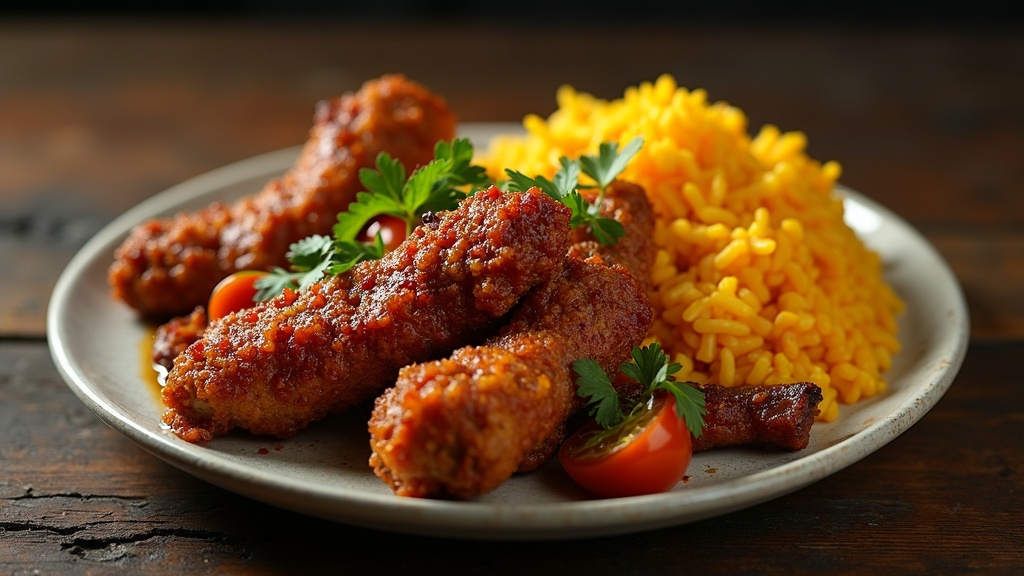
Griot
The national dish: pork shoulder marinated overnight in epis, sour orange and lime, braised until tender in its own marinade, then fried until the outside is dark and crisp. Served with pikliz and fried plantain. It is one of the best things to eat in the Caribbean and there is no European equivalent.
Diri ak pwa
Rice and beans — but done in several distinct ways: diri kole ak pwa (rice cooked together with red beans), diri ak sòs pwa (white rice with a bean purée poured over), and diri djon djon, black rice cooked in the liquor of a small black mushroom found only in the north of Haiti, which turns the grain grey-black and is the country's most distinctive dish.
Legim and tasso
Legim is a long-cooked vegetable stew — aubergine, chayote, cabbage, spinach, carrot — mashed down with meat or crab into something dense and dark. Tasso is dried and fried goat or beef, chewy and intensely savoury, sold from roadside braziers everywhere.
Snacks and the sea
Pate kòde (flaky pastry turnovers with herring or chicken) and marinad or akra (malanga fritters) from every street corner; lambi (conch) in creole sauce on the coast; fritay, the general term for the whole fried assortment; and AK-100 or akasan, a thick sweet corn drink taken for breakfast.
🍲 Soup Joumou
This is not just a soup. Under the colony, a rich pumpkin soup was a dish of the French planters, and the enslaved were forbidden to eat it. On 1 January 1804, the day Haiti declared independence, Haitians ate it — and have eaten it on 1 January every year since. It is served all morning, house to house, and refusing a bowl is not really an option.
In December 2021 UNESCO inscribed joumou soup on the Representative List of the Intangible Cultural Heritage of Humanity — Haiti's first inscription of any kind. The squash it uses is a specific one, the giraumon, a turban-shaped Caribbean pumpkin; ordinary butternut is the standard substitute abroad and works well.
Soup Joumou (Haitian independence soup)
Serves 8 · 30 minutes' work · about 2 hours
Ingredients: 1 kg beef shin or stewing beef, cubed; juice of 2 limes plus 1 sour orange (or 1 orange and extra lime) for washing the meat; 4 tbsp epis (blend parsley, thyme, scallion, garlic, green pepper, a little oil and lime juice); 1 kg giraumon or butternut squash, peeled and cubed; 2 potatoes; 2 carrots; 1 turnip; 1 celery stalk; 1 onion; 100 g rigatoni or vermicelli; 2 whole cloves; 1 whole Scotch bonnet; 2 l beef stock or water; 2 tbsp butter; salt, pepper.
Method: Wash the beef with the lime and sour orange juice and water, drain, then marinate it in the epis for at least an hour and ideally overnight. Brown the meat in a large pot, then add the stock, cloves, onion and celery and simmer for about an hour until the beef is nearly tender. In a separate pan boil the squash until it collapses, then blend it with a ladle of the cooking liquid into a smooth purée and stir it into the pot — this is what makes the soup orange and thick. Add the potato, carrot and turnip and simmer twenty minutes. Add the pasta and cook until done. Drop in the whole Scotch bonnet for the last ten minutes and fish it out before serving — the aroma is wanted, the heat is not. Finish with the butter, check the salt, and serve with bread.
💡 Do not burst the Scotch bonnet. Haitian cooks put it in whole for perfume; the heat in a Haitian meal comes from the pikliz on the side, where the eater controls it.
🌶️ Griot and Pikliz
If soup joumou is the dish of the nation's birthday, griot is the dish of every other occasion, and it is never served without pikliz. Making the two together is the most useful thing a foreign cook can learn from Haiti.
Griot ak Pikliz
Serves 4–6 · 20 minutes' work · overnight marinade, 1½ hours' cooking
Ingredients: Griot: 1.2 kg pork shoulder in 4 cm cubes; juice of 3 limes and 2 sour oranges (or oranges plus extra lime) for washing; 4 tbsp epis; 1 onion sliced; 4 cloves garlic; 1 tsp thyme; 1 whole Scotch bonnet; 1 tbsp salt; oil for frying. Pikliz: half a white cabbage, shredded fine; 2 carrots, julienned; 1 onion, sliced thin; 6 Scotch bonnet peppers, sliced; 6 cloves; 1 tsp salt; 1 tsp black peppercorns; about 500 ml white vinegar; juice of 1 lime.
Method: Pikliz first, at least a day ahead: pack the cabbage, carrot, onion, peppers, cloves, peppercorns and salt tightly into a jar, pour over the vinegar and lime juice to cover, seal, and leave at room temperature for 24 hours, then refrigerate. It keeps for months and improves for weeks. Griot: wash the pork with the citrus juice and water and drain well. Marinate overnight with the epis, onion, garlic, thyme, salt and the whole pepper. Tip everything into a heavy pot with a splash of water, cover, and braise gently for about an hour until the pork is tender and the liquid has almost gone. Lift out the meat and let it dry a little. Then fry it in hot oil, in batches, until the outside is deep brown and crisp — this is the step people skip and it is the whole point. Serve with pikliz, fried plantain and rice.
💡 Braise, then fry. Meat that goes straight into the pan is tough; meat that is only braised is not griot. And make more pikliz than you think you need, because everything else you cook for the next month will want some.
🥃 Barbancourt, Clairin and Prestige
Haiti makes rum in two entirely different ways and both are internationally significant, which is not something you can say of many countries.
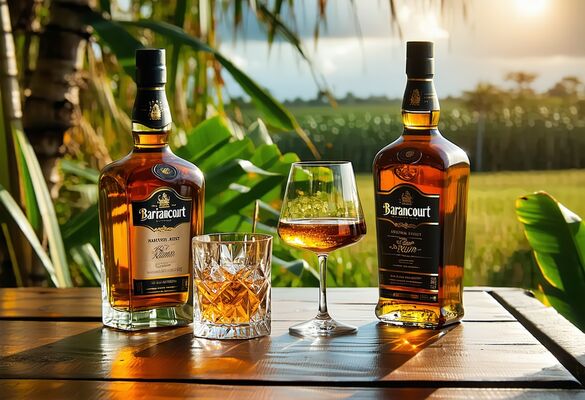
Barbancourt
Founded by Dupré Barbancourt, a Frenchman from the Charente, and run by the same family for five generations. The cane-juice base and the pot-still double distillation make it closer in method to an armagnac house than to a Caribbean molasses distillery, and the 15-year Réserve du Domaine is regularly rated among the finest aged rums in the world. It is also, at home, absurdly cheap.
Clairin
The other rum: raw, unaged white spirit distilled from fresh cane juice or syrup in hundreds of small rural distilleries, fermented with wild yeast and no temperature control, and drunk locally as the everyday spirit — and used in Vodou, poured for the lwa. Since the Italian bottler Velier began exporting single-distillery Clairin Sajous, Vaval, Casimir and others around 2014, it has become one of the most sought-after categories in the international spirits world.
Prestige
The national beer, brewed in Port-au-Prince since 1976 and now part of Heineken. It has won gold at the World Beer Cup — twice — which for a small brewery in a country with an unreliable power supply is a real achievement, and Haitians will tell you about it. Served very cold, and the answer to the climate.
Kremas and the rest
Kremas (or cremas) is the Christmas drink: rum, sweetened condensed milk, coconut cream, lime zest, vanilla, cinnamon and star anise, thick and lethal, made in every household to a jealously defended recipe. Beyond it: Haitian coffee, once the world's largest export and now a small high-quality revival; fresh cane juice; and jus of soursop, cherry and tamarind.
🌟 Haitians Worth Knowing
Toussaint Louverture (c. 1743–1803)
Born enslaved, freed before the revolt, and the political and military intelligence that turned a rising into a revolution. He beat the Spanish, the British and two French governments, abolished slavery in the colony and governed it under his own constitution. Seized under a flag of truce and left to die of cold in a fortress in the Jura. Wordsworth wrote a sonnet for him; Napoleon never recovered from him.
Jean-Jacques Dessalines (1758–1806)
The general who finished the war Toussaint began, destroyed Napoleon's expedition at Vertières, and declared independence on 1 January 1804. He tore the white from the French flag, gave the country back its Taíno name, and wrote the most radical constitution on Earth. He also ordered the 1804 massacre. Haitians hold both facts and argue about the balance.
Henri Christophe (1767–1820)
King Henry I of northern Haiti, builder of the Citadelle and Sans-Souci, creator of a Haitian nobility with invented titles, and a ruler who imposed a labour regime almost as harsh as the one he had fought. Paralysed by a stroke and facing revolt, he shot himself in 1820 — with a silver bullet, by tradition. Aimé Césaire wrote a play about him and it is very good.
Charlemagne Péralte (1885–1919)
Leader of the Caco resistance to the American occupation, betrayed and shot by a US Marine officer who had blackened his face to infiltrate the camp. The Marines photographed his body tied upright to a door as proof of death; the picture reads as a crucifixion and became the central image of Haitian anti-imperialism. He is on the currency.
Dany Laferrière (b. 1953)
Novelist, exiled to Montreal in 1976 after a journalist colleague was murdered by the Duvalier regime, and elected to the Académie française in 2013 — the first Haitian and the first Québécois immigrant ever to occupy one of the forty chairs. L'Énigme du retour and Pays sans chapeau are the places to start.
Edwidge Danticat (b. 1969)
Born in Port-au-Prince, raised in Brooklyn from twelve, and the writer through whom most English-language readers meet Haiti. Breath, Eyes, Memory, The Farming of Bones on the 1937 Parsley Massacre, and the memoir Brother, I'm Dying about her uncle's death in US immigration detention. A MacArthur fellow and one of the best living writers in English.
🏰 The Citadelle and Sans-Souci
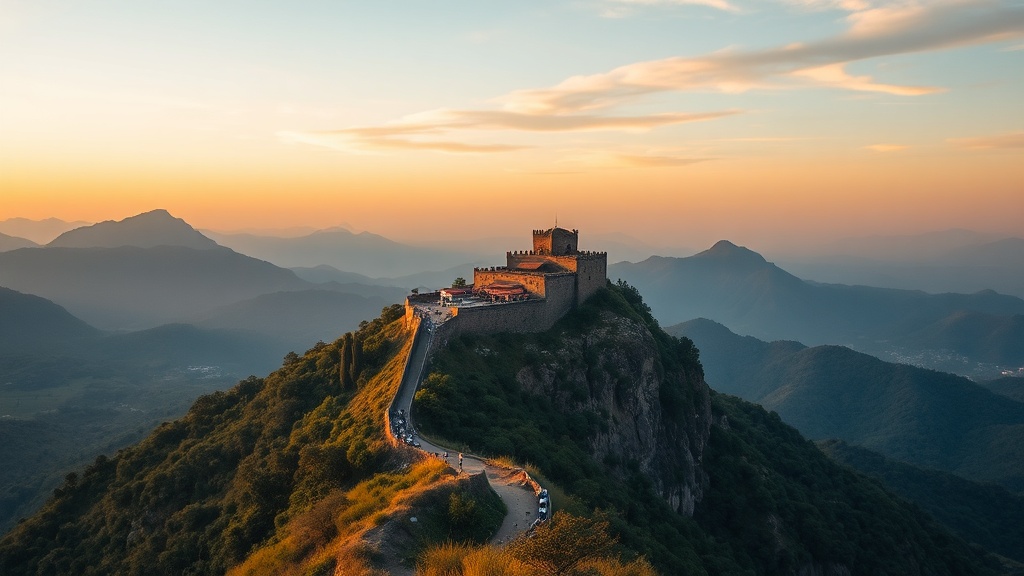
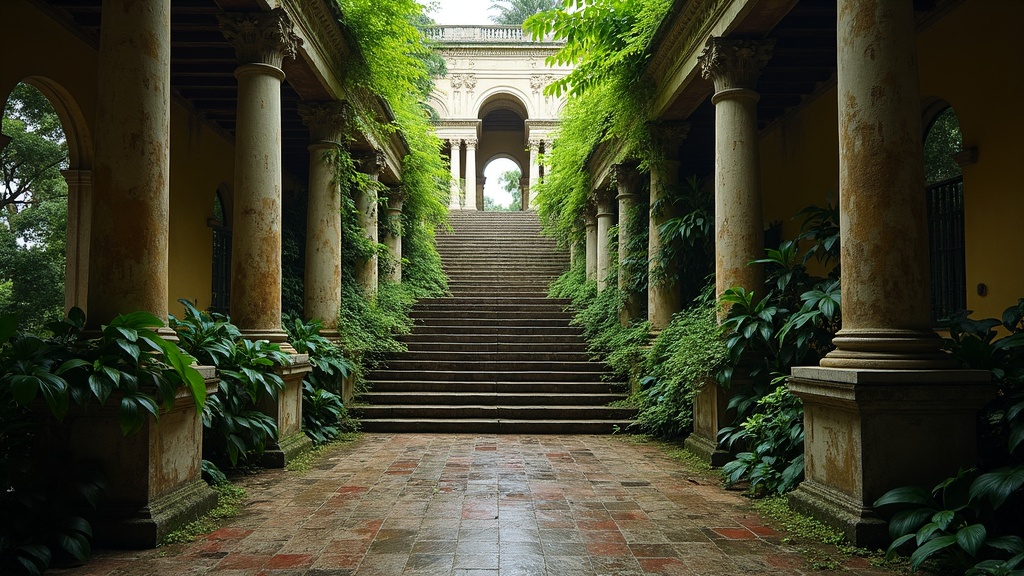
Haiti's only UNESCO World Heritage Site — the National History Park: Citadelle, Sans-Souci, Ramiers, inscribed in 1982 — sits in the mountains behind Cap-Haïtien and is one of the most remarkable historical sites in the Americas.
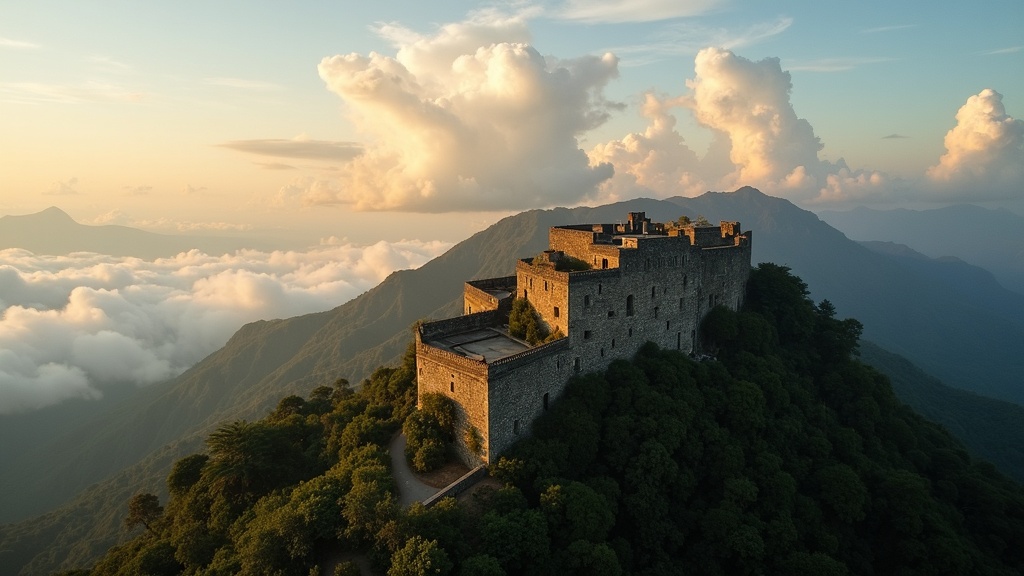
The purpose was explicit. Haiti had beaten Napoleon and expected him back, and Christophe's strategy was to abandon the coast, burn the plains and hold the mountains. The Citadelle mounts around a hundred and sixty-five cannon, many of them captured French, British and Spanish pieces hauled up a mountain by hand, and stores of cannonballs are still stacked in pyramids in its courtyards. It was never attacked.
Getting up
From Milot, about 20 km from Cap-Haïtien: a steep 7 km climb by foot, on horseback or by 4×4 to the last stretch. The walk takes about ninety minutes and is worth doing. Guides and horse handlers work at the bottom and negotiating politely is expected.
Ramiers
The third element of the inscription: a set of four smaller fortified redoubts on the plateau behind the Citadelle, with the ruins of Christophe's mountain residence. Almost nobody goes, and it is a short walk from the fortress.
The cost
Christophe's building programme was carried out under a compulsory labour regime — the corvée — and thousands are said to have died in the construction. Haitian historians do not hide this. The Citadelle is simultaneously the country's proudest monument and a monument to the difficulty of building a free state with the tools of the one you destroyed.
Condition
The site survived the 2010 earthquake with damage but standing, and has had periodic restoration support. Visitor numbers, never large, have collapsed with the security situation. It is on no danger list, and it remains — when the country allows — one of the great things to see in the western hemisphere.
⚓ Cap-Haïtien and the North
Cap-Haïtien — Okap — is Haiti's second city, about 270,000 people on a bay under a mountain, and it was the capital of Saint-Domingue and then of Christophe's kingdom. In the 18th century it was called the Paris of the Antilles and was, by some distance, the richest and most sophisticated city in the Caribbean.
Its street grid and a good deal of its 18th- and 19th-century fabric survive: two-storey merchant houses with arcaded ground floors, iron balconies, tiled roofs and internal courtyards, laid out on the French colonial plan and rebuilt after the fire of 1802 and the 1842 earthquake. It is genuinely handsome, badly under-maintained, and on Haiti's UNESCO tentative list. It has also been, since the closure of Port-au-Prince's airport to US carriers in November 2024, the country's principal functioning international gateway.
Around the city
The cathedral on the Place d'Armes; the waterfront boulevard; the fort of Picolet guarding the bay entrance; and, at the eastern edge, the beach suburbs of Cormier and Labadie village. Milot and the Citadelle are 40 minutes inland.
Labadee
On the peninsula west of the city is Labadee, a fenced private beach resort leased by Royal Caribbean, where cruise ships have called since 1986. Passengers rarely leave the fence and for many years the destination was advertised simply as "Hispaniola," which a number of Haitians found insulting. It is genuinely beautiful, it employs local people, and almost none of the money reaches the country beyond a per-passenger fee. Cruise calls were suspended as the security situation worsened.
Bord de Mer de Limonade
East of Cap-Haïtien, the coast where the Santa María is believed to have grounded on Christmas Day 1492 and where La Navidad, the first European settlement in the Americas, was built from her timbers. There is a monument and very little else, and the exact site is still argued over by archaeologists.
Fort-Liberté and Ouanaminthe
East again: Fort-Liberté has one of the best natural harbours in the Caribbean and a set of well-preserved French forts, and Ouanaminthe is the main border crossing to Dajabón in the Dominican Republic, with an enormous binational market twice a week that is one of the busiest commercial events on the island.
🏙️ Port-au-Prince
Port-au-Prince is a metropolitan area of some three million people built up the sides of a bowl above a bay, from the flat, hot, dense downtown at sea level through Delmas and Canapé-Vert to Pétion-Ville on the slope above, where the restaurants, galleries, hotels and money are. Founded in 1749, wrecked by earthquake in 1770 and again in 2010, and at present largely controlled by armed groups.
What is there
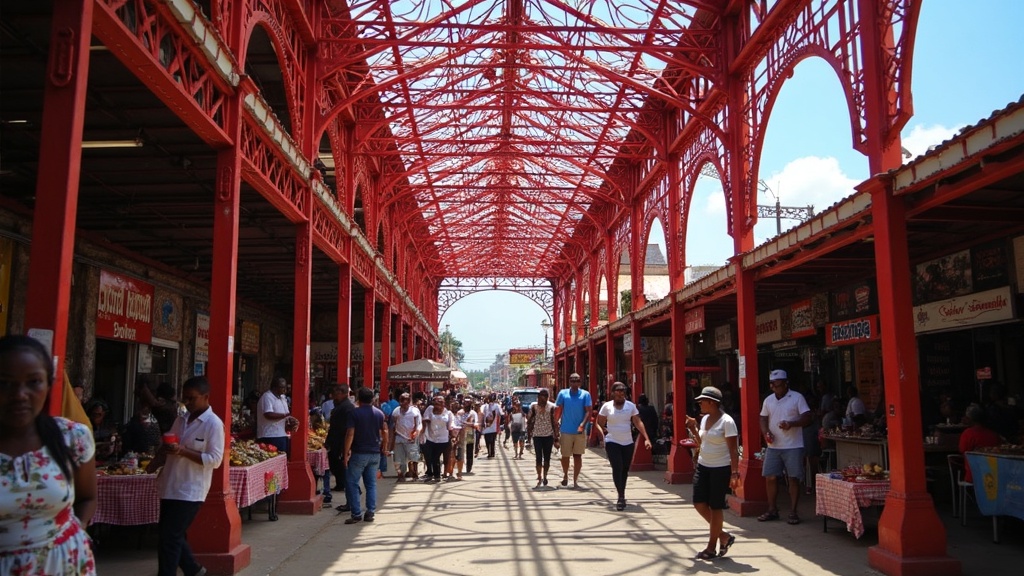
The Musée du Panthéon National (MUPANAH), holding the anchor of the Santa María and the pistol Christophe is said to have used on himself; the Marché en Fer; the Champ de Mars; the site of the National Palace, which collapsed in 2010 and was demolished in 2012 and has not been rebuilt; and, above the city, the Hotel Oloffson, the gingerbread mansion that was Graham Greene's Hotel Trianon in The Comedians and RAM's Thursday-night venue — badly damaged by fire in 2025.
Croix-des-Bouquets
Fifteen kilometres out on the plain, the metal-sculpture village where the oil-drum tradition is worked in dozens of open-fronted workshops. In normal times it is the most rewarding half-day from the capital and the best place in the country to buy art directly from the person who made it.
Pétion-Ville
The upper town: galleries, the best restaurants in the country, hotels, and the visible edge of Haitian wealth. It is where foreign visitors have historically stayed and where a good deal of Haitian cultural life happens.
Now
It must be said clearly: at the time of writing, armed groups control most of Port-au-Prince including the routes to the airport and the port, much of downtown is inaccessible, and the museums and landmarks listed above are not visitable. This section describes the city as it is and has been, not as a current itinerary.
🎨 Jacmel and the South-East
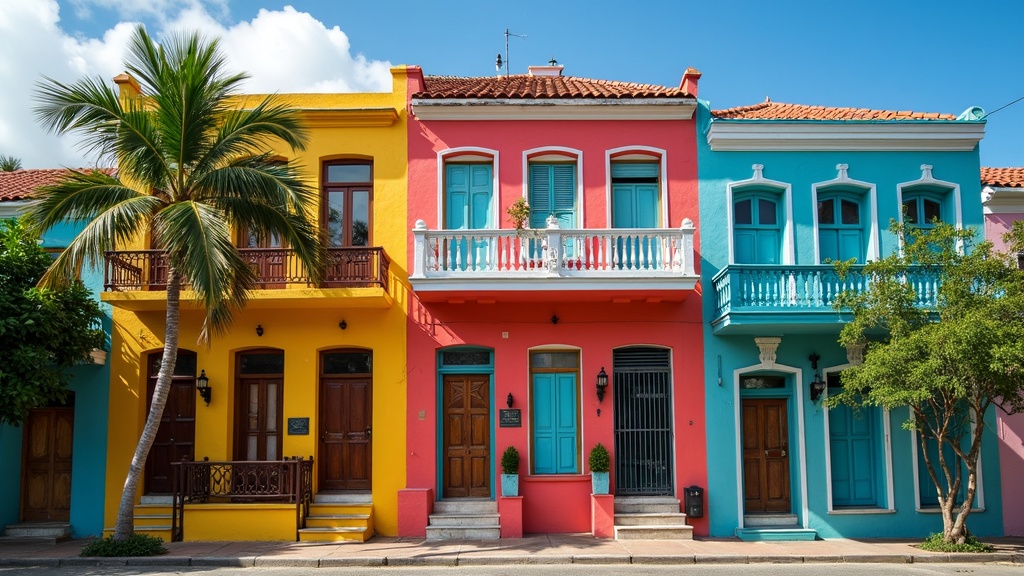
Jacmel, on the southern coast about three hours from Port-au-Prince over the Massif de la Selle, is Haiti's arts town and its most charming small city. It grew rich on coffee in the 19th century, and its merchant houses — brick and cast iron shipped from Europe as ballast, with wrought-iron balconies and internal courtyards — give it a townscape unlike anywhere else in the country. It has been on Haiti's UNESCO tentative list for years.
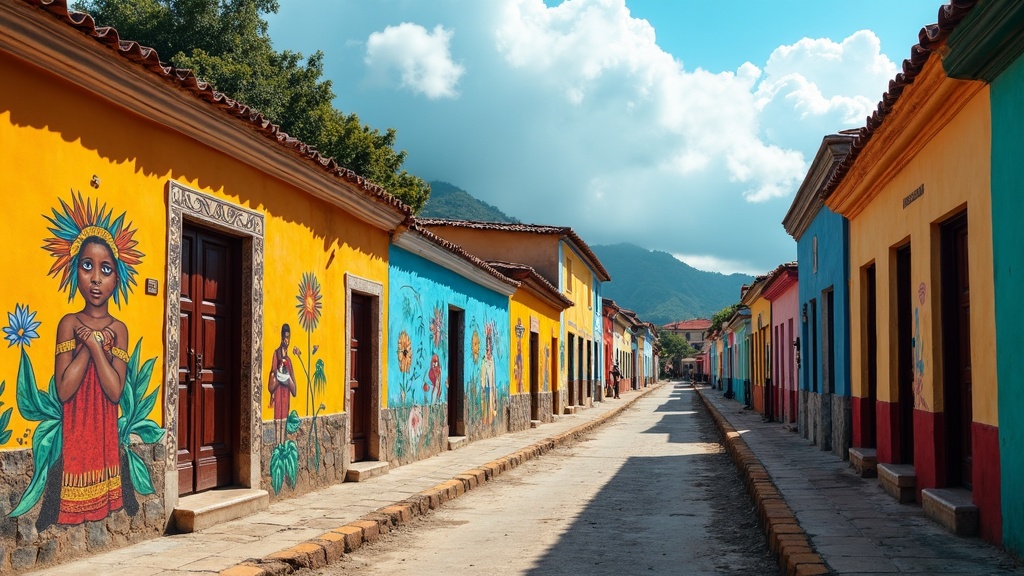
The town is the centre of Haiti's papier-mâché tradition. Workshops make masks, animals and full-body carnival figures, and Jacmel's Kanaval — held the Sunday before the national days — is the best in the country and one of the most distinctive in the Caribbean, with characters including the tar-blackened lansèt kòd who chase the crowd. Jacmel also has a serious film and music school, the Ciné Institute, founded after 2010.
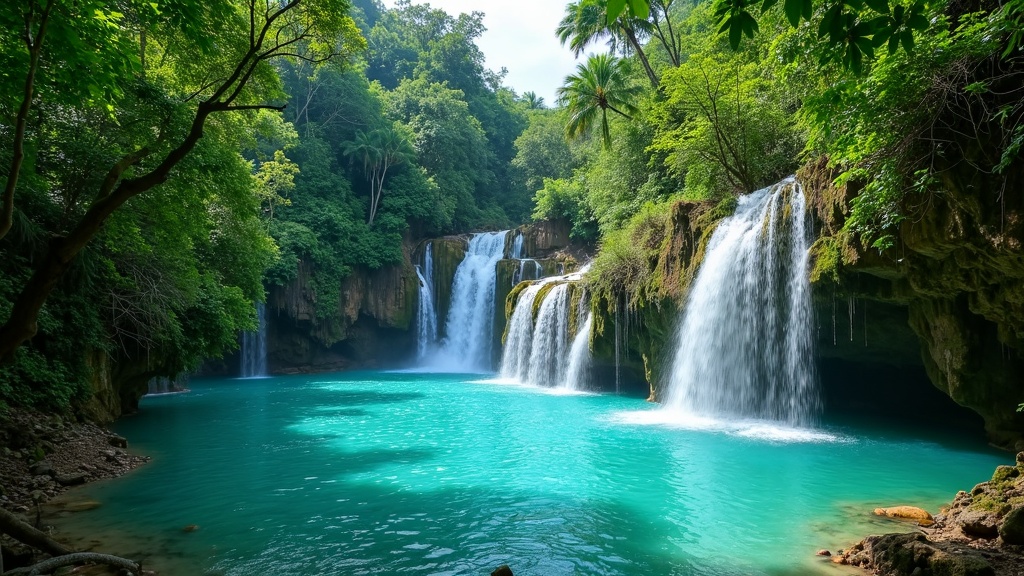
Around Jacmel
The beaches at Ti Mouillage and Raymond-les-Bains east of town; Cyvadier cove; and the road west along the coast towards Marigot. Jacmel's own town beach is not the draw; the coves either side are.
Furcy and the road
The road from Port-au-Prince climbs through Kenscoff and Furcy to nearly 2,000 m and then drops the whole way to the sea — one of the great drives in the Caribbean, through pine forest and market gardens with the plain behind you.
Saut-d'Eau
North of Port-au-Prince rather than near Jacmel, but belongs here: a waterfall where, every 16 July, tens of thousands of pilgrims bathe for Our Lady of Mount Carmel — who is also Ezili Dantò. Catholics and Vodouisants in the same water at the same time, which is Haiti in one image.
Bassin Zim
Near Hinche in the Central Plateau: a large waterfall dropping into blue basins with caves behind it, holding Taíno petroglyphs. Much less visited than Bassin Bleu and, for people who like caves, better.
🏝️ Île-à-Vache and the South
The long southern peninsula — Les Cayes, Port-Salut, Jérémie, Pestel — is the greenest, wettest and least industrial part of Haiti, and it holds the beaches. It also took the full force of Hurricane Matthew in 2016 and the 2021 earthquake, and much of it has been rebuilding ever since.
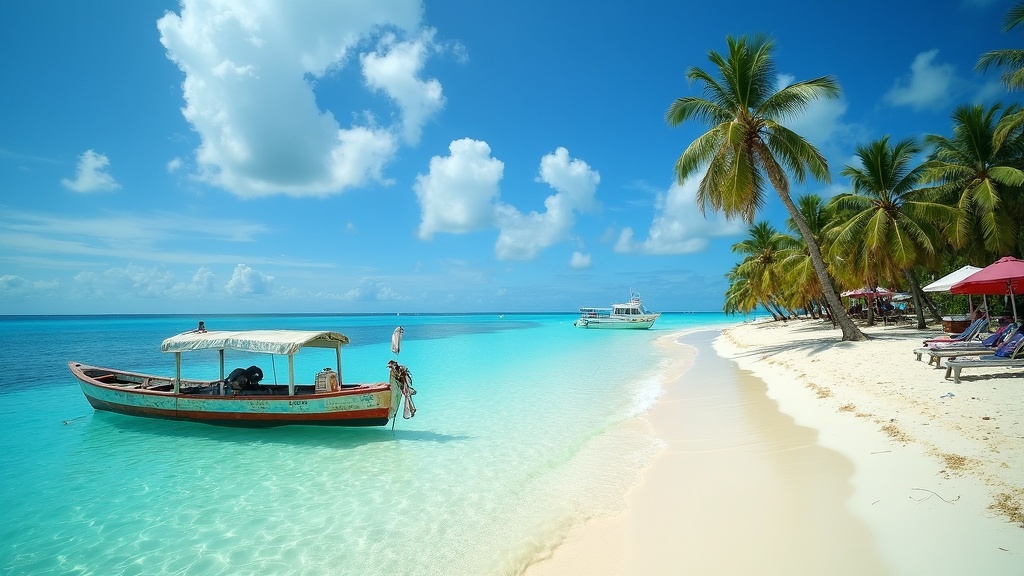
Port-Salut
West of Les Cayes, a long stretch of pale sand under coconut palms which is the best mainland beach in Haiti and the birthplace of Jean-Bertrand Aristide. Small guesthouses, grilled fish, and almost nobody.
Jérémie
At the far western tip, the "city of poets" — birthplace of a striking number of Haitian writers, and of the father of Alexandre Dumas, General Thomas-Alexandre Dumas, who was born nearby to a French nobleman and an enslaved woman and became the first Black general in a European army. Remote, green and hard to reach even in good times.
Pic Macaya
The southern peninsula's national park and one of the last cloud forests in the country, with Hispaniolan endemics found nowhere else. Climbing Pic Macaya (2,347 m) is a genuine two- to three-day expedition with local guides from Les Platons, and very few outsiders have done it.
La Gonâve and Île de la Tortue
The two big offshore islands: La Gonâve in the gulf, poor, dry and largely forgotten by the mainland; and Île de la Tortue (Tortuga) off the north coast, the 17th-century buccaneer base, now a quiet island of fishing villages with beaches on its north shore and almost no infrastructure at all.
⛰️ Kenscoff, Furcy and the Mountains
Fifteen kilometres and 1,200 vertical metres above Port-au-Prince, the temperature drops fifteen degrees and the vegetation changes to pine. Kenscoff at about 1,500 m and Furcy above it have been the capital's hill station since the 19th century — cool nights, woodsmoke, strawberries and vegetables grown for the city below, and views the whole length of the Cul-de-Sac plain.
This is also the gateway to La Visite National Park in the Massif de la Selle, which protects the last significant block of Hispaniolan pine forest and cloud forest in the country. The classic hike is the two-day traverse from Furcy over the massif to Seguin and down to the sea at Marigot on the south coast — high karst, pine, cloud, and hamlets that see almost no outsiders. It is one of the best walks in the Caribbean and one of the least known.
Pic la Selle
At 2,680 m, the highest point in Haiti, in the massif east of the park towards the Dominican border. A long day from Seguin with a guide. The summit ridge looks across into the Dominican Sierra de Bahoruco and, on a clear morning, down onto both coasts.
The Central Plateau
Around Hinche and Mirebalais: dry rolling ranching country, the Artibonite river, the Péligre dam, Taíno rock art at Bassin Zim, and the hospital at Mirebalais built by Partners In Health — one of the genuinely successful international projects in the country, and a place Haitians will point out to you.
Furcy walks
Even without the traverse, the ridge walks around Furcy through pine and market garden are excellent, easy to arrange from Port-au-Prince in normal times, and the quickest way for a visitor to understand that Haiti is a mountain country before it is anything else.
Wahoo Bay and the Côte des Arcadins
North of Port-au-Prince along the gulf, a strip of beach hotels and dive operators that was, before the crisis, the capital's weekend coast. The reefs offshore are in reasonable condition and the sunsets over La Gonâve are the reason people came.
🚨 The Security Situation
This section exists because a travel page about Haiti that skirts around this would be dishonest. At the time of writing, the Czech Ministry of Foreign Affairs and every comparable Western ministry advise against all travel to Haiti, and have done so continuously since 2023. That is the highest level of advisory issued, the same one applied to active war zones, and it is not a formality.
What is actually happening
Armed groups — coordinated since 2024 in the Viv Ansanm coalition — control the majority of Port-au-Prince, including the approaches to the international airport and the seaport, and levy tolls on the national highways out of the capital. Kidnapping for ransom, including of Haitians of very modest means, has been endemic since 2021. More than a million people are internally displaced.
The airport
Toussaint Louverture International (PAP) has been closed to US commercial aviation since November 2024, when gunfire hit three airliners on approach and a Spirit Airlines aircraft was struck with passengers aboard. The US aviation authority's prohibition has been extended repeatedly. Some non-US carriers and humanitarian flights have operated intermittently; Cap-Haïtien (CAP) has been the functioning gateway.
The response
A Kenyan-led Multinational Security Support mission, authorised by the UN Security Council, began deploying in June 2024 — under-strength, under-funded and with limited territorial effect. In 2025 the Council authorised a larger successor force. Neither is a UN peacekeeping operation in the formal sense, and the memory of MINUSTAH and the cholera epidemic makes many Haitians deeply sceptical of any of it.
What this means practically
Ordinary tourism to Haiti is not currently possible and has not been for several years. People do still travel there — diaspora Haitians visiting family, aid and church workers, journalists — generally through Cap-Haïtien, with local hosts, fixed arrangements and no independent movement. Travel insurance will not cover a trip against an official advisory, and no consulate can help you in a district the state does not control.
The honest position: do not plan a trip to Haiti now. Watch the advisories, and understand that if and when they change it is likely to change first for the north — Cap-Haïtien, Milot and the Citadelle — which has been substantially less affected than the capital. The rest of this page is written for that day, and for readers who want to understand the country regardless.
✈️ Getting There
There have never been direct flights from Prague and there is currently no straightforward routing at all. Haiti's two international airports are Toussaint Louverture (PAP) at Port-au-Prince and Hugo Chávez International (CAP) at Cap-Haïtien; PAP has been closed to US commercial carriers since November 2024, which removed the great majority of the country's air links at a stroke.
Cap-Haïtien
The functioning gateway. In normal periods Sunrise Airways connects it to Turks and Caicos, the Dominican Republic and Miami, and American Airlines and Spirit have served it from Florida. From Prague that means Europe to Miami or Fort Lauderdale, then a short hop — with a US transit visa or ESTA required even in transit.
Port-au-Prince
Air France historically flew Paris–Port-au-Prince, which was the classic route from Europe, and Air Caraïbes and Air Transat have served it from Paris and Montreal. Whether any of these are operating depends entirely on the current state of the airport; verify with the airline and not with a booking site.
Overland
The Dominican Republic border crossings at Dajabón/Ouanaminthe (north), Jimaní/Malpasse (central, for Port-au-Prince) and Pedernales/Anse-à-Pitre (south) have historically been used by bus companies such as Caribe Tours. They are closed frequently and at short notice by the Dominican side, and the Malpasse route runs into the areas of Port-au-Prince that are least safe.
By sea
Cruise ships call at the private enclave of Labadee near Cap-Haïtien, and passengers do not normally leave it; calls have been suspended during the worst of the crisis. There is a regular ferry link between Haiti and no other country. Private yachts clear in at Cap-Haïtien or Jacmel.
Assume 25,000–45,000 CZK for a return from Prague when routings exist, and assume they may not. Any Haiti plan needs to be made with a local host, a confirmed pickup, and the flexibility to abandon it.
💰 What It Costs
Haiti has always been an odd market: very cheap at street level and unexpectedly expensive at the level a foreign visitor typically operates at, because the small supply of secure hotels, drivers and guides is priced for the NGO and diplomatic economy. The crisis and the collapse of the gourde have widened that gap.
Accommodation
A guesthouse in Cap-Haïtien or Jacmel 2,500–7,000 HTG (roughly 400–1,200 CZK); a good hotel in Pétion-Ville or Cap-Haïtien is quoted in US dollars at US$80–200 a night. Security features — walls, generators, guards — are part of what you are paying for and are not optional at that level.
Eating
A plate of griot, rice and plantain from a street kitchen 200–500 HTG (35–90 CZK); a meal in a proper restaurant 1,500–4,000 HTG (250–700 CZK); a Prestige 150–300 HTG. Pétion-Ville's better restaurants are genuinely good and genuinely expensive by regional standards.
Transport
A taptap — the painted shared pickup that is Haiti's public transport and its most photographed folk art — costs a few dozen gourdes a ride. A car with a driver, which is what any foreign visitor actually uses, runs US$80–150 a day. Sunrise Airways domestic hops (Port-au-Prince–Cap-Haïtien–Jérémie) around US$100–150 each way.
Money
The gourde in cash for everything local; US dollars accepted at hotels and by drivers and worth carrying. ATMs exist in Port-au-Prince, Pétion-Ville and Cap-Haïtien and are unreliable; cards work in a small number of hotels and restaurants. Bring more US cash than you expect to need, in small denominations, and do not carry it visibly.
Budget 2,500–5,000 CZK a day for a visitor operating with a driver, staying in secure accommodation and eating well — which is what any responsible arrangement looks like in Haiti. Backpacking Haiti on the cheap was possible in the 2000s. It is not a thing anyone should be attempting now.
📋 Practical Information and Health
Entry
Haiti has historically admitted Czech and other EU citizens without a visa for tourist stays of up to 90 days, with a tourist fee collected on arrival, requiring a passport valid six months beyond entry and an onward ticket. This is academic while the advisories stand, and rules in a country without a functioning legislature should be verified directly with a Haitian consulate before any travel.
Malaria — genuine here
Haiti and the Dominican Republic are the only Caribbean countries with ongoing malaria transmission. Risk exists throughout the year across the whole country including Port-au-Prince, and it is one of the few places left where the parasite is still sensitive to chloroquine, so prophylaxis is simple and cheap. Discuss it at a Czech travel clinic. Dengue, chikungunya and Zika are also present and there is no prophylaxis for those — repellent, day and night.
Cholera and water
Cholera, introduced by UN peacekeepers in 2010, was declared eliminated in 2019 and returned in October 2022; cases have continued. Drink only bottled or treated water, including for teeth, and be careful with ice and raw salad. Typhoid and hepatitis A vaccination are strongly advised, along with hepatitis B, tetanus-diphtheria-polio and rabies for longer stays.
Medical care
Very limited and, in Port-au-Prince, severely disrupted — many hospitals have closed or been attacked. Anything serious means evacuation to the Dominican Republic, Miami or Panama. Insurance including medical evacuation is essential, and you should check whether your policy is void in a country under a do-not-travel advisory, because most are.
Consular cover for Czechs
The Czech Republic has no embassy in Haiti; the country is covered from a Czech mission elsewhere in the region — check the current covering post on mzv.cz. France, Spain and the EU Delegation maintain a presence in Port-au-Prince and, as an EU citizen, you may approach any EU member state's mission under Article 20 TFEU. Register in DROZD. In a country where the state does not control large parts of its capital, consular help is limited in ways that are worth thinking about in advance.
Getting around
The taptap — a pickup or small bus painted with religious slogans, portraits and elaborate lettering — is Haitian public transport and Haitian folk art at once, and photographing one without asking the owner is rude. Motorbike taxis are everywhere and dangerous. Any foreign visitor travels with a known driver, by arrangement, and does not move after dark.
Day to day
Electricity is 110 V with American type A/B plugs, and the mains supply is intermittent everywhere — generators and inverters run most of the country. Time is UTC−5 and Haiti does observe daylight saving, unlike most of the Caribbean. Mobile coverage (Digicel, Natcom) is good where there is power. Photography of police, military and checkpoints is a bad idea.
Etiquette
Greet before anything else — bonjou before noon, bonswa after — and shake hands. Haitians are formal in address and warm after it. Dress neatly; visible scruffiness reads as disrespect rather than as travel. Ask before photographing anyone. And be careful with the word "voodoo": the religion is Vodou, and the distinction matters to people here.
❓ Common Misconceptions
"Haiti is cursed"
The claim that Haitians made a pact with the devil at Bois Caïman is a nineteenth-century slander invented to explain how enslaved people could possibly have won, revived on American television after the 2010 earthquake. It is false, it is offensive, and its persistence is itself part of the history. Haiti's condition has documented causes, starting with an indemnity paid to France until 1947.
"Voodoo is black magic"
Vodou is a religion with a creator god, a body of spirits, an ordained priesthood, a liturgy and an ethical code, officially recognised by the Haitian state in 2003. Pin-stuck dolls are not part of it. The zombie film genre is an American invention dating from the US occupation, and Haitians are extremely tired of it.
"Haiti got independence"
Haiti took it. It defeated Spanish, British and French armies over thirteen years, destroyed Napoleon's expedition with the loss of some 50,000 French troops, and declared independence unilaterally in 1804. It was then not recognised by the United States for fifty-eight years.
"Haiti and the Dominican Republic are basically the same"
One island, two countries, two languages, two colonial histories, and a relationship shaped by the 1937 Parsley Massacre and by a Dominican citizenship ruling in 2013 that left tens of thousands of Haitian-descended people stateless. Assuming they are interchangeable will not go down well on either side.
"They speak French"
French is official and is spoken fluently by a small minority. Kreyòl is the language of the country, spoken by everyone, with its own grammar and orthography and an academy. Turning up with French will get you understood by officials and educated people and by nobody else.
"2% forest cover"
A statistic repeated for forty years that does not survive checking — satellite analysis puts tree cover nearer 30%. What is true and much worse is that Haiti's primary forest is nearly gone and is projected to disappear entirely within a generation. Use the real number; it is more alarming, not less.
"The 2010 aid rebuilt the country"
Some US$13 billion was pledged and a very small share passed through Haitian institutions. Audits of major recipients found strikingly little permanent housing. And the UN mission itself introduced cholera, which killed around 10,000 people; the UN denied it for six years and has paid no compensation.
"There's nothing to see"
The largest fortress in the Americas, a UNESCO World Heritage Site, a painting tradition in museums worldwide, one of the Caribbean's best carnivals, a mountain range with a two-day traverse to the sea, the finest aged rum in the region, and a soup on the UNESCO heritage list. The problem in Haiti has never been the lack of things worth seeing.
✍️ Author's Note
It is not honest to write a cheerful travel page about Haiti in 2026, and it would be worse to write the country off. Both temptations are wrong in the same way: they treat Haiti as a headline rather than as a place with twelve million people in it, a two-hundred-year history and a cultural output that most countries of any size would envy.
So: do not go now. The advisories are right and the reasons for them are real. But know what is there. The Citadelle is the largest fortress in the Americas and it was built by people who had just defeated Napoleon and expected him back. Sans-Souci was built to prove a point about what a free Black state could do, and it succeeded before an earthquake took it down. Jacmel makes carnival masks that belong in museums. La Visite has a two-day walk over the mountains to the sea that almost nobody in Europe has heard of. Barbancourt makes better rum than most of the Caribbean and sells it for a fraction of the price.
And the history is not optional, because it is the thing that has been most systematically kept out of European education. A slave revolt beat the greatest army in the world and founded a republic — and the country was then charged for it, in gold, for a hundred and twenty-two years, by the state it had defeated. Michel-Rolph Trouillot's argument that the Haitian Revolution was "unthinkable" to the societies that recorded it, and was therefore not recorded, explains why you probably did not learn any of this at school.
Practical closing advice: read the current MZV advisory before anything else, and take it seriously. If you want to do something for Haiti now, buy Haitian art from a Haitian seller, read Danticat or Laferrière, and buy a bottle of Barbancourt — every one of those puts money in the country and none of them requires a flight. And keep the country on the list, because the day the advisories change, the north will be first, and the Citadelle will still be up there.
Support This Project 🌍
This World Travel Factbook is a labor of love – free to use for all travelers. If you find it helpful, consider supporting its continued development.