
🇬🇦 Gabon at a Glance
🌍 Overview — Why Gabon
Gabon is the country that decided not to cut its forest down. It sits on the equator with 267,668 km² — slightly larger than the United Kingdom — and only 2.4 million people, nearly all of them in three coastal cities. What is left is 88% rainforest, one of the highest proportions on Earth, and in 2002 the president set aside 13 national parks covering roughly 11% of the country in a single announcement.
The reason that was possible is oil. Gabon has been an oil producer since the 1970s, has one of the higher GDPs per head in sub-Saharan Africa, and never developed the agricultural pressure on land that cleared the forests of its neighbours. The wealth is very unevenly distributed and the oil is declining, which makes the next twenty years the interesting question.
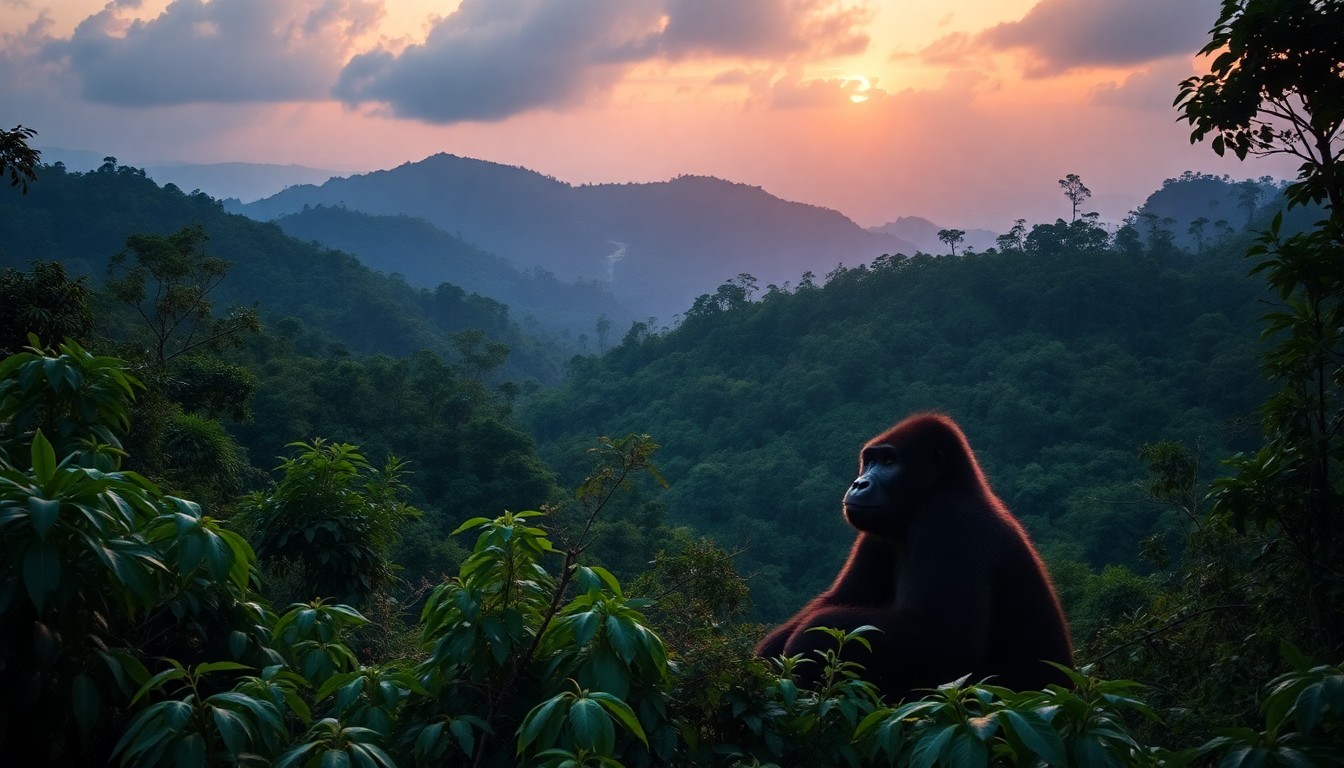
For a traveller this is one of the great wildlife destinations that almost nobody visits — under 20,000 tourists a year. Loango's elephants and buffalo walk out of the forest onto the Atlantic beach; Lopé holds mandrill troops of several hundred; the country has more forest elephants than anywhere else on Earth and around 35,000 western lowland gorillas.
It is also expensive, difficult and slow. There are few roads, internal flights are unreliable, park lodges cost like safari camps, and independent travel is genuinely hard. Gabon does not have a tourism industry so much as a handful of operators, and everything has to be arranged before you arrive.
Best for
Forest elephants, western lowland gorillas, mandrills, humpback whales from July to September, leatherback turtles from November to February, and birders willing to work for it.
Not so good for
Budget travel, spontaneity, or anyone expecting East African savanna safari. Central African forest wildlife is glimpsed, not surveyed from a vehicle.
Language
French, universally, plus around forty local languages of which Fang is the largest. English is rare outside international hotels.
The single best decision
Book through an established operator and accept the cost. Independent travel here consumes days for very little, and the parks are simply not set up for it.
🏷️ Name and Identity
The name comes from Portuguese sailors, who in the fifteenth century thought the estuary of the Komo river looked like a gabão — a hooded cloak. The capital's name is more pointed: Libreville, Free Town, founded in 1849 for Mpongwe captives freed from a slave ship intercepted by the French navy.
The peoples
Around forty ethnic groups. The Fang are the largest at roughly a third of the population, followed by the Punu, Nzebi, Myene and Kota. Unusually for the region, ethnic politics has been comparatively muted.
The Baka and Babongo
Forest-dwelling peoples, often grouped under the outsider term "Pygmy", who have lived in these forests far longer than anyone else and remain marginalised in law and in practice. Their knowledge underpins much of what outsiders know about the forest.
French
The only official language, spoken by around 80% of the population — one of the highest rates in Africa — because it is the neutral language between forty others.
The flag
Green for the forest, yellow for the equator and the sun, blue for the sea. Adopted at independence in 1960 and about as literal as a flag gets.
Franceafrique
Gabon was the archetype of the post-colonial French sphere: French troops based in Libreville for decades, French oil interests, and French backing for a family that ran the country for 56 years. That relationship has been unwinding since 2023.
The Commonwealth
Gabon joined the Commonwealth in 2022 despite having no British colonial history at all — a deliberate move to widen its diplomatic options away from Paris.
🗺️ Geography
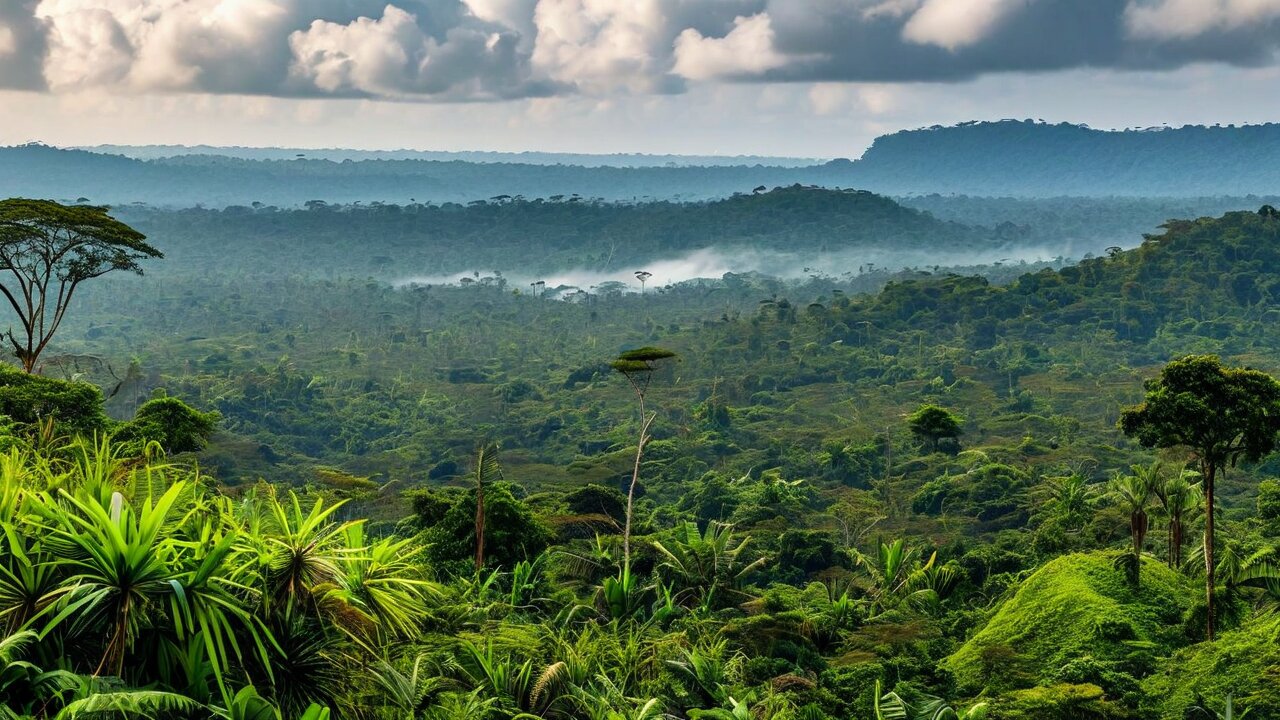
The equator runs through the middle of the country. Behind an 885 km Atlantic coast of lagoons, mangrove and surf beach, the land rises through a plateau of dense forest cut by the Ogooué, one of Africa's great rivers, to hills of around 1,000 m in the interior.
The Ogooué
1,200 km, draining nearly the whole country, and the historic highway into the interior — Brazza travelled it, Schweitzer built his hospital on it at Lambaréné, and it still carries timber and people.
The coast
Lagoons, mangroves and long empty surf beaches from Cape Lopez down to the Congolese border. Loango and Pongara national parks both protect stretches of it.
The forest
Part of the Congo Basin, the second-largest tropical rainforest on Earth. Gabon's share is unusually intact, and the country is a net carbon sink — it absorbs far more than it emits, which it has tried to monetise internationally.
The Crystal Mountains
In the north-west, forested and steep, with the highest rainfall in the country and an extraordinary concentration of endemic plants.
Mont Iboundji
Long claimed as the high point at 1,575 m, though surveys suggest Mont Bengoué may be higher. Nobody has settled it, which is quite Gabonese.
Cirque de Léconi
In the far south-east near the Congolese border: a red sandstone canyon of eroded pinnacles in the Batéké plateau savanna, and a complete contrast to everywhere else in the country.
🗺️ Map of Gabon
Libreville is in the far north-west corner, and almost everything else is a long way from it. The Transgabonais railway from Owendo to Franceville is the spine of the country and the only reliable way to reach the interior.
Libreville → Lopé
About 8–10 hours by the Transgabonais train, or a short internal flight. The train is the classic way and passes through the forest for the whole journey.
Libreville → Loango
Via Port-Gentil by air and then boat and 4x4, or a charter flight to Omboué. Half a day either way and not cheap.
Libreville → Franceville
The full length of the railway, around 650 km and 12–16 hours, ending near the Batéké plateau and the Léconi canyon.
Libreville → Lambaréné
250 km by road, three to four hours, and the location of Albert Schweitzer's hospital on the Ogooué.
📜 History — Estuary, Slavery, Empire
Gabon's coast has been in contact with Europe since the 1470s, and the shape of the modern country was set by three things: the slave trade, the timber trade, and the fact that France needed a base on this stretch of the Atlantic.
Before Europe
Bantu-speaking peoples moved into the region over the last two millennia, displacing or absorbing earlier forest populations. The Fang migration into northern Gabon continued into the nineteenth century and is recent enough to be remembered in oral tradition.
The Portuguese and the estuary
Traders reached the Gabon estuary in the 1470s and named it. For three centuries the coast supplied first ivory and hardwood and then, increasingly, enslaved people.
Libreville · 1849
The French navy intercepted an illegal slave ship, the Elizia, and settled the freed captives on the estuary. The settlement was named Libreville — a deliberate echo of Freetown in Sierra Leone.
Brazza
Pierre Savorgnan de Brazza explored the Ogooué from 1875 and secured the interior for France by treaty rather than force — a reputation that survived him well, though the concession-company regime that followed did not deserve it.
French Equatorial Africa
Gabon became part of the AEF in 1910. Concession companies extracted rubber, ivory and okoumé timber under a labour regime that was in places brutal, and the population fell.
Albert Schweitzer · 1913
The Alsatian theologian, organist and physician founded a hospital at Lambaréné on the Ogooué and worked there until his death in 1965. He won the Nobel Peace Prize in 1952; his paternalism has since been much criticised, and the hospital still runs.
🕰️ Oil, One Family, and 2023
Independent Gabon has had four presidents in 66 years, and two of them were father and son. The Bongo family governed from 1967 to 2023, an era that made the country rich, kept it stable, and left it with an economy that still does not work for most of its people.
Independence · 1960
Léon M'ba became the first president. When he was overthrown by a coup in 1964, French paratroopers restored him within 48 hours — the founding demonstration of what Franceafrique meant in practice.
Omar Bongo · 1967–2009
Took power at 31 and held it for 41 years, one of the longest reigns of any modern head of state. Ran a one-party state until 1990, survived every transition, and built a personal fortune whose French property holdings became the subject of the biens mal acquis corruption investigations.
The oil
Production peaked around 1997 and has declined since. Oil is still roughly 40% of GDP and 70% of exports, and the country has never converted it into a broad economy — around a third of the population lives in poverty in a country with high headline GDP per head.
The parks · 2002
Omar Bongo announced 13 national parks covering 11% of the national territory at once, after conservation biologist Mike Fay's Megatransect walk across the Congo Basin. It remains one of the largest single conservation decisions ever made by any government.
Ali Bongo · 2009–2023
Succeeded his father, won two disputed elections, suffered a stroke in 2018, and drove the environmental policy — the log-export ban, the carbon deals, the Commonwealth accession.
The 2023 coup
Minutes after Ali Bongo was declared re-elected, the military seized power and put him under house arrest, ending 56 years of family rule. General Brice Oligui Nguema led the transition and won a presidential election in 2025. Public reaction was largely celebratory, which tells you a great deal.
🐘 Loango National Park
The park that put Gabon on the wildlife map, and the reason the phrase "Africa's last Eden" got attached to the country. 1,550 km² where rainforest, savanna, lagoon, mangrove and 100 km of Atlantic beach meet — and where elephants, buffalo, hippos and gorillas come out of the trees onto the sand.
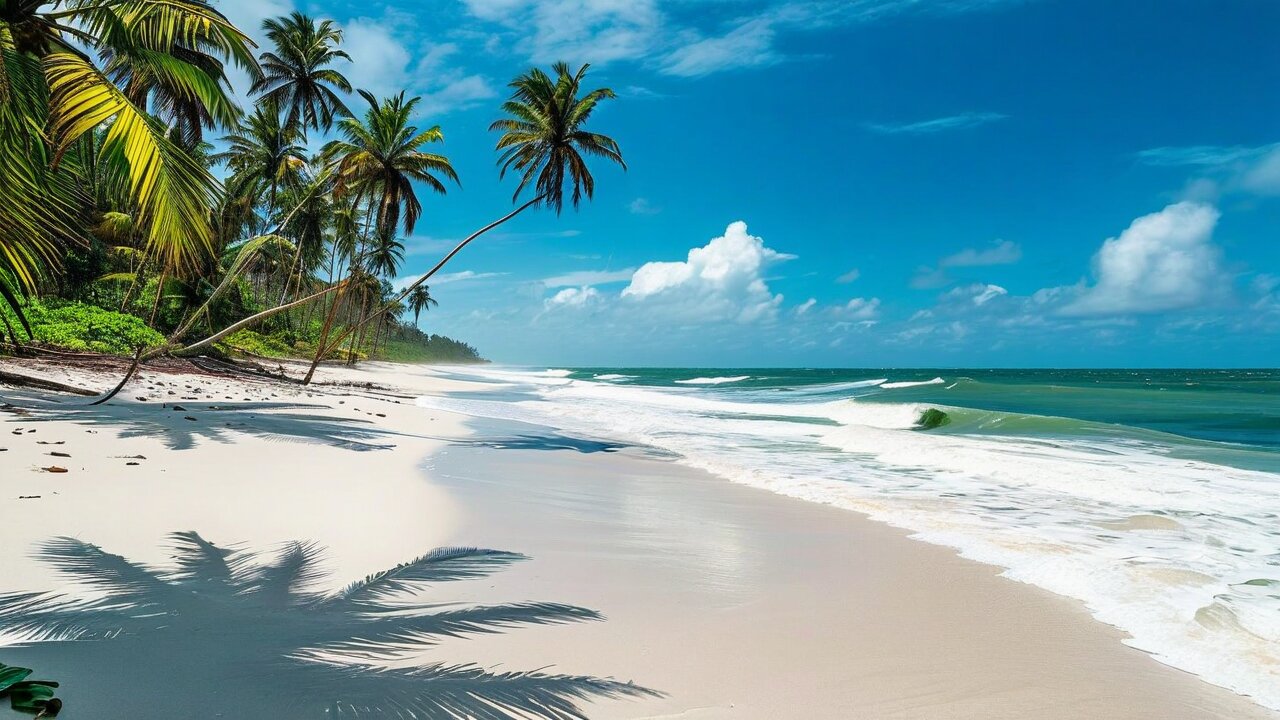
The beach wildlife
Forest elephants, forest buffalo, red river hogs and occasionally gorillas emerge onto the beach, mostly at dawn and dusk. Surfing hippos — hippos in the ocean waves — are real and were documented here, though seeing them is luck rather than itinerary.
Gorilla habituation
A western lowland gorilla group has been habituated for research and controlled visits. It is not Rwanda or Uganda: viewing is harder, less certain, in dense forest, and permits are handled through the lodges rather than a national booking system.
Whales · July–September
Humpbacks calve off this coast and can be watched from boats out of the park's lagoons. Some of the best whale watching in Africa and almost unknown.
Turtles · November–February
Leatherbacks nest on these beaches in numbers that make Gabon collectively one of the most important leatherback nesting countries in the world. Night walks with guides during the season.
Getting there and staying
Fly to Port-Gentil, then boat and vehicle, or charter to Omboué. Loango Lodge and a small number of camps; expect €250–500 a night full board and to book months ahead.
Honest expectations
This is forest wildlife: you will see less than on an East African safari and what you see will be closer and stranger. Two or three nights minimum, and rain is likely whenever you come.
🌳 Lopé National Park
In the centre of the country on the Ogooué, 4,970 km², UNESCO-listed in 2007 as the Ecosystem and Relict Cultural Landscape of Lopé-Okanda. The listing is for two things at once: a rare forest–savanna mosaic left over from the last ice age, and 400,000 years of continuous human occupation recorded in the rock.
The savanna mosaic
Tongues of open grassland reach into the forest here — relics of a drier climate 15,000 years ago, maintained since by fire. It makes Lopé the one place in Gabon where you can actually see across a landscape, and where forest animals are visible in the open.
Mandrills
Lopé holds the largest recorded mandrill troops anywhere — hordes of several hundred and occasionally over a thousand animals moving together, the largest aggregations of any non-human primate. Seeing one is a matter of timing and luck and it is extraordinary.
The archaeology
Iron-age settlements, Neolithic sites and thousands of petroglyphs on the rocks along the Ogooué. The valley has been a migration corridor between forest and savanna for hundreds of millennia.
Other wildlife
Forest elephants, forest buffalo, sitatunga, chimpanzees and gorillas, plus one of the better bird lists in Central Africa.
The research station
SEGC at Lopé has run continuous ecological research since the 1980s and much of what is known about Central African forest ecology comes from here.
Getting there
By the Transgabonais train from Libreville to Lopé station — 8–10 hours through the forest and by far the best approach — or by internal flight. Lodges at Lopé village.
💦 Ivindo National Park
UNESCO-listed in 2021 for its rivers, waterfalls and forest, and home to two of the most spectacular sites in Central Africa — one of which the country nearly drowned under a hydroelectric dam.
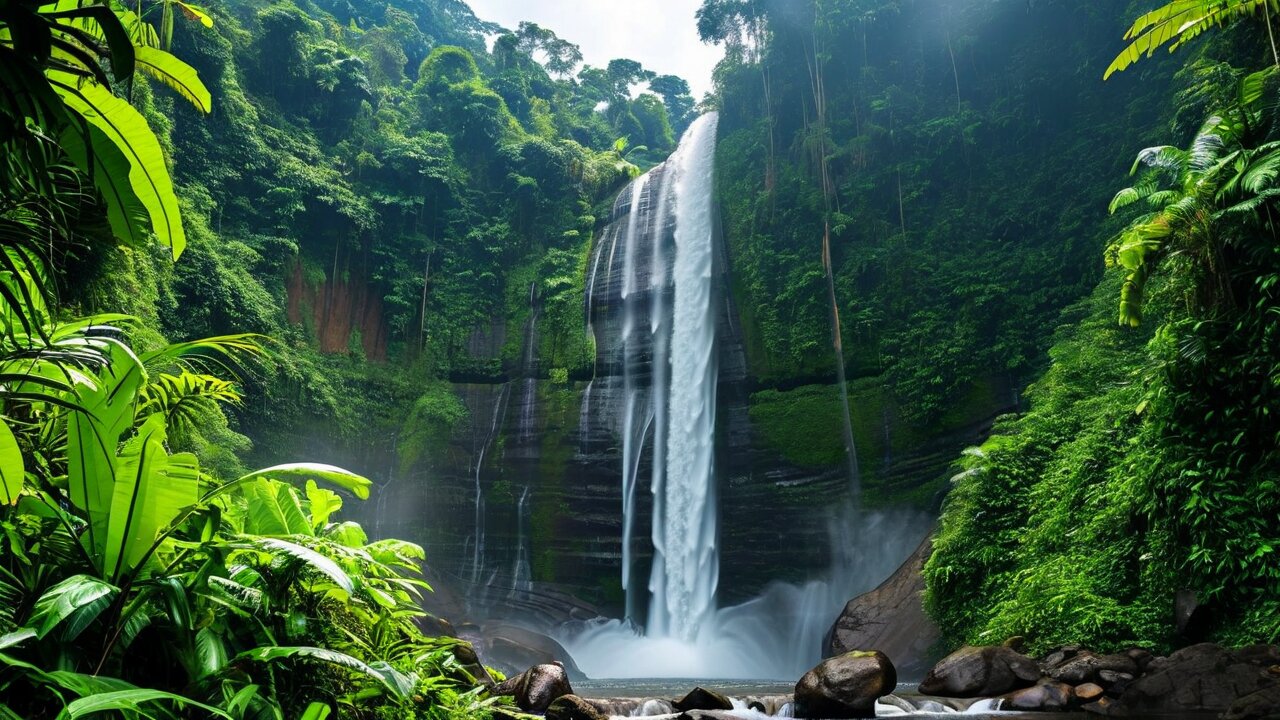
Kongou Falls
A vast cascade on the Ivindo river, sometimes called the most beautiful in Central Africa. A Chinese-backed hydroelectric project was planned here and abandoned after sustained opposition; the falls survived, and the argument about them is not entirely over.
Mingouli Falls
Further downstream, a higher and narrower drop reached only by pirogue and a forest walk, and visited by almost nobody.
Langoué Baï
A forest clearing discovered by Mike Fay during the Megatransect in 2000, where forest elephants, gorillas, sitatunga and buffalo gather in the open. There is an observation platform and reaching it takes a day's walk. It is the single best place in Gabon to actually see forest wildlife.
Ipassa research station
A long-running scientific station near Makokou with basic accommodation and forest trails — the practical base for the park.
Getting there
Makokou by internal flight or a very long drive, then pirogue. This is the hardest of the three main parks to reach and the least visited.
What it costs in effort
Several days minimum, guides required, and everything dependent on river levels. Ivindo is for people who have already done Loango and Lopé and want more.
🏙️ Libreville and the Coast
Around 800,000 people on the estuary — a third of the country — in a city of oil money, traffic, seafront boulevards and markets, and a national museum that is the best introduction to Gabonese art anywhere.
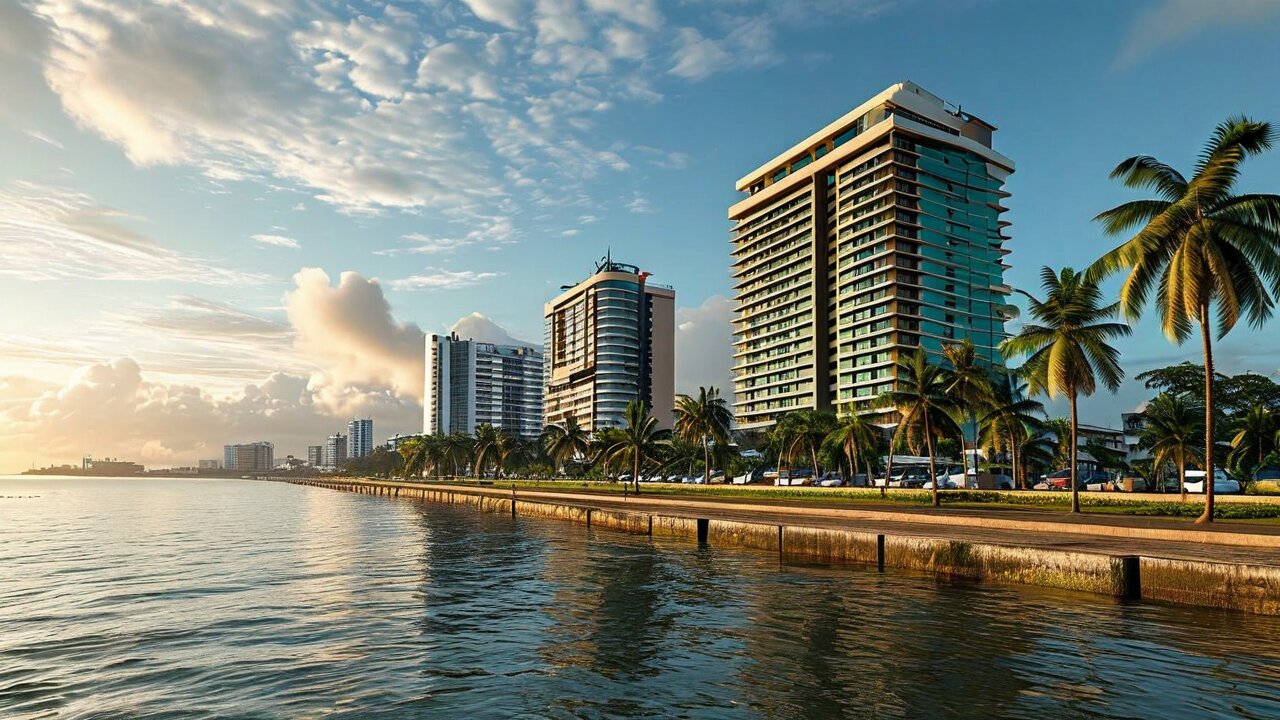
The Musée National
Small but excellent, with Fang byeri reliquary figures and Punu masks — the objects that changed European art in 1907. Worth an hour before you see anything else.
Markets
Marché du Mont-Bouët is the big one: everything, loudly, and the best place to understand the city's economy. Go with someone, watch your pockets, and do not photograph people without asking.
Église Saint-Michel de Nkembo
A church with 31 wooden columns, each carved by a blind Gabonese artist with biblical scenes in a wholly local idiom. The most interesting building in the city.
Pointe Denis and Pongara
Across the estuary by boat, 30 minutes: beaches, a national park, and leatherback turtle nesting in season. The standard Libreville weekend.
Port-Gentil
The oil capital on the coast, reachable only by air or sea — there is no road. Not a tourist destination, but the gateway to Loango and the Ogooué delta.
Lambaréné
Three hours south on the Ogooué, with Albert Schweitzer's hospital and its museum. Still a working hospital, and a place that provokes complicated feelings about medicine, mission and paternalism.
🏞️ The Other Parks
Thirteen parks were created in 2002 and most of them have no infrastructure at all. Several are worth knowing about, and one or two are becoming reachable.
Pongara
Directly across the estuary from Libreville: beach, mangrove and forest, with major leatherback nesting from November to February. The easiest park in the country to reach and the obvious first stop.
Moukalaba-Doudou
In the south-west, with high gorilla densities and a Japanese-led habituation project. Difficult access and genuinely wild.
Minkébé
In the far north-east, vast and almost roadless. It lost an estimated 80% of its forest elephants to poaching between 2004 and 2014 — around 25,000 animals — most of it driven by ivory routes through Cameroon. The single starkest illustration of what Gabon is up against.
Plateaux Batéké
Savanna and gallery forest in the south-east, and the site of a lion reappearing in 2015 after decades of local extinction, plus a western lowland gorilla reintroduction programme.
Mayumba
A narrow coastal park in the far south with one of the highest densities of nesting leatherbacks anywhere on Earth.
Akanda and the mangroves
North of Libreville, a Ramsar wetland of mangrove and mudflat with very large numbers of migratory shorebirds — the accessible birding site of the country.
🌿 Conservation and the Argument About It
Gabon has made larger conservation commitments than almost any tropical country, and it has done so partly because it could afford to. Whether that survives the end of the oil is the central question about the place.
The numbers
11% of land in national parks, a 26% marine protected area network created in 2017, a ban on raw log exports since 2010 that forced processing to happen domestically, and around 88% forest cover retained.
Carbon
Gabon absorbs far more carbon than it emits and has pushed hard internationally to be paid for that. It received the first payment under the CAFI agreement with Norway in 2021 — a real precedent, and a small sum against what the forest is worth standing.
Poaching
The elephant losses in Minkébé, ivory and bushmeat trafficking through the northern borders, and a national parks agency stretched across enormous areas. Enforcement has improved sharply and the problem is not solved.
Human–elephant conflict
The other side of a successful elephant population: crop raiding is a serious and worsening problem for rural farmers, and the political tension between conservation and the people living next to it is real.
Logging
Still a major industry, largely certified and selective rather than clear-cut, and a genuine part of the economy. Gabon's forest is worked, not sealed off, and the argument is about how.
What a visitor contributes
Park fees, lodge employment and the political argument that wildlife has value. Tourist numbers are so low that this is currently more principle than economics — which is itself an argument for going.
🐘 Forest Elephants
Gabon holds more African forest elephants than any other country — a 2021 survey put the population at around 95,000, more than half of what remains of the species worldwide. They are a separate species from the savanna elephant, recognised as such only in 2021, and they are Critically Endangered.
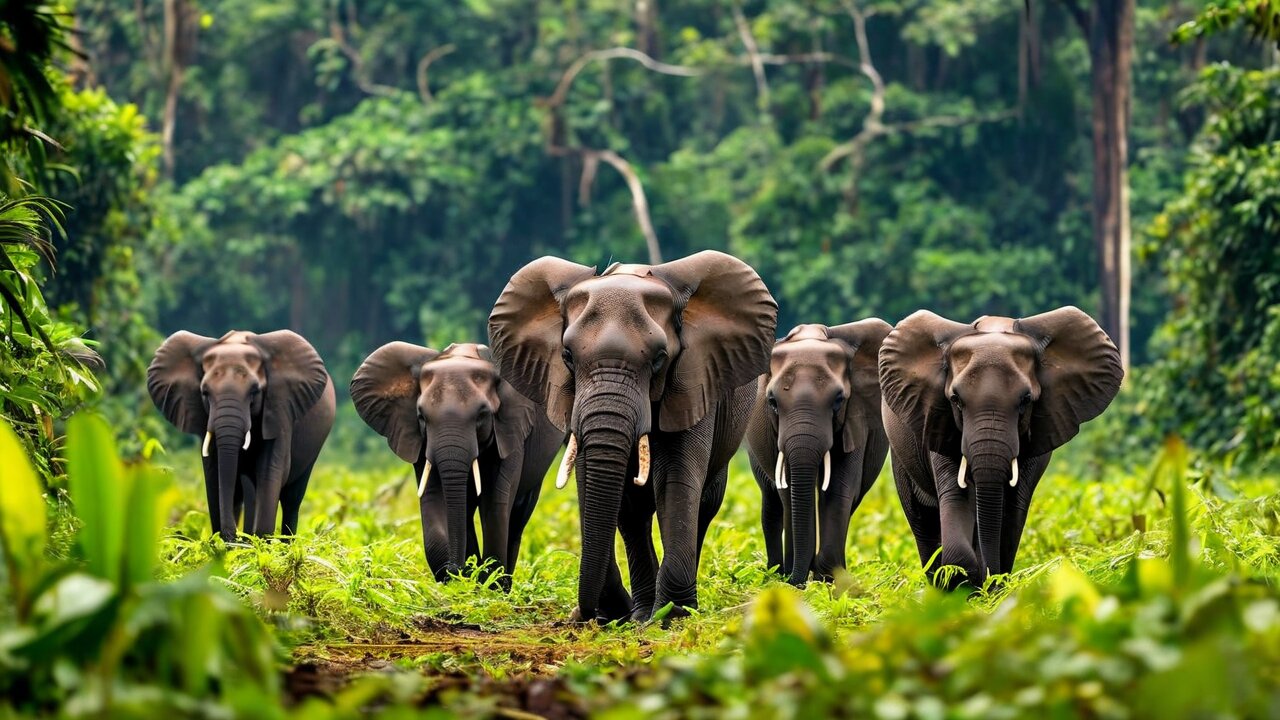
How they differ
Smaller than savanna elephants — around 2.4 m at the shoulder — with rounded ears, straighter and harder downward-pointing tusks, and a preference for dense forest. DNA separated the two lineages by several million years.
The gardeners of the forest
They disperse the seeds of a very large number of tree species, many of which have no other disperser. Research suggests forest elephants increase the carbon stored in the forest by thinning small stems and favouring large hardwoods — losing them would measurably reduce the forest's carbon.
Where to see them
Loango's beach and lagoon edges, Langoué Baï in Ivindo, and the forest clearings — baïs — where they come for mineral-rich soil and water. Sightings are close, brief and often on foot.
They are dangerous
Forest elephants are less tolerant than savanna elephants and encounters on foot are genuinely risky. Follow your guide exactly, never get between a herd and cover, and take the briefing seriously.
The poaching crisis
Minkébé lost around 25,000 elephants between 2004 and 2014 — roughly 80% of that park's population — to ivory poaching. Gabon burned its ivory stockpile in 2012, militarised park protection, and stabilised the national population, which is a rare success.
Crop raiding
The consequence of a healthy population next to subsistence farms. It is a serious rural grievance and one of the hardest political problems Gabonese conservation has.
🦍 Gorillas and Apes
Gabon has around 35,000 western lowland gorillas and a comparable number of central chimpanzees — among the largest populations of either anywhere. Seeing them is a different proposition from the mountain gorilla trekking of Rwanda and Uganda, and expectations should be set accordingly.
Western lowland gorillas
Smaller and browner than mountain gorillas, living in dense lowland forest in groups of five to twenty. They cover large distances daily and are far harder to find and follow.
Habituation
Long-term projects at Loango and Moukalaba-Doudou have habituated groups for research, with limited tourist access. Habituating a group takes years and the visits fund the research.
What a trek is like
Hot, wet, thick, and often with limited visibility even when you find the group. An hour with a habituated group at Loango is a real possibility rather than a guarantee, and it costs a few hundred euros on top of the lodge.
Chimpanzees
Widespread and less often habituated. Loango's chimpanzees were the subject of research showing them using insects to treat wounds — a finding published in 2022 that made headlines worldwide.
Ebola
Outbreaks in the Minkébé region between 1994 and 2002 killed people and are estimated to have killed a very large share of the local gorilla and chimpanzee populations. Disease, not just poaching, is a major threat to great apes here — which is why minimum distances on treks exist.
The rules
Seven metres minimum distance, no visiting if you are ill, masks in some programmes, and a maximum group size. Apes share enough of our biology that a human cold can kill them.
🐒 Mandrills and Other Primates
Gabon has around twenty primate species, and one of them is a global superlative: mandrill hordes at Lopé are the largest stable groups of any non-human primate ever recorded, with counts confirming aggregations well over a thousand animals.
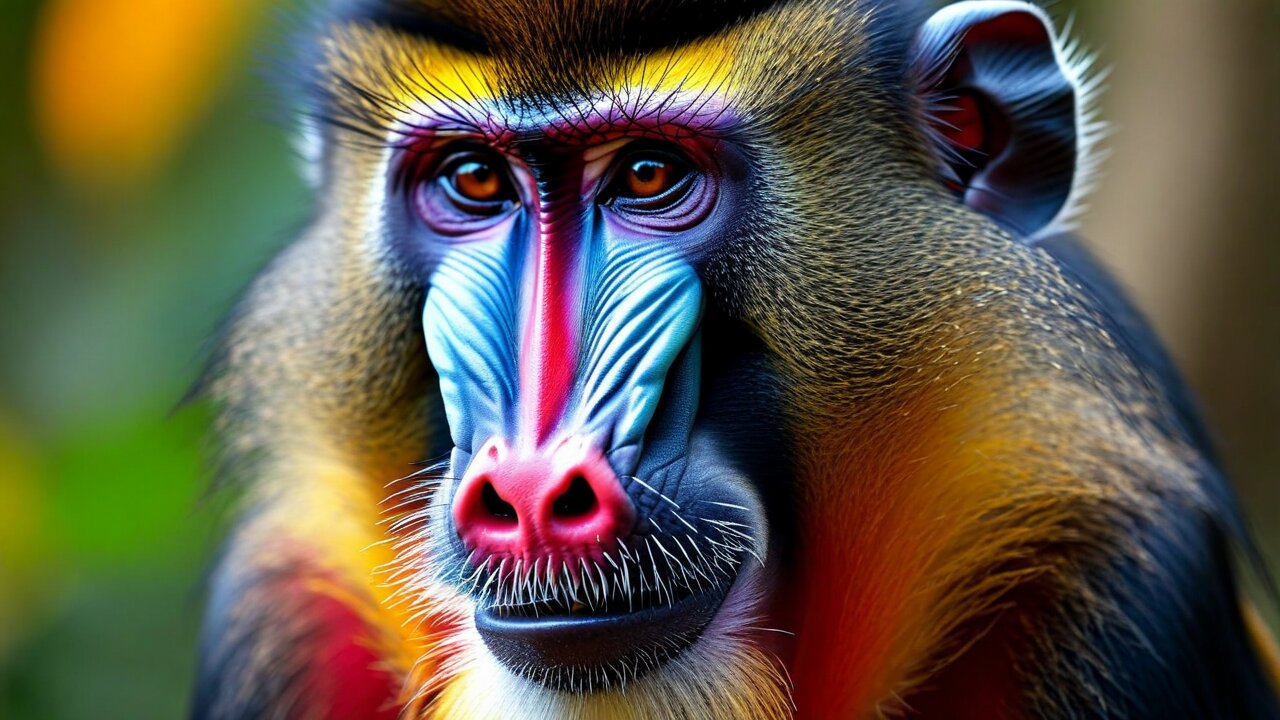
The hordes
Radio-collar work at Lopé documented groups of 700 to over 1,300 individuals moving as a single unit. Nothing else among primates does this.
The colour
Only dominant males develop the full blue-and-red face and rump. It signals rank directly, and a male who loses his position fades within weeks — one of the clearest examples of socially-mediated physiology in mammals.
Size
The largest monkey in the world. A big male reaches 30–35 kg and has canines longer than a leopard's.
Sun-tailed monkey
Allochrocebus solatus, found only in central Gabon and not described by science until 1984 — one of the last large mammals discovered anywhere.
The others
Black colobus, moustached and crowned guenons, putty-nosed monkeys, greater spot-nosed monkeys, and several galago species. Central African forest is a primate-rich environment and Gabon has protected more of it than its neighbours.
Bushmeat
The genuine threat to primates here is not habitat loss but hunting for the urban bushmeat trade. Do not eat it, do not photograph it approvingly, and understand that for rural households it is protein rather than a delicacy.
🐋 Whales, Turtles and the Coast
Gabon's marine protected areas cover about 26% of its waters, created in 2017 in one of the largest single marine designations in Africa. What they protect is a coast that is genuinely globally important for two migrations.
Humpback whales · July–September
Thousands migrate from Antarctic feeding grounds to calve in these warm shallow waters. Boat trips run from Loango and Port-Gentil, and the whales are close inshore. Some of the best and least-known whale watching in the world.
Leatherback turtles · November–February
Gabon hosts one of the largest leatherback nesting aggregations on Earth — tens of thousands of nests a season across Mayumba, Pongara and Loango. Females of up to 700 kg haul out at night.
Olive ridley and green turtles
Also nest here in smaller numbers, and the beaches are patrolled by conservation teams that visitors can sometimes join.
How to watch turtles
Only with a guide, only red light, no flash, stay behind the animal once she starts digging, and never touch. The rules are the same everywhere and they matter more where nesting density is this high.
The fisheries problem
Industrial fishing fleets, much of it foreign, and bycatch of turtles and marine mammals. The marine parks were created partly to address this and enforcement across that much ocean is difficult.
Other marine life
Orcas, several dolphin species, and West African manatees in the lagoons and lower rivers — rarely seen and genuinely there.
🌿 Bwiti and Iboga
Gabon's best-known cultural export is a religion. Bwiti is a spiritual tradition of the Punu, Mitsogo and later Fang peoples built around the root bark of iboga (Tabernanthe iboga), a powerful hallucinogen, used in initiation ceremonies that last for days.
What it is
A syncretic tradition combining forest religion, ancestor veneration and, in the Fang branch, Christian elements. Ceremonies involve all-night music with the ngombi harp and mongongo mouth bow, dance, fire and the ingestion of iboga.
Iboga
Ibogaine, the active alkaloid, produces long visionary states at ceremonial doses. Initiates take an enormous quantity once, and much smaller amounts thereafter. It is genuinely dangerous — cardiac arrhythmia is a documented cause of death — and is a controlled substance in many countries including much of the EU.
The addiction connection
Ibogaine has been studied and used, mostly outside regulated medicine, for interrupting opioid dependence. Results in the literature are interesting and the risks are real; Gabon has become a destination for people seeking it, often with no medical screening.
Legal status
Iboga is a national treasure in Gabon and its export is restricted. In the Czech Republic and most of the EU, ibogaine is a controlled substance — bringing any home is a criminal matter, not a souvenir question.
As a visitor
Some Bwiti ceremonies admit outsiders and some communities offer initiation commercially. It is a real religion, not an experience, and the commercial versions vary from serious to exploitative. If you have any cardiac history, do not.
Watching without taking
The music and dance are the accessible part and are extraordinary. Attending as a respectful guest, without participating in the pharmacology, is a normal and welcomed arrangement in many communities.
👥 People and Culture
Two and a half million people, around forty ethnic groups, 90% of them urban — one of the most urbanised countries in Africa, largely because the interior emptied towards the oil economy.
The Fang
Roughly a third of the population, in the north, and the largest single group. Their byeri reliquary figures — carved guardians for ancestral skulls — are among the most famous objects in African art.
The Punu and the white masks
The Punu okuyi masks, white-faced with a high crested coiffure and worn by stilt dancers, are the other Gabonese object the world knows. Both traditions are alive rather than museum pieces.
Music
Ngombi harp and mongongo bow in the Bwiti tradition; and internationally, Pierre Akendengué, the singer and poet who is Gabon's most respected artist, and Patience Dabany, a genuine star of Central African pop.
Religion
Predominantly Christian, mostly Catholic, with Islam a small minority and traditional practice — including Bwiti — widely maintained alongside Christianity rather than instead of it.
Football
The national obsession. Gabon co-hosted the Africa Cup of Nations in 2012 and hosted it in 2017, and Pierre-Emerick Aubameyang is by a wide margin the most famous living Gabonese.
Etiquette
Greet before anything else and shake hands with everyone present. Ask before photographing people — always, and expect to be refused sometimes. Dress modestly outside beaches and hotels.
🎭 Masks, and What They Did to European Art
In 1907 Picasso painted Les Demoiselles d'Avignon after visiting the ethnographic museum at the Trocadéro. The objects that changed how he and Braque saw form were largely Fang and Punu — from what is now Gabon. It is one of the more direct lines of influence in the history of European painting, and it is not much acknowledged in Libreville.
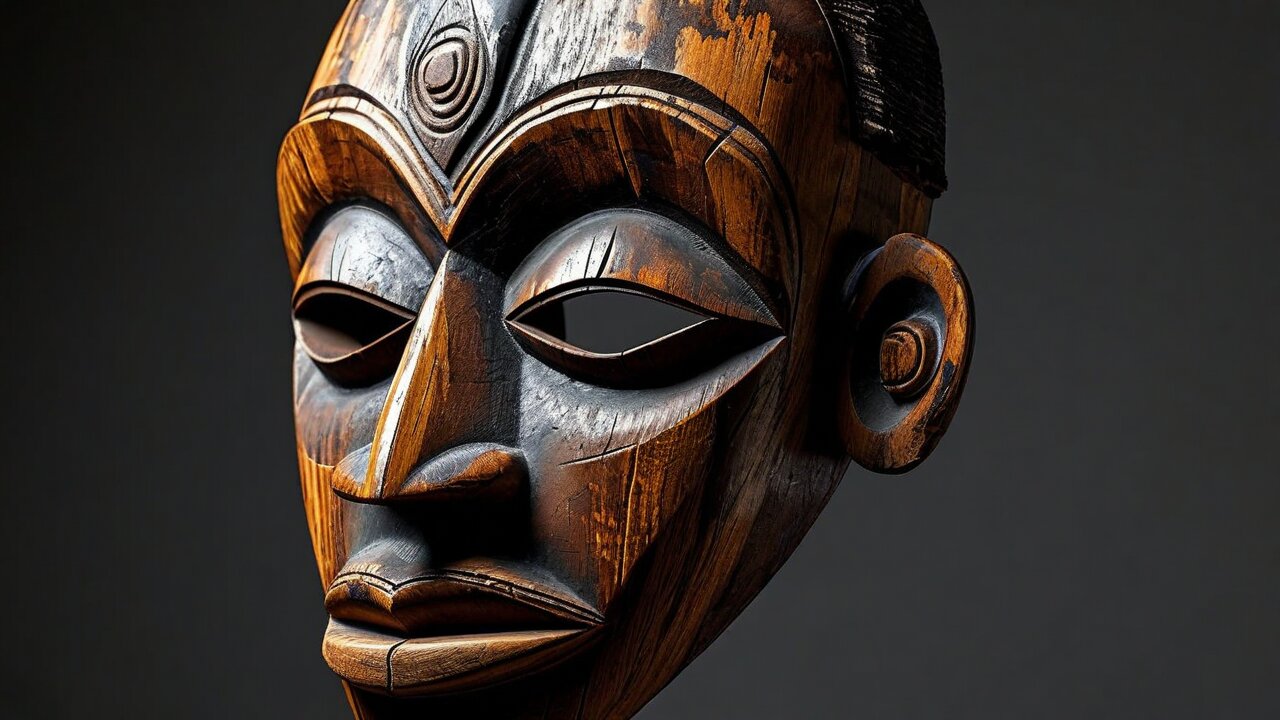
Fang byeri
Guardian figures that sat on boxes of ancestral skulls. Compact, muscular, with a high domed forehead and an enormously calm expression — Fang sculpture is what Europeans found and misunderstood as "primitive".
Fang ngil
The elongated white mask of a judicial society, used at night in anti-sorcery proceedings. Extremely rare — perhaps a dozen genuine examples exist — and one sold in France in 2022 for €4.2 million after being bought from an elderly couple for €150, which produced a lawsuit and a national argument in Gabon about restitution.
Punu okuyi
White-faced masks with a high three-lobed coiffure, worn by dancers on stilts. The whiteness represents the ancestral dead. Still danced at funerals and celebrations.
Kota reliquary figures
Flat brass- and copper-sheathed faces on a lozenge base, guarding ancestral bones. Among the most immediately striking objects in African art, and heavily collected.
Where to see them
The Musée National des Arts et Traditions in Libreville. The best collections, awkwardly, are in Paris, Brussels and New York, and the restitution question is live.
Buying
Genuine antique pieces cannot be exported and should not be bought. Contemporary carving is widely available in Libreville markets and is a legitimate purchase — ask whether the piece is new, and pay what it is worth.
🍽️ Gabonese Food
Forest and river food, built on cassava, plantain and fish, with palm oil and palm nut as the defining flavours — plus a substantial French inheritance in Libreville that means you can eat very well and very expensively in the capital.
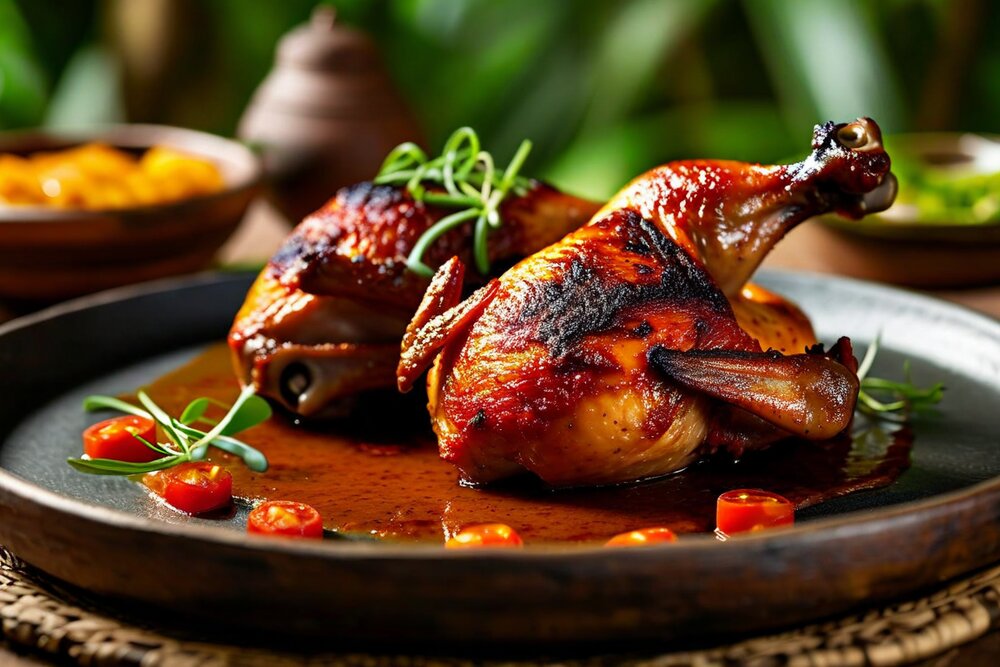
Poulet nyembwe
Chicken in palm-nut sauce, and the dish every Gabonese will name first. Nyembwe is the pulp of the oil palm fruit, boiled and pressed into a thick orange sauce that tastes of nothing else. Eaten with rice or cassava.
Cassava
The staple, in several forms: bâton de manioc (fermented cassava paste steamed in leaves), boiled cassava, and the leaves cooked down as a vegetable. Fermented cassava has a sour smell that takes a day or two to appreciate.
Fish
Freshwater from the Ogooué — capitaine (Nile perch), tilapia — and Atlantic fish and prawns on the coast. Grilled whole with chilli and lime is the everyday version and it is excellent.
Smoked and salted
Poisson salé and smoked fish are preservation methods from before refrigeration that stayed because people like the taste. They turn up in stews rather than being eaten alone.
Plantain
Fried as aloko, boiled, or pounded. With grilled fish and a chilli sauce this is the standard Gabonese plate.
Bushmeat
Widely eaten and part of rural diets, and also the main threat to primates and duikers here. As a visitor there is no good reason to order it and one clear reason not to.
Poulet nyembwe
Chicken in palm-nut sauce · serves 4 · 1 h 15
Ingredients: 1 whole chicken, jointed; 400 g palm nut cream (sauce graine / nyembwe base, sold tinned in African shops) or 800 g fresh palm nuts; 1 onion; 3 cloves garlic; 2 tomatoes; 1 hot chilli, whole; 1 aubergine or okra, optional; a stock cube; salt, pepper; oil.
Method: If using fresh palm nuts, boil them 30 minutes, pound and press through a sieve with hot water to extract the pulp, discarding fibre and stones. Brown the chicken pieces, remove, soften the onion, garlic and tomato. Return the chicken, add the palm-nut pulp and enough water to cover, drop in the whole chilli, and simmer uncovered 40–50 minutes until the sauce is thick and the oil separates on top. Remove the chilli before it bursts. Serve with rice or bâton de manioc.
💡 Tinned palm-nut cream is what everyone in the diaspora uses and there is no shame in it. The sauce is done when a layer of orange oil rises to the surface — before that it tastes raw.
Poisson salé aux plantains
Salt fish with plantain · serves 4 · 45 minutes
Ingredients: 400 g salt cod or salted fish, soaked overnight and flaked; 4 ripe plantains; 2 onions; 3 tomatoes; 2 cloves garlic; 1 chilli; 2 tbsp red palm oil (or groundnut oil); a bay leaf; salt and pepper.
Method: Soak and drain the fish thoroughly, changing the water at least twice — this is the whole difference between good and inedible. Fry sliced plantain in oil until golden and set aside. In the same pan soften onion, garlic and tomato in palm oil, add the flaked fish, the whole chilli and a little water, and simmer 15 minutes. Fold the plantain back through at the end so it does not disintegrate.
💡 Taste the soaking water before you cook: if it is still salty, soak longer. Red palm oil is what makes it taste Gabonese rather than generic.
🍺 What Gabonese Drink
One beer that dominates the country, palm wine that predates it by centuries, and French wine in Libreville at French-plus-freight prices.
Régab
The national beer, brewed in Libreville since 1966, sold in a 630 ml bottle, and effectively the default drink of the country. Ask for a Régab bien fraîche.
Palm wine
Vin de palme or toutou: sap tapped from the palm and left to ferment. Sweet and barely alcoholic within hours, sour and considerably stronger by the next day. Sold from jerrycans by the roadside and central to Bwiti and to village hospitality.
Malamba
Fermented sugar-cane spirit, strong and rural, and the informal drink of the interior.
Coffee and cocoa
Both grown here in small quantities. Cocoa is a smallholder crop the government has tried repeatedly to revive.
Non-alcoholic
Fresh juices — pineapple, mango, ginger — plus bissap (hibiscus) and ginger beer sold everywhere in reused bottles.
Rules and cost
Legal age 18 and lightly enforced. Imported wine and spirits in Libreville are very expensive; local beer and palm wine are not. Drink-driving is a genuine hazard on Gabonese roads regardless of the law.
🎉 Festivals and Events
Independence Day · 17 August
Parades in Libreville and celebrations nationwide. Since 2023 the political meaning of the day has been unsettled and interesting.
Whale season · July–September
Not a festival but the reason to come, and increasingly marked with events on the coast.
Turtle season · November–February
Night patrols on the beaches at Pongara and Mayumba, some open to volunteers and visitors through conservation organisations.
Bwiti initiations
Held year-round, by arrangement and within communities. Not a public spectacle, and not something to turn up to uninvited.
Christian calendar
Christmas and Easter observed widely, with Assumption on 15 August running into Independence Day and producing the busiest week of the year.
Football
Africa Cup of Nations qualifiers fill the stadium and empty the streets. If Gabon is playing, everything stops.
🌦️ Climate and When to Go
Equatorial: hot, humid and wet, with 24–31 °C year-round and no cool season at all. Libreville records around 2,500–3,000 mm of rain a year and parts of the interior considerably more. What varies is how much it rains and when, and it determines everything about a trip here.
The long dry season · June–September
The main travel window: least rain, easiest roads and river levels, and it coincides with the humpback whales. Also the best light and the least mud. Book well ahead.
The short dry season · December–January
A drier break in the middle of the rains, overlapping with leatherback nesting. Shorter and less reliable than June to September but a real window.
The rains · October–November and February–May
Heavy afternoon storms rather than constant drizzle, roads that become impassable, and forest tracks that stop being tracks. Some lodges close entirely.
It rains anyway
Even in the dry season this is equatorial rainforest. Assume rain on any given day and pack for it; "dry season" here means less, not none.
Humidity
Above 80% almost permanently. Clothes do not dry, cameras fog, and leather grows mould. Plan around it rather than fighting it.
What to pack
Lightweight long sleeves and trousers, a proper rain shell, quick-dry everything, rubber boots for forest walks (lodges often supply), strong DEET, and dry bags for anything electronic.
🏭 Oil, Manganese and What Comes Next
A high GDP per head, a third of the population in poverty, and an economy that has never escaped the resource it was built on. Gabon is the clearest case study in Central Africa of what oil does and does not buy.
Oil
Roughly 40% of GDP and 70% of exports, with production past its 1997 peak and declining. Gabon left OPEC in 1995, rejoined in 2016, and remains one of its smallest producers.
Manganese
Gabon is among the world's largest producers, mined at Moanda in the south-east and shipped out on the Transgabonais railway. It is the most likely candidate to matter more as oil declines.
Timber
Okoumé is the signature species and Gabon is its main world source. The 2010 ban on raw log exports forced processing into the country and created the Nkok special economic zone — a genuinely effective piece of industrial policy.
What is missing
Agriculture. Gabon imports the majority of its food despite abundant land and rain, because the oil economy pulled labour to the cities and made importing cheaper. Reversing this is the stated priority of every government and has not happened.
Inequality and youth
High headline GDP per head, roughly a third below the poverty line, and youth unemployment above 35%. That gap is what made the 2023 coup popular.
Tourism
Under 20,000 visitors a year — negligible economically and, given what the parks contain, an obvious unrealised asset. Cost, access and visa friction are the reasons.
🇨🇿 From the Czech Republic
No direct flights and no easy routing. Prague to Libreville takes 12 to 20 hours with one or two connections, and the time difference is the same as Czech winter time — Gabon is UTC+1 year-round, so in summer it is an hour behind Prague.
The routes
Air France via Paris is the most reliable and the most expensive. Turkish Airlines via Istanbul, Royal Air Maroc via Casablanca, Ethiopian via Addis Ababa and Brussels Airlines via Brussels all serve Libreville (LBV).
Cost
Expect 20,000–40,000 Kč return. Fares to Central Africa are high relative to distance because demand is thin and competition is limited.
Visa
Czech citizens need a visa. Gabon runs an e-visa system — apply online in advance, receive an authorisation, and complete the visa on arrival at Libreville. Do not rely on getting it at the airport without prior approval; people are refused boarding for exactly this.
Yellow fever
Vaccination is mandatory and the certificate is checked on arrival. Get it at least ten days before travel. Antimalarials are essential — this is a high-transmission country year-round — and typhoid and hepatitis A are strongly advised.
Czech consular cover
There is no Czech embassy in Gabon. The accrediting mission is the Czech Embassy in Abuja, Nigeria. Register with DROZD before travelling; in a country with this little tourism infrastructure it is not a formality.
Insurance
Take a policy with medical evacuation cover and read what it says about Central Africa. Serious cases are evacuated to South Africa or Europe, and that is not a bill you want to meet yourself.
✈️ Getting Around
This is the hard part. Gabon has roughly 1,000 km of paved road in a country the size of Britain, one railway, and internal flights that are limited and cancel. Nothing is quick.
The Transgabonais
The railway from Owendo, near Libreville, to Franceville — 650 km, 12–16 hours, through forest the whole way, with sleeper and seated classes. It is the country's transport backbone and by far the best way to reach Lopé. Book at the station; delays are normal.
Internal flights
Afrijet and a couple of others fly to Port-Gentil, Franceville, Oyem and Makokou. Schedules change and cancellations happen; never plan a same-day international connection off one.
Roads
The Libreville–Lambaréné–Mouila axis is paved and reasonable. Almost everything else is laterite, seasonal, and needs 4x4. Distances that look short take a day.
Port-Gentil
The second city has no road connection to the rest of the country at all — it is reachable only by air or boat. That fact tells you most of what you need to know about Gabonese infrastructure.
Boats and pirogues
The way into Loango, the Ogooué delta and Ivindo. Arranged through lodges and operators; river levels determine what is possible.
Hiring a vehicle
Possible in Libreville with a driver, which is what you should do. Self-drive outside the capital is not sensible unless you have experience of West African laterite roads in rain.
🧭 Practical Gabon
Money
The Central African CFA franc (XAF), pegged to the euro at 655.957 — so 1,000 XAF is about €1.52 or 38 Kč. Cards work in Libreville hotels and almost nowhere else. Carry euros to change and cash for everything outside the capital.
Language
French only, in practice. Very little English outside international hotels and lodges. If you have no French, travel with a guide who does.
Connectivity
Airtel and Moov sell tourist SIMs with usable data in the cities. Coverage outside towns is poor to absent, and in the parks there is none. Tell people at home you will be out of contact.
Electricity
220 V, French two-pin sockets — no adapter needed from Czechia. Power cuts are frequent; lodges run generators.
Water and health
Do not drink the tap water. Malaria is year-round and high-risk: take prophylaxis, use repellent and sleep under a net. Dengue and chikungunya also circulate. Medical facilities outside Libreville are very limited.
Permits and photography
Do not photograph airports, ports, military or government buildings — this is enforced and people have been detained for it. Ask before photographing anyone. Carry a copy of your passport and visa at all times.
💰 Costs
Gabon is expensive — one of the pricier countries in Africa for a visitor — because oil money set the price level in Libreville and because everything in the parks has to be flown or boated in.
Accommodation
Libreville business hotel €90–200 a night (2,200–5,000 Kč). Modest guesthouse €40–70. Park lodges €200–500 per person full board, which is where the budget actually goes.
Food
Street food and a local maquis €3–8. Mid-range restaurant in Libreville €15–30. A good French restaurant in the capital will cost what it would in Paris.
Transport
Transgabonais Libreville–Lopé €25–45 depending on class. Internal flight €150–250 each way. Vehicle with driver €80–150 a day. Charter flights to the parks run into the high hundreds.
Park fees and activities
Park entry around €25–40 per person. Gorilla trekking at Loango several hundred euros. Whale watching €60–120. Guides are compulsory in the parks and are worth it.
Realistic budget
A genuine wildlife trip runs €250–450 a day (6,000–11,000 Kč) all in. A Libreville-and-Pongara trip can be done for €120–180 a day. There is no backpacker tier that reaches the parks.
Why an operator is worth it
Independent travel here burns days on logistics and often fails outright. A specialist operator costs more per day and usually less per experience.
🛡️ Safety
Gabon is among the safer countries in Central Africa and has been politically stable through the 2023 transition. The real risks are health, roads and the forest, in that order.
Crime
Petty theft and occasional armed robbery in Libreville and Port-Gentil, mostly at night and in specific quarters. Do not walk at night, use taxis arranged by your hotel, and keep valuables out of sight.
Politics
The 2023 coup was largely bloodless and the transition has held, but political gatherings should be avoided as a matter of course. Check your ministry's advice before travelling.
Malaria
The single biggest health risk to a visitor. Year-round, high transmission, and falciparum. Prophylaxis is not optional and repellent plus a net matters as much.
Roads
Poor surfaces, heavy rain, night driving with no lighting, and logging trucks. Road accidents are a leading cause of serious injury for travellers here; do not travel by road at night.
Forest and wildlife
Forest elephants and buffalo on foot are genuinely dangerous and account for real injuries. Follow guides exactly. Rivers may hold crocodiles and there is bilharzia in still fresh water.
Police checkpoints
Frequent on roads. Carry passport and visa copies, be polite, and expect delays. Requests for informal payments happen; a calm, patient refusal usually works.
🏨 Where to Stay
Libreville
International chains and business hotels along the seafront and in the Quartier Louis, plus a growing number of mid-range guesthouses. Prices are high for what you get; this is an oil capital.
Park lodges
Loango Lodge and its camps, lodges at Lopé, and basic accommodation at Ivindo's research stations. All full board because there is no alternative, all bookable only in advance, and all with limited capacity.
Pointe Denis
Beach hotels and bungalows across the estuary from Libreville, 30 minutes by boat — the standard weekend and a good soft landing after a long flight.
Provincial towns
Simple hotels in Lambaréné, Franceville, Oyem and Makokou, functional rather than pleasant, and usually the only option.
Camping
Not a thing here in any organised sense outside research stations and a couple of park sites. Do not plan on it.
Booking
Most lodges take direct email bookings and are not reliably on international platforms. Allow time for correspondence and expect to pay a deposit by transfer.
🗺️ Suggested Itineraries
Five days · a first look
Libreville and the national museum, Pointe Denis or Pongara for beach and turtles in season, and Lambaréné for Schweitzer's hospital. No internal flights, no charter, and a real sense of the country.
Eight days · Loango
Libreville, then Loango for four or five nights — beach wildlife, lagoon boats, gorilla trek if available, whales in season. The trip most visitors come for and the one worth the money.
Ten days · Loango and Lopé
Loango, then back through Libreville and out on the Transgabonais to Lopé for the mandrills, savanna mosaic and petroglyphs. Two very different halves and the best all-round itinerary.
Two weeks · adding Ivindo
The above plus Makokou and Langoué Baï — a day's walk in to a forest clearing platform, and the best chance in the country of watching forest elephants and gorillas in the open.
For whales · July–September
Base at Loango or Port-Gentil and build the trip around boat days. Combine with the dry-season forest walking, which is at its best in the same window.
For turtles · November–February
Pongara and Mayumba, night patrols, and the short dry season in December and January. Fewer whales, far fewer people.
🤯 Fascinating Facts
Eighty-eight per cent forest
One of the highest forest-cover proportions of any country on Earth, and a net carbon sink — Gabon absorbs far more than it emits.
Thirteen parks in one announcement
In 2002 the president set aside 11% of the national territory as national parks in a single decision, after the conservationist Mike Fay walked across the Congo Basin and reported what was there.
More forest elephants than anywhere
Around 95,000 — more than half the world's remaining population of a Critically Endangered species.
Elephants on the beach
At Loango, forest elephants and buffalo walk out of the trees onto the Atlantic shore, and hippos have been filmed in the surf. There is nowhere else this reliably happens.
The world's largest monkey troops
Mandrill hordes at Lopé exceed a thousand animals — the largest stable groups of any non-human primate ever recorded.
A natural nuclear reactor
At Oklo in south-eastern Gabon, uranium deposits sustained self-regulating nuclear fission reactions for hundreds of thousands of years, around 1.7 billion years ago. It is the only known natural fission reactor on Earth, found in 1972 when French analysts noticed the ore was depleted.
A mask sold for €4.2 million
A Fang ngil mask bought from an elderly French couple for €150 sold at auction in 2022 for €4.2 million, producing a lawsuit and a restitution argument in Gabon.
Fifty-six years, one family
Omar Bongo ruled for 41 years and his son for 14 more, until the 2023 coup. Between them they governed Gabon for its entire modern history until three years ago.
Joined the Commonwealth with no British history
Gabon was admitted in 2022 despite never having been British — a deliberate diplomatic pivot away from France.
👤 Notable Gabonese
Léon M'ba (1902–1967)
First president, restored to power by French paratroopers in 1964 after a coup — the founding episode of Franceafrique in Gabon.
Omar Bongo (1935–2009)
President for 41 years, one of the longest-serving heads of state in modern history, and the architect of the oil state and of its corruption.
Pierre-Emerick Aubameyang (b. 1989)
Striker, African Footballer of the Year in 2015, and by a wide margin the most famous living Gabonese. Captained the national team and has been at the centre of long-running arguments with the federation.
Pierre Akendengué (b. 1943)
Singer, poet and composer, blind since childhood, and the most respected artist Gabon has produced. His work blends Myene traditions with classical and political songwriting.
Patience Dabany (b. 1941)
Singer, former first lady, and a genuine star of Central African pop over five decades — and the mother of Ali Bongo.
Angèle Rawiri (1954–2010)
Gabon's first female novelist, whose work on womanhood, infertility and urban modernity is foundational for Central African literature in French.
Albert Schweitzer (1875–1965)
Not Gabonese, but inseparable from the country: Alsatian doctor, theologian and organist who built and ran the Lambaréné hospital for half a century and won the 1952 Nobel Peace Prize.
Mike Fay (b. 1956)
Also not Gabonese: the American conservationist whose 2,000 km Megatransect walk across the Congo Basin in 1999–2000 directly produced Gabon's national park system.
🧭 Visiting Responsibly
Gabon receives so few visitors that each one is proportionally significant — both in what they spend and in the argument they help make for keeping the forest standing.
Do not eat bushmeat
Hunting for the urban bushmeat trade is the primary threat to primates and duikers here. It is available and it is not something a visitor has any business ordering.
Great ape health rules
Seven metres minimum, no trekking if you are ill, masks where required. Human respiratory illnesses kill gorillas and chimpanzees, and habituated groups are the most exposed.
Buy new, not old
Contemporary carving supports living artists. Genuine antique masks and reliquary figures cannot legally leave the country and should not be bought at any price.
Iboga stays here
It is a national heritage plant, its export is restricted, and ibogaine is a controlled substance across most of the EU. Do not attempt to take any home.
Hire local guides
Compulsory in the parks anyway, and the most direct way that money reaches communities living next to wildlife that raids their crops.
Photograph people properly
Ask first, accept refusal, and do not photograph the Baka and other forest peoples as scenery. Never photograph officials, airports or military installations at all.
✍️ Author's Note
Gabon is the country I most often find myself explaining to people who have never heard of it. It has more forest elephants than anywhere on Earth, mandrill troops of a thousand animals, gorillas, whales calving offshore and leatherbacks nesting on the same beaches — and fewer than twenty thousand visitors a year, which is a rounding error against Kenya.
The reasons are not mysterious. It is expensive, the visa is fiddly, the roads barely exist, and forest wildlife does not perform the way savanna wildlife does. You will spend a wet morning walking through thick green seeing very little, and then something the size of a car will step onto the beach twenty metres away and you will understand why people come back.
Two pieces of advice. First, take the train. Twelve hours from Libreville to Lopé through unbroken forest, for the price of a taxi ride in Europe, is the single best thing you can do in this country and it is not on anyone's itinerary. Second, use an operator. I am generally in favour of arranging things yourself and Gabon is the exception — the logistics eat the trip, and the specialists here are small, local and worth what they charge.
And go before the argument is settled. Gabon protected its forest because oil paid for everything else, and the oil is running out. What replaces it — carbon payments, timber, mining, or tourism — will decide whether the parks created in one morning in 2002 still mean anything in 2050. Right now they do, spectacularly, and almost nobody is looking.
— Radim Kaufmann
Support This Project 🌍
This World Travel Factbook is a labor of love – free to use for all travelers. If you find it helpful, consider supporting its continued development.