


🌍 Chad at a Glance
🌍 Overview — Heart of Africa
There is a moment in the Ennedi Massif when the afternoon light transforms sandstone towers into glowing amber monuments against an impossibly blue sky. Wind-carved arches frame distant plateaus, and somewhere in the labyrinth of canyons below, prehistoric crocodiles still survive in hidden pools—relics of a time when the Sahara was green and elephants roamed these now-barren lands. This is Chad, Africa's dead heart that pulses with life for those willing to venture beyond the headlines.
Chad sprawls across 1.284 million square kilometers of Central Africa, landlocked between Libya, Sudan, the Central African Republic, Cameroon, Nigeria, and Niger. The country encompasses three distinct worlds: the hyperarid Saharan north where the Tibesti volcanic massif rises to 3,415 meters at Emi Koussi; the transitional Sahel belt where nomads follow ancient caravan routes; and the fertile southern savannas where cotton fields and mango trees flourish during the rainy season. At its western edge lies the shrinking but still vital Lake Chad, once one of Africa's largest lakes and still the lifeblood of millions.
For adventurous travelers, Chad offers what few places on Earth still can: genuine exploration. The Ennedi Massif's UNESCO-listed rock art galleries preserve 8,000 years of human history painted on stone. Zakouma National Park has become one of Africa's great conservation success stories, its elephant herds recovering from near-extinction. N'Djamena, the dusty capital on the Chari River, serves as the gateway to landscapes that inspired descriptions of Mars before we had rovers to photograph the real thing. This is not a destination for the faint-hearted—but for those who come prepared, Chad reveals an Africa of stunning raw beauty.
🏷️ Name & Identity
The name Chad derives from the Kanuri word tsade, meaning "large expanse of water" — a reference to Lake Chad, which has shaped the region's identity for millennia. The Bornu Empire, centered on the lake, was one of Africa's longest-lasting kingdoms, enduring from the 9th century until European colonization. French colonizers adopted the lake's name for the entire territory, creating Tchad in 1900 as part of French Equatorial Africa.
The national flag mirrors France's tricolore but with distinct meaning: blue represents the sky and hope, gold symbolizes the Saharan sun and the desert north, and red stands for the sacrifice of independence and national unity. Officially the Republic of Chad (République du Tchad), the country maintains both French and Arabic as official languages — a reflection of its complex colonial history and the deep cultural divide between the predominantly Muslim, Arabic-speaking north and the Christian and animist, French-speaking south.
Chadians often refer to their homeland as the "Dead Heart of Africa" — not as an insult but as a badge of resilience. The phrase acknowledges Chad's harsh geography and difficult history while expressing pride in survival. The national motto, "Unité, Travail, Progrès" (Unity, Work, Progress), reflects aspirations that remain as relevant today as when independence was declared in 1960.
🗺️ Geography & Regions
Chad is Africa's fifth-largest country, spanning 1,284,000 km² of staggering geographic diversity. The Saharan Zone in the north covers roughly a third of the country — a sea of sand dunes, volcanic peaks, and eroded sandstone plateaus where the Tibesti Mountains rise to 3,415 meters at Emi Koussi, the highest point in the Sahara. This region receives virtually no rainfall and supports only scattered Toubou nomads who traverse vast distances between oases.
The Sahel Belt stretches across the center — a semi-arid transitional zone where thorny acacia scrublands give way to grasslands during the brief rainy season. Here, the capital N'Djamena sits at the confluence of the Chari and Logone rivers. This zone supports pastoral nomads — Fulani, Arab, and Daza herders who move their cattle, camels, and goats across traditional corridors that have been used for centuries.
The Sudanian Savanna in the south is Chad's agricultural heartland — a greener, wetter region where cotton, millet, sorghum, and peanuts grow during the June-October rainy season. Rivers flow year-round here, forest galleries line the waterways, and wildlife concentrates in protected areas like Zakouma National Park. This is also where most of Chad's population lives, and where the cultural traditions of the Sara people — the country's largest ethnic group — define daily life.
Lake Chad, straddling the western border with Niger, Nigeria, and Cameroon, has shrunk by 90% since the 1960s — from 25,000 km² to roughly 1,350 km². Once visible from space as one of Africa's great water bodies, its disappearance is one of the continent's most dramatic environmental disasters, affecting 30 million people who depend on its waters for fishing, irrigation, and livestock.
🗺️ Map
📜 History
Long before any empire, the Djourab desert of northern Chad was home to Toumaï — Sahelanthropus tchadensis, a roughly seven-million-year-old hominin skull unearthed at Toros-Menalla in 2001 by Michel Brunet's Franco-Chadian team and still the oldest known candidate for the human lineage. The find is the reason the Djourab sits on Chad's UNESCO Tentative List and why the presidential palace in N'Djamena is called the Palais Toumaï.
Chad's history is the story of empires built on trade and survival. The Sao civilization (6th century BCE – 16th century CE) left behind enigmatic terracotta figurines and the ruins of walled cities around Lake Chad. The Kanem Empire rose in the 8th century, becoming one of medieval Africa's most powerful Islamic kingdoms. Under the Sayfawa dynasty — which reigned for roughly 770 years (c. 1075–1846), one of the longest-lived dynasties anywhere — Kanem and its successor state Bornu controlled trans-Saharan trade routes linking sub-Saharan Africa to the Mediterranean world.
French colonization arrived in 1900, meeting fierce resistance from the Rabih az-Zubayr, a Sudanese warlord who had carved out his own empire around Lake Chad. The French defeated Rabih at the Battle of Kousséri in 1900 but struggled to control Chad's vast territory for decades. Chad became part of Afrique-Équatoriale française (AEF), serving primarily as a source of forced cotton cultivation and conscripted labor. During World War II, Chad became the first French colony to rally to Charles de Gaulle's Free France, with Governor Félix Éboué — one of the first Black colonial governors — playing a pivotal role.
Independence came on August 11, 1960, but the north-south divide soon erupted into civil war. The FROLINAT rebellion (1966), Libyan intervention in the Aouzou Strip (1973–1994), Hissène Habré's brutal dictatorship (1982–1990), and Idriss Déby's 30-year rule (1990–2021) created a cycle of conflict that continues to shape the country. Habré, convicted of crimes against humanity by an African Union tribunal in 2016, killed an estimated 40,000 political opponents. Déby was killed by rebels in April 2021, and his son Mahamat Idriss Déby assumed power in a military transition that remains controversial.
👥 People & Culture
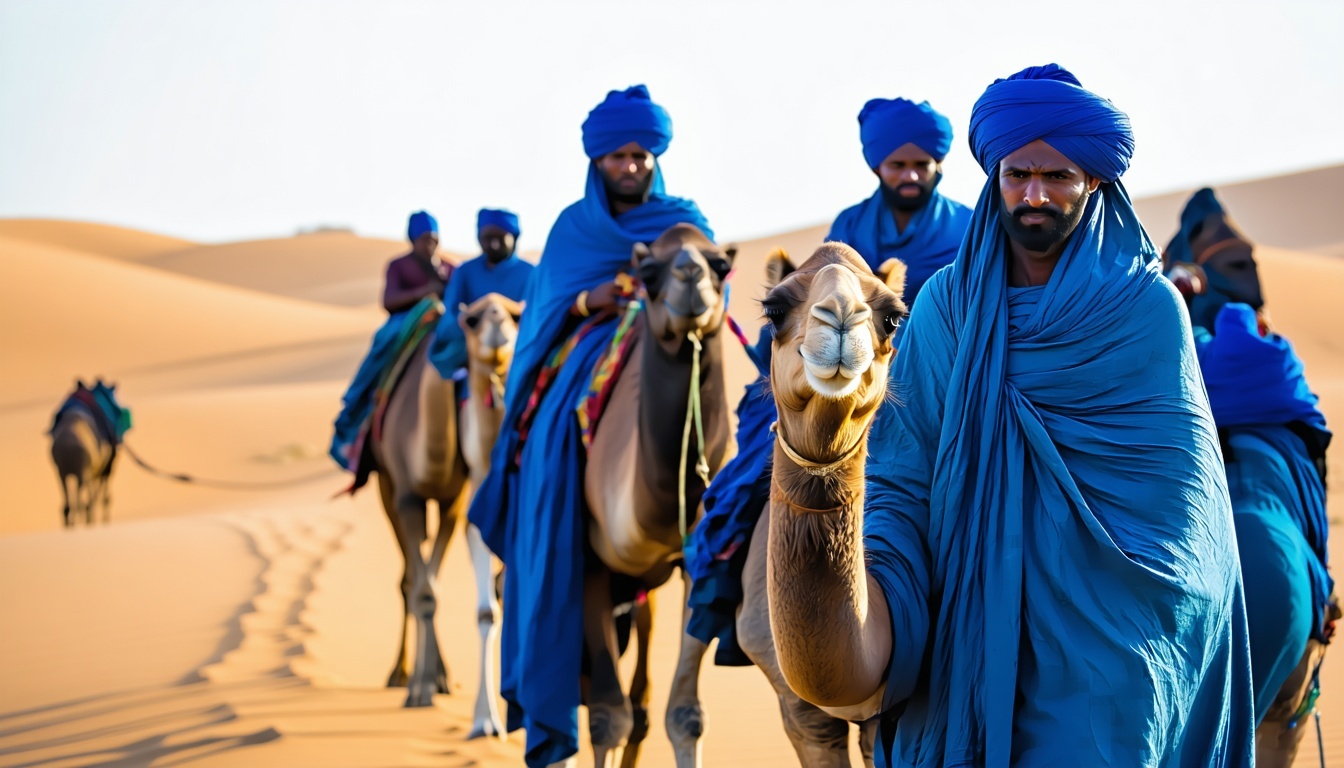
Chad is home to over 200 distinct ethnic groups speaking more than 120 languages — making it one of Africa's most linguistically diverse nations. The Sara people of the south (roughly 30% of the population) are the largest group, known for their elaborate scarification traditions and the yondo initiation ceremonies that mark the passage to adulthood. The Arab population (12%) is concentrated in the Sahel, while the Toubou and Daza of the Tibesti are legendary desert survivors — nomads who navigate the Sahara with camels and intimate knowledge of water sources passed down through generations.
Music and dance are central to Chadian life. The balafon (wooden xylophone) and hu hu (single-string fiddle) accompany social gatherings throughout the south. The gerewol festival, practiced by the Wodaabe (Bororo Fulani), is one of Africa's most spectacular cultural events — young men elaborate their faces with paint, beads, and kohl to compete in a male beauty contest judged by young women. Northern Arab culture revolves around poetry, camel racing, and elaborate tea ceremonies.
Islam predominates in the north (roughly 55% of the population), Christianity in the south (roughly 35%), with traditional animist beliefs woven throughout both communities. This religious divide parallels the north-south political tension that has shaped Chad's post-independence history. Despite this, everyday Chadians show remarkable tolerance — interfaith marriages occur, and traditional beliefs often coexist with Abrahamic faiths in ways that would surprise outsiders.
🏛️ N'Djamena — The Capital
N'Djamena (population ~1.6 million) sprawls along the southern bank of the Chari River, facing Cameroon's Kousseri across the water. Founded as Fort-Lamy by French colonizers in 1900, the city was renamed in 1973 — N'Djamena means "place of rest" in Arabic. It is a city that has been destroyed and rebuilt multiple times by civil wars, most recently in 2008 when rebel forces reached the presidential palace before being repulsed.
The Grand Marché (Central Market) is the city's beating heart — a chaotic, colorful labyrinth where you can buy anything from Saharan salt slabs to Chinese electronics. The National Museum houses remarkable Sao artifacts and Kanem-Bornu archaeological finds. The Avenue Charles de Gaulle runs through the city center, lined with government buildings in faded colonial style. For evening relaxation, the banks of the Chari River come alive with open-air restaurants serving grilled capitaine (Nile perch) and cold Gala Beer.
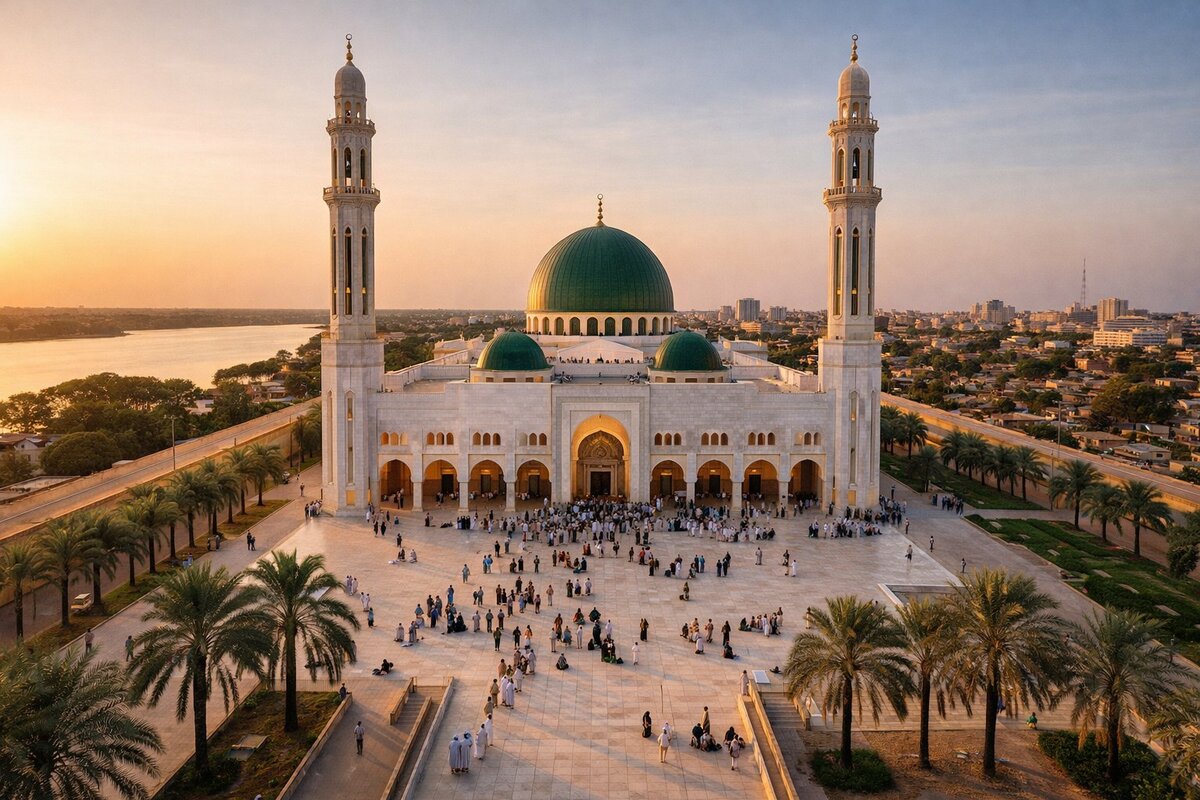
N'Djamena serves primarily as a logistics base for travelers heading to Chad's natural wonders. The city has limited conventional tourist attractions, but its energy, resilience, and the warmth of its people make it more than just a transit point. The Friday prayers at the Grande Mosquée, the sunset over the Chari River, and the buzz of the quartiers at dusk offer authentic glimpses into daily Chadian life that no curated experience can match.
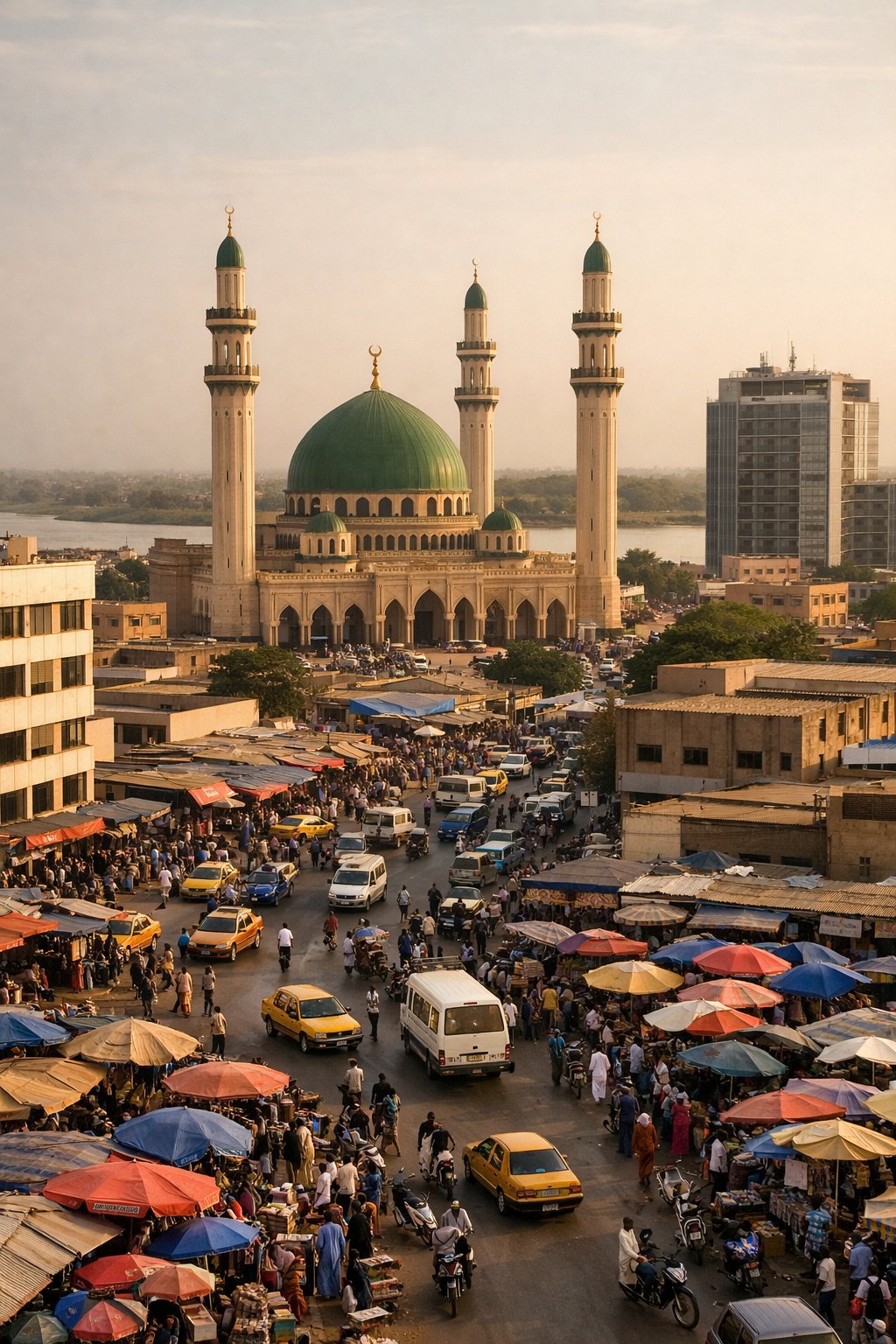
N'Djamena
The Chari River waterfront and the capital's skyline at dusk.
🏔️ Ennedi Massif — UNESCO World Heritage
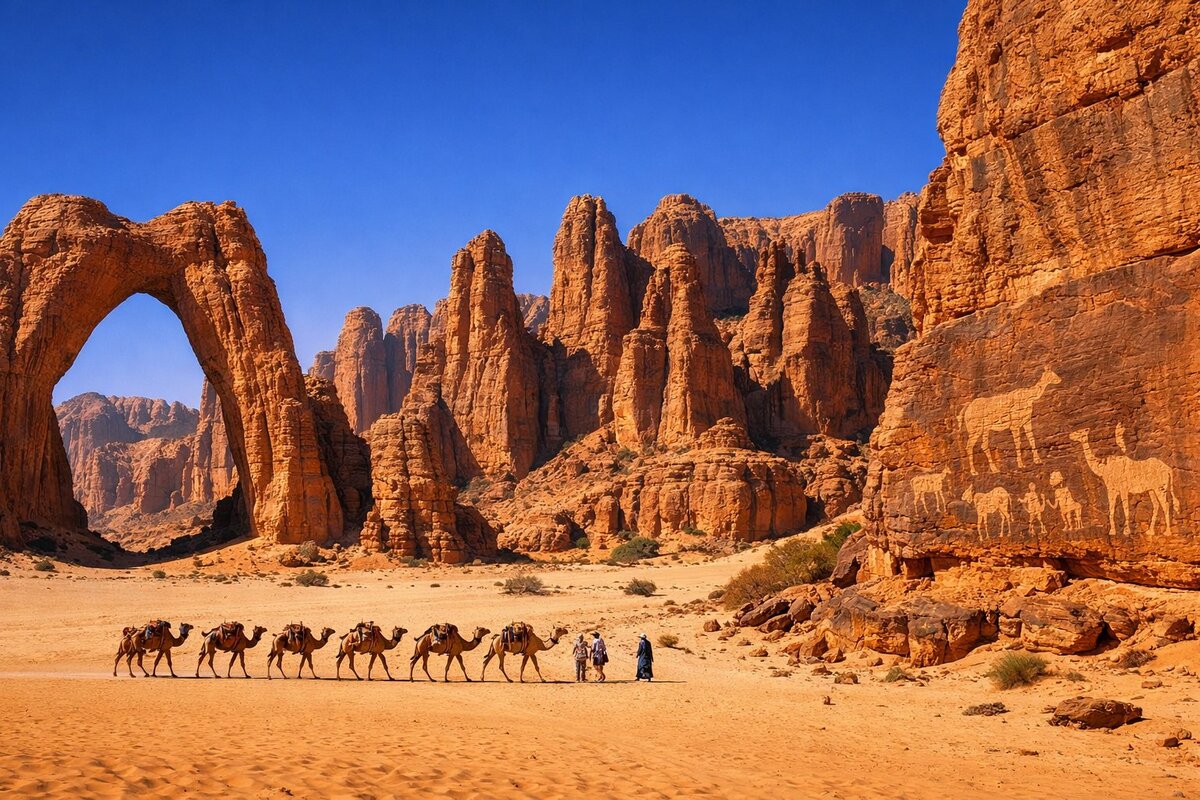
The Ennedi Massif, inscribed as a UNESCO World Heritage Site in 2016, is Chad's crown jewel — a sandstone plateau roughly the size of Switzerland, sculpted by wind and water into an otherworldly landscape of arches, pillars, canyons, and mushroom-shaped formations. Rising from the surrounding Saharan flatlands in northeastern Chad, the massif reaches altitudes of 1,450 meters and harbors microclimates that support relict populations of species long vanished from the surrounding desert.
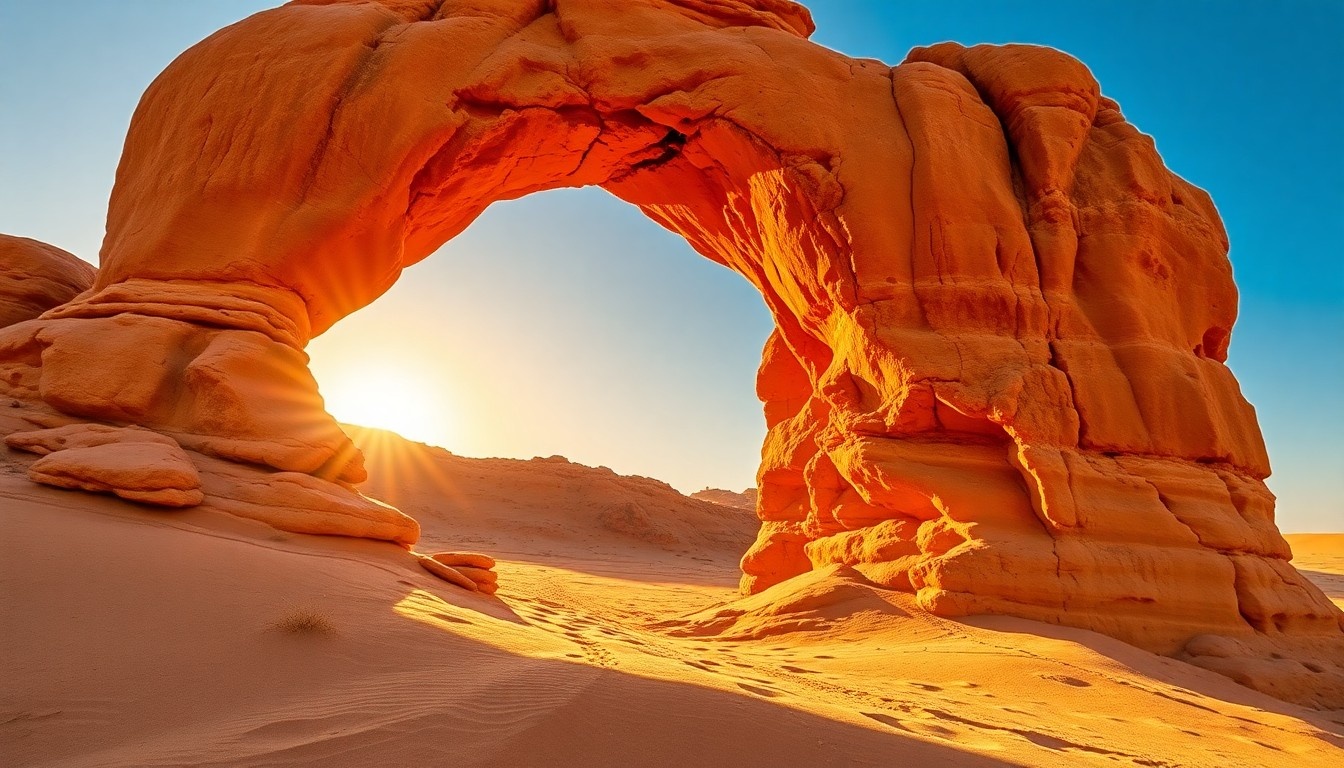
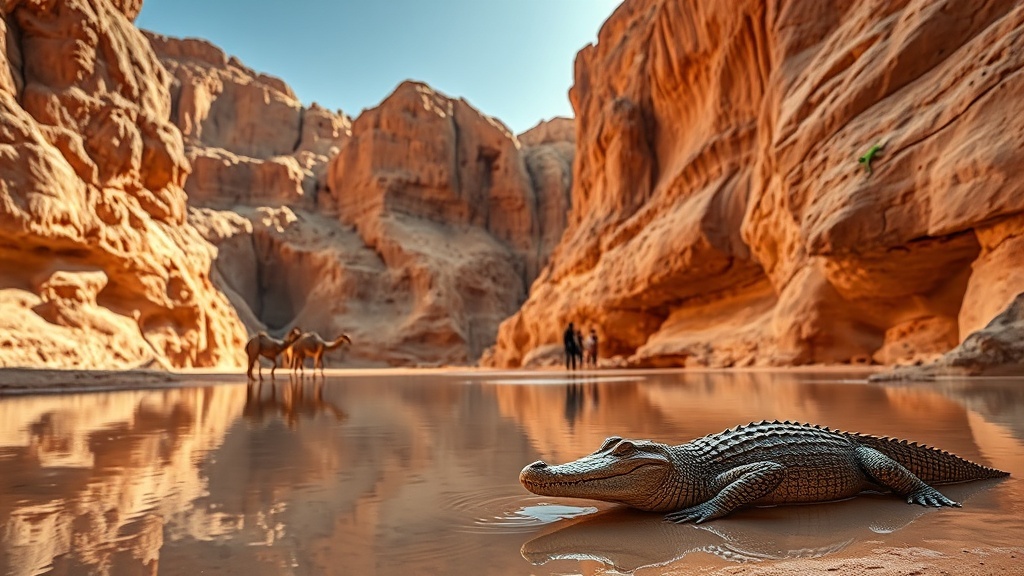
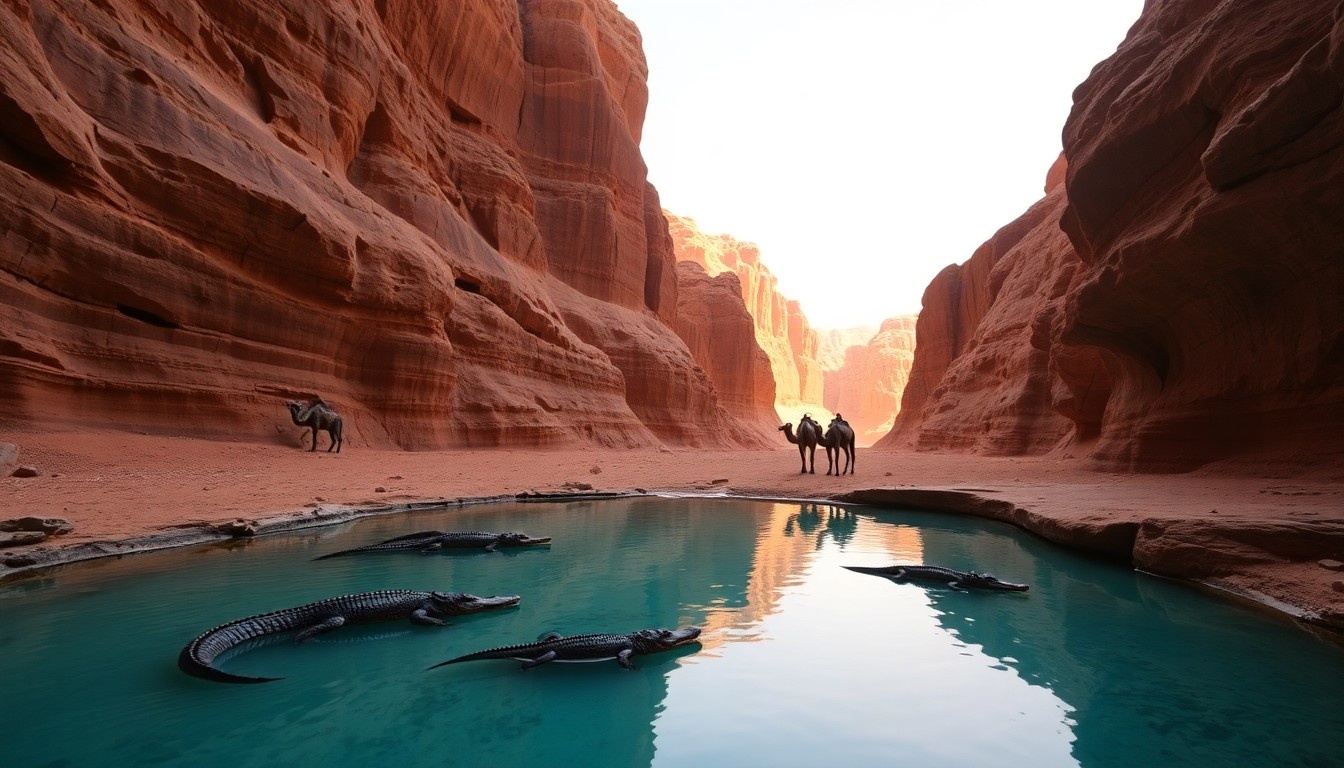
The Aloba Arch, soaring 120 meters high, is one of the tallest natural stone arches in the world — surpassing most of the famous formations in Utah's Arches National Park. The Guelta d'Archei, a permanent water pool hidden in a narrow canyon, shelters one of the last populations of Saharan crocodiles (Crocodylus suchus) — prehistoric survivors that have adapted to desert conditions far from any river system. Toubou cameleers water their herds here, and the sight of camels drinking alongside ancient crocodiles is one of Africa's most surreal natural encounters.
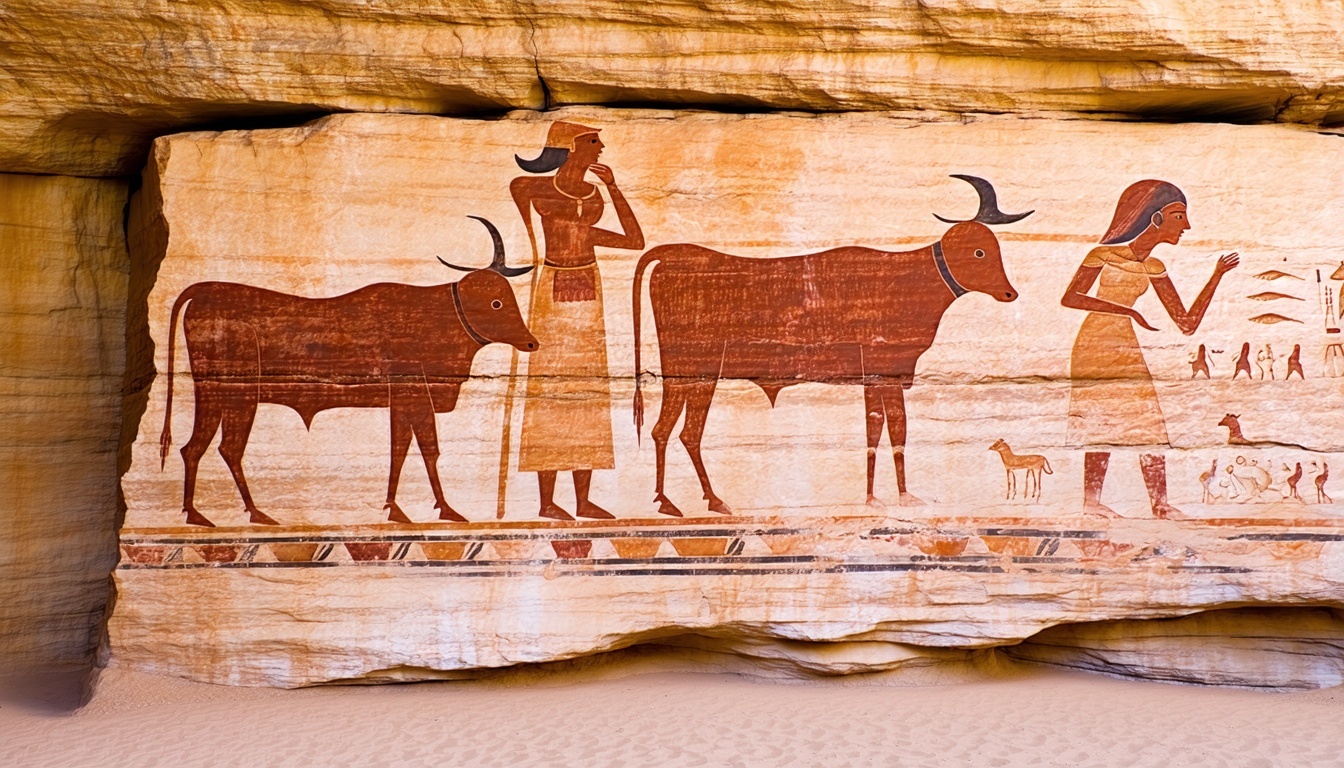
The massif's rock art galleries contain thousands of paintings and engravings spanning 8,000 years — from the "Green Sahara" period when cattle herders and hippopotamuses shared lush grasslands, through the progressive desertification that transformed the region into the sand sea visible today. Figures of swimmers, canoes, and large-bodied wildlife testify to a radically different climate. Reaching the Ennedi requires a 4x4 expedition from N'Djamena (typically 3–4 days), but the reward is one of the most extraordinary landscapes on Earth.
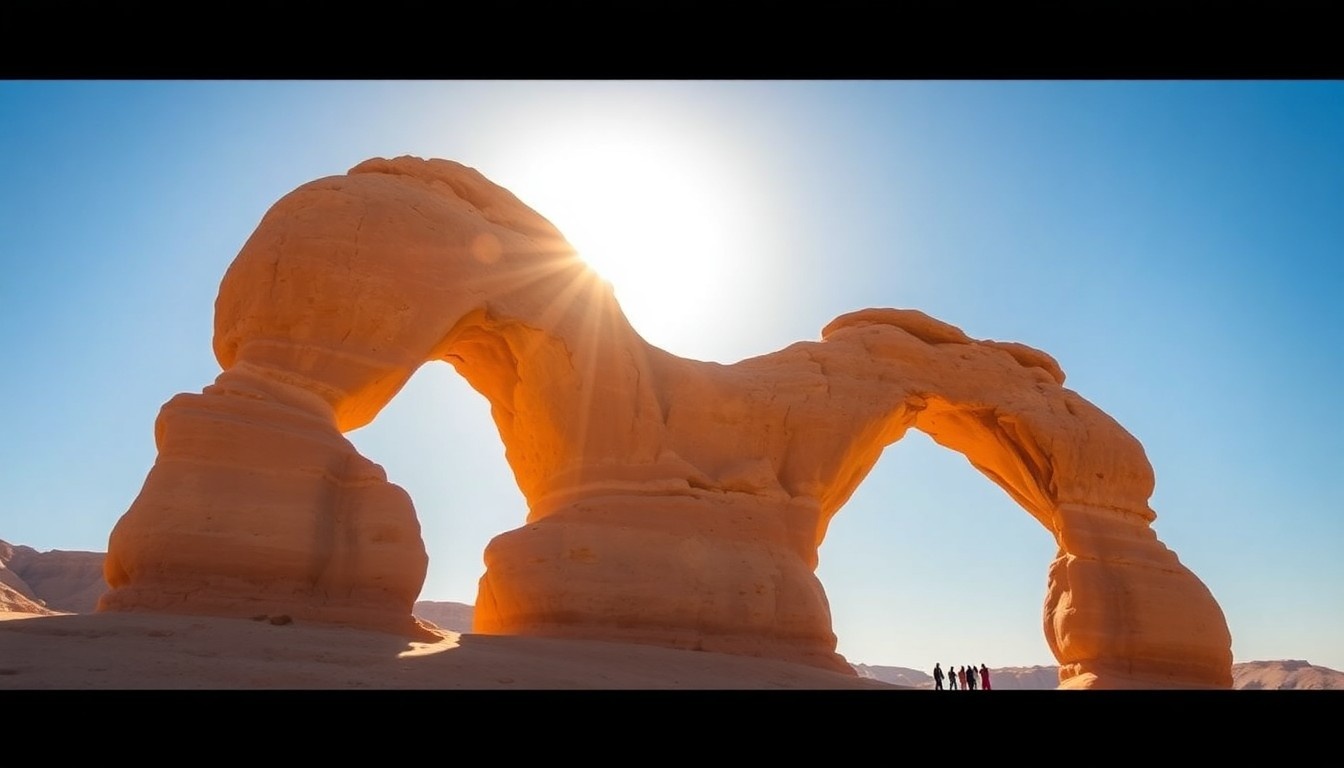
Aloba Arch, Ennedi
One of the tallest natural arches on Earth, rising 120 m from the Ennedi sandstone.
🌋 Tibesti Mountains
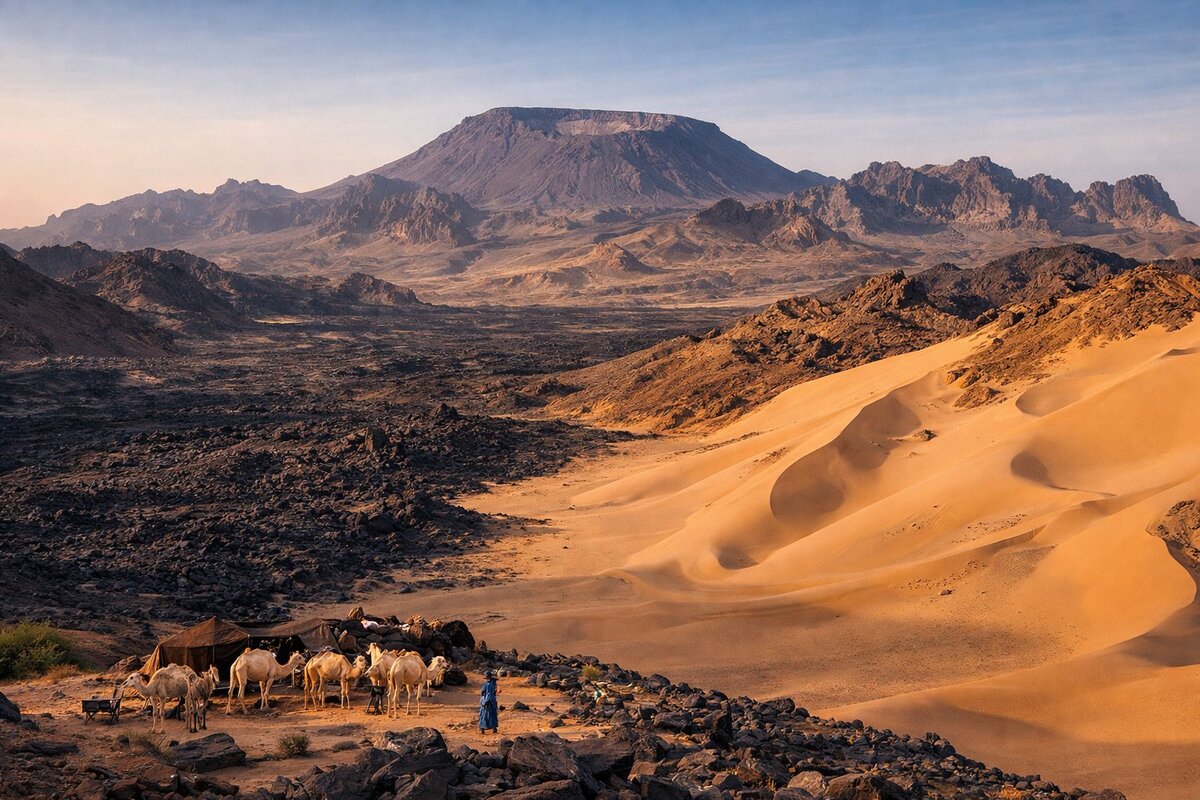
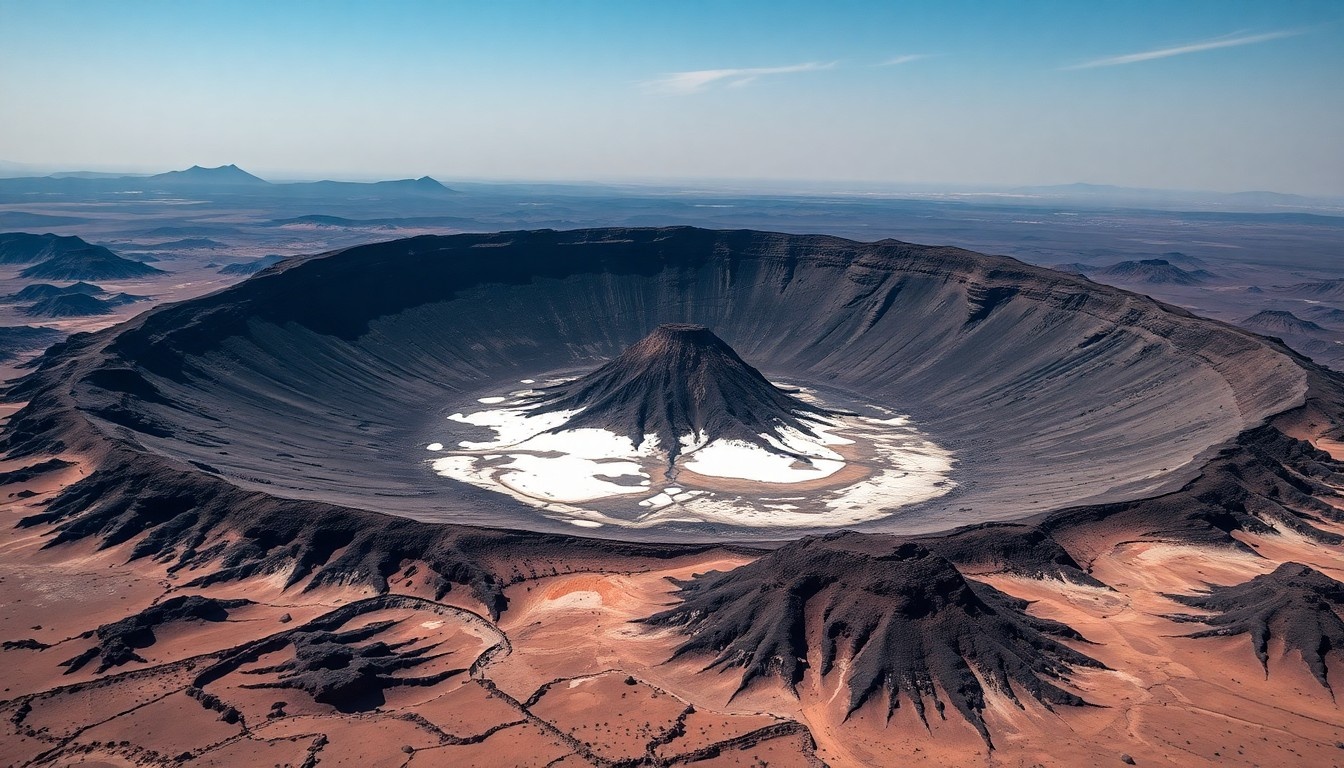
The Tibesti Mountains in far northern Chad are the Sahara's highest and most dramatic volcanic range. Emi Koussi (3,415 m) is the highest point in the entire Sahara, a massive shield volcano with a caldera 13 km wide. Toussidé (3,265 m) remains semi-active, with fumaroles and hot springs that the local Toubou people use for bathing and medicinal purposes. The Trou au Natron, a volcanic crater 1,000 meters deep, contains surreal deposits of white natron (soda) on its floor, creating a landscape that resembles another planet.
The Tibesti is Toubou territory — homeland of the fierce, independent nomads who have resisted every attempt at outside control for centuries. The Toubou are legendary survivors, capable of crossing vast desert expanses with minimal water, navigating by stars and wind patterns. Their culture revolves around camels, date palms, and a strict code of honor. Visiting the Tibesti requires special military permits, armed escorts and experienced local guides — and as of 2026 it is, in practice, closed to tourists. Armed-group activity along the Libyan border, gold-mining conflict in the massif and uncleared land mines mean no reputable operator is running Tibesti itineraries; the region sits inside the U.S. Level 4 advisory (section 17). The paragraphs below describe what is there, not an itinerary you can currently book.
For the rare adventurer who makes it here, the Tibesti offers volcanic landscapes of extraordinary beauty — black basalt flows contrasting with golden sand dunes, ancient rock art sites accessible only by camel, and the profound silence of a region where the nearest city is over 1,000 kilometers away. The French military once maintained an outpost at Bardaï, the regional capital (population ~15,000), which remains the only settlement with basic services.
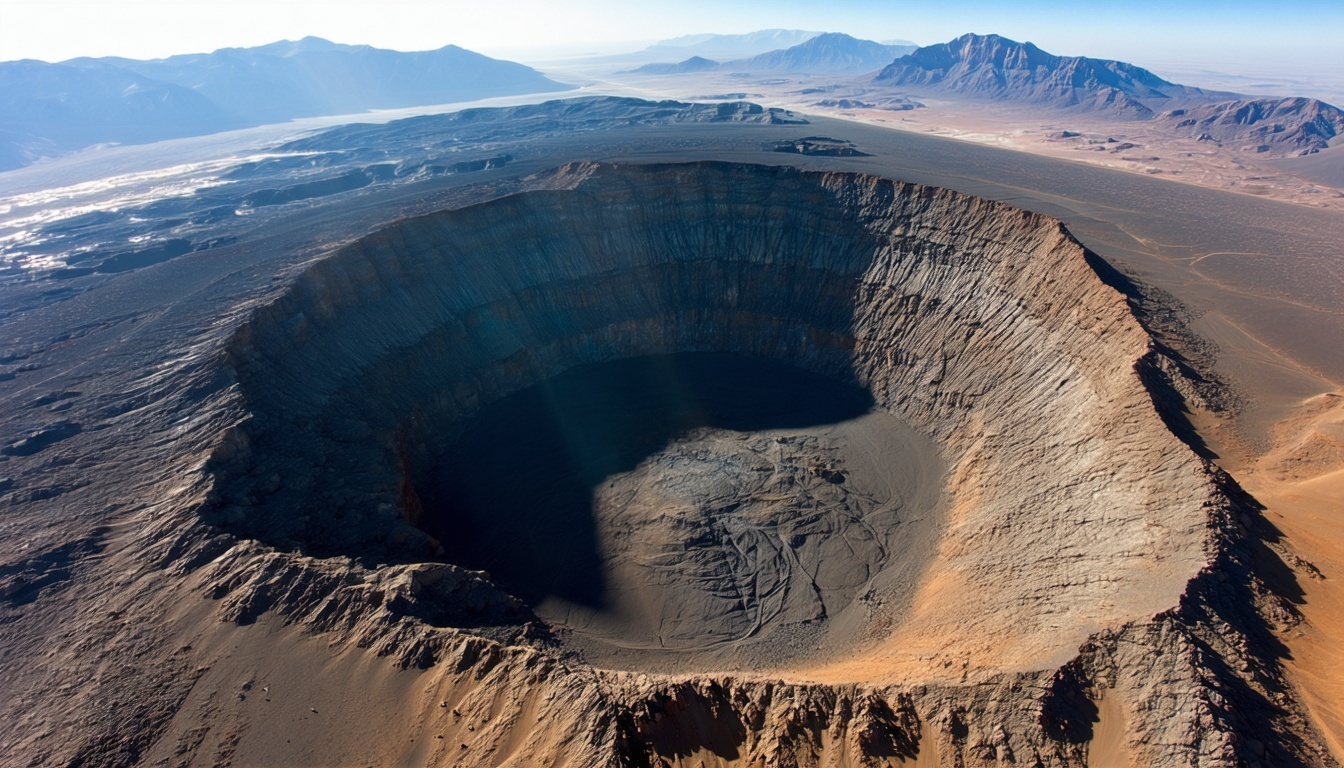
Emi Koussi, Tibesti
The 3,415 m shield volcano that is the roof of the Sahara — currently closed to travellers.
💧 Lake Chad — The Vanishing Sea
Lake Chad is one of the world's most dramatic environmental tragedies in slow motion. In 1963, the lake covered 25,000 km² — visible from space as a great inland sea. Today, it has shrunk to roughly 1,350 km², a 90% reduction caused by climate change, upstream damming, and increased irrigation. What was once a single deep lake has fragmented into a mosaic of shallow pools, marshes, and seasonal floodplains that shift unpredictably.
Despite its decline, Lake Chad remains vital to roughly 30 million people across four nations (Chad, Nigeria, Niger, Cameroon) who depend on it for fishing, irrigation, and livestock watering. The lake's recession has intensified conflicts between sedentary farmers and nomadic herders competing for shrinking resources — a dynamic that has contributed to the rise of Boko Haram in the region. International efforts to "recharge" the lake by diverting water from the Congo River basin remain in the planning stages.
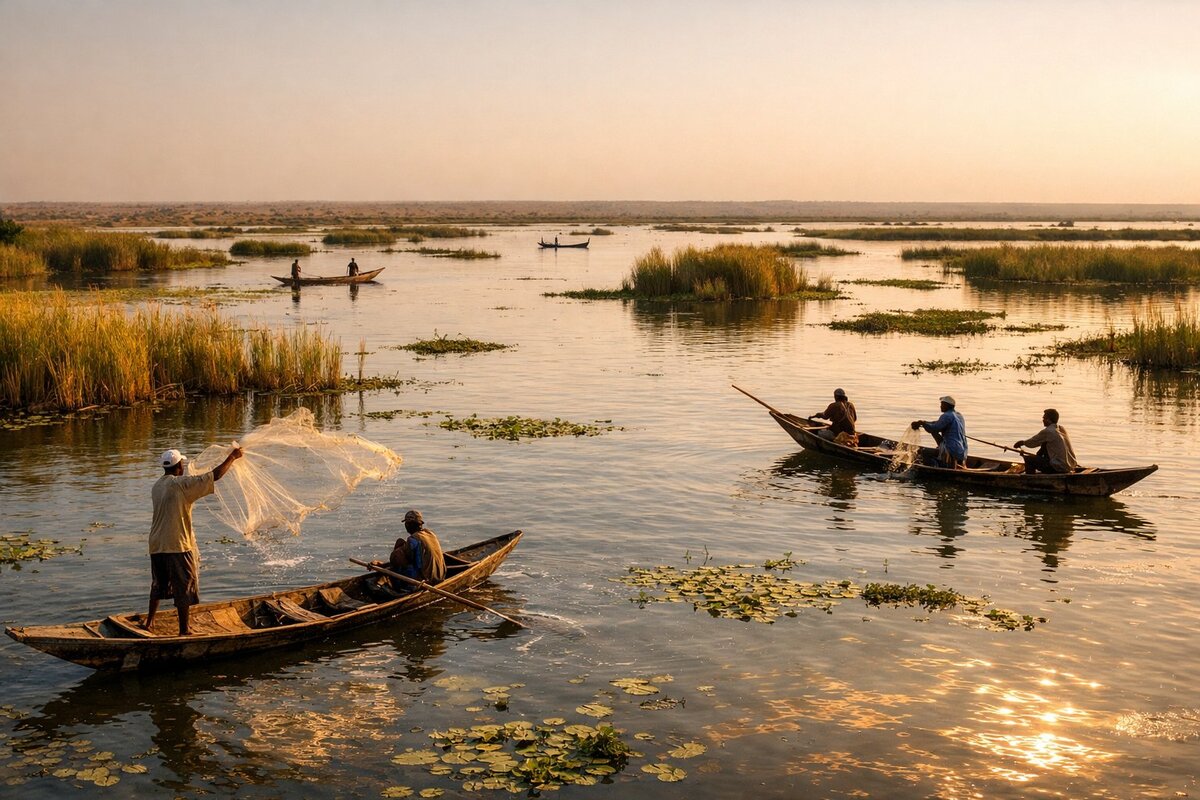
For travelers, the Lake Chad region offers a fascinating if sobering experience. Bol, the main town on the Chadian lakeshore, serves as a base for boat trips through the remaining marshlands, where fishing communities live on floating reed islands and hippopotamuses still survive in deeper channels. The area is sensitive due to Boko Haram activity — always check current security advisories and travel with local guides who know which areas are safe.
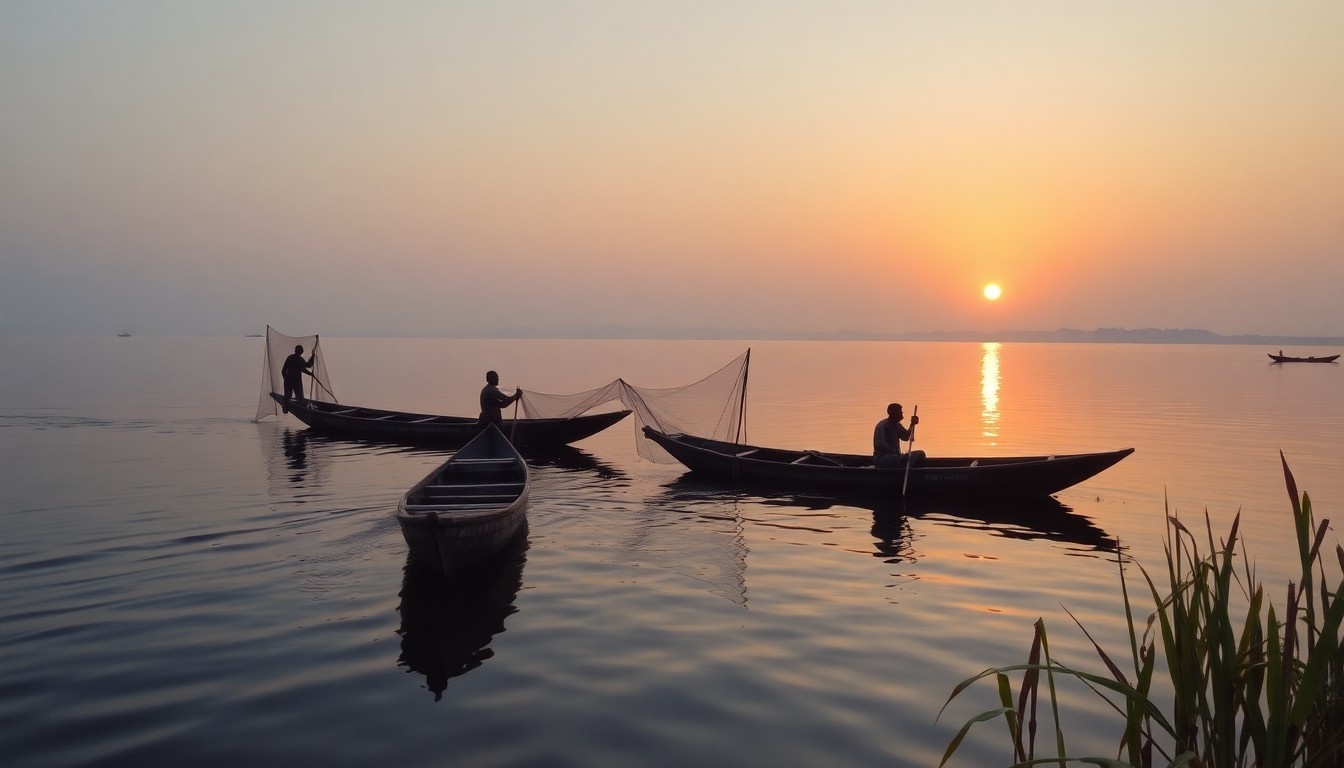
Lake Chad fishermen
Pirogues on the shrinking lake near Bol.
🦁 Zakouma National Park
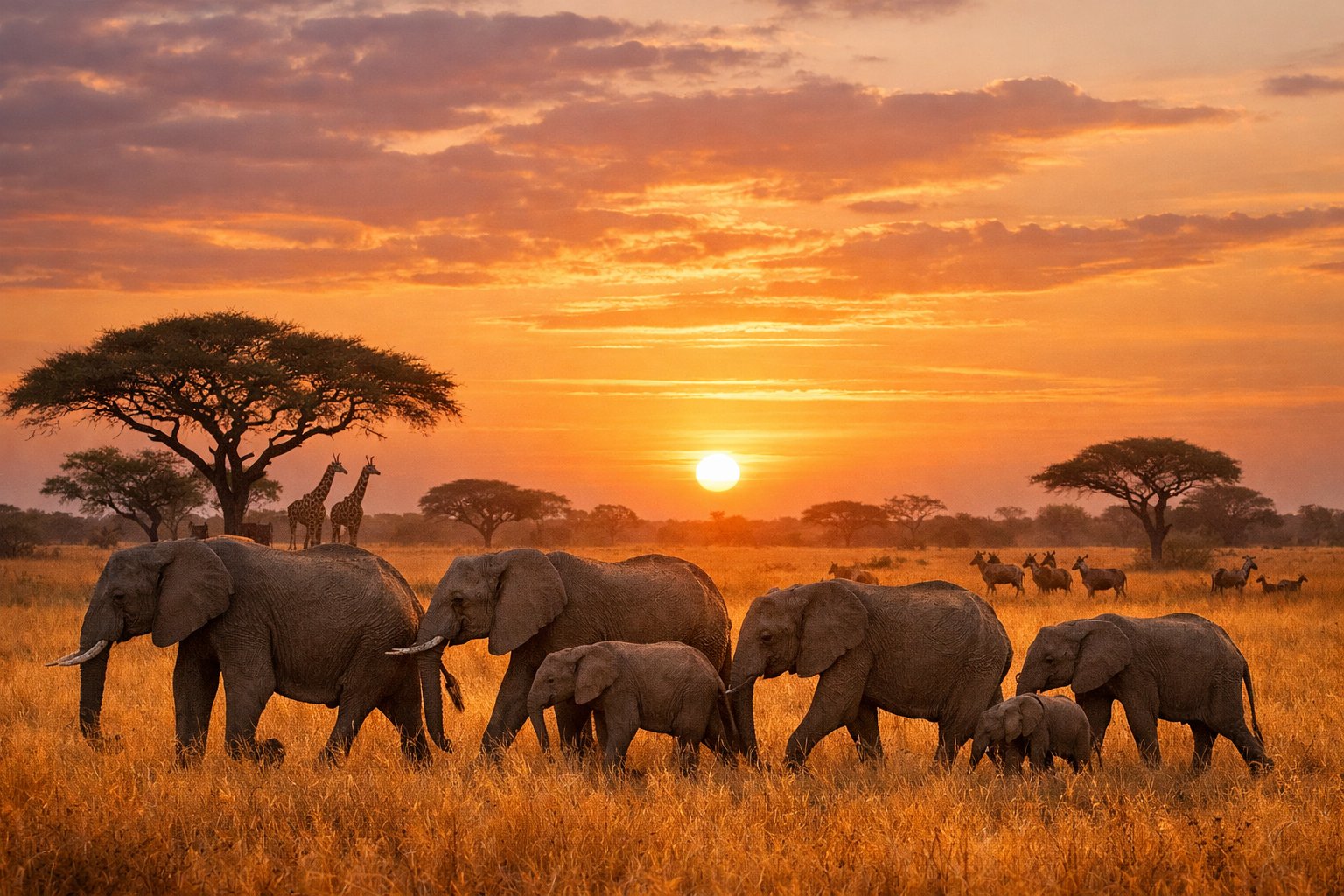
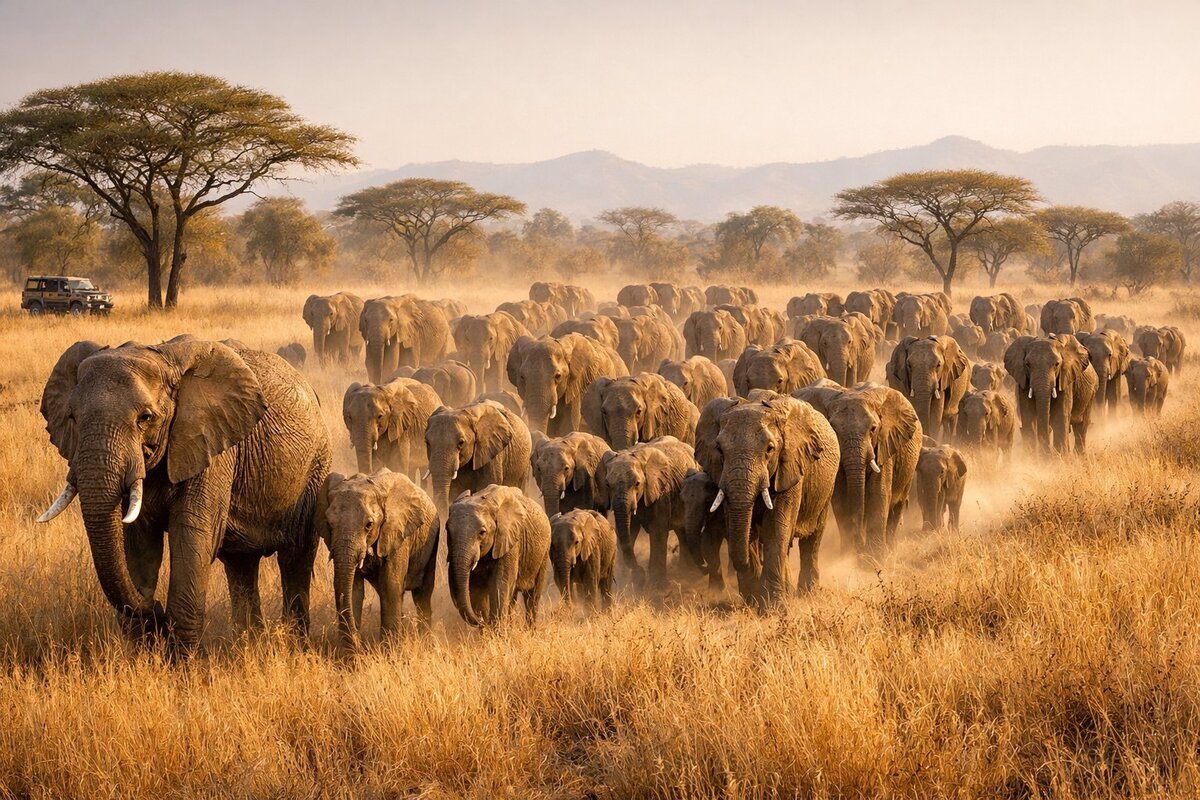
Zakouma National Park (3,000 km²) in southeastern Chad is one of Central Africa's last great wildlife refuges and a conservation success story of global significance. In 2002, the park held approximately 4,350 elephants; by 2010, poaching by horseback-mounted Sudanese raiders had reduced the population to barely 450. The situation seemed hopeless — until African Parks took over management in 2010, implementing anti-poaching patrols, community engagement programs, and professional park infrastructure.
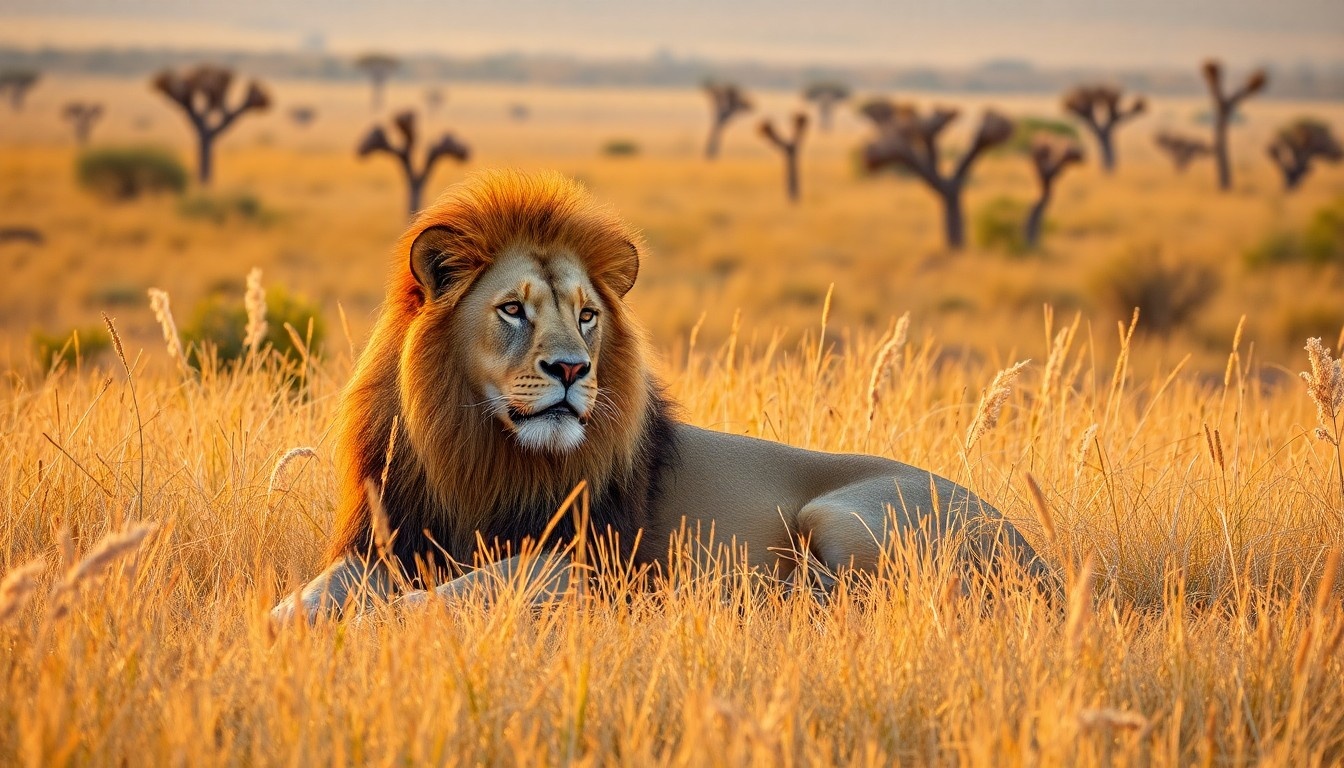
Today, Zakouma's elephant population has recovered to roughly 800 free-ranging individuals — up about 40% since 2010, with 81 calves under three years old counted in a recent survey against just one in 2011, and the park supports large populations of giraffes (Kordofan subspecies — one of the most endangered in the world), lions, cheetahs, African wild dogs, and massive herds of buffalo and roan antelope. During the dry season (January–May), wildlife concentrates around the Tinga River and its pools, creating spectacular viewing opportunities that rival East Africa's famous parks — but with almost no other tourists present.
Zakouma is accessible from N'Djamena via a chartered flight or a grueling 2–3 day drive. The park operates Tinga Camp, a comfortable tented lodge, and Camp Salamat for more adventurous travelers. Game drives, walking safaris, and horseback excursions are available. The best season is February to May, when dry conditions concentrate animals around water sources. This is Chad's single most accessible and rewarding tourist destination.
Zakouma National Park
Elephants at the Tinga River pools in the dry season.
🎨 Rock Art of the Sahara
Chad possesses some of the most extensive and best-preserved prehistoric rock art in the world, concentrated in the Ennedi and Tibesti massifs. These galleries span roughly 8,000 years and document the transformation of the Sahara from lush grassland to barren desert. The earliest paintings show cattle herds, hippos, and elephants — animals that haven't existed in the region for thousands of years — alongside human figures engaged in hunting, dancing, and ritual activities.
The most famous sites include the Manda Guéli Cave, where red and white paintings of mounted warriors, cattle herds, and abstract symbols cover vast rock faces. The Niola Doa ("Ladies of Doa") site features enigmatic painted female figures with elaborate hairstyles or headdresses, their bodies elongated and stylized in ways that echo art traditions found nowhere else. At Archei, engravings of giraffes and aurochs coexist with more recent Arabic inscriptions, creating a palimpsest of human presence spanning millennia.
Unlike the famous rock art sites of South Africa or Libya (which have suffered from vandalism and tourism damage), Chad's remoteness has been its greatest protection. Most sites remain undamaged and unvisited, accessible only by multi-day camel or 4x4 expeditions with knowledgeable local guides. The UNESCO listing of the Ennedi Massif in 2016 recognized this exceptional heritage — but visiting these galleries still feels like genuine discovery, not tourism.
🍜 Cuisine
Millet-flour boule and peanut sauce in the south, dates and the sacred three-round tea ceremony in the north, plus Gala Beer and calabash-served bil-bil millet beer as the social glue of southern villages. Read the full Food & Drink guide →
🌡️ Climate & Best Time to Visit
Chad spans three distinct climate zones. The Saharan north is hyperarid — less than 50mm of rain annually, temperatures reaching 50°C in summer and dropping below freezing on winter nights in the mountains. The Sahel (including N'Djamena) has a short rainy season from June to September with 300–600mm of rainfall and temperatures that regularly exceed 40°C from March to May — the unbearable chaleur season. The southern savanna receives 800–1,200mm and enjoys a longer wet season.
Best time to visit: November to February offers the most comfortable conditions — warm days (25–35°C), cool nights, and clear skies across the country. This is also the start of the dry season when wildlife concentrates around water sources in Zakouma and the Ennedi's gueltas are accessible. March to May is extremely hot and not recommended. June to October is the rainy season — roads become impassable (especially south of N'Djamena), but the landscape transforms into green savanna and migratory birds arrive in huge numbers.
The Saharan regions (Tibesti, Ennedi) are best visited from November to March, when daytime temperatures are bearable and nights are pleasantly cool. The Ennedi can receive flash floods even outside the main rainy season — a fact that has shaped its spectacular erosion formations but also poses real danger to travelers camping in canyons.
✈️ How to Get There
N'Djamena Hassan Djamous International Airport (NDJ) is Chad's only international gateway, served by a handful of carriers: Turkish Airlines (via Istanbul — the most reliable option), Ethiopian Airlines (via Addis Ababa), Air France (non-stop from Paris CDG, twice weekly), Camair-Co (from Douala), and several regional carriers. Flights are often delayed or cancelled, so build flexibility into your itinerary. There are no direct flights from North America — connections via Istanbul, Paris, or Addis Ababa are standard.
Overland entry is possible from Cameroon (Kousseri–N'Djamena bridge — the busiest crossing), Nigeria (various points, but check security), and Niger (from Diffa or Nguigmi — though the Diffa region is itself a Boko Haram zone). Border crossings are bureaucratic and time-consuming. The Sudan border has been closed by presidential order since 18 March 2026, after Sudanese drone strikes on Chadian soil, and the Libyan frontier is off-limits to everyone. All land entries require a valid visa obtained in advance.
Internal transport: Within Chad, flights from N'Djamena to Abéché (gateway to Ennedi) operate sporadically. Most travel is by 4x4 on unpaved roads that range from challenging to impassable depending on the season. For Zakouma, Ennedi, and Tibesti, organized expeditions with experienced operators are essential — self-drive is possible but extremely risky due to navigation challenges, vehicle breakdowns, and the absence of emergency services. Fuel stations exist only in major towns; always carry extra fuel and water.
📋 Practical Information
🛑 U.S. passport holders: Chad is not issuing visas
On 5 June 2025 President Mahamat Idriss Déby ordered the suspension of all visa issuance to United States citizens, in reciprocity for the U.S. proclamation of 4 June 2025 barring Chadian nationals from entering the United States. Chad later clarified that Americans holding a Chadian visa issued before 9 June 2025, accredited U.S. officials, and dual Chadian-American nationals may still enter. The suspension remains in force as of August 2026 — if you hold only a U.S. passport you cannot currently obtain a Chadian tourist visa by any route.
Visa (other nationalities): A visa must be obtained in advance from a Chadian embassy or consulate. The process is slow (2–4 weeks) and requires an invitation or confirmed hotel booking, proof of funds, and a yellow fever vaccination certificate, which is mandatory for entry. Visa-on-arrival at N'Djamena airport exists on paper but is unreliable and should never be relied upon. A separate permit is required for the Tibesti and, in practice, for the Ennedi as well; a licensed operator arranges these.
Money: The currency is the Central African CFA Franc (XAF), pegged to the euro at 655.957 XAF = €1. Cash is king — credit cards are accepted only at top-end hotels in N'Djamena. ATMs exist in N'Djamena (Ecobank, Coris Bank International — which absorbed Société Générale Tchad in January 2024) but are unreliable. Bring sufficient euros or US dollars in cash and exchange at banks or authorized bureaux de change. Outside the capital, only cash works.
Safety: The entire country is rated Level 4 — Do Not Travel by the U.S. State Department (see section 17). The Lake Chad basin, the Boko Haram-affected areas near Nigeria, the Libyan border and the whole eastern frontier with Sudan are the most dangerous zones, and land mines remain a hazard in the north. The Ennedi and Tibesti require armed escorts, and the Tibesti has been closed to tourism in practice since 2025. Even N'Djamena sees periodic unrest, and U.S. embassy staff operate there under night-driving limits and a mandatory armoured-vehicle rule. Travel with a reputable local operator, register with your embassy, and carry comprehensive insurance with emergency evacuation. Mobile phone coverage (Airtel, Moov Africa — the former Tigo) exists in major towns but is absent in remote areas — carry a satellite phone for expeditions.
Language tips: French is the language of government and education. Arabic (Chadian Arabic, quite different from Modern Standard Arabic) is the lingua franca of the north and much of the Sahel. In the south, Sara languages dominate daily life. A few phrases in French — Bonjour, Merci, S'il vous plaît — go a long way. In the north, As-salamu alaykum (peace be upon you) opens every interaction.
🏛️ Government & Politics
Chad is a presidential republic under the Fifth Republic, proclaimed after the constitution approved by referendum in December 2023 ended the transitional period that followed Idriss Déby Itno's death in April 2021. Mahamat Idriss Déby Itno, the late president's son, was declared winner of the May 2024 election with 61% of the vote and sworn in on 23 May 2024, converting three years of military rule into an elected mandate. Allamaye Halina, previously ambassador to Beijing, has served as Prime Minister since May 2024.
The institutional rebuild continued through 2025. Legislative, provincial and communal elections were held on 29 December 2024 — the first since 2011 — and were swept by the ruling Patriotic Salvation Movement (MPS) amid an opposition boycott. Senate elections in February 2025 restored the upper chamber for the first time since 1990, giving Chad a bicameral parliament again. Constitutional amendments adopted in 2025 extended the presidential term from five to seven years and removed term limits, a change critics read as opening the way to an indefinite Déby presidency.
Political space has narrowed sharply. Succès Masra, the opposition leader who finished second in 2024 and briefly served as prime minister, was arrested on 16 May 2025 after 42 people died in herder–farmer clashes at Mandakao, and in August 2025 was sentenced to 20 years in prison and a 1 billion XAF fine on an incitement charge he denies; the Supreme Court upheld the sentence in May 2026. On 14 August 2026 President Déby pardoned him and eight leaders of the GCAP opposition coalition (itself dissolved by the Supreme Court in April 2026); Masra walked out of prison on 15 August 2026 calling for a “reconciled Chad”, but the convictions stand and he remains ineligible for office. In late 2024 Chad also terminated its defence cooperation agreement with France; the last French troops left N'Djamena in January 2025, ending more than sixty years of continuous French military presence. Travellers should treat political commentary, photography of officials or installations, and contact with opposition figures as genuinely risky.
2026 in office. Déby received the 2026 African Peace Prize on 16 January for hosting Sudanese refugees, announced on 20 April that Chad would send 1,500 troops to Haiti under the UN-backed Gang Suppression Force, and spent the spring and summer ordering his army onto maximum alert against Sudanese drones (section 17). Former rebel leader Timane Erdimi, brought into government as higher-education minister, resigned on 5 March 2026. National holidays worth knowing: Independence Day (11 August), Republic Day (28 November) and Freedom and Democracy Day (1 December).
⚠️ Travel Advisory
🛑 United States — Level 4: Do Not Travel
The U.S. Department of State raised Chad to Level 4 — Do Not Travel on 28 April 2026, covering the entire country, citing crime, terrorism, civil unrest, kidnapping, land mines and inadequate health infrastructure. Outside N'Djamena the U.S. government has extremely limited ability to provide emergency services; embassy staff need special authorisation to leave the capital and operate under night-driving restrictions and a mandatory armoured-vehicle rule inside the city.
The zones that matter most. The Lake Chad basin and the Nigerian border remain exposed to Boko Haram and ISWAP attacks. The Libyan border and the Tibesti are contested by armed groups and littered with land mines; the Tibesti has been effectively closed to tourism since 2025 and no reputable operator is running it. The eastern border with Sudan — Ouaddaï, Wadi Fira, Sila and Ennedi Est — absorbs the spillover of the Sudanese civil war, including cross-border raids and armed-group movement. The southern border with the Central African Republic sees banditry and cattle-raiding. Read the destination sections in this guide with those boundaries in mind: several of Chad's finest landscapes sit inside or beside them.
What this does not mean. A Level 4 rating is a statement about the state's capacity to help you, not a claim that every kilometre of Chad is violent. Specialist operators continue to run Ennedi expeditions and African Parks continues to fly guests into Zakouma, both with security arrangements built into the itinerary. But it does mean that if something goes wrong — a vehicle rollover, a snakebite, appendicitis — there is no medical evacuation network waiting for you. Travel insurance with genuine air-evacuation cover is not optional here, and most standard policies are void for Level 4 destinations, so buy a policy written for them.
Regional context. Chad now hosts more than 1.3 million Sudanese refugees — over 900,000 of them arrivals since April 2023 — concentrated in Ouaddaï, Sila, Wadi Fira and Ennedi Est, making it Africa's largest refugee host per head of population. UNHCR expects roughly 1.48 million by the end of 2026. This is the defining fact of eastern Chad today, and it means the road corridors toward Abéché and the Ennedi now carry humanitarian traffic, checkpoints and pressure that did not exist a few years ago.
2026 so far — the war has crossed the line. RSF fighters killed seven Chadian soldiers at the Birak garrison near Tiné on 15 January; clashes in Wadi Fira on 21 February killed five more soldiers and three civilians and closed the border for the first time; on 18 March 2026 a drone from Sudan hit an iftar gathering at Mabrouka, near Tiné, killing at least 16, and President Déby ordered the 1,300-km border shut and the army to fire back at any Sudanese belligerent. Sudanese aircraft then bombed a convoy more than 100 km inside Ennedi-Est on 20 August, struck again on 23 August, and on 27 August 2026 an air strike on a fuel market at Adikoun killed 12; Chad has since deployed armour and drone-jamming equipment around Tiné. Away from the Sudan front, Boko Haram killed 23 soldiers on the Lake Chad island of Barka Tolorom on 4 May 2026, a dispute over a well in Wadi Fira left 42 dead on 26 April, and on 11 February a French visitor to the Saharan cultures festival died after wandering unguided from a camp at the Guelta de Bachikele in the Ennedi — a reminder that the desert itself, not only the war, is the hazard.
💼 Business & Economy
An oil economy leaning on a single pipeline to the sea, a 2023 nationalization that still spooks investors, and OHADA company law that puts Chad on the same legal footing as 16 other African states. Read the full Business & Economy guide →
💰 Cost of Living
| Item | Cost (XAF) | ~ USD |
|---|---|---|
| Street meal (boule + sauce) | 500–1,500 | $0.80–2.50 |
| Restaurant meal (N'Djamena) | 5,000–15,000 | $8–25 |
| Gala Beer (bottle) | 1,000–2,000 | $1.60–3.30 |
| Budget hotel (N'Djamena) | 15,000–30,000 | $25–50 |
| Mid-range hotel (N'Djamena) | 50,000–100,000 | $80–165 |
| 4x4 rental with driver (per day) | 100,000–200,000 | $165–330 |
| Zakouma Park (Tinga Camp/night) | ~200,000+ | $330+ |
| Ennedi expedition (10 days) | — | $3,000–6,000 |
| Domestic flight (NDJ–Abéché) | 150,000–250,000 | $250–415 |
Chad is simultaneously cheap and expensive. Street food and basic necessities are very affordable, but tourist infrastructure is extremely limited — organized expeditions to the Ennedi or Tibesti cost thousands of dollars due to the logistics involved (4x4 vehicles, fuel caches, armed escorts, guides, and camping equipment). N'Djamena's hotel prices are inflated by the presence of international organizations and NGOs. Budget travelers should expect to spend $50–80/day in N'Djamena, while expedition travel costs $200–500/day depending on the itinerary.
🏨 Accommodation
N'Djamena has the only conventional hotel infrastructure in the country. The Hilton N'Djamena (the city's top hotel, ~$200–300/night) and Ledger Plaza cater to diplomats and business travelers. Mid-range options like Hotel Sahel and Novotel offer air-conditioned rooms in the $80–150 range. Budget guesthouses (auberges) can be found for $20–40 but quality varies enormously — inspect before committing.
Outside the capital, accommodation becomes rudimentary. Abéché (gateway to the Ennedi) has a few basic hotels. Moundou and Sarh in the south have simple guesthouses. In Zakouma National Park, the African Parks-managed Tinga Camp offers comfortable safari-style tented accommodation with meals included — book well in advance as capacity is limited.
For Ennedi and Tibesti expeditions, camping is the only option. Tour operators provide all camping equipment, food, and water. Expect to sleep under the stars on foam mattresses — the Saharan night sky, free from any light pollution, is spectacular compensation for the lack of creature comforts. Wild camping in Chad is generally safe in expedition areas (your guide and armed escorts handle security), but never camp independently in sensitive border regions.
🎭 Festivals & Events
Chad's festivals reflect its extraordinary ethnic diversity. The Gerewol festival of the Wodaabe (Bororo Fulani) is the most visually spectacular — young men apply elaborate face paint, wear beaded jewelry, and perform hypnotic dances while rolling their eyes and baring their teeth to display their beauty. Young women serve as judges, selecting partners based on charm and appearance. The festival typically takes place after the rainy season (September–October) in the Sahel.
Festival Dary is the one to plan around: N'Djamena's annual celebration of the country's 23 provinces, each with its own dances, crafts and food. The 7th edition ran for two weeks, 20 December 2025 to 4 January 2026, back at the Place de la Nation where it began, with a New Year's Eve concert by Naza and Keblack. Independence Day (August 11) features military parades and cultural performances in N'Djamena. Eid al-Fitr and Eid al-Adha are the most important Muslim holidays, celebrated with prayers, feasting, and family gatherings throughout the north. In the south, Christian holidays blend with traditional Sara celebrations — the yondo initiation ceremonies, though increasingly rare, remain significant cultural events.
The Festival International des Cultures Sahariennes (FICSA), held in Amdjarass in the Ennedi (6th edition, February 2026), celebrates Toubou, Zaghawa and Bideyat desert culture with camel races, traditional music, and handicraft exhibitions — the one event that reliably brings foreign visitors into the Ennedi each winter. The Sarh Cultural Festival in the south showcases Sara dances, including the spectacular stilt-walking performances that have become iconic representations of Chadian culture internationally.
🏛️ UNESCO & World Heritage
Two World Heritage Sites — the otherworldly Lakes of Ounianga and the sandstone galleries of the Ennedi Massif — plus a seven-entry Tentative List that runs from the Djourab hominid site where Toumaï was found and the ruins of Ouara to Zakouma National Park and the Lake Chad cultural landscape. See the full UNESCO & World Heritage guide →
🎒 Packing Tips
Essential gear: Lightweight, loose-fitting clothing in natural fabrics (long sleeves and trousers for sun/insect protection), wide-brimmed hat, high-SPF sunscreen, quality sunglasses, sturdy closed-toe shoes for desert walking, and a warm layer for cold Saharan nights (temperatures can drop to 5°C). A headlamp, multi-tool, and duct tape are expedition essentials.
Health supplies: Comprehensive first-aid kit, malaria prophylaxis (mefloquine or doxycycline), insect repellent (DEET-based), water purification tablets or filter, rehydration salts, broad-spectrum antibiotics (prescribed by your travel doctor), and sunburn treatment. Medical facilities outside N'Djamena are practically nonexistent — be self-sufficient.
Technology: Satellite phone or messenger (essential for expeditions), solar charger, camera with dust protection, and printed maps (GPS can fail). Carry all documents (visa, permits, vaccination certificate) in both paper and digital formats. A money belt with cash reserves in euros and CFA francs is essential — there are no ATMs in the bush.
Cultural sensitivity: Pack modest clothing that covers shoulders and knees, particularly in the Muslim north. Women should carry a headscarf for mosque visits and conservative areas. Small gifts for village visits (tea, sugar, school supplies) are appreciated but never give money to children. Bring photos of your home country — Chadians are genuinely curious about where you're from and sharing pictures breaks ice faster than any language.
🌐 Useful Resources
Tour operators: Tchad Evasion (N'Djamena-based, specializes in Ennedi/Tibesti expeditions), Explore Chad (French-run, excellent logistics), African Parks/Zakouma (for wildlife safaris — book directly at africanparks.org).
Travel advisories: Always check your government's current warnings — UK FCDO, US State Department, French MEAE. Conditions change rapidly. The Sahara Overland forum and Chris Scott's guides provide practical expedition advice.
Health: International SOS and CDC Traveler's Health for vaccination requirements and health risks. Yellow fever vaccination is mandatory for entry. Consult a travel medicine specialist at least 6 weeks before departure.
Maps: Michelin Map 953 (Central/South Africa) covers Chad at 1:4,000,000. For detailed Ennedi/Tibesti navigation, IGN France topographic maps and OpenStreetMap data loaded on a GPS device are recommended.
📚 Recommended Reading
"Sahara Overland" by Chris Scott — The definitive practical guide for Saharan travel, with detailed sections on Chad's Ennedi and Tibesti routes including GPS waypoints, vehicle preparation, and logistics.
"Historical Dictionary of Chad" by Mario J. Azevedo and Samuel Decalo — The standard English-language reference on Chad: dynasties, coups, ethnic groups, place names and the colonial record, all cross-referenced. Dry as the Sahel, and indispensable.
"Living by the Gun in Chad: Combatants, Impunity and State Formation" by Marielle Debos (Zed Books, 2016) — Ten years of fieldwork on why armed men in Chad drift between rebellion and the army and back again. Academic but readable, and the single best explanation of why the country works the way it does.
"Africa's World War" by Gérard Prunier — Places Chad within the broader context of Central African conflicts. Dense but invaluable.
"Ennedi, Tales on Stone: Rock Art in the Ennedi Massif" by Roberta Simonis, Adriana Ravenna and Pier Paolo Rossi (2017) — Twenty-five years of fieldwork in one lavish volume: the Niola Doa figures, the mounted horse and camel scenes, and DStretch-enhanced images that reveal archaic paintings invisible to the eye. The reference on the Ennedi galleries.
🎬 Videos About Chad
The Ennedi Massif's extraordinary sandstone formations — one of Africa's most underrated natural wonders, captured in stunning aerial footage.
Zakouma's remarkable conservation success story — from near-extinction to thriving elephant herds in Central Africa's last great wildlife sanctuary.
🔬 Fascinating Facts
⭐ Notable People
Félix Éboué (1884–1944) — Born in French Guiana but served as Governor of Chad. The first Black colonial governor in French history, Éboué rallied Chad to de Gaulle's Free France in 1940 — a pivotal decision that gave the Allies a base in Central Africa. Honored in the Panthéon in Paris.
Hissène Habré (1942–2021) — President from 1982–1990, known as "Africa's Pinochet." Convicted of crimes against humanity by an African Union tribunal in Senegal in 2016 — the first former head of state convicted by an African court. His regime killed an estimated 40,000 people.
Mahamat-Saleh Haroun (b. 1961) — Film director and the face of Chadian cinema abroad. A Screaming Man won the Jury Prize at Cannes in 2010, Grigris competed there in 2013 and Lingui in 2021; he served as Minister of Culture in 2017–18 before returning to film-making.
Mahamat Nour Ibedou — Human rights activist and Secretary General of the Chadian Convention for the Defence of Human Rights. One of the country's most courageous voices for democracy and accountability.
Achta Djibrine Sy (b. 1962) — Peace activist and women's-rights organiser. She worked with Oxfam on the role of women in post-civil-war Chad, was named one of the 1000 PeaceWomen Across the Globe in 2005, became vice-president of the national council of women CONAF-Tchad, and in August 2019 was appointed Minister of Commerce, Industry and Private Sector Promotion.
Kaltouma Nadjina (b. 1976) — Olympic sprinter who represented Chad at the 2000 and 2004 Olympics. A symbol of Chadian perseverance in sport despite minimal state support for athletics.
⚽ Sports
Football dominates Chadian sports, as it does across Africa. The national team, Les Sao (named after the ancient civilization), has never qualified for the Africa Cup of Nations or the World Cup, and the 2026 World Cup qualifiers ended with one point from ten games (0–1–9, goals 5–24), bottom of Group I; FIFA ranked Chad 183rd in July 2026. The bright spot was the ground itself: the China-built Stade Olympique Maréchal Idriss Déby Itno at Mandjafa, south-east of the capital (30,000 seats, inaugurated March 2025), hosted its first competitive match on 4 September 2025, a World Cup qualifier against Ghana — the first time in years Les Sao had played a home game at home, after FIFA's 2021 suspension over government interference (lifted the same October) and the old Stade Idriss Mahamat Ouya's loss of CAF approval. Chad's only trophy remains the 2014 CEMAC Cup.
Wrestling (lutte traditionnelle) is deeply embedded in Sara culture in the south and may be Chad's most authentic indigenous sport. Matches are community events accompanied by music and ceremony. The annual wrestling championships attract competitors from across the southern regions and are taken extremely seriously.
Camel racing is the sport of the Saharan north — integral to Toubou and Arab culture. Races can cover enormous distances across open desert, with riders navigating by instinct and stars. The animals are prized possessions worth thousands of dollars. Basketball has a small but growing following in N'Djamena, and martial arts (particularly karate and taekwondo) have produced some of Chad's only international competitive athletes. Chad has competed at fourteen Summer Olympics since 1964 without winning a medal; at Paris 2024 it sent three athletes, in archery, athletics and judo.
📰 Media & Press Freedom
Reporters Without Borders (RSF) ranked Chad 93rd of 180 in its 2026 World Press Freedom Index (score 53.90), up from 108th in 2025 — mid-table on paper, but the safety indicator tells the real story: journalist Idriss Yaya was murdered with his wife and son in March 2024 and Orédjé Narcisse in October 2022, and nobody has been arrested for either. Independent journalists face harassment, arbitrary arrest and surveillance, and the 2019 cybercrime law hangs over anyone publishing online. The state broadcaster Télé Tchad and radio station RNT (Radiodiffusion Nationale Tchadienne) dominate the media landscape with pro-government coverage. Several private radio stations operate in N'Djamena but practice extensive self-censorship.
Internet penetration remains very low (~15%), concentrated in N'Djamena and major towns. Social media (particularly Facebook and WhatsApp) has become an important alternative information channel, though the government has repeatedly shut down internet access during periods of political tension — social media was blocked for 470 consecutive days in 2018–19. Mobile phone penetration is higher (~50%), with Airtel and Moov Africa (Tigo until its 2021 rebrand) the main providers.
For travelers, this means relying on international news sources for current events. The BBC French Service and Radio France Internationale (RFI) are widely listened to and provide the most reliable news coverage of Chad.
📸 Photo Gallery
Ennedi Plateau
Aloba Arch
Lake Chad
Zakouma Elephants
Guelta d'Archei
N'Djamena Mosque
Tibesti Mountains
Ennedi Rock Art
Guelta d'Archei Panorama
Tibesti Volcanic
Toubou Nomads
Zakouma Lions
✍️ Author's Note
✍️ Author's Note Radim Kaufmann
Chad defies easy categorization. It is simultaneously one of the world's poorest nations and home to landscapes of staggering wealth — natural arches that rival Utah's, wildlife recoveries that rival Kenya's, rock art that rivals Lascaux. It is dangerous in parts and profoundly welcoming in others. It demands serious logistics and rewards with serious wonders.
I came to Chad expecting hardship and found it — roads that took twelve hours to cover 200 kilometers, heat that made thinking difficult, bureaucracy that tested patience. But I also found hospitality that humbled me, landscapes that silenced me, and a sense of exploration that has largely vanished from our over-documented world. The Ennedi arches at sunset, Zakouma's elephants at dawn, the crocodiles of Archei slipping silently into prehistoric waters — these images remain vivid years later.
Chad is not for everyone. It requires time, money, flexibility, and a genuine appetite for adventure over comfort. But for travelers who have exhausted the well-worn paths and seek something genuinely different, Chad offers what few places on Earth still can: the thrill of discovery in a land that still holds secrets. Come prepared, come respectful, and come ready to be transformed.
