

🌍 Brazil at a Glance
🌏 Overview
Brazil overwhelms. The fifth largest country on Earth contains the Amazon rainforest (60% of it), the world's largest tropical wetland (Pantanal), endless Atlantic beaches, chaotic megacities, and some of humanity's greatest experiments in architecture and urban planning. A population of 214 million (IBGE estimate, July 2026) makes it the world's seventh most populous nation, after India, China, the United States, Indonesia, Pakistan and Nigeria – and its cultural output, from samba to bossa nova to capoeira, has shaped global culture.
The country defies easy categorization. Rio de Janeiro's favelas rise beside billion-dollar beachfront; Brasília's futuristic government buildings contrast with colonial baroque churches in Ouro Preto; indigenous tribes in the Amazon live alongside South America's largest industrial economy.
With 26 UNESCO World Heritage Sites – spanning Amazon reserves, colonial gold towns, modernist masterpieces, the memory of slavery, and, since July 2026, the opera houses of the rubber boom – Brazil offers heritage as vast and varied as its territory.
📛 Name & Identity
The name comes from a tree. Pau-brasil (Paubrasilia echinata) yielded a deep red dye that was the colony's first export boom, and by the 1530s Portuguese traders had stopped calling the territory Ilha de Vera Cruz or Terra de Santa Cruz and started calling it, commercially and then permanently, Brasil. The clergy objected to a country named after a commodity rather than the Cross. The merchants won.
The official name is the República Federativa do Brasil — the Federative Republic of Brazil. Brazilians call themselves brasileiros, and the distinction matters: brasiliense means someone from Brasília, not from Brazil. The country is the only Portuguese-speaking nation in the Americas, a linguistic island of 214 million people surrounded by a Spanish-speaking continent — a fact that shapes everything from its music to its diplomacy to its sense of itself.
The flag reads like a coded history lesson. The green field and yellow rhombus were originally the dynastic colours of the House of Bragança and the House of Habsburg, inherited from Emperor Pedro I and Empress Maria Leopoldina; Brazilians long ago reinterpreted them as the forest and the gold. The blue globe shows the actual sky over Rio de Janeiro at 8:30 on the morning of 15 November 1889, the day the republic was proclaimed. Its 27 stars stand for the 26 states plus the Federal District, and the banner across it reads ORDEM E PROGRESSO — a truncation of Auguste Comte's positivist motto, which the republic's founders admired enough to stitch onto the national flag.
Two words explain more about Brazil than any guidebook. Saudade — the ache for something absent, loved, and possibly never coming back — has no clean English equivalent and turns up in half the country's songbook. Jeitinho brasileiro — the little Brazilian way — is the improvised workaround that gets things done when the rules say they cannot be. Foreigners read the first as melancholy and the second as corruption. Brazilians read both as survival skills.
Key Facts
🗺️ Geography & Regions
Regions
North (Amazonia): The Amazon basin – world's largest rainforest, countless rivers, indigenous communities, Manaus as the jungle metropolis.
Northeast: Historic colonial coast (Salvador, Olinda, Recife), drought-prone interior (sertão), distinctive culture blending African, indigenous, and Portuguese influences.
Southeast: Economic powerhouse – São Paulo (largest city in the Southern Hemisphere), Rio de Janeiro, Minas Gerais's colonial towns and mountains.
South: Subtropical climate, European immigrant heritage (German, Italian), Iguazu Falls on the Argentine border.
Center-West: Cerrado savanna, Pantanal wetlands, planned capital Brasília.
Climate
Tropical to subtropical, varying by region:
- Amazon: Hot and humid year-round; wet season December-May
- Northeast Coast: Warm year-round; rains March-August
- Southeast: Tropical highland in cities; distinct seasons
- South: Subtropical with cool winters
- Pantanal: Distinct wet (November-March) and dry (April-October) seasons
🗺️ Interactive Map
Markers: Rio de Janeiro, São Paulo, Brasília, Salvador, Manaus, Foz do Iguaçu, Ouro Preto, the Pantanal (Poconé), Belém and Lençóis Maranhenses. Scroll-wheel zoom is off — use the +/− buttons.
📜 History
Indigenous Brazil (Pre-1500)
An estimated 2-4 million indigenous people lived in what's now Brazil before European contact, speaking hundreds of languages. The Tupi dominated the coast; countless other groups inhabited the interior.
Colonial Era (1500-1822)
Pedro Álvares Cabral claimed Brazil for Portugal in 1500. Colonization focused first on sugarcane in the northeast, worked by enslaved Africans after indigenous populations collapsed from disease and violence. Brazil received more enslaved Africans than any other country – an estimated 4.9 million people.
The 18th-century gold rush in Minas Gerais created wealthy colonial towns like Ouro Preto, Diamantina, and Congonhas. The royal family fled Napoleon to Rio in 1808, transforming the colony.
Empire and Republic (1822-1985)
Brazil gained independence peacefully in 1822 under Emperor Pedro I. The empire abolished slavery only in 1888 – the last country in the Americas to do so. The republic (1889) saw coffee boom and bust, industrialization, and repeated political instability.
Getúlio Vargas dominated 1930-1945 and 1951-1954. The military dictatorship (1964-1985) suppressed opposition but oversaw economic growth and the completion of Brasília.
Modern Brazil (1985-Present)
Democratization brought economic stabilization (the Real Plan, 1994) and social programs (Bolsa Família). Presidents Lula da Silva (2003-2010, 2023-present) and Dilma Rousseff (2011-2016) expanded social inclusion before political crisis and the controversial Bolsonaro presidency (2019-2022).
🏛️ Government & Politics
Brazil is a federal presidential constitutional republic of 26 states plus the Federal District, governed under the 1988 “Citizen Constitution” drafted after twenty-one years of military dictatorship (1964–1985). The president is both head of state and head of government, directly elected to a four-year term with a two-round runoff system and a limit of two consecutive terms.
The current president is Luiz Inácio Lula da Silva of the Workers' Party (PT), serving his third, non-consecutive term since 1 January 2023 after earlier terms in 2003–2010. His vice-president is Geraldo Alckmin, a former centre-right rival — a coalition that says a good deal about how fragmented Brazilian politics has become.
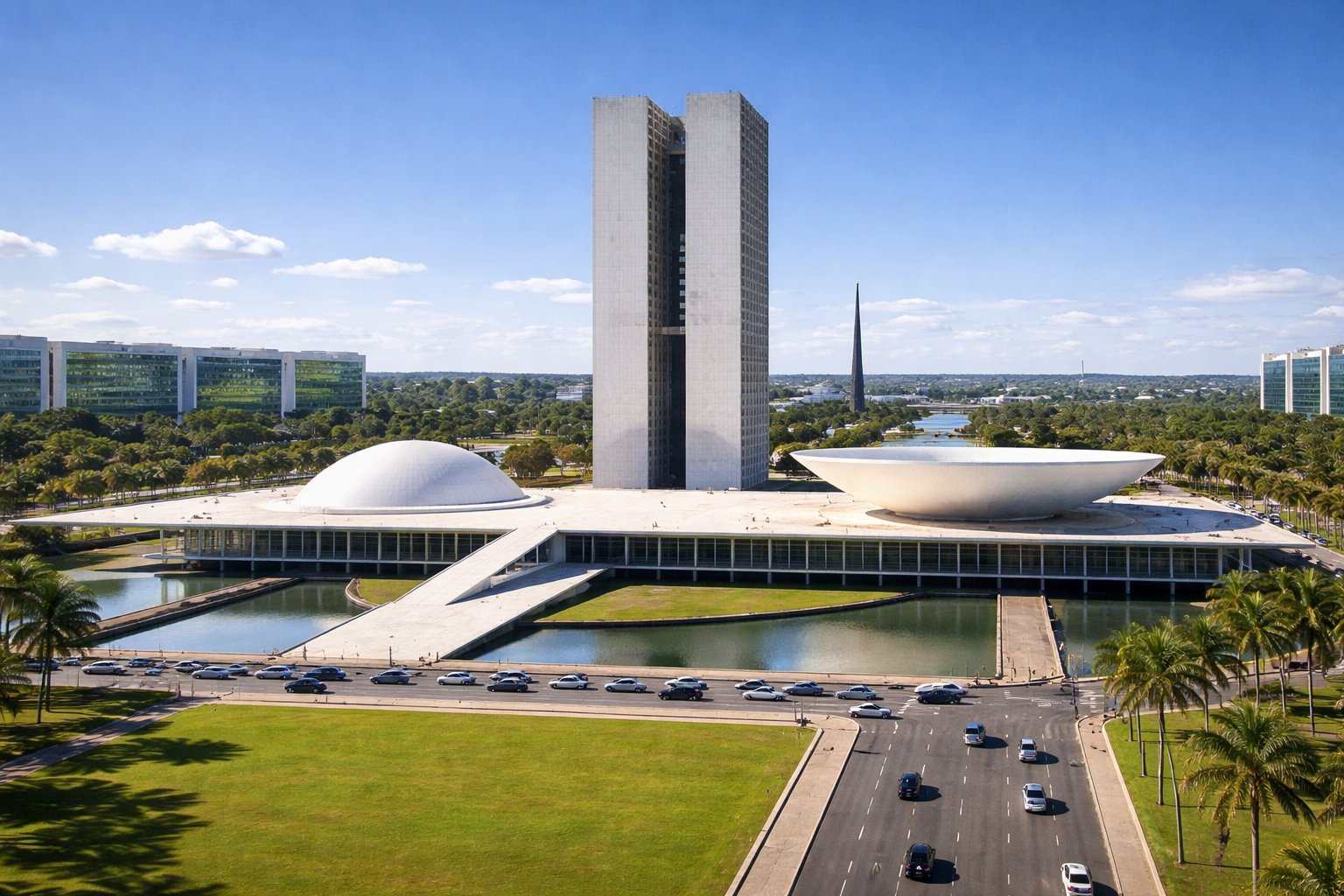
The bicameral National Congress sits in Oscar Niemeyer's twin towers in Brasília: a Chamber of Deputies of 513 members elected by proportional representation, and a Federal Senate of 81 — three per state and the Federal District, serving eight years. More than twenty parties hold seats, and no president has ever governed without assembling a sprawling multi-party coalition. The Supremo Tribunal Federal (STF), eleven justices appointed for life, has become an unusually powerful actor in national politics. Voting is compulsory for literate citizens aged 18 to 70 and optional at 16–17 and over 70; Brazil has used fully electronic voting nationwide since 2000.
Travellers arriving in 2026 are arriving into an election. The first round is 4 October 2026, with a runoff on 25 October if nobody clears 50%. Lula, who turned 80 in October 2025, launched his campaign for a fourth term at Vila Euclídes stadium in São Bernardo do Campo on 16 August 2026. His predecessor Jair Bolsonaro is not on the ballot: barred from office until 2030 by the electoral court, he was convicted in September 2025 of leading a plot to overturn the 2022 election, sentenced to 27 years and three months, and began serving that sentence in November 2025 in a room at Federal Police headquarters in Brasília. He has endorsed his son, Senator Flávio Bolsonaro, as the Liberal Party (PL) candidate.
What this means practically: election Sundays bring dry laws in some municipalities, heavy traffic restrictions around polling areas, and the occasional demonstration in Brasília, São Paulo and Rio. Political rallies are not a spectator sport for foreign visitors — watch from a distance.
🎭 People & Culture
Brazil is one of the most thoroughly mixed societies on earth, and the 2022 census made that arithmetic official: 45.3% pardo (mixed), 43.5% branco (white), 10.2% preto (Black), 0.6% indígena, and 0.4% amarelo (Asian). It was the first census in which self-declared pardos and pretos together formed a clear majority, and the first in which the indigenous population was counted with a methodology indigenous organisations helped design.
That population is 1.7 million people across 305 ethnic groups speaking 274 languages — Tikuna, Guarani Kaiowá, Kaingang, Yanomami, Munduruku and hundreds more. Brazil also holds the largest Japanese diaspora outside Japan (roughly two million, concentrated in São Paulo's Liberdade district and the interior of Paraná), the largest Italian-descended population outside Italy, a German-speaking south, a substantial Lebanese and Syrian community, and the largest population of African descent of any country outside Nigeria. Roughly 4.9 million enslaved Africans were landed here — about 40% of the entire transatlantic trade — and Brazil was the last country in the Western Hemisphere to abolish slavery, in 1888.
Religiously the country is in the middle of a historic shift. Catholicism, once near-universal, is now claimed by roughly half the population and falling; evangelical Protestantism has grown to around a quarter and is politically formidable. Alongside both run the Afro-Brazilian religions — Candomblé, brought by Yoruba, Fon and Bantu captives and preserved in Bahia's terreiros, and Umbanda, a syncretic Brazilian invention. Many Brazilians practise more than one at once without seeing a contradiction.
The cultural output is out of all proportion to any single country. Samba came out of Bahian migrants in Rio's Little Africa; bossa nova came out of Copacabana apartments in the late 1950s and rewired jazz worldwide; Tropicália — Caetano Veloso, Gilberto Gil, Os Mutantes — swallowed rock, Bahian tradition and the avant-garde whole and got its leaders exiled by the dictatorship for the trouble. Forró owns the Northeast, sertanejo outsells everything else nationally, and funk carioca came out of the favelas to become the sound of a generation. Capoeira — the martial art enslaved Africans disguised as a dance — is now UNESCO-recognised intangible heritage.
And then there is football, which is not a sport here but a national theology. Five World Cups, more than any other country. The 1950 defeat to Uruguay in the Maracanã has its own noun — the Maracanazo — and is still discussed as a national trauma seventy-six years later.
🍜 Cuisine & Drinks
Regional diversity: feijoada (black bean stew with pork), moqueca (Bahian fish stew), churrasco (southern barbecue), açaí, brigadeiros, cachaça.
Feijoada
Black Bean Stew
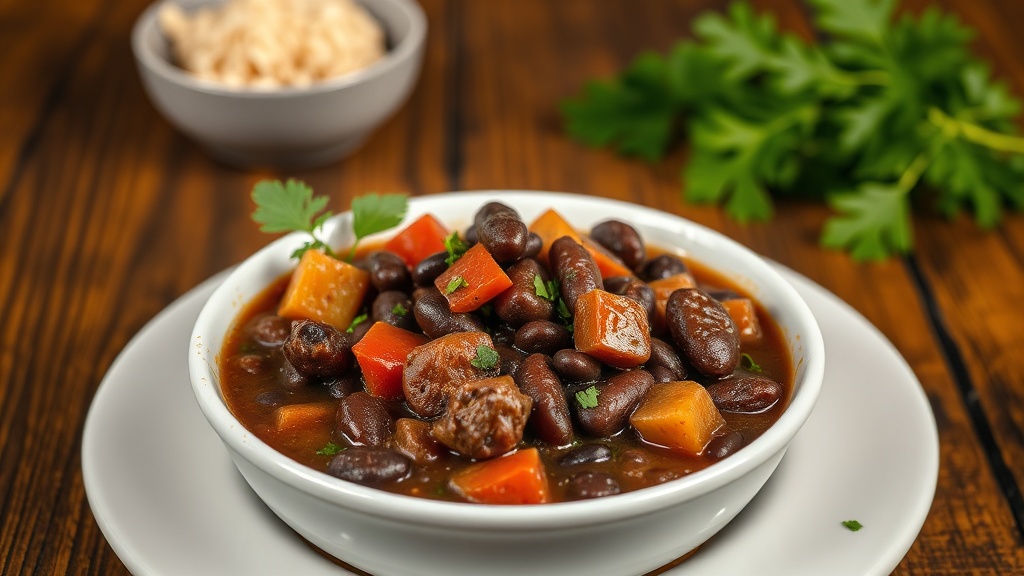
Brazil's national dish—black beans slow-cooked with pork and sausages. This recipe serves two.
Ingredients: 480ml black beans, soaked, 200g pork shoulder, 200g smoked sausage, 100g bacon, 1 onion, 4 cloves garlic, Bay leaves, orange.
Preparation: Cook beans until almost tender. Brown the meats separately. Add all meats to beans. Add aromatics, simmer 2 hours. Remove the orange before serving. Serve with rice, farofa, orange slices.
💡 The orange peel adds brightness—traditional and essential.
Picanha
Top Sirloin Cap
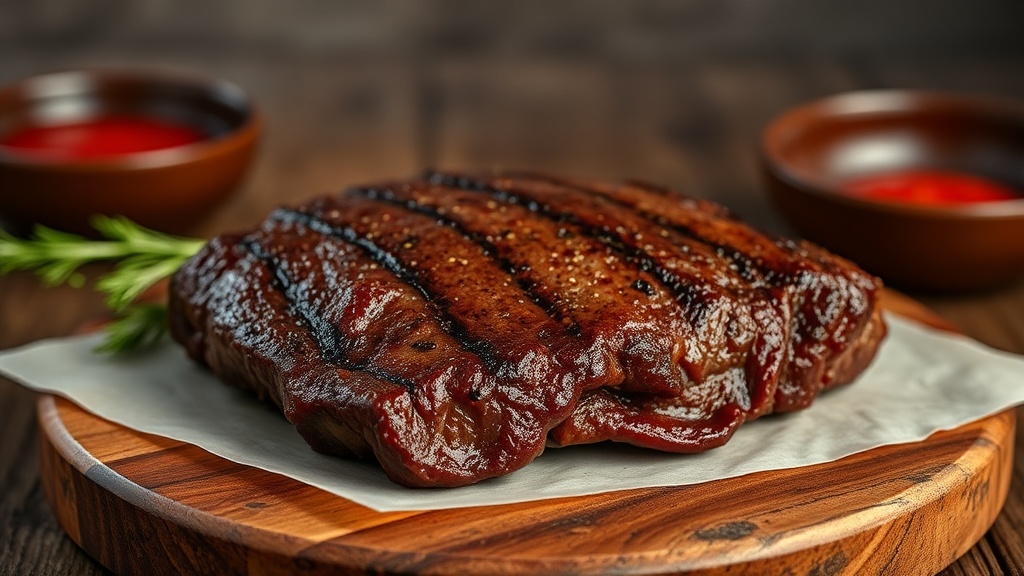
The king of Brazilian steaks—grilled with coarse salt over open flame. This recipe serves two.
Ingredients: 400g picanha steak, Coarse salt, Farofa, Vinaigrette salsa.
Preparation: Keep fat cap on the meat. Salt generously with coarse salt. Grill fat-side down first. Turn and grill to preference. Slice against grain. Serve with farofa and vinaigrette.
💡 Never trim the fat cap—that's where the flavor is!
Pão de Queijo
Cheese Bread
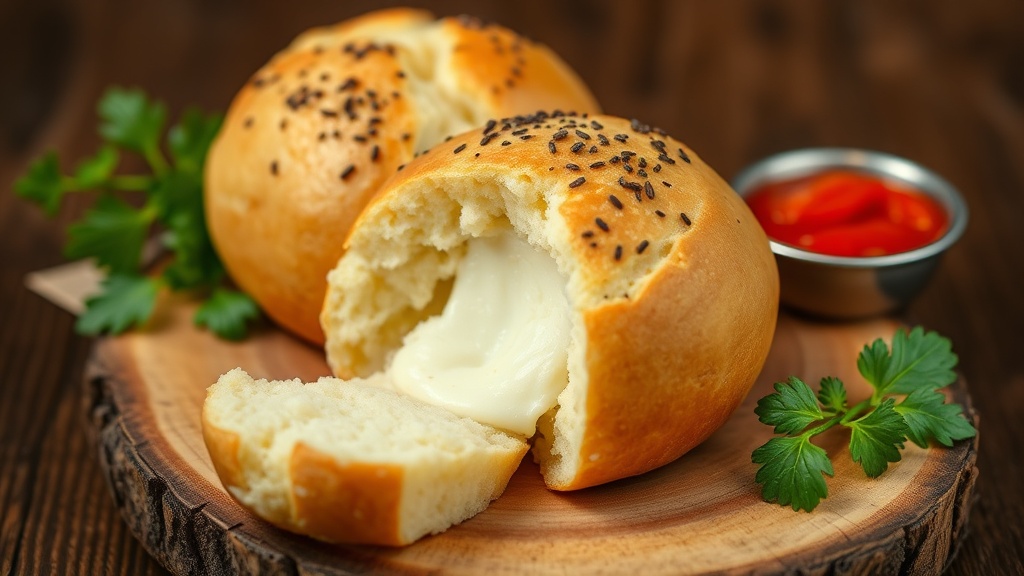
Addictive chewy cheese rolls made with tapioca flour. This recipe serves two.
Ingredients: 240ml tapioca flour, 120ml milk, 60ml oil, 1 egg, 240ml grated Parmesan, Salt.
Preparation: Heat milk and oil to boiling. Pour over the flour and stir until smooth. Cool slightly, add egg. Mix in cheese and salt. Roll into small balls. Bake at 180°C (356°F) for 20 min.
💡 They should be crispy outside, chewy inside—don't overbake.
Afro-Brazilian Heritage
Candomblé religion, capoeira martial art/dance, samba rhythms, and distinctive cuisine trace directly to enslaved Africans who shaped Brazilian culture.
📜 Three More Brazilian Recipes
Bahia's coconut-and-dendê fish stew, the party sweet every Brazilian child grows up on, and the teardrop-shaped croquette sold at every lanchonete counter. Each serves four.
🐟 Moqueca Baiana — Bahian Fish Stew
Salvador's signature dish: firm white fish poached in coconut milk, palm oil, peppers and coriander, served bubbling in the clay pot it was cooked in
- 800g firm white fish (grouper, snapper or cod), cut into thick steaks
- Juice of 2 limes, 3 cloves garlic, salt
- 2 onions and 2 tomatoes, sliced into rings
- 1 red and 1 yellow bell pepper, sliced
- 400ml coconut milk
- 3 tbsp dendê (red palm oil)
- 1 large bunch coriander (cilantro), chopped
- Rice and pirão (fish-stock porridge) or farofa to serve
- Marinate the fish in lime juice, crushed garlic and salt for 30 minutes.
- Layer half the onion, tomato and pepper rings in a wide clay pot or heavy pan.
- Lay the fish on top, cover with the remaining vegetables and half the coriander.
- Pour over the coconut milk, drizzle with dendê and bring to a gentle simmer, uncovered.
- Cook 15–20 minutes without stirring — shake the pan instead so the fish stays whole.
- Finish with the remaining coriander and serve straight from the pot with rice.
💡 Tip: Dendê is the whole point — it gives the orange colour and the earthy Afro-Brazilian flavour. Find it in Brazilian or West African shops; there is no substitute. Espírito Santo's moqueca capixaba omits both dendê and coconut milk and uses annatto instead.
🍫 Brigadeiro — Chocolate Fudge Balls
Invented in 1940s Rio and named after Brigadier Eduardo Gomes, whose presidential campaign sold them; no Brazilian birthday party is legal without them
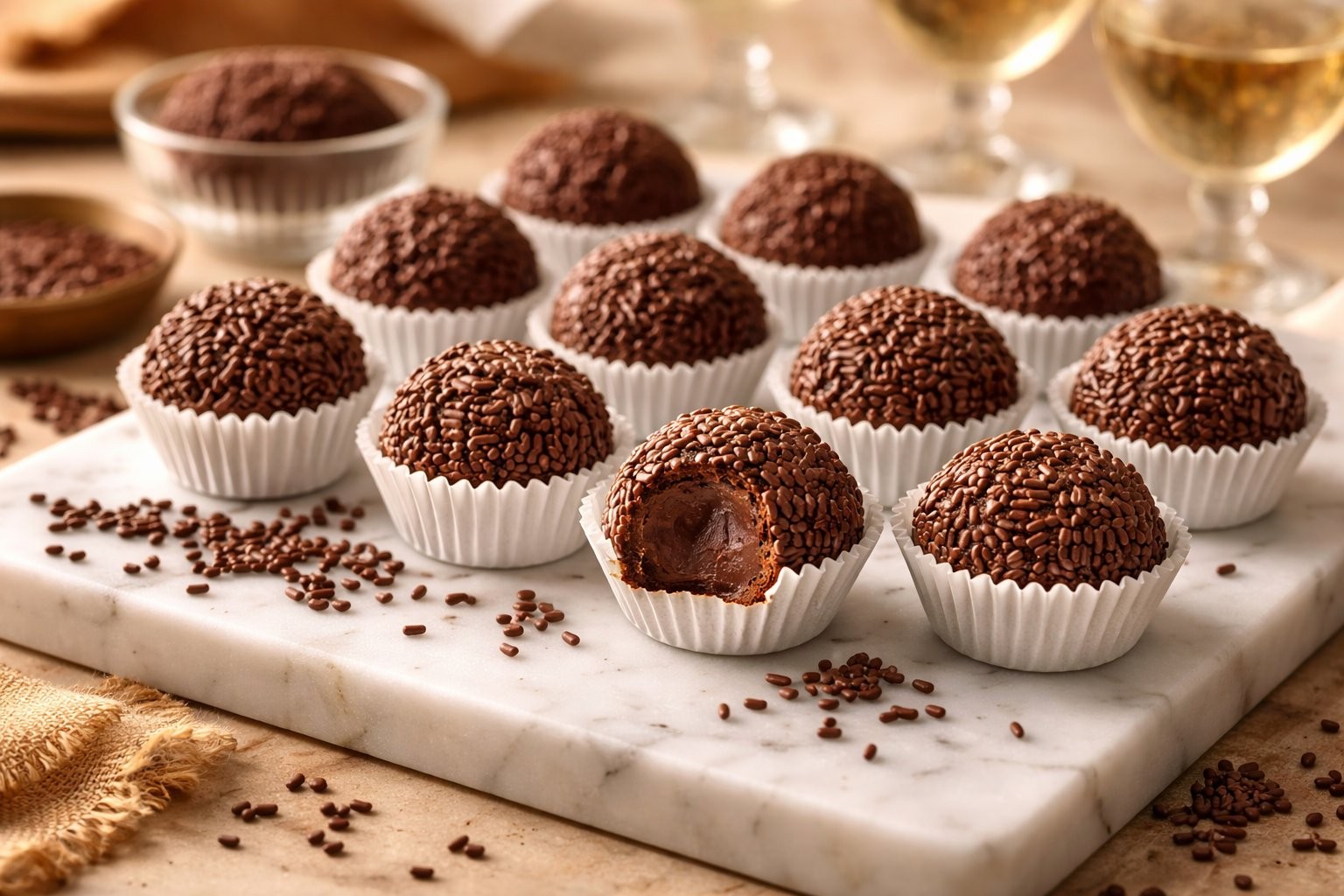
- 1 tin (395g) sweetened condensed milk
- 3 tbsp unsweetened cocoa powder, sifted
- 1 tbsp unsalted butter, plus extra for your hands
- Pinch of salt
- Chocolate sprinkles (granulado) for rolling
- Combine condensed milk, cocoa, butter and salt in a heavy non-stick saucepan over medium-low heat.
- Stir constantly with a silicone spatula for 10–15 minutes; the mixture is ready when it pulls away from the base and a spatula dragged through it leaves a trail that closes slowly.
- Pour onto a buttered plate and let it cool completely (30 minutes, or refrigerate).
- Butter your hands, roll teaspoon-sized portions into balls, and roll in sprinkles.
- Serve in little paper cases (forminhas). Keeps three days in a sealed box.
💡 Tip: Undercook it and the balls will not hold; overcook it and they turn hard. The classic test is a spatula trail that shows the base of the pan for a second before closing. Brazilians also eat it warm from the pan with a spoon — that version is called brigadeiro de colher.
🍗 Coxinha — Chicken Croquettes
Shaped like a chicken drumstick ("little thigh"), the most popular salgadinho in São Paulo, sold by the thousand at bakeries, bus stations and football grounds
- 500g chicken breast, 1 litre chicken stock
- 1 onion and 2 cloves garlic, finely chopped
- 2 tbsp tomato paste, small bunch parsley
- 100g requeijão or cream cheese (optional but traditional)
- 2 tbsp butter, 300g plain flour
- Salt, black pepper, 1 egg beaten, fine breadcrumbs
- Neutral oil for deep-frying
- Poach the chicken in the stock until cooked; shred finely and reserve the stock.
- Fry onion and garlic in a little oil, add tomato paste, the shredded chicken, parsley, salt and pepper. Cool, then mix in the requeijão.
- Bring 500ml of the reserved stock to the boil with the butter; add the flour in one go and beat hard until a smooth dough forms and pulls from the pan. Cool until you can handle it.
- Take walnut-sized pieces of dough, flatten in your palm, add a teaspoon of filling and pinch closed into a teardrop shape with a point at the top.
- Dip each in beaten egg, then breadcrumbs. Deep-fry at 180°C in batches until deep golden, 3–4 minutes.
- Serve hot with hot sauce. They freeze well uncooked.
💡 Tip: The dough is essentially a savoury choux made with stock instead of water — the more chicken flavour in the stock, the better the coxinha. Some paulistano bakeries add a little mashed potato to the flour for a softer bite.
🎉 Festivals & Events
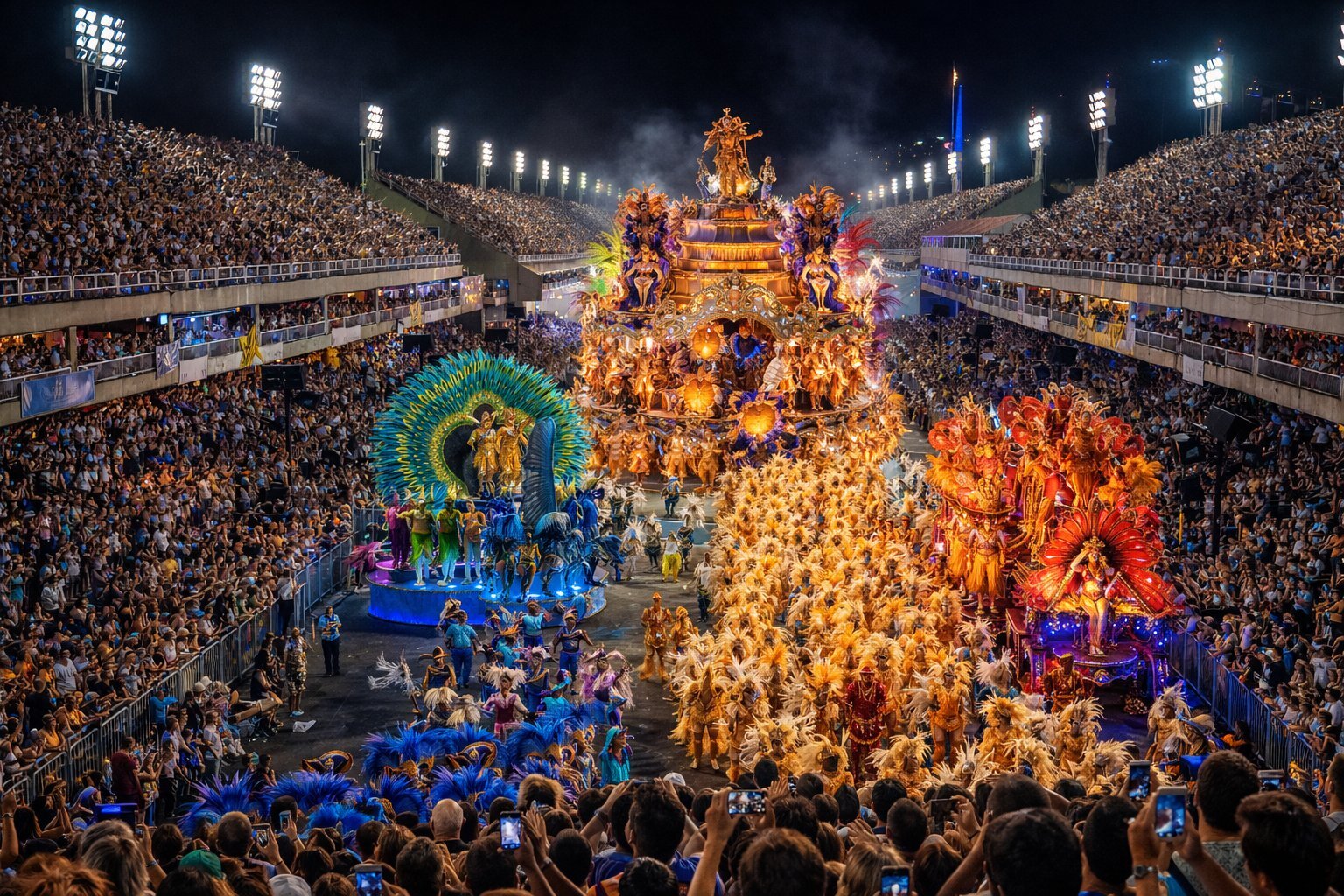
Carnaval is the one everybody knows, and it is bigger and stranger than the postcards suggest. In Rio de Janeiro it is a competitive sport: twelve elite samba schools, each fielding around 3,000 performers and half a dozen floats, parade through the Sambadrome across two nights while judges score them on drum section, flag-bearer, harmony and plot. In Salvador there is no stadium at all — two million people follow trios elétricos, articulated lorries carrying bands, through the streets for six days, in what is routinely billed as the largest street party on the planet. In Olinda and Recife the music is frevo and maracatu rather than samba, and the parade is led by bonecos gigantes, three-metre papier-mâché puppets of local celebrities. Carnaval is movable, tied to Lent: expect it in February 2027. Book accommodation six months out and expect triple rates.
Festa Junina (June) is the festival Brazilians actually love most and tourists almost never see. Ostensibly honouring Saints Anthony, John and Peter, in practice it is a rural harvest festival adopted nationwide: bonfires, quadrilha square dancing, mock weddings, checked shirts and painted-on freckles, and a food canon of corn — pamonha, canjica, curau, bolo de milho — washed down with hot quentão. Campina Grande (Paraíba) and Caruaru (Pernambuco) each claim the world's largest.
Círio de Nazaré in Belém, on the second Sunday of October, is the one that stops the country's largest Catholic procession dead. Around two million people accompany the image of Our Lady of Nazareth through the city, many barefoot, thousands gripping a 400-metre rope. UNESCO inscribed it as Intangible Cultural Heritage in 2013.
Festival Folclórico de Parintins (late June, Amazonas) is Carnaval's Amazonian cousin: a river island of 100,000 splits into two tribes, red Garantido and blue Caprichoso, and stages a three-night operatic retelling of the Boi-Bumbá folk legend in a purpose-built arena called the Bumbódromo. Supporters of one colour will not applaud the other — even the local Coca-Cola bottles come in blue.
Also worth planning around: Réveillon on Copacabana (New Year's Eve, two million people in white, flowers thrown to the sea-goddess Iemanjá); the Lavagem do Bonfim in Salvador (second Thursday of January, Candomblé priestesses ritually washing a church's steps); Oktoberfest Blumenau (October, Santa Catarina — which bills itself as the second-largest in the world after Munich); Festival de Gramado (August, Latin American cinema); Rock in Rio (September of even-numbered years since 2022 — the 2026 edition ran 4–13 September at the Cidade do Rock in Barra da Tijuca, with Elton John's farewell); and São Paulo Pride in June, which regularly claims the title of the largest Pride parade anywhere.
🏛️ UNESCO World Heritage Sites (26)
Brazil has 26 UNESCO World Heritage Sites – 16 cultural, 9 natural and 1 mixed (the Jesuit Missions are shared with Argentina and counted among the cultural sites). The newest are the Peruaçu River Canyon (2025) and the Amazonia Theaters (July 2026, 48th Committee session in Busan). Source: whc.unesco.org/en/statesparties/br.
Colonial Towns
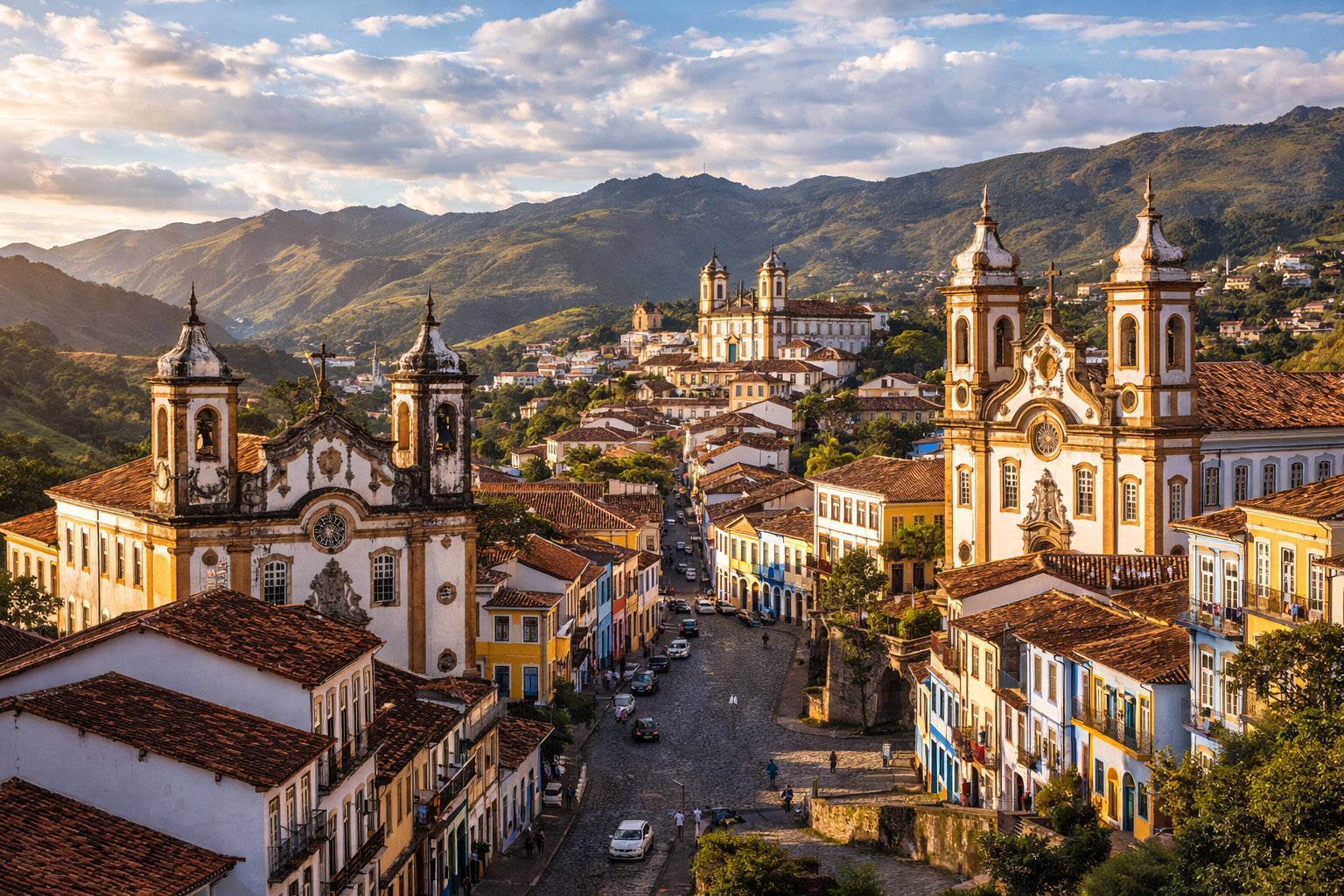
Historic Town of Ouro Preto (1980) – The baroque masterpiece of Brazil's gold rush. Winding streets, churches with gilded interiors, works by the sculptor Aleijadinho. The first Brazilian site inscribed.
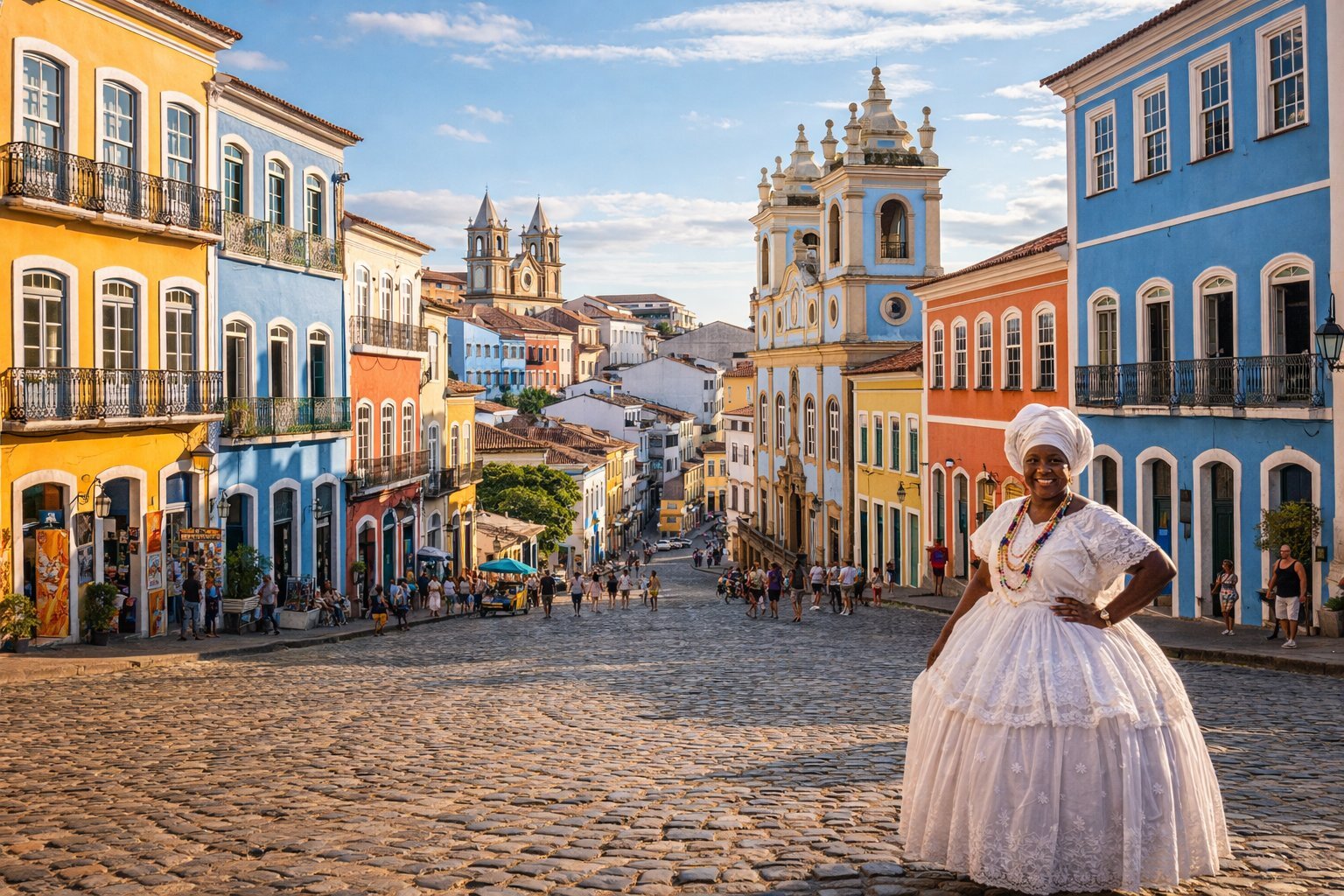
Historic Centre of Salvador de Bahia (1985) – Brazil's first capital, center of the slave trade, crucible of Afro-Brazilian culture. The Pelourinho district's colorful colonial buildings, churches, and terreiros (Candomblé temples).
Historic Centre of Olinda (1982) – Hilltop colonial town overlooking Recife. Churches, monasteries, and the famous Carnival.
Historic Centre of São Luís (1997) – French-founded, Dutch-occupied, Portuguese-built. Exceptional azulejo-tiled colonial architecture.
Historic Centre of Diamantina (1999) – Diamond mining town preserving 18th-century urban planning.
Historic Centre of Goiás (2001) – Gold rush town with vernacular architecture adapted to local conditions.
Baroque Religious Sites
Sanctuary of Bom Jesus do Congonhas (1985) – Aleijadinho's masterpiece: 12 soapstone prophets and 66 polychrome cedar figures depicting the Passion. Brazil's greatest baroque ensemble.
São Francisco Square, São Cristóvão (2010) – Franciscan complex in Brazil's fourth-oldest town.
Modernist Architecture
Brasília (1987) – The planned capital built from nothing (1956-1960), designed by urban planner Lúcio Costa and architect Oscar Niemeyer. A complete 20th-century modernist city.
Pampulha Modern Ensemble (2016) – Niemeyer's early masterpiece in Belo Horizonte (1940-1943): church, casino, dance hall, and yacht club around an artificial lake.
Sítio Roberto Burle Marx (2021) – The landscape architect's garden-laboratory in Barra de Guaratiba, Rio: 3,500 tropical species arranged as a living modernist artwork over four decades.
Rubber-Boom Opera Houses
Amazonia Theaters (2026) – Inscribed at the 48th Committee session in Busan, July 2026: the belle-époque opera houses built on rubber money in the Amazon, headed by the Teatro Amazonas in Manaus (1896), where Italian marble, French tiles and Scottish ironwork were shipped up-river to stage opera in the rainforest.
Memory of Slavery
Valongo Wharf Archaeological Site (2017) – Where an estimated 900,000 enslaved Africans first touched Brazilian soil. The most important physical trace of the slave trade in the Americas.
Cultural Landscapes
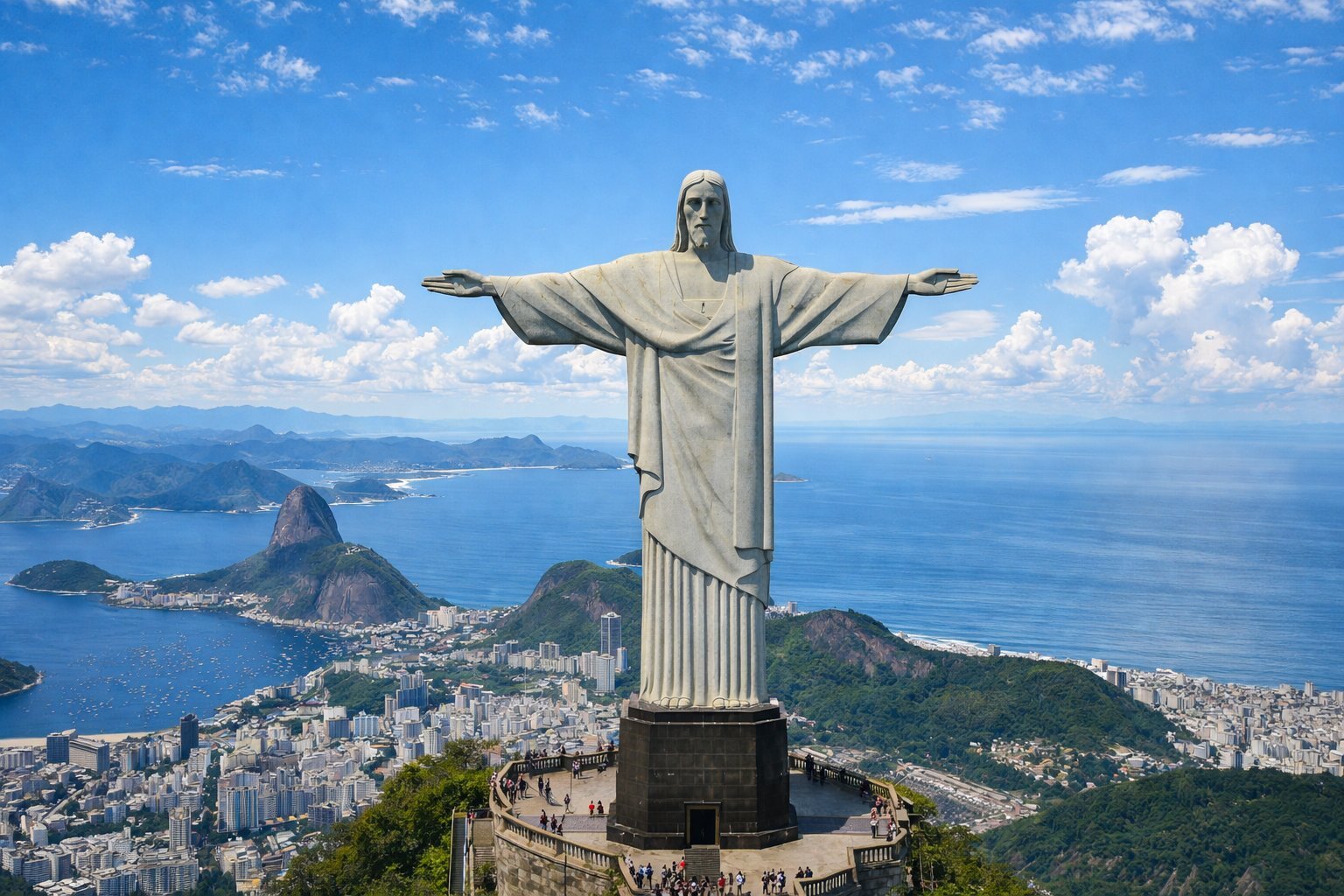
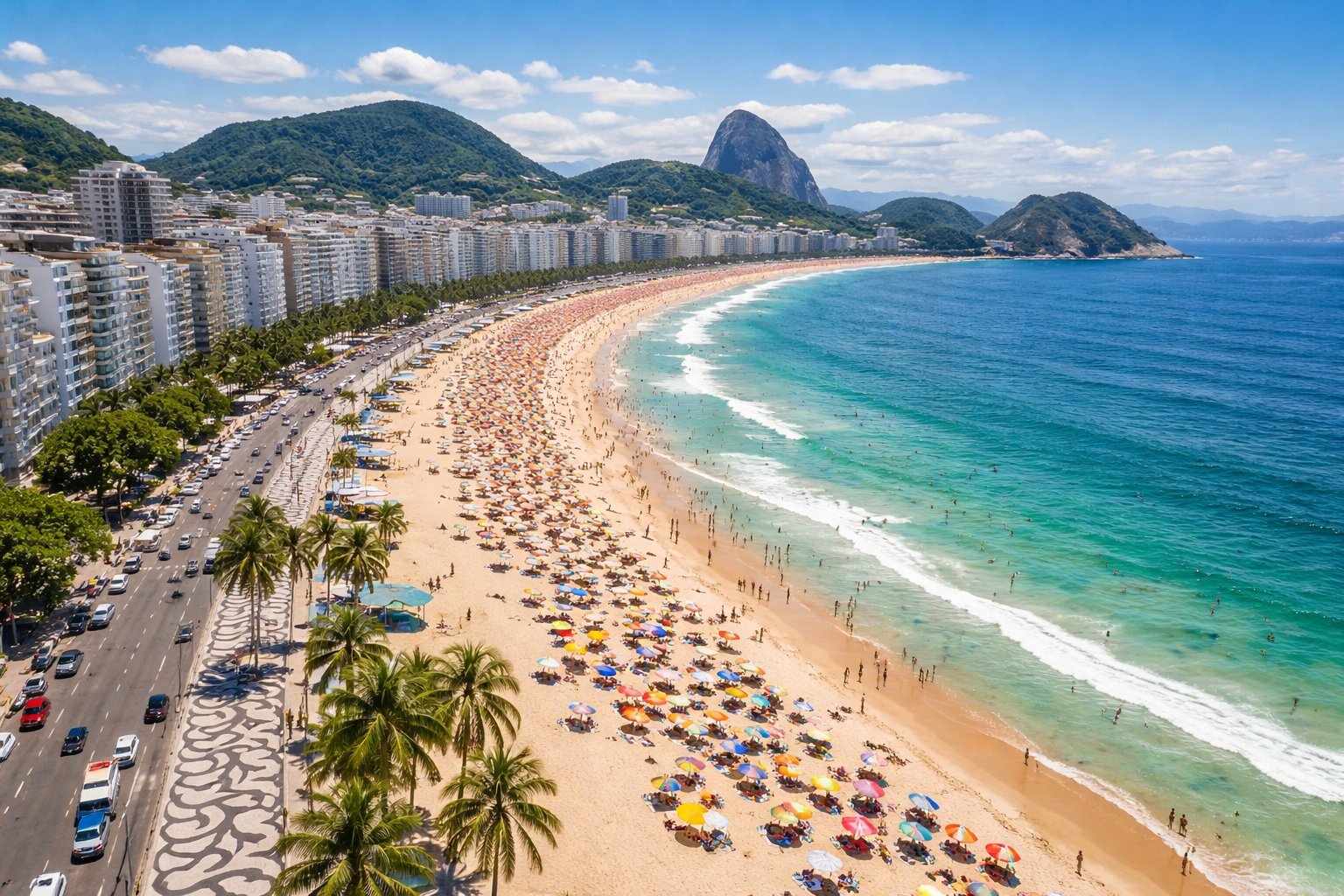
Rio de Janeiro: Carioca Landscapes between Mountain and Sea (2012) – The exceptional urban setting from Tijuca forest to Sugarloaf, Corcovado's Christ the Redeemer to Copacabana beach.
Paraty and Ilha Grande (2019) – Mixed site: colonial port town and Atlantic Forest islands. Cultural history meets biodiversity hotspot.
Natural Sites
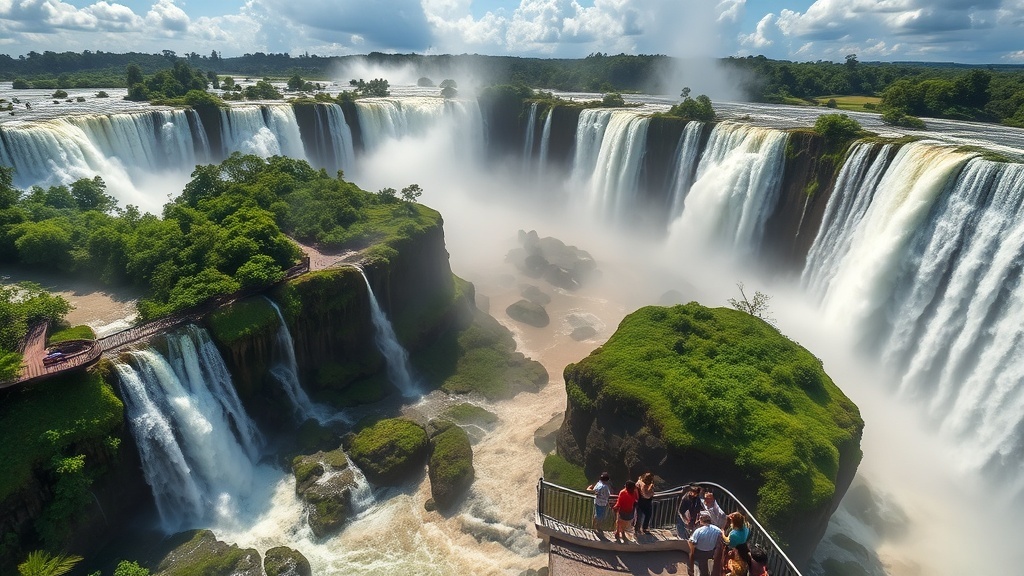
Iguaçu National Park (1986) – Brazil's side of the spectacular Iguazu Falls (shared with Argentina). 275 waterfalls spanning 2.7 km.
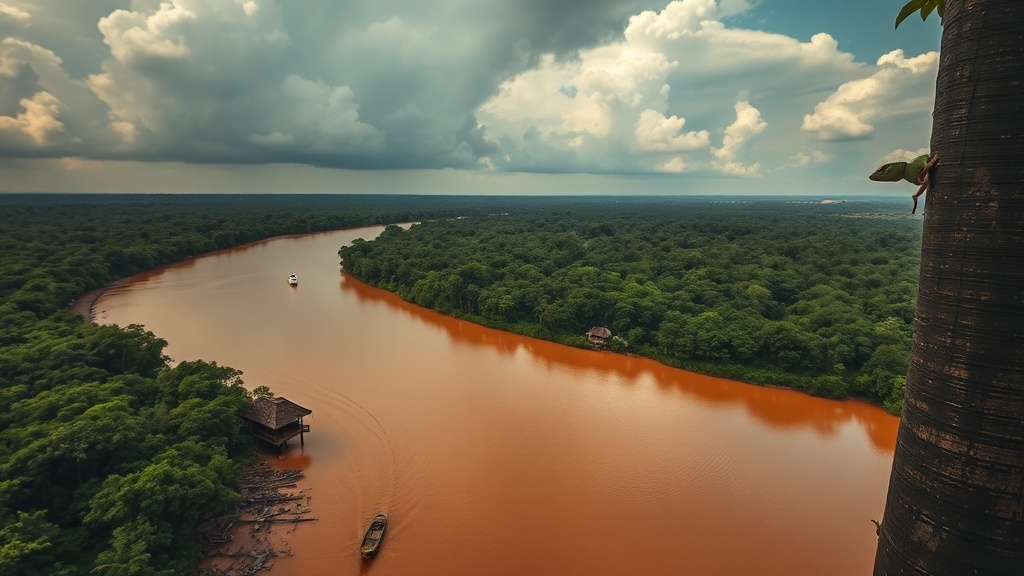
Central Amazon Conservation Complex (2000/2003) – The largest protected area in the Amazon Basin. Várzea and terra firme forests, aquatic ecosystems, extraordinary biodiversity.
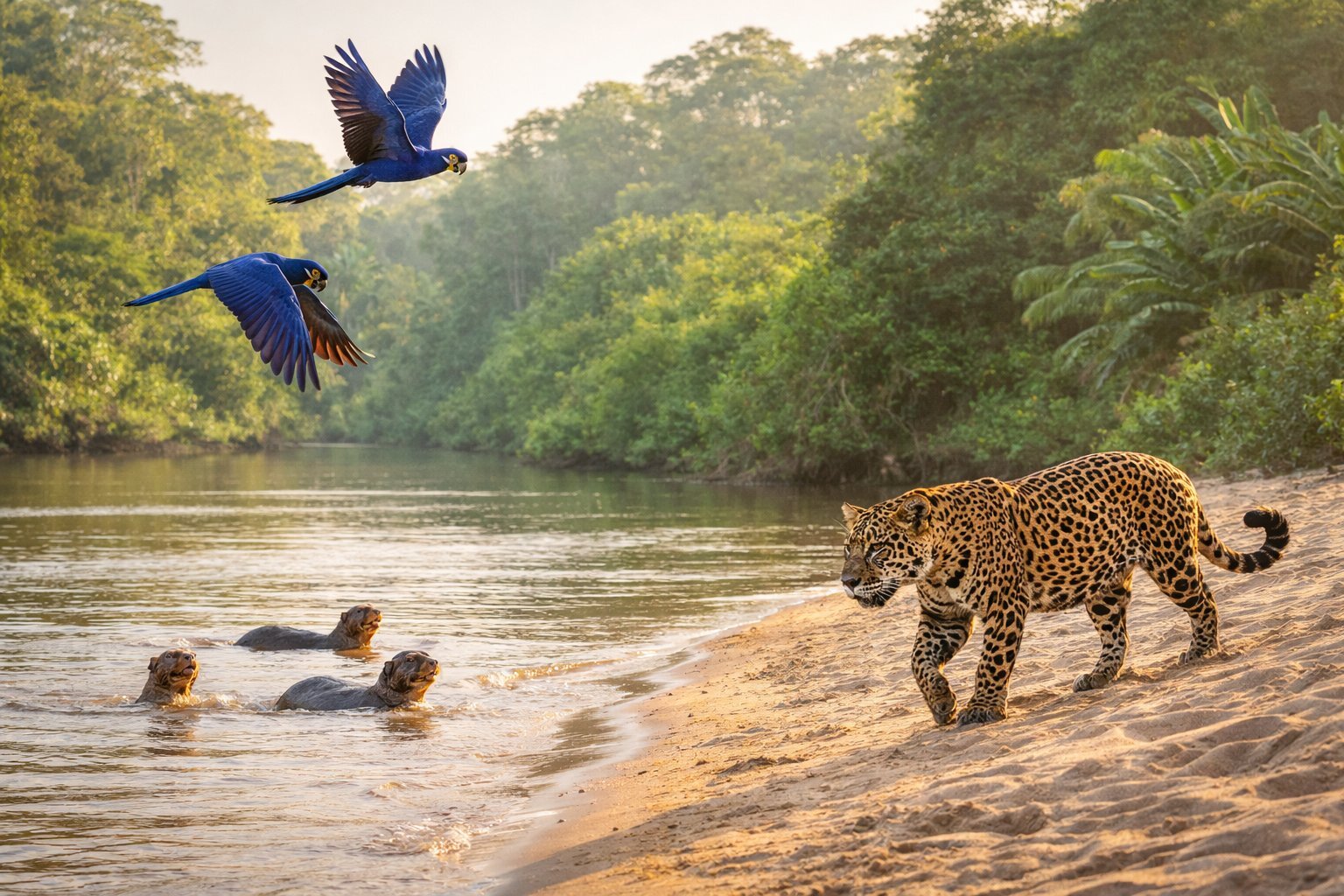
Pantanal Conservation Area (2000) – The world's largest tropical wetland ecosystem. Jaguars, caimans, giant otters, hyacinth macaws.
Atlantic Forest Reserves (1999) – Remnants of the endangered Mata Atlântica: some of Earth's richest and most threatened ecosystems.
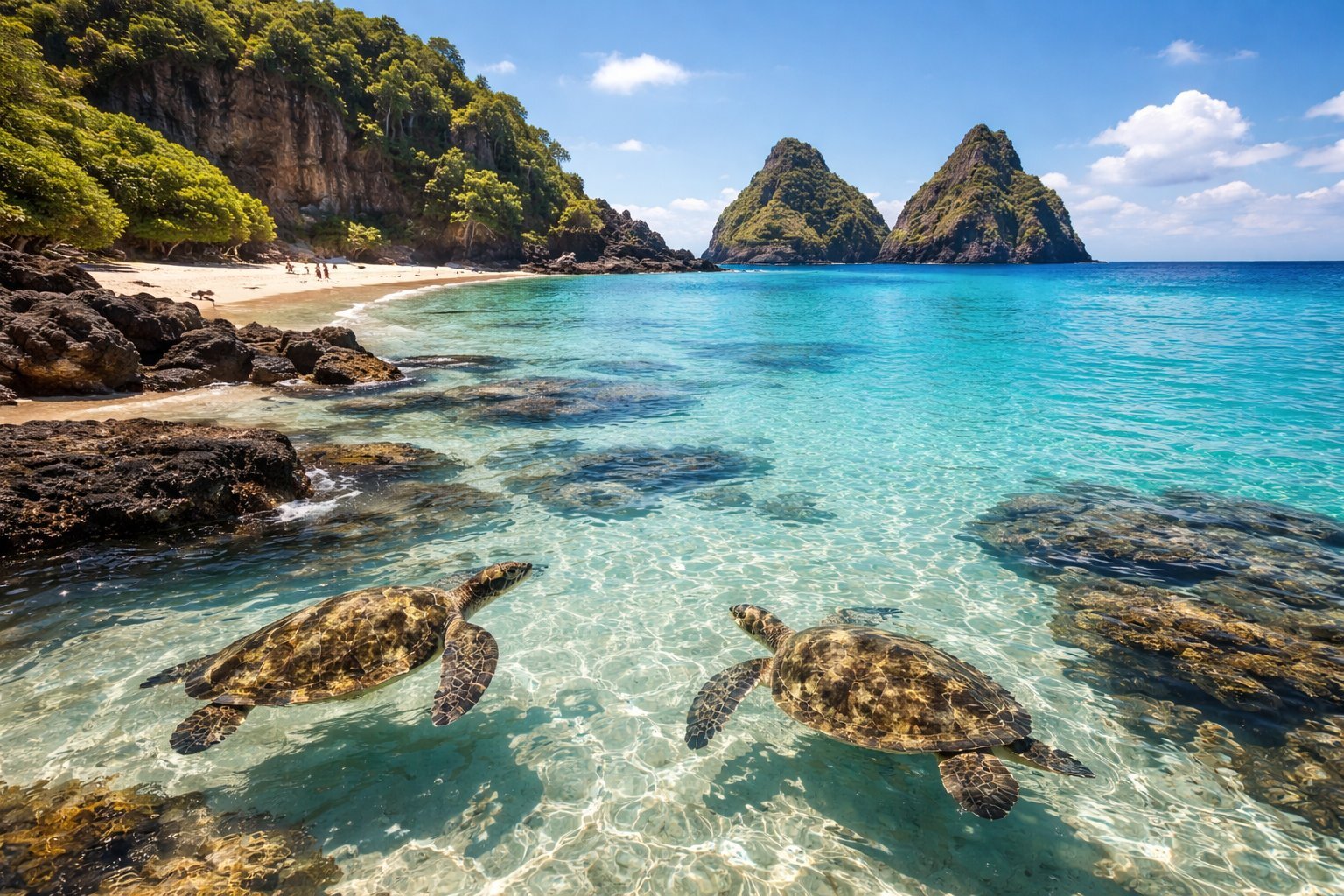
Brazilian Atlantic Islands: Fernando de Noronha and Atol das Rocas (2001) – Marine paradise with the Western Atlantic's largest seabird concentration.
Discovery Coast Atlantic Forest Reserves (1999) – Where Portuguese first landed; fragments of original forest.
Cerrado Protected Areas (2001) – Chapada dos Veadeiros and Emas national parks protecting Brazil's savanna biome.
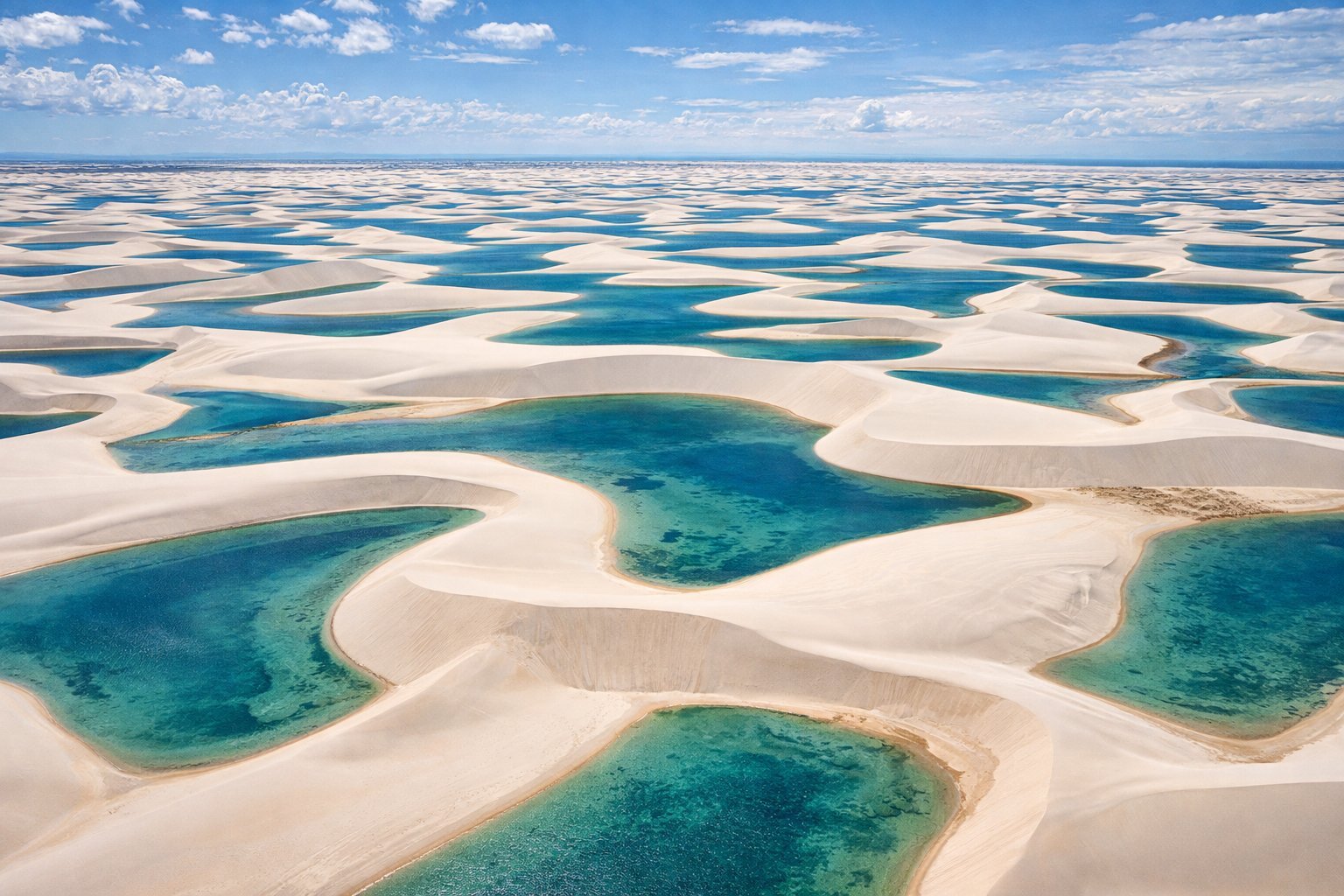
Lençóis Maranhenses National Park (2024) – 155,000 hectares of white dunes in Maranhão that fill with thousands of turquoise rainwater lagoons between May and September.
Peruaçu River Canyon (2025) – Limestone canyon in northern Minas Gerais with some of the largest cave entrances on Earth and rock art up to 9,000 years old.
Prehistoric Art (cultural)
Serra da Capivara National Park (1991) – Rock shelters in Piauí with prehistoric paintings; UNESCO lists it as a cultural site, and its dating (claims run past 25,000 years) is still argued over by archaeologists.
Shared/Transnational
Jesuit Missions of the Guaraní (1983/1984) – Shared with Argentina: ruins of 17th-18th century missions. Brazilian component: São Miguel das Missões.
🏙️ Cities & Destinations
Rio de Janeiro
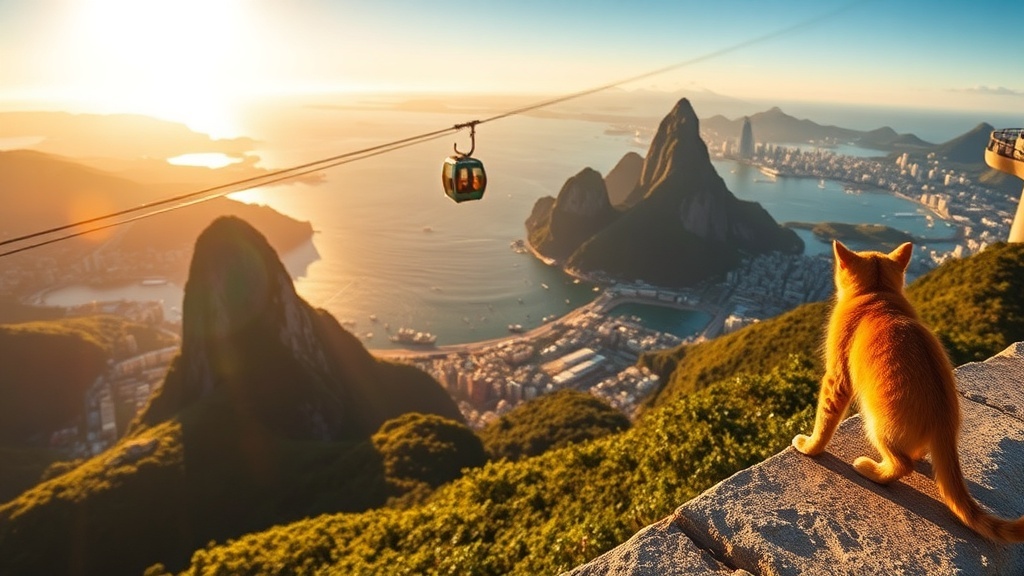
The Cidade Maravilhosa (Marvelous City) delivers its promise: Christ the Redeemer atop Corcovado, Sugarloaf's cable car, Copacabana and Ipanema beaches, samba, favelas, and infectious energy.
São Paulo
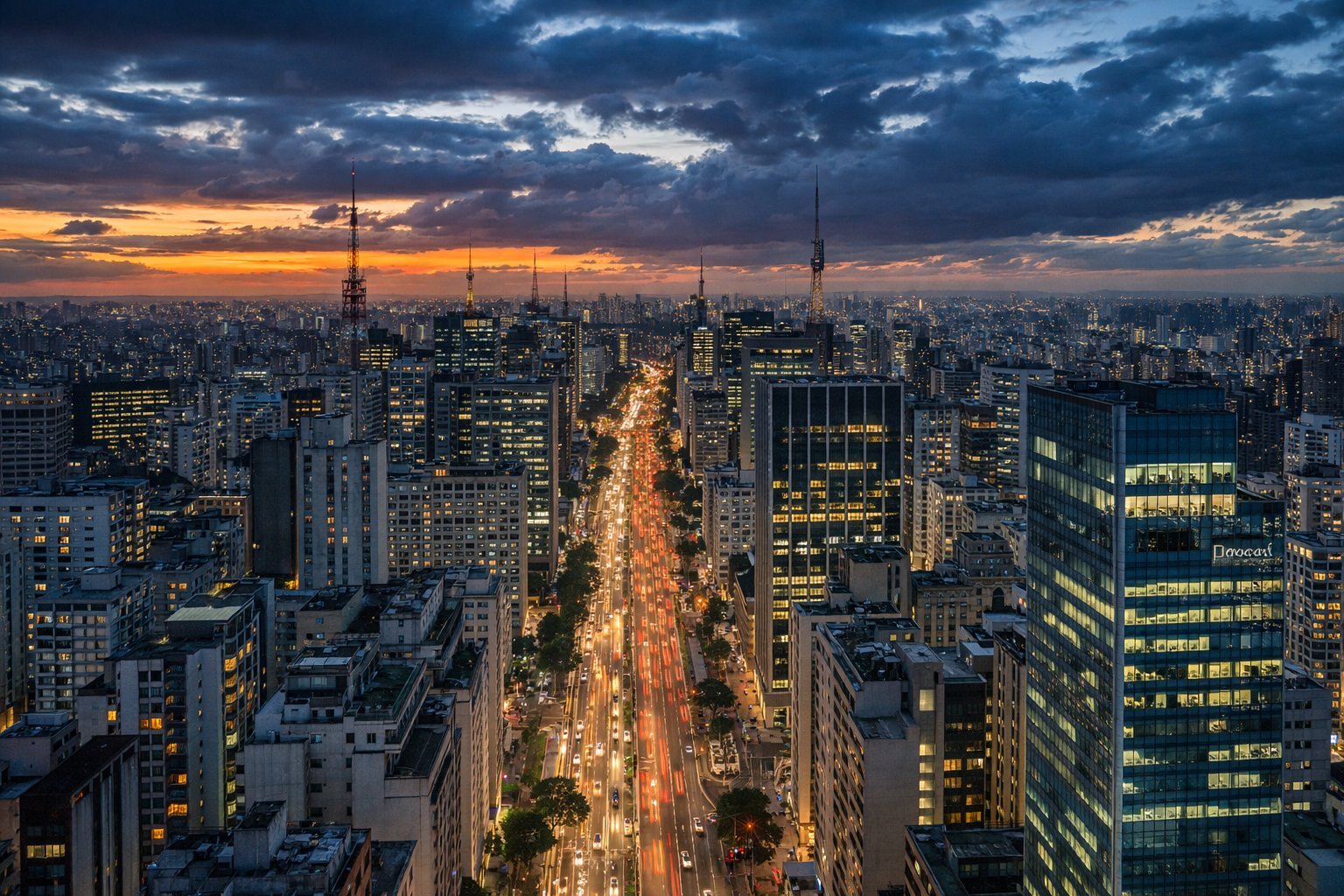
Latin America's largest city – 22 million people – offers world-class museums, restaurants, nightlife, and cultural dynamism that rivals any global capital.
Salvador
The heart of Afro-Brazilian culture. Pelourinho's colonial streets, Candomblé temples, capoeira circles, and Carnival that rivals Rio's.
The Amazon
Manaus as the gateway to jungle lodges, river cruises, and indigenous communities. The meeting of the waters where the Rio Negro meets the Solimões.
Iguazu Falls
One of Earth's great natural spectacles. The Brazilian side offers panoramic views; the Argentine side allows closer encounters with individual falls.
Pantanal
The world's best place to see jaguars in the wild, plus giant otters, capybaras, caimans, and extraordinary birdlife.
Minas Gerais Colonial Towns
Ouro Preto, Congonhas, Tiradentes, Diamantina – baroque churches, colonial streets, mountain scenery, and excellent cuisine.
🍷 Wine, Spirits & Drinking Culture
Brazil is the world's third-largest beer market (after China and the United States), and South America's most dynamic wine country — and yet its drinking culture is dominated by one spirit and one cocktail so completely that everything else fades to background noise. Cachaça and the caipirinha are Brazil, distilled and shaken.
🥃 Cachaça — The Soul of Brazil
Cachaça is Brazil's national spirit — distilled from fresh sugarcane juice (not molasses, which distinguishes it from rum). With an estimated 40,000 producers — only a small fraction of them formally registered — and some 4,000 brands, cachaça is by volume one of the most-consumed spirits on Earth, almost all of it drunk at home. But there are two completely different categories: industrial cachaça (column-distilled, unaged, sold in plastic bottles for $2 — the stuff that fuels Carnival and Sunday football) and artisanal cachaça (alambique — pot-distilled in copper, aged in Brazilian hardwoods, and capable of rivalling fine Cognac).
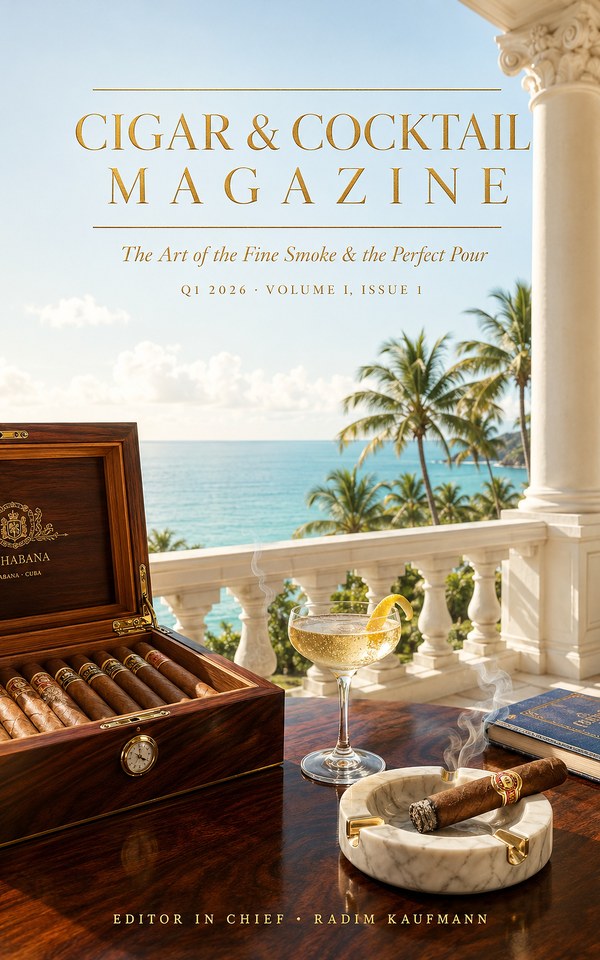
The artisanal revolution is where it gets extraordinary. Producers in Minas Gerais, São Paulo state, and Bahia age cachaça in native Brazilian woods — amburana (which adds cinnamon and vanilla notes), bálsamo (resinous and complex), jequitibá (neutral, like French oak), and freijó (spicy and aromatic). Each wood imparts completely unique flavours. Havana from Salinas, Minas Gerais (not to be confused with Cuban Havana Club), is considered the finest cachaça in Brazil — their Anísio Santiago, aged around twelve years in bálsamo, sells for $200+ and is a spirit of astonishing complexity. Weber Haus in Rio Grande do Sul, Novo Fogo in Paraná (barrel-aged in repurposed American oak), and Yaguara are other benchmarks.
🍹 Caipirinha — The Perfect Cocktail
The caipirinha is perfection in three ingredients: cachaça, lime, and sugar. Muddle the lime with sugar (never use lime juice — the essential oils from the skin are the point), add cachaça and ice, stir. That's it. The genius is in the simplicity: the lime's bitterness and oil balance the cachaça's sweetness and fire; the sugar rounds everything; the ice dilutes it to drinkability. It became an international sensation in the 2000s but is best consumed in Brazil, where the cachaça is fresh, the limes are Tahiti limes (smaller, juicier), and nobody overthinks it.
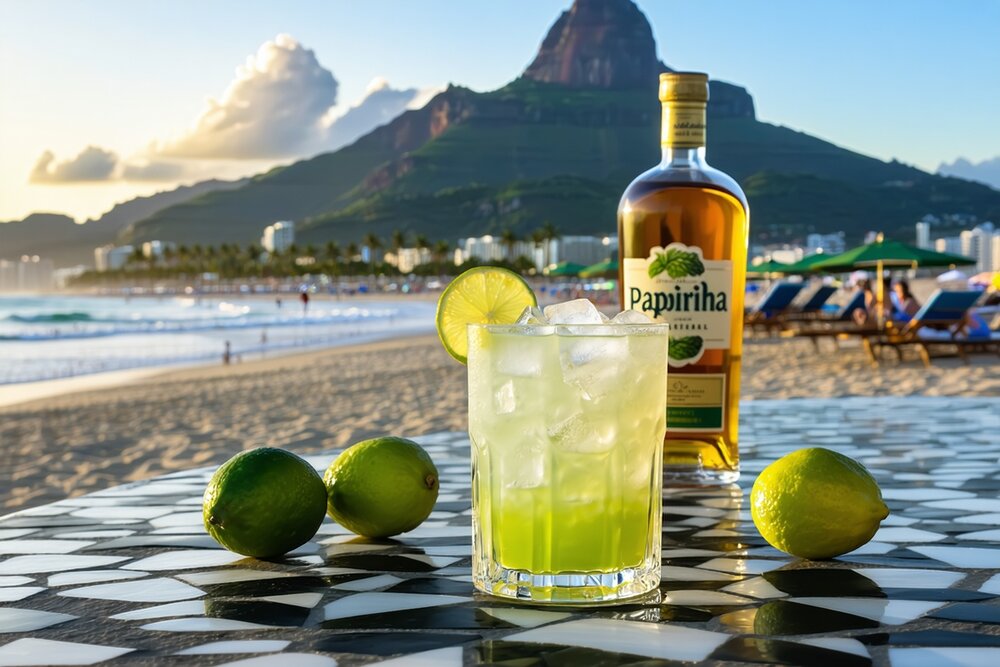
Batida — cachaça blended with fruit (coconut, passion fruit, mango) and condensed milk — is the beach drink of choice. Quentão — hot cachaça with ginger, cloves, cinnamon, and sugar — is the winter drink of São Paulo's Festas Juninas (June festivals), warming against the (relatively) cold southern winter.
🍇 Brazilian Wine — The Serra Gaúcha Surprise
Brazil is South America's third-largest wine producer (after Argentina and Chile), and the Serra Gaúcha highlands of Rio Grande do Sul — settled by Italian immigrants in the 1870s — produce sparkling wines that regularly outperform Prosecco in blind tastings. Miolo, Casa Valduga, and Salton are the major houses, but the most exciting development is the emerging Campanha Gaúcha region on the Uruguayan border, where Tannat and Cabernet Franc are producing serious reds.
The Vale do São Francisco in Bahia/Pernambuco is one of the world's few tropical wine regions — at latitude 8°S, vineyards produce two harvests per year, irrigated by the São Francisco River. Miolo Terranova and Rio Sol are making credible wines in conditions that should be impossible.
🍺 Beer — Chopp Culture
Brazil is the world's third-largest beer market. Brahma, Skol, and Antarctica (all now owned by AB InBev) dominate, but the craft revolution (cerveja artesanal) has exploded since 2010. São Paulo, Curitiba, and Porto Alegre have world-class breweries. Chopp (draft beer, pronounced "shoppy") — served ice-cold in tiny 300ml glasses that stay cold — is the social ritual of the boteco (neighbourhood bar). The glass must frost. The beer must be near-freezing. Brazilians are the world's most temperature-obsessed beer drinkers.
🏆 Kaufmann Wine Score — Brazil
Rated on four criteria: Aroma (/25), Taste (/30), Finish (/20), Value (/25) — Total /100
| Wine | 🔴 Aroma | 🟡 Taste | 🟢 Finish | 🔵 Value | Total |
|---|---|---|---|---|---|
| Miolo Cuvée Giuseppe Brut (Serra Gaúcha) | 21 | 25 | 17 | 23 | 86 |
| Casa Valduga 130 Brut (Vale dos Vinhedos) | 22 | 26 | 17 | 23 | 88 |
| Salton Intenso Cabernet Sauvignon | 19 | 23 | 15 | 21 | 78 |
| Pizzato Concentus (Bordeaux blend) | 22 | 26 | 18 | 21 | 87 |
| Miolo Terranova Shiraz (Vale do São Francisco) | 20 | 23 | 15 | 22 | 80 |
| Lidio Carraro Quorum (Tannat blend, Campanha) | 22 | 25 | 17 | 21 | 85 |
95–100 Legendary · 90–94 Outstanding · 85–89 Very Good · 80–84 Good · 75–79 Average · <75 Below Average
🌡️ Climate & Best Time to Visit
Brazil sits almost entirely south of the equator, so its seasons are the reverse of Europe's and North America's: Christmas falls in high summer and July is winter. Ninety per cent of the country is tropical, which means the question is rarely "will it be warm?" but "will it be wet?" — and that answer differs by region, so the best month for the Pantanal is the worst for a Rio beach holiday.
| Season | Months | Temperature | Conditions | Recommended |
|---|---|---|---|---|
| Summer | Dec–Feb | Hot (Rio 30–40°C) | Humid, afternoon storms; Carnival; peak prices | ✅ Beaches, Carnival |
| Autumn | Mar–May | Warm | Rains easing in the southeast; Amazon high water Apr–Jun (flooded-forest canoeing) | ✅ Excellent shoulder |
| Winter | Jun–Aug | Mild (Rio 20–25°C); the South can hit single digits | Dry season begins in the Pantanal and the Cerrado; Festa Junina; Northeast coast rains | ✅ Wildlife, cities |
| Spring | Sep–Nov | Warm to hot | Pantanal jaguar season peaks (Jul–Oct); Lençóis lagoons full until Sep; Rock in Rio | ✅ Best for the Pantanal |
In one line: Rio and the coast from December to March; the Pantanal, Bonito and the Chapadas from July to October; the Amazon at high water (April–June) for boat access or at low water (September–November) for beaches and wildlife on the banks; Lençóis Maranhenses from June to August; Serra Gaúcha's vineyards for the harvest in February–March.
✈️ Suggested Itineraries
🗓️ 3-4 Days: Rio de Janeiro
- Day 1: Copacabana and Ipanema beaches, then the Sugarloaf cable car for sunset over Botafogo bay
- Day 2: Corcovado train to Christ the Redeemer early (before the cloud), afternoon in Santa Teresa, night in the samba bars of Lapa
- Day 3: Valongo Wharf and Pedra do Sal in the port district, Museu do Amanhã, a Sunday roda de samba if the dates line up
- Day 4: Tijuca forest hike or a day trip to Petrópolis's imperial palaces; fly on
🗓️ 7-10 Days: Rio, Iguaçu & Salvador
- Days 1-3: Rio as above
- Days 4-5: Fly to Foz do Iguaçu: the Brazilian panorama walk one day, the Argentine side's Devil's Throat catwalks the next (passport needed)
- Days 6-8: Fly to Salvador: Pelourinho, a Tuesday-night bloco, acarajé at Rio Vermelho, Candomblé and capoeira
- Days 9-10: Bus or flight to the Chapada Diamantina for waterfalls and table-mountain hikes, or the beaches of Morro de São Paulo
🗓️ 2-3 Weeks: The Wild Brazil Loop
- Days 1-3: Rio
- Days 4-7: Cuiabá → Poconé → Transpantaneira road into the northern Pantanal; July–October for jaguars on the Rio Cuiabá at Porto Jofre
- Days 8-11: Manaus: Teatro Amazonas, the Meeting of the Waters, three nights at a river lodge on the Rio Negro
- Days 12-15: Belém for the Ver-o-Peso market and Amazonian cooking, then Barreirinhas for the Lençóis Maranhenses lagoons (June–September)
- Days 16-21: Minas Gerais: Ouro Preto, Congonhas, Tiradentes and a cachaça distillery visit; fly home from Belo Horizonte
📋 Practical Information
Getting There
São Paulo-Guarulhos (GRU) and Rio de Janeiro-Galeão (GIG) are the main international airports. Domestic flights essential for a country this size.
Getting Around
Domestic flights connect major cities. Bus networks are extensive but journeys are long. Car rental useful in specific regions. Infrastructure varies dramatically.
Visas
U.S., Canadian and Australian citizens have needed a visa since 10 April 2025, when Brazil ended the unilateral waiver and restored reciprocity. There is an e-Visa, applied for online through the government-authorised portal at brazil.vfsevisa.com. Cost is US$80.90; for U.S. nationals it is issued with 10-year validity, allowing stays of up to 90 days per entry and no more than 180 days in any 12-month period. Processing is usually 3–10 business days — apply two to three weeks ahead. Airlines will deny boarding without a valid e-Visa; there is no visa on arrival.
EU, UK, Japanese and most South American nationals remain visa-free for 90 days. Mercosur citizens may enter on a national ID card. Everyone needs a passport valid for the duration of stay and, in practice, proof of onward travel. A yellow fever certificate is required if arriving from a country with transmission risk, and vaccination is strongly recommended — at least ten days before departure — for anyone visiting the Amazon, the Pantanal, or the interior states.
Safety
Crime is a real concern, especially in large cities. Take precautions: avoid flashy displays, use registered taxis/apps, stay aware. That said, millions visit safely every year.
Language
Portuguese, not Spanish. English is limited outside tourism infrastructure.
⚠️ Travel Advisory & Safety
🇺🇸 U.S. State Department — Level 2: Exercise Increased Caution
Last updated 31 August 2026, carrying both the “C” (crime) and “K” (kidnapping) risk indicators; the K indicator was added on 29 May 2026 because of express kidnappings and organised ATM-targeting, not a single incident — the State Department itself calls kidnapping-for-ransom of U.S. citizens rare. Level 2 is the same tier assigned to France and the United Kingdom — the caution is about property and violent crime in cities, not about a country at war.
Do Not Travel zones within Brazil: anywhere within 100 miles (160 km) of the land borders with Venezuela, Colombia, Peru, Bolivia, Guyana, French Guiana, Suriname and Paraguay. This exclusion does not apply to Foz do Iguaçu / Iguaçu National Park or to Pantanal National Park, both of which remain normal tourist destinations.
What the advisory actually asks of you
Do not enter favelas or informal settlements, at any hour, including on a guided “favela tour” — police operations can begin without warning and the State Department is explicit that its personnel are prohibited from entering. Avoid Brasília's satellite cities after dark. Do not walk on unlit beaches at night; Recife and Olinda additionally have a genuine shark risk and posted swimming bans that should be obeyed.
The practical version
Carry one card and a modest amount of cash, not your whole wallet. Use Uber or 99 rather than hailing on the street. Keep phones out of sight on pavements — snatch-and-run on motorbikes is the single most common crime against tourists. If you are robbed, hand it over immediately; resistance is what turns a robbery into something worse. Drink spiking and “good Samaritan” scams occur in nightlife districts in Rio and São Paulo. Express kidnappings — forced ATM withdrawals over a few hours — happen, and are the reason for the K indicator.
The UK FCDO, Canada and Australia all issue broadly equivalent “high degree of caution” guidance. Roughly six million foreign visitors come to Brazil each year and the overwhelming majority have no problem at all; the risk is real, concentrated, and largely avoidable with ordinary big-city discipline.
💸 Big Mac Index & Costs
Big Mac Index: in The Economist's January 2026 reading a Big Mac cost R$23.90 in Brazil, roughly a quarter less than in the United States at the exchange rate of the day — the real is, by burger arithmetic, undervalued, which is good news for dollar and euro visitors. Brazil is not cheap by South American standards (Argentina and Colombia are cheaper for most things), but domestic flights, restaurant meals and taxis via Uber or 99 cost noticeably less than in Europe. Budget on ~US$60–80 a day as a backpacker, US$150–250 mid-range, and expect Rio, São Paulo, Fernando de Noronha and anything during Carnival to run well above that.
⚽ Sports
Five World Cups (1958, 1962, 1970, 1994, 2002) remain the record, but the recent story is of a giant that keeps stumbling at the same step. At the 2026 World Cup in North America the Seleção, coached since May 2025 by Carlo Ancelotti — the first foreigner given the job permanently — went out in the round of 16 on 5 July 2026, beaten 1–2 by Norway at East Rutherford after two goals from Erling Haaland. It was the fifth consecutive World Cup Brazil has failed to win, the longest drought in its history, and the 2026 final was contested by Spain and Argentina instead. Consolation came at club level: Botafogo won the 2024 Copa Libertadores and Flamengo the 2025 edition, the seventh time in a row a Brazilian club has taken the trophy.
Beyond football, Paris 2024 was Brazil's second-best Olympics ever: 20 medals (3 gold, 7 silver, 10 bronze). Rebeca Andrade beat Simone Biles to floor gold and left Paris with six career Olympic medals, the most of any Brazilian; the other golds went to judoka Beatriz Souza and the beach-volleyball pair Ana Patrícia and Duda. Marta, six-time world player of the year, retired from the national team in 2024 with an Olympic silver. Gabriel Bortoleto became Brazil's first Formula 1 driver since Felipe Massa when he debuted in 2025; the São Paulo Grand Prix at Interlagos each November is the loudest weekend in the calendar.
Hosting: Brazil staged the G20 summit in Rio (18–19 November 2024), the BRICS summit in Rio (6–7 July 2025) and the UN climate conference COP30 in Belém (November 2025, the first COP held in the Amazon). Next up is the FIFA Women's World Cup 2027, 24 June – 25 July 2027, the first in South America: 64 matches in eight cities (Rio, São Paulo, Brasília, Belo Horizonte, Porto Alegre, Recife, Salvador, Fortaleza), opening match and final both at the Maracanã.
📰 Media & Press Freedom
Brazil ranks 52nd of 180 in the Reporters Without Borders 2026 World Press Freedom Index — a climb of 58 places since 2022, when open hostility from the Bolsonaro government and a wave of online harassment had pushed it down to 110th. The improvement reflects a calmer relationship between the presidency and the press rather than any structural change: the market is still dominated by Grupo Globo (TV Globo, GloboNews, O Globo), with Folha de S.Paulo, O Estado de S. Paulo and the Record and SBT networks as the other national players, and media ownership remains concentrated in a handful of families.
The dangers are regional. Journalists covering local politics, land conflicts, illegal mining and organised crime in the interior and the Amazon face threats and, periodically, murder — British journalist Dom Phillips and indigenist Bruno Pereira were killed in the Javari Valley in June 2022 and the case is still working through the courts. The Supreme Court's June 2025 ruling making platforms liable for illegal user content has reshaped the online environment ahead of the October 2026 election, in which disinformation is again the central media story. For visitors: English-language coverage is thin; The Rio Times and the Brazilian Report are the usual starting points, and Folha publishes an international edition.
⭐ Notable People
Pelé (1940–2022) — three World Cups, the only player to have won that many; Ayrton Senna (1960–1994) — three-time Formula 1 champion, still mourned at Interlagos; Marta (b. 1986) — six times FIFA world player of the year; Rebeca Andrade (b. 1999) — Brazil's most decorated Olympian.
Oscar Niemeyer (1907–2012) — architect of Brasília and Pampulha; Roberto Burle Marx (1909–1994) — the landscape designer whose Copacabana pavement is the most-walked artwork in the country; Sebastião Salgado (1944–2025) — photographer of Serra Pelada and the Amazon, died 23 May 2025.
Machado de Assis (1839–1908) and Jorge Amado (1912–2001) — the two novelists every Brazilian has read; Paulo Coelho (b. 1947) — the one the rest of the world has; Fernanda Torres (b. 1965) — Golden Globe winner and Oscar nominee for I'm Still Here, the film that won Brazil its first Academy Award in March 2025.
Gilberto Gil (b. 1942) and Caetano Veloso (b. 1942) — Tropicália's founders, exiled by the dictatorship, later a culture minister and a national conscience respectively; Anitta (b. 1993) — the funk carioca star who took the genre global; Gisele Bündchen (b. 1980) — from Horizontina, Rio Grande do Sul, the most famous face the German-Brazilian south has produced.
📚 Recommended Reading
- "Lonely Planet Brazil"
- "Culture Smart! Brazil"
- "Brazil: A Biography"
- "Rebellion in the Backlands" (Os Sertões)
- "Dom Casmurro"
- "Dona Flor and Her Two Husbands"
- "Futebol: The Brazilian Way of Life"
- "A Death in Brazil"
- "I'm Still Here" (Ainda Estou Aqui)
📸 Photo Gallery
✍️ Author's Note Radim Kaufmann
Brazil is the country that broke my notebook. I had a list of things to see — Christ the Redeemer, Iguaçu, the Amazon, Salvador's Pelourinho — and I ticked them all off, and they were all magnificent, and none of them were the thing I remember most. The thing I remember most is a Tuesday afternoon in a botequim in Lapa, Rio, where a man who had clearly been drinking chopp since lunch handed me a half-finished caipirinha, said something I couldn't follow, and started conducting an invisible samba band with a toothpick. Two hours later I was somehow in a roda de samba in Pedra do Sal, three generations of one family playing pandeiro and cavaquinho on the cobblestones, a woman selling acarajé out of a styrofoam cooler, and the realisation hit: this country is not a destination, it is a frequency you tune into.
I went to Brazil expecting beaches and got a continent. The Pantanal at sunrise — caimans, capybaras, a jaguar I saw for four seconds and will remember for forty years. Ouro Preto in the rain, every cobblestone slick and shining, baroque churches built on the gold that built Lisbon. A Bahian moqueca in Salvador so good I asked for the recipe and the cook just laughed. Foz do Iguaçu, where the Devil's Throat is so loud you feel it in your sternum. And São Paulo, ugly and brilliant, the best food city in the southern hemisphere, where I ate the best Italian meal of my life in a Liberdade alleyway run by a Japanese-Brazilian who'd trained in Bologna.
A note on cachaça: please, please, do not judge it by the airport miniatures. Find an artisanal alambique cachaça aged in amburana — Havana, Weber Haus, Yaguara, Novo Fogo — and drink it neat. It is one of the great spirits of the world and almost nobody outside Brazil knows. And the sparkling wine from Serra Gaúcha will make you question everything you thought you knew about Prosecco.
—Radim Kaufmann, 2026
Support This Project 🌍
This World Travel Factbook is a labor of love. If you find it helpful, consider supporting its development.
