🍽️ Cuisine
Belarusian cuisine revolves around potatoes — the country reportedly has more potato dishes than any other nation. Draniki (crispy potato pancakes) are the national dish, served with sour cream, mushroom sauce, or meat. Potato also appears as babka (baked potato casserole), kolduny (stuffed potato dumplings), and countless soups and stews.
Beyond potatoes, traditional fare includes machanka (thick pork stew served with bliny), cold beet soup (khaladnik), and various preparations of mushrooms and berries foraged from the forests. Kvass (fermented bread drink) and birch sap are traditional beverages. Belarusian vodka and local craft beers are increasingly good. The country's dairy products — particularly farmer's cheese (tvarog) and smetana (sour cream) — are outstanding. In restaurants, expect generous portions at remarkably affordable prices by European standards.
COOKBOOK NOTE -- Radim Kaufmann
Belarusians joke that they have three hundred ways to cook a potato — and they are barely exaggerating. The bulba (potato) is not merely an ingredient here; it is a cultural identity, a national symbol, and the foundation of a cuisine that is far more sophisticated than outsiders expect. In a Minsk kitchen, watching a grandmother grate potatoes for draniki with the speed and precision of a factory machine, I realised that simplicity and mastery are not opposites. Belarusian food is peasant cooking elevated to art through centuries of repetition and love.
Draniki KCS 82
Potato Pancakes
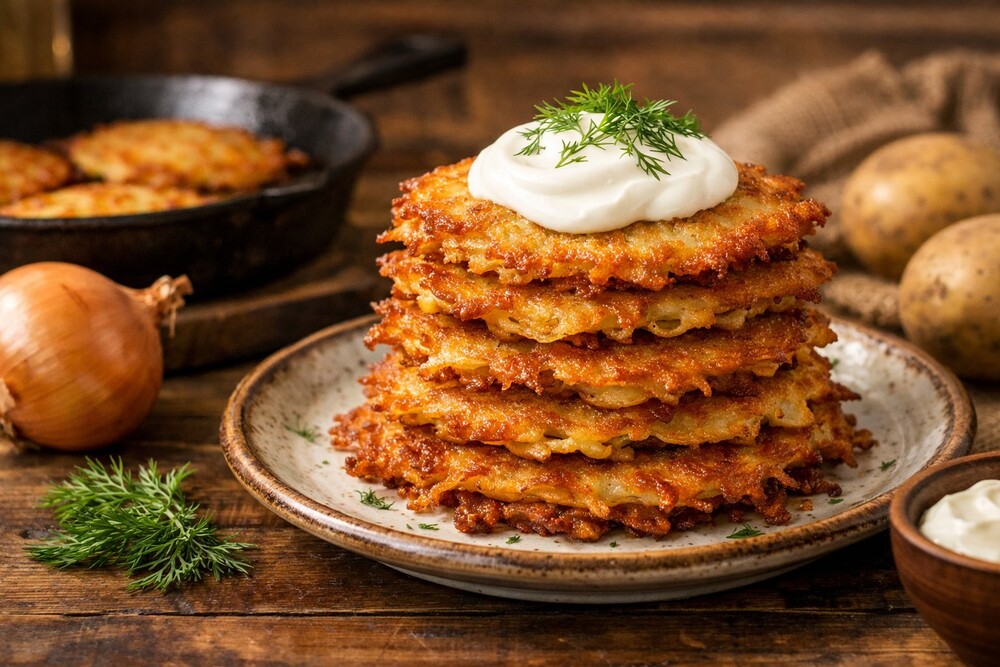
Ingredients: 4 medium potatoes, grated, 1 onion, grated, 1 egg, 30ml flour, Salt, pepper, Sour cream, Oil for frying.
Preparation: Peel one kilogram of starchy potatoes — older potatoes with higher starch content produce the best draniki with crispier edges. Grate them on the finest side of a box grater directly into a bowl lined with cheesecloth or a clean tea towel. This is the traditional method; a food processor produces too uniform a texture. The grating should yield a mix of fine pulp and slightly coarser shreds. Gather the cheesecloth and squeeze out as much liquid as possible into a separate bowl. Let the liquid sit for five minutes — the white potato starch will settle to the bottom. Carefully pour off the water and scrape the starch back into the grated potato. This starch is your natural binder and creates the characteristic crispy crust. Add one small grated onion (for flavour and to prevent browning), one beaten egg, a generous pinch of salt, and freshly ground black pepper. Mix thoroughly but do not add flour — authentic Belarusian draniki rely solely on the potato's own starch. The mixture should be wet but hold together when pressed. Heat a generous amount of sunflower oil or clarified butter in a heavy cast-iron skillet over medium-high heat — the fat should be about five millimetres deep. When the oil shimmers, drop heaped tablespoons of the potato mixture into the pan, pressing each one flat with the back of the spoon to about one centimetre thickness. Do not overcrowd the pan; work in batches of three or four. Fry for three to four minutes on each side until deeply golden and crispy with lacy, caramelised edges. The centre should remain soft and creamy while the exterior shatters. Transfer to a plate lined with paper towels and keep warm in a low oven while you fry the remaining batches, adding more oil as needed. Serve the draniki stacked high on a warm plate with a generous dollop of thick sour cream (smetana) on top and a scattering of fresh dill. In Belarus, draniki are eaten at every meal — as a side dish, a main course, or a late-night snack. Some families stuff them with minced meat or mushrooms, but the purist version, golden and crackling from the pan, needs nothing more than that cool spoonful of sour cream.
TIP: Squeeze potatoes very dry for crispiest results.
Kalduny KCS 78
Stuffed Dumplings
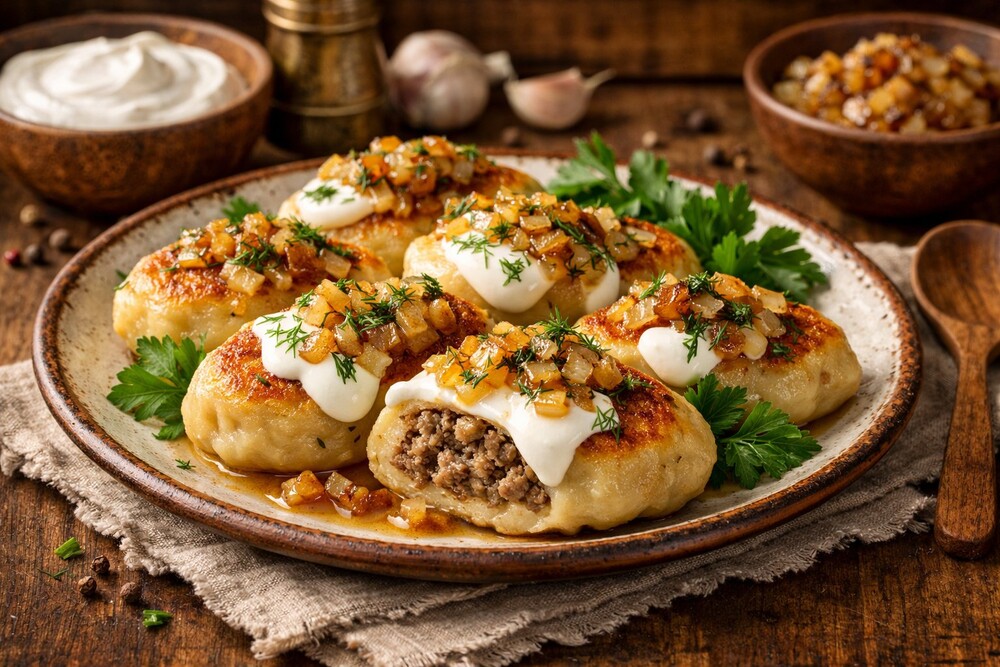
Ingredients: 480ml mashed potato, 120ml flour, 1 egg, 200g minced pork, 1 onion, Sour cream, Dill.
Preparation: For the potato dough, peel and finely grate 800g of starchy potatoes, then squeeze out the excess liquid through cheesecloth, reserving the starch that settles at the bottom of the liquid. Return the starch to the grated potato. Boil and mash 200g of additional potatoes until completely smooth. Combine the raw grated potato with the mashed potato, add one egg, a teaspoon of salt, and two tablespoons of potato starch if the mixture seems too wet. Knead briefly to form a soft, pliable dough that holds its shape. For the filling, finely mince 300g of pork and beef in equal parts — hand-minced is traditional, giving a more interesting texture than machine-ground. Fry one diced onion in butter until golden, then mix into the meat with two cloves of minced garlic, salt, black pepper, and a tablespoon of chopped fresh dill. The filling should be well-seasoned as the potato dough is mild. To assemble, take a golf-ball-sized piece of potato dough, flatten it in your palm to about eight centimetres across, place a tablespoon of filling in the centre, and carefully fold the dough around it, pinching to seal completely. Roll gently between your palms to form a smooth, round dumpling. The seal must be tight or they will burst during cooking. You have two cooking options. For boiled kalduny, bring a large pot of salted water to a gentle boil and cook the dumplings in batches for eight to ten minutes until they float and the dough is translucent. For pan-fried kalduny (the more popular version), boil them first for five minutes, then drain and fry in butter over medium heat until golden and crispy on the flat sides, about three minutes per side. While the kalduny cook, prepare the topping: slowly fry two sliced onions in butter over low heat for 15 to 20 minutes until deeply caramelised and sweet. Arrange the kalduny on a plate, spoon the caramelised onions over the top, add generous dollops of sour cream, and finish with fresh dill. In Belarusian villages, kalduny were traditionally made in large batches on weekends, with the entire family gathered around the kitchen table to help with the assembly.
TIP: Dough should be soft but not sticky.
Machanka KCS 76
Pork in Gravy
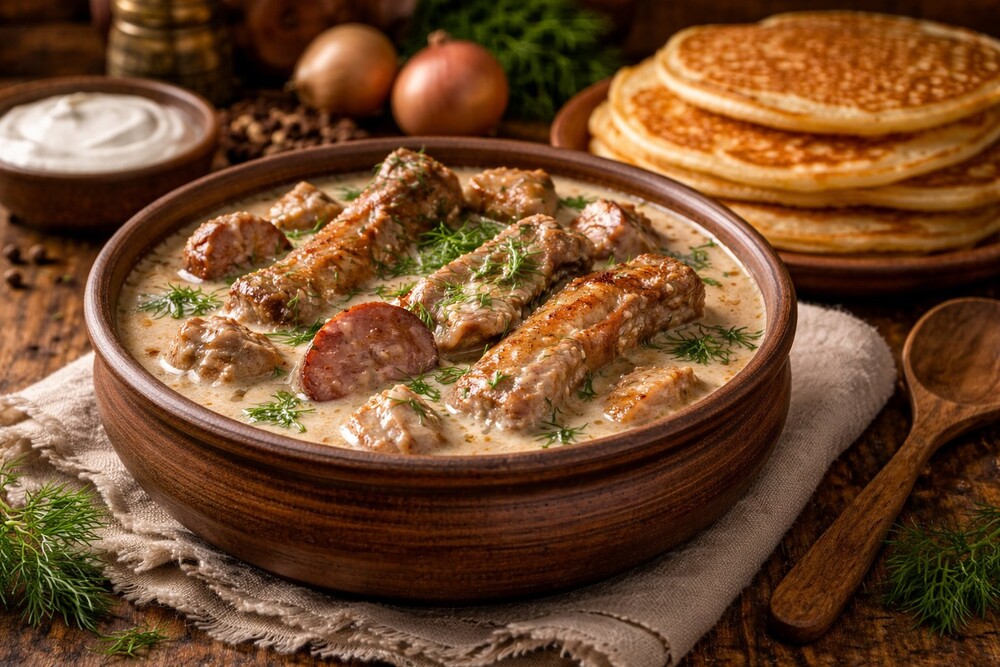
Ingredients: 300g pork ribs, 200g sausage, 1 onion, 30ml flour, 240ml sour cream, Caraway seeds.
Preparation: Cut 500g of pork ribs into individual pieces and 300g of smoked pork sausage (kolbasa) into thick slices on the diagonal. Season the ribs generously with salt and pepper. Heat two tablespoons of lard or butter in a large, deep skillet or Dutch oven over medium-high heat and brown the ribs on all sides in batches until deeply golden — about four minutes per side. Remove and set aside. In the same pan, brown the sausage slices for two minutes on each side until they develop a crispy crust. Remove and add to the ribs. Now add one large diced onion to the pan, reduce heat to medium, and cook for eight minutes until softened and starting to caramelise in the pork fat. Add two cloves of minced garlic and cook for another minute. Sprinkle two tablespoons of plain flour over the onions and stir constantly for two minutes to create a roux — this will thicken the gravy. Gradually pour in 300ml of warm meat stock or water, stirring continuously to prevent lumps. Bring to a simmer and return the ribs and sausage to the pot. Add two bay leaves, five whole black peppercorns, and a sprig of fresh thyme. Cover and simmer gently for 40 to 45 minutes until the ribs are completely tender and falling from the bone. Remove the lid, stir in 200ml of thick sour cream and a tablespoon of grainy Belarusian mustard if available. Simmer uncovered for another five minutes until the gravy becomes rich, creamy, and coats the back of a spoon. Taste and adjust seasoning — the sauce should be savoury and slightly tangy from the sour cream. Remove the bay leaves. While the machanka simmers, prepare the bliny: mix 200g of flour with 300ml of warm milk, two eggs, a tablespoon of melted butter, a teaspoon of sugar, half a teaspoon of salt, and a teaspoon of dried yeast. Let the batter rise for 30 minutes, then cook thick pancakes in a buttered pan, about two minutes per side until golden with the characteristic bubbly surface. Serve the machanka in a deep clay bowl with the bliny stacked alongside or on a separate plate. Scatter fresh dill over the gravy. The proper way to eat machanka is to tear pieces of bliny and dip them into the rich, meaty gravy — it is the ultimate Belarusian comfort food, best enjoyed on a cold winter evening.
TIP: The gravy should coat the back of a spoon.
